

Play The Low End Theory, Illmatic and Aquemini back-to-back, and you can hear a decade rebuilding Hip Hop from the kick drum up. A Tribe Called Quest builds its record on deep jazz basslines and drums that leave plenty of space. Nas raps over dusty breaks and piano fragments put together by five different producers, and the record still sounds of a piece. OutKast and Organized Noize bring in live guitar, slow Southern swing and a bounce that owes New York nothing. That’s three albums across seven years, each with its own idea of how a beat should move.
This list is about that range. In the 1990s, the sampler hit its creative peak and then had to adapt. After the Biz Markie lawsuit made clearance expensive, producers dug for rarer records, chopped samples finer or brought in session players. Dr. Dre answered with G-funk, all whining synth leads and rolling live bass. RZA went the other way, with detuned soul loops and kung fu dialogue that made the Wu-Tang records sound like they were taped in a basement. Meanwhile, Houston, Memphis, New Orleans, Oakland and Atlanta built sounds and business models of their own, and by the end of the decade the South was setting the pace.
The rapping changed just as fast. The Notorious B.I.G. made a conversational flow sound effortless. Bone Thugs-n-Harmony sang their rapid triplets in harmony. Big Pun and Kool G Rap packed multisyllabic rhymes into every bar, and Busta Rhymes treated his voice like a percussion section. The lyrics covered everything from Five Percent theology and mafioso fantasy to backpack abstraction and a lot of humor.
Our year-by-year Top 40s covered 1990 through 1999 one year at a time. This list puts that whole decade into a single ranking of 150 albums, which meant leaving out records we love. We judged each album on the music: the beats, the performances, how well it holds together as a full listen, and what it gave the records that came after it. Personal preferences factor in. Platinum blockbusters sit next to independent heroes, and debut albums sit next to late-career records that deserved more attention than they got.
Some of the placements will start arguments. In the 1990s, that’s what Hip Hop fans did best.
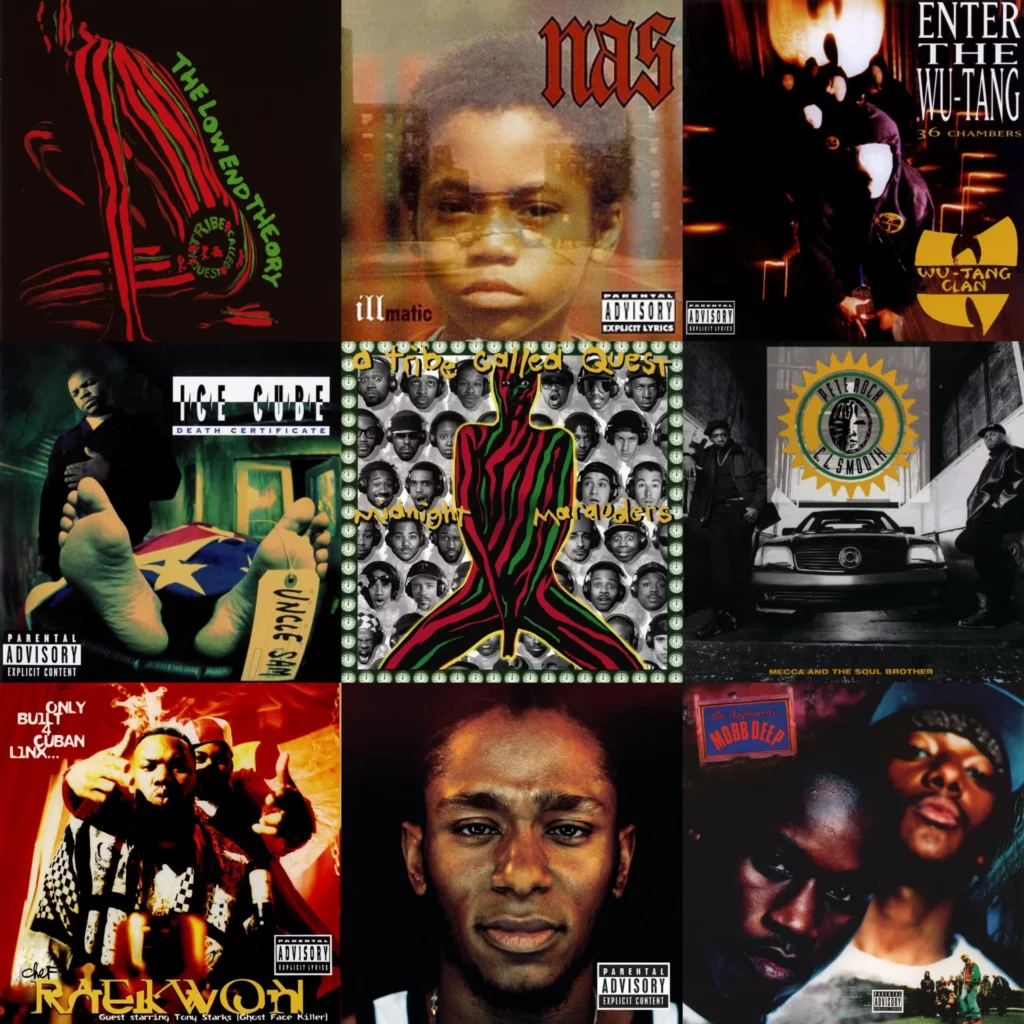
1. A Tribe Called Quest - The Low End Theory (1991)

A Tribe Called Quest had already introduced an original voice with People’s Instinctive Travels and the Paths of Rhythm, but their second album brought a sharper musical focus and a stronger sense of purpose. The Low End Theory stripped away much of the debut’s playful psychedelia in favor of deep basslines, crisp breakbeats, and carefully selected jazz samples. Q-Tip’s production gave the music an earthy warmth and spaciousness, allowing every drum hit, bass note, and vocal exchange to breathe. The result was a distinctive sound that would influence generations of Hip Hop producers.
The musical shift also brought Phife Dawg into sharper focus. Q-Tip’s relaxed, conversational delivery and abstract observations found an ideal counterpoint in Phife’s punchlines, humor, and streetwise confidence. Their chemistry drives the record, particularly on “Check the Rhime,” where the two trade verses with effortless timing. “Buggin’ Out” is another highlight, with Phife’s opening declaration announcing a rapper who had found his voice and was ready to claim his space. On “Jazz (We’ve Got),” the group makes its musical influences explicit without sacrificing the infectious groove. The appearance of legendary double bassist Ron Carter on “Verses from the Abstract” takes the jazz connection beyond sampled records, adding an organic dimension to the production.
There is substance beneath the album’s easygoing surface. “Rap Promoter” aims the music business, “The Infamous Date Rape” addresses sexual assault, and “Show Business” brings in Brand Nubian’s Lord Jamar and Sadat X alongside Diamond D for a sharp examination of the industry’s compromises. Then there is “Scenario,” an explosive posse cut featuring Leaders of the New School. Busta Rhymes steals the spotlight with a closing verse of extraordinary energy, giving the track one of Hip Hop’s most unforgettable guest appearances.
The Low End Theory is the point where A Tribe Called Quest’s musical imagination and lyrical chemistry came together perfectly. Its minimalist, bass-heavy production influenced artists ranging from Nas and The Roots to Dr. Dre, while its combination of intelligence, humor, and irresistible grooves gave alternative Hip Hop a defining sound. Few albums have made musical sophistication this much fun.
2. Nas - Illmatic
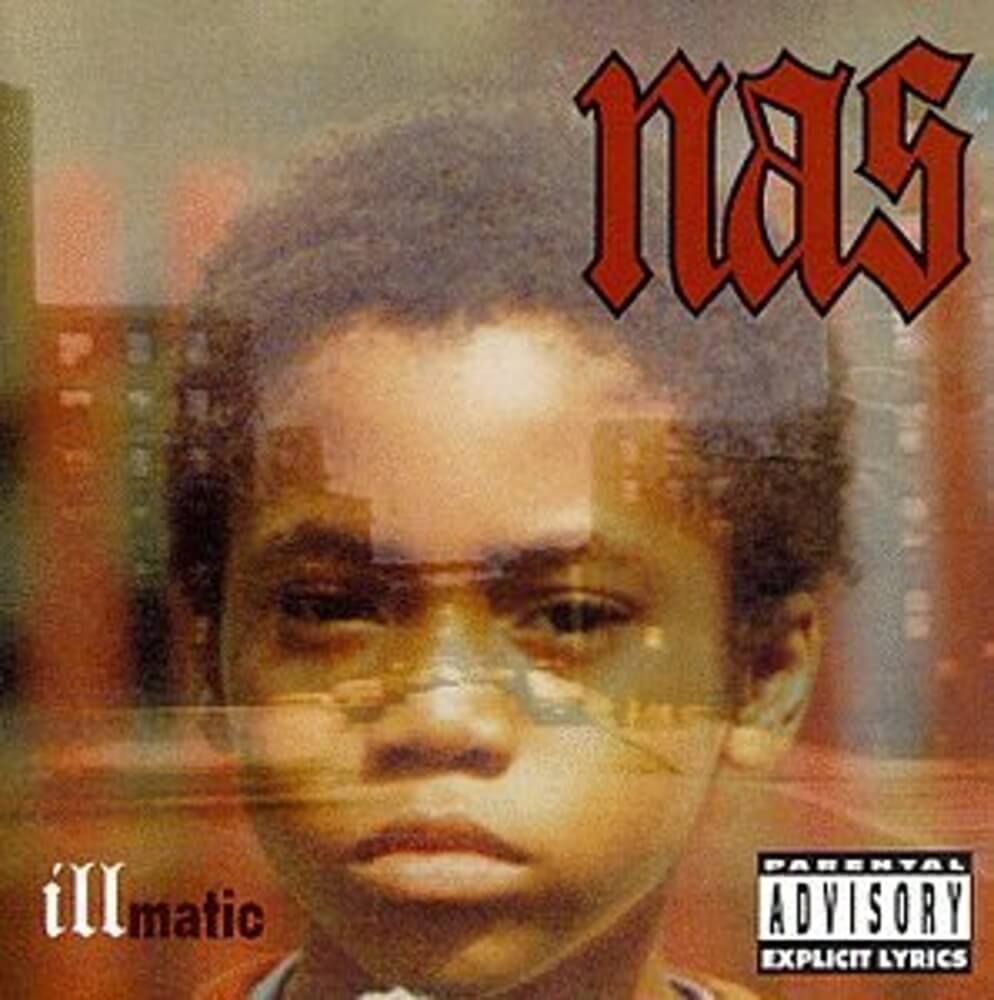
The original vinyl and cassette had no Side A or Side B. The labels read “40th Side North” and “41st Side South,” the streets that bound the Queensbridge Houses. That tells you how Nas thought about Illmatic: ten tracks, under 40 minutes, laid out like a map of a few city blocks by a 20-year-old who had been writing these rhymes since he was 16.
“N.Y. State of Mind” sets the terms. DJ Premier loops a dark piano figure from Joe Chambers’ “Mind Rain” under the bent guitar notes of Donald Byrd’s “Flight Time.” Nas sounds caught off guard at first, saying he doesn’t know how to start before Premier counts him in, and then he delivers one long verse full of rooftop snipers, trap doors and corner lookouts. His tone is level and conversational, which makes the density of the writing easy to miss. Nas stacks internal rhymes and runs sentences across bar lines the way Rakim did, but his details are smaller and more local. He fills the verses with street names, local crews and the paranoia of a kid who treats sleep as too close a relative of death.
Five producers work in different registers without breaking the mood. Premier keeps his tracks stark, and on “Memory Lane” he lays Reuben Wilson’s organ under snippets of Biz Markie and Craig G, so Nas places himself in Queensbridge’s Juice Crew lineage. Large Professor, who first put Nas on record with “Live at the Barbeque,” builds “It Ain’t Hard to Tell” from the swirl of Michael Jackson’s “Human Nature” and Stanley Clarke drums. Pete Rock wraps “The World Is Yours” in Ahmad Jamal’s piano, the warmest sound on the record, and Nas answers with his most hopeful writing. Q-Tip makes “One Love” out of the Heath Brothers’ upright bass and piano over a Parliament break, leaving space for Nas’s letters to friends in prison, full of neighborhood news and ending with a warning to a kid already heading the same way.
AZ is the only guest. His verse on “Life’s a Bitch” turns the song into a meditation on money and mortality, and Nas’s father, Olu Dara, plays it out on cornet over the Gap Band sample.
The singles barely charted, and the first-week sales disappointed Columbia. None of that changed what the album did to New York rap, where every lyricist who followed had to account for how much Nas packed into those ten tracks. Nas felt that weight too. For the rest of his career he was measured against the seven-year-old on the cover.
3. Wu Tang Clan - Enter The Wu Tang (36 Chambers) (1993)
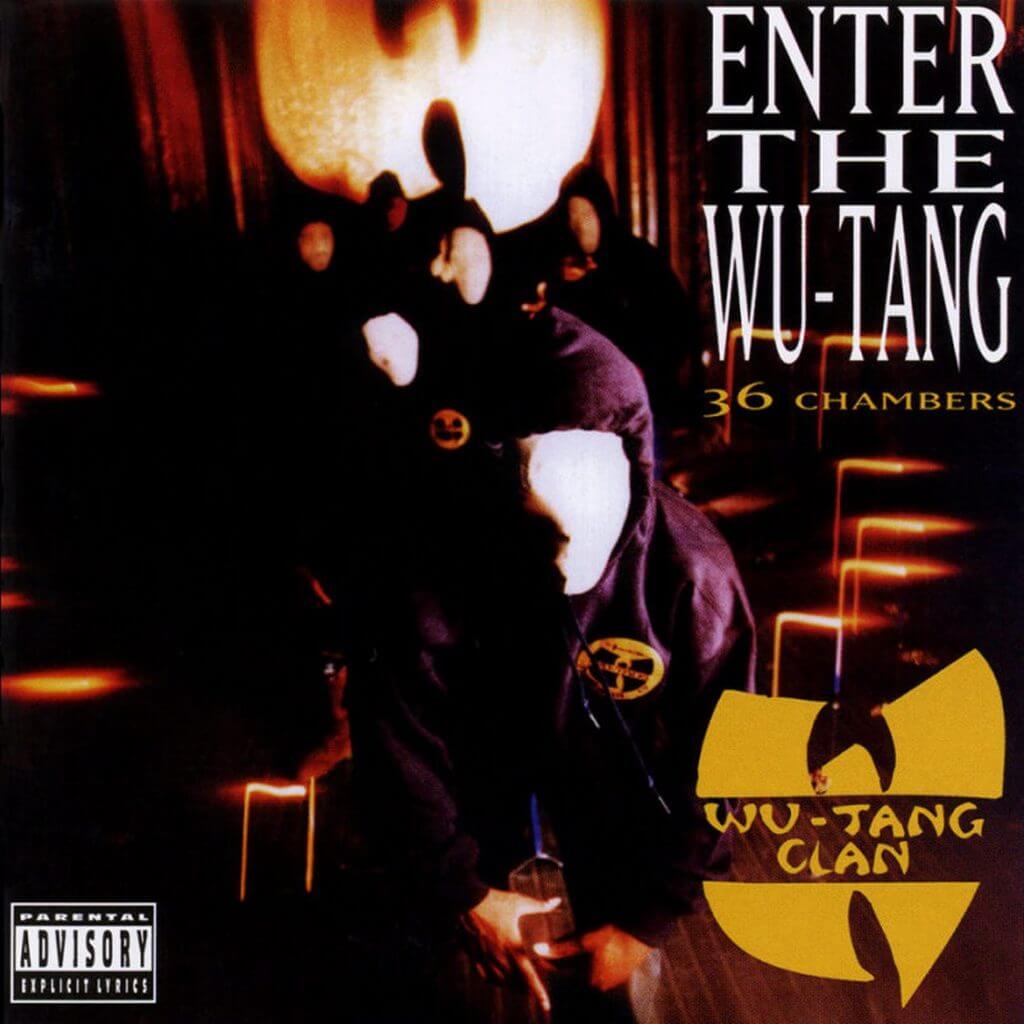
Few albums have changed the direction of Hip Hop as dramatically as Wu-Tang Clan’s debut. Released at a time when Dr. Dre’s The Chronic had brought West Coast G-funk to the forefront, Enter the Wu-Tang (36 Chambers) offered a radically different vision of rap. Dark, abrasive, unpredictable, and packed with lyrical invention, it brought together nine MCs with distinct personalities under the direction of one producer who understood exactly how to make them sound like a unit. The result was a landmark in New York Hip Hop and one of the most extraordinary group albums ever recorded.
RZA’s production is the foundation of the Wu-Tang aesthetic. Working with chopped-up soul samples, haunting piano fragments, heavy drums, and dialogue from old kung-fu movies, he created a deliberately unpolished sound that gave the album its distinctive atmosphere. The beats are often sparse and lopsided, with unexpected changes and strange sonic details that keep the listener alert. There is nothing glossy about the music. “Bring Da Ruckus” sets the tone with its ominous opening, while “Da Mystery of Chessboxin'” and “Wu-Tang Clan Ain’t Nuthing ta F’ Wit” demonstrate how effectively RZA’s rugged production accommodates a succession of contrasting voices.
The nine MCs are equally responsible for the album’s extraordinary character. GZA’s calculated precision, Method Man’s unmistakable charisma, Ghostface Killah’s vivid intensity, Raekwon’s streetwise delivery, Inspectah Deck’s intricate wordplay, and Ol’ Dirty Bastard’s completely unpredictable vocal approach all contribute to the group’s chemistry. U-God, Masta Killa, and RZA complete a formidable lineup. “Protect Ya Neck” is the ultimate demonstration of their collective firepower, with the members trading verses in an extended lyrical showcase that never loses its competitive edge.
There is considerably more to the album than battle rhymes and aggressive performances. “C.R.E.A.M.” is a devastating account of poverty, crime, and the struggle for financial survival, with Raekwon and Inspectah Deck delivering some of their finest verses over RZA’s haunting piano loop. “Can It Be All So Simple” offers another reflective moment, with Raekwon and Ghostface looking back on their past.
The album’s influence on the direction of East Coast rap was enormous, inspiring a generation of artists to embrace darker samples, rougher production, and uncompromising lyrical approaches. Over three decades later, Enter the Wu-Tang (36 Chambers) still sounds remarkably distinctive. Its combination of individual brilliance, collective chemistry, and RZA’s groundbreaking production makes it an easy choice for the number one position.
4. Ice Cube - Death Certificate (1991)

If AmeriKKKa’s Most Wanted proved Ice Cube could thrive outside N.W.A, Death Certificate confirmed his arrival as one of Hip Hop’s most formidable voices. His second solo album sharpened the political edge of its predecessor, combining uncompromising social commentary with vivid street narratives and some of the hardest West Coast production of the era. Released in October 1991, amid escalating racial tensions in Los Angeles and months after the beating of Rodney King, the record captured the anger, frustration, and desperation of Black America with extraordinary intensity.
Divided into two sections, “The Death Side” and “The Life Side,” the album examines the forces shaping life in America’s inner cities. The first half is particularly bleak. “My Summer Vacation” explores the spread of Los Angeles gang culture beyond California, while “A Bird in the Hand” follows a young man turning to drug dealing when legitimate economic opportunities offer little hope. “Alive on Arrival” is even more unsettling, telling the story of a shooting victim left waiting for medical attention as his condition deteriorates. Cube’s storytelling is direct and cinematic, putting listeners inside situations that rarely receive this kind of attention.
Production duties are shared by Cube, Sir Jinx, DJ Pooh, and the Boogie Men. The abrasive Bomb Squad approach of AmeriKKKa’s Most Wanted gives way to thick funk samples, heavy basslines, and a distinctly West Coast sensibility. The beats are muscular and often menacing, providing an ideal foundation for Cube’s commanding delivery.
“The Life Side” shifts toward Black identity, community, and self-determination, although its politics are frequently as provocative as its street narratives. “True to the Game” attacks opportunism, “Color Blind” calls for an end to gang divisions, and “No Vaseline” delivers a devastating verbal assault on Cube’s former N.W.A colleagues, combining vicious punchlines with dark humor. “Black Korea,” however, expresses racial hostility toward Korean American shopkeepers in terms that remain deeply troubling and expose the contradictions within Cube’s political outlook.
Death Certificate is Ice Cube at his creative peak: a commanding MC with an exceptional instinct for storytelling and a willingness to confront uncomfortable subjects. Its flaws and contradictions deserve scrutiny, but its musical power, narrative ambition, and uncompromising perspective make it one of 1991’s defining Hip Hop albums.
5. A Tribe Called Quest - Midnight Marauders (1993)

Following The Low End Theory was an almost impossible assignment. A Tribe Called Quest had already reached an extraordinary level of musical sophistication, lyrical chemistry, and artistic confidence, leaving little room for improvement. Their third album, Midnight Marauders, nevertheless comes remarkably close to matching its predecessor. Perhaps less revolutionary in its overall approach, it is every bit as accomplished, with Q-Tip, Phife Dawg, and Ali Shaheed Muhammad operating at the peak of their creative abilities.
Q-Tip once again handles most of the production, drawing from jazz, soul, funk, and R&B to construct a collection of irresistibly warm grooves. The basslines are particularly infectious, the drums have plenty of punch, and the horn arrangements add color without overwhelming the music. Compared with the slightly darker atmosphere of The Low End Theory, there is a sunnier, more playful quality to much of Midnight Marauders. The recurring robotic tour guide, introducing different aspects of the group between tracks, adds a distinctive thread of humor and personality to the album’s sequencing.
“Electric Relaxation” is a highlight, its mellow instrumental providing the perfect setting for Q-Tip and Phife Dawg’s effortless exchanges. “Award Tour” has an equally infectious appeal, driven by an irresistible groove and the duo’s celebration of their growing international recognition. “Oh My God”, featuring an explosive contribution from Busta Rhymes, brings additional energy, while “We Can Get Down” is another superb example of Tribe’s ability to combine intricate musicianship with accessible songwriting.
Phife is particularly impressive throughout. His animated delivery and conversational storytelling provide an ideal contrast to Q-Tip’s more relaxed approach. On “8 Million Stories”, he turns a succession of everyday frustrations into an entertaining narrative, while “Sucka Nigga” finds Q-Tip addressing the complicated history and cultural implications of a deeply charged word. Elsewhere, “Lyrics to Go” and “God Lives Through” demonstrate the group’s continued willingness to explore different lyrical and musical directions.
There is little filler across the album’s fourteen tracks. The chemistry between the two MCs is exceptional, Q-Tip’s production is consistently inventive, and Ali Shaheed Muhammad’s contributions help maintain the musical cohesion. Midnight Marauders captures A Tribe Called Quest at a moment when their sound was fully developed, and their creative instincts were almost infallible. Delivering two consecutive albums of this caliber is an extraordinary achievement. Few groups in Hip Hop history have managed it.
6. Pete Rock & CL Smooth - Mecca And The Soul Brother (1992)

Pete Rock & CL Smooth’s Mecca And The Soul Brother is one of those rare albums where every element seems to fall perfectly into place. Following their excellent All Souled Out EP, the Mount Vernon duo delivered a full-length debut that captures the warmth, musical sophistication, and street-level sensibility of early-’90s New York Hip Hop. Pete Rock’s production is the main attraction, although CL Smooth’s contribution is every bit as important to the album’s identity.
Pete Rock builds his beats from layers of jazz and soul samples, rich horn arrangements, warm basslines, and hard-hitting drums. His approach is detailed without becoming cluttered, with subtle instrumental changes and carefully placed samples giving individual tracks their own character. The result is a beautifully consistent album that moves effortlessly between laid-back grooves and harder boom-bap rhythms. CL Smooth understands these productions instinctively. His relaxed, conversational delivery, thoughtful observations, and occasional flashes of braggadocio complement Pete Rock’s arrangements, making the two sound like natural partners rather than producer and MC working in separate roles.
“Return Of The Mecca” and “For Pete’s Sake” establish their chemistry immediately, while “Ghettos Of The Mind” offers a sobering perspective on urban life. “Straighten It Out” takes aim at bootleggers profiting from unauthorized copies of their music, and “Anger In The Nation” brings questions of Black identity and political consciousness into the mix. Then there is “They Reminisce Over You (T.R.O.Y.),” an extraordinary tribute to their friend Troy “Trouble T-Roy” Dixon, the Heavy D & the Boyz dancer who died in 1990. Built around the beautiful saxophone passage from Tom Scott’s “Today,” the track transforms personal memories, grief, and gratitude into one of Hip Hop’s most affecting recordings.
From the opening bars of “Return Of The Mecca” to the closing moments, the album maintains an exceptional musical and lyrical standard. Pete Rock’s sample-based craftsmanship gives the record its distinctive warmth, while CL Smooth brings personality, intelligence, and emotional depth to every performance. Their partnership reached a remarkable creative peak here, producing a record that belongs among the greatest full-length albums in Hip Hop history.
7. Raekwon - Only Built 4 Cuban Linx... (1995)
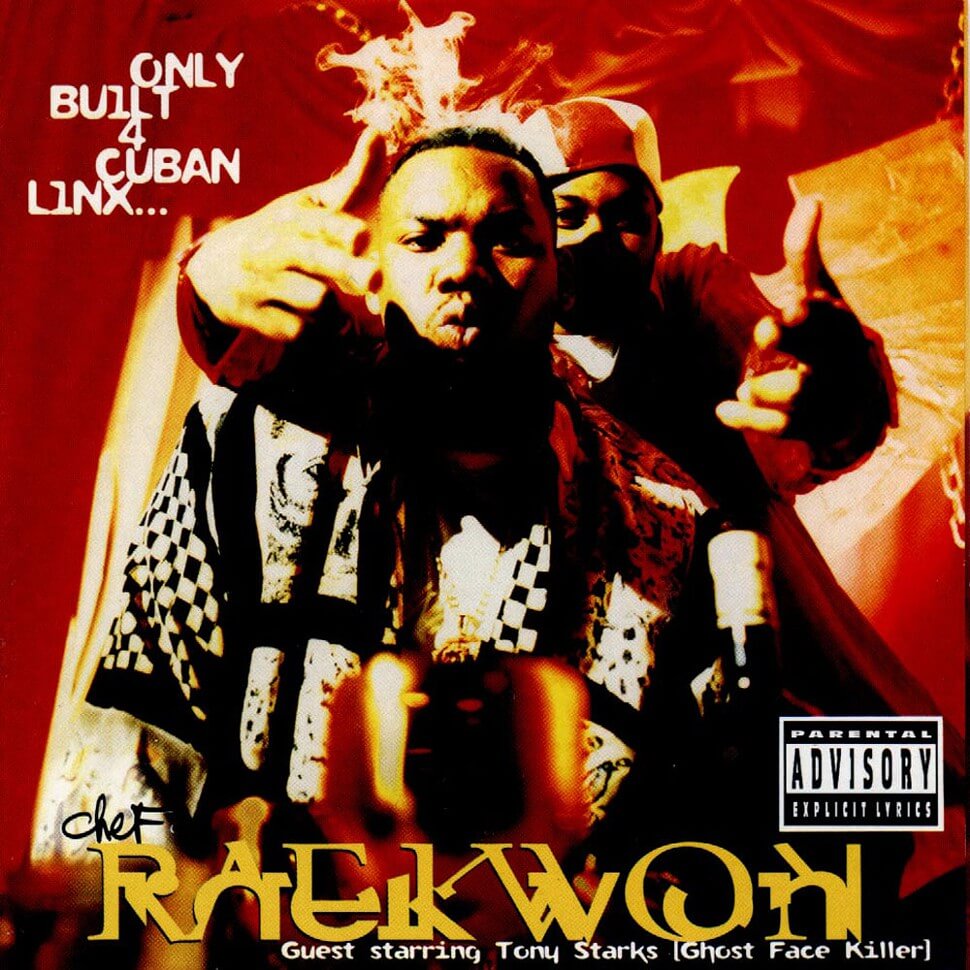
The slang came first. On Only Built 4 Cuban Linx…, Raekwon talked in a private code of Staten Island street talk, Five Percent lessons and luxury brand names, and dared listeners to keep up. Kool G Rap had laid the groundwork for mafioso rap, but nobody had built a whole album around it with this much detail. The record was loosely set up as a film: Raekwon as the star, Ghostface Killah as the co-star and RZA as the director. Every Clan member turns up somewhere, so this is as much a group effort as a solo debut.
The partnership at the center drives everything. Raekwon raps low and unhurried, slurring his syllables together like a man explaining a deal he has already closed. Ghostface comes in higher and more urgent, his verses jumping between images as if he is telling the story while it happens. On “Criminology” they pass the mic back and forth at speed over a tense string loop, and the contrast makes each of them sharper. “Rainy Dayz” slows the pace, with Blue Raspberry’s wordless vocals floating over a gloomy groove while the two MCs turn reflective.
RZA’s production carries the cinematic idea. He favors orchestral samples, minor-key piano and dusty soul, and he lets loops run until they turn hypnotic. “Incarcerated Scarfaces” rides a stark, repeating figure that leaves room for Raekwon’s most quotable verse. “Ice Cream” brings in Method Man and Cappadonna for a lighter, flirtatious detour over a mellow sample, and the album breathes because of it. The skits and film dialogue between songs, usually filler on Hip Hop records of the era, here hold the plot together.
Two posse cuts show how far the cast reached. “Verbal Intercourse” put Nas on a Wu-Tang record, the first outsider to get a verse on a Clan project, and he delivers one of his best of the decade. “Wu-Gambinos” goes the other way, a family meeting where the members take on mob aliases and trade verses like crew members reporting in.
For all its gangster fantasy, the album rarely celebrates. Raekwon writes about betrayal, paranoia, and the cost of the life, and “Heaven & Hell” weighs that cost openly. It is a crime story told by someone who knows how these stories end, which is why the purple tape still sounds like the blueprint every later mafioso record had to answer to.
8. Mos Def - Black On Both Sides (1999)
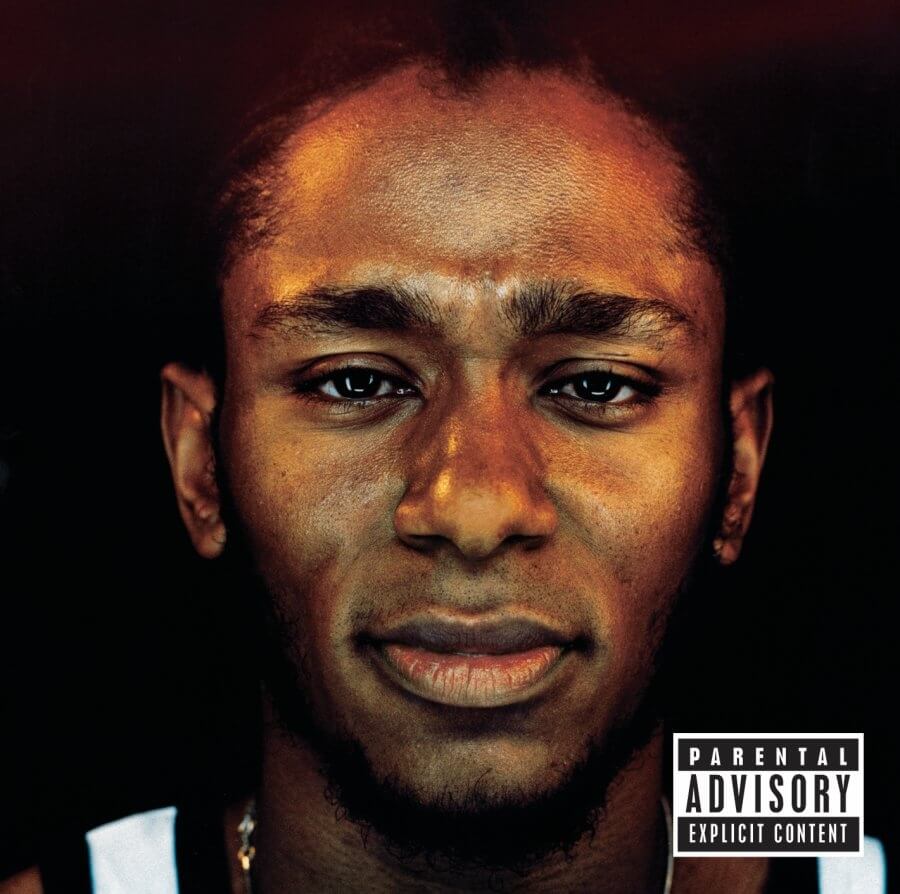
Mos Def uses his voice like a set of instruments on Black On Both Sides. He raps in quick, clipped bursts, slips into half-sung melodies, borrows a Jamaican lilt for a few bars, and on “Umi Says” stops rapping altogether, singing over warm, unhurried chords about wanting his people free. That range is what the album is built on. After Black Star, Mos Def (now Yasiin Bey) had every reason to make a tidy follow-up for the Rawkus faithful. He made a Brooklyn record that refuses to stay in one lane.
The opener, “Fear Not of Man,” sets the terms. Over a Fela Kuti loop, Mos talks to the listener about where Hip Hop is headed, and his answer is that it goes wherever the people who make it go. Everything after that puts the idea into practice. Ayatollah flips an Aretha Franklin sample into the bright, rolling bounce of “Ms. Fat Booty,” and Mos fills it with a detailed, funny story about falling hard for a woman who slips away in the last verse. DJ Premier goes the other way on “Mathematics,” a tight loop with a scratched-together hook made from vocal fragments. Mos stacks up figures about money, prisons, and Black life until the statistics turn into an indictment.
The politics run all through the album and never turn into a lecture. “Mr. N***a,” with Q-Tip, is about how fame and money don’t stop a Black man from being followed, searched, and doubted. “Rock N Roll” starts by naming the white stars who got credit for Black music, then smashes into a punk section with distorted guitar, making the argument with sound as much as with words. “Brooklyn” changes beats more than once as Mos maps out his borough, a love letter that sounds like walking through several neighborhoods in one afternoon.
The album holds together because Mos sounds like the same person all the way through: curious, funny, angry and tender, sometimes in the space of one verse. The live and sampled instrumentals sit side by side without any seams, and the track order lets the mood go from celebration to confrontation to reflection without feeling forced.
Almost three decades on, Brooklyn has given Hip Hop plenty of great albums. Few of them sound this much like an entire person.
9. Mobb Deep - The Infamous (1995)

Prodigy was barely out of his teens when he wrote the verse that opens “Shook Ones Pt. II”, and he used that fact against the listener: young in years, he claims, but old in the head, with a heart that turns cold when it counts. That line sets the terms for The Infamous. Nobody here is a kid, and nobody is safe.
The jump from Juvenile Hell is startling. On their debut, Mobb Deep sounded like any number of hungry New York acts. Two years later, on their second album, Havoc and Prodigy had a sound nobody else owned. Havoc’s production strips Queensbridge down to its bones: warped piano figures, murky samples, voices drifting in from somewhere off-mic, and drums that land with a dull, heavy thud instead of a crack. The warped keys on “Shook Ones Pt. II” hang in the air like a threat, and “Survival of the Fittest” works the same narrow register, cold and patient.
Prodigy is the album’s voice. He raps in a level, almost bored tone, and that calm makes the violence in his lines more disturbing than any amount of shouting would. Havoc is rougher around the edges, a steady second voice who keeps the pressure on. Their chemistry shows on “Drop A Gem On ’Em”, where the threats come measured and deliberate, and on “Party Over”, which turns a night out into a list of reasons to watch the door. “Temperature’s Rising” breaks the pattern, following a friend on the run with a tenderness the rest of the record denies itself.
The guests step into Mobb Deep’s world on Mobb Deep’s terms. Nas and Raekwon join the duo on “Eye for an Eye (Your Beef Is Mines)”, a four-man posse cut that holds its menace from first bar to last. Ghostface Killah and Raekwon bring their Staten Island energy to “Right Back at You”, and the Queensbridge pair never lose control of their own album.
That density divides listeners. Some hear an all-time top ten record; others find it too dark and airless to return to. We understand the second camp, but the claustrophobia is the point. The Infamous is the sound of a neighborhood where every corner has eyes, recorded by two young men who had stopped expecting it to change.
10. Dr Octagon - Dr Octagonecologyst (1996)
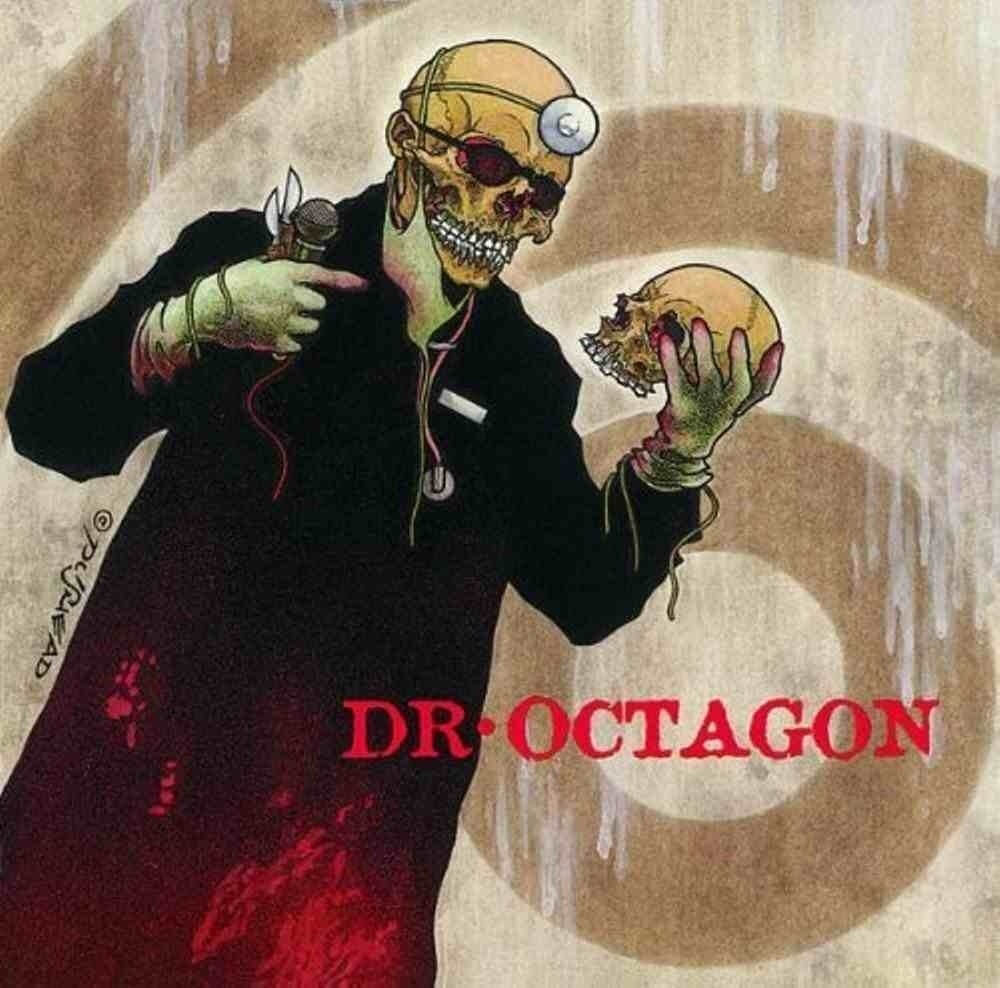
Kool Keith had long been one of Hip Hop’s most unpredictable minds, but nothing in his Ultramagnetic MCs catalog prepared listeners for Dr. Octagonecologyst. This concept album came out in May 1996 on Bulk Recordings, a small San Francisco label. It introduces Dr. Octagon, a time-traveling surgeon and gynecologist from Jupiter whose patients go through grotesque procedures and experiments that go badly wrong. Keith delivers it all with deadpan confidence. He moves between science fiction, body horror, sexual provocation and outright nonsense without breaking character.
There is no conventional plot. Skits, medical imagery and verses that lurch in unexpected directions build the Doctor’s world. “Earth People” sets out his alien view of humanity, “No Awareness” drifts into abstraction, and “Halfsharkalligatorhalfman” sums up the album’s obsession with distorted bodies. Dan the Automator replaces standard boom-bap with eerie strings, murky psychedelic samples and off-kilter rhythms. “Blue Flowers” is the high point. DJ Qbert’s scratching turns the turntable into a lead instrument on “Real Raw” and “Bear Witness.”
Putting this at the top of a year that also gave us ATLiens, Illadelph Halflife, The Score, Reasonable Doubt and All Eyez on Me may raise eyebrows. We think it’s the right call. Those albums perfected the rules of 1996 Hip Hop, while Dr. Octagonecologyst tore them up. Mainstream rap was closing in on mafioso personas, glossy hooks and platinum targets, and this record showed that there was still room to be strange. Keith’s free-associating, character-driven writing made abstraction a lane of its own. MF DOOM, El-P, Aesop Rock, Madlib and countless others later explored that lane in their own ways.
Its route to listeners mattered as much as its sound. A self-financed project on a tiny label found a worldwide audience through word of mouth, and Mo’ Wax’s UK release brought it to electronic and trip-hop fans. Independent labels such as Rawkus, Stones Throw, Definitive Jux and Anticon would soon build entire scenes on that proof that an audience existed outside the major-label system. Automator carried the album’s cinematic approach into Handsome Boy Modeling School, Deltron 3030 and Gorillaz, and Qbert’s role pointed toward turntablism’s late-1990s boom.
Over thirty years on, it still sounds like nothing else.
11. Black Star - Mos Def & Talib Kweli Are Black Star (1998)

Hi-Tek’s beats on this album leave a lot of open space, and Mos Def and Talib Kweli fill it with conversation. In a year when the biggest rap records came stacked with glossy hooks and expensive samples, Mos Def & Talib Kweli Are Black Star went the other way: dusty jazz loops, soft keys, and drums that sit back in the mix. The restraint puts two very different MCs at the center of every song.
That contrast drives the record. Mos Def is loose and melodic, drifting between rapping and half-singing, stretching words across the beat and pulling them back. Kweli raps in quick, crowded bursts, packing syllables into each bar as if racing the loop. On “Definition,” a song written in the shadow of the deaths of 2Pac and Biggie, they trade lines with the ease of two friends talking on a stoop, turning a hook about violence into a statement of purpose.
“Respiration” is the centerpiece. Over a slow, glimmering Hi-Tek production, Mos and Kweli paint New York after dark, and Common arrives with a third verse that carries the picture to Chicago. Nobody raises his voice. The song moves on detail and breath control, and it sounds like the city it describes.
The ideas are sharp without turning into lectures. Kweli builds his verse on “Thieves in the Night” around a passage from Toni Morrison’s The Bluest Eye, using it to question the values people chase. “Brown Skin Lady” is a warm, playful love song to Black women that pushes back against Eurocentric beauty standards. On “Children’s Story,” Mos takes Slick Rick’s classic tale and rewrites it as a parable about an industry that lifts old hits wholesale and sells them back as new songs, a pointed joke in 1998. “K.O.S. (Determination),” with Vinia Mojica singing the hook, turns self-knowledge into something you can nod your head to.
The album rarely wastes time. Skits are kept to a minimum, the guests fit the mood, and the closing “Twice Inna Lifetime” ends on a looser, posse-cut note that lets the tension go. Throughout, the tone is optimistic, curious, and quietly funny, which is why the politics never weigh the music down.
Black Star became a reference point for a whole wave of independent and conscious rap. Mos and Kweli waited twenty-four years to release a second album under the name.
12. Public Enemy - Fear Of A Black Planet (1990)
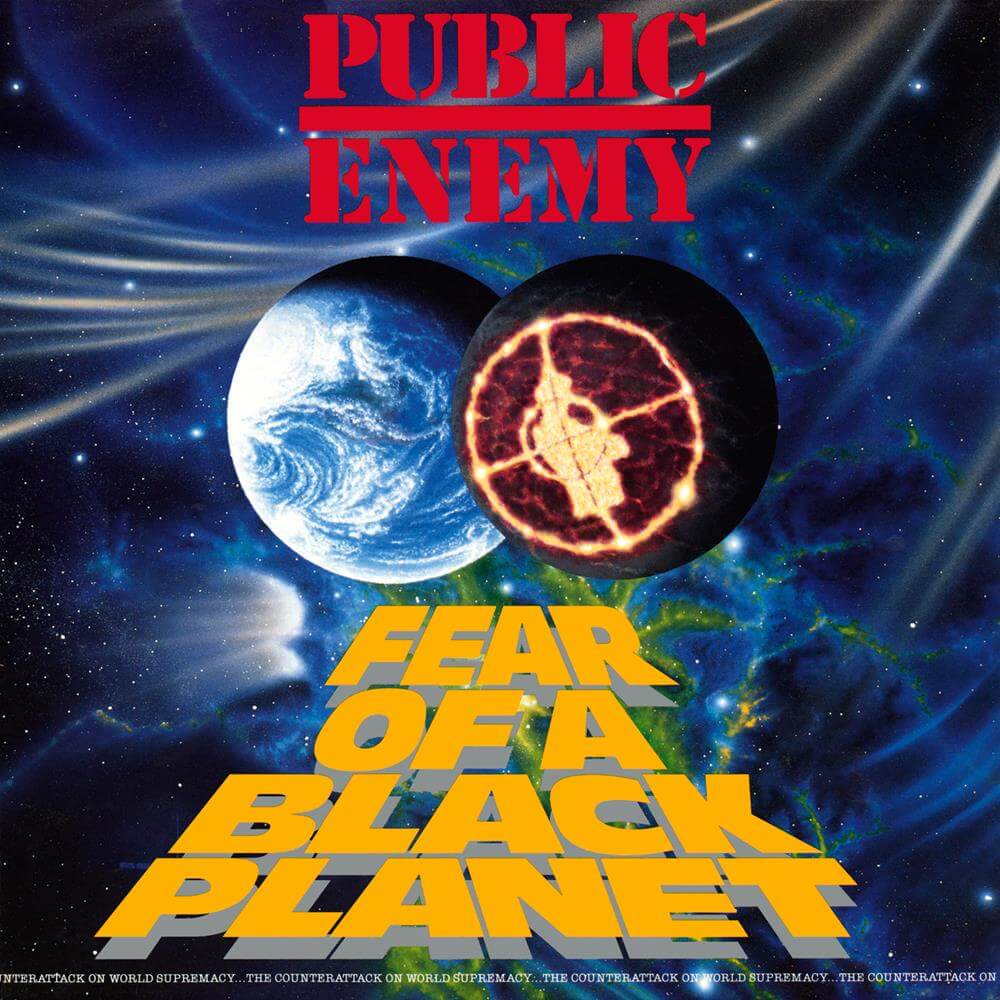
How do you follow up on what we consider the greatest Hip Hop album ever made? Public Enemy answered that question with Fear Of A Black Planet, an extraordinary record that expanded on the musical and political ambitions of It Takes a Nation of Millions to Hold Us Back. If the predecessor announced the group’s arrival as a revolutionary force, their third album confirmed their position at the forefront of Hip Hop.
The Bomb Squad’s production is an astonishing exercise in controlled chaos. Pounding drums, chopped funk and soul samples, distorted vocal fragments, blaring horns, and Terminator X’s abrasive scratches collide in densely layered arrangements. There is barely a moment of empty space, but the apparent disorder has its own internal logic. The result is an exhilarating, confrontational sound that draws heavily from Black musical traditions while pushing sampling into increasingly adventurous territory.
“Contract on the World Love Jam” opens with a disorienting rush of voices and beats before “Brothers Gonna Work It Out” sets the album in motion. “Fight the Power” is the obvious centrepiece, its irresistible funk groove providing the foundation for Chuck D’s uncompromising attack on racism and cultural complacency. On “Welcome to the Terrordome,” he addresses the controversy surrounding the group with furious, densely packed verses over one of the Bomb Squad’s most turbulent productions. “Burn Hollywood Burn,” featuring Ice Cube and Big Daddy Kane, aims at racist stereotypes in the film industry, while “Who Stole the Soul?” confronts the appropriation of Black culture.
Flavor Flav gets one of his finest moments on “911 Is a Joke,” turning the neglect of emergency services in Black neighbourhoods into a biting, darkly humorous critique. His distinctive personality provides another dimension to an album otherwise dominated by Chuck’s commanding presence.
Perhaps slightly less accessible than It Takes a Nation…, Fear Of A Black Planet compensates with extraordinary musical depth and an uncompromising political vision. The Bomb Squad’s sample-heavy approach was becoming increasingly difficult to sustain as copyright restrictions tightened, making this achievement all the more remarkable. Fiercely intelligent, sonically overwhelming, and lyrically fearless, this is one of the greatest albums in Hip Hop history.
13. Ice T - Original Gangster (1991)

By 1991, Ice-T had already explored several sides of his personality across three solo albums. O.G. Original Gangster brings those experiences together in an ambitious 24-track collection that runs well over 70 minutes without losing its sense of direction. Gangsta rap, social commentary, humor, battle rhymes, and personal reflections all find their place in a remarkably cohesive whole. Ice sounds completely comfortable moving between these different approaches, with the confidence of an artist who knows exactly what he wants to do.
The album contains some of his finest storytelling. “New Jack Hustler” follows a young dealer seduced by the money and status of the street life, capturing the attractions and consequences of hustling with cinematic precision. “Midnight” is even darker, built around an ominous Black Sabbath guitar riff and the enormous drum break from Led Zeppelin’s “When the Levee Breaks.” Functioning as a prequel to “6 N The Morning,” it revisits Ice’s gangsta narrative style with an especially threatening atmosphere. “The Tower,” constructed around John Carpenter’s Halloween theme, takes listeners into the violent world of prison life, while “Escape From the Killing Fields” examines the social conditions trapping people in disadvantaged neighborhoods.
There is plenty of room for other sides of Ice’s character. The title track explains his approach to the music business, while “Mind Over Matter” offers a personal reflection on intelligence, creativity, and self-reliance. “Bitches 2” turns its subject into a humorous collection of stories about men who deserve the label themselves. “Straight Up N****” is an extended exercise in braggadocio, and “Fried Chicken” provides a lighter change of mood. The album also introduces Body Count, Ice’s heavy metal band, revealing another dimension of his musical interests.
DJ Aladdin, Afrika Islam, and SLJ supply a varied but consistent production backdrop, combining crisp drums, funk and soul samples, and atmospheric touches. Tracks such as “Pulse of the Rhyme” and “Fly By” add to an impressive run of memorable performances.
O.G. Original Gangster captures Ice-T at his most complete: an intelligent, charismatic, versatile MC with an exceptional feel for storytelling. Its length reflects the breadth of his ambitions, and the music never loses its grip. Ice T’s fourth and best album in an extraordinary run.
14. Dr Dre - The Chronic (1992)

Dr. Dre’s The Chronic changed the sound and commercial direction of Hip Hop. Following his departure from N.W.A over a financial dispute, Dre re-emerged with a musical vision that would dominate West Coast rap throughout much of the 1990s. His production is the undisputed centerpiece here, introducing a fully developed G-funk sound built around deep basslines, melodic synthesizers, live instrumentation, and the psychedelic funk of Parliament-Funkadelic. The arrangements are immaculate, the grooves irresistible, and the hooks almost impossible to forget. Plenty of producers would attempt to replicate this formula in the years that followed, but few came close to matching Dre’s musical instincts and attention to detail.
“Nuthin’ But A ‘G’ Thang” is the defining example, pairing Dre’s measured delivery with the effortless flow and unmistakable drawl of a young Snoop Doggy Dogg. Snoop appears on 12 of the album’s 16 tracks, effectively launching a career that would soon make him one of rap’s biggest stars. His laid-back charisma provides the perfect counterpoint to Dre’s controlled approach. Other newcomers, including Daz Dillinger, Kurupt, RBX, and Nate Dogg, also make memorable contributions, giving the album a deep supporting cast and introducing several talents who would become central to Death Row Records.
“Let Me Ride” and “F*** Wit Dre Day” deliver some of the album’s finest funk-driven moments, the latter taking pointed shots at Dre’s former N.W.A associates. “The Day The N****z Took Over” shifts the atmosphere considerably, addressing the anger and racial tensions surrounding the 1992 Los Angeles uprising. Elsewhere, the familiar gangsta rap themes of violence, sex, drugs, and partying dominate. The album’s misogyny and casual glorification of violence are difficult to overlook, and its lyrical content rarely matches the sophistication of its production.
Musically, however, The Chronic is extraordinary. Dre brought G-funk into the mainstream with an album whose influence extended well beyond California. It launched Snoop’s rise, made Death Row a dominant force, and provided the blueprint for a decade of West Coast gangsta rap. Few producers have ever created a more instantly recognizable musical identity.
15. Notorious B.I.G. - Ready To Die (1994)

You can hear two versions of Christopher Wallace on Ready to Die. The first was recorded in 1993 for Uptown. That Biggie is higher-pitched and hungry, and he tears through “Gimme the Loot,” “Things Done Changed,” and the title track like someone who expects each session to be his last. Then Sean Combs was fired from Uptown, and the album sat unfinished while Biggie went back to hustling in North Carolina for a while. By the time he returned to complete it on the new Bad Boy label, his voice had settled into a smoother, more assured register, and he had stopped writing his rhymes in notebooks, composing them in his head instead. The debut album that came out of those two periods holds the strain of each.
Easy Mo Bee handles much of the darkest material. On “Warning,” he slows Isaac Hayes’ “Walk On By” to a creep while Biggie acts out a late-night phone call about men coming to rob him, and he times the tension like a thriller. “Gimme the Loot” casts him as two stick-up kids at once. He pitches one voice up to argue with the other, and the dialogue gets funnier and nastier as the plans spiral. His flow is loose but exact. He piles rhyme on rhyme in quick bursts and leaves air around them, so the punchlines land on the first listen. Method Man takes the album’s only guest verse on “The What,” and his slippery, sing-song phrasing sharpens the weight of Biggie’s deliberate cadence.
The Bad Boy sessions brought the hits, with Combs pushing for a more commercial sound. “Juicy” turns Mtume’s “Juicy Fruit” into the backdrop for a rags-to-riches story told through specific memories of a broke Brooklyn childhood, and Chucky Thompson lays “Big Poppa” over the Isley Brothers’ “Between the Sheets.” The radio records hold together with the rest because the narrator never changes: he’s relaxed, funny and watchful whether he’s courting women or counting enemies.
The frame is cinematic. The “Intro” moves from a delivery room through Curtis Mayfield, “Rapper’s Delight” and Audio Two, so Biggie’s childhood unfolds alongside Hip Hop’s own records. At the far end, Lord Finesse builds “Suicidal Thoughts” around a muted Miles Davis sample, and Biggie talks himself toward the edge in a flat, quiet voice.
Wallace later explained that the title described his willingness to risk everything on the music, the way he once risked his life selling drugs. The heartbeat that fades at the end of the record makes the darker reading hard to shake.
16. Snoop Doggy Dogg - Doggystyle (1993)

The anticipation surrounding Snoop Doggy Dogg’s solo debut was extraordinary. After making a memorable entrance on Dr. Dre’s “Deep Cover” and stealing much of the spotlight on The Chronic, Snoop had become the most exciting new voice in Hip Hop. Expectations were enormous, and Doggystyle met them almost effortlessly. With Dre handling the production, Snoop delivered a record that took the emerging G-funk sound to another level and became one of the defining albums of West Coast Hip Hop.
Dre’s production is remarkably consistent, built around deep basslines, silky keyboards, crisp drums, and generous helpings of funk. Drawing heavily from the musical tradition of Parliament-Funkadelic, he creates grooves that are immediately recognizable without becoming repetitive. “Gin and Juice” is the perfect example, its infectious instrumental providing an ideal backdrop for Snoop’s relaxed account of partying and neighbourhood life. “Gz and Hustlas” has a similarly irresistible groove, while “Da Shiznit” finds Snoop playing with his flow and delivering some of the album’s most entertaining wordplay. The music is smooth, but there is plenty of detail and personality beneath the surface.
Snoop himself is the undeniable attraction. His distinctive drawl, unusual rhythmic phrasing, and effortless charisma give familiar gangsta rap subject matter an entirely different character. He rarely sounds hurried, allowing his verses to unfold with conversational ease that contrasts beautifully with the precision of Dre’s production. Their chemistry is exceptional throughout. Kurupt, Daz Dillinger, and Nate Dogg add valuable contributions, with the latter particularly effective on the memorable “Ain’t No Fun (If the Homies Can’t Have None).”
There are darker moments too. “Murder Was the Case” is a gripping narrative about violence, mortality, and the consequences of street life, delivered with an unsettling calmness. Snoop also puts his own spin on Slick Rick’s storytelling tradition with “Lodi Dodi”, demonstrating his ability to entertain through character-driven narratives and playful lyrical detail.
If The Chronic introduced G-funk to the wider Hip Hop audience, Doggystyle took the formula to its commercial and creative peak. Dre’s production and Snoop’s extraordinary personality make for a remarkably cohesive record, capturing Los Angeles rap at a defining moment. Snoop would release plenty of worthwhile music in the decades that followed, but the combination of youthful hunger, distinctive style, and Dre’s production on this debut proved impossible to recreate.
17. Ice Cube - AmeriKKKa's Most Wanted (1990)

After his acrimonious departure from N.W.A over royalties and management, Ice Cube wasted little time demonstrating that his writing could carry an album without the group that had made him famous. For his solo debut, he joined forces with Public Enemy’s Bomb Squad, bringing together his sharp West Coast street perspective and the production team’s trademark sonic assault. The result was a formidable record that combined gangsta rap‘s uncompromising narratives with some of the most forceful political commentary in contemporary Hip Hop.
The Bomb Squad’s densely layered funk samples, pounding drums, abrasive scratches, and disorienting vocal fragments provide a fitting backdrop for Cube’s relentless delivery. “The N**** Ya Love to Hate” makes his intentions clear from the outset, while the title track attacks America’s racial double standards and its treatment of Black people. “Endangered Species (Tales from the Darkside),” featuring Chuck D, is particularly chilling, connecting the everyday realities of life in Black communities to a wider atmosphere of institutional violence and oppression. Cube’s storytelling takes another direction on “Once Upon a Time in the Projects,” where vivid characters and dark humor bring neighborhood life into sharp focus.
Sir Jinx also deserves considerable credit for the album’s musical identity. His contributions on “Who’s the Mack?” and “It’s a Man’s World” provide a different texture from the Bomb Squad’s more chaotic arrangements. The latter, featuring Yo-Yo, is an entertainingly combative exchange about gender relations, while Cube’s humor throughout the record offers occasional breathing space amid the hostility.
AmeriKKKa’s Most Wanted is particularly impressive in the way Cube connects street-level observation with broader social criticism without sacrificing the immediacy of either. His writing is sharp, confrontational, frequently funny, and remarkably assured. The album quickly achieved platinum status, confirming that N.W.A had lost one of its most formidable voices. Ice Cube had arrived as a solo artist with something substantial to say, and an equally powerful musical vehicle through which to say it.
18. The Roots - Illadelph Halflife (1996)

By September 1996, The Roots were known as one of Hip Hop’s finest live acts. On their third album, they made their darkest record of the decade, partly by bringing a drum machine into the room. Programmed drums lock in beside Questlove’s playing, and producers Kelo and Chaos push the low end harder and drier than the band had ever tried. The influence of the Wu-Tang Clan, and of RZA’s haunted production in particular, is hard to miss. Dusty fragments of jazz and classical music drift through the mix. The warm Rhodes of Do You Want More?!!!??! gives way to Kamal Gray’s colder chords and Hub’s heavier bass. This is still a live band, but it hits like a boom-bap record built for headphones on the Broad Street Line.
That tougher setting brings out the best in Black Thought and Malik B. as a team. On “Respond/React,” they trade clipped, interlocking phrases, with Black Thought exact and Malik a step looser. “Clones,” featuring Dice Raw and M.A.R.S., turns their contempt for copycat rappers into a hit on the rap charts. Black Thought takes “Concerto of the Desperado” alone over brooding strings. On “Episodes,” Tracey Moore’s spectral vocals hover behind an unflinching look at street violence. Throughout, the writing turns away from gangsta bravado toward loyalty, responsibility and the cost of the life, without ever going soft.
“What They Do” is the album’s sharpest joke and its biggest hit. It was co-produced with Raphael Saadiq and glides on a deceptively easy groove while Black Thought takes apart the materialism of mid-’90s rap. The video sends up champagne-soaked clichés with deadpan captions, and it put the band on MTV and gave them their first Top 40 single.
The guest list reads like a preview of what came next. Q-Tip appears on “Ital (The Universal Side),” Common on “UNIverse at War,” and D’Angelo on “The Hypnotic.” Philadelphia’s own Bahamadia joins “Push Up Ya Lighter.” Those connections helped lay the groundwork for the Soulquarians and the band’s ties to neo-soul. At 78 minutes, it’s a dense listen, but every corner is deliberate, down to sketches like “? vs. Scratch.”
The title joins Philadelphia’s street nickname with a measure of decay, and that is the album’s subject: a city wearing down, captured by a band at the height of its powers.
19. Organized Konfusion - Stress: The Extinction Agenda (1994)
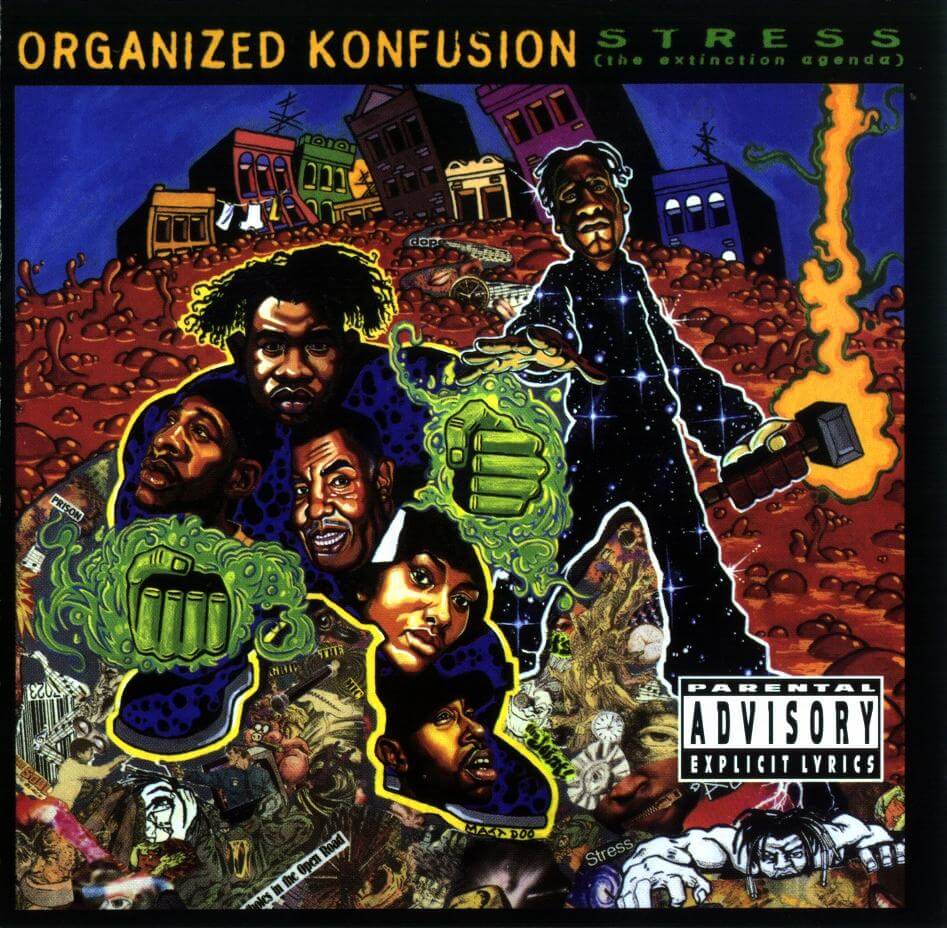
The most claustrophobic New York rap album of 1994 came out on a Disney subsidiary. Hollywood BASIC had little idea how to sell Stress: The Extinction Agenda, promoted it barely at all, and let it fall out of print. Its subject is pressure: money, police, gunfire, and the slow mental toll of living inside all of it.
On their 1991 debut, Organized Konfusion had sounded light and playful. Here, Pharoahe Monch and Prince Po still produce most of the record themselves, but they bring in Buckwild of D.I.T.C. and a young Rockwilder, and the jazz they sample turns sour. Buckwild builds “Stress” on a Charles Mingus source, while the duo pull from Herbie Hancock for “The Extinction Agenda” and Cannonball Adderley for “Keep It Koming.” The horns are dissonant, the piano figures jab instead of soothe, and the drums give the listener nowhere comfortable to rest. The album runs 45 minutes with no concession to radio.
The MCs match that tension. Monch is the acrobat, racing through internal rhymes, holding his breath through long runs and switching cadence mid-line so a phrase seems to fold back on itself before he launches the next burst. Prince Po plays the anchor. His delivery is lower and steadier, and he lands squarely on the beat, which makes Monch’s swerves hit harder when the verses trade off.
“Stray Bullet” puts that craft to work on a single idea. The duo rap as the bullet itself, tracing its path through a neighborhood without caring whose life sits in the way. Gun violence becomes a chain of consequences instead of a prop for tough talk, and the premise is simple enough to grasp on one listen. “Let’s Organize” opens a window, bringing in O.C. and Q-Tip for the album’s only guest verses and a brief sense of a crew in the room.
Critics and fellow MCs recognized what the record was right away, and The Source later placed it among its 100 best rap albums. The shelves told a different story. For years, the usual way to hear an album about a city running out of room was to find a secondhand copy.
20. The Roots - Things Fall Apart (1999)

The Roots recorded around 145 songs at Electric Lady in 1997 and 1998 and kept fourteen. You can hear all that cutting in the grooves of Things Fall Apart. This was the Soulquarians era, with D’Angelo’s Voodoo taking shape in the same rooms, and the band came out of those sessions with the most focused record they had made. Questlove plays slightly behind the beat, so the drums pull every song into a slow, heavy sway. Kamal Gray loops dark keyboard figures, and Hub keeps the bass supple and low. Jay Dee produced “Dynamite!” and Scott Storch co-produced three tracks, but the album sounds like one band playing in one room.
Before any of that, “Act Won” plays a scene from Spike Lee’s Mo’ Better Blues: Denzel Washington and Wesley Snipes, after a gig, arguing about Black music and who it’s made for. The Roots had spent the decade trying to square serious musicianship with a wider audience, and that question hangs over the next seventy minutes.
Black Thought answers it with total command. “Double Trouble” was the last song chosen for the album. Talib Kweli was meant to be on it, but the track called for two MCs, so Black Thought and Mos Def turned it into a tag-team routine in the Run-DMC and EPMD tradition, finishing each other’s lines as if they’d shared a mic for years. “Act Too (The Love of My Life)” grew out of an interlude, with Common picking up the thread of “I Used to Love H.E.R.” to look back at Hip Hop through the band’s eyes. “The Next Movement” brings in DJ Jazzy Jeff and the Jazzyfatnastees over the album’s friendliest groove.
The record opened doors in Philadelphia too. Beanie Sigel came along to one of the band’s weekly jam sessions and ended up making his debut on “Adrenaline!,” and a Roc-A-Fella deal followed soon after. Eve appeared on “You Got Me,” the single that took The Roots to radio, MTV, and a Grammy. Jill Scott co-wrote it and sang the original chorus until MCA wanted a bigger name and Erykah Badu re-recorded the part. Scott kept singing it with the band on tour.
Ursula Rucker’s “The Return to Innocence Lost” closes the album with a stark spoken-word piece. On the best-known of its five covers, two Black teenagers run from riot police down a Bed-Stuy street. The title comes from Achebe, who took it from Yeats’s poem about a center that cannot hold. In 1999, mainstream rap was racing toward gloss. The Roots built a center of their own, and it held.
21. Company Flow - Funcrusher Plus (1997)
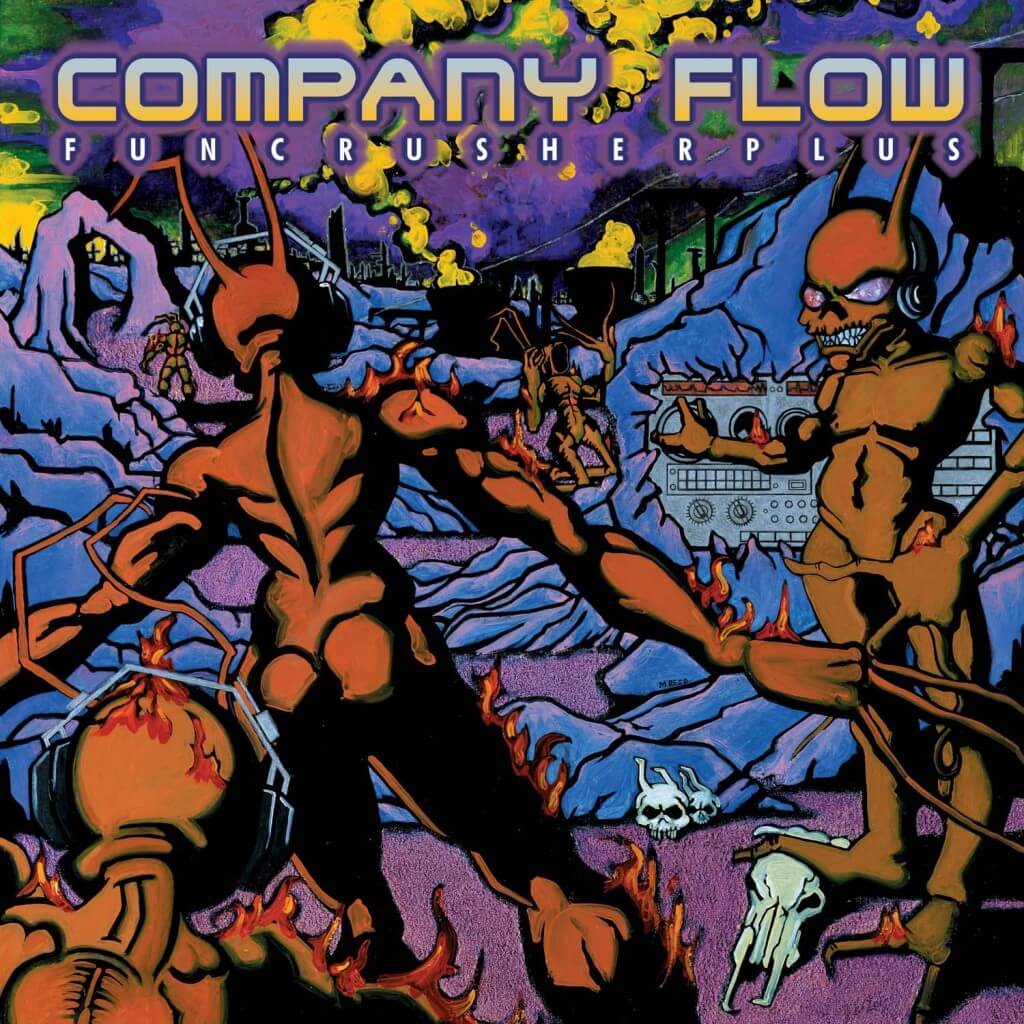
In the summer of 1997, the brightest spotlights in Hip Hop shone on shiny suits, champagne toasts, and gangsta posturing. Company Flow wanted no part of it. Like Kool Keith’s Dr. Octagonecologyst the year before, Funcrusher Plus proved that a whole other world existed beneath the mainstream, and that the underground could do more than survive. It could set the agenda. No other album that year did more to keep the creative heart of Hip Hop beating.
The Queens trio of El-P (beats and rhymes), Bigg Jus (rhymes), and DJ Mr. Len (beats and scratches) had already built a buzz with their self-released Funcrusher EP. Rawkus Records expanded it into a 19-track full-length, and the result became both the label’s calling card and the blueprint for independent rap in the years that followed. Critics took notice: Pitchfork later put it on its list of the top 100 albums of the 1990s, and Fact ranked it No. 4 among the best indie Hip Hop records of all time.
El-P’s production is the first thing that hits you. His beats are murky, claustrophobic, and abrasive. They trade smooth soul loops for dissonant sci-fi textures, static, and off-kilter boom-bap drums, and Mr. Len’s sharp cuts hold it all together. “Vital Nerve” builds its menace from little more than a three-note synth line, and “8 Steps to Perfection” became the group’s signature anthem. Bigg Jus adds a different shade with the nocturnal “Lune TNS.”
Lyrically, El-P and Bigg Jus trade dense, hyper-literate verses full of dystopian imagery, political critique, sci-fi references, and open contempt for the industry’s big-budget acts. “Population Control” takes aim at consumerism, and “The Fire in Which You Burn” brings in Breezly Brewin of the Juggaknots and J-Treds for a lyrical clinic. “Last Good Sleep” changes the mood entirely with a harrowing account of domestic abuse.
This is not an easy listen. At nearly 74 minutes of unrelenting grit, Funcrusher Plus demands your full attention, and plenty of listeners have bounced off it over the years. Those who stay with it hear one of the most innovative and experimental records of the decade. Its influence runs through Definitive Jux, the label El-P went on to found, and through Cannibal Ox’s The Cold Vein and the indie rap boom of the 2000s. It reaches all the way to Run the Jewels. Nearly three decades later, the underground still lives in the house Company Flow built.
22. 2Pac - Me Against The World (1995)

All Eyez On Me has the bigger reputation, but this is 2Pac’s best album. All Eyez On Me sprawls across two discs of Death Row excess; Me Against The World is tighter, better balanced and far more honest. On his third album, Pac had not fully disappeared into the thug persona that would swallow his final year, and the record is stronger for every contradiction he leaves in.
It arrived while he was behind bars, and it sounds like the work of a man who expected the worst. The intro stitches together news reports about his near-fatal shooting, and “If I Die 2Nite” picks up the thread at once, mortality and paranoia sitting in the same frame. “Lord Knows” and “Death Around The Corner” press on that nerve harder, Pac’s voice tight and agitated, as if he is checking the window between lines.
The production does a lot of quiet work. The beats lean on soulful samples and slow, heavy grooves, and they rarely push for aggression. “So Many Tears” moves at a mournful pace that lets him take stock of the friends and years he has lost, and “Can U Get Away” softens into a smooth, melancholy plea to a woman stuck in a bad relationship. That restraint gives his writing room. You hear the self-doubt, the anger and the longing clearly, without the bluster that crowded his later work.
“Dear Mama” is the album’s heart and the song most people know him by. Pac thanks his mother without sanding down the hard parts: the poverty, her addiction, his own trouble growing up. The gratitude lands because the song refuses to pretend things were easy. “Old School” offers a different kind of warmth, a fond look back at the Hip Hop pioneers who shaped him, from a rapper usually framed as an outsider to that New York lineage. “Temptations” and “Heavy In The Game” bring in his complicated dealings with women, lighter in tone but cut from the same cloth of confession.
Across fifteen tracks, Pac argues with himself and lets the listener hear him lose a few rounds. Later albums gave the world the icon. This one gives us the person, frightened and grateful and furious, a few months before the myth took over.
23. MF DOOM - Operation Doomsday (1999)

“Doomsday” starts with a voice from an old Fantastic Four cartoon, then settles on a looped slice of Sade’s “Kiss of Life,” soft and slightly warped, as if it had been taped off the radio. Over it, a rapper who once sounded eager and earnest on KMD records now mumbles in a low drawl that slides past the beat and doubles back. MF DOOM had found his character, and he had found it the hard way. KMD lost DJ Subroc, Zev Love X’s younger brother and musical partner, in 1993, and Elektra shelved Bl_ck B_st_rds soon after. The rapper who resurfaced in 1999 on Bobbito Garcia’s Fondle ’Em Records wore a metal mask modeled on Marvel’s Doctor Doom, and he had folded years of grief and anger into a villain’s persona.
The relaxed delivery hides how dense the writing is. Internal rhymes pile up inside single lines, punchlines land half a beat late, and references to cereal, comics, and old TV sit next to bitter remarks about the music business. “Rhymes Like Dimes” packs those tricks over a loose, nodding groove. “Gas Drawls” and “Hey!” turn odd phrases into hooks, and “Who You Think I Am?” brings in several MCs for a posse cut.
DOOM produced most of the album himself from jazz, soul, and funk records, and the beats sound homemade on purpose. The drums are dusty and slightly off, and the samples are filtered until you can barely place them or stitched together at strange angles. “Operation Greenbacks” is murky and street-level, while “Go With the Flow” lays a smoother groove under his zigzagging rhymes.
The record has rough edges. Some skits stall the momentum, the mix can get cloudy, and the sequencing has the looseness of songs gathered from different sessions. Those flaws are part of the record’s character: the sound of an artist rebuilding in a small room with a sampler and a stack of records, answering to nobody. Across nineteen tracks, he laid out a way of rapping and making beats that the underground spent the next two decades studying. He kept the mask on for the rest of his life.
24. De La Soul - De La Soul Is Dead (1991)

Following the unexpected success of 3 Feet High and Rising, De La Soul faced the familiar problem of being defined by an image they had never intended to maintain. Their colorful D.A.I.S.Y. Age identity had earned them considerable attention, but the association with Hip Hop’s happy-go-lucky hippies threatened to become a creative limitation. De La Soul Is Dead was a deliberate rejection of those expectations. Darker, more cynical, and musically adventurous, the album revealed a group eager to move beyond the identity created by their debut.
The smashed flowerpot on the cover makes the message clear. A series of recurring skits follows neighborhood bullies who discover a discarded De La Soul cassette and ridicule the group’s music. The running joke provides a framework for the album’s satire, turning the trio’s own reputation into a target. Prince Paul’s production is even more unpredictable than before, combining obscure samples, strange vocal fragments, unexpected rhythmic changes, and unconventional arrangements. “Oodles of O’s” and “Talkin’ Bout Hey Love” capture the group’s eccentric approach, while “A Roller Skating Jam Named ‘Saturdays'” delivers an irresistible disco groove. “Ring Ring Ring (Ha Ha Hey)” takes aim at aspiring artists and opportunists looking to capitalize on De La Soul’s success.
The humor has a considerably sharper edge this time around. “My Brother’s a Basehead” examines the destructive effects of drug addiction, while “Millie Pulled a Pistol on Santa” tells a disturbing story of sexual abuse and revenge. The latter is particularly difficult listening, with its unsettling narrative exposing the darkness beneath the album’s playful exterior. Posdnuos, Trugoy the Dove, and Maseo sound increasingly comfortable exploring uncomfortable subjects without abandoning their individuality.
Some of the interludes and skits interrupt the musical momentum, and the album initially proved a challenging proposition for listeners expecting another 3 Feet High and Rising. Its reputation has grown considerably with time, however. Prince Paul’s adventurous sample work and the group’s willingness to dismantle their carefully constructed public image make De La Soul Is Dead one of the most daring Hip Hop albums of its era. They killed the D.A.I.S.Y. Age mythology and came back with something considerably stranger.
25. Gang Starr - Step In The Arena (1991)

Gang Starr’s 1989 debut, No More Mr. Nice Guy, introduced a distinctive duo with several classics already in place, although Guru and DJ Premier were still finding their collective identity. On Step in the Arena, that identity comes into sharp focus. Released in January 1991, the album marks the start of an extraordinary stretch that would also produce Daily Operation, Hard to Earn, and Moment of Truth. Few Hip Hop acts have put together a comparable run of four consecutive albums.
DJ Premier’s production gives Step in the Arena its unmistakable character. Jazz and funk samples, hard-hitting drum breaks, and precisely placed scratches form a lean New York sound with plenty of space for Guru’s measured delivery. Premier’s beats are inventive without becoming cluttered, and Guru knows exactly how to work within them. His calm, assured voice provides a steady counterweight to the rhythmic detail and sharp cuts surrounding him. The title track captures that balance immediately, while “Form of Intellect” and “Check the Technique” demonstrate the duo’s technical command without losing sight of the groove.
“Who’s Gonna Take the Weight?” is one of the album’s defining moments. Premier’s looping horns give the track an almost hypnotic pull as Guru considers responsibility, self-awareness, and the choices people make. “Just to Get a Rep” takes a darker turn, examining the pursuit of street credibility and the consequences that come with it. Elsewhere, “Take a Rest” brings a looser funk sensibility, while “Beyond Comprehension” and “Precisely the Right Rhymes” put lyrical technique front and center. The brief interludes help maintain the record’s continuity, giving the whole sequence a carefully considered flow.
Step in the Arena is where Guru and Premier sound fully comfortable in each other’s company. Their chemistry runs through every aspect of the record, from the understated authority of Guru’s rhymes to the detail and economy of Premier’s production. The duo would reach even greater heights, but this is where the Gang Starr sound took its definitive shape.
26. De La Soul - Buhloone Mind State (1993)
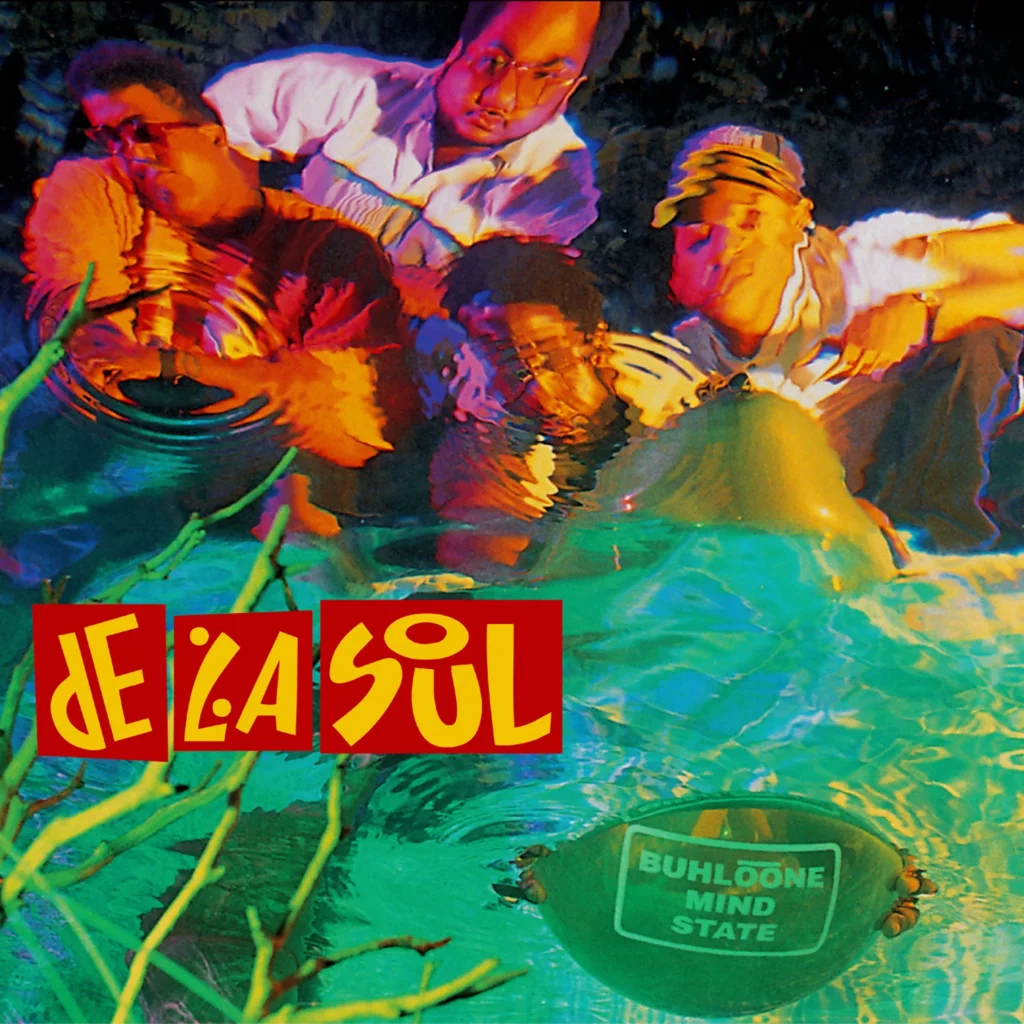
Of De La Soul’s first four albums, Buhloone Mindstate is arguably the least appreciated, partly because it lacks the immediate appeal of 3 Feet High and Rising or the accessible grooves of De La Soul Is Dead. That difference in approach has sometimes obscured how accomplished the record is. Posdnuos, Trugoy, and Maseo take another creative turn, moving toward a more organic, jazz-centered sound while retaining the sharp writing and eccentric personality that define the group. Prince Paul is at the controls for the final time on a full De La Soul album, and the partnership produces some of its finest work.
The title refers to a balloon: as De La Soul’s popularity expanded, the group was determined not to let its identity become inflated or compromised. With gangsta rap and harder-edged East Coast Hip Hop dominating much of the conversation in 1993, the trio followed its own instincts. They brought jazz legends Maceo Parker, Fred Wesley, and Pee Wee Ellis into the sessions, giving tracks like “Patti Dooke” and “I Am I Be” a lively, live-band quality. Parker’s saxophone takes center stage on the instrumental “I Be Blowin’,” while Prince Paul draws on jazz recordings by Eddie Harris, Lou Donaldson, Duke Pearson, and Milt Jackson for a production style rich in texture and detail.
The album moves comfortably between different moods. “Breakadawn” turns a sample of Michael Jackson’s “I Can’t Help It” into one of De La Soul’s most beautiful grooves. “Ego Trippin’ (Part Two)” has the playful energy associated with the group’s earlier work, while “En Focus,” featuring Dres of Black Sheep and Shortie No Mass, is another highlight. Guru contributes spoken passages to “Patti Dooke,” Biz Markie appears on “Stone Age,” and Japanese duo Scha Dara Parr bring an unexpected international dimension to the brief “Long Island Wildin’.” The instrumental passages and shorter interludes help the record flow as a unified piece rather than a collection of separate singles.
There is considerable depth in the writing, particularly on “I Am I Be,” where Posdnuos and Trugoy reflect on identity, experience, and artistic independence. Buhloone Mindstate asks for more attention than some of De La Soul’s earlier records, but the rewards are substantial. Its musical sophistication, adventurous production, and thoughtful performances put it right alongside the group’s finest work.
27. Main Source - Breaking Atoms (1991)
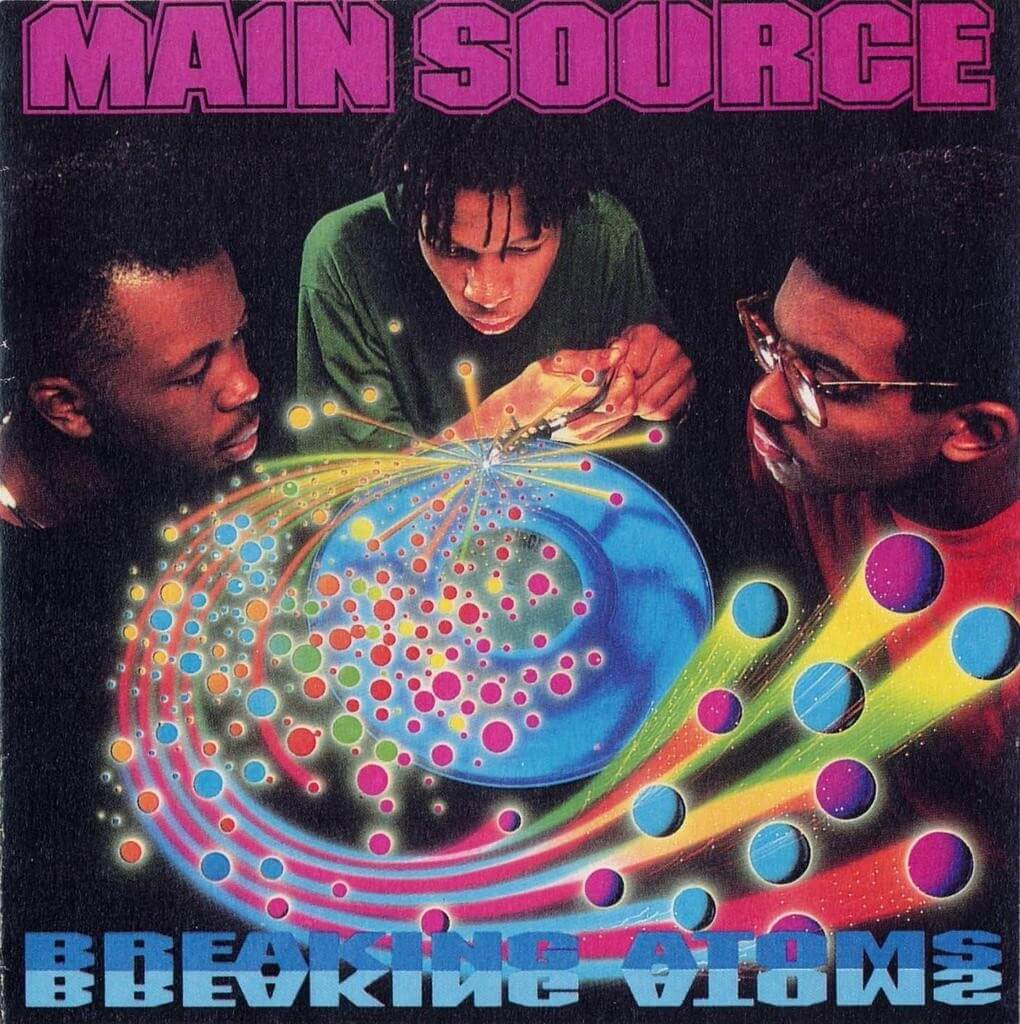
Main Source’s Breaking Atoms is one of the defining New York Hip Hop albums of the early 1990s. Large Professor, K-Cut, and Sir Scratch brought together intricate sample-based production and relaxed, technically accomplished rhyming, creating a sound that was deeply rooted in jazz and soul without losing the hard drums and streetwise edge of New York rap. Large Professor was the group’s principal creative force, and his work on this album would influence a generation of producers.
Working with the E-mu SP-1200, Large Professor assembled chopped samples, inventive percussion, and unexpected sonic details into beats with an unusually rich musicality. The arrangements have a life of their own, with small changes and carefully placed sounds rewarding repeated listening. “Looking at the Front Door” sets a soulful groove against Large Professor’s account of a relationship coming apart. “Just a Friendly Game of Baseball” uses an extended baseball metaphor to address police brutality, while “Peace Is Not the Word to Play” takes a more confrontational approach. “Just Hangin’ Out” captures the relaxed chemistry between the three members, with an infectious groove that makes the track an album highlight.
Then there is “Live at the Barbeque,” the record’s most famous track and one of Hip Hop’s great posse cuts. Joe Fatal, Akinyele, and a young Nas trade verses over a rugged, jazz-inflected beat. Nas delivers an electrifying performance, offering an early indication of the lyrical force he would bring to Illmatic three years later. His appearance has since become part of the album’s mythology, although it is the quality of the entire track that makes it such a standout.
Breaking Atoms has a rare balance of musical sophistication, warmth, humor, and lyrical sharpness. Large Professor’s production helped shape the vocabulary of 1990s boom-bap, while the chemistry within Main Source gives the album a character all its own. Its influence extends well beyond the Nas connection: this is a record that producers and MCs have continued to draw from for decades.
28. Gang Starr - Moment Of Truth (1998)

Guru spends much of Moment of Truth taking stock. Four years had passed since Hard to Earn, years in which DJ Premier became one of the most in-demand producers in New York and Guru developed his Jazzmatazz series, while trouble piled up away from the studio. The album absorbs all of it. Its mood is sober, its pace unhurried, and its best songs sound like the work of two men who knew exactly what they had to lose.
Guru’s voice was always steady, a dry monotone that made every line sound considered. Here that calm carries real weight. “JFK 2 LAX” recounts his run-in with the law while traveling, told with the plainness of someone reading back a statement, and the title track turns personal setbacks into a meditation on choices and the consequences that follow them. On “Betrayal,” Scarface supplies the other half of a conversation about broken trust, his weary Houston drawl a natural match for Guru’s measured tone.
Premier widens the sound without softening it. The drums still crack, and the scratched vocal hooks still land like punctuation, but soulful vocal fragments, eerie textures, and melodic passages give the arrangements a cinematic depth. “Above the Clouds” is the clearest example: a hovering, spacious beat that gives Inspectah Deck room for one of the densest verses of his career. “You Know My Steez” opens the album with a strut, while “Work” strips everything back to a hard loop and a vocal sample that does the job of a hook.
The Gang Starr Foundation keeps the record grounded. “The Militia” sets Big Shug and Freddie Foxxx loose over one of Premier’s most forceful productions, and M.O.P. bring their usual volume to “B.I. Vs. Friendship.” K-Ci & JoJo add a sung hook to “Royalty,” a rare nod toward R&B that suits the album’s warmer moments. “Robbin Hood Theory” and “My Advice 2 You” look outward, at inequality and the pressures facing young people in the neighborhood.
Twenty tracks cover a lot of ground, from battle rhymes to street narratives to something close to confession, and the album’s shape takes a few listens to come into focus. Once it does, Moment of Truth sits among the finest work Gang Starr ever made: the sound of a duo that grew up without growing tame.
29. GZA – Liquid Swords (1995)

GZA never raises his voice. Across Liquid Swords, the oldest member of the Wu-Tang Clan raps in an even, deliberate tone, placing each word where it does the most damage and moving on. The calm is the menace. Where Raekwon and Ghostface on Cuban Linx tumbled over each other, the Genius works like a surgeon, and RZA builds him an operating room to match.
This is RZA at his coldest. The beats rest on sinister piano loops, dusty drum breaks, and a constant hiss of vinyl crackle, with long gaps of near-silence that make every snare hit sound louder. Dialogue from Shogun Assassin runs through the album like a plot, tying the samurai imagery to the street stories. “Cold World” sets a bleak, wintry melody under GZA’s portrait of a neighborhood with no warmth left in it, while “Investigative Reports” turns into a grim crime briefing with Raekwon, Ghostface and U-God filing their own testimony.
GZA’s writing rewards patience. “Killah Hills 10304” unfolds as a dense street narrative, every line packed with detail, and “Labels” shows off his wit by stringing record company names into a pointed critique of the industry that owns them. His metaphors open up on the third or fourth listen, which is a rare quality in an era of instant punchlines.
Every Clan member turns up, and the guests sharpen the record without taking it over. Inspectah Deck delivers one of his finest verses on “Duel Of The Iron Mic”, his rapid, clipped delivery cutting against GZA’s slower pace. Method Man brings a looser, sing-song energy to “Shadowboxin’”, and the contrast with GZA’s precision gives the track its spark. “Swordsman” pulls inward, darker and more personal.
The one thing that keeps Liquid Swords below the top two is the framing. GZA leans heavily on intros, skits, and film snippets, and on repeated listens, they slow the momentum between songs that need no setup. The actual tracks are close to flawless; the connective tissue occasionally gets in the way.
Strip that away, and the album has a mood no other Wu record matched: the sound of a man thinking several moves ahead while everyone around him reaches for a weapon.
30. OutKast – Aquemini (1998)

Halfway through “Rosa Parks,” the beat drops out, and a harmonica takes over, backed by hand claps and foot stomps, as if a back-porch jam session had broken into the middle of a rap single. Aquemini is full of moments like that. OutKast’s third album folds the Cadillac funk of Southernplayalisticadillacmuzik and the spacey haze of ATLiens into something far wider, with live bands, gospel, blues, psychedelic guitars and synth funk all finding room. André 3000 and Big Boi were now steering much of the production themselves, working with Organized Noize and a rotating cast of musicians, and the result sounds organic and coherent however far it wanders.
The title fuses their zodiac signs, Aquarius and Gemini, and the album plays on their differences. Big Boi is the rhythmic anchor, precise and streetwise, with a gift for hooks and quick observational detail. André drifts toward philosophy and surreal imagery, bending his flow into odd shapes. On “Return of the ‘G’” he answers the critics of his changing image head-on, and “Skew It on the Bar-B” brings in Raekwon for a meeting between Atlanta swing and New York mafioso rap. George Clinton turns up on “Synthesizer,” a gleeful jab at a future run by machines.
The longest songs carry the most weight. “SpottieOttieDopaliscious” unfolds over seven minutes of lazy, swaying horns, with the duo half-speaking a story of a night out that goes sour. “Da Art of Storytellin’ (Part 1)” traces the lives of girls they grew up with, ending in tragedy, before its sequel turns the story apocalyptic. “West Savannah” looks back to Big Boi’s roots, and the sprawling “Liberation,” with Cee-Lo and Erykah Badu, drifts between gospel, jazz and spoken word.
What gives the experiments their weight is the human detail underneath: friendship, addiction, love and a fierce sense of Southern identity. The closing “Chonkyfire” rides distorted guitars and samples the 1995 Source Awards, where André faced a hostile New York crowd and declared that the South had something to say. Three years later, Aquemini said it at length.
31. The Pharcyde - Bizarre Ride II The Pharcyde (1992)

At a time when West Coast Hip Hop was increasingly associated with the hard-edged street narratives of gangsta rap, The Pharcyde offered a refreshing alternative. Their debut, Bizarre Ride II The Pharcyde, is colourful, mischievous, musically adventurous, and frequently hilarious. Fatlip, Imani, Bootie Brown, and Slimkid3 brought four distinct personalities to the microphone, combining eccentric storytelling, clever wordplay, and an infectious group chemistry. Their approach had more in common with De La Soul and A Tribe Called Quest than with the tough-guy posturing dominating much of California rap, although the quartet developed an identity entirely their own.
J-Swift handles nearly all the production, drawing on jazz, funk, and soul to create warm, intricately layered beats with plenty of punch. His use of samples and live instrumentation gives the album a wonderfully musical character, providing an ideal backdrop for the group’s unpredictable performances. The opening “Oh Shit” immediately establishes their sense of humour, recounting drunken escapades and sexual misadventures with outrageous enthusiasm. “Ya Mama” turns playground insults into an extended exercise in comic one-upmanship, while “On The DL” finds the four MCs trading unconventional personal revelations. Their willingness to expose their insecurities and make themselves look ridiculous is a major part of the album’s appeal.
There is more going on here than comedy and youthful mischief. “Officer” addresses racial profiling and police harassment, while “Otha Fish” takes a more reflective approach to relationships. The album’s defining moment, however, is “Passin’ Me By,” a beautifully constructed account of unrequited attraction. Built around a memorable Quincy Jones sample from “Summer In The City,” the song alternates between the four MCs’ personal experiences, with a wistful chorus tying their stories together. Its combination of humour, vulnerability, and irresistible production makes it one of the decade’s greatest Hip Hop singles.
Alongside releases by Freestyle Fellowship and Del The Funky Homosapien, Bizarre Ride II The Pharcyde helped bring an alternative Los Angeles movement into focus. Its influence would extend to groups such as Souls of Mischief, Hieroglyphics, and Jurassic 5. Few albums capture the creative freedom, awkwardness, and sheer exuberance of young MCs quite this convincingly.
32. Gang Starr - Daily Operation (1992)

If Step In The Arena marked Gang Starr’s breakthrough, Daily Operation confirmed that Guru and DJ Premier belonged among Hip Hop’s elite. Their third album finds the Brooklyn duo working with remarkable confidence, refining the combination of Premier’s distinctive production and Guru’s measured, intelligent lyricism. The result is a near-flawless collection of New York boom-bap, built around understated musical sophistication, sharp observations, and an unmistakable sense of purpose.
Premier’s production is lean but full of detail. Clipped jazz samples, hard snares, inventive scratches, and carefully constructed loops give the album its hypnotic character. Nothing feels unnecessarily complicated, although repeated listens reveal new details in the arrangements. Guru provides the perfect vocal counterpart. His deep, unhurried delivery and conversational flow give his lyrics an authority that doesn’t depend on shouting or elaborate vocal theatrics. He moves comfortably between street-level observations, personal experiences, social commentary, and reflections on Hip Hop culture.
The opening stretch is particularly strong. “The Place Where We Dwell” sets the mood with a sparse, hypnotic groove, while “Flip The Script” finds Guru addressing the competition with characteristic composure. “Ex Girl To Next Girl” takes a more personal direction, recounting romantic disappointment and relationship complications over one of Premier’s most infectious productions. Then there is “Soliloquy Of Chaos,” a darker, tense account of violence and disorder surrounding nightlife. On “I’m The Man,” emerging Gang Starr Foundation members Jeru The Damaja and Lil Dap join Guru, giving the track an early glimpse of the collective’s growing strength.
The second half is equally rewarding. “Take It Personal” is an undeniable highlight, with its insistent rhythm and memorable hook accompanying Guru’s reflections on betrayal and disloyalty. “No Shame In My Game” celebrates the dignity of honest work, while “Conspiracy” explores distrust and manipulation. “The Illest Brother” and “Hardcore Composer” offer further examples of Premier’s ability to turn carefully selected samples into distinctive, hard-hitting beats.
There isn’t a weak link in the tracklist. Premier’s craftsmanship and Guru’s understated authority complement each other throughout, creating an album with exceptional musical consistency. Daily Operation captures Gang Starr at their creative peak and remains one of the finest expressions of New York’s early-’90s underground sound.
33. OutKast – ATLiens (1996)

Southernplayalisticadillacmuzik had already put Atlanta on the Hip Hop map, but OutKast’s second album took a much bigger creative leap. On ATLiens, released in August 1996, André 3000 and Big Boi left the warm Southern funk of their debut behind for stranger, more introspective territory. The cover’s comic-book space imagery sums up the idea. These were two young MCs looking at the world from the outside, questioning its rules while making a place of their own.
The sound changed with them. Organized Noize still contribute, but the duo now took a larger hand in production themselves. Spare drums, echoing keyboards, deep bass and dub-like space replace much of the debut’s live-band exuberance. The result is still unmistakably Southern, but it sounds like it was beamed in from somewhere else. Both MCs also sound more confident as individuals. Big Boi brings tight flows, humor and street-level detail. André leans toward philosophy, self-examination, and unusual turns of phrase. Their differences make the partnership stronger.
“Two Dope Boyz (In a Cadillac)” opens with a hard edge, aimed at imitators and the shallow side of the business. The title track defines their outsider identity over rolling drums and gospel-tinged vocals, while “Wheels of Steel” gives Mr. DJ’s cuts center stage. “Jazzy Belle” weighs sexuality, relationships, and judgment without offering easy answers. “Elevators (Me & You)” became the album’s biggest hit, and its minimal groove leaves André room to reflect on success and the people it leaves behind.
The darker stretches deepen the album. “Babylon” looks at the cost of destructive choices, and “E.T. (Extraterrestrial)” takes the alien theme somewhere more experimental. On “Mainstream,” Goodie Mob’s Khujo and T-Mo help question the price of acceptance. “13th Floor/Growing Old” closes the record with Big Rube’s spoken word and thoughts on aging and change.
ATLiens reached a bigger audience without sanding off OutKast’s eccentricities. The writing matured, the production grew more adventurous, and the chemistry deepened. It confirmed that Southern Hip Hop could grow on its own terms.
34. Bone Thugs-N-Harmony – E. 1999 Eternal (1995)

Five voices, one breath. On E. 1999 Eternal, Krayzie, Layzie, Bizzy, Wish and Flesh-n-Bone rap so fast and so closely together that individual verses blur into a single rolling current, then split apart into harmonies before anyone notices the seam. Faces Of Death and the Creepin On Ah Come Up EP had introduced the style. This is where the Cleveland crew learned to control it, and their second album put them in a category apart from almost every other group in Hip Hop.
It arrived in July, four months after the death of their mentor Eazy-E, and the loss shadows the record. “East 1999” and “Eternal” open on eerie synths, rumbling bass and low, ominous melodies, and the group sounds less like rappers than a congregation chanting in a darkened room. “Crept & We Came” and “Land Of Tha Heartless” turn to violent street tales, delivered with a rhythmic exactness that is almost mathematical. “Mo’ Murda” pushes the darkness further than anything else here, its unsettling mood matching the grim subject.
DJ U-Neek is the quiet architect. His beats move slowly and leave lots of open space: deep bass, haunting piano figures, synthesized strings, and occasional G-funk touches that point back to Ruthless Records’ Los Angeles roots. That slow tempo is the trick. Against the measured pulse, Bone’s double-time flows sound even quicker, and the harmonized hooks have room to hang.
The record knows when to exhale. “1st Of Tha Month” turns the day the welfare checks arrive into a celebration of small comforts, its sunny hook one of the most infectious of the year. “Budsmokers Only” and “Buddah Lovaz” ease the pressure with smoked-out detours.
The emotional peak is “Tha Crossroads”. The album cut, “Crossroad”, mourned family and friends; the remixed single version extended that grief to Eazy-E and became the group’s signature. Soulful harmonies carry a meditation on mortality and the hope of meeting the departed again, and the song gave Bone a reach far beyond their street narratives.
The spiritual and the violent sit side by side across the whole record, and the group never pretends they belong in separate rooms. That tension, carried in five interlocking voices, gave the Midwest its first truly original Hip Hop sound.
35. De La Soul - Stakes Is High (1996)

Seven years after the playful psychedelia of 3 Feet High and Rising, De La Soul sounded like a different group. Their fourth album, and their first without Prince Paul, found Posdnous, Trugoy the Dove and Maseo facing a Hip Hop scene ruled more and more by gangsta posturing, commercial competition and the chase for material success. Stakes Is High takes on those changes with frustration and urgency, but it never settles for simple nostalgia. The group’s concern is the culture’s future, and the album’s mature, focused approach gives that argument real weight.
The closing title track is the defining moment. A young J Dilla, then still known as Jay Dee and largely unknown outside Detroit, co-produced it with the group. He built it on a warm loop and understated drums. Posdnous uses the space to address gun violence, racism and the direction of rap music. His delivery is measured, but the anger underneath is unmistakable. With Paul gone, the trio produced almost everything else themselves, trading the dense sample collages of their earlier records for leaner, more cohesive grooves. Spearhead X’s “Dinninit” and Skeff Anselm’s “Big Brother Beat” fit the same restrained mood.
The guests also show where Hip Hop was heading. Common Sense joins “The Bizness,” and a young Mos Def appears on “Big Brother Beat,” one of his earliest high-profile features. Truth Enola features on “Pony Ride,” and Zhané bring smooth R&B warmth to “4 More.” Across the album, the trio’s rhymes keep returning to the gap between Hip Hop’s creative roots and the business it was turning into. Maseo’s presence and the trio’s long-established chemistry keep the record from turning into a lecture. Their criticism comes from inside Hip Hop, from artists who had helped widen its creative possibilities and were now watching the culture change around them.
The album is less immediately playful than its predecessors, but the musical shift suits its subject. All four of De La Soul’s first albums have strong claims to classic status, and Stakes Is High may be their clearest and most focused statement. Its questions about commercial pressure, artistic responsibility, and violence still apply today. De La Soul sound clear-eyed about what was at stake and unwilling to stay quiet about it.
36. KRS One - Return Of The Boom Bap (1993)
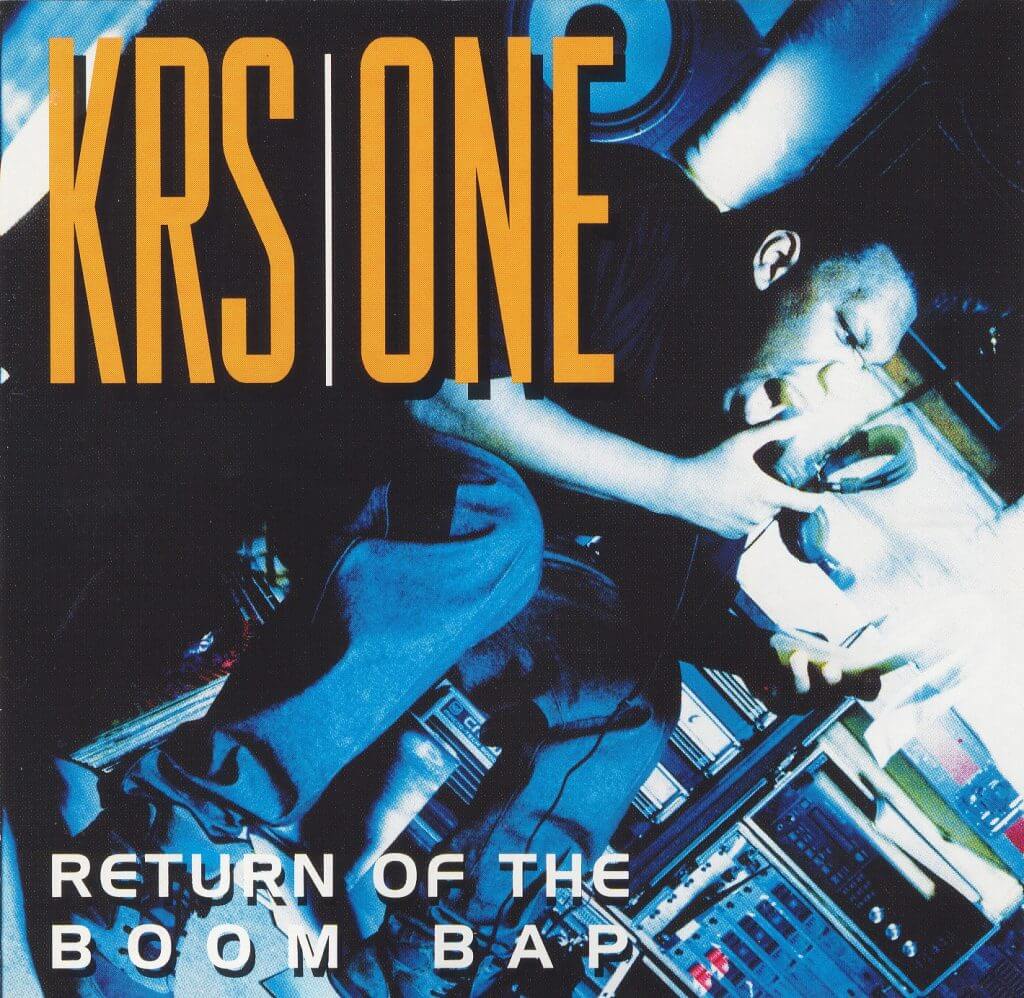
Return of the Boom Bap (1993) (Jive Records)
After five albums with Boogie Down Productions, KRS-One began a new chapter under his own name. There was no shortage of expectations surrounding his first solo release, but Return of the Boom Bap delivered exactly the kind of record his audience wanted: forceful rhymes, hard drums, sharp social commentary, and an MC completely in command of his craft. The title announces its intentions, and the music follows through. At a time when Hip Hop production was moving in several different directions, KRS-One brought the focus back to the fundamentals without sounding stuck in the past.
DJ Premier handles much of the production, giving the album its unmistakable rhythmic backbone. His beats are lean, heavy, and built around rugged loops that leave plenty of room for KRS-One’s voice. Showbiz, Kid Capri, and KRS-One himself contribute behind the boards, adding variation without disrupting the album’s character. “Outta Here” is a highlight, with KRS reflecting on his development as an artist and his place in Hip Hop. Premier’s production gives the track a brooding atmosphere, while KRS delivers his account with the authority of someone who has lived every chapter of the story.
“Sound of da Police” is the album’s defining statement. Its insistent horn sample and pounding drums provide the backdrop for a direct confrontation with police brutality and institutional racism. KRS’s comparison between plantation overseers and modern law enforcement gives the track its historical perspective, while the unmistakable “Whoop! Whoop!” refrain turns the record into a rallying cry. Three decades later, its message has lost none of its force.
There is more to the album than confrontation. “I Can’t Wake Up” is an imaginative, often hilarious concept track in which KRS imagines himself as a blunt passed between various Hip Hop figures. “Black Cop” tackles the contradictions of Black police officers over a reggae-influenced groove, while “Mad Crew” brings a different kind of energy to the record. The title track and “Mortal Thought” further demonstrate KRS’s ability to shift between subjects and approaches without losing his commanding presence.
Return of the Boom Bap has the lyrical precision, musical variety, and conviction we expect from KRS-One at his best. With Premier supplying some of his finest early-1990s work, this is one of the strongest albums of KRS-One’s career.
37. OutKast - Southernplayalisticadillacmuzik (1994)

“Player’s Ball” started life as a Christmas single, with sleigh bells in the mix. The bells came out once radio started playing it into the new year, and what was left became OutKast’s introduction: a slow, rolling groove, a Curtis Mayfield-style falsetto on the hook, and two teenagers from East Point rapping about Cadillacs and the neighborhood as if both had been there forever.
Organized Noize produced every track, working out of the Dungeon, Rico Wade’s basement studio stocked mostly with secondhand gear. Wade, Ray Murray and Sleepy Brown built the beats on live bass, keyboards, organ and bluesy guitar licks, then set them against 808 clave patterns and drums programmed with the hard snap of an SP-1200. The mix of the two is the album’s sonic signature. The live players give it a loose, humid warmth, and the machines keep it rooted in Hip Hop. Brown’s voice drifts through several hooks, sounding more like a church-trained soul singer than a guest R&B vocalist.
André and Big Boi had met at Lenox Square Mall at 16, and on this record their contrast is already set. Big Boi, who had sharpened his rapping under Murray’s guidance, attacks in quick, frenetic bursts. André stays relaxed, chopping his lines into staccato pieces and sometimes slipping into song. Their drawl and their slang were the main reason East Coast tastemakers hesitated, and they are also why the writing lands. “Call of da Wild” deals with the pull of dropping out of school, something André had done at 17. “Crumblin’ Erb” sets the comfort of smoking against the steady news of young Black men killing each other, and it refuses to pick between them.
The long run of “Git Up, Git Out” brings in Goodie Mob, with CeeLo voicing the hopes of a young man and the worries of a mother in the same verse, over a beat that never hurries. The record is not airtight. The interludes paint Atlanta life but slow the second half, and “D.E.E.P.” loops one bassline too long. “Funky Ride,” a Society of Soul showcase with no rapping at all, closes on a long guitar solo straight out of Funkadelic.
Sleepy Brown later said the crew wanted Atlanta men to be proud of where they came from. The proof came quickly: the same basement team soon produced TLC’s “Waterfalls” and Goodie Mob’s Soul Food, and the Dungeon became an address the rest of the country had to learn.
38. O.C. - Word... Life (1994)

“Time’s Up” went after rappers who claimed crimes they never committed and lives they never led, and O.C. delivered the whole indictment without raising his voice. His tone is calm and conversational, his diction is so clear that every syllable registers, and he tucks internal rhymes into the middle of his lines instead of hammering them at the end. The calm makes the criticism hit harder. On a record released into the loudest year of New York rap, he sounds like the most composed person in the room.
Word… Life has a lot in common with Illmatic: a young New York writer, jazz and soul loops over hard drums, and a tight, consistent mood from start to finish. Somehow it never received anything like the same reverence. Buckwild, still new to production, made most of it, and his beats give O.C. a steady, dusty backdrop that never fights his voice. The rest of the credits trace O.C.’s two circles. Lord Finesse brings his D.I.T.C. crewmate the plain-spoken “Ga Head.” Organized Konfusion, who had introduced O.C. on “Fudge Pudge” in 1991, produce the opening “Creative Control” and “Constables,” and Prince Po and Pharoahe Monch return the favor on “No Main Topic” and “Let It Slide.”
The writing covers more ground than the battle-rap reputation of “Time’s Up” suggests. “Born 2 Live” reflects on mortality over a melancholy Buckwild loop, the kind of subject most debuts that year kept at arm’s length. “O-Zone” and “No Main Topic” show a looser, more abstract O.C., letting associations drive the verses instead of a fixed theme. “Let It Slide” puts his storytelling and easy charisma up front. Across the album, he steps away from the playfulness of the Native Tongues, the fury of Public Enemy and the shock tactics of the West Coast, and offers a quieter model for the lyricist: thoughtful, self-possessed and unbothered by trends.
Two things kept Word…Life out of the spotlight. Wild Pitch was in serious financial trouble and could barely promote it, and 1994 was crowded with releases that took up all the attention. We consider it one of the very best albums of the year. Put it next to Illmatic on a listening session and the gap in their reputations starts to look like a marketing problem.
39. Paris - The Devil Made Me Do It (1990)

While Public Enemy brought revolutionary politics to the forefront of East Coast Hip Hop, San Francisco’s Paris developed a distinctly West Coast version of militant rap. His debut album draws heavily on Black Panther ideology, Black nationalism, and an uncompromising opposition to institutional racism. Police brutality, government corruption, and racial inequality are recurring targets, addressed with a directness that leaves little room for ambiguity.
Paris produced the album himself, constructing a dark, muscular sound from heavy funk breaks, thick basslines, hard-hitting drums, and carefully selected samples. The title track is the centrepiece, pairing his commanding, deliberate delivery with provocative political imagery. Its accompanying video was banned by MTV, while the album cover, depicting a police officer choking a young Black man, prompted some record stores to refuse to stock the record. Neither controversy was accidental in its effect: Paris was determined to confront audiences with images and arguments that mainstream America preferred to avoid.
“Panther Power” explicitly invokes the legacy of the Black Panther Party, connecting its revolutionary principles to contemporary struggles in Black communities. “Break the Grip of Shame” continues the attack on racial oppression, while “Scarface Groove” and “This Is a Test” provide some variation through harder, more straightforward rap performances. Paris isn’t interested in disguising his political convictions behind elaborate metaphors. His delivery is forceful, his arguments direct, and his production gives the material an appropriately menacing atmosphere.
The Devil Made Me Do It reportedly sold over 300,000 copies, an impressive achievement for such an uncompromising political statement. Paris would eventually take his confrontational stance into the music business itself, but the foundations were already here. Musically tough, ideologically militant, and unmistakably Bay Area in its identity, this is one of the 1990s ‘ most uncompromising rap debuts.
40. Blackalicious – Nia (1999)
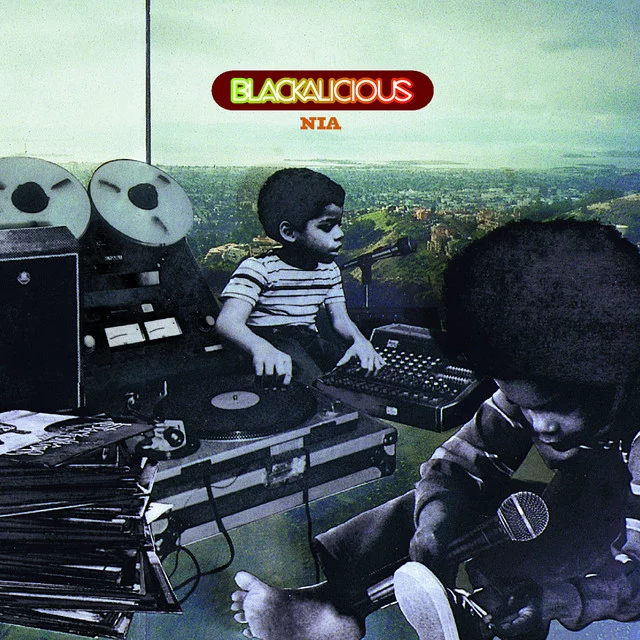
Nia is Swahili for “purpose,” one of the seven principles of Kwanzaa, and Blackalicious took the word seriously. Their debut is full of songs about intention: rappers chasing the wrong things, people losing themselves to money and image, and the effort it takes to stay pointed in the right direction. What keeps it from turning into a sermon is the way Gift of Gab raps. He packs syllables into a bar the way a drummer fills a roll, accenting odd beats, stacking internal rhymes three and four deep, then suddenly relaxing into a conversational line so the listener can catch up.
“Deception” puts that skill to work on a cautionary tale about the pull of fame. “Shallow Days” turns its attention to materialism inside Hip Hop itself, never preachy, more puzzled at how easily people get distracted. “Cliff Hanger,” produced by DJ Shadow, is the album’s longest flight of imagination, an adventure story told in chapters with Gab narrating every twist at breakneck speed. “If I May,” with Lateef the Truthspeaker, and “Smithzonian Institute of Rhyme” open the door to the wider Solesides/Quannum family, and the trading of verses has the ease of friends who’d been on the same stages for years.
Chief Xcel is the reason all that density never wears the listener out. His beats are warm and roomy: crisp, swinging drums, round melodic basslines, and jazz, soul and funk samples layered with care so there’s always a melody to hold onto when Gab’s rhymes get dizzying. He leaves space in the mix, and Gab fills it. Nikki Giovanni’s poetry appears on the album, and her presence links Blackalicious and an older tradition of Black spoken word explicit.
At 74 minutes, Nia asks for patience, and a few of the mid-tempo cuts in the second half blur into one another. The ideas hold up across the whole running time, though, and the album’s mix of humor, spirituality and technical brilliance had few equals in 1999’s crowded underground.
Three years later, the duo took the same partnership to a major label with Blazing Arrow, a bigger and brighter record that began here.
41. A Tribe Called Quest - People's Instinctive Travels And the Paths Of Rhythm (1990)
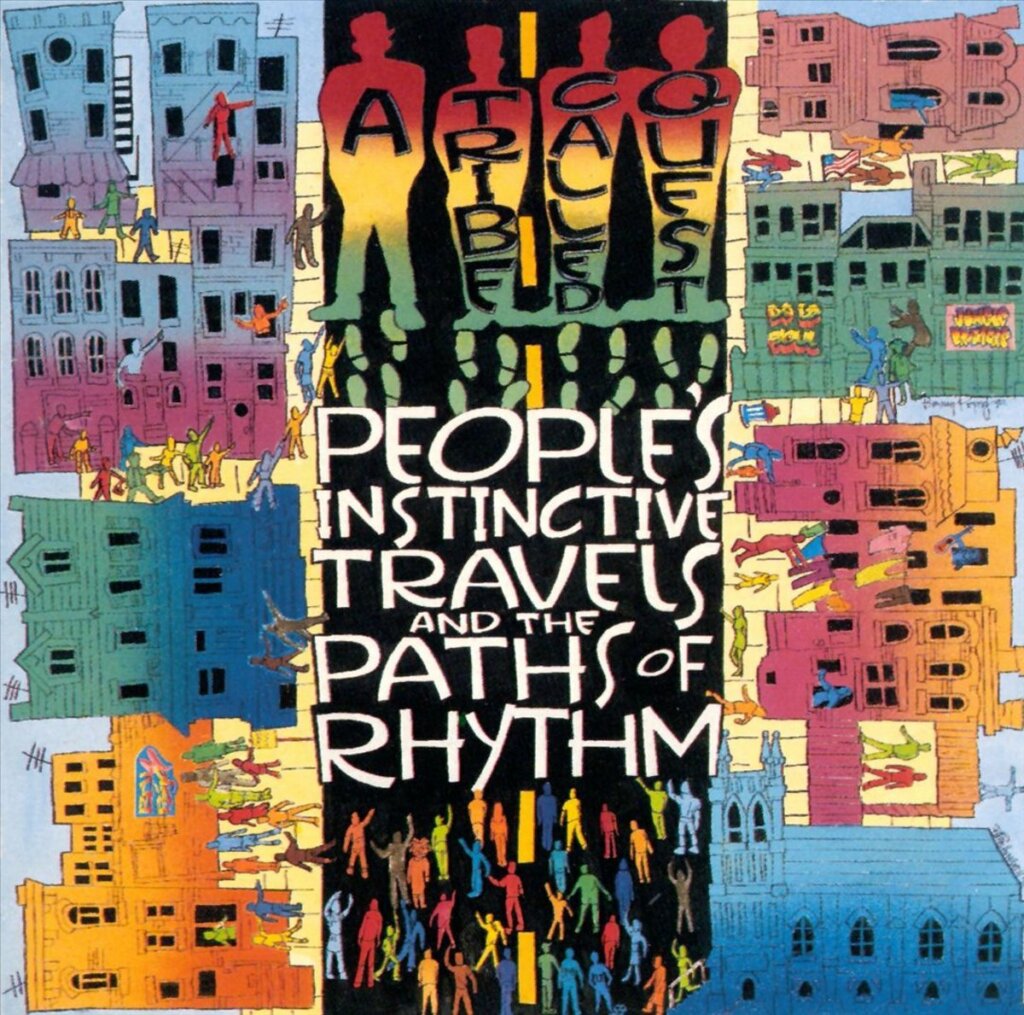
At a time when much of New York rap was becoming increasingly aggressive, A Tribe Called Quest offered a refreshing alternative. Emerging from the Native Tongues collective, the Queens group brought a playful, open-minded sensibility to People’s Instinctive Travels and the Paths of Rhythm, their April 1990 debut. Q-Tip’s relaxed, conversational delivery, Ali Shaheed Muhammad’s inventive turntablism, and an adventurous musical palette gave the album a personality quite unlike anything else in the year’s releases. Phife Dawg was still finding his footing, appearing less prominently than on the group’s subsequent records, while Jarobi White contributed to the collective spirit.
Q-Tip handled most of the production, drawing from jazz, funk, soul, and rock to create grooves that were warm, unpredictable, and full of interesting details. Music by Grover Washington Jr., Donald Byrd, Roy Ayers, and Lou Reed found new life through inventive sample combinations. The results range from the seductive jazz-funk of “Bonita Applebum” to the irresistible communal groove of “Can I Kick It?,” built around a memorable Lou Reed sample. “I Left My Wallet in El Segundo” takes an amusing, unconventional storytelling detour, while “Ham ‘n’ Eggs” turns an everyday subject into a playful rap excursion.
The D.A.I.S.Y. Age influence is evident in the album’s lighthearted attitude and rejection of conventional rap posturing, although Tribe was already developing an identity distinctly their own. Q-Tip’s understated delivery allows the words to flow naturally with the music, while the production rewards repeated listening with its imaginative combinations of sounds.
In retrospect, People’s Instinctive Travels was the beginning of something special. Tribe would reach greater artistic heights on subsequent albums, with Phife becoming an increasingly central voice, but their debut already contained the musical curiosity, humor, and chemistry that made the group so beloved. Its relaxed approach offered a compelling alternative to the prevailing sounds of 1990 and opened another exciting chapter in Hip Hop’s evolution.
42. Jeru The Damaja - The Sun Rises In The East (1994)

The drip that runs through “Come Clean” comes from a percussion piece by Shelly Manne. DJ Premier treats it as the melody, letting the water-drop clicks ring over a bare beat until they sound like a clock ticking in an empty room. Jeru the Damaja used that space for a sermon against rappers selling fake images, and the single became one of the most recognizable sounds of 1994.
Premier produced all of The Sun Rises in the East and kept it skeletal: heavy drum breaks, warped jazz fragments, stray melodic scraps and sharp scratches, with almost nothing that works as a conventional hook. The austerity suits Jeru, who raps with the gravel and conviction of a street preacher. His cadence is measured and slightly off-kilter, lagging behind the drums before catching up, so every lesson sounds deliberate.
The lessons draw on Five Percent teachings and a deep distrust of ignorance. “You Can’t Stop the Prophet” turns spiritual combat into an allegory, with Jeru as a warrior facing the forces that lead people astray and Premier’s scratches punctuating the fight. “Ain’t the Devil Happy” applies the same moral lens to greed and violence, while “D. Original” and “My Mind Spray” are pure technique. Afu-Ra, a fellow Gang Starr Foundation member, joins him on the brief “Mental Stamina.”
His judgments don’t always cut so cleanly. “Da Bichez” sets out to criticize how rap treats women, then slides into a lecture that flattens the people it describes.
The cover shows the World Trade Center in flames. Jeru intended it as a symbol of a corrupt industry burning, and seven years later the image took on a terrible second meaning. Across 40 minutes, he plays the man holding the match.
43. Scarface - The Diary (1994)
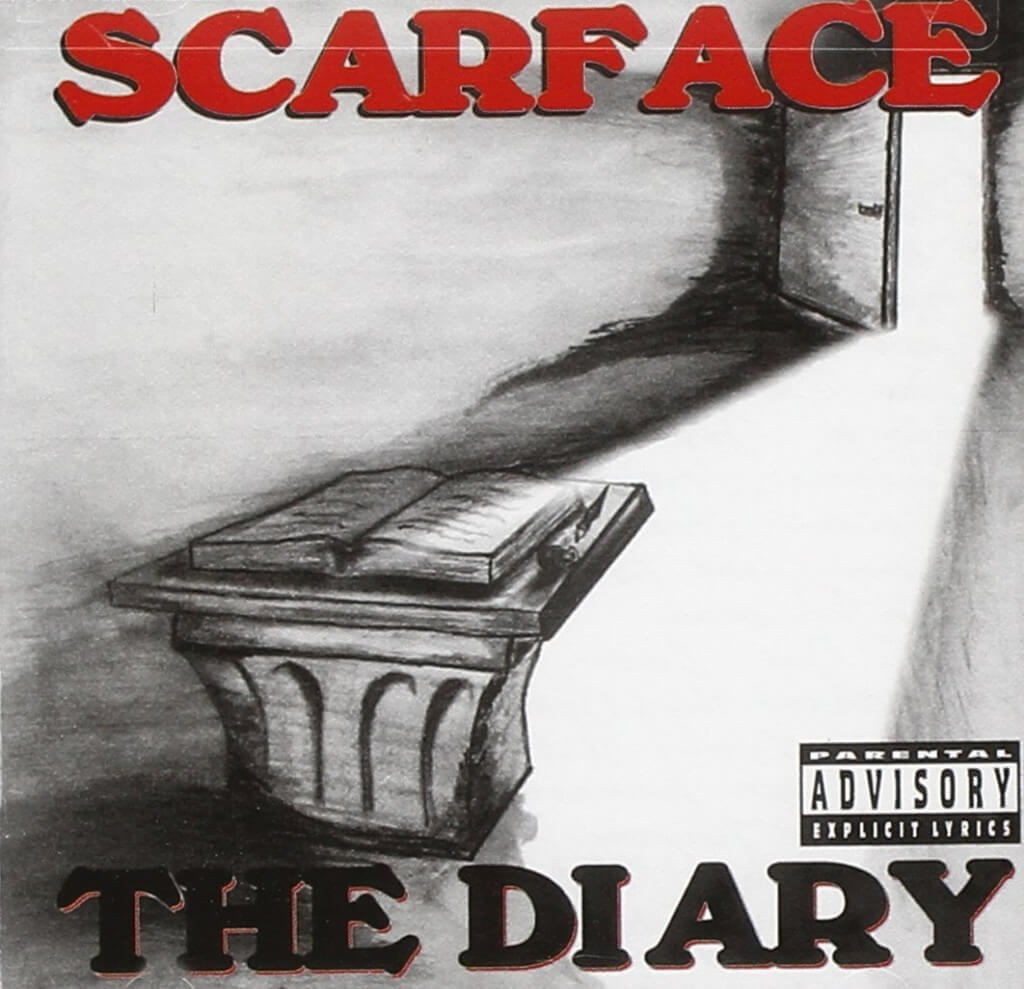
Scarface’s voice is low, round, and unhurried, and he rarely pushes it. That restraint is what makes The Diary frightening. He describes revenge killings and sleepless paranoia in the tone of someone running through the day’s errands, and the menace comes from how well he understands the people in his stories and the choices they make.
N.O. Joe and Mike Dean produced most of the album, with Scarface co-producing a good share of it, and together they built one of the great Houston rap albums from deep basslines, eerie keyboards and slow, heavy drums. The arrangements leave wide open spaces, so the voice always sits in front. “The White Sheet” and “Jesse James” set the tone with scenes of retaliation and sudden death, and the beats creep instead of charge.
“I Seen a Man Die” is the album’s center. Scarface follows a man through poverty, crime and prison to an early death, and he never reduces him to a cautionary symbol. Retitled “Never Seen a Man Cry” for radio, it became his first top 40 hit, a striking result for a song this bleak. “Mind Playin’ Tricks ‘94” goes back to the Geto Boys classic and strips it down to one man alone with his fears.
The album has lighter moments too. “Goin’ Down” rides a playful keyboard groove that lets his humor and swagger out. On “Hand of the Dead Body,” with Ice Cube and Devin the Dude, he takes on the politicians and media figures who blamed rap for violence while ignoring poverty and neglect. The rest of the record backs up the argument, because nobody on it treats violence as entertainment.
The closing title track turns fully inward, with Scarface laying out the thoughts and experiences that made him. Within two months The Diary had gone platinum, which put a million copies of a record that never claims the life is worth it into people’s homes.
44. Camp Lo - Uptown Saturday Night (1997)

While most of New York was busy painting the city in shades of grey, two MCs from the Bronx showed up dressed for a night out in 1970s Harlem. Sonny Cheeba and Geechi Suede of Camp Lo sound like nobody else from their era. They’re something like a hybrid of OutKast, The Pharcyde, and De La Soul, with a style all their own. Uptown Saturday Night came out in January 1997, and it trades the street-level realism of Nas, Mobb Deep, and Biggie for escapism, high fashion, and nightlife, all with effortless cool.
Much of that cool comes from Ski, who was fresh off his work on Jay-Z’s Reasonable Doubt and produced nearly the entire album. His beats are warm, horn-driven, and velvet-smooth, steeped in vintage soul, funk, and jazz. “Luchini AKA This Is It” is built on a Dynasty sample, and it’s the obvious highlight: a joyous, strutting anthem that has lost none of its shine. The quality runs deep, though. “Coolie High” is pure nostalgia, “Black Connection” glides, and “Black Nostaljack AKA Come On” swings as hard as anything from that year. Trugoy the Dove of De La Soul stops by to produce and rap on “B-Side to Hollywood.”
Then there are the rhymes. Cheeba and Suede treat their voices like instruments, trading bars with insanely smooth flows and easy chemistry. Their lyrics are a dense patchwork of jive talk, fashion labels, blaxploitation references, and slang of their own making. A lot of it is closer to coded poetry than conventional storytelling. Some listeners find it hard to follow, but that misses the point. On this album, cadence and color matter more than literal meaning, and few MCs have ever made words sound this good.
Even the packaging is a work of art. The title nods to the 1974 Sidney Poitier and Bill Cosby comedy. The cover pays homage to Ernie Barnes’ painting The Sugar Shack, known from Good Times and Marvin Gaye’s I Want You.
Uptown Saturday Night reached No. 27 on the Billboard 200 and No. 5 on the R&B albums chart, yet it never got the recognition it deserved at the time. The years have been kind to it. Today it’s rightly hailed as a masterpiece, and it sounds as fresh now as it did in 1997.
45. LL Cool J - Mama Said Knock You Out (1990)
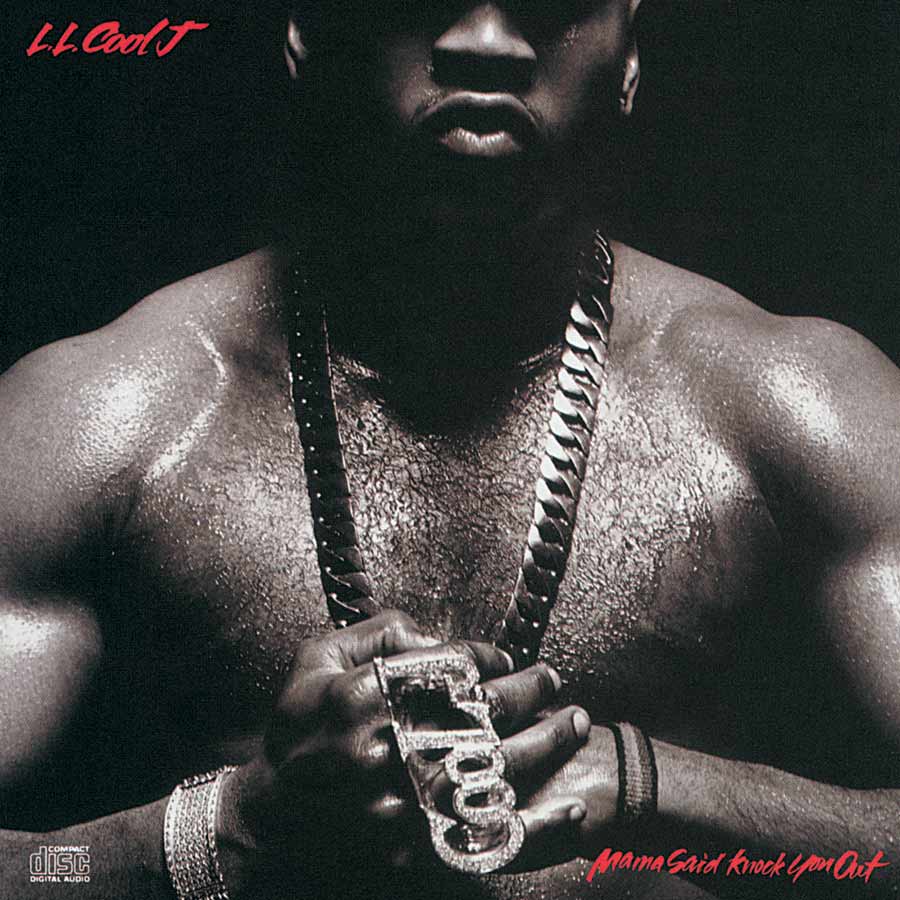
By 1990, LL Cool J was facing questions about whether his best days were behind him. His previous album, Walking with a Panther, had drawn criticism for its softer material, and some were ready to write him off. Mama Said Knock You Out provided a spectacular response. Working with Marley Marl, LL returned with a harder, more commanding sound and the confidence of an MC determined to remind everyone why he belonged among Hip Hop’s elite.
“The Boomin’ System” opens with thick bass, sharp percussion, and an infectious groove. LL sounds completely at home, combining his trademark rhythmic ease with renewed aggression. The contrast with “Around the Way Girl” is striking. Built around a soulful, irresistible groove, the track finds him celebrating the women and everyday characters of his neighbourhood with warmth and charm. It is one of the album’s most enduring moments and a reminder of his considerable versatility.
The title track is the defining statement. Marley Marl’s booming production gives LL the perfect platform for an explosive performance, delivered with precision, authority, and barely contained aggression. “To Da Break of Dawn” aims MC Hammer, Kool Moe Dee, and Ice-T, with LL dismantling his rivals through sharp, entertaining battle rhymes. On “Eat Em Up L Chill,” a stripped-down beat puts the emphasis squarely on his voice and lyrical attack. Meanwhile, “Murdergram (Live at Rapmania)” brings another dose of confrontational energy.
There is substance beyond the competitive bravado. “Illegal Search” addresses racial profiling and the harassment of Black men by police, while “The Power of God” closes the album on a more reflective, spiritual note. These changes in mood give the record a satisfying breadth without interrupting its momentum.
Marley Marl’s production is consistently excellent, and LL delivers some of the strongest performances of his career. Mama Said Knock You Out is his most complete album, combining battle-ready aggression, irresistible grooves, personality, and social awareness. LL silenced his critics, and he delivered a career-defining statement that belongs among the finest Hip Hop albums of 1990.
46. Gang Starr - Hard To Earn (1994)

The song Gang Starr aimed at rappers chasing pop success ironically gave them their first Hot 100 single. “Mass Appeal” rides a hypnotic, circling loop, chopped vocal fragments and hard drums while Guru mocks anyone willing to trade credibility for airplay, and its success made the point for him: Gang Starr could reach a wide audience without bending.
Hard to Earn trades much of the jazz warmth of Step in the Arena and Daily Operation for stark loops, abrasive textures and heavier drums. “Alongwaytogo” opens on a high, unsettling whine over a tough break, and Premier leaves the arrangement nearly empty so Guru can go after the phonies crowding the game. His flat, steady baritone carries the authority, and he never needs to shout. “Code of the Streets” turns that voice to the unwritten rules of the neighborhood, while “Tonz ‘O’ Gunz” puts a menacing bassline under his look at the guns flooding the block.
The album doubles as a showcase for the Gang Starr Foundation. On “Speak Ya Clout,” Guru, Lil’ Dap and Jeru the Damaja each rap over a different Premier beat, and the switches give every MC a backdrop cut to fit. Big Shug joins on “F.A.L.A.,” and a skit packs in cameos from Nas, A.G., Masta Ace and MC Eiht. “Dwyck,” a 1992 single the label insisted on including, lets Greg Nice and Smooth B loosen the mood with their bouncy back-and-forth.
That family feel is the record’s lasting imprint. Within months, Premier had produced Jeru’s debut, and Group Home were next in line. Hard to Earn set the house sound they would all build on.
47. Eminem – The Slim Shady LP (1999)

Eminem’s 1996 debut, Infinite, barely made a ripple, and its failure pushed him somewhere much nastier. Slim Shady was the result: an alter ego who could say what Marshall Mathers wouldn’t, mock everyone in reach, and turn his worst fantasies into punchlines. The Slim Shady LP introduced that character to the world in February 1999, and it made him a star and a target almost overnight.
Dr. Dre’s touch is clearest on “My Name Is,” where a Labi Siffre sample gives Eminem a springy, almost childlike bounce to sneer over, and on “Guilty Conscience,” where the two rappers play opposite voices in a series of moral dilemmas that get uglier until Dre drops the voice-of-reason act himself. The Bass Brothers handle most of the remaining production with plain, unflashy backdrops, and that restraint works in Eminem’s favor. With so little going on in the beat, every voice change, stretched vowel, and swerve in his cadence comes through clearly. “Role Model” and “Just Don’t Give a Fuck” are exercises in pure technique and provocation, and “Bad Meets Evil,” with Royce da 5’9″, reveals the competitive Detroit battle rapper under the persona.
The album gets considerably more interesting when the theatrics slip. “Rock Bottom” and “If I Had” are about minimum-wage jobs, empty bank accounts, and the shame of struggling to provide for his daughter, and they give the anger elsewhere a recognizable source. The horror stories are harder to sit with. “Brain Damage” plays a schoolyard beating for slapstick, and “‘97 Bonnie & Clyde” sets a murder over a gentle reworking of Bill Withers’ “Just the Two of Us,” with Eminem cooing to his infant daughter as he disposes of her mother. The craft is undeniable, but some of the misogyny and violence is hard to defend, even within the album’s deliberately exaggerated frame.
His command of language carries the record: internal rhymes that chain across whole verses, comic timing sharp enough to land a joke on the last syllable of a bar, and narratives that twist mid-line. The character made him famous. The broke father on “Rock Bottom” is the reason anyone believed the character.
48. Black Moon - Enta Da Stage (1993)

Black Moon’s debut is one of the defining records of early-1990s Brooklyn street rap. Where much of Hip Hop in 1993 was moving toward the smoother, funk-driven sound coming out of Los Angeles, Enta Da Stage took a darker route. DJ Evil Dee and Da Beatminerz built the album around dusty jazz samples, heavy basslines, hard snares, and rugged drum breaks. The result is a sound that feels distinctly New York: stripped down, menacing, and full of attitude. From the ominous opening of “Powaful Impak!” onward, the production sets a mood that rarely lets up.
Buckshot is the voice at the center of it all. His relaxed but commanding delivery gives the battle rhymes a natural authority, and his timing is as important as the words themselves. “How Many MCs…” finds him dismissing inferior competition with infectious confidence, while “Buck Em Down” hits with a harder, more confrontational edge. He doesn’t need elaborate vocal tricks or theatrical aggression. His Brooklyn cadence and sharp wordplay are enough to make every verse count. The presence of Five Footaz adds to the crew atmosphere, while the interplay between Buckshot and the Beatminerz gives the album a remarkably consistent character.
“Who Got Da Props?” became Black Moon’s signature track, its memorable hook and irresistible groove offering an immediate way into the album. “I Got Cha Opin” takes a jazzier approach, with a looser rhythm that provides welcome variation. These tracks demonstrate that Enta Da Stage isn’t limited to battle rhymes and hard-edged posturing. There is musicality and groove throughout, even when the lyrical subject matter turns confrontational.
The album arrived as New York rap was reclaiming attention amid the commercial dominance of West Coast G-funk. Black Moon helped set the tone for a wave of rugged East Coast releases, with the Beatminerz production approach proving especially influential. Enta Da Stage has lost none of its appeal: every drum break, sample, and Buckshot verse contributes to a sound that remains instantly recognizable.
49. Goodie Mob - Soul Food (1995)

OutKast looked at Atlanta with wide eyes and a taste for experimentation. Their friends in Goodie Mob looked at the same streets and saw the weight. On Soul Food, Cee-Lo, Khujo, Big Gipp and T-Mo write about poverty, racism, faith and family as if each subject were a load carried on the back, and the album never pretends the load is light.
The record opens with “Free”, Cee-Lo’s voice rising almost unaccompanied in a gospel cry, and that spiritual pull runs through everything after. Organized Noize build the music from Southern roots: heavy drums and thick basslines under twanging guitars, mournful harmonica, organ swells, and soulful vocal refrains. The warmth of those sounds pushes against the bleakness of the lyrics, so even the darkest songs carry a sense of home.
“Cell Therapy” is the album’s most unsettling moment. Over a creeping, ominous groove, the group describes a world of surveillance and social control, gated communities and helicopters overhead, a country tightening its grip on its Black citizens. It sounds paranoid until you listen to the details. “Thought Process” lets each member lay out his own version of the pressure, and the differences matter: Cee-Lo raspy and preacherly, the other three blunter and closer to the pavement.
The title track turns a family meal into a portrait of the traditions that keep a community together, and “Guess Who” pays heartfelt tribute to mothers and what they gave up. Then “Dirty South”, with Big Boi alongside, rides a bass-heavy Organized Noize beat and turns a regional nickname into a banner. Goodie Mob helped carry that phrase into the wider Hip Hop vocabulary at a time when Southern artists still had to fight for a hearing.
Soul Food gave Atlanta its conscience: four men at the dinner table, saying grace and naming everything that threatened the meal.
50. Common - Resurrection (1994)

“I Used to Love H.E.R.” works as a love story long enough that a first-time listener can miss the twist. Common describes a girl he met as a child, follows her through her Afrocentric phase and her move out West, and watches her fall for money and gunplay. Only in the final line does he reveal that she was Hip Hop all along. No I.D. sets the story over a soft George Benson sample, and the restraint of the beat lets the disappointment register as personal heartbreak. Ice Cube heard it as an attack on West Coast rap, answered on “Westside Slaughterhouse,” and got “The Bitch in Yoo” in return before the two settled things privately at Louis Farrakhan’s home.
The rest of Resurrection shows how far Common Sense, billed under that full name for the last time, had come since the jokey Can I Borrow a Dollar? No I.D. builds most of the album from dusty jazz loops, supple basslines and soft piano, with drums that sit back in the mix. Common’s rhymes curl around them, packing syllables into odd corners of the bar. “Communism” is pure wordplay, an entire verse built from words that begin with “com.” “Thisisme” trades jokes for self-examination, and “Chapter 13 (Rich Man Vs. Poor Man),” one of two tracks produced by Ynot, turns economic inequality into a dialogue.
Interludes and references to Stony Island Avenue split the record into East Side and West Side halves and give it the feel of a long day on Chicago’s South Side. Rolling Stone put it alongside Illmatic, Enter the Wu-Tang and Ready to Die. The charts disagreed: the album peaked at No. 179 and was gone a week later.
The last voice on Resurrection belongs to his father, Lonnie “Pops” Lynn, reading poetry on “Pop’s Rap,” a closing ritual Common has kept ever since. On an album about losing a first love, his roots get the final word.
51. People Under The Stairs – The Next Step (1998)
The first pressing of The Next Step came with a beedi tucked into the spine of the CD case. That detail tells you a lot about the debut from Los Angeles duo People Under the Stairs: every part of it was made by hand. Thes One and Double K recorded the album at Thes One’s home on an E-mu SP-1200, an Akai MPC3000 and an eight-track ADAT. They mixed it themselves, designed their own artwork and paid for their first twelve-inch with Thes One’s student loan.
The sound is warm and sunlit: dusty jazz loops, funk breaks and crisp, swinging drums, with scratches stitched between the verses. In 1998, that put them out of step. Local DJs passed on it, DJ Vadim wrote to Om Records to say signing the group was a mistake, and distributor Phat Beats turned the album down for not sounding “New York” enough.
The two MCs pass the mic like old friends, with chatty, witty verses about crate digging, industry pretenders (“Wannabes”) and long days in their city. “Mid-City Fiesta” and “Los Angeles Daze” capture that easygoing hometown mood in boom-bap form. “San Francisco Knights,” written after a trip north in 1996, floats on a hazy, dreamlike sample and became their signature live song, so beloved that plenty of fans assumed the group came from the Bay. “The Next Step II” borrows the words of “Movin’ On Up,” the theme from The Jeffersons. When the owner of the Mr. Bongo record shop played the twelve-inch in store, it sold out within minutes. He called Chris Smith at Om Records, who signed the duo and gave the album a proper reissue.
At 73 minutes, the record sprawls. Long intros and outros and loose posse tracks with Assault, Naimad and Shine 5 let the energy drift between the strongest songs. That looseness is part of the charm, though: it sounds like a house full of friends and records.
Overseas listeners caught on first, sending the duo on their first world tour. At home, the album that started their run of excellent records is still a slept-on gem.
52. Eric B & Rakim - Let The Rhythm Hit Em (1990)

By the time Eric B. & Rakim reached their third album, their influence on MCing was already considerable. Let the Rhythm Hit ‘Em finds the duo refining their established formula while exploring a darker, more varied production approach. Rakim’s measured delivery and intricate rhyme patterns are still the main attraction, but the album benefits considerably from the contributions of producers Paul C and Large Professor.
Paul C, whose work on the album preceded his tragic death, provided much of its hard-edged musical foundation. A young Large Professor helped complete the project, bringing his emerging jazz-inflected production sensibility to several tracks. The result is a compelling mixture of stripped-down drum patterns, atmospheric samples, and tougher grooves.
The title track gets things moving with ominous production and a commanding Rakim performance. His controlled delivery makes even the densest rhyme patterns sound effortless, while the beat gives his words plenty of room to land. “No Omega” is another lyrical highlight, driven by the unmistakable break from James Brown’s “Funky Drummer.” Rakim uses the track to demonstrate his remarkable rhythmic precision and ability to construct intricate verses without sacrificing clarity.
“In the Ghetto” offers a change of perspective. Over Large Professor’s more subdued production, Rakim turns his attention to the harsh realities of life in disadvantaged neighbourhoods, delivering thoughtful observations without resorting to melodrama. “Eric B. Made My Day” shifts the focus toward Eric B.’s scratching, recalling the DJ-centred foundations of the duo’s earlier work.
Although Let the Rhythm Hit ‘Em doesn’t quite match the groundbreaking heights of Paid in Full or Follow the Leader, its tougher atmosphere and evolving production give it a distinct identity. Rakim is in formidable form, and the album captures one of Hip Hop’s greatest MCs continuing to sharpen his craft.
53. Smif-N-Wessun – Dah Shinin’ (1995)

Tek and Steele sound like two friends finishing each other’s sentences on a stoop. Their voices are rough, conversational and close together, and on their full-length debut they trade lines so naturally that whole songs come across as a single conversation overheard. Dah Shinin’ arrived ahead of most of the Boot Camp Clik catalog and set the tone for it.
Da Beatminerz, the production team of Mr. Walt and Evil Dee, give the duo a sound built from murky jazz samples, thick, brooding basslines and heavy drums mixed loud and low. “Bucktown” is the centerpiece, a hypnotic saxophone loop over a marching rhythm that turns their corner of Brooklyn into a place of danger, loyalty and local reputation. The arrangement barely changes, and it does not need to: the loop settles in, the drums do the lifting, and Tek and Steele supply the swagger.
Their shared Jamaican heritage marks the record apart from its peers. “Sound Bwoy Bureill” mixes patois and sound-system rivalry into hardcore boom-bap, and the pair sound completely at home in both languages. “Wrektime” and “Wontime” open the album with blunt, forceful performances, and “Cession At Da Doghillee” crowds Boot Camp affiliates onto one loose, rowdy posse cut where the chaos is half the fun.
The subject matter seldom wanders far from weed, weapons and neighborhood codes. That narrow focus works because the partnership and the beats carry so much character; repetition becomes atmosphere. At close to 70 minutes the album asks for patience, though the consistent mood and the strength of the early run keep it moving.
Dah Shinin’ captured Brooklyn’s underground at the moment it found its own sound, a smoky, bass-heavy murk that the rest of the Clik would spend the next two years exploring.
54. Cypress Hill - Cypress Hill (1991)

Cypress Hill’s self-titled debut introduced a distinctive West Coast sound, built around DJ Muggs’ dark, psychedelic production and the contrasting voices of B-Real and Sen Dog. B-Real’s high-pitched, nasal delivery was unlike anything else in mainstream rap, while Sen Dog’s gruff baritone added weight and aggression. The Los Angeles trio also brought Mexican-American identity and outspoken cannabis advocacy into a Hip Hop landscape where those perspectives were still underrepresented. Their appeal eventually extended well beyond traditional rap audiences, helped by substantial airplay on urban and college radio.
DJ Muggs produced the entire record, drawing on funk, soul, and rock samples to create bass-heavy tracks filled with eerie textures, unconventional rhythms, and unsettling details. The music has a sinister atmosphere, although there is plenty of funk beneath the darkness. “How I Could Just Kill a Man” is the obvious centerpiece, driven by its memorable bassline and B-Real’s vivid, confrontational storytelling. “Hand on the Pump” continues the street-level menace, while “The Phuncky Feel One” brings the group’s funk influences to the foreground. Cannabis culture runs through tracks like “Stoned Is the Way of the Walk,” delivered with the casual conviction that would become central to Cypress Hill’s identity. “Latin Lingo” incorporates Spanish phrases into the group’s rhymes, giving the track a cultural specificity that was unusual in mainstream Hip Hop at the time. Short instrumental passages add to the album’s hazy, occasionally surreal character.
Cypress Hill eventually went double platinum, opening doors for a generation of listeners who might not otherwise have explored Hip Hop. The combination of Muggs’ murky, sample-heavy beats, B-Real’s unmistakable voice, and the interplay with Sen Dog gave the group an identity that was difficult to imitate. Black Sunday would take Cypress Hill to even greater commercial heights in 1993, but the debut already had the ingredients: a compelling sound, a distinct cultural perspective, and an attitude entirely its own.
55. Freestyle Fellowship - Innercity Griots (1993)
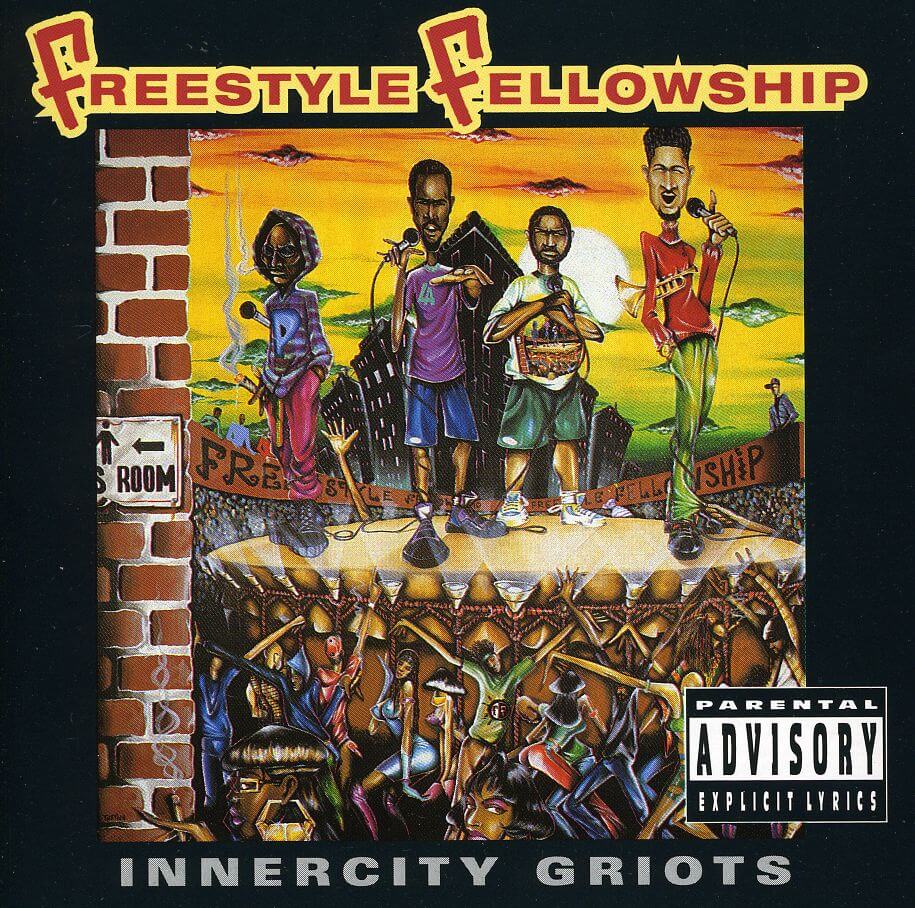
Freestyle Fellowship’s second album takes the promise of their rough-edged debut, To Whom It May Concern, and turns it into something considerably more ambitious. Myka 9, Aceyalone, P.E.A.C.E., and Self Jupiter had developed their skills in the Los Angeles underground surrounding the Good Life Cafe and Project Blowed, where MCs were encouraged to experiment with rhythm, language, and unconventional approaches to rapping. On Innercity Griots, that spirit comes through in every performance. The four rappers push each other into increasingly intricate exchanges, making the album a remarkable display of collective skill and imagination.
Their individual styles are clearly defined, but the real excitement comes from the way they interact. They trade lines, switch cadences, interrupt one another’s patterns, and weave elaborate rhyme schemes into performances that rarely follow predictable paths. Myka 9’s elastic flow, Aceyalone’s inventive phrasing, P.E.A.C.E.’s intensity, and Self Jupiter’s commanding presence give the group a wide range of voices. Tracks like “Respect Due,” “Heavyweights,” and “Everything’s Everything” capture the competitive energy and lyrical ingenuity that made Freestyle Fellowship such a distinctive crew.
The production is equally unconventional. Jazz is a major influence, with loose arrangements, unexpected shifts, and live-sounding instrumentation providing an ideal setting for the MCs. “Inner City Boundaries,” featuring Stetsasonic’s Daddy-O, combines that musical approach with thoughtful observations about urban life and identity. “Way Cool” moves in a funkier direction, giving the four members room to play off one another over a lively groove.
There is also a more reflective side to the album. “Park Bench People” is a standout, with Myka 9 observing the people around him and addressing poverty, addiction, and the daily realities of life on the street. Its understated jazz backdrop gives his storytelling room to breathe. “Hot Potato,” built around a sample of The Grass Roots’ “You and Love Are the Same,” provides a welcome change of pace with its infectious bounce.
Innercity Griots belongs in the company of adventurous early-1990s records like The Low End Theory, Bizarre Ride II the Pharcyde, and Buhloone Mindstate. Freestyle Fellowship brought a distinctly Los Angeles perspective to this alternative strain of Hip Hop, combining extraordinary technical ability with musical curiosity, humor, and social awareness.
56. Dr. Dooom – First Come, First Served (1999)
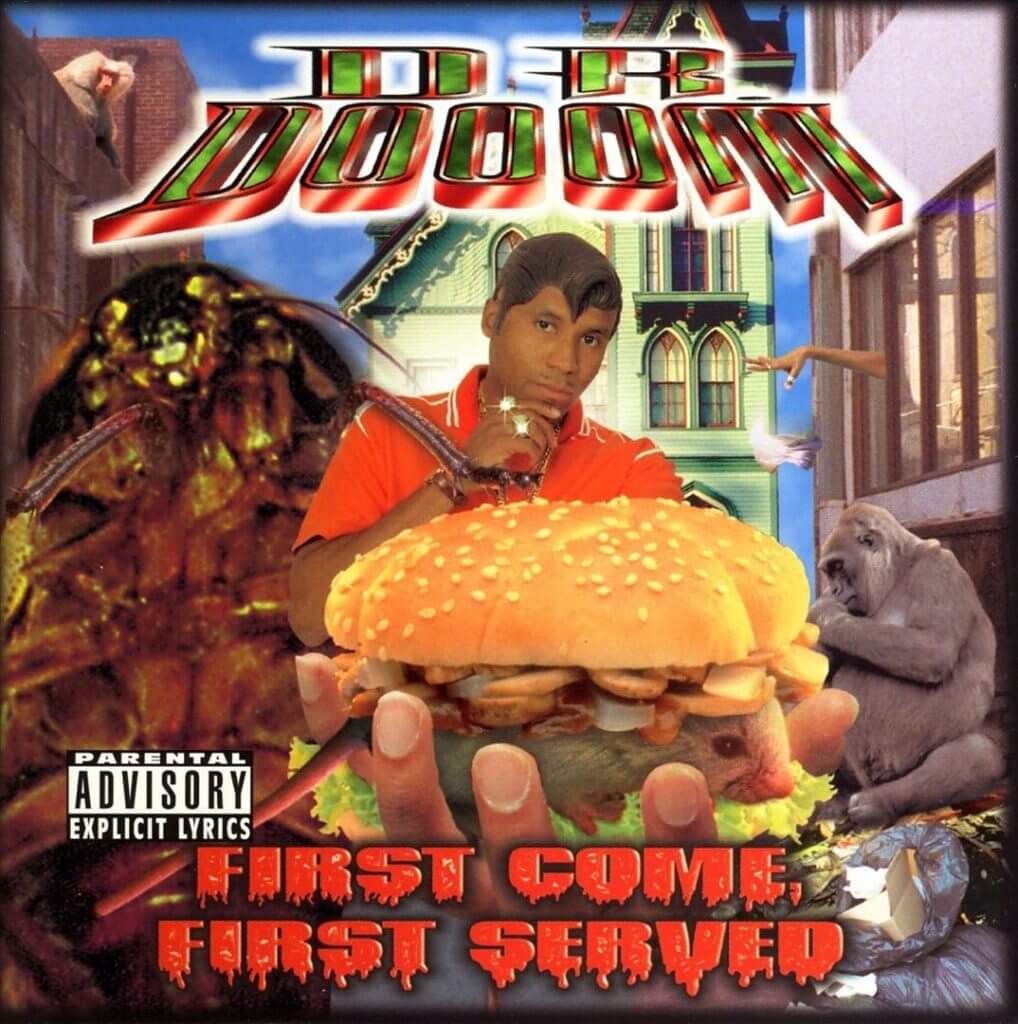
The first thing Dr. Dooom does is kill Dr. Octagon. Seconds into First Come, First Served, Kool Keith has his new alter ego shoot the alien gynecologist who made him a cult star in 1996, and with that he slams the door on the alternative-rock crowd that Dr. Octagonecologyst had invited in. Dr. Dooom is a cannibal living in a roach-infested project apartment, and he has no interest in being liked.
The beats come from KutMasta Kurt, Keith’s longtime collaborator, and they are the opposite of Dan the Automator’s widescreen sci-fi. Loops are grimy and short, snares crack dry, and the funk samples are stripped down to a few bars of bass and keys with something sour underneath. “Apartment 223” sets eerie keys over pounding drums while Keith describes body bags in the hallway and a blood-stained fridge in the flat tone of someone reading a grocery list. It’s horrorcore, but the deadpan delivery makes it funny.
Comedy does most of the work. “You Live at Home with Your Mom” mocks lazy rappers with a hook sung in a distorted, sneering voice, cruel and catchy. “No Chorus” delivers on its title: verse after verse of insults at unoriginal MCs with no hook to break the tension. Keith’s flow sounds forever on the verge of losing the beat, then lands every time. On “Leave Me Alone,” he lets the mask slip a little, grumbling about industry paychecks and writing sessions with bitter detachment. “Bitch Gets No Love” pushes misogyny so far it borders on parody, though Keith never winks.
Motion Man sharpens “Housing Authority,” while Jacky Jasper mostly gets lost next to Keith. The cover parodies No Limit’s Pen & Pixel artwork.
Dr. Octagon got the cult following. Dr. Dooom got the last word.
57. Wu Tang Clan - Wu Tang Forever (1997)

Following up a debut like Enter The Wu-Tang is hard enough. Following up that debut, plus solo albums from Method Man, Ol’ Dirty Bastard, Raekwon, GZA, and Ghostface Killah – several of them classics in their own right – is something else entirely. The Wu-Tang Clan’s answer was to go bigger: a double album with more than two dozen tracks, released in June 1997.
That kind of scale usually spells trouble, and Wu-Tang Forever has its share of excess. It could have done with fewer tracks and certainly fewer skits, and the second disc loses steam in places. But the highs are so high that the lulls hardly matter. The first disc rarely lets up. It runs from the grit of “Severe Punishment” and “For Heaven’s Sake” to “A Better Tomorrow,” where the Clan tackles social issues over haunting melodies.
RZA’s sound had evolved a lot since 36 Chambers. Across the solo albums, he had moved away from raw minimalism toward something more cinematic. Here he goes further, layering strings, heavy synths, soul samples, and kung fu dialogue into dense, moody soundscapes. For the first time on a group album, he also shared production duties, handing beats to his protégés 4th Disciple and True Master and to Inspectah Deck.
On the mic, nearly everyone is at the top of their game. Ol’ Dirty Bastard is sadly underused, but Raekwon and Ghostface trade vivid bars on “The M.G.M.” Ghost’s verse on “Impossible” was later called the greatest Wu-Tang verse ever written by none other than RZA. Deck, meanwhile, steals the show on “Triumph,” a nearly six-minute posse cut with no hook that somehow became the lead single. His opening verse is widely considered one of the greatest in Hip Hop history, and the rest of the Clan rises to meet it.
Despite limited radio play, the album became the group’s best-selling release and earned a Grammy nomination for Best Rap Album. Fans still argue over whether it needed to be this long. We’d rather have too much Wu than too little. Messy at times and magnetic throughout, Wu-Tang Forever captures nine MCs at the height of their ambition.
58. 2Pac - All Eyez On Me (1996)

In October 1995, Suge Knight and Jimmy Iovine posted the $1.4 million bail that freed 2Pac from prison. In return, he signed a three-album deal with Death Row. Four months later, on February 13, 1996, he delivered the first two of those albums in one go. All Eyez on Me, originally titled Euthanasia, runs over two hours across 27 tracks of West Coast funk, confrontational rhymes, party anthems and occasional moments of real vulnerability. It debuted at number one with 566,000 copies sold in its first week, captured 2Pac at the height of his fame, and became the last album he released in his lifetime.
The opening “Ambitionz Az a Ridah” sets his state of mind straight away. Over Daz Dillinger’s menacing beat, Pac attacks the microphone with an intensity few rappers have matched. That commanding delivery carries much of the album, whether he’s celebrating his freedom on “Picture Me Rollin’,” trading verses with Snoop Doggy Dogg on “2 of Amerikaz Most Wanted,” or turning on his enemies over DJ Quik’s production on “Heartz of Men.” Johnny “J” and Daz handle most of the beats, with Dr. Dre stepping in for “California Love” and the George Clinton feature “Can’t C Me.” The result is polished and frequently irresistible, built on thick basslines, rolling rhythms and the unmistakable bounce of mid-’90s Death Row.
“California Love” and “How Do U Want It” both topped the Billboard Hot 100 and made the album unavoidable, but some of its strongest moments are more personal. “Life Goes On” mourns lost friends, “I Ain’t Mad at Cha” reflects on relationships that changed, and “Only God Can Judge Me” captures his paranoia and defiance.
For all that, it is an uneven record. The second disc has several forgettable tracks, the guest verses don’t always match the main attraction, and the constant focus on partying, women, and enemies gets repetitive. We have always preferred the more focused Me Against the World, where Pac’s writing gets more room.
Still, the sheer force of his personality makes All Eyez on Me impossible to dismiss. Few MCs could convey anger, excitement, suspicion, and pain with such immediate conviction. Seven months after its release, he was gone, and the album remains the definitive portrait of 2Pac at his most famous and defiant.
59. Pete Rock & CL Smooth - The Main Ingredient (1994)

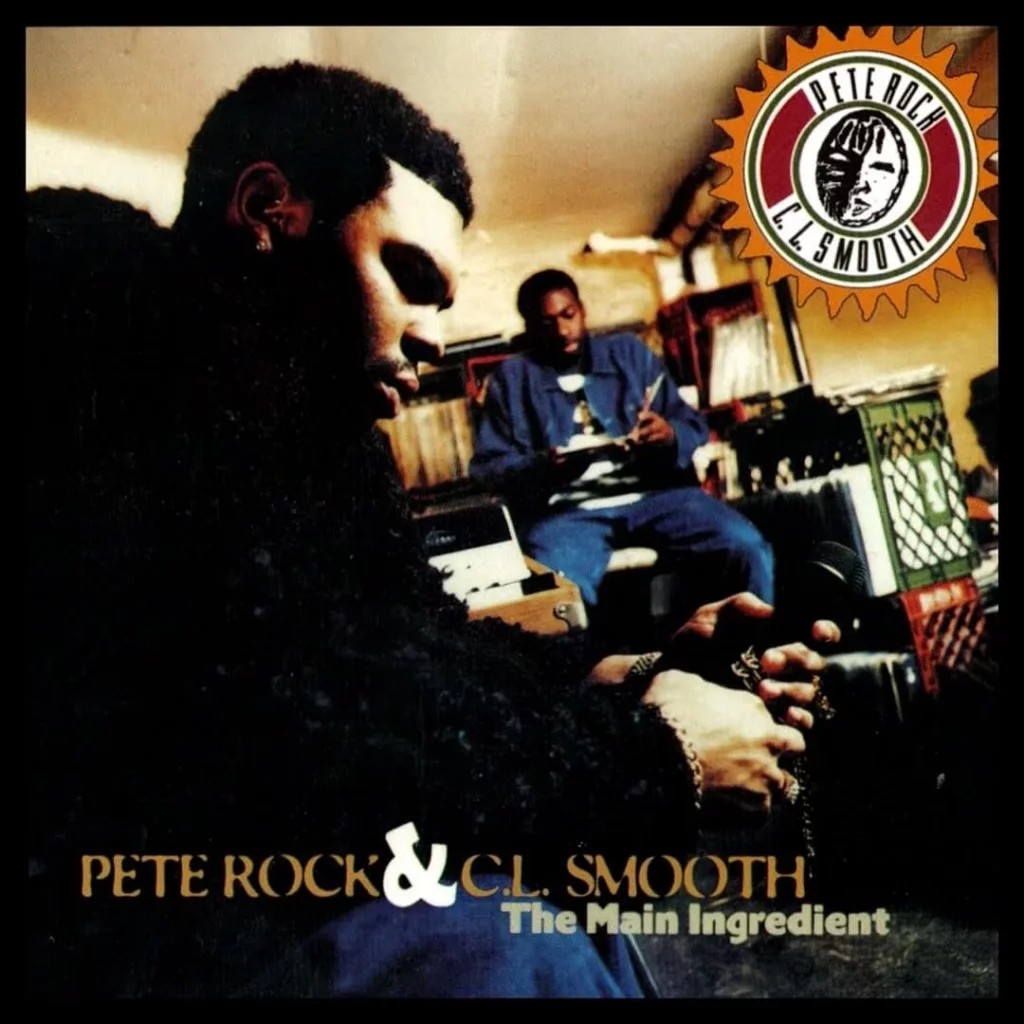
Between many of the songs on The Main Ingredient, Pete Rock slips in a few bars of something else: a horn line, a snatch of keys, a groove that plays for a moment and then dissolves into the next track. Those small instrumental bridges, carried over from Mecca and the Soul Brother, make the 76 minutes flow like a DJ set, and they tell you where the album’s heart lies.
This record belongs to the producer. Pete Rock had sharpened every part of his style: filtered basslines that sit warm and low, swirling horns, electric piano, and snappy drums that crack without turning harsh. He scratches in Biz Markie’s voice again and again, and on “Sun Won’t Come Out” he builds the hook around Harvey Scales singing the same title, turning a forgotten soul record into the album’s catchiest moment. “In the House” opens with energy and hands Pete Rock a verse of his own, while “I Got a Love” and “Carmel City” show how delicately he could chop a melody.
CL Smooth will never top anyone’s list of great lyricists, and he doesn’t need to. His smooth, even delivery glides over the beats on “Searching,” where Vinia Mojica sings the chorus, and “Take You There.” The Mount Vernon crew fill out the rest, with Rob-O, Deda, and Pete’s younger brother Grap Luva bringing a cipher-like looseness to “Worldwide” and “In the Flesh.”
The Main Ingredient had no single on the level of “T.R.O.Y.,” so it rarely comes up when people list the great albums. That’s a mistake, because it comes very close to its predecessor’s near-perfection, and few records from 1994 are this much fun to play from start to finish.
Pete Rock & CL Smooth split in 1995, shortly after a Sprite commercial put them in front of their biggest audience. Pete Rock kept making beats for decades, but this album was the last time his music came with the voice it was built for.
60. Souls Of Mischief - 93 'Til Infinty (1993)
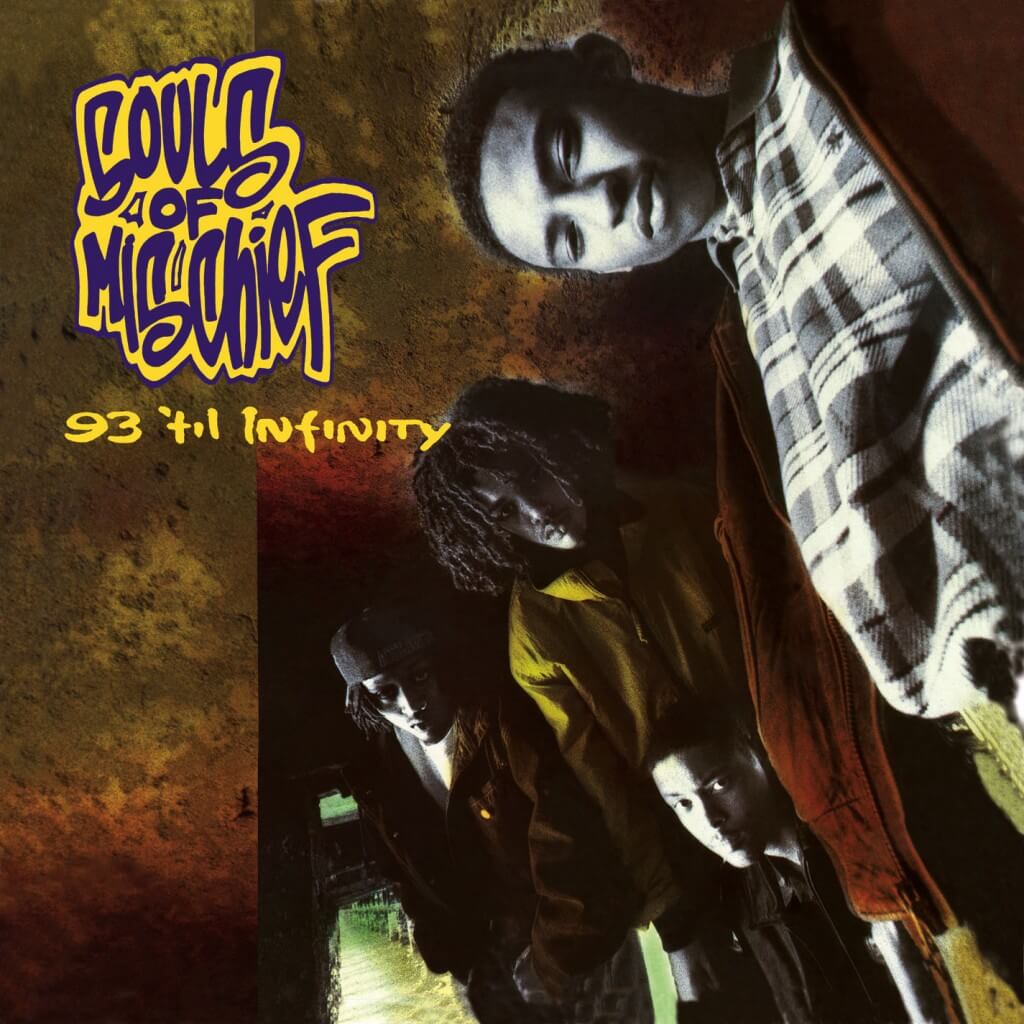
In a year when West Coast Hip Hop was often associated with gangsta rap and G-funk, Oakland’s Souls of Mischief offered a refreshing alternative. A-Plus, Opio, Phesto, and Tajai brought a youthful energy and an impressive command of language to their debut, combining intricate rhyme schemes, playful exchanges, and laid-back production. As members of the wider Hieroglyphics collective, they shared an interest in lyrical experimentation, but 93 ’til Infinity never turns technical ability into an academic exercise. The four MCs sound like friends enjoying the competition, constantly pushing one another while keeping the music loose and entertaining.
The production comes from several members of the Oakland scene, including A-Plus, Domino, Jay Biz, Del the Funky Homosapien, and Casual. Their contributions give the album a warm, jazz-inflected character, built around crisp drums, deep basslines, and memorable keyboard samples. The title track is the obvious centerpiece. A-Plus’s smooth, hypnotic beat provides the perfect setting for four verses that capture the group’s relaxed confidence and youthful outlook. Its appeal goes beyond nostalgia; the groove and performances still sound inviting decades later.
There is plenty of lyrical competition elsewhere. “That’s When Ya Lost,” produced by Del and featuring Pep Love, finds the group trading sharp, fast-moving verses over a rugged beat. “Live and Let Live” has a more reflective tone, while “Make Your Mind Up” pairs a mellow musical backdrop with the group’s trademark verbal dexterity. “Never No More,” produced by A-Plus, and “Batting Practice” further demonstrate how comfortably the four MCs move between different rhythms and approaches. Even when the subject matter revolves around boasting, relationships, and youthful experiences, the writing is full of wit and inventive detail.
61. Showbiz & AG - Runaway Slave (1992)
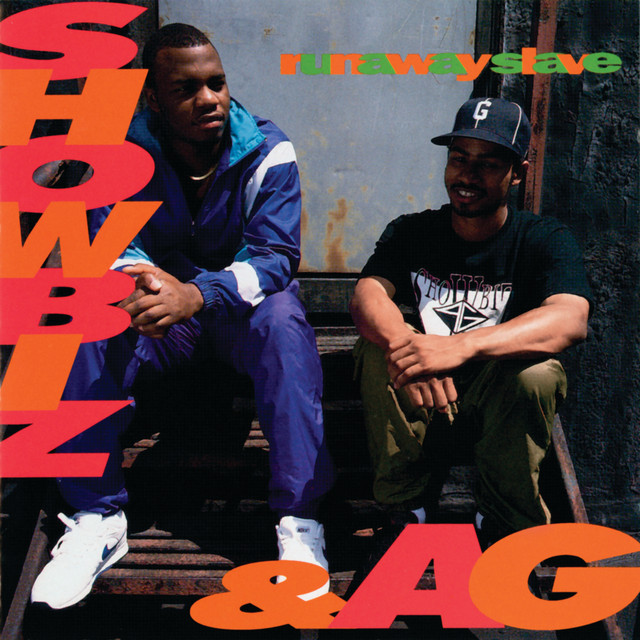
Following Diamond D’s Stunts, Blunts & Hip Hop, Showbiz & A.G.’s Runaway Slave offers another outstanding example of the musical chemistry at the heart of D.I.T.C. The Bronx duo’s debut is a remarkably consistent album, pairing Showbiz’s rugged, sample-driven production with A.G.’s relaxed but commanding delivery. Its sound is unmistakably New York: hard drums, dusty funk and jazz samples, soulful loops, and lyrics that move naturally between battle rhymes, street observations, and social commentary.
Showbiz handles most of the production, building a cohesive collection of beats with plenty of grit and musical detail. Diamond D contributes on selected tracks, adding another layer to the creative partnership that made D.I.T.C. such a formidable production collective. From the opening title track to the closing cuts, the album rarely misses. “Fat Pockets” gets things moving with a punchy groove and A.G.’s confident wordplay, while “Soul Clap” delivers an infectious funk workout. “40 Acres And My Props” brings a more reflective dimension, addressing Black history, identity, and the continuing struggle for equality. “More Than One Way Out Of The Ghetto” considers the possibilities of escaping poverty, while “Hold Ya Head” speaks to the pressures facing young Black men.
The guest appearances are another major attraction. “Represent” is the obvious highlight, bringing together Lord Finesse, DeShawn, and a young Big L. All three MCs deliver, with Big L’s explosive contribution providing an early indication of the extraordinary talent he would develop into. Dres of Black Sheep adds a different flavour to “Bounce ta This,” while the presence of other D.I.T.C. associates reinforces the sense of a close-knit Bronx scene developing its own identity. Material from the earlier Soul Clap EP also connects the album to the collective’s beginnings.
With O.C.’s Word… Life, Runaway Slave is a strong contender for the best album to emerge from the D.I.T.C. camp. It received little mainstream attention, but underground listeners quickly recognized its quality. Showbiz’s production and A.G.’s assured performances make this one of the most thoroughly enjoyable New York rap albums of 1992.
62. Digable Planets - Reachin' (1993)
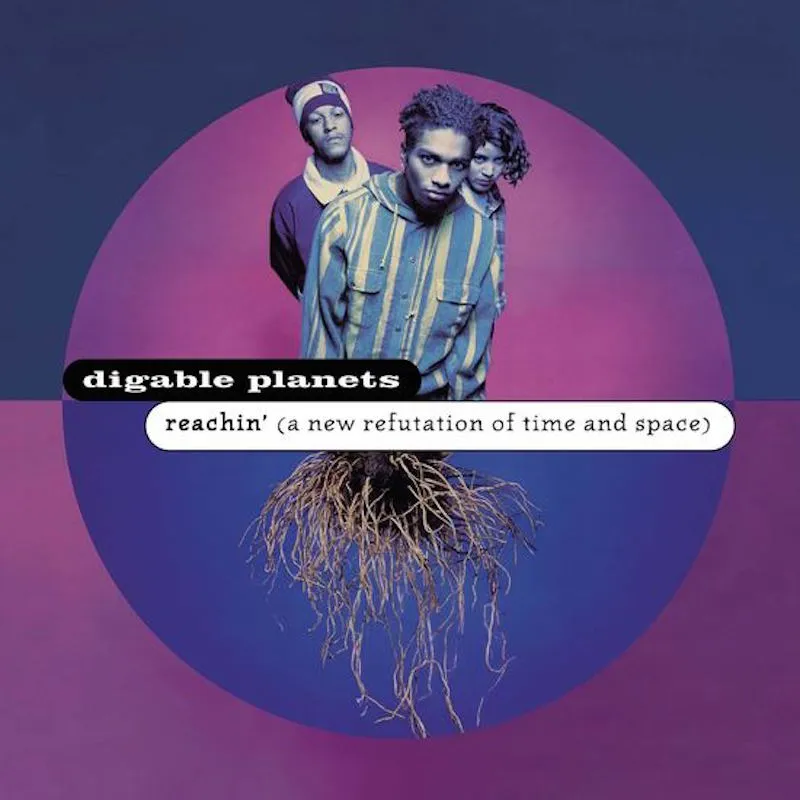
Digable Planets brought a different kind of energy to Hip Hop in 1993. While harder-edged street rap was attracting much of the attention, Butterfly, Ladybug Mecca, and Doodlebug offered a relaxed, jazz-inflected alternative built around thoughtful lyrics, understated humor, and an easy rapport between the three MCs. Their debut, Reachin’, belongs in the same conversation as the finest work by A Tribe Called Quest and De La Soul from this period. It has a musical identity all its own, though, with Butterfly’s production drawing heavily on the jazz records that surrounded him growing up.
The beats are warm and unhurried, built around upright basslines, brushed drums, muted horns, and carefully chosen samples. The trio’s conversational delivery fits these arrangements perfectly. Rather than competing for attention, the three voices move naturally around one another, trading observations and verses with the relaxed timing of jazz musicians. “Rebirth of Slick (Cool Like Dat)” captures this approach beautifully. Its infectious bassline and memorable refrain made it the group’s biggest hit, but the album has plenty of equally rewarding moments. “Where I’m From” combines sharp social observations with a laid-back groove, while “Pacifics” and “What Cool Breezes Do” establish the record’s distinctive atmosphere from the outset.
There is substance beneath the cool exterior. “La Femme Fetal” addresses abortion rights and the political forces surrounding reproductive freedom, while “Nickel Bags” examines the realities of drug culture and urban life. “Last of the Spiddyocks” takes a more playful approach, drawing on the history of jazz musicians and their relationship with drugs. The writing is rarely heavy-handed, and the group’s understated delivery gives even its more serious subjects room to breathe. “Escapism (Gettin’ Free)” adds another dimension, reflecting the desire to find freedom from everyday pressures.
Reachin’ is remarkably consistent across its fourteen tracks. Butterfly’s production gives the album a cohesive musical character, while Ladybug Mecca, Doodlebug, and Butterfly bring enough personality and lyrical variety to keep the material engaging throughout. Its success never depended on following the dominant West Coast trends of the time. Digable Planets found their own lane, and this debut still sounds as inviting and distinctive as it did in 1993.
63. Pharoahe Monche – Internal Affairs (1999)

For three albums, Organized Konfusion made jazz-tinged rap full of puzzles and wit. On his own, Pharoahe Monch went darker and heavier. Internal Affairs swaps the duo’s playfulness for hard drums, ominous loops and cinematic stings, and the change gives his technique a new edge. Monch’s verses twist through multisyllabic rhymes, shift cadence mid-bar, and run on breath control that lets a phrase spill well past where most MCs would stop.
He co-produced much of it with longtime partner Lee Stone, with DJ Scratch, Diamond D and a young Alchemist adding beats. “Behind Closed Doors” sets the tone, all muscle and menace. “Official” stacks sports metaphors into one tightly wound performance. M.O.P. tear through “No Mercy” with exactly the volume the album calls for, and Canibus matches Monch line for line on “Hell.”
“Simon Says” made him a club fixture. Its blaring horns are lifted from the Godzilla vs. Mothra score, and Monch delivers its playground commands with the same exactness he gives his densest writing, which is why it bangs and holds up to close listening at the same time.
The quieter moments matter too. “The Light” slows the pace, “God Send” brings Prince Po back for an Organized Konfusion reunion, and “The Truth,” with Common and Talib Kweli, closes the album on a reflective note. The provocations land less well. “Rape” leans on a shock title, and “The Ass” is juvenile, though both come from the same abrasive streak that powers the album’s best tracks.
Toho sued over the “Simon Says” sample, and the album was pulled from circulation. It didn’t return to digital platforms until 2019, which means the most famous horns of Monch’s career kept the rest of his finest album out of reach for twenty years.
64. The Notorious B.I.G. - Life After Death (1997)

Sixteen days. That’s how long The Notorious B.I.G. had been gone when Life After Death hit the shelves. He was shot dead in Los Angeles on March 9, 1997, while promoting the album, so he never saw what became of his second LP. Its title and cover, with Big posing beside a hearse, instantly took on a haunting new meaning.
As an album, Life After Death is huge in every sense. Spread over two discs, 24 tracks, and nearly two hours, it finds Biggie deliberately reaching for a wider audience. Puff Daddy and the Hitmen supply the glossy, sample-heavy hits, most famously “Hypnotize” and the Diana Ross-flipping “Mo Money Mo Problems.” DJ Premier, RZA, Havoc, Easy Mo Bee, and Buckwild keep things grimy. Biggie handles all of it with total command. He matches Bone Thugs-N-Harmony’s rapid-fire flow on “Notorious Thugs” and spits cold, razor-sharp instructions on “Ten Crack Commandments.” On “Somebody’s Gotta Die,” “Niggas Bleed,” and “I Got A Story To Tell,” he builds tense crime thrillers full of vivid detail and dark humor. As a storyteller, he had no equal.
Here’s the thing, though. For all its brilliance, Life After Death suffers from some of the same problems as 2Pac’s All Eyez On Me. It’s too long, and the filler is hard to ignore. “F**k You Tonight,” “I Love The Dough,” “Another,” “Playa Hater,” and “Nasty Boy” drag the album down, and too many tracks lean on the Bad Boy pop formula. The long skits stuck to the front of several songs also hurt their replay value. “Kick In The Door” is a great track, but the minute of dialogue before it makes it a frequent skip.
Cut five or six songs, and this would sit right next to Ready To Die as a flawless masterpiece. As it stands, it’s an awesome album packed with classics, from “What’s Beef?” to “Long Kiss Goodnight” and “You’re Nobody (Til Somebody Kills You).” Its blend of street grit and pop polish became the blueprint for mainstream rap in the years that followed, for better and for worse. It was the final word from one of the greatest to ever do it, and it still hits hard.
65. Kool G Rap - Wanted Dead Or Alive (1990)
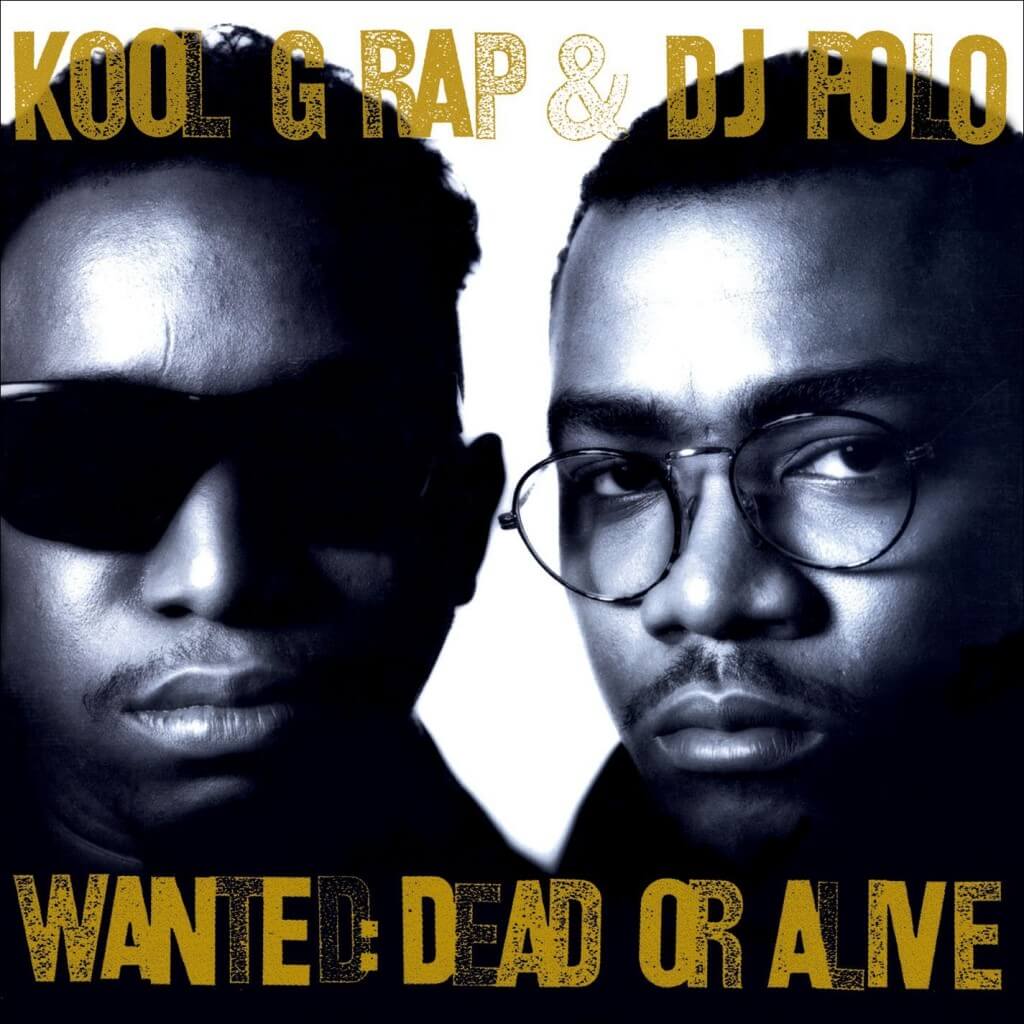
With Road to the Riches, Kool G Rap and DJ Polo introduced a formidable MC whose intricate rhyme schemes and rapid-fire delivery set him apart from his contemporaries. Their second album, Wanted: Dead or Alive, takes G Rap’s writing into darker territory. Crime, poverty, street violence, and organized crime dominate the subject matter, with G Rap developing the vivid, cinematic storytelling that would influence generations of MCs and help lay the foundations for mafioso rap.
“Streets of New York” is the album’s defining moment. Over a stark, sample-driven beat, G Rap paints a detailed picture of urban hardship, turning everyday observations into a compelling portrait of desperation. Nas later cited the track as an influence on “N.Y. State of Mind,” and the connection is unmistakable. The title track, “Money in the Bank,” and “Death Wish” bring mob-movie menace and ruthless braggadocio, while “Bad to the Bone” gives G Rap room to unload his intricate internal rhymes. “Talk Like Sex” switches gears for an explicit exercise in sexual boasting.
“Erase Racism” offers a different perspective, bringing Big Daddy Kane into the mix for a direct attack on racial prejudice, with Biz Markie supplying the memorable hook. The varied production contributions of Large Professor, Eric B, and Marley Marl give the album several distinct textures, while DJ Polo’s turntable work remains central to the duo’s identity.
Wanted: Dead or Alive expanded on the promise of Road to the Riches and captured Kool G Rap at a crucial stage in his development. His technical precision, elaborate crime narratives, and command of internal rhyme would leave a lasting mark on artists such as Nas, The Notorious B.I.G., and Jay-Z. This is early G Rap at his most compelling.
66. Fugees - The Score (1996)
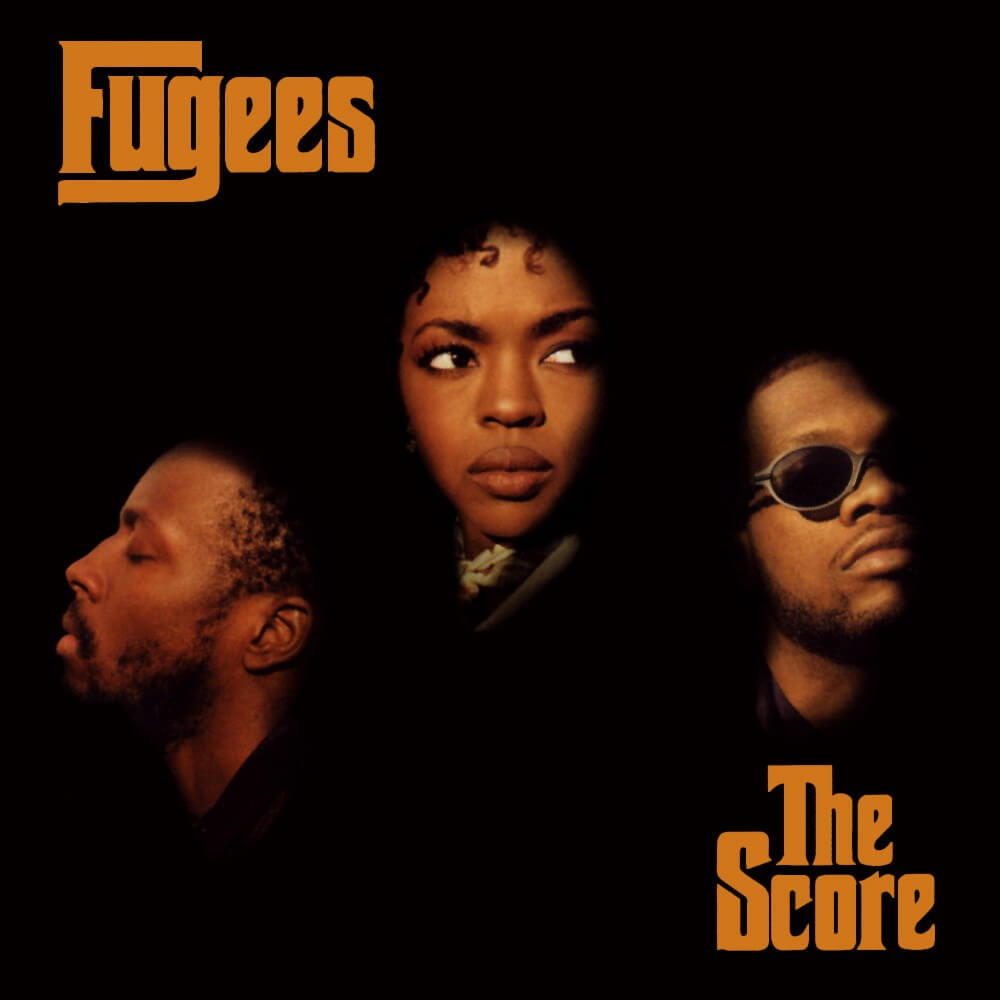
Few albums captured Hip Hop’s expanding possibilities in 1996 as convincingly as The Score. After the promising but inconsistent Blunted on Reality, Ruffhouse head Chris Schwartz gave the New Jersey trio a $135,000 advance and full artistic control. They put the money into equipment and built a studio in Wyclef Jean’s uncle’s basement, which they called the Booga Basement. What came out of it was their second album, a record that blends sharp lyricism, soulful melodies, reggae roots and inventive production with remarkable ease.
The chemistry between Lauryn Hill, Wyclef and Pras drives it. Hill is the standout, equally commanding as an MC and a singer. Wyclef brings loose, playful energy, moving freely between rapping and singing, while Pras offers a steadier presence. The production, handled largely by the group with Jerry “Wonder” Duplessis, draws on an unusually broad palette. “How Many Mics” sets Hill’s sharpest verses over a muscular beat. “Fu-Gee-La” reworks Teena Marie’s “Ooo La La La” into an irresistible groove. “Ready or Not” pairs the Delfonics with a haunting Enya sample, giving Hill one of her most memorable vocal performances.
Their take on “Killing Me Softly” became a worldwide phenomenon on the strength of Hill’s extraordinary singing, and Wyclef’s “No Woman, No Cry” underlines the group’s Caribbean ties. “The Beast,” meanwhile, confronts police brutality and racial profiling, giving the album a political edge that its crossover hits sometimes overshadow.
Released on the same day as All Eyez on Me, The Score reached an enormous audience by a completely different route. It topped the Billboard 200 and won the Grammy for Best Rap Album, and it remains the best-selling album by a Hip Hop group. Its accessibility never comes at the expense of substance. We consider it a near-flawless masterpiece and one of the defining releases of 1996.
67. The Pharcyde – Labcabincalifornia (1995)

The class clowns grew up, and a lot of people missed the jokes. Bizarre Ride II The Pharcyde had made Imani, Bootie Brown, SlimKid3 and Fatlip famous for manic humor and playground insults. Three years later, Labcabincalifornia arrived mellow, mid-tempo and full of doubt, and critics in late 1995 heard a sophomore slump. It fell short of gold. Time has reversed that verdict almost completely.
The change in sound starts with personnel. Original producer J-Swift was gone, and the group recorded much of the album in a modest home studio they called the LabCabin. To fill the gap, they turned to a little-known Detroit beatmaker named Jay Dee, who produced six tracks. His drums swing slightly behind the beat, loose and warm, and his jazz samples sit soft and low in the mix. “Runnin’” glides on a lilting acoustic loop while the four MCs trade verses about fear, backing down, and finding the nerve to stand still. “Drop” is stranger, a hazy, stop-start groove whose Spike Jonze video had the group perform the song backwards, then ran the footage in reverse.
The group shared the work. Diamond D supplies the slinky “Groupie Therapy”, SlimKid3 produces the dreamy “She Said”, and Fatlip’s “Devil Music” closes in on the hollow side of success. Across those tracks, the Pharcyde write about industry exploitation, addiction, transactional sex, and relationships coming apart, with a cynicism that replaced the old mischief. The voices are still distinct, Fatlip’s nasal sarcasm against SlimKid3’s softer, sung phrasing, but they now sound like men taking stock.
Fatlip left after the album came out, ending the four-man lineup. The record’s reputation grew alongside Jay Dee’s, as the producer became J Dilla. Labcabincalifornia became the sketchbook where one of Hip Hop’s great drum programmers worked out his feel, made by a group brave enough to stop being funny.
68. Gravediggaz - 6 Feet Deep (1994)
The Undertaker, the RZArector, the Gatekeeper and the Grym Reaper came together at the lowest points of their careers. Prince Paul had drifted away from De La Soul and was making dark, depressed instrumentals at home. RZA, Frukwan and Poetic all carried bad memories of Tommy Boy. Def Jam and Jive passed on their demo, and RZA went off to start the Wu-Tang Clan while the others took day jobs. By the time Gee Street signed them, the bitterness had turned into a concept.
6 Feet Deep points horror-movie excess at the gangsta rap of the early ’90s, where acts were trying to outdo each other in gruesome detail, and the result is closer to satire than shock. Most of the beats are Prince Paul’s, and he keeps them theatrical: an Allen Toussaint piano loop gives “Constant Elevation” its manic pull, psychedelic guitar wails through “Defective Trip (Trippin’),” and Booker T. & the M.G.’s “Sunny” sits under the pitch-black joke of “1-800 Suicide.” RZA’s own productions, “Diary of a Madman” and “Graveyard Chamber,” sound grimier, and they bring in Killah Priest and other Wu affiliates.
Esham and the Geto Boys had gone to dark places before, but Gravediggaz built a whole world around it, with characters, sound effects and gallows humor, and helped make horrorcore a recognized style. Four men the industry had written off dressed up as corpses and laughed at the people who buried them.
69. Eightball & MJG – On Top Of The World (1995)

Eightball talks; MJG cuts. The Memphis duo built their partnership on that contrast: Eightball calm and conversational, leaning back on the beat like a man telling a story he has told before; MJG sharper and quicker, attacking the rhythm with a harder edge. On their third album, the pair sound fully at ease with each other, and their reputation as one of the South’s rap heavyweights starts here.
On Top Of The World is a richer record than Comin’ Out Hard or On The Outside Looking In. The production borrows from G-funk, with whining synthesizers, deep, rubbery basslines and smooth, rolling tempos, then plants it in heavier Southern soil. “Pimp In My Own Rhyme” and “Break ’Em Off” give the grooves time to stretch, and the duo rides them without rushing. “Space Age Pimpin’” floats off into futuristic funk, slow and seductive, the kind of song that sounds better at two in the morning than at noon.
Beneath the polish, the writing is thoughtful. “Funk Mission” looks hard at the damage drug addiction leaves behind, and “Hand Of The Devil” turns greed and temptation into a cautionary tale with a grim ending. “Friend Or Foe” brings in Mac Mall, E-40 and Big Mike to weigh loyalty against suspicion, a guest list that tied Memphis to the Bay and Houston at a time when the coasts drew most of the attention. “What Can I Do” turns inward, counting what success has cost and finding the old problems still waiting at home.
This is an album that grows. On first listen, it plays as smooth Southern pimp rap; with time, the detail in Eightball’s storytelling and the push and pull between the two voices come forward. Our appreciation for it rises every year, and we suspect we are not alone. Memphis had found a sound that was its own, patient and heavy, and it was in no hurry to prove anything to anyone.
70. Compton's Most Wanted - Music To Driveby (1992)

With Music To Driveby, Compton’s Most Wanted delivered one of the darkest and most unsettling portraits of early-’90s West Coast street life. The group’s third album builds on the sound of It’s a Compton Thang and Straight Checkn ‘Em, with MC Eiht now firmly at the center. There is little interest in crossover appeal or commercial compromise. Instead, the album draws us into a bleak world of gang violence, poverty, and survival, with production that matches the cold atmosphere of Eiht’s narratives.
DJ Slip and Mike T provide much of the album’s musical identity. Their beats are sparse and brooding, built around eerie melodic fragments, deep basslines, and restrained drums. The arrangements leave plenty of space for Eiht’s deliberate, gravelly delivery, which often sounds closer to cold-eyed narration than conventional rap performance. On “Hood Took Me Under,” a haunting soul-derived melody accompanies a story about growing up surrounded by gang culture. Eiht describes a neighbourhood where joining a gang becomes an expectation, capturing the pressures that shape young lives long before they are old enough to understand the consequences.
The aggression is equally convincing. “Def Wish II” continues Eiht’s feud with DJ Quik, turning personal rivalry into a menacing display of hostility. “Duck Sick II” and “Another Victim” maintain the confrontational edge, while “N****z Strugglin” and “I Gots Ta Get Over” offer more reflective perspectives on the circumstances surrounding street life. These changes in subject matter give the album some variation without disrupting its oppressive atmosphere.
Not every track has aged equally well. “Hoodrat” and “U’s A Bitch” contain the misogynistic attitudes common in gangsta rap of the period. The album is at its strongest, however, when Eiht examines the cycle of violence and the limited opportunities shaping his environment. He speaks from within this world, with a matter-of-fact delivery that makes the stories all the more disturbing.
71. Killah Priest – Heavy Mental (1998)

Killah Priest raps like a man reading aloud from a scroll. His voice is deep and booming, his pace deliberate, and his verses move from Brooklyn street corners to the Old Testament, ancient Egypt, and questions about Black identity without changing tone. On his solo debut, the Sunz of Man member finally gets the space to show what his famous verse on GZA’s “B.I.B.L.E. (Basic Instructions Before Leaving Earth)” had hinted at: a writer with the intensity of a preacher and the curiosity of a student.
4th Disciple handles most of the production, with True Master, Y-Kim the Illfigure and Arabian Knight filling in, and the beats stay close to the shadowy Wu-Elements sound. Ominous samples, eerie melodies, and heavy drums leave plenty of room for Priest’s dense, image-heavy rhymes. “Tai Chi” brings out the meditative side of his delivery, while “Cross My Heart” sets him alongside GZA and Inspectah Deck over a suitably grim loop. “One Step,” with Hell Razah and Tekitha, is the rare track with a hook that sticks.
The more unusual pieces carry the album’s ideas furthest. The title track drops song structure altogether, with Priest delivering an extended spoken-word piece over a droning didgeridoo. “Science Project” compares life in the projects to a government experiment, and “B.I.B.L.E.” is back as the album’s clearest statement on faith and knowledge. Ol’ Dirty Bastard crashes “If You Don’t Know” with his usual chaos, a welcome break from all the solemnity.
Twenty tracks and roughly 74 minutes of similar tempos and unbroken seriousness make for heavy going. Priest rarely lightens his tone, and the production rarely pushes him to. Three years after stealing the final song on Liquid Swords, though, he had an album built entirely in his own image.
72. Lord Finesse - Funky Technician (1990)

Lord Finesse made an impressive entrance with Funky Technician, a debut that introduced one of New York’s most technically gifted MCs and offered an early glimpse of the talent that would form the Diggin’ in the Crates (D.I.T.C.) collective. Released on Wild Pitch Records, the album brings together Finesse’s intricate rhyme schemes, sharp punchlines, and playful battle-rap attitude with production from DJ Mike Smooth, DJ Premier, Diamond D, and Showbiz. That roster alone makes it a fascinating snapshot of the New York underground at the start of the decade.
The beats are built around hard drums, funk and soul samples, and crisp turntable work. Premier’s contributions offer early indications of the lean, forceful approach he would develop with Gang Starr, while Diamond D and Showbiz bring their own distinctive sample-based styles. The title track gives Finesse room to demonstrate his lyrical dexterity, while “Here I Come” and “I Keep the Crowd Listening” are packed with intricate rhymes and memorable punchlines. “Back to Back Rhyming,” featuring A.G., provides an early connection to the D.I.T.C. circle, and “Slave to My Soundwave” captures the natural chemistry between Finesse and his DJ.
What distinguishes Finesse is the ease with which he delivers technically demanding rhymes. His wordplay is clever and his timing precise, but there’s also plenty of humor and personality in his performances. He never sounds like he’s sacrificing entertainment for lyrical complexity.
Funky Technician didn’t make a major commercial impact upon release, but its standing grew among fans of underground New York rap. Finesse would go on to mentor Big L and play a central role in D.I.T.C. The beginnings of that legacy are already audible here, in an album that brings together several future architects of the 1990s East Coast sound.
73. Black Sheep - A Wolf In Sheep's Clothing (1991)

Black Sheep brought a mischievous, satirical edge to the Native Tongues movement with A Wolf in Sheep’s Clothing. Dres and Mista Lawnge had little interest in following the collective’s more familiar bohemian conventions. Their debut favors sharp humor, unconventional beats, and a healthy disregard for Hip Hop’s unwritten rules. Party records sit alongside social commentary, relationship songs, and absurdist comedy, with Dres’s nimble delivery providing a consistent thread through the album’s many detours.
Mista Lawnge’s production gives the record much of its personality. Rather than relying on the smoother jazz loops favored by some contemporaries, he builds tracks around unexpected samples, punchy drums, and quirky musical details. “The Choice Is Yours (Revisited)” became the group’s signature song, its infectious groove and unforgettable chants turning an offbeat concept into a mainstream hit. “Strobelite Honey” takes a playful look at club culture, while “Flavor of the Month” pokes fun at the fickleness of musical trends. On “U Mean I’m Not,” Dres turns gangsta rap posturing into a source of satire, and “Similak Child” finds humor in romantic deception. “Pass the 40,” featuring teenage rapper Chi-Ali, adds another lively twist to an album that rarely takes the expected route.
The record reached No. 30 on the Billboard 200 and earned gold certification within six months of its release. Its commercial success came without Black Sheep having to dilute their eccentricity. Dres’s writing is full of sly observations and unexpected punchlines, while Mista Lawnge’s production keeps the music unpredictable without sacrificing its appeal. The album brought a welcome streak of mischief to the Native Tongues catalog, offering an alternative to the collective’s more familiar sounds. A Wolf in Sheep’s Clothing has a personality all its own, and its best tracks still hit with the same playful confidence.
74. Nas - It Was Written (1996)

Nas’s second album arrived in July 1996 with a formidable challenge: following Illmatic. His debut had earned huge critical praise but only modest sales. With new manager Steve Stoute in his corner, Nas set out to widen his scope. The dusty beats and close-up Queensbridge observations gave way to polished production, mob-movie narratives and a new alias, Nas Escobar. Some longtime fans balked, but the album showed an MC who could adapt without sacrificing the intelligence and verbal precision that made him special.
Trackmasters bring a sleek, radio-ready sensibility to much of the record, while Havoc, DJ Premier, L.E.S. and Dr. Dre add different shades of menace, soul and cinematic drama. “The Message” considers betrayal, fame and the dangers of success, setting a more reflective tone than the gangster imagery suggests. On Premier’s “I Gave You Power,” Nas narrates from the perspective of a gun, an ingenious piece of writing about violence and control.
“Affirmative Action” introduces The Firm, as Nas, AZ, Cormega and Foxy Brown trade verses with convincing chemistry. Havoc’s “The Set Up” turns to revenge. “Street Dreams” reworks Eurythmics’ “Sweet Dreams” into a smooth hustler’s tale. “If I Ruled the World (Imagine That),” featuring Lauryn Hill, imagines a better future without losing sight of reality, and “Black Girl Lost” offers a sympathetic portrait of young women caught in the streets. “Nas Is Coming” pairs him with Dr. Dre at the height of the coastal rivalry.
The commercial gamble paid off. It Was Written debuted at number one, sold 270,000 copies in its first week and remains Nas’s best-selling album. It doesn’t quite match the concentrated brilliance of Illmatic, but judging it solely against that classic misses the achievement. Nas expanded his audience and his musical vocabulary without losing his lyrical edge.
75. Eightball & M.J.G. – In Our Lifetime (1999)

Eightball raps like a man settling into a recliner. MJG raps like he’s running late for something. That contrast had carried the Memphis duo through the decade, and after a stretch of solo albums (Eightball’s sprawling Lost and MJG’s No More Glory), In Our Lifetime found them sounding better together than ever.
The music changed around them. T-Mix produced most of the album, with Mr. DJ, OutKast’s longtime DJ, handling the rest and part of the record cut at the Dungeon in Atlanta. The G-funk synths of their earlier work give way to syrupy bass, relaxed guitar licks and a late-’70s soul warmth. “Daylight” is the clearest result, a mellow, almost jazzy look back at where they started, its hypnotic guitar figure circling under two MCs in no hurry at all. “Nobody But Me” brings a heavier groove that suits MJG’s quicker attack, while “Love Hurts,” with Nina Creque, gives Eightball space for a more personal account of hardship.
The guests are chosen to fit the mood. Cee-Lo brings his weathered soul to “Paid Dues,” one of the album’s best moments, and “Throw Your Hands Up,” produced by Mr. DJ, joins Memphis to Atlanta at the moment both cities were taking over the South. Big Duke and Thorough keep it local on “Belly” and “Get It Crunk,” and “We Started This” makes a claim eight years of records had earned.
The pimp talk hasn’t gone anywhere, but now it shares space with songs about loyalty, loss and survival. Nobody is chasing a trend here. The writing has the ease of two veterans who know exactly what they sound like.
The album debuted in the Billboard top ten and was the duo’s final album for Tony Draper’s Suave House. It sounds like a graduation.
76. Digable Planets – Blowout Comb (1994)

The voices on Blowout Comb sit low in the mix, on purpose. Ishmael Butler had taken note of George Clinton’s idea that lyrics you half-miss keep pulling you back, and he wanted the raps woven into the music instead of laid on top. The label complained nobody could hear the words. Thirty years later, that’s exactly why the record still sounds fresh.
After moving from Philadelphia to Fort Greene, Digable Planets dropped their insect names and much of their lightness. Butler programmed the drums, and engineer Dave Darlington helped blend vinyl from the group’s world tour with live players until it was hard to tell which was which. The result is smart and seductive, closer in spirit to The Roots than to the coffeehouse jazz of their debut. Grant Green and The Meters drift through the seven-minute “Black Ego,” Roy Ayers’ “We Live in Brooklyn, Baby” gives Guru a home on “Borough Check,” and Jeru the Damaja turns up on “Graffiti.” Ish, Mecca and Doodlebug trade verses with a relaxed, easy flow and fill them with Five Percent lessons and Black Panther history. Butler’s parents had both been Panthers, and the artwork imitates the party’s newspaper.
The label barely promoted the album, the singles stalled, and the trio split early in 1995. Blowout Comb captures a group in mid-transformation, caught at the moment it found a new sound and then stopped. Few records from 1994 are this creative, and the album holds up as a portrait of Brooklyn told by people who had only recently arrived.
77. Brand Nubian - One For All (1990)

Brand Nubian’s debut brought Afrocentric ideas, Five-Percent Nation teachings, playful humor, and infectious funk together in one of the most distinctive albums of 1990. Grand Puba, Sadat X, and Lord Jamar each brought a different personality to the microphone, moving comfortably between political and spiritual commentary, battle rhymes, party records, and everyday observations. Their connection to the Native Tongues movement is apparent in the album’s open-minded spirit, while their more pronounced ideological focus gave the group a character of its own.
Produced primarily by the group, One For All draws heavily on James Brown breaks, funky basslines, and inventive soul and jazz samples. The title track sets the tone with an irresistible groove and excellent chemistry between the three MCs. “Concerto in X Minor” takes a more serious direction, weaving Black consciousness and revolutionary ideas into dense, sample-driven production. “Slow Down,” built around an Edie Brickell sample, became the group’s biggest hit, pairing humorous relationship advice with sharp exchanges between Grand Puba, Sadat X, and Lord Jamar.
The album moves easily between different moods. “All for One” and “Wake Up” reflect the group’s commitment to knowledge and self-awareness, while “Dance to My Ministry” and “Grand Puba, Positive and L.G.” put the emphasis on personality, wordplay, and lyrical skill. Grand Puba’s charismatic delivery is particularly infectious, although Sadat X’s distinctive voice and Lord Jamar’s more measured approach give the group its balance.
One For All never achieved the commercial reach of many contemporary gangsta rap releases, but its combination of social commentary, humor, and warm, funk-driven production gave it a lasting place in New York Hip Hop. Brand Nubian made an album with plenty to say and grooves that keep pulling us back.
78. Ghostface Killah - Iron Man (1996)
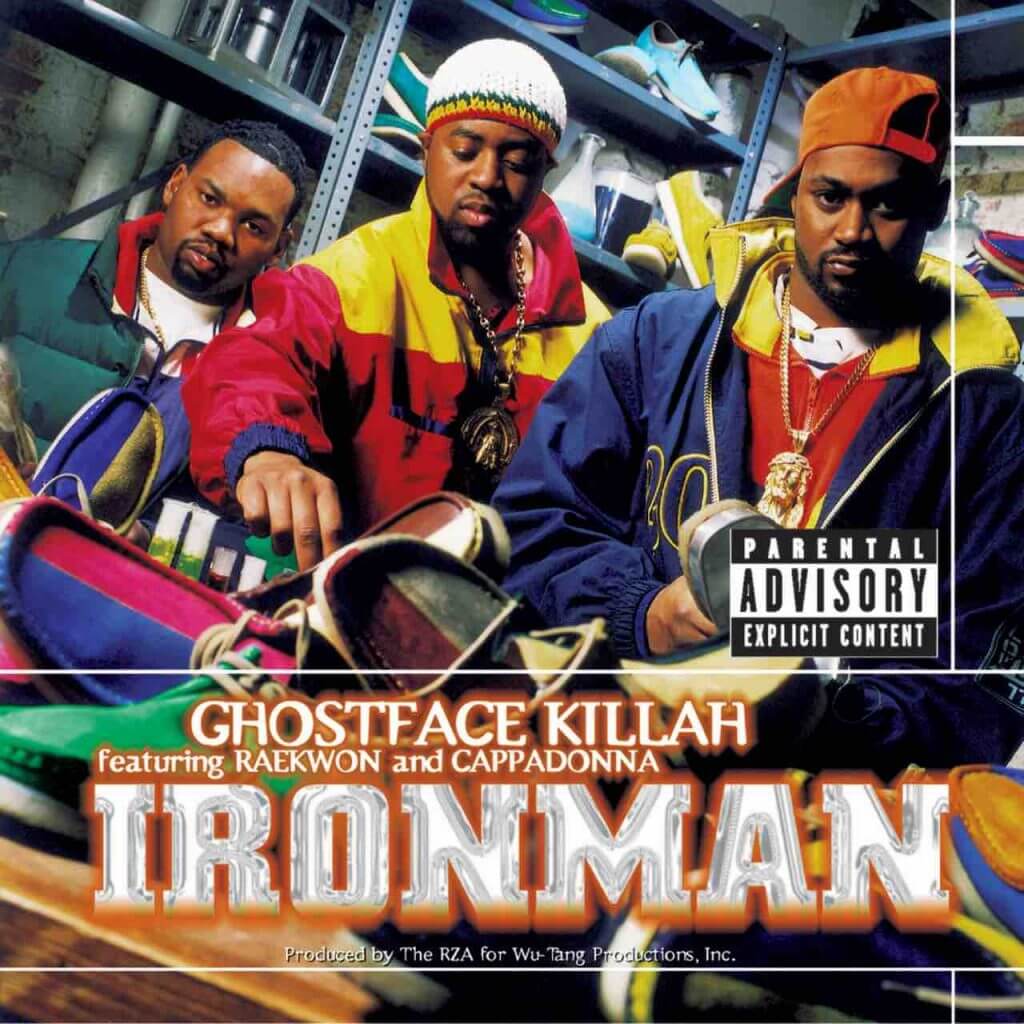
The Wu-Tang Clan’s mid-’90s solo run produced an extraordinary string of albums, and Ghostface Killah’s Ironman belongs among the very best. Released in October 1996, it revealed a more personal side of the MC who had already stolen scenes on Raekwon’s Only Built 4 Cuban Linx…. The partnership continues here: Raekwon appears on 12 of the 17 tracks, and he and Cappadonna share the cover. Ghost’s raspy, animated delivery is full of sudden turns, vivid details and emotional intensity.
“Iron Maiden” comes out swinging, with Ghost, Raekwon and Cappadonna packing their verses over a tense RZA backdrop. “260” takes a narrative approach, as Ghost and Raekwon recount a robbery with strange details and shifting perspectives. On “Winter Warz,” which first appeared on the Don’t Be a Menace soundtrack, Cappadonna delivers a marathon guest verse that ranks among the finest moments of his career, outlasting turns from Ghost, Raekwon, Masta Killa and U-God.
The album’s emotional center is “All That I Got Is You,” featuring Mary J. Blige. Ghost revisits a childhood marked by poverty with an honesty that cuts through the album’s street bravado, and the song works as a tribute to his mother. “Daytona 500” is the opposite: built on RZA’s exhilarating reworking of Bob James’s “Nautilus,” it sends the three MCs racing through their verses with breathless urgency. The Delfonics bring sweet soul harmonies to “After the Smoke Is Clear.”
A flood had destroyed RZA’s basement studio, so the vocals were cut elsewhere, which gives Ghost a slightly different sound from earlier Wu releases. Ultimately, though, the appeal rests on Ghost himself, whose voice can sound wounded, furious, funny, or wildly exuberant within a single verse. Ironman debuted at number two, went platinum, and has a few weaker stretches, but it marked the arrival of one of Hip Hop’s most distinctive storytellers.
79. Above The Law - Livin Like Hustlers (1990)

Above The Law’s Livin’ Like Hustlers, released in February 1990 on Ruthless Records, is an important early chapter in the development of West Coast gangsta rap. The Pomona group, led creatively by Cold 187um, combined hard-edged street narratives with deep funk grooves and inventive sample-based production. Working alongside Dr. Dre, they were already moving beyond the abrasive, densely layered approach associated with early N.W.A toward a smoother, more melodic sound that would soon become known as G-Funk.
The production is central to the album’s appeal. Cold 187um and Dre draw on funk and soul sources, including James Brown, Quincy Jones, and Isaac Hayes, building muscular arrangements around thick basslines, crisp drums, and carefully selected samples. “Murder Rap” makes an immediate impression with its ominous atmosphere and forceful delivery, while “Untouchable” pairs confrontational lyrics with a memorable groove. The title track captures the group’s hustler mentality, and “Another Execution” delivers a particularly dark portrait of street violence. “Freedom of Speech” adds social commentary, demonstrating that Above The Law’s subject matter extended beyond crime narratives.
The closing “The Last Song” brings in N.W.A members Eazy-E, Dr. Dre, and MC Ren for a notable collaboration within the increasingly turbulent Ruthless Records camp. The track also connects the album to the wider Los Angeles scene taking shape around the label.
Dr. Dre would popularize G-Funk on The Chronic a few years later, but the foundations are already audible here. Cold 187um deserves particular credit for the musical direction. Livin’ Like Hustlers retains the toughness of the Ruthless era while introducing the smoother funk arrangements that would become central to West Coast rap.
80. Jay Z - Reasonable Doubt (1996)

Before Reasonable Doubt, Jay-Z was a well-traveled underground MC without a proper deal. He had worked with Jaz-O, toured with Big Daddy Kane, and sold tapes out of his car. Frustrated by Payday Records, he walked away and formed Roc-A-Fella with Damon Dash and Kareem “Biggs” Burke. In June 1996, the label released his debut through Priority, and it sounded remarkably assured. Jay tells stories of hustling, ambition, and betrayal with the cool confidence of someone who has thought through every move. His conversational delivery makes intricate wordplay sound effortless, and beneath the luxury references, doubt and regret keep creeping in.
Ski, DJ Premier, Clark Kent and Knobody build the album on soulful samples, jazz-inflected piano and measured boom-bap drums. The result is smoother than much of the era’s street rap without losing its edge. “Can’t Knock the Hustle,” featuring Mary J. Blige, sets the tone of polished ambition. “Dead Presidents II” turns into a meditation on money and survival. On “Brooklyn’s Finest,” Jay and The Notorious B.I.G. trade verses in a friendly but fiercely competitive battle.
The album’s greatest strength is how it examines the hustler’s mindset from within. Premier’s “D’Evils” traces the corrosive pull of greed and paranoia. “Regrets” weighs the losses that come with the rise, and “Feelin’ It” enjoys the rewards without dropping its guard. Even the bragging carries unease.
Reasonable Doubt was no immediate sensation. It peaked at number 23 on the Billboard 200, which remains the lowest chart position of Jay’s career, and none of its four singles reached the Top 40. His later dominance makes it seem like a different chapter. For us, though, it remains one of his finest albums, a defining New York rap record whose sophistication never comes at the expense of its street-level perspective.
81. DMX – It’s Dark And Hell Is Hot (1998)
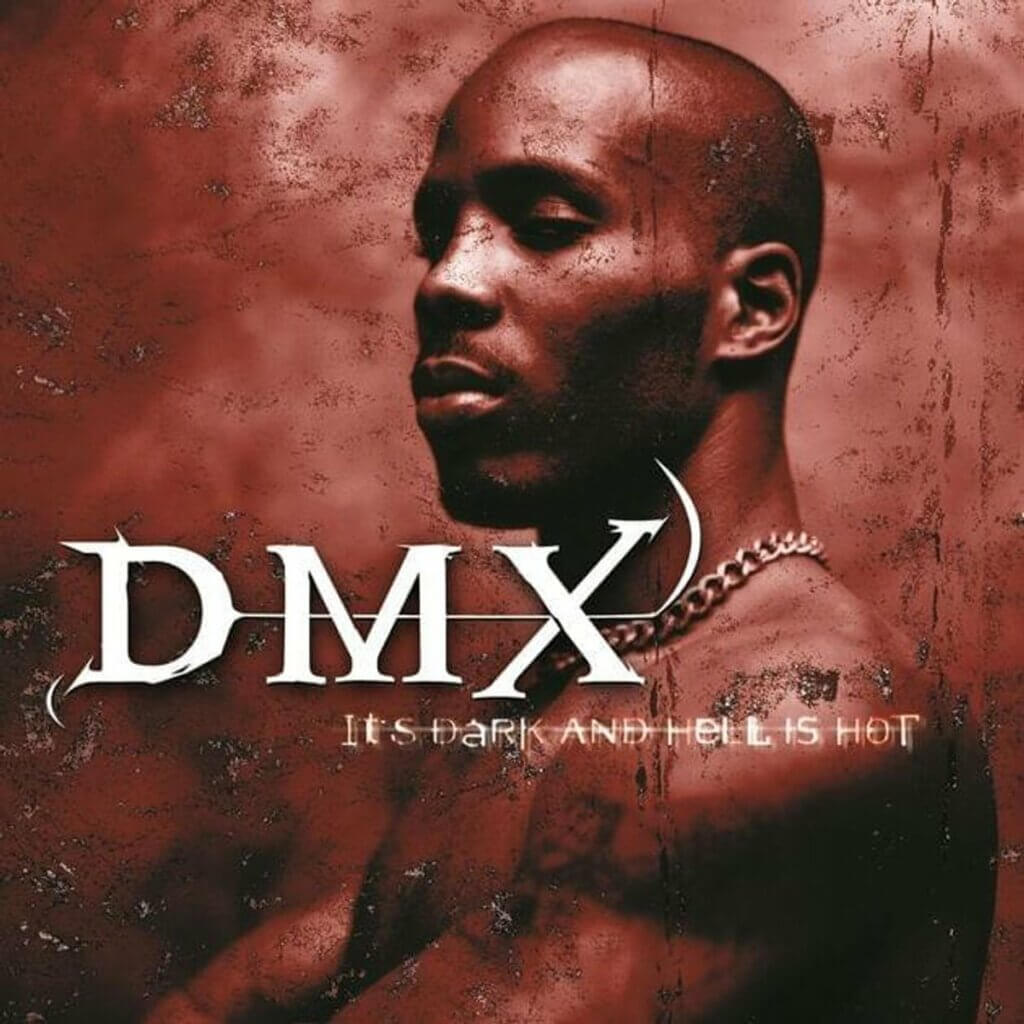
Every DMX album has a prayer on it, and the habit starts here. On It’s Dark and Hell Is Hot, the man who barks, growls and threatens his way through the singles also stops to ask God for forgiveness and strength. That tension between violence and faith runs through his debut and makes it far stranger and more personal than the street record it first appears to be.
It arrived as a sharp alternative to the shiny, celebratory sound of Bad Boy. Dame Grease and PK built most of the beats from grim, clanging loops and murky low end, and DMX’s hoarse, rhythmic shout cuts straight through them. “Get at Me Dog” and “Stop Being Greedy” introduced that volatile delivery, his flow lurching forward and then snapping back in time with the drums. “Ruff Ryders’ Anthem” became the template for the whole crew: a spare, bouncing Swizz Beatz beat that DMX reportedly didn’t like at first, and a chant made for car stereos and arenas.
The deeper material shows his range. “How’s It Goin’ Down,” with Faith Evans on the hook, tells the story of a messy affair with wry humor. “I Can Feel It” puts mortality front and center over a loop from Phil Collins’ “In the Air Tonight,” and “Let Me Fly” pleads for release. On “Damien,” DMX voices both himself and a smooth-talking devil, playing out temptation as a chilling two-way conversation. “X-Is Coming” and “ATF” go darker and harder.
The album went quadruple platinum, a remarkable result for music this bleak. Flesh of My Flesh, Blood of My Blood came close later that year, but this is the strongest record DMX ever made, and the one that opened the Ruff Ryders era.
82. Diamond & The Psychotic Neurotics - Stunts, Blunts & Hip Hop (1992)

Funk samples, inventive loops, crisp drums, and an understated sense of humour. While West Coast G-funk was beginning its ascent, his Bronx sound offered a compelling alternative, rooted in meticulous crate digging and relaxed, witty lyricism.
Diamond handles most of the production himself, although the guest credits read like a who’s who of early-’90s New York beatmaking. Large Professor, Q-Tip, Showbiz, Jazzy Jay, and the 45 King all contribute, yet the album has a remarkably consistent musical identity. Diamond’s ear for samples and instinct for finding the right groove tie everything together. “Sally Got a One-Track Mind” is an immediate standout, driven by a funky loop and an infectious hook. “Best-Kept Secret” is another production highlight, with Diamond turning an obscure musical fragment into an irresistible head-nodder. The beats have plenty of punch, but their appeal also lies in the smaller details: unexpected sample changes, subtle scratches, and layers that reward repeated listening.
Diamond is an engaging MC in his own right. His laid-back delivery and playful wordplay suit the production perfectly, particularly on “I Went for Mine” and “K.I.S.S. (Keep It Simple, Stupid).” “A Day in the Life,” featuring Brand Nubian, brings together several distinctive voices over a suitably funky backdrop. The album also includes early appearances by Big L and Fat Joe, offering a glimpse of two young Bronx MCs who would develop into major figures in New York rap.
Stunts, Blunts & Hip Hop never became a major commercial success, but its reputation among producers, DJs, and underground listeners has only grown. It captures D.I.T.C.’s aesthetic at an early stage, with Diamond D already demonstrating the sampling instincts and musical personality that would make him such an influential figure. A superb collection of Bronx boom-bap, this is one of 1992’s most rewarding albums.
83. Redman - Muddy Waters (1996)
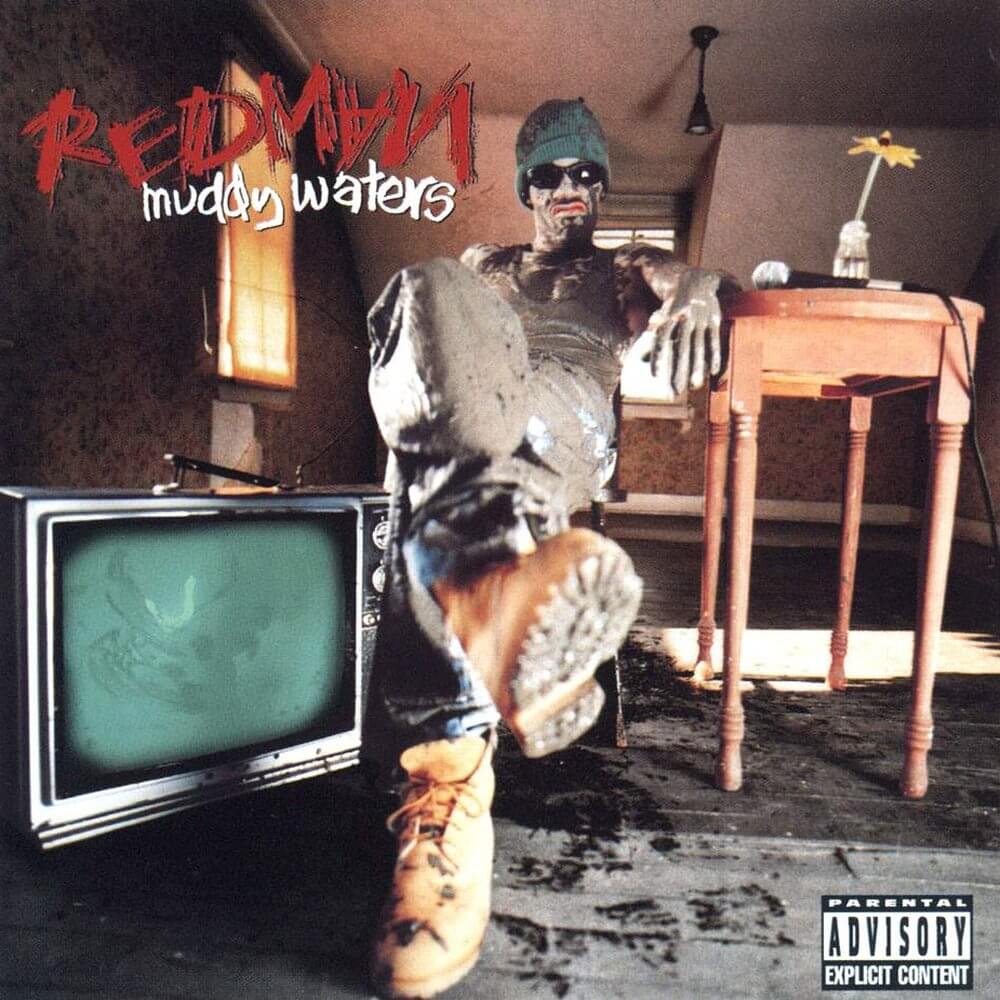
Two albums into his career, Redman had already given the decade two of its finest East Coast records. Muddy Waters, released in December 1996, brought the strengths of Whut? Thee Album and Dare Iz a Darkside into sharper focus, pairing his unruly personality and intricate wordplay with some of the best beats of his career. We rate it as Redman’s finest album, a record where technical skill, outrageous humor and a natural feel for funk work together without ever sounding calculated.
Erick Sermon supplies much of the musical backbone with deep bass, soulful samples and sturdy drums. Rockwilder adds harder edges on “Case Closed” and “What U Lookin’ 4.” Redman himself produced a good share of the album, including “Creepin’,” which captures the album’s darker side. The result has a basement-born quality without losing the punch needed to move a crowd. Redman can attack a beat with a barrage of syllables, then slide into a conversational flow or a ridiculous punchline before the listener catches up.
“Whateva Man” is an effortlessly catchy showcase for his chemistry with Sermon, and “Pick It Up” brings infectious bounce. On “Smoke Buddah,” Redman turns his favorite subject into a stream of inventive jokes and densely packed rhymes. “It’s Like That (My Big Brother)” reunites him with former Hit Squad partner K-Solo. Method Man joins him on the Pras-produced “Do What U Feel,” hinting at the partnership that would flourish soon after, while “Da Ill Out” with Keith Murray and Jamal brings Def Squad energy. Even the skits add to the album’s offbeat personality.
The formula repeats itself at times, but Redman’s delivery keeps everything lively. He has a rare gift for making complicated rhyme patterns sound spontaneous. Muddy Waters debuted at number one on the R&B/Hip-Hop albums chart and went gold within two months. It remains one of the defining East Coast releases of 1996.
84. UGK - Ridin’ Dirty (1996)

There were no music videos and no official singles, but Ridin’ Dirty still became UGK’s best-selling album. Released on Jive in July 1996, the duo’s third record captures Port Arthur, Texas, through tales of hustling, violence, ambition, and the people lost along the way. Pimp C produced much of it, with N.O. Joe and Sergio filling out the rest, and the tracks roll at an unhurried pace on deep bass, chopped soul and funky guitar. That space suits the storytelling. Bun B’s controlled delivery brings clarity and authority, while Pimp’s drawl and melodic instincts give the pair a character all their own.
“One Day,” built on the Isley Brothers’ “Ain’t I Been Good to You,” is the emotional center. Verses about mortality and loss never turn sentimental, because the weight comes from how matter-of-factly the duo faces the chance that tomorrow might not come. “Diamonds & Wood” weighs the rewards of hustling with pride and hard-earned perspective, “Murder” turns aggressive, and Sergio’s “3 in the Mornin’” captures the paranoia of moving through the streets after dark. “Pinky Ring” flips Curtis Mayfield’s “Future Shock” into a funky display of status.
National critics largely ignored the album on release, though 2Pac praised it after Scarface introduced him to the group. Over time, its influence on Houston and the wider South became impossible to miss. Ridin’ Dirty is a landmark in Southern Hip Hop.
85. Public Enemy - Apocalypse 91… The Enemy Strikes Black (1991)
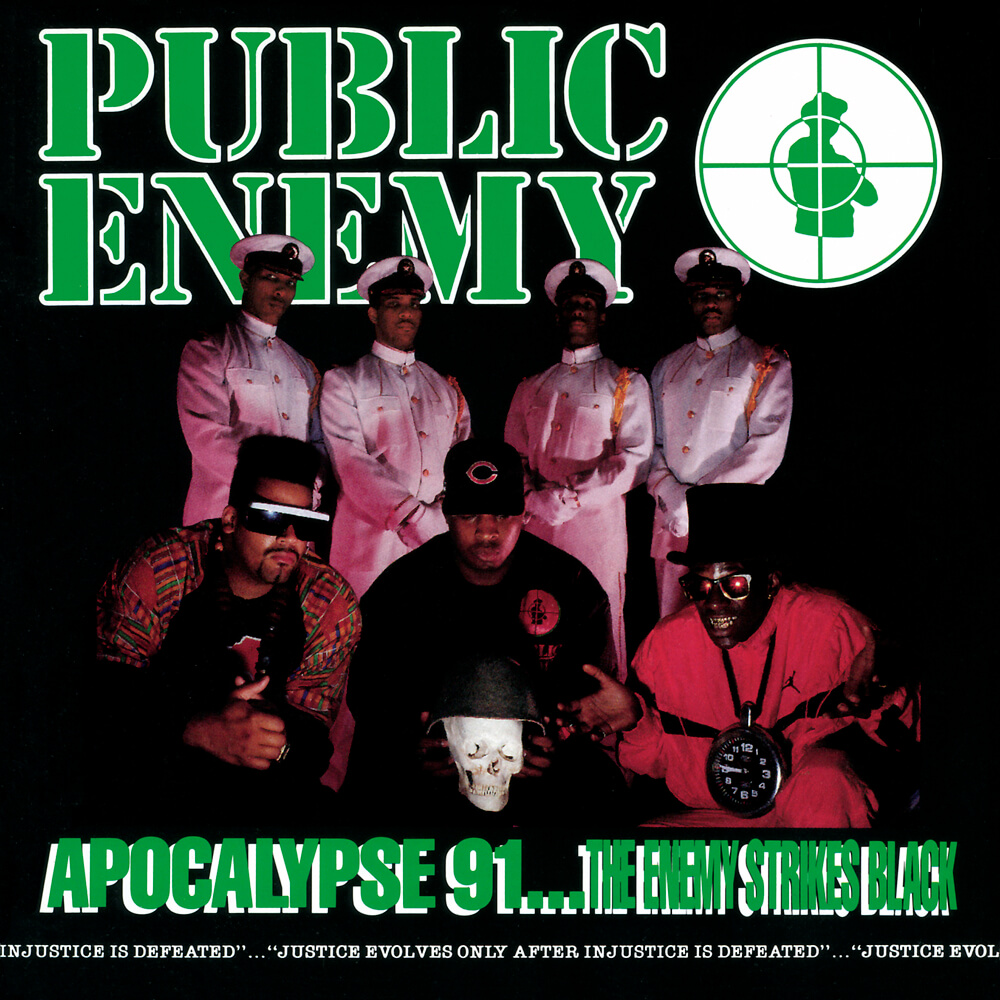
Following the densely layered Fear of a Black Planet, Public Enemy took a more streamlined approach on Apocalypse 91… The Enemy Strikes Black. The Bomb Squad moved into an executive production role, with the Imperial Grand Ministers of Funk handling much of the music. The shift is immediately apparent. The arrangements are tighter and more sharply defined, built around heavy drums, forceful basslines, abrasive samples, and guitar riffs. There is less sonic clutter than on its predecessor, but the intensity is undiminished.
“Lost at Birth” opens with a throbbing bassline, an air-raid siren, and Terminator X’s jagged scratching, setting the tone for what follows. “Can’t Truss It” is one of the album’s most compelling productions, driven by slamming drums and a squealing horn loop as Chuck D examines the transatlantic slave trade and its continuing consequences. His writing is equally confrontational on “1 Million Bottlebags,” which attacks the liquor industry’s exploitation of Black neighborhoods and the damage alcoholism inflicts on those communities. Chuck offers no easy answers or softened edges.
Public Enemy also turn their attention to the music industry on “How to Kill a Radio Consultant,” where a driving rhythm and distorted vocal samples accompany Chuck’s criticism of radio’s treatment of Hip Hop. “Nighttrain” draws on James Brown-derived funk, alternating relatively sparse verses with a heavier, guitar-driven chorus. On “I Don’t Wanna Be Called Yo Niga,” a bluesy guitar lick and soulful piano frame a pointed discussion of language, identity, and self-respect. Flavor Flav’s rapid-fire delivery brings personality to the track without distracting from its argument.
Elsewhere, “Move!” charges forward on propulsive bass and shouted refrains, while “A Letter to the N.Y. Post” opens with a chilling KKK sample before addressing racist media coverage. The Anthrax collaboration “Bring the Noise” revisits familiar territory with thrash-metal guitars, although the original version’s chemistry is hard to replicate.
Apocalypse 91 benefits from its discipline. Each track has a distinct musical identity, and the direct arrangements keep the record moving with purpose. Public Enemy channel their anger into a focused, forceful album that confronts systemic racism while examining problems within Black communities.
86. Organized Konfusion - Organized Konfusion (1991)

Pharoahe Monch and Prince Po approached their self-titled debut with an extraordinary appetite for lyrical complexity. Released in 1991 on Hollywood BASIC, Organized Konfusion introduced a Queens duo whose intricate rhyme schemes, unpredictable flows, and imaginative storytelling set them apart from most of their contemporaries. Their writing shifts between playful, surreal, politically charged, and technically astonishing, sometimes within a single track. The album initially found a modest audience, but its reputation gradually grew into that of an underground classic.
Produced by the duo themselves, the music draws on jazz and funk samples, unconventional rhythms, and offbeat arrangements that match the restless creativity of the MCs. “Fudge Pudge,” featuring a young O.C. in his recording debut, combines playful braggadocio with densely packed wordplay. “Walk into the Sun” takes a more soulful direction, its uplifting groove providing a contrast to the album’s darker material. “Prisoners of War” delivers a forceful critique of oppression and the treatment of Black Americans. Then there is “Releasing Hypnotical Gases,” an extraordinary exercise in verbal invention. Built around an absurd premise, the track gives Monch and Po room to unleash elaborate rhyme patterns, vivid imagery, and battle-rap ingenuity. “Who Stole My Last Piece of Chicken?” switches gears for a humorous tale that brings their chemistry and storytelling abilities to the fore.
The album demands, and rewards, repeated listening. Beneath the eccentric humor and sometimes bewildering wordplay lies a remarkable command of rhythm, structure, and lyrical detail. Pharoahe Monch would go on to become one of Hip Hop’s most technically gifted lyricists, but the interplay between him and Prince Po is central to what makes this record special. Their complementary styles give the album its unpredictable character, while the self-produced beats provide an equally adventurous foundation. Organized Konfusion anticipated much of the more experimental underground rap that followed, and its combination of verbal gymnastics, social commentary, and offbeat humor still sounds singular.
87. Slum Village – Fan-Tas-Tic Vol. 1 (1997)
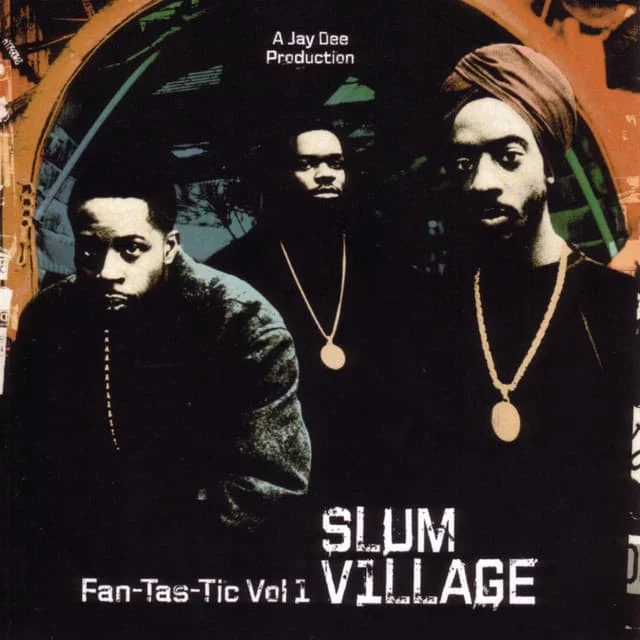
Does this album even belong on a 1990s list? We went back and forth on that one. Slum Village recorded Fan-Tas-Tic Vol. 1 in J Dilla’s home studio in 1996 and 1997, but it never got a proper release at the time. The group sold cassettes at their shows, copies turned up at Record Time in Detroit, and leaked tapes spread the word from there. An official release didn’t follow until 2006, the year Dilla passed away. In the end, we chose 1997, because that’s when the album was finished, when it should have come out, and when it started causing a stir. Besides, it’s a snapshot of a young producer on the verge of changing Hip Hop.
Jay Dee, as he was still known, was already making a name for himself producing for The Pharcyde and A Tribe Called Quest. On his own group’s project, he let loose. His drums stumble and swing instead of locking to the grid, and his basslines sit low and heavy. His chopped jazz and soul samples, from Herbie Hancock and Bill Evans to George Clinton, float in and out of focus. “The Look of Love” is warm and hypnotic, “I Don’t Know” stitches James Brown snippets into a single groove, and “Players” turns a vocal sample into something that sounds like the word itself. The sound that would shape neo-soul and countless beatmakers in the years that followed is all here, in its rawest form.
The rhymes from T3, Baatin, and Dilla himself are relaxed and conversational and often sound freestyled. The group later admitted that many of them were. Lyrically, the trio rarely aims for depth and sticks mostly to money and women. Their voices work more like extra instruments, riding deep in the pocket of the beats.
Because of its demo origins, Fan-Tas-Tic Vol. 1 feels more like a sketchbook than a finished statement, full of short vignettes and alternate versions of the same beat. Many of the songs were later reworked for Fantastic, Vol. 2. That rough-edged quality is a big part of the appeal. This is the sound of a genius figuring himself out in real time.
88. Redman - Dare Iz A Darkside (1994)

Redman’s head pokes out of the dirt on the cover, a direct nod to Funkadelic’s Maggot Brain, and the music underneath heads for the same murky, psychedelic place. Dare Iz a Darkside is Redman at his darkest: a sludgy, paranoid funk record framed by Dr. Trevis skits, with basslines that crawl along the floor and drums that land with a dull thud.
He produced most of it himself, and Erick Sermon and Rockwilder add a few beats. Rockwilder’s “Bobyahed2dis” and Redman’s own “Wuditlooklike” lock into repetitive, smeared grooves and refuse to resolve them. The P-Funk bounce of Whut? Thee Album is still underneath, but it has gone thick and soggy. “Cosmic Slop,” named after another Funkadelic album, brings in Sermon and Keith Murray for the closest thing to a party on the record, and Sermon’s “Can’t Wait” gave radio something to hold on to.
Redman’s rhymes are frantic and unpredictable. He swerves from punchline to threat to plain nonsense within a few bars, his voice going gruff and then cracking into a laugh, and the jokes and the menace blur until you can’t separate them. Later he admitted he was doing a lot of drugs during the sessions and stayed away from these songs for decades. “Can’t Wait” didn’t return to his set until his 2021 Verzuz with Method Man.
It is less accessible than his debut or Muddy Waters, and it is one of his best. The record he spent years avoiding still went straight to No. 1 on the R&B/Hip Hop album chart.
89. Mobb Deep - Hell On Earth (1996)

Rather than soften their sound after the grim The Infamous, Havoc and Prodigy went even deeper into the dark. Hell on Earth trades some of its predecessor’s melodic variety for colder production, sharper paranoia, and an almost suffocating distrust. Loyalty is fragile, violence is never far away, and there is little room for sentiment.
Havoc builds the album from eerie pianos, string sections, and film-score samples over sparse drums. Prodigy meets that atmosphere with some of his most compelling writing, controlled and blunt, while Havoc’s own verses sound like those of a partner who has learned to expect the worst. “G.O.D. Pt. III” and the title track capture their worldview in concentrated form. Method Man makes a strong impression on “Extortion,” Raekwon joins them on “Nighttime Vultures,” and Nas and Big Noyd add Queensbridge muscle to “Give It Up Fast.” “Drop a Gem on ’Em,” recorded at the height of the coastal rivalry, answered 2Pac’s “Hit ’Em Up.”
There’s no attempt to recreate the crossover impact of “Shook Ones, Pt. II,” and the relentless mood can feel one-dimensional for listeners who want more variety. That refusal to offer relief is also the album’s strength. Hell on Earth went gold within five months, and it belongs beside The Infamous among Mobb Deep’s finest work.
90. Naughty By Nature - Naughty By Nature (1991)

Naughty By Nature’s self-titled second album took the East Orange, New Jersey trio from local favorites to mainstream stars. Formerly known as The New Style, Treach, Vin Rock, and DJ Kay Gee found their identity through harder-edged production, nimble lyricism, and hooks built for a crowd. Released in September 1991, the album struck an effective balance between street-level storytelling and accessible, sample-driven rap.
Kay Gee’s knack for turning familiar funk and soul samples into punchy, uncluttered beats is central to the record’s appeal. “O.P.P.” flips the Jackson 5’s “ABC” into an irresistible call-and-response anthem, using a playful code for infidelity that helped propel the song to number six on the Billboard Hot 100. Treach’s rapid-fire delivery keeps the verses lively, while the hook practically demands audience participation. The group’s success did not come at the expense of their harder side. “Yoke the Joker” and “Guard Your Grill” deliver forceful battle rhymes, while “Wickedest Man Alive,” featuring mentor Queen Latifah, brings plenty of combative energy. “Everything’s Gonna Be Alright,” titled “Ghetto Bastard” on explicit versions, takes a more reflective turn, addressing poverty and growing up with limited options over a warm soul sample. “Uptown Anthem,” also associated with the Juice soundtrack, adds a darker, cinematic touch.
Going platinum within months, Naughty By Nature demonstrated that hard-edged rap and irresistible hooks could coexist without compromise. Treach’s acrobatic flow gives the group a distinctive lyrical identity, while Kay Gee’s production lets the samples breathe. The trio had found a formula that worked in the streets, on the radio, and in packed clubs.
91. Ol’ Dirty Bastard - Return To The 36 Chambers (1995)

The album begins with several minutes of ODB rambling, crooning, and ranting about his past before a single beat lands, and that is the only warning anyone gets. Return To The 36 Chambers is the second of the four classic Wu-Tang solo records that followed the Clan’s monumental 1993 debut, Enter The Wu-Tang, and it is the one that refuses every rule the others kept. ODB once claimed there was no father to his style. This record is the proof.
His voice is the instrument and the event. He slurs, hollers, mutters, and breaks into off-key singing, sometimes inside a single bar, dragging syllables past where the beat expects them and then snapping back on time when it matters. “Shimmy Shimmy Ya” is the purest example: a plinking, slightly off-balance piano loop, a stomping beat, and Dirty swaying between a lazy croon and a bark, turning a nonsense chant into one of the most recognizable hooks of the decade. “Brooklyn Zoo” goes harder, his threats delivered with a lurching, drunken swagger that makes them funnier and more alarming at once.
RZA keeps the production skeletal and gritty, closer to a demo than a finished mix. The drums clank like a radiator pipe, the samples sit rough and unpolished, and the empty space leaves room for ODB to wander. “Hippa To Da Hoppa” and “Cuttin’ Headz” race along with him barely hanging on, the hooks lurching back in when you least expect them, the ad-libs piling up into a kind of commentary track.
Other Wu solo records chased atmosphere or narrative. This one chases impulse. Repetition, false starts and abrupt detours become part of the fun, and the album works because nobody tried to tidy it.
Many have copied the ad-libs and the drunken singing since. Nobody has copied the nerve, the sense of a man who heard Hip Hop’s rules and decided they were optional for him alone.
92. Redman - Whut? Thee Album (1992)

Redman is one of the most underappreciated MCs in Hip Hop history. His name rarely appears as high as it should on all-time great lists, despite his exceptional lyrical ability, unmistakable personality, and reputation as a phenomenal live performer. His debut, Whut? Thee Album, makes a compelling case for his place among the best. Packed with funky production, inventive rhymes, outrageous humour, and an abundance of memorable tracks, it introduced an MC who seemed to have an endless supply of energy and ideas.
Erick Sermon handles most of the production, bringing the loose, funk-heavy sound associated with EPMD and the Hit Squad into a new decade. Thick basslines, infectious grooves, and samples drawn from P-Funk, soul, and electro give the album a distinctive musical character. Redman matches these beats with a style that is entirely his own. His delivery is forceful and unpredictable, his wordplay constantly inventive, and his sense of humour never far from the surface. He can switch between intricate rhyme patterns, absurd punchlines, and outrageous storytelling without losing his rhythmic control.
“Time 4 Sum Aksion” is an explosive introduction, driven by a hard-hitting groove and Redman’s commanding presence. “Tonight’s Da Night” takes a smoother, more laid-back approach, with an Isaac Hayes sample providing the perfect backdrop for one of his most memorable performances. “A Day Of Sooperman Lover” is a wonderfully ridiculous piece of funk-infused storytelling, while “How To Roll A Blunt” turns a Pete Rock production into an entertaining instructional session. Even the skits contribute to the album’s bizarre, comic-book atmosphere, giving Redman plenty of room to develop his eccentric persona.
There are 21 tracks here, but the album rarely loses momentum. “Rated R,” “Watch Yo Nuggets,” and “Brothers On My Jock” deliver more of the raw energy and lyrical fireworks that make Redman such an engaging MC. He never takes himself too seriously, although the technical skill behind his performances is unmistakable.
Whut? Thee Album is an entertaining debut, with no obvious weak spots and a production style that suits Redman perfectly. He arrived fully formed, delivering a record that captures the sheer pleasure of hearing a gifted MC having the time of his life.
93. Jeru The Damaja - Wrath Of The Math (1996)

“This album was created to SAVE hip-hop,” Jeru the Damaja declared in the liner notes, and he meant it. Reunited with DJ Premier for his second album, released in October 1996, he took aim at glossy commercial rap and gangsta posturing with a measured, commanding voice. Premier produced every track, moving between eerie strings, spare piano, jazz-inflected loops and rugged boom-bap.
“Ya Playin’ Yaself” is the centerpiece, a buoyant groove framing Jeru’s dry attack on people who mistake possessions for success. The sharpest shots land closer to home. On “One Day,” Puff Daddy, Foxy Brown and Bad Boy kidnap someone named Hip-Hop. “Me or the Papes” adds a jab at Puff’s spending, and The Notorious B.I.G. answered with subtle digs on “Kick in the Door.” Several tracks, including “Revenge of the Prophet (Part 5)” and “Physical Stamina” with Afu-Ra, continue stories from The Sun Rises in the East.
Jeru can be heavy-handed, some of his views on women have aged poorly, and the album lacks the surprise of his debut. It reached number three on the R&B/Hip-Hop albums chart anyway, and its insistence on Hip Hop’s cultural responsibilities was exactly what 1996 needed to hear. Jeru risked industry friction to make his point, and Premier gave him the beats to carry it.
94. Eric B & Rakim - Don't Sweat The Technique (1992)

Of Eric B. & Rakim’s four studio albums, Don’t Sweat The Technique is arguably the most underappreciated. Their final collaboration finds the duo making another subtle shift in musical direction, with Eric B. moving towards denser jazz textures and harder, more varied rhythms. The production has a different character from the sound of Paid In Full and Follow the Leader, but the chemistry remains unmistakable. Rakim, meanwhile, is still operating at a level few MCs have ever reached. His intricate rhyme patterns, effortless control, and remarkable command of language are intact, while his writing takes in a wider range of social and political subjects.
The title track is a highlight. Its insistent jazz loop and crisp drums provide the perfect setting for Rakim’s precise, self-assured delivery. “Know The Ledge,” originally recorded for the film Juice, is another masterpiece, with Rakim constructing a gripping first-person account of a young street hustler whose choices lead to a tragic outcome. The storytelling is vivid and economical, demonstrating his ability to create an entire world with a few carefully chosen details. “The Punisher” offers a more direct display of lyrical skill, while “Casualties Of War” takes a darker direction, examining the Gulf War through the eyes of a soldier confronting violence, trauma, and the consequences of military conflict.
There is also a stronger socially conscious dimension throughout the album. “What’s Going On” addresses the crack epidemic, poverty, police brutality, and violence in Black communities, while “Teach The Children” reflects on the conditions facing younger generations. Rakim handles these subjects with the same precision he brings to his battle rhymes, never sacrificing lyrical complexity for the sake of a message. The production gives the material an appropriately tense, jazz-inflected backdrop, with heavy drums and intricate instrumental details.
Four albums, four classics. Don’t Sweat The Technique may not receive the same attention as its predecessors, but it is an accomplished final chapter for one of Hip Hop’s greatest partnerships. Few duos have put together a catalogue this consistently excellent.
95. Kool G Rap & DJ Polo - Live And Let Die (1992)

A gangster movie on wax, Live And Let Die finds Kool G Rap taking his crime narratives to increasingly elaborate and disturbing extremes. The Queens MC had already demonstrated his extraordinary storytelling abilities on Road To The Riches and Wanted: Dead Or Alive, but here he goes all-in on the mafioso approach he helped pioneer. The result is a dark, cinematic album filled with robberies, double-crosses, street violence, sexual excess, and tales of psychological breakdown. G Rap’s technical command is astonishing throughout. His intricate internal rhymes, multisyllabic patterns, and breathless delivery make even the most graphic narratives compelling listening.
The production gives the album a distinctive character. Much of it comes from Los Angeles producer Sir Jinx, whose involvement brings a West Coast flavour to an otherwise unmistakably East Coast project. His heavy drums, funky basslines, eerie keyboards, and soulful samples create an atmospheric backdrop for G Rap’s vivid storytelling. The Trackmasters also contribute to several tracks, adding some variety to the production. “On The Run” is an outstanding example of the album’s cinematic approach, following a criminal caught in an increasingly dangerous situation. “Ill Street Blues” is another highlight, with its memorable Joe Cocker sample and G Rap’s effortless flow making it one of the strongest tracks in his catalogue.
There is plenty of variation beneath the album’s relentless hardcore exterior. “Crime Pays” offers social commentary, while “Edge Of Sanity” ventures into horrorcore territory. “The Punisher” is not the only kind of character G Rap inhabits here; he shifts convincingly between street hustlers, ruthless criminals, and troubled individuals. The guest appearances are equally impressive. Big Daddy Kane joins G Rap on “#1 With A Bullet,” while the closing “Two To The Head” brings together Ice Cube, Scarface, and Bushwick Bill for a heavyweight cross-coastal collaboration.
The album’s graphic content even caused distribution problems, with Warner Bros. initially refusing to release it. That controversy fits the uncompromising material, although the sheer volume of violence and explicit content can become overwhelming.
Still, Live And Let Die is an extraordinary showcase for one of Hip Hop’s greatest storytellers. G Rap’s influence on mafioso rap and generations of technically gifted MCs is unmistakable here.
96. DJ Shadow - Endtroducing (1996)
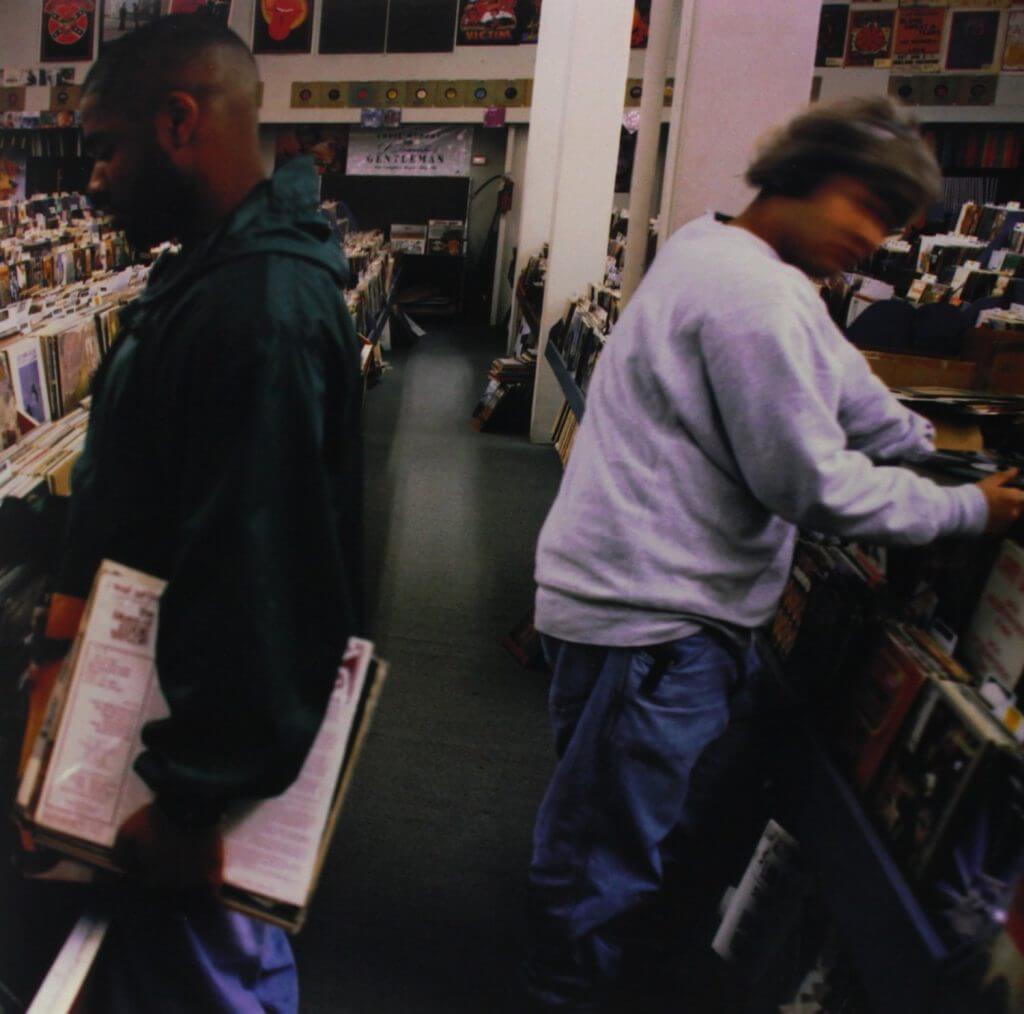
We don’t usually include instrumental albums in these lists, but Endtroducing….. is impossible to ignore. Josh Davis made it with very little equipment: an Akai MPC60 MKII, a turntable and a tape recorder, partly at Dan the Automator’s Glue Factory studio. He built it almost entirely from samples of obscure jazz, funk, psychedelic and rock records found in the bins of Rare Records in Sacramento. Guinness World Records later called it the first album made entirely from samples. It sounds unmistakably like Hip Hop, yet it goes far beyond a conventional beat tape.
After the short scratch collage “Best Foot Forward,” “Building Steam with a Grain of Salt” sets the melancholy tone, with a mournful piano loop circling beneath fragments of an interview with a drummer. “The Number Song” shifts into overdrive with frantic drum breaks and a Metallica sample. The sprawling “Stem/Long Stem” sets strings against erratic drums before drifting somewhere more ethereal. “Midnight in a Perfect World,” the most accessible moment, pairs a soulful vocal line with deep, slow drums. “Napalm Brain/Scatter Brain” builds steadily, then takes itself apart until a single string sample remains.
The interludes tie it together, from the Prince of Darkness “transmissions” to the pointed “Why Hip Hop Sucks in ‘96.” There are no rappers and no conventional narrative. Sequencing, tempo shifts, and the contrast between beauty and disorientation do the storytelling. It’s one of the decade’s essential albums.
97. Dr Dre – 2001 (1999)

Turn up 2001 and notice what isn’t there. Dr. Dre’s second solo album runs on space: a kick drum with nothing crowding it, a bassline sitting alone in the low end, a piano phrase repeating in a near-empty room. Seven years after The Chronic, with Death Row behind him and Dr. Dre Presents…The Aftermath widely written off, he rebuilt G-funk into something cleaner and colder, and the precision ended the doubts.
Mel-Man was his main partner, and session players, including Scott Storch, gave the beats their live weight. “Still D.R.E.,” written by Jay-Z and rapped with Snoop Dogg, rests on a three-note piano figure and strings that never stop circling. “Forgot About Dre” lets Eminem rush at a tempo Dre himself never attempts, and “The Next Episode” brings back Snoop, Kurupt and Nate Dogg over a bassline built for car speakers.
The deep cuts are as carefully made. “Xxplosive” slows a soul loop to a crawl under thudding drums, giving Kurupt, Nate Dogg, Hittman and Six-Two a groove that producers copied for years. “What’s the Difference” stacks dramatic strings beneath Eminem and Xzibit, and “Murder Ink” bends John Carpenter’s Halloween theme into a street-rap score.
The words rarely match the music. Skits about sex, endless gangster posturing and routine misogyny fill gaps between great beats, and several guests offer nothing beyond stock threats. Dre was always the better producer than rapper, and on an album this polished, the gap is hard to miss.
Then comes “The Message,” the final track. After more than an hour of bravado, the last thing Dre does on 2001 is talk to his dead brother.
98. Capone-N-Noreaga – The War Report (1997)
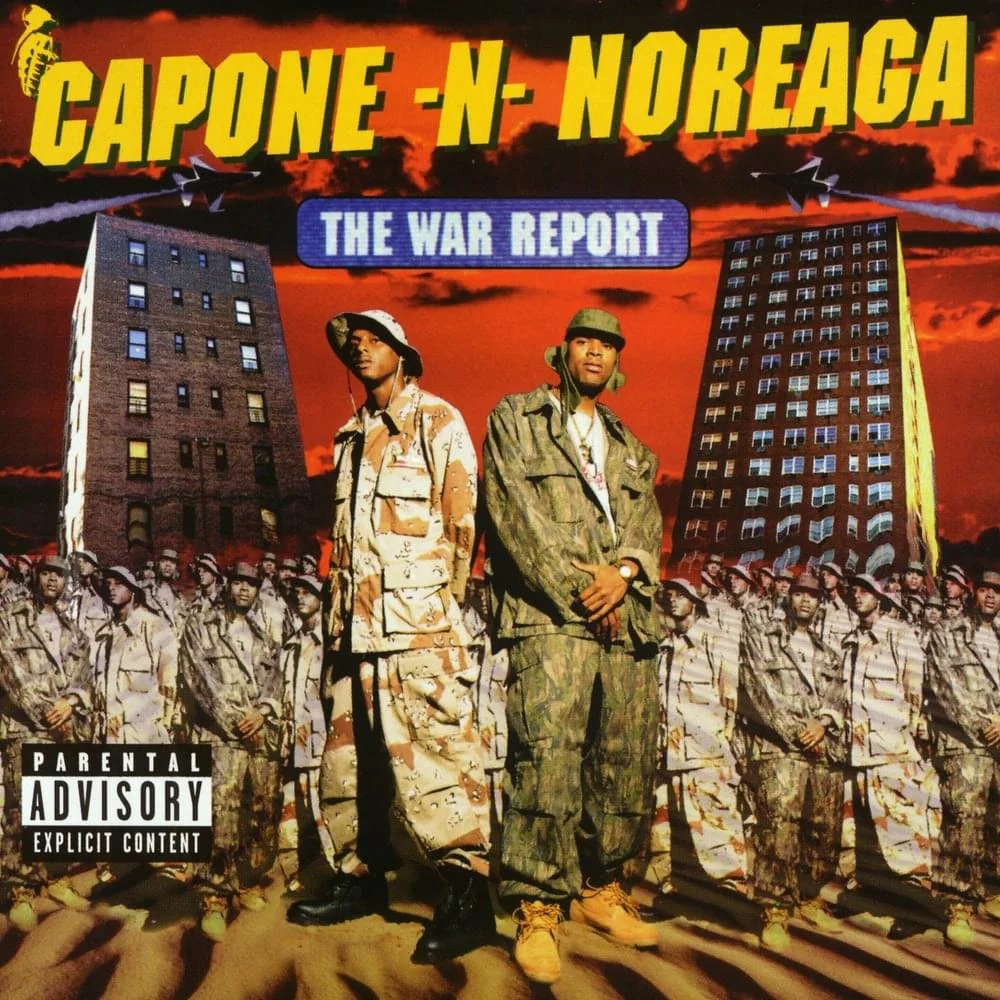
Queens street life as a military campaign is the concept behind The War Report, and Capone-N-Noreaga commit to it fully. Song titles like “Iraq (See the World)” and “L.A., L.A. (Kuwait Mix),” gunshot interludes, and recurring war imagery give the album a loose narrative framework. It’s filled with coded language, shifting alliances, and the constant threat of violence.
Capone was locked up for much of the album’s creation, so Noreaga carries most of the load, and his unconventional flow is the record’s most distinctive feature. He rarely sticks to predictable rhythmic patterns. He lurches from conversational asides to sudden bursts of aggression, which gives even familiar subject matter a volatile edge. “Live On, Live Long” and “Halfway Thugs” show that quality at its best. When Capone does appear, his deeper, more restrained voice makes for a fine contrast.
The album’s secret weapon is Tragedy Khadafi. He appears on more than half the songs and served as producer and executive producer, so he’s far more than a guest. His dense writing and Five Percenter references on tracks like “Stick You” and “Neva Die Alone” add philosophical weight, and his role as mentor holds the whole operation together.
The production comes from Marley Marl, Buckwild, Lord Finesse, Tragedy, and others. It’s rugged and often sparse, steeped in the bleak atmosphere of mid-90s New York. Havoc of Mobb Deep lends his voice to “Parole Violators” and “Illegal Life,” bringing a touch of Queensbridge shadow, and “T.O.N.Y. (Top of New York)” rides an ominous bassline. The biggest statement is “L.A., L.A.,” with Mobb Deep and Tragedy, a fierce response to the Dogg Pound’s “New York, New York.” At 20 tracks the album runs a little long, and not every song hits.
Gritty, eccentric, and fiercely loyal to its borough, The War Report is one of the definitive New York street albums of the late 90s.
99. Big L – Lifestylez Ov Da Poor & Dangerous (1995)

Big L set up a punchline the way a comedian sets up a joke: a casual boast, a pause in the rhythm, then a twist so outrageous it made the boast sound modest. On Lifestylez Ov Da Poor & Dangerous, his debut and the only album released in his lifetime, the Harlem MC packs nearly every bar with that kind of trick, threats so elaborate they turn funny and jokes so cold they turn threatening.
“Put It On” opens the case with Kid Capri on board and a smooth, head-nodding groove that lets L stroll through his verses with total confidence. “M.V.P.” flips a DeBarge sample into something lush and polished, and the contrast between the sweet music and L’s crude, gleeful bragging is the point. “All Black” swings the other way, a gloomy beat under some of the darkest humor of the year, and “No Endz, No Skinz” sharpens his wit into a cynical take on money and relationships.
The production comes mostly from the D.I.T.C. circle, with Buckwild, Lord Finesse and Showbiz supplying hard drums, soulful loops and darker textures. It does the job, though it rarely matches the MC. Several beats sound interchangeable, and in places a more distinctive backdrop would have pushed his writing further into the spotlight it deserved.
The posse cuts show what kind of company he kept. “Da Graveyard” gathers a crew of Harlem and Bronx rappers, including a young Jay-Z in one of his early recorded appearances, and L outshines the field with ease. “8 Iz Enuff” crowds even more voices onto one track, a rapid-fire competition that he anchors with wordplay you only catch on the fourth listen.
Lyrically, Big L is untouchable here: technically precise, quick-witted and blessed with flawless comic timing. His death in 1999 left the album as a single complete statement from one of the most naturally gifted punchline MCs New York ever produced. Rest in peace.
100. Makaveli - The Don Killuminati The Seven Day Theory (1996)
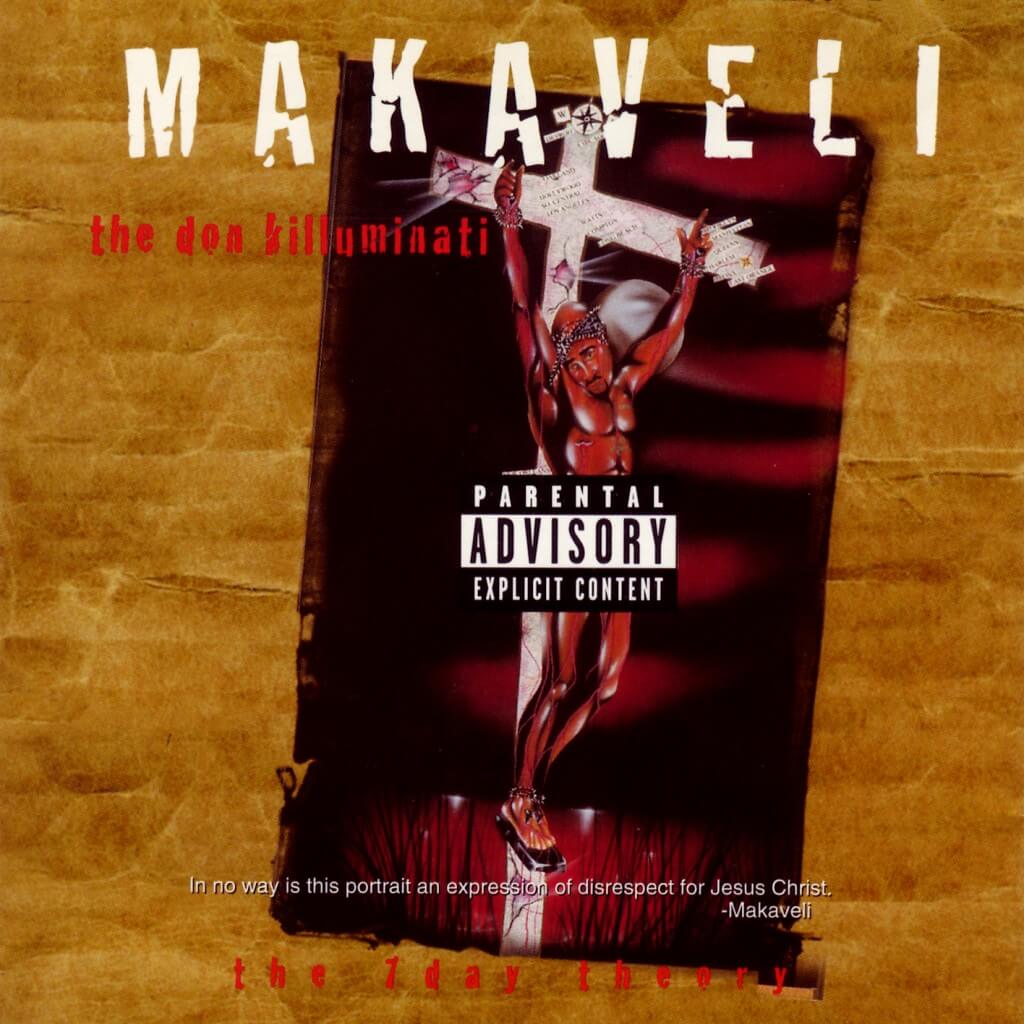
Recorded in seven days at Can-Am Studios in August 1996 and released less than two months after 2Pac’s murder, The Don Killuminati: The 7 Day Theory was never meant to be his final statement. It was initially conceived as an underground release under the Makaveli name, which he took from his prison reading of Machiavelli. Instead, it debuted at number one with 664,000 copies sold in its first week. Johnny “J” and the other usual Death Row producers were absent. Pac worked mainly with Hurt-M-Badd and Darryl “Big D” Harper, and the result is darker and more urgent than the lavish All Eyez on Me.
“Hail Mary” opens with tolling bells and an ominous rhythm, as Pac and the Outlawz move between menace and fatalism. It’s one of the most compelling performances of his career. QDIII’s “To Live & Die in L.A.,” recorded with Val Young in under two hours, offers sunlit warmth. “Blasphemy” wrestles with religion and inequality, while “Me and My Girlfriend” took its inspiration from Nas’s “I Gave You Power.” The closing “Against All Odds” is far less restrained, a volatile catalogue of grievances aimed at Nas, Dr. Dre, Mobb Deep, Puff Daddy and others.
The fixation on enemies can grow repetitive, and some tracks stall. Still, the strongest moments are extraordinary. Anger, vulnerability and spiritual doubt collide here, making this one of the most affecting records in 2Pac’s catalog.
101. Beastie Boys – Hello Nasty (1998)

No Beastie Boys album gets as close to Paul’s Boutique as Hello Nasty. Four years after Ill Communication, the trio moved Hip Hop back to the center of their sound without giving up their taste for detours, studio tricks and stray ideas. The key addition was Mix Master Mike. His scratching cuts through nearly every track, chopping vocal snippets into rhythms and turning the turntable into a lead instrument, and his timing with Ad-Rock, Mike D and MCA sounds natural from the first song.
“Super Disco Breakin’” sets the tone with a burst of old-school excitement, the three MCs passing lines back and forth in their familiar shouted relay. “Body Movin’” bounces along on a goofy, irresistible groove, and “Intergalactic” pairs a robotic vocoder chant with electro drums, becoming one of the group’s most recognizable hits. “Three MCs and One DJ” introduces the new lineup in the plainest terms possible, stripping the beat down so Mike can take the spotlight.
The deep cuts hold up just as well as the singles. “The Negotiation Limerick File,” “Putting Shame in Your Game,” “Unite” and “The Move” are lean, playful Beastie Boys rap, each with its own groove and its own running jokes. Then the album wanders off. Ad-Rock croons over lounge arrangements on “Song for the Man,” “I Don’t Know” drifts into gentle bossa nova with Miho Hatori of Cibo Matto, and “Dr. Lee, PhD” hands the mic to Lee “Scratch” Perry for a dubbed-out sermon. “Song for Junior” adds another soft, unhurried turn.
What holds it together is the sequencing. Short interludes, sound effects, instrumental passages and sudden changes of mood run into each other so smoothly that the record plays like one long mixtape, the same free-flowing approach that made Paul’s Boutique such a rabbit hole. Twenty-two tracks pass quickly because no idea overstays its welcome.
We’ll go further than most: Hello Nasty has aged better than Licensed to Ill. The jokes still land, the curiosity still sounds fresh, and the balance between straight Hip Hop and wild excursions has rarely been struck this well by anyone.
102. Public Enemy - Muse Sick-N-Hour Mess Age (1994)

In 1994, Public Enemy closed out an album with Harry Allen calling Chuck D to talk about the coming information superhighway. Few people paid attention. Muse Sick-n-Hour Mess Age was misread on arrival and has stayed chronically underrated ever since, judged against the group’s earlier classics instead of on its own crowded, restless terms.
The Bomb Squad’s old wall of noise is still here, now steered by Gary G-Wiz and Chuck himself under his Carl Ryder alias. Give It Up runs on a twangy guitar riff and a pulsing bassline. “Bedlam 13:13” sets eerie choral tones against booming drums, and “Death of a Carjacka” slides an Isaac Hayes sample under its hard edges. “What Kind of Power We Got?” gives Flavor Flav a loose funk groove to bounce across. The arrangements pile guitars, chopped samples and vocal fragments on top of each other, and the clutter is part of the message: a country this noisy and this sick can’t be described cleanly.
Chuck’s targets are close to home. On “So Whatcha Gone Do Now?” he rides a smoother, jazzier beat to confront destruction inside Black communities, and “Thin Line Between Law & Rape” traces the long history of racial injustice. Easy Mo Bee co-produces the bitter, mid-tempo “I Stand Accused.” “Godd Complexx” comes from the pen of Jalal Mansur Nuriddin, also known as Alafia Pudim, and connects Public Enemy to the spoken-word politics that came before them.
The album asks for patience, and it pays back the listener who gives it.
103. Heltah Skeltah - Nocturnal (1996)

They called Ruck and Rock the “Twin Towers” of Boot Camp Clik, and on Nocturnal, they live up to the name. Released on Duck Down in June 1996, the duo’s debut followed Black Moon’s Enta Da Stage and Smif-N-Wessun’s Dah Shinin’ with the same rugged drums and ominous samples. What sets it apart is the chemistry. Ruck, later known as Sean Price, deals in punchlines, irreverent humor, and gleefully disrespectful battle rhymes, while Rock counters with a deep, booming voice and an almost robotic flow.
Da Beatminerz provide most of the backbone, with Baby Paul behind “Letha Brainz Blo,” “Undastand” and “Therapy,” and Evil Dee on the crew warning “Clan’s, Posse’s, Crew’s & Clik’s.” Tha Alkaholiks’ E-Swift adds “Operation Lock Down,” the first single. “Therapy,” featuring Vinia Mojica, turns a session on the couch into dark comedy. “Leflaur Leflah Eshkoshka,” recorded with O.G.C. as the Fab 5, reached the Billboard Hot 100 and became the biggest Boot Camp hit to that point.
If the battle-rap approach sometimes blurs together, the personalities never do. Nocturnal belongs alongside its Boot Camp predecessors: Brooklyn street rap with a sense of humor, from two MCs whose contrasting styles make the partnership work.
104. Kool Keith – Sex Style (1997)

Kool Keith had blown minds with Dr. Octagonecologyst a year earlier, and he could have played it safe. Naturally, he did the opposite. He reunited with Kutmasta Kurt, who handles the production, and dove headfirst into what’s been dubbed “pornocore”: a hilariously outrageous strain of rap built on raunchy humor, grotesque imagery, and absurd sexual fantasy.
Sex Style is crude, explicit, and often deeply uncomfortable, and that’s exactly the point. Hand this concept to almost any other rapper, with the possible exception of MF DOOM, and the result would sound plain stupid. Kool Keith not only gets away with it, he comes out on top. Beneath the shock value is a razor-sharp writer. He twists language into darkly comic shapes and delivers even his filthiest lines with a sneering, deadpan cool. On “Keep It Real… Represent,” standard battle-rap bravado turns into something far more twisted. “Regular Girl” and “Lovely Lady” push the surreal humor as far as it will go.
Not everything here is sleaze. On “Plastic World,” the album’s standout, Keith aims the fakeness of the music industry and the flood of imitators copying his style, over a relentless combination of snare and piano.
Kurt deserves a big share of the credit. His beats are minimalist, deep, and bass-heavy, mixing funk, boom-bap, and oddball samples into a sound that matches the chaos of the lyrics. The sparse arrangements leave lots of room for Keith’s off-kilter flow. A few tracks start to blend together toward the end, but the sound never gets stale.
Sex Style is polarizing by design and will turn plenty of listeners away. For everyone else, it’s another wildly entertaining glimpse at one of Hip Hop’s most original minds, unfiltered and completely unbothered by what anyone thinks.
105. Cypress Hill - Black Sunday (1993)

Cypress Hill’s second album took the group far beyond the Hip Hop audience that had embraced their 1991 debut. Black Sunday became an international breakthrough, introducing B-Real’s unmistakable nasal delivery, Sen Dog’s forceful presence, and DJ Muggs’ dark production to listeners who might otherwise never have paid attention to Hip Hop. For purists who prefer the rougher edges of the self-titled debut, the follow-up may be a less satisfying record. Still, Muggs delivers some of his finest work here, giving the album a sound that is instantly recognizable.
The opening stretch is particularly strong. “I Wanna Get High” sets the mood with a hypnotic groove, followed by “Insane in the Brain,” whose bizarre, carnival-like beat and infectious hook turned it into a worldwide anthem. Muggs has a knack for transforming unusual sounds into memorable musical hooks, using eerie sirens, distorted effects, and heavy basslines to create an atmosphere that is simultaneously playful and menacing. “When the Shit Goes Down” and “Lick a Shot” continue in a harder direction, while “I Ain’t Goin’ Out Like That” pairs B-Real’s frantic delivery with Sen Dog’s aggressive responses.
The group’s obsession with marijuana is naturally a major theme. “Hits from the Bong” is built around a memorable Dusty Springfield sample, while “Legalize It” and “I Wanna Get High” leave little doubt about Cypress Hill’s position on the subject. There is a darker side to the album as well. The lyrics frequently return to violence, paranoia, death, and the dangers of street life, giving the record a distinctly sinister undercurrent beneath its stoner humor.
Black Sunday isn’t as consistently compelling as its predecessor. Some tracks are less memorable, and the interludes interrupt the flow. The production, however, carries the album through its weaker moments. Muggs’ combination of eerie samples, heavy drums, and unconventional textures gives Cypress Hill a musical identity few other groups could imitate. For all its crossover success, Black Sunday is still unmistakably Hip Hop.
106. Lord Finesse - Return Of The Funky Man (1992)
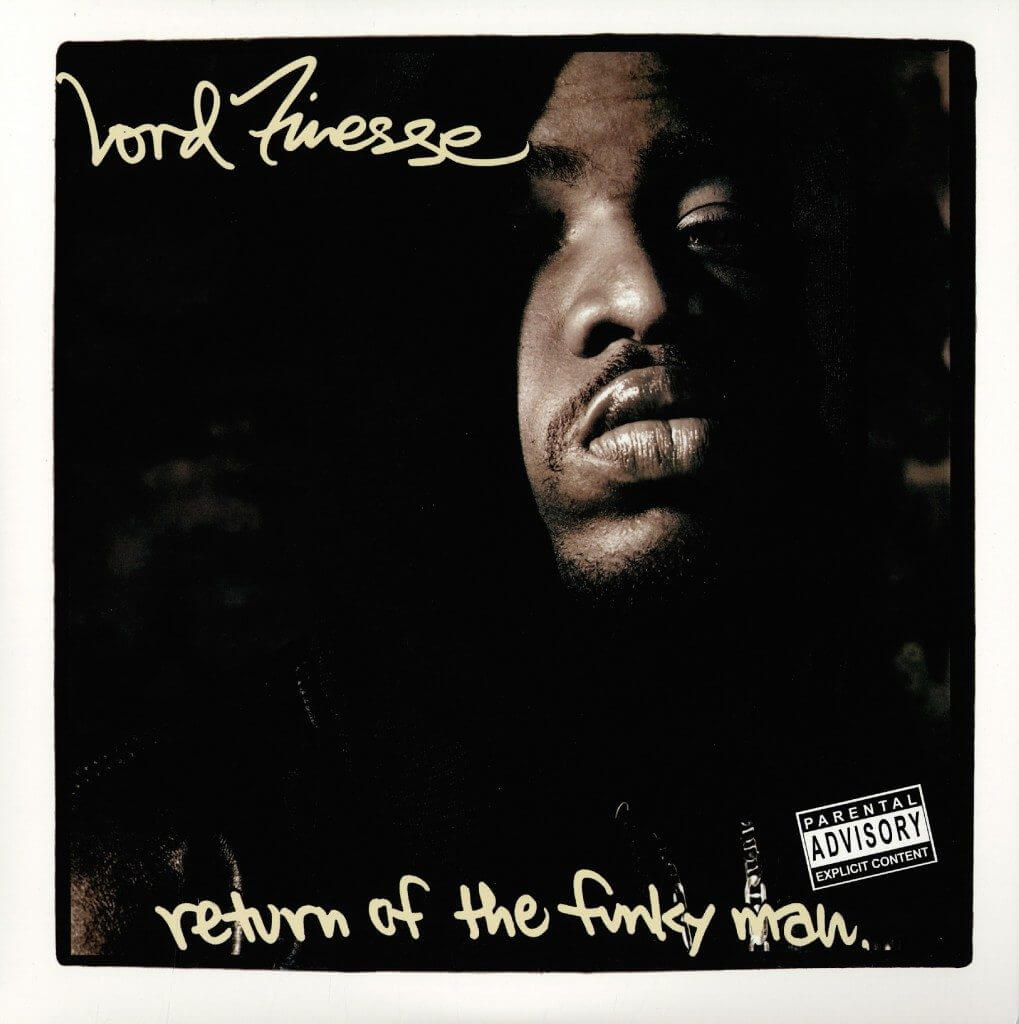
Following his excellent debut Funky Technician, Lord Finesse returned with a second album that expanded his role within the Diggin’ in the Crates (D.I.T.C.) collective. Having split from DJ Mike Smooth and Wild Pitch Records, Finesse signed with Giant Records and enlisted fellow crew members Showbiz and Diamond D, alongside several other producers. He also began handling more of the production himself, taking an early step towards the respected beatmaking career that would eventually become an equally important part of his legacy.
As an MC, Finesse was already one of New York’s sharpest practitioners of punchline rap. His style combines intricate internal rhymes, clever wordplay, and playful putdowns, delivered with a relaxed confidence that makes even his most elaborate rhyme schemes sound effortless. The title track, produced by Showbiz, is a perfect introduction, with Finesse asserting his lyrical superiority over a hard-hitting funk groove. “I Like My Girls With A Boom” brings out his cheekier side, while “Yes You May” is a particularly strong crew collaboration. Featuring Showbiz & A.G. and Percee P, the track brings together three distinctive lyricists, with Percee P’s rapid-fire delivery contrasting nicely with Finesse’s smoother approach.
The production has a varied character without losing its D.I.T.C. identity. Diamond D supplies funk-heavy beats for “Praise The Lord” and “Isn’t He Something,” while “Save That Shit” and “Stop Sweating The Next Man” offer harder grooves. “Fat For The 90’s,” featuring A.G., is another highlight, capturing the competitive spirit and easy chemistry of the Bronx collective.
At nearly 70 minutes, Return Of The Funky Man occasionally loses some momentum, but its strongest tracks are excellent. Finesse’s lyrical dexterity, humour, and understated delivery make him an engaging presence throughout, while the production offers an early indication of his growing skills behind the boards. A rewarding second album from one of D.I.T.C.’s finest MCs.
107. UGK - Super Tight (1994)

Super Tight was the first UGK album to bring in Leo Nocentelli, the guitarist whose choppy, syncopated playing had powered The Meters. His presence tells you where Pimp C’s head was. The Port Arthur producer wanted street rap that swung like Southern soul and blues, with church organ, warm guitar lines, and basslines that sit deep and heavy at the bottom of the mix.
Pimp C produced every track, sharing three with DJ DMD, and he lets the grooves roll at a slow, steady cruise. “It’s Supposed to Bubble” glides along on Pleasure’s “Thoughts of Old Flames,” a perfect fit for the duo’s champagne swagger, while “Front, Back & Side to Side,” with Smoke D, is built for slow driving with the windows down. “Underground” plants their flag as an independent Southern act with no interest in borrowing a coastal sound.
The darker songs give the album its weight. Bun B takes “Feds in Town” alone, laying out the tension of life under police surveillance, and “Protect & Serve” turns a sarcastic hook on corrupt cops. “Stoned Junkee,” featuring 3-2, tells the drug story from the user’s side. Even the raunchy “I Left It Wet for You” takes a sudden turn when Pimp touches on thoughts of suicide.
The partnership is the glue. Bun’s clipped, articulate delivery keeps the stories in order, and Pimp’s drawl, melodic hooks and unpredictable personality knock them loose again. Two years before Ridin’ Dirty, the blueprint for Texas rap’s slow-rolling confidence is already drawn here, with a Meters guitarist helping hold the pencil.
108. Busta Rhymes - E.L.E. (Extinction Level Event): The Final World Front (1998)
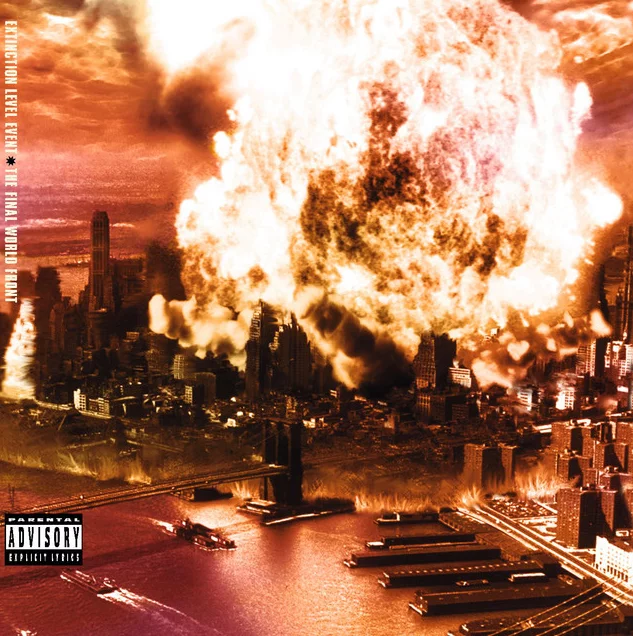
Busta Rhymes spent the late 90s counting down to the end of the world, and E.L.E. (Extinction Level Event): The Final World Front is where the clock hits zero. The third installment of his millennium trilogy opens with a grave spoken warning on “There’s Only One Year Left!!! (Intro),” then throws a party at the edge of the apocalypse. Doom and fun sit side by side for the whole record.
“Everybody Rise” sets the pace with a pounding piano figure and driving drums, Busta shouting over it as if the sky were already falling. His voice is the main instrument: rasping, elastic, switching between double-time bursts and drawn-out growls in the space of a bar. “Gimme Some More” puts that speed to work over the shrieking string stabs of Bernard Herrmann’s Psycho score, a tongue-twisting performance that turns a horror cue into a club hit. “Tear Da Roof Off” opens with thunder and sweeping strings before settling into a groove loose enough for him to clown around on.
The production rarely sits still. “Where We Are About to Take It” runs on quirky, glitchy programming, while the title track adds Far Eastern melodies and an odd, lurching swing. “What’s It Gonna Be?!” pairs Busta with Janet Jackson for a slow, sultry duet, an unlikely match that works because he keeps his delivery sharp while she glides above it. Mystikal turns “Iz They Wildin Wit Us & Gettin Rowdy Wit Us” into a sparring match between two of rap’s most excitable voices.
Not every guest earns their spot, and “This Means War!!” with Ozzy Osbourne plays like a crossover stunt that never finds its footing. The album’s center holds, though: Busta at full volume and in total command, giving the end of the millennium the soundtrack his first two albums had been promising.
109. Ras Kass - Soul On Ice (1996)
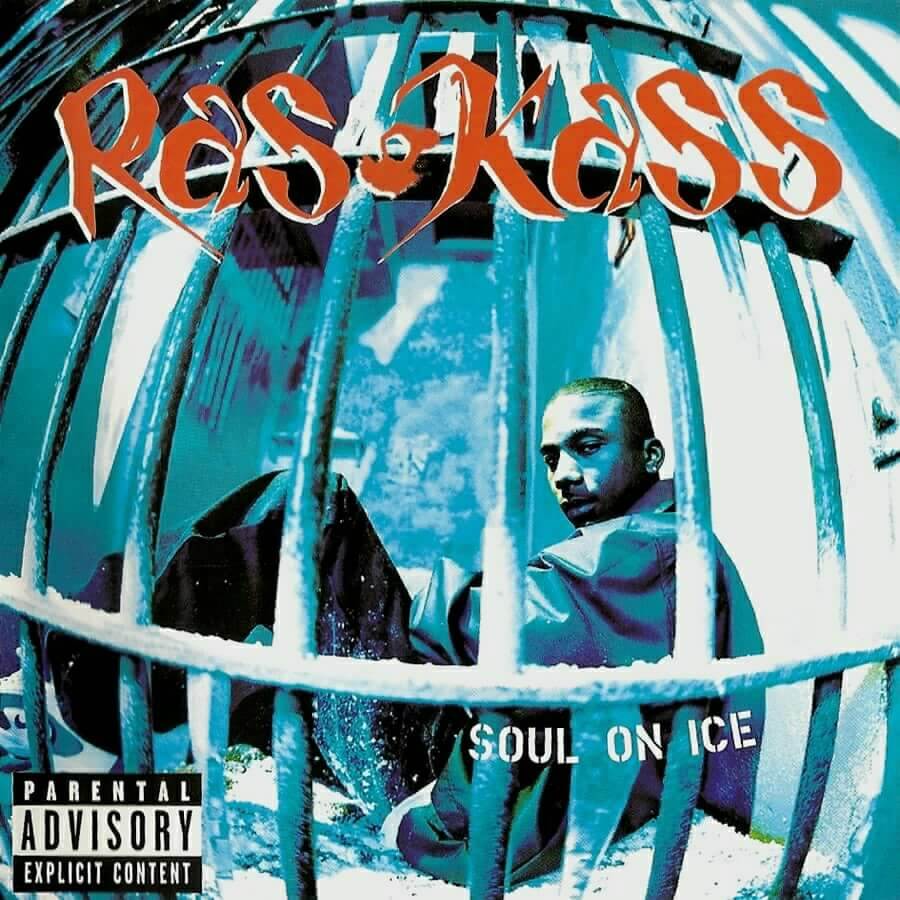
Before he had an album out, Ras Kass already had a reputation. The Los Angeles MC, who took his name from the Ethiopian emperor Ras Kassa, had landed in The Source’s “Hip-Hop Quotable” column and twice in Rap Pages’ “Rhyme of the Month.” His debut, released on Priority in October 1996, borrowed its title from Eldridge Cleaver’s 1968 book. It took on race, religion, capitalism, and institutional power through verses packed with references and layered meanings.
“Nature of the Threat” is the defining statement and one of the most audacious lyrical performances of the era. Over Vooodu’s production, Ras Kass spends nearly eight minutes building a sweeping, deeply controversial account of human history, from African origins through colonialism, slavery and the creation of racial hierarchies. He prepared for it by taking community college classes in anthropology and history. Whether or not listeners accept every conclusion, few MCs were attempting anything on this scale.
The album also knows when to loosen its grip. “Anything Goes” sets a buoyant groove against observations about greed and crime. “Miami Life” questions the appeal of money and glamour, and Coolio, the only guest, joins him on “Drama.” The stripped-back production keeps the focus on the writing.
Soul on Ice drew little commercial attention, and Ras Kass sometimes packs so many ideas into a verse that clarity gives way to density. That restless intellect is also the source of its appeal. It’s a formidable debut from a
110. Boogie Down Productions - Sex And Violence (1992)
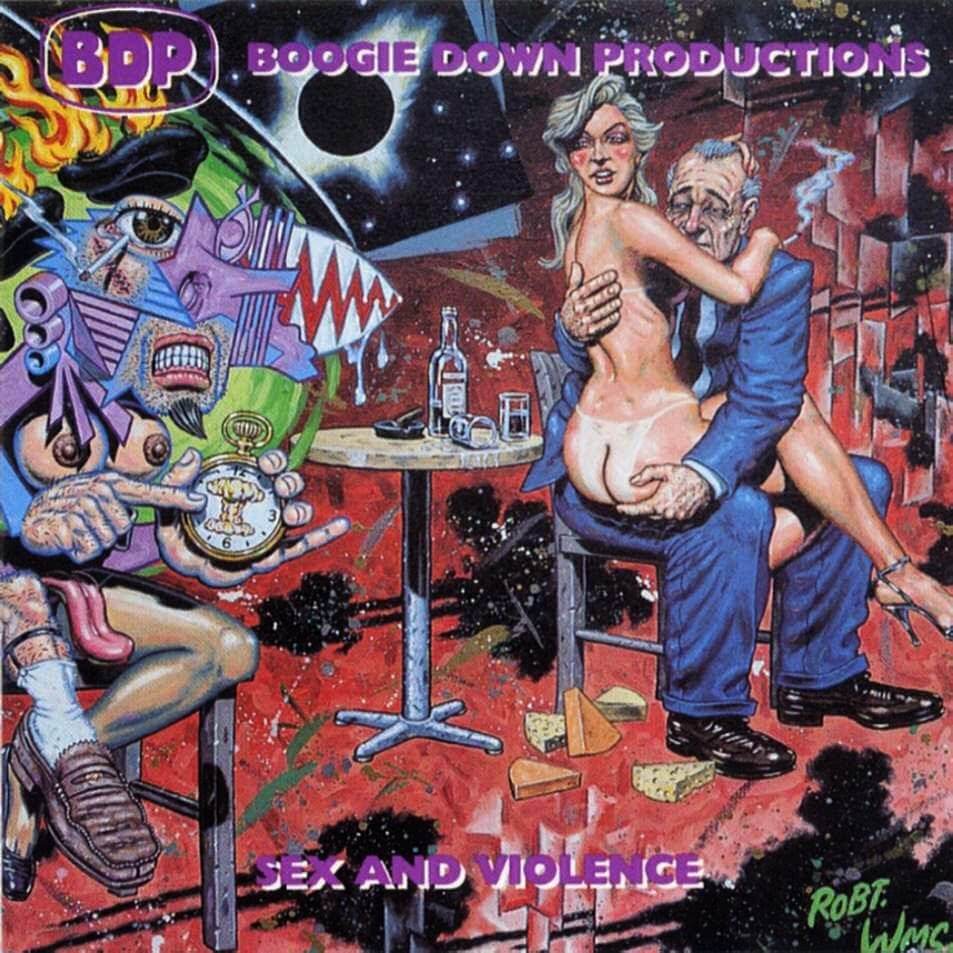
Ice Cube’s third solo album is another heavyweight release from one of Hip Hop’s most formidable MCs. Coming out just months after the 1992 Los Angeles riots, The Predator captures a city still reeling from racial tensions, police brutality, and the acquittal of the officers who beat Rodney King. Cube channels that anger into some of his most forceful writing, although the album also reveals a more accessible side of his music. It may lack some of the hunger and urgency of AmeriKKKa’s Most Wanted and Death Certificate, but its strongest moments are exceptional.
“When Will They Shoot” sets a confrontational tone, with Cube addressing accusations of racism and anti-Semitism while aiming at America’s history of racial oppression. “We Had To Tear This Mothafucka Up” is an angry response to the Rodney King verdict, while “Who Got The Camera?” imagines the perspective of a Black man facing police violence. The interludes, including snippets of interviews and heated discussions, reinforce the atmosphere of a city on edge.
Musically, Cube moves towards a heavier, funkier West Coast sound. DJ Pooh, Sir Jinx, Torcha Chamba, and DJ Muggs contribute production, with thick basslines and hard-hitting grooves replacing some of the abrasive sample collages of his earlier work. “Wicked” is particularly menacing, while “Check Yo Self,” featuring Das EFX, pairs sharp streetwise advice with an irresistible hook. Then there is “It Was A Good Day,” arguably Cube’s most beloved recording. Its account of an unusually peaceful day in South Central offers a welcome change of perspective, with the simple pleasures of everyday life providing a striking contrast to the album’s more hostile material.
The numerous interludes occasionally interrupt the flow, and a handful of tracks don’t match the quality of the highlights. Nevertheless, The Predator is a terrific album, balancing political anger, street narratives, humour, and memorable West Coast funk. It became Ice Cube’s biggest commercial success and, in our view, his last classic solo album.
111. Masta Ace Inc. - Slaughtahouse (1993)

Masta Ace has always been one of Hip Hop’s most inventive MCs, finding new ways to approach the music without losing sight of what makes a great rap record. With Slaughtahouse, he took a pointed look at the growing glorification of violence in Hip Hop, using satire and dark humor to expose the absurdity of gangsta posturing. Released under the Masta Ace Incorporated name, the album marked a significant change of direction after his earlier solo work. Ace also made room for his crew, creating a group dynamic that gives the record a different character from a conventional solo album.
The concept revolves around an imaginary slaughterhouse where the exaggerated violence of gangsta rap is taken to ridiculous extremes. On the title track, Ace adopts the persona of a cartoonishly ruthless character, turning the conventions of hardcore rap against themselves. “Who U Jackin’?” continues the satire, while “Style Wars” takes aim at the attitudes and rivalries surrounding the genre. The humor never undermines the lyrical craft. Ace’s writing is sharp, his flow controlled, and his ability to construct elaborate scenarios gives the album considerably more depth than its deliberately outrageous premise might suggest.
Musically, Slaughtahouse has a heavier, bass-driven sound than Masta Ace’s first album. Production contributions from Ace, Uneek, the Bluez Brothers, Latief, and the Beatheads give the album a varied but cohesive feel, combining New York-style rhyming with funkier, West Coast-influenced grooves. “Boom Bashin’” and “The Mad Wunz” are highlights, while “Saturday Nite Live” closes the album on a lively note. “Jeep Ass Niguh” also points toward the bass-heavy direction Ace would explore further on Sittin’ on Chrome.
What makes Slaughtahouse particularly interesting is the way Ace uses the language and musical conventions of hardcore rap to question its values. He understood the appeal of tough imagery and knew how to make it entertaining, but he was equally aware of the difference between creative exaggeration and the glorification of real violence. Three decades later, that distinction gives the album plenty of relevance. It’s a clever, entertaining, and unusually forward-thinking record from one of Brooklyn’s finest lyricists.
112. Ice Cube - The Predator (1992)

Ice Cube’s third solo album is another heavyweight release from one of Hip Hop’s most formidable MCs. Coming out just months after the 1992 Los Angeles riots, The Predator captures a city still reeling from racial tensions, police brutality, and the acquittal of the officers who beat Rodney King. Cube channels that anger into some of his most forceful writing, although the album also reveals a more accessible side of his music. It may lack some of the hunger and urgency of AmeriKKKa’s Most Wanted and Death Certificate, but its strongest moments are exceptional.
“When Will They Shoot” sets a confrontational tone, with Cube addressing accusations of racism and anti-Semitism while aiming at America’s history of racial oppression. “We Had To Tear This Mothafucka Up” is an angry response to the Rodney King verdict, while “Who Got The Camera?” imagines the perspective of a Black man facing police violence. The interludes, including snippets of interviews and heated discussions, reinforce the atmosphere of a city on edge.
Musically, Cube moves towards a heavier, funkier West Coast sound. DJ Pooh, Sir Jinx, Torcha Chamba, and DJ Muggs contribute production, with thick basslines and hard-hitting grooves replacing some of the abrasive sample collages of his earlier work. “Wicked” is particularly menacing, while “Check Yo Self,” featuring Das EFX, pairs sharp streetwise advice with an irresistible hook. Then there is “It Was A Good Day,” arguably Cube’s most beloved recording. Its account of an unusually peaceful day in South Central offers a welcome change of perspective, with the simple pleasures of everyday life providing a striking contrast to the album’s more hostile material.
The numerous interludes occasionally interrupt the flow, and a handful of tracks don’t match the quality of the highlights. Nevertheless, The Predator is a terrific album, balancing political anger, street narratives, humour, and memorable West Coast funk. It became Ice Cube’s biggest commercial success and, in our view, his last classic solo album.
113. The Beatnuts - Street Level (1994)

Officially, the album has no title beyond the group’s name. “Street Level” appears only on the front cover, but the name stuck, and it fits a record that never aims higher than the block and never needs to. The Beatnuts’ full-length debut is an underappreciated New York classic, consistent from start to finish with no filler.
JuJu and Psycho Les had built their reputation as producers, and the beats show it. They handled nearly everything themselves, digging up dusty jazz, funk, and soul breaks and setting them over booming basslines and crisp drums. “Get Funky” draws on a Joe Zawinul composition, and Lucien adds the opener “Ya Don’t Stop.” “Props Over Here” became the single for good reason, with a loose, head-nodding loop and a hook that sticks on the first listen.
On the mic, the Queens trio trade swagger and crude, quick humor over complex narratives, and their braggadocio is catchy and creative. Fashion’s sharper voice cuts against Les and JuJu’s laid-back delivery, which keeps the back-and-forth lively on “Superbad.” Grand Puba drops by for “Are You Ready,” and his playful, slippery verse fits right in with the crew’s energy. “Psycho Dwarf,” carried over from the 1993 Intoxicated Demons EP, closes the album with Psycho Les at his most unhinged.
Soon after, Fashion left to go solo as Al’ Tariq, and the Beatnuts carried on as a duo. That makes Street Level the only full album by the original trio, and the one where three voices fight for room over the same dusty loops.
114. KRS One - KRS One (1995)
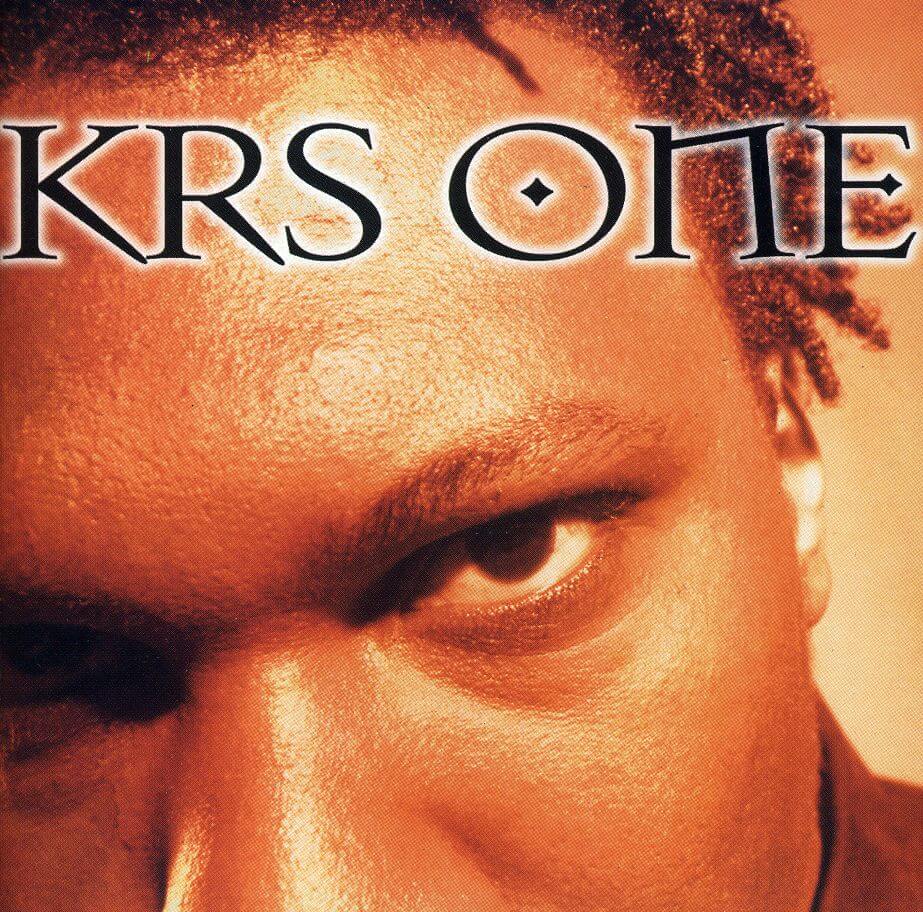
KRS-One originally planned to call this album Hip-Hop Vs. Rap, and the abandoned title tells you where his head was. On his second solo record under his own name, the Teacher draws a line between the culture he grew up in and the industry selling it back, and he spends most of the album standing guard on his side.
DJ Premier sets the tone. “Rappaz R N Dainja” opens on a pounding beat and a cluster of chopped stabs, with KRS barking his warnings in that booming, preacherly voice that never sounds rushed. Premier’s “MCs Act Like They Don’t Know” is the classic: a hypnotic, repeating loop, cut-up vocal scratches on the hook, and KRS in full battle mode, mocking rivals who pretend not to recognize the source of their style.
The deeper cuts carry the argument. “Hold” is a clever cautionary tale about chasing the wrong things, told with the storytelling patience of his Boogie Down Productions years. “The Truth” picks a fight with organized religion over a sparse, solemn instrumental, and it divided listeners. “Represent The Real Hip Hop” and “Ah Yeah” make his mission statement plain.
It lacks some of the spark and playfulness of Return Of The Boom Bap, but the hit rate is at least as high. In a year dominated by Wu-Tang crime sagas and a rising South, this sold well and still got overlooked. We count it among the best records in his catalog, which is no small claim.
115. Big Pun – Capital Punishment (1998)

Big Pun rapped as if breathing were optional. On Capital Punishment, the Bronx MC strings together long runs of internal rhymes, stacking multisyllabic patterns inside each line and rolling from bar to bar without an obvious pause. It’s a dazzling technical display, and the only album Big Pun released in his lifetime.
“The Dream Shatterer,” produced by Domingo, is pure rhyme density, Pun cramming syllables into the beat with machine-like precision. On “Twinz,” a remake of “Deep Cover,” he and Fat Joe trade lines with easy familiarity before Pun unloads one of his most quoted tongue-twisters. JuJu’s tense, cinematic beat on “Beware” and Young Lord’s work on “You Ain’t a Killer” give him darker material, and Black Thought matches him bar for bar on Rockwilder’s “Super Lyrical.”
The crossover side works too. “I’m Not a Player” and Knobody’s “Still Not a Player,” with Joe singing the hook, made Pun a radio star without softening his delivery. The beats run from RZA’s murky “Tres Leches (Triboro Trilogy),” with Prodigy and Inspectah Deck, to Showbiz’s “Parental Discretion” with Busta Rhymes, L.E.S.’s glossy posse cut “Glamour Life” and the island bounce of “Caribbean Connection” with Wyclef Jean.
Capital Punishment peaked at number five and became the first solo album by a Latino rapper to go platinum. What holds it back is the packaging. Twenty-four tracks and 72 minutes include a run of skits that stall the momentum, and “Taster’s Choice,” dropped in right after “Super Lyrical,” is cringeworthy the first time and unbearable after that. Strip those out, and this album would sit several places higher on this list.
116. A Tribe Called Quest - Beats Rhymes & Life (1996)

After three albums that helped define alternative Hip Hop, A Tribe Called Quest returned in July 1996, on the same day as Ridin’ Dirty, as a different group. Phife Dawg had moved to Atlanta, Q-Tip’s conversion to Islam had made the atmosphere more serious, and Phife later said the chemistry was “dead.” The newly formed Ummah, with Q-Tip, Ali Shaheed Muhammad and a young J Dilla, then still Jay Dee, built a minimalist sound that recalled The Low End Theory with a cleaner, more subdued finish.
The results are compelling, even if they rarely reach the heights of Midnight Marauders. The Dilla-produced “1nce Again,” featuring Tammy Lucas, pairs a memorable hook with effortless back-and-forth, and “Stressed Out,” with Faith Evans, is one of the album’s most affecting moments. “Phony Rappers” takes aim at uncommitted MCs, “Crew” turns to jealousy and betrayal, and Phife shows his comic timing on “Baby Phife’s Return.” On “Keeping It Moving,” Q-Tip responds to disses from MC Hammer and Westside Connection. Q-Tip’s cousin Consequence appears throughout, and the album could have used less of him.
Beats, Rhymes and Life debuted at number one and became the group’s best-selling album, though fans have argued about it ever since. We hear a group under strain, refusing to repeat itself. It’s a revealing chapter in a classic catalog, and the writing is as sharp as ever.
117. Common - One Day It’ll All Make Sense (1997)
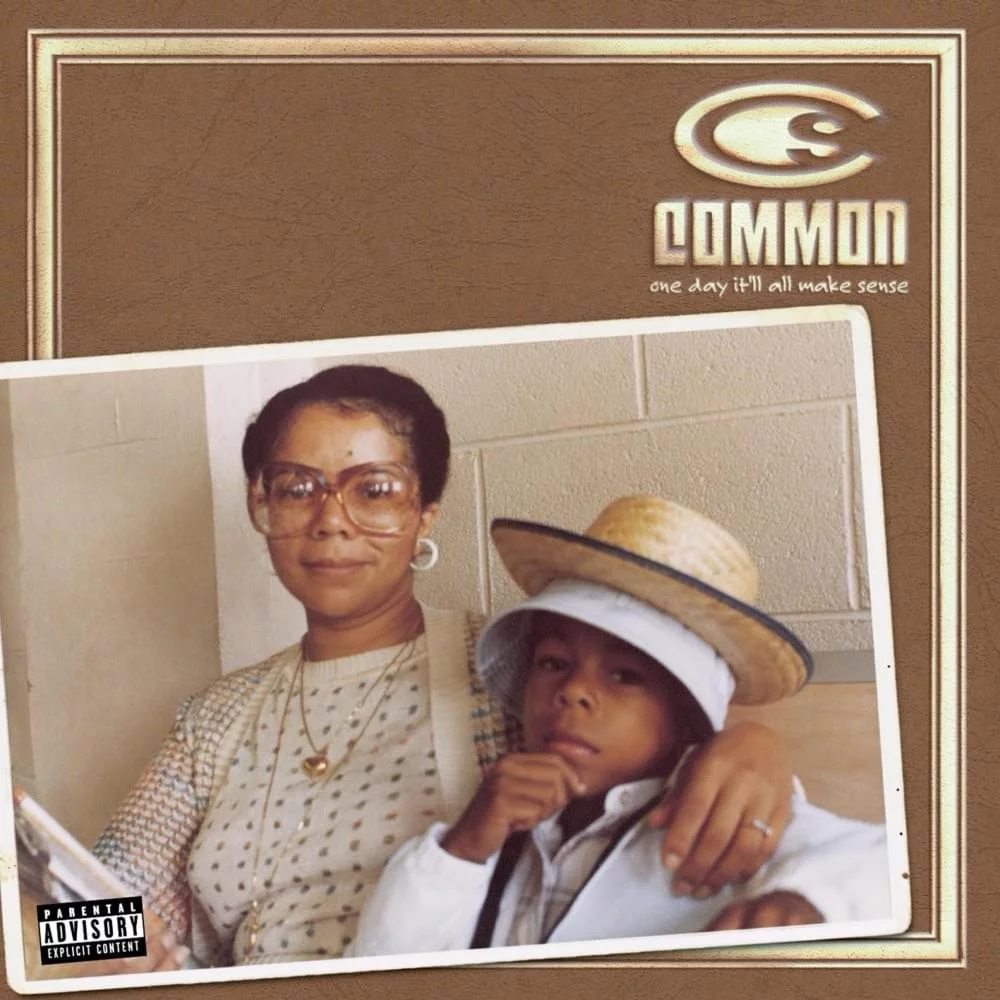
A legal dispute forced Common Sense to drop the second half of his name. His third album, the first credited simply to Common, shows a man changing in more ways than one. The sharp wordplay and boom-bap foundations of Resurrection are still in place, but One Day It’ll All Make Sense pushes further into family, spirituality, and the complexities of everyday life.
No I.D. handles most of the beats and serves up his trademark jazz-inflected soul samples. James Poyser, The Roots, and The Twilite Tone bring in live instrumentation and neo-soul textures, which makes for a warm, organic record that hints at where his career was heading next.
The emotional centerpiece is “Retrospect for Life,” featuring Lauryn Hill. Common wrote it as he was about to become a father, and it reflects with rare honesty on an unplanned pregnancy and the difficult choices that come with it. The album closes on a similar note, with his father Lonnie “Pops” Lynn delivering “Pop’s Rap, Pt. 2 / Fatherhood.”
There’s plenty of rhyming for the sake of rhyming too. “Invocation” is a short, dazzling display of skill, and “Making a Name for Ourselves” pits Common against a hungry Canibus. The three-part “Stolen Moments” turns a burglary into a gripping story, with Black Thought and Q-Tip joining in on the later chapters. The guest list is impressive throughout. De La Soul drop by for “Gettin’ Down at the Amphitheater,” Cee-Lo adds his voice to “G.O.D. (Gaining One’s Definition),” and Erykah Badu brings the warmth on the seven-and-a-half-minute “All Night Long.” With 17 tracks and a serious mood that sometimes weighs down the lighter moments, the album could have been a little tighter.
More than anything, One Day It’ll All Make Sense shows an artist growing up in public, broadening his scope without losing an ounce of lyrical sharpness. The Common of Like Water for Chocolate starts here.
118. Prince Paul – A Prince Among Thieves (1999)
Tariq needs a thousand dollars. He has a meeting lined up with the RZA and a demo to finish, so when his friend True offers quick money selling drugs, he takes it. On A Prince Among Thieves, Prince Paul spins that single decision into 35 tracks of scenes, songs and interludes, a crime film made out of Hip Hop records.
Breezly Brewin of The Juggaknots plays Tariq with a hungry, slightly naive edge, and Big Sha gives True an easy charm that hides something colder. Paul cast the rest like a director calling in favors. Kool Keith plays an eccentric arms dealer, Big Daddy Kane strolls through as the pimp Count Macula, Biz Markie plays a street thug, Everlast a crooked cop, and De La Soul show up as addicts. Each cameo is a performance, fitted to the character instead of the rapper’s usual persona.
The beats move with the plot. Warm soul loops carry the early, hopeful scenes, then the breaks tighten, and the samples darken as Tariq sinks deeper into the trade. The dialogue skits do the work a narrator would, so the story stays clear without anyone stopping to explain it.
The album opens with Tariq already battered and then rewinds to show how he got there, so the ending hangs over every song. He never makes the meeting with the RZA.
119. EPMD - Business Never Personal (1992)

Business Never Personal is another quality release from EPMD, reaffirming their status as one of the finest acts in Hip Hop. Their fourth album has a harder, grittier sound than the previous three, with Erick Sermon and Parrish Smith stripping things back and concentrating on funky loops, heavy drums, and the laid-back vocal interplay that made them such a formidable duo. The production is less polished and more rugged, giving the record a distinctly underground character.
Sermon and Smith’s chemistry is still excellent. Their relaxed, almost conversational deliveries complement each other naturally, while their lyrics move between battle rhymes, street observations, humour, and criticism of rappers chasing mainstream success. “Crossover” is the obvious centrepiece. Built around a memorable Roger Troutman sample, the track takes aim at MCs who compromise their identity in pursuit of commercial success. Its success was particularly ironic: the song became EPMD’s biggest mainstream hit, reaching a much wider audience than anything they had previously recorded.
There are plenty of other highlights. “Head Banger” is an outstanding posse cut featuring Redman and K-Solo, with all four MCs bringing plenty of energy to the track. “Chill” delivers a wonderfully infectious groove, while “It’s Going Down” and “Boon Dox” capture the album’s tougher musical direction. “Cummin’ At Cha,” featuring Das EFX, connects EPMD’s established sound with the next generation of the Hit Squad, while “Play The Next Man” offers another example of Sermon’s knack for building irresistible funk-driven beats.
Behind the scenes, the partnership was falling apart amid financial disputes and accusations surrounding a burglary at Smith’s home. The duo would split shortly after the album’s release, making this the final chapter of their original run.
Business Never Personal is a strong addition to an already impressive catalogue. Its stripped-down production, infectious grooves, and effortless chemistry make it another fine example of EPMD’s contribution to early-’90s New York Hip Hop.
120. Aceyalone – A Book Of Human Language (1998)

Aceyalone spells the opening track “Forward,” and the pun tells you how to read what follows. A Book of Human Language is laid out like a volume on a shelf: “Contents” maps the chapters, “Afterward” closes the cover, and almost everything in between carries a title that starts with “The,” each one a subject for Aceyalone to take apart.
There’s no storyline. The chapters work as separate meditations on time, mortality, morality, and perception, connected by one big idea: that language is how people make sense of the world, and how they expose its contradictions. “The Balance” looks at the principles that hold life together, “The Hurt” turns to emotional pain, and “The Walls & Windows” considers the barriers between people and the openings through them. “The Grandfather Clock” makes time the subject. On “The Thief in the Night,” death becomes the theme of a long, unhurried reflection.
The Freestyle Fellowship MC writes densely here, packing his verses with shifting associations, odd phrasing and wordplay that folds back on itself. His delivery is elastic and conversational, slowing down to linger on an image and speeding up when an idea takes off. The near eight-minute title track turns the whole method on language itself, and it asks for close listening.
Mumbles produced the entire album, and his restraint matters. Jazz-inflected breaks, unusual loops and moody instrumental passages create a contemplative backdrop that never crowds the vocals, and his consistent palette lets the chapters flow into one another. The beats give the concept its continuity as much as the titles do.
Released on Project Blowed, the label that grew out of Los Angeles’s open-mic underground, the album is Aceyalone at his most intellectually ambitious. Form and content fit together with unusual rigor, which makes it one of the most accomplished concept records the underground has produced.
121. Busta Rhymes - The Coming (1996)

Busta Rhymes had spent years stealing scenes with Leaders of the New School and on other people’s records, from “Scenario” to the “Flava in Ya Ear” remix. The Coming finally gave his outsized personality a whole album to run wild. Released in March 1996, it is loud, unpredictable, and packed with the vocal gymnastics that made Busta instantly recognizable. He shifts from rapid-fire patterns to cartoonish exclamations and sudden menace, often within one verse. Subtlety was hardly the point.
Producers are spread across the record. DJ Scratch handles “Do My Thing,” Easy Mo Bee brings grimy weight to “Everything Remains Raw,” and Busta produces the hyped “Abandon Ship” with his cousin Rampage. Q-Tip, who mentored him through the album, appears on “Ill Vibe,” and he introduced Busta to a young Jay Dee, who produced “Still Shining” and “Keep It Movin’.” “Flipmode Squad Meets Def Squad” sets Redman, Keith Murray and Jamal against Busta’s crew in an eight-minute battle with no hook.
“Woo-Hah!! Got You All in Check” remains the centerpiece. It turns Busta’s ad-libs and rhythmic contortions into an irresistible hook built on a line from Sugarhill Gang’s “8th Wonder,” and it reached the US Top 10. “It’s a Party,” featuring Zhané, eases the pace. The high-volume approach can run long, but The Coming introduced a style that belonged entirely to Busta.
122. Method Man – Tical (1994)
RZA had his Wu-Tang MCs compete for his beats, and “Meth vs. Chef” puts that system on record: Method Man and Raekwon battling over the same instrumental for the right to keep it. The song was cut in 1993, before a flood at RZA’s studio destroyed a stockpile of beats. Much of Tical had to be rebuilt and mixed in a hurry, and you can hear it. The album sounds like it was made in a damp basement, and that grit suits Meth’s hoarse, smoky voice perfectly.
RZA produced almost all of it, with 4th Disciple co-producing “Sub Crazy” and Meth “P.L.O. Style.” He strips the sound of Enter the Wu-Tang (36 Chambers) down to heavy, muffled bass, distorted wails, and drums that sound recorded through a wall. “Bring the Pain” is the model: a sparse, funky crawl capped by Booster’s ragga chant, with Meth sliding across it in a lazy drawl that snaps into sharp punchlines.
The first solo album from a Wu-Tang Clan member was a hit right away. “Release Yo’ Delf” brought Blue Raspberry in to twist Gloria Gaynor’s “I Will Survive” into a Shaolin anthem, and “All I Need,” a love song on the album, was reworked with Mary J. Blige into a Grammy-winning crossover a year later. Meth said years afterwards that the title stands for “taking into consideration all lives.” On a record this murky, the charisma comes through in every bar.
123. Hard Knocks - School Of Hard Knocks (1992)
School Of Hard Knocks is one of the most underrated albums of 1992, a superb collection of rugged New York Hip Hop that never received anything close to the recognition it deserved. Released on Wild Pitch Records, the sole album from MC Hardhead and DJ Stoneface combines socially conscious writing, street-level storytelling, and excellent sample-based production. Twelve tracks, no unnecessary skits or filler, and a consistently high musical standard make this a particularly rewarding discovery for anyone who missed it the first time around.
MC Hardhead has a measured, conversational delivery that puts the emphasis on his lyrics rather than vocal theatrics. His writing is direct, politically aware, and frequently confrontational, with recurring themes of institutional racism, police corruption, and the conditions facing young Black men. “A Dirty Cop Named Harry” is the album’s most memorable statement, taking aim at police brutality and abuse of authority. “Road To The Precinct” continues the criticism of law enforcement, while “Young Black Male” and “Thoughts Of A Negro” address racial identity and the realities of growing up in a society shaped by inequality. Hardhead doesn’t rely on elaborate punchlines; his strength lies in the clarity and conviction of his observations.
The production is equally impressive. Handled largely by The Spearchuckas, the beats draw on obscure funk, jazz, and soul samples, combining hard drums with warm melodic loops and a distinctly gritty atmosphere. “Runaway Child, Running Wild” is an infectious highlight, while “Strictly From The Bronx” delivers a harder dose of street-oriented boom-bap. “Ghetto Love,” “Opposite Side,” and “Blow To The Head” add further variety without disrupting the album’s cohesive sound.
Hard Knocks disappeared from the scene soon after this release, leaving behind a single album that deserved a much wider audience. School Of Hard Knocks is a remarkably consistent piece of early-’90s East Coast Hip Hop, full of substance, strong production, and memorable tracks. A genuine underground gem.
124. The Coup - Genocide & Juice (1994)

The title rewrites “Gin and Juice,” released nine months earlier, and the joke runs through the whole record. Boots Riley borrows the slinky basslines and smooth funk of West Coast gangsta rap, then uses them to tell stories about who really profits from the hustle. Genocide & Juice has the groove of a party record and the politics of a pamphlet.
The opening stretch plays like one continuous story. On “Fat Cats, Bigga Fish,” a small-time pickpocket slips into a high-society banquet and realizes the guests are running far bigger scams than he ever could. “Pimps (Free Stylin’ at the Fortune 500 Club)” pushes the satire into the surreal, with oil barons and Donald Trump boasting like street pimps, and Boots and E-Roc deliver it so deadpan it turns chilling. “Takin’ These” frames robbery as a militant act over a beat that stays impossibly smooth.
The music sounds richer than most Bay Area records of 1994. Live bass, horns, and drums from Oakland musicians mix with Parliament- and James Brown-style funk, and DJ Pam the Funkstress cuts through with sharp scratches that keep the album grounded in Hip Hop. “Santa Rita Weekend,” named for the county jail, slows into a bluesy reflection on incarceration with E-40 and Spice 1 lending their voices, a link between Oakland’s political underground and its biggest street names.
125. The Colored Section - Bomb MC (1998)
Che’-Ski claims he handed Kool Herc his first breakbeat. On the title track of Bomb MC, he also takes credit for bringing Doug E. Fresh and Ricky D together, and later for introducing King Tee to DJ Pooh. The joke works twice. The piano-laden “Original Recipe” version runs through East Coast history, while the “Old Gold RMX” swaps in West Coast lore and flips the same samples heard on King Tee’s “Played Like a Piano.”
That sense of mischief runs through the only album by Los Angeles trio The Colored Section: MCs Coke, formerly of Mad Kap, and Che’-Ski, with DJ Homicide on the cuts. Released on the short-lived 12 Inch RPM label, it sidestepped the shiny-suit excess and mafioso posturing of the time in favor of b-boy humor and summery grooves. Smooth basslines, crisp drums and dusty, slightly off-kilter samples give tracks like “Beat Street,” “Rat Syndrome” and “Bar B Q” an easy bounce, and the two MCs rhyme with loose, playful confidence about rap, rap stars and the lighter side of the culture.
The breezy mood and record-collector spirit make it a natural companion to The Next Step by People Under The Stairs, released the same year in the same city. It made little noise outside the underground and has since become a collector’s favorite. The group vanished soon after, leaving ten tracks and a stack of tall tales.
126. Lootpack – Soundpieces: Da Antidote

Oxnard isn’t a city anyone associated with Hip Hop in the ’90s, and Soundpieces: Da Antidote! sounds like it was made somewhere nobody was watching. Lootpack (Wildchild, DJ Romes and a young Madlib) came up through the Likwit Crew orbit, appeared on Tha Alkaholiks’ “Mary Jane” in 1993, and landed on Peanut Butter Wolf’s fledgling Stones Throw for their full-length debut.
Madlib produced all of it, and the beats are dusty, loose and full of jolts. Jazz, soul and psychedelic loops stop abruptly, drums slip in and out of time, and tracks bleed into one another like a beat tape left running. Romes keeps the B-boy roots audible with scratches on nearly every song. “Crate Diggin” and “Law of Physics” are the purest examples, while “Long Awaited” with Dilated Peoples and “Likwit Fusion” with Defari and Tha Alkaholiks tie the trio to the wider LA scene.
The rhymes are battle-minded and capable, and over 24 tracks, the constant focus on wack MCs starts to blur. Then “Answers” introduces Quasimoto, a squeaky character Madlib built by pitching up his own voice, and the album suddenly points somewhere stranger. Stones Throw had found its sound.
127. DJ Quik - Safe + Sound (1995)

At the 1995 Source Awards, the same night the New York crowd booed OutKast, DJ Quik walked on stage and performed “Dollaz + Sense”, a song calling MC Eiht a fake and a coward, deep in hostile territory. That nerve runs through Safe + Sound, and it sits beside some of the most graceful music Quik ever made. This is his best album.
The sound took a leap. Quik leaned far more on live players, and the arrangements gained detail and depth. “Summer Breeze” drifts on twangy guitar and airy strings while he looks back on his youth with unusual tenderness. The title track moves at an easy, melodic pace under verses about the strain of growing up, and the instrumental “Quik’s Groove III” lets guitar and flute trade ideas in a loose, jazzy conversation. “Keep Tha ‘P’ In It” hands 2nd II None and Playa Hamm a busy, jazz-flavored arrangement to bounce off.
Then the grudge kicks in. “Let You Havit” goes after Eiht over a funky groove and mocks the Compton’s Most Wanted video in which a Quik lookalike gets chased down. On “Dollaz + Sense”, he paints Eiht as a movie gangster, a jab at his Menace II Society role. Suge Knight’s name in the credits as executive producer fits the mood.
Sex raps, nostalgia, and threats share the tracklist without friction. Quik and Eiht made peace in 1998, but Safe + Sound captures Compton’s finest musician at the moment his craft and his temper peaked together.
128. Busta Rhymes – When Disaster Strikes...(1997)

Busta Rhymes wasn’t about to let a sophomore slump get in his way. Plenty of doubters wondered whether he could follow up The Coming without repeating himself, and When Disaster Strikes… answered them emphatically. It’s once again built around the coming apocalypse and dedicated to his late friend The Notorious B.I.G. The album finds Busta in top form, turning his paranoia about the end of the world into a celebration of impending chaos.
Busta’s rapid-fire delivery and larger-than-life personality are front and center from the start. His flow is wonderfully unpredictable, switching from frantic bursts of syllables to more deliberate pacing. He moves easily from boastful bars to moments of serious reflection on “Survival Hungry” and “The Whole World Lookin’ at Me.”
The beats are bold and vibrant. EPMD’s DJ Scratch handles a big chunk of the production, and Jay Dee, Easy Mo Bee, Rashad Smith, and Rockwilder add their own flavors. The singles hit hardest. “Put Your Hands Where My Eyes Could See” earned a Grammy nomination, thanks to its infectious percussion and a famous music video spoofing Coming to America. “Dangerous” is pure, contagious energy. For contrast, “One” with Erykah Badu slows things down and offers a reflective break from the mayhem.
At 19 tracks, the loose structure costs the album some momentum. Several of the collaborations, like “Things We Be Doin’ for Money, Part 2,” come nowhere near the intensity of Busta’s solo cuts and feel more like filler.
Years later, Busta called this the album that solidified his legacy, and we’re not about to argue. Wild, funky, and endlessly entertaining, When Disaster Strikes… confirmed Busta Rhymes as one of Hip Hop’s most exciting voices.
129. AZ - Doe Or Die (1995)

Few MCs have entered with a calling card like AZ’s verse on Nas’s “Life’s A Bitch”. Doe Or Die had to prove that one appearance was no fluke, and AZ did it with the smoothest delivery in New York. His flow glides, multisyllabic rhymes slipping into place without visible effort, and even his grimmest lines arrive with a calm, almost melodic composure.
“Uncut Raw” opens on a sparse, shadowy beat that leaves him all the room he needs. From there, the album moves between hustler fantasy and the suspicion that comes with it. Pete Rock supplies two very different settings: the breezy “Gimme Yours”, with Nas on the hook, and the intricate “Rather Unique”, whose hypnotic melodic loop pushes AZ into his most dazzling rhythmic display. Buckwild’s mellow funk on “Ho Happy Jackie” brings out his wit in a sly tale of manipulation and materialism.
“Sugar Hill” became the calling card, a sunny L.E.S. production with Miss Jones singing the hook and AZ dreaming of the good life without losing the edge in his voice. “Mo Money Mo Murder (Homicide)” swings to the opposite pole. Over D/R Period’s haunting beat, AZ and Nas trade verses about greed and betrayal, the two Queens MCs bringing out a menace neither shows alone.
Some beats fade beside the highlights, and the consistency wavers. AZ carries the weaker stretches anyway. Doe Or Die is the work of a stylist so polished that the luxury he raps about starts to sound like it belongs to him.
130. M.O.P. - Firing Squad (1996)
Lil’ Fame and Billy Danze didn’t so much rap as erupt. On their second album, released on Relativity in October 1996, Brownsville’s Lil’ Fame and Billy Danze sharpen the formula of To the Death without sanding off its edges. Their voices have different textures, but together they sound like two halves of the same battering ram, determined to outshout and outlast anyone in their way.
DJ Premier produced a large part of the album and mixed all of it, starting a partnership that would carry over to their next two records. The title track sets the tone with Teflon joining the fray, and “New Jack City” takes aim at phony newcomers. “Stick to Ya Gunz” brings in Kool G Rap, whose intricate rapid-fire rhymes are a perfect match for the duo’s brute force. “Brownsville” paints grim portraits of their home turf, and “Downtown Swinga (‘96)” adds an infectious groove without softening anything. Big Jaz, Laze E Laze, Ali Dee and the group themselves fill out the rest. “Dead and Gone,” featuring Battle, offers a rare moment of reflection on mortality.
Eighteen tracks is a lot of shouting, and the middle stretch repeats itself. M.O.P. weren’t chasing crossover acceptance or tidy sequencing. This is boom-bap at maximum intensity, and the best tracks hit like a sledgehammer.
131. Beastie Boys - Ill Communication (1994)
The backing track for “Sabotage” sat unused for a year under the working title “Chris Rock” before the Beastie Boys added vocals. When they did, MCA’s fuzzed, twangy bass and Ad-Rock’s shouted rant about a producer holding them back turned it into a punk explosion, and Spike Jonze’s cop-show parody video carried it everywhere.
Ill Communication keeps pushing the live-band approach of Check Your Head. Co-producing with Mario Caldato Jr., the trio play alongside Money Mark’s keyboards and Eric Bobo’s percussion, with Miles Davis’s electric records On the Corner and Agharta in mind. “Sure Shot” opens on a looping Jeremy Steig flute line before the three MCs pass the mic back and forth with their usual tight, shouting chemistry. “Root Down” rides a tough funk groove, and “Get It Together” brings in Q-Tip for a relaxed meeting of kindred spirits. Biz Markie livens up “Do It.”
Across 20 tracks, the album wanders freely. “Sabrosa,” “Futterman’s Rule” and “Ricky’s Theme” stretch out into loose jazz-funk jams, and the hardcore blasts “Tough Guy” and “Heart Attack Man” last barely a minute or two. Not every detour lands, and the record is less focused than their best work, but the high points are exceptional. On “Bodhisattva Vow,” MCA raps about his Buddhist convictions, a sign of where the group was heading.
Bruce Davidson, who took the 1964 cover photo, said the demo tape the band sent him sounded like a secret language. For a hugely enjoyable, adventurous album that refuses to sit in any one genre, that description fits perfectly.
132. Tha Dogg Pound - Dogg Food (1995)
After years as the supporting cast on The Chronic and Doggystyle, Daz Dillinger and Kurupt finally had a Death Row album of their own, and they made it sound like a block party. Dogg Food keeps the G-funk vocabulary, but Daz, who produced most of the record with help from DJ Pooh and Soopafly, pushes it toward brighter, bouncier grooves: rubbery basslines, whistling synth melodies and funk arrangements that sound built for car stereos in the sun.
The partnership works on contrast. Kurupt is the technician, a quick, slippery flow that twists around the beat with a confrontational bite. Daz raps plainer and steadier, a laid-back anchor beside his partner’s restless energy. “Dogg Pound Gangstaz” and “Respect” set that balance early.
“New York, New York” made the most noise. DJ Pooh’s stomping beat, Kurupt’s forceful verses, and Snoop Dogg’s hook turned a nod to the city into a provocation, and the video, with the duo towering over a miniature Manhattan and kicking over buildings, landed squarely in the coastal feud. “Let’s Play House” eases the tension, with Nate Dogg and Michel’le gliding across a smooth, sensual groove.
The skits break up the flow, and the later tracks lean heavily on Nate Dogg’s hooks to stay afloat. Even so, Dogg Food gave Daz and Kurupt an identity of their own inside the label’s machine: louder, sunnier, and a lot less patient than their mentors.
133. Above The Law - Uncle Sam’s Curse (1994)

Two of the tracks open with dialogue from Against the Wall, the 1994 film about the Attica prison uprising, and that choice sets the tone. Uncle Sam’s Curse, Above the Law’s final album for Ruthless, takes G-funk somewhere heavier than the party records ruling West Coast radio. Cold 187um, KMG and Go Mack spend an hour tracing street life back to the system that shaped it.
Cold 187um produced most of the album with KMG and K-oss, and his arrangements are dense and moody: warm synth leads, pulsing basslines and small dramatic flourishes that leave a sense of unease under the groove. “Black Superman” sets its defiant verses against a melancholy backdrop, and “Return of the Real Shit” opens the album with the weight of a statement. On the title track, the group describe the ghetto as a curse placed on Black communities by the government, and “Set Free” turns the lens inward as 187um and KMG weigh the choices that shaped them.
The record also knows when to let the sun in. Kokane’s smooth, elastic vocals lift “Kalifornia” and “Everything Will Be Alright,” and “Who Ryde” brings in Tone Lōc for a dose of easy swagger, with inventive production details keeping the cruise interesting. Those moments give the album breathing room without breaking its mood.
Pomona sits east of Los Angeles, far from the Long Beach and Compton names that dominated G-funk’s story. Uncle Sam’s Curse shows how much of the sound’s depth came from the edges of the map.
134. The Roots - Do You Want More?!!!??! (1995)

The Roots sampled themselves. For their second album, the Philadelphia band taped their own jam sessions and cut the recordings into loops, keeping the repetition and pocket of boom-bap while every note came from their own hands. Black Thought announces the concept at the start, describing what follows as organic Hip Hop jazz, and the record lives up to the label.
Compared to the independently released Organix, which still had rough edges, this is smooth and assured from the first bar, and it began one of the most consistent catalogs in Hip Hop. Scott Storch’s Fender Rhodes gives the album its color, soft chords floating over Questlove’s crisp, dry drums and Hub’s round bass, with Steve Coleman’s saxophone drifting in and Rahzel beatboxing in the gaps. “Mellow My Man” is the purest jazz moment in their whole discography.
The rapping keeps the grooves from turning into lounge music. Black Thought lands his syllables squarely on the snare, and Malik B.’s gruffer, slightly lopsided voice pulls against him in a way later albums missed. “Proceed” and “Distortion To Static” lay out that partnership, and “Silent Treatment” slows into a tender song about a relationship gone quiet.
Next to Resurrection or The Low End Theory, it is the gentlest jazz rap record of its era. The master tapes burned in the 2008 Universal fire, which makes every surviving copy a small piece of those Philadelphia rehearsal rooms.
135. Three 6 Mafia - Chapter. 2: World Domination (1997)
For years, Memphis rap lived on dubbed tapes and local word of mouth. With Chapter 2: World Domination, Three 6 Mafia took it nationwide. Their third album came out through Relativity in November 1997. It was the group’s first with wide distribution and their first to go gold, turning underground notoriety into national recognition.
DJ Paul and Juicy J produced the entire album, and their murky, bass-heavy beats set the tone from the start. Eerie melodies, booming 808s, and hypnotic, chant-like hooks create an atmosphere that’s dark, menacing, and strangely addictive. Compared to the raw chaos of their earlier material, the sound is more confident and focused, without losing any of its grime.
The album also works as a showcase for the full crew. Lord Infamous, Gangsta Boo, Koopsta Knicca, and Crunchy Black all get plenty of room next to Paul and Juicy. Project Pat, the Prophet Posse, and Flint’s Dayton Family add to the mayhem. The tone swings between club-ready aggression and slow, smoky menace. “Hit a Muthafucka” is raucous, built to get a crowd moving, and “Weed Is Got Me High” rides a lazy, hazy groove without ever losing its edge.
Four older favorites return in new versions, including “Tear Da Club Up ‘97” and “Late Nite Tip.” With a fuller, more polished sound, they fit right in, and the updated “Tear Da Club Up” is one of the rowdiest anthems the South has ever produced. At 22 tracks and over 70 minutes, the album gets repetitive at times, but repetition is part of the spell Three 6 Mafia casts.
The influence of World Domination is hard to overstate. Its sinister sound and chanted hooks planted the seeds for crunk and trap, and they shaped Southern rap for decades to come.
136. Method Man & Redman - Blackout! (1999)

Erick Sermon and RZA pull Blackout! in two directions. Sermon brings the bass-first funk of Redman’s solo records, fat low end and loops that strut, while RZA’s touches drag in Staten Island shadows and off-kilter chords. The album never settles fully in either camp, so even the party records have something faintly sinister in the corners.
The MCs split along the same line. Method Man slides behind the beat with a lazy menace that makes his jokes sound like threats. Redman crashes into the track with sudden yelps and swerves of tone, as if he’s trying to knock it off balance. Side by side, each exaggerates the other: Meth sounds colder next to Red, and Red sounds wilder next to Meth. They swap bars, jab at each other and finish each other’s setups.
“Da Rockwilder” is the calling card, a skeletal synth line over hard, clipped drums that the pair rip through so fast it’s done before it seems to have started. “Cereal Killer” creeps instead, a haunted groove that plays like a horror movie with a laugh track. “Run 4 Cover” is the misstep, with a dull beat and verses on autopilot, but the record moves too quickly for it to drag.
Under the weed jokes, the rapping is sharp and technical. Blackout! is the sound of two friends trying to crack each other up, and succeeding.
137. Show & AG - Goodfellas (1995)

Three years after Runaway Slave, one of the high points of 1992, the lights went down. Show & A.G. returned with Goodfellas, a record that trades the debut’s exuberance for a heavier, more confrontational Bronx mood. It has been slept on and underrated ever since, and it deserves far better.
Showbiz handles most of the beats, and his sound has toughened. Thick basslines, forceful drums, sharp horn stabs, and shadowy melodic fragments push the mix toward menace. “Never Less Than Ill” hits first and hardest, booming percussion under a piercing horn figure. “Next Level” appears twice: Showbiz’s original bounces, while DJ Premier’s “Nyte Tyme Mix” slides into darker territory with a creeping melody and tightly controlled drums, one of the finest remixes of the year.
A.G.’s higher-pitched voice slices through that density. He fills “You Know Now” with punchlines and challenges, then shifts to storytelling on “I’m Not The One”, a botched-robbery tale told with a sharp eye for irony. The D.I.T.C. family fills out the record. “Got The Flava” turns into a lively posse cut with Method Man and Party Arty, and Party Arty returns on “Neighbahood Sickness” with an aggressive delivery that suits the beat.
Next to their near-perfect debut, Goodfellas can sound grim. Taken on its own terms, it is boom-bap built with craftsmanship and no interest in compromise.
138. M.O.P. – First Family 4 Life (1998)
No album was stolen more often from New York’s HMV stores in 1998 than First Family 4 Life, which suits a record that refused to dress up for the shiny-suit era. Billy Danze and Lil’ Fame stuck to shouted hooks, street narratives and drums that land like a door being kicked in, and this time they brought company: Freddie Foxxx, O.C., Heather B., Treach, Teflon and Gang Starr. Jay-Z, weeks away from pop stardom, turns up on Laze E Laze’s “4 Alarm Blaze” and fails to steal it from his hosts.
DJ Premier, co-executive producing with Laze E Laze, supplies the album’s backbone. Opener “Breakin’ the Rules” is Premier at his most surgical, all tight chops and drums that leave room for the duo to bellow. “Salute Part II” and “Downtown Swinga ‘98” extend the story of Firing Squad, and on “I Luv,” Freddie Foxxx’s gruff verse fits so naturally that he sounds like a third member. A Premier remix of “Handle Ur Bizness” rounds out his contribution. The partnership ran both ways that year, with M.O.P. returning the energy on Gang Starr’s “B.I. Vs. Friendship.”
When Premier steps away, the album sags. Across 17 tracks, the in-house productions in the middle hold the volume without his precision, and songs like “Ride with Us” and “What the Future Holds” blur into a single roar. At its peak, Brownsville’s loudest duo sat at the head of New York’s hardcore table.
139. Boogie Down Productions - Edutainment (1990)
With Edutainment, KRS-One took his educational mission to another level. The fourth album under the Boogie Down Productions banner places sociopolitical issues at the center, addressing Black empowerment, racism, materialism, and the need for greater awareness within Black communities. KRS-One’s authoritative delivery gives the record its urgency, while gritty basslines, funk-infused loops, and hard-hitting beats provide a suitably tough musical foundation.
The standout is “Love’s Gonna Get ‘Cha (Material Love),” one of the finest tracks in KRS-One’s extensive catalog. His storytelling follows a young man caught in the cycle of poverty, material ambition, and street violence, building toward a devastating conclusion. The narrative gives the song an emotional weight that makes its underlying message particularly effective. KRS is equally compelling when he moves beyond direct instruction and lets the characters and circumstances carry the story.
Across its 20 tracks, Edutainment covers a lot of ground. KRS-One’s commitment to using Hip Hop as a vehicle for knowledge is admirable, although his constant stream of lessons and pronouncements can occasionally become preachy. The album’s length also makes it a demanding listen, but there is considerable substance throughout.
Edutainment captures KRS-One at his most outspoken and ideologically driven. Its educational ambition sometimes outweighs its musical variety, but the strongest tracks combine his social consciousness with the lyrical skill and storytelling ability that have always made him such a compelling MC.
140. Aceyalone – All Balls Don’t Bounce (1995)

While much of Los Angeles rapped about guns and money, Aceyalone rapped about words. The Freestyle Fellowship frontman came out of the Good Life Café open-mic scene, where stretching a flow until it bent was the whole game, and his solo debut carries that spirit onto a major label stage at Capitol.
His delivery changes shape constantly. He speeds up, slows down, drops into a near-spoken register, then rattles off a run of internal rhymes that land in unexpected places. “Arhythmaticulas” turns that habit into a showpiece, Acey twisting syllables and rhythms like a man doing math out loud. The title track rides an upbeat, funky groove with a catchy refrain, and “Mic Check” puts his breath control and timing front and center. “Mr. Outsider” turns inward, a reflective look at identity and belonging from someone who never fit the dominant West Coast mold.
The Project Blowed family is close at hand. Abstract Rude and Mikah 9 drop in, linking the album to the South Central workshop scene where a whole generation of underground MCs was building its own vocabulary away from the charts.
Like every Aceyalone record, this one is underrated by everyone except the true connoisseurs. The 2004 reissue, All Balls Don’t Bounce: Revisited, brought some deserved attention back. If you missed it, the jazzy loops and acrobatic flows are waiting, and they make the rest of mid-90s Los Angeles sound strangely conservative.
141. EPMD - Business As Usual (1990)

By their third album, Erick Sermon and Parrish Smith had perfected a formula built around funky samples, hard drums, effortless flows, and sharp, humorous rhymes. Business As Usual doesn’t stray far from the approach that made EPMD successful, but the duo’s chemistry and instinct for memorable grooves keep the album entertaining throughout.
“I’m Mad” opens with frantic drums and chopped-up piano stabs, immediately establishing an aggressive tone. “Hardcore” shifts into darker territory, with an eerie atmosphere providing the backdrop for Redman’s first major appearance on a Def Jam release. His gritty delivery makes an immediate impression. “Rampage,” with a memorable guest verse from LL Cool J, brings the energy back up with a bouncy, horn-driven beat and an enjoyable exchange between the three MCs.
Humor and braggadocio remain central to EPMD’s appeal. “Gold Digger” turns the duo’s complaints about opportunistic women into a funky, memorable rap narrative, while “Brothers on My Jock” features another strong Redman appearance. DJ Scratch gets the final word on “Funky Piano,” an instrumental closer that puts his turntable skills in the spotlight and gives the album a relaxed finish.
“Jane 3” is a little too playful for its own good, but the occasional misstep hardly derails the record. Business As Usual delivers the hard beats, laid-back confidence, and infectious funk that define EPMD’s best work. The formula was familiar by 1990, but few duos executed it with this much ease.
142. E-40 - In A Major Way (1995)
E-40 raps as if the English language came with a remote control and he alone could change the speed. On In A Major Way, the Vallejo veteran lurches from lazy drawl to double-time sputter within a single line, stretching vowels, clipping consonants and coining slang faster than anyone outside the Bay could look it up. The rhythm of his words matters as much as their meaning, and the effect is equal parts comedy and menace.
The production, mostly from Studio Ton, Mike Mosley and Sam Bostic, gives him the right ground to play on. Drums knock hard, basslines sit deep and wide, and buzzing synths add a nervous tension that pulls away from Los Angeles G-funk. “Da Bumble” and “Sideways” bounce with the loose, rolling tempo that defined Bay Area slap, while “Sprinkle Me” turns the playfulness up and lets 40 bend phrases into shapes you never saw coming. “1-Luv” adds a soulful, sung hook and a welcome dose of warmth.
“Dusted ’N’ Disgusted” gathers 2Pac, Spice 1 and Mac Mall for a heavyweight posse cut, though E-40’s own manic energy still sets the pace. The skits and a softer second half slow the momentum.
Released on his family’s Sick Wid It label, the album pushed a regional dialect onto national radio without translating a word. Half the slang in American rap since owes 40 some royalties.
143. Freestyle Fellowship - To Whom It May Concern (1991)
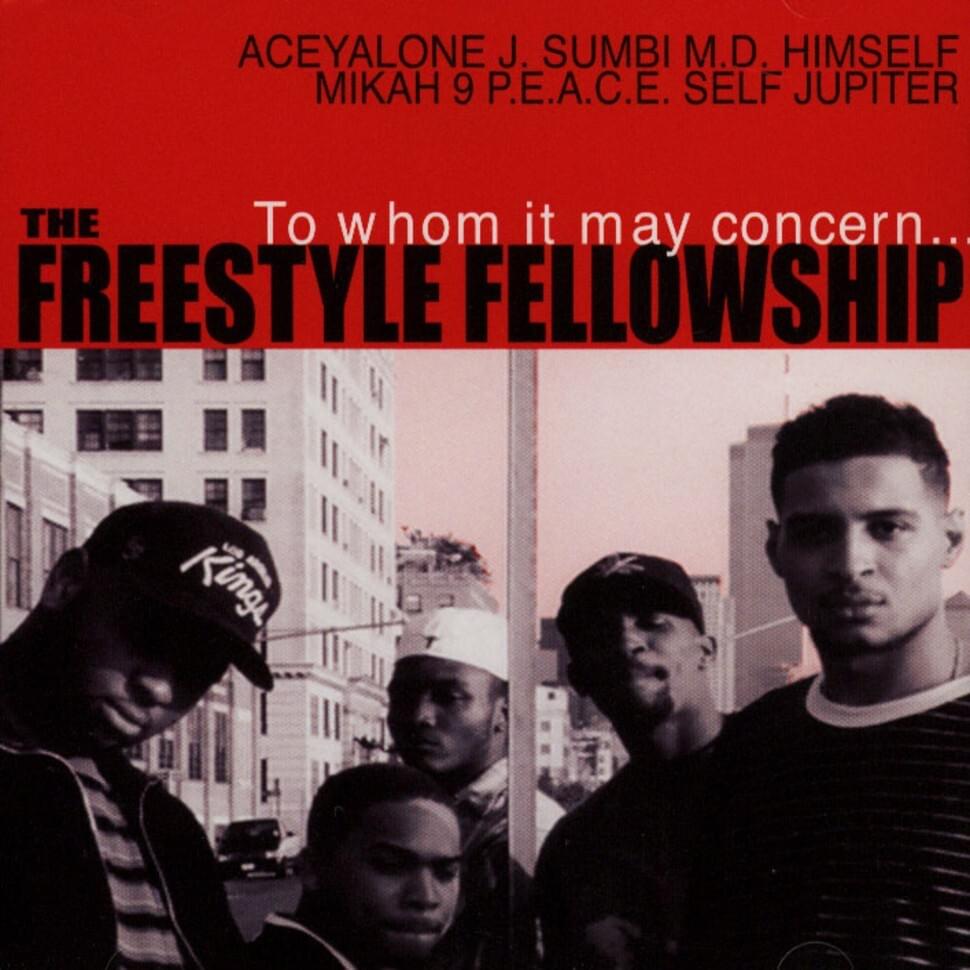
Freestyle Fellowship emerged from the Good Life Cafe’s open-mic scene in South Central Los Angeles, developing an approach to MCing far removed from the gangsta rap dominating the West Coast. Aceyalone, Myka 9, P.E.A.C.E., and Self Jupiter treated the microphone like a jazz instrument, pushing rhythm, phrasing, and verbal improvisation into unfamiliar territory. Their debut captures that experimental spirit, even if its shoestring production gives the record a rough, uneven sound.
The beats are often muddy and loosely assembled, but the MCs compensate with remarkable rhythmic invention. Myka 9’s performance on “7th Seal” is particularly striking, packing intricate wordplay and rapid-fire syllables into a dizzying display. “Sunshine Men” takes aim at corporate music and the commercialization of rap, while “We Will Not Tolerate” brings the group together for a forceful statement against white supremacy. Much of the album consists of individual showcases rather than full-group performances, but the different personalities give it a wide range of voices and approaches.
To Whom It May Concern... is not an easy listen, and its rough presentation occasionally obscures the music’s finer details. Its ideas, however, were years ahead of their time. The album helped lay the groundwork for the independent and alternative West Coast Hip Hop movements that followed, offering a radically different vision of Los Angeles rap.
144. Onyx – All We Got Iz Us (1995)

The party is over. On Bacdafucup, Onyx slammed through mosh-pit anthems with bald heads and a grin. Two years later, their second album opens with a skit in which Sticky Fingaz argues with himself over whether to pull a trigger, and the mood never lifts.
“Last Dayz” sets the tone with a slow, ominous loop and verses about mortality, death treated as a scheduled appointment. The title track describes a world where the only people you can rely on are standing next to you, and even they are watched closely. The production, largely kept in-house, favors dark loops, rumbling bass and uneasy rhythms over the stomping energy of the debut. “Walk In New York” turns the city into enemy territory, “Shout” lets the aggression out in a more direct burst, and “Betta Off Dead” crawls along at a pace as disturbing as its title.
Sticky is the wild card. His raspy, unpredictable voice veers toward hysteria, cracking and shouting as if he is losing the argument with himself in real time. Fredro Starr counters with a lower, steadier growl, menace delivered with patience.
The relentless gloom leaves no room for relief, and it is exhausting by design. Fans who came for “Slam” were not prepared. All We Got Iz Us is the record where Onyx stopped performing aggression and started documenting the fatalism underneath it.
145. Hijack - Horns Of Jericho (1991)

Hijack brought a fierce, uncompromising intensity to British Hip Hop with Horns of Jericho. Kamanchi Sly and Undercover attack the microphone with rapid-fire delivery and commanding voices, while DJ Supreme builds a dense, abrasive backdrop from hard breaks, ominous samples, and relentless scratches. The album captures Britcore at its most confrontational, with little interest in making the music comfortable or accessible.
“The Phantom of the Opera” sets the tone immediately. Sirens, horror-film effects, and the familiar “Apache” breakbeat create a tense introduction before the two MCs launch into their verses. “Airwave Hijack” and “Hijack the Terrorist Group” maintain the pressure, driven by pounding percussion and heavy basslines. Supreme’s production is chaotic in texture but carefully assembled, giving the tracks an almost cinematic sense of menace.
There is a more reflective side to the record. “Brother Versus Brother” addresses racial inequality and systemic oppression over a relatively stripped-down beat, allowing the lyrics to carry the weight. The smoother R&B direction of “Daddy Rich” is less convincing, interrupting the album’s otherwise consistent attack.
At its best, Horns of Jericho is an exhilarating collision of forceful rhyming, inventive turntablism, and uncompromising production. Hijack translated the anger and urgency of Britcore into a full-length statement with an identity and intensity that still distinguish it within the wider history of UK Hip Hop.
146. Master Ace - Take A Look Around (1990)
After making an immediate impression with his opening verse on Marley Marl’s 1988 posse cut “The Symphony,” Master Ace stepped out on his own with a debut that captures the strengths of early-1990s East Coast Hip Hop. Take a Look Around is a fairly straightforward record, built around Marley Marl and Mister Cee’s tight production and Ace’s sharp, articulate rhymes. There’s little experimentation, but the songwriting is strong, and the album has no shortage of memorable moments.
“Music Man” introduces Ace as a confident, technically skilled MC, while “Brooklyn Battles” gives him room to demonstrate his battle-rapping instincts. “As I Reminisce” has a warmer, reflective quality, and “The Other Side of Town” takes a more serious look at poverty and life in Brooklyn. The latter also hints at the socially conscious storytelling that would become an important part of Ace’s later work.
The most playful moment is “Me and the Biz,” in which Ace takes on the voice and persona of labelmate Biz Markie, delivering an entertaining tribute after Biz was unable to attend the recording session. The title track takes a different direction, using a spoken-word approach that gives the album a thoughtful closing statement.
Take a Look Around may lack the ambitious concepts and cinematic storytelling of some of Masta Ace’s later work, but its combination of strong production, sharp writing, and memorable tracks makes it a thoroughly enjoyable debut.
147. Peanut Butter Wolf – My Vinyl Weighs A Ton (1999)
The title is a crate-digger’s boast, and the album lives up to it. My Vinyl Weighs a Ton sounds assembled from a collection rather than programmed: deep, dusty drums, jazz fragments, eerie strings, spoken snippets, and sudden cuts that make it play like a mixtape with a vision. Peanut Butter Wolf’s beats sit on a boom-bap foundation, but he keeps nudging them off center, so a loop that seems settled will lurch somewhere unexpected a bar later.
He spreads the mic around a circle of underground friends. Planet Asia brings a confident, rolling cadence to “In Your Area” and “Definition of Ill,” Rasco hits hard on “Hold Up” and “Run the Line,” and Lootpack turn up on “Styles, Crew, Flows, Beats” and “Breaks ’Em Down.” “Tale of Five Cities” hands the spotlight to the turntable, with A-Trak, Cut Chemist, DJ Babu, Rob Swift, Kid Koala and Z-Trip giving the scratching the room usually reserved for verses.
The heart of the record is “Keep On Rockin’ It,” featuring Charizma. He and Wolf were a duo in the early ’90s, signed and then shelved, before Charizma was shot and killed in 1993 at 20. Releasing their music was the reason Wolf started Stones Throw in 1996. Three years later, on his own label, he put his friend’s voice back on a record.
148. Three 6 Mafia – Mystic Stylez (1995)

The keyboards sound cheap on purpose. On Mystic Stylez, DJ Paul and Juicy J build their beats from bargain-bin synth presets, distorted bass, drum-machine rattles, and ominous minor-key melodies that hover in place instead of moving forward. Tension builds through repetition, as in a horror film score where nothing happens for a long time and then everything does. “Da Beginning” sets that mood at once, and the rest of the debut never climbs out of the basement.
Six voices fill the room. Lord Infamous is the standout, theatrical and sinister, folding tricky triplet rhyme patterns into his occult imagery. Koopsta Knicca drifts through like a ghost, and Gangsta Boo cuts in with a forceful bark that gives the crew another dimension. Crunchy Black adds street-level grit. The rapping is not always polished, and the lyrics lean hard on provocation, but the chants, ad-libs, and overlapping exchanges become part of the beat itself.
“Now I’m Hi, Pt. 3” and “Porno Movie” push deep into lurid territory, while “Tear Da Club Up” aims the darkness straight at a crowd. “Live By Yo Rep” shows their confrontational side. “Da Summa” opens a window onto a brighter, more relaxed Memphis, though the shadows stay close.
Memphis rap often sounded like it came from another planet, and this is the clearest early transmission. The slowed-down menace and lo-fi dread would echo through Southern rap, horrorcore, and internet underground scenes for decades.
149. Keith Murray - Enigma (1996)
Keith Murray rapped like a man trying to swallow the dictionary whole.
His 1994 debut The Most Beautifullest Thing in This World introduced one of the East Coast’s most unpredictable lyricists, and Enigma, released on Jive in November 1996, sharpens the approach without giving up the manic delivery, outlandish vocabulary, and intricate rhyme patterns. As a key member of Erick Sermon’s Def Squad, Murray uses the album to dismantle imaginary opponents and anyone foolish enough to question his credentials.
Sermon handles most of the production and serves as executive producer, supplying sturdy boom-bap built on heavy bass and dark piano. Ty Fyffe adds melodic warmth, and the Ummah bring a different flavor to “Dangerous Ground” and the remix of “The Rhyme.” The original “The Rhyme,” built on a Frankie Beverly sample, is the natural centerpiece and lead single, with Murray twisting multisyllabic patterns into elaborate verbal assaults. “Manifique (Original Rules)” sets his bravado against a more elegant backdrop. “Yeah” assembles Redman, Busta Rhymes, Jamal and Sermon for a full Def Squad session.
“To My Mans,” featuring Dave Hollister, trades aggression for a somber reflection on street life and friendship. A few hooks and middle-album tracks fade from memory, and Enigma never matches the impact of his debut. For listeners who value lyrical ingenuity over polish, though, it’s a rewarding entry in the Def Squad catalog.
150. N.W.A - Efil4ziggan (1991)
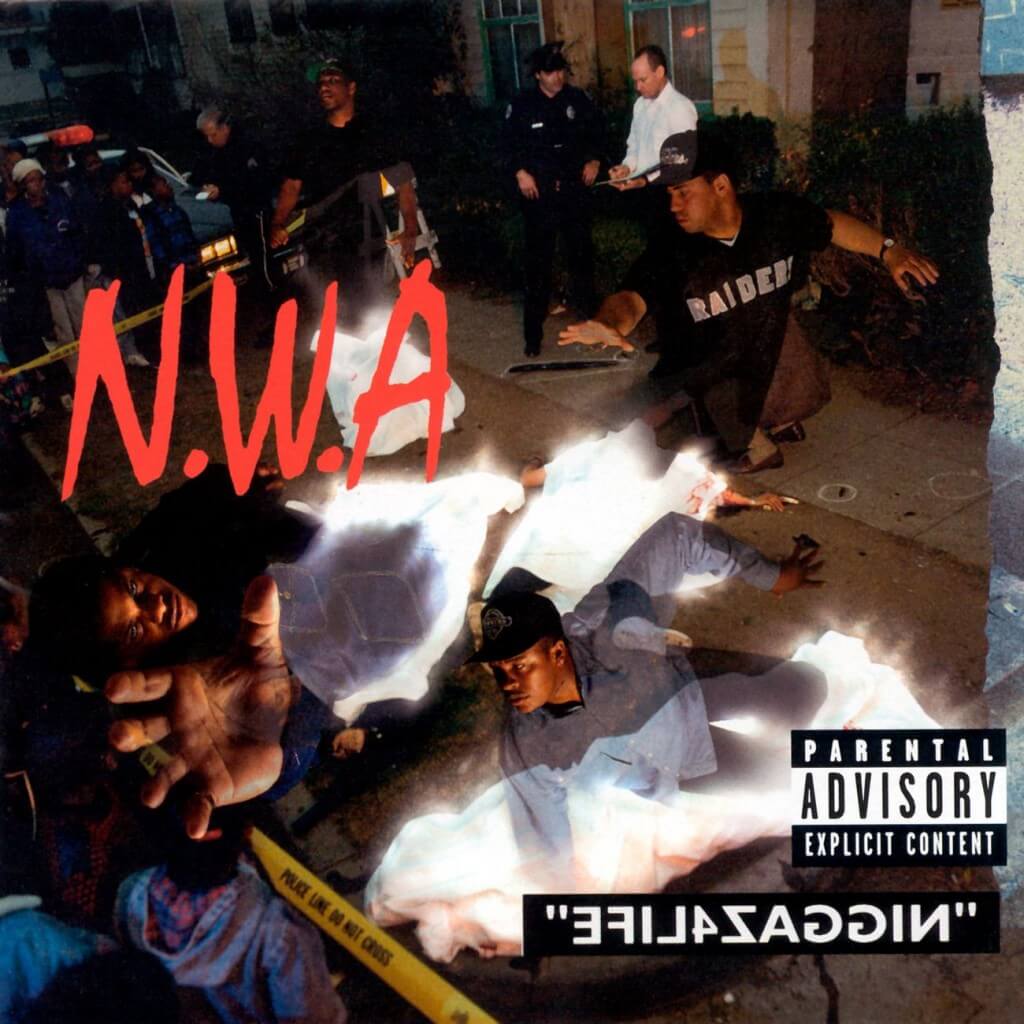
With Ice Cube gone, N.W.A faced the challenge of following up Straight Outta Compton without one of its strongest voices. Efil4zaggin takes a different route. The social commentary that gave the group much of its bite is largely absent, replaced by a heavier emphasis on provocation, gangsta posturing, and Dr. Dre’s increasingly ambitious production.
Dre is the album’s main attraction. His beats point toward the G-Funk sound he would develop over the next few years, built around deep funk basslines, atmospheric synths, and hard, spacious drums. “Alwayz Into Somethin’” and the title track have a thick, cinematic quality, while “Real Nz” and “Real Nz Don’t Die” bring the group’s familiar intensity into sharper focus. MC Ren and Eazy-E are particularly effective on the latter, riding one of Dre’s darker, catchier productions.
The lyrical approach is less compelling. Without Cube’s sharp writing, much of the material leans heavily on crude sexual content and shock tactics. “One Less B****” and “She Swallowed It” rarely offer much beyond deliberate offensiveness. Several skits and throwaway Eazy-E tracks also disrupt the album’s momentum, with “To Kill A Hooker” especially difficult to defend.
Efil4zaggin lacks the urgency and innovation of its predecessor, and its excesses often get in the way. Still, Dre’s production points toward the next phase of West Coast rap, making this an important transitional record.
Bonus Mention: Geto Boys - The Geto Boys (1990)

Strictly speaking, The Geto Boys is a do-over. Most of it reworks songs from Grip It! On That Other Level and the debut Making Trouble. The Houston trio already had its identity on those records, so the bleak humor, the horror-movie imagery, and the refusal to tone anything down were all in place before Rick Rubin came in. His contribution was focus. This version is tighter and harder than the originals, and two strong new songs, “F*** ’Em” and “City Under Siege,” turn a repackage into a record that earns its own spot in the decade.
Rubin cleared away a lot of the busy funk arrangements from the earlier versions. The drums hit harder, and the basslines sit further forward in the mix. The samples get room to breathe, and the empty space makes the songs more threatening. “Mind of a Lunatic” gains the most from this. Over a sparse, stalking track, Scarface and Bushwick Bill narrate psychosis and homicidal obsession in a calm, conversational tone that makes it more chilling than shouting would. On “Trigga Happy N***a,” Willie D takes the lead on gun culture and street violence with a bark that cuts through the beat. Brendan O’Brien’s co-production adds a rock-leaning hardness while keeping the group’s Southern funk base underneath. Scarface’s storytelling on “Scarface” already has the patience and the sense of consequence that would carry his solo career.
The controversy grew as the album’s reach did. Some major retailers refused to stock it, and the cover, a Beatles-style portrait of the four members, poked at good taste from the outside as well. That reach is the main reason the album matters. Rubin’s sound made the record impossible for the rest of the country to ignore, and a lot of listeners discovered Houston rap through it. For many of them, the first Southern rap record they heard was this one: a bleak, Houston-made album that had come out on a New York producer’s label.
150 albums later, the most noticeable thing is how little the decade repeats itself. The jazz loops of the early years gave way to G-funk synths, then to the dusty, claustrophobic sound of mid-decade New York. Southern bounce, Bay Area slaps and the left turns of the independent scene all ended up next to each other. Somewhere in that run there was a sound for nearly every kind of listener, and for each of those sounds the list has at least one record that defined it.
The ranking also leaves gaps on purpose. A list this size can’t fit every regional favorite, every overlooked sophomore album or every twelve-inch artist who never got around to a full LP, and plenty of good records missed the cut. That’s why we built the year-by-year Top 40s first. If an album you love isn’t among these 150, check its year. It’s probably there, ranked against the records it came out alongside.
By 1999 a lot was shifting. The money was bigger, the major labels had more control, and file sharing was starting to change how people found music. The independent labels had already shown that a record didn’t need radio to find its audience. The decade’s best albums outlived all of that. Their drums still turn up in new beats, and a lot of rappers still owe something to their flows, often without knowing where those flows came from. If you treat the list as a map and play through it in any order, you’ll hear producers and MCs building on each other’s ideas from record to record.
For the decades on either side of this one, our full archive is at The Best Hip Hop Albums of Every Year (1980–Today).
The Best Hip Hop Albums of the 1990s, Year by Year