
Hip Hop entered 1991 with extraordinary creative momentum. The previous decade had laid the foundations, but the music was moving in several directions at once. Established artists were expanding their approaches, new voices were finding their footing, and regional scenes were developing increasingly distinct identities. Jazz-inflected production, hard-edged street narratives, politically charged rhymes, funk-driven grooves, and increasingly adventurous sampling all found room to flourish. The result was a year of remarkable diversity and some of the most enduring albums in Hip Hop history.
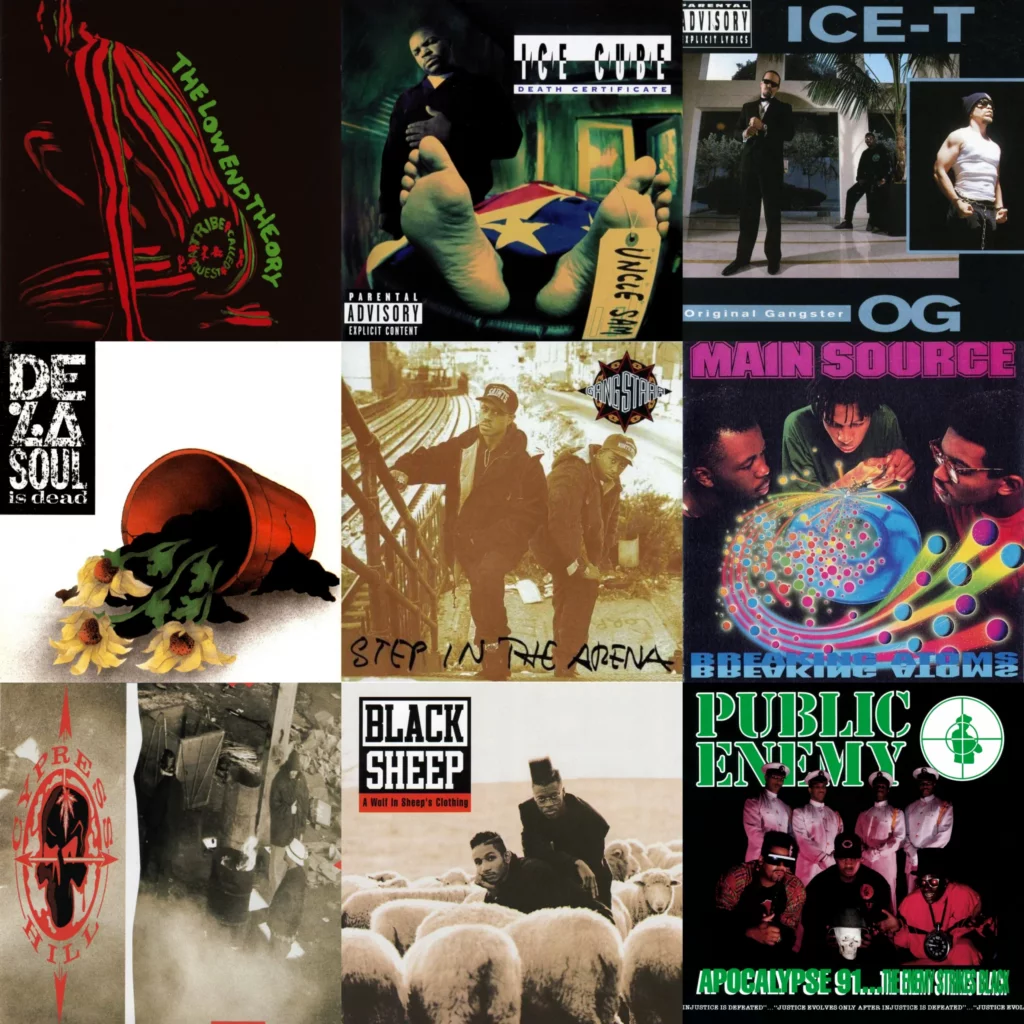
New York was particularly fertile ground. A Tribe Called Quest’s The Low End Theory brought jazz sensibilities into a stripped-down, bass-heavy sound, with Q-Tip and Phife Dawg developing a chemistry that would become one of Hip Hop’s defining partnerships. De La Soul took a considerably darker turn on De La Soul Is Dead, as Prince Paul’s imaginative production accompanied a more cynical and introspective approach. Gang Starr’s Step in the Arena refined the partnership between Guru and DJ Premier, laying down the foundations of a sound that would become synonymous with East Coast boom-bap. Main Source’s Breaking Atoms introduced Large Professor’s distinctive production style and gave a young Nas an early opportunity to announce himself on “Live at the Barbeque.”
The West Coast was equally productive, with gangsta rap continuing to evolve alongside more playful and funk-oriented approaches. Ice Cube delivered the incendiary Death Certificate, combining uncompromising social commentary with some of the hardest production of his career. N.W.A.’s Efil4zaggin pushed the group’s confrontational aesthetic into increasingly explicit territory, while Ice-T’s O.G. Original Gangster offered a broader portrait of Los Angeles street life. Cypress Hill’s self-titled debut introduced DJ Muggs’ unmistakable production, with eerie loops, heavy basslines, and B-Real’s distinctive nasal delivery. DJ Quik brought a different kind of West Coast energy on Quik Is the Name, full of nimble funk, infectious rhythms, and effortless musicality.
Elsewhere, the South was making its presence increasingly difficult to ignore. Geto Boys’ We Can’t Be Stopped paired Houston’s uncompromising street perspective with the haunting “Mind Playing Tricks on Me,” while Scarface’s Mr. Scarface Is Back introduced the solo voice that would become one of Southern Hip Hop’s most respected. Further east, Naughty By Nature broke through with their self-titled album, Black Sheep delivered the playful and sharply constructed A Wolf in Sheep’s Clothing, and Organized Konfusion demonstrated extraordinary lyrical ambition on their debut. Public Enemy continued their political assault with Apocalypse 91… The Enemy Strikes Black, while 2Pac made his first appearance with 2Pacalypse Now, introducing a young MC whose writing already carried considerable urgency.
The year also produced fascinating work outside the mainstream. KMD’s Mr. Hood offered an imaginative blend of offbeat humor and eclectic sampling, Ed O.G. & Da Bulldogs brought Boston into the conversation with Life of a Kid in the Ghetto, and Freestyle Fellowship’s To Whom It May Concern pushed vocal delivery and lyrical experimentation into adventurous territory. From Compton to Queens, Houston to Los Angeles, 1991 gave Hip Hop an extraordinary range of sounds and perspectives.
Beyond the records themselves, the culture continued expanding into fashion, film, and popular culture. Boyz n the Hood brought the realities of South Central Los Angeles to a wider audience, while the bold colors and streetwear associated with Cross Colours became closely connected to Hip Hop’s visual identity. Commercial breakthroughs and underground innovation increasingly existed side by side, with artists finding different ways to reach audiences without abandoning their individual identities.
From jazz-driven New York productions and politically charged rap to Southern street narratives and West Coast funk, 1991 was a year of remarkable musical range. These are the 40 albums that best capture its creativity, character, and enduring contribution to Hip Hop.
Also read: Top 150 Hip Hop Albums Of The 1990s
1. A Tribe Called Quest - The Low End Theory

A Tribe Called Quest had already introduced an original voice with People’s Instinctive Travels and the Paths of Rhythm, but their second album brought a sharper musical focus and a stronger sense of purpose. The Low End Theory stripped away much of the debut’s playful psychedelia in favor of deep basslines, crisp breakbeats, and carefully selected jazz samples. Q-Tip’s production gave the music an earthy warmth and spaciousness, allowing every drum hit, bass note, and vocal exchange to breathe. The result was a distinctive sound that would influence generations of Hip Hop producers.
The musical shift also brought Phife Dawg into sharper focus. Q-Tip’s relaxed, conversational delivery and abstract observations found an ideal counterpoint in Phife’s punchlines, humor, and streetwise confidence. Their chemistry drives the record, particularly on “Check the Rhime,” where the two trade verses with effortless timing. “Buggin’ Out” is another highlight, with Phife’s opening declaration announcing a rapper who had found his voice and was ready to claim his space. On “Jazz (We’ve Got),” the group makes its musical influences explicit without sacrificing the infectious groove. The appearance of legendary double bassist Ron Carter on “Verses from the Abstract” takes the jazz connection beyond sampled records, adding an organic dimension to the production.
There is substance beneath the album’s easygoing surface. “Rap Promoter” aims the music business, “The Infamous Date Rape” addresses sexual assault, and “Show Business” brings in Brand Nubian’s Lord Jamar and Sadat X alongside Diamond D for a sharp examination of the industry’s compromises. Then there is “Scenario,” an explosive posse cut featuring Leaders of the New School. Busta Rhymes steals the spotlight with a closing verse of extraordinary energy, giving the track one of Hip Hop’s most unforgettable guest appearances.
The Low End Theory is the point where A Tribe Called Quest’s musical imagination and lyrical chemistry came together perfectly. Its minimalist, bass-heavy production influenced artists ranging from Nas and The Roots to Dr. Dre, while its combination of intelligence, humor, and irresistible grooves gave alternative Hip Hop a defining sound. Few albums have made musical sophistication this much fun.
2. Ice Cube - Death Certificate

If AmeriKKKa’s Most Wanted proved Ice Cube could thrive outside N.W.A, Death Certificate confirmed his arrival as one of Hip Hop’s most formidable voices. His second solo album sharpened the political edge of its predecessor, combining uncompromising social commentary with vivid street narratives and some of the hardest West Coast production of the era. Released in October 1991, amid escalating racial tensions in Los Angeles and months after the beating of Rodney King, the record captured the anger, frustration, and desperation of Black America with extraordinary intensity.
Divided into two sections, “The Death Side” and “The Life Side,” the album examines the forces shaping life in America’s inner cities. The first half is particularly bleak. “My Summer Vacation” explores the spread of Los Angeles gang culture beyond California, while “A Bird in the Hand” follows a young man turning to drug dealing when legitimate economic opportunities offer little hope. “Alive on Arrival” is even more unsettling, telling the story of a shooting victim left waiting for medical attention as his condition deteriorates. Cube’s storytelling is direct and cinematic, putting listeners inside situations that rarely receive this kind of attention.
Production duties are shared by Cube, Sir Jinx, DJ Pooh, and the Boogie Men. The abrasive Bomb Squad approach of AmeriKKKa’s Most Wanted gives way to thick funk samples, heavy basslines, and a distinctly West Coast sensibility. The beats are muscular and often menacing, providing an ideal foundation for Cube’s commanding delivery.
“The Life Side” shifts toward Black identity, community, and self-determination, although its politics are frequently as provocative as its street narratives. “True to the Game” attacks opportunism, “Color Blind” calls for an end to gang divisions, and “No Vaseline” delivers a devastating verbal assault on Cube’s former N.W.A colleagues, combining vicious punchlines with dark humor. “Black Korea,” however, expresses racial hostility toward Korean American shopkeepers in terms that remain deeply troubling and expose the contradictions within Cube’s political outlook.
Death Certificate is Ice Cube at his creative peak: a commanding MC with an exceptional instinct for storytelling and a willingness to confront uncomfortable subjects. Its flaws and contradictions deserve scrutiny, but its musical power, narrative ambition, and uncompromising perspective make it one of 1991’s defining Hip Hop albums.
3. Ice T - Original Gangster

By 1991, Ice-T had already explored several sides of his personality across three solo albums. O.G. Original Gangster brings those experiences together in an ambitious 24-track collection that runs well over 70 minutes without losing its sense of direction. Gangsta rap, social commentary, humor, battle rhymes, and personal reflections all find their place in a remarkably cohesive whole. Ice sounds completely comfortable moving between these different approaches, with the confidence of an artist who knows exactly what he wants to do.
The album contains some of his finest storytelling. “New Jack Hustler” follows a young dealer seduced by the money and status of the street life, capturing the attractions and consequences of hustling with cinematic precision. “Midnight” is even darker, built around an ominous Black Sabbath guitar riff and the enormous drum break from Led Zeppelin’s “When the Levee Breaks.” Functioning as a prequel to “6 N The Morning,” it revisits Ice’s gangsta narrative style with an especially threatening atmosphere. “The Tower,” constructed around John Carpenter’s Halloween theme, takes listeners into the violent world of prison life, while “Escape From the Killing Fields” examines the social conditions trapping people in disadvantaged neighborhoods.
There is plenty of room for other sides of Ice’s character. The title track explains his approach to the music business, while “Mind Over Matter” offers a personal reflection on intelligence, creativity, and self-reliance. “Bitches 2” turns its subject into a humorous collection of stories about men who deserve the label themselves. “Straight Up N****” is an extended exercise in braggadocio, and “Fried Chicken” provides a lighter change of mood. The album also introduces Body Count, Ice’s heavy metal band, revealing another dimension of his musical interests.
DJ Aladdin, Afrika Islam, and SLJ supply a varied but consistent production backdrop, combining crisp drums, funk and soul samples, and atmospheric touches. Tracks such as “Pulse of the Rhyme” and “Fly By” add to an impressive run of memorable performances.
O.G. Original Gangster captures Ice-T at his most complete: an intelligent, charismatic, versatile MC with an exceptional feel for storytelling. Its length reflects the breadth of his ambitions, and the music never loses its grip. Ice T’s fourth and best album in an extraordinary run.
4. De La Soul - De La Soul Is Dead

Following the unexpected success of 3 Feet High and Rising, De La Soul faced the familiar problem of being defined by an image they had never intended to maintain. Their colorful D.A.I.S.Y. Age identity had earned them considerable attention, but the association with Hip Hop’s happy-go-lucky hippies threatened to become a creative limitation. De La Soul Is Dead was a deliberate rejection of those expectations. Darker, more cynical, and musically adventurous, the album revealed a group eager to move beyond the identity created by their debut.
The smashed flowerpot on the cover makes the message clear. A series of recurring skits follows neighborhood bullies who discover a discarded De La Soul cassette and ridicule the group’s music. The running joke provides a framework for the album’s satire, turning the trio’s own reputation into a target. Prince Paul’s production is even more unpredictable than before, combining obscure samples, strange vocal fragments, unexpected rhythmic changes, and unconventional arrangements. “Oodles of O’s” and “Talkin’ Bout Hey Love” capture the group’s eccentric approach, while “A Roller Skating Jam Named ‘Saturdays'” delivers an irresistible disco groove. “Ring Ring Ring (Ha Ha Hey)” takes aim at aspiring artists and opportunists looking to capitalize on De La Soul’s success.
The humor has a considerably sharper edge this time around. “My Brother’s a Basehead” examines the destructive effects of drug addiction, while “Millie Pulled a Pistol on Santa” tells a disturbing story of sexual abuse and revenge. The latter is particularly difficult listening, with its unsettling narrative exposing the darkness beneath the album’s playful exterior. Posdnuos, Trugoy the Dove, and Maseo sound increasingly comfortable exploring uncomfortable subjects without abandoning their individuality.
Some of the interludes and skits interrupt the musical momentum, and the album initially proved a challenging proposition for listeners expecting another 3 Feet High and Rising. Its reputation has grown considerably with time, however. Prince Paul’s adventurous sample work and the group’s willingness to dismantle their carefully constructed public image make De La Soul Is Dead one of the most daring Hip Hop albums of its era. They killed the D.A.I.S.Y. Age mythology and came back with something considerably stranger.
5. Gang Starr - Step In The Arena

Gang Starr’s 1989 debut, No More Mr. Nice Guy, introduced a distinctive duo with several classics already in place, although Guru and DJ Premier were still finding their collective identity. On Step in the Arena, that identity comes into sharp focus. Released in January 1991, the album marks the start of an extraordinary stretch that would also produce Daily Operation, Hard to Earn, and Moment of Truth. Few Hip Hop acts have put together a comparable run of four consecutive albums.
DJ Premier’s production gives Step in the Arena its unmistakable character. Jazz and funk samples, hard-hitting drum breaks, and precisely placed scratches form a lean New York sound with plenty of space for Guru’s measured delivery. Premier’s beats are inventive without becoming cluttered, and Guru knows exactly how to work within them. His calm, assured voice provides a steady counterweight to the rhythmic detail and sharp cuts surrounding him. The title track captures that balance immediately, while “Form of Intellect” and “Check the Technique” demonstrate the duo’s technical command without losing sight of the groove.
“Who’s Gonna Take the Weight?” is one of the album’s defining moments. Premier’s looping horns give the track an almost hypnotic pull as Guru considers responsibility, self-awareness, and the choices people make. “Just to Get a Rep” takes a darker turn, examining the pursuit of street credibility and the consequences that come with it. Elsewhere, “Take a Rest” brings a looser funk sensibility, while “Beyond Comprehension” and “Precisely the Right Rhymes” put lyrical technique front and center. The brief interludes help maintain the record’s continuity, giving the whole sequence a carefully considered flow.
Step in the Arena is where Guru and Premier sound fully comfortable in each other’s company. Their chemistry runs through every aspect of the record, from the understated authority of Guru’s rhymes to the detail and economy of Premier’s production. The duo would reach even greater heights, but this is where the Gang Starr sound took its definitive shape.
6. Main Source - Breaking Atoms
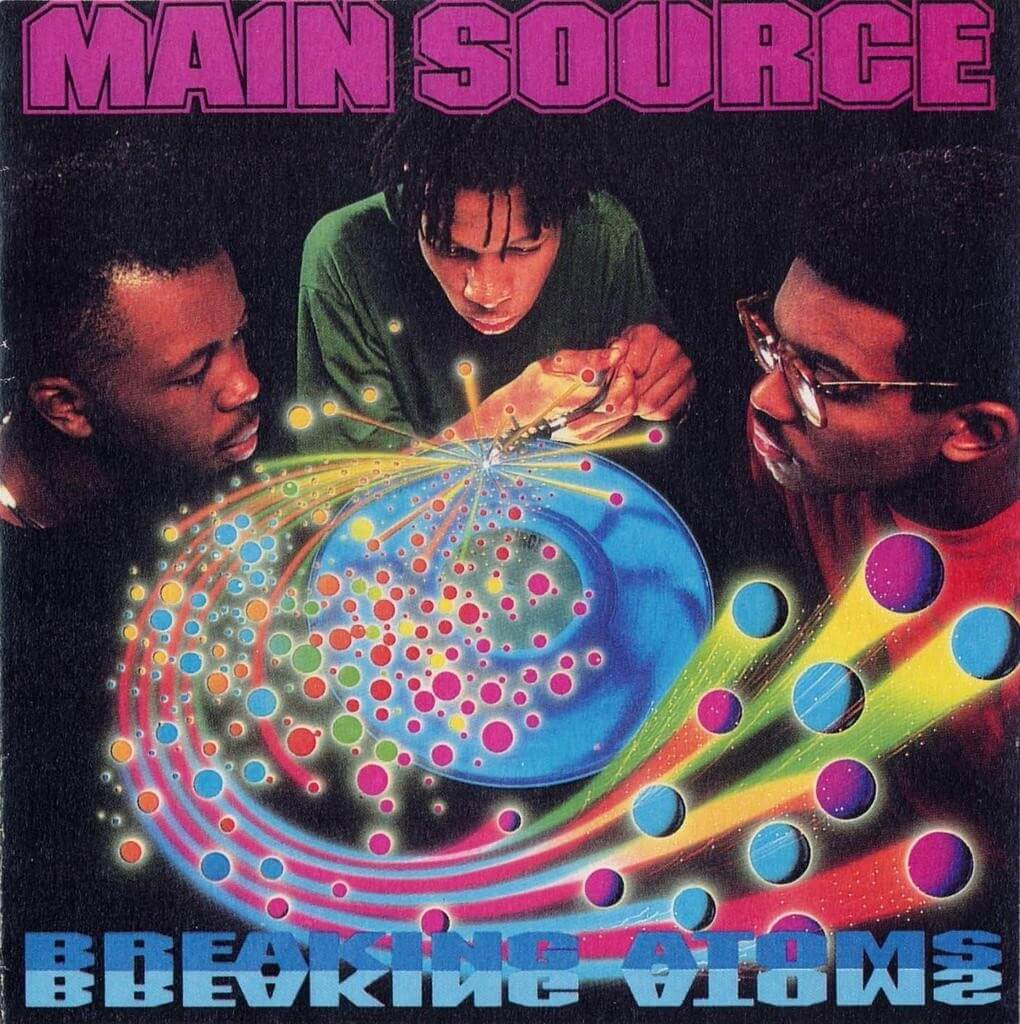
Main Source’s Breaking Atoms is one of the defining New York Hip Hop albums of the early 1990s. Large Professor, K-Cut, and Sir Scratch brought together intricate sample-based production and relaxed, technically accomplished rhyming, creating a sound that was deeply rooted in jazz and soul without losing the hard drums and streetwise edge of New York rap. Large Professor was the group’s principal creative force, and his work on this album would influence a generation of producers.
Working with the E-mu SP-1200, Large Professor assembled chopped samples, inventive percussion, and unexpected sonic details into beats with an unusually rich musicality. The arrangements have a life of their own, with small changes and carefully placed sounds rewarding repeated listening. “Looking at the Front Door” sets a soulful groove against Large Professor’s account of a relationship coming apart. “Just a Friendly Game of Baseball” uses an extended baseball metaphor to address police brutality, while “Peace Is Not the Word to Play” takes a more confrontational approach. “Just Hangin’ Out” captures the relaxed chemistry between the three members, with an infectious groove that makes the track an album highlight.
Then there is “Live at the Barbeque,” the record’s most famous track and one of Hip Hop’s great posse cuts. Joe Fatal, Akinyele, and a young Nas trade verses over a rugged, jazz-inflected beat. Nas delivers an electrifying performance, offering an early indication of the lyrical force he would bring to Illmatic three years later. His appearance has since become part of the album’s mythology, although it is the quality of the entire track that makes it such a standout.
Breaking Atoms has a rare balance of musical sophistication, warmth, humor, and lyrical sharpness. Large Professor’s production helped shape the vocabulary of 1990s boom-bap, while the chemistry within Main Source gives the album a character all its own. Its influence extends well beyond the Nas connection: this is a record that producers and MCs have continued to draw from for decades.
7. Cypress Hill - Cypress Hill

Cypress Hill’s self-titled debut introduced a distinctive West Coast sound, built around DJ Muggs’ dark, psychedelic production and the contrasting voices of B-Real and Sen Dog. B-Real’s high-pitched, nasal delivery was unlike anything else in mainstream rap, while Sen Dog’s gruff baritone added weight and aggression. The Los Angeles trio also brought Mexican-American identity and outspoken cannabis advocacy into a Hip Hop landscape where those perspectives were still underrepresented. Their appeal eventually extended well beyond traditional rap audiences, helped by substantial airplay on urban and college radio.
DJ Muggs produced the entire record, drawing on funk, soul, and rock samples to create bass-heavy tracks filled with eerie textures, unconventional rhythms, and unsettling details. The music has a sinister atmosphere, although there is plenty of funk beneath the darkness. “How I Could Just Kill a Man” is the obvious centerpiece, driven by its memorable bassline and B-Real’s vivid, confrontational storytelling. “Hand on the Pump” continues the street-level menace, while “The Phuncky Feel One” brings the group’s funk influences to the foreground. Cannabis culture runs through tracks like “Stoned Is the Way of the Walk,” delivered with the casual conviction that would become central to Cypress Hill’s identity. “Latin Lingo” incorporates Spanish phrases into the group’s rhymes, giving the track a cultural specificity that was unusual in mainstream Hip Hop at the time. Short instrumental passages add to the album’s hazy, occasionally surreal character.
Cypress Hill eventually went double platinum, opening doors for a generation of listeners who might not otherwise have explored Hip Hop. The combination of Muggs’ murky, sample-heavy beats, B-Real’s unmistakable voice, and the interplay with Sen Dog gave the group an identity that was difficult to imitate. Black Sunday would take Cypress Hill to even greater commercial heights in 1993, but the debut already had the ingredients: a compelling sound, a distinct cultural perspective, and an attitude entirely its own.
8. Black Sheep - A Wolf In Sheep's Clothing

Black Sheep brought a mischievous, satirical edge to the Native Tongues movement with A Wolf in Sheep’s Clothing. Dres and Mista Lawnge had little interest in following the collective’s more familiar bohemian conventions. Their debut favors sharp humor, unconventional beats, and a healthy disregard for Hip Hop’s unwritten rules. Party records sit alongside social commentary, relationship songs, and absurdist comedy, with Dres’s nimble delivery providing a consistent thread through the album’s many detours.
Mista Lawnge’s production gives the record much of its personality. Rather than relying on the smoother jazz loops favored by some contemporaries, he builds tracks around unexpected samples, punchy drums, and quirky musical details. “The Choice Is Yours (Revisited)” became the group’s signature song, its infectious groove and unforgettable chants turning an offbeat concept into a mainstream hit. “Strobelite Honey” takes a playful look at club culture, while “Flavor of the Month” pokes fun at the fickleness of musical trends. On “U Mean I’m Not,” Dres turns gangsta rap posturing into a source of satire, and “Similak Child” finds humor in romantic deception. “Pass the 40,” featuring teenage rapper Chi-Ali, adds another lively twist to an album that rarely takes the expected route.
The record reached No. 30 on the Billboard 200 and earned gold certification within six months of its release. Its commercial success came without Black Sheep having to dilute their eccentricity. Dres’s writing is full of sly observations and unexpected punchlines, while Mista Lawnge’s production keeps the music unpredictable without sacrificing its appeal. The album brought a welcome streak of mischief to the Native Tongues catalog, offering an alternative to the collective’s more familiar sounds. A Wolf in Sheep’s Clothing has a personality all its own, and its best tracks still hit with the same playful confidence.
9. Public Enemy - Apocalypse 91… The Enemy Strikes Black
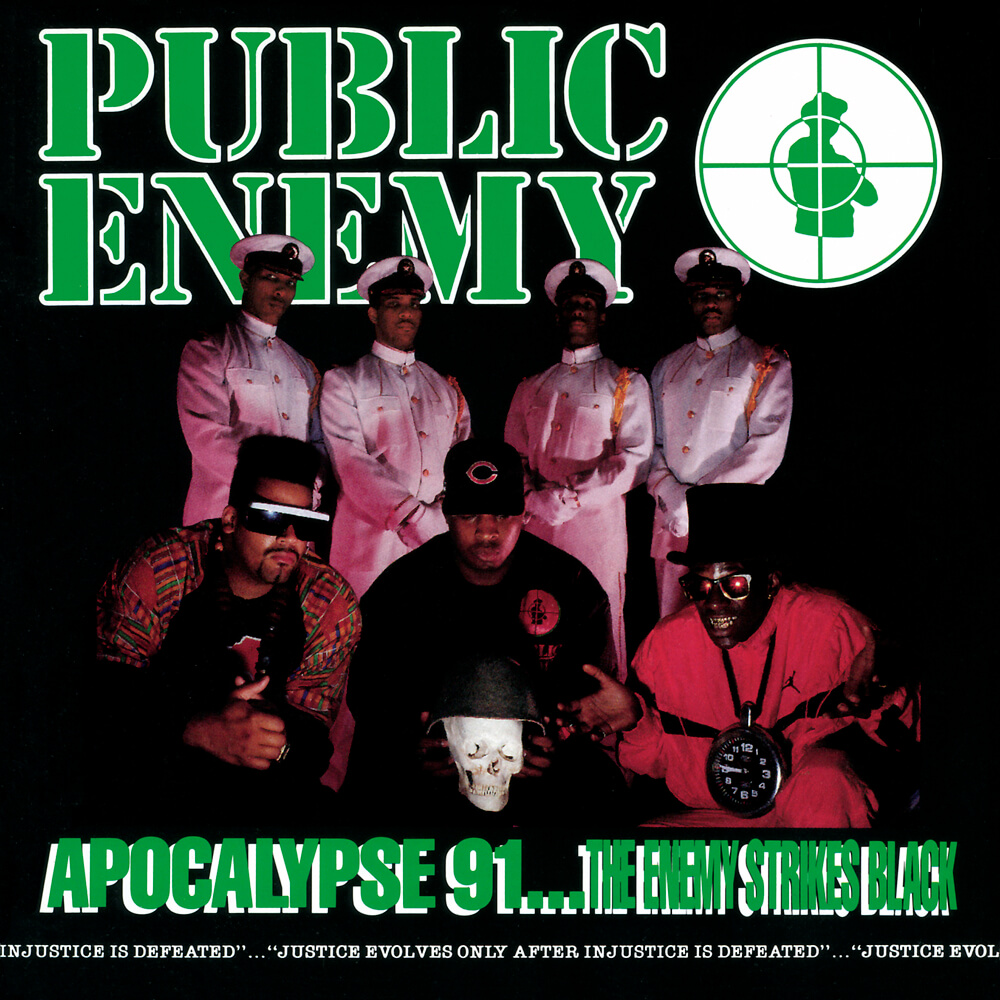
Following the densely layered Fear of a Black Planet, Public Enemy took a more streamlined approach on Apocalypse 91… The Enemy Strikes Black. The Bomb Squad moved into an executive production role, with the Imperial Grand Ministers of Funk handling much of the music. The shift is immediately apparent. The arrangements are tighter and more sharply defined, built around heavy drums, forceful basslines, abrasive samples, and guitar riffs. There is less sonic clutter than on its predecessor, but the intensity is undiminished.
“Lost at Birth” opens with a throbbing bassline, an air-raid siren, and Terminator X’s jagged scratching, setting the tone for what follows. “Can’t Truss It” is one of the album’s most compelling productions, driven by slamming drums and a squealing horn loop as Chuck D examines the transatlantic slave trade and its continuing consequences. His writing is equally confrontational on “1 Million Bottlebags,” which attacks the liquor industry’s exploitation of Black neighborhoods and the damage alcoholism inflicts on those communities. Chuck offers no easy answers or softened edges.
Public Enemy also turn their attention to the music industry on “How to Kill a Radio Consultant,” where a driving rhythm and distorted vocal samples accompany Chuck’s criticism of radio’s treatment of Hip Hop. “Nighttrain” draws on James Brown-derived funk, alternating relatively sparse verses with a heavier, guitar-driven chorus. On “I Don’t Wanna Be Called Yo Niga,” a bluesy guitar lick and soulful piano frame a pointed discussion of language, identity, and self-respect. Flavor Flav’s rapid-fire delivery brings personality to the track without distracting from its argument.
Elsewhere, “Move!” charges forward on propulsive bass and shouted refrains, while “A Letter to the N.Y. Post” opens with a chilling KKK sample before addressing racist media coverage. The Anthrax collaboration “Bring the Noise” revisits familiar territory with thrash-metal guitars, although the original version’s chemistry is hard to replicate.
Apocalypse 91 benefits from its discipline. Each track has a distinct musical identity, and the direct arrangements keep the record moving with purpose. Public Enemy channel their anger into a focused, forceful album that confronts systemic racism while examining problems within Black communities.
10. Organized Konfusion - Organized Konfusion

Pharoahe Monch and Prince Po approached their self-titled debut with an extraordinary appetite for lyrical complexity. Released in 1991 on Hollywood BASIC, Organized Konfusion introduced a Queens duo whose intricate rhyme schemes, unpredictable flows, and imaginative storytelling set them apart from most of their contemporaries. Their writing shifts between playful, surreal, politically charged, and technically astonishing, sometimes within a single track. The album initially found a modest audience, but its reputation gradually grew into that of an underground classic.
Produced by the duo themselves, the music draws on jazz and funk samples, unconventional rhythms, and offbeat arrangements that match the restless creativity of the MCs. “Fudge Pudge,” featuring a young O.C. in his recording debut, combines playful braggadocio with densely packed wordplay. “Walk into the Sun” takes a more soulful direction, its uplifting groove providing a contrast to the album’s darker material. “Prisoners of War” delivers a forceful critique of oppression and the treatment of Black Americans. Then there is “Releasing Hypnotical Gases,” an extraordinary exercise in verbal invention. Built around an absurd premise, the track gives Monch and Po room to unleash elaborate rhyme patterns, vivid imagery, and battle-rap ingenuity. “Who Stole My Last Piece of Chicken?” switches gears for a humorous tale that brings their chemistry and storytelling abilities to the fore.
The album demands, and rewards, repeated listening. Beneath the eccentric humor and sometimes bewildering wordplay lies a remarkable command of rhythm, structure, and lyrical detail. Pharoahe Monch would go on to become one of Hip Hop’s most technically gifted lyricists, but the interplay between him and Prince Po is central to what makes this record special. Their complementary styles give the album its unpredictable character, while the self-produced beats provide an equally adventurous foundation. Organized Konfusion anticipated much of the more experimental underground rap that followed, and its combination of verbal gymnastics, social commentary, and offbeat humor still sounds singular.
11. Naughty By Nature - Naughty By Nature
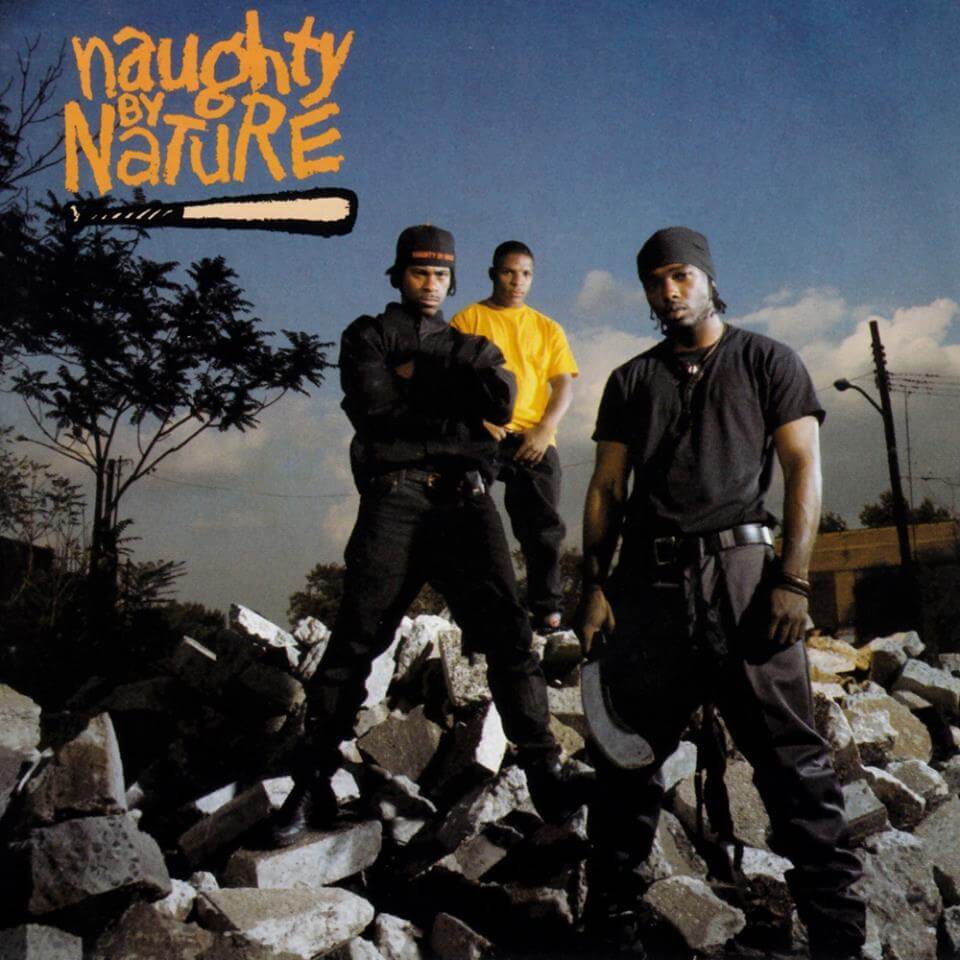
Naughty By Nature’s self-titled second album took the East Orange, New Jersey trio from local favorites to mainstream stars. Formerly known as The New Style, Treach, Vin Rock, and DJ Kay Gee found their identity through harder-edged production, nimble lyricism, and hooks built for a crowd. Released in September 1991, the album struck an effective balance between street-level storytelling and accessible, sample-driven rap.
Kay Gee’s knack for turning familiar funk and soul samples into punchy, uncluttered beats is central to the record’s appeal. “O.P.P.” flips the Jackson 5’s “ABC” into an irresistible call-and-response anthem, using a playful code for infidelity that helped propel the song to number six on the Billboard Hot 100. Treach’s rapid-fire delivery keeps the verses lively, while the hook practically demands audience participation. The group’s success did not come at the expense of their harder side. “Yoke the Joker” and “Guard Your Grill” deliver forceful battle rhymes, while “Wickedest Man Alive,” featuring mentor Queen Latifah, brings plenty of combative energy. “Everything’s Gonna Be Alright,” titled “Ghetto Bastard” on explicit versions, takes a more reflective turn, addressing poverty and growing up with limited options over a warm soul sample. “Uptown Anthem,” also associated with the Juice soundtrack, adds a darker, cinematic touch.
Going platinum within months, Naughty By Nature demonstrated that hard-edged rap and irresistible hooks could coexist without compromise. Treach’s acrobatic flow gives the group a distinctive lyrical identity, while Kay Gee’s production lets the samples breathe. The trio had found a formula that worked in the streets, on the radio, and in packed clubs.
12. Freestyle Fellowship - To Whom It May Concern
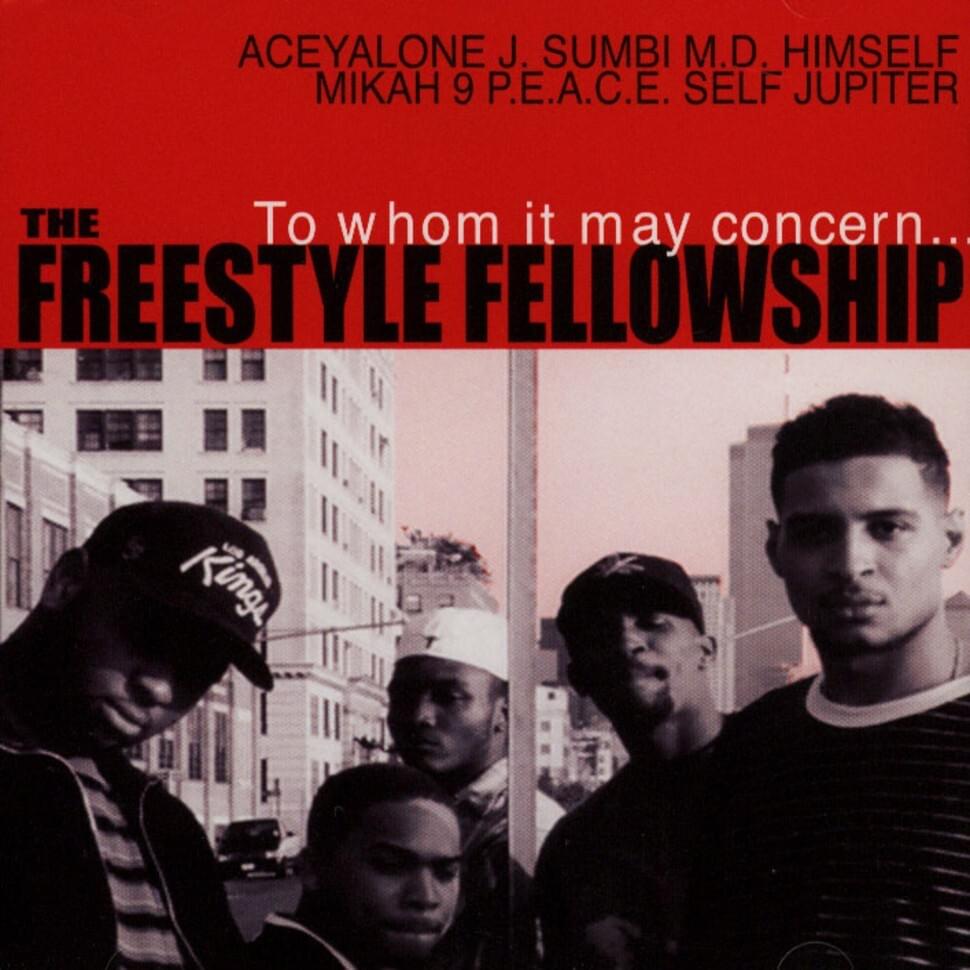
Freestyle Fellowship emerged from the Good Life Cafe’s open-mic scene in South Central Los Angeles, developing an approach to MCing far removed from the gangsta rap dominating the West Coast. Aceyalone, Myka 9, P.E.A.C.E., and Self Jupiter treated the microphone like a jazz instrument, pushing rhythm, phrasing, and verbal improvisation into unfamiliar territory. Their debut captures that experimental spirit, even if its shoestring production gives the record a rough, uneven sound.
The beats are often muddy and loosely assembled, but the MCs compensate with remarkable rhythmic invention. Myka 9’s performance on “7th Seal” is particularly striking, packing intricate wordplay and rapid-fire syllables into a dizzying display. “Sunshine Men” takes aim at corporate music and the commercialization of rap, while “We Will Not Tolerate” brings the group together for a forceful statement against white supremacy. Much of the album consists of individual showcases rather than full-group performances, but the different personalities give it a wide range of voices and approaches.
To Whom It May Concern... is not an easy listen, and its rough presentation occasionally obscures the music’s finer details. Its ideas, however, were years ahead of their time. The album helped lay the groundwork for the independent and alternative West Coast Hip Hop movements that followed, offering a radically different vision of Los Angeles rap.
13. Hijack - Horns of Jericho

Hijack brought a fierce, uncompromising intensity to British Hip Hop with Horns of Jericho. Kamanchi Sly and Undercover attack the microphone with rapid-fire delivery and commanding voices, while DJ Supreme builds a dense, abrasive backdrop from hard breaks, ominous samples, and relentless scratches. The album captures Britcore at its most confrontational, with little interest in making the music comfortable or accessible.
“The Phantom of the Opera” sets the tone immediately. Sirens, horror-film effects, and the familiar “Apache” breakbeat create a tense introduction before the two MCs launch into their verses. “Airwave Hijack” and “Hijack the Terrorist Group” maintain the pressure, driven by pounding percussion and heavy basslines. Supreme’s production is chaotic in texture but carefully assembled, giving the tracks an almost cinematic sense of menace.
There is a more reflective side to the record. “Brother Versus Brother” addresses racial inequality and systemic oppression over a relatively stripped-down beat, allowing the lyrics to carry the weight. The smoother R&B direction of “Daddy Rich” is less convincing, interrupting the album’s otherwise consistent attack.
At its best, Horns of Jericho is an exhilarating collision of forceful rhyming, inventive turntablism, and uncompromising production. Hijack translated the anger and urgency of Britcore into a full-length statement with an identity and intensity that still distinguish it within the wider history of UK Hip Hop.
14. N.W.A - Efil4ziggan
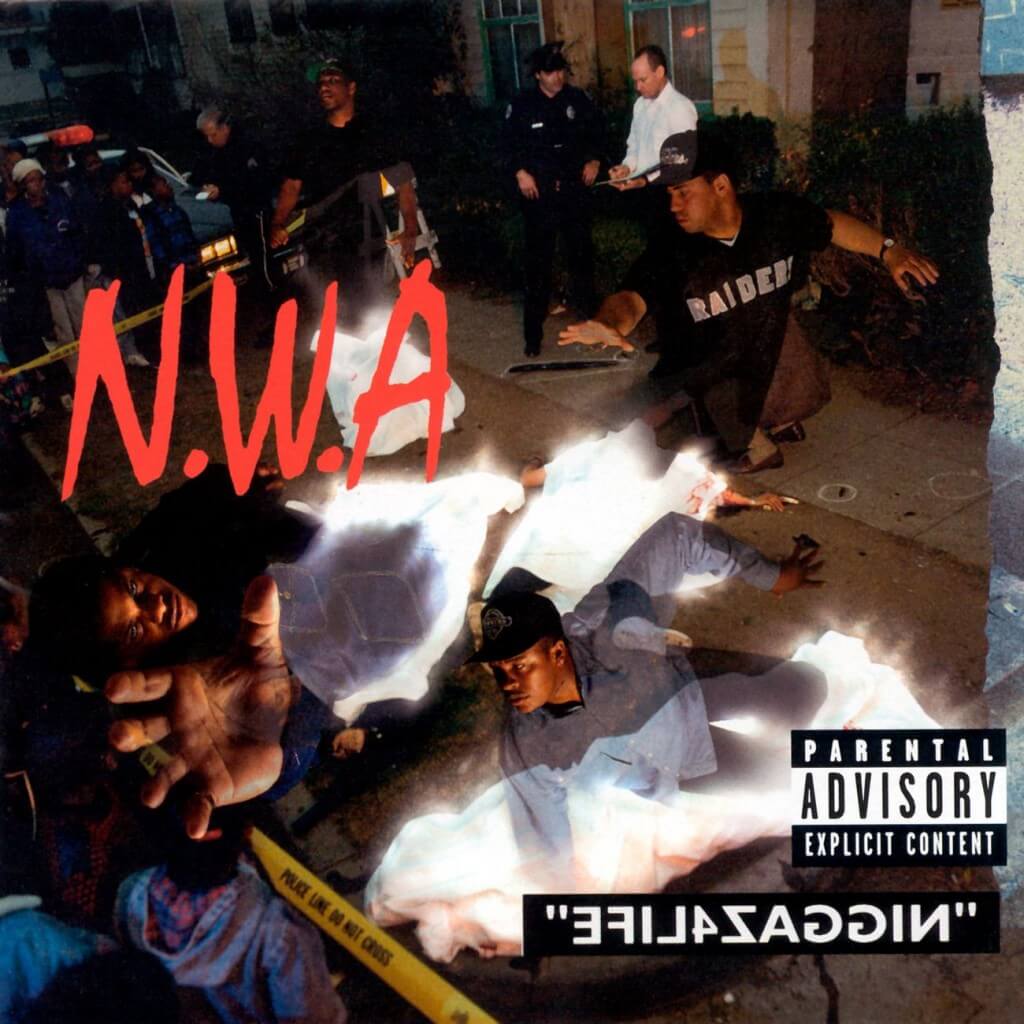
With Ice Cube gone, N.W.A faced the challenge of following up Straight Outta Compton without one of its strongest voices. Efil4zaggin takes a different route. The social commentary that gave the group much of its bite is largely absent, replaced by a heavier emphasis on provocation, gangsta posturing, and Dr. Dre’s increasingly ambitious production.
Dre is the album’s main attraction. His beats point toward the G-Funk sound he would develop over the next few years, built around deep funk basslines, atmospheric synths, and hard, spacious drums. “Alwayz Into Somethin’” and the title track have a thick, cinematic quality, while “Real Nz” and “Real Nz Don’t Die” bring the group’s familiar intensity into sharper focus. MC Ren and Eazy-E are particularly effective on the latter, riding one of Dre’s darker, catchier productions.
The lyrical approach is less compelling. Without Cube’s sharp writing, much of the material leans heavily on crude sexual content and shock tactics. “One Less B****” and “She Swallowed It” rarely offer much beyond deliberate offensiveness. Several skits and throwaway Eazy-E tracks also disrupt the album’s momentum, with “To Kill A Hooker” especially difficult to defend.
Efil4zaggin lacks the urgency and innovation of its predecessor, and its excesses often get in the way. Still, Dre’s production points toward the next phase of West Coast rap, making this an important transitional record.
15. Scarface - Mr Scarface Is Back

Following the success of the Geto Boys’ We Can’t Be Stopped and the hit single “Mind Playing Tricks on Me,” Brad Jordan launched his solo career under the name Scarface. Mr. Scarface Is Back introduced an artist with a remarkable gift for psychological storytelling, taking the paranoia, violence, and inner turmoil of his Geto Boys verses into darker territory. Released in October 1991, the album brought a distinctly Houston perspective to a Hip Hop landscape dominated by East and West Coast sounds.
Produced primarily by Crazy C and Scarface himself, the music draws on dense funk and soul samples, with heavy drums and murky arrangements that give the record an oppressive atmosphere. Scarface handles every track alone, using his deep, commanding voice and flexible flow to move between cold-blooded street characters and deeply troubled narrators. The title track opens with samples from Scarface and introduces his lethal persona with considerable force. “Diary of a Madman” is even more unsettling, following a disturbed mind into increasingly disturbing territory. “A Minute to Pray and a Second to Die” takes a more somber approach, using a Marvin Gaye sample to frame another account of the cycle of violence in the streets. “Money and the Power” adds a sharp reflection on the relationship between poverty, ambition, and survival.
Mr. Scarface Is Back is at its strongest when Scarface explores the psychological damage beneath the street narratives. His characters are frequently violent and unpredictable, but the writing gives their actions a disturbing human dimension. The album went gold in 1993, and its influence on later generations of Southern rappers is considerable. Scarface was already a formidable storyteller within the Geto Boys; this solo debut made clear that he could carry an entire album on his own.
16. Geto Boys - We Can't Be Stopped

Geto Boys’ We Can’t Be Stopped is one of the defining records of early Dirty South rap, capturing Houston’s underground intensity with an abrasive sound and a confrontational attitude. Its infamous cover, showing Bushwick Bill in a hospital shortly after a near-fatal self-inflicted gunshot wound, set the tone for an album steeped in violence, anger, and survival. The music is equally uncompromising, built around eerie funk loops, thick basslines, and stripped-down production that gives the group’s voices plenty of room.
“Mind Playing Tricks on Me” is the album’s masterpiece. Built around a haunting Isaac Hayes sample, the track finds Scarface, Willie D, and Bushwick Bill exploring paranoia, anxiety, and mental disintegration. Their verses expose the psychological damage beneath the group’s street-hardened personas, giving the song a vulnerability that was unusual in gangsta rap at the time. Elsewhere, “Homie Don’t Play That” brings Willie D’s shouted threats over a wobbly funk groove, while Bushwick’s “Chuckie” turns horrorcore imagery into something genuinely disturbing. The title track takes aim at the music industry and its double standards, with all three MCs contributing to the group’s defiant attack. “F*** a War” directs their anger toward systemic exploitation, extending the album’s confrontational spirit beyond street-level violence.
The production is deliberately rough around the edges, relying on sharp drum loops, murky samples, and unsettling synth textures rather than elaborate arrangements. That rawness suits the material, giving the record an atmosphere of constant tension. Not every track reaches the heights of “Mind Playing Tricks on Me,” but the album’s unpredictability is part of its appeal. We Can’t Be Stopped captures the Geto Boys at their most volatile, with Scarface, Willie D, and Bushwick Bill turning Houston’s harsh realities into some of the most uncompromising rap of the era.
17. DJ Quik - Quik Is The Name

DJ Quik’s Quik Is the Name brought a fresh dose of funk to the early-1990s Los Angeles scene. Rooted in Compton street life but driven by warm basslines, melodic samples, and intricate arrangements, the album took a different route from the harder, more confrontational sounds gaining traction in West Coast rap. Quik was still a teenager when he made his debut, but his production already displayed remarkable confidence and attention to detail.
The influence of 1970s funk and soul runs through practically every track. “Tonite” is the centerpiece, a smooth, infectious party record built around samples from Kleeer and Betty Wright. “Born and Raised in Compton” flips an Isaac Hayes loop into a proud hometown statement, balancing local identity with an irresistible groove. Quik’s rhymes are full of humor, swagger, and neighborhood observations, capturing the pleasures and occasional dangers of his surroundings. “Sweet Black P****” takes a bawdy approach to sexual escapades, while “Tha Bombudd” brings reggae influences into the album’s celebration of cannabis culture. Instrumentals such as “Quik’s Groove” give the production room to breathe, highlighting the melodic instincts and musical craftsmanship behind the beats.
“Dedication” provides a more reflective moment, with Quik paying tribute to friends who lost their lives. Its atmospheric production reveals a more contemplative side of an artist otherwise associated with playful bravado and party-ready material.
Quik Is the Name has a distinctive balance of polish and street-level character. Quik’s layered, melodic production gives the album a buoyancy that separates it from much of the era’s harder-edged rap, while his Compton perspective keeps the music grounded. It announced a major new talent behind the boards and introduced a West Coast sound built on funk, musical detail, and effortless bounce.
18. Leaders Of The New School - A Future Without A Past

Leaders of the New School brought youthful energy and old-school group chemistry to a New York scene increasingly moving in different directions. Comprised of Busta Rhymes, Charlie Brown, Dinco D, and Cut Monitor Milo, the Long Island quartet drew on the playful spirit of early Hip Hop crews while giving it a fresh early-’90s edge. Their debut is loosely structured around a school day, with “Homeroom,” “Lunchroom,” and “Afterschool” interludes providing the framework.
The group’s greatest strength is the interplay between its three MCs. Busta Rhymes attracts the most attention with his animated delivery and unpredictable vocal changes, particularly on “Case of the P.T.A.,” but Charlie Brown and Dinco D hold their own. Their back-and-forth exchanges give the record a lively, communal quality, while the production combines layered samples, jazz-inflected touches, and hard-hitting drums. “What’s the Pinocchio’s Theory?” and “Sobb Story” capture the group’s playful approach, while “Sound of the Zeekers @#^*?!” turns the microphone over to a wider circle of New York talent.
There is plenty of humor and adolescent mischief here, occasionally pushing the album toward cartoonish territory. The extended school-day concept also makes its roughly hour-long running time feel longer than necessary. Still, tracks like “Transformers,” “Show Me a Hero,” and “Trains, Planes and Automobiles” demonstrate the group’s range beyond its youthful antics. A Future Without a Past... captures Leaders of the New School as a genuinely balanced crew, before Busta Rhymes’ larger-than-life personality began to dominate the group’s story.
19. 2Pac - 2Pacalypse Now
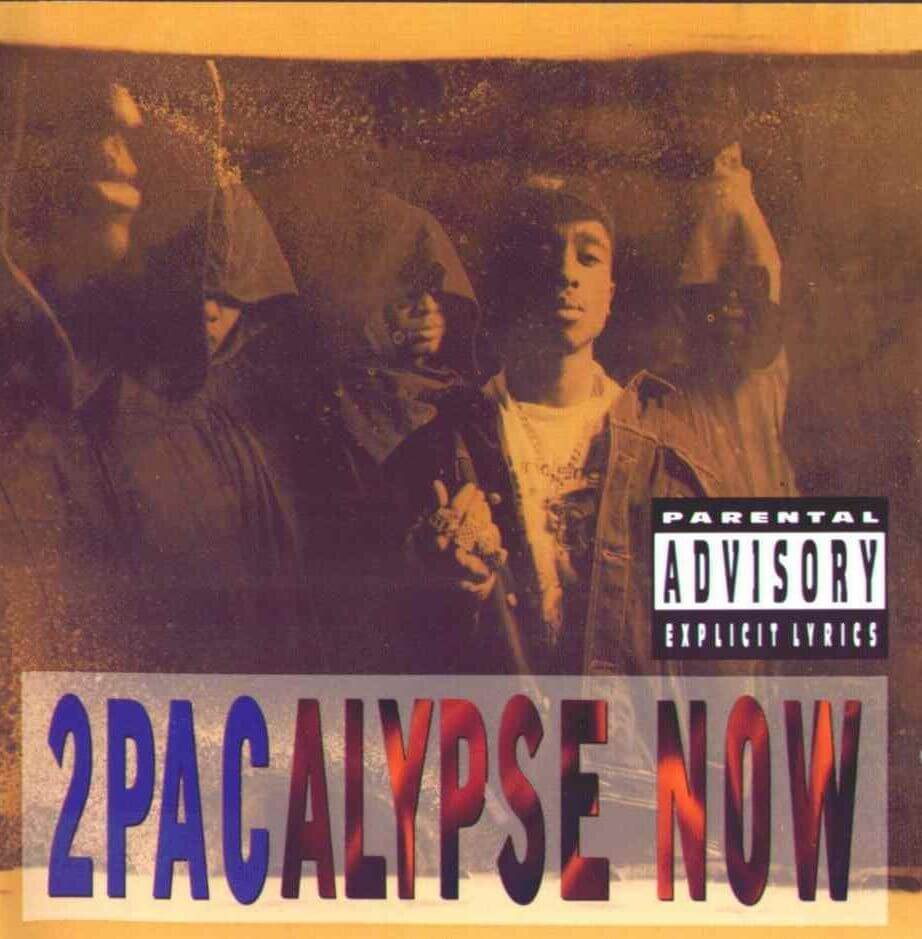
Before Tupac Shakur became one of Hip Hop’s most celebrated and controversial figures, 2Pacalypse Now introduced a young MC with plenty to say about the injustices shaping Black life in America. His delivery is still developing, occasionally uneven, but the urgency is already there. Police brutality, institutional racism, poverty, and the pressures facing young people in disadvantaged communities drive much of the album’s subject matter.
“Trapped” captures the paranoia of being constantly targeted by law enforcement, while “Words of Wisdom” takes on the historical oppression of Black Americans. “Brenda’s Got a Baby” is the emotional centerpiece, telling the story of a twelve-year-old girl abandoned by her family and left to deal with pregnancy, poverty, and exploitation. Tupac approaches her situation with empathy and a gift for narrative detail that would become one of his greatest strengths.
The production, supplied by members of the Digital Underground circle and other associates, is less consistent. Funk samples and skeletal West Coast rhythms give tracks like “Soulja’s Story” and “I Don’t Give a F**k” their confrontational edge, while “If My Homie Calls” offers a lighter side of Tupac’s personality. The controversy surrounding the record, including Vice President Dan Quayle’s public condemnation, brought its political content into the national debate.
2Pacalypse Now is an uneven debut, but its anger, compassion, and social awareness reveal an artist already finding his voice.
20. Ed OG & Da Bulldoggs - Life Of A Kid In The Ghetto

Boston had little presence on the national Hip Hop map when Ed O.G. & Da Bulldogs released their debut, but Life of a Kid in the Ghetto gave the city a strong voice. Ed O.G. balances social observation with humor and everyday storytelling, addressing the realities of growing up in Roxbury without losing sight of the music’s lighter side. The production, handled by Joe Mansfield and New York duo The Awesome 2, draws on warm jazz and funk samples, giving the record a relaxed but substantial boom-bap foundation.
The standout is “Be a Father to Your Child,” a thoughtful appeal for parental responsibility built around a smooth Roy Ayers sample. Ed delivers its message in plainspoken terms, avoiding the heavy-handedness that often undermines songs with similar intentions. “I Got to Have It” takes the opposite approach, driven by an infectious groove and an energetic performance that made it one of the album’s biggest records. “Speak Upon It,” featuring Def Jef, Ace, and Quan, brings a sharper political edge, while “Bug-a-Boo” and “Feel Like a Nut” reveal Ed’s playful side.
The title track offers a more personal account of neighborhood life, grounding the album’s broader social concerns in Ed’s own surroundings. Not every cut reaches the level of its best-known singles, but the combination of soulful production, approachable lyricism, and genuine personality gives Life of a Kid in the Ghetto its appeal. Ed O.G. put Boston on the Hip Hop map with a debut that balances substance and entertainment without losing its sense of place.
21. Compton Most Wanted - Straight Checkn' Em

With Chill absent following his incarceration, MC Eiht takes center stage on Compton’s Most Wanted’s second album. Straight Checkn’ Em is a grim portrait of life in early-’90s Compton, built around street-level narratives, ominous production, and Eiht’s measured, conversational delivery. He doesn’t need to raise his voice to make the violence and tension in his stories hit home.
DJ Slip and The Unknown DJ provide a lean, funk-based backdrop, using sparse drums, eerie melodies, and heavy basslines to create an atmosphere of constant unease. “Driveby Miss Daisy” is particularly effective, its haunting piano figures accompanying Eiht’s account of gang violence and innocent casualties. “Growin’ Up in the Hood,” originally heard on the Boyz n the Hood soundtrack, traces the grim progression from childhood to street violence, while “Def Wish” finds Eiht delivering tough, Wild West-inspired threats over a slow, pounding beat.
There are occasional changes of pace. “Can I Kill It?” flips The Isley Brothers’ “Footsteps in the Dark” into a smooth groove, while the title track picks up the tempo with aggressive drums and DJ Mike T’s scratching. “They Still Gafflin’” turns its attention to police harassment, keeping the anger close to the surface.
Straight Checkn’ Em succeeds through its consistency. Eiht’s unhurried storytelling and the production’s restrained menace give the record a strong sense of place, capturing Compton without resorting to exaggerated theatrics.
22. Chubb Rock - The One

Chubb Rock’s third album is an understated showcase for an MC whose command of rhythm and language never needed theatrical flourishes. His deep voice, relaxed delivery, and carefully constructed rhymes give The One a steady confidence, while cousin Howie Tee supplies polished boom-bap production that leaves plenty of room for the vocals. The chemistry between the two is evident throughout, with beats that move easily between thoughtful reflection and party-ready funk.
Chubb’s writing reaches beyond familiar Brooklyn street narratives. “What’s the Word” addresses apartheid and the Gulf War, while “The Night Scene” takes a closer look at life on the streets. “Treat ’Em Right” brings a lighter, more celebratory mood, driven by an infectious groove and Chubb’s effortless sense of timing. The shifts in subject matter never disrupt the album’s flow. His delivery gives even the more serious material an approachable quality, without sacrificing its weight.
The One rarely receives the attention given to the bigger East Coast releases of 1991, which makes it one of the more overlooked records on this list. Chubb’s influence on Brooklyn’s next generation is worth considering, too. The relaxed authority and intricate phrasing heard here offer an interesting point of comparison with the style a young Notorious B.I.G. would develop. Chubb Rock was already operating at a high level, and The One deserves a much larger place in the conversation about early ’90s Brooklyn Hip Hop.
23. Godfather Don - Hazardous
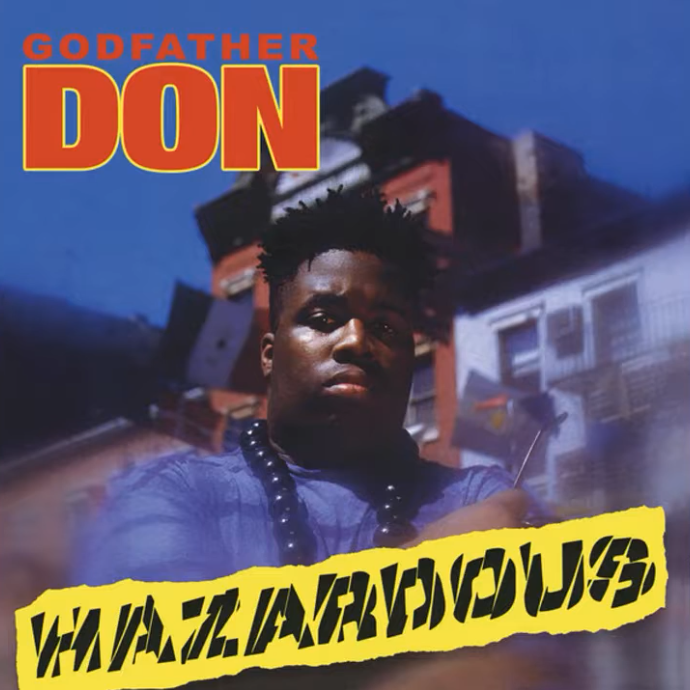
Godfather Don’s solo debut is a rugged slice of early ’90s New York Hip Hop, driven by hard-hitting drums, funky samples, and an MC who attacks the microphone with considerable force. Handling all the production himself, Don gives Hazardous a muscular sound built around brisk tempos and punchy loops. “Read the Lines” makes particularly effective use of the “The Assembly Line” break, while “Black Time” brings a smoother touch with its Roy Ayers sample.
Don’s rapid-fire delivery and commanding voice recall the intensity of Chuck D, although he has his own way of packing syllables into a bar. The title track is the album’s most inventive moment: Don delivers its three verses in three different vocal styles, creating the impression of three separate MCs trading verses. Elsewhere, “Homicide” leans into aggressive battle rap, while “Losers” offers a more constructive message. “Just Begun” and “On and On” keep the momentum moving.
Hazardous occasionally sounds like other New York rap records of its time, and the later stretch is less consistent than its strongest opening tracks. Don’s production gives the record plenty of muscle though, and his performance is compelling throughout. Initially overlooked, the album has since become a prized discovery for underground Hip Hop listeners.
24. WC And The MAAD Circle - Ain't A Damn Thing Changed

Before becoming one of the most recognizable voices in West Coast gangsta rap, WC had already built a reputation with Low Profile. His debut with the Maad Circle, featuring Coolio, Sir Jinx, and DJ Crazy Toones, finds him working in a more collaborative setting. Ain’t a Damn Thang Changed moves comfortably between street tales, social commentary, humour, and funk, with WC’s booming delivery providing a strong centre.
The title track sets the tone with its insistence on staying true to the group’s identity. “Behind Closed Doors” takes a more serious turn, addressing racism and police brutality over Sir Jinx’s layered production. Elsewhere, “Out on a Furlough” and “You Don’t Work, U Don’t Eat” draw on everyday urban experiences, while “F**k My Daddy” confronts the emotional consequences of an absent father. WC gives the latter a particularly personal weight.
Sir Jinx’s funk-heavy beats keep the record lively. “Get Up on That Funk” and “Dress Code” bring a looser, more playful energy, and “Ghetto Serenade” finds room for humour without abandoning social observation. The chemistry between WC and his collaborators gives the album a welcome variety of voices and perspectives. Ain’t a Damn Thang Changed is an engaging portrait of early ’90s Los Angeles rap, and an important step in WC’s development as an MC.
25. Del The Funky Homosapien - I Wish My Brother George Was Here
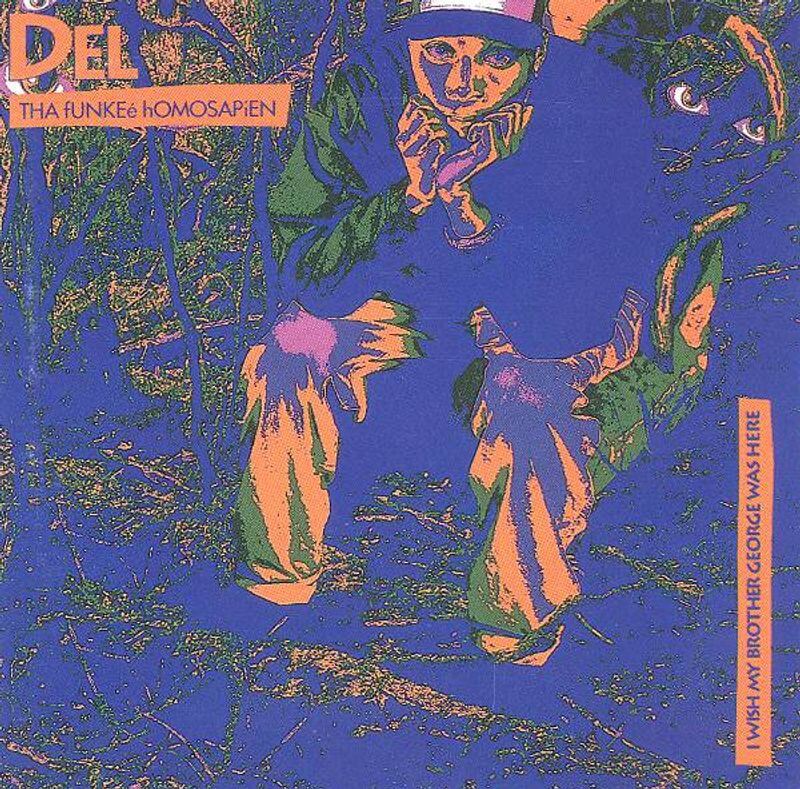
At a time when much of West Coast rap was dominated by gangsta narratives, Del the Funky Homosapien offered a decidedly different perspective. The teenage Oakland MC was also Ice Cube’s cousin, and Cube helped bring him to Elektra, serving as executive producer on his 1991 debut. Produced by Del, the Boogiemen, and Ice Cube, I Wish My Brother George Was Here is steeped in P-Funk, with thick basslines, playful samples, and cartoonish touches that suit Del’s eccentric personality.
Del prefers everyday observations and absurd humor to street-level posturing. “The Wacky World of Rapid Transit” turns the frustrations of public transportation into an entertaining narrative, while “Sleepin’ on My Couch” tackles the familiar annoyance of friends who overstay their welcome. “Mistadobalina” became the album’s signature track, driven by a memorable groove and Del’s elastic delivery. “Dr. Bombay” and “Sunny Meadowz” add to the record’s playful, psychedelic atmosphere.
The album helped introduce an alternative voice in West Coast Hip Hop, although Del was reportedly dissatisfied with the finished product, feeling that its P-Funk direction did not fully reflect his developing musical interests. His later work with Hieroglyphics would take him into more abstract, jazz-influenced territory. Even so, I Wish My Brother George Was Here has considerable charm. Del’s unusual sense of humor, conversational storytelling, and distinctive flow make this an enjoyable debut with a personality far removed from the prevailing West Coast formulas.
26. KMD - Mr Hood

Before the masks and the Metal Face persona, there was Zev Love X. KMD’s debut introduced him alongside his brother DJ Subroc and Onyx, bringing together sharp social observations, Five Percenter references, and an offbeat sense of humour. After making an impression on 3rd Bass’s “The Gas Face,” the group secured a deal with Elektra and delivered an album that shares some of De La Soul’s playful spirit while pursuing its own lyrical interests.
DJ Subroc’s production draws on funk and jazz, built around loose, sample-heavy arrangements that give Mr. Hood a warm, slightly rough-edged sound. Zev Love X already has the wordplay, inventive rhymes, and conversational wit that would distinguish his later work. “Peachfuzz” is an immediate highlight, while “Who Me?,” “Humrush,” and “Trial N Error” capture the group’s lively chemistry. “Nitty Gritty,” featuring Brand Nubian, adds another welcome dose of crew energy.
The recurring appearances of Mr. Hood, whose recorded voice provides a running thread through the album, allow KMD to address racial stereotypes with humour and pointed commentary. The group’s name, Kausing Much Damage, reflects its commitment to positive change. Mr. Hood lacks the musical refinement of MF DOOM’s later work, but its warmth, imagination, and youthful charm make it a compelling first chapter in the story of one of Hip Hop’s most original artists.
27. UMC's - Fruits Of Nature

Haas G and Kool Kim brought a sunny, playful alternative to the harder-edged New York rap taking shape in 1991. The Staten Island duo’s debut draws on the Native Tongues tradition, pairing clever wordplay and positive messages with melodic jazz and funk-based production. Haas G and RNS supply much of the music, built around warm basslines, crisp drums, and bright samples.
The chemistry between the two MCs is the album’s greatest asset. They trade lines with infectious energy and rhythmic precision, particularly on “Blue Cheese” and the underground hit “One to Grow On.” “Morals” and “Never Never Land” underline their commitment to individuality and self-respect, while “Jive Talk” brings more of their playful side. Fruits of Nature occasionally leans too heavily on its cheerful formula, but the duo’s lively performances and knack for intricate rhymes keep the music engaging. It’s an appealing reminder of the creative diversity of early ’90s New York Hip Hop.
28. 3rd Bass - Derelicts Of Dialect

3rd Bass sharpened their attack on pop-rap and cultural appropriation with their second and final album. MC Serch, Pete Nice, and DJ Richie Rich bring plenty of lyrical dexterity and irreverent humour, backed by an impressive production lineup that includes Prince Paul, Sam Sever, and the Stimulated Dummies. The music draws on dense funk and jazz samples, with the quirky arrangements and skits recalling the Native Tongues approach.
“Pop Goes the Weasel,” a pointed attack on Vanilla Ice, became the album’s biggest hit, its Peter Gabriel sample giving the track an ironic pop appeal. Elsewhere, “Derelicts of Dialect,” “Portrait of the Artist as a Hood,” and “Ace in the Hole,” featuring KMD, offer a better sense of the trio’s lyrical ambitions. The latter also features an early appearance by Zev Love X, later known as MF DOOM.
The skits occasionally interrupt the flow, and the MCs’ performances don’t always match the quality of the production. Still, Derelicts of Dialect is an entertaining, musically rich snapshot of Hip Hop wrestling with its growing mainstream appeal.
29. Digital Underground - Sons Of The P

Digital Underground took their Parliament-Funkadelic obsession to another level on their second album. Shock G and the Underground Production Squad build a richer, more cohesive funk-rap experience, with George Clinton himself joining the group on the nine-minute title track. Where Sex Packets often thrived on unpredictable humour and novelty, Sons of the P settles into extended grooves and elaborate arrangements.
“The DFLO Shuffle” sets the mood with loose rhythms and familiar comic energy, while “Heartbeat Props” pays tribute to Hip Hop’s innovators over a thick Funkadelic groove. “Kiss You Back” turns the group’s funk fixation into an irresistible pop-rap single, and “No Nose Job” uses Humpty Hump’s absurd persona to poke fun at Black celebrities chasing conventional beauty standards. “Good Thing We’re Rappin’” closes the record with an elaborate Humpty Hump origin story.
Although Sex Packets remains the group’s best-known release, Sons of the P is the more cohesive statement. Digital Underground sound entirely at home in Clinton’s universe.
30. Nice And Smooth - Ain't A Damn Thing Changed

Greg Nice and Smooth B built their appeal around contrasting personalities, and their second album makes excellent use of that chemistry. Greg’s animated delivery, playful ad-libs, and unpredictable rhythms bounce off Smooth B’s relaxed, melodic flow. The duo also handle most of the production, drawing on soul, funk, and rock samples to give the record a lively, accessible sound.
“Hip Hop Junkies” is an immediate highlight, driven by an infectious groove and the bassline from David Bowie’s “Fame.” “How to Flow” is another showcase for their verbal interplay, while “Down the Line” brings together several MCs, including Gang Starr’s Guru. The biggest departure is “Sometimes I Rhyme Slow,” which flips Tracy Chapman’s “Fast Car” into a surprisingly affecting account of addiction and personal struggle.
“Cake & Eat It Too” leans toward New Jack Swing, and a few album cuts are less memorable, but the duo’s chemistry carries the record. Ain’t a Damn Thing Changed captures Nice & Smooth at their most engaging.
31. MC Lyte - Act Like You Know

MC Lyte took a more melodic direction on her third album, expanding her production team beyond the familiar Audio Two and King of Chill. Wolf & Epic supply much of the smoother, R&B-influenced material, while the 45 King and other established collaborators keep a harder Hip Hop edge in the mix. The shift makes for an uneven listen, but Lyte’s writing and commanding delivery remain intact.
“When in Love” leans into New Jack Swing, while “Poor Georgie” uses an engaging narrative about a troubled womanizer to bring Lyte’s storytelling skills to the fore. “Eyes Are the Soul” tackles teenage pregnancy, addiction, and AIDS with characteristic directness. On “Kamikaze,” she turns her attention to rappers who favor empty entertainment over substance, while “Search 4 the Lyte” brings back the harder attack of her earlier work.
The production lacks the consistency of Lyte as a Rock and Eyes on This, but Lyte’s versatility makes Act Like You Know an interesting, if uneven, turn in her career.
32. Tim Dog - Penicillin On Wax

Tim Dog made his frustrations with the growing dominance of West Coast rap impossible to ignore on his debut. The Bronx MC directs most of his anger at N.W.A, DJ Quik, and Compton in general, turning regional rivalry into the album’s central theme. “F**k Compton” is the obvious centerpiece, a blunt, provocative attack that became one of the defining diss records of its era.
The production gives the record much of its appeal. Ultramagnetic MCs affiliates Ced-Gee, Moe Love, and TR Love contribute hard, sample-heavy beats that suit Tim Dog’s booming voice and confrontational delivery. “Step to Me” and “Bronx N***a” are particularly strong examples of the album’s rugged New York sound. Kool Keith also makes uncredited appearances on “I Ain’t Havin’ It” and “Secret Fantasies,” adding some welcome eccentricity.
The anti-Compton fixation wears thin across twenty tracks, and the frequent skits do little to improve the flow. Tim Dog is no technical match for the era’s leading lyricists, either. Still, Penicillin on Wax is an entertaining, abrasive document of a moment when regional tensions in Hip Hop were becoming impossible to contain.
33. Slick Rick - The Ruler's Back

Slick Rick recorded The Ruler’s Back under extraordinary pressure. Facing a prison sentence, he was released on bail to make new music, completing the album in a matter of weeks before beginning his five-year term. The circumstances are audible in the record’s restless energy. Rick’s delivery is faster and less measured than on The Great Adventures of Slick Rick, and the production occasionally sounds as if it needed more time in the studio.
There are still flashes of his storytelling brilliance. “I Shouldn’t Have Done It” turns a tale of jealousy and infidelity into an engaging narrative, while “Top Cat” finds Rick rapping from the perspective of an alley cat. “King” and “Slick Rick – The Ruler” provide the familiar boasts and character, while “Venus” and “Runaway” venture into less convincing melodic territory.
The album lacks the precision of its predecessor, but its hurried, unpredictable character has its own appeal. The Ruler’s Back catches one of Hip Hop’s greatest storytellers at a particularly turbulent crossroads.
34. Poor Righteous Teachers - Pure Poverty
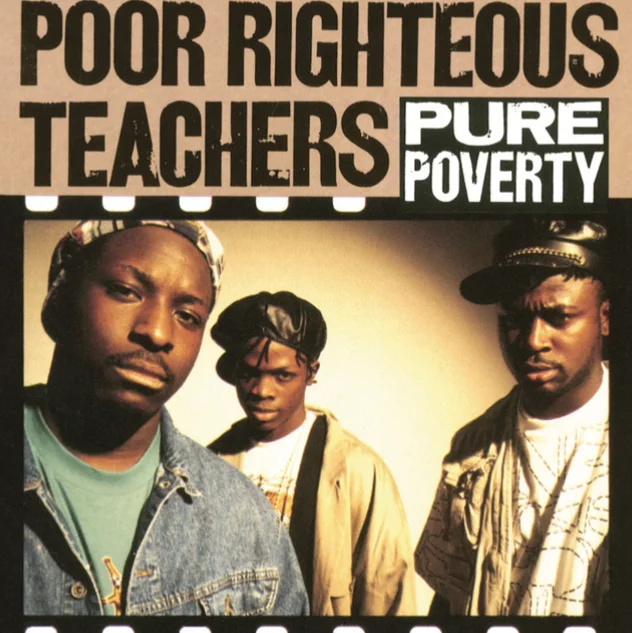
Poor Righteous Teachers continued their exploration of Five-Percent Nation teachings on their second album, with Wise Intelligent delivering lessons on Black identity, cultural awareness, and self-determination through his remarkably agile flow. Tony D handles the production throughout, favoring spare, funky loops and hard drum breaks that leave plenty of room for the lyrics.
The Trenton group’s reggae and dancehall influences are even more pronounced here. Wise Intelligent frequently adopts ragga-inspired cadences, giving tracks like “Easy Star” a Jamaican flavor that sets them apart from much of the East Coast rap of the period. “Shakiyla [JRH]” and “Methods of Droppin’ Mental” bring his rapid-fire delivery to the forefront, while “Each One Teach One” reinforces the group’s educational mission.
The dancehall styling occasionally becomes overbearing, but the combination of Tony D’s stripped-down production and Wise Intelligent’s verbal dexterity gives Pure Poverty a character firmly rooted in PRT’s New Jersey identity.
35. OG Style - I Know How To Play Em

O.G. Style offered a different perspective on the Rap-A-Lot sound with I Know How to Play ’Em. The Houston duo of The Original E and DJ Boss favored funk-driven beats and an East Coast-influenced approach, giving the record a lighter touch than much of the label’s harder-edged output.
The Original E has a clear, assured delivery, while DJ Boss builds the tracks around crisp drums, funky samples, and well-placed scratches. “Sucker” uses a simple call-and-response technique, with Boss repeating the ends of E’s lines, and “The ‘E’” gives the MC room to demonstrate his breath control over a more intricate beat. “Funky Payback” and “Listen to the Drum” lean into the duo’s funk influences.
“Catch ’Em Slippin’” is the standout, gradually building from a bare drum pattern into a fuller groove. “10 B 3” and “Power” take a harder turn, while “Ain’t We Funky” closes things on a lighter note. An interesting, overlooked entry in early Houston Hip Hop.
36. Silver Bullet - Bring Down The Walls No Limit Squad Returns
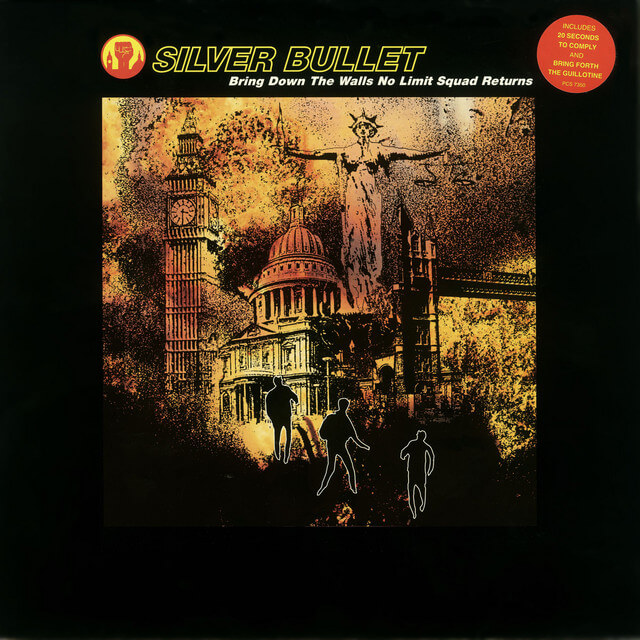
Silver Bullet’s Bring Down The Walls No Limit Squad Returns packs ten tracks of uncompromising energy into a compact, fiercely concentrated record. DJ Moe’s production draws on distorted drums, ominous strings, funk breaks, and dramatic film samples to create a sound that is as theatrical as it is aggressive. The opening lift from RoboCop sets the tone: this is a dystopian world where every beat seems to announce an impending confrontation.
“20 Seconds To Comply” and “Bring Forth The Guillotine” are among the album’s most forceful moments, driven by pounding basslines and frenetic rhythms. Silver Bullet matches that intensity with a machine-gun delivery, his sharply articulated London accent cutting through the dense production. On “Undercover Anarchist” and “Legions of the Damned,” he pushes his vocal performance into almost breathless territory, giving the tracks an urgency that suits their menacing atmosphere.
There are more unexpected touches beneath the aggression. “Raw Deal” and “Guns of Mind Alone” weave in inventive sample choices, while the instrumental “He Spins Around” gives DJ Moe room to demonstrate his knack for layered, hypnotic loops. The result is a distinctive entry in the early Britcore movement, driven by a combination of breakneck rhythms, cinematic production, and Silver Bullet’s commanding presence.
37. Schoolly D - How A Black Man Feels

By 1991, Schoolly D was operating in a Hip Hop landscape that had moved well beyond the stripped-down sound and blunt street narratives that made his name. How a Black Man Feels, his first album for Capitol Records, finds the Philadelphia rapper reaching for a broader political perspective while retaining the abrasive minimalism of his earlier work. KRS-One contributed to the production, which leans on hard drum-machine patterns, distorted textures, and funk samples rather than chasing the increasingly polished sound of the period.
“King of New York,” originally associated with Abel Ferrara’s film of the same name, and “Original Gangster” deliver the familiar Schoolly D menace. The title track and “Peace to the Nation” turn toward Black identity, racism, and life in the inner city, although Schoolly’s political arguments rarely match the precision of his more accomplished contemporaries. “Where’d You Get That Funk From” adds some welcome groove to an otherwise stark collection.
The shift in subject matter gives the record an interesting place in Schoolly’s catalogue, even if the writing and production do not consistently keep pace with the ambition.
38. Terminator X - Terminator X & The Valley Of Jeep Beets

Public Enemy’s mysterious DJ steps out from behind Chuck D and Flavor Flav on Terminator X & The Valley of the Jeep Beets, a guest-heavy project built around booming bass, hard drum loops, and his distinctive scratching. The title points to the car-shaking low end that drives much of the record, while the production carries some of the dense, abrasive character associated with the Bomb Squad, with a more direct focus on bass-heavy grooves.
“Buck Whylin’” is the center piece. Chuck D and Sister Souljah bring plenty of force to a track that suits the album’s confrontational approach. Elsewhere, Terminator X gives a collection of lesser-known acts room to work, including Bonnie ’N’ Clyde on “Homey Don’t Play Dat,” the Juvenile Delinquentz, and Spacey B. Experience on “Run That Go-Power Thang.” “DJ Is the Selector” and “Back to the Scene of the Bass” keep the emphasis on rhythm and turntable work. The results vary with the guest performances, but Terminator X’s cuts and scratches give this DJ-led showcase its own identity.
39. Stetsasonic - Blood, Sweat And No Tears

Stetsasonic’s third album finds the Brooklyn group continuing to explore the possibilities of their Hip Hop band format, bringing live instrumentation, samples, and a variety of production approaches together. With Prince Paul, Daddy-O, and Bobby Simmons among the contributors, Blood, Sweat & No Tears moves between hard-edged rap, playful storytelling, and more melodic material. That variety gives the record character, although the different directions sometimes pull against each other.
“No B.S. Allowed” puts Daddy-O, Wise, and Delite in a more direct lyrical mode, while “Speaking of a Girl Named Suzy” draws on the group’s lighter narrative instincts. Prince Paul’s contributions add some welcome unpredictability, particularly on the title track and the instrumental “Paul’s a Sucker.” “Ghetto Is the World” brings a more serious perspective, and “Go Brooklyn 3” reconnects with the group’s borough identity. The cassette and CD editions also differ in their track selections.
Blood, Sweat & No Tears lacks the consistency of On Fire and In Full Gear, but its musical curiosity and willingness to take different routes make for an interesting final chapter.
40. D Nice - To Tha Rescue

D-Nice followed his successful solo debut with a record that finds him negotiating between Bronx boom-bap and a more accessible early-’90s sound. He handles much of the production himself, with additional contributions from Skeff Anselm, Carl Bourelly, and Naughty By Nature. The results are uneven, but the strongest tracks have plenty of character.
The title track is a highlight, built around a bouncy piano loop and sharp battle rhymes. “25 ta Life” takes a smoother route, with a jazzy mid-tempo groove and saxophone from Vincent Henry. “Time to Flow,” produced by Naughty By Nature, is another standout, although Treach’s fierce guest verse threatens to overshadow the host. KRS-One joins D-Nice on “Rhymin’ Skills,” while Too $hort brings a distinctly West Coast flavor to “Check Yourself.” The R&B-leaning “Get in Touch With Me” is less convincing. To Tha Rescue has its share of strong moments, even if D-Nice never quite finds a consistent direction.
Honorable Mentions
- Downtown Science – Downtown Science
- Tony D – Droppin Funky Verses
- Big Daddy Kane – Prince Of Darkness
- Kool Moe Dee – Funke Funke Wisdom
- DJ Jazzy Jeff & The Fresh Prince – Homebase
- Biz Markie – I Need A Haircut
- J Rock – Streetwize
- Heavy D & The Boyz – Peaceful Journey
- Sway & King Tech – Concrete Jungle
- Latin Alliance – Latin Alliance
- 2nd II None – 2nd II None
- Dream Warriors – And Now The Legacy Begins
- Convicts – Convicts
- Who Am I? – Addictive Hip Hop Muzick
- Hi-C – Skanless
- The Genius – Word From The Genius
- AMG – Bitch Betta Have My Money
- Tuff Crew – Still Dangerous
- Professor X – Years Of The 9, On The Blackhand Side
- Master P – Get Away Clean
- Kid Capri – The Tape
- Tone-Lōc – Cool Hand Lōc
- The Terrorists – Terror Strikes: Always Bizness, Never Personal
- Gangsta Pat – No.1 Suspect
- Royal Flush – 976 Dope
- PHD – Without Warning
- Greyson & Jasun – Sweatin Me Wet
- MC Breed & DFC – MC Breed & DFC
- Maestro Fresh Wes – Black Tie Affair
- Marley Marl – In Control 2
- Lifers Group – Lifers Group
- Yo Yo – Make Way For The Motherlode
- Yomo & Maulkie – R U Experienced
- Two Kings In A Cipher – From Pyramids To Projects
- 2 Black 2 Strong MMG – Doin’Hard Time On Planet Earth
- Sylk Smoov – Sylk Smoov
- KMC – Three Men With The Power Of Ten
- Young Black Teenagers – Young Black Teenagers
- Def Jef – Soul Food
- Craig G – Now, That’s More Like It
- Kokane – Addictive Hip Hop Muzick
- Above The Law – Vocally Pimpin’
- Queen Latifah – Nature Of A Sista
- Greyson & Jason – Sweatin’ Me Wet
- Success-n-Effect – Back-n-Effect
- Maestro Fresh Wes – The Black Tie Affair
- Raw Fusion – Live from the Styleetron
- Son Of Bazerk – Bazerk Bazerk Bazerk
- Rappin’ Is Fundamental – The Doo-Hop Legacy
- Hammer – Too Legit to Quit
- Nikki D – Daddy’s Little Girl
- Diamond Shell – The Grand Imperial Diamond Shell
- Marley Marl – In Control Volume II (For Your Steering Pleasure)
The 1991 Hip Hop landscape was remarkably diverse. New York was entering a period of creative expansion, with artists such as A Tribe Called Quest, De La Soul, Gang Starr, Main Source, and Black Sheep pushing production and lyricism in new directions. Meanwhile, the West Coast was asserting its own identity through the uncompromising work of Ice Cube, Ice-T, Cypress Hill, DJ Quik, and the artists coming out of Los Angeles and Compton. Houston, Miami, Oakland, London, and other scenes added their own voices to a year that refused to be defined by a single regional sound or approach.
The 40 albums on this list only scratch the surface. From politically charged statements and street-level narratives to inventive sample-based production and adventurous alternative Hip Hop, 1991 offered an extraordinary range of music. Many of these records have since become touchstones, while others deserve a much wider audience. Taken together, they capture a year when Hip Hop was expanding in every direction, with artists across the map finding new ways to make their voices heard.