

Redman raps like someone who stopped arguing with his own impulses years ago and decided to enjoy them. His voice jumps registers mid-bar. It cracks into a yelp, drops to a mutter, then snaps back onto the snare before the listener has caught up. That elasticity drives his whole catalogue, and it explains why his records have aged better than so much Golden Age bravado.
Redman came out of Newark, New Jersey, through EPMD’s Hit Squad, and the schooling he got from Erick Sermon is all over his early work: slow, heavy funk loops, basslines pulled from the P-Funk universe, and drums that leave space for an MC to roam. On Whut? Thee Album he took that template and made it stranger. The grooves are fat and unhurried, and his vocals ricochet off them in character voices, skits and asides that sound half-improvised. When he took more control of the boards on later records, the sound grew murkier and more personal, with darker basslines and a druggy haze hanging over the funk.
Most punchline rappers treat the joke and the technique as separate jobs. Redman doesn’t. A ridiculous image lands with the same rhythmic precision as a dense run of internal rhymes, and the absurdity never lets the tension out of a track. He can be gruff and menacing in one verse and cartoonish in the next, and the switch never sounds like a costume change. It sounds like the same restless personality turning its head.
Method Man brought out another side of him. The two trade lines with the looseness of a pair who share a sense of humor and a taste for off-kilter cadences, finishing each other’s bars and talking over each other’s ad-libs. The Blackout! records turned that chemistry into a franchise, and many of Redman’s sharpest moments come when someone is pushing back at him.
Ranking his albums means weighing very different virtues against each other. Some are built on Sermon-era funk, others on the synth-driven bounce of the Rockwilder years. Some are tightly sequenced, others sprawl and wander. We judge the later releases on their own terms here, without measuring each one against the mid-’90s.
Across all eleven, he has never confused being serious with being good.
11. Reggie (2010)

Redman has always played characters, but they lived inside his verses: a voice here, a skit there, a persona that showed up for eight bars and left. Reggie tries to build a whole album around one, presenting Reggie Noble as a separate figure from the Funk Doc. Stretched across a full record, the idea goes slack. Few of the songs give the alter ego a distinct point of view, so what’s meant as a new character mostly sounds like Redman in a slightly different outfit, unsure what to do with it.
The Auto-Tune is where the album loses its footing most clearly. By 2010 the effect was everywhere, and Redman’s experiments with it sound like a nod to the moment that doesn’t fit his instincts. His strength is the uneven texture of his voice, the yelps and growls and sudden shifts in pitch, and pitch correction irons all of that flat. The beats don’t help much either. Too many of them sit in a bland middle ground, short of the grimy funk that made his name and not committed enough to sound like a deliberate change of direction.
There are still flashes of the rapper underneath. His timing on a punchline is intact, and when a beat gives him room his delivery tightens and the jokes start landing in rhythm again. “Tiger Style Crane” is the clearest example, a late-album jolt of the old energy where he sounds like he’s rapping for his own amusement rather than following a brief. Coming that close to the end, it mostly shows how rarely the rest of the record reaches that pitch.
Reggie has the air of an album made to close an account: a contractual chapter wrapped up before he moved on to whatever came next. A collection of half-ideas, carried along by a rapper too skilled to make anything completely dull. | 5/10
10. Mudface (2015)

Thirty-five minutes is a short stay for a rapper whose best albums sprawl. Redman’s classic records work partly because of the clutter: skits, interludes, detours and odd little sketches that build a world around the songs and give the bangers something to stand against. Mudface has no room for any of that. It arrives, throws a handful of punches and leaves, and the result plays like a set of loose sessions more than a record with a shape of its own.
The production leans on traditional boom-bap, with dusty loops and straight-ahead drums that nod back to an earlier era without trying to recreate the funk of his ’90s peak. When the beat has some weight, Redman locks into it. “Bars” is the best of these moments. The drums knock, and he attacks the track with clipped, quick-witted lines and the bark-and-snap delivery that has always been his trademark, taking shots at the industry and slipping in a few glimpses of his own life between the jokes. At his age and this far into his career, that kind of sharpness still counts for a lot.
The trouble is how quickly the record loses that grip. “Getting’ Inside” and “Go Hard” sag in the middle of the running order, with flat beats and verses that sound dashed off, as if he had pressed record before he had a reason to. On a longer album those dips might get absorbed. On a record this compact, two weak tracks take up a large share of the whole, and the album never recovers its momentum.
What Mudface offers is a reminder that his instincts haven’t left him. The timing, the humor and the voice are all intact when he’s engaged. What it lacks is the ambition that made his records feel lived-in. As a stopgap it does its job, keeping the Funk Doc’s name in circulation and proving his reflexes still work, but it leaves the impression of an artist warming up for something he never quite got around to recording here. | 6/10
9. Malpractice (2001)
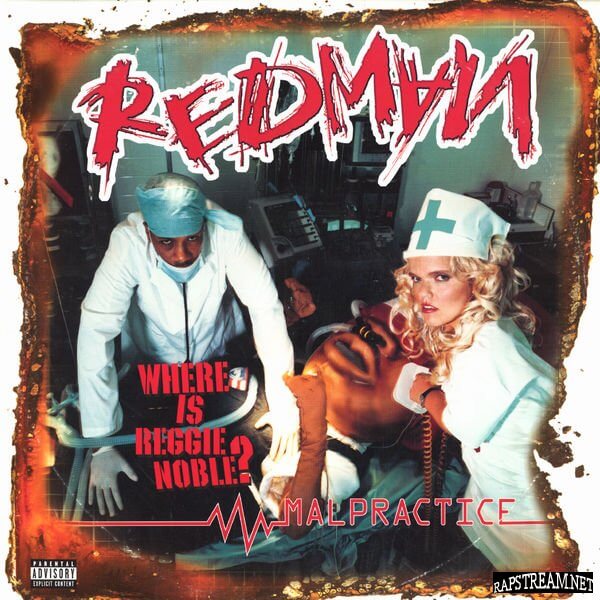
By 2001 Redman had a formula, and Malpractice follows it closely enough to read like a set of instructions. Sticky funk loops, rubbery basslines, a hook built for shouting along, skits stitched between the songs: every element of his sound is present and correct, and very little of it has moved. Erick Sermon is back among the producers, and his touch is unmistakable, but the beats lean on moves he and Redman had already perfected years earlier. Where those grooves once sounded loose and surprising, here they sound like a house style.
Redman himself is in fine technical form. His flow is nimble, his punchlines land on the beat, and his voice still has that elastic quality that lets him lurch between menace and slapstick in the space of a bar. What’s missing is the sense that he’s pushing himself. Too many verses revisit the same subjects in the same cadences, and the performances tend to settle into a comfortable groove when they should be swerving. “Let’s Get Dirty” is the exception that proves how good he is when everything clicks, a bouncing party record where the energy is real and the jokes come fast enough to keep the track moving.
The guest list brings colour. Method Man, George Clinton and Missy Elliott all pass through, and each adds a different flavour, from Meth’s familiar back-and-forth to Clinton’s P-Funk lineage, which makes his appearance a fitting nod to the music Redman built his career on. None of them changes the album’s basic problem, though. They decorate the formula without bending it.
The skits are where the formula curdles. On his ’90s records, the interludes sounded spontaneous, like overheard moments from a chaotic studio. On Malpractice they’re longer, more frequent and more effortful, and the humor that once seemed tossed off now sounds staged. They’re amusing on a first listen. By the third, they’re the tracks you skip, and every skip interrupts whatever momentum the songs before them had built.
Malpractice is the sound of a great act playing its greatest hits from memory: tight, polished, and almost entirely without risk. | 6.5/10
8. Blackout! 2 (w/ Method Man) (2009)

Ten years separate the two Blackout! albums, and the sequel wisely makes no attempt to pretend otherwise. Method Man and Redman sound like two veterans who know each other’s habits by heart, and the record works best when it lets them lean into that familiarity rather than chase the manic energy of 1999. Their rapport is the album’s foundation: Red’s yelping, rubber-faced delivery ricocheting off Meth’s smoky, low-slung drawl, each one setting up the other’s punchlines like a well-drilled double act.
Pete Rock gives them an ideal starting point. “A-Yo” rides one of his warm, layered soul loops, the kind with a thick bottom end and filtered samples drifting across the top, and the pair pass the mic back and forth with an ease that makes the track sound tossed off in the best sense. Erick Sermon takes a sparser approach on “Dangerous MCees,” stripping the beat down to a bare funk skeleton of drums and bass so the intricate flows carry the weight. Between those two tracks, the album establishes a clear identity: grown-up boom-bap with a stoner’s sense of humor and a lot of chest-thumping in between.
“Four Minutes to Lock Down” is the high point. Raekwon and Ghostface arrive to turn the track into a Wu-Tang summit, and the four MCs push each other through verses that get denser and more aggressive as the song goes on. It’s the most purely lyrical moment on the record and a reminder of how naturally Redman slots into the Shaolin orbit.
The back half is where the focus slips. “I Know Sumptn” reaches for a radio-friendly sheen with Auto-Tuned vocals and glossy hooks, and the move cuts against the scuffed, earthy sound the first half builds so carefully. “City Lights” handles the reach for contemporary sounds more gracefully. Bun B’s heavy Southern drawl and the hypnotic, slow-rolling beat open the duo up to a different regional style, and they adjust their pace to fit without losing their own character.
Blackout! 2 lacks the original’s sense of discovery, which was inevitable for a sequel made a decade later. What it offers instead is the pleasure of watching two old partners fall back into step, and on its best tracks that comfort is the whole appeal. | 7/10
7. Red Gone Wild: Thee Album (2007)
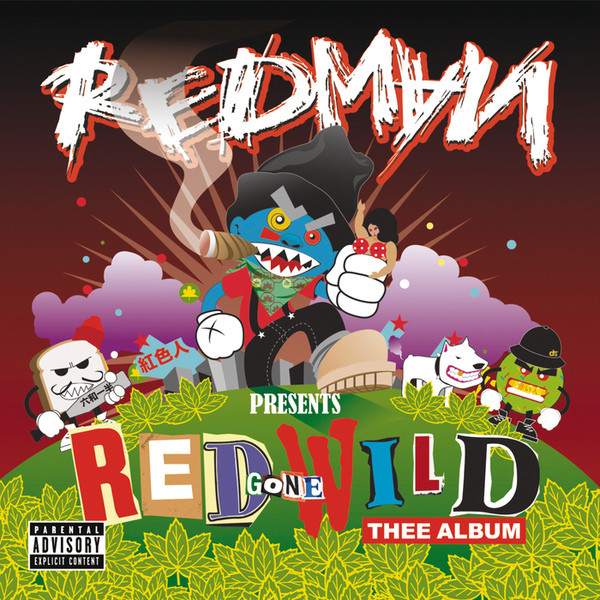
Timbaland, Scott Storch and Pete Rock all turn up in the credits of Red Gone Wild, and the three names tell the album’s story before a note has played. Redman came back from a six-year absence with one foot in the funk that built his reputation and the other in the expensive, radio-ready sound of the mid-2000s, and over 74 minutes the record keeps switching between them. The title nods to his debut, and much of the music does too, but the album lacks a fixed centre of gravity.
When the newer sound works, it works well. Timbaland’s beat on “Put It Down” is all forward motion, a clipped, insistent rhythm that pushes Redman into a tighter, more percussive flow than usual, and he rides it like someone who has been waiting years for a new challenge. “How U Like Dat” carries the same confidence. Scott Storch’s work on “Freestyle Freestyle” mixes funk with glossy, futuristic loops, and Redman treats the track like a trampoline, bouncing lines off it at odd angles. On these songs he adapts to the era on his own terms, keeping the grit in his voice while the production around him gets cleaner.
Elsewhere, the mix of styles works against him. “Gimme One” is a letdown despite Pete Rock’s involvement, a flat track that Redman fails to lift. “Merry Jane” with Method Man offers a flicker of their old routine without reaching the heights of their best work together. The bigger-name guests mostly underdeliver: Erick Sermon, Snoop Dogg and Nate Dogg all appear, and none of them leaves much of a mark. Oddly, the album’s lesser-known contributors bring sharper energy than the stars.
That inconsistency is the real reason the running time becomes a burden. Each change of production style resets the mood, and by the final stretch the album has started over so many times that its momentum is gone. Redman’s humor and verbal agility carry a lot of the weight, but they can’t give the record a shape.
For fans who had waited since 2001, Red Gone Wild offered plenty of reasons to be glad he was back. It offered fewer reasons for anyone new to start listening, which made it a reunion with his base rather than a fresh pitch to the rest of Hip Hop. | 7/10
6. Doc’s Da Name 2000 (1998)

The Rockwilder beat on “I’ll Bee Dat” is pure late-’90s Def Squad: a bouncing, slightly cartoonish groove with a swagger that matches Redman’s own, and he struts across it like he owns the block. Three near-flawless albums had made him one of the sharpest and funniest voices in Hip Hop, and Doc’s Da Name 2000 turned that reputation into his first platinum record. Its best songs earn the plaque. The problem is how many other tracks they have to share space with.
Erick Sermon handles most of the production, and the core of the album is the thick, funk-rooted sound the two had refined together over the decade. Some of the most interesting moments come when the beats strip back. “Da Goodness” pairs Redman with Busta Rhymes over a minimal, futuristic track, all space and sharp edges, and the two hyperactive MCs fill it with quick switches between jokes and boasts. “Jersey Yo!” and the crowded “Cloze Ya Doorz” go the other way, digging into the rough Newark side of his persona with street-level storytelling cut through with his usual wit. “Down South Funk” and “Beet Drop” show him playing with the sound itself, testing out rhythms and textures that sit outside his usual register.
Twenty-four tracks is where the album runs into trouble, and most of the excess comes from skits. On Malpractice three years later, the interludes would sound forced. Here the issue is volume rather than quality. Some of the sketches are funny and some aren’t, but there are so many of them that the songs get buried. A strong run of tracks will build up steam, and then the next interruption arrives before the momentum can carry over. Trimmed to its musical core, this would be a lean, punchy record with very few weak spots.
His wordplay is in peak shape throughout, and his charisma holds the sprawl together better than most rappers could manage. That makes the album an odd case in his catalogue: his biggest seller is also the one where the best songs take the most digging to find. | 7/10
5. Blackout! (w/Method Man) (1999)

Two production worlds collide on Blackout!. Erick Sermon brings the heavy, bass-first funk that had powered Redman’s solo records, all fat low end and loops that strut, while RZA’s touches pull in the shadowy, off-kilter mood of Wu-Tang’s Staten Island. The album rarely sits fully in either camp, and that tension gives the hour its character: party records with something slightly sinister lurking in the corners.
The two MCs map neatly onto that split. Method Man moves slowly and deliberately, sliding behind the beat with a lazy menace that makes even his jokes sound like threats. Redman is all forward momentum, crashing into the track with sudden shouts and swerves in tone, as if trying to knock it off balance. Put them side by side and each one sharpens the other. Meth’s calm makes Red’s chaos sound wilder, and Red’s mania makes Meth’s cool sound colder. They swap bars, jab at each other and finish each other’s setups, and the back-and-forth keeps the energy high across the whole record.
“Da Rockwilder” is the obvious calling card. The beat is stripped almost to nothing, a skeletal synth line over hard, clipped drums, and the duo tear through it so quickly the song is over before it seems to have properly started. Its biggest-hit status makes sense: nothing else on the album hits with that kind of concentrated force. “Cereal Killer” works in a different register, with a creeping, haunted groove that lets Meth’s quiet menace and Red’s comic derangement play off each other like a horror movie with a laugh track. Not every experiment pays off. “Run 4 Cover” stumbles, with a beat that lacks the bite of the album’s best moments and verses that sound more routine than inspired. Those weaker spots are rare, though, and the record moves quickly enough that they barely slow it down.
The weed humor and wild-man antics are part of the appeal, but they never soften the lyricism underneath. Both men rap with real technical edge, and the tight interplay keeps the comedy anchored to the music.
Blackout! sounds like two friends who walked into the studio with no grand plan and walked out with a definition of what a duo album could be when neither member has to tone himself down. | 7.5/10
4. Muddy Waters Too (2024)
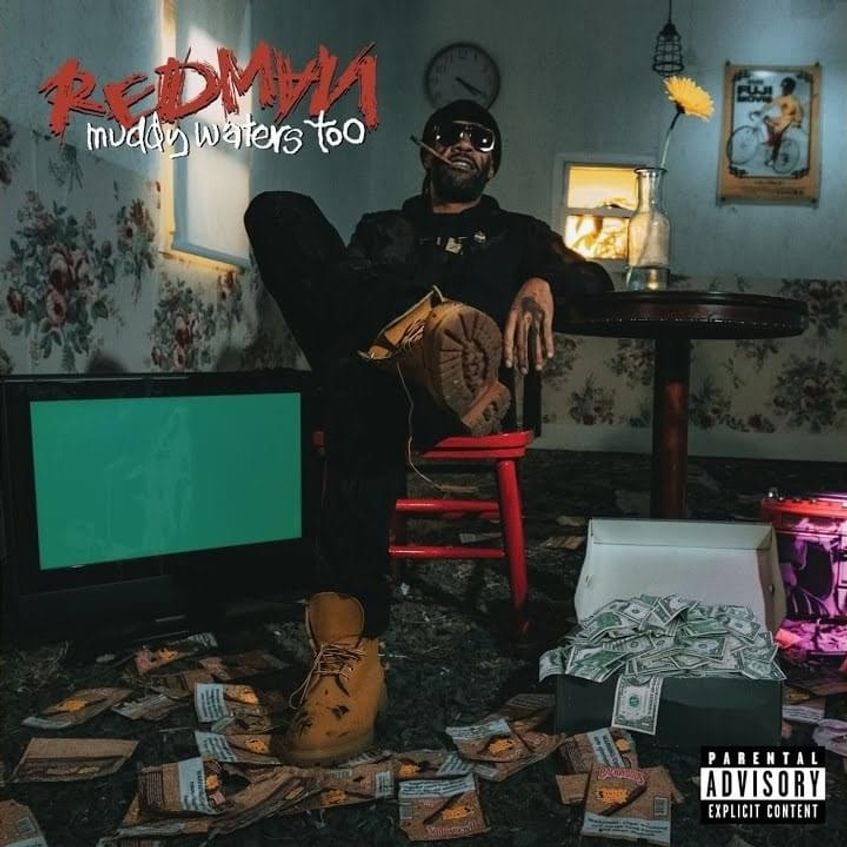
“Da F**k Goin’ On?” opens Muddy Waters Too with Redman sounding wide awake: loud, hungry and quick on the beat, as though the 28 years since Muddy Waters had been a short break. That 1996 album is the one many fans hold up as his finest, a murky, funk-soaked mix of charisma, comedy and bars, and naming a sequel after it was a serious risk. He comes remarkably close to justifying it.
The scale is the first surprise. In an era of short projects and EPs, Redman delivers 32 tracks and 80 minutes, and the album keeps its pace from start to finish. The reason is cohesion. Erick Sermon, Rockwilder, Khrysis, Rick Rock and Redman himself are among the producers, but the beats share a common grain: classic boom-bap drums and dusty funk at the base, sharpened with modern low end and the occasional trap-style hi-hat. Each style shift sounds like a turn within the same record, so the length builds momentum instead of draining it. Even the skits stay out of the way, short enough to add flavour without breaking the album’s stride.
Funk Doc Spock covers a lot of ground. “Don’t You Miss” is a soulful Jersey anthem, warm and nostalgic without going soft. “Kush,” with Snoop Dogg, slows the tempo for a stoner’s victory lap, and the two veterans sound perfectly at ease sharing the space. “Dynomite” with Sheek Louch and “Pop da Trunk” swing harder, moving between hardcore and trap-leaning beats, and Redman adjusts his flow to each one without sounding like a guest in someone else’s style. “Lite It Up” is the album’s grand gesture, a posse cut bringing in Queen Latifah, Naughty by Nature, Rah Digga and more, a roll call of East Coast history that plays as a celebration of his community.
His wordplay is as sharp as ever, and the jokes land with the timing of someone who has spent three decades perfecting them. What impresses most is the consistency. Plenty of veterans released strong records in 2024, but none sounded this comfortable at full length, and none made the case for their own legacy this convincingly.
Twenty-eight years after the original, Reggie Noble made a sequel that belongs in the same conversation, and very few rappers have managed anything like that. | 8/10
3. Whut? Thee Album (1992)
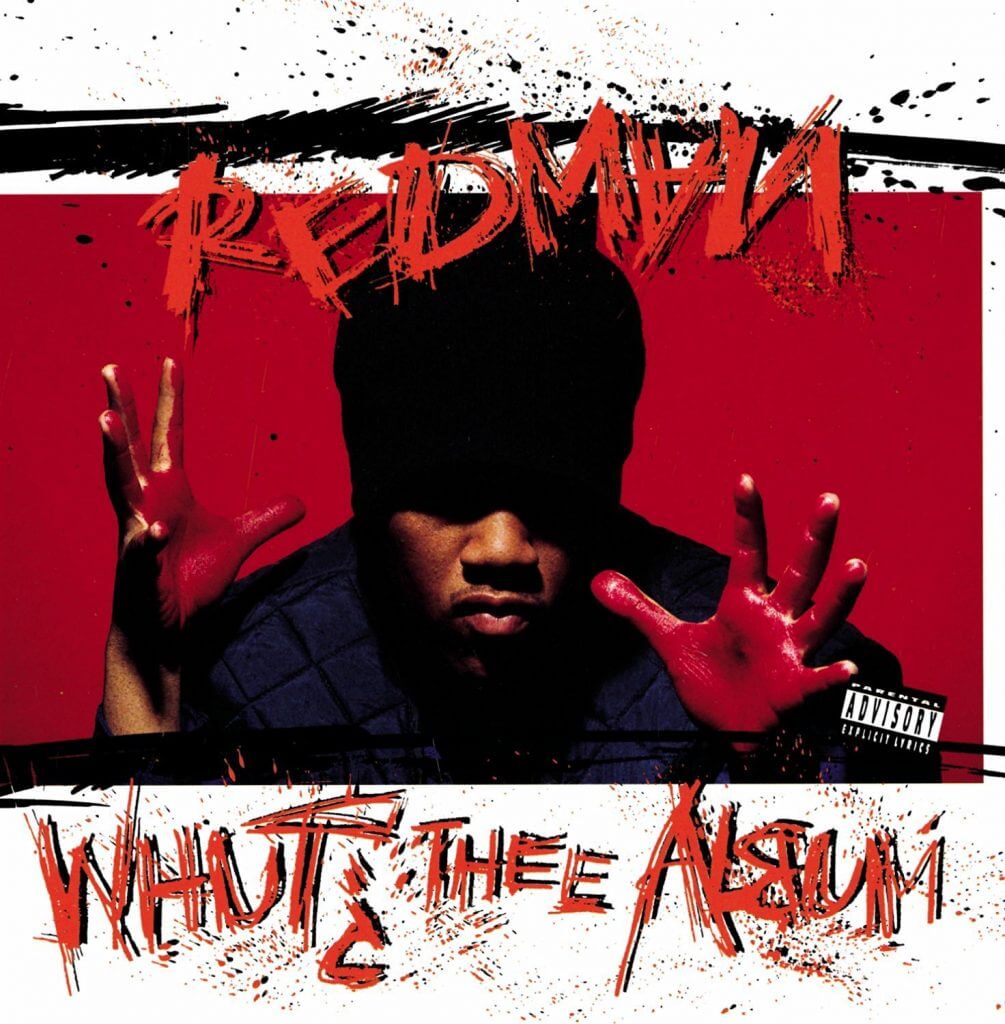
Eighteen years before Reggie tried to stretch an alter ego across a full album, Redman made the idea work in a single song. On “Redman Meets Reggie Noble” he trades verses with himself, switching voices and attitudes so sharply that the split personality becomes a punchline and a display of technique at the same time. It’s a fitting summary of his debut: a record bursting with characters, all of them played by one restless MC.
Erick Sermon produced much of the album, and his fingerprints are everywhere. The beats are built from Zapp, Parliament and the wider funk canon, with basslines that wobble and swell, talkbox echoes and drums that thump instead of crack. The mix is murky and close, as if the whole thing were recorded in a crowded basement with the windows shut. “Time 4 Sum Aksion” and “Tonight’s Da Night” are the album’s calling cards, grooves sticky enough to loop for hours with Redman bouncing across them, while “Rated R” and “Watch Yo Nuggets” lean on harder, more aggressive drums. “Blow Your Mind” eases the tempo without losing the weight. Through all of it, Sermon keeps the loops simple and lets the low end carry the swing, which leaves Redman plenty of room to move.
And he moves constantly. In a single verse he can go from a street-hardened boast to a ludicrous image and back again, his voice rising and dropping with each turn. “How to Roll a Blunt” turns a stoner’s ritual into a deadpan instructional, and it’s funny because his delivery stays so precise while the subject matter gets sillier.
The interludes are part of the album’s design. “Psycho Ward” and “Sooper Luver Interview” play like scenes from an ongoing radio serial, and the Sooperman Lover character returns in “A Day of Sooperman Lover,” a storytelling track full of comic-book excess and funky segues. Those recurring bits give the record a sense of continuity, so the jokes connect from one track to the next instead of floating free.
For an album this chaotic, Whut? Thee Album is remarkably well focused. Every skit, alias and funk loop points back to the same goal: introducing a personality too big for a single voice, which is why Redman needed so many of them. | 8.5/10
2. Dare Iz a Darkside (1994)

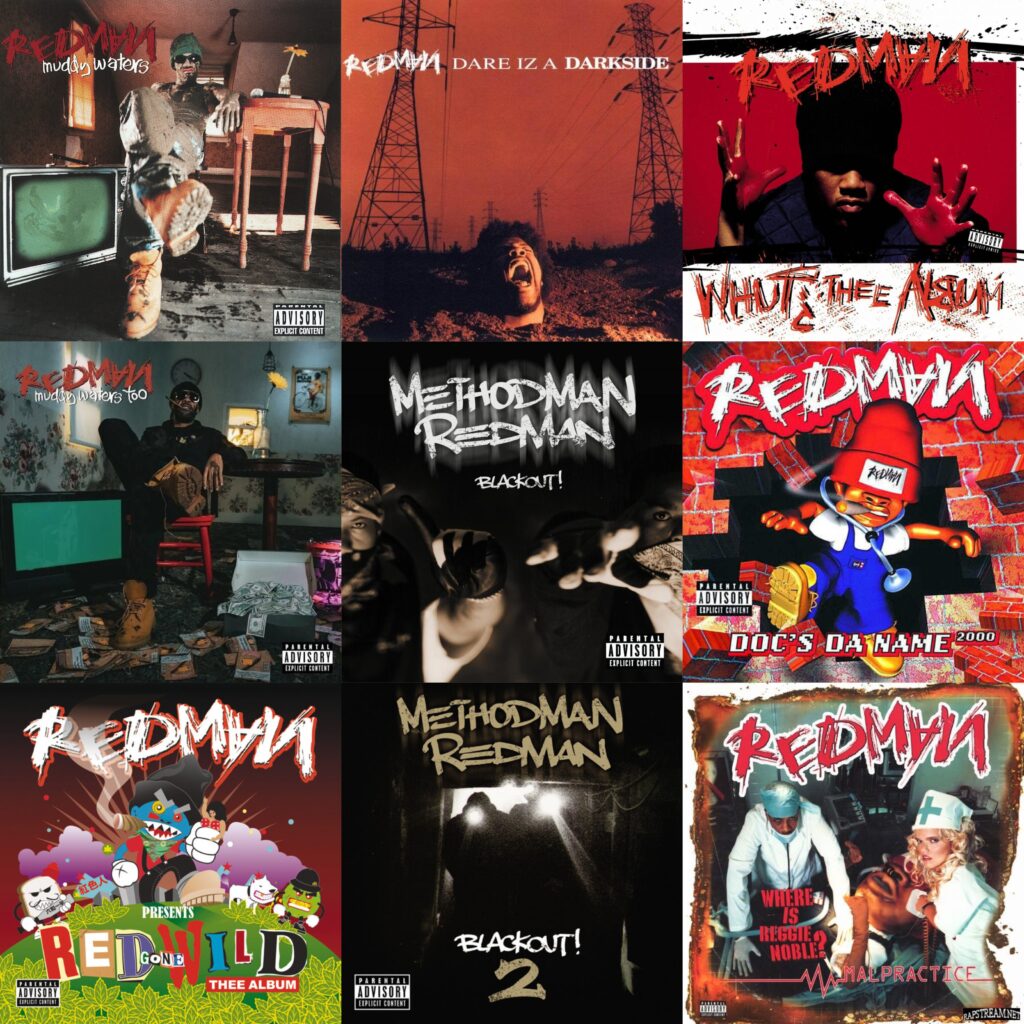
The cover tells you where this one is headed. Redman’s head pokes out of the dirt in a direct nod to Funkadelic’s Maggot Brain, and the music underneath goes looking for the same strange, psychedelic place George Clinton’s crew once explored. Dare Iz a Darkside is the most unsettling record in his catalogue, a sludgy, paranoid funk album that sounds like it was made at three in the morning by someone who hadn’t slept in days.
That impression lines up with Redman’s own account. He has said he doesn’t care for the album, connecting it to a bad headspace during the recording, and he rarely performs its songs live. Whatever it cost him, the darkness is the record’s strength. The P-Funk influence that made Whut? Thee Album bounce here turns heavy and claustrophobic. Basslines crawl along the floor, loops are sparse and smeared, and the drums land with a dull, thudding weight. “Bobyahed2dis” and “Wuditlooklike” are hypnotic in the most literal sense, repetitive grooves that lock in and refuse to let go, with Redman’s wild antics pinned down by beats as blunt as a club.
His performance fits the mood. The humor is still there, but it has turned strange and twitchy, cracking through verses that are aggressive and deranged in equal measure. On “Can’t Wait” he jokes about shifting gears like Bruce Lee on a ten-speed bike, punchlines rolling off with an audible smirk. Elsewhere his tone gets gruffer and his cadences slow to a deliberate trudge, giving whole stretches of the album an oppressive, airless quality. He never makes things easy for the listener, and the record is stronger for it. Accessibility was clearly not the goal.
What makes the album so compelling is the way the comedy, paranoia and aggression bleed into one another until they’re impossible to separate. A joke can tip into menace halfway through a bar, and a menacing verse can collapse into absurdity a few lines later. The result is dense and occasionally exhausting, and anyone coming from his brighter records may struggle with it at first.
It’s an odd fact of his catalogue that the album Redman would most like to forget is the one where he sounds most like nobody else. | 8.5/10
1. Muddy Waters (1996)

Muddy Waters takes the gloom of Dare Iz a Darkside and teaches it to dance again. The heaviness is still there in the deep basslines, the eerie melodic touches, and the late-night haze that hangs over the whole record, but the swing of Whut? Thee Album has come back with it. That balance between menace and mischief is what lifts Redman’s third album above everything else he made and secured his place in rap history.
Erick Sermon and Rockwilder are among the producers alongside Redman himself, and together they arrive at the most refined version of his sound. The drums are crisp and snappy, cutting cleanly through thick, rolling bass, and the funk and soul samples are layered with more care than on the earlier records. “Creepin’” lives up to its title, a slow, stalking groove that tightens its hold the longer it runs. “Whateva Man” is looser and more hypnotic, the kind of loop that sounds better with every pass. The beats are rugged in texture but precise in construction, which gives Redman a solid platform to launch from.
He has never rapped better. His flow shifts gear constantly, from compressed, aggressive bursts to an easy, almost conversational glide, and he moves between the two without any audible effort. “Smoke Buddah” packs surreal punchlines into a hazy, slow-burning groove, while “Pick It Up” bounces with a lighter touch and a hook built for shouting back. “Do What Ya Feel” brings in Method Man, and the way the two pass the track back and forth already hints at the partnership to come. Even in his street narratives and more personal moments, the jokes and swerves keep every verse unpredictable.
What really sets Muddy Waters apart is how well it hangs together. The skits are scattered through the running order as usual, but they’re short and in tune with the album’s mood, so they add texture instead of stalling the flow. “Da Ill Out,” the Def Squad posse cut, keeps the same grimy funk aesthetic instead of turning into a crowded victory lap, and the guests sound like part of the album’s world.
Every Redman record that followed has been measured against this one, including the sequel that borrowed its name nearly three decades later. None of them has topped it. | 9/10