

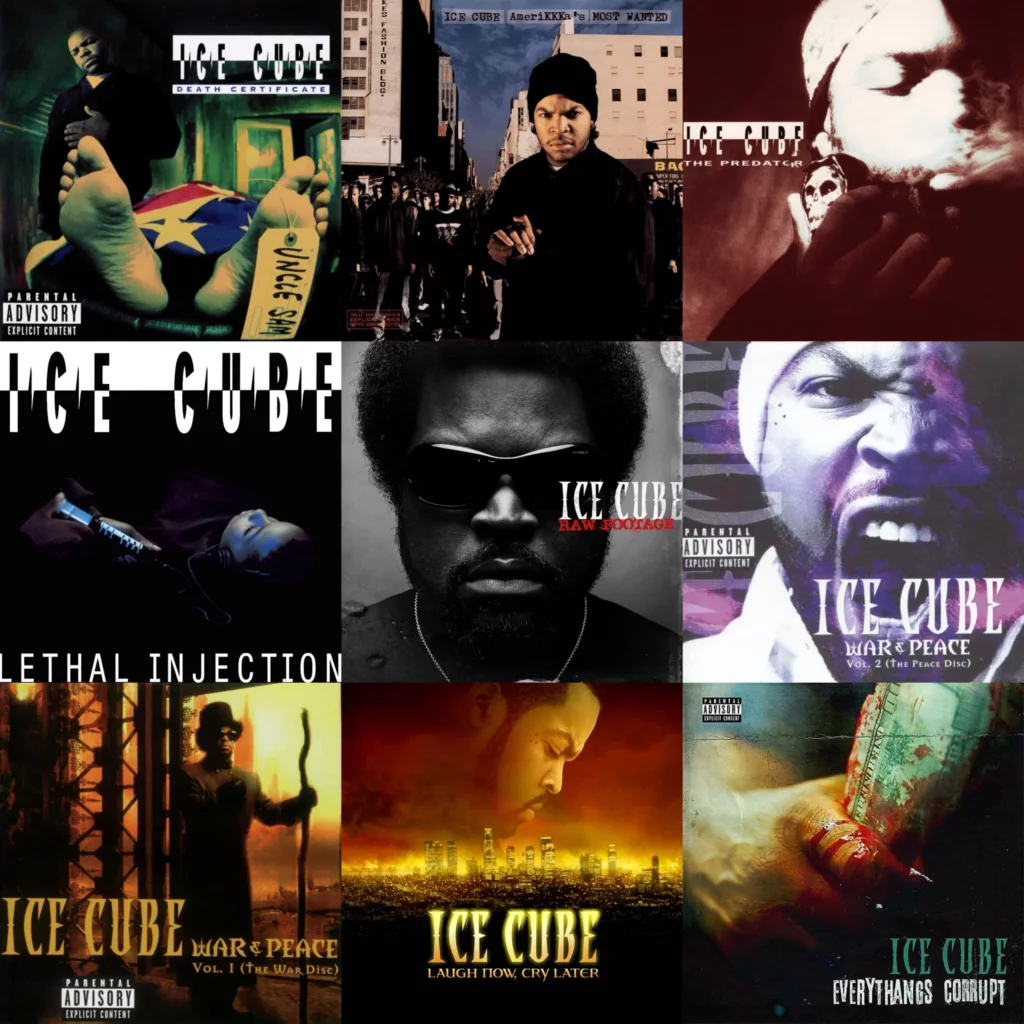
Ice Cube’s solo career began with one of the most remarkable three-album runs in Hip Hop history. After leaving N.W.A in 1989, frustrated by the group’s management and his compensation, the Los Angeles MC headed to New York to work with Public Enemy’s production team, the Bomb Squad. The result was AmeriKKKa’s Most Wanted (1990), an explosive debut that introduced a formidable solo artist with plenty to say and little interest in softening his message. Its follow-up, Death Certificate (1991), was even more confrontational, combining political commentary, street-level observation, biting humor, and some of the most uncompromising writing of its time. Then came The Predator (1992), a commercially successful record that captured Cube at the height of his popularity while retaining much of the urgency that had defined his first two albums.
Few rappers have matched the intensity and consistency of that initial run. Cube was an exceptional writer, capable of shifting between first-person street narratives, pointed social criticism, black political consciousness, and sharply drawn characters. His delivery had the authority to make even his most provocative lines difficult to ignore. Production was equally important to his early identity, from the Bomb Squad’s dense, chaotic arrangements to the harder West Coast foundations of his later work.
With Lethal Injection (1993), Cube moved toward the G-funk sound popularized by Dr. Dre, with mixed results. His musical priorities gradually shifted as filmmaking, business ventures, and collaborations with Westside Connection occupied an increasing share of his attention. Subsequent solo albums arrived less frequently, and the gap between Cube’s creative peaks and weaker material became increasingly apparent. Still, records such as Laugh Now, Cry Later (2006) and Raw Footage (2008) demonstrated that his appetite for political commentary and hard-hitting West Coast rap had not disappeared.
Ranking Ice Cube’s albums means looking beyond the extraordinary reputation of his early trilogy. His catalogue contains ambitious political statements, memorable street records, G-funk excursions, occasional returns to his harder-edged beginnings, and albums that struggle to match the standards he set himself. Some have aged considerably better than others. Here, we rank his solo studio albums from weakest to strongest, considering the quality of the music, the strength of his writing, the production, and how successfully each record captures Ice Cube at a particular moment in his career.
12. Man Down (2024)

After six years without a solo album, Ice Cube returned with Man Down, a 19-track collection that looks back toward the West Coast sound that made his name. There are flashes of the old energy here, particularly when the production leans into heavy basslines, funky synths, and hard-hitting drums. “5150” and “Break the Mirror” are among the strongest cuts, with Cube sounding focused and commanding. The latter benefits from Xzibit’s presence, while “Ego Maniacs,” featuring Killer Mike and Busta Rhymes, closes the album on a high note with three distinctive MCs trading heavyweight performances.
Unfortunately, the quality fluctuates considerably. With contributions from producers including E-A-Ski, Nottz, David Banner, Lil Jon, and Zaytoven, the album struggles to find a consistent musical direction. Some beats capture the familiar West Coast atmosphere, while others sound caught between nostalgia and contemporary rap conventions. “She’s Sanctified,” featuring Snoop Dogg, Too $hort, and E-40, squanders an impressive lineup on an underwhelming instrumental. Several other tracks suffer from repetitive writing and familiar complaints that lack the bite of Cube’s earlier social commentary.
At 61 minutes, Man Down also struggles to sustain interest through its second half. There is enough here to remind us of Cube’s formidable presence on the mic, but too much material feels routine. A handful of strong performances cannot compensate for an album that never quite finds its focus. | 5/10
11.. Man Up (2025)

Released only a year after Man Down, Man Up continues Ice Cube’s attempt to recapture the sound and attitude of his classic West Coast work. The production is stronger than expected, with slick, energetic beats from contributors including E-A-Ski, Erick Sermon, and The Mekanix. Cube sounds comfortable over these familiar grooves, even when the material gives him little to work with. There are flashes of genuine chemistry with Scarface on “Act My Age,” while “Bring Everybody” brings some welcome funk to the album’s second half.
The writing is considerably less convincing. Corny punchlines, simplistic rhymes, and tired complaints about contemporary culture crop up throughout, with the opening track setting an unnecessarily offensive tone. “Freedumb” is a more interesting detour, taking aim at artificial intelligence, surveillance, and society’s dependence on technology. “Before Hip-Hop” also finds Cube defending the culture against familiar accusations, although the argument lacks the force of his best political writing.
At 41 minutes, Man Up is less bloated than its predecessor, and its occasional bursts of energy make it entertaining in patches. Still, this is unmistakably ‘dad rap’: campy, hit-and-miss, and a long way from Cube’s creative peak. | 5/10
11. I Am the West (2010)

On I Am the West, Ice Cube makes a point of asserting his place in California Hip Hop. Released independently through Lench Mob Records, the album gave him the freedom to pursue his own direction, although the results are uneven. Much of the record revolves around his veteran status, with Cube repeatedly reminding listeners of his West Coast credentials. The family connection is prominent too: his sons Doughboy and OMG appear on several tracks, alongside longtime collaborator WC and other West Coast MCs.
There are worthwhile moments. “Hood Robbin’” is the album’s strongest track, with Cube turning his attention to banks, corporations, and the institutions profiting at the expense of ordinary people. Its subject matter recalls the sharper social commentary of his earlier work. “No Country for Young Men” addresses the changing landscape of Hip Hop and the challenges of growing older in a youth-driven culture, while “Life in California” and “Too West Coast” reinforce the album’s regional identity. WC adds welcome energy to the latter tracks.
The production is a bigger problem. Although Cube draws on a long list of contributors, much of the material settles for familiar, sometimes dated G-funk arrangements. The beats rarely give his writing the urgency it needs, and repetitive hooks and self-congratulatory lyrics occasionally make the album sound complacent. “I Rep That West” captures the record’s central attitude, but the repeated declarations of West Coast superiority become tiresome.
There is enough here to remind us of Cube’s strengths as a rapper and commentator, particularly when he addresses issues beyond his own reputation. Too much of I Am the West, however, is content to celebrate the legacy rather than add anything substantial to it. | 5.5/10
10. Everythangs Corrupt (2018)
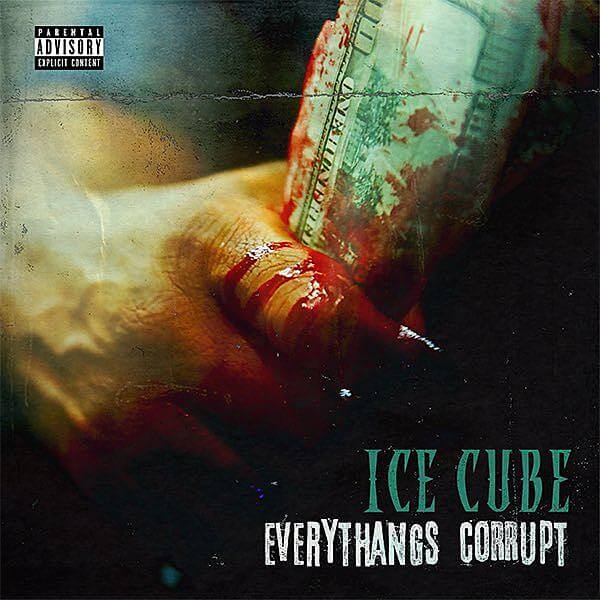
After an eight-year gap between solo albums, Ice Cube returned with Everythang’s Corrupt, a politically charged record that finds him addressing corruption, social decay, and the problems facing contemporary America. The title track had been circulating since 2012, but the album’s eventual release coincided with a period of intense political division. “Arrest the President” is the most direct expression of Cube’s anger, aimed at Donald Trump with the confrontational spirit that defined some of his best earlier work. “Good Cop, Bad Cop” also recalls his longstanding criticism of police brutality, while “On Them Pills” turns its attention to the opioid crisis.
Cube’s delivery is forceful throughout, and his willingness to tackle uncomfortable subjects gives the album a clear sense of purpose. Musically, however, the results are uneven. Some tracks lean too heavily on sterile, contemporary production, and several lack the urgency of the political material. “Ain’t Got No Haters,” featuring Too $hort, and “That New Funkadelic” provide enjoyable West Coast detours, although the album’s strongest moments are generally those where Cube has something substantial to say.
Everythang’s Corrupt is a worthwhile late-career effort, even if its inconsistent beats and occasional filler keep it from reaching the standard of his classic work. | 6/10
8. War & Peace Vol. 1: The War Disc (1998)
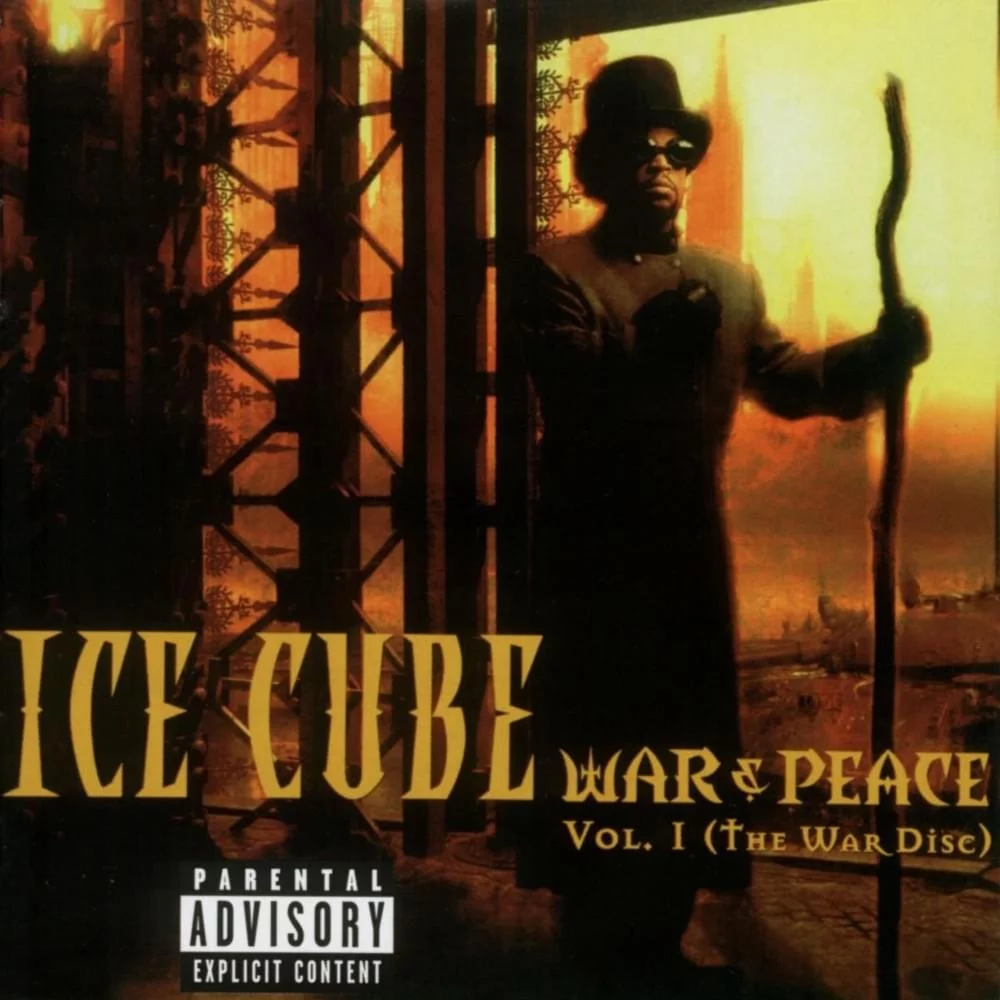
After five years away from solo albums, Ice Cube returned with The War Disc, the first half of a two-part project that found him embracing a harder, more aggressive direction. Adopting the Don Mega persona, Cube leaned into mafioso posturing and late-’90s rap trends, moving away from the funk-driven sound of his earlier records. The results are mixed, although his commanding delivery remains intact. “Dr. Frankenstein” has the menace and attitude we expect from Cube, while “Ghetto Vet” delivers a particularly effective account of life in the streets. “3 Strikes You In” is another highlight, driven by his forceful presence.
The album also takes some unexpected turns. “F**k Dying,” featuring Korn, ventures into rap-metal territory, while the title track brings a more dramatic, orchestral approach. Elsewhere, the material becomes increasingly uneven. Tracks like “X-Bitches” and “Limos, Demos & Bimbos” feel disposable, and the 70-minute runtime makes the weaker moments harder to overlook. There are also awkward contradictions between the album’s street-conscious commentary and its celebration of money and excess.
The War Disc has enough strong moments to make it worthwhile, but Cube’s return falls short of his earlier standards. | 6/10
7. Laugh Now, Cry Later (2006)

After six years devoted largely to Hollywood, Ice Cube returned to music with Laugh Now, Cry Later, his first solo album since War & Peace Vol. 2. Released independently through Lench Mob Records, it finds him reconnecting with the aggressive West Coast rap that made his reputation while incorporating contemporary production from the likes of Scott Storch, Swizz Beatz, and Lil Jon.
“Why We Thugs” is the standout, pairing Scott Storch’s dramatic instrumental with Cube’s forceful commentary on street life, racial inequality, and the treatment of Black Americans. “Go to Church,” featuring Snoop Dogg and Lil Jon, brings a lively crunk influence, while “Chrome & Paint” reunites Cube with WC for a dose of familiar West Coast chemistry. “Growin’ Up” is a more personal moment, with Cube paying tribute to his former N.W.A partner Eazy-E.
The album’s 20 tracks make for an uneven listen, and some of the production lacks the character of his classic work. Still, Cube sounds energized and fully engaged, moving comfortably between social commentary, gangsta rap, and straightforward entertainment. Laugh Now, Cry Later is a welcome return, even if it doesn’t quite recapture his earlier brilliance. | 6.5/10
6. War & Peace Vol. 2: The Peace Disc (2000)
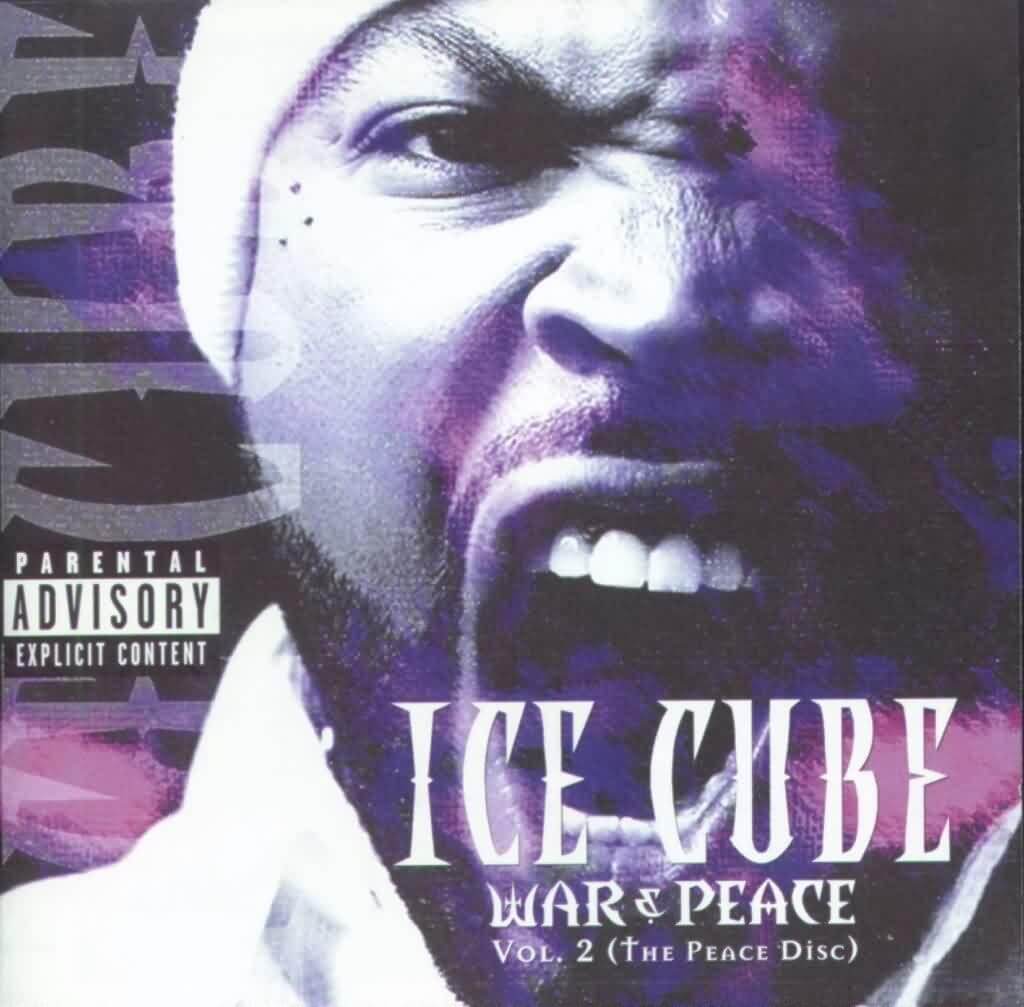
The second half of Ice Cube’s War & Peace project takes a noticeably smoother approach than its predecessor. Where The War Disc leaned into aggression and experimentation, The Peace Disc favors West Coast bounce, funk, and club-friendly production. The opening track, “Hello,” is an immediate highlight, bringing Cube together with Dr. Dre and MC Ren for a long-awaited N.W.A reunion. Their chemistry makes the track one of the album’s most exciting moments, even if it never led to the full group reunion many fans hoped for.
There is plenty of enjoyable material elsewhere. “You Can Do It,” featuring Mack 10 and Ms. Toi, is an infectious party anthem, while “Until We Rich,” with Krayzie Bone, offers a more reflective perspective on ambition and success. “Supreme Hustle” and “The Gutter Shit” bring back some of Cube’s harder-edged attitude, and “Record Company Pimpin’” takes aim at the music industry’s exploitation of artists.
The album’s extensive production lineup, including Dr. Dre, Chucky Thompson, Bud’da, and Sean Combs, gives it an eclectic character, although the different approaches prevent a fully cohesive sound. The second half also loses momentum, with tracks like “Roll All Day” and “Can You Bounce?” offering little beyond routine club formulas.
Still, The Peace Disc is a more enjoyable and focused listen than its companion volume, with enough strong tracks to make the project worthwhile. | 6.5/10
5. Raw Footage (2008)

By 2008, Ice Cube had become a major Hollywood figure, but Raw Footage made it clear that his interest in politically charged Hip Hop was still very much alive. Released independently through Lench Mob Records, the album finds him addressing media hypocrisy, institutional neglect, corporate greed, and the persistent tendency to blame rap music for wider social problems. “Gangsta Rap Made Me Do It” is the clearest statement of intent, with Cube dismantling the familiar argument that gangsta rap is responsible for America’s violence while ignoring the conditions that produce it. “It Takes a Nation” brings a more explosive, Public Enemy-inspired energy, while “Hood Mentality” and “Cold Places” continue his examination of life in struggling communities.
There are more personal and reflective moments, too. “Why Me?”, featuring Musiq Soulchild, deals with gun violence and paranoia, and “Stand Tall” offers an uplifting message of Black empowerment. Cube sounds engaged throughout, with the conviction and directness that made his early political records so compelling. His son O’Shea Jackson Jr. also appears on “Here He Come,” while longtime associate WC and The Game join him on “Get Used to It.”
The album’s main weakness is its inconsistency. The first half is particularly strong, but the momentum drops after “Jack n the Box.” Several later tracks rely on generic late-2000s production, and the 16-song tracklist contains too much filler. Still, Raw Footage finds Cube reconnecting with the social criticism and urgency that had been missing from much of his recent work. | 7/10
4. Lethal Injection (1993)

With Lethal Injection, Ice Cube embraced the G-funk sound that had taken over West Coast Hip Hop following Dr. Dre’s The Chronic and Snoop Dogg’s Doggystyle. The dense, abrasive production of his first two solo albums gave way to smoother grooves, heavier basslines, and more melodic funk. It was a significant change in direction, and one that initially divided listeners who preferred the uncompromising intensity of AmeriKKKa’s Most Wanted and Death Certificate.
The transition works particularly well on “You Know How We Do It,” one of Cube’s finest laid-back records. Its relaxed groove and effortless delivery capture the Los Angeles cruising atmosphere perfectly. “Bop Gun (One Nation),” featuring George Clinton, is another highlight, connecting contemporary West Coast rap with the spirit of P-Funk. Cube also retains his storytelling instincts on “Ghetto Bird,” a vivid account of police helicopter surveillance and its impact on South Central residents. These tracks demonstrate how comfortably he could operate within the new sound without abandoning his perspective.
Elsewhere, the album is less consistent. “Really Doe” has plenty of attitude, but some of the more aggressive material, including “Cave Bitch” and “When I Get to Heaven,” lacks the political focus and lyrical precision of his previous work. The contrast between these confrontational tracks and the smoother party material occasionally makes the album feel disjointed. Some of the gangsta posturing also suggests Cube was adapting to the prevailing commercial climate.
Still, Lethal Injection is a strong album with several outstanding records. Cube’s move toward G-funk marked a clear departure from his earlier sound, but his personality and West Coast identity remain unmistakable. It would be his final solo album until War & Peace Vol. 1 in 1998, as Hollywood increasingly occupied his attention. | 7.5/10
3. The Predator (1992)

Released just months after the 1992 Los Angeles riots, The Predator captures Ice Cube at a moment when racial tensions and anger over police brutality had reached boiling point. The acquittal of the officers who beat Rodney King hangs over the album, giving much of its material an immediate political urgency. On “When Will They Shoot,” Cube confronts accusations of racism and anti-Semitism while turning his attention to the wider history of racial oppression. “We Had to Tear This Mothafucka Up” addresses the police officers acquitted in the King case, while “Who Got the Camera?” imagines the experience of a Black man subjected to police violence. The interludes, including snippets of interviews and heated discussions, reinforce the atmosphere of a city on edge.
Musically, Cube moves toward a heavier West Coast sound, with DJ Pooh, Sir Jinx, Torcha Chamba, and DJ Muggs contributing production. The beats are less abrasive than the Bomb Squad’s work on AmeriKKKa’s Most Wanted, favoring funkier grooves and harder basslines. “Wicked” brings an especially menacing energy, while “Check Yo Self,” featuring Das EFX, combines streetwise advice with an infectious hook. The album’s most celebrated track, “It Was a Good Day,” takes a different approach. Cube describes an unusually peaceful day in South Central, where nothing goes wrong, and he can enjoy life’s simple pleasures. Its relaxed mood is striking precisely because such a day is presented as an exception.
There is a slight loss of focus compared with Death Certificate. The numerous interludes occasionally interrupt the album’s momentum, and some of the deeper cuts lack the same impact as its strongest tracks. Even so, The Predator is an impressive combination of political anger, street narratives, humor, and accessible West Coast rap. Cube had already demonstrated how uncompromising his writing could be; here, he proved he could reach a much wider audience without abandoning the subjects that mattered to him. | 8/10
2. AmerKKKa's Most Wanted (1990)
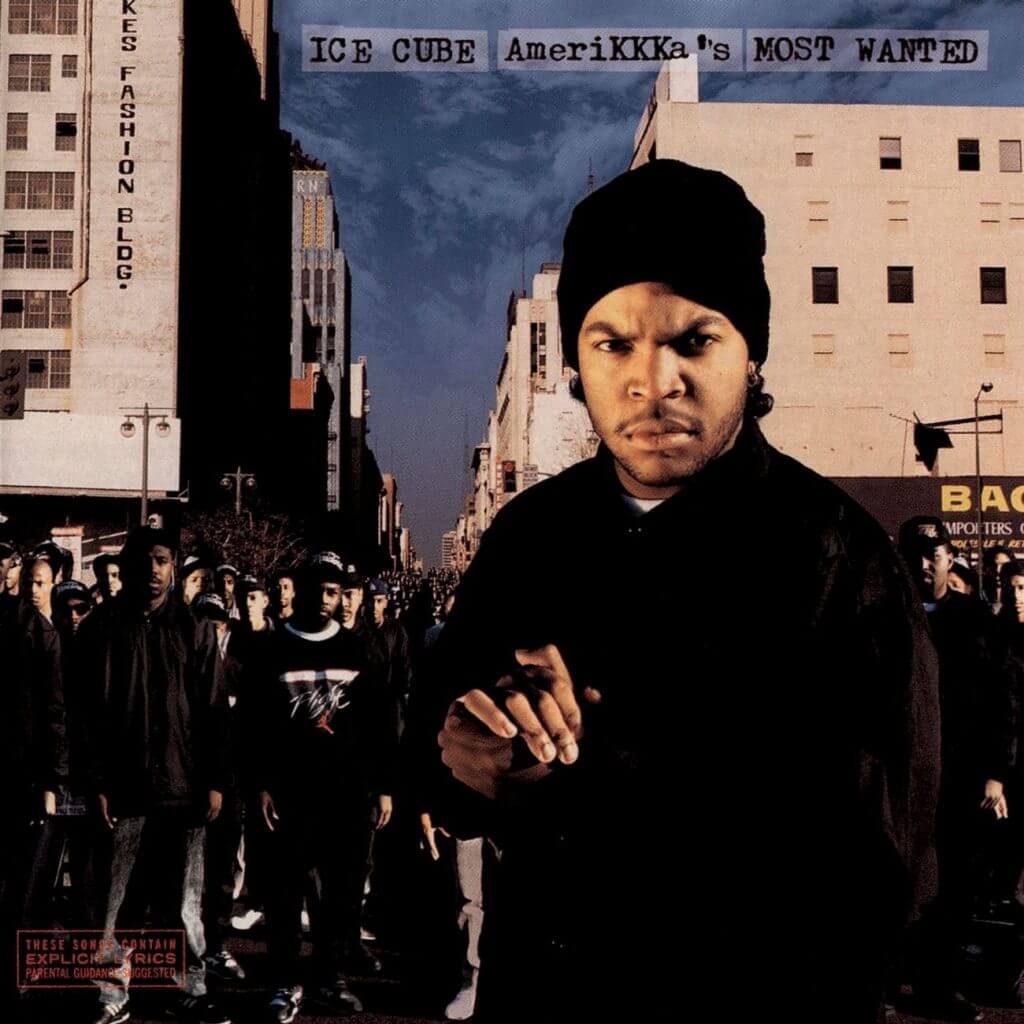
Ice Cube’s departure from N.W.A over royalties and management left him with plenty to prove. He wasted little time doing so. For his solo debut, he joined forces with Public Enemy’s Bomb Squad, bringing together his sharp Los Angeles street perspective and the New York production team’s densely layered, abrasive sound. The result was a formidable record, combining gangsta rap’s uncompromising narratives with pointed criticism of racism, poverty, and institutional oppression. Cube had already made his mark as N.W.A’s principal lyricist, but here he demonstrated the full range of his writing and personality.
The Bomb Squad’s production is central to the album’s impact. Funk samples, pounding drums, scratches, and disorienting vocal fragments create a restless backdrop for Cube’s relentless delivery. “The N**** Ya Love to Hate” announces his arrival with characteristic hostility, while the title track attacks the racial double standards behind America’s treatment of Black men. “Endangered Species (Tales from the Darkside),” featuring Chuck D, is particularly grim, connecting the everyday dangers of life in South Central to a wider system of institutional violence. Cube takes a different approach on “Once Upon a Time in the Projects,” using vivid characters and dark humor to capture the absurdities and dangers of neighborhood life.
Sir Jinx also contributes significantly to the album’s musical identity. His production on “Who’s the Mack?” and “It’s a Man’s World” offers a different texture from the Bomb Squad’s more chaotic arrangements. The latter, featuring Yo-Yo, is an entertainingly combative exchange about gender relations. Cube’s humor and storytelling instincts provide occasional relief from the record’s relentless aggression.
The strength of AmeriKKKa’s Most Wanted lies in Cube’s ability to move between personal accounts of life in South Central, biting social criticism, and confrontational battle rap without losing his distinctive voice. His writing is sharp, frequently funny, and remarkably assured, while the Bomb Squad gives the material an appropriately turbulent musical setting. The album quickly went platinum, confirming that N.W.A had lost one of its most formidable voices. Ice Cube’s solo career was off to an extraordinary start. | 9/10
1. Death Certificate (1991)

If AmeriKKKa’s Most Wanted announced Ice Cube as a formidable solo artist, Death Certificate confirmed the extraordinary scope of his talent. Released in October 1991, the album sharpened the political anger of its predecessor while delivering some of the most compelling street narratives in early-1990s Hip Hop. Its perspective was shaped by the racial tensions of the period, including the beating of Rodney King and the growing anger toward the Los Angeles Police Department. Cube approached these subjects with a mixture of fury, dark humor, and uncomfortable detail.
The album is divided into two sections: “The Death Side,” a reflection of the conditions facing Black communities, and “The Life Side,” a vision of what needs to change. The first half contains some of Cube’s finest storytelling. “My Summer Vacation” examines the spread of Los Angeles gang culture to other cities, while “A Bird in the Hand” follows a young man drawn into drug dealing because legitimate work offers little prospect of escaping poverty. “Alive on Arrival” is particularly harrowing, depicting a shooting victim left waiting for medical attention while his condition deteriorates. These songs give their characters a human dimension without softening the circumstances surrounding them.
Musically, Death Certificate moves away from the Bomb Squad’s abrasive attack in favor of thick funk and soul samples, heavy basslines, and a harder West Coast groove. Cube, Sir Jinx, and the Boogie Men shape much of the production, with DJ Pooh also involved in mixing. The sound suits Cube’s increasingly assured delivery, giving tracks like “Steady Mobbin’” plenty of weight.
The second half turns toward Black identity and self-determination. “True to the Game” attacks opportunism, “Color Blind” calls for solidarity across gang divisions, and “No Vaseline” tears into Cube’s former N.W.A colleagues with devastating precision and dark humor. “Black Korea,” however, exposes a deeply troubling side of his politics, directing racial hostility toward Korean American shopkeepers. Cube himself later described the track as a failed song.
That contradiction is part of the difficult territory Death Certificate occupies. Its political arguments are not always defensible, but its musical force, vivid writing, and willingness to confront the realities of its time are extraordinary. Cube was operating at the height of his creative powers, and this is the strongest album of his solo career. | 9/10
Special Mention: Kill At Will (1990)

We don’t typically include EPs in our album rankings, but Kill At Will deserves a special mention. Released seven months after AmeriKKKa’s Most Wanted, this seven-track collection caught Ice Cube at the height of his early solo powers. The production, largely handled by Sir Jinx, leans toward a funkier West Coast sound, offering a different texture from the Bomb Squad’s abrasive work on his debut.
Two tracks alone make this EP essential. “Jackin’ for Beats” is a brilliant display of Cube’s flow and versatility, as he jumps across a succession of familiar Hip Hop instrumentals with impressive ease. “Dead Homiez” takes a more somber direction, reflecting on the loss of friends to gang violence with unusual emotional directness. The remix of “Endangered Species” with Chuck D is another strong addition.
There is some padding, but the highlights are exceptional. Kill At Will is a classic EP. | 8/10
Ice Cube’s solo catalogue is remarkable for the strength of its opening run. AmeriKKKa’s Most Wanted, Death Certificate, and The Predator capture an MC at the height of his creative powers, combining sharp political writing, vivid storytelling, dark humor, and an unmistakable presence on the mic. Few artists have delivered three consecutive albums of such quality.
The years that followed brought changes in direction, occasional missteps, and diminishing returns, as Cube increasingly divided his attention between music and Hollywood. Some later records recaptured parts of his earlier edge, while others relied too heavily on familiar formulas. Still, his best work has aged exceptionally well. Cube’s writing helped define West Coast gangsta rap while giving it a political and social perspective that set him apart from many of his contemporaries. His first three solo albums remain the foundation of an extraordinary Hip Hop legacy.