


Hip Hop has always been built from the beat up. Before there were rappers, there were DJs in the Bronx stretching breaks across two turntables, and the crowd came for the drums. The MC arrived later. So it makes sense that some of the music’s most rewarding records switch the microphone off and let the production carry the whole load.
For a long time, beats were treated as raw material, something a producer made so somebody else could rhyme over it. Instrumentals turned up as B-sides on 12-inch singles, aimed at DJs and battle rappers rather than people sitting at home with headphones. That changed in the 1990s. DJ Shadow built Endtroducing….. entirely out of samples and proved a beat record could hold together as an album, with its own mood, pacing and story. A decade later, J Dilla’s Donuts came out three days before his death and turned a run of short, restless loops into one of the most studied records the genre has. Around and after those two landmarks, producers from New York to Los Angeles to Tokyo kept pushing the format somewhere new.
This list covers that whole spread. You’ll find dusty boom bap built on chopped soul and jazz, cinematic records that play like soundtracks to films nobody shot, lo-fi experiments, turntablist workouts, and beat collections that sound like late nights spent digging through crates. Some of these producers are household names. Others built their reputations far from the charts, one limited pressing at a time.
A quick note on the rules. A couple of the albums here feature vocals, whether that’s a guest verse, a hook or a spoken-word passage. We counted them anyway, because at their core they’re producer records, shaped around the beat rather than the voice. On those tracks the rapper is a visitor, not the main event. Vocal samples run through almost every album below, and we never counted those against a record.
What ties these 25 records together is the sound of a producer working without a safety net. With no verse to lean on, every drum hit, every filtered bassline and every snippet of dialogue has to earn its place. These are the albums that do it best.
DJ Q-Bert - Demolition Pumpkin Squeeze Musik (1994)

Demolition Pumpkin Squeeze Musik is a great record that almost nobody talks about. It rarely shows up on lists of the best instrumental albums, let alone lists of the best Hip Hop albums overall, and we think that needs fixing. Yes, this is a turntablism record and not a beat tape built from the ground up. It still earns its place here without question.
Q-Bert put out the mixtape in 1994, a year before he came up with the crab scratch, and it already sounds like the work of a DJ operating on another level. For close to an hour he rides a constant stream of breakbeats and cuts them up without letting go. All the classics are present: “Apache,” “Impeach The President,” “Funky President,” “Give It Up Or Turnit A Loose” and “Rock Creek Park,” along with crate staples from Bob James, Roy Ayers, Dennis Coffey and Lonnie Liston Smith. Then he gets weird with it. Rush’s “Tom Sawyer” kicks off the tape, Gary Numan, ESG and Fab 5 Freddy drift through along the way, and Too $hort’s “Freaky Tales” brings it home.
Between the breaks, Q-Bert drops in a wild pile of found sound. There are snippets from Ren & Stimpy, The Huckleberry Hound Show and Racketeer Rabbit, bits of Spider-Man and Street Fighter II, and dialogue from The Warriors and Style Wars. The result feels like a Saturday morning spent flipping channels with a stack of funk records within arm’s reach.
Strictly speaking, this is a mix and not a proper studio album. That hardly matters. As a straight-up breaks-and-scratching record, very little has ever topped it.
DJ Krush – Strictly Turntablized (1994)
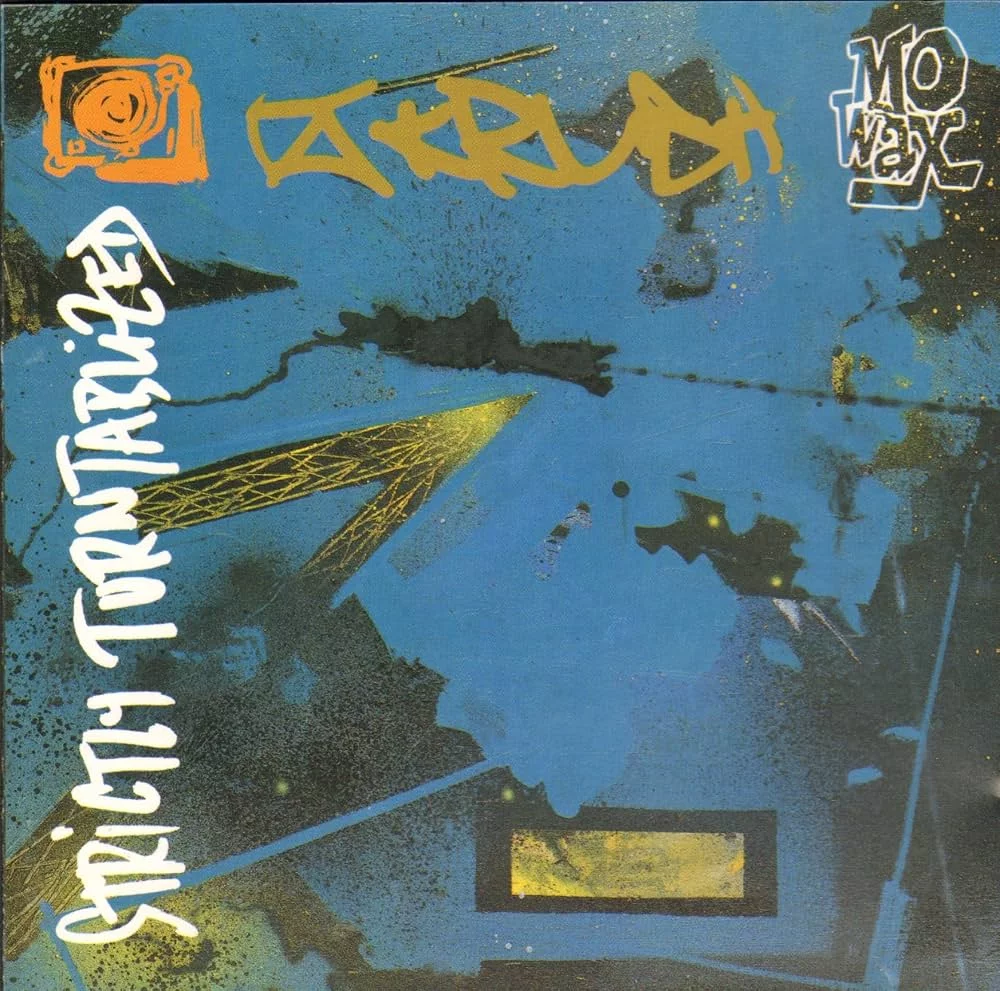
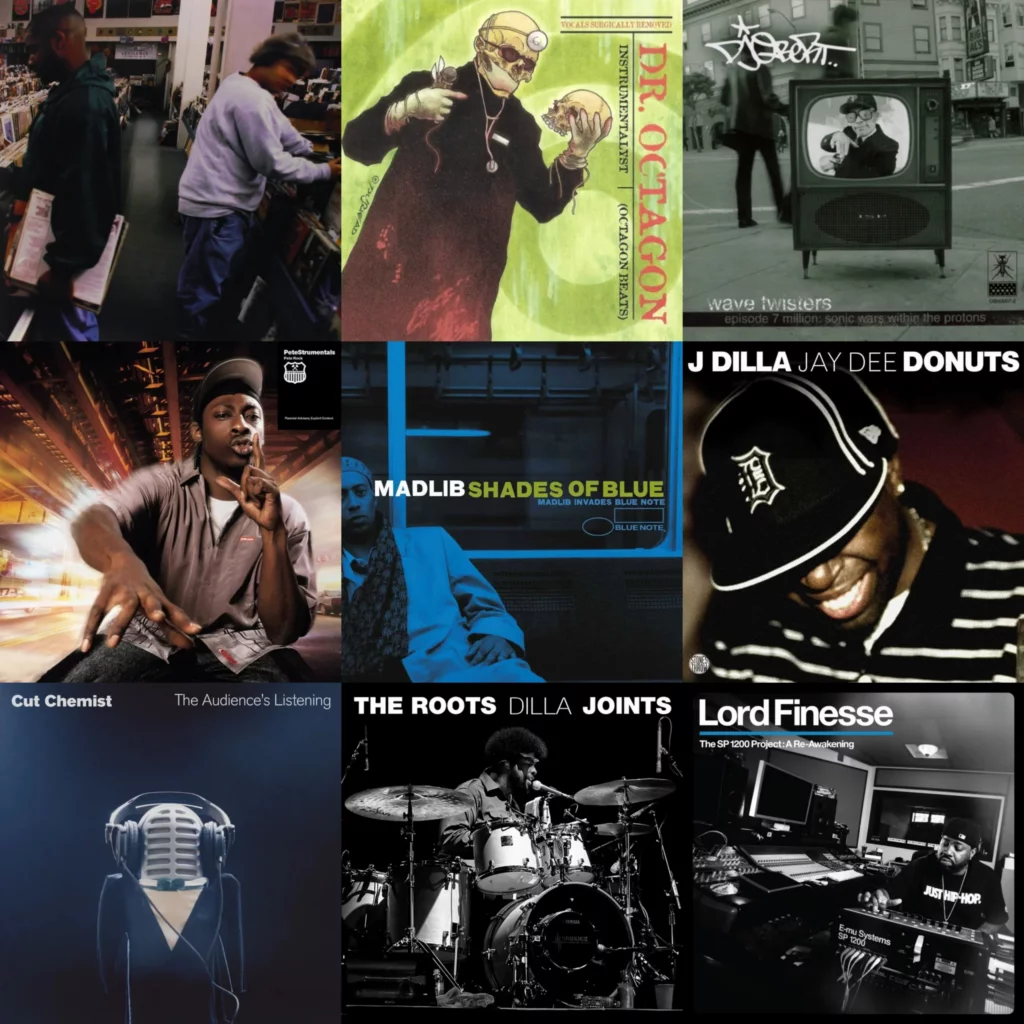
New York producers were still competing over who had the hardest drums when DJ Krush was in Tokyo making Hip Hop that sounded like smoke drifting under a streetlight. He’d come up in the Krush Posse, one of Japan’s first real Hip Hop crews, went solo in the early ’90s and found a natural home at James Lavelle’s Mo’ Wax. The London label released Strictly Turntablized on November 21, 1994, and the title tells you what to expect: Krush on his own, working the decks and the sampler with almost nobody else in the room.
The first thing you notice is the space. Plenty of producers stack loop on top of loop, but Krush strips everything back until you can hear the air around each sound. The drums land slow and heavy, the basslines hum somewhere underneath, and the scratches work as texture and rhythm instead of a flex. “Kemuri,” Japanese for “smoke,” is the high point, built on a hypnotic bass figure and drums so dry they barely seem to move. “Fucked-Up Pendulum” and “Silent Ungah (Too Much Pain)” go darker, while “Dig This Vibe” and “Yeah” bring in some jazzy warmth.
The only voices belong to Stash and Noah, who show up on the intro and on the closing “The Nightmare Of Ungah (Sandro In Effect).” The rest is instrumental vibes.
At 38 minutes, there’s no fat on it anywhere. Two years before his label-mate DJ Shadow released Endtroducing….., Krush had already proved that a record without an MC could be moody, patient and completely gripping.
DJ Cam – Underground Vibes (1996)
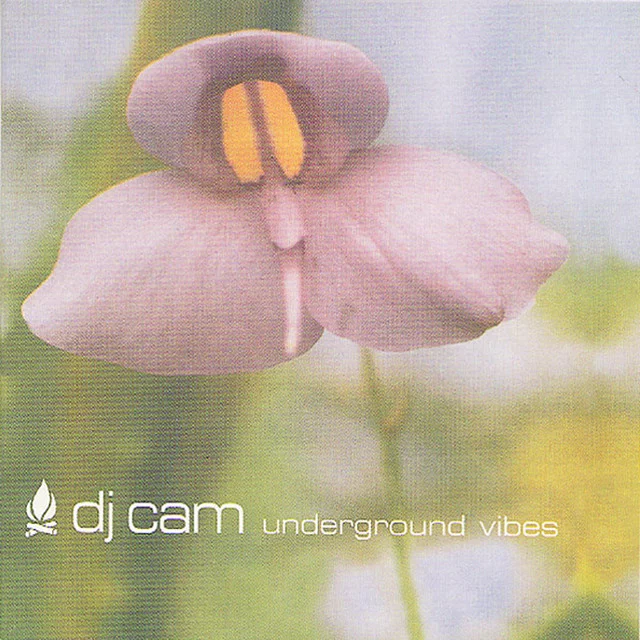
Paris in the mid-’90s wasn’t the first place anyone went looking for Hip Hop beats, which is part of why Underground Vibes still comes as a pleasant shock. Laurent Daumail, better known as DJ Cam, had no interest in waiting for a label to discover him. He started his own imprint, Street Jazz Records, and released the album himself. The rest of the world only caught on once the New York label Shadow Records picked up his work for an international audience.
His formula is simple and very effective. Cam takes slow, dusty breakbeats, lays deep basslines and smoky jazz samples over them, and lets the whole thing simmer. “Mad Blunted Jazz” pretty much names the album’s mood, and the track sets the tone with muted horns and a groove that keeps your head moving without ever breaking a sweat. “Gangsta Shit” hits harder in the low end, “Sang-Lien” drifts for six minutes of late-night haze, and “The Return Of The Jedï” adds a touch of playfulness. Near the end, “Free Your Turntable And Your Scratch Will Follow” hands the lead to Cam’s cuts for more than seven minutes.
This is music for headphones at 2 a.m., not for the club, and back then that was a statement in itself. Cam belonged in the same conversation as DJ Shadow and DJ Krush, but his version was more relaxed and more openly jazzy than either of theirs. Anyone who has put on a lo-fi beats playlist is hearing an echo of what he did here.
DJ Shadow - Endtroducing (1996)
Every list like this needs a centre of gravity, and this is ours. When Josh Davis released Endtroducing….. through Mo’ Wax on September 16, 1996, he wasn’t trying to make the ultimate beat tape. He was trying to make an album, a full hour of music with a beginning, a middle and an end, built out of nothing but other people’s records. Guinness later named it the first album made entirely from samples. That’s good trivia, but the real achievement is how human the whole thing sounds.
The raw material came from Rare Records in Sacramento, where Shadow spent hours every day in the basement digging through vinyl nobody else wanted. He worked on the album for about two years, first in his apartment and later at Dan the Automator’s Glue Factory studio in San Francisco, using little more than an Akai MPC60 MKII, a Technics turntable and an ADAT recorder. He also set himself a rule: stay away from the obvious samples. Björk and Metallica slip in anyway, but most of the source material is forgotten jazz, funk, psych and prog that only a digger like him would have found.
The music never stays put. After the scratch-heavy wake-up call of “Best Foot Forward,” “Building Steam With A Grain Of Salt” sets the mood with a mournful piano loop, a ghostly choir and drums that hit like a slammed door. “The Number Song” is all chaos and countdowns, “Changeling” floats off into space, and the nine-minute “Stem/Long Stem” swings from panic to calm and back again. “Midnight In A Perfect World” is the one everybody remembers, a hushed vocal over a slow, heavy beat made for empty streets at 3 a.m. The 43-second “Why Hip Hop Sucks In ‘96” takes a sly shot at the money-chasing mainstream. Three “Transmission” interludes, built on a sample from John Carpenter’s Prince Of Darkness, run through the record like a radio signal from somewhere far away.
A few voices drift through, courtesy of SoleSides crew members Lyrics Born and Gift Of Gab and Shadow’s then-girlfriend Lisa Haugen, but nobody raps a verse. You don’t miss it for a second.
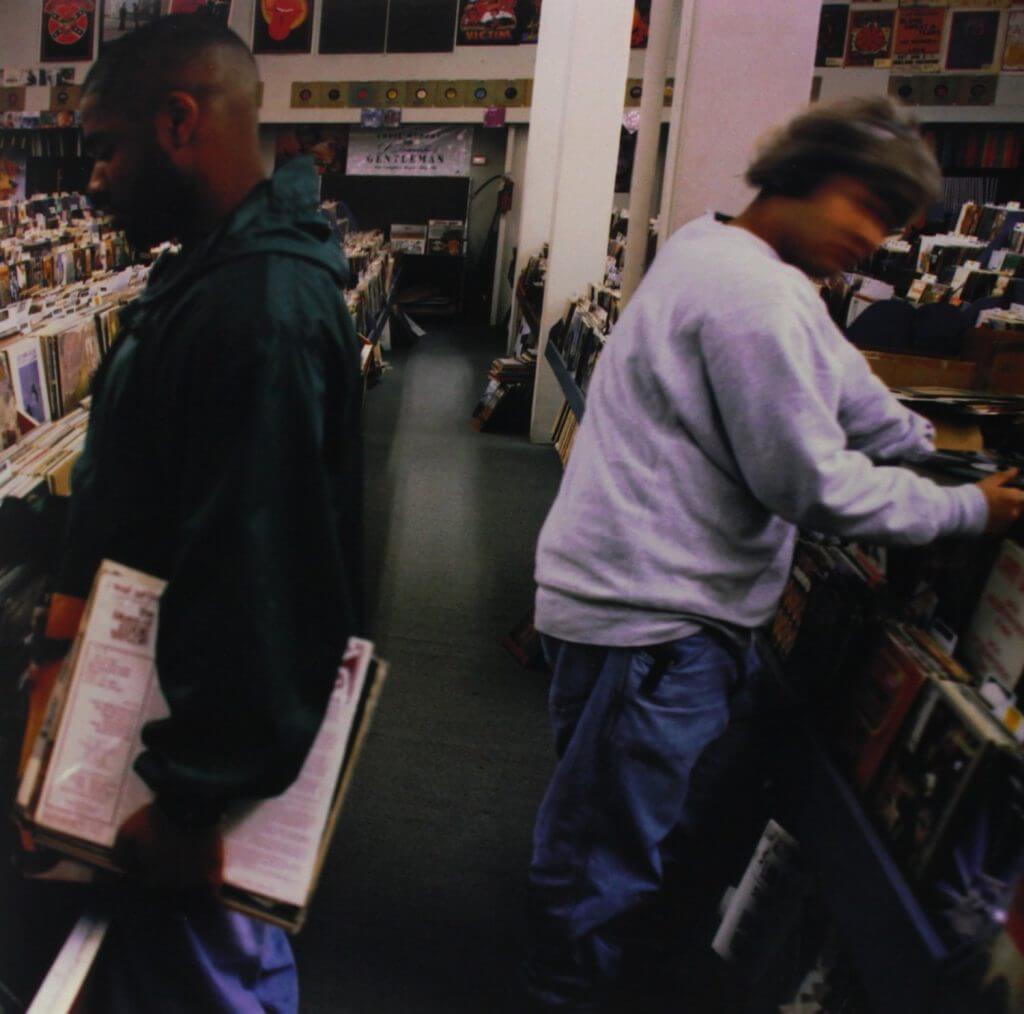
The UK fell for the album first, sending it to number 17 on the charts and eventually to gold status, and America took longer to catch on. Today it’s the record nearly every instrumental producer measures themselves against. The cover says it all: two SoleSides friends, Chief Xcel and Lyrics Born, flipping through the bins at Rare Records. The album turned 30 this year and still sounds like the future.
Dr. Octagon - Instrumentalyst (Octagon Beats) (1996)
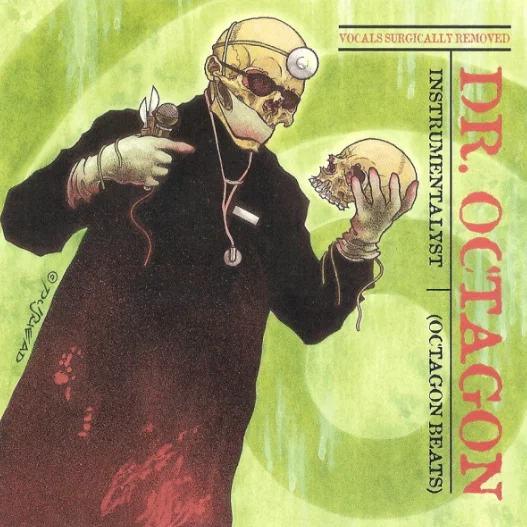
We’ll admit it: this one bends the rules. Give or take a few tweaks, Instrumentalyst is Dr. Octagonecologyst with Kool Keith taken out. Instrumental versions of vocal albums are usually DJ tools at best and dead weight at worst. This one is the exception.
Kool Keith’s unhinged turn as a time-travelling extraterrestrial surgeon is a big part of why Dr. Octagonecologyst became an underground classic and one of our favorite albums of all time. Take him away, though, and you realise how much of the album’s strangeness was baked into the beats. Dan The Automator built them at his Glue Factory studio in San Francisco.KutMasta Kurt produced “Technical Difficulties” and the title track, and DJ Q-Bert scratches all over the record. Mo’ Wax put out Instrumentalyst in December 1996, three months after Endtroducing….., and it shows a very different side of the same label.
The result is eerie, spaced-out music that sounds like a sci-fi B-movie scored on a shoestring. “Blue Flowers” pairs a creepy string line with Ramon Garcia’s flute, while the voices of Miss G and Sweet P hover around the edges as texture. “3000” and “Earth People” drift through cold synths and dusty breaks. “I’m Destructive” and “Tricknology 101” ride basslines played by Keith himself, credited under his real name, Keith Thornton. The extended version of “Bear Witness” gives Q-Bert almost seven minutes to do what he does best. The sequencing differs from the vocal album, and there’s a bonus in “Blue Flowers Revisited.”
Owning both versions isn’t overkill. It’s the smart move.
Rob Swift – Soulful Fruit (1997)
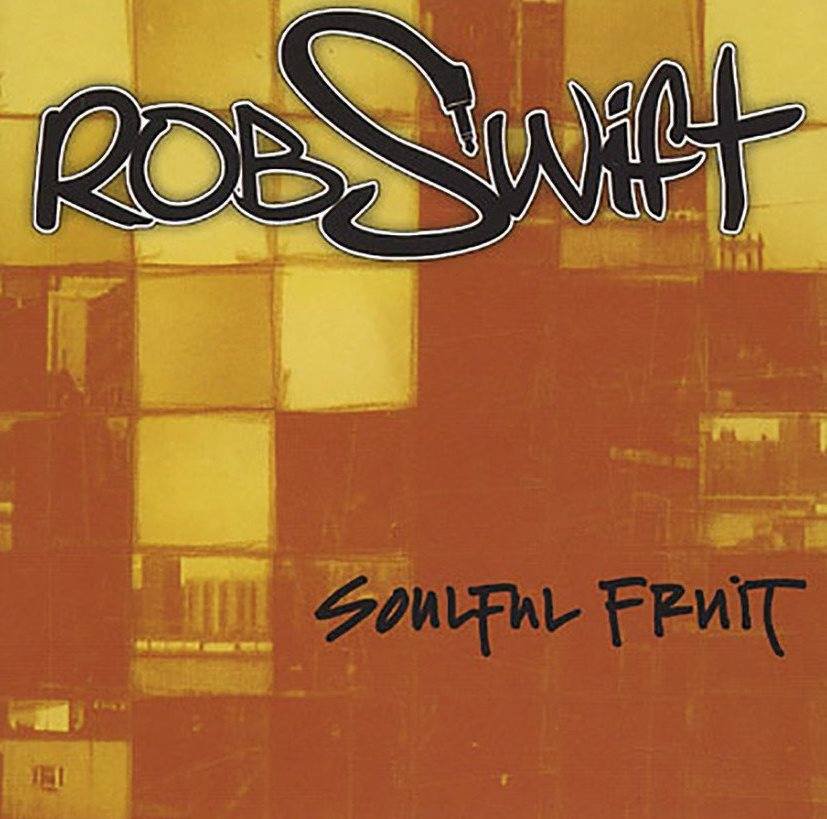
By the mid-’90s, New York’s X-Ecutioners (originally the X-Men) had turned battle routines into something close to an art form, and Rob Swift was the member most curious about what else the turntable could do. His solo debut, Soulful Fruit, is his answer. Stones Throw, then a young label run by Peanut Butter Wolf on the other side of the country, released it on May 13, 1997. Swift shared production with crewmates Mista Sinista and the late Roc Raida.
You can read the album’s mission statement in its track titles: “Define Music,” “A Scratch Is A Musical Note,” “A Turntable Experience.” Swift isn’t out to dazzle anyone with speed. He cuts and juggles with an ear for groove, laying scratches over soul, jazz and funk loops until they work as melody instead of noise. “Relax Mode” lives up to its name, “Itchy Vibes And Drums” and “Cutting With Class” keep the energy crisp, and “Diamond Jay Will Spin It” gives Diamond J his moment. Interview snippets of Bruce Lee and a spoken drop from DJ Babu hold the whole thing together.
Then comes the main event. “Rob Swift Versus Rahzel” runs past 14 minutes and pits Swift’s decks against the beatboxer from The Roots in a live back-and-forth. Swift throws down a routine, and Rahzel turns himself into a “Super DJ” and answers with nothing but his mouth, round after round. It’s funny, ridiculous and truly astonishing.
Some stretches feel loose, as you’d expect from a record that plays like a mixtape. But as a statement about what the turntable could become, Soulful Fruit still hits hard.
Mix Master Mike – Anti-Theft Device (1998)

The summer of 1998 belonged to Mix Master Mike. In July, the Beastie Boys released Hello Nasty with Mike as their new DJ and even gave him his own tribute track, “Three MC’s And One DJ.” Within weeks he had a solo album out as well, and it was a far stranger record than anything Beasties fans were expecting.
Mike came up in the Bay Area alongside DJ Q-Bert. The two formed the core of the Invisibl Skratch Piklz and ruled the DMC battle circuit in the early ’90s. Anti-Theft Device, released on Asphodel, an experimental label from San Francisco, is what happens when a battle DJ of that calibre gets a whole album to himself. It has 31 tracks, most of them under three minutes, and seven short “Sektor” interludes stitch them together into one long, warped broadcast.
Titles like “Radiation,” “An Astronaut” and “Government Secret” tell you where his head was at. This is turntablism as sci-fi paranoia: sputtering cuts, sudden drops and drums that lurch in from strange angles. “Billie Klubb” rides ominous strings, “Vyce Grypp” is a dizzying run of beat juggling, and the title track shows how much tension Mike can squeeze out of two turntables. Things barely settle before he flips them again, and the closing “One Minute Massacre” ends the record as abruptly as it began.
It isn’t an easy listen, and that’s sort of the point. Demolition Pumpkin Squeeze Musik rode classic breaks, but Mike went looking for the outer edges. Nearly three decades later, Anti-Theft Device still sounds like a transmission from somewhere the rest of Hip Hop hasn’t reached yet.
DJ Qbert – Wave Twisters (1998)
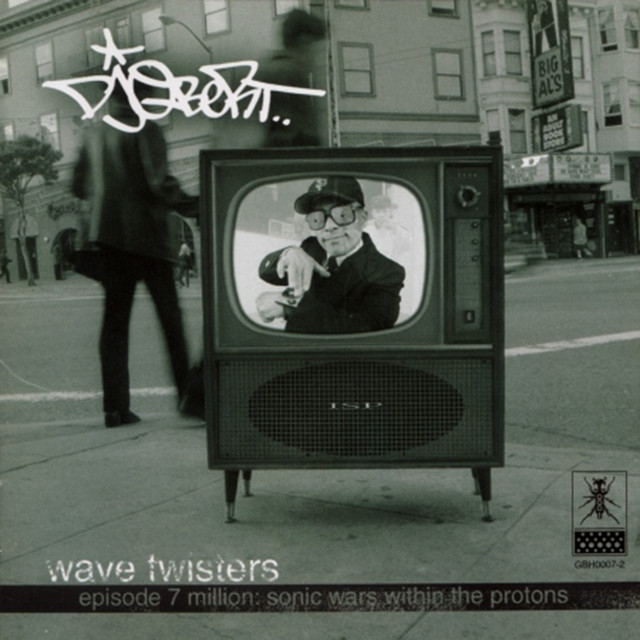
Four years after Demolition Pumpkin Squeeze Musik, Qbert came back with something far more ambitious: a full-blown scratch opera. The complete title, Wave Twisters, Episode 7 Million: Sonic Wars Within The Protons, tells you plenty about the record’s sense of humour. It often gets called the first turntablist concept album, and that’s hard to argue with.
The plot reads like a cartoon dreamed up at a sleepover. The Inner Space Dental Commander and his crew set out to rescue the lost arts of Hip Hop (DJing, MCing, breaking and graffiti) from the evil Redworm. Their weapon is a wrist-mounted turntable called the Wave Twister. The whole story is told through cuts, chopped vocal snippets and sound effects, and skits like “A Word From Fresh Breath Mouthwash” stand in for commercial breaks.
Qbert brought his crew in to help. Mix Master Mike produced a big part of the album, D-Styles built “Razorblade Alcohol Slide,” Shortkut and DJ Disk join the frenzy on “Invasion Of The Octopus People,” and Buckethead plays guitar and bass on “Inner Space Dental Commander.” Other highlights include “Destination: Quasar 16.33.45.78,” five minutes of deep-space funk, and the three-part “Grandpa Wears Fat Laces” suite near the end.
The scratching is so fast and dense that you’ll probably lose track of the story somewhere along the way. That’s fine. The grooves are deep enough to carry you through, and the sheer imagination behind it all is a joy. In 2001, directors Eric Henry and Syd Garon turned the album into an animated feature synced to every scratch, which shows how vivid the pictures in Qbert’s head really were.
Company Flow - Little Johnny From The Hospitul: Breaks & Instrumentals Vol.1 (1999)
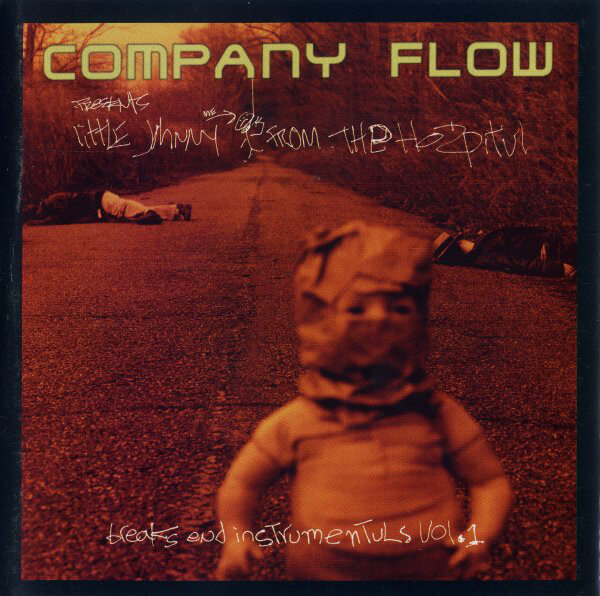
Two years after Funcrusher Plus helped kick open the doors for independent Hip Hop, Company Flow was down a man. Bigg Jus had left, and founders El-P and Mr. Len had to figure out what came next. Their answer was a move almost nobody makes on a follow-up: an album without a single rap verse. Rawkus released it in 1999, and it turned out to be the group’s last studio album and, in some ways, its most forward-looking.
The beats El-P and Mr. Len made here sound like nothing else from that era of New York rap. Drums thud and clatter like machinery in a factory after hours, warped electro passages slide in out of nowhere, and grimy guitar riffs give everything a sinister edge. “Suzy Pulled A Pistol On Henry” plays out like a crime scene, “Shadows Drown” sinks deep into the murk, and “Happy Happy Joy Kill” closes the album on a pitch-black note. Even the song titles feel off-kilter, from “Gigapet Epiphany” to “Worker Ant Uprise.” The breaks still stay steady enough to rhyme or dance over, which keeps the record rooted in Hip Hop however strange it gets.
A few stretches do sag, and at a little over an hour, the record asks for some patience. Listen now, though, and you can hear El-P sketching out what came next: the cold, dystopian sound of Cannibal Ox’s The Cold Vein and the Definitive Jux catalogue that followed. Few bridges in Hip Hop have been this interesting to cross.
Cut Chemist & DJ Shadow – Brainfreeze (1999)
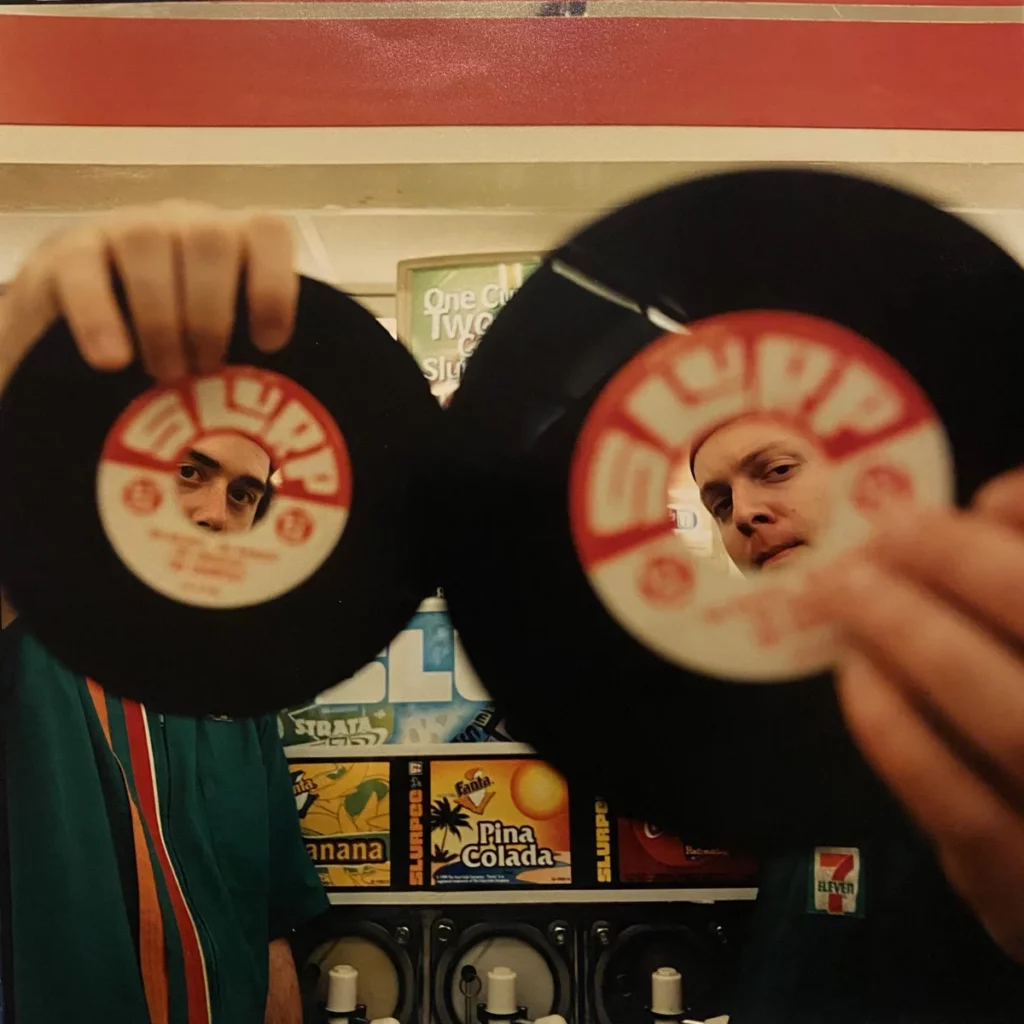
Some great records started life as rehearsals, and Brainfreeze is one of them. Early in 1999, Cut Chemist and DJ Shadow were booked for a joint set at the Future Primitive Soundsession in San Francisco, and they gave themselves a tough brief: play nothing but 45s. What you hear is a practice run for that gig, two uninterrupted mixes recorded live with no studio trickery. The idea goes back to Double Dee & Steinski’s “Lessons,” but those were pieced together from snippets of tape. This was done in real time, by hand.
The selection is a crate digger’s dream. Deep funk from Eddie Bo, The Mohawks and Rufus Thomas runs into Marlena Shaw’s “California Soul,” Albert King’s blues, Kraftwerk’s “Numbers,” Schooly D and a Jurassic 5 a cappella. Old radio spots and a 7-Eleven promo record called “Dance The Slurp” get thrown in for laughs. Shadow and Cut Chemist trade cuts, juggle breaks and ride the pitch on tiny, temperamental records, and they sound like they’re having the time of their lives.
The packaging, modelled on 7-Eleven’s logos and uniforms, got them a cease-and-desist letter from the convenience-store chain. About 2,000 copies came out on Sixty7 Recordings and sold at shows and in a handful of California record stores before the run stopped. Bootleggers took it from there, and the CD has circulated ever since. The 45s in the mix became collector’s targets in their own right, and a follow-up, Product Placement, came out in 2001.
By the usual standards, it’s barely an album. It’s also one of the most joyful sets of turntable music ever put to tape.
Kid Koala – Carpal Tunnel Syndrome (2000)
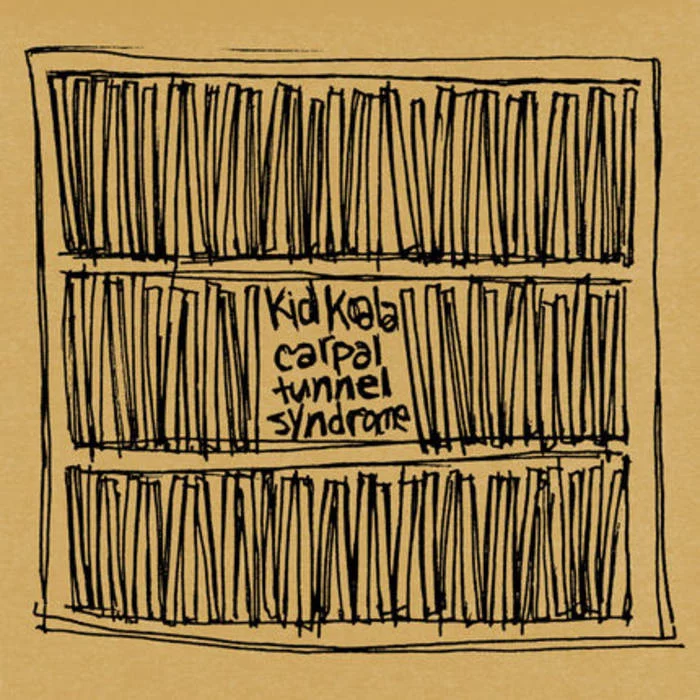
When Kid Koala told Ninja Tune his debut album would take six months, he was off by about three and a half years. Eric San, a Canadian turntablist with a cartoonist’s imagination, built Carpal Tunnel Syndrome the hard way. He cut records by hand onto an 8-track recorder, with no samplers and no computer editing to clean up a sloppy take. Every scratch, every stutter and every punchline on the album was played live on the decks.
Most turntablists of the era were busy flexing, but Kid Koala made a record that’s mainly about having fun. “Drunk Trumpet” bends a lonely horn sample until it sounds like a jazz player stumbling home after last call. “Barhopper 1” and “Barhopper 2” stitch old dialogue together into tipsy little radio plays, and on “A Night At The Nufonia” his cuts squeal and wail like a guitarist taking a solo. There aren’t many straightforward beats. What you get instead is comedy snippets, jazz horns and sound effects, rearranged into something that sounds homemade and wildly sophisticated at once.
The short bursts (“Nerdball,” “Naptime,” “Like Irregular Chickens”) can make the album feel scattered on first listen, but that restlessness is part of the charm. By the time “Roll Credits” fades out, it plays like a strange, lovable little film.
People caught on quickly. Radiohead brought Kid Koala on tour as an opening act, the album earned a Juno nomination for Alternative Album of the Year, and in 2018 it won the Polaris Heritage Prize. It made the case that a turntable record could be technical, hilarious and sweet all at the same time.
Pete Rock - Petestrumentals (2001)
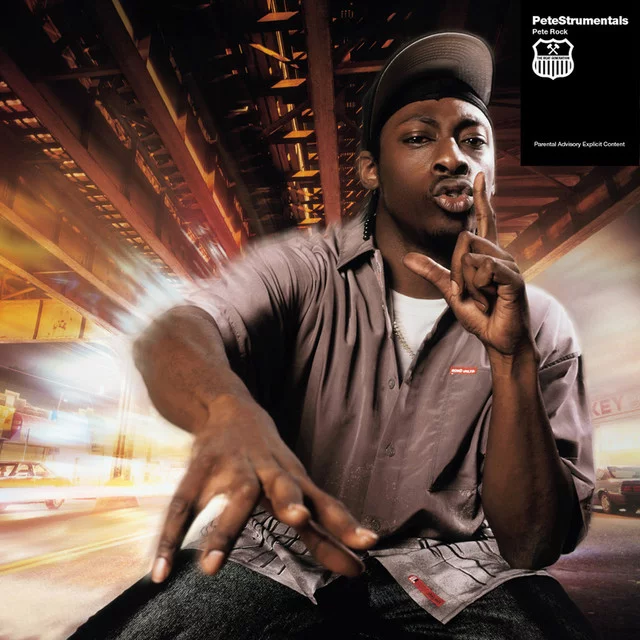
By 2001, Pete Rock had nothing left to prove. Mecca And The Soul Brother and The Main Ingredient with CL Smooth had made him one of the most respected producers in Hip Hop, and his 1998 solo debut, Soul Survivor, had lined up an all-star cast of MCs over his beats. When the British label BBE asked him to follow Jay Dee’s Welcome 2 Detroit in its Beat Generation series, he did the obvious thing and took the rappers out.
Most of the beats on PeteStrumentals go back to his peak years. He made them between 1990 and 1995, then dusted them off, reworked them and extended them for the album. That was the era when Pete’s sound was at its richest, and it shows. “A Little Soul” opens with warm horns and a groove in no hurry at all. “Pete’s Jazz” and “Smooth Sailing” live up to their names, and “Play Dis Only At Night” leans into the after-dark mood. Thick, swinging drums, filtered basslines and horn stabs fill every corner, the sound that made him famous in the first place.
The vocals were recorded fresh. The first edition features The UN, the crew with a young Roc Marciano, on “Cake” and “Nothin’ Lesser.” Pete was so impressed by Welcome 2 Detroit that he wanted to raise his own game, so a second edition added Nature, Freddie Foxxx and a reunion with CL Smooth on “Back On The Block.” Either way, the instrumentals carry the weight.
PeteStrumentals grew into a series of its own, with three more volumes between 2015 and 2022. The first one is still the place to start.
Prefuse 73 – Vocal Studies + Uprock Narratives (2001)
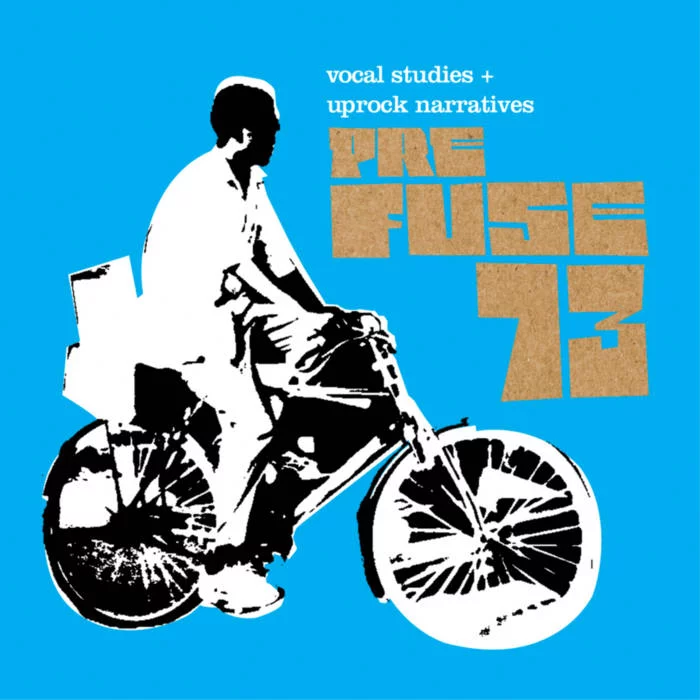
Most producers sample a rapper to hear the words. Guillermo Scott Herren sampled them so he could shred them. He was working at a studio in Decatur, Georgia, making what he considered dull rap beats for local clients, when he started taking his MPC and a pair of turntables somewhere much stranger. The result was the first album under his Prefuse 73 name, released by Warp on June 11, 2001, and nobody quite knew what to call it.
The trick is in the vocals. Herren chops voices from Nas, Ol’ Dirty Bastard and Erykah Badu into tiny shards and fires them back as rhythm. It feels like you’re listening to a rap record, yet you never catch a full sentence. On “Nuno,” a single phrase makes it through intact, and everything else is syllables and breath. Herren traced the idea back to Miami bass edit records and Mantronix, and you can hear that old-school snap under all the digital stutter. Beats drop out, lurch back in and rebuild themselves mid-bar, but the grooves underneath stay warm, from the opening “Radio Attack” to “Point To B” and “7th Message.”
This is also one of the albums on our list with real guest vocals. Mikah 9 raps on “Life Death,” MF DOOM and Aesop Rock share “Black List,” and Sam Prekop of The Sea And Cake sings on “Last Night.” Even on those tracks, Herren’s production stays front and centre.
The album also opened Warp up to more Hip Hop, and Herren himself helped bring artists like Anti-Pop Consortium and Flying Lotus to the label’s attention. The glitch-hop and L.A. beat scenes that came after owe it a lot.
RJD2 - Deadringer (2002)
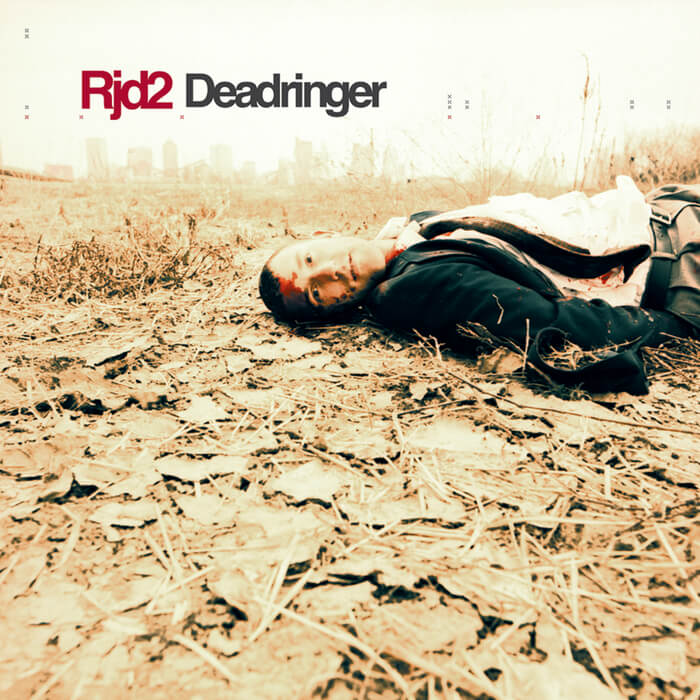
El-P’s Definitive Jux was built around rappers, so a beat album from a producer in Columbus, Ohio, was something of a curveball. Ramble Jon Krohn had been the DJ and producer for the local crew MHz, and on July 23, 2002, he released Deadringer, a debut that sounded like the score for a film nobody had shot yet.
RJD2 digs everywhere. Raw funk breaks share space with flamenco guitar, pastoral folk, dusty soul and psychedelic rock, and he flips tiny vocal snippets and horn stabs into brand-new melodies. “The Horror” opens with thriller-movie tension, “Smoke & Mirrors” and “Good Times Roll Pt. 2” keep the momentum going, and “Cut Out To FL” and “Chicken-Bone Circuit” show his flair for drama. Then there’s “Ghostwriter,” the album’s biggest moment, an uplifting groove that ended up in TV commercials and in the film Wimbledon. Few instrumental Hip Hop tracks have travelled that far beyond the underground.
Three MCs drop by, all from the Columbus scene: Blueprint on “Final Frontier,” Jakki da Motamouth on “F.H.H.” and Copywrite on “June.” Their verses feel like part of the scenery rather than the main attraction, which was exactly the balance RJD2 wanted: a beat album that still remembers rap. Some pressings also hide an extra track, “Here’s What’s Left,” at the end of “Work.”
What makes Deadringer stick is how easy it is to love. You don’t need to be a beat nerd to catch the melodies, which are big, warm and instantly memorable. Behind them is a producer with a crate digger’s patience and a songwriter’s instincts.
Madlib - Shades Of Blue (2003)
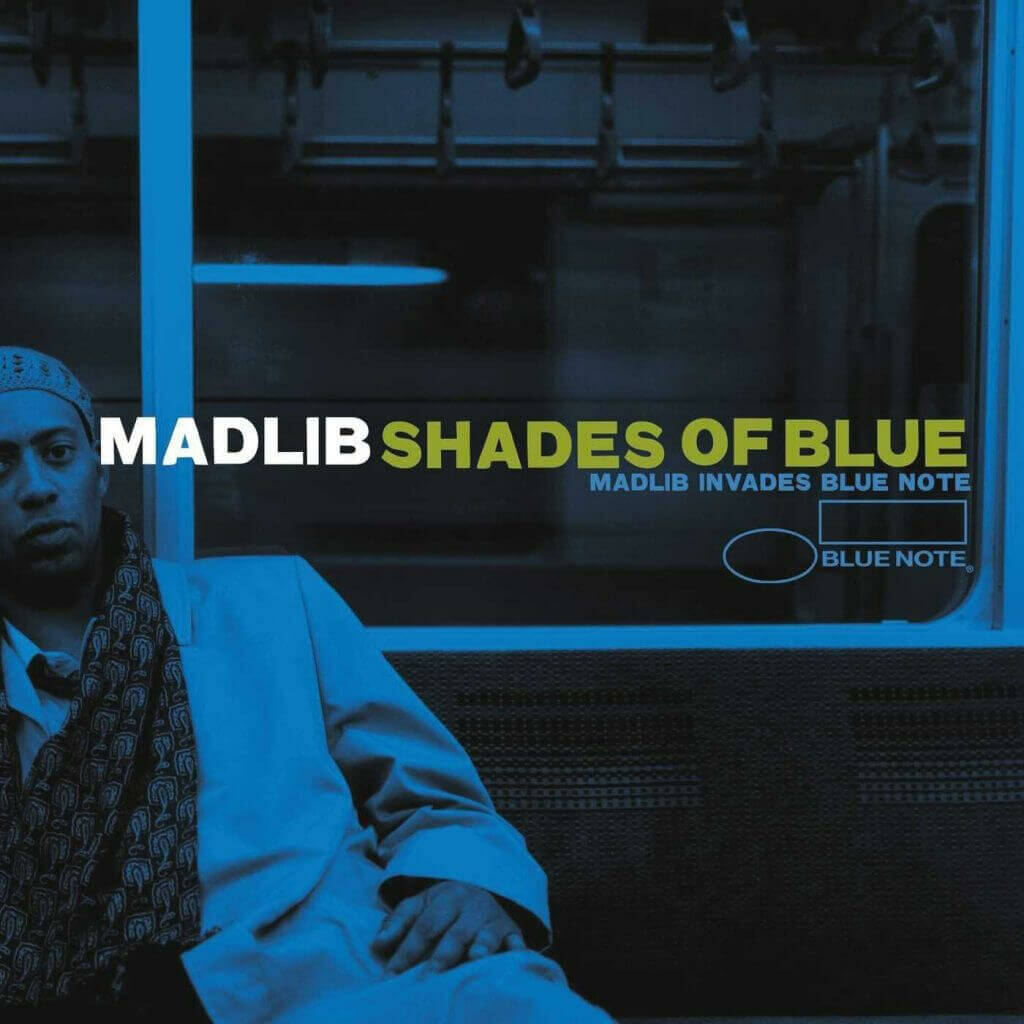
Madlib has made so much music under so many names that singling out one instrumental record feels almost unfair. Mind Fusion, the Beat Konducta series and Yesterdays New Quintet all have a claim. For us, though, the high point is Shades Of Blue, the album where Blue Note Records, the most storied label in jazz, opened its catalogue and let him loose.
It was a natural fit. Madlib grew up surrounded by music (his father is the singer and bandleader Otis Jackson Sr., his uncle the trumpeter Jon Faddis), and he’d been digging through jazz records for years. Blue Note released the album on June 24, 2003, in the same busy stretch that produced Champion Sound with J Dilla. Shades Of Blue treats the label’s ’60s and ’70s vaults with real love. On one side you get dusty, head-nodding flips like “Mystic Bounce,” “Slim’s Return” and a seven-minute take on Donald Byrd’s “Stepping Into Tomorrow.” On the other, Madlib picks up the instruments himself and plays new versions of “Footprints,” “Song For My Father” and “Peace/Dolphin Dance.” He credits them to imaginary bands like Yesterdays New Quintet, Sound Directions and the Joe McDuphrey Experience. Short pieces like “Alfred Lion Interlude” and “Andrew Hill Break” nod to the label’s history along the way.
Vocals are rare, with M.E.D. rhyming on “Please Set Me At Ease,” and the record stays rooted in the grooves. It’s smooth without ever going soft, a fusion of Hip Hop and jazz that sounds effortless even though it’s anything but. Add the gorgeous cover and packaging, a tip of the hat to Blue Note’s classic design, and you have a record that belongs in any collection.
Blockhead – Music By Cavelight (2004)
MF DOOM – Special Herbs: The Box Set Vol. 0–9 (2006)
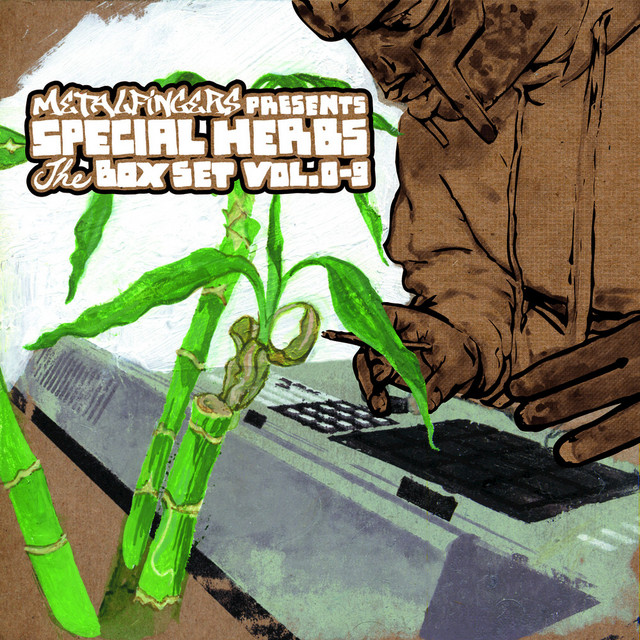
Everybody knows DOOM the rhymer: the mask, the villain, the dense and hilarious wordplay. DOOM the producer gets far less credit, which is exactly why this box set matters. Between 2001 and 2005, under his beatmaking alias Metal Fingers, he released ten volumes of instrumentals called Special Herbs, and this set gathers them in one place.
Nearly every track is named after a plant, spice, root or food additive (“Saffron,” “Mugwort,” “Coffin Nails,” “Monosodium Glumate,” “Dragon’s Blood Resin”), and the beats are as eccentric as the titles. DOOM chops jazz, soul and funk into lopsided, hypnotic loops, then sprinkles in cartoon dialogue and odd bits of sound nobody else would think to grab. Some beats sound deceptively simple, and others reveal new layers every time you come back. Plenty of them also turned up under DOOM’s own verses or other MCs’, so you’ll often catch yourself recognising a beat and trying to place it.
The original release, limited to 7,500 copies, came on three CDs. The first two run through 72 beats in mixed, roughly two-minute versions, which keeps things moving but can leave you wanting more of the best grooves. The third disc is a real treasure: instrumentals from KMD, the early-’90s group he led as Zev Love X alongside his late brother DJ Subroc. A 2012 reissue brought the beats back in their original form.
At around three hours, it’s a lot to take in. Treat it like a crate of records instead of an album, though, and it’s one of the deepest looks inside a Hip Hop producer’s head you’ll ever get.
J Dilla - Donuts (2006)

If Endtroducing….. is one pillar holding up this list, Donuts is the other. By the mid-2000s, James Yancey was already a hero to other producers. He was the Detroit beatmaker behind Slum Village, A Tribe Called Quest, The Pharcyde, Common and Erykah Badu, and one half of Jaylib with Madlib. He was also seriously ill. After being diagnosed with the rare blood disease TTP and later with lupus, he moved to Los Angeles in 2004 and spent much of 2005 at Cedars-Sinai Medical Center. Stones Throw released Donuts on February 7, 2006, his 32nd birthday. Three days later, he was gone.
The story of how the album was made has grown into a legend of its own. In the popular version, Dilla built it in his hospital bed with a sampler and a portable turntable while his mother massaged his swollen hands so he could keep working. Others close to the project say most of it came from a beat tape he made at home, which Stones Throw art director Jeff Jank expanded and shaped with Dilla’s approval. The truth probably lies somewhere in between, and it changes nothing about what the music does to you.
Thirty-one tracks, most of them under two minutes, fly past in 43 minutes. The album opens with an outro and closes with an intro, and the last seconds of “Welcome To The Show” run straight back into the start, a loop as round as the title. In between, Dilla treats his records like clay. “Workinonit” turns a 10cc riff into a siren-wailing frenzy. “Stop!” loops Dionne Warwick’s cry until it feels like a plea. “Time: The Donut Of The Heart” slows The Jackson 5 to a tender crawl, and “Don’t Cry” chops The Escorts into something that soothes and aches at the same time. Near the end, “U-Love,” “Bye” and “Last Donut Of The Night” sound, in hindsight, like goodbyes. The drums swing loose and slightly off the grid, with that Dilla feel nobody has managed to copy.
Rappers couldn’t stay away. Ghostface Killah built “Whip You With A Strap” and “Beauty Jackson” on Fishscale from these beats, The Roots used “Time: The Donut Of The Heart” for their tribute “Can’t Stop This,” and MF DOOM rhymed over “Lightworks” on Born Like This. Dave Chappelle later chose “Workinonit” as the theme music for his Netflix specials.
Twenty years later, its influence is everywhere, from lo-fi playlists to jazz drummers studying his swing. Few albums have said so much without a single verse.
Cut Chemist – The Audience’s Listening (2006)
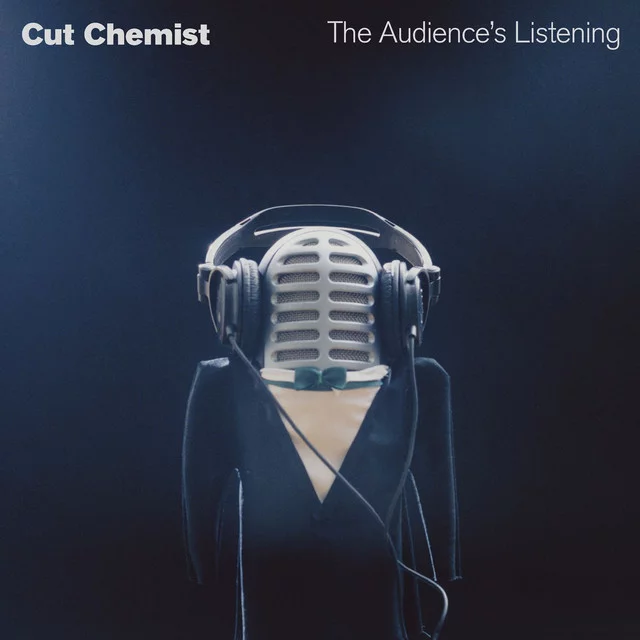
Cut Chemist spent years as the turntable engine behind Jurassic 5, and as DJ Shadow’s partner in crime on Brainfreeze. By the time he left J5 in 2004, he’d already been chipping away at a solo album for two years. He then spent another 18 months working on nothing else, plus almost a year getting the samples cleared so Warner Bros. could release it. The Audience’s Listening finally came out on July 11, 2006.
The wait shows in the details. Lucas MacFadden builds these tracks out of a dizzying range of records and moves from one flavour to the next without ever losing the groove. The hard-won sample clearances mean nothing had to be watered down. “(My 1st) Big Break” lets his hands do the talking, “The Garden” stretches out over six lush minutes, and “Metrorail Thru Space,” “Spoon” and “A Peak In Time” show how well he can build a track that keeps evolving while still making you move. “The Audience Is Listening Theme Song” closes the album with a grin.
Vocals appear on a handful of cuts, all from friends instead of big-name features. Hymnal sings on “What’s The Altitude,” Edan and Mr. Lif split “Storm,” and Thes One of People Under The Stairs joins him on “2266 Cambridge.” They add colour without taking over.
What makes the record special is its sense of fun. There’s serious technique here, but you don’t need to know a crab scratch from a transformer to enjoy it. Plenty of turntablist albums set out to impress; this one wants you to have a good time. At around 43 minutes, it never overstays its welcome.
Damu The Fudgemunk - How It Should Sound Volume 1 & 2 (2010)
For years, some of the best beats in Washington, D.C. lived on a stack of floppy disks next to Damu The Fudgemunk’s MPC. He made most of the material on How It Should Sound between 2004 and 2007, before many people knew his name, and it stayed in his archive until Redefinition Records gathered two volumes’ worth for a 2010 release. By then, Damu had built a following with Y Society, his duo with the rapper Insight, and with videos of him working the MPC and turntables live.
Plenty of listeners hear Damu and think of ’90s boom bap, but he never saw it that way. To him, this wasn’t a throwback but a method: dig for records nobody else is hearing, then flip the drums and samples the way he hears them in his head. That approach runs through all 27 tracks. The drums are crunchy and crisp, the snares crack, and soulful samples get chopped into tiny pieces and rebuilt into grooves that keep shifting under your feet. Horns pop up out of nowhere and fade back into the mix, and layers open up and fold back in, so a beat rarely sits still for long.
Volume 1 starts with “Start Here” and runs through cuts like “Tea Tyme,” “Straight From The Harp” and “Gone With The Sunset.” Volume 2 opens with the title track and carries on through “Not So Young Anymore (Byte 2),” “Gestation” and “Boomerang Luck.”
As a collection of standalone beats, it doesn’t follow any grand arc, and it doesn’t need one. Every track comes from a producer who cares deeply about records. The title is no exaggeration.
The Roots - Dilla Joints (2010)
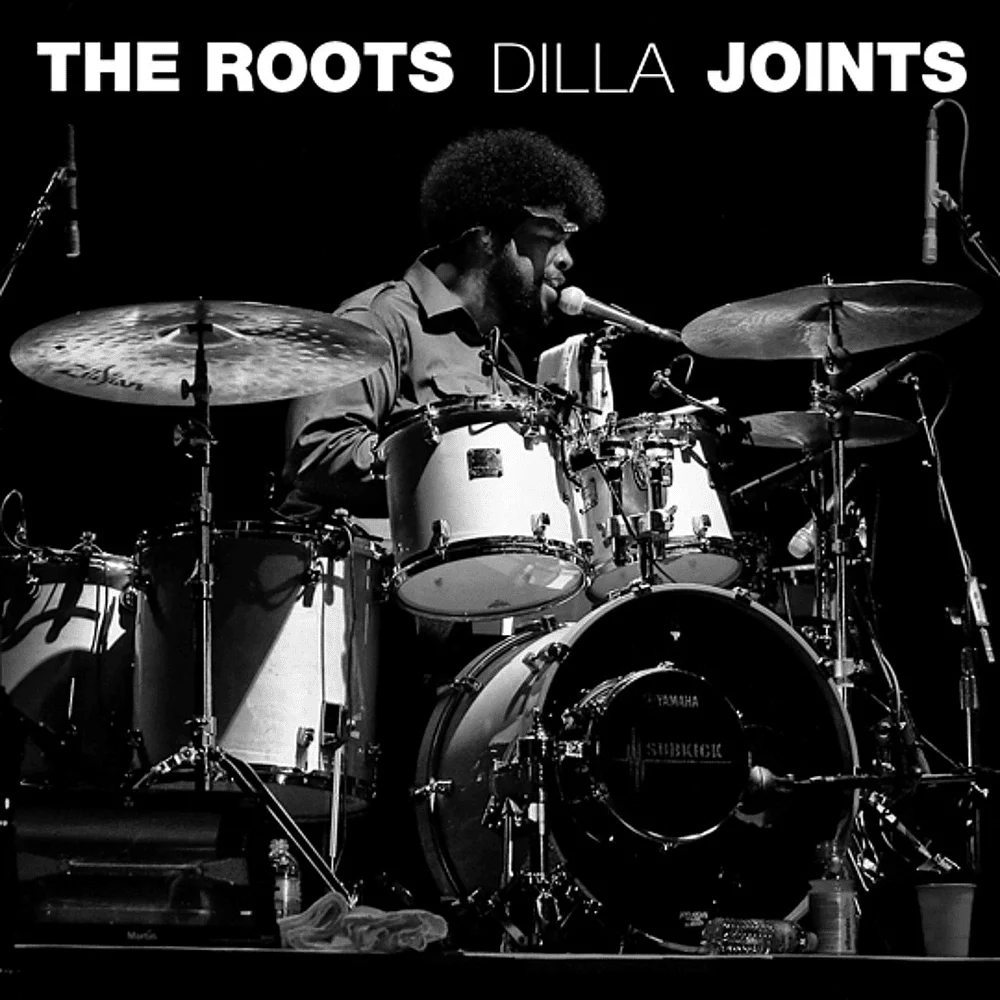
Few bands had more reason to honour J Dilla than The Roots. Questlove and Dilla were core members of the Soulquarians, the loose collective behind some of the richest soul and Hip Hop records of the late ’90s and early 2000s, and Dilla’s drunken, behind-the-beat drum programming changed the way Questlove played. The band had already paid tribute once, turning “Time: The Donut Of The Heart” into “Can’t Stop This” on Game Theory. In 2010, around the fourth anniversary of his death, they went further and recorded a whole set of his beats with live instruments.
By then The Roots were the house band on Late Night With Jimmy Fallon, playing every night on television, and you can hear a group at the height of its chemistry. Dilla Joints isn’t a polished studio project. It’s loose, warm and alive, the sound of musicians jamming on songs they love. Fittingly, they open with “Donuts Outro,” then work through “Hot Shit (I’m Back!),” “Upper Egypt,” “Stereolab,” “Hall & Oates” and more, including The Pharcyde’s “She Said,” one of Dilla’s early production credits.
The real feat is in the rhythm section. Dilla’s swing came from a machine he pushed off the grid, with snares that land a hair late and kicks that stumble in at exactly the right moment. The Roots play it by hand without stiffening it up, which is harder than it sounds. The basslines roll, the keys shimmer and the drums sit deep in that lazy pocket.
At around 43 minutes, and with no Black Thought on the mic, this is The Roots treating Dilla’s catalogue like jazz standards: songs to interpret, not copy. It’s a tribute from friends, and it sounds like one.
Apollo Brown – Clouds (2011)

Big studios aren’t for everyone. Apollo Brown made Clouds on a computer running Cool Edit Pro, a pair of blown speakers and a keyboard with only 16 working keys, a setup most producers would have thrown out years earlier. He’d tried fancier gear and gone straight back to what he knew, because that battered rig was where his sound lived.
And what a sound it is. Brown is a Detroit producer who came up in the trio The Left, and he built Clouds out of dusty soul and jazz: melancholy pianos, aching strings, warm horns and chopped vocal snippets, all riding drums that hit hard and clean. Mello Music Group released it on February 22, 2011. The 27 tracks are short, most of them right around two minutes, so each idea arrives, makes its point and moves on before it can wear out its welcome. “Blue Ruby,” “Black Pearls,” “Seed Of Memory” and “Tao Te Ching” are among the standouts, and tiny interludes like “Wisdom,” “Human Existence” and “A Conscious Breath” give the album room to breathe.
It’s a deeply moody record, the kind that sounds best on a grey afternoon or a long drive after dark. Played front to back, its 50 minutes flow like one long, unbroken thought, and the steady drums give the whole thing a heartbeat.
Clouds became Brown’s best-selling album, and he calls it the most important of his career. Fans kept asking for another one, which eventually led to Thirty Eight and, years later, This Must Be The Place. Clouds is still the place to start.
Oddisee – The Beauty in All (2013)
Oddisee is that rare artist who’s equally at home behind the mic and behind the boards. The Prince George’s County, Maryland native made his name rapping and producing, both solo and with the D.C. crew Diamond District, while keeping a steady stream of instrumental albums going on the side. The Beauty In All, released on Mello Music Group in 2013, is the best of them.
The idea behind the album is right there in the title. Oddisee dedicated it to imperfection: the flaws and mistakes that give life its character, and the stubborn process of trying something you don’t yet know how to do. He credited that trial and error with pushing his production forward, and you can hear a producer who isn’t following anybody’s tutorial.
Unlike most beat albums, these aren’t quick sketches. The 12 tracks run between four and eight minutes each and add up to more than an hour, so ideas get room to unfold, shift and build. That makes the record feel like a set of full compositions instead of loops waiting for a verse. “Fashionably Late” and “Caprice Down” both stretch past six minutes, and “Fork In The Road” closes the album as its longest track, at over eight.
This is reflective music, the kind that suits a long walk or a quiet night alone with your thoughts. It does what Oddisee hoped it would: get listeners thinking about life’s ups and downs while it plays. He later returned to rapping with the Tangible Dream mixtape, but The Beauty In All is still the clearest picture of Oddisee the composer.
Lord Finesse - The SP1200 Project: A Re-Awakening (2015)
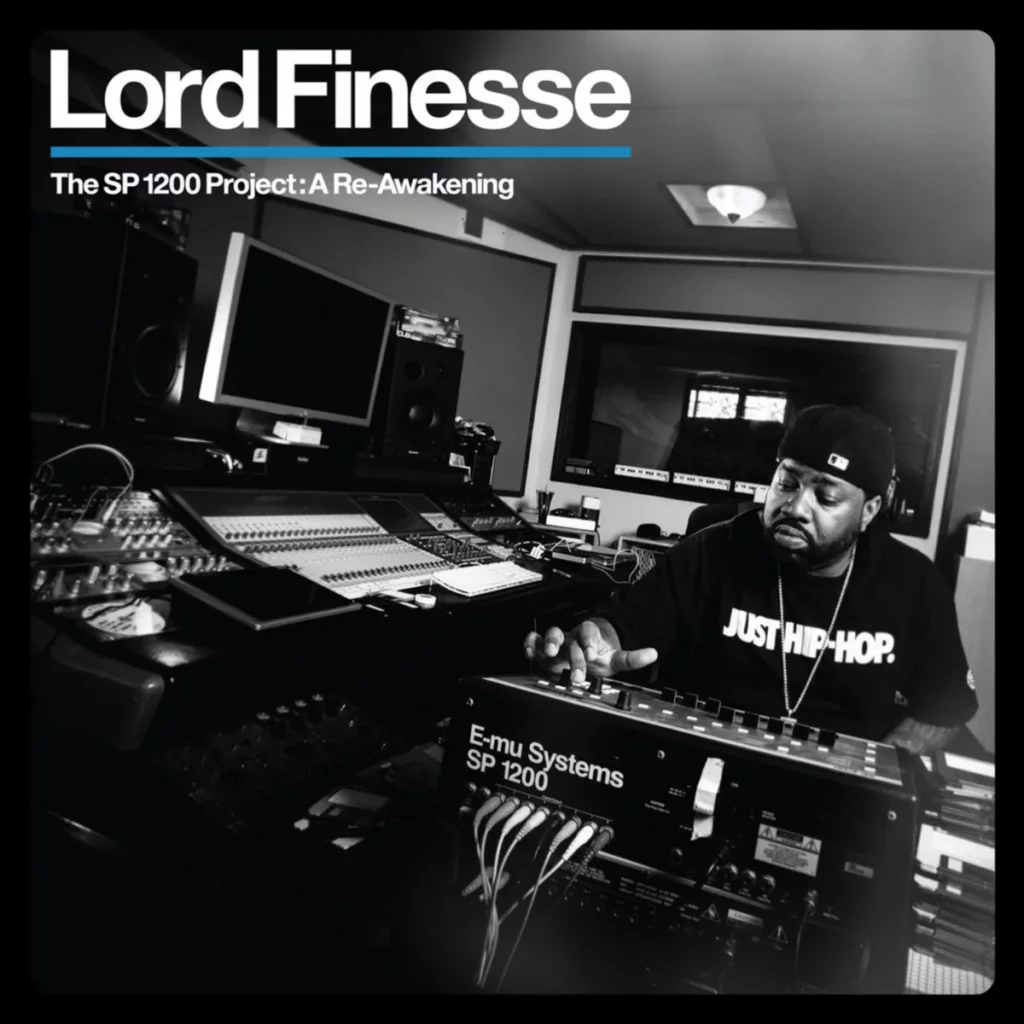
Lord Finesse made his name as the Funky Technician, one of the sharpest punchline rappers the Bronx ever produced, and he was just as deadly behind the boards. The D.I.T.C. founder mentored Big L, gave The Notorious B.I.G. the beat for “Suicidal Thoughts,” and piled up beats on his E-mu SP-1200 during his mid-’90s peak. The SP1200 Project: A Re-Awakening opens that vault, and its title nods to his 1996 album The Awakening.
The SP-1200 is the machine behind a whole era of New York Hip Hop: gritty 12-bit sound, punchy drums and very little sample time, which forced producers to get creative with how they chopped and flipped records. Finesse works within those limits like the veteran he is. The drums knock with that unmistakable swing, the basslines run warm and heavy, and the jazz and soul loops sound like they came straight out of a record crate in 1995. The title cut sets the tone, and names like “Cinematic Soul,” “Skyline Soul” and “Twilight Soul” tell you what kind of moods to expect. “Street Theme,” “Crime Square” and “Times Iz Hard” make it clear where his heart still lives.
With 21 beats, most of them three to four minutes long, it plays more like a classic beat tape than a carefully sculpted album, and a few loops run a little long without an MC to push them forward. That’s a small price for this much boom bap done this well. For anyone who grew up on D.I.T.C., it’s a time machine. For anyone who didn’t, it’s the perfect lesson in why the SP-1200 sound still matters.
Knxwledge – 1988 (2020)
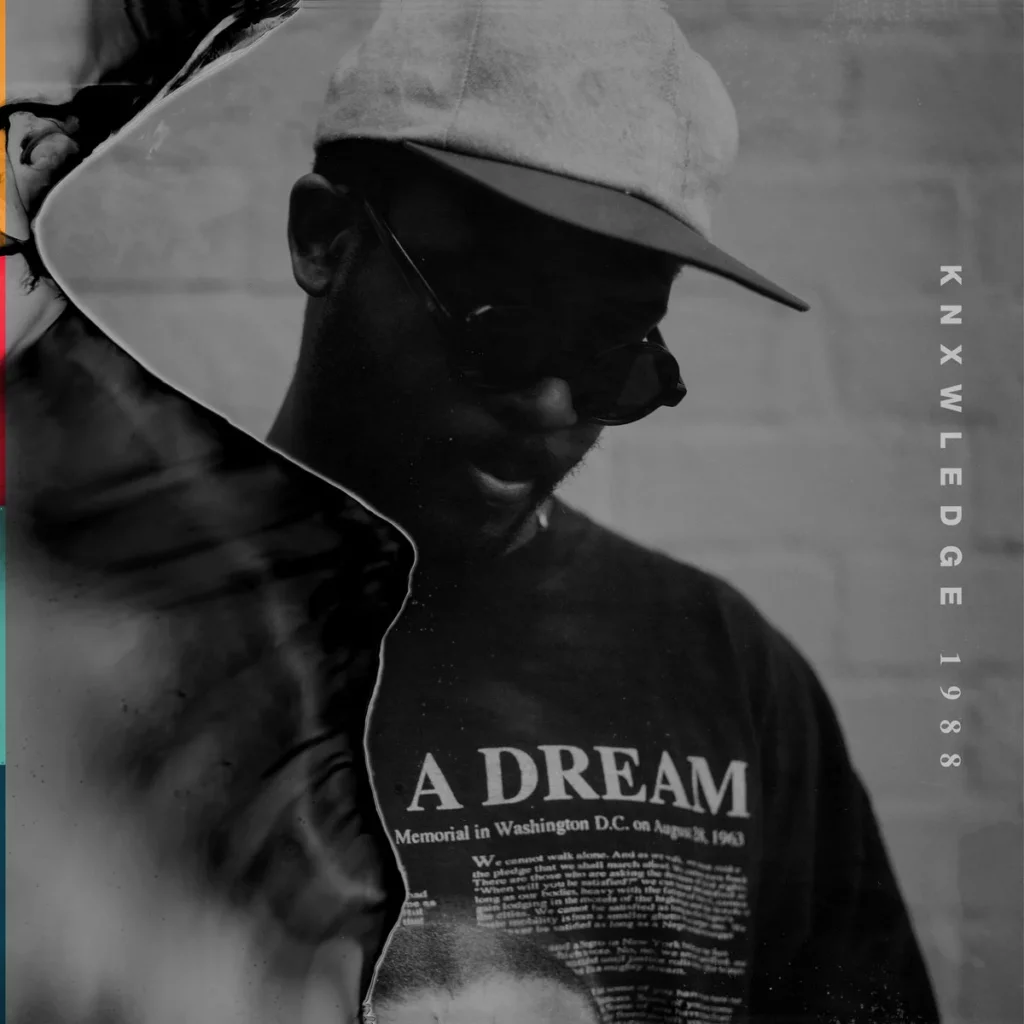
By the time 1988 arrived, Knxwledge had already released well over a hundred projects, most of them beat tapes dropped on Bandcamp with little warning or fanfare. He’d also found a wider audience as one half of NxWorries with Anderson .Paak. Named after the year he was born, 1988 was only his second proper album, five years after Hud Dreems. Stones Throw released it on March 27, 2020, just as much of the world went into lockdown, and its warmth landed at exactly the right moment.
Knxwledge made it at home on an SP-303, a Mellotron and a Prophet synth, and you can hear the hands-on approach in every crackle. The 22 tracks fly by in under 40 minutes, most of them lasting a minute or two before melting into the next. He flips R&B like someone raised on ’90s radio. Kut Klose’s “Surrender” turns up pitched high on the opener, “Dont Be Afraid,” and a Gerald Levert vocal anchors the lead single, “Do You.” A pastor and gospel singers drift through “Listen,” Ebro Darden’s radio voice cuts into “Howtokope.,” and a Meek Mill freestyle drives “Watchwhoukallyourhomie.”
Guests play a bigger role here than on most of this list. Anderson .Paak’s voice floats over horns on “Solivelife,” NxWorries reunite on “Itkanbe[sonice],” and Durand Bernarr and Rose Gold close things out on “Minding_my Business,” the longest track on the album. Even so, the beats steer the ship.
Some of the sketches end just as you settle into them, which is part of the Knxwledge style. Play 1988 front to back, though, and the fragments add up to something warm, intimate and quietly uplifting: a producer growing up in real time.
That’s our 25, and as you can see, the range is wide. Turntablists like Q-Bert, Mix Master Mike, Rob Swift and Kid Koala turned the decks into a lead instrument. Diggers like DJ Shadow, Madlib and J Dilla built whole worlds out of other people’s records. DJ Krush and DJ Cam proved this music never belonged to one city or one country. Then there’s a live band playing a fallen friend’s beats by hand, and producers like Apollo Brown and Damu The Fudgemunk working from battered gear and old floppy disks.
What connects them all is trust in the beat. Nobody on this list needed a verse to tell a story, set a mood or make a room move. The drums, the samples, the cuts and the space between them did the talking. A few of these records invited a rapper or a singer in for a moment, but the producer stayed in charge every time.
The best part is that the story keeps going. Every year, another kid with a sampler, a laptop or a crate of dusty vinyl picks up where these albums left off, and somewhere a new classic is being chopped together right now.
Did we leave out your favourite? Let us know which instrumental album you would have put on the list.