
Pick almost any week of 1994 and DJ Premier’s drums were playing somewhere in New York. He produced three songs on Nas’s Illmatic, gave The Notorious B.I.G. “Unbelievable” for Ready to Die, made every beat on Jeru the Damaja’s The Sun Rises in the East and opened the year with Gang Starr’s Hard to Earn. That run tells you a lot about the city’s sound that year: jazz and soul loops chopped into tight phrases, kicks and snares with real weight behind them, and MCs expected to fill every bar with detail.
New York had other ideas too. RZA’s detuned pianos and murky loops pulled Method Man’s Tical and the Gravediggaz’s 6 Feet Deep into darker territory. Organized Konfusion built Stress: The Extinction Agenda around tangled, multisyllabic rhyme schemes and jagged beats that refused to settle into a groove. Digable Planets traded the breezy jazz samples of their debut for live-band textures and Brooklyn politics on Blowout Comb, while Redman bent funk into something stranger on Dare Iz a Darkside. O.C., Keith Murray, Artifacts and The Beatnuts kept the underground crowded with sharp, specific records.
The rest of the map was moving fast. In Chicago, Common and No I.D. set loose, conversational verses over warm jazz loops on Resurrection. On the West Coast, Warren G turned G-funk’s whining synth leads and rubbery basslines into something mellow and radio-friendly on Regulate…G Funk Era, while The Coup answered from Oakland with the pointed politics of Genocide & Juice. Down South, Organized Noize gave OutKast’s Southernplayalisticadillacmuzik live-played funk that owed nothing to New York or Los Angeles. Scarface went inward on The Diary, and UGK’s Super Tight and Eightball & MJG’s On The Outside Looking In showed how deep the regional scenes already ran.
The depth is what makes ranking 1994 hard. Albums that would top the list in a thinner year land in the twenties here, and a few records we love missed out altogether. We ranked these 40 on how they sound today and on what they did in their moment, with room for the overlooked ones alongside the obvious picks.
By the end of the year, a 20-year-old from Queensbridge and a 22-year-old from Bed-Stuy had set the standard New York rap would be judged by for the next decade. A duo from East Point had quietly started a challenge to it.
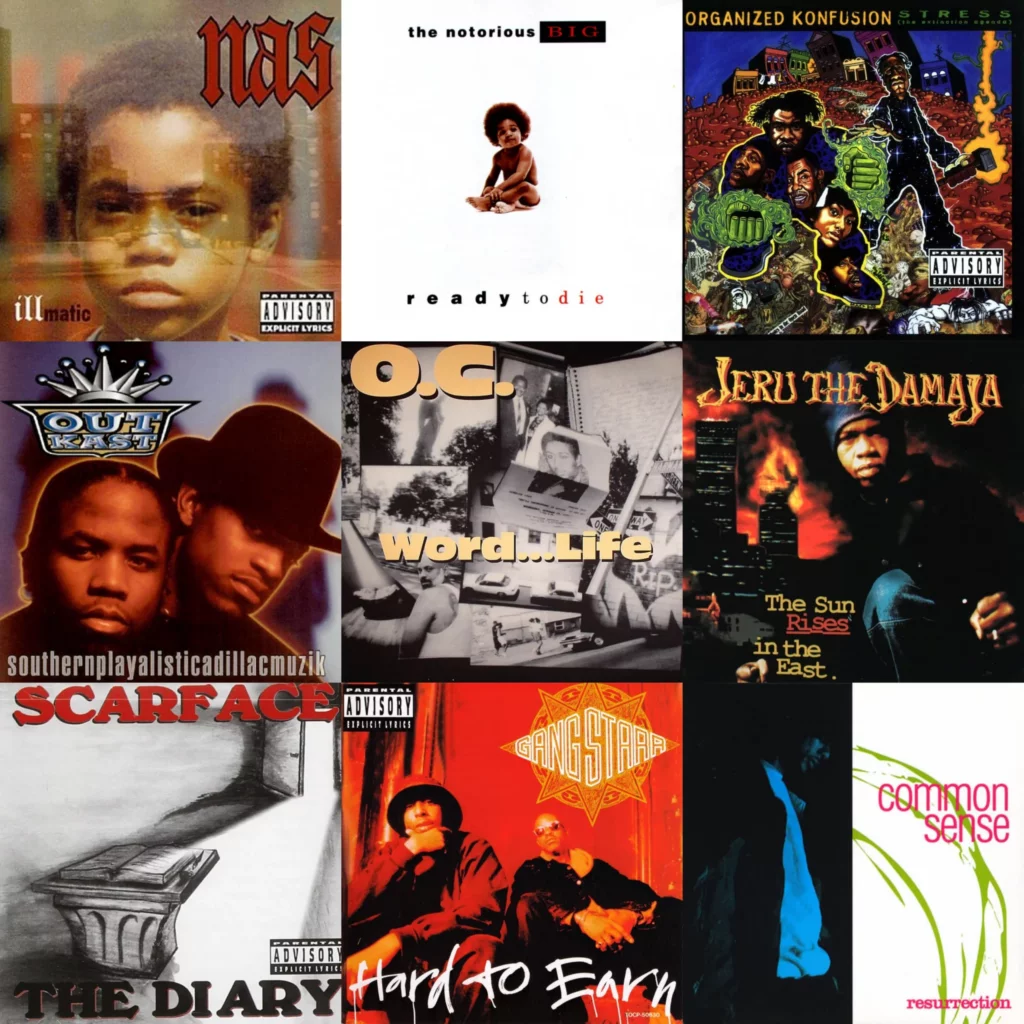
1. Nas - Illmatic

The original vinyl and cassette had no Side A or Side B. The labels read “40th Side North” and “41st Side South,” the streets that bound the Queensbridge Houses. That tells you how Nas thought about Illmatic: ten tracks, under 40 minutes, laid out like a map of a few city blocks by a 20-year-old who had been writing these rhymes since he was 16.
“N.Y. State of Mind” sets the terms. DJ Premier loops a dark piano figure from Joe Chambers’ “Mind Rain” under the bent guitar notes of Donald Byrd’s “Flight Time.” Nas sounds caught off guard at first, saying he doesn’t know how to start before Premier counts him in, and then he delivers one long verse full of rooftop snipers, trap doors and corner lookouts. His tone is level and conversational, which makes the density of the writing easy to miss. Nas stacks internal rhymes and runs sentences across bar lines the way Rakim did, but his details are smaller and more local. He fills the verses with street names, local crews and the paranoia of a kid who treats sleep as too close a relative of death.
Five producers work in different registers without breaking the mood. Premier keeps his tracks stark, and on “Memory Lane” he lays Reuben Wilson’s organ under snippets of Biz Markie and Craig G, so Nas places himself in Queensbridge’s Juice Crew lineage. Large Professor, who first put Nas on record with “Live at the Barbeque,” builds “It Ain’t Hard to Tell” from the swirl of Michael Jackson’s “Human Nature” and Stanley Clarke drums. Pete Rock wraps “The World Is Yours” in Ahmad Jamal’s piano, the warmest sound on the record, and Nas answers with his most hopeful writing. Q-Tip makes “One Love” out of the Heath Brothers’ upright bass and piano over a Parliament break, leaving space for Nas’s letters to friends in prison, full of neighborhood news and ending with a warning to a kid already heading the same way.
AZ is the only guest. His verse on “Life’s a Bitch” turns the song into a meditation on money and mortality, and Nas’s father, Olu Dara, plays it out on cornet over the Gap Band sample.
The singles barely charted, and the first-week sales disappointed Columbia. None of that changed what the album did to New York rap, where every lyricist who followed had to account for how much Nas packed into those ten tracks. Nas felt that weight too. For the rest of his career he was measured against the seven-year-old on the cover.
2. Notorious B.I.G. - Ready To Die

You can hear two versions of Christopher Wallace on Ready to Die. The first was recorded in 1993 for Uptown. That Biggie is higher-pitched and hungry, and he tears through “Gimme the Loot,” “Things Done Changed” and the title track like someone who expects each session to be his last. Then Sean Combs was fired from Uptown, and the album sat unfinished while Biggie went back to hustling in North Carolina for a while. By the time he returned to complete it on the new Bad Boy label, his voice had settled into a smoother, more assured register, and he had stopped writing his rhymes in notebooks, composing them in his head instead. The debut album that came out of those two periods holds the strain of each.
Easy Mo Bee handles much of the darkest material. On “Warning” he slows Isaac Hayes’ “Walk On By” to a creep while Biggie acts out a late-night phone call about men coming to rob him, and he times the tension like a thriller. “Gimme the Loot” casts him as two stick-up kids at once. He pitches one voice up to argue with the other, and the dialogue gets funnier and nastier as the plans spiral. His flow is loose but exact. He piles rhyme on rhyme in quick bursts and leaves air around them, so the punchlines land on the first listen. Method Man takes the album’s only guest verse on “The What,” and his slippery, sing-song phrasing sharpens the weight of Biggie’s deliberate cadence.
The Bad Boy sessions brought the hits, with Combs pushing for a more commercial sound. “Juicy” turns Mtume’s “Juicy Fruit” into the backdrop for a rags-to-riches story told through specific memories of a broke Brooklyn childhood, and Chucky Thompson lays “Big Poppa” over the Isley Brothers’ “Between the Sheets.” The radio records hold together with the rest because the narrator never changes: he’s relaxed, funny and watchful whether he’s courting women or counting enemies.
The frame is cinematic. The “Intro” moves from a delivery room through Curtis Mayfield, “Rapper’s Delight” and Audio Two, so Biggie’s childhood unfolds alongside Hip Hop’s own records. At the far end, Lord Finesse builds “Suicidal Thoughts” around a muted Miles Davis sample, and Biggie talks himself toward the edge in a flat, quiet voice.
Wallace later explained that the title described his willingness to risk everything on the music, the way he once risked his life selling drugs. The heartbeat that fades at the end of the record makes the darker reading hard to shake.
3. Organized Konfusion - Stress: The Extinction Agenda
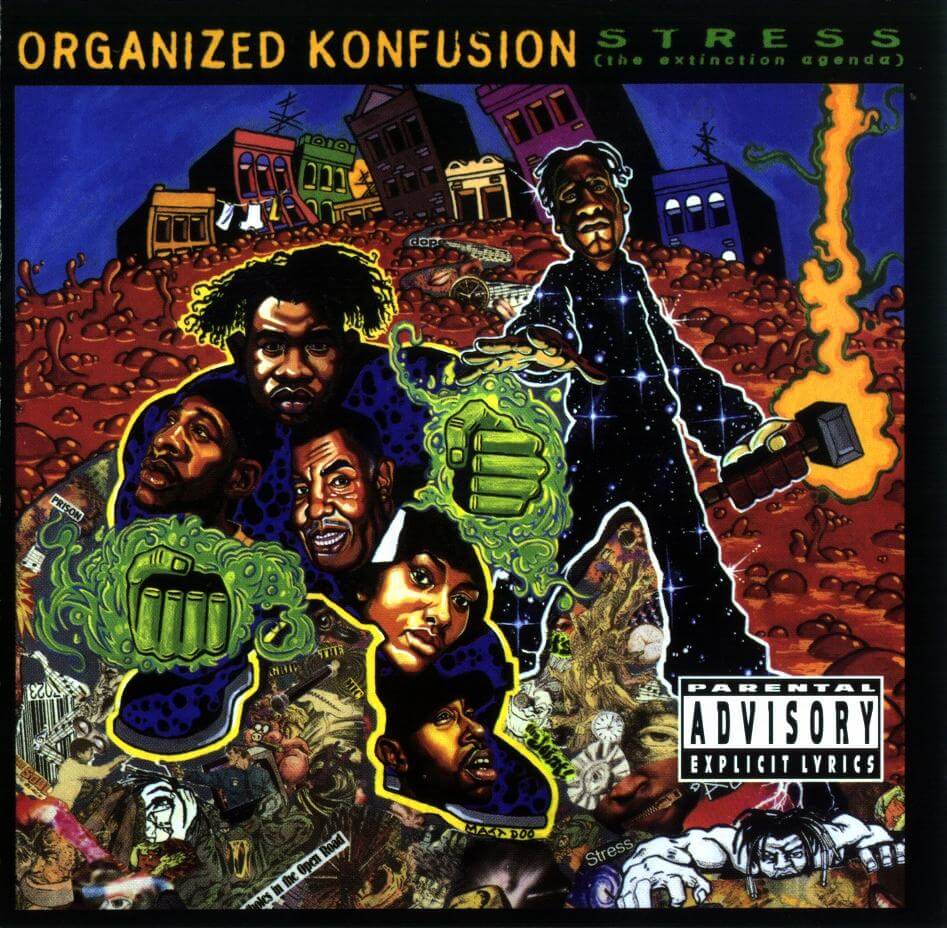
The most claustrophobic New York rap album of 1994 came out on a Disney subsidiary. Hollywood BASIC had little idea how to sell Stress: The Extinction Agenda, promoted it barely at all, and let it fall out of print. Its subject is pressure: money, police, gunfire, and the slow mental toll of living inside all of it.
On their 1991 debut, Organized Konfusion had sounded light and playful. Here, Pharoahe Monch and Prince Po still produce most of the record themselves, but they bring in Buckwild of D.I.T.C. and a young Rockwilder, and the jazz they sample turns sour. Buckwild builds “Stress” on a Charles Mingus source, while the duo pull from Herbie Hancock for “The Extinction Agenda” and Cannonball Adderley for “Keep It Koming.” The horns are dissonant, the piano figures jab instead of soothe, and the drums give the listener nowhere comfortable to rest. The album runs 45 minutes with no concession to radio.
The MCs match that tension. Monch is the acrobat, racing through internal rhymes, holding his breath through long runs and switching cadence mid-line so a phrase seems to fold back on itself before he launches the next burst. Prince Po plays the anchor. His delivery is lower and steadier, and he lands squarely on the beat, which makes Monch’s swerves hit harder when the verses trade off.
“Stray Bullet” puts that craft to work on a single idea. The duo rap as the bullet itself, tracing its path through a neighborhood without caring whose life sits in the way. Gun violence becomes a chain of consequences instead of a prop for tough talk, and the premise is simple enough to grasp on one listen. “Let’s Organize” opens a window, bringing in O.C. and Q-Tip for the album’s only guest verses and a brief sense of a crew in the room.
Critics and fellow MCs recognized what the record was right away, and The Source later placed it among its 100 best rap albums. The shelves told a different story. For years, the usual way to hear an album about a city running out of room was to find a secondhand copy.
4. OutKast - Southernplayalisticadillacmuzik

“Player’s Ball” started life as a Christmas single, with sleigh bells in the mix. The bells came out once radio started playing it into the new year, and what was left became OutKast’s introduction: a slow, rolling groove, a Curtis Mayfield-style falsetto on the hook, and two teenagers from East Point rapping about Cadillacs and the neighborhood as if both had been there forever.
Organized Noize produced every track, working out of the Dungeon, Rico Wade’s basement studio stocked mostly with secondhand gear. Wade, Ray Murray and Sleepy Brown built the beats on live bass, keyboards, organ and bluesy guitar licks, then set them against 808 clave patterns and drums programmed with the hard snap of an SP-1200. The mix of the two is the album’s sonic signature. The live players give it a loose, humid warmth, and the machines keep it rooted in Hip Hop. Brown’s voice drifts through several hooks, sounding more like a church-trained soul singer than a guest R&B vocalist.
André and Big Boi had met at Lenox Square Mall at 16, and on this record their contrast is already set. Big Boi, who had sharpened his rapping under Murray’s guidance, attacks in quick, frenetic bursts. André stays relaxed, chopping his lines into staccato pieces and sometimes slipping into song. Their drawl and their slang were the main reason East Coast tastemakers hesitated, and they are also why the writing lands. “Call of da Wild” deals with the pull of dropping out of school, something André had done at 17. “Crumblin’ Erb” sets the comfort of smoking against the steady news of young Black men killing each other, and it refuses to pick between them.
The long run of “Git Up, Git Out” brings in Goodie Mob, with CeeLo voicing the hopes of a young man and the worries of a mother in the same verse, over a beat that never hurries. The record is not airtight. The interludes paint Atlanta life but slow the second half, and “D.E.E.P.” loops one bassline too long. “Funky Ride,” a Society of Soul showcase with no rapping at all, closes on a long guitar solo straight out of Funkadelic.
Sleepy Brown later said the crew wanted Atlanta men to be proud of where they came from. The proof came quickly: the same basement team soon produced TLC’s “Waterfalls” and Goodie Mob’s Soul Food, and the Dungeon became an address the rest of the country had to learn.
5. O.C. - Word... Life

“Time’s Up” went after rappers who claimed crimes they never committed and lives they never led, and O.C. delivered the whole indictment without raising his voice. His tone is calm and conversational, his diction is so clear that every syllable registers, and he tucks internal rhymes into the middle of his lines instead of hammering them at the end. The calm makes the criticism hit harder. On a record released into the loudest year of New York rap, he sounds like the most composed person in the room.
Word… Life has a lot in common with Illmatic: a young New York writer, jazz and soul loops over hard drums, and a tight, consistent mood from start to finish. Somehow it never received anything like the same reverence. Buckwild, still new to production, made most of it, and his beats give O.C. a steady, dusty backdrop that never fights his voice. The rest of the credits trace O.C.’s two circles. Lord Finesse brings his D.I.T.C. crewmate the plain-spoken “Ga Head.” Organized Konfusion, who had introduced O.C. on “Fudge Pudge” in 1991, produce the opening “Creative Control” and “Constables,” and Prince Po and Pharoahe Monch return the favor on “No Main Topic” and “Let It Slide.”
The writing covers more ground than the battle-rap reputation of “Time’s Up” suggests. “Born 2 Live” reflects on mortality over a melancholy Buckwild loop, the kind of subject most debuts that year kept at arm’s length. “O-Zone” and “No Main Topic” show a looser, more abstract O.C., letting associations drive the verses instead of a fixed theme. “Let It Slide” puts his storytelling and easy charisma up front. Across the album, he steps away from the playfulness of the Native Tongues, the fury of Public Enemy and the shock tactics of the West Coast, and offers a quieter model for the lyricist: thoughtful, self-possessed and unbothered by trends.
Two things kept Word…Life out of the spotlight. Wild Pitch was in serious financial trouble and could barely promote it, and 1994 was crowded with releases that took up all the attention. We consider it one of the very best albums of the year. Put it next to Illmatic on a listening session and the gap in their reputations starts to look like a marketing problem.
6. Jeru The Damaja - The Sun Rises In The East

The drip that runs through “Come Clean” comes from a percussion piece by Shelly Manne. DJ Premier treats it as the melody, letting the water-drop clicks ring over a bare beat until they sound like a clock ticking in an empty room. Jeru the Damaja used that space for a sermon against rappers selling fake images, and the single became one of the most recognizable sounds of 1994.
Premier produced all of The Sun Rises in the East and kept it skeletal: heavy drum breaks, warped jazz fragments, stray melodic scraps and sharp scratches, with almost nothing that works as a conventional hook. The austerity suits Jeru, who raps with the gravel and conviction of a street preacher. His cadence is measured and slightly off-kilter, lagging behind the drums before catching up, so every lesson sounds deliberate.
The lessons draw on Five Percent teachings and a deep distrust of ignorance. “You Can’t Stop the Prophet” turns spiritual combat into an allegory, with Jeru as a warrior facing the forces that lead people astray and Premier’s scratches punctuating the fight. “Ain’t the Devil Happy” applies the same moral lens to greed and violence, while “D. Original” and “My Mind Spray” are pure technique. Afu-Ra, a fellow Gang Starr Foundation member, joins him on the brief “Mental Stamina.”
His judgments don’t always cut so cleanly. “Da Bichez” sets out to criticize how rap treats women, then slides into a lecture that flattens the people it describes.
The cover shows the World Trade Center in flames. Jeru intended it as a symbol of a corrupt industry burning, and seven years later the image took on a terrible second meaning. Across 40 minutes, he plays the man holding the match.
7. Scarface - The Diary
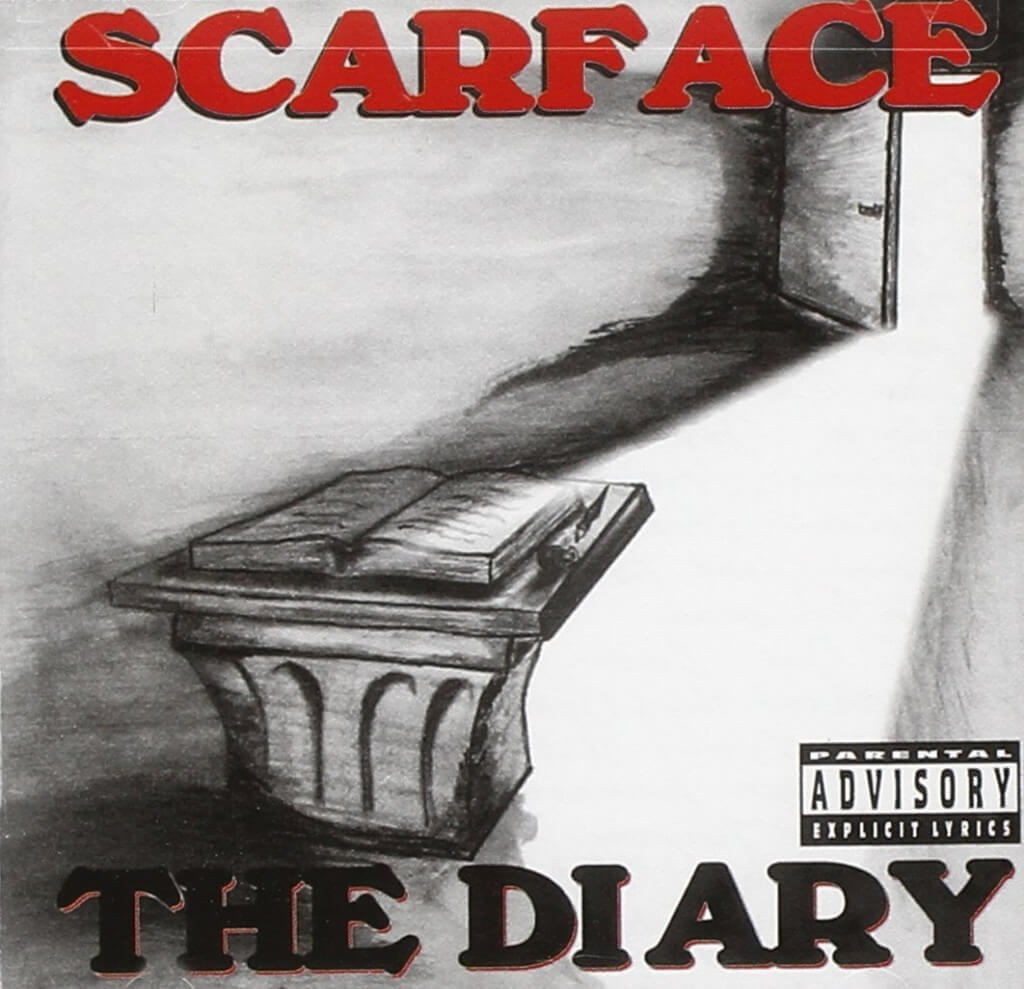
Scarface’s voice is low, round, and unhurried, and he rarely pushes it. That restraint is what makes The Diary frightening. He describes revenge killings and sleepless paranoia in the tone of someone running through the day’s errands, and the menace comes from how well he understands the people in his stories and the choices they make.
N.O. Joe and Mike Dean produced most of the album, with Scarface co-producing a good share of it, and together they built one of the great Houston rap albums from deep basslines, eerie keyboards and slow, heavy drums. The arrangements leave wide open spaces, so the voice always sits in front. “The White Sheet” and “Jesse James” set the tone with scenes of retaliation and sudden death, and the beats creep instead of charge.
“I Seen a Man Die” is the album’s center. Scarface follows a man through poverty, crime and prison to an early death, and he never reduces him to a cautionary symbol. Retitled “Never Seen a Man Cry” for radio, it became his first top 40 hit, a striking result for a song this bleak. “Mind Playin’ Tricks ‘94” goes back to the Geto Boys classic and strips it down to one man alone with his fears.
The album has lighter moments too. “Goin’ Down” rides a playful keyboard groove that lets his humor and swagger out. On “Hand of the Dead Body,” with Ice Cube and Devin the Dude, he takes on the politicians and media figures who blamed rap for violence while ignoring poverty and neglect. The rest of the record backs up the argument, because nobody on it treats violence as entertainment.
The closing title track turns fully inward, with Scarface laying out the thoughts and experiences that made him. Within two months The Diary had gone platinum, which put a million copies of a record that never claims the life is worth it into people’s homes.
8. Gang Starr - Hard To Earn

The song Gang Starr aimed at rappers chasing pop success ironically gave them their first Hot 100 single. “Mass Appeal” rides a hypnotic, circling loop, chopped vocal fragments and hard drums while Guru mocks anyone willing to trade credibility for airplay, and its success made the point for him: Gang Starr could reach a wide audience without bending.
Hard to Earn trades much of the jazz warmth of Step in the Arena and Daily Operation for stark loops, abrasive textures and heavier drums. “Alongwaytogo” opens on a high, unsettling whine over a tough break, and Premier leaves the arrangement nearly empty so Guru can go after the phonies crowding the game. His flat, steady baritone carries the authority, and he never needs to shout. “Code of the Streets” turns that voice to the unwritten rules of the neighborhood, while “Tonz ‘O’ Gunz” puts a menacing bassline under his look at the guns flooding the block.
The album doubles as a showcase for the Gang Starr Foundation. On “Speak Ya Clout,” Guru, Lil’ Dap and Jeru the Damaja each rap over a different Premier beat, and the switches give every MC a backdrop cut to fit. Big Shug joins on “F.A.L.A.,” and a skit packs in cameos from Nas, A.G., Masta Ace and MC Eiht. “Dwyck,” a 1992 single the label insisted on including, lets Greg Nice and Smooth B loosen the mood with their bouncy back-and-forth.
That family feel is the record’s lasting imprint. Within months, Premier had produced Jeru’s debut, and Group Home were next in line. Hard to Earn set the house sound they would all build on.
9. Common - Resurrection

“I Used to Love H.E.R.” works as a love story long enough that a first-time listener can miss the twist. Common describes a girl he met as a child, follows her through her Afrocentric phase and her move out West, and watches her fall for money and gunplay. Only in the final line does he reveal that she was Hip Hop all along. No I.D. sets the story over a soft George Benson sample, and the restraint of the beat lets the disappointment register as personal heartbreak. Ice Cube heard it as an attack on West Coast rap, answered on “Westside Slaughterhouse,” and got “The Bitch in Yoo” in return before the two settled things privately at Louis Farrakhan’s home.
The rest of Resurrection shows how far Common Sense, billed under that full name for the last time, had come since the jokey Can I Borrow a Dollar? No I.D. builds most of the album from dusty jazz loops, supple basslines and soft piano, with drums that sit back in the mix. Common’s rhymes curl around them, packing syllables into odd corners of the bar. “Communism” is pure wordplay, an entire verse built from words that begin with “com.” “Thisisme” trades jokes for self-examination, and “Chapter 13 (Rich Man Vs. Poor Man),” one of two tracks produced by Ynot, turns economic inequality into a dialogue.
Interludes and references to Stony Island Avenue split the record into East Side and West Side halves and give it the feel of a long day on Chicago’s South Side. Rolling Stone put it alongside Illmatic, Enter the Wu-Tang and Ready to Die. The charts disagreed: the album peaked at No. 179 and was gone a week later.
The last voice on Resurrection belongs to his father, Lonnie “Pops” Lynn, reading poetry on “Pop’s Rap,” a closing ritual Common has kept ever since. On an album about losing a first love, his roots get the final word.
10. Pete Rock & CL Smooth - The Main Ingredient

Between many of the songs on The Main Ingredient, Pete Rock slips in a few bars of something else: a horn line, a snatch of keys, a groove that plays for a moment and then dissolves into the next track. Those small instrumental bridges, carried over from Mecca and the Soul Brother, make the 76 minutes flow like a DJ set, and they tell you where the album’s heart lies.
This record belongs to the producer. Pete Rock had sharpened every part of his style: filtered basslines that sit warm and low, swirling horns, electric piano, and snappy drums that crack without turning harsh. He scratches in Biz Markie’s voice again and again, and on “Sun Won’t Come Out” he builds the hook around Harvey Scales singing the same title, turning a forgotten soul record into the album’s catchiest moment. “In the House” opens with energy and hands Pete Rock a verse of his own, while “I Got a Love” and “Carmel City” show how delicately he could chop a melody.
CL Smooth will never top anyone’s list of great lyricists, and he doesn’t need to. His smooth, even delivery glides over the beats on “Searching,” where Vinia Mojica sings the chorus, and “Take You There.” The Mount Vernon crew fill out the rest, with Rob-O, Deda, and Pete’s younger brother Grap Luva bringing a cipher-like looseness to “Worldwide” and “In the Flesh.”
The Main Ingredient had no single on the level of “T.R.O.Y.,” so it rarely comes up when people list the great albums. That’s a mistake, because it comes very close to its predecessor’s near-perfection, and few records from 1994 are this much fun to play from start to finish.
Pete Rock & CL Smooth split in 1995, shortly after a Sprite commercial put them in front of their biggest audience. Pete Rock kept making beats for decades, but this album was the last time his music came with the voice it was built for.
11. Gravediggaz - 6 Feet Deep
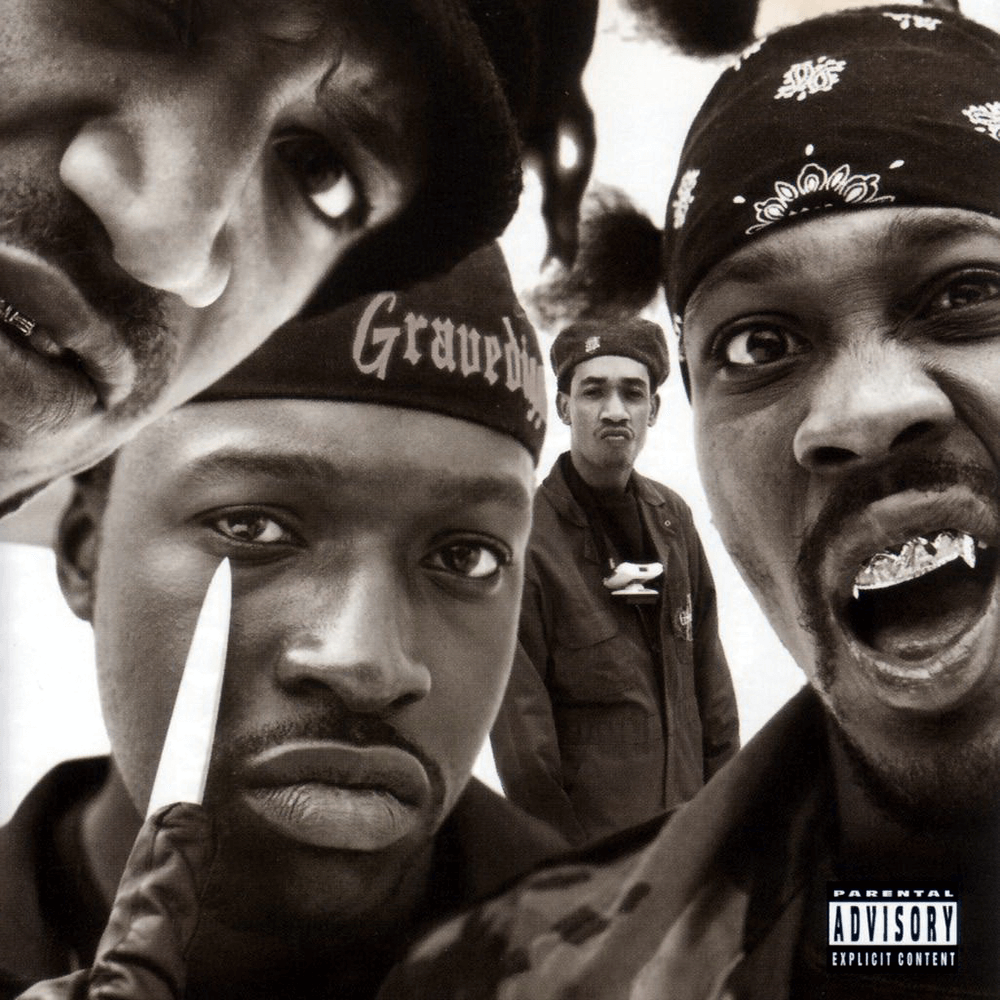
The Undertaker, the RZArector, the Gatekeeper and the Grym Reaper came together at the lowest points of their careers. Prince Paul had drifted away from De La Soul and was making dark, depressed instrumentals at home. RZA, Frukwan and Poetic all carried bad memories of Tommy Boy. Def Jam and Jive passed on their demo, and RZA went off to start the Wu-Tang Clan while the others took day jobs. By the time Gee Street signed them, the bitterness had turned into a concept.
6 Feet Deep points horror-movie excess at the gangsta rap of the early ’90s, where acts were trying to outdo each other in gruesome detail, and the result is closer to satire than shock. Most of the beats are Prince Paul’s, and he keeps them theatrical: an Allen Toussaint piano loop gives “Constant Elevation” its manic pull, psychedelic guitar wails through “Defective Trip (Trippin’),” and Booker T. & the M.G.’s “Sunny” sits under the pitch-black joke of “1-800 Suicide.” RZA’s own productions, “Diary of a Madman” and “Graveyard Chamber,” sound grimier, and they bring in Killah Priest and other Wu affiliates.
Esham and the Geto Boys had gone to dark places before, but Gravediggaz built a whole world around it, with characters, sound effects and gallows humor, and helped make horrorcore a recognized style. Four men the industry had written off dressed up as corpses and laughed at the people who buried them.
12. Digable Planets – Blowout Comb

The voices on Blowout Comb sit low in the mix, on purpose. Ishmael Butler had taken note of George Clinton’s idea that lyrics you half-miss keep pulling you back, and he wanted the raps woven into the music instead of laid on top. The label complained nobody could hear the words. Thirty years later, that’s exactly why the record still sounds fresh.
After moving from Philadelphia to Fort Greene, Digable Planets dropped their insect names and much of their lightness. Butler programmed the drums, and engineer Dave Darlington helped blend vinyl from the group’s world tour with live players until it was hard to tell which was which. The result is smart and seductive, closer in spirit to The Roots than to the coffeehouse jazz of their debut. Grant Green and The Meters drift through the seven-minute “Black Ego,” Roy Ayers’ “We Live in Brooklyn, Baby” gives Guru a home on “Borough Check,” and Jeru the Damaja turns up on “Graffiti.” Ish, Mecca and Doodlebug trade verses with a relaxed, easy flow and fill them with Five Percent lessons and Black Panther history. Butler’s parents had both been Panthers, and the artwork imitates the party’s newspaper.
The label barely promoted the album, the singles stalled, and the trio split early in 1995. Blowout Comb captures a group in mid-transformation, caught at the moment it found a new sound and then stopped. Few records from 1994 are this creative, and the album holds up as a portrait of Brooklyn told by people who had only recently arrived.
13. Redman - Dare Iz A Darkside

Redman’s head pokes out of the dirt on the cover, a direct nod to Funkadelic’s Maggot Brain, and the music underneath heads for the same murky, psychedelic place. Dare Iz a Darkside is Redman at his darkest: a sludgy, paranoid funk record framed by Dr. Trevis skits, with basslines that crawl along the floor and drums that land with a dull thud.
He produced most of it himself, and Erick Sermon and Rockwilder add a few beats. Rockwilder’s “Bobyahed2dis” and Redman’s own “Wuditlooklike” lock into repetitive, smeared grooves and refuse to resolve them. The P-Funk bounce of Whut? Thee Album is still underneath, but it has gone thick and soggy. “Cosmic Slop,” named after another Funkadelic album, brings in Sermon and Keith Murray for the closest thing to a party on the record, and Sermon’s “Can’t Wait” gave radio something to hold on to.
Redman’s rhymes are frantic and unpredictable. He swerves from punchline to threat to plain nonsense within a few bars, his voice going gruff and then cracking into a laugh, and the jokes and the menace blur until you can’t separate them. Later he admitted he was doing a lot of drugs during the sessions and stayed away from these songs for decades. “Can’t Wait” didn’t return to his set until his 2021 Verzuz with Method Man.
It is less accessible than his debut or Muddy Waters, and it is one of his best. The record he spent years avoiding still went straight to No. 1 on the R&B/Hip Hop album chart.
14. Public Enemy - Muse Sick-N-Hour Mess Age

In 1994, Public Enemy closed out an album with Harry Allen calling Chuck D to talk about the coming information superhighway. Few people paid attention. Muse Sick-n-Hour Mess Age was misread on arrival and has stayed chronically underrated ever since, judged against the group’s earlier classics instead of on its own crowded, restless terms.
The Bomb Squad’s old wall of noise is still here, now steered by Gary G-Wiz and Chuck himself under his Carl Ryder alias. Give It Up runs on a twangy guitar riff and a pulsing bassline. “Bedlam 13:13” sets eerie choral tones against booming drums, and “Death of a Carjacka” slides an Isaac Hayes sample under its hard edges. “What Kind of Power We Got?” gives Flavor Flav a loose funk groove to bounce across. The arrangements pile guitars, chopped samples and vocal fragments on top of each other, and the clutter is part of the message: a country this noisy and this sick can’t be described cleanly.
Chuck’s targets are close to home. On “So Whatcha Gone Do Now?” he rides a smoother, jazzier beat to confront destruction inside Black communities, and “Thin Line Between Law & Rape” traces the long history of racial injustice. Easy Mo Bee co-produces the bitter, mid-tempo “I Stand Accused.” “Godd Complexx” comes from the pen of Jalal Mansur Nuriddin, also known as Alafia Pudim, and connects Public Enemy to the spoken-word politics that came before them.
The album asks for patience, and it pays back the listener who gives it.
15. UGK - Super Tight

Super Tight was the first UGK album to bring in Leo Nocentelli, the guitarist whose choppy, syncopated playing had powered The Meters. His presence tells you where Pimp C’s head was. The Port Arthur producer wanted street rap that swung like Southern soul and blues, with church organ, warm guitar lines and basslines that sit deep and heavy at the bottom of the mix.
Pimp C produced every track, sharing three with DJ DMD, and he lets the grooves roll at a slow, steady cruise. “It’s Supposed to Bubble” glides along on Pleasure’s “Thoughts of Old Flames,” a perfect fit for the duo’s champagne swagger, while “Front, Back & Side to Side,” with Smoke D, is built for slow driving with the windows down. “Underground” plants their flag as an independent Southern act with no interest in borrowing a coastal sound.
The darker songs give the album its weight. Bun B takes “Feds in Town” alone, laying out the tension of life under police surveillance, and “Protect & Serve” turns a sarcastic hook on corrupt cops. “Stoned Junkee,” featuring 3-2, tells the drug story from the user’s side. Even the raunchy “I Left It Wet for You” takes a sudden turn when Pimp touches on thoughts of suicide.
The partnership is the glue. Bun’s clipped, articulate delivery keeps the stories in order, and Pimp’s drawl, melodic hooks and unpredictable personality knock them loose again. Two years before Ridin’ Dirty, the blueprint for Texas rap’s slow-rolling confidence is already drawn here, with a Meters guitarist helping hold the pencil.
16. The Beatnuts - Street Level

Officially, the album has no title beyond the group’s name. “Street Level” appears only on the front cover, but the name stuck, and it fits a record that never aims higher than the block and never needs to. The Beatnuts’ full-length debut is an underappreciated New York classic, consistent from start to finish with no filler.
JuJu and Psycho Les had built their reputation as producers, and the beats show it. They handled nearly everything themselves, digging up dusty jazz, funk, and soul breaks and setting them over booming basslines and crisp drums. “Get Funky” draws on a Joe Zawinul composition, and Lucien adds the opener “Ya Don’t Stop.” “Props Over Here” became the single for good reason, with a loose, head-nodding loop and a hook that sticks on the first listen.
On the mic, the Queens trio trade swagger and crude, quick humor over complex narratives, and their braggadocio is catchy and creative. Fashion’s sharper voice cuts against Les and JuJu’s laid-back delivery, which keeps the back-and-forth lively on “Superbad.” Grand Puba drops by for “Are You Ready,” and his playful, slippery verse fits right in with the crew’s energy. “Psycho Dwarf,” carried over from the 1993 Intoxicated Demons EP, closes the album with Psycho Les at his most unhinged.
Soon after, Fashion left to go solo as Al’ Tariq, and the Beatnuts carried on as a duo. That makes Street Level the only full album by the original trio, and the one where three voices fight for room over the same dusty loops.
17. Method Man – Tical
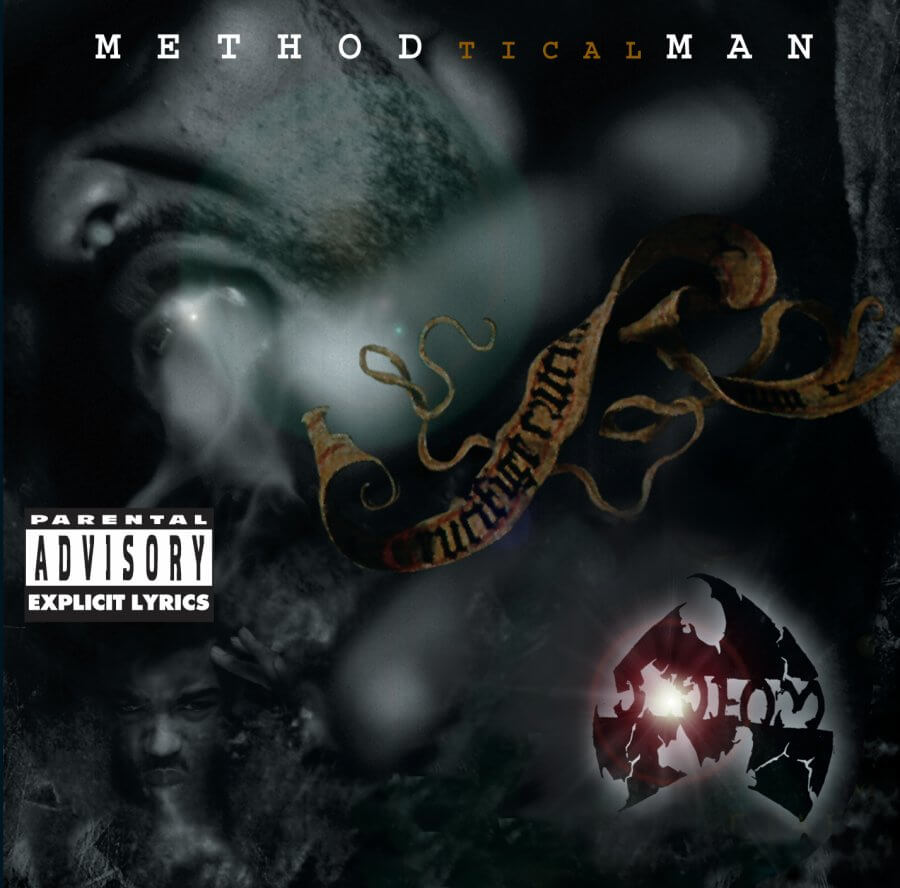
RZA had his Wu-Tang MCs compete for his beats, and “Meth vs. Chef” puts that system on record: Method Man and Raekwon battling over the same instrumental for the right to keep it. The song was cut in 1993, before a flood at RZA’s studio destroyed a stockpile of beats. Much of Tical had to be rebuilt and mixed in a hurry, and you can hear it. The album sounds like it was made in a damp basement, and that grit suits Meth’s hoarse, smoky voice perfectly.
RZA produced almost all of it, with 4th Disciple co-producing “Sub Crazy” and Meth “P.L.O. Style.” He strips the sound of Enter the Wu-Tang (36 Chambers) down to heavy, muffled bass, distorted wails, and drums that sound recorded through a wall. “Bring the Pain” is the model: a sparse, funky crawl capped by Booster’s ragga chant, with Meth sliding across it in a lazy drawl that snaps into sharp punchlines.
The first solo album from a Wu-Tang Clan member was a hit right away. “Release Yo’ Delf” brought Blue Raspberry in to twist Gloria Gaynor’s “I Will Survive” into a Shaolin anthem, and “All I Need,” a love song on the album, was reworked with Mary J. Blige into a Grammy-winning crossover a year later. Meth said years afterwards that the title stands for “taking into consideration all lives.” On a record this murky, the charisma comes through in every bar.
18. The Coup - Genocide & Juice

The title rewrites “Gin and Juice,” released nine months earlier, and the joke runs through the whole record. Boots Riley borrows the slinky basslines and smooth funk of West Coast gangsta rap, then uses them to tell stories about who really profits from the hustle. Genocide & Juice has the groove of a party record and the politics of a pamphlet.
The opening stretch plays like one continuous story. On “Fat Cats, Bigga Fish,” a small-time pickpocket slips into a high-society banquet and realizes the guests are running far bigger scams than he ever could. “Pimps (Free Stylin’ at the Fortune 500 Club)” pushes the satire into the surreal, with oil barons and Donald Trump boasting like street pimps, and Boots and E-Roc deliver it so deadpan it turns chilling. “Takin’ These” frames robbery as a militant act over a beat that stays impossibly smooth.
The music sounds richer than most Bay Area records of 1994. Live bass, horns, and drums from Oakland musicians mix with Parliament- and James Brown-style funk, and DJ Pam the Funkstress cuts through with sharp scratches that keep the album grounded in Hip Hop. “Santa Rita Weekend,” named for the county jail, slows into a bluesy reflection on incarceration with E-40 and Spice 1 lending their voices, a link between Oakland’s political underground and its biggest street names.
The Coup never lecture. They let their characters talk and trust the punchlines to make the case. On a West Coast obsessed with gin, juice and getting paid, they asked who was paying.
19. Beastie Boys - Ill Communication

The backing track for “Sabotage” sat unused for a year under the working title “Chris Rock” before the Beastie Boys added vocals. When they did, MCA’s fuzzed, twangy bass and Ad-Rock’s shouted rant about a producer holding them back turned it into a punk explosion, and Spike Jonze’s cop-show parody video carried it everywhere.
Ill Communication keeps pushing the live-band approach of Check Your Head. Co-producing with Mario Caldato Jr., the trio play alongside Money Mark’s keyboards and Eric Bobo’s percussion, with Miles Davis’s electric records On the Corner and Agharta in mind. “Sure Shot” opens on a looping Jeremy Steig flute line before the three MCs pass the mic back and forth with their usual tight, shouting chemistry. “Root Down” rides a tough funk groove, and “Get It Together” brings in Q-Tip for a relaxed meeting of kindred spirits. Biz Markie livens up “Do It.”
Across 20 tracks, the album wanders freely. “Sabrosa,” “Futterman’s Rule” and “Ricky’s Theme” stretch out into loose jazz-funk jams, and the hardcore blasts “Tough Guy” and “Heart Attack Man” last barely a minute or two. Not every detour lands, and the record is less focused than their best work, but the high points are exceptional. On “Bodhisattva Vow,” MCA raps about his Buddhist convictions, a sign of where the group was heading.
Bruce Davidson, who took the 1964 cover photo, said the demo tape the band sent him sounded like a secret language. For a hugely enjoyable, adventurous album that refuses to sit in any one genre, that description fits perfectly.
20. Above The Law - Uncle Sam’s Curse

Two of the tracks open with dialogue from Against the Wall, the 1994 film about the Attica prison uprising, and that choice sets the tone. Uncle Sam’s Curse, Above the Law’s final album for Ruthless, takes G-funk somewhere heavier than the party records ruling West Coast radio. Cold 187um, KMG and Go Mack spend an hour tracing street life back to the system that shaped it.
Cold 187um produced most of the album with KMG and K-oss, and his arrangements are dense and moody: warm synth leads, pulsing basslines and small dramatic flourishes that leave a sense of unease under the groove. “Black Superman” sets its defiant verses against a melancholy backdrop, and “Return of the Real Shit” opens the album with the weight of a statement. On the title track, the group describe the ghetto as a curse placed on Black communities by the government, and “Set Free” turns the lens inward as 187um and KMG weigh the choices that shaped them.
The record also knows when to let the sun in. Kokane’s smooth, elastic vocals lift “Kalifornia” and “Everything Will Be Alright,” and “Who Ryde” brings in Tone Lōc for a dose of easy swagger, with inventive production details keeping the cruise interesting. Those moments give the album breathing room without breaking its mood.
Pomona sits east of Los Angeles, far from the Long Beach and Compton names that dominated G-funk’s story. Uncle Sam’s Curse shows how much of the sound’s depth came from the edges of the map.
21. Warren G. - Regulate...G Funk Era

“Regulate” plays a street robbery as a duet. Warren G narrates an armed encounter on the streets of Long Beach in a mild, almost polite voice, and Nate Dogg answers with a hook so warm it turns the menace into something you want to sing along to. Underneath, Warren builds the track from Michael McDonald’s soft-rock hit “I Keep Forgettin’” and Bob James’ “Sign of the Times,” giving gangsta rap a pop melody nobody saw coming. The song first appeared on the Above the Rim soundtrack and became the hit that built this album.
Warren produced all of Regulate… G Funk Era himself. Dr. Dre’s stepbrother and a third of 213 with Snoop and Nate, he released it through Def Jam instead of Death Row and gave the label a badly needed hit. His G-funk is softer than Dre’s: rolling bass, gentle synth melodies and soul samples that drift instead of hit. “Do You See” and “So Many Ways” glide along easily, and “This D.J.” turns the pleasure of spinning records into a breezy single.
The Twinz on “Recognize,” the Dove Shack on “This Is the Shack” and Jah Skills on “Super Soul Sis” bring in the wider Long Beach scene. Warren’s rapping has little technical force and his themes rarely stray from parties and the block, but at 37 minutes the album never runs long enough for that to matter. His gift is musical, and he made the West Coast sound like a summer evening with trouble just around the corner.
22. KMD - Black B*stards

Black Bastards belongs to 1994 by schedule, not by release date. Elektra set it for May that year, assigned it a catalog number and pressed promo copies, then shelved it over the cover: a Sambo caricature hanging in a game of hangman, meant as an attack on racist imagery. The label dropped KMD, and the album spread through bootlegs until its official release in 2000.
By then, the loss behind it had grown even heavier. DJ Subroc had been struck and killed by a car in 1993, before the record was finished, leaving his brother Zev Love X to complete it. Every later edition carries a dedication to him.
The playful, Five Percent-tinged spirit of Mr. Hood has turned harder. Subroc’s beats pile funk and jazz fragments over heavy, unpolished drum breaks, and the rough mixing makes them sound grimier still. “Get-U-Now” hits hard, “Sweet Premium Wine” lets the brothers’ chemistry loosen up, and the two “Plumskinzz” interludes split the mic between them. Zev’s rhymes are denser and angrier, aimed at racial politics, industry hypocrisy and the stereotypes the cover set out to mock, but his humor and wordplay survive, along with the cartoon and TV snippets he would later make his signature.
“Suspended Animation” closes the album, and the title says a lot about what came next. Zev Love X went quiet for years, then came back behind a metal mask as MF DOOM, and Black Bastards is where you can hear that second career taking shape.
23. Artifacts - Between A Rock And A Hard Place

Most people know Artifacts for one song. “Wrong Side of da Tracks” is Hip Hop’s great graffiti anthem, with Tame One and El Da Sensei describing train yards, aerosol and dodging transit cops over T-Ray’s loop of 9th Creation’s “Bubble Gum.” It sounds like the work of two Newark writers who had done the things they rapped about. But Between a Rock and a Hard Place has far more to offer than its anthem.
T-Ray produced most of the album, and Buckwild handled a crucial handful. Buckwild’s “C’mon wit da Git Down” bounces on a fat, swinging groove, later remixed with Busta Rhymes, and his “What Goes On?” floats on a Buster Williams bass sample that gives the duo room to breathe. T-Ray’s “Whayback” draws on Just-Ice and looks back at the culture’s early days, while his “Lower da Boom” turns a Michael Franks sample into something much tougher. Redman, a fellow New Jersey native, produces and appears on “Cummin’ Thru Ya Fuckin’ Block.”
The chemistry between the two MCs carries the record. Tame One is the wild one, rattling off dense, slang-heavy bars in a gravelly rasp, and El Da Sensei answers in a cleaner, more even tone that keeps the pace steady. They trade lines with the ease of a crew that grew up writing together, and their rhymes are clever without trying too hard.
This is top-quality East Coast Hip Hop, made by two writers who treated rhyming as another way to put their names on a wall.
24. Hard 2 Obtain - Ism & Blues
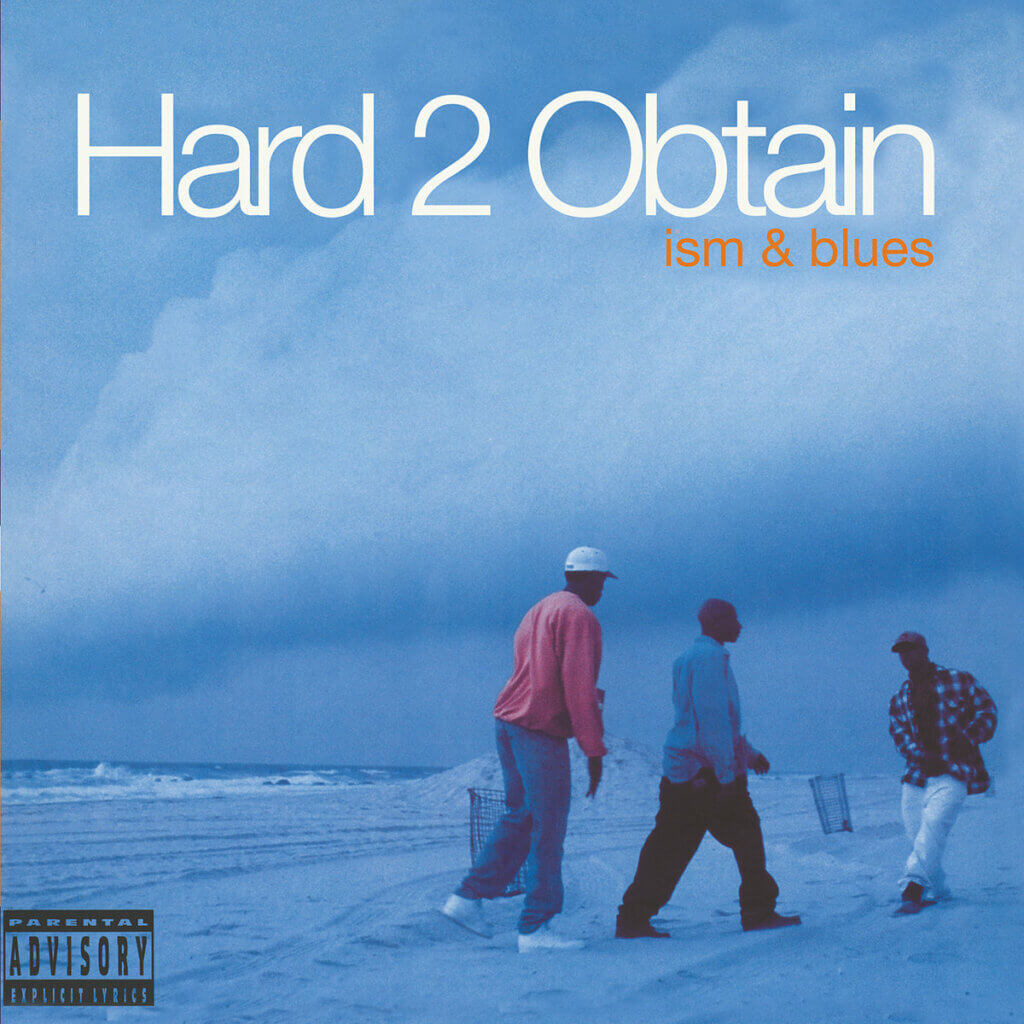
Long Island gave Hip Hop Rakim, De La Soul, EPMD and Leaders of the New School. Hard 2 Obtain got one album. Taste, DL and DJ Six Seven followed their 1993 single “L.I. Groove” with Ism & Blues on Atlantic, released it into the most crowded year of the decade, and were gone almost as quickly as they arrived. True heads know the record as one of the grails of the era.
The Stimulated Dummies, also known as the SD50s, produced nearly all of it, and their work is the reason to listen. They stack jazzy loops and soul samples over tight, swinging drum breaks and connect the songs with lush little musical interludes, so the album flows as one warm, smoky piece. “L.I. Groove” remains the calling card, and “Ghetto Diamond” and “Parkyard Lingo” keep the quality high deep into the running order.
Taste and DL won’t appear on any list of the greatest MCs, but they deliver, bouncing call-and-response lines off each other like b-boys at a park jam. Taste is the standout, and his gravelly voice gives weight to the storytelling on “Local Hero” and “Heels Without Souls.” Artifacts drop by for “A Lil Sumthing,” and the singer Raquel adds a softer touch.
No gimmicks, no crossover bid, no second chance. Ism & Blues is exactly the kind of record this overlooked 100 list was made for, a slept-on underground classic that has long deserved more props.
25. Saafir - Boxcar Sessions
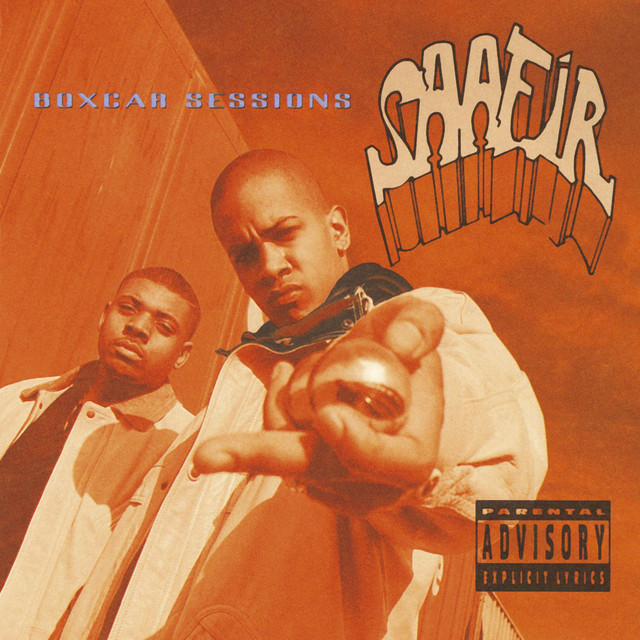
Saafir raps as if he’s tripping over the beat on purpose. His gravelly, snarling voice lurches forward, stops dead, bends a syllable out of shape, and then lands somewhere nobody expected, and somehow he never falls. In 1994, the West Coast was gliding on G-funk’s smooth bounce. The Oakland MC and his Hobo Junction crew went the other way, and Boxcar Sessions is one of the strangest and most fascinating records the Bay produced in that era.
Recorded at Pajama Recording Studios in Oakland and released on Quincy Jones’ Qwest label, the album was produced in-house by DJ Jay-Z (no relation to the Brooklyn rapper), J Groove and Big Nous. Their beats sound closer to the New York underground than to Oakland funk: dark jazz samples, creeping basslines and drums that leave plenty of space. “Swig of the Stew” and “Can U Feel Me?” give Saafir room to duck and weave, and “Battle Drill” and “Playa Hayta” aim his jagged rhymes at rival MCs. On “Light Sleeper,” he jokes that people mistake his rehearsing for talking to himself, a sly picture of a mind that never quite switches off.
That competitive streak spilled off the record. In November 1994, Hobo Junction and the Hieroglyphics crew faced off in a long freestyle battle on the Wake Up Show, still one of the Bay’s most famous radio moments.
Saafir, who also played Harold in Menace II Society, died in November 2024. He was always too eccentric for the mainstream, and on this album you can hear how little he cared.
26. Dred Scott - Breakin’ Combs
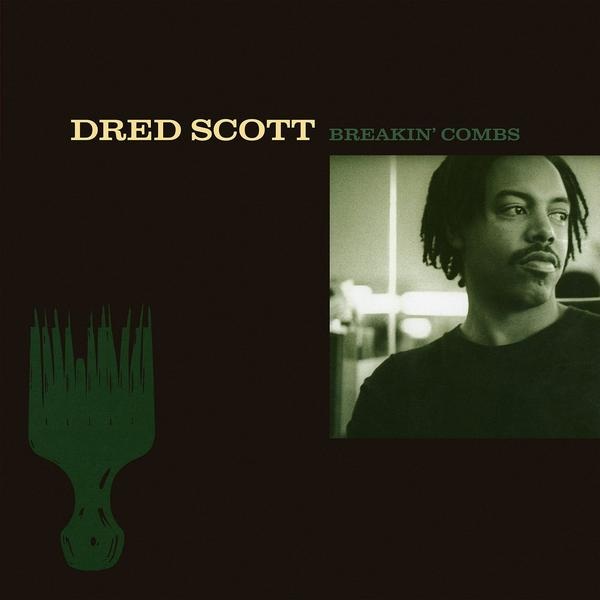
Wrong time, wrong coast? Dred Scott came from Los Angeles, but Breakin’ Combs sounds like it was made a few subway stops from A Tribe Called Quest. Had it dropped in New York a few years earlier, it would likely be called a classic today. Instead, it ranks as one of the most slept-on albums of 1994.
Scott wrote and produced all 16 tracks himself, and the beats are smooth and jazzy, with crisp drum breaks, warm basslines that sound almost live, and touches of soul and reggae. The album splits into two halves, the second opening with its own short intro, and the flow never stalls. “Back in the Day” sets a nostalgic tone, “Duck Ya Head” with Da Grinch adds some edge, and the instrumental “Frankie’s Groove” closes the record as a showcase for his work behind the boards.
Adriana Evans sings on “Check the Vibe” and “Swingin’ from the Tree,” and her voice gives the grooves a soulful lift. Scott’s rapping has nothing wrong with it: clear, confident and easy to follow, he never overcrowds his own tracks.
Why the album went unnoticed for so long remains a mystery. We put it on this list because it deserves its props, and it earns them every time we play it.
27. Coolio - It Takes A Thief

Before “Gangsta’s Paradise” made him a global star in 1995, and before the reality TV and lesser albums made people forget what he could do, Coolio was a sharp, funny member of WC and the Maad Circle. It Takes a Thief, his solo debut, is the album that strange career tends to bury, and it deserves better.
“Fantastic Voyage” reworks Lakeside’s early-’80s hit into a sunny invitation to escape the block, and it climbed to No. 3. The rest of the album keeps that funky West Coast feel, with Bryan “Wino” Dobbs and the production team looping ’70s funk and soul instead of copying Dr. Dre’s synth sound. Coolio’s humor is the key ingredient. On “County Line,” a morning in the welfare office line becomes a comic routine, and he raps in a plain, unbothered voice that lets the punchlines land without pushing.
The fun doesn’t erase the hard parts. “N da Closet” uses a Marvin Gaye sample to look back at his own struggle with drugs, and “Smokin’ Stix,” “Can-o-Corn” and “Sticky Fingers,” first heard on the Poetic Justice soundtrack, keep a foot in the street. WC returns the favor on “U Know Hoo!”
This is a lighthearted, skilled debut from a rapper who knew how to laugh at the world without pretending it was kind.
28. Keith Murray - The Most Beautifullest Thing In The World
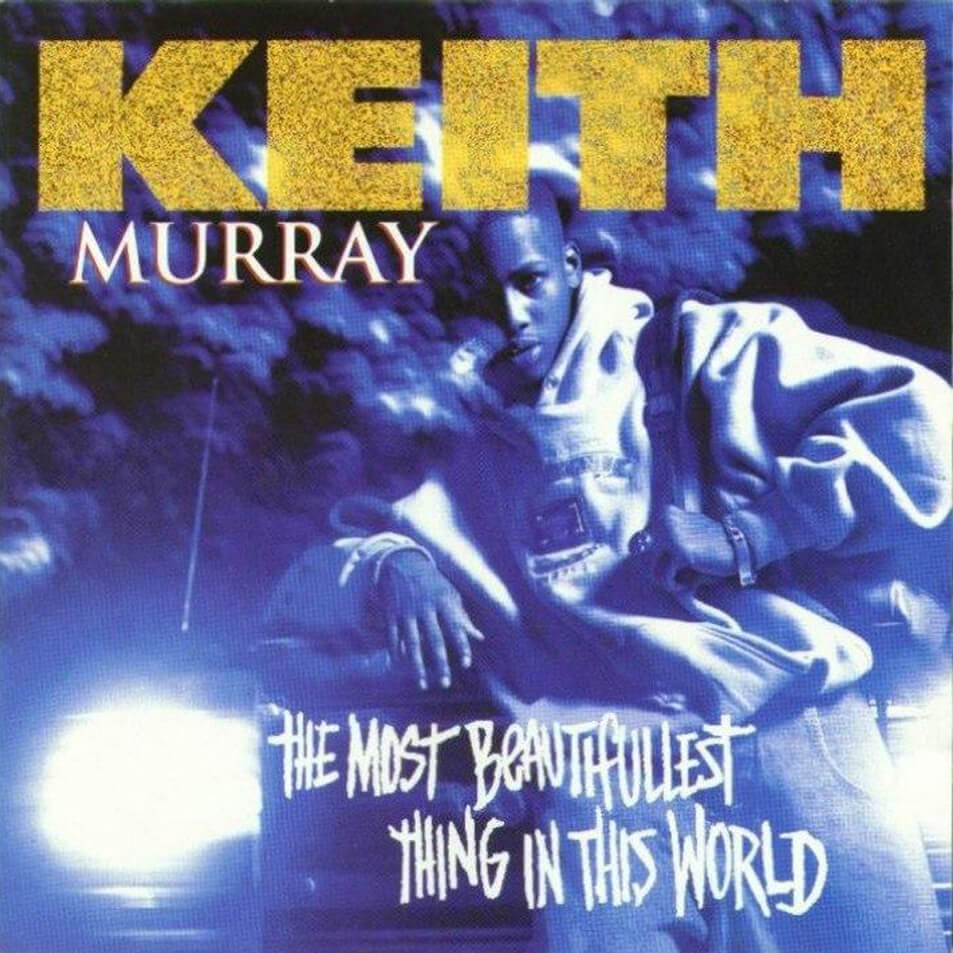
The Isley Brothers’ “Between the Sheets” turned up on two big 1994 singles. Biggie made it smooth on “Big Poppa.” Erick Sermon made it bounce on “The Most Beautifullest Thing in This World,” and Keith Murray filled it with a flood of invented words and oversized vocabulary, delivered in a hoarse, excitable voice. The single made a big splash, and it’s still the album’s biggest attraction.
The Central Islip MC had first caught ears on Sermon’s “Hostile,” and Sermon produced nearly all of his debut. The beats are bass-heavy and funk-laced, the same thick low end that powered EPMD, and they suit Murray’s breathless cadence. On “Sychosymatic” and “Dip Dip Di,” he crams multisyllabic words into lines that barely seem able to hold them, and the coined slang is part of the fun. “Get Lifted” flips KC and the Sunshine Band into a smoker’s anthem.
The family ties run through the record. Redman produces “Escapism,” Busta Rhymes co-produces “Straight Loonie,” and “How’s That” brings Murray, Sermon and Redman together for the first time on a track, a preview of the trio that became Def Squad.
Murray is a way-above-average MC with a style nobody could mistake for anyone else’s. On this album, a big vocabulary sounds like the best party trick in Hip Hop.
29. Kurious - A Constipated Monkey
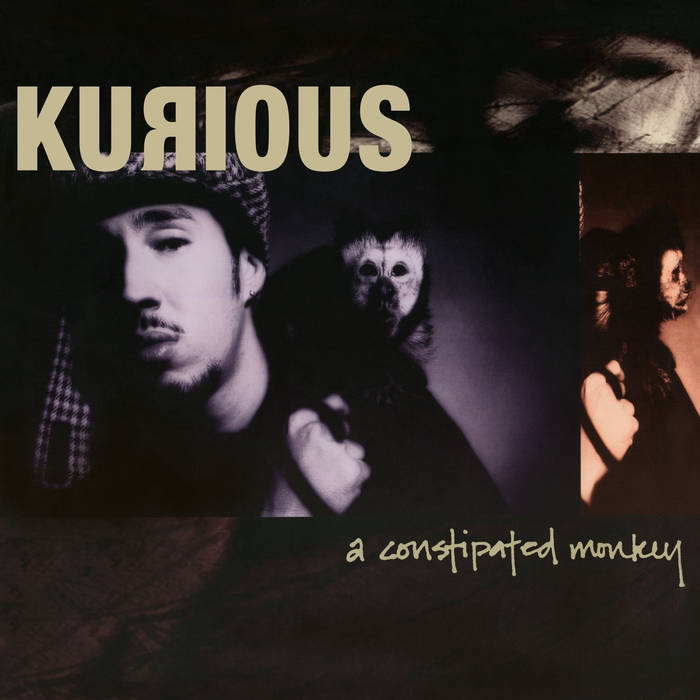
Kurious Jorge, a Harlem MC of Cuban and Puerto Rican descent, dropped A Constipated Monkey through Pete Nice’s Hoppoh imprint at Columbia in January 1994, then watched a crowded year roll over it. The album is dope, consistent, and still underrated.
The title comes from his Uptown crew, the Constipated Monkeys, a circle of MCs, DJs, b-boys and writers that included KMD and Bobbito Garcia. Those ties shaped the credits. The Beatnuts supply horn-heavy, bass-thick loops for “Spell It wit a J,” a nod to the Curious George pun in his name, as well as “Walk Like a Duck” and “Uptown Shit.” The Stimulated Dummies handle a run of tracks, and Pete Nice and DJ Richie Rich of 3rd Bass flip The Blackbyrds’ “Mysterious Vibes” into the haunting backdrop for “I’m Kurious,” arguably the best song here.
Kurious breezes through the beats with colorful, self-deprecating humor, rapping about being broke and growing up in the projects instead of piling up boasts. Psycho Les, MF Grimm, and Casual of Hieroglyphics drop by. The album also has depth. “Nikole” tells a bittersweet story of lost love, and “Leave Ya’ with This” carries a dedication to KMD’s Subroc.
He pulled off a debut that holds up from first track to last, and it deserves far more credit than it has received.
30. M.O.P. - To The Death

Billy Danze and Lil’ Fame don’t rap so much as shout each other down. On their debut, the Brownsville duo pile into every track as if volume itself were a skill, and on To the Death it usually is. Danze booms, Fame is a bit quicker on his feet, and neither has any interest in restraint. There are no guests to dilute the attack.
Brownsville producer DR Period made every beat except the closing “Guns N Roses,” and he keeps them heavy: pounding drums, menacing basslines and blaring horns. “How About Some Hardcore,” the single that first got them noticed, turns a simple chant into a full-throttle declaration. “Rugged Neva Smoove” makes the mission clear early, and “Heistmasters” swaps the bludgeon for jazzy horns and swinging drums under a robbery story told with mischievous humor.
The constant aggression leaves little room for variety. The skits add nothing, and “Top of the Line” and “F.A.G. (Fake Ass Gangsta)” fade next to the best tracks. Firing Squad and Warriorz would sharpen the formula, but every element of the M.O.P. identity is already in place here, shouted at full strength from the first bar.
31. Big Mike - Somethin’ Serious

“Comin from the Swamp” opens the album by announcing where Big Mike came from. The New Orleans native moved to Houston as a teenager, rapped alongside Mr. 3-2 in the Convicts, and replaced Willie D in the Geto Boys for 1993’s Till Death Do Us Part. On Somethin’ Serious, he co-produces that opener with fellow Louisiana transplant N.O. Joe, and it swings with an uptempo, swampy bounce.
The rest of the Rap-A-Lot team keeps the sound rich. N.O. Joe wraps Al Green into “Playa Playa,” Pimp C builds “Havin Thangs” on Funkadelic’s “Good Old Music,” and The Meters’ “People Say” drives the short “Southern Thang.” Mike Dean and others add G-funk touches without losing the Southern grit.
Mike’s voice is big and direct, and he uses it for more than boasts. “World of Mind,” the single, blends personal experience with social observation, and “Daddy’s Gone,” featuring Scarface, looks hard at fathers who aren’t there and what their absence does to the children left behind. The player tracks provide the lighter moments, but the serious songs, as the title promises, give the album its lasting weight. Four months after release, it went gold.
32. Paris - Guerrilla Funk
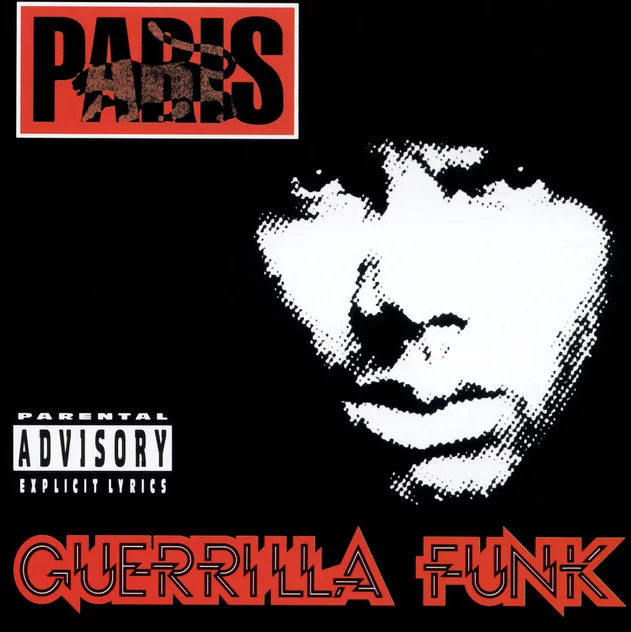
Paris made his third album sound like the radio he was arguing with. After Tommy Boy dropped him over the cover and politics of Sleeping With the Enemy, the San Francisco MC set up his own Scarface Records imprint with distribution from Priority and produced Guerrilla Funk himself. He traded the Bomb Squad-style noise of his first two albums for the bouncy P-Funk grooves and rolling basslines Dr. Dre and Snoop had made the sound of the West Coast.
The trade is deliberate. On “It’s Real,” he loops George Clinton’s “Atomic Dog,” the same source that powered Snoop’s “Who Am I (What’s My Name?),” and uses it to carry a message no G-funk hit would touch. His deep, authoritative baritone cuts against the sunny beats, so even the smoothest grooves carry an undercurrent of tension.
His targets have widened. “40 Ounces and a Fool,” with Da Old Skool, takes aim at malt liquor sold into Black neighborhoods. “Bring It to Ya” brings in fellow Bay Area act The Conscious Daughters for a shot at police abuse, and “Outta My Life” turns toward grief. The title track and “One Time Fo’ Ya Mind” ride the funk hard enough to work in any car stereo, which was the point. The original liner notes read like a political pamphlet, with reading lists and essays tucked behind the CD.
The title outlived the album. Paris later used it for his independent label, Guerrilla Funk Recordings, turning a 1994 strategy of smuggling revolution in through the speakers into his long-term business model.
33. MC Eiht - We Come Strapped

Epic printed a note on the cover explaining that MC Eiht’s lyrics reflected his own views, a nervous label’s disclaimer stuck next to the Parental Advisory sticker. Inside, Eiht does exactly what the warning suggests. We Come Strapped, billed with Compton’s Most Wanted but treated as his solo debut, is a cold, brooding Compton record in a year of sunny G-funk.
Eiht produced it with DJ Slip, and they favor ominous keyboards, deep basslines, dramatic strings and spare drums. Willie Z’s keys give “All for the Money” a smoother, soulful edge, and Ric Roc’s “Compton Bomb” brings in live guitar and keyboards for a change of texture. The title track leans hardest into the dark orchestration.
Eiht’s gravelly voice and unhurried pocket carry quiet authority, and he rarely needs to raise it. “Take 2 with Me” and “Can I Still Kill It” sit in paranoia and violence, and “Def Wish III” carries on his feud with DJ Quik. Spice 1 and Redman join him on “Nuthin’ but the Gangsta,” the album’s one real outside meeting.
Without a crossover single to lean on, it went to No. 1 on the R&B/Hip Hop album chart. Eiht proved that Compton could sell gloom by the truckload.
34. Down South - Lost In Brooklyn
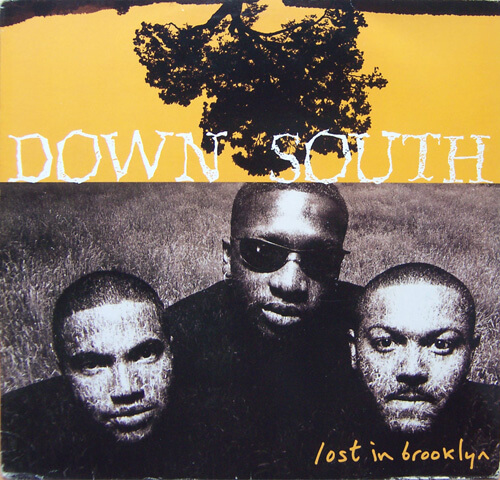
Generations of Southerners moved north looking for something better, and in the early ’90s Down South did the same. Cousins Shawn J-Period and Soda Pop and Myorr the DJ left Richmond, Virginia for New York, signed with Big Beat, and named their only album after the move. Lost in Brooklyn sounds like the city they arrived in, and it remembers the one they left.
J-Period, making his first steps as a producer, handled most of the beats, with help from The Beatnuts, Stretch Armstrong and T-Ray. The sound is jazzy, drum-heavy mid-’90s New York. T-Ray opens with the bass-heavy “Down South” and returns for “Tractors, Rakes, and Hoes.” The Beatnuts bring crisp drums and horn loops to the title track and “Open Sesame,” and Bobbito turns up on the party cut “Spin Da Boddle.”
The rhymes keep a hint of home. On the smooth single “Southern Comfort,” the duo describe heading north without forgetting the Southern folks who raised them or the twang in their voices, and they scatter Richmond memories and regional slang throughout the record.
J-Period soon became an in-demand producer for Mos Def, Artifacts and Bush Babees. The group that brought him to New York ended up on our list of under-appreciated ’90s albums, lost in the best year of the decade.
35. Kokane - Funk Upon A Rhyme

The album ends with nearly nine minutes of “Don’t Bite the Phunk,” in which Kokane and Cold 187um accuse Dr. Dre, Snoop and Death Row of borrowing a sound they had helped invent. That claim sits behind all of Funk Upon a Rhyme. Cold 187um produced every track, with Eazy-E executive producing, and he takes the music somewhere even stranger than Above the Law’s own 1994 album.
The grooves are loose and woozy, built on fat synth basslines, Mike “Crazy Neck” Sims’ guitar and layers of background vocals that recall a late-night Parliament session. “From the Funk to the Back” and “Slow Burnin’ 22.5° Fahrenheit” glide through the haze, Tha Alkaholiks sharpen “All Bark No Bite,” and Above the Law and Dirty Red join him on “Aftermath.”
Kokane makes the experiment work. Formerly known as Who Am I?, he switches between gangsta rapping, chanting and nasal, Clinton-style crooning, and his weirdness gives 187um’s beats a ringmaster. Like his debut, the album was slept on and soon went out of print. A few years later, Dre and Snoop were the ones calling him in to sing their hooks.
36. Eightball & MJG - On The Outside Looking In

The title describes where Memphis stood in 1994: outside the East and West Coast centers of Hip Hop, watching. Eightball & MJG answered by borrowing from one of those coasts. Their second album keeps the heavy Southern bump of Comin’ Out Hard but adds a stronger dose of G-funk, with prominent synths and P-Funk-flavored grooves.
“Players Night Out” and “Sesshead Funk Junky” lean hardest into that West Coast direction, while “So What U Sayin’” takes on a cinematic, blaxploitation-style mood. “Anotha Day in Tha Hood” builds on a familiar sample that gives MJG a comfortable backdrop. The range keeps the album moving, even if some tracks land harder than others.
The partnership remains the main attraction. Eightball’s flow is natural and loose, with a writer’s ease for packing in detail, and MJG answers with a smoother, more distinctive voice and a slower drawl. Their themes stay close to pimping, hustling and street life, but the back-and-forth gives them personality. MC Breed, Crime Boss and Thorough add a few outside voices.
It’s not the duo’s best or most groundbreaking record. It does capture two Memphis MCs testing new sounds a year before On Top of the World put them in the center of the frame.
37. Casual - Fear Itself

Fear Itself completes a Hieroglyphics trilogy that began in 1993 with Del’s No Need for Alarm and Souls of Mischief’s 93 ‘til Infinity. Casual lacks Del’s oddball personality, and as a solo MC he can’t match the crew energy that made 93 ‘til Infinity so exciting, which explains why this album is the least celebrated of the three. It’s a perfectly enjoyable record all the same.
Domino produced most of it, with Del, Jay-Biz and Casual himself contributing beats, and the Hiero sound is right on point: upright basslines, dusty jazz and funk horns and swinging drums that never crowd the rapper. Del’s “That’s How It Is” and Domino’s “Me-O-Mi-O” are the standouts, and Casual’s own “Get Off It” and “I Didn’t Mean To” hold up just as well.
Casual is a renowned battle rapper, and the album plays to that strength. His voice is strong and clear, and he fires off boasts and clever punchlines with a quick, animated flow. Del and Pep Love join him on “Who’s It On,” and Saafir drops by for “That Bullshit.” Before the year was out, the two MCs and their crews would be squaring off on the radio.
38. E.S.G. - Ocean Of Funk

The album opens with a slowed-down version of its own hit. DJ Screw’s “Swangin’ and Bangin (Screwed)” put his syrupy, drawn-out technique on an official commercial release, an early sign of the sound that would come to define Houston. The original “Swangin’ and Bangin” follows, a cruising anthem full of candy-painted slabs and trunk-rattling systems, and the pairing explains how deeply car culture shaped the way the city’s music was made and heard.
Sean “Solo” Jemison and Earl Winters produced most of Ocean of Funk, taking West Coast G-funk and slowing it to Southside speed: high synth leads, warm soul samples and heavy 808s. “Flipping” lays Al Green over booming drums, and “Anticipation” floats swirling synths over a relaxed groove. E.S.G. rides it all with easy confidence. “Smoke On” and “If It Ain’t One Thang It’s Another” show his relaxed side, “Crooked Streets” weighs the cycle of neighborhood violence, and “The South” plants the flag.
The cover came from Pen & Pixel, an early taste of the glossy excess Southern rap would soon make famous. Behind it is the sound of H-Town finding its own speed.
39. Slick Rick - Behind Bars
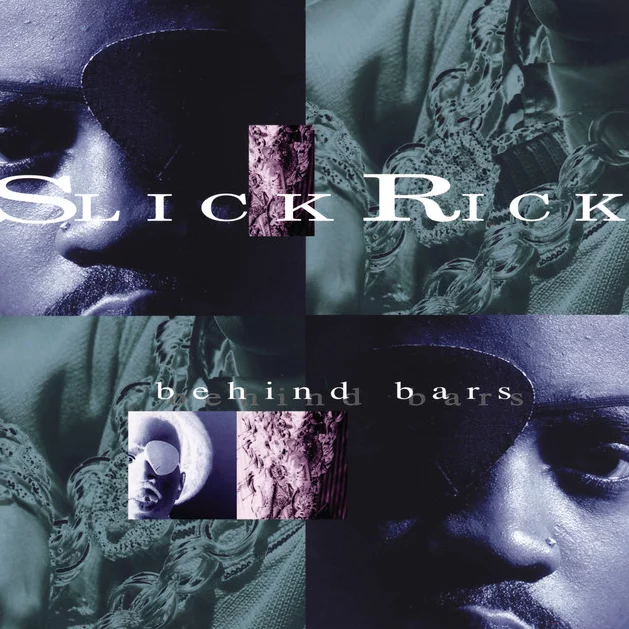
Slick Rick recorded his vocals for Behind Bars during furlough and work release from prison, and the producers built the music around them afterwards, sometimes years later. It doesn’t approach The Great Adventures of Slick Rick, and it was dismissed when it came out. But it’s better than that reputation suggests.
The credits read like a 1994 all-star roster. Prince Paul produced the title track, the one song that speaks directly about prison life, and Warren G remixes it to close the album over a Les McCann sample. Vance Wright handles most of the rest, with Pete Rock remixing “I’m Captive” and “Get a Job,” Large Professor reworking “It’s a Boy,” and Easy Mo Bee supplying “Cuz It’s Wrong.” The beats are smooth and polished, sometimes too polished for a record pieced together from separate sessions.
Rick isn’t always at his peak, but he still rhymes circles around most rappers, with his laconic British-tinged drawl and storyteller’s timing intact. “All Alone (No One to Be With)” and “A Love That’s True (Part I)” show his softer side, and “Sittin’ in My Car” reunites him with Doug E. Fresh, his partner on “La Di Da Di,” for a nostalgic ride. Don’t sleep on it.
40. DJ Q-Bert - Demolition Pumpkin Squeeze Musik

Rush’s “Tom Sawyer” is a strange way to open a Hip Hop record, and that’s the first clue that Demolition Pumpkin Squeeze Musik runs on its own rules. The Bay Area DJ cut this mixtape a year before he came up with the crab scratch, and he already sounds like he’s working on a different level from almost everyone else.
For nearly an hour, Q-Bert rides a constant stream of breakbeats and slices them up without letting go. The foundation is classic: “Apache,” “Impeach the President,” “Funky President,” “Give It Up or Turnit a Loose” and “Rock Creek Park,” plus crate staples from Bob James, Roy Ayers, Dennis Coffey and Lonnie Liston Smith. Then the left turns arrive. Gary Numan, ESG and Fab 5 Freddy drift through, Too $hort’s “Freaky Tales” closes the tape, and between the breaks he scatters clips from Ren & Stimpy, The Huckleberry Hound Show, Spider-Man, Street Fighter II, The Warriors and Style Wars.
Strictly speaking, this is a mix and not a studio album, so it could be argued that it doesn’t belong here at all, or that it belongs much higher. We put it at the end because 1994 doesn’t feel complete without it. Ignore the placement. Just don’t ignore the album.
Honorable Mentions
- Black Sheep – Non-Fiction
- Da Brat – Funkdafied
- Thug Life – Vol. 1
- Brand Nubian – Everything Is Everything
- The Legion – Theme + Echo = Krill
- Big Daddy Kane – Daddy’s Home
- Bumpy Knuckles – Crazy As A Foxxx
- Scientifik – Criminal
- Fugees – Blunted On Reality
- Lords Of The Underground – Keepers Of The Funk
- Rob Base & DJ EZ Rock – Break Of Dawn
- Schoolly D – Welcome To America
- Kool Moe Dee – Interlude
- Fu-Schnickens – Nervous Break Down
- Craig Mack – Project: Funk Da World
- Arrested Development – Zingalamaduni
- Twista – Resurrection
- UMC’s – Unleashed
- Da Youngsta’s – No Mercy
- Shyheim – Shyheim A/K/A The Rugged Child
- Nefertiti – Living In Fear Of Extinction
- Top Quality – Magnum Opus
- Anotha Level – On Anotha Level
- Da Bush Babees – Ambushed
- Ill Al Skratch – Creep Wit’ Me
- Flatlinerz – U.S.A.
- Yaggfu Front – Action Packed Adventure
- Mad Flava – From Tha Ground Unda
- Extra Prolific – Like It Should Be
- Spice 1 – AmeriKKKa’s Nightmare
- House of Pain – Same as It Ever Was
- Above The Rim – Soundtrack
- Murder Was The Case – Soundtrack
- RBL Posse – Ruthless By Law
- Master P – The Ghettos Tryin to Kill Me
- South Central Cartel – N Gatz We Truss
- Willie D – Play Witcha Mama
- Rappin’ 4-tay – Don’t Fight the Feelin’
- Chunk – Break Em Off A Chunk
- Seagram – Reality Check
- Lil 1/2 Dead – The Dead Has Arisen
- Ant Banks – The Big Badass
- Al Kapone – Sinista Funk
- Esham – Closed Casket
- Ghetto Mafia – Draw The Line
- Odd Squad – Fadanuf Fa Erybody
- Trinity Garden Cartel – Don’t Blame It On Da Music
- Tim Smooth – Straight Up Drivin ‘Em
- Little Bruce – XXXtra Manish
- Big Mello – Wegonefunkwichamind
- Point Blank – Mad At The World
- Volume 10 – Hip-Hopera
- A.D.O.R – The Concrete
- K-Dee – Ass, Gas Or Cash (No One Rides for Free)
- N2Deep – 24-7-365
- Boogie Monsters – Riders Of The Storm: The Underwater Album
- Maestro Fresh Wes – Naaah, Dis Kid Can’t Be From Canada?!!
- DJ Krush – Krush
Count the debuts on this list and you start to see what made 1994 so unusual. Nas, Biggie, OutKast, O.C., Jeru, Method Man, Warren G, Keith Murray, Coolio, Artifacts, The Beatnuts, Kurious, Saafir, Casual, MC Eiht, Big Mike and E.S.G. all introduced themselves within the same twelve months. Some of those debuts became careers. Others turned out to be the whole story.
The year had just as many endings. Digable Planets and Pete Rock & CL Smooth released their final albums and split soon after. Hard 2 Obtain and Down South got one record each. The Beatnuts lost Fashion. KMD finished an album their label refused to release, after losing Subroc. Wild Pitch and Hollywood BASIC put out some of the year’s best music and barely managed to get it into stores. Plenty of the records we’ve ranked were heard by far fewer people than they deserved, and a few of them only found their audience through bootlegs, reissues and secondhand bins.
The map was also changing. Houston, Memphis, Port Arthur, Atlanta, Oakland, Pomona, Long Beach, Boston, Newark, Richmond and Long Island all appear on this list, and many of those cities sound nothing like each other. Some artists moved toward New York’s sound, like Dred Scott and Down South. Others built something local enough that outsiders needed time to catch up, as Organized Noize did in the Dungeon and DJ Screw did with a slowed-down version of “Swangin’ and Bangin.”
Next year brought the Wu-Tang solo wave in full force, with Only Built 4 Cuban Linx… and Liquid Swords, plus The Infamous, Soul Food and Me Against the World. Much of that was built on ground laid in 1994. Go back through these 40 albums and you’ll hear a lot of first attempts that sound finished, and a lot of last chances that were taken seriously.