

Hip Hop has always been a powerful storytelling medium. From the earliest narrative rhymes to elaborate fictional worlds and deeply personal reflections, MCs have used their music to explore characters, experiences, ideas, and social realities. But telling a compelling story on a song and building an entire album around a coherent concept are two different things. The latter requires a level of planning, continuity, and artistic purpose that connects individual tracks into something larger.
A concept album is a record organized around a central idea, theme, or narrative that gives the album a unified meaning beyond its individual songs. The tracks are connected through their subject matter, storytelling, lyrical perspectives, production, or sequencing, with each contributing to the development of an overarching artistic vision. The strongest concept albums reward listening from beginning to end, revealing connections and layers of meaning that might be missed when songs are heard separately.
Concept albums generally fall into two broad categories. Thematic concept albums explore a central subject or set of closely related ideas without necessarily following a continuous storyline. These might examine political oppression, religion, identity, mortality, or the human condition, approaching their subject from different perspectives while maintaining a recognizable conceptual framework. Narrative concept albums, meanwhile, tell a connected story across multiple tracks. They may feature recurring characters, fictional settings, dramatic developments, or a defined beginning and ending. Some albums combine these approaches, using an unfolding narrative to examine broader social, political, or philosophical questions.
The distinction matters because thematic consistency alone doesn’t automatically make a record a concept album. Countless great Hip Hop albums explore street life, racism, personal struggles, or social injustice across multiple songs. Others maintain a distinctive atmosphere through their production, imagery, and lyrical style. These qualities can create remarkably cohesive listening experiences, but a genuine concept album requires a more deliberate organizing principle. Its central idea should shape the record’s structure and content rather than emerge simply from recurring subject matter.
Hip Hop is particularly well suited to the format. Its traditions of storytelling, character-driven rhymes, sampling, spoken-word passages, and skits give artists numerous ways to construct interconnected musical works. Producers can establish recurring motifs, create transitions between scenes, or use samples to reinforce a narrative. MCs can adopt fictional identities, shift perspectives, revisit earlier events, and develop complex ideas across an entire tracklist. Some artists build detailed fictional universes; others use the album format to examine a single subject from multiple angles.
For this selection, we’ve chosen 25 outstanding Hip Hop concept albums based on the strength of their central ideas, the quality of their music, and how convincingly their concepts are developed and sustained. We’ve considered narrative ambition, thematic depth, lyrical execution, production, and the relationship between individual tracks and the complete album. The selection covers different eras, regions, and styles, including established classics and underground records that deserve wider recognition.
The albums are presented chronologically rather than ranked, offering a look at how Hip Hop artists have approached the concept album across the decades.
Dr. Octagon - Dr. Octagonecologyst (1996)
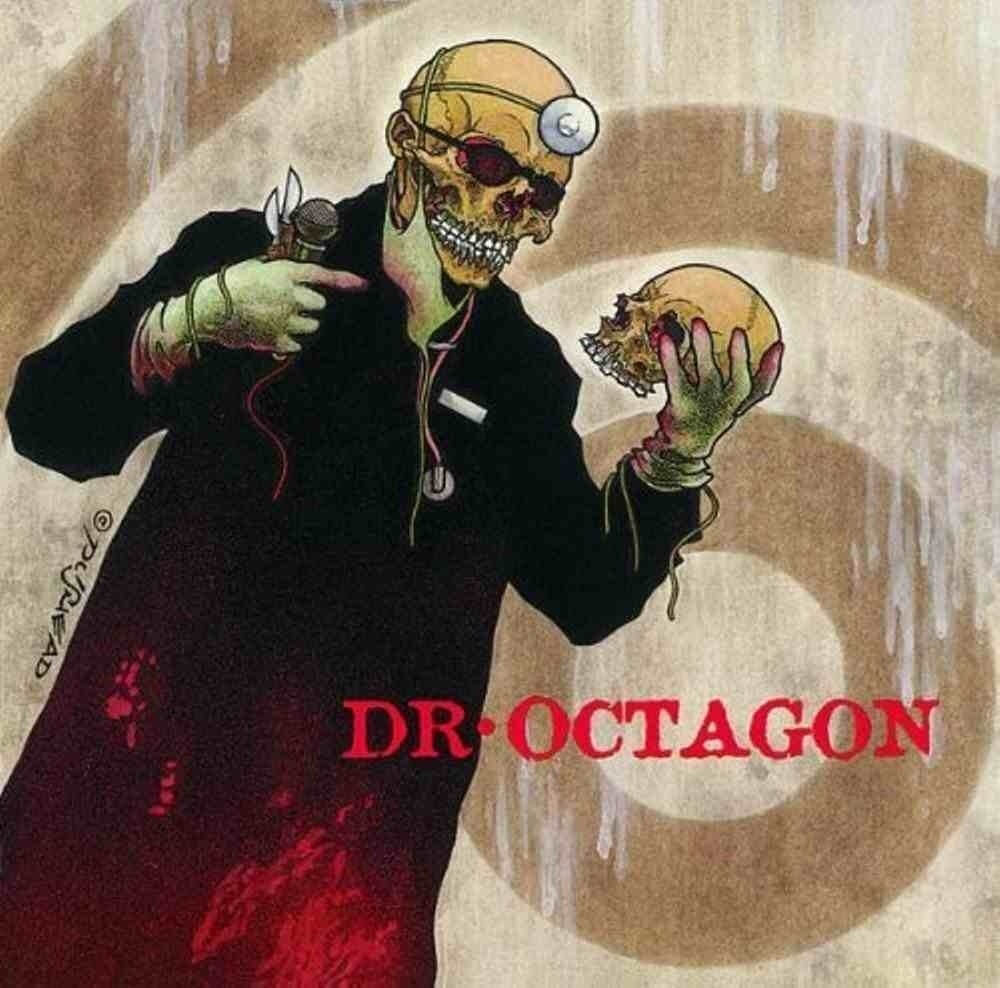
Classification: Hybrid concept album. Central concept: An alien surgeon and gynecologist from Jupiter brings his bizarre medical practices, sexual obsessions, and homicidal tendencies to Earth in a surreal science-fiction horror story narrated through fragmented episodes, grotesque imagery, and dark comedy.
With Dr. Octagonecologyst, Kool Keith creates one of Hip Hop’s most outrageous fictional characters. As Dr. Octagon, he becomes an extraterrestrial, time-traveling surgeon whose medical practice operates somewhere between science fiction, body horror, and deranged comedy. His patients encounter bizarre procedures, mangled anatomy, and disturbing experiments, while the Doctor himself delivers his diagnoses with complete confidence. The story rarely follows a conventional plot. Instead, the album builds its fictional world through recurring medical imagery, strange characters, interludes, and a stream of unpredictable verses that make the listener feel trapped inside the Doctor’s malfunctioning imagination.
The opening “3000” introduces this futuristic identity, throwing out references to strange technologies and alien environments before the album moves deeper into Dr. Octagon’s warped reality. “Earth People” establishes the character’s extraterrestrial perspective, while “No Awareness,” featuring Sir Menelik, pushes the lyrics further into abstract territory. Medical terminology, sexual provocations, horror imagery, and absurd word associations collide without warning. On “A Visit to the Gynecologyst,” Keith takes the character’s medical fixation into deliberately uncomfortable territory, while “Halfsharkalligatorhalfman” imagines a grotesque hybrid creature that captures the album’s fascination with mutation and bodily distortion. The humor is frequently outrageous, though an undercurrent of menace prevents the material from becoming harmless novelty.
Dan the Automator’s production gives this peculiar universe a convincing musical setting. Rather than relying on conventional boom-bap throughout, he blends eerie strings, murky samples, electronic textures, and off-kilter rhythms into arrangements that suggest abandoned laboratories and futuristic machinery. DJ Q-Bert’s extraordinary scratching adds another layer of disorientation, particularly on “Real Raw,” where the turntables become as unpredictable as Keith’s character. “Blue Flowers” is among the album’s most striking moments, pairing cinematic tension with lyrics that drift between beauty, menace, and outright absurdity.
The closing “1977” provides a revealing contrast. Framed as an archival recording of an early Kool Keith performance, it brings the album back to Hip Hop’s formative years after more than an hour spent in Dr. Octagon’s imagined future. The juxtaposition links Keith’s experimental alter ego to the culture that shaped him, making clear that the character represents an imaginative extension of the MC rather than a replacement for his identity.
Dr. Octagonecologyst works through its commitment to a world with its own bizarre logic. Keith’s fractured storytelling, Automator’s eerie production, and Q-Bert’s inventive turntablism combine to create a distinctly alien strain of underground Hip Hop, equal parts science-fiction nightmare, grotesque comedy, and lyrical fever dream. An underground classic that turns an outrageous fictional character into a fully realized Hip Hop universe, Dr. Octagonecologyst remains one of the genre’s most imaginative concept albums.
Aceyalone – A Book Of Human Language (1998)

Classification: Thematic concept album. Central theme/concept: A philosophical exploration of human existence, thought, and communication, structured like a book.
Aceyalone‘s A Book of Human Language examines the complexities of human life through a series of lyrical meditations on time, mortality, morality, perception, and the power of language. Rather than following a continuous storyline, the album unfolds like a work of philosophical literature, with individual tracks functioning as chapters in a larger examination of the human condition. Its carefully constructed sequence reinforces the central idea: language is a tool for understanding the world, but also a reflection of its contradictions.
The concept is embedded in the album’s structure. It opens with “Forward,” proceeds through “Contents” into a succession of chapters, and concludes with “Afterward.” Most of the central tracks begin with “The,” including “The Balance,” “The Hurt,” “The Walls & Windows,” and “The Grandfather Clock.” These are more than stylistic naming conventions. Each introduces a different subject for Aceyalone to dissect, from universal principles and emotional suffering to the passage of time and the barriers separating people from one another.
On “The Thief in the Night,” mortality becomes the subject of an extended meditation, while the nearly eight-minute title track turns the focus toward language itself. Aceyalone’s intricate wordplay, shifting associations, and unconventional phrasing demand close attention. His writing can be dense and abstract, but that complexity suits an album concerned with the relationship between words, ideas, and human understanding.
Producer Mumbles supplies a suitably unconventional backdrop. Jazz-inflected breaks, unusual loops, and moody instrumental passages give the record a contemplative atmosphere without overwhelming Aceyalone’s intricate delivery. The production and sequencing maintain continuity across the individual chapters, allowing the album to unfold as a unified listening experience rather than a collection of unrelated lyrical exercises.
Released through the Los Angeles underground institution Project Blowed, A Book of Human Language captures Aceyalone at his most intellectually ambitious. Its literary structure is integral to the music, while the individual songs retain their own identities and subjects. An unusually rigorous marriage of form and content, this 1998 album remains one of underground Hip Hop’s most accomplished thematic concept records.
Prince Paul - A Prince Of Thieves (1999)
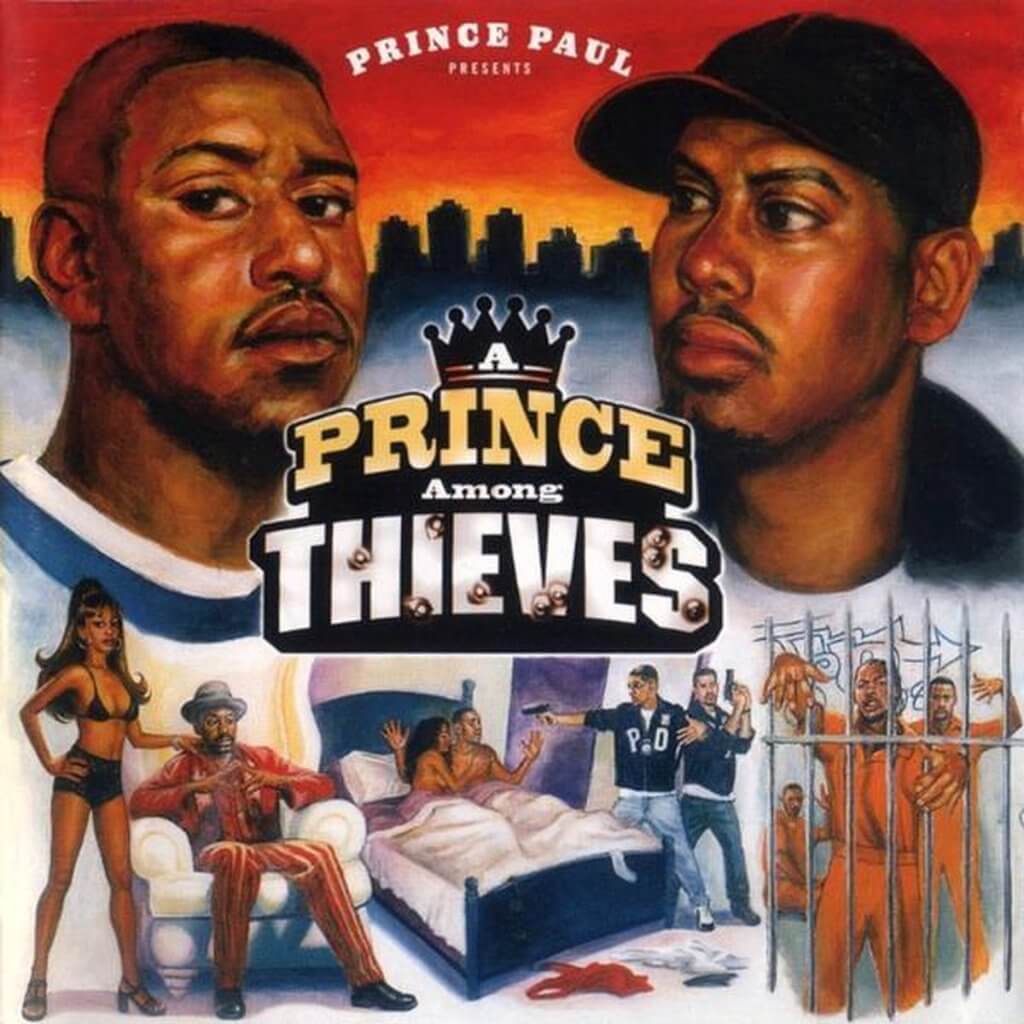
Classification: Narrative concept album. Central concept: An aspiring MC’s desperate attempt to finance his demo leads to betrayal, violence, and the loss of his shot at a rap career.
Prince Paul’s A Prince Among Thieves plays like a crime film built entirely from Hip Hop records, scripted dialogue, and character-driven performances. At its center is Tariq, played by Breezly Brewin of The Juggaknots, an aspiring rapper who has an opportunity to meet the RZA but needs $1,000 to finish his demo. With time running out, Tariq accepts an offer from his friend True, played by Big Sha, to make quick money selling drugs. One decision pulls him into a world of hustlers, addicts, crooked cops, and escalating violence, with consequences that reach far beyond his original problem.
The album opens with Tariq already battered and reflecting on his predicament, then rewinds to explain how he got there. From that point, the 35-track sequence unfolds through short scenes, interludes, and full songs, each advancing the plot or introducing another character. Prince Paul assembled an extraordinary cast for the production: Kool Keith plays an eccentric arms dealer, Big Daddy Kane appears as pimp Count Macula, Biz Markie plays a street thug, Everlast portrays a corrupt police officer, and De La Soul turn up as drug addicts. These performances give the fictional world a distinctive personality, while the extended dialogue makes the album’s dramatic turns intelligible without relying on conventional narration.
The music remains integral to the storytelling. Prince Paul’s sample-based production shifts between soulful loops, tense breaks, and darker passages as Tariq moves deeper into the drug trade. The songs provide different voices and perspectives within the story, while the interludes maintain continuity. The contrast between Tariq’s ambition and the people exploiting his desperation gives the narrative its tragic force. His attempt to enter the rap industry ends with him shot, arrested, and missing the very meeting that motivated his choices.
Often described as a rap opera, A Prince Among Thieves was ambitious even by Prince Paul’s standards. Its cinematic structure never loses sight of the music, and its ending delivers a devastating consequence to a seemingly manageable decision. One of Hip Hop’s most fully realized narrative albums, it turns a street-level cautionary tale into an engrossing musical drama.
Deltron 3030 - Deltron 3030 (2000)
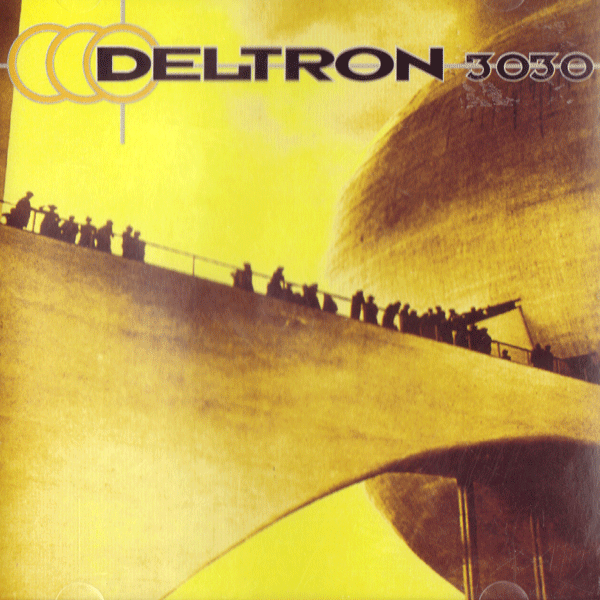
Classification: Hybrid concept album. Central concept: A futuristic rap opera in which an underground MC wages lyrical war against a corporate-controlled dystopia.
Set in the year 3030, Deltron 3030 imagines a future dominated by powerful corporations, authoritarian networks, technological surveillance, and ecological ruin. Del the Funky Homosapien assumes the identity of Deltron Zero, a rebellious mech soldier and computer prodigy who fights the system through intergalactic rap battles. Producer Dan the Automator and DJ Kid Koala complete the trio, helping construct a science-fiction universe where Hip Hop becomes a weapon against corporate power. The narrative provides the album’s framework, while its satire extends beyond the fictional setting to the commercialization of music, consumer culture, and the growing influence of technology.
The opening track, “State of the Nation,” establishes the political climate before the seven-minute “3030” launches listeners into Deltron Zero’s world. From there, the record moves between futuristic battles, social commentary, and episodes of dark humor. “Virus” imagines a form of rebellion against technological control, while “Things You Can Do” offers a more optimistic perspective on human ingenuity. Short transmissions, news reports, and character interludes connect the songs, giving the album the pacing of an animated science-fiction film. The plot isn’t always linear, but the recurring characters, setting, and conflict provide a clear conceptual thread.
Dan the Automator’s production gives this imagined future a distinctive musical identity. Orchestral passages, eerie electronic textures, heavy drums, and carefully layered samples create an atmosphere that shifts between ominous and adventurous. Kid Koala’s turntable work adds another dimension, while guests including Damon Albarn and Prince Paul contribute to the album’s eccentric cast. Del matches the production with intricate rhyme schemes, inventive wordplay, and a playful delivery that keeps the grand premise grounded in MC craft.
Beneath the futuristic battles lies a recognizable critique of corporate domination and an industry increasingly driven by commercial formulas. Deltron Zero’s resistance becomes an exaggerated version of the underground rapper’s struggle to retain creative control. An imaginative fusion of science fiction, social satire, and lyrical showmanship, Deltron 3030 remains one of Hip Hop’s most distinctive conceptual achievements.
Masta Ace - Disposable Arts (2001)
Classification: Narrative concept album. Central concept: A recently released prisoner returns to Brooklyn, enrolls in a fictional Hip Hop academy, and confronts the realities of street life and an increasingly commercialized music industry.
On Disposable Arts, Masta Ace builds a fictional world around an idea that works on several levels. After five years in prison, his protagonist returns to Brooklyn and finds the neighborhood too dangerous to navigate without falling back into old habits. He enrolls at the Institute of Disposable Arts, a satirical school where the lessons extend far beyond the classroom. Through interludes, conversations, and songs, Ace examines street survival, personal responsibility, the music business, and the treatment of Hip Hop as a disposable commodity.
The Institute gives the album its narrative structure, while the individual tracks explore different aspects of the protagonist’s re-entry into society. “Block Episode” reconstructs a neighborhood shooting from the perspectives of the victim, the shooter, and a bystander, revealing how violence affects an entire community. “Take a Walk” offers a detailed portrait of Brooklyn, contrasting an ordinary afternoon with the social problems beneath the surface. On “Unfriendly Game,” Ace uses football as an extended metaphor for navigating the streets, where knowing the rules doesn’t guarantee survival. Each song adds another lesson to the album’s fictional curriculum.
Ace also turns his attention to the rap industry. The title Disposable Arts reflects his frustration with a business that increasingly valued marketable images and commercial formulas over lasting artistic contributions. On “Dear Diary,” he confronts his own doubts and disappointments, while “Acknowledge” delivers the battle-rap intensity of a veteran who still has plenty to prove. The closing “No Regrets” brings the record toward a more personal resolution, reflecting on his career without pretending that every disappointment has disappeared.
The production, handled by a broad roster including Domingo, Ayatollah, Paul Nice, and Ace himself, maintains a consistent underground Hip Hop foundation throughout the album’s varied moods. The skits advance the story rather than interrupting it, making the full sequence essential to the experience.
Disposable Arts established a narrative framework Masta Ace would revisit on 2004’s A Long Hot Summer, which serves as a prequel to this album. An inventive blend of street-level storytelling, industry criticism, and personal reflection, Disposable Arts remains one of Hip Hop’s most rewarding concept albums.
Sticky Fingaz - [Blacktrash] The Autobiography Of Kirk Jones (2001)

Classification: Narrative concept album. Central concept: A recently released ex-convict tries to rebuild his life, but violence, poverty, and his own destructive impulses pull him back into the streets.
Sticky Fingaz approaches his solo debut like a filmmaker working with a microphone. Black Trash follows Kirk Jones, a fictionalized version of Sticky himself, from his release from prison through a downward spiral of violence, crime, fractured relationships, and legal consequences. The opening film-studio fanfare establishes the cinematic premise immediately, while recurring interludes featuring actor Omar Epps as Kirk’s conscience give the protagonist an internal voice that challenges his decisions. This is a character study built around a man who recognizes the possibility of change but repeatedly sabotages it.
The early tracks establish Kirk’s volatility before the narrative broadens into a portrait of the environment surrounding him. On “Money Talks,” featuring Raekwon, the dollar bill becomes the narrator, turning the pursuit of money into a commentary on greed and economic desperation. “Baby Brother” finds Kirk warning a younger sibling against following his path, while “Sister I’m Sorry” addresses the personal damage left behind by his imprisonment. These moments complicate the portrait of a violent criminal by showing his awareness of the people and relationships his choices have damaged.
The courtroom sequence “State vs. Kirk Jones,” featuring Redman, Canibus, and Rah Digga among others, brings the story into direct confrontation with the justice system. Elsewhere, “What If I Was White,” featuring Eminem, uses provocation and dark humor to examine racial double standards. The shifting production, from hard-edged street beats to more theatrical passages, accommodates the album’s changing scenes, while Sticky’s forceful delivery keeps the protagonist at the center.
The closing “Wonderful World” turns Louis Armstrong’s beloved song into a bitterly ironic finale. Its optimism clashes with Kirk’s circumstances, leaving the listener with a grim verdict on his world. At 20 tracks, Black Trash occasionally sprawls, but its ambition is unmistakable. Sticky Fingaz created a rare Hip Hop drama in which character, plot, and social commentary are inseparable.
Mr Lif - I Phantom (2002)
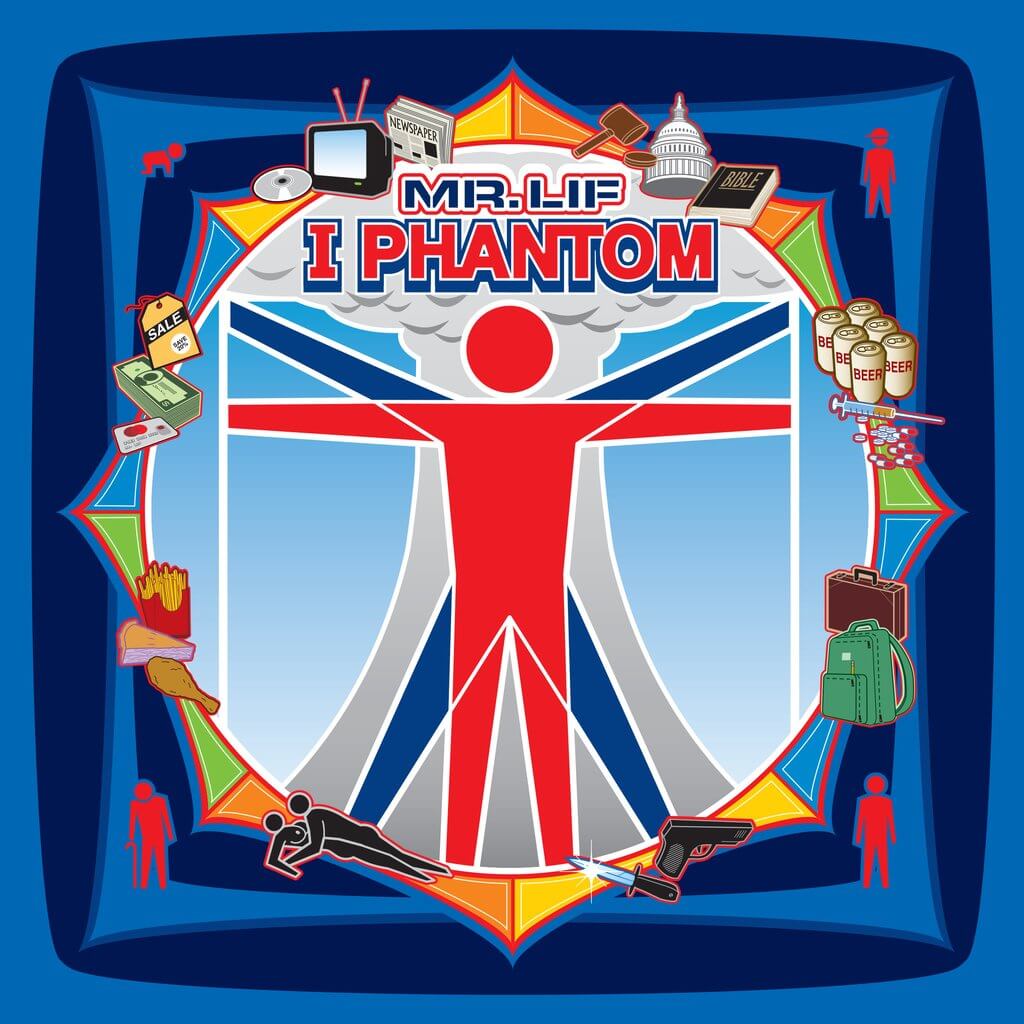
Classification: Hybrid concept album. Central concept: An African American working man pursues the American Dream, only to discover its personal costs before his story expands into a vision of societal collapse and nuclear annihilation.
On I Phantom, Mr. Lif turns the routine pressures of working life into a dystopian drama. Released through Definitive Jux in 2002, the album follows an everyman through death, resurrection, the daily grind, material success, family breakdown, and ultimately the destruction of the world. Its political argument develops through the protagonist’s experiences, linking the indignities of ordinary employment to the greed and destructive ambitions shaping society at large.
The opening sequence establishes the album’s unusual structure. “A Glimpse at the Struggle” introduces death and desperation, while the seven-minute “Return of the B-Boy” transforms the protagonist into a larger-than-life Hip Hop figure before an alarm clock pulls him back to reality. The fantasy offers a brief escape from the routine awaiting him. That routine takes a sharper political edge on Edan-produced “Live from the Plantation,” where the modern workplace becomes a metaphor for exploitation and economic dependence. Lif’s target is a system that demands obedience while promising rewards that remain frustratingly out of reach.
“Success,” featuring Aesop Rock, advances the story into the supposed rewards of playing by society’s rules. Money, marriage, and fatherhood arrive, but the protagonist’s climb leaves his personal life in ruins. The album’s critique cuts deeper here: material achievement provides no guarantee of fulfillment when the pursuit itself consumes everything worth having.
The final stretch expands the focus from one man’s disillusionment to humanity’s self-destruction. “Earthcrusher” and “Post Mortem,” featuring El-P, Jean Grae, and Akrobatik, bring the narrative to an apocalyptic conclusion. El-P’s production gives these developments an appropriately unsettled backdrop, combining sparse, abrasive beats with futuristic textures, while contributions from Edan, Insight, and DJ Fakts One provide contrasting sonic perspectives.
I Phantom connects intimate frustrations with sweeping political dread without losing sight of the individual caught in the machinery. Its bleak ending follows logically from the story that precedes it, making the album’s social criticism inseparable from its narrative.
MF DOOM - Mm... Food (2004)
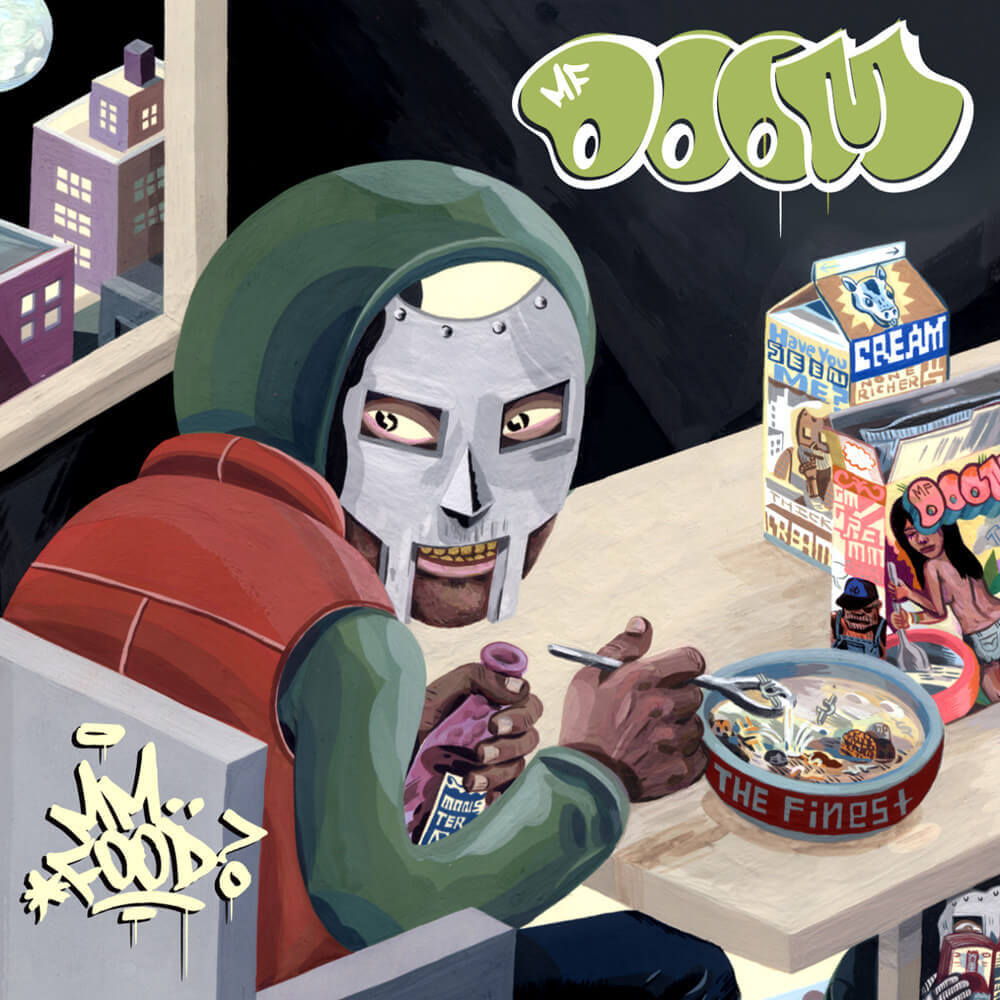
Classification: Thematic concept album. Central concept: Food, cooking, and consumption provide a framework for MF DOOM’s intricate wordplay and observations on Hip Hop, street culture, human relationships, and personal indulgence.
The title Mm..Food is an anagram of MF DOOM’s name, and the album’s culinary theme gives the masked rapper a playground for his favorite activities: twisting language, puncturing rap conventions, and hiding sharp observations inside absurdist humor. Released through Rhymesayers in November 2004, the record has no continuous plot. Instead, DOOM builds a conceptual thread through food-related song titles, layered double entendres, and cartoon samples that extend his comic-book supervillain persona into a surreal audio collage.
“Beef Rapp” opens with a pointed joke about rap beef, turning a familiar source of Hip Hop posturing into an edible metaphor. DOOM’s targets include manufactured rivalries and rappers whose appetite for conflict becomes indistinguishable from self-destruction. “Hoe Cakes” and “One Beer” move through lust, indulgence, and everyday vices, with the latter benefiting from Madlib’s dusty, off-kilter production. On “Deep Fried Frenz,” the food imagery takes a more personal turn as DOOM examines jealousy, opportunism, and the fragility of friendships when circumstances get difficult.
The album’s short instrumental interludes, including “Poo-Putt Platter,” “Fillet-O-Rapper,” and “Gumbo,” interrupt the conventional song sequence with chopped-up cartoon dialogue and kitchen-themed sound collages. These fragments reinforce the food motif while immersing the listener in DOOM’s bizarre fictional universe. The production is predominantly his own, assembled from obscure samples, dusty loops, and deliberately unconventional transitions. Count Bass D’s contribution to “Potholderz” and Madlib’s work on “One Beer” add different textures without disrupting the album’s identity.
“Rapp Snitch Knishes,” featuring Mr. Fantastik, delivers one of DOOM’s sharpest observations about rappers who incriminate themselves by bragging about crimes. “Kookies” closes the album with a comic account of temptation and compulsive cravings, extending the consumption theme into modern appetites and private obsessions.
Mm..Food works because its concept operates on several levels at once. The food references are funny in their own right, but they also give DOOM a distinctive vocabulary for dissecting rap culture and human behavior. Beneath the cartoon absurdity lies an album built on formidable lyrical precision and an unmistakably eccentric creative vision.
Masta Ace - A Long Hot Summer (2004)

Classification: Narrative concept album. Central concept: A struggling Brooklyn MC tries to build a career while touring with his shady friend Fats Belvedere, whose street connections gradually pull him into the criminal world that will eventually land him in prison.
A Long Hot Summer is the prequel to Masta Ace’s Disposable Arts, tracing the events that lead its protagonist toward incarceration. Ace spends the summer trying to make a living from underground Hip Hop, navigating small venues, unreliable promoters, neighborhood obligations, and an industry that offers little financial security to artists outside the mainstream. His partnership with Fats Belvedere initially looks like a practical arrangement, but Fats’ criminal dealings gradually threaten to overwhelm Ace’s ambitions.
The album unfolds through interconnected songs and brief spoken interludes, giving the story the rhythm of a Brooklyn summer spent moving between the block, the studio, and the road. “The Count” and “Big City” establish the setting before Fats enters the picture. On “Da Grind,” featuring Apocalypse, Ace addresses the daily frustrations of trying to sustain a career, while “F.A.Y.” takes aim at the commercial machinery surrounding the music business. The irony is central to the narrative: Ace wants to escape financial insecurity through his art, but the business offers so little that he becomes increasingly vulnerable to money-making schemes outside it.
Brooklyn receives a more affectionate treatment on “Beautiful,” featuring Wordsworth, which captures the warmth, familiarity, and communal pleasures of neighborhood life. That affection makes the darker developments harder to dismiss. Ace’s surroundings offer friendship and belonging, but they also bring obligations and dangers that are difficult to separate from everyday life. Fats embodies that contradiction. He is a companion with useful connections, but his involvement in street business becomes a liability Ace cannot easily shake.
The production draws on a broad cast of underground beatmakers, including 9th Wonder, DJ Spinna, Marco Polo, and Khrysis. Their varied contributions keep the album musically lively without sacrificing its cohesive Brooklyn character.
Where Disposable Arts begins with its protagonist returning from prison, A Long Hot Summer explains the choices and circumstances that lead him there. Ace tells the story without romanticizing the struggle, capturing the uneasy distance between pursuing a dream and finding a way to survive.
Little Brother - The Minstrel Show (2005)

Classification: Thematic concept album. Central concept: A fictional television network built around racial stereotypes satirizes the entertainment industry’s exploitation of Black culture and the pressures facing artists who want to maintain their integrity.
With The Minstrel Show, North Carolina trio Little Brother turn an album into a broadcast day on UBN, a fictional television network whose name, U Black Niggas, makes its intentions clear. The concept draws a direct line between nineteenth-century minstrel shows, where Black performers were reduced to caricatures for entertainment, and a modern media industry that rewards similarly narrow portrayals of Black life. Inspired in part by Spike Lee’s Bamboozled, the album uses fake commercials, television-style interludes, and exaggerated performances to expose the machinery behind the spectacle.
The opening broadcast establishes the premise, and the recurring UBN framing gives the songs a shared context. On “Cheatin’,” Phonte adopts his Percy Miracles alter ego to parody the melodramatic R&B excesses associated with singers such as R. Kelly and Ronald Isley. Elsewhere, the trio takes aim at the expectations imposed on artists by record companies, audiences, and the Hip Hop community itself. “Not Enough” addresses the pressure to satisfy commercial demands, while “Lovin’ It” pokes fun at the rigid divisions between gangsta rap, backpack rap, and other stylistic camps. Little Brother resist the idea that artists must fit a marketable category to earn an audience.
The music gives the satire its grounding. Producer 9th Wonder builds the album around warm soul samples, crisp drums, and inviting melodies, while Phonte and Rapper Big Pooh bring humor and personality to songs about relationships, money, work, and everyday frustrations. Their ordinary concerns provide a deliberate contrast to the exaggerated characters and stereotypes circulating through UBN.
The controversy surrounding “Lovin’ It,” whose video was reportedly rejected by BET, added an ironic real-world dimension to the album’s argument. The Minstrel Show questions a media system that profits from narrow representations of Black life while leaving little room for artists who challenge those expectations. Its television concept gives that critique structure, humor, and a distinctly Little Brother perspective.
CunninLynguists - A Piece Of Strange (2006)
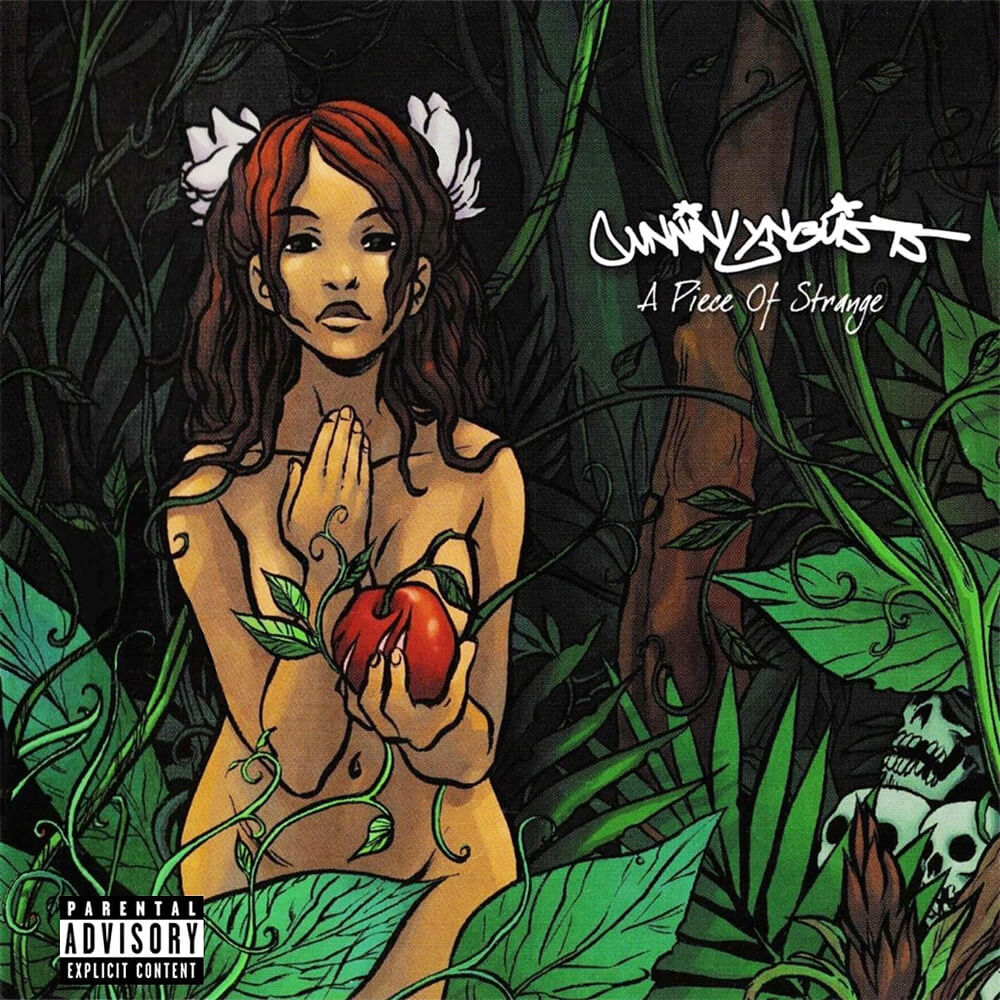
Classification: Hybrid concept album. Central concept: A man’s struggle with sin, guilt, faith, and redemption unfolds into a larger meditation on morality, racism, and the forces that shape human behavior.
With A Piece of Strange, Kentucky trio CunninLynguists construct a Southern Gothic parable about the tangled relationship between human weakness and spiritual salvation. Produced entirely by Kno, the album follows a man attempting to navigate love, family, and moral responsibility while confronting the consequences of his past and the prejudices embedded in his surroundings. Biblical references, recurring questions about damnation, and the tension between temptation and redemption connect the personal narrative to a broader examination of good and evil.
The album opens with “Where Will You Be?”, establishing an atmosphere of uncertainty before “Since When” and “Nothing to Give” begin exploring the contradictions between belief, behavior, and personal desire. The story develops through relationships and difficult choices, with the characters’ private struggles reflecting larger questions about inherited hatred, responsibility, and the possibility of change. “Caved In,” featuring Cee-Lo Green, deepens the record’s emotional weight, while “America Loves Gangsters” examines a culture drawn to violence and criminality. The guest appearance by Immortal Technique on “Never Know Why” adds another perspective on the social forces shaping individual lives.
As the album progresses, its religious imagery becomes increasingly central. “The Gates” raises questions of judgment and salvation, while the brief “Damnation” interlude leads into “Hellfire,” where the consequences of moral failure take center stage. The closing stretch moves toward reflection and the possibility of grace, without offering easy answers. The narrative and the thematic material remain intertwined: individual decisions carry personal consequences while exposing the prejudices and contradictions of the surrounding world.
Kno’s production gives the album much of its dramatic force. Soulful samples, live instrumentation, layered vocals, and carefully shifting moods create a cohesive musical setting for Deacon the Villain, Natti, and Kno himself. Natti’s arrival also marked a new chapter for the group. A Piece of Strange uses its unfolding story to explore questions of faith, sin, and redemption that extend well beyond its characters, making it one of the most distinctive concept albums in underground Hip Hop.
Jay-Z - American Gangster (2007)
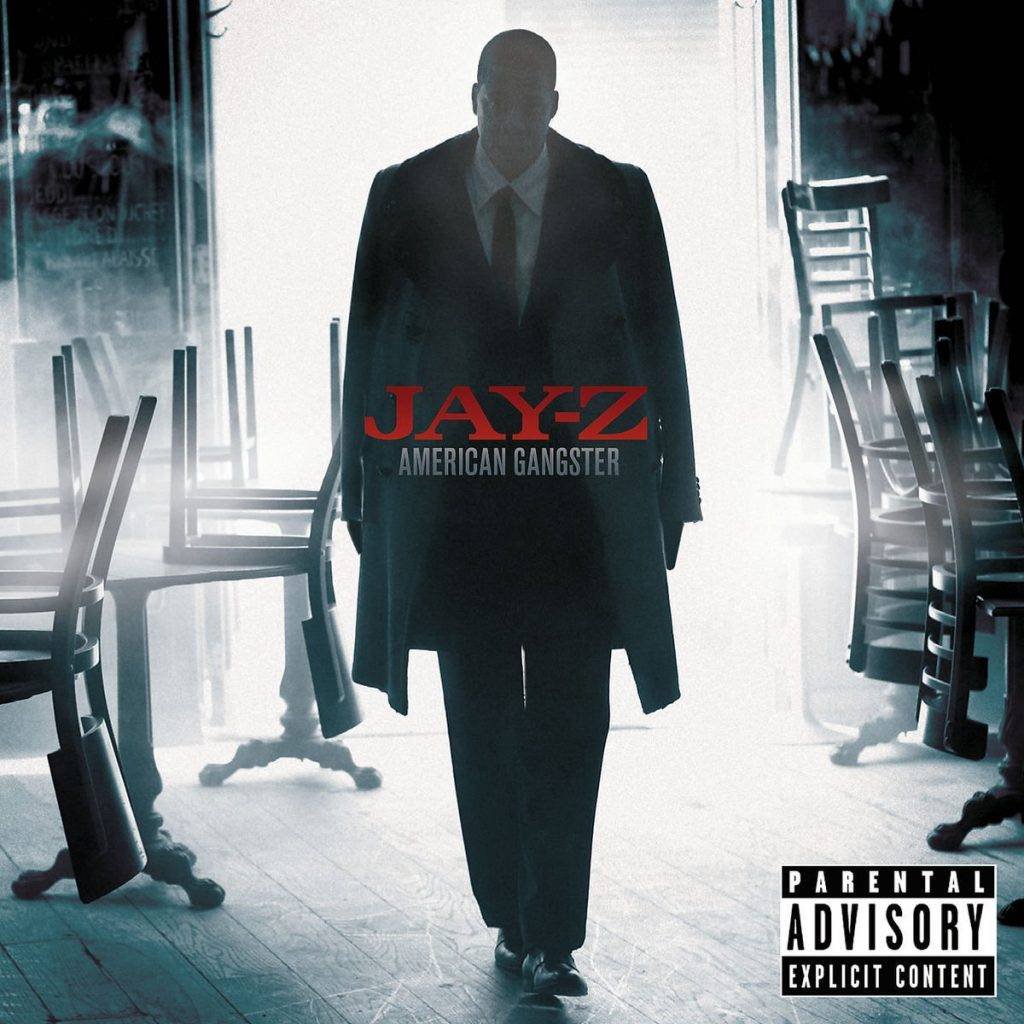
Classification: Hybrid concept album. Central concept: Inspired by the rise and fall of a drug kingpin, Jay-Z revisits his own hustling past to examine the allure of the American Dream, the price of illegal success, and the contradictions of the gangster archetype.
Inspired by Ridley Scott’s 2007 film of the same name, American Gangster finds Jay-Z using the story of Harlem drug kingpin Frank Lucas as a lens through which to reconsider his own life before rap superstardom. Rather than producing a conventional soundtrack, Jay builds a loosely connected portrait of the hustler’s existence, moving from deprivation and ambition through wealth and celebration toward paranoia and disillusionment. The album draws on Jay’s memories of Brooklyn’s Marcy Projects, giving its cinematic premise a personal dimension.
“Pray” establishes the social conditions and moral compromises that can drive someone toward the street economy, while “American Dreamin’” explores the desire to escape poverty through an increasingly dangerous pursuit of success. From there, the record enters the kingpin’s world of money, status, and excess. “Roc Boys (And the Winner Is)…” revels in the rewards of winning, its triumphant horns and celebratory energy capturing the intoxicating appeal of wealth. “Party Life” extends the fantasy, while “No Hook” presents a colder, more guarded perspective on the hustler’s code.
The mood shifts as power brings new complications. On “Success,” featuring Nas, two seasoned rappers examine the isolation and mistrust that accompany achievement. “Say Hello” turns toward a more confrontational view of the world, and “Fallin’” closes the main album with a darker meditation on the consequences of choices made in pursuit of money and power. The progression gives the record a dramatic arc, even when individual tracks address subjects beyond the film’s plot.
The production reinforces the period setting through warm soul and funk samples, live horns, strings, and richly layered arrangements. Diddy and the Hitmen lead much of the musical direction, with contributions from Just Blaze, The Neptunes, and other producers. The result recalls the texture of 1970s crime cinema without reducing the album to a retro exercise. American Gangster uses the gangster’s rise and decline to examine the American Dream from the perspective of someone who understands its appeal, its costs, and its uneasy relationship with legitimate success.
Lupe Fiasco – The Cool (2007)

Classification: Hybrid concept album. Central concept: A resurrected street hustler becomes trapped in the cycle of temptation, materialism, and moral decay, while the album examines the social forces that make destructive behavior appear desirable.
On The Cool, Lupe Fiasco expands the mythology introduced on his debut Food & Liquor, turning a character who died on the earlier album into a symbol of street culture’s enduring appeal. Michael Young History, better known as The Cool, returns as a zombie-like hustler, his body bearing the physical marks of his moral deterioration. Two other personifications shape his fate: The Streets, a seductive female presence representing street life, and The Game, a sinister figure embodying hustling, manipulation, and the pursuit of money. Their relationships provide a recurring narrative thread through an album that also reaches into broader questions of violence, commercialism, and social decay.
“The Coolest” introduces the resurrected character and his fixation on the possessions and status that once defined him. “Gotta Eat” develops the album’s obsession with consumption through the metaphor of a cheeseburger, while “The Die” and “Put You on Game” bring the mythology’s darker forces into sharper focus. The characters function as more than colorful inventions. They represent systems of temptation that promise power and recognition while gradually stripping away personal responsibility.
The album’s wider themes extend beyond this central storyline. “Dumb It Down” ridicules an industry and audience that demand simpler, less challenging music, while “Streets on Fire” depicts social crisis as a spreading disease. “Little Weapon” connects children’s exposure to violence in video games and popular culture with the realities of child soldiers and school shootings. Even “Superstar,” with its inviting melody and Matthew Santos’s vocals, questions the spiritual emptiness that can accompany fame.
These subjects unfold over a varied musical palette, from Soundtrakk’s soulful production to the tense rock textures of UNKLE’s contribution on “Hello / Goodbye (Uncool)” and Patrick Stump’s work on “Little Weapon.” The changes in sound reflect an album shifting between personal mythology, social observation, and industry satire. Written during a period marked by the death of Lupe’s father and his mentor Chilly Patton’s lengthy prison sentence, The Cool carries a palpable sense of loss. Its concept is deliberately fragmented rather than a continuous story, but the recurring characters and connected themes give the album a compelling central vision.
eMC – The Show (2008)

Classification: Narrative concept album. Central concept: Four underground MCs navigate a working day on tour, from travel and promotional obligations to backstage hassles and the eventual performance, revealing the everyday realities behind life as independent Hip Hop artists.
With The Show, Masta Ace, Punchline, Wordsworth, and Strick turn the routine of touring into a detailed Hip Hop narrative. The album follows eMC through a day on the road, using short skits and connected songs to recreate the travel delays, hotel check-ins, interviews, promoter headaches, and backstage encounters that surround a live performance. Instead of the glamorous superstar lifestyle often associated with rap, the group presents touring as a job demanding patience, persistence, and sacrifices away from home.
The sequence gives the record its structure. “The Airport” and “Traffic” establish the logistical grind, while “The Check In” and “The Interview” capture the less exciting obligations that come with promoting a show. Later, “The Angry Merch Guy” introduces another unwelcome distraction before the title track finally brings the action to the stage. The interludes give minor characters their own personalities, making the album feel like a backstage comedy built around recognizable frustrations. The performance is the destination, but getting there is half the story.
The narrative also provides room for more personal reflections. “Don’t Give Up on Us” and “Borrow You” address the strain that a music career places on relationships and family life, reminding listeners that time spent on the road comes at a cost. Elsewhere, “Leak It Out” and “EMC (What It Stand For?)” bring the focus back to the group’s identity as lyricists, celebrating the craft that keeps them working despite the industry’s frustrations. Guests including Little Brother and Sean Price add further lyrical firepower without distracting from the central cast.
A varied production lineup, including Ayatollah, Marco Polo, Frequency, The ARE, and Nicolay, gives the album a range of soulful samples, crisp drums, and traditional boom-bap textures. The different beats suit the changing scenes while preserving a cohesive underground sensibility. The Show is ultimately a portrait of working musicians who understand the less glamorous side of their profession. Its narrative structure turns the everyday details of touring into a connected story about artistic dedication, professional frustration, and the personal compromises required to keep performing.
Brotha Lynch Hung - Dinner & A Movie (2010)
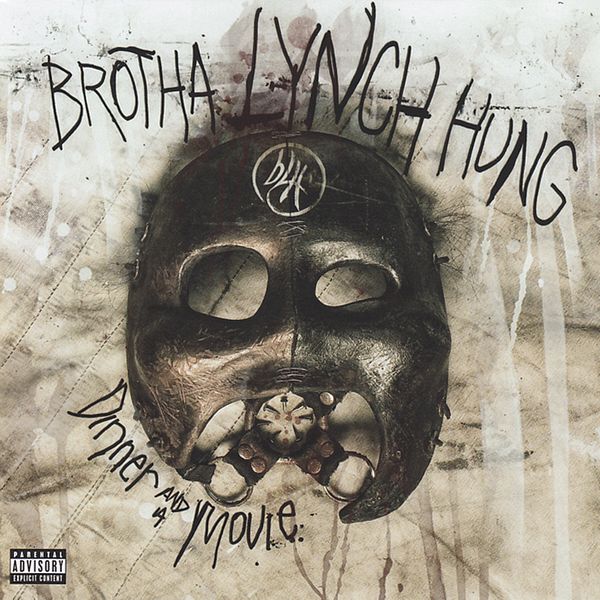
Classification: Narrative concept album. Central concept: A police interrogation frames the confession of a murderous rapper whose escalating crimes, cannibalistic obsessions, and psychological instability unfold like a full-length horror film.
With Dinner & a Movie, Sacramento horrorcore veteran Brotha Lynch Hung transforms an album into a gruesome crime thriller. Released through Strange Music in 2010, the record opens with “The Interrogation (Intro),” immediately establishing the central premise: a killer is being questioned as investigators attempt to piece together his crimes. From there, songs and interludes build a disturbing portrait of a serial murderer whose appetite for violence grows alongside his increasingly fractured state of mind. The title sets the tone for Lynch’s particularly grotesque sense of humor, where the prospect of an ordinary meal becomes something far more sinister.
The sequencing gives the album its cinematic momentum. “D.O.A.” pushes the story into violent territory, while “Split Personality” brings psychological instability into sharper focus. “Meat” takes the record’s cannibalistic imagery to an extreme, and “I Plotted (My Next Murder)” suggests a killer whose crimes are becoming an ongoing compulsion rather than isolated acts. Between these tracks, the skits supply dialogue, new characters, and investigative developments, keeping the listener inside the unfolding case. The result is closer to a slasher film told through verses and sound bites than a conventional collection of horror-themed rap songs.
Lynch’s writing thrives on shock, grotesque detail, and the unnerving theatricality of his central character, though the constant violence is accompanied by flashes of paranoia, despair, and mental disintegration. The varied production, handled by contributors including Seven, Axis, DJ Epik, and Freddy Machete, supplies the dark, hard-edged musical backdrop. Guest appearances from Tech N9ne, Krizz Kaliko, and others add different voices without pulling the album away from its horror-film premise.
Dinner & a Movie launches Lynch’s three-album Coathanga Strangla saga, continued on Coathanga Strangla (2011) and concluded with Mannibalector (2013). The trilogy develops one extended criminal narrative across three records, with this first installment establishing its killer and the grisly world he inhabits.
Read our feature on Brotha Lynch Hung’s Coathanga Strangla trilogy for a closer look at the complete saga.
The Roots - undun (2011)

Classification: Hybrid concept album. Central concept: Told in reverse chronological order, the brief life of fictional Philadelphian Redford Stevens examines the relationship between personal choices, urban poverty, and the forces that shape a person’s fate.
The Roots’ undun begins with its protagonist already dead. An EKG flatline opens “Dun,” immediately removing the usual uncertainty about how the story will end. From there, the Philadelphia band retraces the life of Redford Stevens, a young man drawn into the drug trade, moving backward through his final hours, his regrets, and the decisions that gradually narrowed his options. The reverse chronology shifts attention away from suspense and toward a more unsettling question: how did Redford arrive at this point?
On “Sleep,” Black Thought voices the dying man’s thoughts about his choices and the possibility that his family will forget him. “Make My” depicts the killing itself, before the narrative retreats into earlier stages of Redford’s life. “Kool On” and “The OtherSide” capture the apparent rewards of street dealing, exposing the fragile confidence behind material success. “Stomp” confronts the moment when Redford’s direction becomes increasingly difficult to change, while “Lighthouse” finds him contemplating suicide. By the time “Tip the Scale” addresses the structural disadvantages facing Black men raised in impoverished neighborhoods, the listener has seen how personal decisions and social conditions become entangled.
Redford is neither romanticized as a street legend nor reduced to a symbol without an individual identity. The Roots allow his contradictions and regrets to remain visible, giving the album’s discussion of determinism and free will considerable emotional weight. The story is specific to its protagonist, even as its questions reach beyond him.
Questlove’s production reinforces the mood through restrained percussion, soulful passages, keyboards, strings, and carefully controlled dynamics. After the final vocal track, the four-part Redford Suite shifts the album into instrumental territory. Beginning with Sufjan Stevens’s “Redford (For Yia-Yia & Pappou),” it moves through string arrangements and free jazz before ending on an unresolved piano chord. The music leaves Redford’s story suspended in reflection rather than offering closure. With undun, The Roots connect an intimate character study to difficult questions about social inequality, responsibility, and how much control people have over their own lives.
Plug 1 & Plug 2 Present… First Serve (2012)

Classification: Narrative concept album. Central concept: Two aspiring MCs rise from basement recordings to rap stardom, only to let ego, fame, and industry pressures destroy their partnership before friendship and a shared love of Hip Hop bring them back together.
For First Serve, De La Soul’s Posdnuos and Trugoy the Dove step outside their familiar identities to play Jacob “Pop Life” Barrow and Deen Witter, two fictional rappers chasing success in the late 1990s. The album unfolds like a hip-hop biopic, following their evolution from hopeful beginners to charting artists, their increasingly bitter fallout, and their eventual reconciliation. By adopting alter egos and even referring to De La Soul as an outside influence in character interviews, the pair give the story its own fictional world.
“Opening Credits” establishes the cinematic framing, while “The Work” and “Small Disasters” capture the grind of trying to break through as unknown MCs. Their breakthrough arrives with “We Made It,” which celebrates the excitement of securing a deal and tasting commercial success. The mood shifts as fame introduces new complications. “Goon TV” and other interludes expand the fictional setting, while “Clash Symphony” and “Pop Life” explore the rivalry and inflated egos that turn creative partnership into competition. “Tennis,” with its back-and-forth dynamic, plays neatly into the album’s central metaphor of two players who need each other to make the match work.
The final stretch moves toward reconciliation. After the fallout and separation, the characters gain enough perspective to recognize what they have lost, and “Ending Credits” closes the story on a more optimistic note. The resolution gives First Serve a warmer outlook than many Hip Hop tales of industry betrayal, placing friendship and shared artistic purpose above the temporary rewards of celebrity.
French production duo Chokolate and Khalid supply a bright, groove-driven backdrop shaped by funk, disco, boogie, and classic sample-based Hip Hop. The music evokes the party-minded spirit associated with De La Soul’s early work while giving the fictional duo a distinct identity. First Serve uses humor, theatrical interludes, and a full rise-and-fall narrative to explore familiar pressures within the music business, ultimately making a case for the personal connections that keep artists grounded when success threatens to pull them apart.
Kendrick Lamar – Good Kid M.A.A.D. City (2012)

Classification: Narrative concept album. Central concept: Over the course of a turbulent day and night in Compton, a teenage Kendrick navigates peer pressure, gang violence, temptation, and family expectations while struggling to preserve his identity and moral direction.
Subtitled “a short film by Kendrick Lamar,” good kid, m.A.A.d city turns the rapper’s adolescence into a tightly connected coming-of-age drama. Set in Compton, the album follows Kendrick’s teenage alter ego, K.Dot, as a trip to see a girl named Sherane sets off a chain of events involving friends, gang tensions, drugs, and violence. Voicemails from his parents and conversations between characters connect the tracks, giving the record the intimacy of a personal recollection rather than a collection of songs sharing a setting.
“Sherane a.k.a Master Splinter’s Daughter” establishes the narrative, while “The Art of Peer Pressure” reveals how quickly a supposedly good kid can participate in criminal behavior when surrounded by friends seeking trouble. “Backseat Freestyle” captures adolescent bravado, its exaggerated fantasies of money, sex, and status contrasting with the vulnerability that emerges elsewhere. On “Money Trees” and “m.A.A.d city,” Kendrick explores the attractions and dangers of Compton’s street culture, where belonging can offer protection while deepening the cycle of retaliation.
The album’s central conflict is the gap between Kendrick’s ambitions and the environment pulling him in opposing directions. “Swimming Pools (Drank)” examines alcohol’s social allure and the pressure to indulge, while “Good Kid” describes the vulnerability of someone caught between competing sides. The emotional centerpiece, “Sing About Me, I’m Dying of Thirst,” shifts from the perspectives of people affected by violence to a moment of spiritual reckoning. An elderly woman leads Kendrick and his companions in prayer, offering a possible break from the cycle surrounding them. “Real” carries that reflection into the closing stretch, grounding the story in the importance of family, love, and self-understanding.
Dr. Dre, Sounwave, DJ Dahi, Hit-Boy, and other producers supply atmospheric beats that move between dreamy melodies, ominous bass, and hard West Coast rhythms. The changing textures mirror the instability of the story without disrupting its coherence. good kid, m.A.A.d city neither excuses Kendrick’s mistakes nor reduces Compton to a caricature of violence. It presents a young man shaped by his surroundings, still capable of questioning them, and searching for a way to become someone different.
Ghostface Killah & Adrian Younge - Twelve Reasons To Die (2013)

Classification: Narrative concept album. Central concept: A betrayed Mafia enforcer is murdered and his remains pressed into twelve vinyl records, unleashing a supernatural killer who returns to exact revenge on the crime family that destroyed him.
On Twelve Reasons to Die, Ghostface Killah and composer Adrian Younge build a bloody crime saga that merges Mafioso rap, supernatural horror, and vintage Italian cinema. Set in 1960s Italy, the story follows Tony Starks, an enforcer for the DeLuca crime family who dreams of building his own empire and falls in love with the boss’s daughter. His ambition and romance prove fatal. After his former employers murder him, his remains are melted into vinyl and pressed into twelve records. When played, the records resurrect Tony as Ghostface Killah, a spectral force bent on wiping out the family that betrayed him. RZA executive-produces and narrates the album, guiding listeners through its pulp-fiction mythology.
The opening tracks establish the world of organized crime and set Tony’s transformation in motion. “Rise of the Black Suits” and “I Declare War” introduce the atmosphere of impending conflict, while “Blood on the Cobblestones” brings the violence into the streets. “The Center of Attraction” and “Enemies All Around Me” deepen the sense of betrayal surrounding Tony before “An Unexpected Call (The Set Up)” delivers a crucial turning point. Once “Rise of the Ghostface Killah” unleashes the resurrected killer, the narrative turns toward retribution. “Revenge Is Sweet” and “Murder Spree” deliver the bloody payback, while the title track completes the revenge-driven framework.
Younge’s production is essential to the experience. Recorded with live instrumentation and vintage equipment, the music draws on Italian horror scores, orchestral suspense, gritty soul, and the dramatic arrangements associated with composers such as Ennio Morricone. Ominous strings, distorted bass, sharp drums, and eerie vocal textures give Ghostface’s animated, detail-heavy storytelling an appropriately sinister setting. The compact 39-minute running time keeps the plot moving, while the accompanying comic-book series expands the fictional universe visually.
Twelve Reasons to Die turns Ghostface’s long-running Tony Starks persona into the center of a supernatural gangster epic, with vinyl itself becoming the vessel for death and resurrection. Its sequel, Twelve Reasons to Die II (2015), continues the mythology, extending one of Ghostface’s most distinctive conceptual projects beyond the original album.
Masta Ace - The Falling Season (2016)

Classification: Narrative concept album. Central concept: Masta Ace revisits his high school years in early-1980s Brooklyn, tracing the choices, pressures, friendships, and everyday experiences that shaped him during the transition from adolescence to adulthood.
With The Falling Season, Masta Ace turns his own teenage years into an autobiographical coming-of-age story. Following the fictional narratives of Disposable Arts and A Long Hot Summer, this 2016 album looks further back, revisiting his four years of high school in Brooklyn between 1980 and 1984. Rather than building its story around a single crime or dramatic turning point, Ace recreates the accumulation of ordinary experiences that shape a young person’s character, from navigating school and friendships to resisting the pressures of the surrounding street culture.
Short skits give the album a sense of time and place, recreating conversations, classroom encounters, sports tryouts, and the social politics of teenage life. “Young Black Intelligent,” featuring Chuck D and the Hypnotic Brass Ensemble, addresses the isolation of a student who takes education seriously in an environment where academic ambition doesn’t always earn respect. “Labyrinth” explores the dangers and anxieties of getting around the city, while “Mr Bus Driver” and “Mothers Regret” bring everyday frustrations and family concerns into the narrative. These smaller episodes make adolescence feel complicated and unpredictable, without turning every experience into a grand life lesson.
Ace also finds room for humor and lyrical ingenuity. “Mathematics” turns schoolwork into a showcase for his wordplay, while “High School Shit” revisits the social rituals and youthful bravado that define the period. The album’s emotional destination arrives with “Coronation,” where graduation represents a personal victory and a moment to assess the choices that brought him there. Ace takes pride in having avoided the drug trade, an important distinction in a neighborhood surrounded by destructive influences.
KIC Beats provides warm, soul-inflected production that complements the album’s early-1980s Brooklyn setting, while Ace’s measured delivery gives the memories the perspective of someone who has had decades to understand their significance. The Falling Season adds a deeply personal chapter to Ace’s concept-album catalogue, examining the years before the artist emerged and revealing how character is formed through small decisions long before anyone knows where life will lead.
Open Mike Eagle - Brick Body Kids Still Daydream (2017)
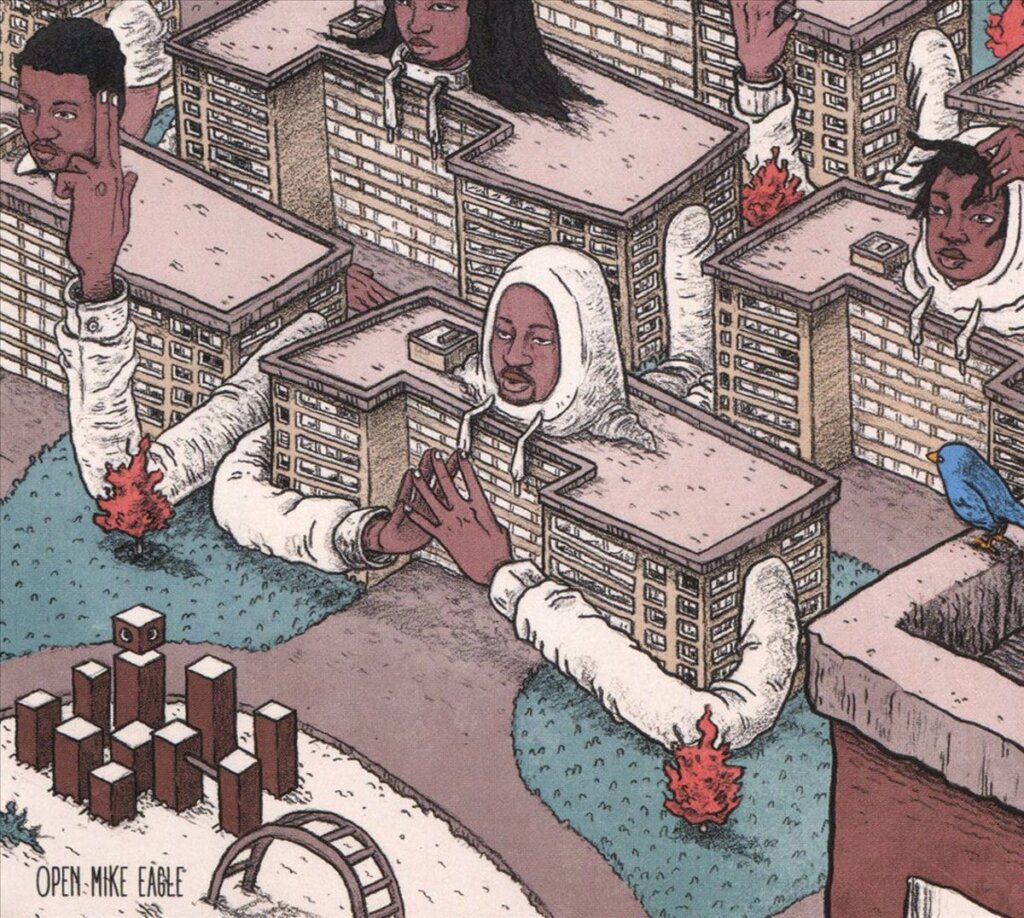
Classification: Thematic concept album. Central concept: Through childhood memories, urban mythology, and the personification of buildings, Open Mike Eagle memorializes Chicago’s Robert Taylor Homes, exploring the lives of its residents and the cultural damage caused by neglect and displacement.
On Brick Body Kids Still Daydream, Open Mike Eagle turns the history of Chicago’s Robert Taylor Homes into an intimate portrait of a community that too often existed in the public imagination only through stereotypes about poverty and crime. The enormous public housing complex on the South Side was demolished in 2007, leaving residents to contend with displacement and the erasure of familiar surroundings. Drawing on his own childhood connections to the area, Eagle builds an album around the people who lived there, the memories they carried, and the buildings that shaped their lives.
The central metaphor gives the record its distinctive identity. Eagle imagines brick and concrete as a living body, transforming the housing project into a kind of superhero whose physical strength reflects the resilience of its residents. “Legendary Iron Hood” introduces this larger-than-life mythology, while “Brick Body Complex” turns the idea into a declaration of collective identity. The buildings may be demolished, but their history cannot be reduced to rubble. Eagle’s imaginative approach gives the album an almost comic-book quality without losing sight of the very real social conditions behind the imagery.
The emotional force comes from the contrast between childhood wonder and the harsh circumstances surrounding it. “(How Could Anybody) Feel at Home” considers what belonging means in a place subject to neglect, while “Daydreaming in the Projects” preserves the imaginative freedom of children growing up there. “My Auntie’s Building” brings the focus to family and domestic familiarity, and “No Selling (Uncle Butch Pretending It Don’t Hurt)” explores the emotional costs that people conceal from those around them. On “Happy Wasteland Day,” the empty landscape left behind becomes a bitter reminder of what demolition failed to resolve.
The production, spread across collaborators including Exile, DJ Nobody, Kenny Segal, and Illingsworth, gives Eagle room for his intricate writing and shifting moods. His understated delivery makes the personal details hit harder than grand declarations would. Brick Body Kids Still Daydream is an elegy for a physical place and the people who made it matter, preserving their stories against the threat of collective forgetting.
Lupe Fiasco - DROGAS WAVE (2018)

Classification: Hybrid concept album. Central concept: Through supernatural mythology, alternate histories, and contemporary social commentary, Lupe Fiasco examines slavery, liberation, and humanity’s capacity to survive systems designed to destroy it.
With DROGAS WAVE, Lupe Fiasco builds one of the most ambitious conceptual worlds in modern Hip Hop. This sprawling double album divides into two sections, “WAVE” and “DROGAS,” connected by questions of captivity, resistance, and survival. The first half centers on the Myth of the Long Chains, a supernatural reimagining of the transatlantic slave trade. A group of enslaved Africans leap from a slave ship but survive underwater, developing into an immortal force that dedicates itself to sinking slave ships and liberating those aboard. The second half moves toward contemporary forms of bondage, examining how exploitation, addiction, materialism, and systemic inequality perpetuate cycles of oppression.
“WAV Files” lays out the Long Chains mythology, turning the ocean into a place of resistance rather than a grave for those lost to the slave trade. The album’s historical imagination also informs “Manilla,” which connects the objects once used as currency in the slave trade to the enduring relationship between money, power, and human exploitation. Elsewhere, “Alan Forever” imagines an alternate life for Alan Kurdi, the Syrian refugee child who drowned in the Mediterranean in 2015. Lupe pictures him surviving, becoming an Olympic swimmer, and saving another child from drowning. “Jonylah Forever” applies a similar imaginative approach to Jonylah Watkins, a Chicago infant killed by gunfire, envisioning the life she might have lived. These alternate realities turn remembrance into an act of possibility.
The second half broadens the album’s argument, shifting from the literal chains of slavery to the forces that constrain people in contemporary society. Its interludes, shifting perspectives, and extended lyrical passages reward close listening, although the sheer scale of Lupe’s ideas sometimes makes the record demanding.
Production from Soundtrakk, Simon Sayz, and other collaborators gives the album room for soulful passages, intricate rhythms, and dramatic changes in mood. The acronym DROGAS, meaning “Don’t Ruin Us God Said,” reinforces its concern with preservation and survival. DROGAS WAVE connects historical atrocity to present-day struggles without losing sight of individual lives, using speculative storytelling to imagine resistance where history recorded destruction.
Hermit and the Recluse - Orpheus vs. the Sirens (2018)

Classification: Thematic concept album. Central concept: Greek mythology provides a framework for Ka’s reflections on street violence, survival, family responsibility, and the struggle to escape destructive cycles through discipline and artistic expression.
On Orpheus vs. the Sirens, Brooklyn rapper Ka and producer Animoss translate the mythology of ancient Greece into a study of life in the streets. Across ten tracks, Ka draws parallels between legendary figures and the realities of urban survival, using their trials to examine temptation, fate, responsibility, and the possibility of redemption. The album isn’t a straightforward retelling of Greek myths. Instead, its characters and stories become a symbolic vocabulary for the personal experiences and moral dilemmas running through Ka’s writing.
The opening “Sirens” establishes the central metaphor. In Greek mythology, Orpheus uses music to counter the irresistible songs of the Sirens and protect the Argonauts from destruction. Ka casts his own craft in a similar role, with the discipline of writing and recording offering resistance to the forces threatening to pull him back into destructive patterns. “Fate” and “Orpheus” deepen the tension between personal agency and circumstances that seem predetermined, while “Atlas” draws on the Titan’s burden to explore the weight of responsibility. The journey toward the Golden Fleece becomes an image of striving for dignity and purpose amid hardship.
Other tracks sharpen the album’s darker perspective. “The Punishment of Sisyphus” evokes the exhausting repetition of street life, where violence and retaliation can trap people in cycles that seem impossible to escape. “Hades” and “Oedipus” bring mortality, guilt, and painful knowledge into the album’s mythological framework, while “Companion of Artemis” closes the sequence without turning Ka’s reflections into an easy story of triumph. The myths illuminate his experiences rather than providing simple answers.
Animoss builds the setting from dusty loops, subdued textures, and long stretches without conventional drums. The sparse production leaves space for Ka’s measured delivery and densely packed verses, making each line demand attention. The opening dialogue from the film Jason and the Argonauts further establishes the ancient world that informs the album’s imagery. Orpheus vs. the Sirens succeeds through the close relationship between its mythology, restrained musical atmosphere, and Ka’s hard-earned reflections on survival. It turns Greek legend into a deeply personal language for confronting the forces that shape a life.
Skyzoo - The Mind Of A Saint (2023)

Classification: Hybrid concept album. Central concept: Through the imagined inner monologue of Franklin Saint, the fictional Los Angeles drug kingpin from Snowfall, Skyzoo examines ambition, guilt, and the destructive consequences of the crack trade during 1980s America.
With The Mind of a Saint, Skyzoo takes an unusual approach to character-driven Hip Hop, inhabiting the mind of Franklin Saint, the ambitious young dealer at the center of FX’s Snowfall. Working with production duo The Other Guys, Skyzoo constructs a series of internal reflections that complement the television drama without simply retracing its plot. The songs explore Franklin’s calculations, justifications, and growing awareness of the damage surrounding his rise, creating a psychological portrait of someone who mistakes accumulating wealth for gaining control over his life.
The album’s ten tracks chart different dimensions of that mindset. “Eminent Domain” introduces the relationship between power, ownership, and ambition, while “Panther & Powder” places Franklin’s criminal enterprise against the political ideals and racial struggles of his era. “Straight Drop” captures the confidence of a dealer expanding his operation, while “100 to ONE” gives Skyzoo room to explore the risks and calculations behind Franklin’s increasingly dangerous position. As the consequences become harder to ignore, “Bodies!” and “The Balancing Act” bring mortality, responsibility, and the psychological burden of his business into focus.
The moral reckoning deepens on “Brick by Brick,” where the slow construction of Franklin’s empire carries the corresponding weight of the destruction it leaves behind. “Apologies in Order” confronts the damage done to people close to him, including those whose trust and affection Franklin sacrifices in pursuit of power. The closing track, “Purity,” shifts the emphasis toward the real devastation of drug addiction, ending with an anti-drug message that cuts through the seductive mythology of the kingpin lifestyle.
The Other Guys supply warm, jazz-inflected boom-bap, with soulful loops and understated arrangements that contrast sharply with the grim subject matter. Skyzoo’s precise writing captures the logic Franklin uses to rationalize his choices while exposing the contradictions underneath. Knowledge of Snowfall adds another layer, although the record works independently as a study of ambition, moral compromise, and the human cost of the crack epidemic. The Mind of a Saint turns a fictional drug lord’s private thoughts into a broader examination of an era that devastated countless American communities.
Aesop Rock - Integrated Tech Solutions (2023)

Classification: Hybrid concept album. Central concept: A fictional technology corporation provides the framework for Aesop Rock’s critique of technological progress, consumerism, and corporate doublespeak, while personal stories explore the human experiences that resist being reduced to data, products, or algorithms.
With Integrated Tech Solutions, Aesop Rock imagines a company promising to optimize every aspect of modern life, using the language of corporate presentations and technology marketing to examine an increasingly automated world. The opening “The ITS Way” introduces the fictional corporation through a parody of an orientation video, complete with grandiose promises and suspicious disclaimers. This framing device establishes the album’s central tension: technology is sold as a universal answer to human problems, even as the systems behind it generate new forms of dependence, distraction, and exploitation.
“Mindful Solutionism” develops that critique through Aesop’s densely packed account of technological advancement, tracing humanity’s ingenuity from early inventions toward a modern world of surveillance, weapons, and digital convenience. Its central target is the assumption that every problem requires another technological intervention, particularly when commercial interests determine which solutions receive attention. “Living Curfew,” featuring billy woods, shifts toward the experience of urban life at different hours, while “Forward Compatibility Engine,” featuring Rob Sonic, returns to the album’s fascination with systems and the machinery of modern existence.
As the record progresses, the corporate framework makes room for more personal observations. “Pigeonometry” devotes intricate wordplay to the shapes and behavior of city pigeons, finding fascination in a subject most people overlook. “100 Feet Tall” recalls Aesop’s childhood encounter with Mr. T, mixing humor and nostalgia into the album’s broader reflections on memory. “By the River” is more contemplative, celebrating the natural world and revisiting memories of his late friend Camu Tao. These detours offer a counterweight to the album’s skepticism about technological culture, finding value in physical places, individual obsessions, and experiences that resist easy categorization.
Aesop’s self-produced beats combine funky boom-bap, bubbling synthesizers, electronic textures, and turntable work, balancing an off-kilter futuristic edge with familiar Hip Hop rhythms. His intricate writing and conversational delivery keep the album grounded even when its ideas become deliberately dense. Integrated Tech Solutions connects corporate satire with intimate storytelling, questioning a culture increasingly preoccupied with optimization while celebrating the unpredictable details that make human life worth paying attention to.
The 25 albums on this list demonstrate how many different forms a Hip Hop concept album can take. Some tell complete stories with characters, settings, and plot twists, while others explore a central theme, revisit important moments in an artist’s life, or reflect on the passage of time. The best ones give individual songs a greater purpose when heard as part of a larger whole. We realize Masta Ace occupies several spots on this list, but his track record in the format speaks for itself. Albums like Disposable Arts, A Long Hot Summer, and The Falling Season demonstrate why he deserves recognition as Hip Hop’s greatest concept album artist. Ultimately, the albums on this list remind us that when an MC has a compelling story to tell and the vision to tell it across an entire album, Hip Hop can deliver some of its most memorable and rewarding listening experiences.