

Los Angeles gangsta rap did not emerge overnight. Its foundations were laid during the 1980s by artists such as N.W.A, Ice-T, King Tee, and Toddy Tee, who brought the realities of South Central, Compton, and other parts of the city into Hip Hop. Their music confronted subjects largely absent from mainstream popular culture, from police brutality and gang violence to poverty and racial tension. By the end of the decade, Los Angeles had developed a distinct gangsta rap identity, setting the stage for a period in which West Coast Hip Hop would command national attention.
The 1990s took the music in several directions. Dr. Dre’s The Chronic ushered in the G-funk era, with its elastic basslines, funk samples, and laid-back synths, while artists such as Ice Cube, MC Eiht, and Above The Law pursued harder-edged approaches rooted in street narratives and social commentary. Compton, South Central, Long Beach, Watts, and Inglewood each contributed their own characters and perspectives. Even within the gangsta rap framework, there was considerable variety in the music, the storytelling, and the attitudes of the artists making it.
The decade was also one of considerable tension. The crack epidemic, gang conflicts, police violence, and economic hardship shaped the environments described on these records. The 1992 Los Angeles riots brought many of those underlying conflicts into the national spotlight. For rappers, these circumstances provided subject matter that was often intensely personal. Tales of street life and survival sat alongside reflections on racism, institutional neglect, neighbourhood loyalty, ambition, and the contradictions of life in the city.
Musically, Los Angeles producers drew heavily from the funk and soul traditions, reshaping familiar sounds through inventive sampling, heavy low end, crisp drum programming, and distinctive synthesizer work. The results ranged from the polished grooves of G-funk to the darker, more menacing production of street-oriented records. Producers such as Dr. Dre, DJ Quik, Daz Dillinger, Cold 187um, and Battlecat each brought a recognisable approach to the music.
The 25 albums collected here capture the breadth and character of 1990s Los Angeles gangsta rap. Some became blueprints for the sound that followed; others offered a different perspective on the city and its street culture. Together, they tell the story of a decade in which Los Angeles helped shape the direction of Hip Hop.

Above The Law - Livin' Like Hustlers (1990)

Above The Law emerged from Pomona with a sound that distinguished them from the harder, more stripped-down approach associated with early N.W.A. Livin’ Like Hustlers, released on Ruthless Records, retained the street-level perspective of West Coast gangsta rap while introducing a richer musical palette. With Dr. Dre and Eazy-E involved in the project, the album had strong connections to the Ruthless camp, although producer and group member Cold 187um was instrumental in shaping its identity.
The production is a major attraction. Cold 187um’s arrangements combine tough drum programming and deep bass with soulful samples, melodic keyboards, and funk influences. Dr. Dre’s involvement is particularly apparent in the album’s polished approach, although the sound is not yet the fully developed G-funk that would dominate the following years. Tracks like “Murder Rap” and “Another Execution” capture the group’s darker side, while the grooves give the music a musicality that distinguishes it from much of the gangsta rap coming out of Los Angeles at the time. The balance between menace and melody would become an important part of Above The Law’s signature sound.
Lyrically, the group draws heavily on street life, hustling, violence, and the struggle for power and respect. The title track revolves around the hustler mentality, with the group presenting themselves as experienced operators navigating a hostile environment. “Menace to Society” takes a darker approach, while “Freedom of Speech” turns its attention towards censorship and the treatment of controversial voices in Hip Hop. These different perspectives give the album some thematic range without losing sight of its street-oriented foundation.
Livin’ Like Hustlers also introduced an important alternative within the developing West Coast gangsta rap scene. Above The Law shared the attitude and subject matter of their Ruthless contemporaries, but Cold 187um’s production gave their music a distinctive funk-driven character. That approach would become increasingly pronounced on subsequent releases, particularly Black Mafia Life. Here, the ingredients were already in place. The album helped lay the groundwork for the West Coast sound that would develop throughout the decade, while giving Pomona its own place in the story of Los Angeles-area gangsta rap.
Ice Cube - AmeriKKKa's Most Wanted (1990)

Leaving N.W.A. in late 1989, Ice Cube wasted little time making his presence felt as a solo artist. For his debut, he travelled to New York to work with Public Enemy’s production team, The Bomb Squad, bringing together their chaotic, sample-heavy approach and his own uncompromising perspective on life in Los Angeles. The result was AmeriKKKa’s Most Wanted, an explosive record that took the confrontational spirit of N.W.A. in a more politically charged direction. Cube had plenty to get off his chest, and he found the perfect musical setting for it.
The Bomb Squad’s production is dense, abrasive, and deliberately overwhelming. Funk breaks, vocal snippets, sirens, scratching, and dissonant samples collide in arrangements that rarely give the listener a moment to settle. Sir Jinx also played an important role in the album’s production. On “The N**** Ya Love to Hate,” Cube’s commanding delivery cuts through the sonic turbulence as he takes aim at racism, media manipulation, and the treatment of Black Americans. “Turn Off the Radio” attacks the narrow representation of Black culture in mainstream broadcasting, while “Endangered Species (Tales from the Darkside),” featuring Chuck D, connects the daily threat of violence in Black neighbourhoods to a wider critique of American society.
There is plenty of street-level storytelling alongside the political material. “What They Hittin’ Foe?” turns a dice game into an entertaining account of hustling, suspicion, and neighbourhood politics. “Who’s the Mack?” examines the world of pimps and hustlers without romanticising their exploits. Cube’s writing moves effortlessly between humour, menace, social observation, and detailed character studies. On “You Can’t Fade Me,” he even turns an unwanted pregnancy into a darkly comic narrative, although its treatment of women remains one of the album’s more contentious aspects.
What makes AmeriKKKa’s Most Wanted particularly striking is the contrast between its New York production and unmistakably Los Angeles perspective. Cube didn’t need to imitate the sound of N.W.A. to retain the urgency of his earlier work. The Bomb Squad gave him an entirely different musical framework, and he used it to deliver one of the most forceful solo debuts in Hip Hop history. The album announced Ice Cube as an artist with a voice, vision, and agenda entirely his own.
Compton's Most Wanted – It's A Compton Thang (1990)

Before Straight Checkn ‘Em and Music to Driveby brought Compton’s Most Wanted wider recognition, the group introduced its sound with It’s a Compton Thang. Released in 1990 on Orpheus Records, the debut arrived during the first major wave of West Coast gangsta rap, when N.W.A had already put Compton on the Hip Hop map. C.M.W. approached the subject from a different angle. The music is generally less confrontational, built around mid-tempo funk grooves and relaxed production, while MC Eiht’s delivery gives the album its own distinctive character.
The recording was shaped by DJ Slip and The Unknown DJ, a former electro pioneer whose involvement connects the emerging gangsta rap sound to an earlier strand of West Coast Hip Hop. Their production favours smooth funk and jazz-tinged loops over the abrasive attack associated with N.W.A. The result has an easy cruising quality, although the street perspective remains firmly in place. With Tha Chill incarcerated during the recording process, Eiht handles most of the vocal duties. His nasal voice, deadpan cadence and trademark “Geah” were already taking shape, giving the group a recognizable identity.
“One Time Gaffled Em Up” and “This Is Compton” establish the local perspective, while “Late Night Hype” is one of the album’s strongest moments. Its smooth, soulful backdrop provides a fitting setting for the group’s account of cruising culture and neighbourhood paranoia. “I’m wit Dat” and the title track add to the album’s laid-back character. Elsewhere, “Rhymes Too Funky Part 1” and “I Give Up Nothin'” lean towards more conventional battle-rap territory, and the material is not equally compelling throughout.
“Duck Sick” deserves particular attention. Its shots at fellow Compton rapper and producer DJ Quik ignited a long-running local feud that would continue well into the following decade. The rivalry eventually became one of the most recognizable in West Coast rap, giving this early track a place in a much larger story.
It’s a Compton Thang is less polished and fully realized than the group’s subsequent albums, but its importance is clear. It introduced MC Eiht’s distinctive style and helped develop a smoother, funk-oriented approach to Compton gangsta rap. The group would reach greater heights with Music to Driveby, but the foundations were already here.
Boo-Yaa T.R.I.B.E. - New Funky Nation (1990)

Six Samoan-American brothers from Carson, California, Boo-Yaa T.R.I.B.E. brought an unusually muscular sound to West Coast Hip Hop. Their debut, New Funky Nation, combined gangsta rap with live funk instrumentation, heavy rock influences, and the kind of collective vocal attack that made the group sound like a small army. At a time when much of Los Angeles gangsta rap was built around sampled funk breaks and drum machines, Boo-Yaa T.R.I.B.E. favoured a more organic, full-bodied approach.
“Six Bad Brothas” sets the tone with booming vocals, rumbling bass, and a rhythm section that gives the music an almost physical force. The brothers frequently trade verses and join forces on shouted choruses, creating a communal energy that distinguishes their performances from the more conventional MC-and-DJ format. The title track takes this approach into funkier territory, with prominent horns and an infectious groove, while “Rated R” maintains the group’s tough street orientation. The influence of Parliament and other funk pioneers is apparent, although Boo-Yaa T.R.I.B.E. give those sounds a considerably harder edge.
The album’s street narratives are equally direct. “Don’t Mess” addresses the realities of drug dealing and drug abuse, with the brothers delivering their observations over deep, rumbling basslines. “Once Upon a Drive-By” is particularly vivid, using ominous instrumentation and forceful group vocals to tell a violent street story. There is little subtlety in the presentation, but the group’s conviction and distinctive vocal interplay give the material considerable character.
Musically, New Funky Nation refuses to stay within one lane. “Psyko Funk” leans into the group’s funk foundations, while “Pinkin’ Up Metal” brings a harder, almost thrash-metal edge into the mix. The guitars, horns, percussion, and bass give the album a live-band quality that was relatively unusual in gangsta rap at the time. That combination also reflects the brothers’ background in Carson’s music and street culture, which informed their identity as a group.
Boo-Yaa T.R.I.B.E. occupied their own corner of the West Coast scene. Their Samoan-American identity, imposing group presence, and fusion of funk, rock, and gangsta rap gave them a perspective and musical character distinct from their better-known Los Angeles contemporaries. New Funky Nation is loud, physical, and unapologetically unconventional, an important early example of the diversity within 1990s West Coast gangsta rap.
N.W.A - Efil4zaggin (1991)
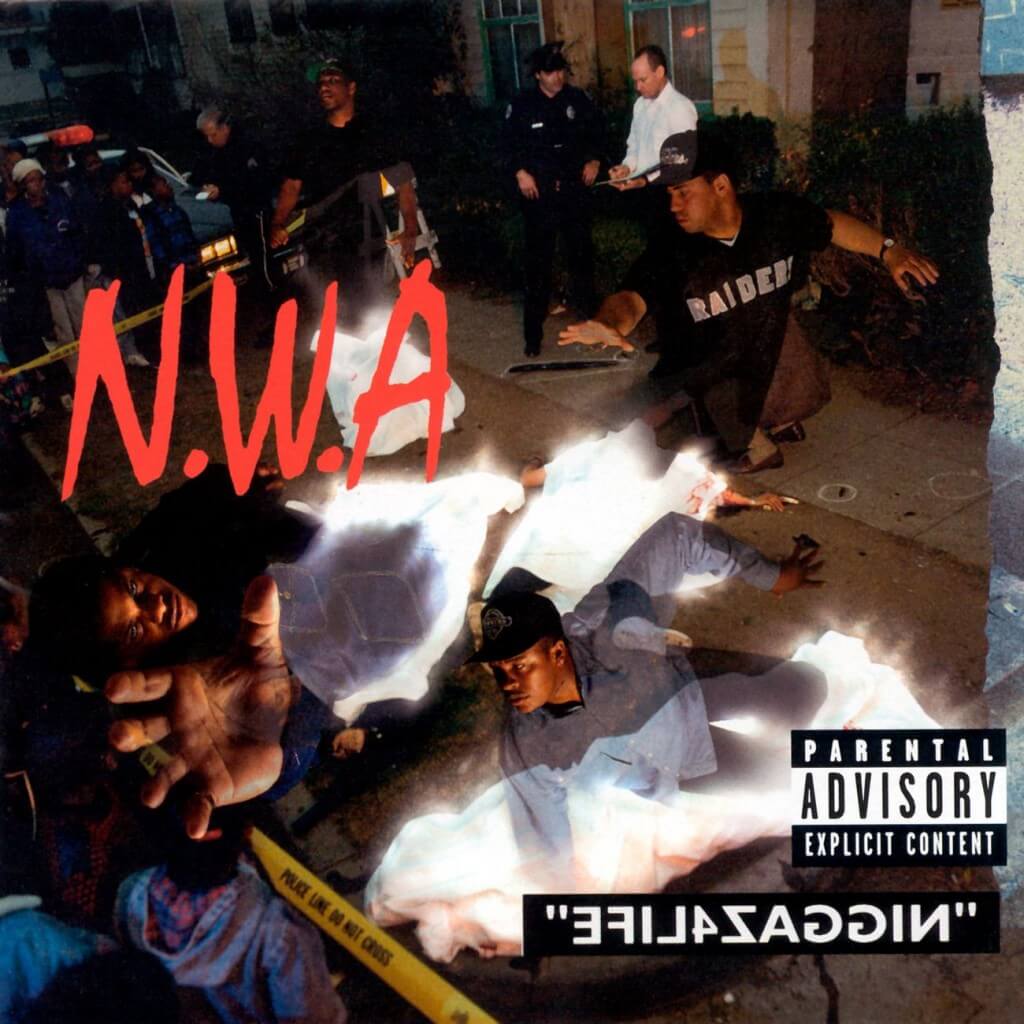
With Ice Cube gone and the group facing the difficult task of following Straight Outta Compton, N.W.A returned with a noticeably different balance of priorities. Efil4zaggin put Dr. Dre’s increasingly sophisticated production at the forefront, while MC Ren and Eazy-E carried much of the lyrical load. The social commentary that had given the group’s earlier work some of its sharpest moments took a back seat to gangsta posturing, sexual provocation, and deliberately offensive humour. The result was a record with some remarkable musical developments and plenty of material that has aged considerably less gracefully.
Dr. Dre’s production is the album’s strongest asset. The stripped-down aggression of Straight Outta Compton gives way to thicker arrangements built around deep funk basslines, atmospheric keyboards, and tightly programmed drums. “Alwayz Into Somethin'” is an early indication of the direction Dre would pursue throughout the decade, combining a menacing groove with an increasingly polished musical approach. The title track and “Real N****z Don’t Die” also benefit from his ability to make hard-hitting beats sound irresistibly funky. The fully developed G-funk era was still ahead, but several of its defining ingredients were already falling into place.
Lyrically, however, Efil4zaggin is considerably less compelling. “One Less B****” and “She Swallowed It” rely heavily on misogynistic shock tactics, with provocation frequently taking precedence over wit or observation. The contrast with Ice Cube’s contributions to the group’s earlier material is difficult to overlook. MC Ren remains an effective presence, and Eazy-E’s distinctive delivery gives the album some personality, but much of the writing lacks the bite and perspective that made N.W.A such a formidable group in the first place.
The skits and spoken interludes don’t help matters. Several interrupt the album’s momentum without adding much substance, while “To Kill A Hooker” is particularly unpleasant. There are stronger moments, though. “Real Nz” and “Real Nz Don’t Die” recall the group’s earlier chemistry, with Ren and Eazy trading verses over suitably dark, funky production.
Efil4zaggin is an uneven follow-up to one of Hip Hop’s defining albums, and its lyrical excesses often obscure its musical achievements. Nevertheless, its importance in the development of West Coast production is considerable. Dr. Dre was moving towards a sound that would soon dominate the genre, and this album captures that transition in progress.
Compton's Most Wanted - Straight Checkn 'Em (1991)

With Straight Checkn ‘Em, Compton’s Most Wanted sharpened the bleak street narratives that had distinguished their debut. MC Eiht was now the group’s central voice following Chill’s incarceration, and his measured, conversational delivery gave the album a strong sense of identity. There is little glamour in his accounts of Compton life. Gang violence, police harassment, neighbourhood rivalries, and the limited options facing young Black men provide the subject matter for a record that rarely offers much relief from its oppressive atmosphere.
DJ Slip and The Unknown DJ provide a suitably restrained musical backdrop. Rather than relying on elaborate arrangements, they favour sparse drum patterns, eerie melodic fragments, and deep basslines. The production leaves plenty of room for Eiht’s storytelling, with the beats often building tension through repetition and subtle changes. “Driveby Miss Daisy” is a particularly grim example, its haunting piano figure and skeletal percussion accompanying a narrative about drive-by violence and its innocent victims. Eiht doesn’t need an exaggerated delivery to make the story hit hard.
“Growin’ Up in the Hood,” originally released on the Boyz n the Hood soundtrack, remains one of the album’s defining moments. Its account of a young man gradually drawn into gang life captures the circumstances and pressures that shaped so much of Compton’s street culture. “Def Wish” takes a different approach, with Eiht adopting Wild West imagery to address neighbourhood threats and rivalries over a slow, ominous beat. His storytelling is direct, detailed, and firmly rooted in the environment he knows.
There are occasional changes of pace. “Can I Kill It?” flips The Isley Brothers’ “Footsteps in the Dark” into a smoother, more relaxed groove, while the title track brings a burst of energy through aggressive drum breaks and DJ Mike T’s scratching. “They Still Gafflin'” returns to the subject of police harassment, keeping the album’s simmering tension firmly in place.
Straight Checkn ‘Em is one of the defining Compton rap albums of its era. MC Eiht’s understated delivery and uncompromising street narratives give it a distinctive character, while Slip and The Unknown DJ understand the value of leaving space around the stories. The result is a cohesive, atmospheric record that captures the particular mood of early-1990s Compton without resorting to unnecessary theatrics.
DJ Quik - Quik Is The Name (1991)

DJ Quik arrived on the scene with a sound that was already distinctly his own. Raised in Compton, he brought a different kind of energy to early-’90s West Coast gangsta rap. Where many of his contemporaries favoured stark street tales and harder-edged production, Quik built his music around thick funk grooves, melodic basslines, crisp drums, and intricate sample work. Quik Is the Name is full of youthful confidence and Compton attitude, with a playful streak that runs through even its most explicit material. Quik was still a teenager when he began making a name for himself, and the album captures an artist eager to enjoy his newfound success while making sure everyone knew where he came from.
The production is the main attraction. Quik draws heavily from ’70s funk and soul, weaving familiar samples into arrangements that are remarkably fluid and detailed. “Tonite” is the obvious party starter, its infectious groove built around elements of Kleeer’s “Tonight” and Betty Wright’s “Tonight Is the Night.” Quik turns the track into an exuberant celebration of nightlife, with an easygoing delivery that matches the music. “Born and Raised in Compton” takes a different approach, using Isaac Hayes’ “The Look of Love” to create a hypnotic backdrop for a proud account of his upbringing. The track’s hometown perspective is central to the album, even when Quik’s lyrics lean towards humour, boasting, and youthful mischief rather than extended social commentary.
There is plenty of variety across the record. “Sweet Black P****” is an unabashedly bawdy account of sexual escapades, while “Tha Bombudd” brings a reggae influence into Quik’s celebration of marijuana culture. Instrumentals such as “Quik’s Groove” give his production room to breathe, highlighting the musicality that separates him from many rappers of the period. His arrangements are never static: bass, keyboards, samples, and percussion fit together with an ease that makes the grooves sound deceptively effortless.
The mood shifts on “Dedication,” an atmospheric instrumental tribute to friends Quik had lost. Its reflective tone provides a counterpoint to the album’s party-minded material and reveals another side of his musical instincts. Quik Is the Name introduced a producer with an exceptional ear for funk, melody, and detail, and a rapper whose personality was equally important to the music. Its Compton perspective is unmistakable, but the record’s warmth, bounce, and musical sophistication give it a character all its own.
Ice-T - Original Gangster (1991)
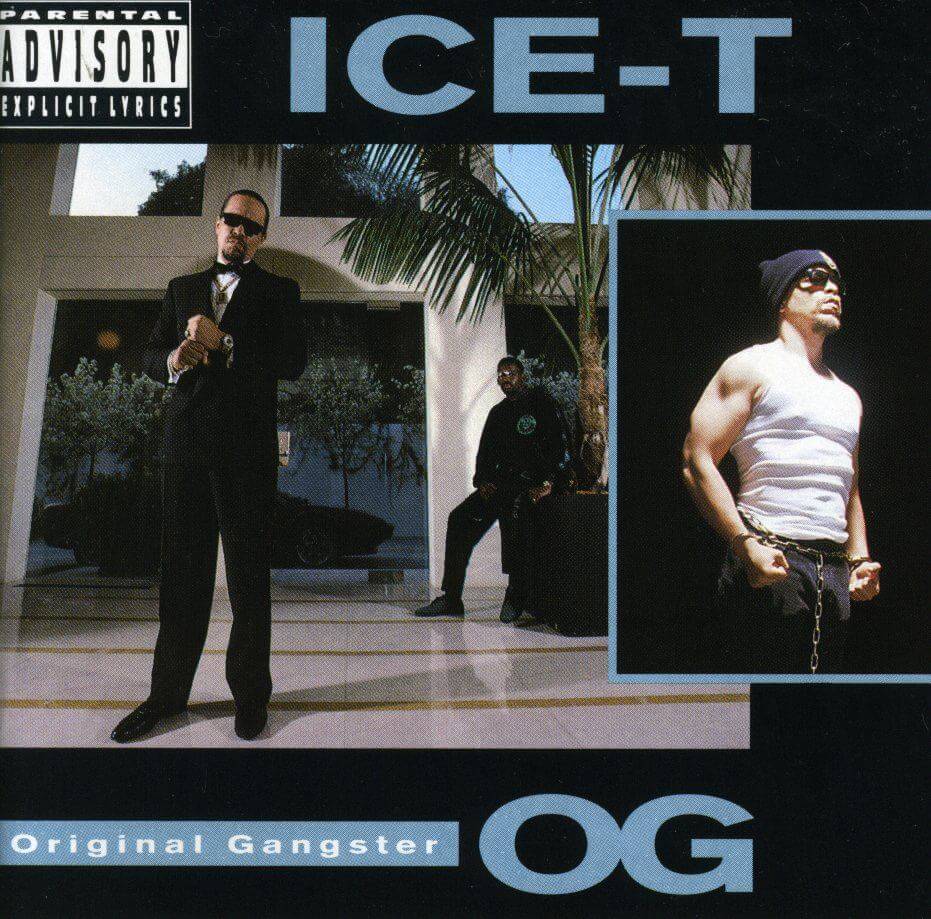
Ice-T’s fourth album is the high point of a remarkable run of records that helped define early-’90s gangsta rap. While N.W.A often concentrated on the shock and aggression of street life, Ice brought a more reflective perspective to the same subject matter. A former street hustler who knew the world he described from personal experience, he approached it with a cold, matter-of-fact delivery and an unusually clear sense of its social and economic causes. O.G. Original Gangster moves between gangsta rap, political commentary, humour, and personal observation without losing its focus. Across 24 tracks and more than 72 minutes, Ice examines the contradictions of his environment, and his own place within it.
The album opens with “First Impression,” in which a British woman offers her assessment of Ice-T after listening to his music. Her enthusiastic conclusion is funny, but it also introduces the larger scope of the record: Ice embodies the different sides of the urban experience, from street credibility to social awareness. “New Jack Hustler,” originally recorded for the New Jack City soundtrack, is one of the album’s defining moments. Ice adopts the perspective of a young drug dealer enjoying the money, cars, and attention that come with his criminal success. The relentless beat and well-placed drum breaks give the track an urgent drive, while its closing lines reveal the cycle behind the fantasy: poverty, crime, imprisonment, and another young hustler waiting to take the same path.
Ice’s approach to language and censorship is another recurring concern. On “Bitches 2,” he responds to criticism of his use of the word by arguing that it can apply to men as well as women. “Straight Up N****” addresses his use of the N-word and his refusal to let others dictate how he identifies himself. The title track also makes a broader case for the purpose of political Hip Hop, while “Mind Over Matter” turns inward, with Ice reflecting on writing, creativity, and the commitment to using his mind to make a living. The production from DJ Aladdin, Afrika Islam, and SLJ gives these different subjects a remarkably clear musical setting. Funk and soul samples are carefully arranged, with crisp drums and distinct layers that leave every element room to breathe.
The album takes a darker turn in its second half. “Midnight” revisits the nighttime street narrative of “6 ‘N the Mornin’,” combining the guitar riff from Black Sabbath’s “Black Sabbath” with the drums from Led Zeppelin’s “When the Levee Breaks.” Its story ends with the police breaking down the narrator’s door. “Escape From the Killing Fields” turns to the economic and psychological traps of inner-city life, urging gang members to recognise the forces keeping them confined. “The Tower,” built around John Carpenter’s Halloween theme, moves the story into prison, where survival means navigating another system of violence and confinement. On “Body Count,” Ice introduces his hardcore metal band, making clear that his musical interests extend well beyond rap.
There is plenty of humour and lighter material along the way, including “Fried Chicken” and “Lifestyles of the Rich and Infamous,” which finds Ice describing the complications behind the rap-star lifestyle. The album’s 24 tracks do make for an expansive listen, and not every guest appearance adds much. But Ice’s commanding delivery, clarity of thought, and ability to move between street narratives and social criticism give O.G. Original Gangster its remarkable consistency. He understands the appeal of the gangsta persona while never losing sight of the circumstances behind it. The question he leaves hanging, “Is this a nightmare or the American dream?”, captures the tension at the heart of one of the most insightful albums of its era.
WC And The Maad Circle - Ain't A Damn Thang Changed (1991)

Before becoming one of the defining voices of West Coast gangsta rap, WC had already made his mark with Low Profile. On Ain’t A Damn Thang Changed, he teamed up with The Maad Circle, a group featuring Coolio, Sir Jinx, and DJ Crazy Toones. The album captures the variety of early-’90s Los Angeles rap, combining street narratives with humour, social observation, and funk-driven production. WC’s booming delivery gives the record a strong centre, while the collective approach adds different voices and personalities.
The title track sets the tone with a declaration of loyalty to authenticity, WC delivering his lines over a smooth but assertive beat. “Behind Closed Doors” takes a more serious direction, addressing systemic racism and police brutality, subjects that were central to much of Los Angeles rap at the time. Sir Jinx provides a layered backdrop, keeping the music engaging without distracting from the message.
The album’s storytelling is often grounded in everyday experiences. “Out on a Furlough” and “You Don’t Work, U Don’t Eat” offer portraits of urban life that avoid simply glorifying violence and excess. WC and Coolio bring personal anecdotes and social commentary into the mix, with enough humour to keep the material from becoming one-dimensional. “F**k My Daddy” is a particularly affecting moment, addressing the pain of absent fathers. WC’s performance gives the subject genuine emotional weight, adding a personal dimension to the album’s street-oriented perspective.
Sir Jinx’s funk-influenced production is central to the record’s appeal. Tracks such as “Get Up on That Funk” and “Dress Code” ride infectious grooves, giving the group room to display a lighter, more playful side. “Ghetto Serenade” also balances humour and thoughtfulness, illustrating the range of approaches across the album.
Ain’t A Damn Thang Changed doesn’t rely on a handful of major singles. Its strength lies in the consistency of its performances, the chemistry between WC and his collaborators, and the balance of streetwise grit, social awareness, and funky production. It also offers an early glimpse of the distinctive voice WC would develop further in his solo career.
Ice Cube - Death Certificate (1991)
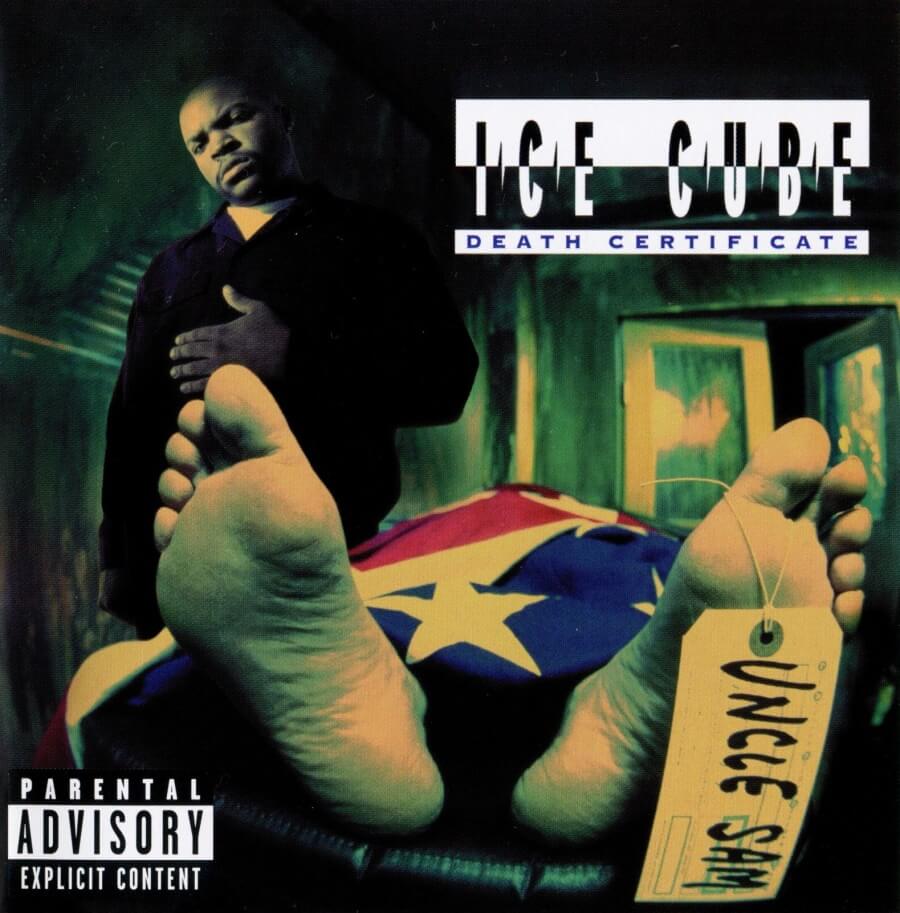
Following his explosive solo debut, AmeriKKKa’s Most Wanted, Ice Cube returned in 1991 with an even more confrontational record. Death Certificate is divided into two sections, “The Death Side” and “The Life Side,” framing a portrait of racial tension, urban decay, and the struggle for change in early-’90s Los Angeles. The structure gives the album a clear direction, moving from the harsh realities facing Black communities towards questions of identity, responsibility, and solidarity.
“The Funeral” opens the record with a suitably grim atmosphere before “The Death Side” launches into stories of systemic neglect, crime, and economic hardship. On “A Bird in the Hand,” Cube delivers a sharp critique of a society that leaves poor people with few options, examining the circumstances that lead someone to sell drugs to survive. “Alive on Arrival” is another powerful piece of storytelling, placing the listener in the position of a gunshot victim left waiting for medical attention. Cube’s account exposes the indifference of institutions that are supposed to provide help. These tracks demonstrate his ability to connect individual experiences to wider social problems.
There is plenty of anger elsewhere. “The Wrong N**** to F**k Wit” channels Cube’s confrontational energy into a forceful performance, driven by hard-hitting production from Sir Jinx and DJ Pooh. Their beats draw on gritty West Coast funk, with heavy basslines and layered samples giving the album a distinctive musical character. Cube’s delivery is direct, aggressive, and full of conviction.
“The Life Side” shifts the focus towards cultural pride and the possibility of change, without abandoning the album’s critical edge. “True to the Game” challenges people in the Black community who, in Cube’s view, turn their backs on their roots in pursuit of acceptance. “Color Blind” takes a different approach, bringing voices from opposing gang affiliations together to call for an end to violence. Its message of solidarity offers a counterpoint to the hostility and division running through the first half.
Then there is “No Vaseline,” the devastating attack on Cube’s former N.W.A bandmates. Closing the album with one of Hip Hop’s most notorious diss tracks, Cube delivers a relentless series of personal and professional accusations with remarkable precision.
Death Certificate is an uncompromising record, full of political anger, street-level storytelling, and fierce cultural commentary. Its two-part structure gives that intensity a broader purpose, making room for solidarity and self-determination alongside confrontation. Few albums from 1991 captured the tensions of Los Angeles with such force.
Dr. Dre - The Chronic (1992)
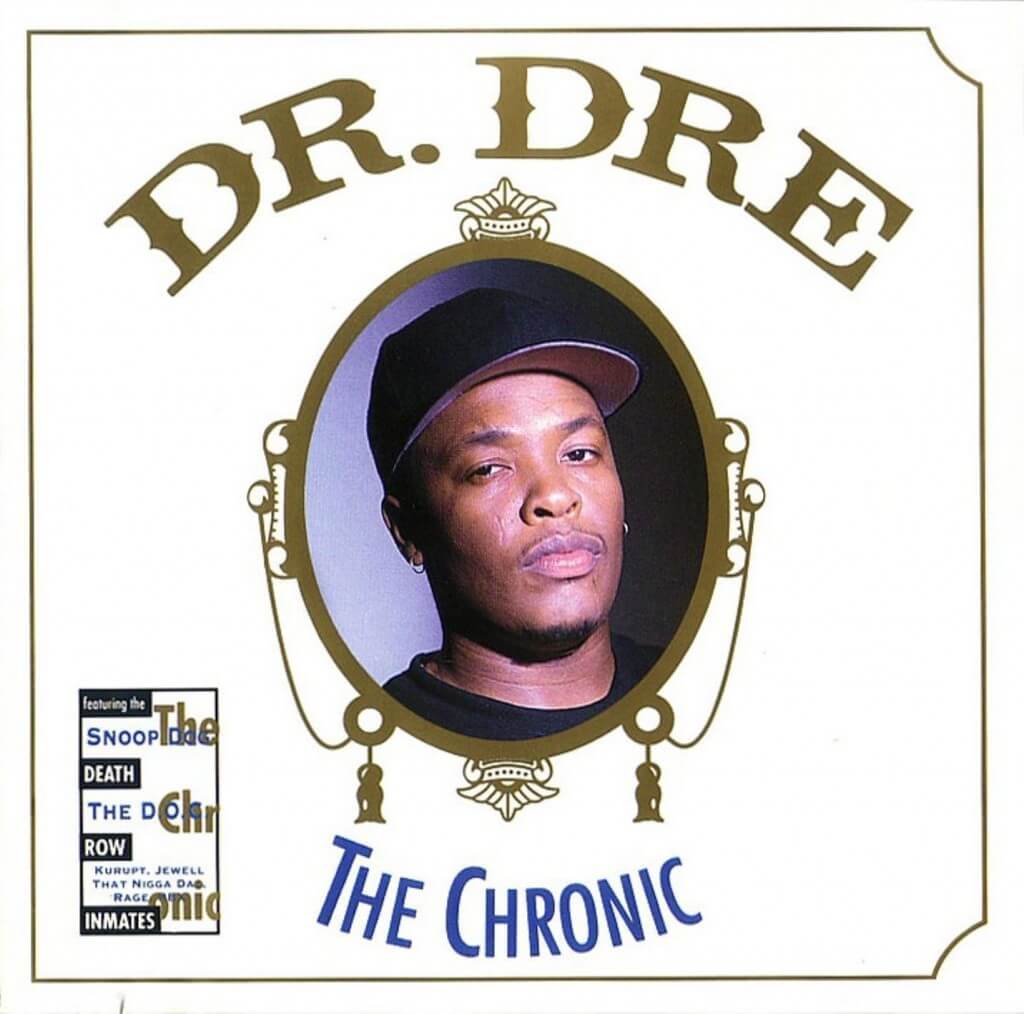
With The Chronic, Dr. Dre introduced a sound that would dominate West Coast Hip Hop throughout much of the 1990s. Released in 1992, his debut solo album after leaving N.W.A brought G-funk to the forefront, combining deep funk grooves, heavy basslines, crisp drums, and high-pitched synthesizers. Dre’s production is meticulously arranged, drawing on the work of Parliament-Funkadelic and other funk pioneers while giving familiar musical elements a distinctly West Coast character. The result is an album that moves effortlessly between laid-back party music and harder street narratives.
The opening stretch makes the appeal immediately clear. “Nuthin’ but a ‘G’ Thang” and “Let Me Ride” ride relaxed, infectious grooves, with melodic hooks and basslines that give the tracks an unmistakable character. Dre’s sampling is central to the sound, but his skill lies in how he reshapes those influences into something cohesive and immediately recognisable. The music has a warmth and ease that contrasts with the aggression of much early-’90s gangsta rap, even when the lyrics deal with violence, rivalry, and street life.
The album also introduced Snoop Doggy Dogg to a national audience. His drawling, melodic delivery was an immediate revelation, providing a perfect contrast to Dre’s more measured presence. Snoop’s effortless flow and memorable phrasing make him a major part of the album’s identity, particularly on “Nuthin’ but a ‘G’ Thang” and “F**k Wit Dre Day.” The chemistry between the two is one of The Chronic’s greatest strengths, with Snoop’s relaxed charisma complementing Dre’s precise production and controlled delivery.
There is plenty of variety beyond the best-known tracks. “Stranded on Death Row” brings together Kurupt, RBX, and Lady of Rage for a posse cut that highlights the emerging talent around Dre. “Lil’ Ghetto Boy” takes a more reflective approach, examining the cycle of violence and hardship in inner-city life over a poignant Donny Hathaway sample. These tracks give the album some depth beyond its party-ready grooves and confrontational moments.
The lyrics also contain considerable misogyny and homophobia, elements that are difficult to overlook. Still, The Chronic remains a defining release in West Coast Hip Hop. Dre’s production gave G-funk its signature sound, while his partnership with Snoop helped launch one of the most influential creative alliances of the decade. Its combination of funk, street narratives, memorable hooks, and extraordinary musical detail made it a blueprint for much of the West Coast rap that followed.
Compton's Most Wanted - Music To Driveby (1992)

With Music To Driveby, Compton’s Most Wanted delivered one of the darkest portraits of early-’90s West Coast street life. Released in 1992, the group’s third album builds on the approach of It’s a Compton Thang and Straight Checkn ‘Em, with MC Eiht now firmly established as its central voice. There is little interest in crossover appeal here. Instead, the album immerses listeners in a bleak world of gang violence, poverty, and survival, supported by production that is as atmospheric as Eiht’s storytelling.
DJ Slip and Mike T provide much of the musical identity. Their beats are sparse and brooding, built around eerie loops, deep basslines, and restrained drums. The production leaves plenty of room for Eiht’s deliberate, gravelly delivery, which often sounds closer to cold-eyed narration than conventional rap performance. “Hood Took Me Under” is a standout, its haunting soul-derived melody providing the backdrop for a story about growing up surrounded by gang culture. Eiht’s observation that claiming a set becomes an expectation in the neighbourhood captures the sense of inevitability running through the album.
There is plenty of aggression, too. “Def Wish II” continues Eiht’s feud with DJ Quik, turning personal rivalry into a menacing display of hostility. “Duck Sick II” and “Another Victim” maintain the confrontational tone, while “N****z Strugglin” and “I Gots Ta Get Over” offer more reflective perspectives on the circumstances surrounding street life. These shifts give the album some variation without disrupting its consistently dark atmosphere.
Not every aspect has aged equally well. Tracks such as “Hoodrat” and “U’s A Bitch” contain the misogynistic attitudes common in much gangsta rap of the period. Nevertheless, Music To Driveby is at its strongest when Eiht examines the cycle of violence and limited opportunities that shape his environment. He comes across as someone deeply involved in the world he describes, while retaining enough distance to recognise its destructive consequences.
The combination of Eiht’s distinctive delivery, sharp street narratives, and DJ Slip and Mike T’s shadowy production makes Music To Driveby a defining Compton’s Most Wanted release. It captures a particularly bleak side of early-’90s Los Angeles gangsta rap, with little concession to commercial expectations.
Snoop Doggy Dogg - Doggystyle (1993)

Following his scene-stealing appearances on Dr. Dre’s The Chronic, Snoop Doggy Dogg arrived with a solo debut that took G-funk to another level. Released in 1993, Doggystyle builds on Dre’s funk-heavy production, combining deep basslines, melodic keyboards, crisp drums, and layered samples into a sound that is unmistakably West Coast. Snoop’s laid-back, melodic delivery gives the album its personality. Rather than relying on aggression, he draws listeners into a world of street stories, hustling, humour, and neighbourhood life with an effortless conversational flow.
Dr. Dre’s production is remarkably consistent. Drawing heavily on the funk tradition of George Clinton and Parliament-Funkadelic, he creates grooves that are smooth, infectious, and full of detail. “Gin and Juice” and “Gz and Hustlas” are prime examples, with rolling basslines and memorable keyboard riffs providing the perfect setting for Snoop’s relaxed phrasing. The music has a natural ease, but there is plenty of precision behind it. Every sample, drum break, and melodic detail has its place.
Snoop is the obvious star. His drawling voice and distinctive rhythmic approach make even familiar gangsta rap subjects sound fresh. His chemistry with Dre is particularly strong, while appearances from Kurupt, Nate Dogg, and others add variety. On “Murder Was the Case,” Snoop delivers a darker story involving violence and morality with an almost unsettling calmness. The contrast between his relaxed delivery and the subject matter gives the track much of its impact.
There is humour and storytelling alongside the street narratives. Snoop reworks Slick Rick’s “Lodi Dodi” in his own style, bringing a West Coast flavour to the classic story rap format. “Ain’t No Fun (If the Homies Can’t Have None)” takes things in a much cruder direction, with Nate Dogg’s memorable hook helping turn the track into one of the album’s most infectious moments.
If The Chronic introduced the G-funk formula on a major scale, Doggystyle demonstrated how fully it could be developed. Dre’s production and Snoop’s unmistakable charisma make for an exceptionally cohesive debut, one that captures the sound and attitude of early-’90s West Coast Hip Hop at its commercial and creative peak.
MC Ren - Shock Of The Hour (1993)

MC Ren’s solo debut dropped at a crossroads in his career and in the history of Ruthless Records. After making his name as one of N.W.A’s most forceful voices, he had already demonstrated his ability to carry a project with the platinum-selling Kizz My Black Azz EP. Shock of the Hour, released in November 1993, took a more complicated direction. During its recording, Ren joined the Nation of Islam and converted to Islam. He abandoned the original Life Sentence project, retained some previously recorded material, and built a new album around his changed outlook. The result is divided into two distinct halves, each reflecting a different stage in that process.
The first section stays close to the uncompromising gangsta rap Ren was known for. “Same Ol’ Sh*t” strips away any glamour surrounding the lifestyle, focusing on its brutality, paranoia, and violence. “F**k What Ya Heard” addresses rumours and misinformation, while “One False Move” takes aim at Tweedy Bird Loc. Ren’s deep, commanding voice and blunt delivery remain the album’s defining features. He sounds every bit as forceful as he did on Efil4ziggan, with little need for elaborate vocal flourishes.
After “Mayday on the Frontline”, the album moves into more explicitly political and religious territory. “Attack on Babylon” imagines an apocalyptic reckoning, while the title track envisions the destruction of America as a route towards justice for Black people. “Do You Believe” questions Black Christianity in light of historical oppression and also addresses interracial relationships. These tracks make for a striking change in perspective, although the transition is not always easy to reconcile with the material that precedes them.
Tootie and Dr. Jam handle most of the production, with contributions from Rhythum D and Madness 4 Real. The music deliberately avoids the brighter, melodic G-funk dominating the West Coast in 1993. Instead, rumbling bass, rough percussion and whining synths create a dark, mid-tempo backdrop. Some beats share a similar industrial character, but the atmosphere suits Ren’s imposing delivery.
Shock of the Hour is an uneven album, and its second half contains ideas that are provocative without always being fully developed. Its division between street-level gangsta rap and Nation of Islam commentary, however, gives it a distinctive place in the post-N.W.A era. MC Ren remained a formidable presence, even as his worldview was changing.
MC Eiht - We Come Strapped (1994)

With We Come Strapped, MC Eiht took the dark, street-level perspective of Compton’s Most Wanted into his first solo album. Released in 1994, the record offered a harder-edged alternative to the increasingly dominant G-funk sound. DJ Slip’s production is central to its identity, favouring ominous keyboards, deep basslines, dramatic strings, and restrained percussion. The result is a brooding atmosphere that suits Eiht’s measured delivery and bleak view of life in Compton.
Eiht remains firmly in control throughout. His deep, gravelly voice and deliberate flow give his performances a distinctive authority, without relying on elaborate vocal techniques or exaggerated aggression. Tracks such as “Take 2 with Me” and “Can I Still Kill It” capture the album’s tense mood, while “Def Wish III” continues his feud with DJ Quik. The subject matter stays close to the violence, paranoia, and everyday pressures associated with street life, delivered from Eiht’s own perspective.
The production offers enough variation to keep the album from becoming one-dimensional. “All for the Money” has a smoother, soulful quality, with Willie Z’s keyboard work adding melodic depth. “Compton Bomb,” produced by Ric Roc, brings live instrumentation into the mix, with guitar and keyboards giving the track a different character. Elsewhere, the title track leans into the record’s darker orchestration. DJ Slip’s work gives the album a recognisable musical identity without simply following the polished G-funk template.
The guest appearances are limited, with Spice 1 and Redman joining Eiht on “Nuthin’ but the Gangsta.” Their presence adds an outside dimension to an album otherwise centred on Eiht and his Compton perspective. Contributions from Willie Z, guitarist Josh Achziger, and vocalist Carla Evans also give the production some additional texture.
We Come Strapped captures MC Eiht at a particularly strong point in his career. Its cold production, understated vocal style, and unrelenting focus on Compton give it a character distinct from the sunnier West Coast records dominating 1994. Eiht had already developed that approach with Compton’s Most Wanted, and here he brings it into a solo setting with impressive consistency.
Warren G – Regulate...G Funk Era (1994)

Warren G’s Regulate… G Funk Era arrived in the summer of 1994, when Dr. Dre and Snoop Doggy Dogg had already brought West Coast G-funk to the centre of mainstream Hip Hop. Warren, Dre’s stepbrother and a childhood friend of Snoop and Nate Dogg, had his own approach to the sound. Rather than matching the harder, more imposing style associated with Death Row, he favoured mellow grooves, soulful samples and understated storytelling. Released through Def Jam, the album also demonstrated that G-funk could thrive outside the label system that had made Dre and Snoop superstars.
The title track, originally featured on the Above the Rim soundtrack, remains the album’s defining moment. Built around a memorable sample of Michael McDonald’s “I Keep Forgettin’ (Every Time You’re Near),” Warren’s production gives the familiar melody an entirely different setting. Nate Dogg’s unmistakable hook provides the perfect counterpoint to Warren’s laid-back narration of an armed encounter on the streets of Long Beach. The combination of smooth musicality and gangsta rap storytelling is what makes “Regulate” so effective. It became a major hit and introduced Nate Dogg to a much wider audience.
Warren keeps the atmosphere consistent across the album, producing every track himself. “Do You See” and “So Many Ways” bring more melodic, easygoing grooves, while “This D.J.” is an infectious celebration of the pleasures of making music and enjoying life. “Recognize,” featuring the Twinz, and “This Is the Shack,” with the Dove Shack, connect the album to the wider Long Beach scene. The guest appearances from Jah Skills, Lil Malik and others add local character without disrupting the record’s relaxed flow. Even at its most playful, however, the album retains a street-level perspective. “Gangsta Sermon” and “Runnin’ wit No Breaks” sit comfortably alongside the more accessible material.
At only 37 minutes, Regulate… G Funk Era is a concise album. Warren’s delivery lacks the technical force of some of his contemporaries, and his lyrics occasionally revolve around familiar gangsta rap and party themes. His strength lies in the way he brings those subjects together with such effortless musicality.
The album became a major commercial success, reaching triple-platinum status in the United States and giving Def Jam a much-needed hit. Its importance extends beyond those sales figures. Warren G demonstrated that the G-funk sound had room for a different temperament: smooth, melodic, and unhurried, with the realities of Long Beach never far from the surface.
Above The Law - Uncle Sam's Curse (1994)

Above The Law’s third album finds the Pomona group taking a darker, more introspective approach to G-funk. Released in 1994, Uncle Sam’s Curse was their final record for Ruthless Records, with Cold 187um, KMG, and Go Mack exploring the tension between street life and the wider social conditions surrounding it. The music retains the group’s unmistakable funk foundation, though the mood is heavier than the smoother, party-oriented records dominating West Coast radio.
Cold 187um handles the bulk of the production, working alongside KMG and K-oss. His arrangements are dense and atmospheric, built around warm synthesizers, pulsating basslines, and dramatic musical details. The production gives the album a distinctive character, balancing hypnotic grooves with an underlying sense of unease. “Black Superman” is a strong example, its melancholy atmosphere matching the group’s defiant perspective. The use of samples from the film Against the Wall on this track and “Return of the Real Shit” adds another layer to the album’s sonic texture.
The title track brings the record’s broader social concerns into focus, addressing the historical and continuing struggles of Black communities in America. “Set Free” takes a more personal direction, with Cold 187um and KMG reflecting on the choices that have shaped their lives. These tracks give the album a reflective dimension, although the group remains firmly rooted in the street-oriented perspective that has always informed its music. The darker material is balanced by occasional moments of West Coast celebration.
“Kalifornia,” featuring Kokane, is one of those moments, with smooth vocals and funk melodies giving the album a sunnier turn. “Who Ryde,” featuring Tone Lōc and Kokane, brings a different kind of swagger, with inventive production details adding to its appeal. The contrast between these tracks and the more serious material gives the album some welcome variation.
Uncle Sam’s Curse is a distinctive entry in Above The Law’s catalogue. Cold 187um’s layered production gives the record considerable musical depth, while the group’s mix of social criticism, street narratives, and West Coast pride makes for an unusually varied take on mid-’90s G-funk.
Tha Dogg Pound - Dogg Food (1995)
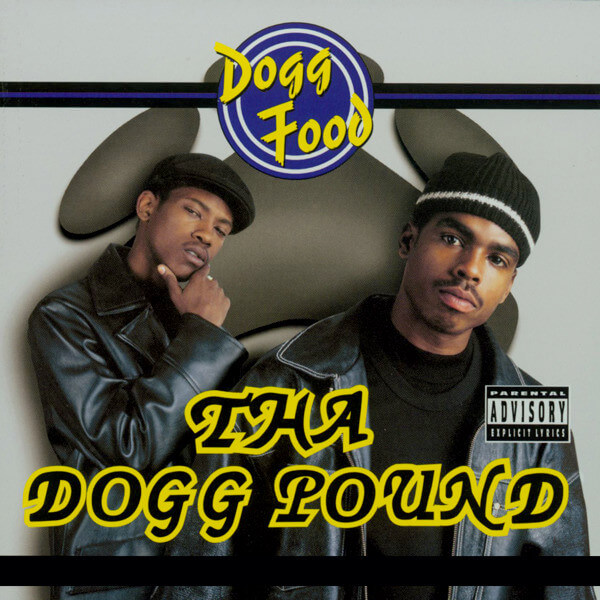
By 1995, Death Row Records had become the dominant force in West Coast Hip Hop. Following their appearances on The Chronic and Doggystyle, Daz Dillinger and Kurupt finally got their own full-length release with Dogg Food. The album takes the G-funk formula in a slightly different direction, favouring bright, buoyant grooves and infectious melodies alongside the familiar gangsta rap bravado. With Daz handling most of the production, assisted by DJ Pooh and Soopafly, the record has a distinctly celebratory character.
The chemistry between the two MCs gives the album its identity. Kurupt is the more technically accomplished rapper, delivering intricate rhymes with a nimble flow and an aggressive edge. Daz has a more straightforward style, bringing a relaxed confidence that balances Kurupt’s intensity. Their contrasting approaches work particularly well on “Dogg Pound Gangstaz” and “Respect,” where the duo establish the combination of lyrical skill and street-oriented attitude that carries the album.
“New York, New York” became one of the group’s most controversial tracks. Its stomping production, courtesy of DJ Pooh, and Kurupt’s forceful verses gave it an unmistakably confrontational character, while Snoop Dogg’s hook added to its appeal. The accompanying video, featuring the duo towering over a miniature New York, only intensified the East Coast-West Coast associations. Elsewhere, “Let’s Play House” takes a more relaxed approach, with Nate Dogg and Michel’le providing soulful vocals over a smooth, sensual groove. It remains one of the album’s most memorable tracks.
Daz’s production keeps the music lively throughout, drawing on rubbery basslines, melodic synthesizers, and funk-driven arrangements. There is some variation in mood, although the 17-track running order and numerous skits occasionally interrupt the momentum. The later tracks have their moments, with Nate Dogg’s contributions adding a welcome melodic touch.
Dogg Food may not have the historical impact of The Chronic or Doggystyle, but it gives Daz and Kurupt room to establish their own identity within the Death Row camp. Its combination of sharp rapping, infectious production, and unmistakable West Coast attitude makes it one of the defining releases of the label’s mid-’90s run.
B.G. Knocc Out & Dresta - Real Brothas (1995)

B.G. Knocc Out and Dresta are often overlooked when discussing mid-’90s Compton gangsta rap. That is a shame, because Real Brothas is one of the era’s more compelling independent-minded releases, a direct and personal record that deserves considerably more recognition. The brothers had come to prominence through their association with Eazy-E, and the album arrived in August 1995, several months after his death. Its connection to the Ruthless camp and its confrontational stance towards Death Row give it an important place in the tensions that shaped West Coast Hip Hop at the time.
The chemistry between the two MCs is the album’s greatest asset. Dresta’s measured, deliberate delivery contrasts with B.G. Knocc Out’s more urgent approach, and their exchanges give the material a natural sense of camaraderie. Tracks such as “Jealousy” and “Life’s a Puzzle” bring a personal dimension to the record, while “Compton & Watts” connects their perspectives to the neighbourhoods they represent. The brothers sound comfortable working together, with neither needing to dominate the proceedings.
The production comes from several hands, including Rhythm D, Doctor Jam, Madness 4 Real, Charlie B, and Vic C. Rhythm D is particularly prominent, providing warm funk grooves and deep basslines on tracks such as “Compton Hoe,” “50/50 Luv,” and the title track. The album moves between these smoother moments and harder-edged material without losing its cohesion. “Compton Swangin’” draws on the infectious spirit of Kool & the Gang’s “Hollywood Swinging,” while “50/50 Luv,” dedicated to Eazy-E, brings a more reflective note.
The confrontational side comes through most clearly on “D.P.G./K,” a direct attack on Death Row artists including Snoop Doggy Dogg, Dr. Dre, and Tha Dogg Pound. It gives the album an unmistakable place in the post-Eazy-E West Coast rivalry.
Real Brothas doesn’t receive the attention of better-known Compton classics, but its strong central performances, varied funk production, and connection to a particularly turbulent moment in Los Angeles rap make it deserving of a wider audience.
Mad CJ Mac – True Game (1995)
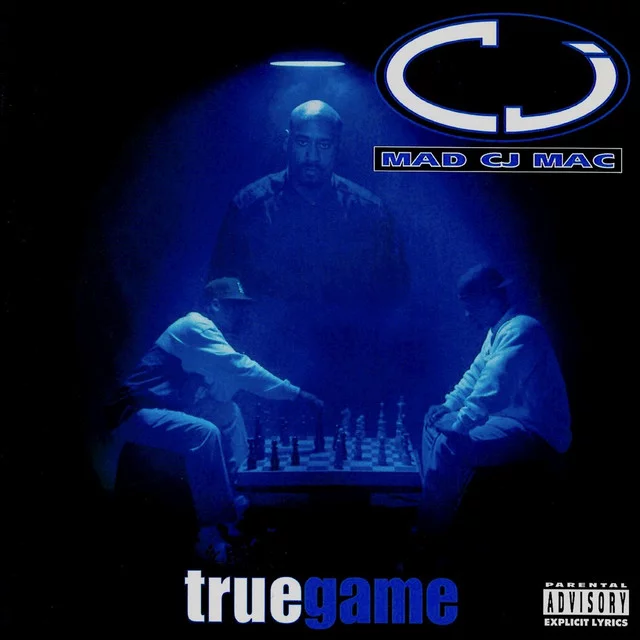
Like B.G. Knocc Out & Dresta’s Real Brothas, True Game is not a landmark album on the level of most of the major Los Angeles releases surrounding it on this list, and Mad CJ Mac never became a household name. Its relative obscurity is undeserved, though. Released through Rap-A-Lot in 1995, this South Central album is a strong, focused piece of mid-’90s gangsta rap, with a distinctive balance of dark street narratives and smooth G-funk production. CJ was already in his thirties when it arrived, and brought a mature, commanding presence to the microphone.
The production, handled by CJ Mac and Mad, draws from familiar West Coast ingredients without sounding like a straightforward imitation of the biggest G-funk records of the period. Rolling basslines, whining synthesizers and heavy percussion give the album a grim, sometimes ominous atmosphere. There is a harder Rap-A-Lot edge in the mix, too, which makes sense given CJ’s subsequent connections to the label’s Houston roster. The sound remains remarkably consistent across its relatively compact 50-minute running time.
The opening stretch is particularly strong. “Let My N****s Out Tha Pen” sets the tone with a furious attack on the prison system, unequal sentencing, and the criminalization of poverty. CJ’s argument is provocative, and his deep, forceful delivery gives the track considerable weight. “True Game” follows with industrial-tinged funk before “Come and Take a Ride,” featuring Poppa LQ, shifts into a more relaxed groove. Its warm keyboards and soulful guitar provide a welcome contrast to the album’s darker material, while the two rappers reflect on how much their neighbourhoods have changed. “Realism” and “Losin’ My Mind” return to a more troubled atmosphere. The latter is a standout, with driving synthesizers and choppy saxophone underpinning CJ’s account of distrust, personal frustration and emotional strain.
“Powda Puff” and “Can’t Cee Thee Ahh!” keep the funk flowing, while “Dead Man Walkin’” is another production highlight. The second half is less consistent, with “Tryina Survive” and “Trust No” offering less memorable material, but “I Can’t Stand a Rat” closes the main run on a strong note.
There is little here that breaks new ground, and the album draws heavily from established West Coast formulas. But it understands those formulas and executes them with conviction. True Game is a dope mid-’90s gangsta rap album, driven by strong production, a distinctive voice and several genuinely inspired tracks. Its place on this list is less about landmark status than about recognising a quality release that deserves considerably more attention.
DJ Quik – Safe + Sound (1995)

By the mid-90s, DJ Quik had established himself as one of Compton’s most gifted producers, with a musical approach that set him apart from the harder-edged gangsta rap coming out of Los Angeles. Safe + Sound, his third album, takes that approach to another level. Released on Profile Records in February 1995, with Suge Knight serving as executive producer, it finds Quik working with an unusually rich palette of sounds. Funk remains the foundation, but the arrangements are more elaborate, the instrumentation more varied and the production remarkably detailed. Arguably his best album, it is one of the high points of mid-’90s West Coast rap.
Quik’s musicality is the main attraction. Rather than relying exclusively on sampled funk loops, he builds intricate arrangements around basslines, keyboards, synthesizers and carefully layered rhythms. The title track captures the warm, polished side of his production, while “Somethin’ 4 tha Mood” and “Summer Breeze” lean into the smoother, more melodic end of his sound. “Quik’s Groove III” offers an instrumental interlude, and the hidden track “Tanqueray” provides another fine example of his ability to construct a full-bodied funk arrangement. The album has a relaxed, summery quality, but the musicianship and attention to detail give the music considerable depth.
Quik’s lyrical subject matter is less varied. Women, sex, money and his own reputation occupy much of the album, sometimes at the expense of more substantial material. “Get at Me” and “It’z Your Fantasy” fit comfortably into the playful, sexually charged side of his persona. “Diggin U Out” brings a more personal dimension, while “Dollaz + Sense” is the undeniable centrepiece. A devastating attack on fellow Compton rapper MC Eiht, it combines sharp insults with Quik’s confident delivery and remains one of the most memorable diss tracks of the West Coast era.
The guest appearances from Hi-C, 2nd II None, Playa Hamm and Kam add to the Compton character of the record, particularly on “Tha Ho in You” and “Keep tha ‘P’ in It.” They fit naturally into Quik’s musical world without distracting from his role as the album’s driving force.
At 63 minutes, Safe + Sound is hardly a short listen, and its recurring sexual subject matter can become repetitive. Musically, however, Quik is operating at an exceptional level. The combination of sophisticated funk arrangements, immaculate production and unmistakable Compton character makes this one of the defining albums of the West Coast’s G-funk era.
Westside Connection - Bow Down (1996)

Westside Connection brought together three of Los Angeles’ most recognisable voices: Ice Cube, WC, and Mack 10. Released in 1996, Bow Down arrived amid escalating East Coast-West Coast tensions, with the trio making West Coast identity and regional pride the central themes of the album. Its confrontational stance leaves little room for subtlety, but the combination of three distinctive MCs and hard-hitting production gives the record considerable force.
The production, largely handled by Bud’da, draws on familiar West Coast ingredients while adopting a particularly aggressive tone. Heavy basslines, sharp synthesizers, and pounding drums provide a suitably imposing backdrop for the trio’s performances. The title track sets the tone, with its forceful beat and commanding hook establishing the group’s collective attitude. “Gangstas Make the World Go Round” offers a smoother variation, although its laid-back groove retains the underlying menace that runs through the album.
The vocal chemistry is one of Bow Down‘s strongest qualities. Ice Cube brings his familiar authority and sharp delivery, WC moves between animated intensity and rhythmic precision, and Mack 10 contributes a booming voice that gives the group additional weight. Their styles complement one another, making the exchanges between the three rappers a major attraction. They sound united in purpose, even when approaching the material from different angles.
That purpose is expressed most directly on the album’s confrontational tracks. “All the Critics in New York” attacks what the group perceives as East Coast media bias, while “Cross ‘Em Out and Put a K” takes aim at those seen as disrespecting the West. “King of the Hill” targets Cypress Hill, bringing another regional rivalry into the mix. These tracks reflect the increasingly divisive atmosphere surrounding Hip Hop at the time, with the trio embracing the antagonistic spirit rather than stepping away from it.
The album’s thematic focus is narrow, revolving largely around dominance, loyalty, and West Coast pride. There is little attempt to move beyond that territory. Within those boundaries, however, Bow Down is effective. Ice Cube, WC, and Mack 10 make a formidable combination, delivering an uncompromising dose of mid-’90s Los Angeles gangsta rap.
2Pac - All Eyez On Me (1996)

Few albums capture the ambition and contradictions of 2Pac’s mid-’90s career as vividly as All Eyez on Me. Released after his move to Death Row Records and his release from prison, this sprawling double album finds him operating at full intensity. The move to Death Row also marked a clear shift in Pac’s identity. Having previously been closely associated with Oakland, from this point on he became increasingly identified with Los Angeles and the West Coast scene surrounding Suge Knight’s label. All Eyez on Me is arguably his most thoroughly gangsta album, embracing the lifestyle, attitude, rivalries, and excess associated with Death Row at its peak.
“Ambitionz Az a Ridah” opens the album with a menacing combination of piano loops and heavy bass, setting the tone for Pac’s defiant return. His delivery is urgent and commanding, qualities that remain central throughout. “Heartz of Men” brings a similarly aggressive energy, while “All About U” offers a lighter change of pace, with Nate Dogg adding his unmistakable vocals to the laid-back groove. Pac’s versatility is one of the album’s greatest strengths. On “I Ain’t Mad at Cha,” he turns reflective, addressing loss and changing relationships over a soulful instrumental.
The collaborations provide some of the album’s most memorable moments. “2 of Amerikaz Most Wanted” pairs Pac with Snoop Dogg for an effortlessly confident West Coast anthem, while “Picture Me Rollin’” combines a funk-driven backdrop with reflections on freedom and success. The G-funk production gives the record a consistent musical identity, although the large number of guest appearances occasionally leaves Pac competing for space on his own album.
The main problem is the running time. The first half is particularly strong, but the second becomes less focused, with tracks such as “Thug Passion” and “What’z Ya Phone #” adding little to the overall experience. The guest-heavy approach also produces some uneven performances. Even “California Love” appears in a less compelling remix than the familiar original, losing some of the energy that made the earlier version so effective.
Still, All Eyez on Me has an abundance of outstanding material. Its excesses are part of the experience, but so are the charisma, urgency, and emotional range that made 2Pac such a compelling artist. As his first full-length statement after joining Death Row, it captures his transformation into one of the defining figures of Los Angeles gangsta rap.
Daz Dillinger - Retaliation, Revenge And Get Back (1998)

By 1998, Death Row Records was a shadow of the label that had dominated West Coast Hip Hop a few years earlier. Dr. Dre had left, 2Pac was dead, and Suge Knight was in prison. Daz Dillinger, one of the label’s remaining central figures, took charge with Retaliation, Revenge And Get Back, his solo debut and the last original Death Row album for seven years. As a producer and rapper, Daz had played a major role in shaping the label’s sound. Here, he remained firmly committed to the G-funk formula, even as the musical landscape around him was changing.
At nearly 75 minutes and 16 tracks, the album is packed with familiar West Coast ingredients: deep basslines, synth-driven melodies and hard-hitting percussion. Daz handles most of the production, with contributions from DJ Pooh and Soopafly. The mood shifts between darker street rap and more relaxed funk. “Initiated,” featuring 2Pac, Kurupt and the Outlawz, brings together several Death Row voices, while “Oh No,” with Tray Deee and J-Money, adds another dose of hard-edged West Coast attitude. The title track also keeps the focus firmly on the album’s central gangsta rap identity.
There is plenty of room for a lighter touch. “Playa Partners,” featuring B-Legit and Bo-Roc, and “It Might Sound Crazy,” with Too $hort, bring a more playful energy. “In California,” one of the album’s highlights, is an especially exuberant West Coast celebration, with Daz joined by Val Young on the hook. Elsewhere, “O.G.” reunites him with Snoop Dogg and Nate Dogg, while “Ridin’ High” features WC and “The Ultimate Come Up” brings in MC Eiht and Bad Azz. The guest list connects Daz’s solo debut to a broad circle of West Coast rap.
Daz is a more convincing producer than lyricist, but his direct delivery suits the material. Retaliation, Revenge And Get Back doesn’t attempt to move G-funk into new territory. Its appeal lies in Daz’s commitment to the sound he helped create, at a moment when Death Row’s future was increasingly uncertain. He would soon leave to establish D.P.G. Recordz, taking his music in new directions. This album captures his final chapter at Death Row, still flying the flag for the label’s West Coast identity.
Kurupt - Tha Streetz Iz A Mutha (1999)

By the end of the 1990s, Kurupt had already earned his reputation as one of the West Coast’s most technically gifted MCs through his work with Tha Dogg Pound and Death Row. Tha Streetz Iz A Mutha, his second solo album, arrived in November 1999, at a difficult point in his personal life and a transitional moment for Los Angeles rap. Kurupt later described his state of mind during the recording as angry, withdrawn and deeply immersed in gang culture again. That mood runs through much of the album, giving it a harder, more confrontational character than its varied production might initially suggest.
The musical palette reaches beyond the familiar Death Row template. Daz Dillinger, Soopafly and Fredwreck provide plenty of West Coast funk, while Organized Noize bring an altogether different atmosphere to “I Call Shots” and “Tequilla.” Bink! contributes the brief, orchestral darkness of “Trylogy,” one of the album’s more unusual moments. Kurupt moves comfortably between these different settings, his intricate rhyme patterns and forceful delivery remaining the album’s defining feature.
There is no shortage of company. “Who Ride Wit Us” brings Daz into the mix, while “Represent Dat G.C.” gathers an extensive West Coast lineup including Snoop Dogg, Jayo Felony, Soopafly and Tray Deee. “Loose Cannons” pairs Kurupt with Daz and Xzibit, and “Ho’s a Housewife,” produced by Dr. Dre and also included on 2001, adds another connection to the Death Row circle. On “Live on the Mic,” Kurupt shares the spotlight with KRS-One, whose appearance gives the track a different kind of lyrical energy.
The album’s most notorious moment is “Calling Out Names,” a Fredwreck-produced attack on DMX and Foxy Brown that also takes aim at their respective entourages. Its personal hostility reflects the regional and individual rivalries that continued to shape rap at the time. The track attracted attention beyond the music, particularly after a shooting outside the studio where Kurupt was recording left his bodyguard dead and two associates injured. The precise motive was never established.
At 18 tracks and over 74 minutes, Tha Streetz Iz A Mutha is a substantial, occasionally uneven listen. Its strongest moments, however, capture Kurupt at full lyrical intensity, backed by producers willing to take the West Coast sound in several directions.