

A debut album can capture an artist at the moment everything starts to come together. Some arrive with a fully formed identity, a distinctive voice, and a sound nobody else quite has. Others document the early stages of an artist’s development, full of experimentation, ambition, and ideas that will take shape over time. The best first albums give us something worth returning to, whether they announce a future heavyweight or reveal a singular talent that never quite gets its due.
Hip Hop has an extraordinary history of debut albums. From the stripped-down authority of Paid in Full and the confrontational force of Straight Outta Compton to the intricate street reportage of Illmatic and the unruly chemistry of Enter the Wu-Tang (36 Chambers), first albums have repeatedly shifted the culture’s direction. But the story extends well beyond the familiar classics. Across decades, scenes, and generations, artists have released exceptional debuts that deserve the same attention, from underground innovators and regional trailblazers to major-label newcomers who arrived with something to say.
For this selection of 100 of the best debut albums in Hip Hop, we’ve weighed musical quality, originality, lyrical skill, production, cultural significance, lasting influence, and our own preferences. We’re interested in complete albums with a distinct identity, whether they reached a mass audience or found their listeners underground. The selection is limited to official full-length studio albums, including solo debuts by artists who had previously recorded as members of a group.
The list follows a chronological path through Hip Hop’s evolution, spanning different eras, regions, styles, and approaches to making records. The 1980s and 1990s naturally occupy a substantial share, reflecting our appreciation for those decades and the remarkable number of artists who made memorable first statements during them. The selection continues into the present, where new generations draw from Hip Hop’s history while pushing in their own directions. These 100 albums offer a wide-ranging look at how artists have introduced themselves to the culture, sometimes changing its course, sometimes building devoted followings, and sometimes making a first album that remains their finest work.
Run-D.M.C. – Run-D.M.C. (1984)
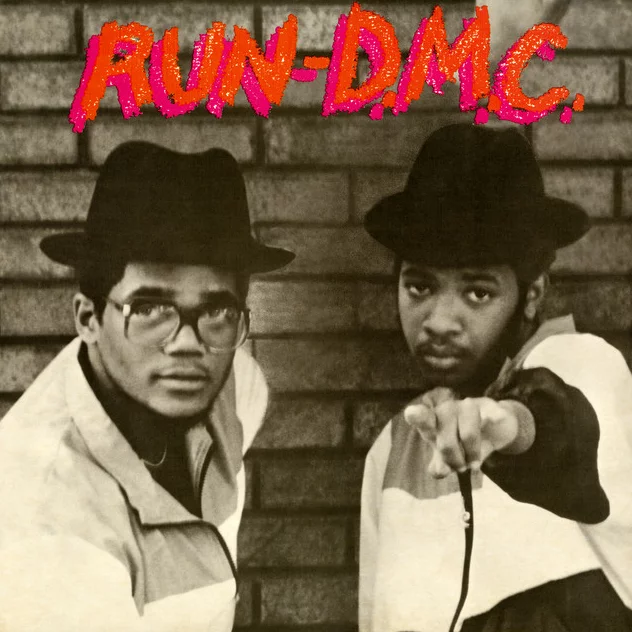
Some albums earn their place through sheer musical excellence, others through their impact on the culture. Run-D.M.C.’s self-titled debut is a mandatory inclusion on any serious list of great Hip Hop debuts, even if every track hasn’t aged equally well. Released in 1984, it changed the direction of recorded Hip Hop and helped establish the harder, stripped-down sound of the new school.
Produced primarily by Russell Simmons and Larry Smith, Run-D.M.C. abandoned much of the disco-influenced instrumentation and party atmosphere of earlier rap records. Heavy drum-machine beats, sparse arrangements, Jam Master Jay’s scratches, and the aggressive back-and-forth delivery of Run and D.M.C. gave the music an entirely different character. “Sucker M.C.’s” was especially revolutionary, reducing the backing track to a pounding beat while the two MCs attacked their competition with supreme confidence. “It’s Like That” addressed unemployment and economic hardship with similar directness, while “Rock Box” introduced electric guitar into the group’s sound, opening doors for the rap-rock crossover that followed.
The album’s second half is less consistent, and some material sounds unmistakably rooted in its era. Still, the energy of “Hard Times,” “Hollis Crew,” and those groundbreaking early singles remains undeniable. Run-D.M.C. helped move Hip Hop away from its early recording conventions, established a tougher musical identity, and demonstrated that rap albums could command serious attention. Its historical importance is enormous, and its best moments still hit hard.
LL Cool J - Radio (1985)

LL Cool J was only 17 when Radio arrived in November 1985, but he already had the confidence, charisma, and commanding delivery of a seasoned MC. As Def Jam’s first full-length album, Radio was instrumental in establishing the label and accelerating Hip Hop’s transition into the new-school era. It also introduced one of the genre’s first genuine solo superstars.
Rick Rubin’s production is brilliantly economical. Hard drum-machine beats, booming bass, sharp scratches, and occasional guitar accents leave plenty of space for LL’s voice. “I Can’t Live Without My Radio” celebrates boombox culture with infectious energy, while “Rock the Bells” remains one of the definitive battle-rap performances of the decade. “I Need a Beat” and “You’ll Rock” demonstrate LL’s remarkable breath control, rhythmic precision, and ability to dominate even the sparsest backing tracks. Meanwhile, “I Can Give You More” and “I Want You” introduce the romantic side that would become another important part of his career.
Some of the writing reflects LL’s youth, and the production is unmistakably mid-1980s, but that is part of the album’s appeal. Radio captures the excitement of an exceptionally talented teenager determined to become the best MC around. Its aggressive minimalism, larger-than-life personality, and enduring highlights make it one of the essential debut albums of Hip Hop’s formative years.
Beastie Boys - Licensed to Ill (1986)

When Beastie Boys released Licensed to Ill in November 1986, they brought punk-rock attitude, outrageous humor, and an infectious sense of chaos to Hip Hop. Produced by Rick Rubin, their debut combined pounding drum-machine beats, heavy rock riffs, and the unruly chemistry of Mike D, MCA, and Ad-Rock. The result was a massive crossover success, becoming the first rap album to top the Billboard 200 and eventually selling over ten million copies in the United States.
Behind the drunken party-boy image, there’s some seriously inventive music. “Rhymin & Stealin” opens with thunderous Led Zeppelin drums and Black Sabbath guitar, while “The New Style” and “Hold It Now, Hit It” demonstrate the trio’s playful vocal interplay and Rubin’s imaginative production. “Paul Revere” remains a brilliantly absurd piece of storytelling, and “No Sleep till Brooklyn” delivers one of the decade’s most memorable rap-rock combinations.
The juvenile humor hasn’t always aged gracefully, particularly on “Girls” and “Fight for Your Right,” but the album’s energy and musical creativity remain undeniable. Beastie Boys would develop considerably as artists, producing richer and more adventurous albums in the years that followed. Still, Licensed to Ill captures three young MCs having an outrageous amount of fun while making a record that permanently altered Hip Hop’s commercial reach and cultural visibility.
Eric B. & Rakim - Paid In Full (1987)

Few debut albums have changed Hip Hop as profoundly as Eric B. & Rakim’s Paid in Full. Released in July 1987, it introduced a level of lyrical sophistication that immediately distinguished Rakim from his contemporaries. While many MCs still relied on emphatic, straightforward rhyme patterns, Rakim approached the microphone with remarkable composure, weaving intricate internal rhymes and complex rhythms into a conversational delivery that sounded effortless. His influence on subsequent generations of MCs is almost impossible to overstate.
The production, built around hard drum breaks, funk samples, and spacious arrangements, gives Rakim’s voice plenty of room to operate. “Eric B. Is President” and “My Melody” remain extraordinary demonstrations of lyrical authority, while “I Ain’t No Joke” combines razor-sharp battle rhymes with an irresistible James Brown sample. “I Know You Got Soul” brings infectious energy, and the title track delivers one of Hip Hop’s most recognizable basslines. “Move the Crowd” is another essential cut, with Rakim displaying his extraordinary command of rhythm and language.
The instrumental tracks interrupt the momentum somewhat, but the album’s strongest material remains virtually untouchable. Paid in Full helped establish the lyrical standards of Hip Hop’s Golden Age, influencing everyone from Nas and Kool G Rap to countless underground MCs. Nearly four decades later, Rakim’s performances still sound astonishingly controlled, inventive, and confident. An undisputed classic and one of the most important debut albums in Hip Hop history.
Boogie Down Productions - Criminal Minded (1987)
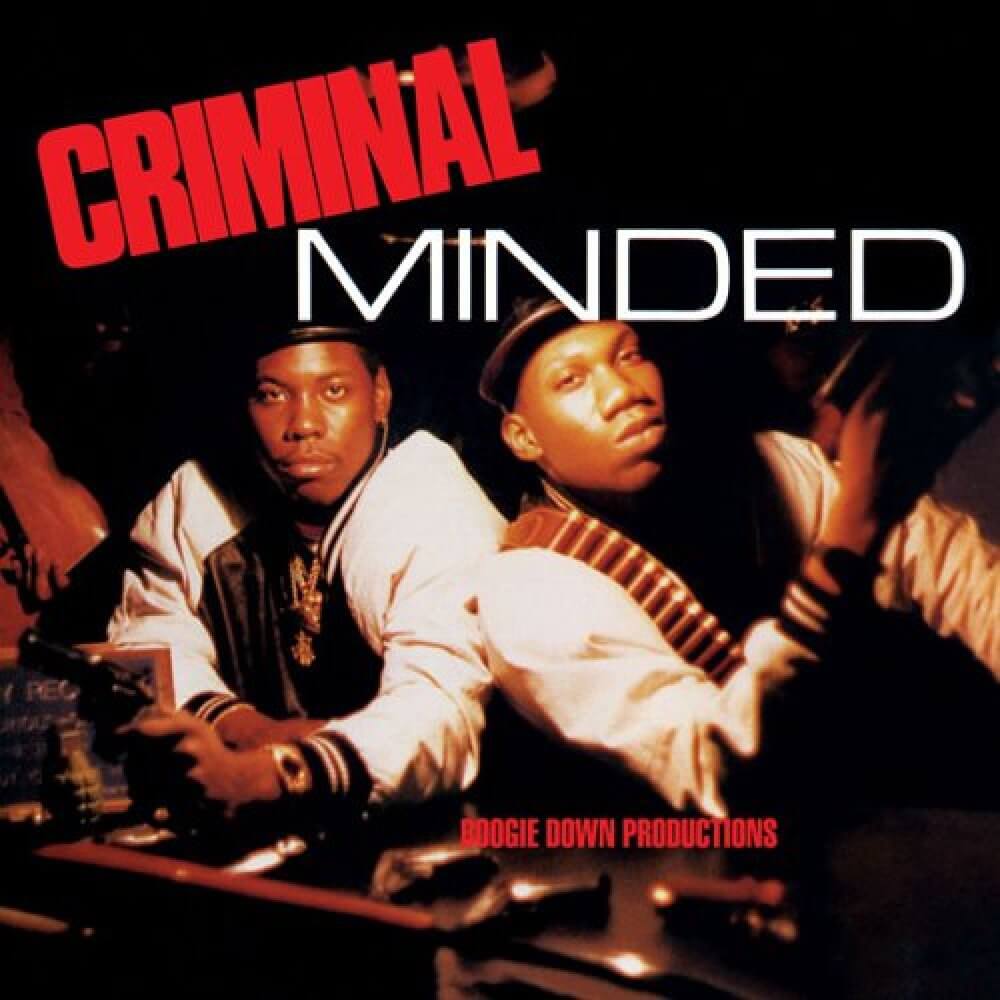
Boogie Down Productions’ Criminal Minded is one of the defining albums of early hardcore Hip Hop, introducing KRS-One as a formidable MC and establishing a tougher, more confrontational sound that would influence generations of East Coast rappers. Released in 1987, the album combined KRS-One’s commanding delivery, street-level storytelling, and battle rhymes with stripped-down, hard-hitting production rooted in funk, reggae, and the Bronx’s sound-system culture.
Although KRS-One and DJ Scott La Rock received the original production credits, Ultramagnetic MCs’ Ced-Gee played a significant, largely uncredited role in shaping the album’s sound. His mastery of the E-mu SP-12 sampler helped give tracks like “South Bronx” and “The Bridge Is Over” their distinctive character, with heavy drums and expertly manipulated samples providing the foundation for KRS-One’s devastating attacks on MC Shan and the Juice Crew. These two records remain among Hip Hop’s greatest battle tracks. Elsewhere, “Poetry” demonstrates KRS-One’s lyrical authority, while “9mm Goes Bang” delivers gripping street storytelling over a reggae-influenced rhythm.
The production’s rugged simplicity has aged remarkably well, and KRS-One’s performances retain their intensity. Criminal Minded also carries considerable historical weight as the only BDP album released during Scott La Rock’s lifetime. His murder later that year would profoundly affect KRS-One’s artistic direction. With its uncompromising attitude, influential production, and exceptional MCing, Criminal Minded remains one of the essential debut albums of Hip Hop’s Golden Age.
Ice T – Rhyme Pays (1987)

Ice-T’s Rhyme Pays is a little rough around the edges, with uneven production and a few tracks that haven’t aged particularly well, but its historical importance makes it an essential inclusion. Released in 1987, the album helped establish the foundations of West Coast gangsta rap, introducing a street-level perspective that would become one of Hip Hop’s dominant forces in the years that followed.
The album’s defining moment is “6 ‘N the Mornin’,” a groundbreaking street narrative widely recognized as one of the earliest gangsta rap records. Inspired partly by Schoolly D’s “P.S.K. What Does It Mean?”, Ice-T delivered a vivid account of police encounters, criminal activity, and life on the streets of Los Angeles. His conversational delivery and cinematic storytelling opened the door for artists like N.W.A, Compton’s Most Wanted, and countless others who would develop the style. “Squeeze the Trigger” explores confrontational territory, while “Make It Funky” and “Somebody Gotta Do It (Pimpin’ Ain’t Easy)” reflect the album’s mixture of street narratives, braggadocio, and old-school party rap.
Produced primarily by Afrika Islam, Rhyme Pays combines drum-machine rhythms, electro-funk influences, and early West Coast aesthetics. It lacks the consistency and musical sophistication of Ice-T’s subsequent albums, particularly Power (1988), The Iceberg/Freedom of Speech… Just Watch What You Say (1989), and his magnum opus Original Gangster (1991). Nevertheless, Rhyme Pays deserves recognition for Ice-T’s commanding presence and pioneering storytelling. Its influence on the development of gangsta rap is enormous, and “6 ‘N the Mornin'” alone secures its place in Hip Hop history.
Public Enemy - Yo! Bum Rush The Show (1987)

Before Public Enemy changed Hip Hop forever with It Takes a Nation of Millions to Hold Us Back (1988), they introduced their uncompromising vision on Yo! Bum Rush the Show. Released in March 1987, the debut combined Chuck D’s commanding baritone, Flavor Flav’s animated interjections, Terminator X’s scratching, and the Bomb Squad‘s abrasive production. The result was a confrontational sound that stood apart from the party-oriented rap dominating much of the era.
Hank Shocklee, Keith Shocklee, and Eric Sadler built the album around pounding drums, dissonant electronic textures, and densely layered samples, creating a sound that was already distinctive, even if the production would become considerably more complex on subsequent releases. Chuck D’s forceful delivery drives tracks like “Public Enemy No. 1” and “You’re Gonna Get Yours,” while “Miuzi Weighs a Ton” combines hard-hitting beats with vivid street imagery. “Rightstarter (Message to a Black Man)” introduces the political consciousness that would become central to the group’s identity, and “Sophisticated Bitch” delivers a sharp critique of materialism and exploitation. Flavor Flav brings welcome contrast to Chuck D’s imposing presence, particularly on “Too Much Posse.”
Although it lacks the sustained intensity and political urgency of It Takes a Nation of Millions to Hold Us Back, Yo! Bum Rush the Show laid the groundwork for Public Enemy’s subsequent breakthroughs. Chuck D’s commanding presence, Flavor Flav’s unpredictable energy, and the Bomb Squad’s abrasive production gave the group a distinctive identity from the outset. The album may represent an early stage of their development, but its combination of sonic aggression and social commentary already set Public Enemy apart from their contemporaries. What followed would push those ideas to extraordinary heights, but the revolution had begun here.
Ultramagnetic MCs - Critical Beatdown (1988)

Ultramagnetic MCs’ Critical Beatdown is one of the most inventive debut albums of Hip Hop’s Golden Age, a record whose experimental production and unconventional lyricism helped shape the future of underground rap. Released in October 1988, it found the Bronx group pushing beyond the established formulas of the era, combining hard breakbeats, chopped-up funk samples, frenetic scratching, and rhymes that often seemed to follow their own internal logic.
Producer Ced-Gee built much of the album around the E-mu SP-1200 sampler, manipulating samples into dense, unpredictable arrangements. Rather than relying on straightforward loops, he chopped and rearranged sounds from funk records, including James Brown recordings, creating beats that were abrasive, restless, and remarkably detailed. DJ Moe Love’s turntablism added another layer of energy. The production’s influence extended to Public Enemy’s Bomb Squad, while its adventurous sampling techniques anticipated decades of underground experimentation.
Kool Keith and Ced-Gee are equally distinctive on the microphone. Keith’s staccato delivery, bizarre imagery, and unconventional rhyme patterns give tracks like “Watch Me Now” and “Kool Keith Housing Things” an eccentric intensity. “Ego Trippin'” remains a defining example of the group’s abstract braggadocio, while “Give the Drummer Some” delivers a more direct, rhythm-driven showcase of their lyrical skills.
Critical Beatdown received limited attention upon release, but its reputation has grown enormously. Its combination of technical ingenuity, lyrical eccentricity, and uncompromising New York grit makes it one of the most influential debuts of its era.
Big Daddy Kane - Long Live The Kane (1988)
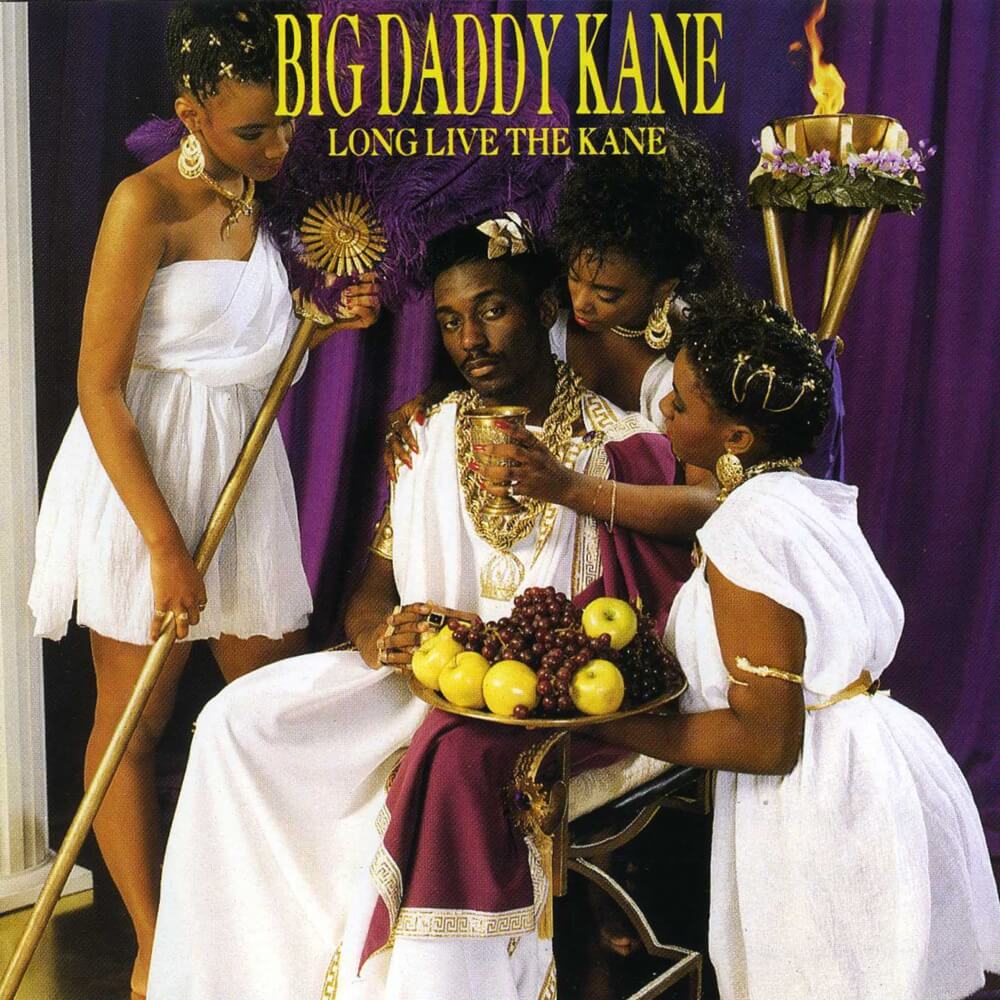
Big Daddy Kane arrived in 1988 with Long Live the Kane, a debut that announced one of Hip Hop’s most technically gifted MCs. Armed with exceptional breath control, intricate rhyme schemes, razor-sharp punchlines, and effortless charisma, Kane brought a fresh level of precision to battle rap. His delivery could switch from rapid-fire bursts to smooth, controlled flows without losing clarity, making even familiar boasts sound inventive.
Produced primarily by Marley Marl, the album pairs Kane’s verbal dexterity with lean, funk-driven beats, hard drums, and cleverly manipulated samples. “Raw (Remix)” and “Set It Off” are the most explosive examples, with Kane tearing through verses at breakneck speed while displaying an extraordinary command of rhythm and wordplay. “Ain’t No Half-Steppin'” is the centerpiece, built around a memorable sample from The Emotions’ “Blind Alley.” Kane’s intricate internal rhymes and effortless transitions between patterns make the track a masterclass in MC technique. Elsewhere, “Just Rhymin’ with Biz” brings Biz Markie’s playful energy into the mix, while “Word to the Mother (Land)” offers a more Afrocentric perspective. “I’ll Take You There” reveals Kane’s smoother side, foreshadowing the romantic material he would explore later in his career.
While a few tracks fall short of the album’s best moments, Kane’s lyrical command is remarkably consistent. Long Live the Kane captures an MC at the beginning of a career that would influence generations of rappers, from his intricate rhyme schemes and breathless delivery to his effortless blend of technical skill and charisma. “Ain’t No Half-Steppin'” alone would secure the album’s place in Hip Hop history, but the strength of the surrounding material confirms that Kane’s arrival was no fluke.
EPMD - Strictly Business (1988)

EPMD’s Strictly Business introduced one of Hip Hop’s most distinctive duos, pairing Erick Sermon’s inventive, funk-heavy production with the relaxed chemistry and conversational delivery of Sermon and Parrish Smith. Released in June 1988, the album offered a refreshing alternative to the increasingly aggressive sounds emerging from New York. Rather than relying on elaborate arrangements or relentless lyrical intensity, EPMD built their identity around infectious grooves, playful braggadocio, and an unhurried confidence.
The title track sets the tone with its memorable use of Eric Clapton’s version of Bob Marley’s “I Shot the Sheriff,” while “You Gots to Chill” flips a Zapp sample into one of the era’s definitive party records. The production draws heavily on funk and soul, often allowing a distinctive sample and a hard drum pattern to carry the track. “I’m Housin'” and “Let the Funk Flow” capture the duo’s easygoing chemistry, while “You’re a Customer” features a distinctive drum break that would find a second life decades later in Mario Winans and P. Diddy’s “I Don’t Wanna Know” and The Weeknd and 21 Savage’s “Creepin’.”
“Jane” introduces the fictional woman who would become a recurring character throughout EPMD’s catalog, bringing humorous storytelling to an album built largely around boasts, party rhymes, and funky grooves. The duo’s understated delivery is central to the appeal: Sermon and Smith complement each other without competing for attention, letting the beats and rhymes work together naturally. Strictly Business established a blueprint EPMD would refine over the next several years, and its laid-back funk remains instantly recognizable.
N.W.A - Straight Outta Compton (1988)

N.W.A’s Straight Outta Compton changed the direction of Hip Hop, bringing the realities, tensions, and confrontational attitude of Compton, California, to an audience far beyond the West Coast. Released in January 1989, the group’s debut became a defining statement of gangsta rap, driven by Ice Cube’s incisive writing, Eazy-E’s distinctive delivery, MC Ren’s forceful rhymes, and the production of Dr. Dre, DJ Yella, and Arabian Prince. At a time when New York remained Hip Hop’s commercial and creative center, N.W.A announced the arrival of a new regional powerhouse.
The opening title track sets the tone with its vivid street imagery and aggressive performances, followed by “F**k tha Police,” a furious indictment of police harassment and brutality that attracted the attention of the FBI. “Gangsta Gangsta” pushes the group’s criminal narratives and provocative humor to the forefront, while “Express Yourself” offers a different perspective, with Dr. Dre advocating creative freedom over a funky, sample-driven beat. The production combines hard-hitting TR-808 drums, funk samples, sharp vocal snippets, and stripped-down arrangements that leave the group’s personalities front and center. Ice Cube and MC Ren supplied much of the album’s writing, giving its street narratives a detail and verbal force that helped distinguish N.W.A from imitators who followed.
The album’s explicit misogyny and glorification of violence remain difficult to overlook, and its portrayal of street life often blurs observation with fantasy. Nevertheless, Straight Outta Compton captured a volatile moment in American life and forced a national conversation about rap, censorship, race, and policing. Its success established gangsta rap as a commercial force and shifted the center of gravity in mainstream Hip Hop toward Los Angeles. Few debut albums have had such a profound effect on the genre’s sound, public image, and cultural reach.
Slick Rick – The Great Adventures Of… (1988)

Slick Rick had already made his mark on Hip Hop through his work with Doug E. Fresh & the Get Fresh Crew, contributing to the classics “The Show” and “La Di Da Di” in 1985. His solo debut, The Great Adventures of Slick Rick, released in November 1988, gave him room to develop his remarkable storytelling talents across a full album. Vivid narratives, mischievous humor, memorable characters, and an unmistakable British accent set Rick apart from his contemporaries. Born in London and raised in the Bronx, Ricky Walters balanced streetwise swagger with a conversational delivery that made even his most outrageous tales sound believable. The album topped Billboard’s Top R&B/Hip-Hop Albums chart for five nonconsecutive weeks, confirming the appeal of a rapper whose personality was as distinctive as his writing.
“Children’s Story” is the defining moment, a cautionary tale about a young man’s criminal ambitions that unfolds with the precision of a short film. Its narrative structure and memorable details have made it one of Hip Hop’s most enduring songs. “Mona Lisa” follows a chance encounter with a woman whose identity takes an unexpected turn, while “The Moment I Feared” spins another darkly comic tale of sexual bravado and its consequences. Production from Slick Rick, Jam Master Jay, and Public Enemy’s Bomb Squad gives the album a varied musical backdrop, ranging from stripped-down funk to denser, sample-heavy arrangements. “Hey Young World” offers a thoughtful message about responsibility and ambition, revealing a reflective side beneath Rick’s playful persona.
Rick’s influence can be heard in the storytelling of generations of MCs, from Nas and The Notorious B.I.G. to Snoop Dogg and beyond. His gift for turning rhymes into vivid, fully realized stories remains the album’s greatest strength. The Great Adventures of Slick Rick captures a singular talent at the height of his early creativity, with songs that remain memorable for their characters, humor, and narrative precision.
MC Lyte - Lyte As A Rock (1988)

MC Lyte was only 17 when she released Lyte as a Rock in April 1988, but her skills had been developing for years. She wrote “I Cram to Understand U (Sam)” as a teenager, addressing drug addiction and its damage to relationships before the crack epidemic became a recurring subject in Hip Hop. After releasing the song as a single in 1987, Lyte arrived with a full-length debut that made history as the first studio album by a solo female rapper. At a time when women in Hip Hop were frequently treated as novelties or judged by standards that had little to do with their musical abilities, Lyte demanded attention through her writing, delivery, and sheer lyrical confidence.
The production from Audio Two, King of Chill, Alliance, and Prince Paul is spare and drum-driven, leaving room for Lyte’s commanding voice and sharp wordplay. The title track is a direct declaration of her skills, while “10% Dis” delivers a blistering response to rival MC Antoinette. On “Paper Thin,” Lyte addresses a cheating partner with cool-headed precision, turning relationship troubles into a memorable lyrical takedown. Elsewhere, “I Am Woman” and “Kickin’ 4 Brooklyn” add personality and local pride to an album built around lyrical substance rather than elaborate production.
Although Lyte as a Rock peaked at No. 50 on Billboard’s Top Black Albums chart, its influence far exceeded its commercial performance. MC Lyte helped clear a path for generations of women in Hip Hop, from Queen Latifah and Bahamadia to Lauryn Hill and beyond. Her debut made the case through skill and conviction, leaving no credible argument that women belonged anywhere other than at the center of Hip Hop.
Jungle Brothers - Straight Out The Jungle (1988)

Jungle Brothers’ Straight Out the Jungle introduced a fresh perspective on New York Hip Hop, combining playful lyricism, Afrocentric themes, adventurous sampling, and a loose, funk-driven sound. Released in November 1988, the debut by Afrika Baby Bam and Mike Gee helped spark the Native Tongues movement, a collective whose members shared an interest in Afrocentric consciousness, musical experimentation, and a more inclusive, playful approach to Hip Hop. Jungle Brothers were central to bringing De La Soul into the fold, while their connection with A Tribe Called Quest helped turn the collective into one of the most influential creative networks of the late 1980s and early 1990s. Together, these artists offered an alternative to the increasingly prominent gangsta rap and battle-oriented styles of the period.
The duo produced most of the album themselves, building tracks from funk breaks, quirky samples, and occasional rainforest sound effects. The title track introduces their distinctive style, while “Black Is Black,” featuring a young Q-Tip, reflects their interest in Black identity and cultural pride. “Because I Got It Like That” is one of the album’s strongest cuts, pairing an infectious groove with confident, playful rhymes. “Jimbrowski” and “Braggin’ & Boastin'” lean into the group’s humor, while “I’ll House You,” produced by Todd Terry, became a pioneering hip-house crossover, bringing rap vocals into the house music club scene. The album’s sound quality is uneven, and some tracks retain the simpler rhythms and delivery of early Hip Hop, but its best moments brim with invention.
Straight Out the Jungle captures the Native Tongues movement at its starting point, before De La Soul’s 3 Feet High and Rising and A Tribe Called Quest’s People’s Instinctive Travels and the Paths of Rhythm brought its sensibilities to a wider audience. Jungle Brothers helped create the connections and creative atmosphere that made those records possible, giving this sometimes rough-edged debut an influence that far exceeds its commercial reach.
Kool G Rap & DJ Polo – Road To The Riches (1989)

Kool G Rap & DJ Polo’s Road to the Riches introduced one of Hip Hop’s most influential lyricists in album form. Released in 1989 on Cold Chillin’ Records, the debut paired G Rap’s extraordinary verbal dexterity with Marley Marl’s hard-hitting production, delivering a combination of intricate rhyme patterns, battle-ready braggadocio, and vivid storytelling. As members of Marley Marl’s legendary Juice Crew, the duo had already attracted attention with the 1986 single “It’s a Demo.” The album expanded on that early promise, with G Rap displaying a technical command that would influence generations of MCs.
Marley Marl produced the entire record, drawing on funk samples, punchy drums, and tougher arrangements than some of his earlier work. On “It’s a Demo,” G Rap tears through dense multisyllabic rhymes with remarkable precision, while “Men at Work” delivers another fierce display of lyrical skill. The title track takes a different approach, following the pursuit of wealth through crime and setting out a cinematic vision of street life that would become a major influence on mafioso rap. That theme appears elsewhere, but most of the album focuses on battle rhymes, boasts, relationships, and everyday concerns. “Truly Yours” reveals a more personal side, while “Poison” combines an infectious groove with a memorable vocal performance. DJ Polo’s cuts add a turntablist dimension to the duo’s sound.
The influence of Road to the Riches extends from Nas and The Notorious B.I.G. to Jay-Z and Raekwon, all artists who developed aspects of G Rap’s intricate writing and cinematic approach to street narratives. He would push those ideas further on later albums, but the foundations are already here. Few debuts offer such a clear view of a lyrical style that would shape New York rap throughout the 1990s and beyond.
The D.O.C. - No One Can Do It Better (1989)

Before Dr. Dre became one of Hip Hop’s biggest solo stars, The D.O.C. helped demonstrate the full potential of his production skills. Released in July 1989 on Ruthless Records, No One Can Do It Better paired Dre’s increasingly sophisticated funk-based beats with one of the most technically gifted MCs of the era. Born Tracy Curry in Dallas, The D.O.C. had contributed to N.W.A’s Straight Outta Compton and worked with the Ruthless camp before stepping forward with a solo album that earned widespread acclaim. His crisp diction, intricate rhyme schemes, and commanding delivery made an immediate impression.
Dre produced the entire album, building on the funk samples and hard-hitting rhythms of N.W.A while moving toward the smoother, bass-heavy sound that would soon define G-funk. “It’s Funky Enough” opens with a booming groove and an outstanding display of lyrical control, while “The D.O.C. & the Doctor” turns the relationship between rapper and producer into a playful centerpiece. “The Formula” is particularly significant, with its melodic funk and deep bass often cited as an early blueprint for G-funk. “Mind Blowin'” and “Let the Bass Go” keep the energy high, while “Beautiful but Deadly” adds a heavy rock influence. The closing track, “The Grand Finalé,” brings together The D.O.C. and several N.W.A members for a memorable posse cut.
The album reached No. 1 on Billboard’s Top R&B/Hip-Hop Albums chart and eventually went platinum. Tragically, a car accident in November 1989 crushed The D.O.C.’s larynx, permanently altering the voice that had made him such a formidable MC. He continued writing and contributing to West Coast Hip Hop, but never again recorded an album with the same vocal command. No One Can Do It Better preserves that extraordinary talent at full strength, capturing a lyricist and producer working together at the height of their powers.
3rd Bass – The Cactus Album (1989)

3rd Bass arrived on Def Jam in November 1989 with The Cactus Album, a debut that combined sharp lyricism, inventive production, and a healthy dose of irreverence. MC Serch and Pete Nice approached the microphone with contrasting styles, trading battle rhymes, cultural references, and playful insults over beats supplied by Sam Sever, Prince Paul, and the Bomb Squad. At a time when the Beastie Boys had helped bring white rappers into the mainstream, 3rd Bass carved out their own identity through technical skill and a deep connection to New York’s Hip Hop culture.
Sam Sever produced most of the album, balancing hard drums and funk samples with arrangements that leave room for the duo’s wordplay. Prince Paul’s contributions, particularly “The Gas Face” and “Brooklyn-Queens,” bring his distinctive sense of humor and offbeat production choices. The Bomb Squad add their trademark sonic force to “Steppin’ to the A.M.” and “Oval Office.” Tracks like “Sons of 3rd Bass” take aim at the Beastie Boys, while “Product of the Environment” and “Wordz of Wisdom” give Serch and Nice room to demonstrate their lyrical abilities. The standout “The Gas Face” also marks the recording debut of Zev Love X, later known as MF DOOM, whose brief appearance offers an early glimpse of a singular talent.
Certified gold in 1990, The Cactus Album earned widespread critical praise and helped prove that 3rd Bass belonged in the conversation on musical merit, not novelty. Its combination of heavyweight production, sharp writing, and irreverent personality remains a compelling snapshot of New York rap at the close of the 1980s.
De La Soul - 3 Feet High And Rising (1989)

De La Soul’s 3 Feet High and Rising brought a radically different sensibility to Hip Hop when it was released in February 1989. While gangsta rap and hardcore lyricism were gaining prominence, Posdnuos, Trugoy the Dove, and Maseo offered a colorful alternative built on playful wordplay, surreal humor, positive messages, and an extraordinary appetite for musical experimentation. Working closely with producer Prince Paul, the trio created a debut that challenged expectations of what a Hip Hop album could encompass, helping lay the foundations for alternative rap and the creative movement known as Native Tongues.
The production is the album’s greatest innovation. Drawing from funk, soul, psychedelic rock, doo-wop, children’s records, and even French language-learning tapes, Prince Paul and De La Soul assembled a kaleidoscopic collection of sounds held together by inventive sampling and unconventional arrangements. “The Magic Number,” “Eye Know,” “Potholes in My Lawn,” and “Say No Go” each demonstrate a different side of their musical imagination. “Me Myself and I” became an anthem of individuality, while “Buddy,” featuring Jungle Brothers and Q-Tip, celebrated the collaborative spirit of the Native Tongues collective. The recurring quiz-show skits gave the album an unusual structure, connecting its 24 tracks through absurdist humor. The group’s D.A.I.S.Y. Age philosophy, short for “Da Inner Sound, Y’all,” also found visual expression in Toby Mott’s distinctive flower-covered artwork.
3 Feet High and Rising topped the R&B/Hip-Hop chart, went platinum, and earned a place in the Library of Congress’s National Recording Registry. Its influence reaches far beyond its original success: De La Soul helped open space for a more adventurous, playful, and musically eclectic strain of Hip Hop, and this debut remains one of its defining achievements.
A Tribe Called Quest - People's Instinctive Travels And The Paths Of Rhythm (1990)

A Tribe Called Quest took the alternative Hip Hop emerging from the Native Tongues collective in a new direction with People’s Instinctive Travels and the Paths of Rhythm. Released in April 1990, the Queens group’s debut paired Q-Tip’s relaxed, conversational delivery with Ali Shaheed Muhammad’s inventive turntablism and a playful, jazz-inflected production style. Phife Dawg and Jarobi White also contributed, although Phife’s role was relatively limited on this first album. At a time when aggressive battle rhymes and increasingly hard-edged street narratives dominated much of New York rap, Tribe offered something more exploratory, mixing humor, everyday observations, and an open-minded musical sensibility.
Q-Tip handled most of the production, drawing on jazz, funk, soul, and rock to create a sound that was unpredictable without sacrificing groove. Grover Washington Jr., Donald Byrd, Roy Ayers, and Lou Reed were among the artists whose music found new life in Tribe’s inventive sample combinations. “Bonita Applebum” established a distinctive approach to romantic rap, while “Can I Kick It?” turned a Lou Reed sample into an enduring anthem of communal participation. “I Left My Wallet in El Segundo” delivered an offbeat storytelling excursion, and “Ham ‘n’ Eggs” poked fun at unhealthy eating habits. The album’s relaxed atmosphere and unconventional subject matter reflected the group’s D.A.I.S.Y. Age contemporaries while pointing toward a more individual artistic identity.
Although People’s Instinctive Travels would eventually be overshadowed commercially by Tribe’s subsequent albums, its influence grew steadily. Its adventurous production and conversational lyricism helped shape alternative Hip Hop throughout the 1990s, influencing artists from De La Soul and Digable Planets to OutKast and Pharrell Williams. This debut captures A Tribe Called Quest discovering the musical language that would soon make them one of Hip Hop’s most beloved groups.
Ice Cube - AmeriKKKa's Most Wanted (1990)

After leaving N.W.A following a bitter dispute over royalties and management, Ice Cube wasted little time proving he could succeed on his own. Released in May 1990, AmeriKKKa’s Most Wanted paired his incisive writing and commanding delivery with the dense, abrasive production of Public Enemy’s Bomb Squad. The result was one of the defining albums of early-1990s Hip Hop, combining gangsta rap’s street-level narratives with fierce political commentary on racism, poverty, police brutality, and the treatment of Black Americans. Cube had already established himself as N.W.A’s principal lyricist, but his solo debut gave his writing an even broader scope.
The Bomb Squad brought their trademark layers of funk samples, hard drums, and disorienting sonic details to Cube’s relentless rhymes. “The N***a Ya Love to Hate” announces his arrival with characteristic hostility, while the title track attacks the racial bias behind America’s obsession with crime and criminality. “Endangered Species (Tales from the Darkside),” featuring Chuck D, delivers a particularly grim account of Black life under constant threat, while “Once Upon a Time in the Projects” uses vivid storytelling to portray the absurdities and dangers of neighborhood life. Sir Jinx also played an important production role, particularly on tracks like “Who’s the Mack?” and “It’s a Man’s World,” the latter featuring Yo-Yo in a confrontational exchange about gender relations. Cube’s humor and narrative skill provide occasional relief from the album’s relentless intensity.
AmeriKKKa’s Most Wanted went platinum within months of its release and helped establish Ice Cube as one of Hip Hop’s most formidable solo artists. Its combination of uncompromising social criticism, cinematic street narratives, and explosive production set a demanding standard for politically charged West Coast rap.
Brand Nubian - One for All (1990)

Brand Nubian’s One for All brought Afrocentric ideas, Five-Percent Nation teachings, playful humor, and infectious funk together in one of the most distinctive debuts of Hip Hop’s Golden Age. Grand Puba, Sadat X, and Lord Jamar each brought a different personality to the microphone, balancing political and spiritual commentary with battle rhymes, party records, and everyday observations. Their approach reflected the Native Tongues era’s creative openness, while their sharper ideological edge gave the group a distinct identity.
Produced primarily by the group, the album draws heavily on James Brown breaks, funky basslines, and inventive soul and jazz samples. The title track sets the tone with an irresistible groove and confident group chemistry, while “Concerto in X Minor” takes a more serious direction, weaving Black consciousness and revolutionary thought into its dense sample-based production. “Slow Down” became the album’s biggest hit, pairing a memorable Edie Brickell sample with humorous relationship advice and sharp exchanges between the three MCs. “All for One” and “Wake Up” reveal the group’s commitment to knowledge and self-awareness, while “Dance to My Ministry” and “Grand Puba, Positive and L.G.” bring the focus back to personality and lyrical skill.
One for All received widespread critical acclaim, although its commercial performance never matched that of many contemporary gangsta rap releases. Its blend of social commentary, humor, and warm, sample-rich production helped define an important strand of early-1990s New York Hip Hop. Brand Nubian made an album that could challenge listeners intellectually without sacrificing the pleasure of a great groove.
Above The Law – Livin’ Like Hustlers (1990)

Above the Law’s Livin’ Like Hustlers, released in February 1990 on Ruthless Records, is an important early chapter in the development of West Coast gangsta rap. The Pomona group, led creatively by Cold 187um, combined hard-edged street narratives with deep funk grooves and inventive sample-based production. Working alongside Dr. Dre, the group began moving beyond the abrasive, densely layered sound associated with early N.W.A toward the smoother, more melodic approach that would soon become known as G-Funk.
The album’s production is central to its lasting significance. Cold 187um and Dr. Dre draw on James Brown, Quincy Jones, Isaac Hayes, and other funk and soul sources, building muscular beats around thick basslines and carefully arranged samples. “Murder Rap” makes an immediate impression with its ominous atmosphere and forceful delivery, while “Untouchable” pairs confrontational lyrics with a memorable groove. The title track captures the group’s hustler mentality, and “Another Execution” delivers a particularly dark portrait of street violence. “Freedom of Speech” adds social commentary to the mix, demonstrating that the group’s interests extended beyond crime narratives. The closing track, “The Last Song,” brings in N.W.A members Eazy-E, Dr. Dre, and MC Ren for a significant collaboration during a turbulent period for the Ruthless Records camp.
Although Dr. Dre would later popularize G-Funk on The Chronic, Livin’ Like Hustlers reveals how early its musical foundations were taking shape. Cold 187um’s contribution deserves particular recognition: the album captures Above the Law helping develop a sound that would soon dominate West Coast rap, while retaining the harder edge of the Ruthless era.
Lord Finesse – Funky Technician (1990)

Lord Finesse arrived in 1990 with Funky Technician, a debut that announced one of New York’s most technically gifted MCs and laid the groundwork for the Diggin’ in the Crates (D.I.T.C.) collective. Released on Wild Pitch Records, the album paired Finesse’s intricate rhyme schemes, clever punchlines, and playful battle-rap style with production from DJ Mike Smooth, DJ Premier, Diamond D, and Showbiz. The lineup alone makes the record an important snapshot of the underground talent that would shape East Coast Hip Hop throughout the 1990s.
The production revolves around hard drums, funk and soul samples, and sharp turntable work. DJ Premier’s early contributions hint at the stripped-down boom-bap style he would refine with Gang Starr, while Diamond D and Showbiz bring their own sample-heavy approaches. On the title track, Finesse delivers a confident display of lyrical dexterity, while “Here I Come” and “I Keep the Crowd Listening” underline his ability to pack dense rhymes and punchlines into tightly controlled flows. “Back to Back Rhyming” features A.G., offering an early connection to the D.I.T.C. circle, and “Slave to My Soundwave” highlights the chemistry between MC and DJ. Throughout the album, Finesse balances technical skill with humor and an easygoing personality, avoiding the stiffness that can sometimes accompany highly intricate lyricism.
Funky Technician did not achieve major mainstream success, but its reputation grew among listeners who valued lyrical craftsmanship and sample-based production. Lord Finesse would later mentor Big L and help guide the development of D.I.T.C., but the foundations are already audible here. The album captures a formative moment in New York underground rap, when a new generation of producers and MCs was beginning to shape the sound of the decade ahead.
Paris – The Devil Made Me Do It (1990)

Paris brought a militant Bay Area perspective to politically conscious Hip Hop with The Devil Made Me Do It, his debut album released on Tommy Boy Records in October 1990. Drawing on Black Panther ideology, Black nationalism, and fierce opposition to institutional racism, Paris delivered uncompromising critiques of police brutality, government corruption, and racial inequality. While Public Enemy had brought revolutionary politics to the forefront of East Coast rap, Paris developed a distinctly West Coast approach, combining forceful rhetoric with heavy funk grooves and an ominous musical atmosphere.
Paris produced the album himself, building hard-hitting tracks from funk breaks, bass-heavy rhythms, and carefully layered samples. “The Devil Made Me Do It” is the centerpiece, pairing his commanding delivery with provocative political imagery. MTV banned the accompanying video, while the album’s cover, depicting a police officer choking a young Black man, prompted some record stores to refuse to stock it. “Panther Power” draws directly on the legacy of the Black Panther Party, while “Break the Grip of Shame” attacks racial oppression and the structures that perpetuate it. “Scarface Groove” and “This Is a Test” bring a harder, more straightforward rap energy, giving the album some variation amid its sustained political intensity.
The Devil Made Me Do It received strong reviews and reportedly sold more than 300,000 copies, demonstrating that an uncompromising political message could find a substantial audience. Paris’s confrontational approach also brought him into conflict with the music industry, setting the stage for his later move toward independence. The album remains a forceful example of early-1990s political rap, distinguished by its combination of militant conviction, muscular production, and an artist unwilling to dilute his message for mainstream acceptance.
Main Source - Breaking Atoms (1991)
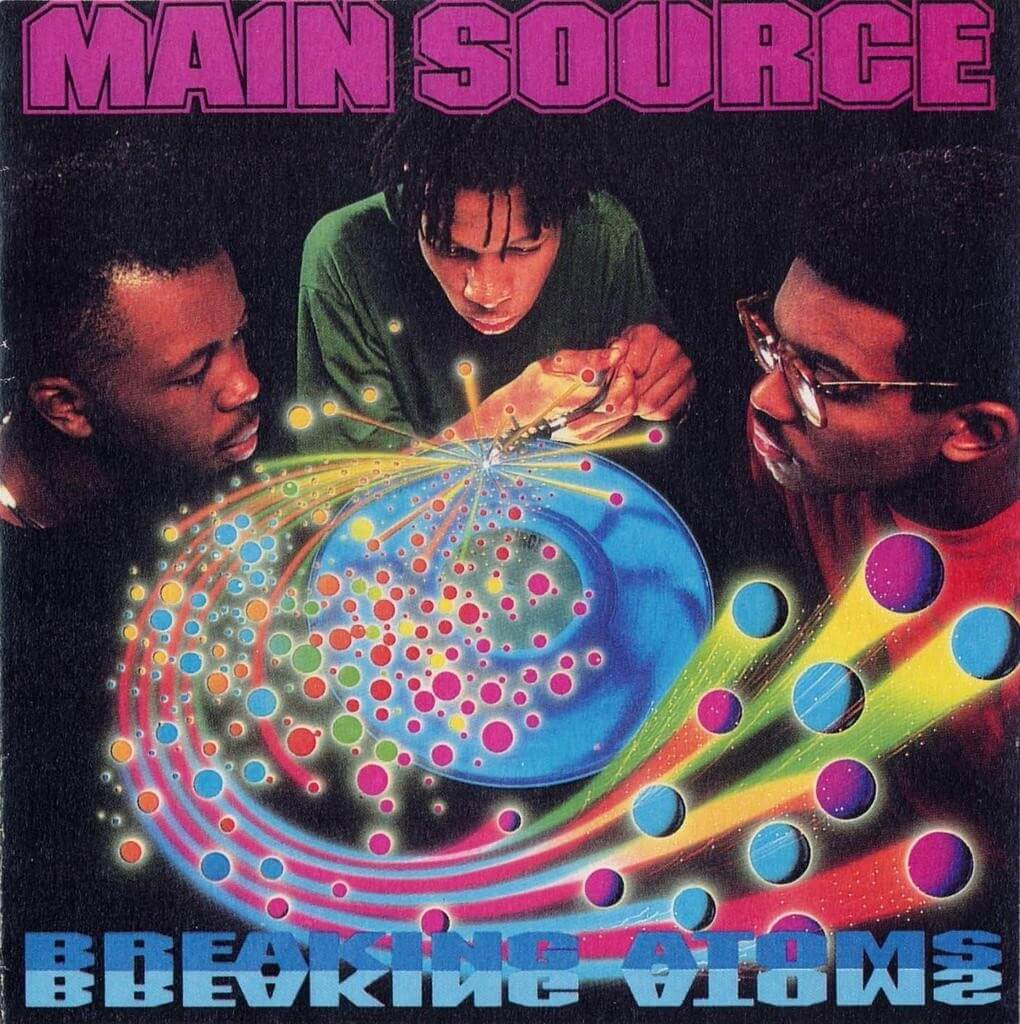
Main Source’s Breaking Atoms is one of the defining albums of early-1990s New York Hip Hop. The group, consisting of Large Professor, K-Cut, and Sir Scratch, combined intricate sample-based production with relaxed, technically accomplished rhyming. Large Professor was the creative force behind much of the music, building rich, detailed beats that drew heavily on jazz and soul while retaining the hard drums and streetwise attitude of New York rap. The album’s influence on producers throughout the decade would prove enormous.
Using the E-mu SP-1200, Main Source layered chopped samples, inventive percussion, and unexpected sonic details into arrangements that worked as complete musical compositions rather than simple loops. “Looking at the Front Door” pairs a soulful groove with Large Professor’s account of a relationship falling apart, while “Just a Friendly Game of Baseball” uses an extended baseball metaphor to address police brutality. “Peace Is Not the Word to Play” delivers a more confrontational message, and “Just Hangin’ Out” captures the easygoing chemistry at the heart of the group’s sound. The album’s most famous track, “Live at the Barbeque,” features a young Nas alongside Joe Fatal and Akinyele. Nas’s electrifying verse offered an early glimpse of the lyricist who would release Illmatic three years later.
Breaking Atoms balances technical production with warmth, humor, and sharp writing. Large Professor’s intricate sampling helped shape the sound of 1990s boom-bap, while the album’s guest verse from Nas connects it directly to one of Hip Hop’s most celebrated careers. Its reputation has only grown with time.
Cypress Hill – Cypress Hill (1991)

Cypress Hill’s self-titled debut brought a distinctive West Coast sound to Hip Hop, combining DJ Muggs’ dark, psychedelic production with B-Real’s unmistakable high-pitched delivery and Sen Dog’s gruff baritone. The Los Angeles trio also stood out for their Mexican-American identity and outspoken cannabis advocacy, introducing perspectives that remained underrepresented in mainstream rap. Their debut found an audience well beyond traditional Hip Hop circles, gaining substantial airplay on urban and college radio and eventually selling over two million copies in the United States.
DJ Muggs produced the entire album, building eerie, bass-heavy tracks from funk, soul, and rock samples, with unconventional rhythms and unsettling details that gave the music a character of its own. “How I Could Just Kill a Man” is the defining cut, driven by a memorable bassline and B-Real’s vivid, confrontational storytelling. “Hand on the Pump” delivers another menacing street narrative, while “The Phuncky Feel One” leans into the group’s funk influences. Cannabis culture runs throughout the album, particularly on “Stoned Is the Way of the Walk,” while “Latin Lingo” incorporates Spanish phrases into the group’s streetwise rhymes, reflecting their cultural background without compromising the music’s hard edge. Short instrumental interludes add to the album’s hazy, sometimes surreal atmosphere.
Cypress Hill went double platinum and helped bring alternative audiences closer to Hip Hop. Its combination of unconventional production, distinctive vocal chemistry, Latino representation, and unapologetic weed references gave the group an identity few others could replicate. The darker, more expansive Black Sunday would bring even greater commercial success in 1993, but the debut already contains the essential elements of Cypress Hill’s enduring appeal.
Organized Konfusion – Organized Konfusion (1991)

Pharoahe Monch and Prince Po approached their self-titled debut with an extraordinary appetite for lyrical complexity. Released in 1991 on Hollywood BASIC, Organized Konfusion introduced a Queens duo whose intricate rhyme schemes, unpredictable flows, and imaginative storytelling set them apart from many of their contemporaries. Their writing could be playful, surreal, politically charged, or technically astonishing, sometimes within the same track. The album initially attracted a modest audience, but its reputation grew into that of an underground classic.
Produced by the duo themselves, the music draws on jazz and funk samples, unconventional rhythms, and offbeat arrangements that complement the MCs’ restless creativity. “Fudge Pudge,” featuring a young O.C. in his recording debut, combines playful braggadocio with intricate wordplay. “Walk into the Sun” offers a more uplifting, soulful groove, while “Prisoners of War” delivers a forceful critique of oppression and the treatment of Black Americans. The remarkable “Releasing Hypnotical Gases” takes an absurd premise and turns it into an extended exercise in complex rhyme patterns, vivid imagery, and battle-rap ingenuity. On “Who Stole My Last Piece of Chicken?” the duo switches gears for a humorous tale that highlights their chemistry and storytelling skills.
Organized Konfusion rewards close listening, with layers of wordplay and rhythmic intricacy that reveal themselves over repeated spins. Pharoahe Monch would develop into one of Hip Hop’s most technically gifted lyricists, but the creative partnership is the real attraction here. The album helped lay the groundwork for the more adventurous underground rap of the following decade, and its combination of verbal gymnastics, social commentary, and eccentric humor remains distinctive.
Black Sheep – A Wolf In Sheep’s Clothing (1991)

Black Sheep brought a mischievous, satirical edge to the Native Tongues movement with A Wolf in Sheep’s Clothing. Dres and Mista Lawnge had little interest in following the collective’s more familiar bohemian conventions, preferring sharp humor, unconventional beats, and a healthy disregard for Hip Hop’s unwritten rules. Their debut moves effortlessly between party records, social commentary, relationship songs, and absurdist comedy, with Dres’s nimble delivery tying the album together.
Mista Lawnge’s production gives the record a distinctive character, drawing on unexpected samples, punchy drums, and quirky musical details rather than relying on the smoother jazz loops favored by some contemporaries. “The Choice Is Yours (Revisited)” became the album’s signature track, its infectious groove and memorable chants turning an offbeat group into a mainstream success. “Strobelite Honey” brings a playful take on club culture, while “Flavor of the Month” pokes fun at the fickleness of musical trends. “U Mean I’m Not” twists gangsta rap posturing into satire, and “Similak Child” delivers a humorous account of romantic deception. “Pass the 40,” featuring teenage rapper Chi-Ali, adds another lively moment to a record full of unexpected turns.
The album reached No. 30 on the Billboard 200 and earned gold certification within six months of its release. Black Sheep’s irreverence gave the Native Tongues catalog a welcome streak of mischief, and the record’s eclectic production helped distinguish it from the era’s increasingly familiar formulas. A Wolf in Sheep’s Clothing remains a reminder that clever writing and a genuinely eccentric personality can go hand in hand with enduring crowd appeal.
2Pac - 2Pacalypse Now (1991)
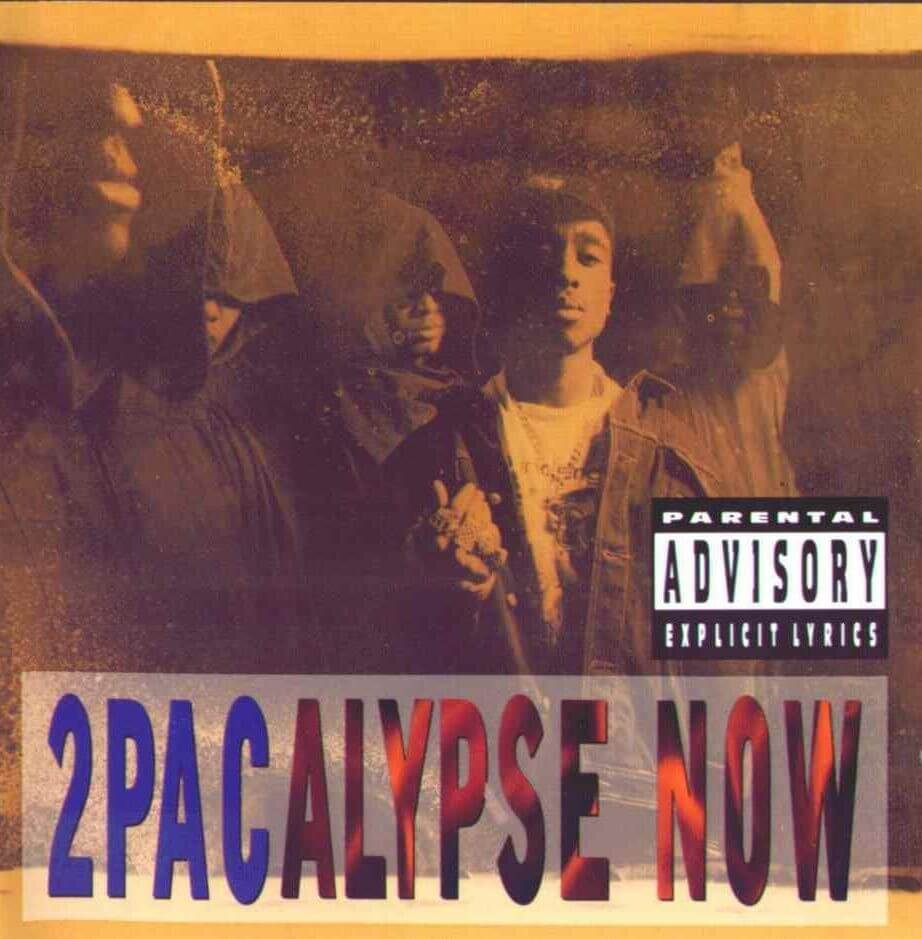
Before Tupac Shakur became one of Hip Hop’s most iconic and controversial figures, 2Pacalypse Now introduced a young MC determined to confront the injustices shaping Black life in America. Still developing the distinctive charisma and versatility that would define his later work, Tupac attacks police brutality, institutional racism, poverty, and the destructive cycles trapping young people in disadvantaged communities. His delivery is urgent and occasionally uneven, but his commitment to the subject matter is unmistakable. On “Trapped,” he describes the paranoia and frustration of being targeted by law enforcement, while “Words of Wisdom” directly challenges the historical oppression of Black Americans. “Brenda’s Got a Baby” is the album’s most affecting moment, telling the story of a twelve-year-old girl abandoned by her family and left to navigate pregnancy, poverty, and exploitation. Tupac approaches her circumstances with empathy, revealing a storytelling ability that would become one of his greatest strengths.
The production, handled by members of the Digital Underground circle and other associates, is less consistent than the writing’s strongest moments. Funk samples, skeletal rhythms, and early-1990s West Coast grooves provide a foundation, but several tracks lack the musical cohesion of Tupac’s later work. “If My Homie Calls” offers a more playful side of his personality, while “Soulja’s Story” and “I Don’t Give a Fuck” deliver the confrontational energy that runs throughout the record. The contrast between these tracks and the reflective “Brenda’s Got a Baby” reveals an artist still working out how to balance anger, vulnerability, and street-level storytelling.
The album’s political content attracted national attention when Vice President Dan Quayle condemned it after a Texas murder suspect’s defense attorney cited its influence. The controversy raised questions about censorship and the relationship between rap lyrics and real-world violence. 2Pacalypse Now is an uneven debut, with production that sometimes falls short of its ambitions, but its social urgency and Tupac’s emerging talent make it an important starting point for understanding one of Hip Hop’s most consequential artists.
Pete Rock & CL Smooth – Mecca & The Soul Brother (1992)

Pete Rock’s production is the main attraction on Mecca and the Soul Brother, the full-length debut he made with MC CL Smooth in 1992. Built around lush jazz and soul samples, layered horns, warm basslines, and hard-hitting drums, the album captures a particularly rich strain of early-1990s New York Hip Hop. CL Smooth provides the perfect counterweight, delivering thoughtful, fluid rhymes with a conversational ease that complements Pete Rock’s intricate arrangements. The result is a remarkably cohesive record that balances street-level observations, personal reflection, and playful braggadocio.
“Return of the Mecca” and “For Pete’s Sake” establish the duo’s chemistry immediately, while “Ghettos of the Mind” examines the pressures of urban life. “Straighten It Out” takes aim at bootleggers and those profiting from unauthorized copies of their music, and “Anger in the Nation” addresses Black identity and political consciousness. The album’s emotional centerpiece, however, is “They Reminisce Over You (T.R.O.Y.),” a tribute to their friend Troy “Trouble T-Roy” Dixon, the Heavy D & the Boyz dancer who died in 1990. Built around a beautiful saxophone sample from Tom Scott’s “Today,” the track combines vivid childhood memories with grief and gratitude, creating one of Hip Hop’s most enduring meditations on loss.
Although sales initially lagged behind some of 1992’s bigger releases, the album’s reputation grew steadily. Pete Rock’s layered sampling influenced generations of producers, while CL Smooth brought warmth and substance to every performance. Mecca and the Soul Brother remains a defining example of the chemistry between an inventive producer and an MC who knows exactly how to ride his beats.
Dr Dre – The Chronic (1992)

Few albums have shifted Hip Hop’s center of gravity as dramatically as Dr. Dre’s The Chronic. Following his departure from N.W.A over a financial dispute, Dre emerged as a solo artist with a new musical direction that would dominate West Coast rap throughout the 1990s. Released in December 1992 on Death Row Records, the album introduced the world to his signature G-funk sound, combining deep basslines, melodic synthesizers, live instrumentation, and the psychedelic funk of Parliament-Funkadelic. Dre approached production with the precision of a studio auteur, shaping every track around carefully arranged grooves and instantly recognizable hooks.
Nuthin’ but a ‘G’ Thang captures the formula at its finest, pairing Dre’s measured delivery with the effortless flow of a young Snoop Doggy Dogg. Featured on 12 of the album’s 16 tracks, Snoop became a star before releasing his own debut. The Chronic also introduced talents including Daz Dillinger, Kurupt, RBX, and Nate Dogg, while helping establish Death Row as a major force in the music industry. Elsewhere, “Let Me Ride” and “F**k wit Dre Day” deliver infectious funk and pointed shots at Dre’s former associates. “The Day the N****z Took Over” directly addresses the anger surrounding the 1992 Los Angeles uprising.
The album’s misogyny and glorification of violence remain difficult to overlook, but its musical influence is undeniable. The Chronic brought G-funk into the mainstream, reshaped West Coast Hip Hop, and established Dr. Dre as one of rap’s most consequential producers. Its sound would dominate radio, influence generations of artists, and lay the groundwork for Snoop’s Doggystyle and the West Coast’s commercial ascendancy.
Diamond D & The Psychotic Neurotics – Stunts, Blunts & Hip Hop (1992)

Diamond D’s reputation as one of New York’s finest beatmakers rests heavily on Stunts, Blunts & Hip Hop, a debut that captures the creative spirit of early-1990s boom-bap. As a member of the Diggin’ in the Crates (D.I.T.C.) collective, Diamond brought together dusty funk samples, inventive loops, crisp drums, and an understated sense of humor. While West Coast G-funk was beginning its ascent, his Bronx sound offered an alternative built on meticulous crate digging and relaxed, witty lyricism.
Diamond produced most of the album himself, with contributions from an impressive lineup that included Large Professor, Q-Tip, Showbiz, Jazzy Jay, and the 45 King. The results are remarkably cohesive despite the number of hands involved. “Sally Got a One-Track Mind” rides a funky, infectious loop, while “Best-Kept Secret” demonstrates Diamond’s knack for turning obscure samples into irresistible grooves. “I Went for Mine” and “K.I.S.S. (Keep It Simple, Stupid)” highlight his nimble delivery and playful wordplay, while “A Day in the Life,” featuring Brand Nubian, brings together some of the era’s most distinctive voices. The album also offers early appearances by Big L and Fat Joe, artists who would go on to become major figures in New York rap.
Although it never became a major commercial success, Stunts, Blunts & Hip Hop earned lasting respect among producers, DJs, and underground Hip Hop fans. Its combination of soulful sampling, hard drums, and unforced lyricism captures D.I.T.C.’s aesthetic at an early stage, before the collective’s members developed their own extensive catalogs. Diamond D’s debut remains a rewarding example of boom-bap craftsmanship, full of details that reveal themselves with repeated listens.
Showbiz $ AG – Runaway Slave (1992)
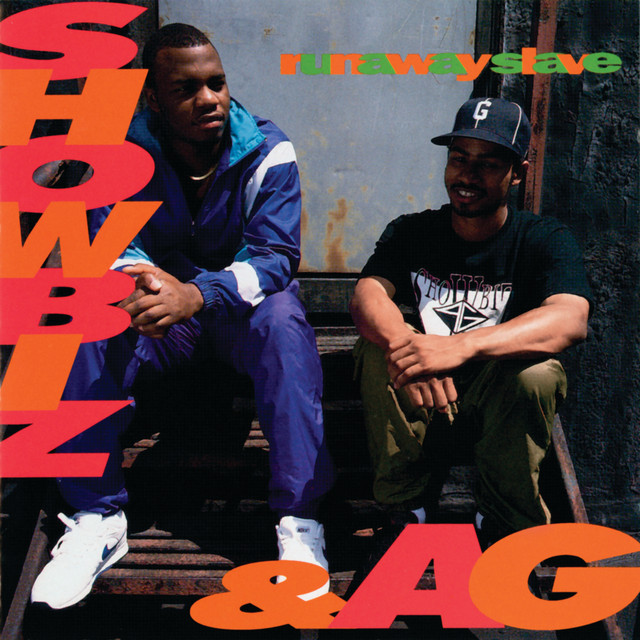
Following Diamond D’s Stunts, Blunts & Hip Hop, Showbiz & A.G.’s Runaway Slave offers another essential glimpse into the creative chemistry behind D.I.T.C. Released in September 1992, the Bronx duo’s debut pairs Showbiz’s rugged, sample-heavy production with A.G.’s relaxed but authoritative delivery. The result is a distinctly New York sound built around hard drums, obscure funk and jazz samples, and lyrics that move between battle rhymes, street observations, and social commentary.
Showbiz handles most of the production, creating a cohesive backdrop of crisp breakbeats, soulful melodies, and moody horn arrangements. “Fat Pockets” is an immediate highlight, driven by a punchy groove and A.G.’s confident wordplay. “More Than One Way Out of the Ghetto” takes a more reflective look at poverty and the struggle for a better life, while “Hold Ya Head” addresses the pressures facing young Black men. “Bounce ta This,” featuring Black Sheep’s Dres, brings a lighter party atmosphere. The standout “Represent” features Lord Finesse, DeShawn, and a young Big L, whose explosive verse offered an early glimpse of the formidable lyricist he would become. Diamond D contributes to the production on selected tracks, reinforcing the close creative ties between members of the collective.
The album also incorporates material from the earlier Soul Clap EP, connecting it to the origins of the D.I.T.C. movement. Although Runaway Slave never achieved major commercial success, its combination of rugged beats, thoughtful writing, and lyrical dexterity earned lasting respect among underground Hip Hop fans. Showbiz’s production and A.G.’s understated command make this a defining document of early-1990s Bronx rap.
The Pharcyde – Bizarre Ride II… (1992)

The Pharcyde brought a welcome dose of eccentricity to West Coast Hip Hop with Bizarre Ride II the Pharcyde, a debut that stood apart from the gangsta rap dominating the region at the time. Slimkid3, Imani, Bootie Brown, and Fatlip approached the microphone with an irreverent sense of humor, unconventional storytelling, and an infectious chemistry that made their music immediately distinctive. Rather than focusing primarily on street violence or gang culture, the Los Angeles quartet drew inspiration from everyday absurdities, awkward romantic encounters, and the misadventures of young men figuring out life. Their playful approach connected with the alternative Hip Hop emerging from groups like De La Soul and A Tribe Called Quest, while giving the West Coast scene a character of its own.
Producer J-Swift supplied nearly the entire album, blending jazz, funk, and soul samples into warm, intricate arrangements. The result is remarkably musical without sacrificing the hard drums and infectious grooves that make the records move. “Oh Shit” introduces the group’s outrageous humor, “Ya Mama” turns the dozens into an extended battle of ridiculous insults, and “Passin’ Me By” offers a more vulnerable perspective through its tales of unrequited crushes. The latter became the group’s biggest hit, while “Officer” addresses racial profiling with a more serious edge. “Soul Flower” and “Otha Fish” reveal another side of the album’s rich musical palette.
Although Bizarre Ride II the Pharcyde initially achieved only moderate commercial success, its reputation grew into that of an alternative Hip Hop classic. The group’s unpredictable personalities and J-Swift’s jazz-inflected production helped open the door for a more eccentric strain of West Coast rap, influencing artists well beyond their immediate circle. Few debuts capture the humor, insecurity, and creative freedom of young MCs with quite this much personality.
Black Moon – Enta Da Stage (1993)

Dark, bass-heavy, and relentlessly confrontational, Black Moon’s Enta da Stage is one of the defining records of New York’s early-1990s underground resurgence. The Brooklyn trio of Buckshot, 5ft, and DJ Evil Dee delivered a debut steeped in street-level aggression, with an atmosphere that anticipated the darker direction East Coast Hip Hop would take over the following years. Much of the album’s appeal comes from Buckshot, who was only eighteen during recording. His distinctive delivery combines conversational looseness with sharp rhythmic instincts, switching between threats, battle rhymes, and street narratives with remarkable confidence.
DJ Evil Dee and his brother Mr. Walt, collectively known as Da Beatminerz, created the album’s unmistakable production style. Their murky jazz and funk samples, rumbling basslines, and heavy drums give the music a dense, claustrophobic quality. “Who Got da Props?” remains an underground anthem, its hypnotic Ronnie Laws sample providing the perfect foundation for Buckshot’s commanding performance. “How Many MC’s…” is another essential cut, driven by a menacing Grover Washington Jr. sample, while “Buck Em Down” combines Donald Byrd’s soulful instrumentation with aggressive lyricism. “I Got Cha Opin” reveals a slightly smoother side of the group’s sound, and “Black Smif-n-Wessun” introduces Tek and Steele, whose chemistry would become central to the emerging Boot Camp Clik collective.
Although Enta da Stage never achieved the commercial success of several other major New York releases from the period, its underground influence was enormous. It introduced the production aesthetic that Da Beatminerz would develop across subsequent Boot Camp Clik classics and helped launch Buckshot and Dru Ha’s Duck Down movement. Its suffocating bass, dusty samples, and uncompromising Brooklyn attitude remain a benchmark for grimy East Coast boom-bap.
Souls Of Mischief – 93 Til Infinity (1993)

Oakland’s Souls of Mischief delivered one of the most accomplished lyrical debuts of the 1990s with 93 ’til Infinity. As part of the Hieroglyphics collective, A-Plus, Tajai, Opio, and Phesto developed a distinctive approach built around intricate internal rhymes, complex syllable patterns, and remarkably fluid exchanges between MCs. Their technical abilities were exceptional, but the music retained a relaxed, youthful personality, with lyrics about friendship, relationships, everyday experiences, and competitive rhyming. While gangsta rap and G-funk dominated the West Coast commercially, Souls of Mischief represented a thriving alternative scene that placed lyrical creativity and musical experimentation at the forefront.
Production from A-Plus, Domino, Del the Funky Homosapien, Casual, and Jay Biz draws heavily on jazz, funk, and soul, creating warm, atmospheric beats that complement the quartet’s elaborate flows. The title track is an undisputed Hip Hop classic, built around a beautiful sample from Billy Cobham’s “Heather.” Its hypnotic melody and effortless group chemistry capture the laid-back atmosphere of a California summer afternoon. “That’s When Ya Lost,” featuring Pep Love, delivers a more aggressive display of lyrical dexterity, while “Never No More” pairs thoughtful rhymes with a gorgeous jazz-inflected beat. “Live and Let Live,” “Make Your Mind Up,” and “Limitations” provide additional highlights, demonstrating the album’s impressive consistency.
93 ’til Infinity helped define the Hieroglyphics aesthetic and became a major influence on subsequent generations of underground MCs. Its intricate lyricism, soulful production, and infectious camaraderie have aged exceptionally well. The title track may be its most celebrated moment, but the album’s real strength lies in the quality of the material surrounding it.
KRS One – Return Of The Boom Bap (1993)
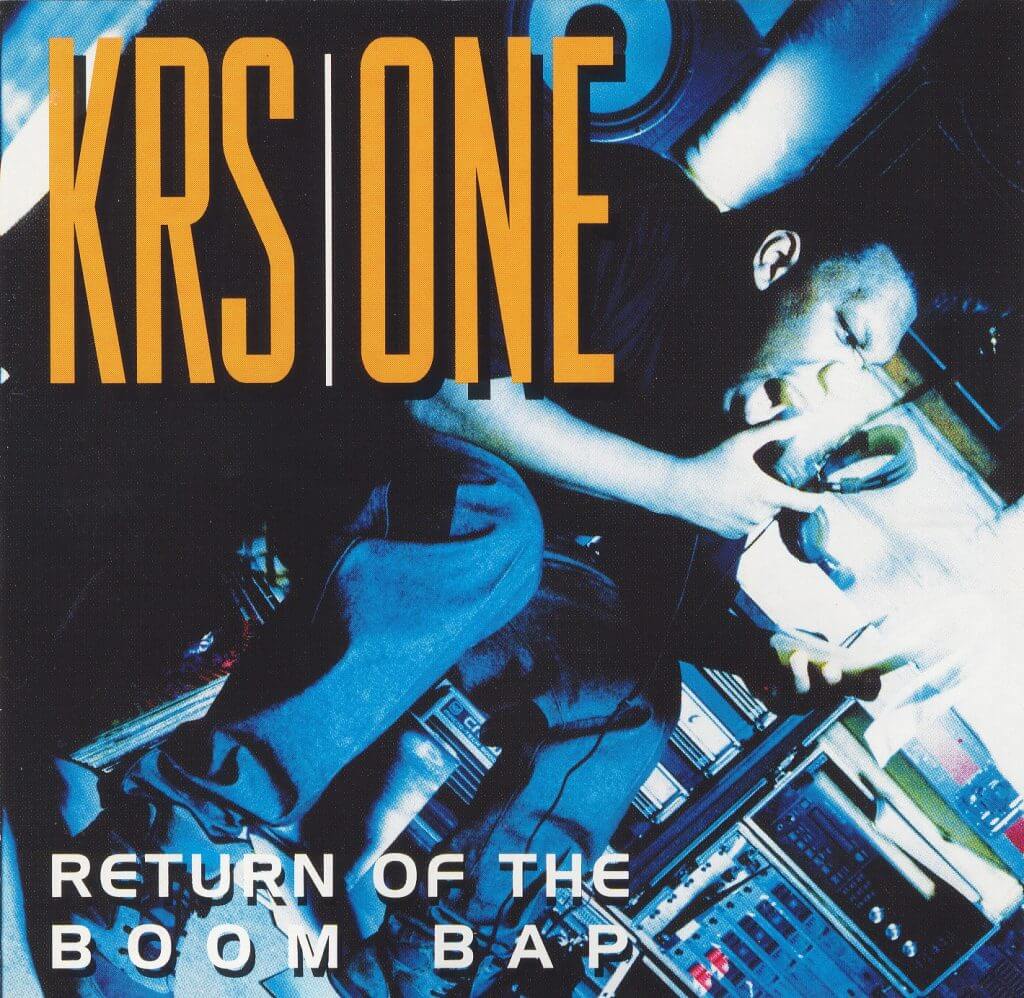
Calling Return of the Boom Bap KRS-One’s debut requires a small qualification. By 1993, he had already released five albums under the Boogie Down Productions name, and given his dominance of that group, the distinction between BDP and KRS-One as a solo artist was never particularly clear. Nevertheless, Return of the Boom Bap was his first official solo album, and it ranks among his finest recordings. At a time when West Coast G-funk dominated the charts, KRS returned to the hard drums, stripped-down production, and uncompromising lyricism that had made him one of Hip Hop’s most respected MCs.
Working with DJ Premier, Showbiz, Kid Capri, and others, KRS assembled a collection of rugged boom-bap beats that perfectly complement his commanding delivery. Premier’s production on “Outta Here” provides the foundation for a memorable reflection on Hip Hop careers and the dangers of fleeting success, while “KRS-ONE Attacks” and “Mortal Thought” deliver fierce lyrical performances. Showbiz produced the album’s defining political statement, “Sound of da Police,” on which KRS connects contemporary policing to the historical oppression of Black Americans through his devastating comparison of officers and overseers. “Black Cop” tackles similar territory, while “I Can’t Wake Up” takes an imaginative detour into a surreal dream about becoming a blunt.
The title track celebrates the fundamental elements of hard-hitting Hip Hop, and “Higher Level” closes the album with a thoughtful examination of social responsibility and self-improvement. Return of the Boom Bap captures KRS-One at an exceptional creative peak, combining political conviction, battle-rap authority, and some of the finest production of his career. For an MC who had already helped shape Hip Hop’s Golden Age, this supposed debut proved he still had plenty to teach.
Snoop Doggy Dogg – Doggystyle (1993)

Few debut albums have arrived with the anticipation surrounding Snoop Doggy Dogg’s Doggystyle. After stealing the spotlight with his appearances on Dr. Dre’s The Chronic (1992), the young Long Beach rapper was already a major star before releasing an album of his own. When Doggystyle finally arrived in November 1993, it debuted at number one on the Billboard 200, selling an astonishing 806,000 copies in its first week. Snoop’s laid-back, almost melodic delivery was unlike anything else in mainstream Hip Hop, effortlessly gliding over Dre’s bass-heavy production while delivering street narratives, playful boasts, and infectious hooks.
Dr. Dre’s G-funk production provides the perfect setting for Snoop’s unmistakable voice, with deep basslines, whining synthesizers, and Parliament-Funkadelic influences creating an irresistible groove. “Gin and Juice” and “Who Am I? (What’s My Name?)” became enormous hits, while “Tha Shiznit” remains one of Snoop’s finest lyrical performances, demonstrating his remarkable rhythmic control. “Murder Was the Case” takes a darker direction with its supernatural tale of violence and damnation, and “Lodi Dodi” pays tribute to Slick Rick’s storytelling classic. “Doggy Dogg World,” featuring Tha Dogg Pound and The Dramatics, adds another memorable slice of West Coast funk. Contributions from Nate Dogg, Warren G, Kurupt, Daz Dillinger, and The Lady of Rage reinforce the album’s close connection to the emerging Death Row roster.
The album’s casual misogyny and glorification of gang culture remain controversial, particularly on tracks like “Ain’t No Fun.” Musically, however, Doggystyle is exceptional. Snoop’s effortless charisma and Dre’s meticulous production made G-funk a dominant force in 1990s Hip Hop, and despite Snoop’s extensive subsequent catalog, his debut remains his finest hour.
Wu-Tang Clan – Enter The Wu-Tang (36 Chambers) (1993)
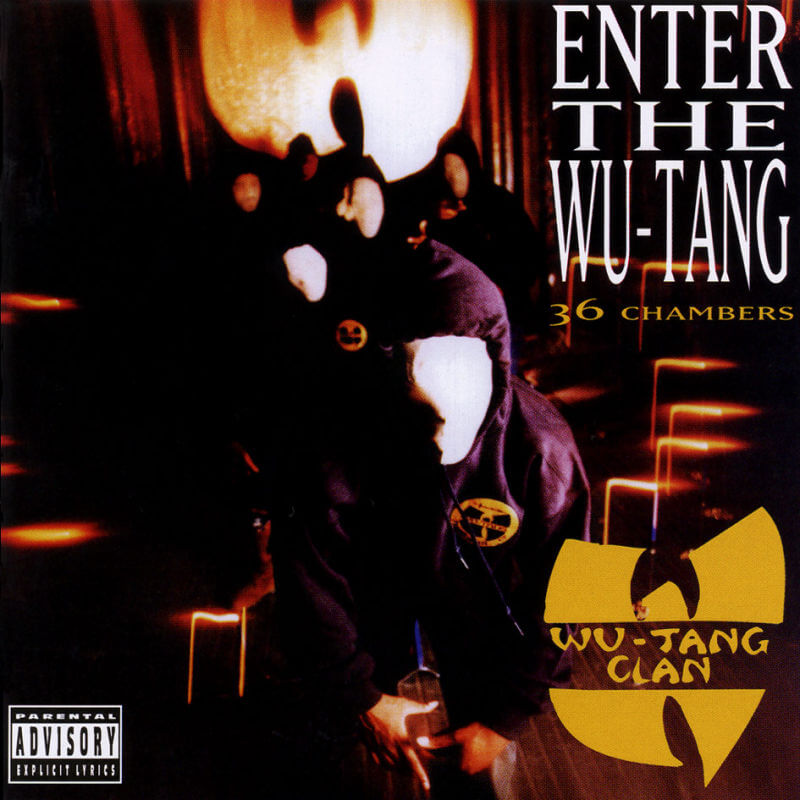
Wu-Tang Clan’s Enter the Wu-Tang (36 Chambers) dropped in November 1993 with a sound that stood in stark contrast to the polished G-funk dominating mainstream Hip Hop. Led by producer RZA, the Staten Island collective brought together nine MCs with distinct voices, personalities, and lyrical approaches, creating a chaotic, fiercely competitive chemistry unlike anything else in rap at the time. Their fascination with kung-fu cinema, Five-Percent Nation teachings, and gritty New York street life gave the group a mythology of its own, while their unconventional business strategy allowed individual members to pursue solo deals with different labels without breaking up the collective.
RZA’s production is the album’s defining feature. Working with limited equipment and a modest studio budget, he assembled eerie soul samples, hard-hitting drums, distorted textures, and snippets of martial arts films into a sound that was deliberately rough around the edges. “Bring da Ruckus” announces the Clan’s arrival with a barrage of aggressive verses, while “Protect Ya Neck” gives eight members room to demonstrate their individual styles. Method Man’s charismatic performance on his namesake track contrasts with the vivid street storytelling of Raekwon and Ghostface Killah on “Can It Be All So Simple.” “C.R.E.A.M.” is the emotional centerpiece, with Raekwon and Inspectah Deck reflecting on poverty, survival, and the pursuit of money over a mournful soul sample. Ol’ Dirty Bastard’s unpredictable delivery adds another dimension to the group’s chemistry.
Enter the Wu-Tang (36 Chambers) helped restore New York’s prominence during a period of West Coast dominance and laid the groundwork for a remarkable run of solo albums from its members. Its influence on hardcore rap production, lyrical styles, and collective entrepreneurship remains enormous. Few debuts have introduced so many distinctive talents while changing the direction of an entire scene.
Digable Planets – Reachin’ (1993)
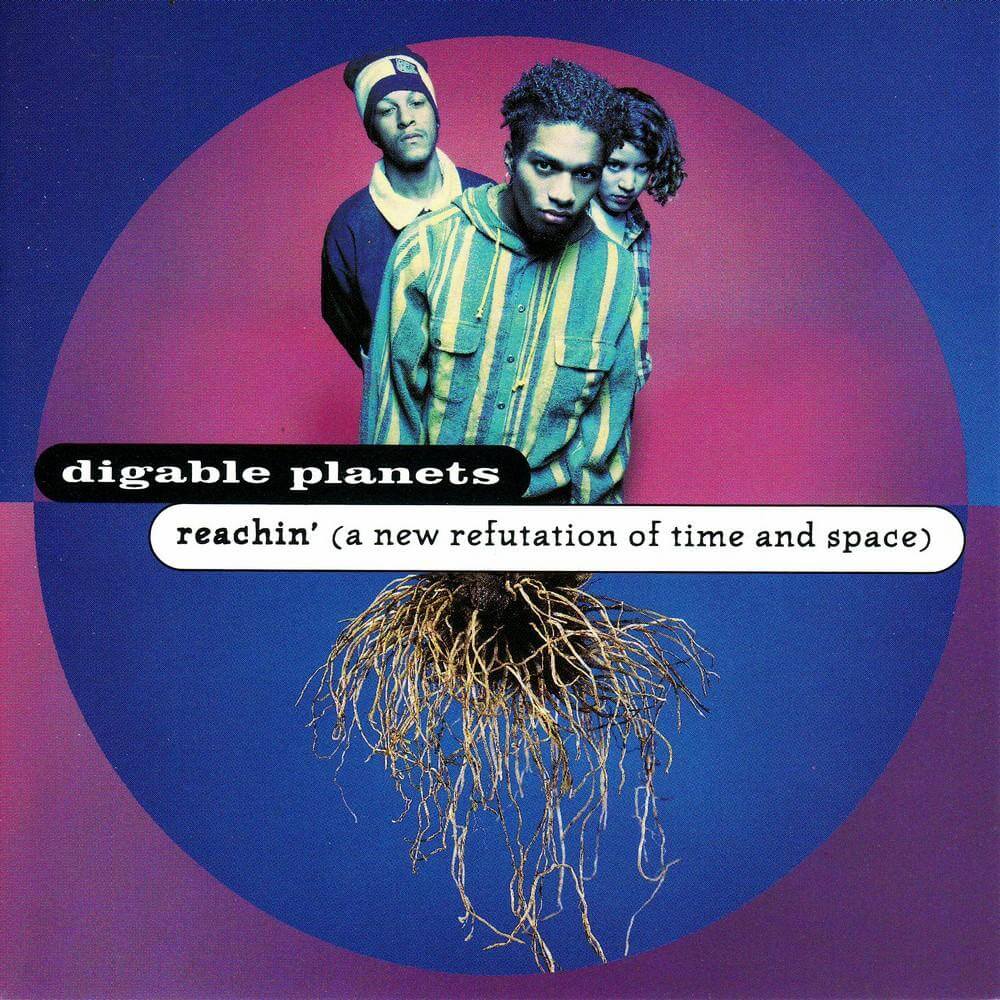
Digable Planets brought jazz, Afrocentric ideas, and laid-back lyricism together on Reachin’ (A New Refutation of Time and Space), a debut that offered a different perspective on early-1990s Hip Hop. The Brooklyn-based trio of Butterfly, Doodlebug, and Ladybug Mecca favored relaxed flows, playful wordplay, and thoughtful observations over aggressive posturing. Their chemistry was natural, with all three MCs contributing distinct voices to a sound that was cool and conversational without sacrificing lyrical substance. At a time when gangsta rap was gaining commercial dominance, Digable Planets demonstrated that alternative Hip Hop could reach a broad audience on its own terms.
Butterfly handled the production, drawing heavily on his father’s jazz collection and blending upright bass, muted horns, and crisp drums into warm, spacious beats. The music owes something to the jazz sampling pioneered by producers like DJ Premier, but the trio developed a distinctive aesthetic of their own. “Rebirth of Slick (Cool Like Dat)” became their signature track, its infectious groove and understated delivery helping it reach the Billboard Hot 100’s top 15. The song won the Grammy for Best Rap Performance by a Duo or Group in 1994. “Where I’m From” captures the group’s easygoing chemistry, while “Pacifics” sets a reflective mood. Elsewhere, “La Femme Fetal” addresses abortion rights, and “Last of the Spiddyocks” examines the drug problems that afflicted generations of jazz musicians. These subjects give the album greater depth beneath its relaxed exterior.
Reachin’ earned gold certification and helped bring jazz rap to a wider audience. Its combination of thoughtful writing, understated production, and three complementary MCs remains distinctive, capturing an era when Hip Hop’s creative boundaries were expanding in several directions at once.
Nas – Illmatic (1994)
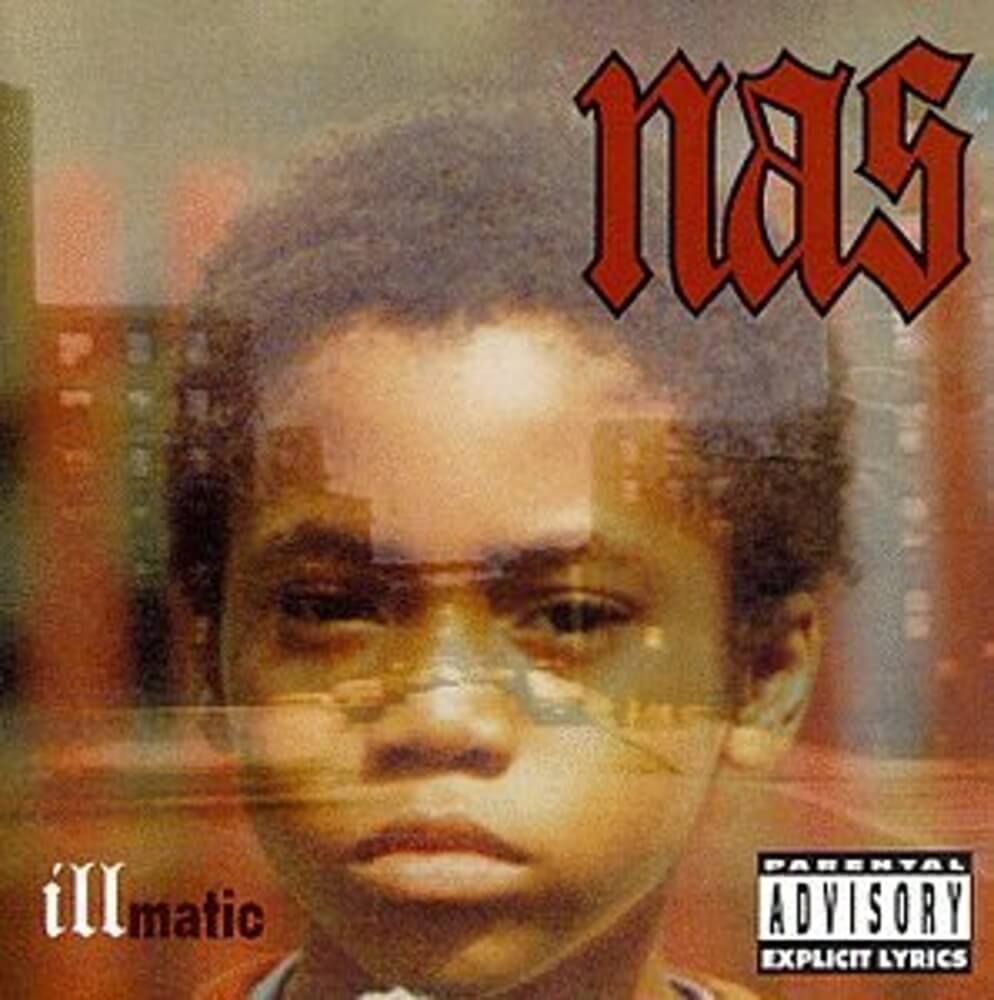
Some albums earn their reputation gradually. Nas’s Illmatic was recognized as something extraordinary almost immediately, and three decades later, its status as one of Hip Hop’s greatest achievements remains virtually unquestioned. The Queensbridge MC had already attracted considerable attention through his appearances on Main Source’s “Live at the Barbeque” and his own “Halftime,” but few anticipated the remarkable consistency and lyrical sophistication of his debut. Across ten tracks and barely forty minutes, Nas delivers an exceptionally vivid portrait of life in New York’s Queensbridge housing projects, combining intricate internal rhymes, street-level observations, and introspective storytelling with a poetic precision rarely matched before or since.
The production lineup alone reads like a Golden Age dream team: DJ Premier, Large Professor, Pete Rock, Q-Tip, and L.E.S. Their contributions create a remarkably cohesive collection of jazz-inflected boom-bap, giving Nas the perfect musical foundation. Premier’s haunting piano loop on “N.Y. State of Mind” accompanies one of the most extraordinary lyrical performances ever recorded, while Pete Rock’s “The World Is Yours” offers a more hopeful perspective. “Life’s a Bitch” introduces AZ with an unforgettable guest verse and features a trumpet solo from Nas’s father, Olu Dara. Q-Tip’s atmospheric production on “One Love” supports a series of letters to incarcerated friends, while “Memory Lane (Sittin’ in da Park)” and “It Ain’t Hard to Tell” demonstrate Nas’s astonishing command of language and rhythm.
Despite receiving The Source‘s coveted five-mic rating, Illmatic was initially a modest commercial success. Its influence, however, became enormous, inspiring generations of MCs and producers while helping restore New York’s creative prominence. Every track contributes something meaningful, and there is virtually no wasted space. For us, Illmatic belongs in any serious conversation about the greatest Hip Hop albums ever made, debut or otherwise.
OutKast - Southernplayalisticadillacmuzik (1994)

OutKast arrived from Atlanta with a sound that owed little to the regional formulas dominating Hip Hop in the early 1990s. On Southernplayalisticadillacmuzik, teenage MCs André 3000 and Big Boi brought Southern slang, neighborhood observations, and an easygoing sense of humor together with the funk-heavy production of Organized Noize. The result was a vivid portrait of young Black life in Atlanta, shaped by the city’s own culture rather than expectations set in New York or Los Angeles. Big Boi’s quick, tightly controlled delivery contrasted with André’s looser, more offbeat style, giving the duo an appealing chemistry from the start.
Organized Noize, the production team of Rico Wade, Ray Murray, and Sleepy Brown, supplied the album’s defining sound. Instead of building everything around chopped samples, they layered programmed drums and deep 808 bass with live-sounding guitar, keyboards, and soulful melodies. The music draws heavily from P-Funk and Southern soul, creating a warm, rolling groove that gives the album its own regional identity. The hit single “Player’s Ball” introduced OutKast to a national audience, while “Ain’t No Thang” captures their playful chemistry. There is more substance beneath the laid-back attitude, too. “Git Up, Git Out,” featuring fellow Dungeon Family members Goodie Mob, urges young people to pursue their ambitions rather than waste their lives getting high. “Crumblin’ Erb” confronts drug abuse and violence within the Black community, while “Call of da Wild” examines the pressures facing young people.
The album went platinum and helped establish Atlanta as a major creative center for Hip Hop. When André 3000 declared at the 1995 Source Awards that “the South got something to say,” he gave voice to a regional movement that Southernplayalisticadillacmuzik had already put on record. OutKast would grow considerably more adventurous on subsequent albums, but their debut laid the foundation for a distinct Southern sound and introduced a duo whose ambitions would soon reach far beyond Atlanta.
The Notorious B.I.G. – Ready To Die (1994)

Brooklyn street life had rarely been described with the cinematic detail, dark humor, and effortless vocal control that The Notorious B.I.G. brought to Ready to Die. His debut moves between vivid crime stories, reflections on poverty and desperation, sexual braggadocio, and dreams of escaping the corner. Biggie’s deep, commanding voice and fluid delivery make even his most intricate rhyme patterns sound conversational, while his gift for characterization turns street narratives into miniature dramas. From the opening birth sequence to the bleak conclusion of “Suicidal Thoughts,” the album follows a loose narrative arc shaped by ambition, violence, paranoia, and despair.
Producer Easy Mo Bee supplies much of the darker material, giving tracks such as “Gimme the Loot,” “Warning,” and “Machine Gun Funk” their menacing atmosphere. On “Gimme the Loot,” Biggie switches between two voices to portray a pair of ruthless robbers, while “Warning” builds a tense tale of betrayal and the dangers that come with success. The production shifts gears for the singles. Built around Mtume’s “Juicy Fruit,” “Juicy” recounts Biggie’s rise from struggling Brooklyn kid to aspiring star, while the Isley Brothers-sampling “Big Poppa” reveals his charm and playful side. DJ Premier’s “Unbelievable” is another highlight, its hard drums providing a sharp backdrop for Biggie’s densely packed rhymes. Method Man joins him on “The What,” bringing a different vocal texture to the album’s gritty sound.
Alongside Nas’s Illmatic, Ready to Die helped bring renewed attention to New York Hip Hop during an era of West Coast commercial dominance. Sean “Puffy” Combs’s polished, R&B-inflected singles gave Biggie mainstream reach without diluting the harder edge of his writing. The album’s lasting achievement lies in how naturally those sides coexist. Biggie could make street-level desperation, dark comedy, and aspirational luxury part of the same story, and few debut albums have matched the force of his introduction.
Jeru The Damaja – The Sun Rises In The East (1994)
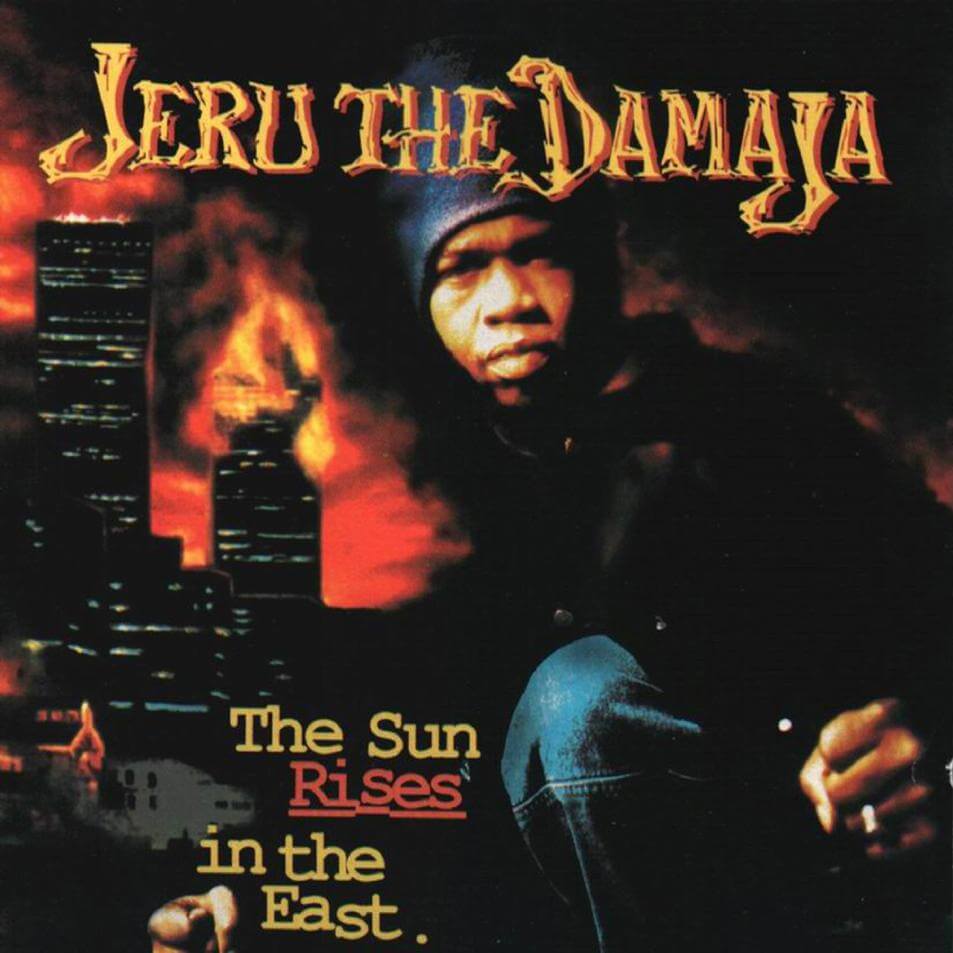
DJ Premier gave Jeru the Damaja’s debut a sound as austere and uncompromising as its MC’s worldview. On The Sun Rises in the East, Premier builds stark, drum-heavy beats from sparse jazz and funk samples, leaving plenty of space for Jeru’s unconventional cadence, sharp observations, and philosophical convictions. Jeru approaches Hip Hop as a vehicle for knowledge and self-awareness, drawing on Five Percent Nation teachings while challenging materialism, ignorance, and the destructive forces shaping life in the city. His deliberate delivery, with its unexpected pauses and clipped phrases, gives the album a character distinct from the rapid-fire styles popular elsewhere.
The opening stretch sets the tone. “D. Original” lays out Jeru’s principles over one of Premier’s hardest beats, while “Brooklyn Took It” delivers a forceful declaration of borough pride. “You Can’t Stop the Prophet” introduces Jeru’s comic-book-inspired alter ego, turning his ideological battles into an imaginative narrative that continues across later releases. Then there’s “Come Clean,” the album’s signature track. Built around a strange, wobbling sound Premier created by manipulating a sample, its ominous groove gives Jeru the perfect setting for his uncompromising bars. “Ain’t the Devil Happy” and “My Mind Spray” further explore his suspicion of corrupt institutions and forces that keep people trapped in destructive patterns. Afu-Ra makes an early appearance on “Mental Stamina,” offering a preview of the wider Gang Starr Foundation’s influence.
The album’s stark production and socially conscious writing offered a compelling alternative to rap’s increasingly commercial direction. Arriving in the same remarkable year as Illmatic and Ready to Die, it formed part of a broader resurgence in New York Hip Hop, with Premier’s production providing a distinctly underground counterpoint to more polished sounds. The cover, depicting the World Trade Center engulfed in flames, adds an unsettling image to an album steeped in urban tension. With The Sun Rises in the East, Jeru and Premier created a Brooklyn classic built on lyrical conviction, unconventional style, and beats that hit hard without excess.
O.C. – Word… Life (1994)

O.C. made his mark with a style built on precision, intelligence, and lyrical substance. On Word…Life, the Brooklyn MC delivers sharp battle rhymes and thoughtful observations over soulful, jazz-inflected beats, challenging the empty posturing creeping into mainstream rap. His defining statement arrives with “Time’s Up,” a direct warning to rappers chasing trends and commercial success at the expense of lyrical skill. Over Buckwild’s rugged drums and looping sample, O.C. makes his case with calm authority, proving that a pointed message hits hardest when the rhymes are sharp enough to carry it.
Buckwild handles most of the production, giving the album the dusty, sample-driven sound associated with New York’s underground in the mid-1990s. His work on the title track and “O-Zone” balances hard drums with warm musical loops, while “Born 2 Live” takes a more reflective turn. O.C. considers the value of life and the fragility of growing up in an environment where violence can cut young lives short. The contrast reveals an MC with range beyond competitive lyricism. “Constables,” produced by Organized Konfusion, examines police harassment, while “Let It Slide” pairs O.C. with Pharoahe Monch over a beat that suits their intricate wordplay. Prince Po also appears on “No Main Topic,” adding another connection to the Queens duo’s technically adventurous approach. Lord Finesse contributes the production on “Ga Head,” reinforcing the album’s ties to the Diggin’ in the Crates crew.
Although Word…Life never achieved the commercial reach of some of its contemporaries, its reputation has grown among listeners who value lyricism and carefully crafted boom-bap. O.C. would become an important voice within D.I.T.C., but this debut already captures what made him distinctive: thoughtful writing, controlled delivery, and a refusal to mistake loudness for skill. Alongside the era’s celebrated releases, Word…Life remains a rewarding document of New York underground Hip Hop at full strength.
Gravediggaz - 6 Feet Deep (1994)
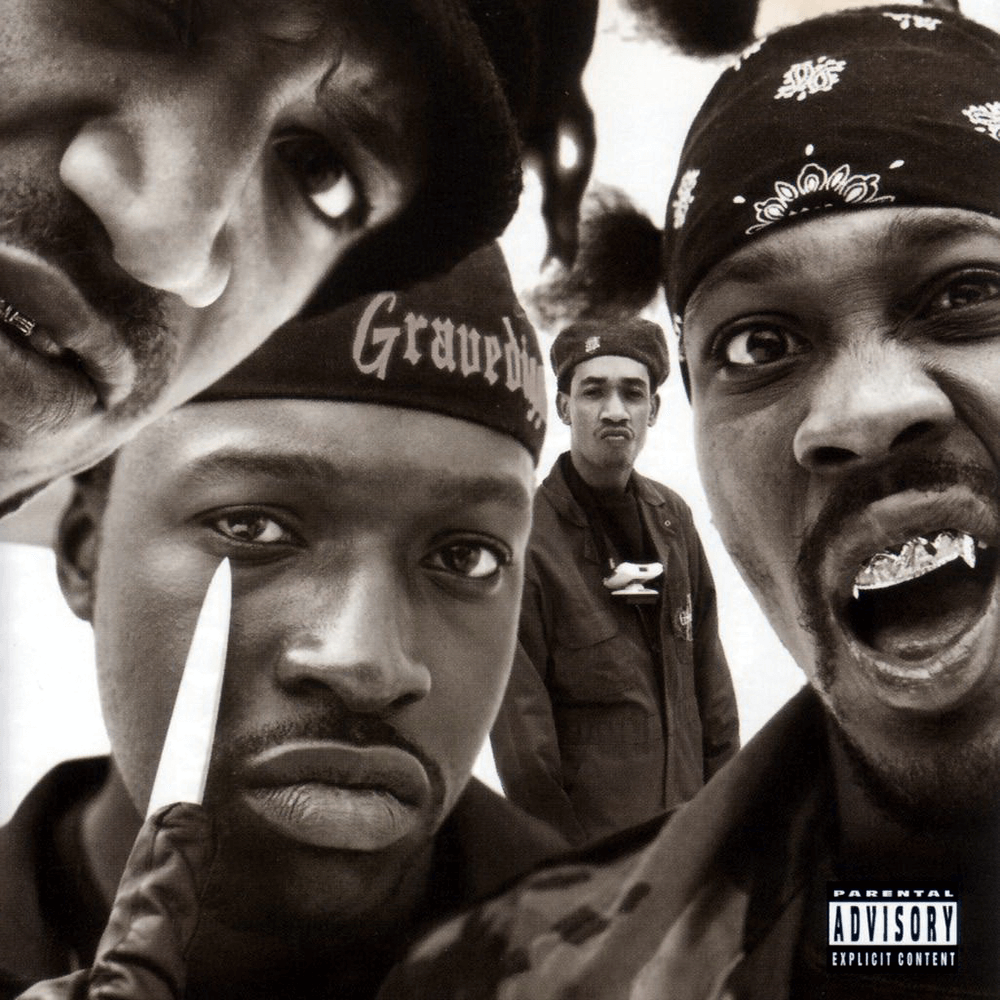
Gravediggaz turned frustration with the music industry into one of the darkest and most inventive Hip Hop albums of the 1990s. Prince Paul, RZA, Frukwan, and Too Poetic had each experienced career setbacks before joining forces as the Undertaker, the RZArector, the Gatekeeper, and the Grym Reaper. On 6 Feet Deep, their collective alter egos inhabit a world of graveyards, murder, mental instability, and supernatural horror. Beneath the macabre imagery and black comedy lies a sharp satire of early-1990s hardcore rap, taking its escalating violence to absurd extremes to expose the genre’s fixation on death and destruction. The album became a defining release in horrorcore, giving the emerging subgenre a distinctive identity.
Prince Paul handles most of the production, trading the playful, colorful approach of his work with De La Soul for eerie samples, ominous piano loops, and murky, hard-hitting drums. His beats give tracks such as “Constant Elevation” and “Nowhere to Run, Nowhere to Hide” a sinister atmosphere, while “Defective Trip (Trippin’)” veers into psychedelic territory. RZA’s influence comes through on “Diary of a Madman,” a standout featuring Shabazz the Disciple and Killah Priest, whose appearances connect the project to the expanding Wu-Tang universe. Then there’s “1-800 Suicide,” whose deliberately provocative premise captures the group’s taste for shocking humor and theatrical excess. The title track and “Graveyard Chamber” deepen the album’s unsettling mood without sacrificing its rugged boom-bap foundation.
6 Feet Deep gave four underappreciated artists room to channel their frustrations into something genuinely original. Its horror-film imagery, social commentary, and inventive production made it a distinctive counterpoint to the increasingly serious posturing of hardcore rap. Gravediggaz brought a wicked sense of humor to Hip Hop’s darkest corners, and this debut remains one of horrorcore’s defining records.
Raekwon – Only Built 4 Cuban Linx… (1995)
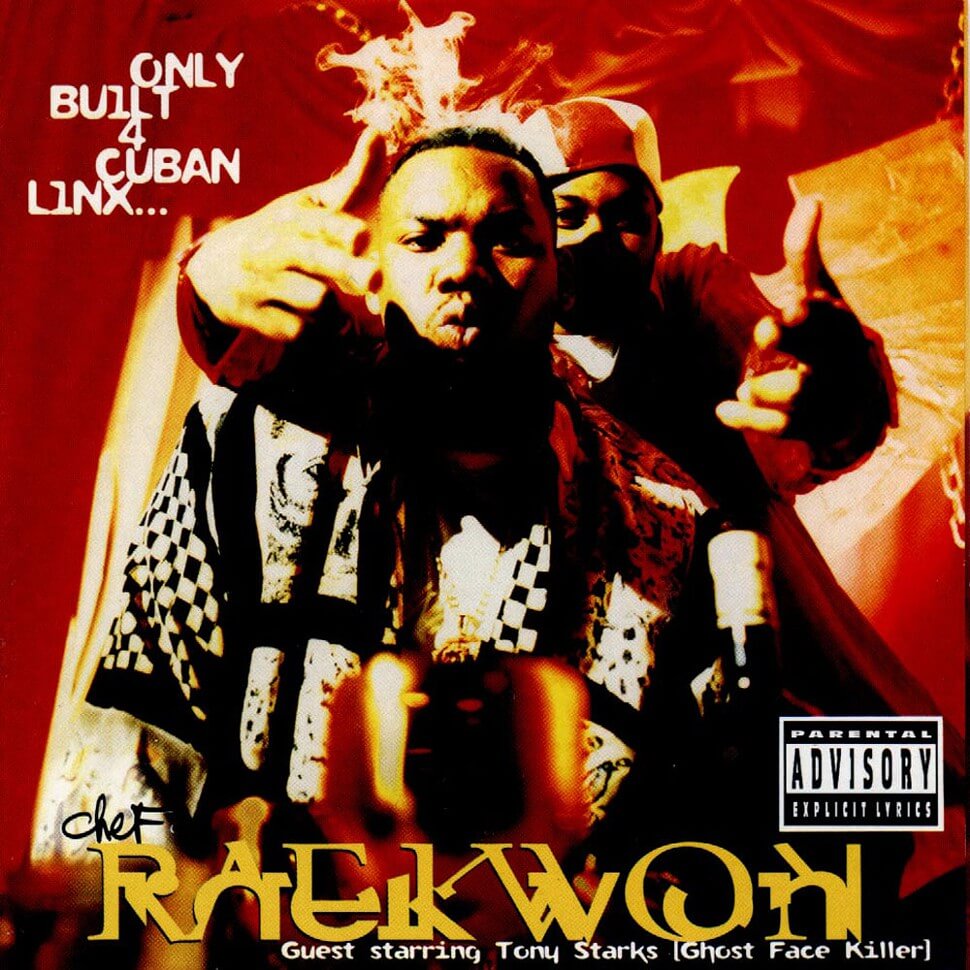
Few Hip Hop albums build a criminal underworld as vividly as Raekwon’s Only Built 4 Cuban Linx…. With Ghostface Killah as his indispensable co-star, Raekwon constructs a cinematic tale of hustling, ambition, betrayal, and the pursuit of wealth, drawing on the language and mythology of gangster films. Raekwon adopts the persona of Lex Diamonds, while Ghostface plays Tony Starks, giving the album a cast of streetwise characters whose conversations and exploits unfold across interconnected tracks. Their chemistry is extraordinary: Raekwon’s intricate, slang-heavy narratives meet Ghostface’s unpredictable intensity, creating a dynamic that drives the album from the opening “Striving for Perfection” to the closing “Heaven & Hell.” “Criminology” turns their partnership into a vivid crime scene, while “Verbal Intercourse,” featuring Nas, brings three distinctive lyricists together for one of the record’s most celebrated moments.
RZA produced the entire album, shaping its atmosphere with ominous strings, soulful samples, hard drums, and dialogue drawn from crime and martial arts films. The beats are often more measured and orchestral than the abrasive sound of the original Wu-Tang Clan album, giving Raekwon room to develop his stories without sacrificing the group’s rugged edge. “Incarcerated Scarfaces” balances menace with precision, “Ice Cream” adds a smoother, more playful dimension, and “Glaciers of Ice” moves with relentless momentum. Ghostface appears throughout, and his performances are so integral to the album that the supposed solo project often plays like a full collaboration. The original purple cassette shell, which gave the album its enduring nickname, became an iconic piece of Hip Hop culture in its own right.
Only Built 4 Cuban Linx… helped popularize mafioso rap, influencing projects such as Jay-Z’s Reasonable Doubt and Nas’s It Was Written. Its impact reaches beyond gangster imagery: the album demonstrated how elaborate storytelling, recurring characters, and a unified production vision could turn street narratives into a fully realized musical drama. Raekwon and Ghostface created a world that listeners could return to, finding new details in its language, personalities, and carefully connected scenes.
Goodie Mob – Soul Food (1995)

Atlanta’s Goodie Mob brought a distinctive Southern perspective to socially conscious Hip Hop with Soul Food, a debut steeped in spiritual reflection, systemic oppression, and the realities of Black life in the South. Cee-Lo Green, Big Gipp, Khujo, and T-Mo combine street-level observations with personal vulnerability, addressing poverty, racism, surveillance, and the psychological toll of growing up in neglected communities. On “Thought Process,” featuring André 3000, the group reflects on the forces shaping their lives, while “Cell Therapy” turns suspicion of government control and institutional power into an unsettling anthem. The title track, featuring Sleepy Brown, helped popularize the term “Dirty South,” giving a name to a regional identity that would soon become central to Hip Hop.
Organized Noize provides the album’s musical foundation, drawing on Southern soul, gospel, blues, and funk to create a sound distinct from the sample-heavy boom-bap of New York and the polished G-funk coming out of Los Angeles. Thick basslines, live instrumentation, and murky grooves give the production an organic, almost swampy character. “Soul Food” captures the warmth of the group’s musical roots, while “Sesame Street” and “Guess Who” pair vivid storytelling with the quartet’s unvarnished delivery. Cee-Lo’s expressive, gospel-influenced voice adds another dimension, particularly on “Free,” whose opening sets a reflective tone. Elsewhere, “Fighting” explores the emotional scars left by hardship, showing how the group’s social commentary extends beyond external circumstances into private struggles.
Part of Atlanta’s emerging Dungeon Family collective, Goodie Mob helped expand the national understanding of Southern rap alongside their close associates OutKast. Soul Food earned gold certification, but its deeper achievement was proving that Atlanta had its own musical language and a powerful perspective on American life. Decades later, its combination of regional pride, political awareness, spiritual depth, and unmistakable Southern funk remains central to the story of Hip Hop’s expansion beyond its traditional coastal centers.
Smif N Wessun – Dah Shinin (1995)

Few albums capture the cold, hard-edged atmosphere of mid-1990s Brooklyn as convincingly as Smif-N-Wessun’s Dah Shinin’. Tek and Steele bring rugged voices, Jamaican-inflected slang, and a relentless streetwise attitude to a set of tracks rooted in the daily realities of Brownsville and the wider borough. Their chemistry is immediate: the two MCs trade verses with an unhurried confidence, turning neighborhood pride and threats against rivals into vivid street reportage. “Bucktown” became an anthem for their home turf, while “Sound Bwoy Bureill” channels the duo’s competitive energy into a warning to anyone challenging their position. The album also expanded the growing Boot Camp Clik identity, connecting Smif-N-Wessun to Black Moon, Heltah Skeltah, and a wider Brooklyn movement built on gritty beats and uncompromising bars.
Da Beatminerz production is central to the album’s impact. Evil Dee and Mr. Walt construct a thick, dusty sound from hard drums, murky jazz and funk samples, and basslines that give the tracks a heavy, almost subterranean feel. The beats are stripped down but never sparse, creating a consistent atmosphere without flattening the album’s range. “Wrektime” and “Wontime” hit with blunt force, while “Wipe Ya Mouf” and “Home Sweet Home” bring different textures to the mix. The duo’s Caribbean influences surface in their phrasing and attitude, adding a distinctly Brooklyn blend of Jamaican and New York street culture to the traditional boom-bap framework. Guest appearances from fellow Boot Camp Clik members reinforce the sense of a crew moving together rather than a pair working in isolation.
With Dah Shinin’, Smif-N-Wessun helped define the sound and identity of Brooklyn’s underground in the mid-1990s. Its combination of rugged production, forceful chemistry, and unmistakable local character made it a cornerstone of the Boot Camp Clik catalog and one of the era’s essential East Coast debuts.
AZ - Doe Or Die (1995)

AZ arrived with a considerable reputation after delivering one of the most memorable guest verses on Nas’ Illmatic, appearing on “Life’s a Bitch.” His solo debut, Doe or Die, proved that the Queens MC had plenty to say beyond that celebrated collaboration. Across its tightly constructed tales of street ambition, organized crime, wealth, and survival, AZ adopts the perspective of an aspiring kingpin, tracing the attractions and consequences of a life built around money and power. His writing is intricate without sacrificing clarity, and his smooth, measured delivery gives even the densest rhyme patterns an effortless quality. “Rather Unique” captures his technical precision, while “Gimme Yours,” featuring Nas on the chorus, pairs romantic aspirations with the album’s luxurious sensibility. On “Mo Money, Mo Murder (Homicide),” the two Queens MCs reunite for a chilling account of greed and betrayal.
The production comes from a varied roster, including Pete Rock, Buckwild, L.E.S., N.O. Joe, and DR Period. Pete Rock gives “Gimme Yours” and “Rather Unique” warm, soulful foundations, while Buckwild’s “Ho Happy Jackie” brings a tougher edge. L.E.S. supplies the smooth, instantly recognizable groove of “Sugar Hill,” AZ’s biggest hit and the album’s most accessible moment. Elsewhere, the title track and “Mo Money, Mo Murder” lean into the cinematic atmosphere that would become synonymous with mafioso rap. The different production styles occasionally make the album less cohesive than its strongest songs suggest, but AZ’s consistent writing and presence hold the material together.
Three 6 Mafia - Mystic Stylez (1995)

Memphis had its own dark, distinctly Southern vision of Hip Hop, and Three 6 Mafia’s Mystic Stylez brought it into sharp focus. DJ Paul, Juicy J, Lord Infamous, Koopsta Knicca, Gangsta Boo, and Crunchy Black built an unsettling world of occult imagery, graphic violence, drug references, and street-level paranoia. The horrorcore themes were deliberately extreme, but the group’s appeal went beyond shock value. Their shifting voices, rapid-fire rhyme patterns, and hypnotic chants created a strange, compelling group dynamic, with each member contributing a different texture to the collective sound. “Da Summa” offers a glimpse of their regional identity, while “Live by Yo Rep (B.O.N.E. Dis)” captures the confrontational attitude of their early Memphis scene. The title track brings the crew together in a murky, sinister atmosphere that defines the album’s character.
DJ Paul and Juicy J produced the entire record, working with limited resources to create a sound that was lo-fi, bass-heavy, and claustrophobic. Distorted samples, ominous melodies, and slow, lurching rhythms give tracks like “Break da Law (’95)” and “Sweet Robbery – Part 2” the tension of a horror film unfolding in real time. The repetitive chants on “Tear Da Club Up” point toward the crunk movement that would later emerge from the South, while the group’s rolling triplet cadences anticipated rhythmic approaches that became widespread in rap decades later. The production can be rough around the edges, but its imperfections contribute to the album’s eerie atmosphere and underground appeal.
Initially circulated through Memphis-based independent label Prophet Entertainment, Mystic Stylez built its reputation from the ground up. Its influence eventually reached far beyond the city, shaping generations of Southern rappers and helping lay the groundwork for later trap and underground movements. Three 6 Mafia would go on to achieve mainstream success, but this debut captures their original vision at its most uncompromising: a strange, shadowy Memphis sound that would echo through Hip Hop long after 1995.
Big L – Lifestyles Ov Da Poor & Dangerous (1995)

Big L’s Lifestylez ov da Poor & Dangerous captures a young Harlem MC with an extraordinary gift for punchlines, intricate rhyme schemes, and dark, often outrageous humor. His writing is packed with internal rhymes, unexpected comparisons, and violent imagery delivered with a mischievous grin. Big L could turn almost any subject into a lyrical ambush, making his verses unpredictable even by the standards of New York’s fiercely competitive underground. On “Put It On,” he brings a playful swagger to his rapid-fire rhymes, while “M.V.P.” pairs his brash personality with a smoother, sample-driven groove. The chilling “All Black” and “Danger Zone” reveal his darker side, full of graphic threats and horror-inspired imagery. “Da Graveyard” gathers several MCs, including a young Jay-Z, for a posse cut that captures the competitive spirit of the era. Another early appearance comes from Cam’ron, then credited as Killa Cam, on “8 Iz Enuff.”
The production comes largely from Big L’s D.I.T.C. associates, with Lord Finesse, Buckwild, and Showbiz supplying rugged boom-bap built around hard drums, soulful samples, and gritty loops. Finesse provides much of the album’s musical foundation, while Buckwild’s work on “Put It On” and “Da Graveyard” gives those tracks an immediate punch. The beats are strong, though the album’s sound and sequencing can be uneven, and some of its darker material sits awkwardly alongside the more accessible singles. Big L’s technical command rarely wavers, however, and his personality cuts through the rough edges.
Lifestylez ov da Poor & Dangerous did not bring Big L the commercial breakthrough his talent deserved. Murdered in Harlem in 1999, at just 24, he left behind a legacy that grew considerably after his death. His career remains one of Hip Hop’s great what-ifs: a dazzling debut from an MC whose inventive wordplay and formidable technical ability suggested he had much more to give.
Bone Thugs N Harmony – E. 1999 Eternal (1995)
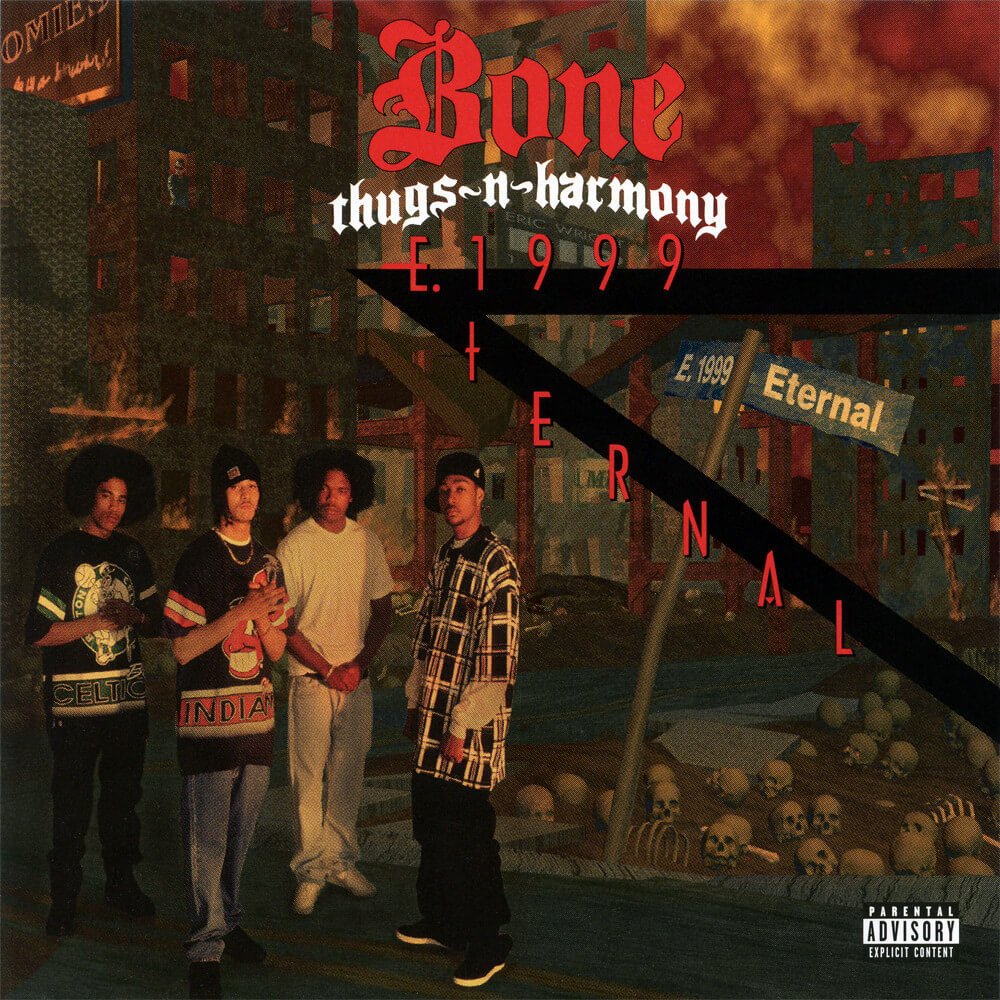
Bone Thugs-N-Harmony developed a style unlike anything else in mid-1990s Hip Hop, combining rapid-fire rhymes, tightly interwoven vocal parts, and soulful harmonies with lyrics steeped in street violence, mortality, and spiritual uncertainty. E. 1999 Eternal brings that distinctive approach into focus across a dark, immersive album rooted in the Cleveland neighborhood that gave it its name. Krayzie Bone, Layzie Bone, Bizzy Bone, Wish Bone, and Flesh-n-Bone shift between individual verses and synchronized passages with remarkable fluidity, often moving from machine-gun cadences into melodic refrains within the same song. “East 1999” and “Land of tha Heartless” establish the album’s ominous atmosphere, while “1st of tha Month” finds the group turning everyday life and the arrival of welfare checks into an enduring singalong. “Tha Crossroads,” a mournful meditation on death and the afterlife, became the album’s emotional centerpiece and a tribute to Eazy-E, who died four months before its release.
Producer DJ U-Neek gives the record a cohesive, nocturnal sound built from rumbling bass, eerie piano lines, synthesized strings, and spacious, slow-burning rhythms. The production leaves room for the group’s intricate vocal arrangements, creating a sound that can be menacing one moment and unexpectedly tender the next. Tracks such as “Crept & We Came” and “Mo’ Murda” lean into the darker side of their writing, while “Budsmokers Only” loosens the mood. The subject matter often circles back to crime, drugs, and death, but the melodic interplay keeps the album musically varied.
Following the success of their 1994 EP Creepin on ah Come Up, E. 1999 Eternal propelled Bone Thugs-N-Harmony to the top of the Billboard 200, selling over 300,000 copies in its first week. Its blend of fast, interlocking flows and harmony-driven hooks influenced generations of rappers and singers, leaving a lasting mark on Hip Hop and R&B. Dedicated in part to Eazy-E, the album carries a shadow of loss throughout its music, giving its commercial triumph an especially poignant edge.
GZA – Liquid Swords (1995)
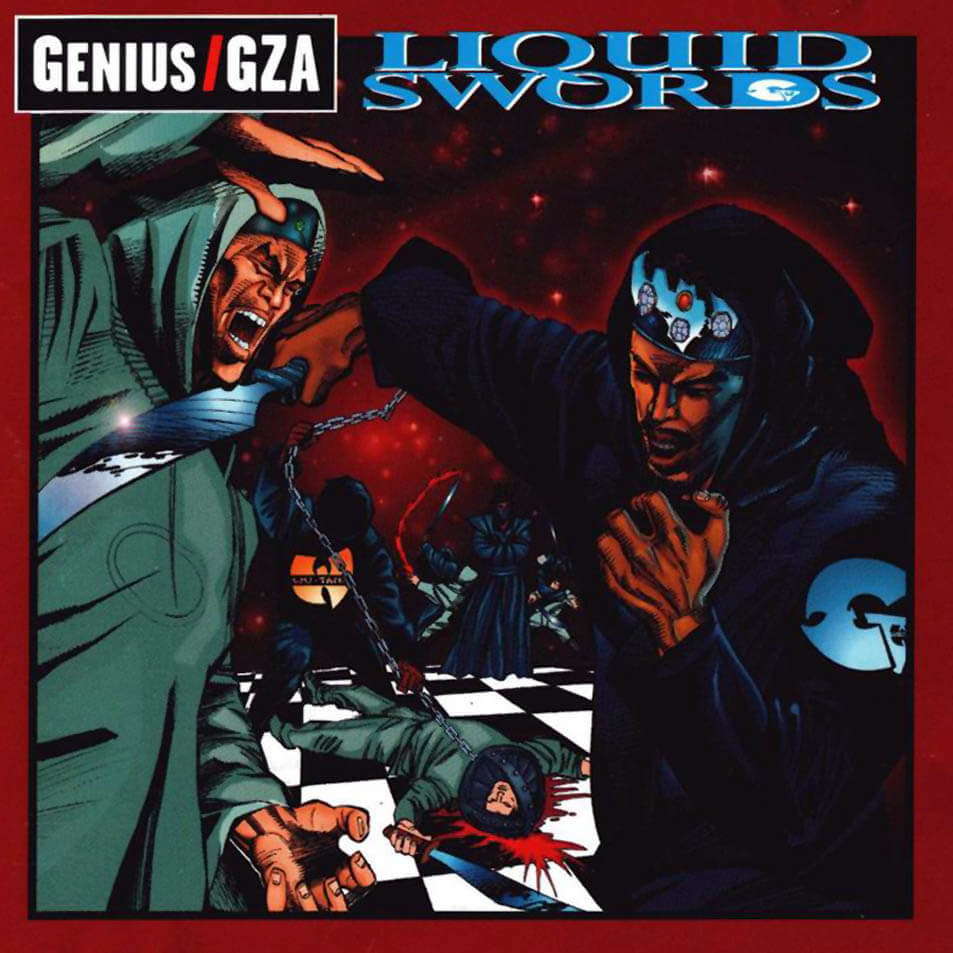
GZA’s Liquid Swords is a masterclass in lyrical precision, delivered over some of RZA’s most haunting production. While other Wu-Tang Clan members often favored explosive personalities and vivid street narratives, GZA approached the microphone with a measured, analytical style, packing his verses with intricate wordplay, philosophical observations, and cold-blooded imagery. His writing rewards close attention, revealing layers of meaning beneath seemingly straightforward lines. On “Labels,” he dismantles the music industry through a relentless succession of record-company names and sharp insults. “Cold World” paints a bleak portrait of urban life, while “Killah Hills 10304” unfolds as a detailed crime narrative. The guest appearances strengthen the album without distracting from its central voice. Method Man brings effortless chemistry to “Shadowboxin’,” and “4th Chamber,” featuring Ghostface Killah, Killah Priest, and RZA, is a standout collision of vivid imagery, unpredictable flows, and martial-arts mythology.
RZA produced nearly the entire album, building an unsettling atmosphere from murky soul samples, brittle percussion, ominous strings, and fragments of dialogue from the martial arts film Shogun Assassin. The result is more spacious and eerie than the raw assault of Enter the Wu-Tang (36 Chambers), with beats that often seem to creep forward beneath GZA’s controlled delivery. The title track establishes the mood immediately, while “Duel of the Iron Mic” and “Investigative Reports” extend the Wu-Tang universe through a succession of distinctive voices. Even the cover, with its illustrated warriors arranged across a chessboard, reinforces the album’s themes of strategy, combat, and intellectual discipline.
Liquid Swords initially reached number nine on the Billboard 200 before gradually acquiring its reputation as one of Hip Hop’s defining albums. GZA’s precision and RZA’s atmospheric production remain inseparable throughout, creating a record that rewards repeated listening without losing its sinister appeal. Few albums in the Wu-Tang catalog achieve such a complete balance between lyrical intricacy and musical atmosphere.
Jay Z – Reasonable Doubt (1996)

Before becoming one of the most commercially successful figures in Hip Hop, Jay-Z introduced himself as a sharp, calculating Brooklyn MC with a talent for turning street experience into vivid, psychologically complex narratives. Reasonable Doubt revolves around the contradictions of the hustler’s life: the pursuit of wealth and status, the constant threat of betrayal, and the psychological cost of living outside the law. Jay-Z’s delivery is remarkably relaxed, his intricate rhymes and conversational flow conveying confidence without sacrificing detail. On “D’Evils,” he examines the paranoia and moral compromises that accompany his ambitions, while “Can I Live” weighs the rewards of the drug trade against its dangers. “Dead Presidents II” pairs his financial aspirations with an icy sense of determination, and “Regrets” closes the album with a reflective account of lost friends, hard lessons, and the choices that shaped his life. The chemistry between Jay-Z and The Notorious B.I.G. makes “Brooklyn’s Finest” an obvious highlight, while “Can’t Knock the Hustle,” featuring Mary J. Blige, establishes the album’s polished, late-night mood.
The production draws on soulful samples, jazz-inflected piano lines, and restrained, hard-hitting drums. DJ Premier supplies the sinister minimalism of “D’Evils” and “Bring It On,” while Ski gives “Dead Presidents II” its haunting piano loop and “Feelin’ It” a smoother, jazz-driven groove. Clark Kent, Knobody, and other producers add to the album’s cohesive sound, balancing street-level grit with the aspirational elegance of its mafioso imagery. References to Scarface and Carlito’s Way reinforce the cinematic framing, though Jay-Z’s writing remains grounded in the realities and consequences of his own experiences.
Released through Roc-A-Fella Records, the independent label Jay-Z founded with Damon Dash and Kareem “Biggs” Burke, Reasonable Doubt initially achieved modest commercial success. Its reputation grew steadily, and it is now widely regarded as one of the defining albums of 1990s New York Hip Hop. Jay-Z would go on to build an unprecedented business empire, but his debut captures him at a particularly compelling stage: ambitious, streetwise, technically gifted, and still wrestling with the cost of the life he describes.
Dr. Octagon - Dr. Octagonecologyst (1996)
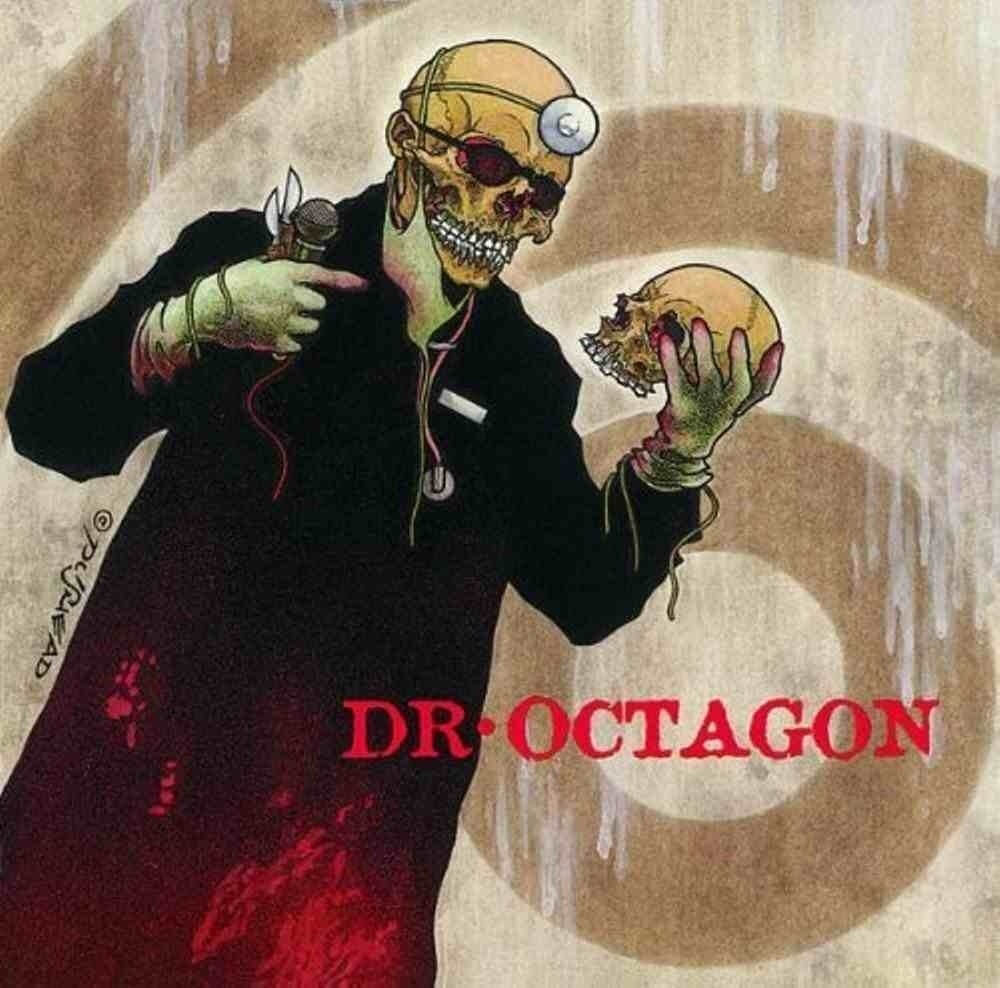
Kool Keith had spent years pushing the boundaries of rap with Ultramagnetic MCs, but Dr. Octagonecologyst marked his solo debut, introducing a bizarre new persona that allowed him to take his eccentricity into entirely new territory. Performing as Dr. Octagon, an extraterrestrial surgeon and gynecologist from Jupiter, Keith constructs a fictional world populated by grotesque medical procedures, sexual absurdities, science-fiction imagery, and horror-movie characters. His free-associative writing disregards conventional storytelling and rhyme structures, jumping between surreal scenarios, outlandish boasts, and deliberately tasteless humor. “Earth People” introduces the alien protagonist and his strange perspective on human life, while “Blue Flowers” pairs hallucinatory imagery with one of the album’s most memorable melodies. “A Visit to the Gynecologyst” and “General Hospital” extend the medical absurdity, while “No Awareness” and “Dr. Octagon” feature fellow underground MC Sir Menelik. Keith’s unpredictable delivery keeps the character somewhere between comic-book villain, deranged storyteller, and avant-garde performance artist.
Dan the Automator provides an appropriately strange musical setting, combining deep bass lines, eerie synthesizers, unconventional samples, and rhythms that draw on Hip Hop, trip-hop, psychedelia, and electronic music. DJ Qbert’s inventive scratching adds another layer of movement, turning the turntables into an integral part of the album’s futuristic atmosphere. KutMasta Kurt also contributed production, having worked with Keith on the early recordings that helped bring the project to life. Tracks such as “Bear Witness” highlight Qbert’s technical brilliance, while the eerie melodies and unsettling textures give the record a distinctly cinematic character.
Initially released through the independent Bulk Recordings, Dr. Octagonecologyst found an audience beyond traditional underground Hip Hop circles and received a wider reissue through DreamWorks in 1997. Its success demonstrated that adventurous, unconventional rap could attract critical attention without conforming to mainstream formulas. The concept album became a touchstone for alternative Hip Hop, while its elaborate fictional persona anticipated the character-driven worlds later explored by artists such as MF DOOM. As Kool Keith’s first solo album, it established a creative direction distinct from his work with Ultramagnetic MCs and remains one of the most unusual and imaginative debuts in Hip Hop.
Heltah Skeltah - Nocturnal (1996)

Heltah Skeltah emerged with a sound and attitude perfectly suited to the grimy aesthetic of the Boot Camp Clik. On Nocturnal, Rock and Ruck (later known as Sean Price) operate as a formidable duo, trading hard-edged verses with booming voices, intricate rhyme patterns, and a dark sense of humor. Rock brings a rugged, commanding delivery, while Ruck displays the sharp wordplay and unruly personality that would become hallmarks of his later solo career. Their chemistry is immediate, whether they are exchanging threats on “Letha Brainz Blo,” delivering rapid-fire bars on “Operation Lock Down,” or joining forces with O.G.C. on “Leflah Leflaur Eshkoshka,” the posse cut that first put them on the map. “Therapy,” featuring Vinia Mojica, offers a change of pace without abandoning the album’s gritty character, while “Clan’s, Posse’s, Crew’s & Clik’s” celebrates the collective spirit of their Brooklyn-based circle.
The production draws heavily on the murky, sample-driven sound associated with the Boot Camp Clik, with Da Beatminerz contributing to the album’s dark, hard-hitting atmosphere. Baby Paul, Mr. Walt, Shaleek, and other producers bring their own touches, from dusty soul loops to ominous instrumental passages and pounding drums. The result is cohesive without becoming monotonous, giving the duo room to switch between forceful street narratives, battle rhymes, and more playful exchanges. The beats rarely soften the edges, keeping the focus on the rappers’ commanding presence and tightly packed verses.
Nocturnal reached number 35 on the Billboard 200, a modest commercial result for an album that earned considerable respect among underground Hip Hop listeners. It captures the Boot Camp Clik at the height of its grimy mid-1990s run and introduces one of the era’s most compelling rap duos. Heltah Skeltah would continue to develop their chemistry on later releases, but their debut remains a particularly strong distillation of the crew’s hard-nosed Brooklyn sound.
Ghostface Killah - Ironman (1996)
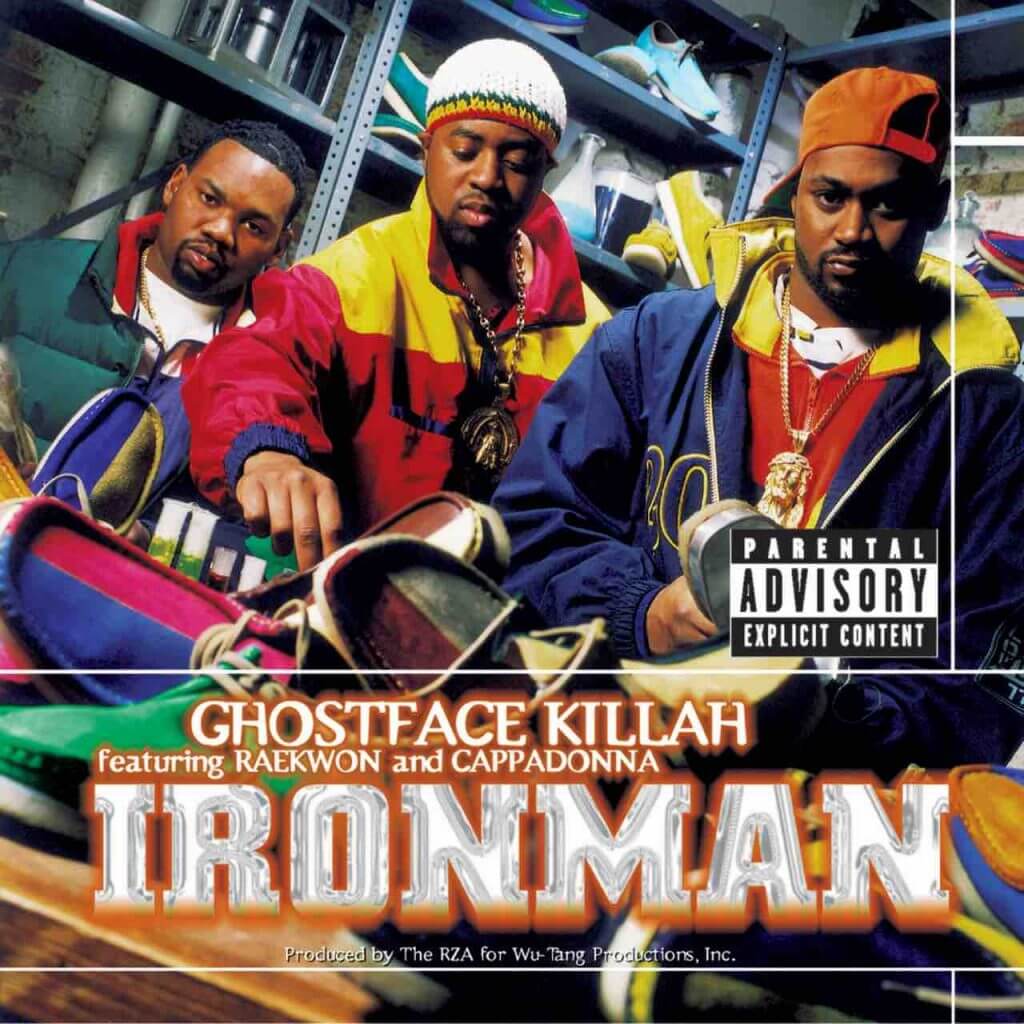
By the time Ghostface Killah stepped out with Ironman, his vivid, unpredictable verses on Raekwon’s Only Built 4 Cuban Linx… had already made him one of the most compelling voices in the Wu-Tang Clan. His solo debut gives that voice room to develop its own identity, balancing street-level storytelling, eccentric wordplay, and surprising emotional openness. Ghostface moves effortlessly between the cinematic criminal underworld of “Iron Maiden,” the rapid-fire imagery of “Daytona 500,” and the intimate family memories of “All That I Got Is You,” featuring Mary J. Blige. The latter, built around a sample of the Jackson 5’s “Maybe Tomorrow,” recounts the poverty and hardships his mother endured while raising her children. It reveals a vulnerability rarely heard in the Wu-Tang universe at the time. Elsewhere, “Wildflower” delivers a bitter, confrontational tirade, while “260” unfolds like a miniature crime film, full of vivid details and shifting perspectives. Raekwon and Cappadonna appear throughout, lending the record a collective energy that suits Ghostface’s conversational exchanges and densely packed verses.
RZA handles nearly all the production, drawing on soul samples, ominous keyboard figures, heavy drums, and dialogue from martial arts and crime films. The music moves between menacing tension and warm, soulful melodies, giving the album a wider emotional range than its hard-edged subject matter might suggest. “Winter Warz,” featuring Cappadonna, Raekwon, U-God, and Masta Killa, is a standout posse cut, with Cappadonna delivering a memorable verse that helped establish his reputation within the Wu-Tang circle. On “Daytona 500,” a loop built around Bob James’s “Nautilus” provides a propulsive backdrop for Ghostface’s animated delivery, while “The Soul Controller” closes the original album sequence on a more reflective note.
Ironman debuted at number two on the Billboard 200 and eventually earned platinum certification in the United States. Its blend of vivid street narratives, soul-drenched production, and personal reflection helped establish Ghostface as one of Wu-Tang’s most distinctive solo artists. The album also laid the groundwork for the even more idiosyncratic writing and storytelling he would develop on Supreme Clientele, while remaining a richly textured statement in its own right.
Company Flow – Funcrusher Plus (1997)
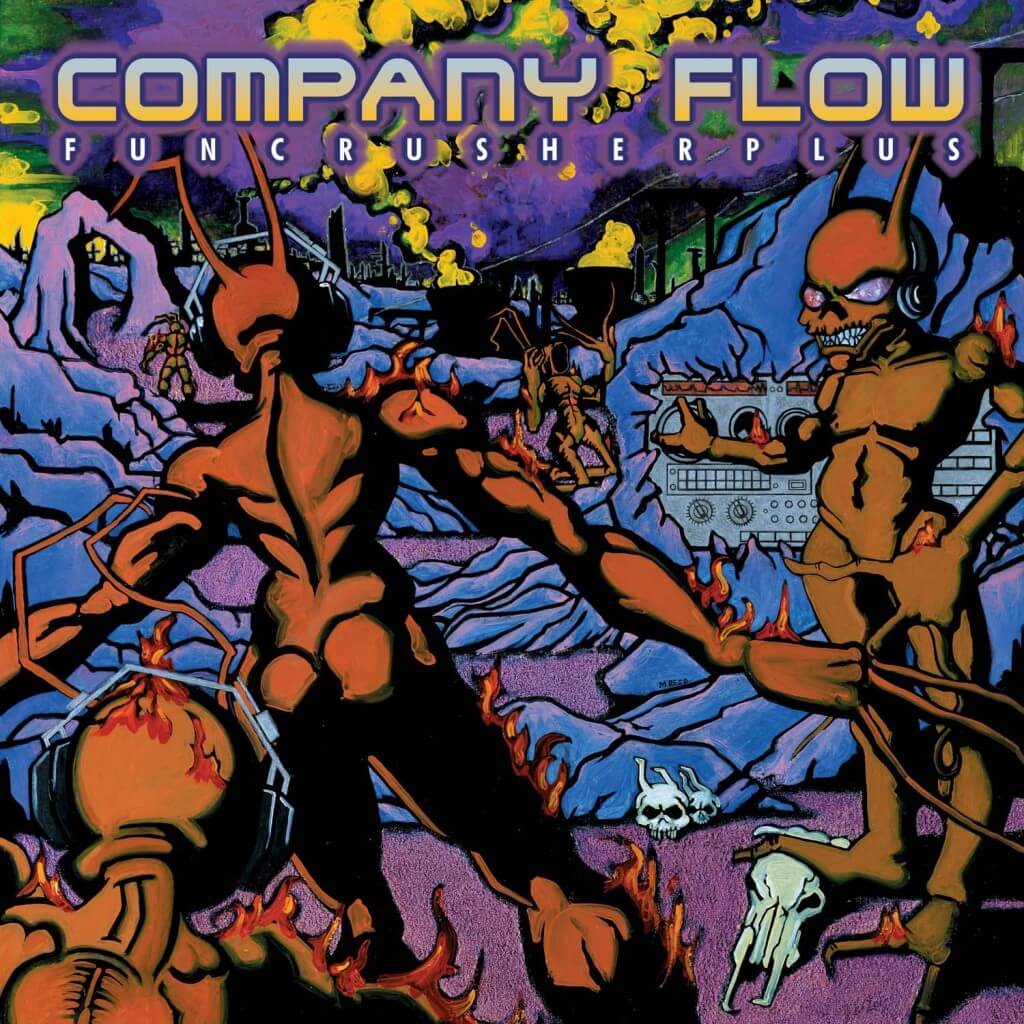
Company Flow’s Funcrusher Plus offered a direct challenge to Hip Hop’s commercial conventions, pairing confrontational lyrics with production that sounded closer to industrial noise than conventional boom-bap. The New York trio of El-P, Bigg Jus, and DJ Mr. Len built their music around jagged drums, eerie electronics, fragmented samples, and unsettling rhythms. El-P handles most of the production, creating claustrophobic, dystopian backdrops for dense, free-associative rhymes and attacks on the music industry. “8 Steps to Perfection” takes aim at the rap establishment with technical precision, while “Population Control” delivers a barrage of paranoid imagery and pointed criticism. “The Fire in Which You Burn,” featuring J-Treds and Juggaknots MC Breezly Brewin, brings together three distinctive voices over one of the album’s most menacing beats. “Last Good Sleep” takes a darker turn, telling a disturbing story of childhood abuse and its lasting psychological damage.
The group’s independent-minded approach extended beyond the music. Released through Rawkus Records, Funcrusher Plus carried the slogan “Independent as Fuck,” expressing Company Flow’s determination to retain creative and financial control. Its success helped establish Rawkus as a leading force in independent Hip Hop, paving the way for releases by artists such as Mos Def and Talib Kweli. El-P later carried this ethos into Definitive Jux, the influential label he founded in 1999, which became a home for adventurous artists including Aesop Rock and Cannibal Ox.
Uncompromising in its politics, production, and lyrical approach, Funcrusher Plus became a defining release for independent Hip Hop, with an influence extending well beyond the underground scene that first embraced it.
DMX – It’s Dark And Hell Is Hot (1998)
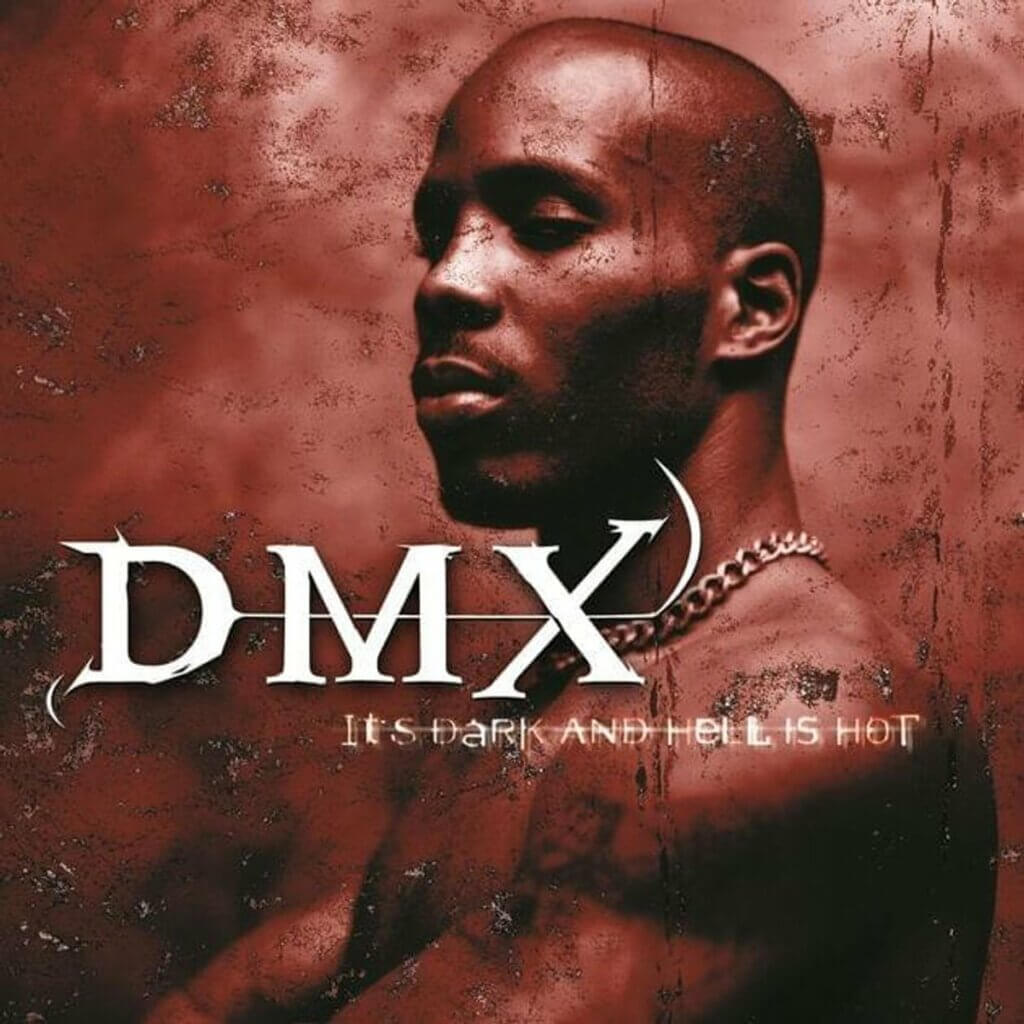
DMX’s arrival on Def Jam brought a ferocious new energy to mainstream Hip Hop. On It’s Dark and Hell Is Hot, Earl Simmons channels a troubled past into explosive performances that swing between barely contained rage, street-level storytelling, spiritual conflict, and painful introspection. His gravelly voice, barking ad-libs, and dramatic shifts in delivery make every track intensely personal. “Stop Being Greedy” pits two sides of his personality against each other, while “Damien” tells a chilling story of temptation and a pact with the devil. “How’s It Goin’ Down” reveals a more vulnerable storyteller navigating complicated relationships, and “I Can Feel It,” built around Phil Collins’s “In the Air Tonight,” turns the familiar sample into an ominous meditation on mortality. The closing “Niggaz Done Started Something,” featuring The LOX and Ma$e, brings the album to a furious finish.
Production from Dame Grease and PK gives much of the record its stripped-down, menacing character, with dark samples, hard drums, and minimal arrangements that leave space for DMX’s commanding presence. Swizz Beatz takes a different approach on “Ruff Ryders’ Anthem,” using a sparse, instantly recognizable beat that DMX initially doubted. The track became a defining anthem for the Ruff Ryders crew and helped introduce Swizz’s distinctive production style to a wider audience.
It’s Dark and Hell Is Hot debuted at number one on the Billboard 200, selling 251,000 copies in its first week. Its commercial success marked a major shift toward harder-edged New York rap, establishing DMX as one of 1998’s defining voices.
Killah Priest – Heavy Mental (1998)

Killah Priest carved out his own territory within the Wu-Tang Clan’s extended universe with Heavy Mental, a debut steeped in biblical imagery, ancient history, and reflections on the Black experience in America. A member of Sunz of Man, Priest approaches the microphone like a preacher and street philosopher, threading Judeo-Christian and Islamic references into intricate verses about oppression, faith, knowledge, and redemption. “B.I.B.L.E. (Basic Instructions Before Leaving Earth),” first heard on GZA’s Liquid Swords, anchors the album with its examination of spiritual awakening and Black identity. On the title track, Priest abandons conventional rap cadences for a spoken-word delivery over the eerie drone of a didgeridoo. “Cross My Heart,” featuring GZA and Inspectah Deck, puts his elaborate lyricism front and center, while “One Step” offsets his solemn delivery with a memorable refrain from Tekitha and Hell Razah.
The production draws on the dark, dusty aesthetic associated with Wu-Tang’s inner circle. True Master, 4th Disciple, Y-Kim the Illfigure, and Arabian Knight supply ominous samples, restrained drums, and shadowy melodies that leave space for Priest’s densely layered writing. His lyrics demand close attention, and the album’s length and relentless seriousness can make it a challenging listen. Ol’ Dirty Bastard’s appearance on “If You Don’t Know” offers a welcome change of pace, injecting some of his trademark unpredictability into Priest’s carefully constructed world.
Heavy Mental reached a dedicated audience without compromising its spiritual and philosophical ambitions. Priest treats Hip Hop as a vehicle for examining history, religion, racial identity, and personal enlightenment, building a lyrical world that remains distinctly his own. Within the Wu-Tang family, where vivid street narratives often dominate, his debut occupies a different space, driven by theological questions and a search for knowledge that would continue to shape his later work.
People Under The Stairs – The Next Step (1998)
Long before independent Hip Hop became a fashionable alternative to major-label rap, Los Angeles duo People Under The Stairs were making music on their own terms. Thes One and Double K built The Next Step from the ground up, handling the production, recording, artwork, and initial release themselves. Working with an SP-1200, an MPC3000, and an eight-track recorder in Thes One’s home, they crafted a warm, sample-heavy sound rooted in dusty jazz, funk, obscure records, and the pleasures of digging through crates. Their approach favored playful wordplay, everyday observations, and an easygoing chemistry over gangsta posturing or commercial polish.
“San Francisco Knights” captures the duo’s laid-back personality, recounting a memorable visit to the Bay Area over a breezy, jazz-inflected groove. Despite never being released as a single, the track became one of their signature songs. “Death of a Salesman” offers a sharper look at the frustrations of everyday life, while “The Next Step II” combines an infectious rhythm with a sample from the theme song of The Jeffersons. Across the album, Thes One’s intricate production and Double K’s relaxed delivery create an unforced balance between technical skill and good-natured humor.
The record initially struggled to find support from DJs and distributors who considered its distinctly West Coast identity too far removed from prevailing New York styles. Independent record stores and overseas listeners proved more receptive, and a connection with San Francisco’s Om Records brought the duo a wider audience and a subsequent reissue.
The Next Step established the foundations of a career built on independence, crate-digging, and an enduring love of Hip Hop’s craft. Its homemade character is part of the appeal: two friends making the music they wanted to hear, without waiting for the industry’s permission.
Black Star – Mos Def & Talib Kweli Are Black Star (1998)

In 1998, as flashy commercial rap dominated the charts, Mos Def and Talib Kweli offered an alternative grounded in lyrical substance, social awareness, and a deep connection to Hip Hop’s cultural roots. Their collaboration, Mos Def & Talib Kweli Are Black Star, draws its name from the Black Star Line, the shipping company established by Pan-African leader Marcus Garvey. The album combines reflections on Black identity, media influence, violence, and life in Brooklyn with sharp wordplay and the natural chemistry of two MCs whose styles complement each other. Mos Def brings a charismatic, elastic delivery, while Kweli favors tightly packed rhymes and incisive social commentary.
The opening “Astronomy (8th Light)” celebrates Black identity, setting the tone for an album that consistently challenges negative stereotypes and narrow definitions of success. “Definition” and “Re: Definition” respond to the murders of Tupac Shakur and The Notorious B.I.G., rejecting Hip Hop’s growing fixation on violence through clever wordplay and a memorable refrain. On “Brown Skin Lady,” the duo celebrates Black women and challenges Western beauty standards. “Respiration,” featuring Common, offers a vivid portrait of urban life, tracing the tension between ambition and survival through the streets of New York. The closing “Thieves in the Night,” inspired by Toni Morrison’s The Bluest Eye, turns inward, questioning the illusions and material aspirations that can keep people from confronting their own lives.
Production from Hi-Tek, Da Beatminerz, Shawn J. Period, J. Rawls, and 88-Keys gives the album a varied but cohesive sound, built on crisp drums, soulful samples, and understated arrangements. The beats leave room for the writing, keeping the focus on the ideas and performances.
Mos Def & Talib Kweli Are Black Star became a defining release of the late-1990s underground, reaffirming the power of thoughtful lyricism at a time when commercial rap was moving in a different direction. Its message remains closely tied to the cultural and political traditions that shaped the duo.
Big Pun - Capital Punishment (1998)

Big Pun’s technical ability was apparent from his earliest appearances alongside Fat Joe, but Capital Punishment revealed the full extent of his talent. The Bronx-born Puerto Rican MC combined extraordinary breath control, intricate internal rhyme schemes, and a commanding delivery with a versatility that stretched from hardcore street narratives to melodic crossover hits. On “The Dream Shatterer,” he tears through densely packed bars with an almost superhuman precision, while “You Ain’t a Killer” presents a darker portrait of street ambition and violence. “Super Lyrical,” featuring Black Thought, pits two elite lyricists against each other in a dazzling display of verbal dexterity. The chemistry with Fat Joe reaches its peak on “Twinz (Deep Cover ’98),” where Pun delivers one of rap’s most celebrated tongue-twisting verses.
The album’s appeal extends beyond technical showmanship. Produced by Knobody, “Still Not a Player” pairs Pun’s nimble flow with a smooth R&B sensibility, transforming his earlier “I’m Not a Player” into a radio hit featuring Joe. Elsewhere, “Punish Me” reveals a more vulnerable side, while “Tres Leches (Triboro Trilogy),” featuring Prodigy and Inspectah Deck, brings together three formidable MCs over a menacing RZA beat. Contributions from Rockwilder, Domingo, JuJu, Showbiz, and others give the lengthy album a varied musical palette, shifting between hard-edged New York production, soulful samples, and polished hooks.
Capital Punishment made history as the first solo album by a Latino rapper to achieve platinum certification in the United States. Its Grammy nomination confirmed Pun’s arrival among rap’s leading artists, while his command of complex rhyme patterns earned admiration from MCs across generations. Tragically, it was the only album released during his lifetime, leaving a formidable debut as the fullest early expression of a talent cut short.
MF DOOM – Operation Doomsday (1999)

Daniel Dumile’s transformation from KMD’s Zev Love X into the masked supervillain MF DOOM began with Operation: Doomsday, a solo debut shaped by personal tragedy, dark humor, and an extraordinary imagination. Following the death of his brother and KMD bandmate DJ Subroc, and the shelving of the group’s second album by Elektra Records, Dumile disappeared from the Hip Hop scene for several years. His return came through independent label Fondle ’Em, where a series of singles introduced a new persona inspired by Marvel Comics’ Doctor Doom. The mask concealed his identity while the music revealed a rapper and producer determined to operate outside the industry’s expectations.
DOOM built the album himself, layering dusty soul and R&B samples, vintage drum breaks, and snippets from cartoons and old Hip Hop films into a deliberately rough, homemade production. His offbeat delivery twists intricate internal rhymes, obscure pop-culture references, and absurd punchlines into unpredictable streams of thought. “Doomsday” sets the tone with its reflective lyrics and a sample of Sade’s “Kiss of Life,” while “Rhymes Like Dimes” pairs playful wordplay with a loose, infectious groove. “Gas Drawls” finds DOOM poking fun at rap conventions, and “Dead Bent” offers a compact display of his crooked rhyme patterns and understated menace. Cartoon interludes featuring Doctor Doom help connect the songs through the mythology of his new alter ego.
The album’s low-budget aesthetic and unconventional structure were integral to its appeal. Rather than smoothing out the rough edges, DOOM used them to create a world that sounded entirely his own, balancing the weight of his past with humor and inventive storytelling. Initially a modest independent release, Operation: Doomsday gradually became a cornerstone of underground Hip Hop, laying the groundwork for the even stranger worlds he would build on Madvillainy, MM..Food, and beyond.
Mos Def – Black On Both Sides (1999)
Mos Def had already established himself as one of underground Hip Hop’s most compelling voices through his work with Talib Kweli, but Black on Both Sides revealed the full breadth of his ambitions as a solo artist. Released in 1999, the album moves between sharp social commentary, personal reflection, soulful singing, and hard-hitting lyricism, all tied together by his charismatic delivery and restless musical curiosity. Mos examines racism, environmental exploitation, economic inequality, and Black identity without sacrificing humor or storytelling. On “Mathematics,” produced by DJ Premier, he turns statistics about poverty, incarceration, and social inequality into a tightly constructed critique of American society. “New World Water” addresses the commercialization of a basic human necessity, while “Mr. Nigga,” featuring Q-Tip, explores the everyday indignities and assumptions faced by Black men.
The album’s range extends well beyond political rap. “Ms. Fat Booty,” built around a sample of Aretha Franklin’s “One Step Ahead,” tells a humorous, sharply observed story of romantic attraction and deception. “Umi Says” shifts into soulful, largely sung territory, delivering an uplifting plea for self-expression over warm instrumentation. On “Brooklyn,” Mos pays tribute to his hometown through three distinct musical movements, each capturing a different aspect of the borough’s character. “Rock N Roll” takes aim at the appropriation of Black musical culture, while “Do It Now,” featuring Busta Rhymes, supplies a burst of high-energy verbal sparring. Production from DJ Premier, Diamond D, Ayatollah, Psycho Les, and others gives the record a rich mixture of boom-bap, jazz, soul, and funk.
Black on Both Sides earned widespread critical acclaim and gold certification, confirming Mos Def’s arrival as a major solo artist. Its combination of musical experimentation, political awareness, and personal expression remains a defining achievement of late-1990s Hip Hop.
Deltron 3030 - Deltron 3030 (2000)
Science fiction and Hip Hop have crossed paths plenty of times, but few albums have embraced the possibilities as completely as Deltron 3030. Released in 2000, this ambitious concept album united Del the Funky Homosapien, producer Dan the Automator, and turntablist Kid Koala for a dystopian adventure set a thousand years in the future. Del assumes the identity of Deltron Zero, a rebellious figure navigating a world controlled by corrupt corporations, oppressive governments, and powerful technological interests. Rap battles become intergalactic confrontations, while familiar concerns about inequality, censorship, and corporate power take on futuristic dimensions.
Dan the Automator’s production is central to the album’s appeal. Sweeping orchestral samples, eerie synthesizers, dusty drums, and cinematic arrangements create an expansive, occasionally unsettling atmosphere. The seven-minute title track establishes the setting with dramatic strings and Del’s intricate storytelling, while “Positive Contact” brings a harder rhythmic attack. “Virus” combines sinister production with a plot to undermine the system, and “Mastermind” pairs intricate rhymes with atmospheric instrumentation. Kid Koala’s scratches add another layer of character, while the numerous spoken interludes give the record the structure of a science-fiction radio drama.
Del’s animated delivery, elaborate vocabulary, and eccentric humor make even the strangest scenarios engaging. Deltron 3030 is an exceptional achievement in conceptual Hip Hop, with its imaginative writing and meticulously constructed production rewarding repeated listens. Twenty-five years later, its futuristic world remains remarkably absorbing.
J-Live – The Best Part (2001)

J-Live’s The Best Part became one of underground Hip Hop’s most celebrated debut albums despite spending years trapped in record-label limbo. Recorded in the late 1990s, the album was originally scheduled for release in 1999, only to be delayed by successive label problems. Bootleg copies circulated before Triple Threat Productions finally issued the record officially in 2001. By then, J-Live had spent years refining a style built around intricate rhyme schemes, thoughtful observations, inventive storytelling, and a deep respect for Hip Hop’s lyrical traditions. His work as a middle school English teacher also informed his approach to language, giving his verses a precision and verbal playfulness that reward close listening.
The production lineup is exceptional, bringing together DJ Premier, Pete Rock, Prince Paul, DJ Spinna, 88-Keys, and Grap Luva, among others. Despite their different approaches, the beats maintain a cohesive New York sensibility, balancing dusty samples, crisp drums, and soulful grooves. On “Them That’s Not,” J-Live delivers a pointed critique of those who imitate Hip Hop without understanding its foundations. “Braggin’ Writes,” originally recorded in 1995, turns lyrical competition into a display of technical control and clever wordplay. The title track, produced by DJ Premier, pairs J-Live’s confident delivery with the producer’s unmistakable hard-edged boom-bap. Pete Rock’s contribution to “Kick It to the Beat,” featuring Asheru and Probe.dms, adds another standout moment, while “School’s In (Remix)” draws on J-Live’s gift for making verbal dexterity sound effortless.
The Best Part eventually received the recognition its long-delayed release deserved. Its combination of sharp writing, accomplished production, and commitment to Hip Hop’s craft made it a touchstone of independent rap in the early 2000s.
Cannibal Ox – The Cold Vein (2001)
Few debut albums have created a world as bleak and disorienting as Cannibal Ox’s The Cold Vein. Harlem MCs Vast Aire and Vordul Mega describe urban poverty, alienation, violence, and survival through a dense vocabulary of science fiction, comic-book imagery, and surreal wordplay. Their contrasting styles give the album its lyrical tension: Vast Aire delivers animated, often humorous verses packed with unexpected punchlines, while Vordul Mega brings a more inward, weary intensity. On “Iron Galaxy,” the duo introduce a vision of New York as a decaying urban landscape, where everyday struggles take on an almost cosmic scale. “A B-Boy’s Alpha” explores the pressures of street life through fractured memories and vivid imagery, while “The F-Word” reveals a more vulnerable side through its account of unrequited love. “Pigeon” closes the album’s original sequence with a stark portrait of urban existence, turning the city’s overlooked details into something unsettling and strangely poetic.
El-P’s production is central to the album’s identity. Drawing on his work with Company Flow, he abandons conventional boom-bap warmth for dissonant synths, distorted textures, unusual rhythms, and ominous melodic fragments. The result resembles the score to a dystopian science-fiction film, with tracks that shift unpredictably rather than settling into comfortable loops. “Iron Galaxy” opens with an eerie, spacious instrumental passage before its pounding beat and layered electronics establish the album’s unsettling atmosphere. Across the record, El-P gives Vast Aire and Vordul Mega a musical setting as unconventional as their writing.
As the first full-length release on El-P’s newly founded Definitive Jux label, The Cold Vein became a defining statement for independent New York rap. Its influence grew steadily after release, earning recognition as one of the most distinctive underground Hip Hop albums of the 2000s. The record remains a remarkable union of uncompromising production and street-level poetry filtered through a fractured, futuristic imagination.
Immortal Technique – Revolutionary Vol. 1 (2001)

Immortal Technique built his reputation outside the traditional music industry, selling Revolutionary Vol. 1 directly to listeners on the streets and at live shows. With no record deal or established distribution network, Felipe Coronel funded the project himself and turned battle-rap notoriety into a platform for uncompromising political commentary. His delivery is forceful and technically assured, packed with internal rhymes, confrontational punchlines, and arguments aimed at capitalism, imperialism, racism, and institutional power. The production is often rough around the edges, but the independent spirit suits an album that rejects commercial polish in favor of direct expression.
Tracks such as “The Poverty of Philosophy” lay out Immortal Technique’s revolutionary politics through extended critiques of economic inequality and the structures that sustain it. “Creation & Destruction,” built around production from Marley Marl and J-Force, introduces his combative worldview, while “No Me Importa” brings a bilingual dimension to his defiant stance. On “Revolutionary,” produced by Jean Grae, his political convictions take center stage over a stark beat. The album’s most notorious track,
“Dance with the Devil,” takes a different approach. Its disturbing narrative follows a young man drawn into increasingly brutal criminal behavior, culminating in a devastating revelation. The song’s graphic storytelling explores the consequences of desperation, violence, and the pursuit of status, leaving little room for easy moral conclusions.
The album’s production comes from a range of underground contributors, including 44 Caliber, Southpaw, Rheturik, and Jean Grae. The sound varies in quality and cohesion, but its stripped-down beats keep the focus on the lyrics and Immortal Technique’s intense performances. The original release had no barcode and was sold independently before later reissues expanded its reach.
Edan – Primitive Plus (2002)
Edan’s Primitive Plus may be one of the less obvious selections on this list, but we consider it a landmark in underground Hip Hop. The Boston-based MC, producer, and DJ built his debut around a simple but brilliantly executed idea: take the spirit of late-1980s rap and combine it with psychedelic experimentation, surreal humor, and an anything-goes approach to sound. Edan handles nearly all the production, rhyming, and turntablism himself, creating a densely layered record that pays tribute to Hip Hop’s formative years without becoming trapped in nostalgia. His nimble delivery and intricate wordplay recall the technical showmanship of Rakim, Kool G Rap, and Ultramagnetic MCs, while his offbeat personality gives the album a character all its own.
The contrast between old-school foundations and futuristic touches runs throughout the record. “One Man Arsenal” announces Edan’s considerable skills over a dusty, hard-hitting beat, while “Humble Magnificent” pairs battle-ready rhymes with eccentric production details. On “Syllable Practice,” he turns verbal dexterity into an elaborate exercise in sound and rhythm. “Emcees Smoke Crack” takes aim at rap clichés through absurdist humor, with Edan’s deliberately ridiculous imagery making the track as funny as it is inventive. “Ultra ’88 (Tribute)” directly honors Ultramagnetic MCs, whose unconventional approach to rhyme and production clearly influenced his own methods. Mr. Lif joins him on “Rapperfection,” adding another sharp voice to the album’s celebration of MC skills.
What makes Primitive Plus special is the way Edan treats Hip Hop history as raw material for experimentation. Dusty samples, rough drums, scratches, echo effects, and unexpected sonic detours coexist in a compact, highly individual production style. The result bridges old-school battle rap and psychedelic underground music with remarkable ease. Its ideas would reach an even more expansive form on Beauty and the Beat in 2005, but the eccentric brilliance was already fully apparent here.
El-P – Fantastic Damage (2002)
El-P’s solo debut Fantastic Damage takes the abrasive, dystopian sound he developed with Company Flow into even more unsettling territory. Released on his own Definitive Jux label after the group’s breakup, the album reflects an artist determined to push underground Hip Hop beyond conventional boom-bap. Its production is dense, hostile, and deliberately disorienting, combining heavy drums with distorted samples, fractured electronics, eerie synthesizers, and sudden shifts in rhythm. El-P wrote, produced, recorded, and mixed the album largely himself, working from his Brooklyn bedroom with relatively modest equipment. The result is a claustrophobic musical environment that suits lyrics filled with paranoia, political distrust, urban decay, and science-fiction imagery.
The opening title track establishes the album’s tense atmosphere, while “Deep Space 9mm” layers ominous electronics over a pounding beat as El-P delivers a barrage of tightly packed rhymes. “Squeegee Man Shooting” offers a grim portrait of life in New York, and “Dead Disnee” twists familiar cultural imagery into something disquieting and surreal. On “Stepfather Factory,” El-P combines abrasive production with a bleak examination of damaged family relationships. The guest appearances extend the album’s reach without diluting its character. Aesop Rock and Ill Bill join El-P on “Delorean,” while Vast Aire appears on “The Nang, the Front, the Bush and the Shit” and “Dr. Hellno and the Praying Mantus.” Cage, Camu Tao, and Mr. Lif also contribute, bringing distinct voices to the record’s unsettled world.
Although listeners often associate Fantastic Damage with the paranoia surrounding September 11, much of the album was written and recorded before the attacks. Its atmosphere reflects a broader unease that El-P had already been exploring through his music and political outlook. Critical acclaim followed, and the album became a touchstone for adventurous independent rap. It also established the uncompromising production style that El-P would develop further through Definitive Jux and his later work with Run the Jewels.
Mr. Lif – I Phantom (2002)
Mr. Lif’s I Phantom turns the pressures of everyday American life into a dystopian concept album about work, family, racial inequality, and the pursuit of success. The Boston MC follows an ordinary working-class Black man through a cycle of struggle, ambition, disillusionment, and destruction, questioning the promises of the American Dream along the way. Lif approaches these subjects with sharp social observation, intricate rhyme schemes, and an accessible everyman perspective. His political convictions draw on the tradition of Public Enemy and Boogie Down Productions, while his dry humor and vivid storytelling keep the album grounded in recognizable human experiences. The narrative begins with death on “A Glimpse at the Struggle,” moves into a resurrection on “Return of the B-Boy,” and ultimately reaches nuclear annihilation on “Earthcrusher” and “Post Mortem.”
The music reinforces the story’s growing sense of unease. El-P produces much of the album, supplying sparse, futuristic beats, unsettling electronic textures, and hard drums that complement Lif’s pointed writing. On “Success,” featuring Aesop Rock, the two MCs examine ambition and the costs of chasing material rewards. “Live from the Plantation,” produced by Edan, confronts the enduring structures of racial exploitation, while “Status” questions the social hierarchies people accept in their pursuit of recognition. “The Now” urges listeners to engage with the present rather than surrender to complacency. The closing sequence grows increasingly apocalyptic, with “Post Mortem” bringing El-P, Jean Grae, and Akrobatik together for the album’s final reckoning.
Other producers, including DJ Fakts One and Insight, give the record some variation without disrupting its conceptual flow. The result is a carefully constructed balance of political rap, narrative songwriting, and underground experimentation. Released through Definitive Jux, I, Phantom received widespread critical acclaim for its ambitious storytelling and incisive lyrics. It remains one of Mr. Lif’s strongest statements, using the framework of a science-fiction narrative to examine the very real pressures shaping working-class life.
50 Cent - Get Rich Or Die Tryin; (2003)

50 Cent’s Get Rich or Die Tryin’ arrived with a backstory that shaped the way audiences heard his music. After being shot nine times in Queens in 2000, Curtis Jackson saw his planned debut for Columbia Records shelved and his career prospects thrown into doubt. A run of independently circulated mixtapes eventually brought him to Eminem, who signed him to Shady Records and introduced him to Dr. Dre. Their partnership gave 50 Cent the platform to turn his street reputation, sharp instincts, and unmistakable charisma into a mainstream breakthrough. The result revived gangsta rap’s commercial dominance at a time when polished R&B collaborations and flashy party records had become prominent on radio.
Dr. Dre and Eminem executive-produced the album, shaping a sound that combines hard New York street narratives with immaculate studio production. Dre’s pounding, minimal beat on “In da Club” became an international hit, its hypnotic rhythm and instantly memorable hook making 50 Cent a global star. “What Up Gangsta” opens with a more confrontational statement, while “Patiently Waiting” pairs him with Eminem for a tense exchange of threats and boasts. The autobiographical “Many Men (Wish Death)” is darker and more revealing, turning the violence surrounding 50 Cent into a meditation on betrayal, survival, and revenge. Elsewhere, “21 Questions,” featuring Nate Dogg, reveals a more romantic side, while “P.I.M.P.” rides a languid groove that contrasts with the album’s harder material. G-Unit associates Lloyd Banks, Tony Yayo, and Young Buck contribute to the crew’s collective presence.
50 Cent’s greatest strength is his ability to make menace, humor, vulnerability, and catchy hooks coexist without sacrificing his persona. His delivery is economical and conversational, with a knack for memorable lines rather than elaborate rhyme schemes. The album sold 872,000 copies in its first week, topped the Billboard 200, and became the best-selling U.S. album of 2003. Get Rich or Die Tryin’ made 50 Cent one of the defining rap stars of the decade and set a commercial template that countless street-oriented artists would follow.
Little Brother – The Listening (2003)

Little Brother’s The Listening offered a welcome alternative to the increasingly dominant sound of mainstream rap in the early 2000s. Hailing from North Carolina, the trio of MCs Phonte and Rapper Big Pooh and producer 9th Wonder built their debut around soulful samples, crisp boom-bap drums, sharp lyricism, and an understated sense of humor. Their music drew on the traditions of Pete Rock, DJ Premier, and the Native Tongues movement, while 9th Wonder’s distinctive sample work gave the group a recognizable identity of its own. Working with inexpensive production software, he chopped and pitched soul samples into warm, slightly rough-edged loops that complemented the conversational chemistry between the two MCs.
The album’s title reflects its central concern: Little Brother wanted listeners to pay attention to the words rather than wait for the next catchy hook. Fictional radio station WJLR connects the tracks through interludes that poke fun at the music industry and the audience’s appetite for disposable hits. On “Speed,” Phonte and Big Pooh describe the frustrations of holding down regular jobs while pursuing their musical ambitions. “Make Me Hot” takes a humorous swipe at people constantly asking for beats and studio time, while “So Fabulous” features the duo impersonating old-school MCs with affectionate precision. “Whatever You Say” and “Away from Me” reveal their ability to balance intricate rhymes with personal reflection, and “The Listening” brings the album’s central idea into focus with a mid-song interruption that challenges the audience to pay closer attention.
The chemistry between Phonte’s nimble, conversational delivery and Big Pooh’s grounded presence gives the record much of its appeal. Although 9th Wonder handles most of the production, Eccentric contributes the lively “The Get-Up.” Critical acclaim followed, and the album established Little Brother as a leading force in independent Hip Hop. The Listening also introduced 9th Wonder’s soulful production style to a wider audience, leaving a lasting influence on the sound of underground rap throughout the decade.
Kanye West – The College Dropout (2004)

Before Kanye West became one of the most influential and controversial figures in popular music, he was a producer struggling to convince the industry that he deserved a place behind the microphone. His work on Jay-Z’s The Blueprint had established him as a formidable beatmaker, but Roc-A-Fella initially viewed him primarily as a producer rather than a potential star. The College Dropout changed that perception. Drawing on his Chicago upbringing, middle-class anxieties, religious faith, and determination to succeed on his own terms, West offered an alternative to the gangsta personas dominating mainstream rap. His humor, insecurity, ambition, and self-awareness made him an unusually relatable protagonist, even when his ego threatened to take over.
Musically, the album expanded the possibilities of West’s signature chipmunk-soul production. He transformed samples from classic soul and R&B records into bright, pitch-shifted hooks, surrounding them with muscular drums, orchestral touches, and gospel arrangements. The approach gives “All Falls Down” an infectious bounce while West questions consumerism and insecurity. “Spaceship” turns the frustrations of low-wage work into a soulful escape fantasy, while “Jesus Walks” combines martial percussion and gospel vocals with an unusually direct declaration of faith. “Through the Wire,” recorded while West’s jaw was wired shut following a near-fatal car accident, converts personal adversity into an irrepressible statement of ambition. Elsewhere, “Family Business” offers a warm tribute to family, and “Two Words,” featuring Mos Def and Freeway, brings social commentary and forceful performances together over a dramatic beat.
West’s unconventional personality is central to the album’s appeal. He can be funny, insecure, preachy, materialistic, and genuinely introspective, sometimes within the same song. The skits and extended closing monologue on “Last Call” occasionally disrupt the album’s momentum, but they also reveal the restless personality behind the music. Commercially successful and critically acclaimed, The College Dropout won the Grammy for Best Rap Album and opened the mainstream to a different kind of rap star. Its influence reached a generation of artists who saw room for vulnerability, everyday frustrations, and personal ambition alongside Hip Hop’s traditional bravado.
Sean Price – Monkey Barz (2005)
Sean Price had spent years earning respect as one half of Heltah Skeltah, the Brooklyn duo whose Nocturnal became a cornerstone of the Boot Camp Clik sound. With Monkey Barz, he finally stepped out on his own, delivering a solo debut built around battle-rap aggression, outrageous punchlines, and a personality that could make even the nastiest threats sound funny. Price had little interest in chasing trends or polishing his image for mainstream audiences. His approach was direct and unapologetically street-level, with a gravelly voice, tightly packed rhymes, and a gift for turning everyday observations into absurd, often hilarious boasts.
The production draws on the rugged East Coast sound associated with Duck Down Records, although the album benefits from a varied lineup of beatmakers. Khrysis, 9th Wonder, Ayatollah, Agallah, MoSS, and others supply hard drums, grimy loops, and soulful samples that keep the music moving without distracting from Price’s verbal fireworks. On “Onion Head,” featuring fellow Heltah Skeltah member Tek, the two Brooklyn MCs trade sharp lines over a forceful beat. “Heartburn” brings 9th Wonder’s soulful touch to Price’s confrontational delivery, while “Boom Bye Yeah” captures his knack for combining menacing imagery with a memorable refrain. The short, hilarious “Brokest Rapper You Know” mocks the materialism that often dominates rap, turning Price’s lack of wealth into another source of swagger. “Fake Neptune,” featuring Buckshot, Steele, and Louieville Sluggah, reconnects him with the Boot Camp Clik family, while “Slap Boxing” brings Rock and Ruste Juxx into the fray.
The Planet of the Apes-inspired artwork suits an album that delights in Price’s irreverent, larger-than-life persona. Across its 54 minutes, he proves capable of technical wordplay without sacrificing humor or momentum. Monkey Barz earned strong reviews and established Price as a formidable solo artist, laying the groundwork for the even more celebrated Jesus Price Supastar in 2007. His debut remains a vital document of Brooklyn street rap, driven by an MC whose personality was as distinctive as his bars.
The Game – The Documentary (2005)

The Game’s The Documentary brought West Coast gangsta rap back to the center of mainstream Hip Hop at a time when the commercial spotlight had shifted toward New York and the South. After surviving a shooting in 2001, the Compton rapper committed himself to music, eventually catching Dr. Dre’s attention through his mixtapes and street reputation. His major-label debut arrived with an imposing roster of producers, including Dre, Kanye West, Just Blaze, Timbaland, Hi-Tek, and Cool & Dre. The result combined the polished production of early-2000s mainstream rap with the ominous atmosphere and regional identity of classic Los Angeles street music. Game’s approach was steeped in West Coast history, with references to N.W.A, Tupac Shakur, and the wider gangsta-rap tradition woven throughout his autobiographical narratives.
Dr. Dre’s influence is especially apparent on “Westside Story” and “How We Do,” where sinister synths, crisp percussion, and spacious arrangements give Game’s street tales an immediate, cinematic quality. The latter pairs him with 50 Cent, whose presence also helps drive “Hate It or Love It,” a reflective account of hardship and ambition built around Cool & Dre’s soulful production. Kanye West supplies the haunting beat for “Dreams,” on which Game recounts his upbringing, aspirations, and personal losses with unusual introspection. “Put You on the Game” takes a darker turn through Timbaland’s hard-edged production, while “Church for Thugs” and “Where I’m From,” featuring Nate Dogg, draw on the melodic side of West Coast rap. Elsewhere, “We Ain’t” brings Eminem into a confrontational collaboration, and “Start from Scratch” offers a more subdued meditation on loyalty and survival.
Game’s writing can lean heavily on name-checks and references to rap history, and the crowded guest list sometimes competes with his own personality. Still, his straightforward delivery and vivid accounts of street life give the album a clear identity. The Documentary debuted at number one, sold hundreds of thousands of copies in its opening week, and helped restore Los Angeles rap’s commercial profile. It remains a defining release of mid-2000s West Coast Hip Hop, balancing radio-ready hooks with the hard-edged sound that made Game a star.
Lupe Fiasco – Food & Liquor (2006)

Lupe Fiasco’s Food & Liquor introduced an unusually thoughtful voice to mainstream Hip Hop in 2006. Raised in Chicago, Lupe had already attracted attention through his appearance on Kanye West’s “Touch the Sky,” where his intricate rhymes and unconventional subject matter made him stand out. Jay-Z took notice and became an executive producer on his debut, helping Lupe secure a platform for music that challenged the dominant rap narratives of the time. The album’s title references the neighborhood corner stores of Chicago, but also reflects Lupe’s view of human nature as a constant struggle between good and evil. That tension runs throughout a record concerned with poverty, racism, religion, consumerism, and the pressures of growing up in America.
Lupe’s storytelling is among the album’s greatest strengths. “Kick, Push” follows a young skateboarder through friendship, romance, and adulthood, using his outsider status to explore the freedom of pursuing an unconventional passion. “He Say She Say” examines the effects of an absent father through the perspectives of a child and a single mother, while “The Cool” tells the supernatural tale of a murdered gangster returning to the neighborhood where he died. On “Hurt Me Soul,” Lupe reflects on his complicated relationship with Hip Hop, admitting that the music he loves has often troubled him through its glorification of violence and materialism. “American Terrorist” tackles Islamophobia and the political climate following 9/11, while “Daydreamin’,” featuring Jill Scott, critiques celebrity culture and the numbing effects of modern society. Scott’s soulful vocals and the song’s eerie production make it one of the album’s standout moments.
The production draws from a broad palette, with Soundtrakk, Prolyfic, Kanye West, The Neptunes, and Mike Shinoda among the contributors. Warm strings, soulful samples, atmospheric keyboards, and crisp drums give Lupe’s intricate writing room to breathe. Although some hooks and skits interrupt the album’s flow, its strongest songs reward repeated listening. Food & Liquor earned widespread critical acclaim and four Grammy nominations, with “Daydreamin’” winning a Grammy in 2008. Its combination of technical lyricism, imaginative storytelling, and social awareness established Lupe as one of his generation’s most distinctive MCs.
Blu & Exile – Below The Heavens (2007)

Blu and Exile’s Below the Heavens captures the uncertainty, ambition, and everyday struggles of young adulthood with a sincerity that set it apart from much of mainstream rap in 2007. For Los Angeles MC Blu, the album was a remarkable debut, introducing a writer capable of turning personal doubts, financial pressures, faith, and complicated relationships into vivid, deeply relatable narratives. Exile provides the entire album’s production, building a warm, sample-driven backdrop that draws from soul, jazz, and classic boom-bap. Their partnership recalls the chemistry of Pete Rock and C.L. Smooth, with Exile’s musical instincts giving Blu’s conversational delivery plenty of room to breathe.
Blu’s writing is the heart of the record. On “The Narrow Path,” he wrestles with spirituality and the expectations attached to growing up as the son of a preacher. “In Remembrance of Me” examines mortality, legacy, and the desire to leave something meaningful behind, while “Blu Colla Workers” addresses the financial realities facing working people. “Dancing in the Rain” finds beauty amid personal hardship, and “Cold Hearted,” featuring Miguel, explores the emotional complications of relationships. “Show Me the Good Life,” featuring Aloe Blacc, questions the pursuit of material success, balancing ambition against the things that give life genuine value. Meanwhile, “So(ul) Amazin’ (Steel Blazin’)” captures Blu’s confidence as an MC, his nimble wordplay riding comfortably over Exile’s soulful production.
Exile’s beats give the album a cohesive identity without becoming monotonous. Warm horns, dusty drums, chopped vocal samples, and understated melodic loops create an intimate atmosphere that rewards repeated listening. Rather than relying on elaborate concepts or dramatic storytelling devices, Blu finds meaning in ordinary experiences, delivering his observations with humor, vulnerability, and technical precision.
Initially overlooked commercially, Below the Heavens gradually became one of the defining underground Hip Hop albums of its era. Its limited availability helped fuel its cult reputation, while subsequent reissues introduced it to new listeners. The album remains a compelling example of independent Hip Hop built around thoughtful writing, soulful production, and the unmistakable chemistry between an MC and his producer.
Percee P – Perseverance (2007)

Percee P spent nearly two decades building his reputation as one of the Bronx’s most formidable underground MCs before releasing his official debut album. His legend grew through independent singles, guest appearances, and fiercely competitive battle performances, including his celebrated confrontation with Lord Finesse in 1989. Known for extraordinary breath control, intricate multisyllabic rhymes, and an aggressive delivery, Percee represented an older school of MCing in which technical ability was the ultimate measure of a rapper. Perseverance finally gave him a full-length platform, with Madlib handling all the production and providing a fitting backdrop for his relentless verbal assault.
Madlib’s dusty loops, rugged drums, and unpredictable sample choices connect Percee’s battle-tested style to the underground Hip Hop of the 2000s. Tracks such as “The Hand That Leads You” and “The Man to Praise” establish the album’s gritty character, while “Legendary Lyricist” makes Percee’s credentials unmistakable. On “Throwback Rap Attack,” he celebrates the competitive spirit of classic MC battles, delivering tightly packed rhymes with astonishing speed and precision. “Mastered Craftsman” reinforces the central theme: years of practice have turned his technique into an almost obsessive discipline. Madlib never crowds the arrangements with unnecessary embellishments, allowing the intricate rhyme patterns to remain front and center.
The guest appearances add welcome variety. Vinnie Paz and Guilty Simpson match Percee’s aggression on “Watch Your Step,” while Diamond D joins him on “2 Brothers from the Gutter.” Chali 2na brings his distinctive deep voice to “No Time for Jokes,” and Prince Po reconnects the album to the golden age of underground lyricism on “Last of the Greats.” “The Dirt and Filth” pairs Percee with Aesop Rock, whose more abstract approach provides an intriguing contrast.
The album’s relentless focus on technical prowess occasionally comes at the expense of memorable hooks and emotional range. Still, Perseverance delivers exactly what Percee’s longtime supporters had waited years to hear: a veteran battle rapper in full command of his craft, matched with a producer capable of keeping pace. Its title captures the story behind the music as well as the discipline driving every verse.
Guilty Simpson – Ode To The Ghetto (2008)

Detroit MC Guilty Simpson built his reputation on a commanding voice, blunt street narratives, and a rugged delivery that sounded tailor-made for the city’s hard-edged underground scene. His solo debut, Ode to the Ghetto, brought those qualities to Stones Throw Records, a label better known for left-field production and alternative Hip Hop. The combination worked on its own terms. Simpson delivers unsparing accounts of neighborhood life, personal ambition, violence, and survival, drawing on the directness of classic gangsta rap while benefiting from a production roster deeply connected to Detroit and the wider underground.
The album’s changing musical textures reflect the range of producers involved. Madlib supplies several of the shortest, strangest tracks, using off-kilter samples and dusty rhythms on “The American Dream,” “Pigs,” and “Yikes.” Oh No’s title track gives Simpson a suitably grim backdrop for his observations on life in the streets, while “Footwork” rides a tougher, more propulsive beat. Mr. Porter brings a polished Detroit bounce to “Robbery” and “Kinda Live,” and the late J Dilla’s contribution, “I Must Love You,” adds a distinctive groove to the album’s otherwise hard-nosed atmosphere. Black Milk provides some of the record’s most forceful production on “My Moment” and “The Real Me,” then joins Simpson and Sean Price on “Run,” a showcase for three uncompromising MCs. DJ Babu’s “Kill ’Em” keeps the pressure high, while “Almighty Dreadnaughtz” reconnects Simpson with his Detroit crew.
Simpson’s gravelly voice and straightforward writing give the album a consistent center, even as the beats shift between soulful loops, abrasive samples, and heavy drums. His subject matter can be deliberately confrontational, and the brief tracks sometimes leave ideas underdeveloped. Still, he brings conviction to his portraits of street life without disguising their uglier realities. Ode to the Ghetto introduced a formidable Detroit lyricist to a wider underground audience and remains a compelling meeting point between the city’s street-rap tradition and Stones Throw’s adventurous musical identity.
Elzhi – The Preface (2008)

Detroit has produced no shortage of technically gifted MCs, but Elzhi’s The Preface makes a compelling case for his place among the city’s finest. After earning recognition as a member of Slum Village, where he helped carry the group forward following J Dilla’s departure, Elzhi stepped out with a solo debut built around intricate rhyme schemes, inventive concepts, and an effortless command of rhythm. Released through Fat Beats Records, the album also captures a particularly strong moment for Detroit’s underground, bringing together several of the city’s most respected voices over production dominated by Black Milk.
Black Milk handles most of the beats, pairing hard-hitting drums with chopped samples and soulful loops that give the record a rugged, unmistakably Detroit character. Elzhi responds with technical performances that rarely sacrifice clarity for complexity. “Guessing Game” turns an entire song into a fill-in-the-blank exercise, challenging listeners to anticipate the final two syllables of each bar as he shifts patterns and flows. On “Colors,” he builds elaborate wordplay around color-related expressions, sustaining the concept without losing momentum. “Motown 25,” featuring Royce da 5’9″, is a thrilling exchange between two elite Detroit lyricists, each pushing the other through rapid-fire verses. Elsewhere, “Talking in My Sleep” moves through surreal dream imagery, revealing Elzhi’s storytelling ability, while “The Leak,” featuring Ayah, introduces a more reflective mood. “Fire,” featuring Black Milk, Guilty Simpson, Danny Brown, Fat Ray, and Fatt Father, offers a snapshot of the city’s formidable underground community.
The album’s consistency owes much to the chemistry between Elzhi’s precise delivery and Black Milk’s forceful production. T3’s contribution to “Save Ya” and DJ Dez’s work on “The Science” add some variation without disrupting the record’s overall identity. At 16 tracks, The Preface occasionally runs long, but its strongest moments reward close attention.
Widely praised upon release, the album established Elzhi as a formidable solo artist in his own right. The Preface remains essential listening for anyone drawn to intricate lyricism, rugged boom-bap, and the distinctive creative energy of Detroit Hip Hop.
Fashawn – Boy Meets World (2009)

At just 19, Fresno MC Fashawn delivered a debut that balanced youthful ambition with a mature understanding of hardship, family, and the choices that shape a life. Boy Meets World pairs his vivid storytelling with an entire album of production from Exile, whose soulful samples and crisp boom-bap drums provide continuity without sacrificing variety. Following Exile’s acclaimed work on Blu’s Below the Heavens, the project became another standout collaboration for the Los Angeles producer and a major introduction to a promising West Coast lyricist.
Fashawn writes from the perspective of a young man trying to make sense of the world around him. “Life as a Shorty” reflects on the dangers and pressures facing young people in his environment, while “The Ecology” considers the consequences of violence and the cycle of hardship affecting his community. “Father” takes a more personal turn, exploring the impact of family relationships, and “Why” questions the contradictions and injustices of everyday life. The title track closes the album with an extended reflection on growing up, looking back at childhood while confronting the uncertainties of adulthood. Fashawn’s writing combines street-level detail with introspection, avoiding the bravado that often dominates rap narratives about his surroundings.
Exile’s production gives these stories warmth and emotional depth. Soulful vocal fragments, mellow horns, and head-nodding drums create a cohesive backdrop, while the guest appearances add welcome contrasts. Blu joins Fashawn on “Samsonite Man,” Evidence appears on “Our Way,” and Planet Asia brings his veteran presence to “The Score.” Aloe Blacc adds melodic vocals to “Hey Young World,” reinforcing the album’s reflective spirit.
Boy Meets World earned widespread critical acclaim and established Fashawn as a significant voice in independent West Coast Hip Hop. Its thoughtful writing and soulful production made it a natural companion to Below the Heavens, while giving Fashawn a distinct identity of his own.
Kno – Death Is Silent (2010)

Best known as the producer behind CunninLynguists, Kno stepped into the spotlight as a solo rapper with Death Is Silent, a deeply introspective album built around mortality, isolation, regret, and the search for meaning. He handles all the production himself, drawing on the cinematic sampling and carefully layered arrangements that had distinguished his work with the Kentucky trio. The result is a cohesive, darkly atmospheric record that places emotional weight ahead of conventional rap bravado.
Death hangs over the album from the opening title track onward, with Kno examining personal struggles and the fragility of life through writing that is often bleak but never one-dimensional. “La Petite Mort (Come Die with Me)” explores the relationship between sex and death, while “Graveyard,” featuring Sheisty Khrist, brings a harder edge to the record’s morbid themes. On “I Wish I Was Dead,” Tonedeff joins Kno for one of the album’s most emotionally intense moments. Elsewhere, “Loneliness” and the closing track, “The New Day (Death Has No Meaning),” incorporate excerpts from philosopher Jiddu Krishnamurti’s discussions with physicist David Bohm, adding a philosophical dimension to the album’s reflections on suffering and existence.
Kno’s production is the album’s defining strength. Soulful vocal fragments, orchestral textures, and shadowy melodies give the music a film-like quality, shifting between unsettling tension and moments of fragile beauty. Guest appearances from CunninLynguists members Natti and Deacon the Villain maintain a connection to Kno’s group work, while Tonedeff and Substantial bring contrasting voices to the mix.
Death Is Silent established Kno as a compelling solo artist in his own right, translating his production sensibilities into a personal, uncompromising meditation on life and death.
Roc Marciano – Marcberg (2010)
When Roc Marciano released Marcberg, he offered an alternative to the dominant sounds of mainstream rap and helped set the direction for an entire generation of underground artists. A former member of Flipmode Squad and The UN, the Long Island MC took complete control of his solo debut, handling all the production and establishing a distinctive aesthetic built around grimy samples, sparse arrangements, and understated menace. Its influence would extend through the next decade, reaching artists from Griselda to Mach-Hommy and Boldy James.
Marciano’s approach to street rap was equally distinctive. His delivery is calm and conversational, often bordering on a whisper, while his densely packed verses brim with intricate wordplay, criminal exploits, designer clothes, and finely observed details. He doesn’t need to raise his voice to establish authority. Tracks like “We Do It,” “Snow,” and “Ridin Around” capture the album’s cold, self-contained atmosphere, while “Thugs Prayer” brings a more reflective dimension to his hustler persona. On the title track, Marciano’s tightly woven rhymes and murky production create a vivid portrait of a world governed by money, violence, and survival.
The beats are crucial to the album’s identity. Rather than leaning on the forceful drums associated with classic New York boom-bap, Marciano often pares his compositions down to dusty loops and eerie fragments, leaving space for his voice and lyrics. Some tracks retain a steady rhythmic pulse; others seem to drift, prioritizing mood over conventional song structure. This minimalist approach became a major reference point for the drumless and sample-driven street rap that flourished in the years that followed.
Marcberg was a turning point for independent New York rap, proving that a singular artistic vision could build an audience outside mainstream trends. Its legacy is heard throughout the modern underground.
Phonte – Charity Starts At Home (2011)
After years as one half of Little Brother and one half of The Foreign Exchange, Phonte finally delivered his first solo rap album with Charity Starts at Home. The North Carolina MC had built his reputation on sharp observations, conversational storytelling, and a rare ability to balance humor with emotional honesty. Here, he turns that perspective inward, examining relationships, adulthood, creative ambition, and the everyday pressures of making a life in music. The result is a mature record from an artist comfortable with his own voice and unconcerned with chasing rap trends.
Phonte’s writing draws strength from its specificity. “The Good Fight” reflects on perseverance and the demands of staying true to one’s principles, while “Everything Is Falling Down” explores the strain of relationships and personal uncertainty. On “Not Here Anymore,” Elzhi joins him for a reunion of sorts between two respected members of the Justus League-era underground, their contrasting styles bringing extra energy to the track. “The Life of Kings,” featuring Evidence and Big K.R.I.T., offers a thoughtful look at success and the responsibilities that come with it. Phonte also makes room for romance and vulnerability on songs like “Sendin’ My Love” and “Who Loves You More,” the latter featuring Eric Roberson.
The production comes from a varied cast that includes 9th Wonder, Khrysis, Swiff D, Stro Elliott, and Symbolyc One. Soul samples and warm instrumentation connect the album to Phonte’s earlier work, while the different producers give individual songs their own character. The sound is polished without losing its organic feel, allowing the lyrics to remain front and center.
Charity Starts at Home earned widespread critical acclaim for its thoughtful writing and understated confidence. It captures an experienced MC reflecting on life beyond the microphone, with the wit and candor that made Phonte such a distinctive voice in underground Hip Hop.
Kendrick Lamar – Section.80 (2011)

Before Kendrick Lamar became one of Hip Hop’s most acclaimed artists, Section.80 introduced a young MC with a gift for storytelling and an unusually broad perspective on the world around him. Released independently through Top Dawg Entertainment, the album examines the experiences of a generation shaped by the crack epidemic, racial inequality, addiction, and the lingering effects of the Reagan era. Lamar connects these wider social issues to intimate stories of individual struggle, giving his debut a thematic ambition that set him apart from many of his contemporaries.
The album’s strongest moments reveal his ability to shift perspectives and build narratives around complicated characters. “Keisha’s Song (Her Pain)” follows a young sex worker whose search for control and acceptance ends in tragedy, while “Tammy’s Song (Her Evils)” explores betrayal, mistrust, and sexual identity. On “Ronald Reagan Era (His Evils),” Lamar considers the lasting consequences of the political and social climate into which his generation was born. “A.D.H.D” captures the escapism of young people numbing themselves through drugs and partying, while “Kush & Corinthians” wrestles with morality and the contradictions of human behavior. The closing track, “HiiiPoWeR,” lays out the principles of the movement Lamar was building with his TDE collaborators.
Musically, Section.80 moves between jazz-inflected production, soulful melodies, stripped-down boom-bap, and more contemporary West Coast sounds. Producers including Sounwave, THC, Tae Beast, and Willie B give the record variety without losing its overall coherence. Lamar’s restless flows and shifting vocal approaches sometimes reveal an artist still developing his technique, but his imagination and command of subject matter are already apparent.
Initially released with little mainstream promotion, Section.80 earned strong critical reviews and built momentum through word of mouth. It laid the groundwork for good kid, m.A.A.d city and the remarkable career that followed.
Big K.R.I.T. – Live From The Underground (2012)

Big K.R.I.T. had already built a devoted following through a run of acclaimed mixtapes when Live from the Underground brought his self-produced Southern Hip Hop to Def Jam. The Mississippi rapper arrived with a clear vision: combine the weight and warmth of classic Southern rap with soulful musicianship, blues influences, and reflective writing rooted in his upbringing. Retaining production duties across the entire album, K.R.I.T. maintained the creative control that had distinguished his independent work while expanding his sound for a larger audience.
The title track sets the tone with thick bass, ringing keys, and a leisurely groove that recalls the grandeur of vintage Southern production. “Cool 2 Be Southern” makes regional pride central to the album, celebrating the culture and traditions that shaped him. K.R.I.T. shifts into harder, trunk-rattling territory on “Money on the Floor,” where Memphis veterans 8Ball & MJG join 2 Chainz over a booming beat, while “What U Mean” brings Ludacris into a lively, funk-driven exchange. “My Sub (Pt. 2: The Jackin’)” revisits the car-audio obsession of K.R.I.T.’s earlier work, with bass-heavy production designed to rattle speakers.
The album’s soulful side is equally important. “Porchlight,” featuring Anthony Hamilton, draws on gospel warmth and family memories, while “Hydroplaning” pairs a laid-back, hazy groove with Devin the Dude’s easygoing delivery. On “Praying Man,” blues legend B.B. King adds guitar to K.R.I.T.’s meditation on faith, hardship, and perseverance. “If I Fall,” featuring Melanie Fiona, introduces a polished melodic touch without abandoning the album’s reflective mood.
Live from the Underground balances Southern rap’s celebratory side with a thoughtful account of the values, sounds, and experiences that shaped K.R.I.T. His commitment to producing the entire record gives its varied moods a distinct musical identity.
Rapsody – The Idea Of Beautiful (2012)
By the time Rapsody released The Idea of Beautiful, the North Carolina MC had already earned attention through a string of mixtapes and her association with 9th Wonder’s Jamla Records. Her debut full-length brought that promise into focus, pairing sharp lyricism with thoughtful writing about identity, relationships, ambition, and the pressures facing young Black women. Rooted in traditional Hip Hop values but never stuck in the past, the album introduced an MC whose technical command served a clear point of view.
Rapsody moves comfortably between intricate rhyme patterns, battle-tested confidence, and personal reflection. “Believe Me” captures her determination to earn respect on her own terms, while “Precious Wings” explores self-worth and the struggle to recognize one’s potential. Love and intimacy receive considerable attention, particularly on “Kind of Love” and “Good Good Love,” the latter featuring BJ the Chicago Kid. “Non Fiction,” with Raheem DeVaughn and Ab-Soul, adds another perspective to the album’s reflections on truth and self-expression. The guest list is extensive, with Mac Miller and The Cool Kids joining Rapsody for the conversational “Round Table Discussion,” but she remains firmly at the center throughout.
The Soul Council, led by 9th Wonder and Khrysis, supplies warm soul samples, crisp drums, and understated melodies that give the record a cohesive sound. The production recalls the soulful boom-bap tradition associated with the Jamla camp while leaving room for Rapsody’s dense verses and shifting moods. Live instrumentation and melodic guest vocals add texture without distracting from her writing.
The Idea of Beautiful established Rapsody as one of the most promising lyricists of her generation. Its combination of technical skill, emotional intelligence, and an independent artistic vision laid the groundwork for the acclaimed albums that followed.
Earl Sweatshirt – Doris (2013)

Earl Sweatshirt’s return from a prolonged stay at a boarding school in Samoa generated enormous anticipation among Odd Future fans. Doris, recorded after his return to Los Angeles, reveals a young rapper confronting isolation, family troubles, depression, and the uncomfortable transition from adolescence into adulthood. At nineteen, Earl had already developed an extraordinary command of internal rhyme and dense wordplay. His debut album channels those technical gifts into writing that is personal, guarded, darkly funny, and frequently difficult to decipher.
The production matches Earl’s unsettled state of mind. He handles several tracks himself under the name randomblackdude, assembling murky samples, lopsided rhythms, and sparse arrangements that leave room for his tightly knotted verses. “Chum,” built around a tumbling piano loop and fuzzy bass, is an unusually direct account of family estrangement and the search for belonging. On “Hive,” Earl, Vince Staples, and Casey Veggies trade verses over a grimy, off-kilter beat, with Earl’s intricate delivery setting the track’s relentless pace. “Centurion” pushes the energy higher through jagged sampling and rapid-fire exchanges with Staples, while “Guild,” featuring Mac Miller, drifts into woozy, psychedelic territory.
Outside collaborators bring unexpected contrasts. The Neptunes give “Burgundy” a crisp, skeletal funk, its sparse beat providing a striking backdrop for Earl’s reflections on fame and creative control. Tyler, the Creator’s buoyant production on “Whoa” offers a rare burst of playful Odd Future energy, while BadBadNotGood’s live instrumentation lends “Hoarse” a loose, jazz-inflected feel. Frank Ocean’s appearance on “Sunday” adds another dimension to an album otherwise dominated by Earl’s inward-looking perspective.
Doris can be deliberately disjointed, with brief tracks and unconventional structures interrupting its flow. That restless construction suits an artist resisting easy explanations, and Earl’s intricate writing gives the album lasting depth beyond its initial mystique.
A$AP Rocky - Long. Live. ASAP (2013)

A$AP Rocky’s debut album brought the Harlem rapper’s distinctive blend of Southern rap influences, hazy psychedelia, and New York swagger to a mainstream audience. After the success of his Live.Love.A$AP mixtape, Rocky faced the challenge of translating his eclectic taste into a major-label release without losing the atmospheric production and languid delivery that had made him stand out. Long. Live. A$AP expands that formula through an unusually diverse collection of beats, with Rocky’s ear for sound and style often proving as important as his lyrics.
The album moves between sharply contrasting moods. Hit-Boy’s “Goldie” pairs booming drums with a sinister, echoing vocal sample, giving Rocky a luxurious backdrop for his fashion references and self-assured boasts. Clams Casino supplies the woozy, clouded textures of “LVL” and “Hell,” the latter featuring Santigold over ghostly vocals and submerged percussion. “Fashion Killa” takes a lighter approach, floating over a smooth, synth-led beat, while “Phoenix,” produced by Danger Mouse, builds a darker atmosphere around themes of excess, regret, and self-destruction. The closing track, “Suddenly,” strips things back to a reflective piano-led arrangement as Rocky considers the changes fame has brought to his life.
The guest list reflects Rocky’s interest in bringing different corners of rap together. “1 Train” is the album’s centerpiece, a six-minute posse cut featuring Kendrick Lamar, Joey Bada$$, Yelawolf, Danny Brown, Action Bronson, and Big K.R.I.T. over a hard, sample-driven Hit-Boy beat. Each MC brings a distinct style, turning the track into a snapshot of a new generation of rappers. Elsewhere, “Fuckin’ Problems” pairs Drake, 2 Chainz, and Kendrick Lamar on a sleek, minimalist production by Noah “40” Shebib, while “Wild for the Night” pushes Rocky into electronic dance territory with Skrillex.
The lyrics occasionally lean on familiar rap tropes, but Rocky’s versatility and careful production choices give Long. Live. A$AP a musical identity that extends well beyond its hit singles.
Run The Jewels – Run The Jewels (2013)

When Killer Mike and El-P joined forces for R.A.P. Music in 2012, their chemistry was immediate. Mike’s commanding Atlanta drawl and El-P’s abrasive New York delivery complemented each other, while El-P’s dense, futuristic production gave Mike’s politically charged writing a fitting backdrop. Their self-titled debut as Run The Jewels turns that successful collaboration into a lean, ten-track assault built on sinister electronics, punishing bass, dark humor, and the kind of outrageous bravado that makes even its most violent boasts entertaining.
El-P handles most of the production, drawing on the distorted synths, jagged rhythms, and industrial textures that have defined his solo work since the Company Flow days. The title track opens with a menacing electronic pulse before the duo trade threats and wisecracks over a beat that sounds ready to buckle under its own weight. “36″ Chain” rides a lurching, bass-heavy groove, while “DDFH” pushes the aggression further with pounding drums and the rappers’ gleefully unhinged performances. “Sea Legs” is more disorienting, its warped synths and shifting percussion creating a woozy backdrop for tales of excess and confrontation.
The chemistry is the real attraction. Mike’s booming voice brings authority and weight, while El-P counters with tightly wound internal rhymes, eccentric imagery, and a sneering sense of humor. On “Banana Clipper,” OutKast’s Big Boi joins them over a twitchy, stop-start beat, matching their energy without disrupting the track’s momentum. De La Soul’s Prince Paul appears on “Twin Hype Back,” adding another veteran presence to the duo’s celebration of rap’s unruly spirit. The closing “A Christmas Fucking Miracle” briefly turns inward, mixing apocalyptic imagery and personal reflection with the same theatrical intensity that drives the album’s harder cuts.
At just over half an hour, Run The Jewels wastes little time and rarely lets up. Its free release helped spread the word, but the album’s lasting appeal comes from the force of two distinctive artists pushing each other to new heights.
Vince Staples – Summertime ’06 (2015)
Vince Staples’ Summertime ’06 looks back on the violence, instability, and lost innocence that shaped his adolescence in Long Beach, California. Across two ten-track discs, titled Summertime and ’06, Staples builds a bleak portrait of young people growing up amid gang conflict, poverty, and limited prospects. His writing is strikingly observant, and his restrained, conversational delivery often makes the stories more unsettling than an overtly aggressive performance would.
No I.D. handles much of the production, joined by DJ Dahi, Clams Casino, Christian Rich, Brian Kidd, and others. The music moves between heavy, disorienting bass and hazy, atmospheric textures. On “Lift Me Up,” produced by DJ Dahi and No I.D., ominous layers and forceful percussion frame Staples’ measured account of ambition and survival. Clams Casino’s “Norf Norf” reduces the beat to a stark, repetitive groove, giving Staples’ blunt declarations an almost hypnotic intensity. Christian Rich’s “Señorita” takes a more melodic approach, its woozy backdrop contrasting with the grim realities described in the lyrics. Clams Casino’s “Summertime” closes the first disc with a hazy, reflective mood, while “3230” returns to the album’s more threatening atmosphere.
Staples rarely romanticizes the world he describes. Even moments of bravado carry an awareness of how quickly circumstances can turn fatal. The 20-track running time occasionally stretches the album’s momentum, but its expansive structure gives his stories room to develop. Summertime ’06 introduced a distinctive voice in contemporary rap, one capable of examining street life with precision, emotional restraint, and an unsparing eye for its consequences.
Travis Scott – Rodeo (2015)

Travis Scott’s Rodeo might seem an unlikely choice for a HHGA list, given our preference for rugged boom-bap and lyric-driven rap. But dismissing it as another trap album would miss what makes this debut so compelling. Scott takes the genre’s booming 808s, rattling hi-hats, and Auto-Tuned vocals into stranger, more adventurous territory, building a psychedelic world where distorted voices, disorienting transitions, and atmospheric production matter as much as the hooks. Here, Auto-Tune is an instrument in its own right, shaping melodies and moods rather than covering up a lack of vocal ability.
The album’s sprawling 65 minutes are full of bold production choices. “Oh My Dis Side” shifts from a woozy, atmospheric opening into a hard-hitting second half, with Quavo adding another dimension to the track. “3500,” featuring Future and 2 Chainz, stretches its ominous beat across seven minutes, turning repetition and sheer bass weight into an immersive experience. On “90210,” Scott moves between subdued, introspective singing and a sharper rap delivery as the production transforms around him. “Nightcrawler,” featuring Swae Lee and Chief Keef, is a delirious rush of warped synths and pounding drums, while “Impossible” slows everything down into a hazy, melancholy confession. Even “Antidote,” the album’s biggest hit, balances an infectious hook with eerie, spacious production.
With contributions from Metro Boomin, WondaGurl, Frank Dukes, Allen Ritter, and Mike Dean, Rodeo pushes trap into experimental, almost hallucinatory territory. The lengthy tracklist occasionally loses focus, and Scott’s writing can be less distinctive than the music surrounding it. Still, this is a landmark debut whose restless production and unconventional use of melody reward repeated listening. We don’t need to share Scott’s entire musical worldview to recognize the ambition and craft at work here.
Joey Bada$$ – B4.DA.$$ (2015)

Joey Bada$$ spent the years following his 1999 mixtape building a reputation as one of the leading voices of a new generation of New York lyricists. His debut album, B4.Da.$$, delivers the boom-bap revivalism that first attracted listeners while giving his writing more room for personal reflection. Released on his 20th birthday, the album looks at ambition, street survival, racial injustice, and the uneasy transition from youthful promise to adult responsibility. The title refers to the pursuit of money, but Joey is equally concerned with the costs of chasing it.
The production draws on several generations of Hip Hop. DJ Premier supplies the crisp, sample-driven foundation of “Paper Trails,” while Statik Selektah’s “Curry Chicken” rides a dusty loop and rugged drums. Kirk Knight gives “Big Dusty” a grimy, hard-knocking backdrop, then takes a more atmospheric approach on “Hazeus View,” where hazy textures complement Joey’s laid-back delivery. “Christ Conscious,” produced by Basquiat, is a burst of tightly wound energy, with Joey switching flows over a menacing beat. On “Like Me,” J Dilla’s soulful production is joined by The Roots, creating a warmer setting for Joey’s reflections on growing up Black in America, with BJ the Chicago Kid adding an expressive vocal hook. “On & On,” featuring Maverick Sabre and Dyemond Lewis, brings a melodic, introspective counterpoint to the harder tracks.
At times, Joey leans heavily on the sound and style of his influences, and the album occasionally settles into a familiar mid-tempo groove. His technical control, thoughtful writing, and ear for production keep it engaging, however. B4.Da.$$ captures a young MC honoring New York’s lyrical tradition while beginning to establish a perspective of his own.
Isaiah Rashad – The Sun’s Tirade (2016)

Isaiah Rashad’s The Sun’s Tirade captures an artist wrestling with depression, addiction, and self-doubt while trying to find his footing. Released two years after Cilvia Demo, his debut studio album expands his Southern Hip Hop foundation into a hazy, richly layered blend of jazz, soul, neo-soul, and trap. Rashad’s writing is deeply personal, but he rarely spells everything out. His weary, melodic delivery lets anxiety and regret seep into the music, often placing moments of vulnerability alongside humor, swagger, and hard-earned self-awareness.
The production gives these shifting moods room to breathe. “4r da Squaw” rides a woozy, bass-heavy groove, with Rashad’s relaxed flow making the track sound deceptively carefree. “Free Lunch” takes a more forceful approach, pairing Cam O’bi’s off-kilter production with sharp observations about money, status, and survival. On “Wat’s Wrong,” Zacari’s airy vocals and Kendrick Lamar’s intense guest verse add contrasting textures to a restless, jazz-inflected beat. “Silkk da Shocka,” featuring Syd, drifts through Steve Lacy’s warm, understated instrumentation, while “Stuck in the Mud” stretches across seven minutes, moving between introspection, shifting rhythms, and SZA’s soulful vocals. The brief “Brenda” offers another change of pace, its subdued production supporting one of the album’s more intimate moments.
At 17 tracks, The Sun’s Tirade occasionally blurs into its own languid atmosphere, but that loose, unhurried quality suits Rashad’s state of mind. He makes the music sound effortless while revealing how much turmoil lies beneath the surface. The result is an unusually candid Southern rap album, balancing musical experimentation with the complicated realities of trying to get yourself together.
Westside Gunn – FLYGOD (2016)
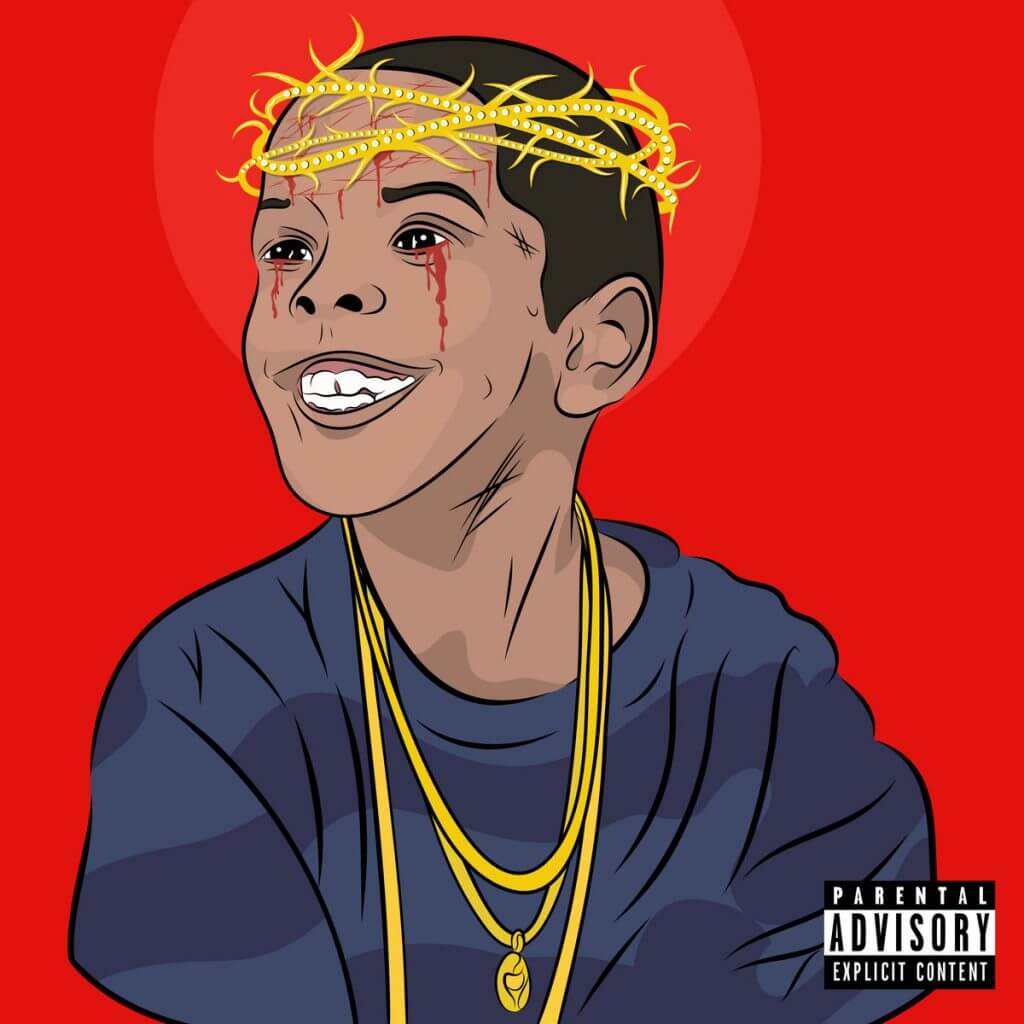
Westside Gunn’s FLYGOD is where the Griselda aesthetic began taking its definitive shape: grimy Buffalo street rap, luxury-obsessed hustler imagery, wrestling references, and an ear for beats that sound like forgotten New York crime-film soundtracks. Released independently in 2016, the album introduced a distinctive voice and visual world. Gunn’s high-pitched, nasal delivery contrasts with the grim subject matter, making his vivid accounts of drug dealing, designer fashion, violence, and street ambition strangely theatrical. His ad-libs and off-kilter humor give the music a personality that separates it from straightforward coke rap.
Daringer supplies much of the album’s sonic backbone, favoring dusty loops, stripped-down drums, and murky samples that leave plenty of space for Gunn’s voice. “Dunks,” featuring Conway the Machine, establishes the formula with ominous keys and hard, skeletal percussion. “Shower Shoe Lords” brings Benny the Butcher into the mix, building early chemistry among the three MCs who would become Griselda’s core. Roc Marciano’s brief, eerie “Hall” interlude carries his unmistakable minimalist touch, while his appearance alongside Conway on “Omar’s Coming” makes for a particularly grim street-rap summit. Apollo Brown gives “Mr. T” a soulful, sample-heavy backdrop, and The Alchemist’s “Dudley Boyz,” featuring Action Bronson, closes in on two minutes of crooked, cinematic menace. Elsewhere, “Bodies On Fairfax” pairs Gunn with Danny Brown, an unexpected meeting of two highly distinctive voices.
The guest list is extensive, but Gunn’s eccentric presence holds the album together. FLYGOD can be deliberately abrasive and episodic, with skits and short tracks reinforcing its mixtape-like flow. Its lasting achievement is the coherent world it builds from grimy production, extravagant street detail, and Gunn’s unmistakable delivery, laying crucial groundwork for Griselda’s rise.
JID - The Never Story (2017)

JID’s The Never Story introduced an Atlanta MC with the technical command, restless flow, and musical instincts to stand apart from the dominant Southern rap sound of the mid-2010s. Released shortly after he signed with J. Cole’s Dreamville Records, the 12-track debut draws on East Atlanta upbringing and personal history while moving between intricate lyricism, melodic introspection, and bursts of unrestrained energy. JID can switch from tightly packed multisyllabic rhymes to nimble, conversational passages without losing his grip on the beat.
The production gives him plenty of room to maneuver. “Never” builds around a soulful, looping sample, with JID’s rapid-fire verses gathering momentum over its restrained backdrop. “EdEddnEddy” is short, punchy, and full of playful rhythmic shifts, while “D/vision” brings in EarthGang for a lively exchange between kindred Atlanta voices. On “Hereditary,” JID examines family history and the circumstances that shaped him, balancing technical precision with a more vulnerable perspective. “All Bad,” featuring Mereba, takes a softer neo-soul approach, and “Lauder,” produced by J. Cole and Christo, closes the album with an urgent display of lyrical dexterity.
Across the record, smoky soul textures, jazz-inflected touches, and crisp drums offer an alternative to Atlanta’s bass-heavy trap mainstream. JID’s speed and wordplay attract immediate attention, but the contrast between his animated delivery and reflective writing gives The Never Story its staying power. It captures a young MC already developing a distinctive voice, with the versatility to move between technical showmanship and personal storytelling.
Marlowe – Marlowe (2018)
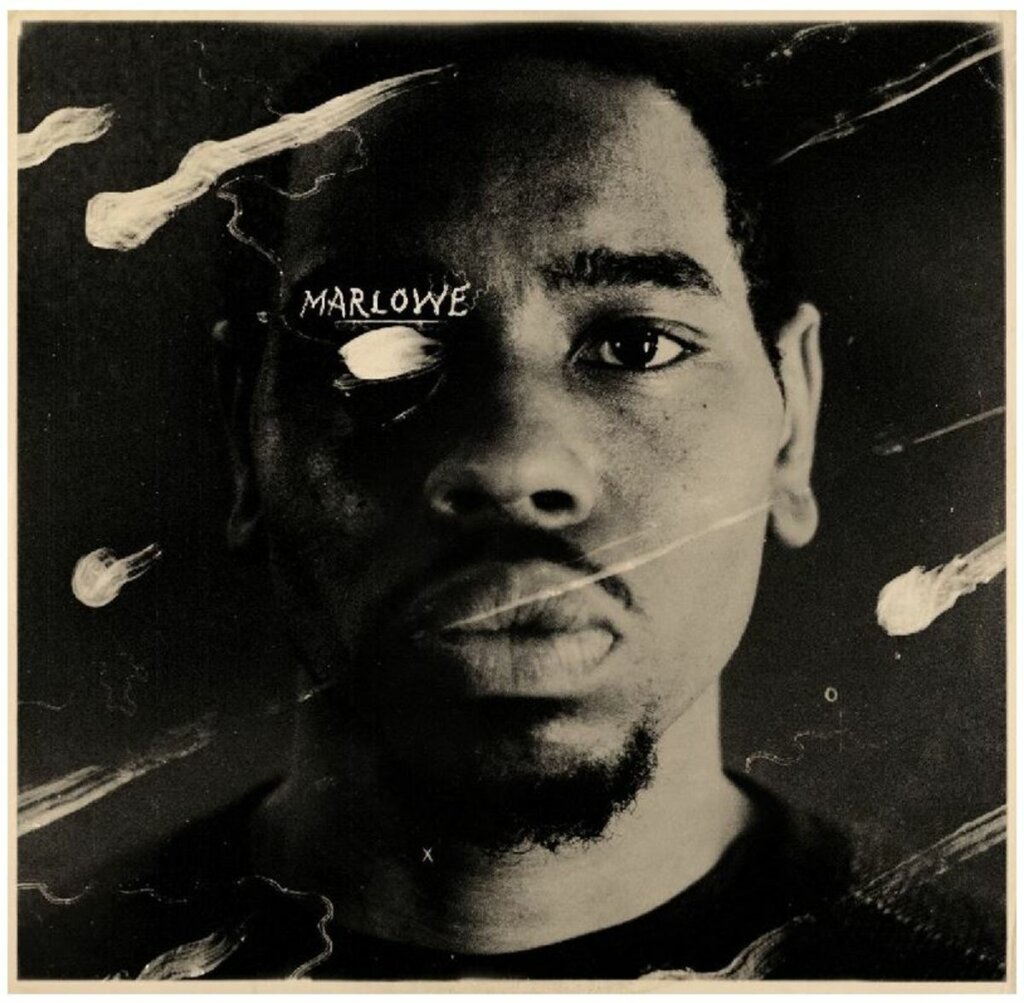
Marlowe brought together two complementary talents from the independent Hip Hop underground: producer L’Orange, known for his dusty samples and vintage textures, and rapper Solemn Brigham, whose agile delivery brings urgency and personality to the beats. Their self-titled debut is a compact, restless record built from chopped-up soul, jazz fragments, cinematic samples, and hard-hitting drums. Across 18 tracks, many barely reaching three minutes, the duo move quickly between moods and ideas without sacrificing cohesion.
L’Orange gives the album a distinctive atmosphere, drawing on the sound of old records while keeping the rhythms sharp and unpredictable. Brief instrumental passages such as “Cold Open” and “Not So Paranoid After All” establish a slightly off-kilter, film-noir mood, while “Lost Arts” and “Demonstration” provide Brigham with lively foundations for his tightly wound flows. His voice is forceful and nimble, packing dense rhymes into compact verses while shifting cadence to match the constantly changing production. “The Basement” digs into darker territory, while “Palm Readers” and “Things We Summon” balance the album’s harder edges with more elusive, sample-driven arrangements. The eccentric title “Eddy Appetites House Of Definitely Legal Oddities” fits the project’s playful, collage-like character.
There is little wasted space here. The short tracks keep the momentum high, and the contrast between L’Orange’s carefully assembled vintage sound and Brigham’s animated performance gives the record its identity. Marlowe launched an excellent trilogy, establishing a partnership that would continue to develop across two subsequent albums.
A great debut album can be the beginning of a remarkable career, a statement that changes the direction of Hip Hop, or a self-contained achievement that never loses its appeal. Some of the artists on this list went on to release celebrated catalogs and become household names. Others remained underground favorites, pursued unconventional paths, or never quite matched the promise of their first full-length. Their debuts deserve attention on their own terms, regardless of what followed.
Putting together 100 albums from such a deep history inevitably means leaving out worthy records. Every listener will have personal favorites missing, and that’s part of the appeal of a list like this. Our choices reflect what we value in Hip Hop: distinctive voices, adventurous production, memorable writing, strong album sequencing, and the ability to create something that holds up long after its moment has passed.
Taken together, these records trace a culture in constant motion. The sounds change, new regions and generations emerge, and artists find fresh ways to express their experiences, but that first-album hunger remains a recurring source of great music. Whether you return to an established classic or discover a debut you overlooked the first time around, we hope this list gives you a few reasons to revisit Hip Hop’s past and explore its many overlooked corners.