

Political Hip Hop has been part of the culture from its earliest days. From Grandmaster Flash & The Furious Five’s “The Message” to the revolutionary rhetoric of Public Enemy, Hip Hop has provided a platform for artists to confront racism, police brutality, economic inequality, government corruption, and the many other injustices affecting their communities. At its best, political Hip Hop challenges listeners to question the world around them, examine who holds power, and consider whose interests that power serves.
When political Hip Hop is discussed, however, the conversation usually revolves around a familiar collection of artists. Public Enemy, Boogie Down Productions, Paris, X Clan, Poor Righteous Teachers, Ice Cube, Dead Prez, Immortal Technique, Rapsody, Run The Jewels, and Kendrick Lamar are among the names that come up repeatedly, and understandably so. Their contributions are enormous, and their most important albums have earned their places in Hip Hop history. We’ve covered many of them extensively here at HHGA.
For this article, we’re deliberately leaving those established names out.
Instead, we’re looking at 25 albums from artists who brought equally serious political convictions to their music, often without receiving anything approaching the same recognition. Some operated deep within the underground, while others enjoyed periods of modest visibility before slipping out of the wider conversation. Their approaches varied considerably, from militant revolutionary rhetoric and uncompromising anti-capitalist criticism to biting political satire and detailed examinations of institutional racism, imperialism, and working-class struggles.
We’re also distinguishing explicitly political Hip Hop from the broader conscious Hip Hop category. There is plenty of overlap, of course, but positive messages, spiritual reflection, and general social awareness aren’t necessarily enough to qualify here. The albums we’ve selected actively confront political and economic systems, challenge those in authority, or examine the mechanisms through which oppression and inequality are maintained.
Musical quality remains essential. A powerful message alone doesn’t make a great Hip Hop album, and the records collected here have plenty to offer in terms of production, lyricism, originality, and replay value. Some are underground classics that deserve wider recognition; others have been overlooked for far too long.
These 25 albums demonstrate how much politically committed Hip Hop exists beyond the usual names. Their perspectives differ, their methods vary, and their arguments aren’t always comfortable or easy to agree with. That’s part of what makes them worth hearing.
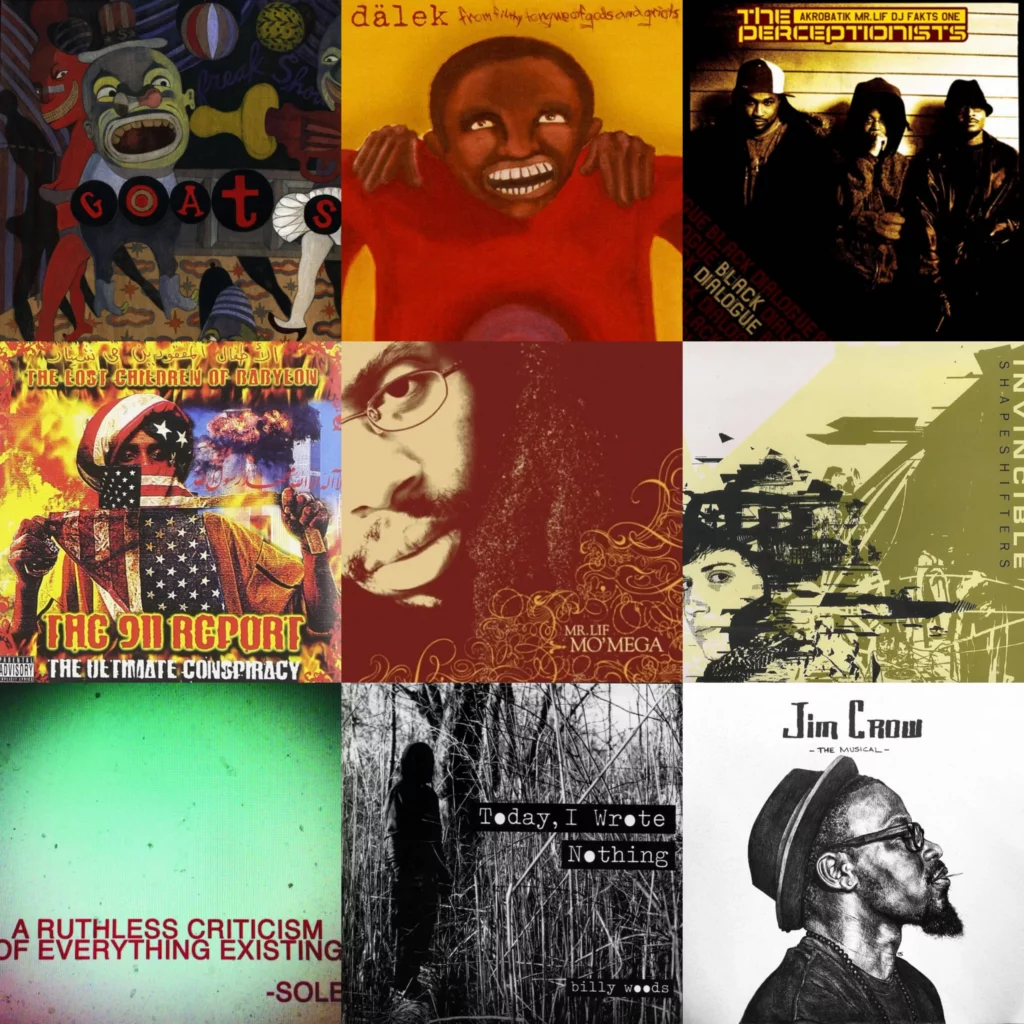
The Goats - Tricks Of The Shade (1992)
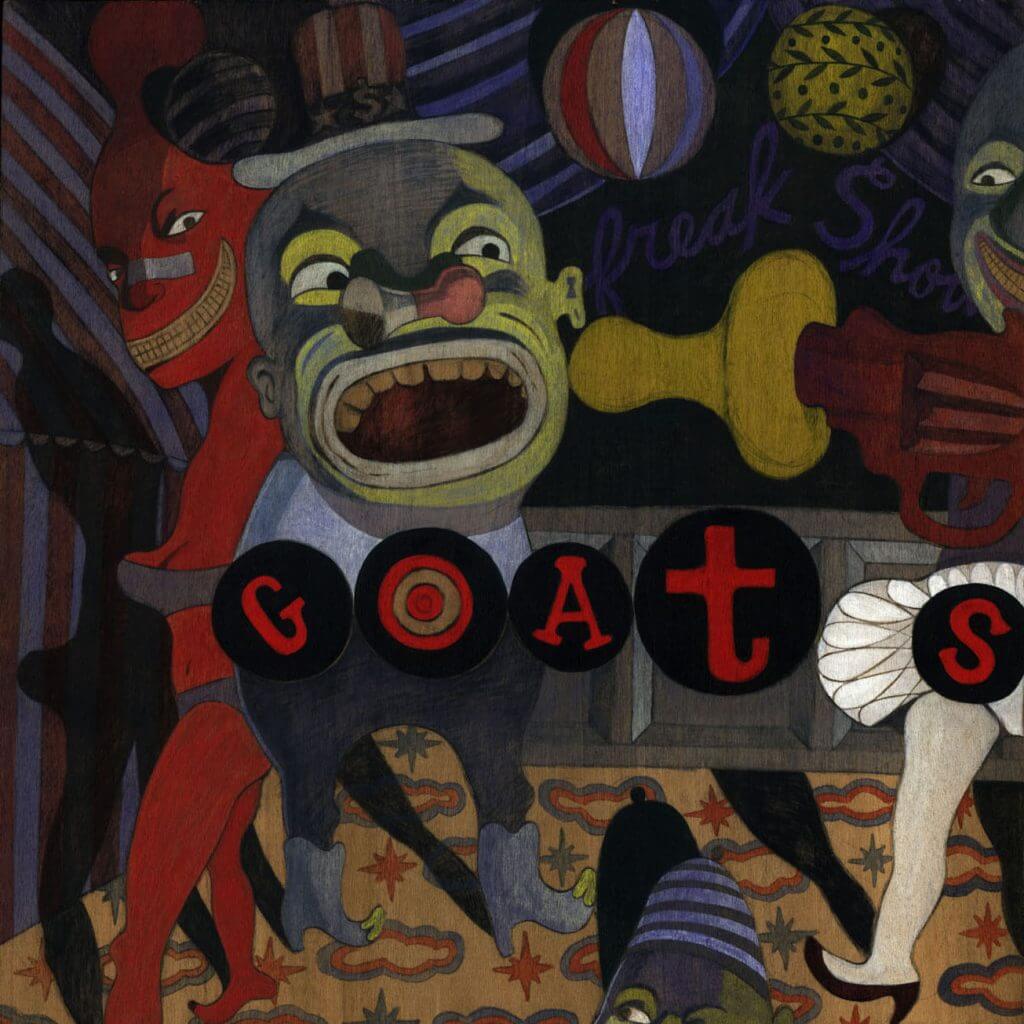
Philadelphia’s The Goats delivered one of the most inventive and politically confrontational Hip Hop albums of the early 1990s with Tricks of the Shade. Released on Ruffhouse Records in 1992, their debut took aim at American hypocrisy, institutional racism, police brutality, government corruption, and the country’s treatment of its most vulnerable citizens. The trio of OaTie Kato, Madd, and Swayzack approached these subjects with considerable anger, dark humor, and an irreverent attitude that distinguished them from their more militant contemporaries.
The album’s central concept is an elaborate political satire, following two characters, Chicken Little and Hangerhead, through Uncle Scam’s Federally Funded Welfare and Freak Show, a grotesque carnival representing American society. Their search for their imprisoned mother, arrested for attempting an abortion, provides the framework for attacks on everything from reproductive rights and economic exploitation to Christopher Columbus, George H.W. Bush, and police violence. It’s an ambitious idea, and the skits certainly help establish the album’s themes and connect its various political targets. Unfortunately, there are far too many of them. Spread across 25 tracks, the recurring interludes repeatedly interrupt the music, and while their purpose is understandable, they make repeated listens considerably more challenging. The jokes lose their impact long before the songs do.
Fortunately, the actual Hip Hop is excellent. The Goats combine rugged drums, thick basslines, funk grooves, guitar riffs, and occasional live instrumentation into a lively, unpredictable sound. “Typical American” is a furious indictment of American nationalism and hypocrisy, while “TV Cops” confronts police brutality with biting sarcasm. “Burn the Flag” attacks blind patriotism, and “Whatcha Got Is Whatcha Gettin’,” “Hip-Hopola,” and “¿Do the Digs Dug?” demonstrate the group’s musical versatility and considerable energy. The three MCs trade verses with an infectious chemistry, balancing serious political criticism with humor and old-fashioned Hip Hop bravado.
Tricks of the Shade received positive reviews upon release but never achieved the lasting recognition its ambition and musical quality warranted. The Goats followed it with No Goats, No Glory in 1994, a less politically focused record, before disappearing from the scene. Their debut remains their defining achievement: messy, provocative, occasionally exhausting, and packed with excellent music. Trim away some of those skits, and there’s an even stronger album underneath. As it is, Tricks of the Shade remains an overlooked political Hip Hop classic that deserves a much larger audience.
Da Lench Mob - Guerillas In Tha Mist (1992)
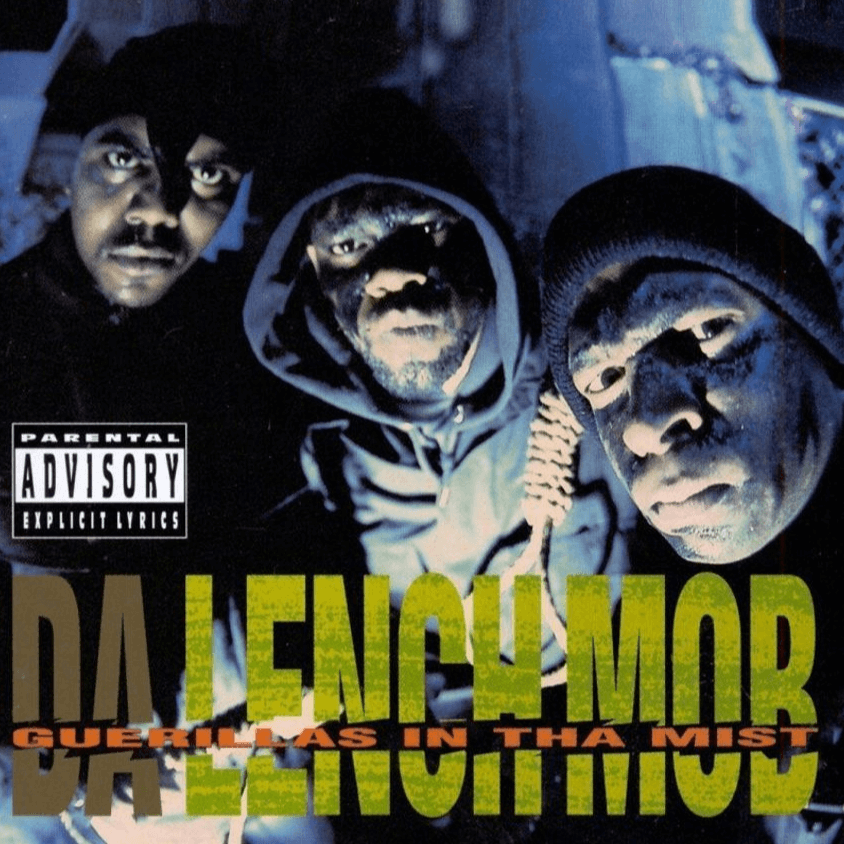
Few Hip Hop albums capture the anger of Los Angeles in 1992 as directly as Da Lench Mob’s Guerillas in tha Mist. Released in September, months after the acquittal of the officers charged in the Rodney King beating sparked widespread unrest, the album arrived during a period of extraordinary racial tension. J-Dee, Shorty, and T-Bone had already appeared alongside Ice Cube on AmeriKKKa’s Most Wanted (1990), and Cube returned to oversee their debut, producing much of the music and contributing uncredited vocals. His influence is unmistakable, although Da Lench Mob bring their own confrontational identity to the proceedings.
The title carries particular significance. Beyond its play on the film Gorillas in the Mist, it evokes a racist remark made by LAPD officer Laurence Powell, who had compared a disturbance involving Black people to the movie. Da Lench Mob reclaim that imagery, presenting themselves as guerrilla fighters confronting a society built on racial oppression. The title track became an iconic West Coast Hip Hop single, driven by its menacing production, aggressive delivery, and revolutionary imagery. However, while “Guerillas in tha Mist” receives plenty of recognition, we consider the album surrounding it seriously underappreciated.
“Lost in tha System” examines the criminal justice system and the ways incarceration devastates Black communities. “You and Your Heroes” challenges conventional American historical narratives, questioning the celebration of figures associated with oppression while Black resistance receives comparatively little recognition. “Buck the Devil” draws heavily on Black nationalist rhetoric, attacking white supremacy and institutional power with little interest in diplomacy.
“Freedom Got an A.K.” takes the militancy even further, expressing the group’s belief that armed resistance represents a response to generations of injustice. Its rhetoric is extreme, reflecting the frustration and distrust that followed the Rodney King verdict. The album repeatedly returns to the relationship between police violence, economic deprivation, and the anger developing in neglected neighborhoods.
Musically, Guerillas in tha Mist is outstanding. Ice Cube and his production collaborators construct a dense, aggressive mixture of hard funk grooves, booming drums, ominous basslines, and strategically placed samples. The production has the same explosive character as Cube’s early solo classics, giving the group’s political messages considerable force. B-Real of Cypress Hill adds another distinctive voice on “Ain’t Got No Class.”
The album went gold, so it was hardly an obscure release in 1992. Its reputation, however, has never matched that of Ice Cube’s celebrated solo work. That imbalance deserves reconsideration. Guerillas in tha Mist is a powerful, consistently engaging political Hip Hop album, with plenty to offer beyond its famous title track.
The Psycho Realm - The Psycho Realm (1997)
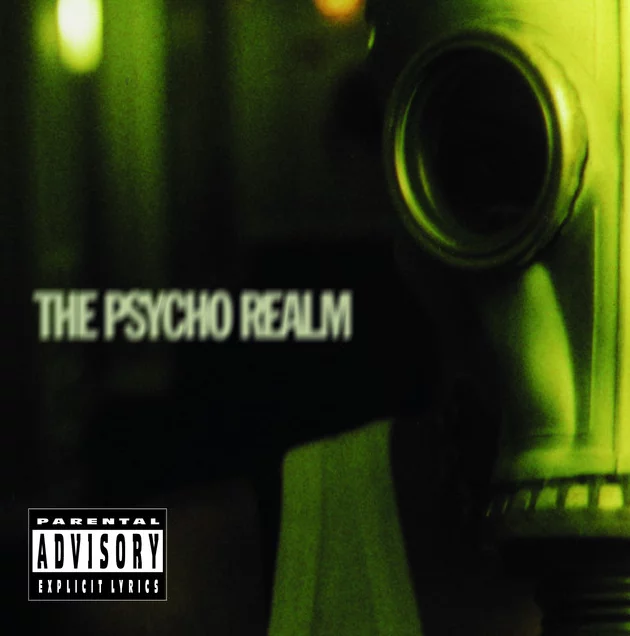
Emerging from the Pico-Union neighborhood of Los Angeles, the Psycho Realm brought a distinct Mexican-American perspective to the darker corners of ’90s underground Hip Hop. Brothers Sick Jacken and Big Duke had been developing their sound since 1989, drawing on the violence, poverty, and institutional pressures surrounding their community. Their self-titled debut, released through Ruffhouse Records and Columbia in October 1997, brought that vision to a wider audience with help from Cypress Hill’s B-Real, who joined the project after seeing the group perform in Los Angeles. The result is a bleak, uncompromising record that examines life in a city where survival often comes at a heavy cost.
The Psycho Realm presents urban violence as part of a larger cycle of social dysfunction. “Psycho City Blocks” establishes a world defined by paranoia and confrontation, while “Showdown” captures the constant threat of conflict. The brothers describe an environment shaped by street politics, police pressure, and limited options, resisting the temptation to turn hardship into glamorous gangster mythology. Their characters inhabit a world where violence carries consequences and escape is rarely straightforward.
Drug addiction and psychological deterioration receive equally grim treatment. “Confessions of a Drug Addict” follows the destructive pull of dependency, while “Temporary Insanity” explores the fragile boundary between control and collapse. Elsewhere, “Lost Cities” evokes a landscape of abandonment and decay. These subjects give the album a broader social dimension: the damage extends beyond individual choices to communities trapped in conditions that perpetuate fear, instability, and desperation.
The production reinforces that atmosphere. Sick Jacken, B-Real, and the Psycho Ward build a sound from ominous samples, heavy drums, eerie melodic fragments, and cinematic interludes. The music often carries the tension of a crime thriller, with abrupt transitions and unsettling textures drawing listeners into the album’s claustrophobic world. Sick Jacken’s forceful delivery complements Big Duke’s presence, while B-Real’s involvement connects the project to Cypress Hill’s established West Coast underground sound without diluting its own identity.
The album’s relationship with the major-label system proved short-lived. Conflicts with Sony led to the Gonzalez brothers being dropped, pushing them toward independent releases and their own Sick Symphonies imprint. That experience mirrored the struggle for autonomy running through their music: communities fighting to retain control over their identity, and artists resisting an industry that often demands compromises.
The Psycho Realm remains a compelling document of late-’90s Los Angeles underground rap. Its political perspective emerges through the realities it depicts rather than extended ideological speeches, giving its portrait of urban hardship a chilling immediacy.
The Coup - Steal This Album (1998)
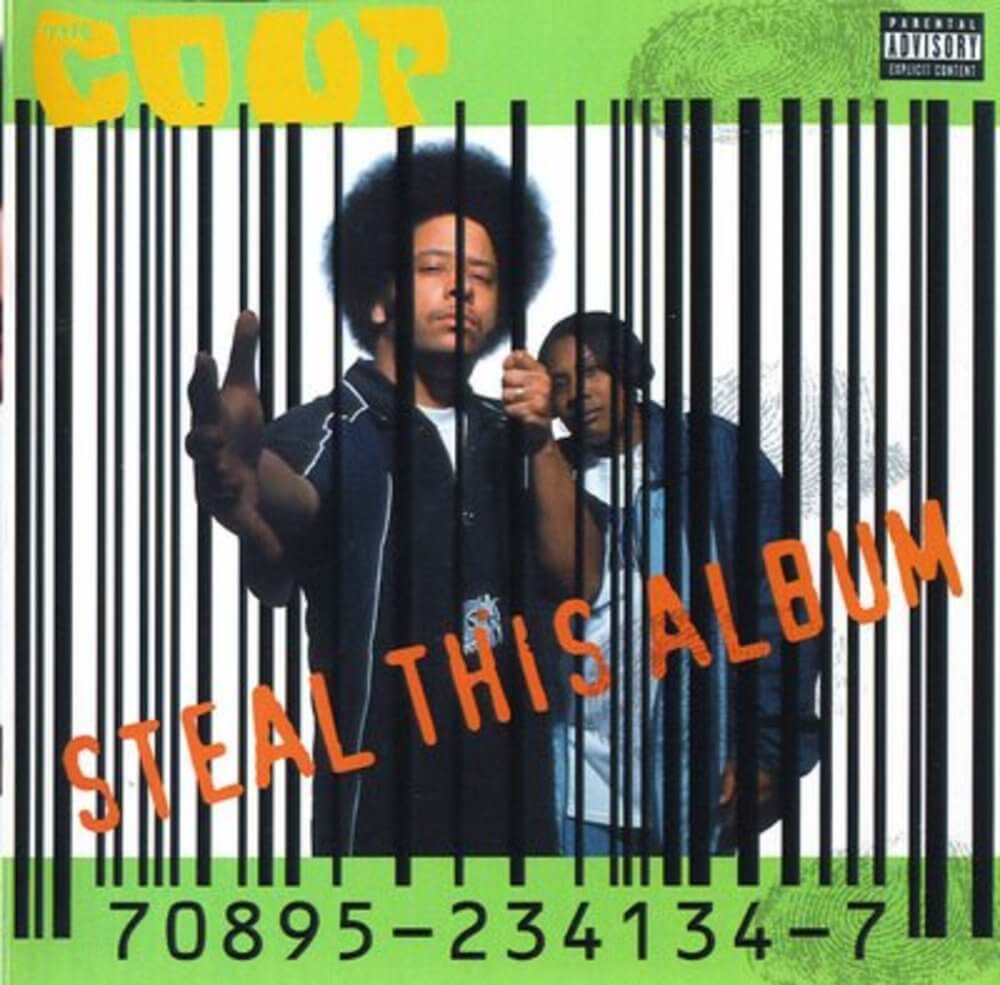
By the time The Coup released Steal This Album in 1998, Oakland’s Boots Riley and DJ Pam the Funkstress had already established themselves as some of Hip Hop’s most outspoken critics of capitalism and American political institutions. Their third album sharpened that criticism, delivering revolutionary politics through vivid storytelling, biting humor, and some of the funkiest production in underground Hip Hop. Its title, borrowed from radical activist Abbie Hoffman’s 1971 book Steal This Book, made the group’s anti-establishment intentions clear before the music even started.
Boots Riley’s greatest strength has always been his ability to make complex political arguments accessible without sacrificing their substance. On Steal This Album, he examines poverty, exploitation, racism, and class struggle through stories populated by working people, hustlers, and characters pushed toward desperate choices by economic circumstances. His politics are openly socialist, but his writing avoids the dry lecturing that can undermine politically motivated music. There’s humor, frustration, anger, and a sharp understanding of how economic systems shape everyday lives.
“Me and Jesus the Pimp in a ’79 Granada Last Night” is the album’s extraordinary centerpiece, a lengthy narrative about a young boy, his mother, and an abusive pimp. Boots builds the story patiently, exploring exploitation, violence, and the complicated relationship between poverty and survival. It’s one of the finest storytelling performances in underground Hip Hop. Elsewhere, “The Shipment” examines the economics of drug trafficking, while “Cars & Shoes” and “20,000 Gun Salute” bring different perspectives to the album’s recurring concerns with money, power, and resistance.
Musically, Steal This Album is steeped in Oakland’s funk tradition. Thick basslines, warm keyboards, crisp drums, and infectious grooves give the record an inviting sound that contrasts effectively with the often grim subject matter. DJ Pam the Funkstress and the group’s collaborators provide a rich backdrop for Boots’ conversational delivery, allowing his detailed narratives room to develop without sacrificing the music’s momentum.
Steal This Album is arguably The Coup’s finest achievement, although Genocide & Juice (1994) and Party Music (2001) are equally worthy of attention. Its combination of revolutionary conviction, memorable characters, exceptional storytelling, and irresistible funk makes it essential listening. Political Hip Hop rarely sounds this entertaining while delivering such a sustained and uncompromising critique of the system.
Mr. Lif - I Phantom (2002)
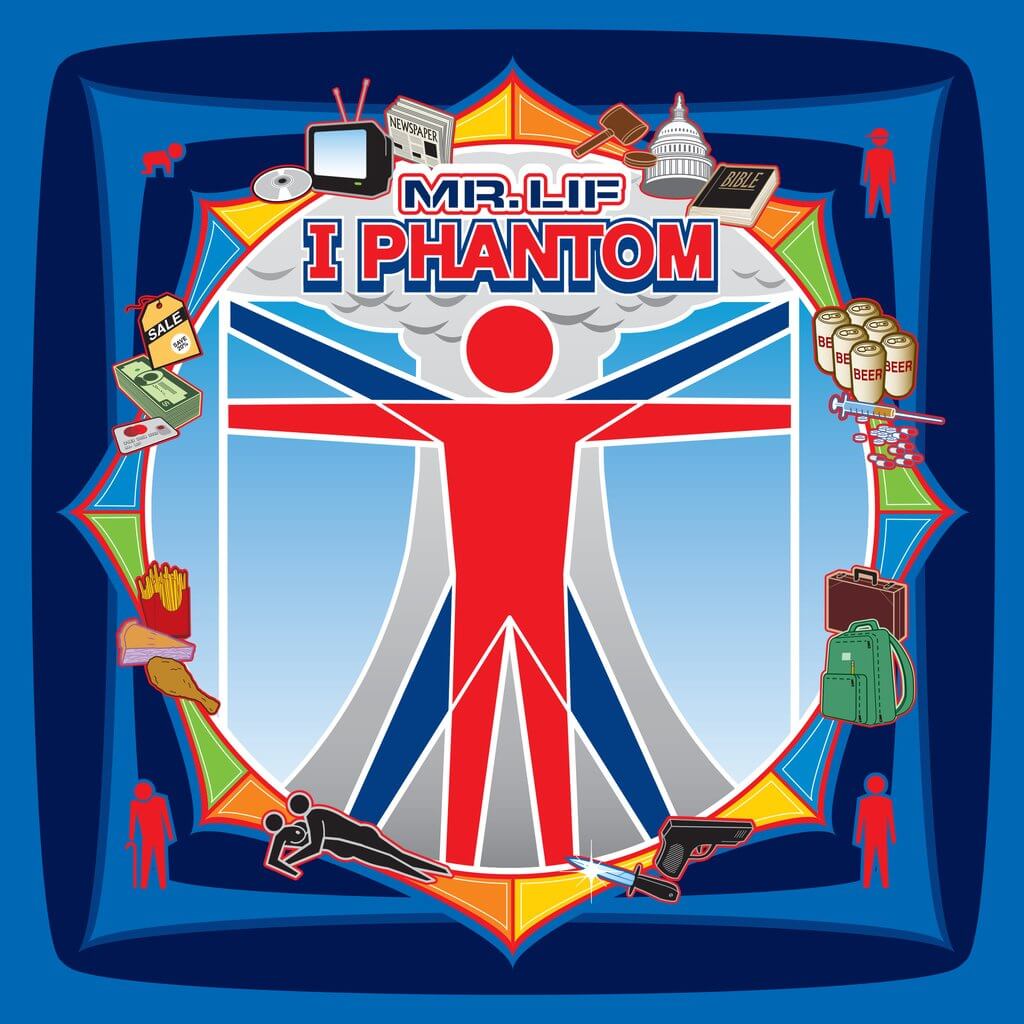
Boston MC Mr. Lif had been building a reputation in underground Hip Hop through a series of sharp, politically charged releases before making his full-length debut with I Phantom in 2002. Released through Definitive Jux, the label run by El-P, the album is an ambitious concept record examining the American experience through the eyes of an ordinary man navigating a society shaped by consumerism, institutional control, economic exploitation, and militarism. Rather than delivering a collection of disconnected political observations, Mr. Lif constructs a narrative that follows his protagonist from birth through adulthood and into a dystopian future. The result is one of the most compelling political Hip Hop albums of its era.
The opening track, “Bad Card,” introduces the protagonist’s birth into a world already stacked against him. From there, Mr. Lif explores the pressures of education, employment, relationships, and social conformity, gradually revealing the mechanisms through which individuals are trained to accept their place in the economic order. “A Glimpse at the Struggle” captures the daily frustrations of working-class life, while “Return of the B-Boy” provides a welcome reminder that political consciousness and Hip Hop’s competitive spirit can coexist. The album’s most unsettling moment arrives with “Earthcrusher,” a dystopian vision of mass destruction that brings the record’s concerns about power and humanity’s future into terrifying focus.
Mr. Lif’s writing is direct and accessible, but there’s considerable thought behind the album’s narrative structure. His protagonist isn’t a revolutionary hero who sees through the system from the outset. He’s an ordinary person gradually confronted with the contradictions of the world around him. That approach gives the political commentary a human dimension, grounding abstract questions about capitalism and institutional power in recognizable experiences. Mr. Lif’s forceful delivery adds urgency without overwhelming the storytelling.
The production is equally important to the album’s success. El-P, Fakts One, Insight, and other collaborators supply a varied collection of rugged drums, ominous electronic textures, and dusty underground beats. The sound is often claustrophobic, reinforcing the sense of a society in which individual freedom is steadily squeezed by forces beyond one’s control.
I Phantom remains one of the most ambitious political Hip Hop albums of the early 2000s. Its criticism of consumer culture, economic conformity, and institutional power hasn’t lost its relevance, while its cohesive concept gives the album an identity that extends beyond its individual tracks. Mr. Lif made a record that challenges listeners to question the systems governing their lives, without forgetting that great Hip Hop needs compelling music and memorable rhymes to carry its message.
dälek - From Filthy Tongue of Gods And Griots (2002)
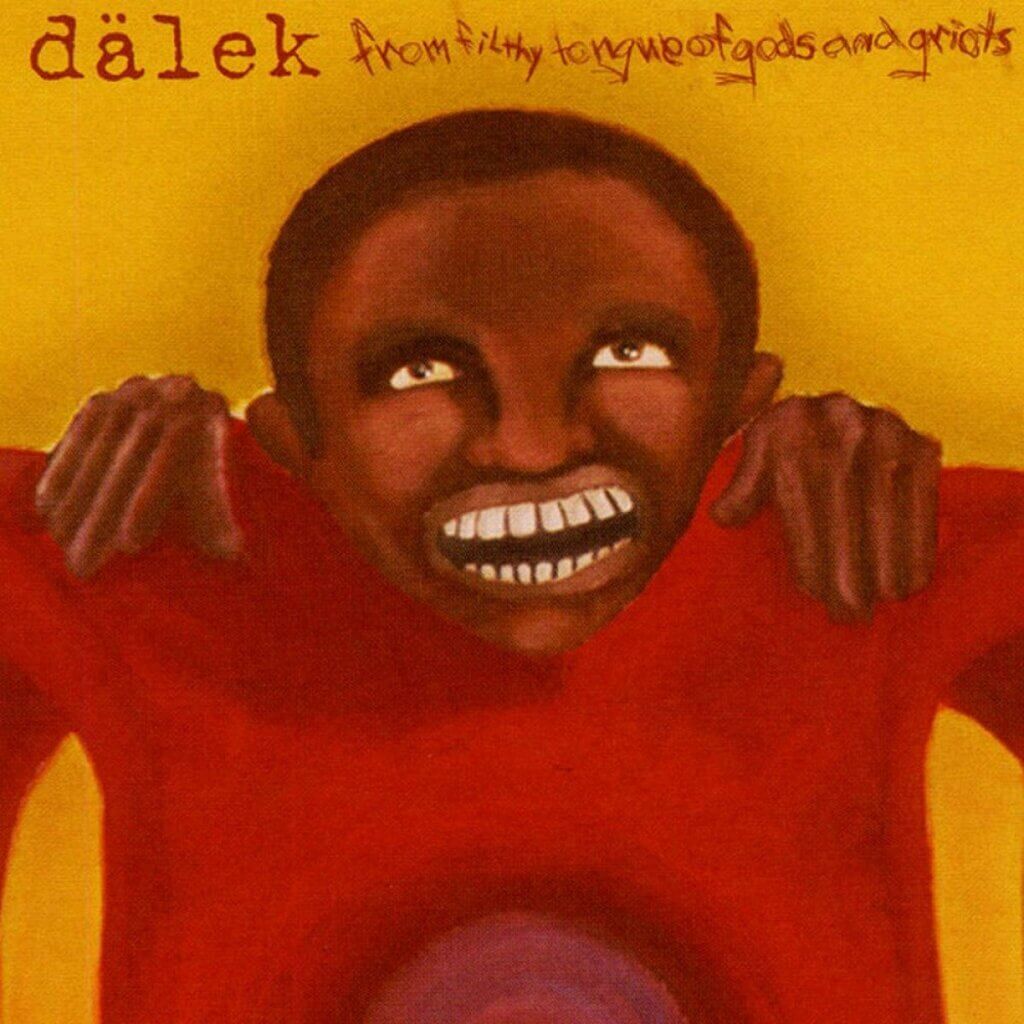
New Jersey’s dälek occupied a strange position in early-2000s Hip Hop. Their music drew from Public Enemy’s Bomb Squad production, industrial noise, shoegaze, and experimental rock, creating something far removed from conventional underground boom-bap. On their second album, From Filthy Tongue of Gods and Griots, released through Ipecac Recordings in 2002, MC dälek and producer Oktopus pushed that approach into increasingly hostile territory. The result is a dense, frequently overwhelming record that channels anger about racism, religious division, political repression, and the deteriorating social climate of post-9/11 America.
“Spiritual Healing” opens with an attack on the divisions created by organized religion and racial identity. Dälek questions the tendency to assign different racial identities to God, exposing the contradictions of belief systems used to separate people rather than unite them. “Speak Volumes” continues the confrontational approach, with the MC delivering tightly packed verses against layers of distortion and pounding percussion. His voice fights for space within the music, mirroring the struggle to be heard in a society increasingly hostile to dissent.
The album’s political concerns extend into questions of historical oppression and collective identity. “Trampled Brethren” addresses the marginalization of communities subjected to generations of discrimination, while the title’s reference to griots, West African oral historians and storytellers, connects Hip Hop to a longer tradition of preserving cultural memory and challenging established narratives. Dälek treats the MC as a witness to history, responsible for documenting uncomfortable truths.
Oktopus’s production is central to the album’s impact. Feedback, distorted guitars, grinding bass, unconventional percussion, and turntable manipulation collide in arrangements that frequently abandon familiar Hip Hop structures. The twelve-minute “Black Smoke Rises” is particularly uncompromising, stretching into an extended instrumental passage of ominous drones and accumulating noise. “Forever Close My Eyes” incorporates guitars and layered textures that approach experimental rock, while “Classical Homicide” closes the album with another barrage of dissonance and heavy rhythms.
This is demanding music. The lengthy instrumental sections and relentless distortion can make the album exhausting, especially for listeners accustomed to traditional rap production. However, that discomfort is fundamental to its political character. Dälek presents a world marked by alienation, institutional violence, and collapsing trust, then constructs music that reflects those conditions.
From Filthy Tongue of Gods and Griots remains one of the most distinctive political Hip Hop albums of its era. Its radicalism extends from the lyrics into the production itself, challenging expectations about what Hip Hop can sound like while maintaining a fierce commitment to its capacity for social criticism.
Son Of Nun - Blood And Fire (2004)
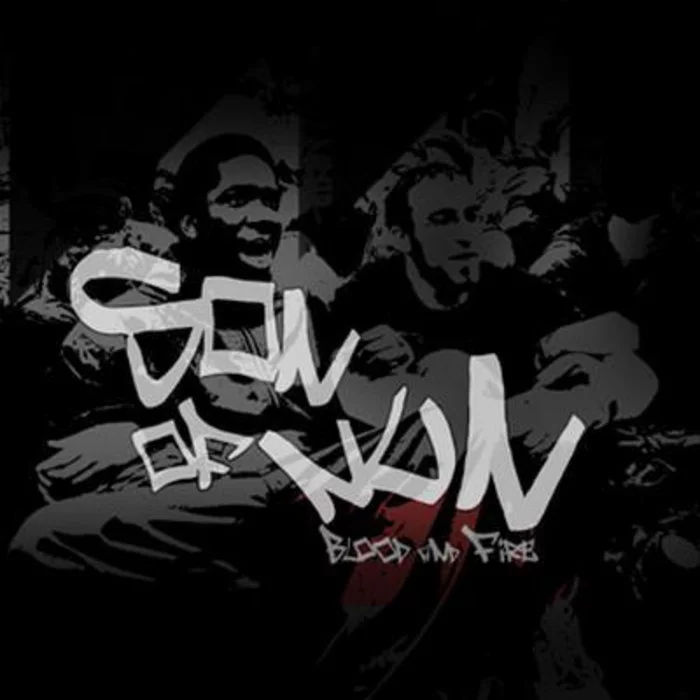
Baltimore MC and activist Son of Nun made Blood and Fire as a direct intervention in the political climate of the early 2000s. Released in September 2004, with production led by DJ Krimson, the album confronts the War on Terror, racial profiling, capitalism, police violence, and the concentration of wealth. Son of Nun’s politics extend beyond the lyrics: his work as a Baltimore schoolteacher and his involvement in antiwar, labor, and racial justice campaigns informed a record grounded in struggles taking place around him.
“One Solution” lays out the album’s central argument with little patience for political euphemism. Son of Nun links the Patriot Act and racial profiling to a longer history of segregation, then calls for working-class solidarity across racial and national lines. The song’s refrain, “revolution,” is a call for organized resistance, not personal rebellion for its own sake. That internationalist outlook runs through “Nine.Eleven,” which challenges the official framing of the War on Terror and connects the attacks of September 11 to American foreign policy, the history of U.S. support for anti-Soviet forces in Afghanistan, and the invasion of Iraq. Its repeated demand to spend money on schools, food, and jobs instead of bombs turns an argument about imperialism into a question of public priorities.
The album’s targets are not confined to the Bush administration or overseas warfare. “Mic This” attacks the protection afforded to powerful politicians and businesses, while “Free Palestine” makes solidarity with Palestinians part of a wider critique of state violence and occupation. The brief “Trent Lott” takes its title from the Republican senator whose praise for segregationist Strom Thurmond exposed the persistence of racist politics in American public life. Across the record, Son of Nun connects these issues rather than treating them as separate causes, arguing that racial injustice, economic inequality, and militarism reinforce one another.
DJ Krimson and the other contributors provide a hard-edged underground foundation for the message, with boom-bap rhythms that give Son of Nun room to pack his verses with detail. The writing can be dense and forceful, and the album rarely pauses to soften its convictions. That directness suits its purpose: Blood and Fire was made to challenge listeners and encourage action, not to offer a comfortable soundtrack to political awareness.
Two decades on, the album remains an overlooked example of early-2000s radical Hip Hop. Son of Nun brings the urgency of grassroots organizing to the microphone, insisting that opposition to injustice must lead somewhere beyond the song itself.
The Perceptionists - Black Dialogue (2005)
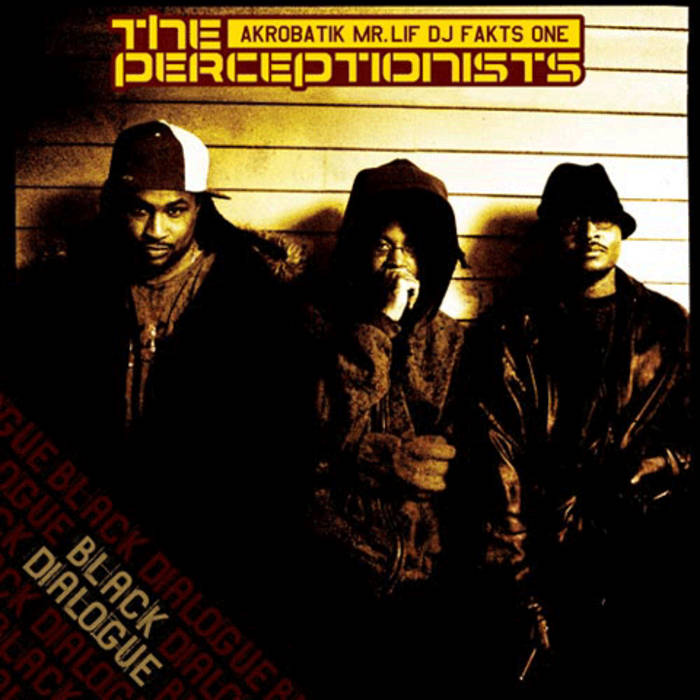
Boston’s underground Hip Hop scene produced some formidable talent during the late 1990s and early 2000s, and the Perceptionists brought three of its strongest representatives together. MCs Mr. Lif and Akrobatik joined forces with DJ Fakts One to create Black Dialogue, released through Definitive Jux in March 2005. Arriving during George W. Bush’s second presidential term, with the Iraq War dominating American politics, the album combines sharp anti-establishment commentary with the competitive energy and humor of traditional Hip Hop. Its political anger is unmistakable, although the group never forgets to make entertaining music.
The opening “Let’s Move” establishes that balance immediately, with Lif and Akrobatik trading energetic verses over Fakts One’s driving production. “People 4 Prez,” produced by El-P, takes aim at political leadership and the failures of representative democracy, while “Memorial Day” delivers one of the album’s most forceful statements. Released while American troops were fighting in Iraq, the song challenges the patriotic language used to justify military intervention, questioning who benefits from war and who pays its human cost. Its criticism of the Bush administration remains one of the record’s defining moments.
The title track addresses racial inequality and the persistence of discrimination, placing contemporary American politics within a longer history of oppression. “Frame Rupture” continues the confrontational mood, with El-P’s abrasive production providing an appropriately tense backdrop. Throughout these songs, Lif’s measured, analytical delivery contrasts effectively with Akrobatik’s more forceful attack. Their chemistry gives the arguments momentum, preventing the material from becoming a succession of political lectures.
There is plenty of room for lighter moments. “Party Hard,” featuring Camu Tao and Gang Starr’s Guru, brings some welcome celebration, while “Career Finders,” with Digital Underground’s Humpty Hump, demonstrates the group’s sense of humor. Phonte appears on “5 O’Clock,” adding another dimension to an album that moves comfortably between political outrage, everyday frustrations, and straightforward lyrical competition.
Production from El-P, Fakts One, Cyrus the Great, Willie Evans Jr., and Camu Tao keeps the music varied, ranging from rugged boom-bap to the more experimental textures associated with Definitive Jux. At 41 minutes, Black Dialogue is tightly constructed, avoiding the unnecessary sprawl that weakened plenty of underground releases from the period.
Critically acclaimed upon release, Black Dialogue has gradually slipped from discussions of essential 2000s Hip Hop. That deserves correcting. Its combination of political urgency, excellent MC chemistry, and consistently engaging production makes it one of the strongest anti-establishment rap albums of the Bush era.
The Lost Children Of Babylon - The 911 Report: The Ultimate Conspiracy (2006)
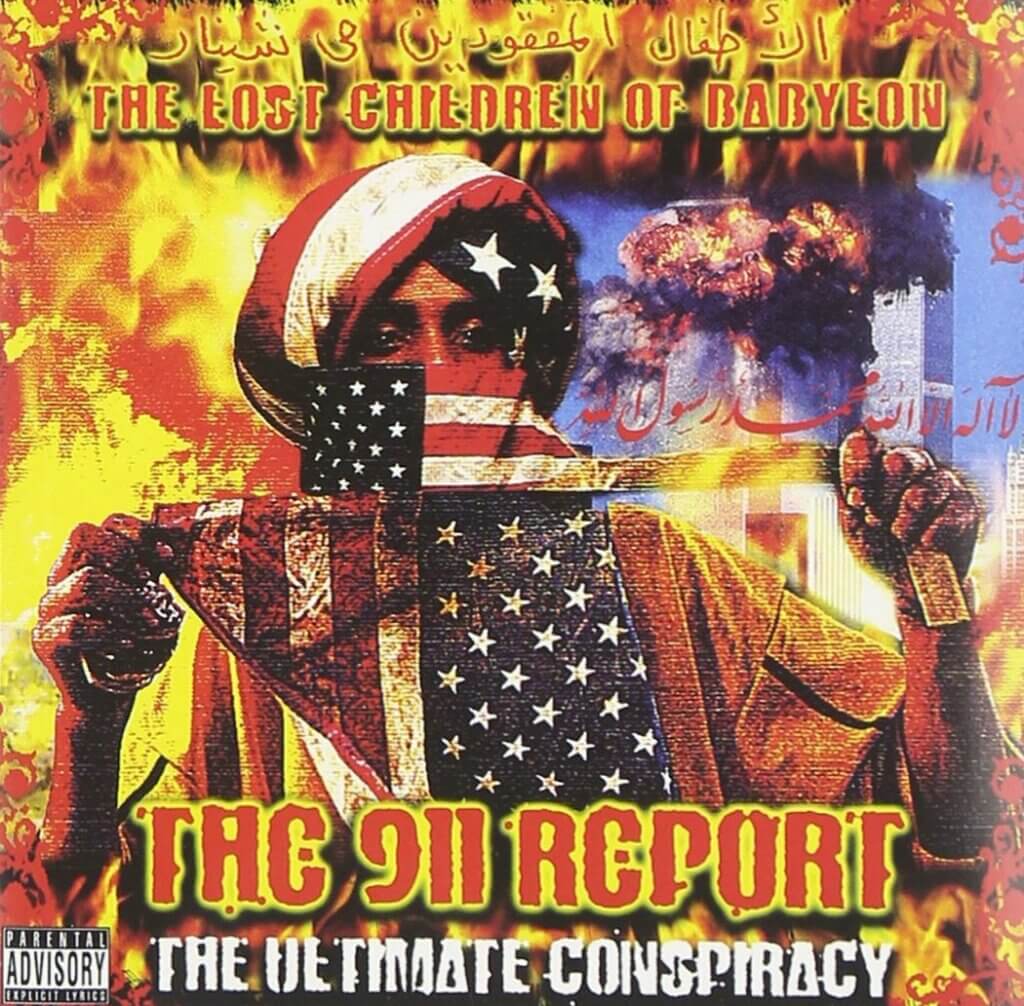
The Lost Children of Babylon had previously concentrated on spirituality, ancient civilizations, and philosophical teachings. With The 911 Report: The Ultimate Conspiracy, released in 2006, the Philadelphia-based collective turned its attention to contemporary American politics, delivering an album built around suspicion of government, corporate power, and the official account of September 11, 2001. The result is one of the more uncompromising entries in the politically charged underground Hip Hop of the post-9/11 era, combining dense lyricism with the group’s established interest in hidden knowledge and alternative interpretations of history.
The attacks on the World Trade Center and the Pentagon transformed American politics, providing the justification for the invasion of Afghanistan, the war in Iraq, expanded surveillance, and sweeping new security powers. The Lost Children of Babylon approach this period from a deeply conspiratorial perspective, questioning the official explanation of the attacks and suggesting that powerful interests benefited from the resulting climate of fear. Their arguments range from criticism of U.S. foreign policy to allegations about the events themselves. Those allegations should be understood as the group’s claims, rather than established facts. The distinction matters: the album’s distrust of militarism and state power raises legitimate political questions, while its specific theories about 9/11 go well beyond the available evidence.
Musically, the record occupies familiar territory for listeners drawn to the darker side of underground rap. Its hard-edged beats and ominous atmosphere recall Jedi Mind Tricks, while the political subject matter invites comparison with Immortal Technique. There are echoes of Paris and Public Enemy in the conviction that Hip Hop should challenge official narratives and confront the interests behind American power. The Lost Children of Babylon add their own philosophical framework, approaching politics through a worldview shaped by esoteric ideas, historical speculation, and a persistent search for knowledge concealed from the public.
That combination gives The 911 Report a distinctive character. The group’s writing is dense with accusations and competing interpretations, demanding attention from listeners willing to engage with its arguments. At times, the certainty of its conclusions leaves too little room for ambiguity or critical examination. The album’s musical force, however, keeps the material compelling even when its claims invite serious scrutiny.
Nearly five years after the attacks, The 911 Report: The Ultimate Conspiracy captured the suspicion and anger that surrounded the Bush administration’s wars and the expansion of American security powers. It remains a revealing document of that political moment, illustrating how underground Hip Hop became a platform for dissent, alternative narratives, and challenges to official authority.
Mr. Lif - Mo' Mega (2006)
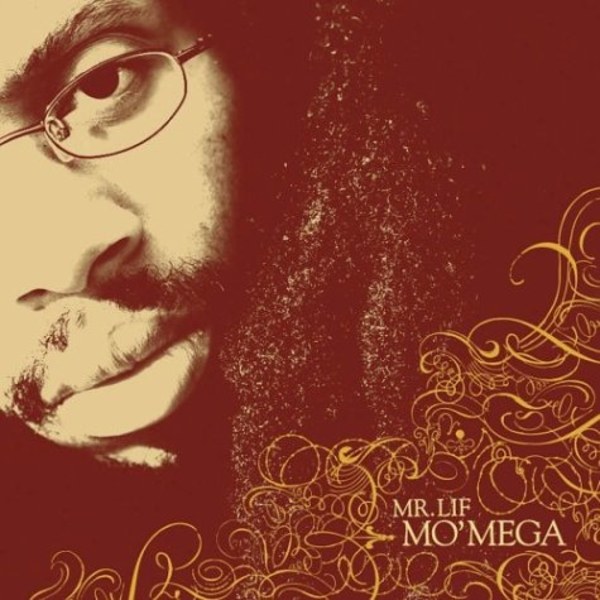
Four years after the ambitious dystopian narrative of I Phantom (2002), Boston MC Mr. Lif returned with another examination of American society’s deepening divisions. Released through Definitive Jux in June 2006, Mo’ Mega takes aim at economic inequality, corporate exploitation, institutional racism, and the failures of political leadership. The title summarizes its central argument: “Mo’” represents the historically oppressed and economically disadvantaged, while “Mega” refers to the wealthy elite operating within an increasingly sophisticated capitalist system. Lif sees the distance between these groups growing wider, with ordinary people struggling to survive in a society organized around wealth and power.
The album wastes little time establishing its political position. On “Ultra Mega,” Lif attacks the Bush administration’s disastrous response to Hurricane Katrina and condemns Bill Clinton’s failure to intervene during the Rwandan genocide. These criticisms place domestic neglect alongside American foreign policy, questioning the priorities of leaders who claim moral authority while allowing enormous human suffering.
“The Fries” offers one of the album’s most inventive arguments, examining the relationship between fast-food corporations, poverty, and public health. Lif connects cheap, unhealthy food to the economic conditions of disadvantaged neighborhoods, exposing how corporate profit can come at the expense of vulnerable communities. “Brothaz” explores the exhaustion and desperation experienced by people struggling against circumstances largely beyond their control.
“Take, Hold, Fire!,” featuring Aesop Rock and El-P, confronts the American War on Drugs and its devastating consequences for Black communities, drawing connections between punitive drug policies and institutionalized racial oppression. The title track, featuring Blueprint and fellow Perceptionists member Akrobatik, reinforces the album’s central concerns about class and inequality.
El-P produces eight of the eleven tracks, supplying the kind of abrasive, futuristic production that defined Definitive Jux during this period. Heavy drums, distorted electronics, unsettling synthesizers, and fractured rhythms create an appropriately oppressive atmosphere. Lif’s distinctive delivery cuts through the dense arrangements, while occasional humor prevents the album from becoming relentlessly grim. “Murs Iz My Manager,” featuring Murs, satirizes the music business through an absurd conversation about career advancement.
The closing “For You” provides a welcome change of perspective, addressing Lif’s future children with hope and concern for the world they might inherit.
Mo’ Mega is less tightly constructed than I Phantom, but its strongest moments are equally impressive. Lif connects economic exploitation, racial injustice, and political hypocrisy through imaginative writing and adventurous production. Twenty years later, its concerns about widening inequality and corporate power remain disturbingly relevant.
Wise Intelligent - The Talented Timothy Taylor (2007)
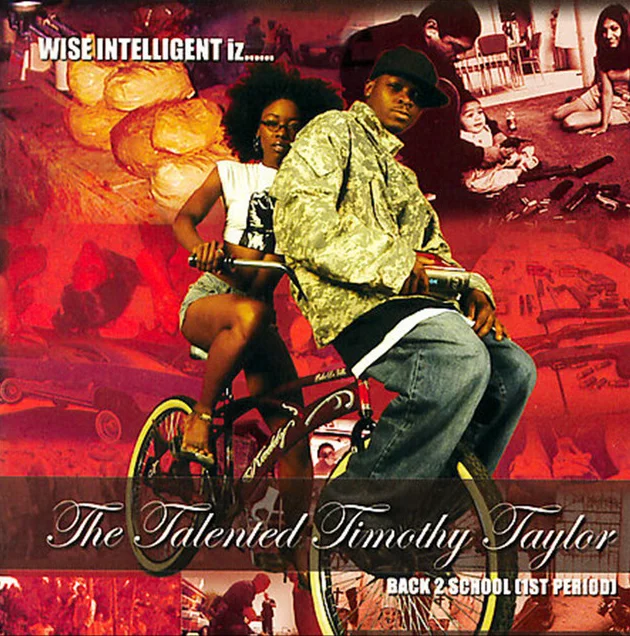
Wise Intelligent had already established himself as one of Hip Hop’s most articulate political voices long before releasing The Talented Timothy Taylor in 2007. As the lead MC of Poor Righteous Teachers, the Trenton, New Jersey, trio responsible for classics such as Holy Intellect (1990) and Pure Poverty (1991), he combined Five Percent Nation teachings, Black nationalist politics, and sharp observations about life in America’s neglected communities. His perspective came from experience. Growing up in Trenton, he and his nine siblings spent periods in homeless shelters, confronting poverty and instability firsthand. Those experiences remained central to his writing when he returned to solo recording after years outside the spotlight.
Released in July 2007, The Talented Timothy Taylor was conceived as the opening installment of an ambitious seven-album series called Back to School. The title reflects Wise Intelligent’s commitment to education, historical awareness, and political consciousness. His approach is confrontational, frequently challenging the institutions and cultural narratives that perpetuate racial inequality.
“A Genocide” addresses the systematic destruction of Black communities, while “Police Can Do” examines the authority and abuses of law enforcement. “Youth & Thugs” questions how young Black men become trapped in cycles of poverty, criminalization, and violence. On “Still Black,” Wise Intelligent confronts the persistence of racism despite the supposed progress of American society. These tracks connect individual experiences to larger political and economic structures, drawing on the same uncompromising perspective that defined his work with Poor Righteous Teachers.
The album also explores the human consequences of those conditions. “Mama Cry” brings family suffering into focus, while “Summer in da Jects” examines everyday life in public housing. Wise Intelligent balances his political arguments with personal storytelling, street-level observations, and occasional humor. His delivery remains commanding, packing dense verses with historical references, social criticism, and the verbal agility that made him such an impressive MC in the early ’90s.
Production from Masada, Oh No, P.J. Little Jr., and others supplies a varied foundation of soulful samples, heavy drums, and traditional East Coast Hip Hop rhythms. At 23 tracks, including several skits, the album occasionally loses momentum, although its strongest material rewards close attention.
The Talented Timothy Taylor arrived during a period when politically confrontational Hip Hop received little mainstream exposure. Wise Intelligent had lost none of his conviction or technical ability. This overlooked comeback deserves recognition alongside his better-known Poor Righteous Teachers recordings, particularly for its sustained examination of racism, poverty, policing, and the importance of political education.
Blue Scholars - Bayani (2007)
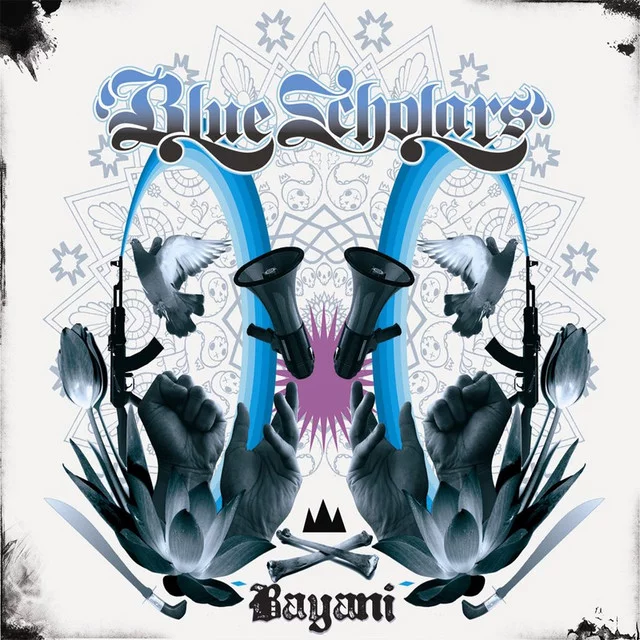
Seattle duo Blue Scholars built their reputation on a combination of sharp political writing, local pride, and accessible, sample-driven Hip Hop. On their second album, Bayani, MC Geologic and producer Sabzi bring those elements together in a record concerned with immigrant identity, working-class life, American foreign policy, and the power of collective action. Released in 2007 through their own MassLine Media and Rawkus Records, the album takes its title from two languages connected to the members’ backgrounds: in Tagalog, bayani means a hero of the people; in Persian, the word refers to the Word. The title reflects a project grounded in cultural identity and political expression.
Blue Scholars approach political subjects through lived experience rather than abstract slogans. Geologic’s Filipino-American background informs his writing about immigration, belonging, and the contradictions of American identity. “Xenophobia” addresses prejudice and the suspicion directed at outsiders, while “Fire for the People” brings a more confrontational energy to the group’s social criticism. The writing remains conversational and accessible, connecting wider political questions to ordinary people and their communities.
The album’s centerpiece is “50K Deep,” a vivid account of the November 1999 protests against the World Trade Organization in Seattle. The title refers to the estimated number of demonstrators who converged on the city, turning its streets into a battleground over globalization, corporate power, and economic inequality. Geologic recounts the protests from a local perspective, preserving the atmosphere of a moment when activists challenged institutions with enormous influence over everyday life. The song connects Seattle’s identity to a wider international movement against the concentration of political and economic power.
That sense of place runs throughout Bayani. “Joe Metro” follows the city’s public transit system, while “Back Home” reflects on home, memory, and the pull of community. Sabzi gives the album a warm, melodic foundation, drawing on soulful samples, understated keyboards, and head-nodding drums. His production leaves room for Geologic’s detailed verses without sacrificing the musicality that makes the record inviting on repeated listens.
Bayani demonstrates how political Hip Hop can grow from a specific community while speaking to struggles far beyond it. Blue Scholars connect immigrant experience, local history, and opposition to corporate power without losing sight of the people affected by those forces. The result is an independent Hip Hop album with a clear political perspective and a strong sense of home.
Stic.man - Manhood (2007)
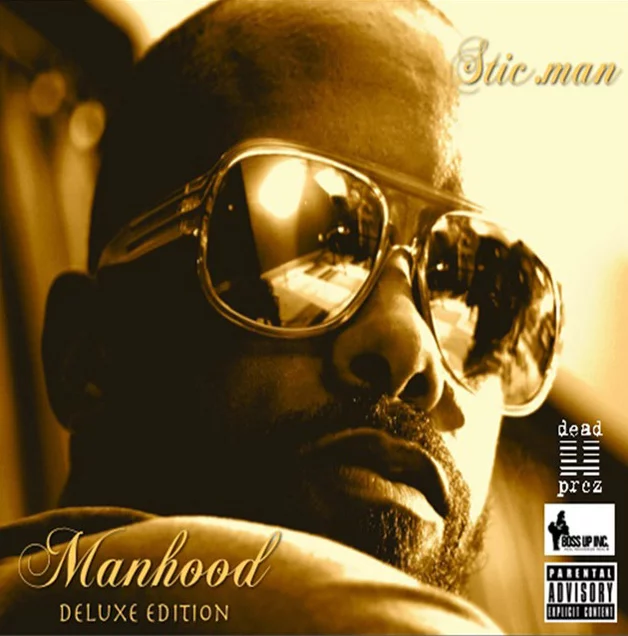
As one half of dead prez, stic.man helped create Let’s Get Free (2000), one of the defining political Hip Hop albums of its era. That debut attacked capitalism, institutional racism, police brutality, and the American education system with a militancy that made the duo impossible to ignore. His first solo album, Manhood, released in October 2007, takes a more personal route. Far less known and celebrated than dead prez’s classic debut, it deserves attention for the way stic.man applies his political principles to family, relationships, community, and the responsibilities of Black men.
The album retains his commitment to economic independence and self-determination. “Get Yo Hustle Up” and “Independent Hustler” encourage listeners to take control of their economic lives, while “Reparations” addresses the enduring consequences of historical injustice and the case for material redress. These subjects connect Manhood to dead prez’s broader critique of American power, although the focus here shifts toward the choices individuals make within an unequal society. Stic.man emphasizes self-reliance and practical action rather than relying exclusively on revolutionary rhetoric.
The record’s distinctive focus is its examination of masculinity. On “That’s What Men Do,” stic.man considers the obligations that come with being a man, placing responsibility and commitment above empty posturing. “Black Girl Shine” celebrates Black women, while “Whatever Daddy Wants” and “Coming Home” explore relationships and family life from more intimate angles. These songs broaden the definition of political Hip Hop, treating personal conduct, parenting, and respect within relationships as subjects worthy of the same seriousness as institutional oppression.
Musically, Manhood favors accessible, soulful production over the more abrasive approach associated with some of dead prez’s work. Hi-Tek contributes to “That’s What Men Do,” while J. Wells produces “Black Girl Shine” and “Independent Hustler.” Stic.man handles much of the production himself, giving the album a coherent sound and keeping the emphasis on his words. The guest appearances add variety without distracting from its personal character.
The album’s emphasis on discipline, family, and traditional male responsibility will not appeal to everyone, and some of its advice is delivered with a certainty that leaves little room for ambiguity. Still, Manhood reveals another dimension of an artist often remembered primarily for his political anger. Its argument is that changing society also requires examining how people treat those closest to them. That makes this overlooked solo effort a worthwhile companion to dead prez’s more celebrated work.
NYOIL- Hood Treason (2008)
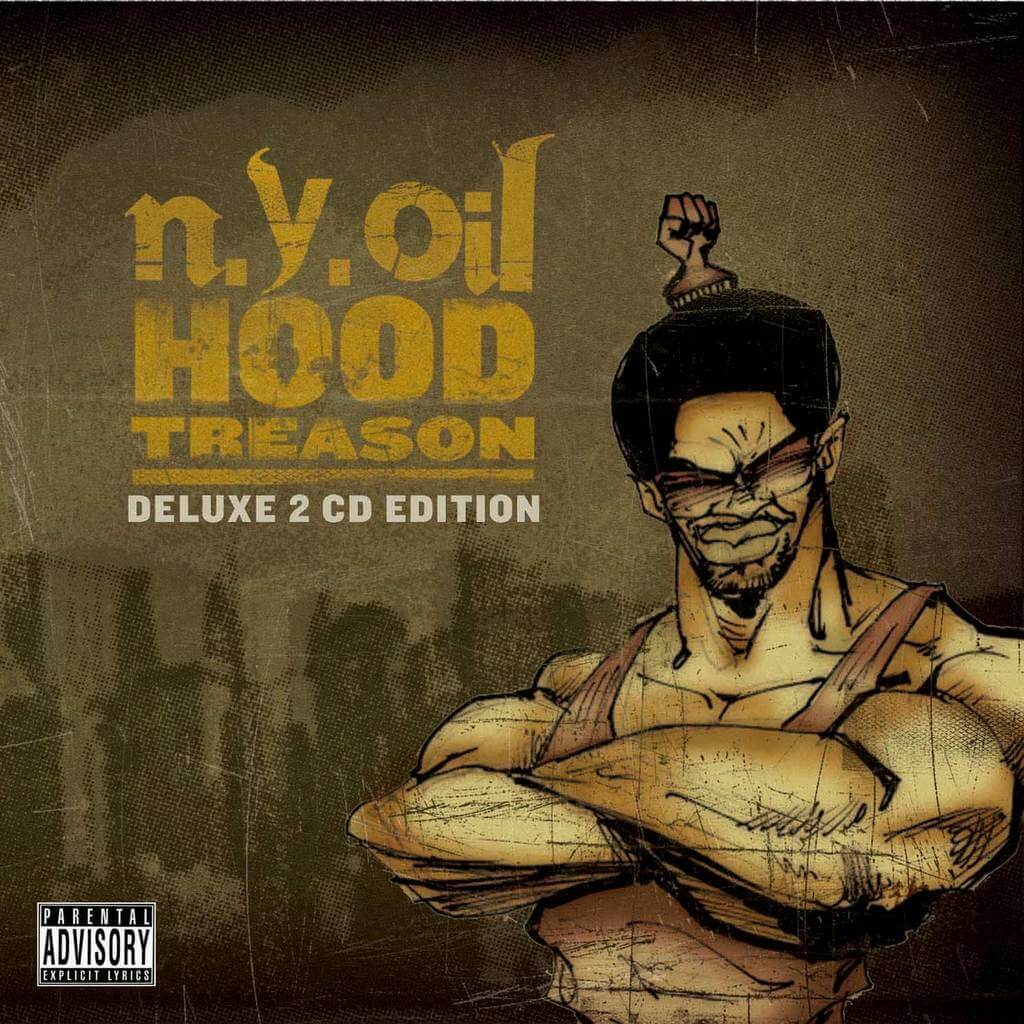
Before reinventing himself as NYOIL, Staten Island MC Kool Kim was one half of the U.M.C.’s, alongside Haas G. Their 1991 debut, Fruits of Nature, produced the memorable singles “Blue Cheese” and “One to Grow On,” establishing the duo as a distinctive presence in early-’90s Hip Hop. After their follow-up, Unleashed, failed to match that success, the partnership dissolved. Kim returned under a new name with a very different mission: confronting what he saw as the corruption and cultural decline of commercial rap.
That mission announced itself loudly with “Y’all Should All Get Lynched.” The incendiary track targeted prominent rappers, including 50 Cent, The Game, Jim Jones, and Three 6 Mafia, while its video juxtaposed their images with historical photographs of slavery, lynchings, and minstrelsy. YouTube removed the video less than 48 hours after its upload, helping turn NYOIL into one of underground Hip Hop’s most controversial voices. His argument was deliberately provocative: commercial rap was recycling degrading images of Black people while ignoring the historical weight those images carried. Whether listeners agreed with his methods or not, he demanded attention.
Released in 2007 and reissued by Babygrande Records in 2008, HoodTREASON expands that confrontation into a full album. NYOIL attacks industry priorities, manufactured gangster personas, and the financial interests shaping popular music. Tracks such as “Hip Hop Ya Don’t Stop” and “Purrrfect Beat” demonstrate that his commitment to the culture extends beyond denunciation. His delivery is animated and theatrical, carrying the conviction of someone who believes Hip Hop has abandoned principles it once claimed to represent. The album’s rough-edged underground production complements his combative writing, even when his arguments become deliberately abrasive.
The album’s history also illustrates the business practices NYOIL was criticizing. He publicly accused Babygrande of taking his music and claimed he received no money from the release. Those allegations add another dimension to HoodTREASON: an album attacking exploitation within the music industry became entangled in a dispute over the treatment of the artist who made it.
NYOIL’s approach leaves little room for diplomatic disagreement, and the shock tactics can overshadow the substance of his criticism. Still, HoodTREASON captures a particular strain of independent Hip Hop willing to challenge commercial rap from inside the culture itself. NYOIL had already helped make a memorable record as Kool Kim. Here, he returned with a sharper, angrier purpose.
Invincible - Shapeshifters (2008)
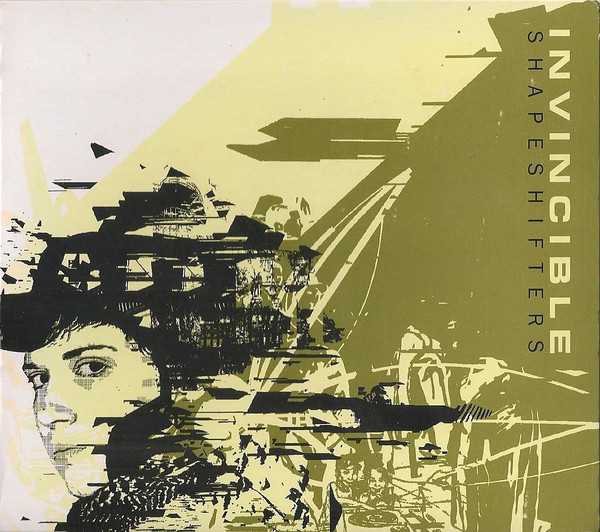
Detroit has a long history of politically engaged music, from Motown’s socially conscious soul to the city’s uncompromising underground Hip Hop scene. MC Invincible brought that tradition into the 21st century with Shapeshifters, an independently released album that connects personal experience to larger struggles over race, gender, class, and urban development. Released in 2008, the record arrived as Detroit was grappling with decades of industrial decline, population loss, and disinvestment. Invincible addresses those realities from the perspective of someone deeply involved in the city’s grassroots activist community, giving the album a specificity that distinguishes it from more generalized political rap.
The title reflects the album’s interest in transformation, identity, and the ability to adapt under pressure. Invincible’s writing moves between personal reflection and broader social criticism, examining how power operates through institutions, cultural expectations, and control over public space. Gender and sexuality also occupy an important place in the album’s worldview, challenging assumptions that political Hip Hop must confine itself to the familiar subjects of police brutality and racial discrimination. Invincible’s perspective is intersectional without becoming abstract, grounding larger arguments in the experiences of people navigating unequal systems.
Detroit itself is central to the album’s political identity. Questions of housing, displacement, community ownership, and economic inequality would become increasingly prominent in discussions of the city’s future, particularly as redevelopment accelerated and outside investors sought opportunities in struggling neighborhoods. Invincible approaches these issues from the other side of the equation, attentive to the residents whose lives are affected when decisions about their communities are made without them. The album’s politics are rooted in collective action and local organizing rather than rhetoric alone.
Musically, Shapeshifters draws on underground boom-bap while allowing room for experimentation and varied textures. The production supports Invincible’s precise, densely packed writing, and the performances retain the urgency of an artist with something specific to communicate. This isn’t background music for a political lecture; the beats and rhymes give the record its own momentum.
Shapeshifters never received the recognition afforded to better-known political Hip Hop releases, but its combination of sharp lyricism, personal conviction, and grounded social analysis makes it a rewarding discovery. Invincible approaches politics as something woven into everyday life, from the identities people are permitted to express to the neighborhoods they can afford to inhabit. For listeners interested in Hip Hop that connects radical ideas to real communities and struggles, this album deserves a place in the conversation.
Diabolic - Liar & A Thief (2010)
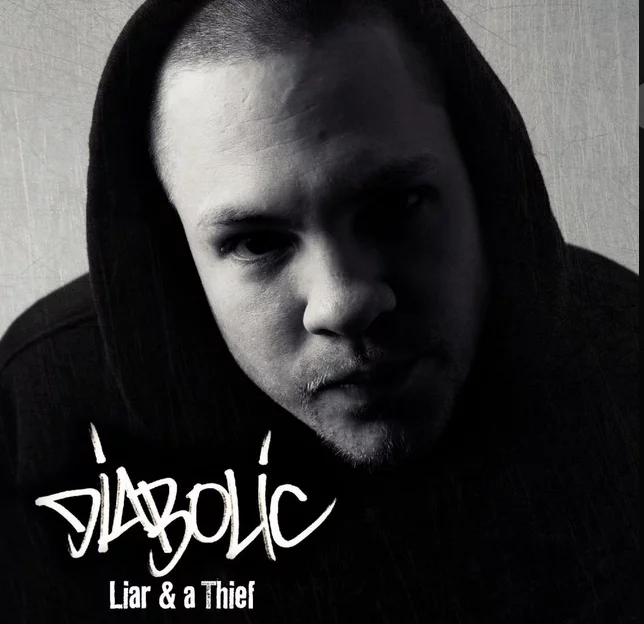
Long Island MC Diabolic built his reputation on intricate rhyme schemes, aggressive delivery, and a willingness to confront political power head-on. His 2010 debut album, Liar & a Thief, brings those qualities to a collection steeped in distrust of government, military authority, and the institutions shaping American life. Released through Viper Records, the album sits within the militant underground tradition associated with artists such as Immortal Technique, who appears several times and shares Diabolic’s appetite for challenging official narratives.
“Frontlines,” featuring Immortal Technique, establishes the album’s confrontational outlook. The two MCs approach war and political manipulation with the suspicion that ordinary people are repeatedly sent to fight for interests that have little to do with their own. “Riot,” featuring British reggae artist Deadly Hunta and Limp Bizkit drummer John Otto, shifts the focus toward popular unrest, pairing its rebellious subject matter with a forceful, rock-inflected production. The anger is directed at a system in which economic and political power remains concentrated while the public is expected to accept the consequences.
Diabolic’s distrust extends to the language used to justify authority. The title Liar & a Thief suggests a world in which dishonesty and exploitation are built into the machinery of power, and tracks such as “Truth, Part 2” and “Soldier’s Logic” pursue that skepticism from different angles. “Order & Chaos,” featuring Ill Bill, adds another abrasive voice to the album’s dark view of society. Diabolic’s writing is dense with internal rhymes and tightly constructed bars, and his delivery has the combative edge of an MC who treats every verse as an argument to be won.
The guest list connects the album to a wider network of politically minded and technically formidable underground rappers. Alongside Immortal Technique and Ill Bill, Vinnie Paz, Canibus, Poison Pen, and others contribute to a record built around lyrical intensity rather than commercial polish. The production varies across its hour-long running time, moving between hard boom-bap foundations and heavier, rock-influenced textures. That variety gives the album momentum, although its relentless aggression leaves little room for a change of emotional register.
Liar & a Thief is less interested in offering a detailed political program than in attacking the institutions and narratives Diabolic considers corrupt. At times, the broad accusations and uncompromising tone can overshadow the finer points of his arguments. Still, the album captures a strain of underground Hip Hop that treats skepticism toward authority as a starting point for political engagement, with sharp lyricism and conviction driving the message.
Lee Reed - Emergency Broadcast (2011)
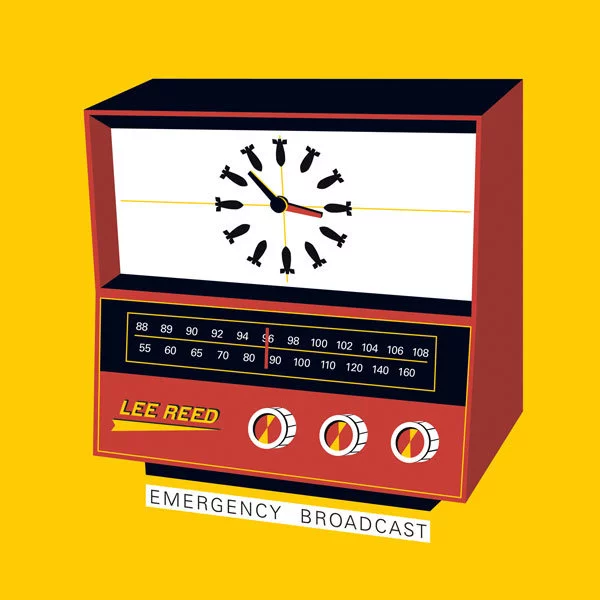
Canadian MC Lee Reed approaches political Hip Hop from an explicitly anti-capitalist perspective, with little interest in disguising his convictions behind vague social commentary. Released independently in October 2011, Emergency Broadcast is a sharp, uncompromising collection of underground rap that takes aim at corporate power, economic exploitation, political hypocrisy, and the everyday absurdities of a society organized around profit. Reed’s approach recalls the radical spirit of The Coup and other politically committed underground acts, while his independent Canadian background gives the album a character of its own.
The track titles alone indicate where Reed’s priorities lie. “The Bank” directs attention toward financial institutions and the power they wield, while “The City” examines urban life with guest vocals from Sara London. “Convenience” questions the comforts and compromises of consumer society, and “The Fakeness” takes aim at the dishonesty woven into public life and popular culture. Across these songs, Reed returns to the relationship between individual choices and the larger systems shaping them. His criticism isn’t confined to politicians or wealthy executives. The album also questions the habits, distractions, and accepted assumptions that allow existing power structures to reproduce themselves.
“Doom & Gloom” establishes a suitably uneasy atmosphere, while “Same Old Same” suggests how readily familiar patterns of exploitation and disappointment persist despite promises of change. “Bazooka Rap” offers a more aggressive burst of energy, giving the record some welcome variation. The closing “More of It (A Cappella)” strips away the production entirely, leaving Reed’s words to carry the final statement. It’s an appropriate ending for an album whose central concerns are communicated through direct, forceful writing.
The production comes from a group of collaborators, including John P, Realistic, Nate Wize, J Feves, and Anonymous D. This gives Emergency Broadcast a varied underground sound rather than a single producer’s uniform aesthetic. The independent recording and release also suit the material: Reed operates outside the commercial machinery he criticizes, delivering his arguments without the compromises associated with chasing mainstream acceptance.
Emergency Broadcast won’t convert every listener to Reed’s political worldview, and its directness occasionally leaves little room for ambiguity. That’s also part of its appeal. This is Hip Hop with a clear ideological position, delivered by an MC who understands the music’s potential as a vehicle for dissent. For listeners looking beyond the usual names in political rap, Lee Reed deserves considerably more attention, and Emergency Broadcast is a worthwhile place to start.
Lowkey - Soundtrack To The Struggle (2011)
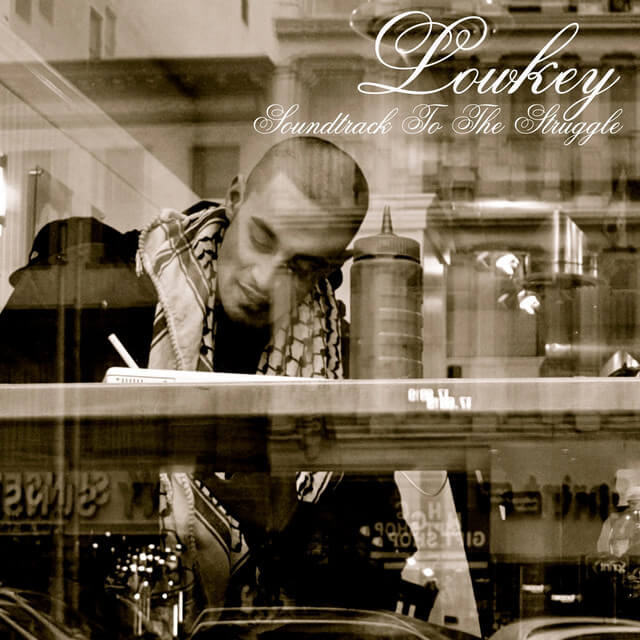
British-Iraqi rapper Lowkey built Soundtrack to the Struggle around a conviction that Hip Hop should confront the political forces shaping everyday life. Released in 2011 as the follow-up to Dear Listener, this sprawling 95-minute album takes in the Iraq War, Western imperialism, the Palestinian struggle, racism, poverty, feminism, and the treatment of Muslims in Britain. Lowkey approaches these subjects with the intensity of an activist who regards music as one part of a much larger fight. His arguments are direct, his anger unmistakable, and his commitment runs through the entire record.
The album arrived amid the fallout from the Iraq invasion, the ongoing wars in Afghanistan, and widespread disillusionment with Western foreign policy. Lowkey places these events within a longer history of intervention and domination, questioning the language governments use to justify military action. On “Terrorist?”, he challenges the selective application of that label and the way political violence is judged according to who commits it. “Obama Nation” takes aim at the gap between Barack Obama’s public image and the continuation of American military power under his presidency. Lowkey’s target is a political system that can change its public face while preserving many of the same priorities.
Palestine occupies a particularly important place in his work. Lowkey’s opposition to the occupation and his criticism of Western support for Israel are central to the album’s internationalist outlook. He also turns his attention toward British society, examining Islamophobia, racism, inequality, and the pressures facing communities routinely discussed by politicians but rarely heard on their own terms. Guest appearances from Immortal Technique, M1, Klashnekoff, Black the Ripper, and others broaden the album’s range of voices while keeping its political focus intact.
Musically, Soundtrack to the Struggle draws on hard drums, orchestral passages, samples, and dramatic arrangements suited to Lowkey’s densely written verses. Its length allows him to develop several connected arguments, although the sheer volume of material can make the album demanding. Subtlety is rarely the priority; Lowkey wants listeners to examine the assumptions behind the official account of events, and he presses his case with considerable urgency.
The result is one of the most ambitious political Hip Hop albums to emerge from Britain in the 2010s. Soundtrack to the Struggle captures a particular moment of war, protest, and public distrust while addressing power structures with a much longer history. Its conviction gives the album its force, and its willingness to confront subjects often pushed to the margins makes it a vital entry in the wider tradition of radical Hip Hop.
Sole - A Ruthless Criticism Of Everything Existing (2012)
Few underground MCs have spent as much time questioning Hip Hop’s conventions as Sole. A co-founder of the anticon. collective, Tim Holland built a career around experimental production, fiercely independent releases, and lyrics that challenge capitalism, consumer culture, and the assumptions underpinning American society. Released in November 2012, A Ruthless Criticism of Everything Existing brings these concerns into sharp focus, shaped in part by Sole’s involvement in the Occupy movement in Denver and his experiences with political organizing and state repression.
The album’s title draws on a famous phrase associated with Karl Marx, and its contents live up to that confrontational promise. Sole examines class conflict, alienation, labor, environmental destruction, and the relationship between political power and economic interests. “Non-Workers of the World” twists the language of revolutionary solidarity toward people excluded from conventional ideas of productive labor, while “Never Work” attacks the expectation that a person’s worth should be measured by their economic output. Sole’s perspective is informed by direct involvement in activism, giving the album’s anger a personal dimension. His account of political struggle includes exhaustion, trauma, and the frustrations of trying to challenge entrenched systems from the ground up.
Sole is equally critical of the culture surrounding him. “Letter to a Young Rapper” takes aim at the industry’s priorities and the narrow ambitions it encourages, extending his argument to a genre that often celebrates wealth and individual success. On “Definition of Slave,” featuring Open Mike Eagle, the discussion of labor and freedom becomes more pointed. The track reflects the album’s central question: how much genuine independence exists within a society where survival depends on systems that demand compliance?
Musically, the record refuses to settle into one recognizable style. Contributions from producers including Man Mantis, Factor, Ecid, Ryan Hemsworth, Alias, and Busdriver move between traditional Hip Hop, electronic textures, experimental dance music, and deliberately fractured arrangements. That shifting sonic palette reinforces the instability of the world Sole describes. The music can be abrasive and disorienting, but it gives his arguments room to escape the familiar formulas of political rap.
A Ruthless Criticism of Everything Existing emerged from the aftermath of Occupy Wall Street, when questions about inequality, corporate influence, and economic power briefly occupied a larger place in public debate. Sole treats those questions as part of a deeper structural crisis. His response is restless, uncompromising, and suspicious of easy solutions, making this a compelling entry in the more experimental wing of radical Hip Hop.
Rebel Diaz - The Radical Dilemma (2013)
For Chicago-born, Bronx-based brothers RodStarz and G1, political Hip Hop is inseparable from family history. Their parents fled Chile’s U.S.-backed dictatorship in the 1970s, and Rebel Diaz grew up with an understanding of how imperial power shapes lives far beyond America’s borders. Released in December 2013, The Radical Dilemma draws on that inheritance, connecting Latin American resistance, immigrant rights, working-class struggles, and the continuing fight against economic and racial oppression. Its politics are personal, internationalist, and firmly rooted in the communities the brothers represent.
The title track addresses the difficult choices facing anyone who recognizes injustice but must decide what to do about it. Across the album, Rebel Diaz pushes past political awareness toward collective action. “Revolution Has Come” establishes the urgency, while “We The Movement,” featuring Kalae Nouveau, emphasizes the power of organized people to challenge entrenched authority. The message is consistent: meaningful change requires participation and solidarity, not simply indignation from the sidelines. “Motivate! Move!,” featuring spoken-word artist J.Ivy, makes that call explicit.
Rebel Diaz’s perspective gives the album a distinct international dimension. Their Chilean heritage informs their understanding of U.S. intervention in Latin America, while their experiences in Chicago and the South Bronx connect that history to poverty, immigration, and the treatment of marginalized communities in the United States. Spanish and English coexist naturally in their music, reflecting the realities of Latino communities whose political concerns rarely fit neatly within national borders. “La Patrulla,” featuring King Capo, brings the group’s Latin identity into the foreground, while “El Reloj,” with Homeboy Sandman, adds another voice to the album’s reflections on time, struggle, and social conditions.
The production matches this mixture of influences. Rebel Diaz describe their sound as a meeting of South American folk, house, and Latin percussion with boom-bap breaks and 808s. The result retains the weight of traditional underground rap while drawing from musical cultures often kept separate in commercial Hip Hop. The Which Side Are You On? remix, featuring dead prez and Rakaa Iriscience, places the brothers within a broader lineage of politically committed MCs, updating a historic labor anthem for a new generation.
The Radical Dilemma is an argument for political engagement delivered through a genuinely cross-cultural Hip Hop vocabulary. Rebel Diaz connect the struggles of immigrants, workers, and communities of color without flattening their different histories. Their vision is radical in the original sense of the word: a demand to confront injustice at its roots and build something different together.
Bambu - Party Worker (2014)
Los Angeles MC Bambu has spent much of his career bringing the language of political organizing into underground Hip Hop. A Filipino American with a background in community activism, he approaches class struggle, labor rights, racism, and imperialism from the perspective of someone who regards political engagement as a practical responsibility. Released in 2014 through Beatrock Music, Party Worker is among his clearest statements of that outlook, combining militant politics with humor, personal observation, and a grounded sense of working-class life.
The album title establishes its priorities. Bambu’s idea of a party worker points toward the labor of building a movement: organizing people, developing political consciousness, and turning shared frustrations into collective action. “Welcome to the Party” introduces that world, while “Comrades” makes solidarity central to the album’s identity. Bambu’s politics are openly leftist, with a particular emphasis on class and the conditions facing workers. “Minimum Wage” addresses the economic pressures built into low-paid work, and “Progressive Tax” takes aim at the unequal distribution of wealth. These subjects receive the same direct treatment as the more personal details that fill out the record.
Bambu is especially effective when he connects broad political ideas to the people who live with their consequences. “Young Old Filipino Man” brings Filipino identity and generational experience into focus, while “Labor of Girl” directs attention toward gender and the often undervalued work performed by women. “Bread” reduces the question of economic survival to its most basic terms. The titles suggest an artist who sees class politics in ordinary routines and everyday relationships, rather than as an abstract debate reserved for politicians and academics.
His delivery helps keep the album from becoming a lecture. Bambu raps with a forceful, conversational style, puncturing serious arguments with sharp humor and a playful edge. The production sits within Beatrock Music’s boom-bap tradition, giving the songs a sturdy underground foundation. Across fifteen tracks, Party Worker moves between rallying cries, reflections on identity, and critiques of economic inequality without losing sight of its central purpose.
Bambu’s work is distinguished by the connection between his music and his organizing. He isn’t content to describe injustice and leave the listener there; his recurring challenge is to get involved, build solidarity, and do the work required to change conditions. Party Worker captures that philosophy in a focused, accessible form. For anyone exploring political Hip Hop beyond its best-known names, it offers a compelling example of music made to accompany a movement, and to encourage listeners to become part of one.
billy woods - Today, I Wrote Nothing (2015)
billy woods is widely celebrated by now, especially within underground Hip Hop circles, and albums like History Will Absolve Me, Hiding Places, Known Unknowns, and Aethiopes have earned him a devoted following. His 2015 release Today, I Wrote Nothing, however, often gets less attention than his other work. That’s a shame, because this collection of 24 short tracks offers a particularly sharp view of woods’s writing and his bleak, frequently absurd take on the world around him.
The title comes from Russian writer Daniil Kharms, whose absurdist writing finds strange humor and meaning in mundane situations. woods adopts a similar approach, abandoning the extended thematic explorations found on many of his other records in favor of brief, disconnected vignettes. Most tracks last around two minutes. Characters appear, reveal something unsettling about their circumstances, and disappear before the listener has time to settle in. References to The Wire, Cormac McCarthy’s Blood Meridian, and other literary touchstones add layers without turning the album into an academic exercise.
The political dimension emerges through these fragments. Institutional racism, urban decay, war, addiction, economic hardship, and the machinery of American power surface in passing, often embedded in the details of everyday life. On “Warmachines,” the language of military violence hangs over the record’s smaller human dramas. “Lost Blocks,” featuring Armand Hammer partner ELUCID, and other collaborations deepen woods’s portrait of people navigating environments shaped by forces beyond their control. His writing rarely delivers tidy conclusions. Instead, he leaves listeners with vivid scenes, uncomfortable implications, and the occasional flash of scalding wit.
That fragmented structure can make Today, I Wrote Nothing seem scattered on first listen. The connections emerge gradually, through recurring images and woods’s conversational delivery, which shifts effortlessly between sardonic observation and grim reflection. The production supports the writing without smoothing out its rough edges.
Political Hip Hop often spells out its arguments. woods takes a different route, exposing the absurdities and cruelties of the systems surrounding his characters through moments that might initially seem incidental. The result is an unsettling portrait of a society in which violence, inequality, and institutional failure have become part of the daily routine. Today, I Wrote Nothing rewards patient listening, and deserves a place in any discussion of the decade’s most incisive underground Hip Hop.
Kemba - Negus (2016)
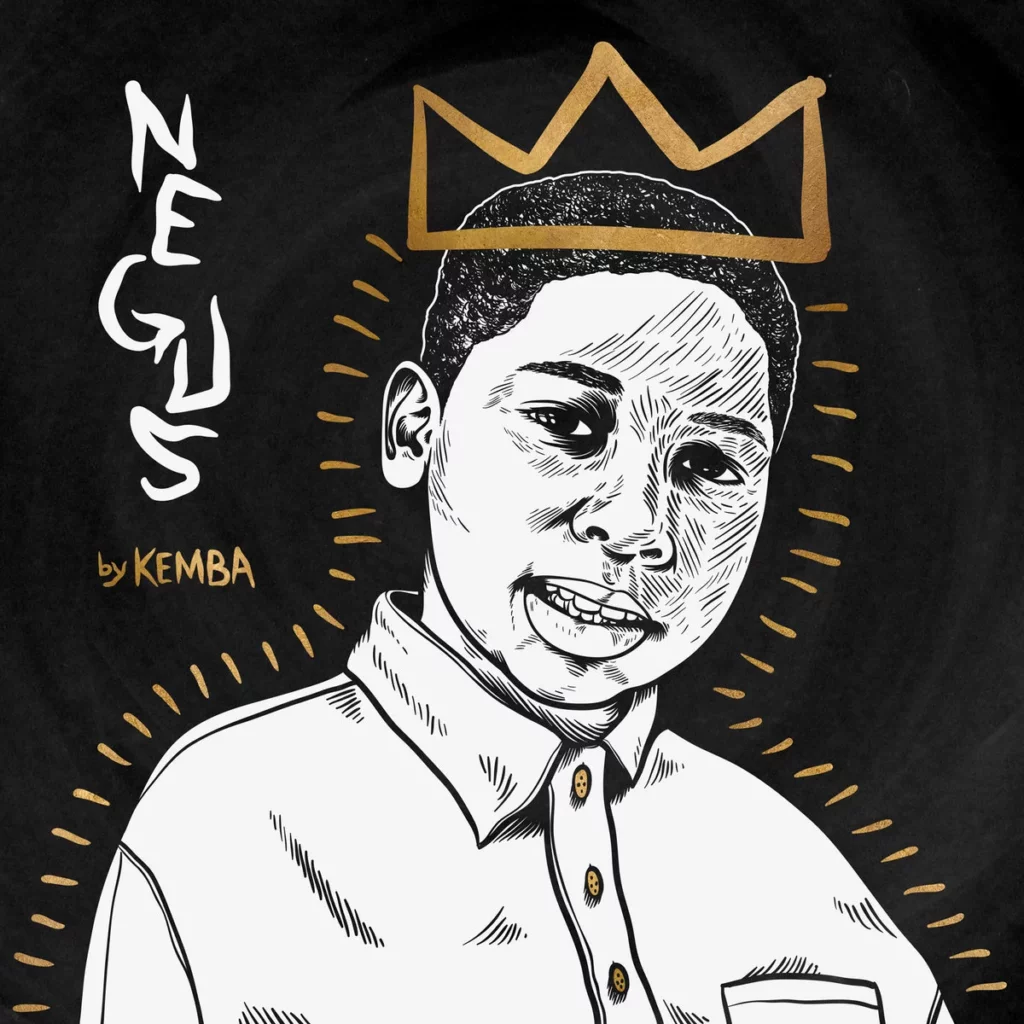
Bronx rapper Kemba’s Negus is a fierce, deeply personal examination of Black life in America, shaped by the racial tensions and political upheaval that followed the killing of Michael Brown and the Ferguson uprising in 2014. Released in 2016, the album captures the anger, grief, and exhaustion of living under a system that repeatedly devalues Black lives. Kemba also looks beyond oppression, reclaiming a history of Black achievement and imagining a future defined by self-determination.
The title provides the starting point. Negus, an Ethiopian royal title meaning king, challenges the historical narratives that have reduced Black identity to enslavement, deprivation, and struggle. On “Caesar’s Rise” and “Kings And Queens,” Kemba invokes royalty and historical greatness to reclaim a sense of power denied to generations of Black Americans. The project’s opening, “Fly (Intro),” frames the album as a collection of what Kemba describes as Negro spirituals, connecting the tradition of music born from suffering to a contemporary struggle for dignity and liberation.
That struggle is never abstract. Kemba witnessed the Ferguson protests firsthand, and the experience informs the album’s sense of urgency. “The New Black” confronts the expectations and contradictions surrounding Black identity in modern America, while “Greed” turns its attention to materialism and the economic system that encourages individual accumulation amid widespread hardship. Kemba questions the promise that personal wealth alone represents success when entire communities remain trapped by structural inequality. His criticism reaches beyond racism to examine the values that sustain an unequal society.
Musically, Negus moves between hard-hitting Hip Hop, soulful passages, and more introspective arrangements. Kemba’s delivery shifts with the subject matter, alternating between tightly wound intensity and moments of reflection. The album’s twelve tracks form a coherent progression, with interludes helping to frame its themes of struggle, identity, and eventual transcendence. Its darker passages carry considerable weight, although Kemba leaves room for hope and collective pride.
Kemba has never been an easy fit for the familiar categories of political or conscious rap. Negus makes those labels seem beside the point. This is an album about what systemic oppression does to people, how history shapes the present, and how reclaiming a sense of identity can become an act of resistance. Released during a period of renewed national debate over police violence and racial justice, it remains a powerful, underappreciated document of its time.
Add-2 - Jim Crow The Musical (2019)
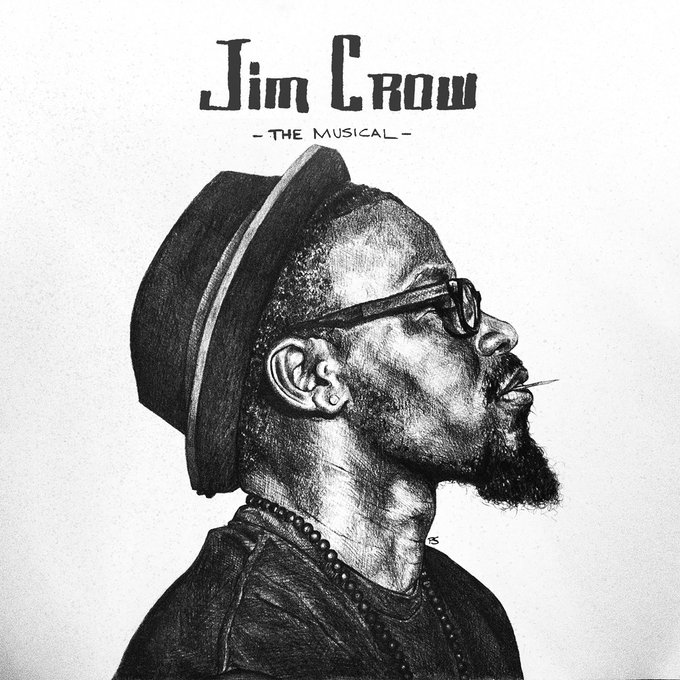
Chicago MC Add-2 returned in 2019 with Jim Crow: The Musical, his first full-length project since Prey For The Poor (2015). Across 19 tracks, including five skits, he constructs a narrative about the Black American experience, tracing the connections between historical oppression and the realities of contemporary life. With narration from actor Kadeem Hardison, known for A Different World, the album unfolds like a theatrical production, using recurring themes and interludes to connect personal stories with a broader history of racial injustice.
The title invokes the Jim Crow laws that enforced racial segregation in the United States, and Add-2 draws a direct line between that legacy and the structures that continue to shape Black life. “3 Fifs,” featuring Accapella, references the Three-Fifths Compromise, which counted enslaved people as three-fifths of a person for purposes of congressional representation and taxation. “Willie Gets Lynched,” featuring Yaw, confronts one of America’s darkest traditions of racial terror, while “Hashtag” addresses police brutality and the uncomfortable way Black deaths become fleeting topics of online discussion. These songs give historical injustice a human dimension, connecting the past to the headlines of the present.
Add-2 also makes room for Black love, cultural pride, and the determination to build a life under difficult circumstances. “Nappy Hair,” featuring Sam Trump, Elisa Latrice, and K.Love, celebrates Black identity and natural hair. “Jump the Broom,” featuring Andy Allo, turns toward romance and cultural tradition, while “Back in the Day,” with Brittney Carter, Oliv Blu, and Phonte, brings several distinct voices into the album’s wider conversation. These moments provide welcome breathing room without losing sight of the central subject.
Musically, Add-2 favors thoughtful lyricism and clear storytelling over grandstanding. The skits reinforce the theatrical structure, although the concept occasionally takes precedence over the momentum of individual songs. His writing is at its strongest when he connects sweeping historical forces to intimate experiences, making systemic racism tangible through the lives it affects.
Jim Crow: The Musical was one of 2019’s strongest independent Hip Hop releases, an ambitious, carefully constructed album that balances political urgency with humanity. Add-2 confronts America’s racial history without losing sight of the people living with its consequences. This is Hip Hop for listeners who want substance, perspective, and something worth thinking about after the music stops.
Sa-Roc - The Sharecropper's Daughter (2020)
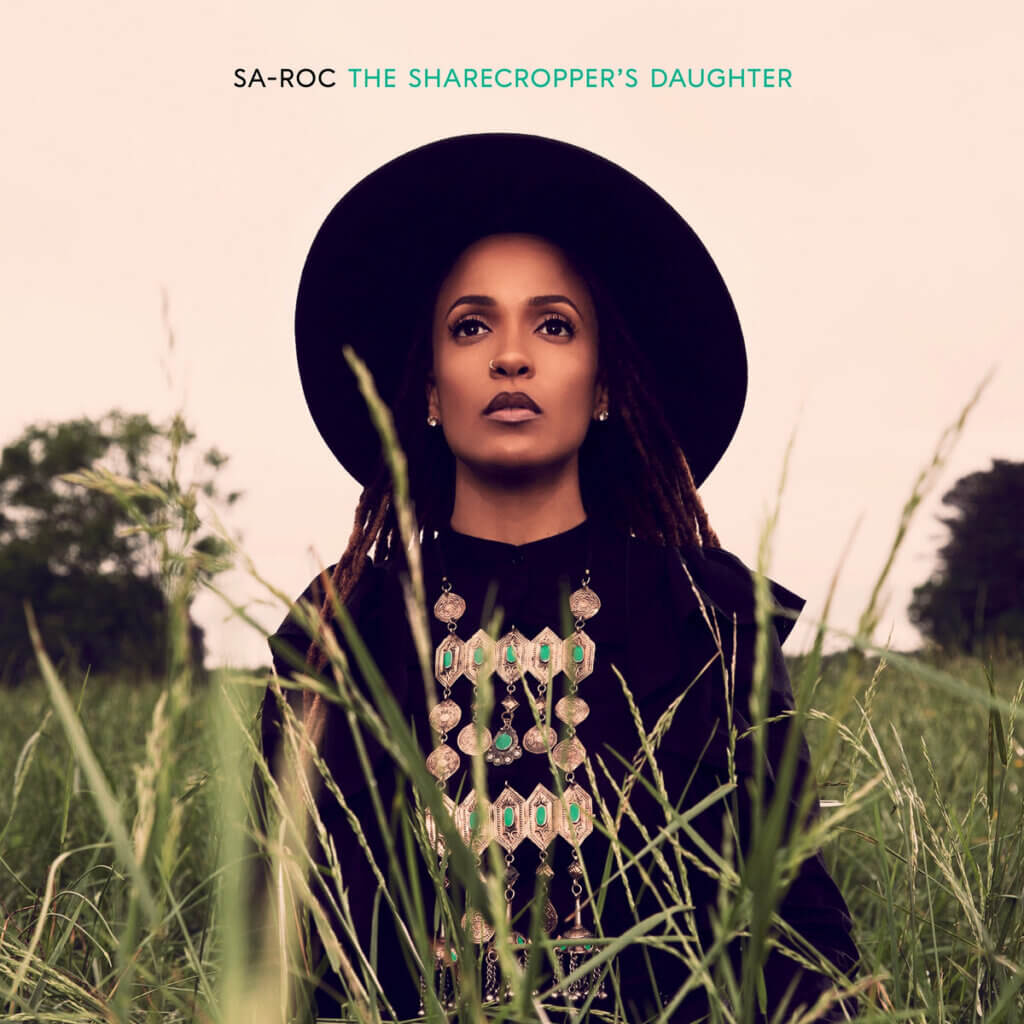
Sa-Roc’s The Sharecropper’s Daughter connects generations of Black American struggle through personal history, political awareness, and exceptional lyricism. Released through Rhymesayers Entertainment in 2020, the album draws its title from her father’s childhood on a Virginia tobacco farm, where his family worked as sharecroppers under the Jim Crow system. Sa-Roc grew up in Washington, D.C., decades later, amid the crack epidemic and the consequences of the War on Drugs. Their experiences were separated by time and circumstance, but the structural inequalities surrounding them remained painfully familiar.
That inherited history runs through the album. On “40 And A Mule,” the title invokes the broken promise of land and reparations made to formerly enslaved people after the Civil War. “Rocwell’s America,” featuring Styles P, examines the realities behind the American ideal, while “The Black Renaissance” pairs Sa-Roc with Black Thought for a forceful meditation on Black history, cultural achievement, and the struggle for liberation. On “r(E)volution,” she connects personal agency to collective resistance, recognizing that meaningful change requires an understanding of the forces that produced the present.
Sa-Roc approaches these subjects with the precision of a seasoned battle rapper and the perspective of a thoughtful storyteller. Her intricate rhyme schemes, commanding delivery, and tightly controlled wordplay give the album considerable lyrical depth. She also makes room for vulnerability, exploring the emotional scars passed between generations and the work required to break those patterns. Tracks like “Goddess Gang” and “Grounded” address self-worth and female empowerment, adding another dimension to a record concerned with reclaiming control over one’s identity and future.
Sol Messiah handles the production across nearly the entire album, supplying soulful samples, sturdy drums, and arrangements that give Sa-Roc room to work through her dense writing. Evidence produces “Deliverance,” co-produced by Al B Smoov. The guest list is carefully chosen, with Saul Williams, Ledisi, Chronixx, and others adding complementary voices without distracting from the central narrative.
Despite her formidable skills, Sa-Roc has often received less recognition than her male contemporaries in underground Hip Hop. The Sharecropper’s Daughter makes a compelling case for correcting that imbalance. It confronts America’s history of racial oppression while emphasizing resilience, self-knowledge, and the possibility of breaking inherited cycles. Politically conscious without sacrificing musicality, this is one of 2020’s most deserving albums of wider recognition.