

New York City’s street rap of the 1990s had a character all its own. From the concrete towers of Queensbridge to the housing projects and neighborhood blocks of Brooklyn, the city produced a remarkable run of albums steeped in street narratives, hard-earned survival, hustling, and the tensions of everyday life. The music was often as unforgiving as its subject matter. Dusty loops, hard drums, ominous samples, and stripped-down arrangements provided the backdrop for MCs who delivered their stories with sharp detail, lyrical authority, and an unmistakable sense of place. These records captured different sides of the city, from the bleak observations of life in the projects to the calculated ambition of street hustlers and the ruthless competition between crews.
New York’s return to prominence in the early and mid-1990s also came against a changing Hip Hop landscape. Dr. Dre’s The Chronic and Snoop Doggy Dogg’s Doggystyle had established West Coast rap as the dominant commercial and cultural force, with G-funk shaping the sound of mainstream Hip Hop. After years at the center of the culture, New York suddenly had something to prove. Its response came through a new wave of uncompromising records that drew heavily on the city’s own traditions of lyrical competition, rugged production, and street-level storytelling.
Producers like DJ Premier, Havoc, and RZA supplied much of the musical blueprint, building tense, sample-driven tracks with hard snares, murky basslines, and haunting melodies. Their approaches differed considerably, but the results shared a certain New York sensibility. MCs brought their own experiences, neighborhood affiliations, and distinctive voices to the music, documenting a world where ambition, loyalty, violence, and survival often collided.
The albums that emerged from this period weren’t all cut from the same cloth. Some were cinematic accounts of street life, others were steeped in battle rhymes, crew rivalries, or the elaborate hustler narratives that became a defining part of East Coast rap. What connected them was an uncompromising approach to the music and a strong sense of the environments from which they came. Here are 25 albums that capture the grit, character, and unmistakable identity of New York City’s Golden Age street rap.
Also read: 100 Gritty Street Rap Albums That Built Modern Hip Hop’s Cinematic Underground
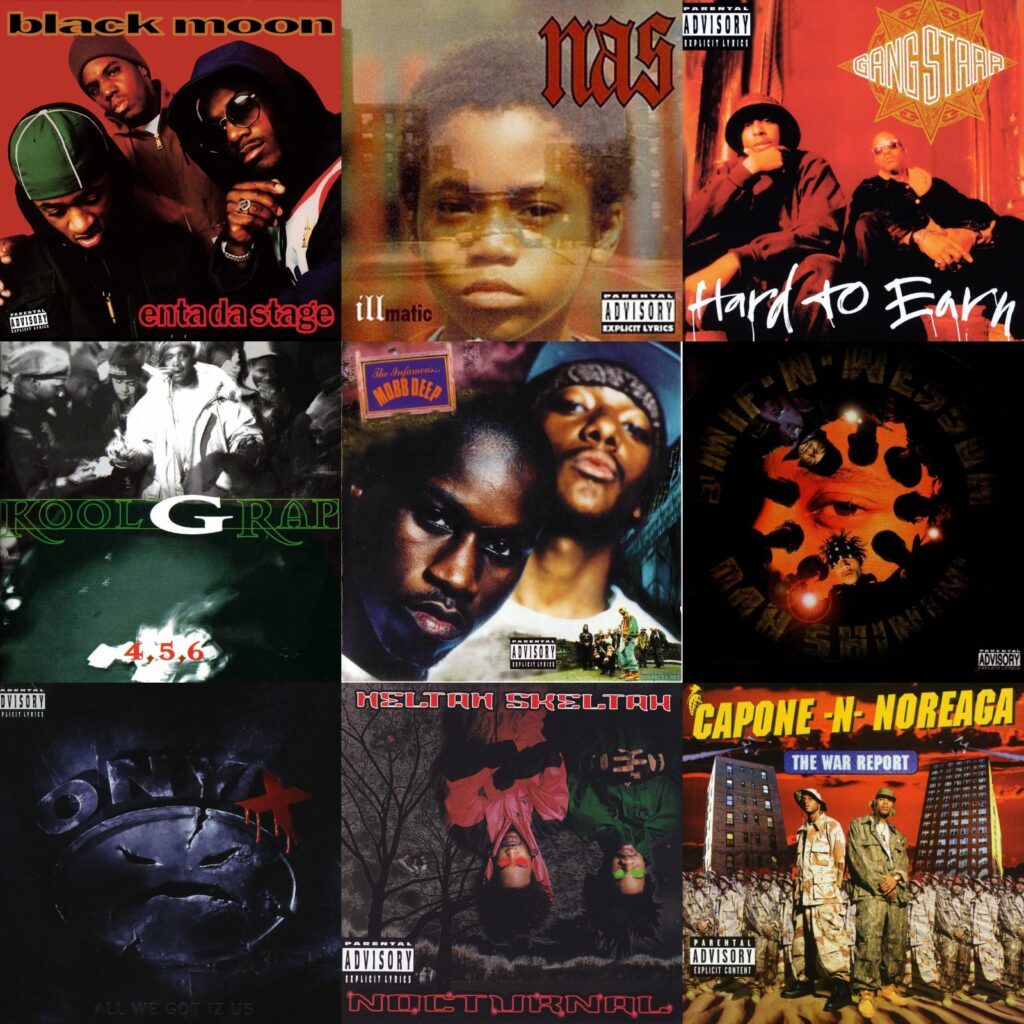
Black Moon - Enta Da Stage (1993)

Brooklyn’s Black Moon announced themselves with a sound that was considerably darker and grittier than much of what was dominating Hip Hop in 1993. Released in October of that year, Enta Da Stage introduced the production approach of DJ Evil Dee and Da Beatminerz, whose murky jazz samples, heavy basslines, hard snares, and dusty loops gave the album a distinctive underground identity. From the ominous opening of “Powaful Impak!” onward, the production creates an atmosphere of tension that runs through the record. There is little interest in elaborate arrangements or polished crossover appeal. The Beatminerz understood the power of a well-chosen sample, a forceful drum break, and enough space for an MC to command attention.
Buckshot provides the album’s focal point. His delivery is remarkably assured, combining a conversational ease with the sharp timing and authority needed for battle rhymes. On “How Many MCs…” he takes aim at inferior competitors with the confidence of someone who has little patience for pretenders. “Buck Em Down” is another highlight, driven by a forceful beat and Buckshot’s unmistakable Brooklyn cadence. He doesn’t rely on complicated vocal theatrics. His personality, wordplay, and ability to ride the Beatminerz productions do the work. Five Footaz also contribute to the album’s crew-oriented character, while the chemistry between Buckshot and the production team gives the record a cohesive identity.
“Who Got Da Props?” became the album’s most recognizable track, with its memorable hook and infectious groove providing an accessible entry point without compromising Black Moon’s underground credentials. “I Got Cha Opin” takes a different route, leaning into a jazzier sample and a more relaxed rhythm. These changes in mood are important because Enta Da Stage isn’t simply a succession of aggressive battle records. Its musical palette has enough variation to keep the album interesting while retaining its unmistakable atmosphere.
The album arrived as New York Hip Hop was finding its footing again amid the commercial dominance of West Coast G-funk. Black Moon offered a distinctly Brooklyn alternative, and their influence extended into the wave of rugged East Coast releases that followed. With its combination of Buckshot’s commanding presence and the Beatminerz’s dusty, sample-heavy production, Enta Da Stage remains one of the defining albums of early-1990s Brooklyn street rap.
Intelligent Hoodlum - Tragedy: Saga Of A Hoodlum (1993)
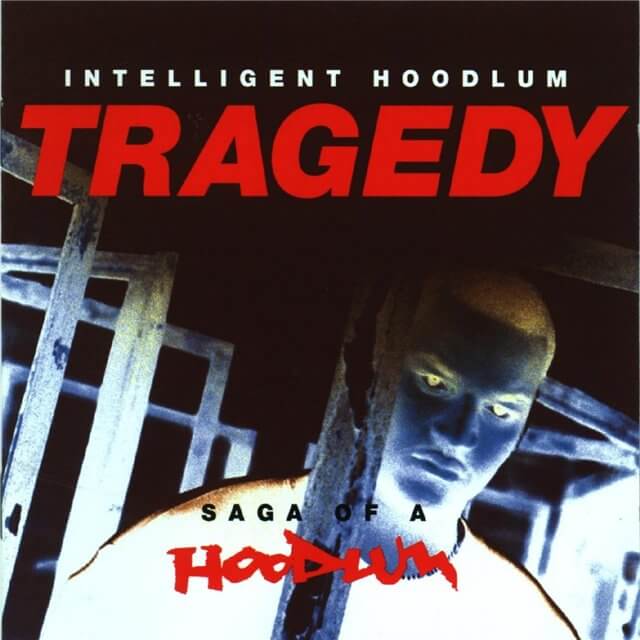
Tragedy Khadafi’s Saga of a Hoodlum, recorded under the name Intelligent Hoodlum, is one of the clearest examples of Queensbridge street rap from the early 1990s. His 1990 self-titled debut had already established him as a politically conscious MC with a sharp sense of social observation. On his second album, he takes that perspective into a harsher setting, examining the pressures of life in the projects, the lure of the street economy, and the consequences of getting caught up in it. The result is an album that connects street-level storytelling with the political awareness that had distinguished his debut album.
The Queensbridge setting is central to its identity. Khadafi raps about a world shaped by poverty, police pressure, violence, and the daily struggle to get by. He doesn’t approach these subjects as distant social commentary. His writing comes from the perspective of someone who knows the environment intimately, including its attractions and its costs. The contrast between the title Intelligent Hoodlum and the realities he describes gives the album much of its character: an observant, articulate MC trying to make sense of a system that repeatedly pulls young men into destructive circumstances.
K-Def handles much of the production, with Marley Marl contributing to several tracks. Their beats draw on jazz, funk, and soul samples, anchored by hard drums and thick basslines. The sound has the punch and swing of classic New York boom-bap, with enough musical variation to keep the album from settling into one mood. “Underground,” “Funk Mode,” and “At Large” are among the stronger examples of its rugged, sample-driven approach. “Street Life,” produced by Epitome of Scratch, brings a different texture, while Marley Marl’s “Pump the Funk” adds a more buoyant groove.
Khadafi also knows when to turn inward. “Grand Groove” carries a reflective quality that contrasts with the harder material, while “Death Row” and “Mad Brothas Know His Name” return to the tension and confrontation of street life. “Pass the Teck” is especially interesting in retrospect, featuring a young Havoc, who would later form Mobb Deep with Prodigy. Tragedy’s connection to the younger Queensbridge generation would become increasingly important, and his influence on Mobb Deep is part of the album’s historical significance.
Saga of a Hoodlum follows naturally from the socially conscious approach of Tragedy’s debut, but its focus is more firmly embedded in the streets. Its combination of Queensbridge detail, hard-edged production, and clear-eyed writing makes it an important document of New York street rap before the mid-1990s sound reached its commercial and artistic peak.
Wu-Tang Clan - Enter The Wu-Tang (36 Chambers) (1993)

Few albums capture the competitive spirit and street-level intensity of early-1990s New York Hip Hop as vividly as Wu-Tang Clan’s debut. Released in November 1993, Enter The Wu-Tang (36 Chambers) introduced an entirely new crew dynamic, bringing together nine MCs from Staten Island and Brooklyn, each with a distinct voice, vocabulary, and approach to rhyme. The album sounds like an unfiltered transmission from the New York underground, full of martial arts references, street philosophy, battle rhymes, and grim observations about survival. From the opening “Bring Da Ruckus,” with its sinister piano sample and forceful drums, the Clan establish an atmosphere that remains tense and unpredictable throughout.
RZA’s production is central to the album’s identity. Working with a deliberately rough aesthetic, he built beats from obscure soul samples, dusty breaks, eerie piano fragments, and dialogue lifted from old kung-fu movies. The drums often hit with an almost abrasive force, while the samples are chopped and arranged with an instinct for creating tension rather than conventional musical polish. Tracks such as “Wu-Tang Clan Ain’t Nuthing Ta F’ Wit” and “Da Mystery of Chessboxin'” demonstrate how effective this approach could be. The production leaves plenty of room for the MCs to attack the beats from different angles, giving the album an almost chaotic energy without losing its underlying cohesion.
The nine members bring an extraordinary range of personalities to the microphone. Method Man combines a gravelly voice with effortless charisma, GZA delivers intricate, carefully constructed rhymes, Ghostface Killah attacks his verses with vivid detail, and Ol’ Dirty Bastard operates according to his own unpredictable logic. “Protect Ya Neck” captures the chemistry particularly well, with the members taking turns in an extended lyrical free-for-all. Elsewhere, “C.R.E.A.M.” offers a more reflective perspective. Raekwon and Inspectah Deck paint stark pictures of poverty, limited opportunities, and the pressures of street life over RZA’s haunting piano loop. The track’s famous hook gives the song an almost elegiac quality.
“Can It Be All So Simple” reveals another dimension of the Clan, with Raekwon and Ghostface reflecting on their past over a soulful production that anticipates the mafioso imagery they would develop on their subsequent solo work. This contrast between street reportage, aggressive battle rhymes, and moments of introspection gives 36 Chambers considerable depth. Its influence on New York’s underground would be enormous, particularly through the wave of gritty, sample-heavy releases that followed. Wu-Tang Clan arrived with a sound and collective identity entirely their own, and Enter The Wu-Tang (36 Chambers) will forever be one of the most compelling documents of Golden Age New York street rap.
Nas - Illmatic (1994)

Queensbridge has rarely been captured with the clarity and detail Nas brought to Illmatic. Released in April 1994, when he was only 20 years old, the album offers an extraordinarily vivid account of growing up in one of New York City’s most notorious housing projects. Nas writes about street violence, poverty, paranoia, lost friends, ambition, and the everyday calculations involved in staying alive. His perspective is that of a young man surrounded by danger but determined to make something of himself. There is little romanticism in his descriptions of the environment. Instead, Nas observes his surroundings with the eye of a seasoned storyteller, filling his verses with specific details that make Queensbridge come alive.
“N.Y. State of Mind” establishes the atmosphere immediately. Over DJ Premier’s ominous piano loop and hard drums, Nas delivers intricate rhymes about crime, police surveillance, and the constant threat of violence. His conversational delivery makes the elaborate imagery sound effortless, while the famous opening line, “I never sleep, ’cause sleep is the cousin of death,” captures the paranoia running through the album. On “Memory Lane,” he looks back at childhood friends and experiences that have shaped him, giving the track a melancholy quality that contrasts with the aggression of “Halftime” and “It Ain’t Hard to Tell.”
The production is remarkably rich considering its stripped-down character. Large Professor, DJ Premier, Pete Rock, Q-Tip, and L.E.S. each contribute distinctive beats, drawing on jazz, soul, and funk without compromising the album’s cohesive mood. Pete Rock’s work on “The World Is Yours” gives Nas room to contemplate ambition and escape, while Ahmad Jamal’s sampled piano provides the track with an unmistakable warmth. “Life’s a Bitch,” featuring AZ, takes a more reflective approach. Their verses examine mortality and the precariousness of life, before Olu Dara’s trumpet solo brings the song to a memorable close. On “One Love,” Q-Tip supplies a subdued backdrop for Nas’ imagined letters to incarcerated friends, documenting neighborhood changes, personal memories, and the consequences of street life.
At just ten tracks and under 40 minutes, Illmatic wastes remarkably little space. Its compactness allows every production choice and lyrical detail to carry weight. Nas combines the observational precision of a street reporter with the imagination of a gifted writer, creating an intimate portrait of Queensbridge that also speaks to a wider New York experience. Few albums have captured the tension between youthful ambition and the realities of inner-city life with comparable conviction. Illmatic remains a cornerstone of NYC street rap, and one of the finest debut albums in Hip Hop history.
Gang Starr - Hard To Earn (1994)

Gang Starr approached Hard To Earn with a harder edge than on their previous two albums. Released in 1994, the record finds Guru and DJ Premier in a combative mood, trading much of the jazz-inflected warmth of Step in the Arena and Daily Operation for stark loops, abrasive drums, and a more confrontational lyrical approach. The shift suits the climate of New York Hip Hop at the time. With the city’s underground scene growing increasingly competitive, Gang Starr sounded determined to defend their position on their own terms.
“ALONGWAYTOGO” sets the tone with an unsettling high-pitched whine and a tough drum break. Premier keeps the arrangement sparse, leaving Guru plenty of room to address the phonies and opportunists he sees crowding the rap game. Guru’s measured delivery is central to the track’s impact. He rarely needs to raise his voice; his steady cadence and pointed observations carry enough authority on their own. That controlled aggression runs through much of the album, giving even its less confrontational moments a sense of purpose.
“Mass Appeal” is the obvious centerpiece, built around one of Premier’s most recognizable productions. Its hypnotic loop, chopped vocal fragments, and hard-hitting drums provide the perfect setting for Guru’s criticism of rappers chasing commercial success at the expense of credibility. The song’s own popularity adds an interesting twist to its message, as Gang Starr found a sizeable audience without abandoning the principles they were defending. “Code of the Streets” takes a more observational approach, with Guru describing the unwritten rules and difficult choices that govern life in the neighborhood. “Tonz ‘O’ Gunz” is considerably harsher, confronting the prevalence of firearms over a menacing bassline and heavy percussion.
The album also benefits from the presence of the Gang Starr Foundation. Jeru the Damaja and Big Shug bring their own personalities to the proceedings, while “Speak Ya Clout” gives Guru, Jeru, and Lil Dap an opportunity to trade verses over three distinct Premier beats. The production changes keep the track moving, and each MC gets a fitting backdrop for his contribution.
Premier’s work throughout Hard To Earn is exceptionally focused, built around grimy samples, forceful drums, and scratches that give the tracks their unmistakable New York character. Guru supplies the discipline and lyrical direction. Together, they deliver one of Gang Starr’s toughest albums, with “Mass Appeal” providing an unlikely hit for a record so openly skeptical of the rap industry’s commercial instincts.
M.O.P. – To The Death (1994)

Brownsville, Brooklyn had its own unmistakable voice in M.O.P. By the time Billy Danze and Lil’ Fame released their debut album, To The Death, in 1994, the duo had developed a delivery built around volume, confrontation, and sheer force of personality. Their voices are rough and commanding, often sounding as if they are competing with each other to see who can hit the hardest. Producer DR Period gives them a suitably heavy foundation, filling the album with pounding drums, ominous basslines, and horn samples that add to its street-level intensity. There is little concern for polish or subtlety. M.O.P. want every track to hit with maximum impact.
“Rugged Neva Smoove” makes their intentions clear from the outset. The drums are forceful, the bassline carries a menacing weight, and Billy Danze and Lil’ Fame attack the beat with the kind of energy that would become their trademark. Their styles complement each other well: Danze has a commanding, booming presence, while Fame brings a similarly forceful delivery with a slightly more nimble approach to his rhymes. Neither MC is interested in sounding restrained. The album’s title is an accurate description of the attitude running through it.
“How About Some Hardcore” is the obvious highlight and the track that first brought M.O.P. wider attention. Its blaring horns, hard drums, and instantly recognizable refrain make it an explosive piece of Brooklyn hardcore rap. The duo’s appeal has little to do with elaborate lyrical construction. Their timing, vocal attack, and ability to turn a simple phrase into a full-throttle declaration give the song its lasting impact. “Heistmasters” offers a welcome change of pace, using jazzy horns and swinging drums to accompany a robbery narrative delivered with a mischievous sense of humor. “Blue Steel” returns to heavier territory, with a booming beat and a fixation on street weaponry that fits the album’s confrontational outlook.
The formula does wear thin across sixteen tracks. The constant aggression leaves limited room for variation, while skits interrupt the flow without always adding much. Songs such as “Top of the Line” and “Fake Ass Gangsta” are less memorable than the strongest material. Still, the uneven stretches do little to obscure the chemistry between the two MCs or DR Period’s knack for hard-hitting production.
M.O.P. would sharpen their approach on later releases, particularly Firing Squad and Warriorz, but To The Death catches the duo at an early stage, with their identity already firmly in place. Its rough production and uncompromising performances give the album a distinct Brownsville character, and “How About Some Hardcore” announced a formidable new force in New York hardcore Hip Hop.
The Notorious B.I.G. - Ready To Die (1994)

In 1994, The Notorious B.I.G. put Brooklyn street life at the center of his debut album, Ready to Die. On his debut album, The Notorious B.I.G. draws on the hustling, violence, poverty, and ambition of his surroundings, constructing detailed scenes that move between street reportage, dark comedy, personal reflection, and extravagant fantasy. His imposing delivery gives the album much of its authority, but his greatest strength is the way he makes characters and situations come alive. Biggie can sound menacing, vulnerable, boastful, or unexpectedly funny, often within the same song.
The opening “Intro” establishes the album’s cinematic approach, framing his arrival through the sounds of a hospital delivery room before the music gives way to the realities of the world he has entered. “Things Done Changed” looks back on a Brooklyn neighborhood where familiar faces, childhood memories, and the rules of street life have all been altered by violence and hardship. On “Everyday Struggle,” Biggie describes the pressures of dealing, financial insecurity, and the constant threat of arrest with an unusually personal touch. Easy Mo Bee‘s production is crucial to these early tracks, providing dark piano figures, dusty samples, and hard drums that suit the material without crowding his verses.
Biggie’s storytelling reaches another level on “Gimme the Loot,” where he switches between two characters plotting and carrying out robberies. His ability to change his voice and perspective gives the track a theatrical quality, while the increasingly outrageous dialogue mixes menace with black humor. “Warning” is equally effective, unfolding like a crime thriller as Biggie recounts a phone call from men planning to rob him. The spare, haunting production leaves the narrative in the foreground, allowing every detail and shift in tension to register.
There is another side to Ready to Die. “Juicy” traces Biggie’s rise from poverty to success over a warm sample of Mtume’s “Juicy Fruit,” turning personal memories into an account of ambition fulfilled. “Big Poppa” shifts into a smoother, more playful mode, with Biggie enjoying the rewards of his growing status. These tracks gave the album a wider appeal, while retaining the personality and Brooklyn perspective that run through the record.
The closing stretch returns to darker territory. The title track examines the contradictions of a life shaped by violence and desperation, while “Suicidal Thoughts” ends the album with a disturbing first-person confession. Biggie’s performance is restrained and deeply unsettling, bringing the record to an abrupt emotional conclusion.
Ready to Die is remarkable for the range of worlds its central character inhabits. Biggie’s technical command, ear for dialogue, and instinct for narrative detail make each track feel inhabited. The album introduced one of Brooklyn’s most distinctive voices, and its combination of street realism, dark humor, and hard-earned aspiration gave New York rap a new central figure.
Kool G Rap – 4,5,6 (1995)

By the time 4,5,6 arrived in 1995, Kool G Rap had already established himself as one of New York’s most formidable lyricists. His solo debut on a major label brought his intricate rhyme schemes and crime narratives into a darker, more contemporary setting, with an album steeped in the street life that had informed much of his earlier work. G Rap approaches these subjects with the eye of a crime novelist, filling his verses with vivid characters, calculated betrayals, hustling schemes, and the constant threat of violence. His delivery is controlled and technically demanding, packing dense multisyllabic rhymes into a flow that rarely loses its momentum.
The production is generally spare and hard-edged, giving the lyrics room to carry the weight. “Executioner Style” and “Take ‘Em to War” establish a menacing atmosphere through ominous samples, tough drums, and arrangements that leave little room for comfort. G Rap’s writing is at its strongest when he builds a complete scene around a few carefully chosen details. He has a gift for describing criminal activity without reducing it to a collection of boasts, making the people and consequences involved part of the narrative.
“Fast Life,” featuring Nas, provides the album’s most accessible moment. Produced by Buckwild, the track pairs a polished, soulful backdrop with two Queens MCs reflecting on the pursuit of money, status, and the lifestyle that accompanies success. Nas makes a strong contribution, but G Rap’s intricate phrasing and commanding presence give the collaboration its particular character. “Blowin’ Up in the World” takes a more reflective direction, its jazzy bassline and understated piano providing a welcome change of mood. The album’s darker side returns on “Money on My Brain,” where G Rap examines the pressures and temptations of the hustle, and “Ghetto Knows,” with its sparse atmosphere and focus on betrayal and survival.
Dr. Butcher and Buckwild are among the producers shaping the record, and their work generally favors atmosphere and function over elaborate arrangements. The beats provide a cold, uncluttered setting for G Rap’s writing, although the production lacks some of the distinctive musical character found on his earlier collaborations with DJ Polo. The emphasis here is firmly on the MC and his ability to sustain detailed narratives across an album.
4,5,6 finds Kool G Rap adapting his established style to the mid-’90s New York sound without losing the technical skill and criminal storytelling that made his name. Its strongest tracks offer a compelling combination of lyrical precision and street-level drama, with “Fast Life” adding a memorable collaboration to an otherwise dark and uncompromising record.
Big L - Lifestylez Ov Da Poor & Dangerous (1995)

Harlem’s Big L brought a particularly sharp sense of humor and an extraordinary command of punchline rap to Lifestylez Ov Da Poor & Dangerous, the only album released during his lifetime. Released in 1995, his debut is steeped in the bravado, street stories, and competitive spirit of New York’s underground. Big L’s writing is packed with inventive wordplay, elaborate threats, outrageous boasts, and jokes that often land harder because of their sheer audacity. He moves between humor and menace with remarkable ease, giving the album a personality that is unmistakably his own.
“Put It On,” produced by Kid Capri, sets the tone with a smooth but hard-hitting groove. Big L sounds completely at home, delivering his punchlines with a relaxed confidence that makes even his most outrageous lines seem effortless. “M.V.P.” takes a similarly playful approach, built around a DeBarge sample and a memorable hook. The contrast between the polished production and L’s outrageous lyrics is part of its appeal. He has an instinct for turning a familiar boast into an unexpected joke, then following it with a line that leaves little doubt about his battle-rap credentials.
The darker side of Harlem enters the picture on “All Black,” where L’s grim imagery and violent humor are matched by a suitably ominous beat. “No Endz, No Skinz” takes aim at materialism and relationships, with L’s cynical observations delivered over a stripped-down production. Buckwild, Lord Finesse, and Showbiz contribute to the album’s musical identity, giving it a range of hard drums, soulful samples, and darker loops without distracting from the MC at the center.
“Da Graveyard” is a highlight, pairing L with fellow Harlem rappers including a young Jay-Z, who makes an early recorded appearance. The track gives each MC space to demonstrate his style, although Big L’s effortless punchlines and commanding presence are hard to match. “8 Iz Enuff” brings together an extended lineup for a posse cut built around competitive verses and rapid-fire exchanges. L anchors the track with the kind of inventive wordplay that rewards repeated listening.
There is an occasional unevenness in the production and sequencing, and the album’s reliance on battle rhymes and shock humor can make some tracks feel similar in approach. But Big L’s writing keeps the material lively. His ability to combine technical precision with comic timing distinguishes him from many of his contemporaries. Lifestylez Ov Da Poor & Dangerous captures Harlem’s underground at a particularly fertile moment, with Big L already sounding like one of its most gifted and entertaining MCs.
Mobb Deep - The Infamous (1995)

Few albums have captured the atmosphere of New York street life with the chilling precision of Mobb Deep’s The Infamous. Released in 1995, the Queensbridge duo’s second album marked a dramatic shift from the more conventional sound of their debut, Juvenile Hell. Havoc and Prodigy had found their direction, and the result was a record built around suspicion, violence, desperation, and the constant threat of betrayal. There is little room for relief in this world. Even its quieter moments carry an unmistakable sense of danger.
Havoc’s production provides the album with its defining character. His beats are stripped down and unsettling, built around ominous piano figures, murky samples, distant voices, and drums that hit with a blunt force. The instrumental for “Shook Ones Pt. II” is an extraordinary piece of work, its warped piano loop creating an atmosphere of menace before Prodigy delivers one of the most memorable opening verses in Hip Hop: “I’m only 19 but my mind is old / And when things get for real, my warm heart turns cold.” “Survival of the Fittest” operates in a similar register, with Havoc’s production and the duo’s tightly controlled performances conveying the rules of a world where weakness invites trouble.
Prodigy’s writing is central to the album’s impact. His cool, matter-of-fact delivery makes the violence in his lyrics all the more disturbing, while Havoc brings a different texture to their exchanges. Their chemistry is evident throughout, from the calculated threats of “Drop A Gem On ‘Em” to the grim observations of “Party Over.” On “Temperature’s Rising,” the narrative takes a more reflective turn, following a friend trying to escape a situation that offers few chances of survival. The song’s storytelling gives the album one of its most affecting moments.
The guest appearances fit naturally into this bleak Queensbridge setting. Nas and Raekwon join Havoc and Prodigy on “Eye for an Eye (Your Beef Is Mines),” while Ghostface Killah and Raekwon bring their distinctive styles to “Right Back at You.” The chemistry between the artists is particularly strong, with no sense that Mobb Deep have surrendered control of their record.
With The Infamous, Mobb Deep established a sound that would influence generations of street-oriented Hip Hop. Its bleak production and Prodigy’s stark writing give the album a singular identity, while “Shook Ones Pt. II” still is one of the most formidable records to emerge from 1990s New York.
Raekwon - Only Built For Cuban Linx... (1995)
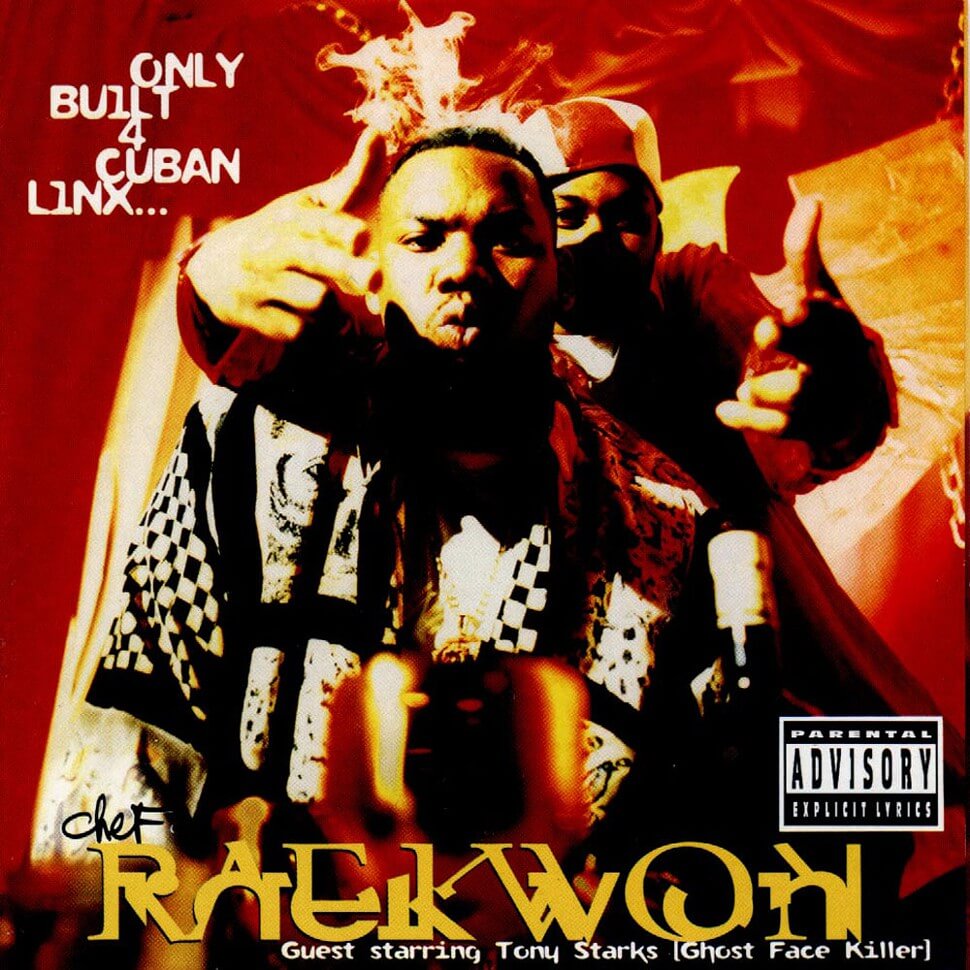
Raekwon’s Only Built 4 Cuban Linx… takes the street narratives associated with Wu-Tang Clan and gives them the scope of a feature-length crime film. The 1995 album follows a fictional underworld populated by hustlers, dealers, ambitious young criminals, and men reflecting on the consequences of their choices. Raekwon occupies the lead role, while Ghostface Killah appears throughout as his most compelling partner in crime. Their exchanges give the record much of its personality, with Ghostface’s animated delivery providing a striking counterpoint to Raekwon’s detailed, measured accounts.
RZA’s production ties the narrative together. His beats draw on soul samples, eerie melodic fragments, sharp strings, and rugged drums, creating a sound that is atmospheric without losing its physical impact. “Criminology” sets the tone with its menacing loop and tightly wound verses, while “Glaciers of Ice” pushes the album into stranger territory, its sinister instrumental giving Raekwon, Ghostface, and Masta Killa room to trade intricate rhymes. “Incarcerated Scarfaces” is another highlight, built around a memorable piano figure and Raekwon’s assured account of street ambition and its consequences.
Raekwon’s writing is packed with slang, coded references, brand names, criminal detail, and sharply observed characters. The density of his language gives the album a world of its own, though Ghostface often steals the scene. His performances bring urgency and emotional volatility to the duo’s exchanges, particularly on “Rainy Dayz,” where the grim subject matter is matched by a more soulful production. Their partnership reaches another level on “Verbal Intercourse,” with Nas joining them for one of the album’s most memorable collaborations. All three MCs deliver reflective verses shaped by street experience, ambition, and the costs of survival.
The skits and recurring dialogue give the record a loose narrative framework, while tracks such as “Ice Cream” and “Wu-Gambinos” expand its cast and atmosphere. “Heaven & Hell” closes the album on a more contemplative note, bringing its street tales back to the people living with their consequences.
Only Built 4 Cuban Linx… is one of the great achievements of the Wu-Tang universe, with Raekwon’s vivid writing, Ghostface’s unpredictable presence, and RZA’s richly detailed production working in remarkable harmony. Its influence on mafioso rap is unmistakable, but the album’s greatest strength lies in the depth and character of the world it creates.
Show & AG - Goodfellas (1995)

Show & AG’s Goodfellas finds the Bronx duo operating in a darker register than on their debut, Runaway Slave. The album trades some of that record’s exuberance for a heavier, more confrontational mood, with AG’s battle-tested rhymes and Showbiz’s increasingly rugged production giving the music a distinctly street-level character. There is little interest in polish or commercial compromise here. The focus stays on sharp lyricism, hard beats, and the competitive spirit that defined so much of New York’s underground in the mid-1990s.
Showbiz handles most of the production, drawing on thick basslines, forceful drums, horns, and shadowy melodic fragments. “Never Less Than Ill” is an immediate highlight, its booming percussion and piercing horn arrangement providing a suitably imposing backdrop for AG. The album also features two versions of “Next Level,” each with a different character. Showbiz’s original has a more buoyant feel, while DJ Premier’s “Nyte Tyme Mix” takes the track into darker territory, using a creeping melody and carefully controlled rhythm to create one of the album’s strongest moments.
AG is in commanding form throughout. His high-pitched delivery cuts through the dense production, and his verses are packed with punchlines, challenges, and street observations. “You Know Now” captures his competitive instincts particularly well, while “I’m Not the One” takes a more narrative approach, recounting a botched robbery with a sharp sense of detail and irony. The contrast gives the album some welcome variety without softening its tough-minded character.
The guest appearances bring additional personalities into the mix. “Got the Flava” is a particularly lively posse cut, with Method Man, Party Arty, and other MCs joining the proceedings. Party Arty also makes a strong impression on “Neighbahood Sickness,” where his aggressive delivery matches the menace of Showbiz’s production. These contributions add to the album’s crew-oriented atmosphere without distracting from the central partnership.
There are moments when Goodfellas leans heavily on familiar battle-rap formulas, but its strongest material has plenty of character. Showbiz’s production and AG’s forceful performances give the album a distinctive Bronx identity, with “Next Level (Nyte Tyme Mix)” and “Never Less Than Ill” among its clearest highlights.
AZ – Doe Or Die (1995)
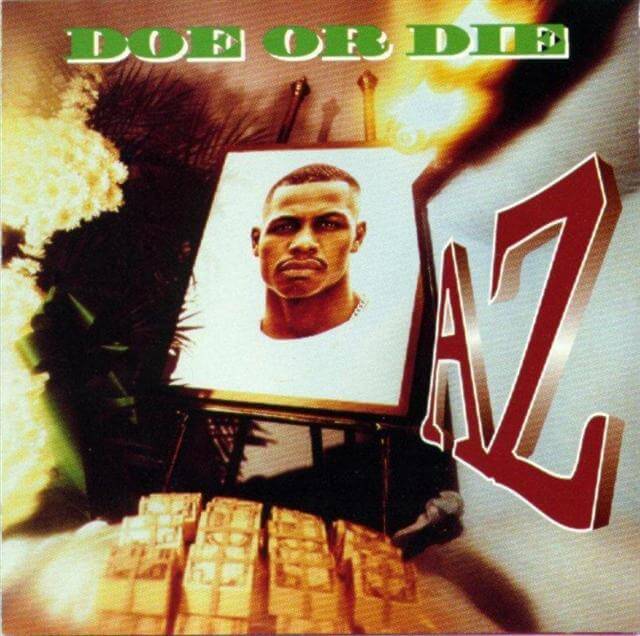
AZ entered the solo spotlight with an advantage few debuting MCs have ever enjoyed: his verse on Nas’s “Life’s a Bitch” had already announced a formidable talent. Doe or Die gave him room to develop that promise across an entire album. The 1995 release draws on the mafioso imagery gaining prominence in New York rap, with AZ moving between street-level accounts, extravagant hustler fantasies, and reflections on the risks attached to chasing money and status. His smooth, rhythmically precise delivery gives the material an unmistakable character. Even when the subject matter turns grim, his flow rarely loses its composure.
“Uncut Raw” opens the album with a restrained, shadowy beat that leaves plenty of space for AZ’s intricate writing. His multisyllabic rhyme patterns are remarkably fluid, but technical ability never becomes an end in itself. On “Gimme Yours,” Pete Rock supplies a breezier backdrop, while Nas’s hook adds to the song’s reflective mood. AZ moves easily between ambition and caution, describing the attractions of wealth alongside the suspicion and uncertainty that accompany life in the game.
The production changes character from track to track. Buckwild brings a relaxed funk to “Ho Happy Jackie,” allowing AZ’s wit to come through in a tale about materialism and manipulation. Pete Rock’s work on “Rather Unique” is more intricate, with a hypnotic melodic loop that gives AZ plenty of room to demonstrate his control of rhythm and rhyme. These are two very different settings, but each brings out a different side of his writing.
“Sugar Hill” became the album’s most recognizable track, pairing L.E.S.’s laid-back production with Miss Jones’s soulful hook. Its easygoing appeal contrasts with the darker material elsewhere, particularly “Mo Money Mo Murder (Homicide).” Produced by D/R Period and featuring Nas, the song unfolds as a chilling account of betrayal, greed, and violence. The two Queens MCs make an effective pairing, their contrasting styles adding tension to the narrative.
The production is not entirely consistent, and some tracks make a stronger impression than others. AZ’s performance, however, gives Doe or Die a clear identity. He brought exceptional technical skill, a distinctive sense of melody, and an unusually polished delivery to New York’s mid-1990s street rap landscape. “Rather Unique,” “Sugar Hill,” and “Mo Money Mo Murder” capture the range of an album that moves between the rewards imagined by the hustler and the dangers waiting around the corner.
Smif-n-Wessun – Dah Shinin’ (1995)

Brooklyn’s Bucktown identity runs through every corner of Smif-n-Wessun’s Dah Shinin’. Tek and Steele made their full-length debut in 1995 with an album that captures the chemistry of two MCs who know exactly how to work together. Their conversational exchanges, rough-edged voices, and shared Jamaican heritage give the record a character distinct from the other releases emerging from the Boot Camp Clik circle. Da Beatminerz provide the ideal setting, building a sound steeped in murky samples, heavy drums, and a distinctly Brooklyn sense of menace.
“Bucktown” is the obvious centerpiece, its hypnotic saxophone loop and forceful rhythm providing the backdrop for a declaration of neighborhood pride. The track helped give Smif-n-Wessun their identity, with Tek and Steele presenting Bucktown as a place defined by danger, loyalty, and local reputation. Da Beatminerz keep the arrangement spare, allowing the loop to settle in while the drums do the heavy lifting. That approach runs through much of the album, though the production has enough variation to keep the lengthy tracklist engaging.
The duo’s Jamaican roots come into sharper focus on “Sound Bwoy Bureill,” where patois, reggae references, and hardcore boom-bap meet in a particularly effective combination. Tek and Steele sound completely at ease with the cultural references and the competitive edge of the track. “Wrektime” and “Wontime” lean into their harder side, driven by forceful performances and the kind of rugged production that became synonymous with the Boot Camp Clik sound.
There are more atmospheric moments, too. “Hallucination” uses an eerie whistling motif to create a sense of late-night unease, while “Cession At Da Doghillee” brings several Boot Camp Clik affiliates together for a loose, energetic posse cut. The latter is a little chaotic, but that only adds to its appeal. Throughout the album, Tek and Steele keep their performances grounded in the same world of street talk, weed, weapons, and neighborhood codes. Their subject matter rarely strays far, but the strength of their partnership and the character of the production make the repetition part of the record’s overall identity.
At close to 70 minutes, Dah Shinin’ is a substantial listen, though its consistent atmosphere and strong run of tracks carry it through. The album captures the sound and attitude of Brooklyn’s underground at a particularly fertile moment, with “Bucktown” providing a fitting introduction to one of the era’s most distinctive duos.
Onyx – All We Got Iz Us (1995)

Onyx had already established a reputation for explosive, confrontational Hip Hop with Bacdafucup, but All We Got Iz Us takes a considerably darker turn. The group’s second album, released in 1995, strips away much of the manic party energy of its predecessor and replaces it with a bleak portrait of street life shaped by violence, paranoia, and fatalism. Sticky Fingaz and Fredro Starr sound consumed by the world they describe, their raspy, abrasive deliveries giving the material an intensity that rarely lets up.
The opening “Life or Death (Skit)” introduces the album’s central preoccupation through Sticky Fingaz’s internal debate over pulling the trigger. From there, “Last Dayz” establishes the record’s oppressive mood, with a slow, ominous instrumental accompanying lyrics about mortality and the daily struggle to survive. The title track takes a similarly bleak view of life in the streets, its atmosphere reflecting the album’s sense of isolation and distrust. Sticky’s performances are especially striking. His unpredictable vocal attack often borders on hysteria, while Fredro’s lower, forceful delivery provides a different kind of menace.
The production is deliberately rough around the edges. Onyx and their collaborators favor dark loops, rumbling bass, and unsettled rhythms over the more immediate, sample-driven approach associated with much of the group’s earlier work. “Walk in New York” turns the city into a hostile environment, while “Shout” channels the group’s aggression into a more direct, hard-hitting performance. “Betta Off Dead” takes a slower route, but its atmosphere is no less disturbing. The album’s sound is cohesive without relying on one formula, moving between grim introspection and bursts of barely contained anger.
What makes All We Got Iz Us particularly compelling is the way its nihilism becomes part of the group’s identity. Onyx rarely offer an escape from the circumstances they describe, and even the moments of reflection are colored by suspicion and resignation. Their approach can be exhausting by design, but the conviction behind it is difficult to dismiss.
The album lacks the immediate accessibility of Bacdafucup, and its relentless darkness leaves little room for contrast. That is also what gives it its own place in Onyx’s catalogue. All We Got Iz Us captures the group at their most severe, with “Last Dayz” and the title track among their starkest recordings.
Jay Z - Reasonable Doubt (1996)

Jay-Z’s Reasonable Doubt has a smoother surface than most of the albums on this list, but its subject matter is every bit as rooted in New York street life. From the opening moments, his 1996 debut presents the hustler’s world through the eyes of someone who understands its codes, rewards, and dangers. Jay’s conversational delivery makes his intricate rhyme schemes sound effortless, while his dry humor and sharp observations keep the stories grounded. Beneath the designer clothes, expensive cars, and accounts of criminal success, there is a recurring awareness of the risks and compromises behind the lifestyle.
The production is a major part of the album’s identity. Ski, DJ Premier, Clark Kent, and others build a rich backdrop from soulful samples, jazz-inflected instrumentation, and measured boom-bap drums. The sound is polished compared with the harsher records elsewhere on this list, but the street perspective never gets diluted. “Can’t Knock the Hustle,” featuring Mary J. Blige, introduces Jay’s combination of ambition and reflection, while “Dead Presidents II” turns its memorable sample into a meditation on money, survival, and the pursuit of success. On “Brooklyn’s Finest,” he shares the spotlight with The Notorious B.I.G., and the two Brooklyn MCs trade verses with the ease of seasoned rivals.
Jay’s writing is at its most compelling when he examines the psychological costs of hustling. “D’Evils” explores greed, paranoia, and the damage ambition can inflict, with Jay tracing the way money and power distort relationships. “Regrets” looks back at personal losses and difficult choices, giving the album some of its most reflective moments. “Feelin’ It,” by contrast, offers a glimpse of the rewards, although even here the guarded outlook never disappears. The confidence is real, but so is the awareness that everything gained can be lost.
Reasonable Doubt did not make Jay-Z an overnight superstar. His later commercial success would take him in a very different direction, but this debut remains firmly connected to the street narratives that shaped his early career. Its production may be more refined than the sound of Mobb Deep, M.O.P., or Capone-N-Noreaga, but the hustler’s perspective is every bit as uncompromising. For us, it is one of Jay-Z’s finest albums and a defining New York rap record, with a level of lyrical detail and musical sophistication that rewards repeated listening.
Heltah Skeltah – Nocturnal (1996)

By the time Heltah Skeltah released Nocturnal in 1996, the Boot Camp Clik had developed a recognizable sound built on rugged beats, forceful deliveries, and Brooklyn street-level perspective. Ruck and Rock brought a different kind of chemistry to that formula. Ruck, later known as Sean Price, favored sharp punchlines, bizarre humor, and tightly packed rhymes, while Rock’s booming baritone and unpredictable phrasing gave the duo a more unruly edge. Their debut thrives on the contrast, with neither MC content to play a supporting role.
Da Beatminerz handle much of the production, supplying the murky, sample-heavy backdrop associated with the Duck Down camp. “Leflaur Leflah Eshkoshka” is an immediate highlight, its hypnotic bassline providing a strong foundation for the duo’s competitive exchanges. “Operation Lockdown” takes a different approach, built around a lush harp sample that gives the track an unusually melodic quality without sacrificing its hard-edged character. The contrast between the elegant loop and the force of the drums is particularly effective. Across the album, the production moves between ominous samples, heavy percussion, and soulful fragments, giving Nocturnal a distinctive atmosphere.
The chemistry between Ruck and Rock is at its best on “Therapy,” a darkly comic exchange framed as a psychiatric session. Ruck’s Dr. Kill Patient persona questions Rock, whose responses move between aggression, absurdity, and reluctant introspection. It’s an inventive way to bring their personalities together, and one of the album’s most memorable tracks. Elsewhere, “Clan’s, Posse’s, Crew’s & Clik’s” is driven by the competitive spirit of the Boot Camp collective, while “Letha Brainz Blo” finds the duo in a more threatening, straight-ahead mode.
The writing is full of street references, battle-rap boasts, and elaborate wordplay. Ruck’s punchlines often arrive with an unexpected twist, while Rock’s deeper voice and less predictable rhythms make his verses equally engaging. Their styles are different enough to keep the exchanges lively, but they share an instinct for humor that separates Nocturnal from some of the more uniformly grim records of the period.
The album has its rough patches, including skits that interrupt the momentum and a few tracks that make less of an impression. Its strongest moments, however, reveal a duo with an unusually distinctive partnership. Nocturnal gave the Boot Camp Clik catalogue one of its most entertaining releases, with “Leflaur Leflah Eshkoshka” and “Therapy” capturing the contrasting sides of Heltah Skeltah’s appeal.
OGC – Da Storm (1996)
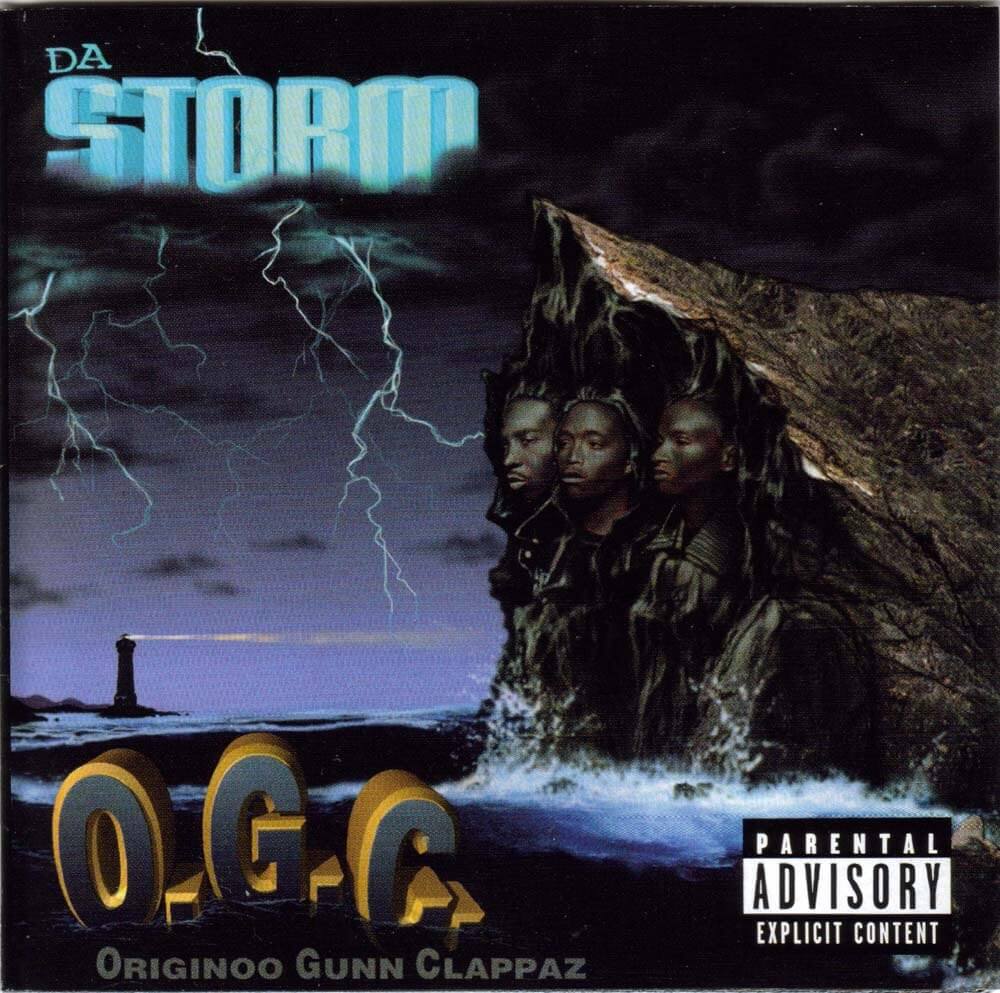
O.G.C. (Originoo Gunn Clappaz) brought a particularly confrontational edge to the Boot Camp Clik catalogue with Da Storm. Starang Wondah, Top Dog, and Louieville Sluggah had appeared alongside their fellow Duck Down artists, but their 1996 debut gave the trio space to develop a collective identity of their own. The album is built around forceful deliveries, crew loyalty, and competitive street rap, with little interest in smoothing out its rough edges.
Da Beatminerz provide much of the musical identity, favoring murky samples, heavy drums, and basslines that give the tracks a dense, unsettled atmosphere. “No Fear” is among the most confrontational moments, with the trio’s aggressive performances reinforcing the track’s title. Its subliminal shots at Biggie and Junior M.A.F.I.A. add a distinctly Brooklyn dimension to the hostility. Starang Wondah is particularly commanding, his sharp delivery and punchline-heavy writing often drawing the listener’s attention, while Top Dog and Louieville Sluggah bring contrasting voices to the group dynamic.
Starang takes the spotlight on “Hurricane Starang,” one of the album’s strongest tracks. He moves through the beat with confidence and precision, packing his verses with direct threats and clever wordplay. The performance gives the song an immediate personality, while the stripped-back production leaves little to distract from his delivery. It is an effective demonstration of why Starang became one of the more recognizable voices in the Boot Camp circle.
Elsewhere, “God Don’t Like Ugly” and “Danjer” keep the atmosphere dark and uncompromising. The production is consistently rugged, with eerie loops and thick percussion supporting verses rooted in street codes, confrontation, and lyrical competition. The three MCs have distinct styles, though the album’s strongest moments tend to arrive when Starang’s personality takes center stage. The group chemistry is solid, and their shared sense of purpose gives the record cohesion.
Da Storm arrived after several of the collective’s most celebrated releases, and it inevitably lives in their shadow. Still, O.G.C. bring enough character to the Boot Camp formula to make their debut worthwhile. “Hurricane Starang” is the standout, while the album as a whole offers another compelling document of Brooklyn’s rugged mid-1990s underground.
Ghostface Killah - Iron Man (1996)
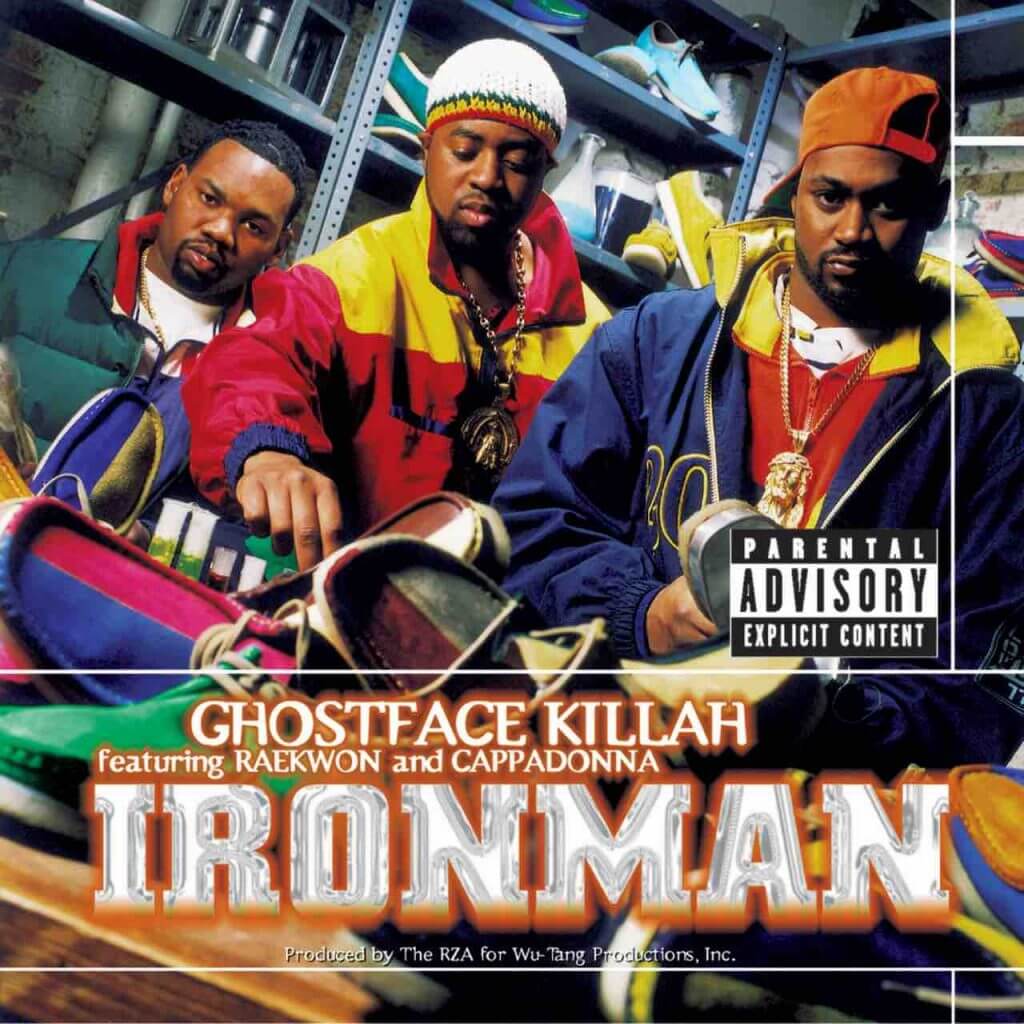
Ghostface Killah’s Ironman deserves its place on a list of New York’s gritty street rap albums because its soulful production and personal storytelling never soften its connection to the street. The album is steeped in the crime narratives, hustler mentality, neighborhood loyalties, and everyday struggles that run through the best mid-1990s New York rap. Having made a major impression on Raekwon’s Only Built 4 Cuban Linx..., Ghostface now takes center stage, bringing his own distinctive perspective to the mafioso imagery and street-level storytelling associated with Wu-Tang Clan. His raspy, animated delivery is full of abrupt shifts, vivid observations, strange details, and emotional intensity. With RZA handling the production and Raekwon and Cappadonna frequently alongside him, Ghostface creates a world where crime stories, childhood memories, street philosophy, and eccentric humor coexist naturally.
“Iron Maiden” sets the tone with ominous strings and densely packed verses from Ghostface, Raekwon, and Cappadonna. “260” takes us into a robbery that spirals out of control, with Ghostface and Raekwon turning a crime story into an unpredictable sequence of events. “Assassination Day,” featuring RZA, Inspectah Deck, and The Sunz of Man, brings a particularly vicious edge, while “Winter Warz” gives Cappadonna the opportunity to deliver one of the most memorable guest verses of the era. These tracks place Ironman squarely within the street rap tradition, with the vivid detail and uncompromising attitude that define the album.
The album’s emotional center is “All That I Got Is You.” Over a soulful arrangement, Ghostface revisits a childhood shaped by poverty, recalling the hardships of family life with an openness that gives the song considerable weight. Mary J. Blige’s contribution deepens the emotion without taking attention away from Ghost’s account. This perspective matters: the album’s street narratives are grounded in the circumstances that shape people’s lives, not simply in gangster imagery. “Daytona 500,” built around RZA’s exhilarating reworking of Bob James’ “Nautilus,” provides a sharp contrast, sending Ghostface, Raekwon, and Cappadonna through their verses at full speed. “Motherless Child” offers another reflective moment, drawing on the Delfonics for a meditation on loss and hardship.
RZA’s soul and funk samples give Ironman a distinctive musical identity, balancing warmth and nostalgia with the harder edge of its street narratives. The album may sound more varied and soulful than some of the other records on this list, but its subject matter, lyrical perspective, and street-level detail are never in doubt. Ironman captures the realities behind the bravado, from the pursuit of money and the threat of violence to the poverty and family struggles that shape Ghostface’s outlook. That combination makes it one of the most rounded and compelling street rap albums of its era.
Mobb Deep – Hell On Earth (1996)

Mobb Deep’s Hell on Earth finds Havoc and Prodigy pushing the atmosphere of The Infamous into even bleaker territory. The Queensbridge duo had already established their reputation with tales of street violence, paranoia, and survival. Here, those themes take on an almost claustrophobic intensity. The outside world offers little relief, trust is scarce, and every encounter carries the possibility of betrayal.
Havoc’s production gives the album much of its character. His beats rely on eerie samples, understated drums, and basslines that create tension without crowding the verses. “G.O.D. Pt. III” is a prime example, its haunting piano and ominous loop setting the scene for another account of street-level suspicion. The title track, “Hell on Earth (Front Lines),” has a similarly hypnotic pull, while “Drop a Gem on ’Em” turns the duo’s hostility toward the people they considered enemies. Havoc’s approach is economical, with small changes in the loops and arrangements doing much of the work.
Prodigy remains the focal point on the microphone. His delivery is controlled and matter-of-fact, which makes his violent imagery all the more unsettling. He rarely needs to raise his voice to make a threat convincing. Havoc provides an effective counterpoint, and their chemistry gives the record its distinctive character. The two sound completely at home in this bleak version of Queensbridge, where caution and aggression are necessary tools for getting through the day.
The guest appearances are carefully chosen. Nas joins the duo on “Give It Up Fast,” bringing another Queensbridge perspective, while Method Man adds a particularly forceful verse to “Extortion.” Raekwon appears on “Nighttime Vultures,” a natural fit given the shared criminal imagery and cinematic approach that runs through much of the Wu-Tang and Mobb Deep catalogues.
Hell on Earth is a demanding record in its sustained intensity, but that consistency is central to its appeal. “G.O.D. Pt. III,” the title track, and “Drop a Gem on ’Em” rank among Mobb Deep’s strongest recordings, while the album as a whole captures Havoc and Prodigy at the height of their creative partnership. Where The Infamous introduced their bleak Queensbridge world to a wider audience, Hell on Earth takes us deeper inside it.
M.O.P. – Firing Squad (1996)
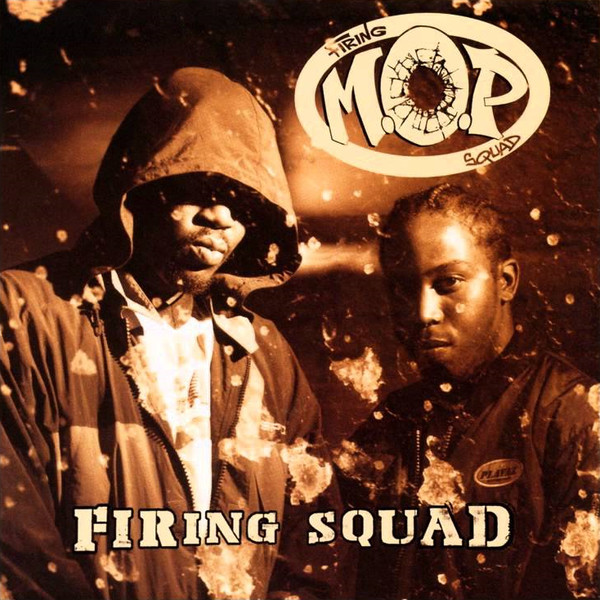
Brownsville, Brooklyn gets the full M.O.P. treatment on Firing Squad: hostile, loud, and entirely on the duo’s terms. Billy Danze and Lil’ Fame had already established their chemistry on To the Death, but their second album finds them sounding even more forceful. Their gravelly voices attack the beats from different angles, with Danze bringing a booming authority and Fame delivering his lines with a sharper, more volatile edge. Neither MC shows much interest in subtlety, and the album rarely gives the listener a chance to catch their breath.
DJ Premier handles several of the album’s strongest productions, giving M.O.P. the kind of hard-edged musical backdrop that suits their approach. “Brownsville” and “Downtown Swinga (’96)” are immediate highlights, built around rugged loops and crisp drums that leave plenty of room for the duo’s booming deliveries. Premier’s cuts and sample choices add character without softening the impact. Jaz-O and Laze E Laze contribute elsewhere, keeping the production firmly in the same rough-edged territory.
The title track is another standout. Its ominous piano and heavy percussion provide a fitting backdrop for M.O.P.’s battle-ready performances, while “New Jack City” finds the duo taking aim at rappers they consider disrespectful to the culture. “Born 2 Kill” returns to the violent street narratives that run throughout the record, and “Brownsville” gives their neighborhood a central place in the album’s identity. These are familiar subjects for M.O.P., but few groups delivered them with comparable conviction.
“Stick to Ya Gunz,” featuring Kool G Rap, is one of the album’s strongest collaborations. G Rap’s intricate rhyme patterns offer a different kind of lyrical intensity, and he fits naturally alongside Billy and Fame. The duo’s chemistry remains the main attraction, though. Their voices, phrasing, and shared appetite for confrontation give the record a distinctive personality that no guest appearance needs to supply.
At 18 tracks, Firing Squad occasionally stretches its formula, and not every cut hits with the same force. Still, the strongest material is formidable. “Downtown Swinga (’96),” “Brownsville,” and the title track capture M.O.P. at full strength, representing the uncompromising Brownsville style they had been developing since their debut.
Nas - It Was Written (1996)
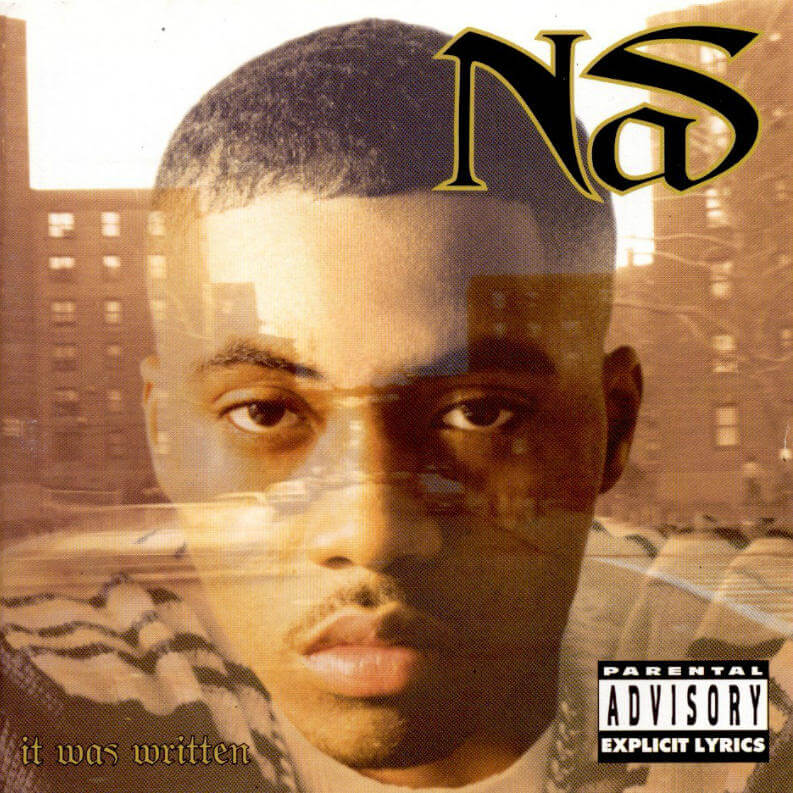
Following Illmatic was never going to be easy, and Nas chose not to repeat its formula. With It Was Written, he moved away from the dusty, stripped-down production and close-up Queensbridge portraits of his debut, embracing a more polished sound and the cinematic language of gangster films. The change initially divided some longtime fans, but the album reveals an MC expanding his subject matter and ambitions while retaining the sharp writing and commanding presence that made Illmatic so special. Its production may be smoother than that of most records on this list, but its attitude remains firmly rooted in New York street rap.
Trackmasters supply much of the album’s sleek, sample-driven foundation, while Havoc, DJ Premier, and Dr. Dre bring their own distinctive approaches. Nas adapts to the different settings with ease. On “The Message,” he reflects on betrayal, fame, and the dangers of success, opening the album with a sense of foreboding. “I Gave You Power” is an especially inventive piece of storytelling, narrated from the perspective of a gun. Nas turns an everyday instrument of street violence into a character with a history, a purpose, and an uncertain fate. It is one of the clearest examples of his imagination at work.
The gangster-film influence is more explicit on “Shootouts,” where Havoc’s ominous piano loop provides the backdrop for Nas’s accounts of street ambition and confrontation. “Affirmative Action” brings together Nas, AZ, Cormega, and Foxy Brown as The Firm, with all four MCs contributing to a memorable posse cut. Elsewhere, “Street Dreams” gives the hustler narrative a smoother, more accessible setting, while “If I Ruled the World (Imagine That),” featuring Lauryn Hill, balances Nas’s street perspective with a vision of a better future. “Black Girl Lost” shifts the focus again, addressing the circumstances and vulnerabilities facing young women in the same environment.
It Was Written does not have the concentrated intensity of Illmatic, and its more commercial direction occasionally comes at the expense of the raw immediacy associated with Nas’s debut. Still, the lyrical ambition is unmistakable. The album belongs on a list of New York street rap classics because its polished presentation never obscures the worldview underneath. Nas was already thinking beyond the boundaries of Queensbridge, and here he gave that perspective a wider cinematic scope.
Wu-Tang Clan – Wu-Tang Forever (1997)
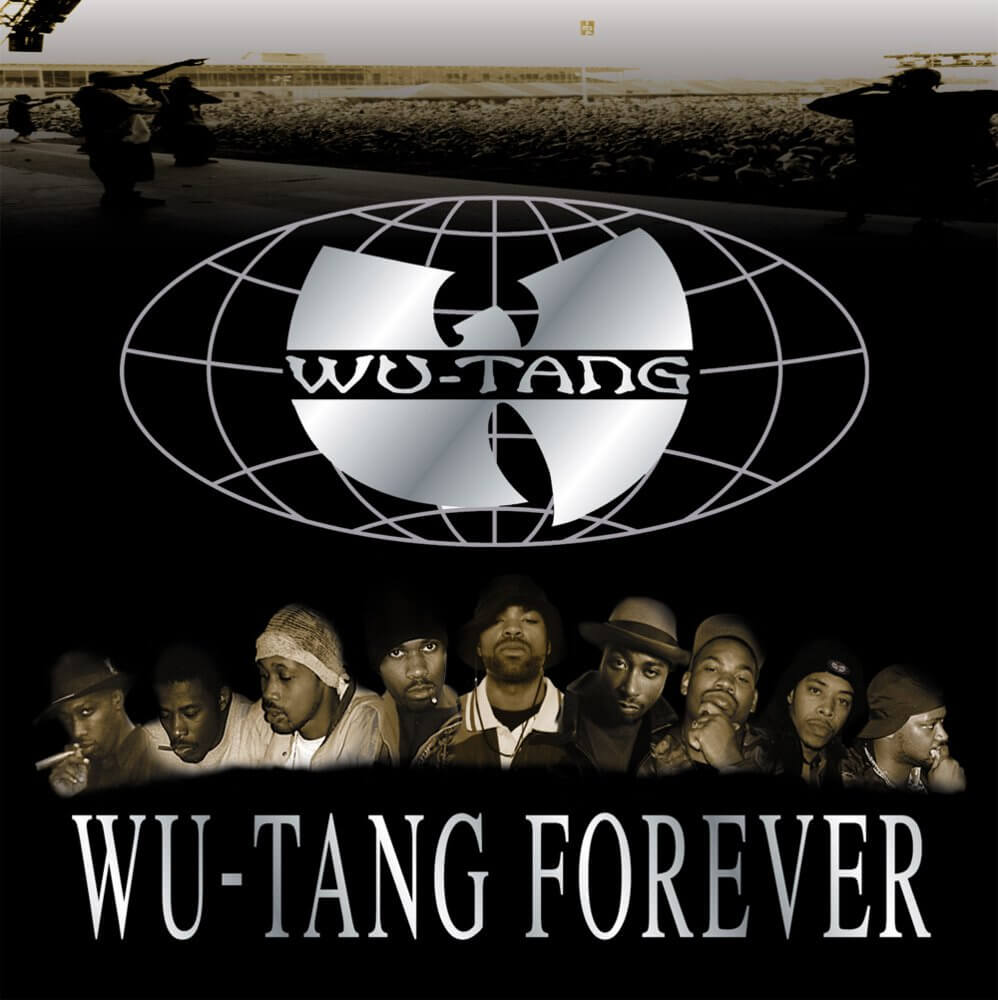
Wu-Tang Clan’s Wu-Tang Forever belongs on a list of New York street rap albums because, beneath its expanded musical palette and Five-Percent Nation teachings, its foundation remains firmly rooted in the realities, language, and competitive spirit of the city’s streets. The Clan had spent the years following Enter the Wu-Tang (36 Chambers) building an empire through a remarkable run of solo albums. By the time the nine members reunited in 1997, they had developed distinct identities and sharpened their individual approaches to street narratives, martial arts imagery, and lyrical combat. Wu-Tang Forever brings those strands together on a much larger scale.
RZA’s production had moved beyond the stripped-down, dusty beats of the debut. Strings, heavy synthesizers, chopped soul samples, and cinematic arrangements give the double album a grander, sometimes almost orchestral character. The music is still built around hard drums and unsettling textures, though, with plenty of the tension and menace associated with the Clan’s earlier work. On “Cash Still Rules/Scary Hours,” the group returns to the economics and paranoia of street life, while “The City” places Inspectah Deck alone in a vivid portrait of urban survival. “The Projects” and “Little Ghetto Boys” keep the focus on the people and circumstances behind the mythology.
The Mafioso influence developed on Raekwon’s Only Built 4 Cuban Linx… also runs through the album. Ghostface and Raekwon continue to populate their verses with criminal characters, coded conversations, drug money, and shifting loyalties. On “Impossible,” Ghostface delivers one of his most memorable performances, weaving street imagery into a dense, surreal account of violence and survival. Elsewhere, “Heaterz” and “Hellz Wind Staff” bring the Clan’s competitive instincts to the foreground, with MCs trading verses over forceful production.
Then there is “Triumph.” With nine consecutive verses, no conventional chorus, and an extraordinary Inspectah Deck performance, the track places lyrical ability ahead of radio convention. Its structure captures the album’s central appeal: a collection of MCs competing for space, each bringing a different voice and technique to the same circle. “For Heaven’s Sake,” “Severe Punishment,” and “As High as Wu-Tang Get” draw on that same cypher mentality.
At nearly two hours, Wu-Tang Forever is an imposing listen, and the second disc has its less memorable stretches. Its scale, however, reflects the group’s ambition at the time. The Clan had no interest in sanding down its identity for mainstream acceptance. Even with its richer production and broader themes, this is street rap on Wu-Tang’s terms: expansive, confrontational, steeped in New York life, and driven by nine MCs determined to outdo one another.
Capone-n-Noreaga – The War Report (1997)

Capone-N-Noreaga’s The War Report gives Queens street life the treatment of a military campaign, complete with coded language, shifting alliances, and the constant threat of violence. With Capone incarcerated during much of the album’s recording and release, Noreaga carries a large share of the vocal duties. His loose, unpredictable delivery gives the record an unusual character, moving between conversational asides, sudden bursts of aggression, and vivid street narratives. Tragedy Khadafi is equally important to the album’s identity, appearing throughout with the authority of an MC whose experience informs the world the duo are describing.
The production draws heavily on the bleak atmosphere associated with mid-1990s New York rap. Havoc contributes “Parole Violators” and “Illegal Life,” two tracks that bring the shadowy textures of Mobb Deep’s Queensbridge sound into the CNN universe. “T.O.N.Y. (Top of New York)” is another defining moment, its ominous bassline and hard drums giving Noreaga a fitting platform for his account of the drug trade and the pursuit of money. Across the record, the beats are rugged and often sparse, leaving the voices and street narratives at the center.
Noreaga’s unconventional flow is the album’s most distinctive feature. He doesn’t always follow predictable rhythmic patterns, and his delivery gives even familiar subject matter a sense of instability. “Live on Live Long” and “Halfway Thugs” capture that quality particularly well. Capone’s appearances are less frequent, but his deeper, more restrained voice provides a useful contrast. On “Bloody Money,” his measured delivery brings a fatalistic edge to the album’s recurring themes of ambition, loyalty, and the costs of street life.
Tragedy Khadafi’s contribution reaches well beyond a handful of guest verses. His presence on “Stick You” and “Neva Die Alone” gives the record another lyrical dimension, with his dense writing and Five Percenter references adding philosophical weight to the street accounts. His role as mentor and collaborator is central to the chemistry between the three MCs.
Gunshot interludes and recurring war imagery give The War Report a loose narrative framework, while its strongest tracks provide a vivid portrait of Queens at a particular moment. The album can be uneven, but its identity is unmistakable. Noreaga’s eccentric delivery, Capone’s hard-edged presence, and Tragedy Khadafi’s commanding performances make this one of the most distinctive New York street rap albums of the late 1990s.
Kool G Rap - Roots Of Evil (1998)

Kool G Rap’s Roots of Evil is an interesting inclusion on a list of New York street rap albums because it was recorded away from New York, during a period when the MC was deliberately distancing himself from the city. But geography alone doesn’t determine the character of a record. G Rap may have made the album in Arizona, but its stories, characters, language, and criminal underworld are firmly rooted in the Queens street narratives he had spent years developing. In many ways, the distance gave him room to take that approach to an even darker extreme.
Where 4,5,6 had a relatively polished sound, Roots of Evil returns to the harsher, more claustrophobic side of G Rap’s music. Dr. Butcher, CJ Moore, Fade, and the other producers build a backdrop of ominous keyboards, sparse drums, and minor-key samples that suits the album’s grim subject matter. “Hitman’s Diary” introduces the listener to a world of professional violence, while “One Dark Night” sets a foreboding tone in barely two minutes. The production is less concerned with radio appeal than with giving G Rap space to construct his stories.
The writing is the real reason Roots of Evil belongs here. On “Foul Cats,” G Rap spins a revenge story involving a kidnapping, a drug stash, and a brutal execution, filling in the details with the precision of a crime novelist. “A Thug’s Love Story (Chapter I, II, III)” takes its time unfolding a tale of romance, criminal ambition, and violence, while “Home Sweet Funeral Home” and “Hitman’s Diary” explore the deadly consequences of life in the underworld. G Rap’s intricate internal rhymes and breathless delivery give these narratives an extraordinary amount of detail. He doesn’t rely on broad gangster posturing; he builds scenes, develops characters, and follows the consequences of their decisions.
There are moments of variation, too. “Can’t Stop the Shine,” featuring Miss Jones, has a smoother R&B sensibility, while “Mafioso” and “Mobsta’s” return to the album’s criminal worldview. The contrast never feels like a departure from G Rap’s identity. Even when he raps about wealth and status, the perspective remains that of someone who knows the dangers and compromises behind the lifestyle.
The Arizona setting is an interesting footnote, but Roots of Evil belongs to the New York street rap tradition through and through. Its stories grow out of the Queens underworld that informed G Rap’s earlier work, and its writing carries the same attention to street codes, violence, loyalty, and survival. The city is present in the album’s imagination even when the MC is recording hundreds of miles away. Roots of Evil is one of G Rap’s darkest and most uncompromising statements, a late-1990s continuation of the New York crime narratives he helped bring to the forefront.