

Ice-T is one of Hip Hop’s most enduring icons and a genuine pioneer of West Coast gangsta rap. Active since the early 1980s, he was documenting Los Angeles street life before gangsta rap became a national phenomenon. His 1986 single “6 in the Mornin'” was a defining early example of the style, laying down a blueprint that would influence generations of West Coast MCs, including N.W.A. Ice-T had a natural gift for turning street experiences into compelling narratives, delivered in a conversational style that made his stories sound like firsthand accounts rather than elaborate gangster fantasies.
What separates Ice-T from many of the artists who followed in his wake is the intelligence and perspective behind his music. He never approached the gangsta lifestyle with uncomplicated admiration. His lyrics could be hard, funny, provocative, and brutally direct, but there was usually another layer to them. Ice-T understood the attraction of the outlaw image while recognizing the consequences of living that way. His music frequently carried a warning beneath the bravado, reflecting his own decision to pursue a music career rather than remain caught up in street life. That combination of authenticity, dry humor, social awareness, and sharp storytelling gave him a personality that countless imitators struggled to reproduce.
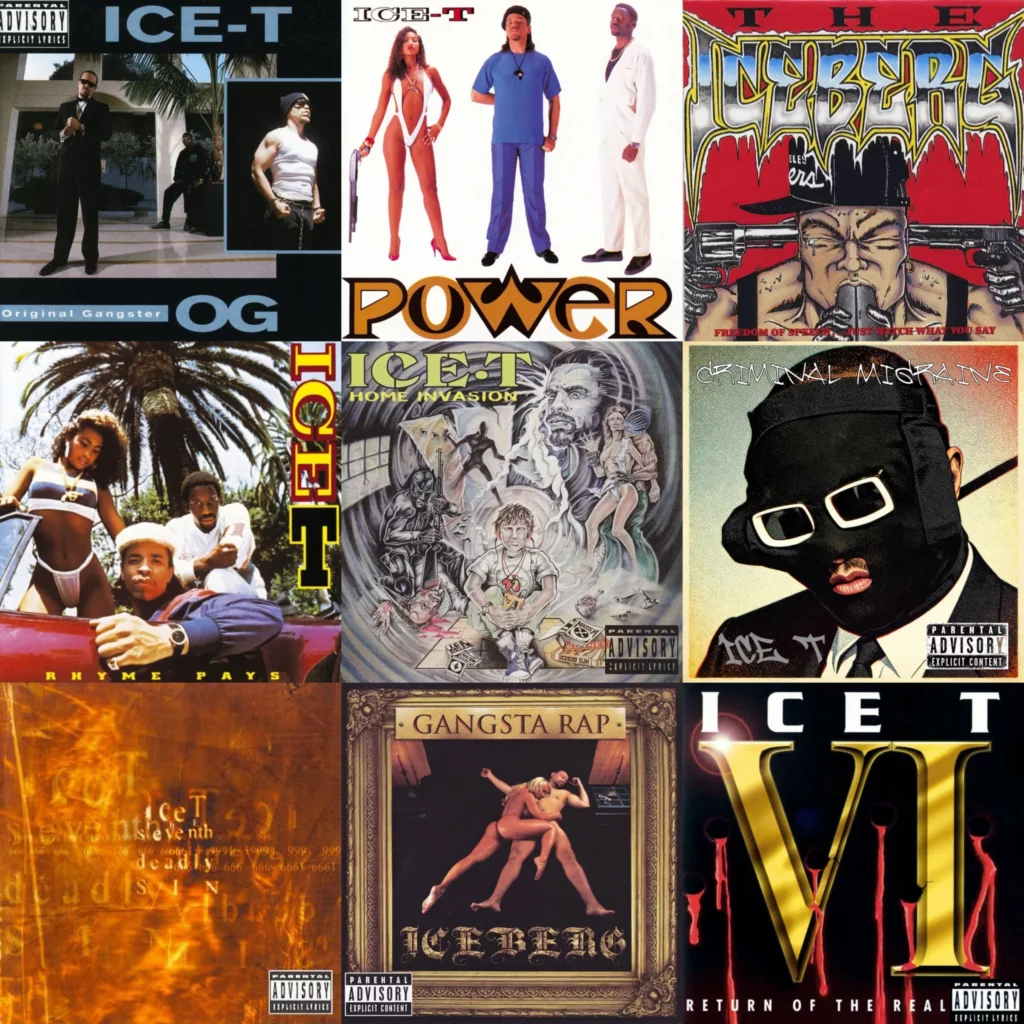
His first four solo albums form an exceptional run. Rhyme Pays (1987) introduced his distinctive approach to a wider audience, followed by the harder, more assured Power (1988). With The Iceberg/Freedom of Speech… Just Watch What You Say! (1989), he expanded his subject matter to censorship, politics, and freedom of expression. O.G. Original Gangster (1991) brought together the different sides of his personality across an ambitious double album, while introducing listeners to Body Count, the hardcore band that would become another major part of his career. The non-album single “Colors,” recorded for the 1988 film of the same name, also belongs among his finest achievements, offering a gripping account of Los Angeles gang culture without romanticizing its realities.
Ice-T’s subsequent career took him well beyond Hip Hop, most visibly through his work with Body Count and his successful acting career. His documentary The Art of Rap and the accompanying festival series also reflected his longstanding commitment to the culture. Despite his mainstream celebrity, he has never lost his credibility within Hip Hop. He has always remained recognizably himself.
For this ranking, we consider Ice-T’s nine solo Hip Hop studio albums, excluding his releases with Body Count, as well as collaboration and compilation albums. His first four records are regular listening at HHGA, and the strength of that remarkable stretch is a major reason for his high placement. Ice-T was never the most technically elaborate MC, but his personality, timing, storytelling, and influence on West Coast rap make his catalogue an important part of Hip Hop history.
9. VI: Return of the Real (1996)
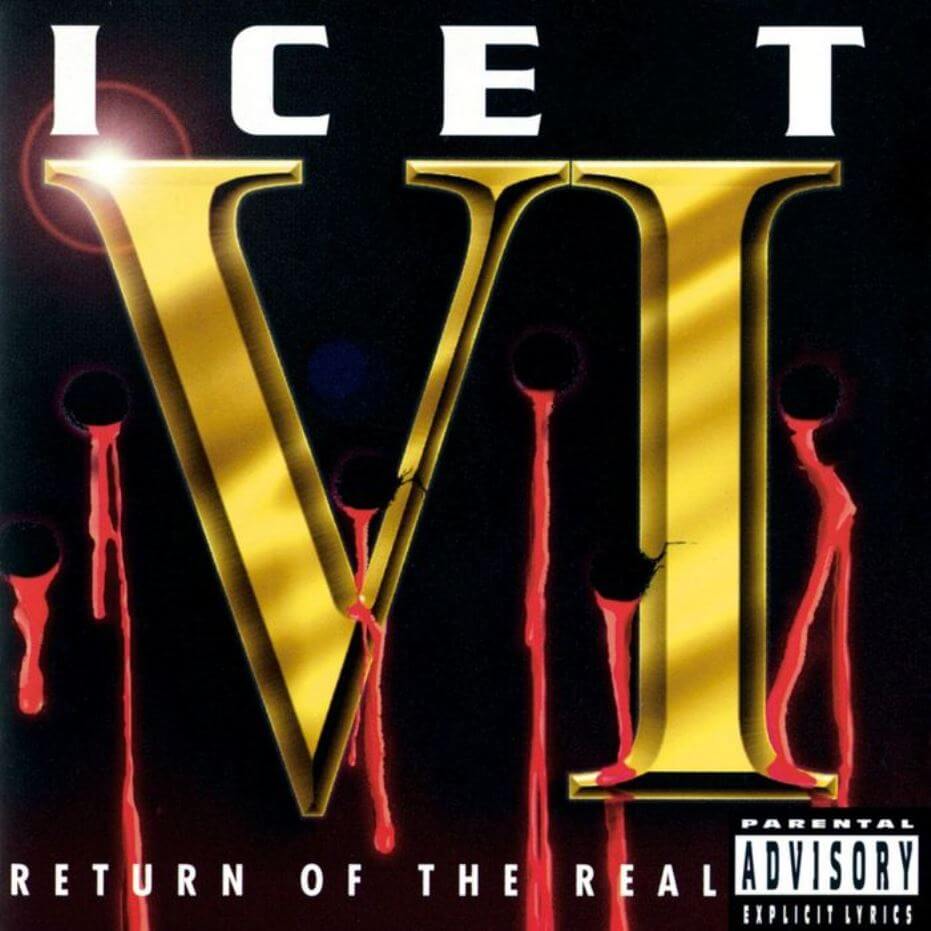
By 1996, Ice-T was operating in a very different West Coast Hip Hop landscape. G-Funk had become the dominant sound, with Dr. Dre and Death Row setting the commercial and musical agenda. Ice-T had little interest in following that trend. With VI: Return of the Real, he attempted to reconnect with the harder street-oriented approach that had defined his earlier work. The intention was understandable, but the execution is inconsistent.
There are enough worthwhile tracks to keep the album from being a complete disappointment. “Syndicate 4 Ever” has the right attitude, while “They Want Me Back In” finds Ice-T revisiting the street life he had left behind. “Make The Loot Loop” and the title track have their moments, and “The 5th” and “Cramp Your Style” are enjoyable cuts that recall some of his earlier energy. “I Must Stand,” featuring Angela Rollins, also deserves mention.
The problem is the overall atmosphere. Ice-T sounds less forceful and inspired than on his previous albums, and the production frequently falls flat. With a large collection of producers involved, including DJ Ace, Big Rich, E-A-Ski, and Ice-T himself, the musical direction lacks consistency. Some beats feel dated, while others simply fail to provide the right foundation for his delivery. The intention to reject the increasingly polished G-Funk sound is clear, but returning to a tougher aesthetic requires stronger material than we get here.
VI: Return of the Real has its share of good moments, and Ice-T still has enough personality to make several tracks worthwhile. As a complete album, however, it falls well short of the standards he had set earlier in his career. This is the weakest of his eight solo Hip Hop albums. | 6/10
8. Gangsta Rap (2006)

After several years away from solo Hip Hop recording, Ice-T returned in 2006 with a surprisingly enjoyable album. By this point, his acting career, particularly his role on Law & Order: SVU, had made him a familiar face to mainstream television audiences. Nobody really expected him to deliver another worthwhile rap record, but Gangsta Rap turned out considerably better than its title and late-career timing might suggest.
The opening title track sets the tone. Produced by Grand Daddy I.U., it is a banging introduction in which Ice-T takes a trip down memory lane, name-checking fellow West Coast gangsta rappers and reflecting on the culture he helped build. There is no mistaking the authority behind his delivery. He sounds comfortable in his veteran role, with the humor, confidence, and streetwise perspective that have always distinguished his best work.
The production is handled by a variety of contributors, including DJ Ace, Alonzo Williams, Mad Rome, and Marc Live. The results are somewhat uneven, but there is enough good material to keep things moving. “Ridin’ Low” is a particularly enjoyable West Coast cruising track, while “Dear God Can You Hear Me” finds Ice-T addressing the spiritual and personal consequences of street life. “Please Believe Me”, featuring Smoothe da Hustler, and “Code of the Streets” are other worthwhile moments.
The album finishes strongly with “Twice The Game”, a fitting closer that reminds us why Ice-T has always been such a compelling presence on the microphone. Gangsta Rap doesn’t reach the heights of his classic early records, and some of the production is fairly ordinary, but it hits considerably more often than it misses. A pleasant surprise and a worthy addition to Ice-T’s catalogue. | 7/10
7. 7th Deadly Sin (1999)

7th Deadly Sin received a rough reception when it came out in 1999, and its reputation has never quite recovered. We think it deserves a fairer hearing. It isn’t in the same league as Ice-T’s first four albums, but it is his strongest solo effort since the outstanding O.G. Original Gangster. After the less convincing VI: Return of the Real, Ice sounds more engaged and focused, with his trademark sharp writing and a welcome sense of purpose.
The album’s title comes with a concept: Ice-T argued that rap records routinely deal with the seven deadly sins, from greed and lust to pride. The opening draws on Morgan Freeman’s narration from Se7en, setting a suitably dark tone. The record also reflects Ice’s growing independence from the traditional record business. His partnership with Atomic Pop gave him an alternative route to releasing music, outside the major-label system.
There are plenty of guests across the 21 tracks, and occasionally their presence gets in the way of a more concentrated Ice-T album. Still, the collaborations produce some worthwhile moments. King Tee joins him on “Check Your Game”, while Buckshot appears on “Eye of the Storm”. The strongest material, however, comes from Ice himself. “Retaliation” has a particularly sharp edge, “Common Sense” is one of the album’s highlights, and “Always Wanted ta Be a Hoe”, “Ice’s Exodus”, and “Don’t Hate the Playa” all deliver. “Valuable Game”, an awkward attempt at a slow jam, is the clearest misstep.
7th Deadly Sin has its flaws, but the strong material outweighs the weaker moments. Ice-T sounds like an artist with something to say again, and that makes this a worthwhile late-period entry in his catalogue. | 7/10
6. Criminal Migraine (2026)
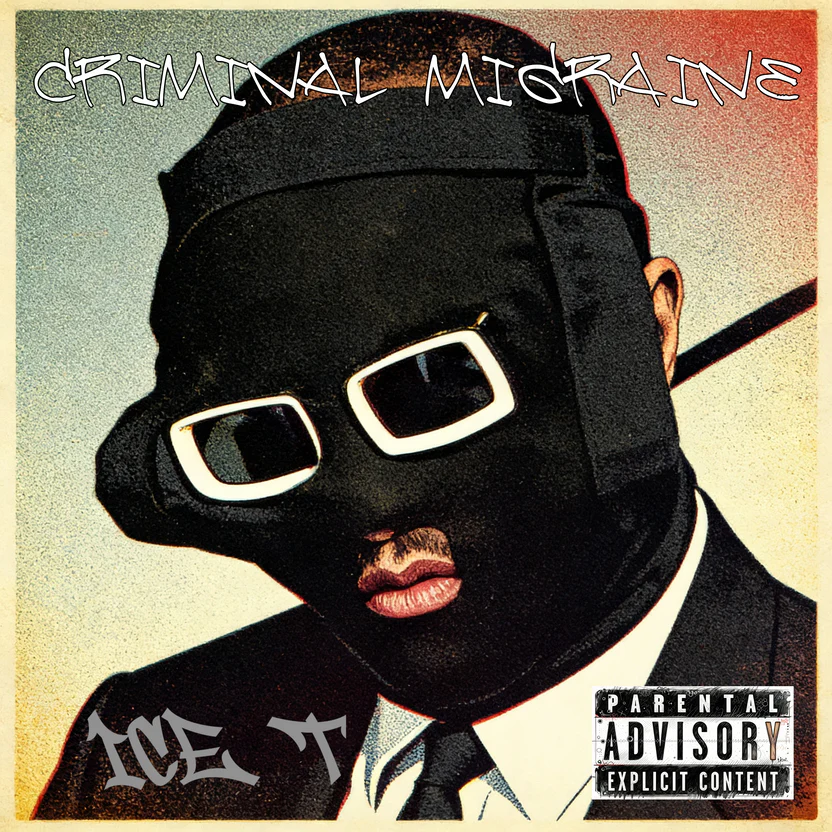
Ice-T is one of our favorite rappers of all time, and we ranked him high on our Best Rappers Of All Time list. That ranking attracted plenty of criticism, but we believe some people underestimate his importance to Hip Hop. A genuine pioneer, Ice-T helped lay the foundations for West Coast gangsta rap. His 1986 classic “6 N the Mornin‘” inspired a generation of MCs, including Eazy-E and Ice Cube. His first four albums are classics, and his combination of streetwise storytelling, dry humor, intelligence, and authenticity has always set him apart.
At 68, Ice-T returns with his first solo Hip Hop studio album in twenty years. Criminal Migraine is a 24-track serving of hard-hitting gangsta rap, pimp-rap wisdom, and veteran perspective. Most importantly, the Ice-T we know is still here. His delivery carries the same authority and personality, and he sounds entirely comfortable in his surroundings.
The production comes from a sizeable team, including Charlemagne, PA. Dre, Afrika Islam, DaeOne, Mad Rome, Godfather, Stone Paxton, and Freddie Foxxx. Some beats are a little too polished or trap-oriented for our taste, and a few hooks miss the mark, but the overall vibe is strong. Among our favorite cuts are the menacing title track, “You Can Get It,” “Follow The Leader,” “Shut The F Up,” “Bangerz” with Freddie Foxxx, and the reflective “No Regrets.” The bonus track “6 In The Morning PSK” is another welcome nod to Schoolly D’s “PSK What Does It Mean,” the record Ice-T has long credited as an inspiration.
Is Criminal Migraine on the level of O.G. Original Gangster? Of course not. Few albums are. Still, this is Ice-T’s strongest effort since Home Invasion (1993), and a convincing reminder that Hip Hop has no age limit. | 7.5/10
5. Home Invasion (1993)

Opinions on Home Invasion are divided, and understandably so. Coming after the excellent O.G. Original Gangster, Ice-T’s fifth solo album had a difficult act to follow. The record also emerged from a particularly turbulent period in his career. Following the controversy surrounding Body Count’s “Cop Killer”, Ice-T found himself fighting censorship and label interference. Warner Bros. initially postponed the album and objected to its original cover artwork. Ice-T eventually left the label and secured a distribution deal with Priority Records, allowing him to release the record on his own terms.
That frustration is audible throughout. Some listeners feel Ice-T’s heart wasn’t entirely in the music, while others hear an artist still angry about the events surrounding him. Either way, Home Invasion lacks the energy, playfulness, and consistency of its predecessor. The production, primarily handled by Ice-T, DJ Aladdin, and SLEJ Da Ruff Edge, favors dark, hard-edged loops over the increasingly popular G-Funk sound.
Still, there is plenty to enjoy. “It’s On” gets things moving nicely, while “Gotta Lot Of Love” is one of the album’s strongest moments. “99 Problems”, featuring Brother Marquis, deserves special attention as the original version of the track Jay-Z would later reinterpret. “That’s How I’m Livin'”, “Pimp Behind The Wheels”, “Depths Of Hell”, and “Race War” are other worthwhile cuts.
Home Invasion may lack the focus and overall quality of O.G. Original Gangster, but dismissing it would be a mistake. There is enough excellent Ice-T material here to make it a necessary addition to any serious collection of his work. | 7.5/10
4. Rhyme Pays (1987)

Few debut albums have had an impact on Hip Hop quite like Rhyme Pays. Released in 1987, it was one of the earliest full-length records to explore the themes that would become known as gangsta rap. The subject matter still had a sense of novelty, and Ice-T approached it with a street-level perspective that gave the music an authenticity many later imitators struggled to match. The language is relatively restrained by today’s standards, but the attitude is unmistakable.
“6 N The Mornin ” is the centrepiece, an iconic account of late-night police encounters and street life in Los Angeles. Inspired in part by Schoolly D’s “P.S.K. What Does It Mean?”, Ice-T developed the idea into a vivid narrative of his own. Its conversational delivery, detailed storytelling, and matter-of-fact perspective would influence an entire generation of West Coast rappers. The track’s place in Hip Hop history is secure, but the album has other highlights. “Pain” gives the record a darker dimension; the title track captures Ice’s brash personality, and “Squeeze The Trigger” is an especially strong performance, with a confrontational edge that points toward the direction his music would take.
Afrika Islam’s production draws on electro-funk, drum-machine rhythms, and the sounds of mid-1980s Hip Hop. The results are uneven in places, and Ice-T had yet to develop the lyrical command he would display on Power and The Iceberg/Freedom of Speech… Just Watch What You Say. Still, the album has a distinctive character, from its playful moments to its tougher street narratives. Even the cover, with Ice-T’s unmistakable look and attitude, belongs to the record’s appeal.
Some listeners may rank Rhyme Pays lower, but those of us who heard it when it first came out have a particular attachment to it. It was our introduction to Ice-T, and its influence is impossible to overlook. | 8/10
3. Ice T - The Iceberg/Freedom of Speech... Just Watch What You Say! (1989)

The Iceberg is Ice-T at his grittiest, but its appeal goes well beyond hard-edged street tales. His third album moves freely between personal reflection, political commentary, dark storytelling, and outright fun. Afrika Islam’s production gives the record a rough, often ominous character, with dense samples, heavy rhythms, and unusual sonic textures. There is a lot happening here, and remarkably little filler.
The opening “Shut Up, Be Happy”, featuring Dead Kennedys frontman Jello Biafra, sets the tone with a disturbing spoken-word passage and a brilliant interpolation of Black Sabbath’s “Black Sabbath”. The chilled-out title track then offers a different perspective before Ice launches into the rapid-fire “Lethal Weapon”. “Peel Their Caps Back” is a particularly grim gangsta narrative, while “You Played Yourself” delivers a sharp lesson in streetwise common sense. “The Hunted Child” takes on a darker social subject, and “What Ya Wanna Do” develops into a superb nine-minute posse cut featuring members of Ice-T’s Rhyme Syndicate. “This One’s For Me” adds a personal touch, while “My Word Is Bond” brings some welcome humour and exaggerated storytelling.
Underneath all this variety runs a clear political argument. The subtitle, Freedom of Speech… Just Watch What You Say!, points directly to the censorship campaign led by the Parents Music Resource Center (PMRC), which had targeted explicit music and increasingly placed Hip Hop under scrutiny. Ice-T addresses the issue head-on in “Freedom Of Speech”, with Biafra returning to reinforce the message. The song captures the frustration of artists facing pressure to moderate their expression to satisfy politicians and moral watchdogs.
The Iceberg is a tight, varied album with some of Ice-T’s strongest writing and most adventurous production. Its combination of street-level grit, political conviction, and personality made him one of Hip Hop’s most prominent voices. | 8.5/10
2. Power (1988)
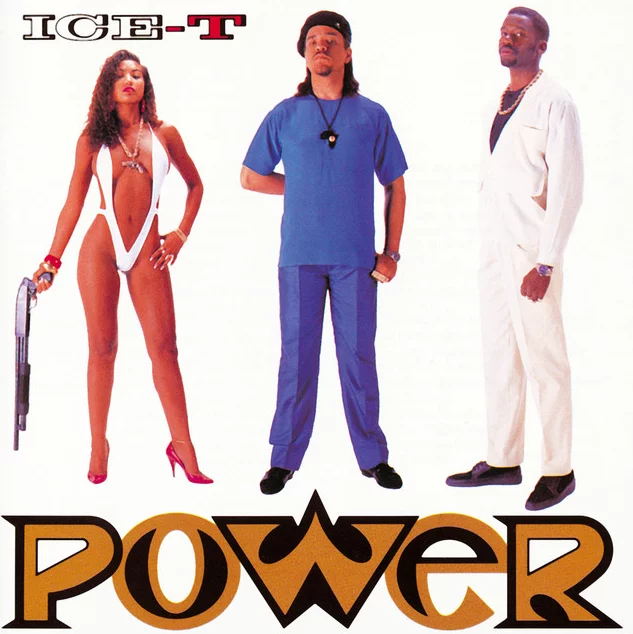
With Power, Ice-T delivered an excellent follow-up to his debut, Rhyme Pays, expanding his subject matter and sharpening his musical identity in the process. The street narratives and commanding delivery are still there, but his second album has a broader perspective, moving between hustler culture, social observation, industry criticism, and personal philosophy. Working again with Afrika Islam, Ice-T also benefits from a richer, more adventurous production approach.
There isn’t a weak track on the album. “Drama” opens with a striking Roland TB-303 bass line, giving the song an unusual electronic edge. “High Rollers” takes us into the world of hustlers chasing money and status, while the title track lays out Ice’s ideas about power, control, and survival. “Personal” adds another dimension to the record, and “Radio Suckers” takes aim at radio programmers who refused to give Hip Hop the exposure it deserved.
The undisputed centrepiece is “I’m Your Pusher“, Ice-T’s clever adaptation of Curtis Mayfield’s “Pusherman”. Instead of selling drugs, Ice plays a dealer offering Hip Hop as his product, turning the familiar premise into an extended, entertaining performance. It’s a brilliant concept, delivered with the humour, confidence, and storytelling ability that make Ice such a compelling personality.
Afrika Islam’s production is a major part of the album’s appeal. Funk-derived samples, hard drum programming, and electronic flourishes give Power a distinctive sound that moves beyond the more straightforward electro influences of Rhyme Pays. The provocative cover, featuring Ice-T, DJ Evil E, and Darlene Ortiz, became an iconic image in its own right, perfectly matching the record’s attitude.
Power has aged exceptionally well. The beats, lyrics, concepts, and Ice-T’s unmistakable personality all come together on an album without a weak moment. A classic in every sense. | 8.5/10
1. Original Gangster (1991)

O.G. Original Gangster is Ice-T’s masterpiece. A sprawling 24-track album running well over 70 minutes, it has an unusually strong sense of cohesion. The different styles, subjects, and moods fit together naturally, giving the record a flow that makes its length feel entirely justified. You can hear the commitment and creative energy behind it. Ice-T had reached a point where he could draw on everything he had explored across his first three albums and bring it all together in one ambitious statement.
The album’s strength lies partly in its range. “New Jack Hustler” is one of Ice’s finest gangsta narratives, following a young dealer caught up in the attractions and consequences of the hustler lifestyle. The title track is all about how Ice T approaches his career, while “Mind Over Matter” offers a personal reflection on intelligence, creativity, and self-reliance. “Bitches 2” takes a humorous approach to the word “bitch”, with Ice telling four stories about men who deserve the label themselves. “Straight Up N****”, meanwhile, is an extended display of braggadocio, with Ice asserting his status and credibility. There is also room for lighter moments on “Fried Chicken,” and shout-out cut “M.V.P.’s”, as well as the introduction of his metal band Body Count.
The darker material is every bit as compelling. “Midnight” is a cinematic gangsta tale built around Black Sabbath’s ominous guitar riff and the enormous drum break from Led Zeppelin’s “When the Levee Breaks”. It’s a prequel to “6 N The Morning” with a much more threatening atmosphere. “The Tower”, constructed around John Carpenter’s Halloween theme, is another highlight, taking us into the violent world of prison life. “Escape From The Killing Fields” adds a powerful social dimension, examining the conditions that trap people in disadvantaged neighbourhoods.
DJ Aladdin, Afrika Islam, and SLJ provide a consistently strong musical foundation, with crisp drums, funk and soul samples, and plenty of atmosphere. From “Pulse Of The Rhyme” to “Fly By”, the album is packed with memorable songs and performances.
O.G. Original Gangster is expansive without losing its direction, politically aware without becoming preachy, and entertaining without losing sight of its darker subjects. It still sounds remarkably fresh, and we can keep it in rotation without tiring of it. A true classic. | 9.5/10