

The dawn of the 1990s brought a new surge of energy to Hip Hop. The genre had spent the previous decade developing its vocabulary, expanding its regional reach, and establishing itself as a powerful cultural force. By 1990, that momentum was translating into an extraordinary range of musical directions. The hard-edged minimalism of late-1980s rap was giving way to increasingly sophisticated production, more adventurous sampling, denser lyrical approaches, and a growing diversity of regional sounds. The old boundaries between party rap, political Hip Hop, street narratives, and alternative-minded experimentation were becoming less distinct.
New York remained a creative powerhouse. Public Enemy’s Fear of a Black Planet pushed the intensity of politically charged Hip Hop to another level, and Eric B. & Rakim’s Let the Rhythm Hit ‘Em demonstrated how much further the art of MCing could develop. Kool G Rap & DJ Polo brought cinematic detail and dark street narratives to Wanted: Dead or Alive, while emerging voices such as Brand Nubian, Poor Righteous Teachers, X-Clan, and Lord Finesse added new dimensions to the city’s underground. Jazz-inflected production, Afrocentric perspectives, Five Percenter philosophy, and increasingly intricate lyricism gave East Coast Hip Hop a particularly rich character.
The West Coast was experiencing a creative surge of its own. Ice Cube’s AmeriKKKa’s Most Wanted announced his arrival as a formidable solo artist, while Above The Law, King Tee, Compton’s Most Wanted, and Too $hort represented different sides of a rapidly expanding regional movement. Gangsta rap was gaining considerable momentum, but California’s Hip Hop identity extended well beyond the emerging subgenre. Meanwhile, the South was beginning to develop a stronger voice, with Miami’s 2 Live Crew generating controversy and other emerging Southern rap scenes pointing toward new directions.
There was no single dominant sound in 1990. The year moved effortlessly between Public Enemy’s densely layered sonic assaults, EPMD’s funky grooves, LL Cool J’s booming comeback, and A Tribe Called Quest’s relaxed, jazz-inflected approach. Across the country, producers and MCs were finding new ways to express themselves, laying the groundwork for the stylistic diversity that would define the decade.
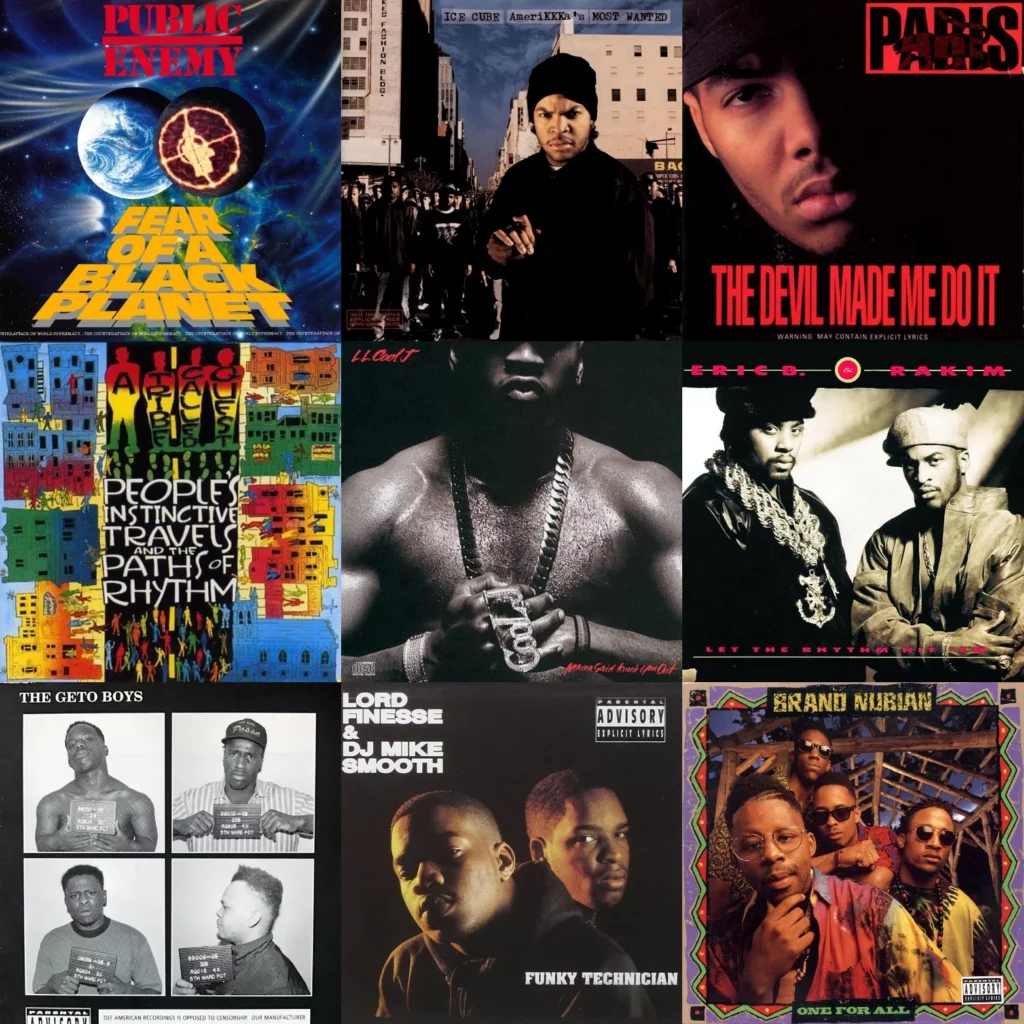
1. Public Enemy - Fear Of A Black Planet

How do you follow up on what we consider the greatest Hip Hop album ever made? Public Enemy answered that question with Fear Of A Black Planet, an extraordinary record that expanded on the musical and political ambitions of It Takes a Nation of Millions to Hold Us Back. If the predecessor announced the group’s arrival as a revolutionary force, their third album confirmed their position at the forefront of Hip Hop.
The Bomb Squad’s production is an astonishing exercise in controlled chaos. Pounding drums, chopped funk and soul samples, distorted vocal fragments, blaring horns, and Terminator X’s abrasive scratches collide in densely layered arrangements. There is barely a moment of empty space, but the apparent disorder has its own internal logic. The result is an exhilarating, confrontational sound that draws heavily from Black musical traditions while pushing sampling into increasingly adventurous territory.
“Contract on the World Love Jam” opens with a disorienting rush of voices and beats before “Brothers Gonna Work It Out” sets the album in motion. “Fight the Power” is the obvious centrepiece, its irresistible funk groove providing the foundation for Chuck D’s uncompromising attack on racism and cultural complacency. On “Welcome to the Terrordome,” he addresses the controversy surrounding the group with furious, densely packed verses over one of the Bomb Squad’s most turbulent productions. “Burn Hollywood Burn,” featuring Ice Cube and Big Daddy Kane, aims racist stereotypes in the film industry, while “Who Stole the Soul?” confronts the appropriation of Black culture.
Flavor Flav gets one of his finest moments on “911 Is a Joke,” turning the neglect of emergency services in Black neighbourhoods into a biting, darkly humorous critique. His distinctive personality provides another dimension to an album otherwise dominated by Chuck’s commanding presence.
Perhaps slightly less accessible than It Takes a Nation…, Fear Of A Black Planet compensates with extraordinary musical depth and an uncompromising political vision. The Bomb Squad’s sample-heavy approach was becoming increasingly difficult to sustain as copyright restrictions tightened, making this achievement all the more remarkable. Fiercely intelligent, sonically overwhelming, and lyrically fearless, this is one of the greatest albums in Hip Hop history.
2. Ice Cube - AmeriKKKa's Most Wanted

After his acrimonious departure from N.W.A over royalties and management, Ice Cube wasted little time demonstrating that his writing could carry an album without the group that had made him famous. For his solo debut, he joined forces with Public Enemy’s Bomb Squad, bringing together his sharp West Coast street perspective and the production team’s trademark sonic assault. The result was a formidable record that combined gangsta rap‘s uncompromising narratives with some of the most forceful political commentary in contemporary Hip Hop.
The Bomb Squad’s densely layered funk samples, pounding drums, abrasive scratches, and disorienting vocal fragments provide a fitting backdrop for Cube’s relentless delivery. “The N**** Ya Love to Hate” makes his intentions clear from the outset, while the title track attacks America’s racial double standards and its treatment of Black people. “Endangered Species (Tales from the Darkside),” featuring Chuck D, is particularly chilling, connecting the everyday realities of life in Black communities to a wider atmosphere of institutional violence and oppression. Cube’s storytelling takes another direction on “Once Upon a Time in the Projects,” where vivid characters and dark humor bring neighborhood life into sharp focus.
Sir Jinx also deserves considerable credit for the album’s musical identity. His contributions on “Who’s the Mack?” and “It’s a Man’s World” provide a different texture from the Bomb Squad’s more chaotic arrangements. The latter, featuring Yo-Yo, is an entertainingly combative exchange about gender relations, while Cube’s humor throughout the record offers occasional breathing space amid the hostility.
AmeriKKKa’s Most Wanted is particularly impressive in the way Cube connects street-level observation with broader social criticism without sacrificing the immediacy of either. His writing is sharp, confrontational, frequently funny, and remarkably assured. The album quickly achieved platinum status, confirming that N.W.A had lost one of its most formidable voices. Ice Cube had arrived as a solo artist with something substantial to say, and an equally powerful musical vehicle through which to say it.
3. Paris - The Devil Made Me Do It

While Public Enemy brought revolutionary politics to the forefront of East Coast Hip Hop, San Francisco’s Paris developed a distinctly West Coast version of militant rap. His debut album draws heavily on Black Panther ideology, Black nationalism, and an uncompromising opposition to institutional racism. Police brutality, government corruption, and racial inequality are recurring targets, addressed with a directness that leaves little room for ambiguity.
Paris produced the album himself, constructing a dark, muscular sound from heavy funk breaks, thick basslines, hard-hitting drums, and carefully selected samples. The title track is the centrepiece, pairing his commanding, deliberate delivery with provocative political imagery. Its accompanying video was banned by MTV, while the album cover, depicting a police officer choking a young Black man, prompted some record stores to refuse to stock the record. Neither controversy was accidental in its effect: Paris was determined to confront audiences with images and arguments that mainstream America preferred to avoid.
“Panther Power” explicitly invokes the legacy of the Black Panther Party, connecting its revolutionary principles to contemporary struggles in Black communities. “Break the Grip of Shame” continues the attack on racial oppression, while “Scarface Groove” and “This Is a Test” provide some variation through harder, more straightforward rap performances. Paris isn’t interested in disguising his political convictions behind elaborate metaphors. His delivery is forceful, his arguments direct, and his production gives the material an appropriately menacing atmosphere.
The Devil Made Me Do It reportedly sold over 300,000 copies, an impressive achievement for such an uncompromising political statement. Paris would eventually take his confrontational stance into the music business itself, but the foundations were already here. Musically tough, ideologically militant, and unmistakably Bay Area in its identity, this is one of the 1990s ‘ most uncompromising rap debuts.
4. A Tribe Called Quest - People's Instinctive Travels And the Paths Of Rhythm

At a time when much of New York rap was becoming increasingly aggressive, A Tribe Called Quest offered a refreshing alternative. Emerging from the Native Tongues collective, the Queens group brought a playful, open-minded sensibility to People’s Instinctive Travels and the Paths of Rhythm, their April 1990 debut. Q-Tip’s relaxed, conversational delivery, Ali Shaheed Muhammad’s inventive turntablism, and an adventurous musical palette gave the album a personality quite unlike anything else in the year’s releases. Phife Dawg was still finding his footing, appearing less prominently than on the group’s subsequent records, while Jarobi White contributed to the collective spirit.
Q-Tip handled most of the production, drawing from jazz, funk, soul, and rock to create grooves that were warm, unpredictable, and full of interesting details. Music by Grover Washington Jr., Donald Byrd, Roy Ayers, and Lou Reed found new life through inventive sample combinations. The results range from the seductive jazz-funk of “Bonita Applebum” to the irresistible communal groove of “Can I Kick It?,” built around a memorable Lou Reed sample. “I Left My Wallet in El Segundo” takes an amusing, unconventional storytelling detour, while “Ham ‘n’ Eggs” turns an everyday subject into a playful rap excursion.
The D.A.I.S.Y. Age influence is evident in the album’s lighthearted attitude and rejection of conventional rap posturing, although Tribe was already developing an identity distinctly their own. Q-Tip’s understated delivery allows the words to flow naturally with the music, while the production rewards repeated listening with its imaginative combinations of sounds.
In retrospect, People’s Instinctive Travels was the beginning of something special. Tribe would reach greater artistic heights on subsequent albums, with Phife becoming an increasingly central voice, but their debut already contained the musical curiosity, humor, and chemistry that made the group so beloved. Its relaxed approach offered a compelling alternative to the prevailing sounds of 1990 and opened another exciting chapter in Hip Hop’s evolution.
5. LL Cool J - Mama Said Knock You Out

By 1990, LL Cool J was facing questions about whether his best days were behind him. His previous album, Walking with a Panther, had drawn criticism for its softer material, and some were ready to write him off. Mama Said Knock You Out provided a spectacular response. Working with Marley Marl, LL returned with a harder, more commanding sound and the confidence of an MC determined to remind everyone why he belonged among Hip Hop’s elite.
“The Boomin’ System” opens with thick bass, sharp percussion, and an infectious groove. LL sounds completely at home, combining his trademark rhythmic ease with renewed aggression. The contrast with “Around the Way Girl” is striking. Built around a soulful, irresistible groove, the track finds him celebrating the women and everyday characters of his neighbourhood with warmth and charm. It is one of the album’s most enduring moments and a reminder of his considerable versatility.
The title track is the defining statement. Marley Marl’s booming production gives LL the perfect platform for an explosive performance, delivered with precision, authority, and barely contained aggression. “To Da Break of Dawn” aims MC Hammer, Kool Moe Dee, and Ice-T, with LL dismantling his rivals through sharp, entertaining battle rhymes. On “Eat Em Up L Chill,” a stripped-down beat puts the emphasis squarely on his voice and lyrical attack. Meanwhile, “Murdergram (Live at Rapmania)” brings another dose of confrontational energy.
There is substance beyond the competitive bravado. “Illegal Search” addresses racial profiling and the harassment of Black men by police, while “The Power of God” closes the album on a more reflective, spiritual note. These changes in mood give the record a satisfying breadth without interrupting its momentum.
Marley Marl’s production is consistently excellent, and LL delivers some of the strongest performances of his career. Mama Said Knock You Out is his most complete album, combining battle-ready aggression, irresistible grooves, personality, and social awareness. LL silenced his critics, and he delivered a career-defining statement that belongs among the finest Hip Hop albums of 1990.
6. Eric B & Rakim - Let The Rhythm Hit Em

By the time Eric B. & Rakim reached their third album, their influence on MCing was already considerable. Let the Rhythm Hit ‘Em finds the duo refining their established formula while exploring a darker, more varied production approach. Rakim’s measured delivery and intricate rhyme patterns are still the main attraction, but the album benefits considerably from the contributions of producers Paul C and Large Professor.
Paul C, whose work on the album preceded his tragic death, provided much of its hard-edged musical foundation. A young Large Professor helped complete the project, bringing his emerging jazz-inflected production sensibility to several tracks. The result is a compelling mixture of stripped-down drum patterns, atmospheric samples, and tougher grooves.
The title track gets things moving with ominous production and a commanding Rakim performance. His controlled delivery makes even the densest rhyme patterns sound effortless, while the beat gives his words plenty of room to land. “No Omega” is another lyrical highlight, driven by the unmistakable break from James Brown’s “Funky Drummer.” Rakim uses the track to demonstrate his remarkable rhythmic precision and ability to construct intricate verses without sacrificing clarity.
“In the Ghetto” offers a change of perspective. Over Large Professor’s more subdued production, Rakim turns his attention to the harsh realities of life in disadvantaged neighbourhoods, delivering thoughtful observations without resorting to melodrama. “Eric B. Made My Day” shifts the focus toward Eric B.’s scratching, recalling the DJ-centred foundations of the duo’s earlier work.
Although Let the Rhythm Hit ‘Em doesn’t quite match the groundbreaking heights of Paid in Full or Follow the Leader, its tougher atmosphere and evolving production give it a distinct identity. Rakim is in formidable form, and the album captures one of Hip Hop’s greatest MCs continuing to sharpen his craft.
7. Geto Boys - The Geto Boys
Rick Rubin’s involvement gave the Geto Boys a national platform, but the Houston trio had already developed a distinctive, uncompromising identity on Making Trouble and Grip It! On That Other Level. Their 1990 self-titled album reworked much of the latter record, along with material from their debut, into a sharper, more focused package. Two excellent new tracks, “F*** ‘Em” and “City Under Siege,” added to the appeal.
Rubin stripped away some of the clutter in the original productions, replacing the earlier funk-heavy arrangements with a cleaner, harder sound. The beats hit with greater force, the basslines are more pronounced, and the samples have room to breathe. His minimalist approach gives tracks such as “Mind of a Lunatic” and “Trigga Happy N***a” an especially menacing atmosphere. Brendan O’Brien’s co-production also helps connect the group’s Southern funk foundations with a harder, rock-influenced edge.
The lyrical content is frequently disturbing. Scarface, Willie D, and Bushwick Bill move between graphic street narratives, psychological horror, violent fantasies, and sexually explicit material. “Mind of a Lunatic” is particularly unsettling, with Scarface and Bushwick Bill delivering chilling accounts of psychosis and homicidal obsession. Willie D takes the lead on “Trigga Happy N***a,” addressing gun culture and the violence surrounding street life. “Gangsta of Love,” meanwhile, is an example of the group’s crude misogyny, a side of the album that has aged considerably less well. Elsewhere, Scarface’s storytelling on “Scarface” offers an early indication of the narrative depth that would become his greatest strength.
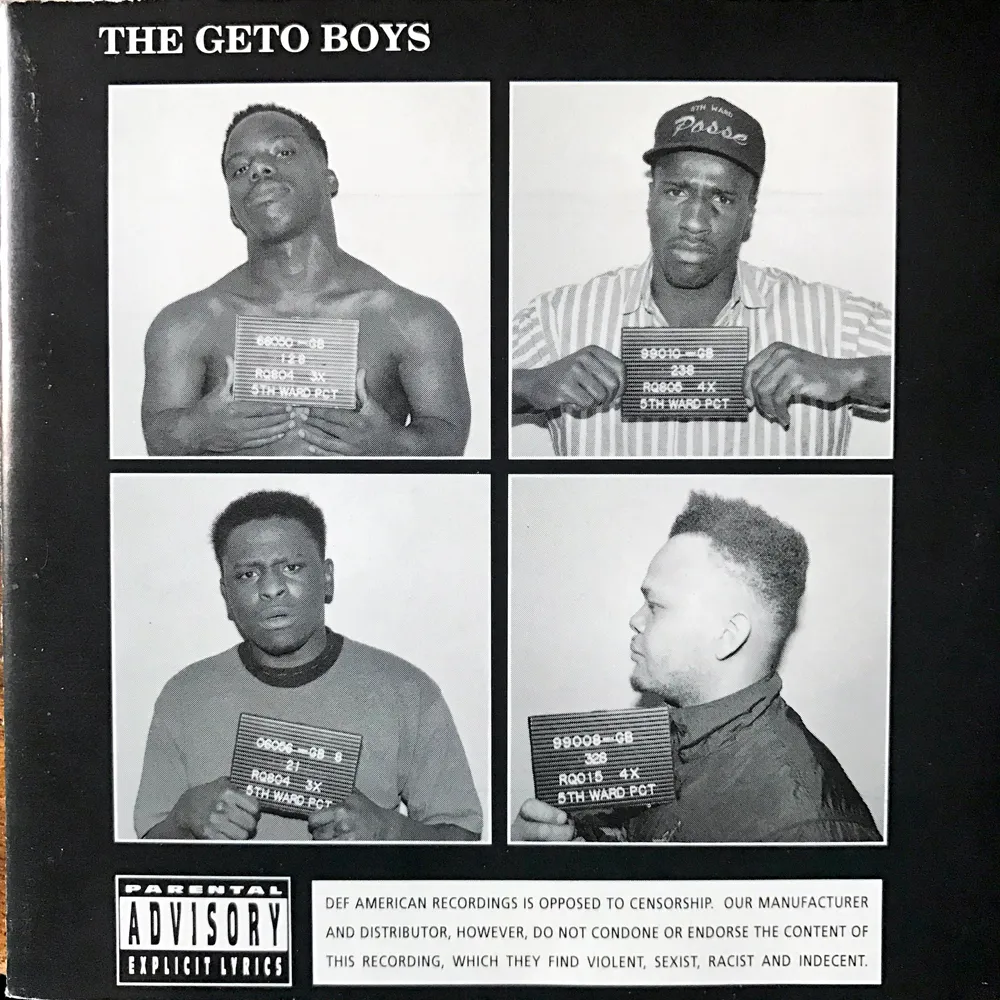
The controversy surrounding the group only intensified with this release. Some major retailers refused to stock the album, while its Beatles-inspired cover, featuring the four members in a familiar portrait layout, added another provocative touch.
The Geto Boys is an uncompromising record, frequently uncomfortable and occasionally excessive. Rubin’s production gave the group’s music greater clarity without sanding away its disturbing character. Its wider exposure helped bring Houston rap to national attention, making this a significant moment in the development of Southern Hip Hop.
8. Lord Finesse - Funky Technician

Lord Finesse made an impressive entrance with Funky Technician, a debut that introduced one of New York’s most technically gifted MCs and offered an early glimpse of the talent that would form the Diggin’ in the Crates (D.I.T.C.) collective. Released on Wild Pitch Records, the album brings together Finesse’s intricate rhyme schemes, sharp punchlines, and playful battle-rap attitude with production from DJ Mike Smooth, DJ Premier, Diamond D, and Showbiz. That roster alone makes it a fascinating snapshot of the New York underground at the start of the decade.
The beats are built around hard drums, funk and soul samples, and crisp turntable work. Premier’s contributions offer early indications of the lean, forceful approach he would develop with Gang Starr, while Diamond D and Showbiz bring their own distinctive sample-based styles. The title track gives Finesse room to demonstrate his lyrical dexterity, while “Here I Come” and “I Keep the Crowd Listening” are packed with intricate rhymes and memorable punchlines. “Back to Back Rhyming,” featuring A.G., provides an early connection to the D.I.T.C. circle, and “Slave to My Soundwave” captures the natural chemistry between Finesse and his DJ.
What distinguishes Finesse is the ease with which he delivers technically demanding rhymes. His wordplay is clever and his timing precise, but there’s also plenty of humor and personality in his performances. He never sounds like he’s sacrificing entertainment for lyrical complexity.
Funky Technician didn’t make a major commercial impact upon release, but its standing grew among fans of underground New York rap. Finesse would go on to mentor Big L and play a central role in D.I.T.C. The beginnings of that legacy are already audible here, in an album that brings together several future architects of the 1990s East Coast sound.
9. Brand Nubian - One For All

Brand Nubian’s debut brought Afrocentric ideas, Five-Percent Nation teachings, playful humor, and infectious funk together in one of the most distinctive albums of 1990. Grand Puba, Sadat X, and Lord Jamar each brought a different personality to the microphone, moving comfortably between political and spiritual commentary, battle rhymes, party records, and everyday observations. Their connection to the Native Tongues movement is apparent in the album’s open-minded spirit, while their more pronounced ideological focus gave the group a character of its own.
Produced primarily by the group, One For All draws heavily on James Brown breaks, funky basslines, and inventive soul and jazz samples. The title track sets the tone with an irresistible groove and excellent chemistry between the three MCs. “Concerto in X Minor” takes a more serious direction, weaving Black consciousness and revolutionary ideas into dense, sample-driven production. “Slow Down,” built around an Edie Brickell sample, became the group’s biggest hit, pairing humorous relationship advice with sharp exchanges between Grand Puba, Sadat X, and Lord Jamar.
The album moves easily between different moods. “All for One” and “Wake Up” reflect the group’s commitment to knowledge and self-awareness, while “Dance to My Ministry” and “Grand Puba, Positive and L.G.” put the emphasis on personality, wordplay, and lyrical skill. Grand Puba’s charismatic delivery is particularly infectious, although Sadat X’s distinctive voice and Lord Jamar’s more measured approach give the group its balance.
One For All never achieved the commercial reach of many contemporary gangsta rap releases, but its combination of social commentary, humor, and warm, funk-driven production gave it a lasting place in New York Hip Hop. Brand Nubian made an album with plenty to say and grooves that keep pulling us back.
10. Above The Law - Livin Like Hustlers

Above The Law’s Livin’ Like Hustlers, released in February 1990 on Ruthless Records, is an important early chapter in the development of West Coast gangsta rap. The Pomona group, led creatively by Cold 187um, combined hard-edged street narratives with deep funk grooves and inventive sample-based production. Working alongside Dr. Dre, they were already moving beyond the abrasive, densely layered approach associated with early N.W.A toward a smoother, more melodic sound that would soon become known as G-Funk.
The production is central to the album’s appeal. Cold 187um and Dre draw on funk and soul sources, including James Brown, Quincy Jones, and Isaac Hayes, building muscular arrangements around thick basslines, crisp drums, and carefully selected samples. “Murder Rap” makes an immediate impression with its ominous atmosphere and forceful delivery, while “Untouchable” pairs confrontational lyrics with a memorable groove. The title track captures the group’s hustler mentality, and “Another Execution” delivers a particularly dark portrait of street violence. “Freedom of Speech” adds social commentary, demonstrating that Above The Law’s subject matter extended beyond crime narratives.
The closing “The Last Song” brings in N.W.A members Eazy-E, Dr. Dre, and MC Ren for a notable collaboration within the increasingly turbulent Ruthless Records camp. The track also connects the album to the wider Los Angeles scene taking shape around the label.
Dr. Dre would popularize G-Funk on The Chronic a few years later, but the foundations are already audible here. Cold 187um deserves particular credit for the musical direction. Livin’ Like Hustlers retains the toughness of the Ruthless era while introducing the smoother funk arrangements that would become central to West Coast rap.
11. Kool G Rap - Wanted Dead Or Alive

With Road to the Riches, Kool G Rap and DJ Polo introduced a formidable MC whose intricate rhyme schemes and rapid-fire delivery set him apart from his contemporaries. Their second album, Wanted: Dead or Alive, takes G Rap’s writing into darker territory. Crime, poverty, street violence, and organized crime dominate the subject matter, with G Rap developing the vivid, cinematic storytelling that would influence generations of MCs and help lay the foundations for mafioso rap.
“Streets of New York” is the album’s defining moment. Over a stark, sample-driven beat, G Rap paints a detailed picture of urban hardship, turning everyday observations into a compelling portrait of desperation. Nas later cited the track as an influence on “N.Y. State of Mind,” and the connection is unmistakable. The title track, “Money in the Bank,” and “Death Wish” bring mob-movie menace and ruthless braggadocio, while “Bad to the Bone” gives G Rap room to unload his intricate internal rhymes. “Talk Like Sex” switches gears for an explicit exercise in sexual boasting.
“Erase Racism” offers a different perspective, bringing Big Daddy Kane into the mix for a direct attack on racial prejudice, with Biz Markie supplying the memorable hook. The varied production contributions of Large Professor, Eric B, and Marley Marl give the album several distinct textures, while DJ Polo’s turntable work remains central to the duo’s identity.
Wanted: Dead or Alive expanded on the promise of Road to the Riches and captured Kool G Rap at a crucial stage in his development. His technical precision, elaborate crime narratives, and command of internal rhyme would leave a lasting mark on artists such as Nas, The Notorious B.I.G., and Jay-Z. This is early G Rap at his most compelling.
12. Boogie Down Productions - Edutainment

With Edutainment, KRS-One took his educational mission to another level. The fourth album under the Boogie Down Productions banner places sociopolitical issues at the center, addressing Black empowerment, racism, materialism, and the need for greater awareness within Black communities. KRS-One’s authoritative delivery gives the record its urgency, while gritty basslines, funk-infused loops, and hard-hitting beats provide a suitably tough musical foundation.
The standout is “Love’s Gonna Get ‘Cha (Material Love),” one of the finest tracks in KRS-One’s extensive catalog. His storytelling follows a young man caught in the cycle of poverty, material ambition, and street violence, building toward a devastating conclusion. The narrative gives the song an emotional weight that makes its underlying message particularly effective. KRS is equally compelling when he moves beyond direct instruction and lets the characters and circumstances carry the story.
Across its 20 tracks, Edutainment covers a lot of ground. KRS-One’s commitment to using Hip Hop as a vehicle for knowledge is admirable, although his constant stream of lessons and pronouncements can occasionally become preachy. The album’s length also makes it a demanding listen, but there is considerable substance throughout.
Edutainment captures KRS-One at his most outspoken and ideologically driven. Its educational ambition sometimes outweighs its musical variety, but the strongest tracks combine his social consciousness with the lyrical skill and storytelling ability that have always made him such a compelling MC.
13. EPMD - Business As Usual

By their third album, Erick Sermon and Parrish Smith had perfected a formula built around funky samples, hard drums, effortless flows, and sharp, humorous rhymes. Business As Usual doesn’t stray far from the approach that made EPMD successful, but the duo’s chemistry and instinct for memorable grooves keep the album entertaining throughout.
“I’m Mad” opens with frantic drums and chopped-up piano stabs, immediately establishing an aggressive tone. “Hardcore” shifts into darker territory, with an eerie atmosphere providing the backdrop for Redman’s first major appearance on a Def Jam release. His gritty delivery makes an immediate impression. “Rampage,” with a memorable guest verse from LL Cool J, brings the energy back up with a bouncy, horn-driven beat and an enjoyable exchange between the three MCs.
Humor and braggadocio remain central to EPMD’s appeal. “Gold Digger” turns the duo’s complaints about opportunistic women into a funky, memorable rap narrative, while “Brothers on My Jock” features another strong Redman appearance. DJ Scratch gets the final word on “Funky Piano,” an instrumental closer that puts his turntable skills in the spotlight and gives the album a relaxed finish.
“Jane 3” is a little too playful for its own good, but the occasional misstep hardly derails the record. Business As Usual delivers the hard beats, laid-back confidence, and infectious funk that define EPMD’s best work. The formula was familiar by 1990, but few duos executed it with this much ease.
14. Master Ace - Take A Look Around
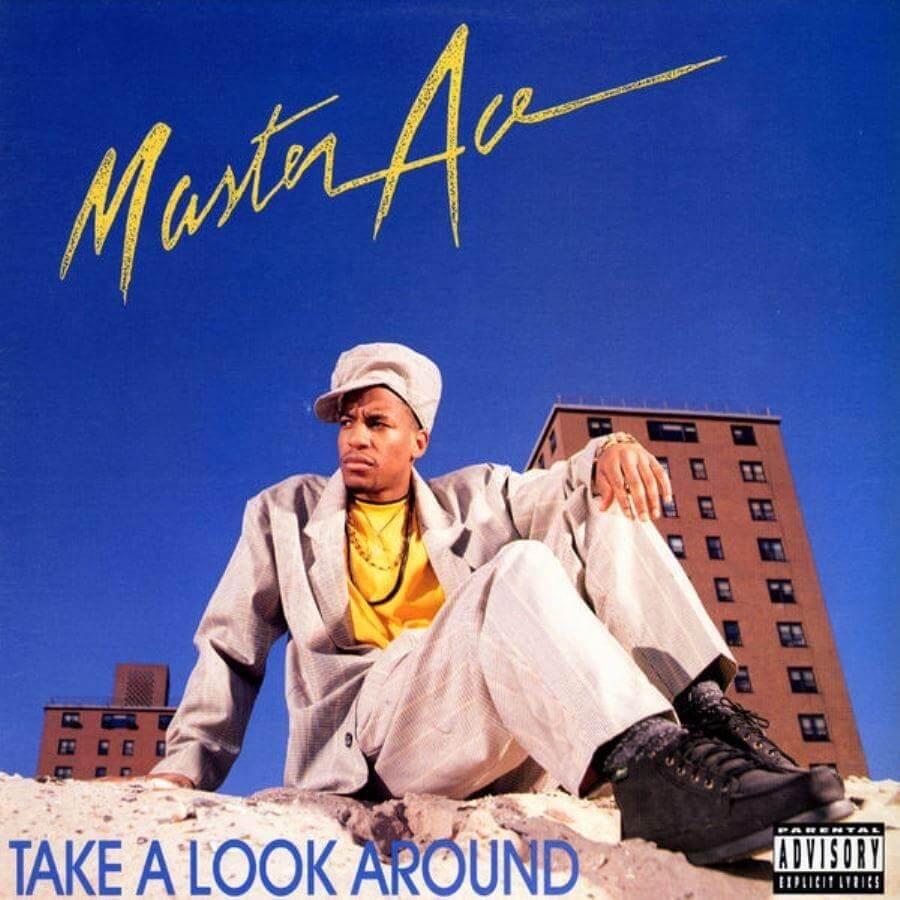
After making an immediate impression with his opening verse on Marley Marl’s 1988 posse cut “The Symphony,” Master Ace stepped out on his own with a debut that captures the strengths of early-1990s East Coast Hip Hop. Take a Look Around is a fairly straightforward record, built around Marley Marl and Mister Cee’s tight production and Ace’s sharp, articulate rhymes. There’s little experimentation, but the songwriting is strong, and the album has no shortage of memorable moments.
“Music Man” introduces Ace as a confident, technically skilled MC, while “Brooklyn Battles” gives him room to demonstrate his battle-rapping instincts. “As I Reminisce” has a warmer, reflective quality, and “The Other Side of Town” takes a more serious look at poverty and life in Brooklyn. The latter also hints at the socially conscious storytelling that would become an important part of Ace’s later work.
The most playful moment is “Me and the Biz,” in which Ace takes on the voice and persona of labelmate Biz Markie, delivering an entertaining tribute after Biz was unable to attend the recording session. The title track takes a different direction, using a spoken-word approach that gives the album a thoughtful closing statement.
Take a Look Around may lack the ambitious concepts and cinematic storytelling of some of Masta Ace’s later work, but its combination of strong production, sharp writing, and memorable tracks makes it a thoroughly enjoyable debut.
15. Poor Righteous Teachers - Holy Intellect

Trenton’s Poor Righteous Teachers brought a strong Five Percent Nation influence to their debut, Holy Intellect. Released at a time when socially conscious themes were gaining ground in Hip Hop, the album combines religious and philosophical ideas with funky production and an accessible, energetic delivery. Wise Intelligent is the group’s dominant voice, bringing a distinctive cadence and sharp lyrical approach to material about knowledge, self-awareness, and the condition of Black America.
Tony D handles most of the production, drawing on funk and soul samples, heavy basslines, and crisp drums. “Rock Dis Funky Joint,” built around War’s “Slipping Into Darkness,” is the obvious highlight: a hypnotic groove gives Wise Intelligent plenty of room to work his rhythmic variations. The title track and “Word From The Wise” put the group’s Five Percenter teachings front and center, while “Shakiyla” offers a smoother, more melodic change of pace, built around a Zapp sample that would later be used on 2Pac’s “Keep Ya Head Up.”
Culture Freedom and Father Shaheed help give the group its collective identity, although Wise Intelligent carries much of the lyrical weight. Holy Intellect occasionally gets bogged down by its interludes, but its strongest tracks balance substance with an infectious musicality. It introduced a distinctive voice from New Jersey and laid the groundwork for one of the most interesting conscious Hip Hop acts of the early 1990s.
16. Digital Undergrond - Sex Packets
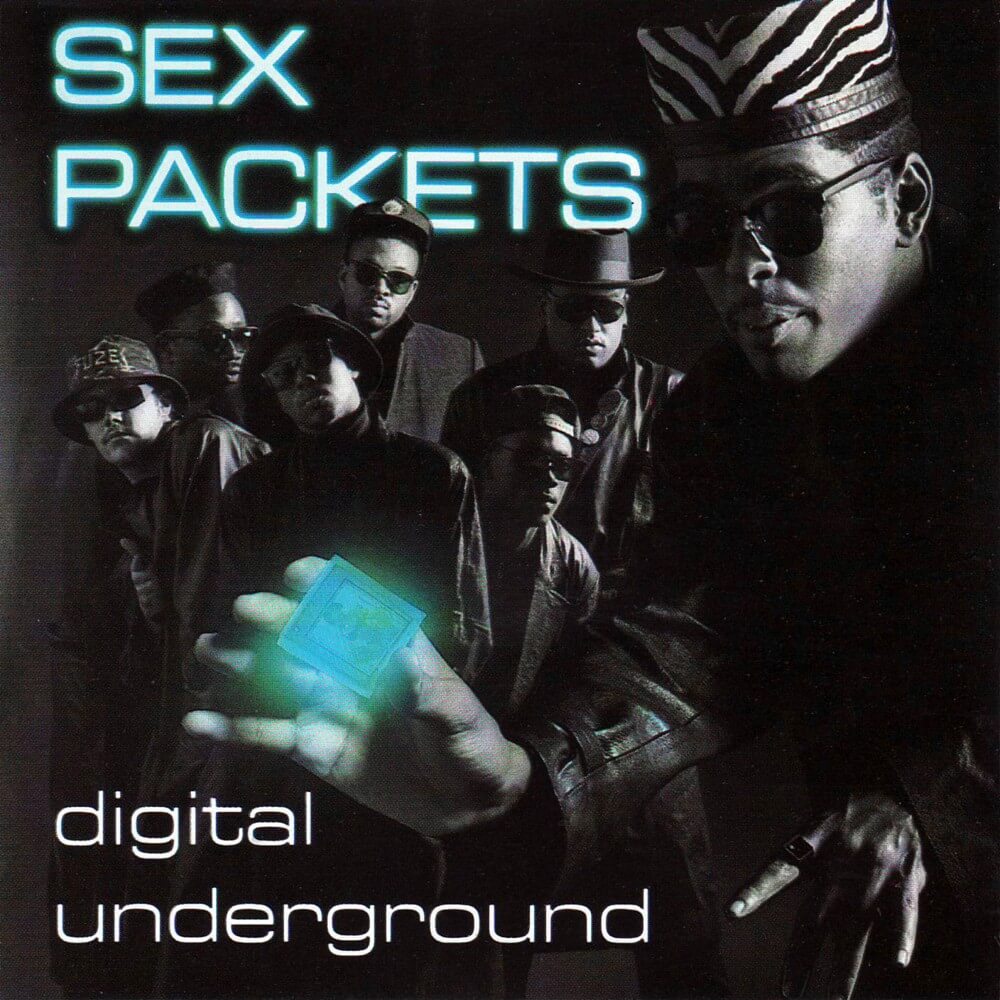
Digital Underground brought a distinctly eccentric energy to West Coast Hip Hop with Sex Packets, a debut built around funk, comedy, and an elaborate science-fiction concept. Led by Shock G, the Oakland collective imagined a fictional substance called G.S.R.A., capable of fulfilling any sexual fantasy. The premise gives the album a loose narrative framework, with skits and interludes connecting its various musical detours.
The group’s biggest calling card is “The Humpty Dance,” an irresistible party record introducing Shock G’s outrageous Humpty Hump persona. Its rubbery bassline, infectious groove, and deliberately ridiculous lyrics made it an instant classic. “Doowutchyalike” captures the group’s anything-goes attitude, while “Freaks of the Industry” moves into slower, more seductive territory. The contrast between these tracks gives the album plenty of variety.
Musically, Sex Packets draws heavily from the P-Funk tradition, with thick basslines, lively horn arrangements, and an inventive combination of sampled and live instrumentation. Shock G’s production gives the record a loose, playful character, while the group’s shifting voices and personalities keep things lively. The title track and “Packet Prelude” carry the central concept into increasingly absurd territory, without allowing the storytelling to overwhelm the music.
There is little solemnity here, and that’s precisely the point. Digital Underground had a gift for making funk-driven Hip Hop entertaining without sacrificing musical imagination. Sex Packets introduced a singular group with an unmistakable identity and gave 1990 one of its most infectious albums.
17. Too Short - Short Dog's In The House

With Short Dog’s in the House, Too $hort continued refining the slow, bass-heavy Oakland sound that would become a major influence on West Coast Hip Hop. His sixth album balances socially conscious material with the sexually explicit pimp tales that had become his trademark. The production, handled by Too $hort alongside local collaborators including Al Eaton, DJ Pooh, and Sir Jinx, draws heavily on P-Funk and the deep, unhurried rhythms of the TR-808.
“The Ghetto” is the album’s standout, with Too $hort stepping away from his usual subject matter to paint a vivid picture of urban poverty and its consequences. Built around a soulful Donny Hathaway sample, it’s thoughtful storytelling from an artist often underestimated as a lyricist. “It’s Your Life” takes a similarly reflective approach, while “Ain’t Nothin’ But a Word to Me” pairs Too $hort with Ice Cube for a harder-edged exchange.
The other side of the album delivers familiar Short Dog material. “Short But Funky,” “Pimpology,” and “Paula & Janet” lean into his explicit humor and relaxed, drawling delivery. The contrast between the two sides gives the record much of its character, even if the raunchier material is less compelling than the socially aware tracks.
The slow grooves and deep bass also point toward the G-funk sound that would soon dominate West Coast rap. Short Dog’s in the House captures Too $hort at an important stage in his development, with “The Ghetto” providing one of the finest and most enduring songs of his career.
18. Intelligent Hoodlum - Intelligent Hoodlum

Percy Chapman’s debut as Intelligent Hoodlum brings a reflective edge to Queensbridge street rap. With Marley Marl overseeing much of the production, Chapman balances accounts of street life and personal hardship with pointed social commentary. His measured delivery gives the material an introspective quality, even when the subject matter turns harsh. The loss of his father, his own criminal past, and the consequences of life in the streets all inform his writing.
The title track sets the tone with a moody, unhurried beat and lyrics that introduce an MC concerned with the world around him as well as his own circumstances. “Back to Reality” adds a smoother touch through its Soul II Soul sample, while “Arrest the President” takes a more confrontational political stance. “No Justice, No Peace” continues that line of thought, addressing racial and social injustice with urgency. Chapman is equally effective on “Game Type,” weaving a tale of jealousy and desire over sparse, bass-driven production.
“Keep Striving” offers an encouraging message about perseverance, although its motivational approach occasionally gets heavy-handed. “Party Animal” is another weaker moment, interrupting an otherwise focused record. Still, the album’s combination of street-level observation, personal reflection, and political awareness gives it a character of its own. Marley Marl’s production provides a suitably dark backdrop, while Chapman brings a thoughtful perspective to the Queensbridge tradition. Intelligent Hoodlum introduced an MC whose ambition extended well beyond the usual street-rap subjects.
19. D-Nice - Call Me D Nice

Best known at the time as the youngest member of Boogie Down Productions, D-Nice stepped out on his own with a debut that revealed his considerable production skills. Still only 19, he handled most of the album’s beats himself, building tracks around heavy bass lines, hard drums, and catchy loops. His rapping is less distinctive than KRS-One’s, but he has an easygoing delivery and enough charisma to carry the strongest material.
The opening pair sets a high standard. “Crumbs on the Table” is an energetic display of battle-rap braggadocio, while the title track rides a buzzing organ loop and a booming bass line that make it one of the catchiest rap singles of 1990. “The TR 808 Is Coming” keeps the low end prominent, and “A Few Dollars More” continues the album’s streetwise approach.
The second half is less consistent. “Glory,” a historical narrative inspired by the Civil War film of the same name, reflects the educational influence of BDP, although its school-report approach makes for a somewhat stiff listen. “It’s Over,” featuring Dawnn Lewis, ventures into New Jack Swing territory with less convincing results. D-Nice’s production instincts are stronger than his lyrical range, and several tracks struggle to match the opening cuts.
Still, Call Me D-Nice has enough engaging beats and confident moments to make it a worthwhile solo debut. The title track alone is a strong reminder that D-Nice was a talented producer and an MC capable of holding his own outside the BDP camp.
20. K-Solo - Tell The World My Name

K-Solo’s debut is driven by the chemistry between his animated storytelling and PMD’s funky, sample-based production. The Long Island MC became known for spelling out words in his rhymes, a technique that gets plenty of attention on “Spellbound” and “Rockin’ For My Hometown.” There is considerably more to his style, though. K-Solo has a knack for building colorful narratives, shifting between humor, street tales, and darker subject matter without losing his distinctive delivery.
“Your Mom’s in My Business” is a playful highlight, with K-Solo recounting the complications of a relationship under the watchful eye of his girlfriend’s mother. A warm bassline built around Maze & Frankie Beverly’s “Before I Let Go” gives the track an irresistible groove. “Fugitive” takes a more personal direction, drawing on K-Solo’s encounters with the law over a sample from Grover Washington Jr.’s “Knucklehead.” His storytelling is particularly effective here, balancing vivid details with a sense of hard-earned experience.
PMD’s production also gives the stranger material room to breathe. “Tales from the Crack Side” pairs an offbeat narrative with a hypnotic funk backdrop, while “Renee-Renee” ventures into deliberately provocative territory that has aged considerably less gracefully. “Real Solo Please Stand Up” and “Everybody Knows Me” add further variety.
The spelling technique may have been K-Solo’s calling card, but Tell The World My Name gives us a fuller picture of an inventive MC with a strong feel for character, humor, and storytelling.
21. X Clan - To The East, Blackwards

X Clan brought a distinctive Afrocentric perspective to the politically charged Hip Hop of 1990. Rooted in the Blackwatch Movement, the Brooklyn group built its identity around Black history, cultural pride, and resistance to racial and economic oppression. Brother J handled the verses, while Professor X the Overseer supplied booming spoken-word interjections that gave the music an almost ceremonial character. Their Egyptian-inspired imagery and red, black, and green symbolism extended that vision beyond the lyrics.
The production, handled entirely by the group, draws heavily on the funk of Parliament-Funkadelic, Zapp, and Roy Ayers. Rather than relying on the dense, abrasive approach associated with some contemporary New York rap, X Clan favored thick bass lines, crisp drums, and lively scratches. “Funkin’ Lesson” sets the tone, while “Grand Verbalizer, What Time Is It?” gives Brother J room to demonstrate his intricate, densely packed writing. “Raise the Flag” is another standout, turning the group’s political convictions into an energetic call to arms.
The album’s educational ambitions are sometimes delivered with an almost sermon-like intensity, and its rough production has an unmistakably underground character. That directness is part of its appeal. To the East, Blackwards gives Black empowerment a celebratory musical setting without softening its militant message. X Clan made an album with its own language, imagery, and unmistakable sense of purpose.
22. Salt-N-Pepa - Blacks' Magic
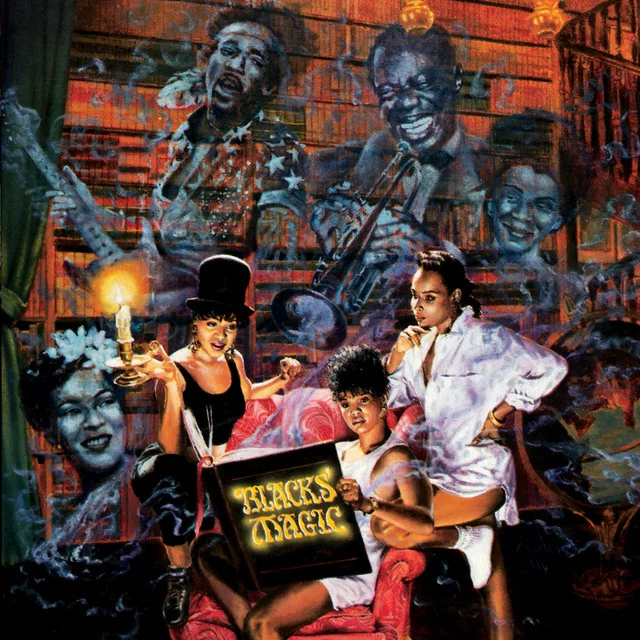
With Blacks’ Magic, Salt-N-Pepa expanded their subject matter while retaining the playful energy that had made them one of rap’s most popular groups. The trio brought a stronger sense of creative independence to the project, with Salt taking a larger role in the writing and production. The result moves between party records, social commentary, and songs about female autonomy, giving the album a broader perspective than their earlier work.
“Expression” is the centerpiece, a confident declaration of individuality that also marked a new level of creative control for Salt. “Independent” continues the message of self-reliance, while “Negro wit’ an Ego” addresses racial identity and prejudice with a sharper political edge. The group also tackled sexual health and communication on “Let’s Talk About Sex,” turning a subject often treated with embarrassment into an open conversation. Its directness and catchy hook made it one of their most recognizable songs.
There is plenty of lighter material too. “You Showed Me” reworks the Turtles song into a smooth Hip Hop love track, and “I Don’t Know” features Kid ‘N Play. Some of the album’s less distinctive party cuts interrupt the flow, but the strongest songs give Blacks’ Magic a clear sense of purpose. Salt-N-Pepa were making room for women to speak on their own terms, with confidence, humor, and a willingness to address subjects many of their peers avoided.
23. London Posse - Gangster Chronicle

London Posse’s Gangster Chronicle marked a major step forward for British Hip Hop, giving the genre a distinctly local voice. Rodney P and Bionic draw on Cockney slang, Jamaican patois, and the rhythms of London street culture, creating a style that owes as much to reggae and dancehall as it does to American rap. Sparkii Ski’s production brings these influences together through heavy bass lines, sparse drum-machine patterns, and moody samples.
“Money Mad” establishes the album’s rough-edged character, while “Original London Style” is a confident declaration of the group’s identity. The title track captures the duo’s storytelling instincts, grounding their rhymes in the realities of urban London. “Live Like the Other Half Do” adds a sharper social dimension, examining class divisions over a swinging, reggae-influenced rhythm.
The album also takes occasional detours. “Tell Me Something” moves toward R&B, offering a melodic change of pace that sits somewhat uneasily alongside the tougher material. A few dated arrangements and awkward moments are part of the package, but they don’t diminish the record’s personality. Gangster Chronicle gave British MCs permission to sound like themselves, rather than imitate their American counterparts. Its London perspective, Caribbean influences, and independent spirit make it one of the defining UK Hip Hop albums of its era.
24. Movement X - Movement Ex
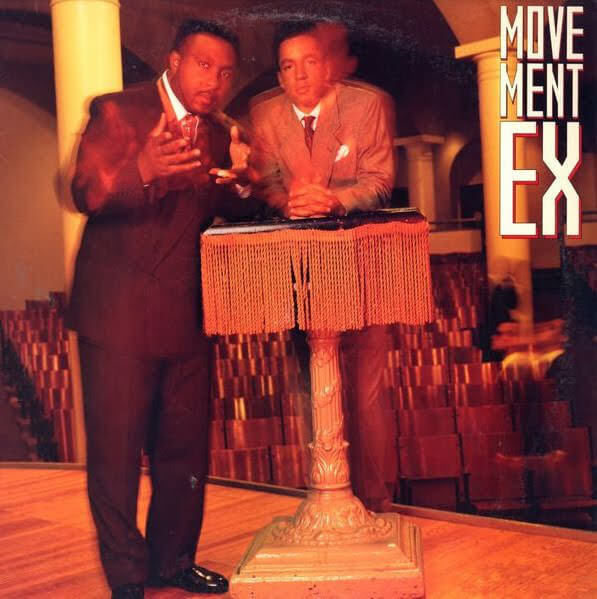
Movement X brought a distinctly militant political outlook to West Coast Hip Hop with this forceful debut. Lord Mustafa leads the charge with rapid, tightly packed verses drawing on Supreme Mathematics, history, and social analysis. His delivery can be rough around the edges, but the conviction behind his words gives the album a strong sense of purpose. Tracks like “United Snakes of America” and “I Deal With Mathematics” tackle political corruption and the importance of knowledge with uncompromising intensity.
DJ King Born is equally central to the group’s sound. His production combines heavy drums, tense samples, and live bass lines, while his sharp scratching gives the tracks an added layer of urgency. The arrangements are direct and uncluttered, leaving plenty of room for Lord Mustafa’s extended arguments. The group addresses subjects ranging from state violence and environmental destruction to safe sex and misinformation, maintaining a consistent political focus throughout.
Movement Ex is overlong, and neither the rapping nor the production has the refinement of the era’s leading political rap acts. Still, its fierce energy and intellectual ambition make it an engaging record. Movement X brought an uncompromising East Coast-style militancy to California, delivering an album whose youthful urgency has lost little of its force.
25. Compton Most wanted - It's A Compton Thang

Before Straight Checkn ‘Em and Music to Driveby brought Compton’s Most Wanted wider recognition, the group introduced its sound with this promising debut. At a time when N.W.A had already put Compton on the Hip Hop map, C.M.W. offered a less confrontational take on gangsta rap, favoring mid-tempo funk grooves and relaxed production. With Tha Chill incarcerated during the recording, MC Eiht handles most of the vocal duties, his nasal tone, deadpan delivery, and trademark “Geah” already giving the group a recognizable voice.
DJ Slip and The Unknown DJ shape the music around smooth funk and jazz-tinged loops, drawing on an earlier strand of West Coast Hip Hop while keeping the street perspective firmly in place. “One Time Gaffled Em Up” and “This Is Compton” establish the group’s local identity, while “Late Night Hype” is a highlight, pairing a soulful backdrop with stories of cruising and neighborhood paranoia. The title track and “I’m wit Dat” continue the laid-back approach.
“Duck Sick” takes aim at fellow Compton rapper DJ Quik, sparking a feud that would continue for years. The debut is less polished than the group’s later work, but it introduced MC Eiht’s distinctive style and pointed toward the smoother, funk-driven direction C.M.W. would develop on subsequent albums.
26. King Sun - Righteous But Ruthless (1990)

King Sun’s second album is a strong example of early-1990s East Coast rap, balancing streetwise braggadocio with Afrocentric politics and Five-Percent Nation teachings. His deep, commanding voice and measured delivery give the material plenty of authority. Produced by Tony D, King Shameek, and Troy Wonder, the album has a consistent, hard-edged sound built around heavy drums, funk samples, and jazzy touches.
“Be Black” is a forceful statement of Black identity, while “Universal Flag” draws directly on Five-Percent Nation philosophy. “The Gods Are Taking Heads,” featuring Poor Righteous Teachers, is another highlight. Sun also has a sharp battle-rap side. “Soft Shoe Booty” takes aim at pop rappers jumping on the latest trends, and “Stunts” gives him room for his storytelling skills. “Undercover Lover” provides a change of subject, while “Cold New Yorkin’” brings a familiar New York flavor.
The political content limited its radio exposure, and Profile Records did little to support the release. Righteous But Ruthless deserved a much bigger audience.
27. Boo-Yaa T.R.I.B.E. - New Funky Nation (1990)

Six Samoan-American brothers from Carson, California, Boo-Yaa T.R.I.B.E. brought a formidable group presence to West Coast Hip Hop. Their debut combines gangsta rap with live funk instrumentation and heavy rock influences, creating a muscular sound distinct from the sampled grooves and drum-machine rhythms dominating much of the scene.
“Six Bad Brothas” sets the tone with booming vocals, rumbling bass, and the brothers trading verses before joining forces on the hook. The title track moves into funkier territory, driven by prominent horns and a strong groove, while “Rated R” keeps the focus on street-level toughness. “Once Upon a Drive-By” delivers an ominous tale of violence, and “Psyko Funk” draws on the group’s funk foundations. “Pinkin’ Up Metal” takes the rock influence even further, bringing a harder guitar-driven edge to the album.
The brothers’ collective delivery gives the music much of its force. Their voices overlap and reinforce one another, lending the performances a communal energy rarely heard in conventional MC-and-DJ setups. New Funky Nation is loud, unpredictable, and proudly individual, an early reminder of how varied West Coast gangsta rap could be.
28. Grand Daddy I.U. - Smooth Assassin

Grand Daddy I.U. brought a polished, charismatic presence to the Juice Crew’s expanding roster with his debut album. Produced by Biz Markie, with Cutmaster Cool V handling co-production and mixing, Smooth Assassin pairs soulful loops, jazzy touches, and hard-hitting drums with I.U.’s deep voice and relaxed, assured delivery. His lyrical approach centers on braggadocio, clever wordplay, and streetwise storytelling, delivered with the confidence of an MC who never needs to raise his voice to command attention.
“The U Is Smooth” introduces his dapper persona, while “Pick Up the Pace” and “I Kick Ass” bring plenty of battle-rap attitude. “Something New” adds a melodic touch, and “Nobody Move” takes a tougher direction. Biz Markie’s production gives the album a warm, distinctly New York character, with Cutmaster Cool V’s turntable work adding to its appeal.
At sixteen tracks, the album occasionally loses focus, and some of its stylistic detours interrupt the stronger material. Still, I.U.’s distinctive voice and effortless command of the mic make Smooth Assassin an enjoyable entry in the Cold Chillin’ catalog.
29. Big Daddy Kane - Taste Of Chocolade
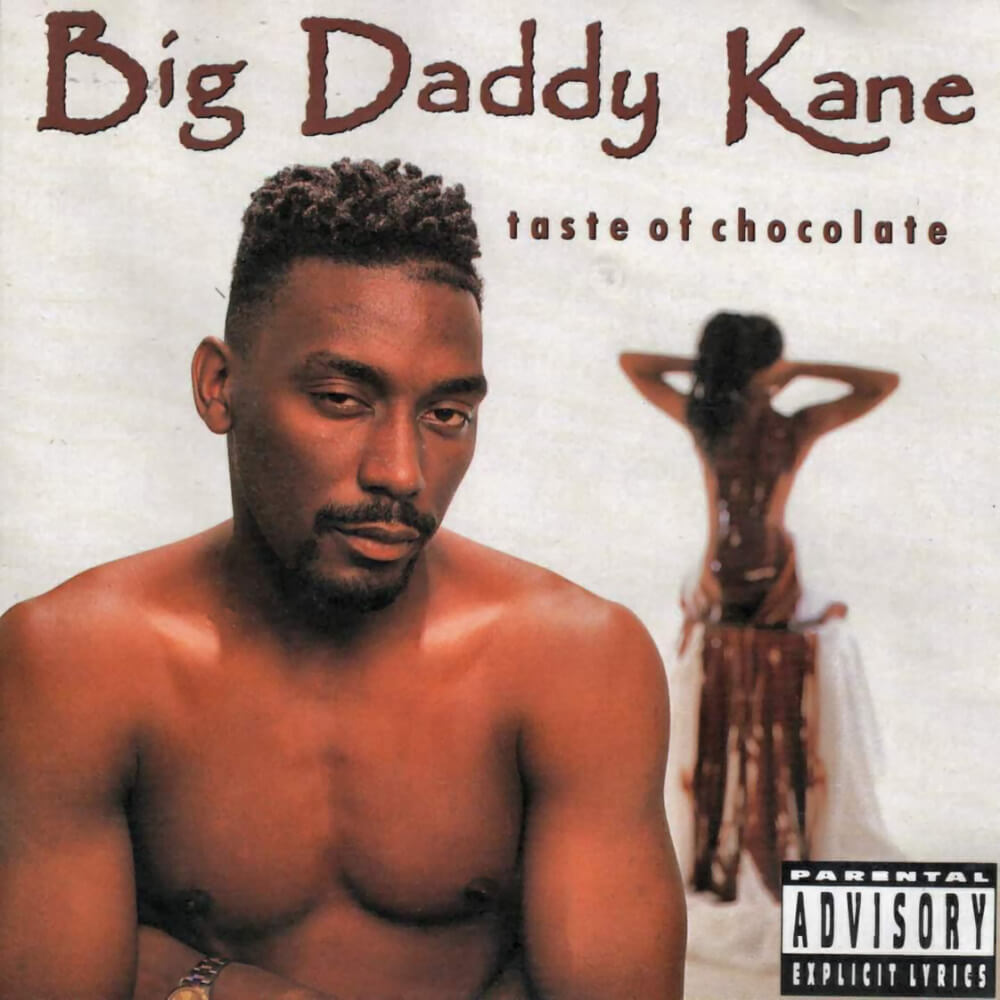
After two consecutive classics, Big Daddy Kane’s third album finds him experimenting with a broader musical palette, with mixed results. Marley Marl is absent from the production lineup, leaving Kane, Prince Paul, Mister Cee, and Cutmaster Cool V to shape the sound. The beats are generally strong, and Kane’s commanding voice, intricate wordplay, and effortless flow are still in top form.
“It’s Hard Being the Kane,” produced by Prince Paul, is a highlight, with Kane tearing through the beat at full speed. “Cause I Can Do It Right” and “Put Your Weight on It” deliver the braggadocio and rhythmic flair we expect from him, while “Down the Line” brings together an impressive crew of MCs. “Who Am I” and “Dance with the Devil” offer welcome lyrical variety.
The trouble lies in the R&B-oriented detours. “All of Me,” featuring Barry White, and “Keep ‘Em on the Floor” interrupt the album’s Hip Hop momentum. Taste of Chocolate is a mixed bag, but when Kane gets room to rap, few can match him.
30. The Jaz - To Your Soul

The Jaz’s To Your Soul is a strong, often overlooked example of early-1990s East Coast rap, with tough, sample-heavy production and an MC whose technical ability deserves greater recognition. Handling most of the beats himself, with contributions from Prince Paul and Chad Elliott, The Jaz builds a sound around crisp drums, thick basslines, and tightly arranged loops. His delivery shifts effortlessly between rapid-fire rhymes and more deliberate patterns, with internal rhymes and precise phrasing throughout.
“A Groove (This Is What U Rap 2)” and “It’s That Simple” capture his rhythmic control, while “Put the Squeeze on ‘Em” brings a harder edge. “Ease Up Jaz” adds a funkier bounce without losing the album’s momentum.
The main attraction for many listeners is “The Originators,” featuring a young Jay-Z trading verses with his mentor. Their chemistry makes it a fascinating early glimpse of a future superstar. A few weaker cuts interrupt the flow, but To Your Soul is a rewarding showcase for The Jaz’s skills and personality.
31. Shazzy - Attitude: A Hip Hop Rapsody

Shazzy’s Attitude: A Hip Hop Rapsody is one of the most overlooked female rap albums of the early 1990s. The Queens MC had a distinctive voice, a confident flow, and the lyrical ability to move between battle rhymes, social commentary, and songs about female independence. She could be sharp and confrontational without losing her sense of rhythm, and tracks like “Play in Vain,” “Ode II a Dead Man,” and “Black Is a Nation” give her plenty of room to demonstrate her skills.
The production is equally impressive. The Stimulated Dummies, making their first completed album as a production team, build a dense collage of funk breaks, unusual samples, hard drums, and inventive turntable work. Grandmixer Muggs adds scratches, while vocal snippets and assorted sound bites give the record a lively, unpredictable character. “Believe It’s So” is another highlight, with Shazzy addressing gender inequality over a strong R&B-influenced backdrop.
Few listeners picked up on the album when it came out, and its commercial failure is a real shame. Shazzy deserved a much bigger audience. Attitude is an inspired, frequently overlooked release that belongs among the strongest female-led Hip Hop albums of its time.
32. King Tee - At Your Own Risk

King Tee’s second album finds the Compton MC refining his own take on West Coast rap. His booming voice, relaxed flow, and natural charisma give the record plenty of personality, moving easily between battle rhymes, humor, and streetwise storytelling. DJ Pooh handles most of the production, providing funky basslines, crisp breaks, and uncluttered beats that leave room for Tee’s delivery. “At Your Own Risk,” “Ruff Rhyme (Back Again),” and “Skanless” capture the album’s easygoing attitude, while “Time to Get Out” offers a more serious reflection on gang violence.
There are a few awkward attempts at commercial crossover, particularly “Diss You,” but the closing track more than makes up for them. “Played Like a Piano,” featuring Ice Cube and Breeze, is the album’s high point: a superb collaboration built around a jazzy piano groove, with all three MCs bringing their own character to the track.
33. CPO - To Hell And Black
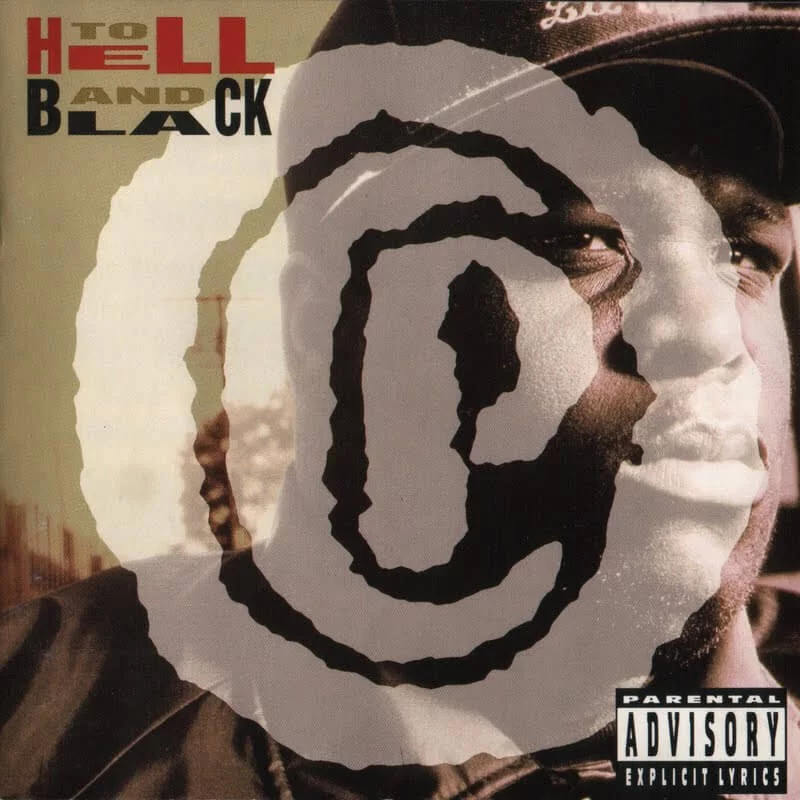
C.P.O.’s sole album is an overlooked piece of early Compton rap, with MC Ren’s influence apparent throughout. The N.W.A. member handled most of the production alongside Young D, giving the record a stripped-down, funk-driven sound built around heavy bass, hard drums, and inventive samples. Lil’ Nation has a deep, commanding voice and an unhurried delivery that gives his rhymes plenty of weight. He can handle the gangsta rap posturing, but there’s more to the group’s perspective than street bravado.
“Ballad of a Menace,” featuring MC Ren, is a standout, while “The Wall” turns its attention to the destructive consequences of violence and the drug trade. “C.P.Osis,” “Homicide,” and “This Beat Is Funky” keep the energy up, with the latter delivering exactly what its title promises. To Hell and Black occasionally sounds like an extension of the Ruthless Records camp, but its strong production and Lil’ Nation’s presence make it a rewarding Compton release.
34. Special Ed - Legal

Following the success of Youngest in Charge, Special Ed faced the challenge of proving his debut was no fluke. On Legal, named for his transition into adulthood at 18, he sticks with the relaxed, quirky personality that made him stand out. His technical ability is remarkable: long, intricate lines flow across bar boundaries with an effortless rhythm, giving even straightforward braggadocio plenty of movement.
Howie Tee handles most of the production, joined by Special Ed and Wayne Archer. The beats are compact and bouncy, built around crisp drums and catchy samples that give Ed plenty of room to work. “Come On, Let’s Move It” sets the tone, while “The Mission” brings James Bond-inspired touches to an entertaining narrative. “I’m the Magnificent” revisits his earlier style, and “5 Men and a Mic” gathers several MCs for a lively posse cut. “Livin’ Like a Star” is another highlight, with Ed’s humor and storytelling instincts coming through clearly.
The album occasionally leans too heavily on battle rhymes, and a few production choices are less inspired. Still, its short running time and consistent focus make Legal an enjoyable follow-up. Special Ed sounds completely at ease, combining technical precision with the playful character that distinguishes his best work.
35. 415 - 41Fivin
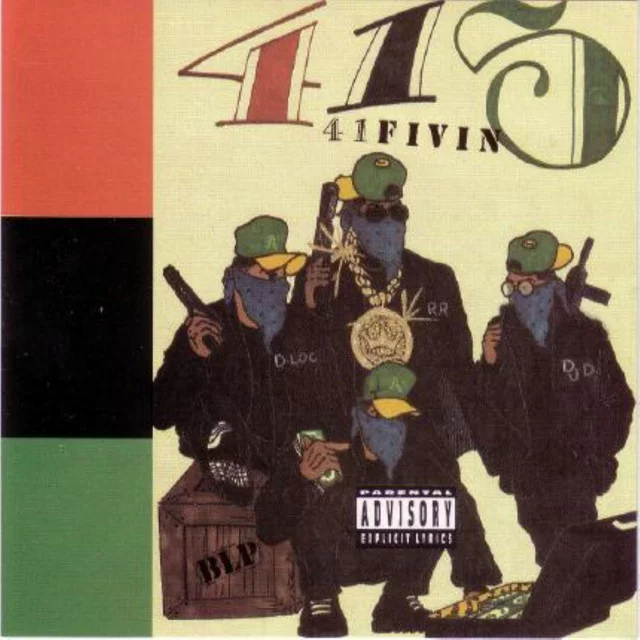
415’s debut is a foundational release in Oakland gangsta rap, capturing a distinctly Northern California approach to street music. The group pairs Richie Rich and D-Loc on the mic with producers DJ Daryl and J.E.D., who favor deep basslines, rolling funk grooves, and uncluttered arrangements over the more abrasive production coming out of Los Angeles. That musical restraint gives the album its own character, with Richie Rich’s smooth, unhurried delivery providing a particularly memorable presence.
The title track and “Snitches & Bitches” introduce the group’s streetwise perspective, while “Side Show” is the album’s standout. Originally released as a single in 1988, it captures the Oakland car culture that would become closely associated with the Bay Area. “Lavish” and “Ruthless Is Reality” add to the album’s portrait of local street life.
Originally released independently on Big League Records, 41Fivin found a wider audience after Priority Records picked it up for national distribution in 1991. Its bass-heavy grooves and relaxed vocal style point toward the sound that would shape Bay Area rap in the years ahead.
36. The UBC - 2 All Serious Thinkers
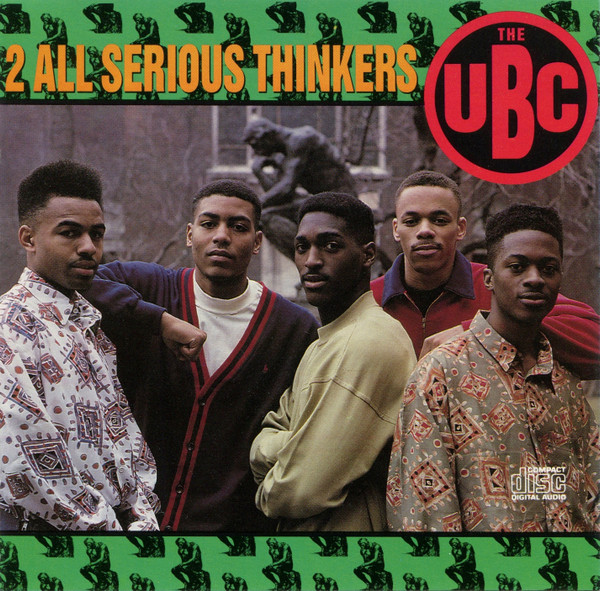
Long Island’s The UBC made one album and then disappeared from view, leaving behind an overlooked gem of late-1980s New York Hip Hop. The collective brought together MCs, producers, DJs, and dancers, with E-Ski Spectacular at its center. Formerly associated with Leaders Of The New School, E-Ski handles eleven of the album’s thirteen tracks, delivering fluent, articulate rhymes with an emphasis on lyrical substance and battle-ready wordplay.
Cae Love and D-Nasty provide stripped-back, head-nodding beats that give the MC plenty of room. There is no need for elaborate production or fashionable gimmicks: the appeal lies in the clarity of the writing, the smoothness of the delivery, and the group’s straightforward commitment to Hip Hop fundamentals. E-Ski moves comfortably between putting lesser MCs in their place and offering more thoughtful observations, always with impressive control.
Originally recorded in 1987 and released in 1990, 2 All Serious Thinkers has a warm, uplifting quality that makes it easy to return to. This is intelligent, unpretentious Hip Hop that deserved a much larger audience.
37. Monie Love - Down To Earth
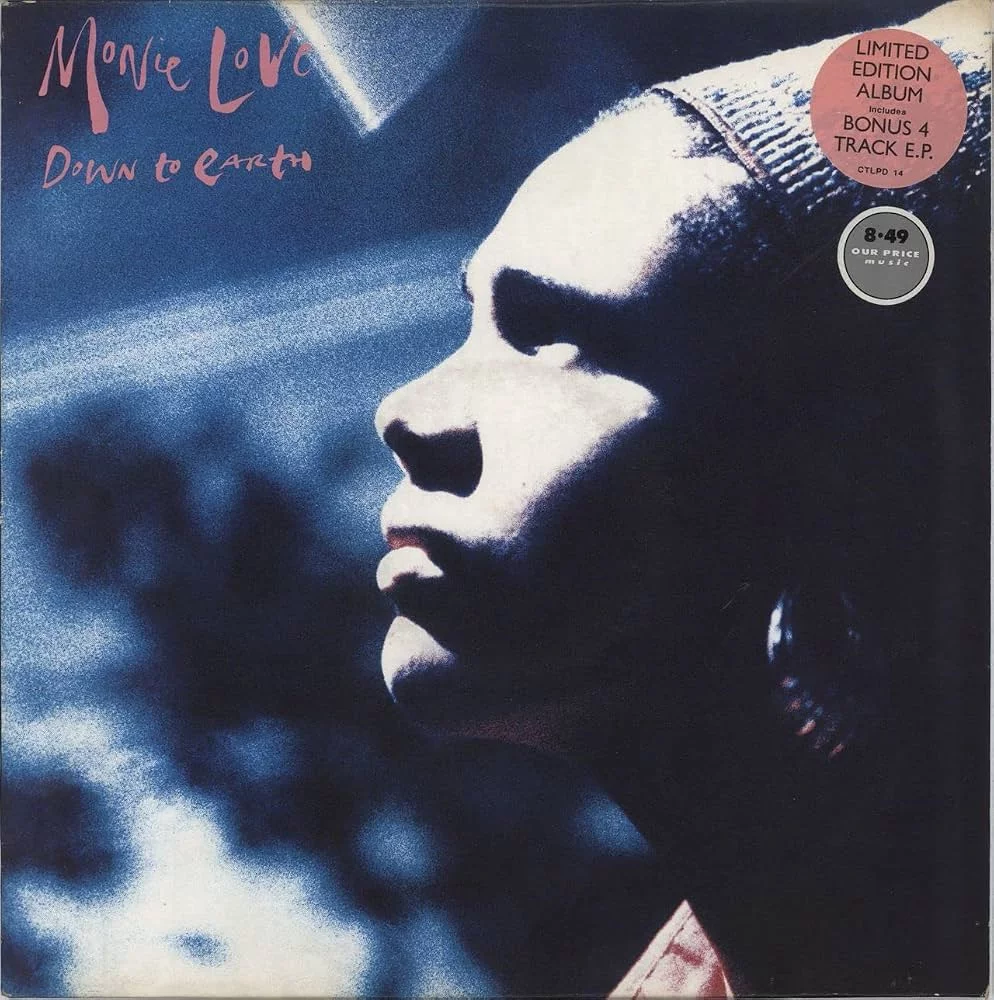
Monie Love’s debut brought a distinctive British voice into the American Hip Hop mainstream. Already known for her appearances on Queen Latifah’s “Ladies First” and De La Soul’s posse cut “Buddy,” she arrived with strong ties to the Native Tongues movement and a style built around agile flows, sharp phrasing, and an engaging personality. Her position as one of the first British rappers signed to a major American label also gave the album a transatlantic perspective.
Recorded between London and New York, Down to Earth moves between rugged Hip Hop beats and brighter, dancefloor-oriented production. “Monie in the Middle” and “It’s a Shame (My Sister)” are the obvious highlights, combining catchy hooks with messages of female independence and solidarity. “Down 2 Earth” and “Don’t Funk wid the Mo” bring a tougher rhythmic edge, while other tracks explore pop-rap and hip-house territory.
The album is occasionally uneven, and its lighter material doesn’t always match Monie’s considerable mic skills. Still, her charisma and versatility make Down to Earth an enjoyable debut and an important early bridge between British and American Hip Hop.
38. The Afros - Kickin' Afrolistics
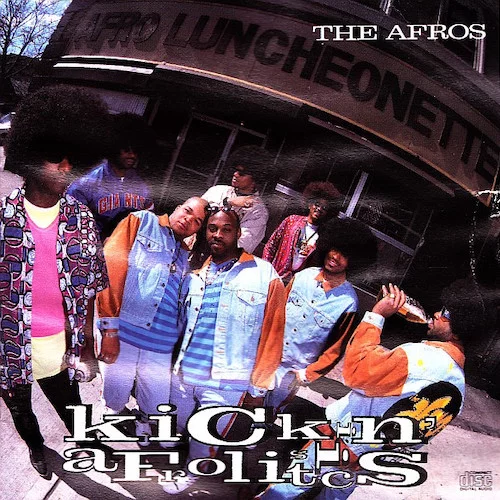
The Afros were an unusual addition to New York Hip Hop, built around a concept inspired by the exaggerated Afro hairstyles and imagery of 1970s blaxploitation films. DJ Hurricane, Cool T, and DJ Kippy-O adopted oversized wigs as part of a playful visual identity, but there was more to the project than its novelty appearance. Launched on Jam Master Jay’s JMJ Records, the group’s only album benefits from production by Jay and Davy DMX.
The music is the strongest part of the package. Thick funk samples, hard drums, and lively grooves give tracks like “Feel It,” “This Jam’s for You,” and the title track plenty of energy. “Coolin’ With the Afros” and “Afros in the House” reinforce the group’s playful personality, while “Causin’ Destruction” takes a tougher direction.
The humor and Afro-themed concept occasionally wear thin, and the group never escaped its novelty image. Despite all that, Kickin’ Afrolistics has enough strong production and old-school New York character to reward listeners willing to look beyond the wigs.
39. Kid Frost - Hispanic Causing Panic
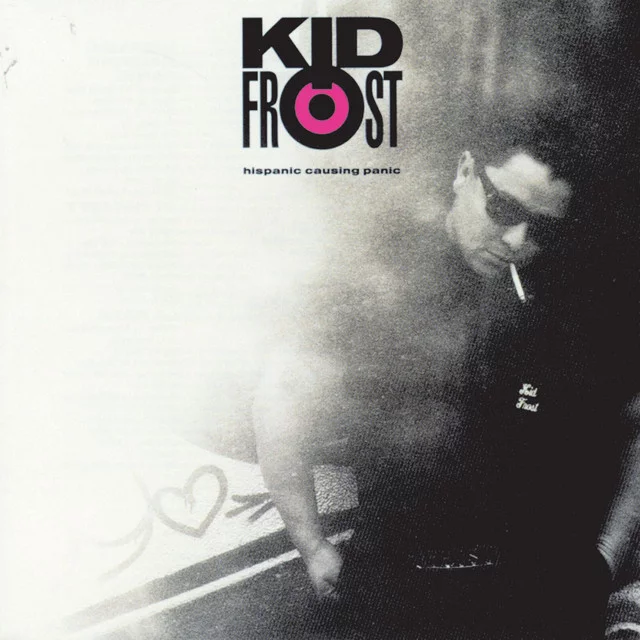
Kid Frost’s debut is a landmark in Chicano Hip Hop, bringing Mexican-American identity and barrio culture into the mainstream rap conversation. Frost had been active in the Los Angeles scene since the early eighties, but Hispanic Causing Panic gave him a platform to put his heritage front and center. His use of Spanglish, caló, and references to Mexican-American life gave the album a distinct local character.
“ La Raza” is the obvious centerpiece. Built around a smooth Latin-jazz sample from El Chicano’s “Viva Tirado,” its relaxed groove and Frost’s confident delivery make it an outstanding record. “Ya Estuvo” and “Come Together” also draw on cultural pride, while the title track reinforces the album’s identity. Tony G, the Baka Boyz, Will Roc, and other collaborators provide a varied West Coast backdrop, mixing funk-driven rhythms with tougher rap production.
The rest of the album doesn’t consistently reach the heights of “La Raza.” Some tracks lean toward more conventional West Coast gangsta rap, and the production occasionally sounds dated. Still, Hispanic Causing Panic opened doors for Chicano MCs and gave Latin rap a significant mainstream breakthrough.
40. Poison Clan - 2 Low Life Muthas

Poison Clan’s debut captures the rowdy spirit of early Miami Hip Hop while pointing toward the harder street rap direction the group would pursue later. J.T. Money and Debonaire had the mic skills and attitude to stand out in a scene often associated with the party-oriented sound of 2 Live Crew. Their lyrics mix braggadocio, sexual themes, and tales of reckless neighborhood behavior, delivered with plenty of confidence and sharp exchanges.
Mr. Mixx handles much of the production, bringing the familiar Miami bass foundations of Luke Records to a slightly tougher setting. The beats rely on heavy low end, stripped-down loops, and direct rhythms that leave space for the duo’s forceful performances. “Dance All Night,” built around a sample from Isaac Hayes’ “Theme from Shaft,” is the standout, offering a smoother club groove that contrasts with the album’s rougher material. “Bad Influence,” “Neighborhood Haps,” and “The Bitch That I Hate” lean into the group’s more provocative side.
The album doesn’t break much new ground, and some of its subject matter is predictable. That said, J.T. Money and Debonaire have enough personality and lyrical ability to make 2 Low Life Muthas an engaging early chapter in Miami rap.
Honorable Mentions
- YZ – Sons Of The Father
- Esham – Boomin Words From Hell
- 2 Live Crew – Banned In The USA
- Run DMC – Back From Hell
- Lakim Shabazz – Lost Tribe Of Shabazz
- DJ Magic Mike – Bass Is The Name Of The Game
- Professor Griff – Pawns In The Game
- Rodney-O & Joe Cooley – Three The Hard Way
- MC Shan – Play It Again Shan
- Barsha – Barsha’s Explicit Lyrics
- Richie Rich – Don’t Do It
- MC Pooh – Life Of A Criminal
- Audio Two – I Don’t Care The Album
- Just-Ice – Masterpiece
- Antoinette – Burnin’ At 20 Below
- MC Trouble – Gotta Get A Grip
- Tairrie B – Power Of A Woman
- Three Times Dope – Live From Aknickulous Land
- Kwame – A Day In The Life: A Pokadelick Adventure
- The Ruthless Rap Assassins – Killer Album
- MC Mell’O’ – Thoughts Released (Revelation I)
Not included in this top 30 are the classic 1990 EP releases of Ice Cube (Kill At Will) and N.W.A. (100 Miles & Running) – because these are not full-length albums.
Looking back at 1990, what stands out is the sheer range of music being made across the Hip Hop landscape. Public Enemy and Paris brought uncompromising political perspectives, Ice Cube delivered a fierce solo statement, and A Tribe Called Quest offered a fresh alternative to the harder sounds coming out of New York and Los Angeles. Meanwhile, artists like Geto Boys, Above The Law, Too $hort, and Compton’s Most Wanted pushed regional street rap in different directions, while the emergence of the Native Tongues, the growth of Afrocentric rap, and the first signs of new sounds from Oakland, Miami, and beyond added even more variety.
There was room for lyrical showmanship, social commentary, funk-driven party records, experimental production, and uncompromising underground releases. Albums like Fear Of A Black Planet, AmeriKKKa’s Most Wanted, People’s Instinctive Travels and the Paths of Rhythm, and Mama Said Knock You Out demonstrate how high the standard was, while lesser-known records by artists like Shazzy, The UBC, Movement X, and 415 remind us how much quality music can disappear from the wider conversation.
The Golden Age was in full swing, and Hip Hop was expanding in every direction without losing its connection to the streets, the communities, and the creativity that gave birth to it. 1990 was one hell of a year.