

Run-DMC changed how Hip Hop sounded, how it looked, and how far it traveled. Joseph “Run” Simmons, Darryl “D.M.C.” McDaniels, and Jason “Jam Master Jay” Mizell came out of Hollis, Queens, and stripped away the melodic arrangements and party-oriented presentation found on much of early rap. Their records ran on booming drum-machine patterns and Jam Master Jay’s cuts, with two voices trading lines at full volume and little else around them. Run’s clipped, punchy delivery played against D.M.C.’s heavier boom. They made minimalism sound like authority.
The 1983 double-sided single “It’s Like That” / “Sucker M.C.’s” announced the shift. “It’s Like That” gave a stark account of everyday pressures over a skeletal beat. “Sucker M.C.’s” cut the backing down almost to nothing and put the rappers’ voices front and center. Their self-titled debut followed in 1984 and became the first rap album certified gold. Countless MCs and producers took its template of hard drums, call-and-response vocals, and a DJ treated as a full member of the group.
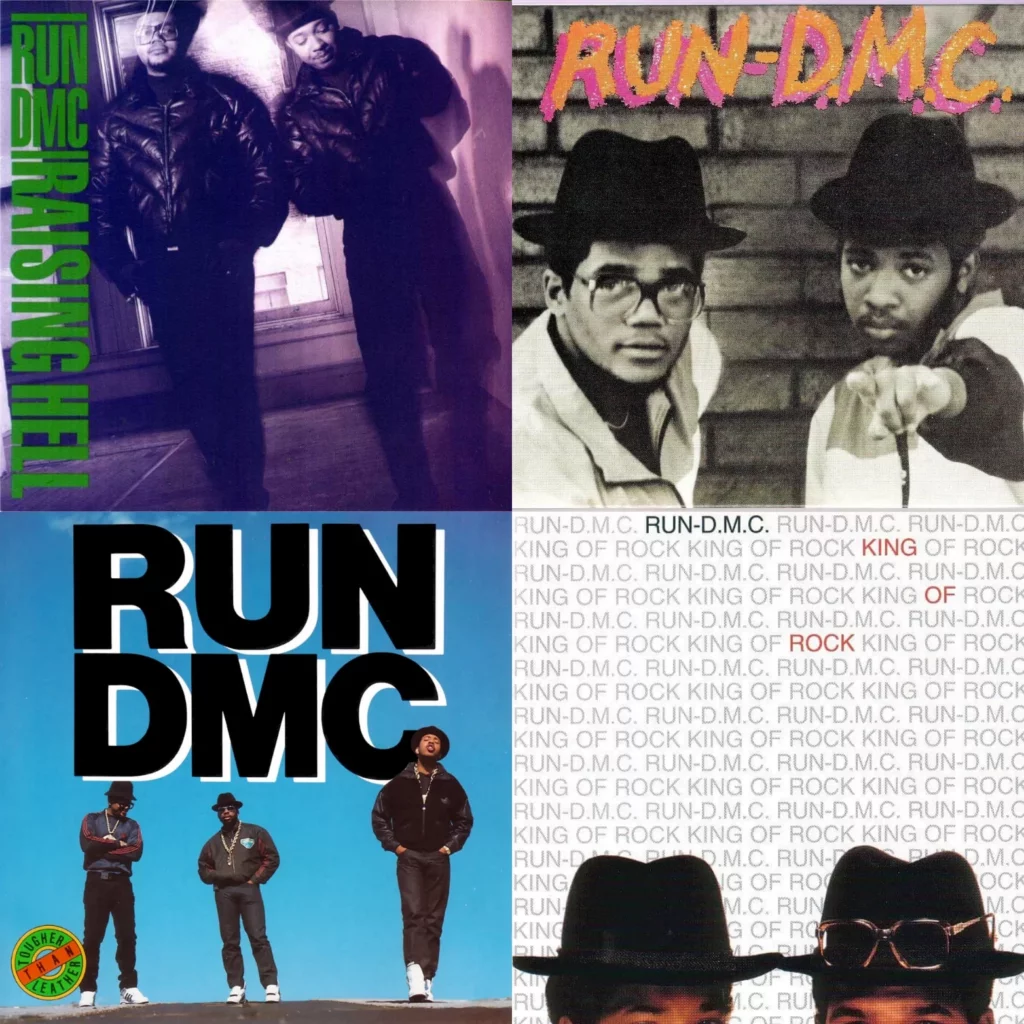
The look mattered too. Black fedoras, leather jackets, thick gold chains, and unlaced Adidas sneakers became the group’s uniform. That look moved Hip Hop away from the flamboyant stage costumes some early performers wore and toward streetwear rooted in New York neighborhoods. People copied it across the country, and the music reached listeners well outside rap’s established audience.
King of Rock (1985) widened that audience, and its title track pushed against the line between rap and rock. Raising Hell (1986) made the connection explicit with “Walk This Way,” their collaboration with Aerosmith. The single and its heavily played video put the group in front of a huge new audience, and the album went triple platinum, a breakthrough for rap at the time.
Tougher Than Leather (1988) and Back from Hell (1990) came out as Hip Hop changed around them. In 1993, Down with the King showed the group adapting to the era’s production. The title track, featuring Pete Rock & CL Smooth, linked the veterans with a younger generation of New York talent. Contributions from producers including Q-Tip and EPMD gave the record a distinctly early-1990s sound. It went platinum in the United States, their last major commercial success.
Run-DMC helped turn rap into a major commercial force without sanding down what made them distinctive. Jam Master Jay’s murder in 2002 was a devastating loss, and his work alongside Run and D.M.C. is inseparable from everything the group built. Here we rank their studio albums, from the 1984 debut to their final record, and judge each one on its own terms.
7. Crown Royal (2001)
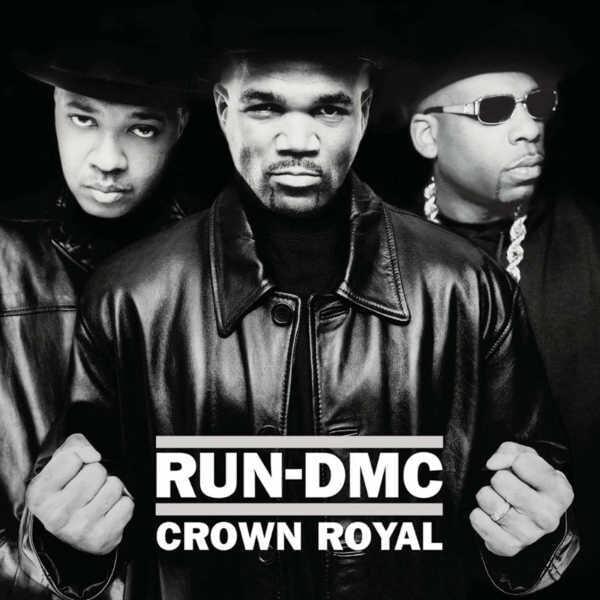
Crown Royal is a Run-DMC album with very little DMC on it. His voice was failing him during this period (he was later diagnosed with spasmodic dysphonia), and he appears only now and then. When he does, he sounds strained. The exchanges between Run and D.M.C., the push and pull that drove the group from “Sucker M.C.’s” onward, are almost entirely gone, and nothing else on the record fills that gap.
Run carries most of the load and turns in some solid verses, though at times the mix buries his voice under the instrumentals. Elsewhere he reuses old bars, and several hooks are cheesy and limp. Nas, Prodigy, Fat Joe, and Method Man look strong on paper, but none of them changes where the record is going. The rap-rock tracks with Kid Rock, Fred Durst, and Everlast are worse. They reach back to the group’s crossover past with none of the conviction that made the early hybrids work.
The production chases a contemporary sound and rarely settles into it. The beats lack the punch of the group’s earlier drum programming, and the attempts at modern polish come across as awkward and forced. The first three tracks hold up reasonably well, and after that the album loses its footing for good.
Crown Royal was the last Run-DMC album, and it closes the catalogue on a muddled note. It is the sound of a group trying to keep up with the times after its central partnership had mostly gone quiet. | 4/10
6. Down With The King (1993)
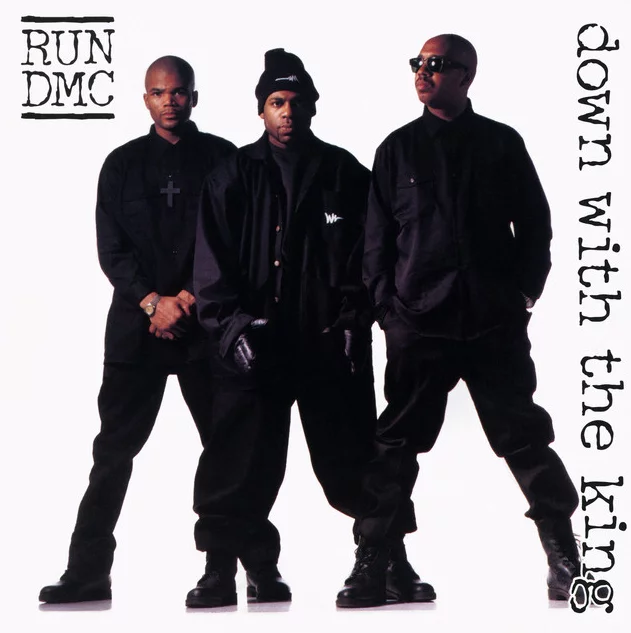
The title track is the reason Down with the King gets remembered. Pete Rock’s beat gives Run and DMC a hard, swinging backdrop, and they ride it with the authority of men who wrote much of the vocabulary everyone else in 1993 was using. Pete Rock & CL Smooth turn the song into an exchange between two generations of New York rap, and the hook lands like a coronation. It is one of the best late-period singles in Hip Hop and the clearest argument for the album.
The rest of the production holds up well. Q-Tip, EPMD, KayGee of Naughty by Nature, the Bomb Squad, Jermaine Dupri, and Jam Master Jay are among the contributors. Together they swap the funk of the earlier records for something darker, with ominous basslines, organs, and delayed horn samples. Onyx, Q-Tip, and EPMD all appear as guests, and the record never leaves its moment.
The trouble is in the voices. Run often raps at a speed and cadence close to Treach’s. DMC joins him to shout the choruses of “Come On Everybody” and “Can I Get It, Yo,” the group-chant style Das EFX and Fu-Schnickens were riding at the time. “3 in the Head” takes its tempo and chorus shape from Cypress Hill’s “Hand on the Pump.” The angrier tone takes an obvious cue from Onyx, whose “Slam” had gone platinum earlier that year on Jam Master Jay’s label. The interlocking exchanges that once defined Run and DMC give way to borrowed energy.
The old identity comes through in places. “In the House” calls back to “My Adidas.” The rock guitar on “Big Willie” brings “King of Rock” to mind, though mostly it makes us long for the power chords and tag-team shouts of the 1985 record.
This is no bad album. The beats hit, the energy rarely drops, and a decade into their career the group sound hungry. It is saddening, though, to hear the group that shaped Hip Hop less than ten years earlier trying to pass as Naughty by Nature or Onyx. “Down with the King” is what keeps the record alive in our memory: an unforgettable Run-DMC track on an album that too often forgets who Run-DMC were. | 6.5/10
5. Back From Hell (1990)
Jam Master Jay is the best reason to go back to Back from Hell. The group produced the record themselves, with co-producers including Stanley Brown, Frank Inglese, and Davy D, and the sample work is dense and well judged. “What’s It All About” lays the shuffling groove of the Stone Roses’ “Fools Gold” against the “Apache” break. Around that, it adds pieces of Run-DMC’s own “Rock Box,” Public Enemy’s “Bring the Noise,” and a lift from Minor Threat’s “In My Eyes.” Manchester indie, hardcore punk, and B-boy staples sit together without crowding the track. “The Ave.” builds its street portrait from Fat Larry’s Band and two Fred Wesley and the J.B.’s records. The title track leans on the “Impeach the President” drums and a piece of “Don’t Believe the Hype.”
The trouble is at the front of the mix. Run-DMC dropped the rock-influenced material of their previous albums to win back the hardcore rap audience, which had drifted toward Public Enemy and the West Coast gangsta rappers. That meant more profanity, more guns, and run-ins with racist cops. Mark Coleman of Rolling Stone wrote that they sounded like “actors playing out roles,” and the charge holds up. The writing reaches for a menace the group never needed on “Sucker M.C.’s.” The opener, “Sucker D.J.’s,” reworks that 1983 record and makes the distance plain.
The record also hedges. “Faces” and “Pause” move into new jack swing. “Faces” borrows from Bell Biv DeVoe’s “Poison,” and “Pause” is built on T La Rock and Jazzy Jay’s “It’s Yours.” Aaron Hall sings on “Don’t Stop,” and Jay raps for the first time on “Faces,” “Pause,” and “Not Just Another Groove.” These moves pull against the street posture elsewhere, and the result is a sixteen-track album with no fixed center.
The circumstances go some way toward explaining it. Before the sessions, Jay was in trouble with the IRS, Run was struggling with severe depression, and DMC was drinking heavily to get through his stage fright. The back-and-forth between the two MCs, once tight and combative, sounds dutiful here. “Livin’ in the City” and “The Ave.” point toward a more focused version of the record: grounded pictures of city life over Jay’s sharp backdrops.
Back from Hell is rarely memorable, and it came from a group whose moment had passed. Even so, we think it is overhated, and it holds up better than its reputation suggests. It is the sound of a group second-guessing itself in public, while its DJ quietly makes the strongest case for its future. | 6.5/10
4. King Of Rock (1985)
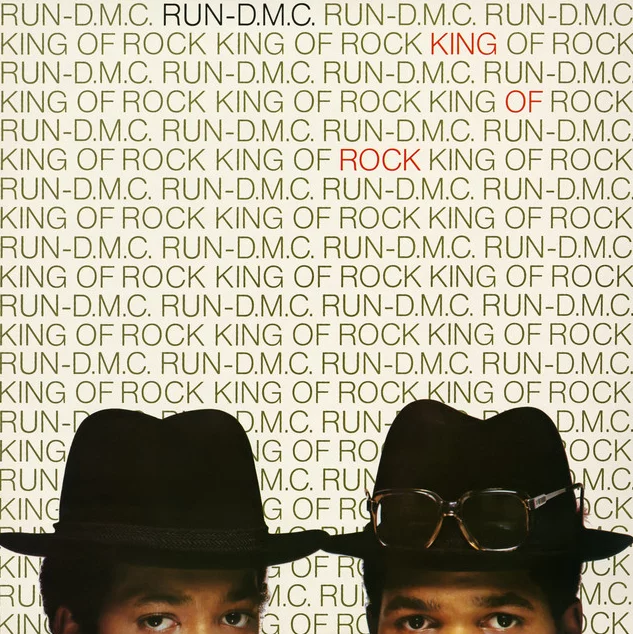
Guitars move from accent to foundation on King of Rock. The debut had tested the idea on “Rock Box,” and here electric riffs sit at the center of the arrangements. Larry Smith’s production gives them room without letting them swamp the drum machine. The record keeps the minimalism of the group’s first album and aims it at listeners who had never paid attention to rap.
The title track carries that ambition most clearly. A crushing riff and pounding drums leave plenty of space for Run and DMC, who trade lines with a swagger as confrontational as the song’s title. The vocal exchanges drive the track, with two voices cutting into each other’s phrases and landing on the beat with equal force. The famous video made the group’s ambitions plain on screen, but the record makes the case without it.
“You Talk Too Much” works in a different register. The beat is stripped almost bare, and the duo aim sharp, playful jabs at people who never stop talking, with the humor resting on the precision of the delivery. It is among the group’s most enjoyable songs. “Jam-Master Jammin’” hands the spotlight to Jay and lets the turntables carry the track, a reminder that the DJ was central to the group’s identity. The closer, “Darryl and Joe (Krush-Groove 3),” opens up into a long run of back-and-forth between the two MCs, their chemistry at its most relaxed and assured.
The weaker stretches are real. “Roots, Rap, Reggae,” the collaboration with Yellowman, is an awkward experiment that never finds common ground between the styles, as if the reggae star and the group were working on different records. A few other tracks lack the punch of the best material, which leaves the album lopsided, with its peaks towering over its middle.
That unevenness matters less than what King of Rock proved. It made the stripped-down, guitar-driven approach the group’s calling card and laid the groundwork that Raising Hell would build on a year later. It is an important album and an uneven one, the place where Run-DMC first staked a claim on rock’s territory and started to make it their own. | 7/10
3. Tougher Than Leather (1988)

“Run’s House” opens Tougher Than Leather with hard breaks and Run and DM staking their claim at full volume, and the rest of the album defends that claim with real conviction. It needed defending by 1988. Run-DMC were no longer alone at the top of Hip Hop, and following Raising Hell was close to an impossible assignment. More intricate lyricism and sample-heavy production had raised the standard in the two years since. The group responded by absorbing those changes while keeping hold of the rap-rock formula that made them famous.
The production, by the group with Davy D. and Rick Rubin, is busier and more adventurous than anything on the earlier records. The samples are layered with real thought, and the drums still hit with the clean, hard snap that defined the group’s sound. Nothing on the album sounds cluttered. The beats leave the MCs room, and the energy rarely drops.
The rapping is where Tougher Than Leather earns its place. On “Beats to the Rhyme” and “I’m Not Going Out Like That,” Run and DMC move into more elaborate rhyme patterns, packing their lines tighter and passing them back and forth with a speed that answers the newer, more technical MCs on their own terms. The braggadocio is as loud as ever, now delivered with greater dexterity. “Ragtime” brings storytelling into the mix, a direction the group had rarely explored, and it widens the album’s range.
The crossover instincts are still there. The Monkees cover “Mary, Mary” keeps the rock connection alive, and the funk-driven “Papa Crazy” leans toward soul. Those detours add color, but the tougher cuts make the deepest impression. When the group plants its feet over hard drums, the album is at its most convincing.
Tougher Than Leather tends to get filed as the record that failed to repeat Raising Hell, and that framing sells it short. It is high-energy, hard-hitting, and cleanly made, and its consistency and sharper rhyming lift it past King of Rock. It was also the last great album Run-DMC made, the final time they met a changing genre and came out sounding like themselves. | 7.5/10
2. Run D.M.C (1984)
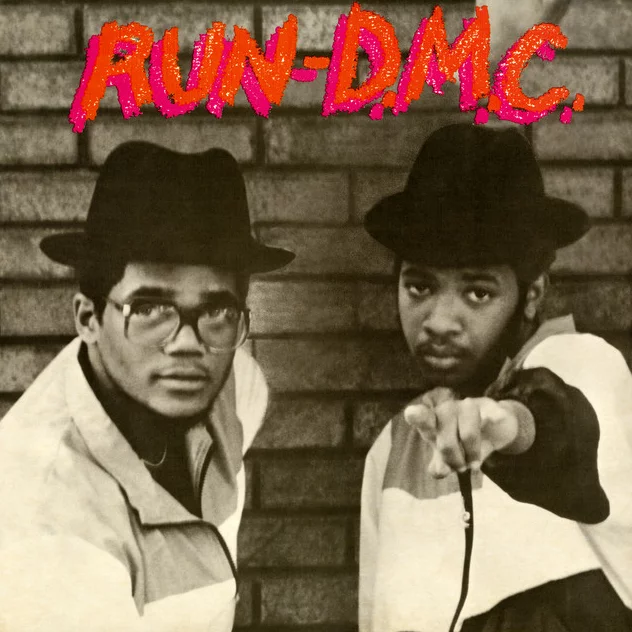
Silence does a lot of the work on Run-D.M.C. Russell Simmons and Larry Smith, who produced most of the album, cut the backing tracks down to heavy drum-machine patterns and little else, and the gaps between the hits become part of the rhythm. Jam Master Jay’s scratches cut into that space like punctuation. Earlier rap records had leaned on disco-influenced instrumentation and a party atmosphere. This one sounds bare, hard, and deliberate, and it helped set the terms for the emerging new school.
“Sucker M.C.’s” is the purest version of the idea. There is almost nothing behind Run and DMC apart from a pounding beat, so every line has to carry its own weight. They dismiss the competition with a directness few records had attempted. Run’s clipped phrasing sets the pace and DMC’s heavier voice lands the blows, so the exchange between them becomes the arrangement.
“It’s Like That” turns the same toughness on unemployment and economic hardship. The delivery stays uncompromising, and the song gets its power from treating hard social facts with the certainty the group brought to their boasts. “Rock Box” heads somewhere else entirely. Electric guitar enters the group’s sound, and the track sketches the rap-rock crossover that would gain momentum over the next few years.
The second half is less consistent. Some of the material is tied closely to the period, and the energy dips away from the singles. “Hard Times,” the group’s take on the Kurtis Blow song, and “Hollis Crew” hold their own and keep the album from sagging too far. The early singles carry most of the weight, and they carry it easily.
None of those flaws dent the record’s importance, and that importance can’t be separated from the music. Run-D.M.C. helped establish the rap album as a serious artistic statement. Its sparse, booming template shaped the direction of Hip Hop through the second half of the 1980s, and its strongest tracks still sound commanding decades later. Only one Run-DMC album builds higher on these foundations, and it comes next. | 8.5/10
1. Raising Hell (1986)

“Peter Piper” opens Raising Hell by handing the spotlight to the DJ. Jam Master Jay cuts up Bob James’ “Take Me to the Mardi Gras” while Run and D.M.C. trade nursery-rhyme-inspired lines in his honor, finishing each other’s phrases with an ease that sounds almost offhand. The opener sets out the album’s terms: two MCs in perfect sync, a DJ treated as the star, and beats that hit hard without crowding the voices.
Rick Rubin and Russell Simmons produced the record. They keep the stripped-down force of the first two albums and add swing and bounce. “My Adidas” runs on intricate drums and Jay’s precise scratches with almost nothing else, and it turns a pair of sneakers into a statement of identity. “It’s Tricky” lifts the guitar riff from the Knack’s “My Sharona” and pairs it with a sing-song flow that recalls the Cold Crush Brothers’ routines, so rock and old-school rap meet in the same hook. “Is It Live” brings in go-go rhythms and sharp scratching. “Hit It Run” gives DMC room for rapid-fire rhyming over Run’s beatboxing. The title track pushes the rock influence hardest, with a heavy guitar riff driving one of the album’s most forceful performances, and “Proud to Be Black” closes on a message of Black empowerment.
“Walk This Way,” with Aerosmith’s Steven Tyler and Joe Perry, took the group onto MTV and carried Hip Hop far beyond its established following. Heard in sequence, it fits the album’s logic. It is one more experiment from a group that had been testing guitars against drum machines since “Rock Box,” balanced against funk, go-go, and the bare beats that built their name.
That balance is why the record works from start to finish. Raising Hell was the first Hip Hop album to go platinum and then multi-platinum. Together with the Beastie Boys’ Licensed to Ill, released later that year, it opened Hip Hop to audiences around the world and made Run-DMC the most important act in the genre.
We consider it a perfect album and one of our all-time favorites. Every part of the group lands exactly where it should: Run’s snap, DMC’s weight, and Jay’s hands on the decks. | 10/10
