

Listen to Erick Sermon and Parrish Smith trade lines on an early EPMD record and the first thing you notice is how little they hurry. Sermon’s drowsy drawl and Smith’s firmer, more deliberate tone sit back on the beat, landing punchlines with the ease of two friends talking across a table. Neither MC tries to overpower the other, and that relaxed back-and-forth, set over thick funk basslines and crisp drums, was the formula EPMD rarely strayed from across seven studio albums.
The duo formed in Brentwood, Long Island, in 1986, taking their name from the phrase Erick and Parrish Making Dollars. Every album title that followed played on the word “business.” Their 1988 debut, Strictly Business, arrived as many rappers were reaching for grand statements and denser production, and EPMD went the other way. The title track rebuilt Eric Clapton’s version of Bob Marley’s “I Shot the Sheriff.” “You Gots to Chill” rode Zapp’s “More Bounce to the Ounce,” a groove producers would return to for decades. “You’re a Customer” stitched Steve Miller, Kool & the Gang and the bassline from ZZ Top’s “Cheap Sunglasses” into a single loop. Alongside Marley Marl and Public Enemy, they helped make funk and rock breaks the building blocks of the era.
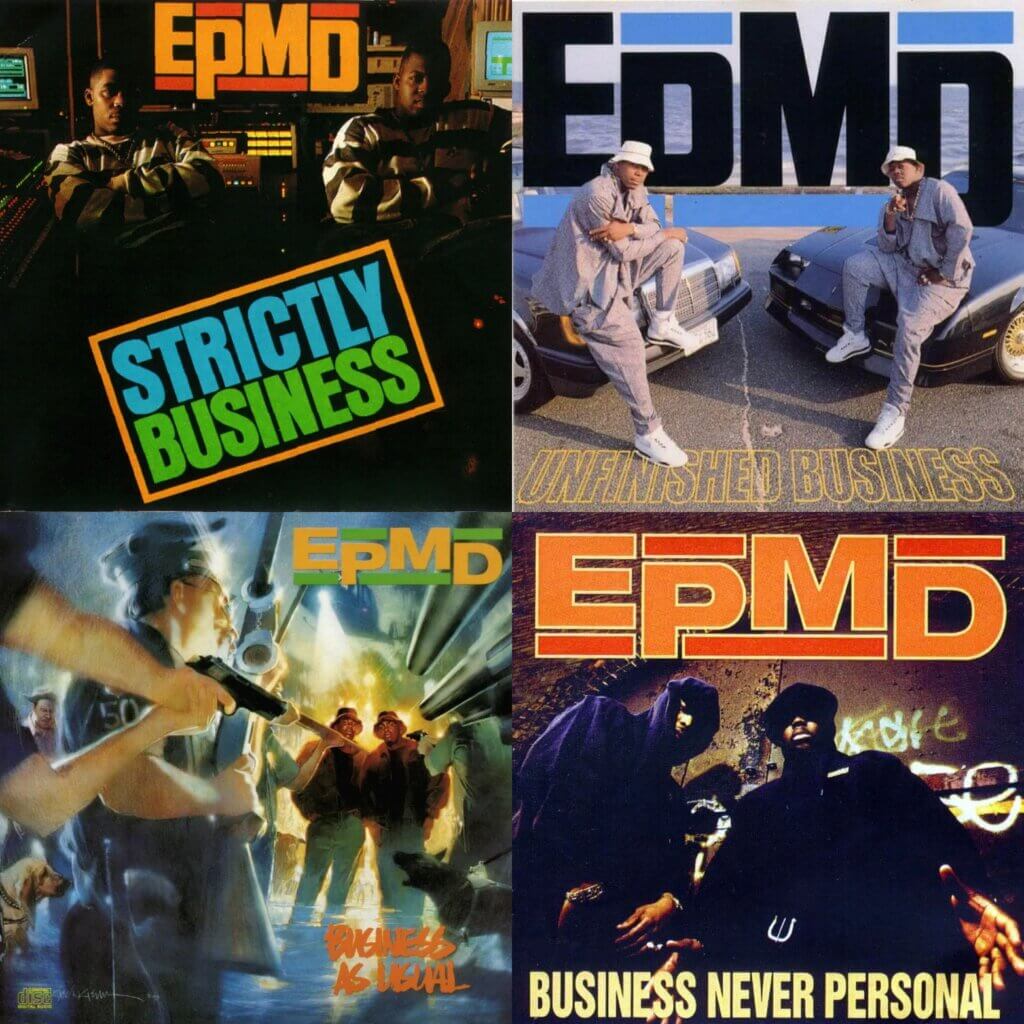
Unfinished Business (1989) and Business as Usual (1990) kept the standard high. Business Never Personal (1992) produced “Crossover,” a pointed jab at rappers diluting their sound for pop audiences that became, with some irony, the duo’s biggest chart hit. By then EPMD presided over the Hit Squad, the extended crew that brought Redman, Das EFX and K-Solo to wider attention, and Sermon was becoming a sought-after producer in his own right.
The partnership collapsed in 1993 amid bitter accusations. Reunions brought Back in Business (1997), Out of Business (1999) and, after a nine-year gap, We Mean Business (2008). Those later records landed in a very different Hip Hop climate, and we have judged each one on what it offers rather than on how closely it matches the first four.
Through every version of the group, the appeal came from two MCs who never needed theatrics and a sound so widely absorbed by East Coast producers that it is easy to forget somebody had to put it together first. Here is how the seven albums stack up.
7. We Mean Business (2008)
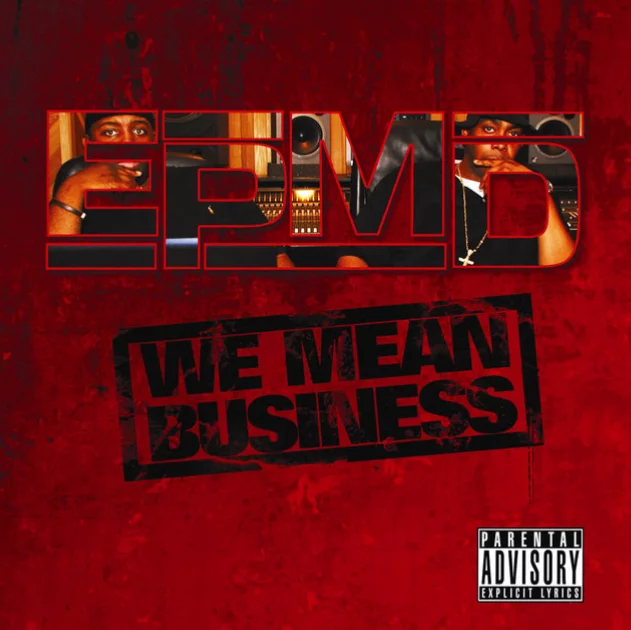
After nine years away, EPMD handed the very first verse of their comeback to Raekwon. “Puttin’ Work In” sets the pattern for a record that leans heavily on company: KRS-One on “Run It,” Redman on “Yo,” Method Man over DJ Honda’s beat on “Never Defeat ’Em,” plus Havoc, Skyzoo and Keith Murray. The guest list reads like a reunion party. Too many of those spots sound like favors, though, and none of them pushes Erick Sermon and Parrish Smith to sharpen their own verses.
The chemistry survived the break. The two still pass lines back and forth with the old unhurried timing, and Sermon’s slow-rolling funk loops on “Roc-Da-Spot” and “What You Talkin’” are easy to sink into. The writing is where it falls short. The rhymes circle stock boasts and nods to their own legacy, and the quotable punchlines of the early records are mostly missing. Smith’s new “Jane” chapter runs under two minutes and is the most purposeful thing on a back half where 9th Wonder’s “Left 4 Dead” and the closer “Actin’ Up” drift by without leaving much behind.
What’s left is a careful, comfortable return from a duo whose first records took real chances with how much a funk loop could carry. |
6.5/10
6. Out Of Business (1999)
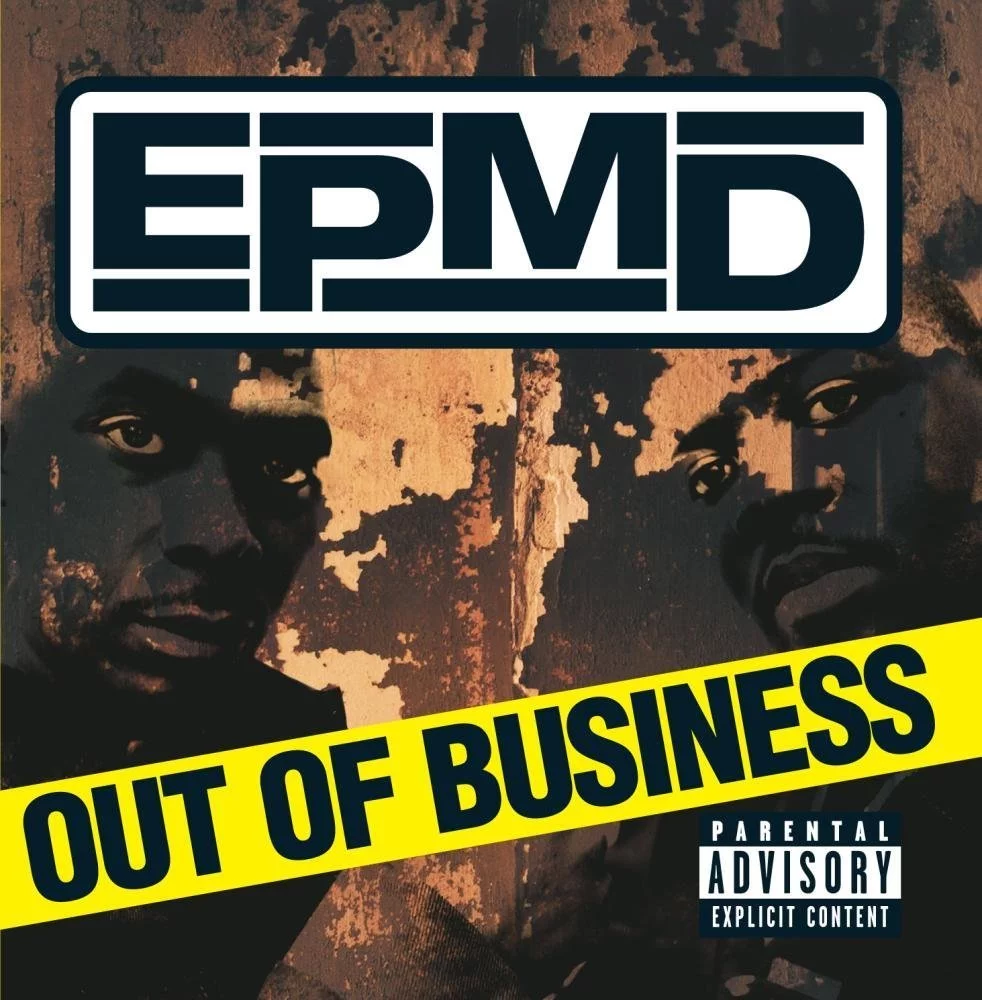
The album opens with DJ Scratch flipping Bill Conti’s Rocky fanfare, and the boxing imagery suits a record built as a final round. EPMD even rebranded for the occasion as Erick & Parrish Millennium Ducats, then filled the album with beats made almost entirely in-house. Sermon produced most of them, and his sample choices lean cinematic. “Draw” rides Dominic Frontiere’s “Hang ’Em High” theme, “U Got Shot” lifts from Ol’ Dirty Bastard’s “Brooklyn Zoo,” and Smith’s own “Jane 6” winds the saga around Rick James’s “Mary Jane.”
The guest-heavy tracks carry the most weight. “Symphony 2000” lines up Redman, Method Man and Lady Luck with real momentum, and Busta Rhymes brings manic energy to “Rap Is Still Outta Control.” Between those peaks, the distance between the two hosts is hard to miss. Sermon sounds quick and playful after years of Def Squad work, while Smith’s steel-cocking threats and stiffer cadence belong to an earlier decade. Through the middle stretch, the formula stops surprising anyone.
Limited copies came with a bonus disc of re-recorded hits, made because the duo couldn’t license their Sleeping Bag masters. That odd footnote fits the album: two veterans remaking their own past because they no longer owned it. | 7/10
5. Back In Business (1997)
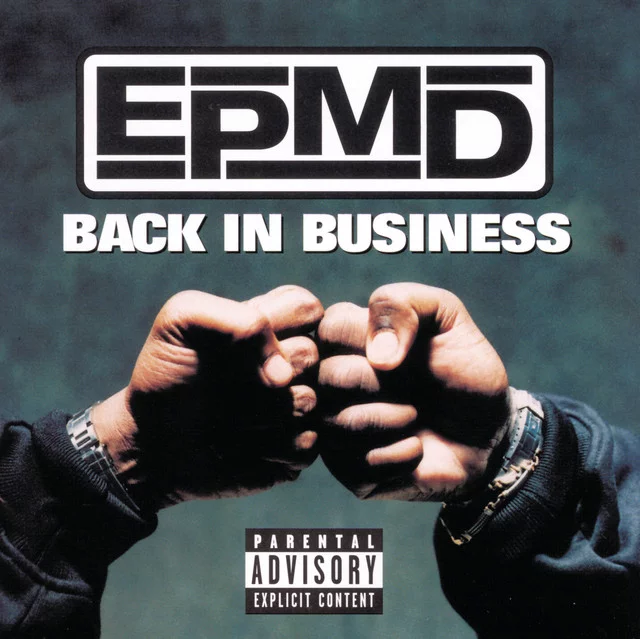
Sermon spent the split years running the Def Squad with Redman and Keith Murray, and that experience is all over Back in Business. The beats are brighter and bouncier than the murk of Business Never Personal, built from loops that lock in fast. “Richter Scale” sets Average White Band’s “Person to Person” against a fragment of “Jungle Boogie,” “Get wit This” borrows from Billy Squier’s “Big Beat,” and “Da Joint,” co-produced with Rockwilder, rides Lyn Collins’s “Think (About It)” with a Beastie Boys snippet tucked inside. That single reached the Hot 100 and helped take the album gold within two months.
The reunion also looks backward. “You Gots 2 Chill ‘97” revisits the Zapp loop that made their name, “Jane 5” returns to Rick James, and “Never Seen Before” splices the Meters with a Public Enemy sample. Smith’s productions pull darker: “Last Man Standing” pairs Barry White with Mobb Deep’s “Front Lines,” and “Dungeon Master” gives Nocturnal room to work. “K.I.M.,” with Keith Murray and Redman, is the rowdiest thing here, built on pieces of Onyx and the Beastie Boys.
The subject matter is what holds it down. Verse after verse circles money and contracts, and the skits add little. In a 1997 landscape split between jiggy gloss and hardcore grit, EPMD came back sounding like themselves with the volume turned up. It won back an audience, though it never set the pace for one. | 7/10
4. Business Never Personal (1992)

By 1992, the drums had moved to the front. Business Never Personal trades much of the easy roll of the earlier albums for scuffed breaks and grittier loops. On “Head Banger,” the crack of the Honey Drippers’ “Impeach the President” drives a four-man session where K-Solo keeps pace and Redman comes close to taking the record from its hosts. “Boon Dox” opens on a fragment of James Brown’s “The Payback,” and “It’s Going Down” drags Mountain’s “Long Red” into the same rugged register.
Sermon’s ear for a groove survives the toughening up. “Chill” stacks Foreigner’s “Street Thunder” with George Clinton’s “Atomic Dog,” and “Play the Next Man” slinks along on a bassline built for nodding. “Crossover” loops Roger Troutman’s synthesized voice under a lecture about selling out, and with some irony it became the biggest hit they ever had. DJ Scratch gets the spotlight on “Scratch Bring It Back, Pt. 2,” cutting up “Synthetic Substitution” and “Scenario,” while “Cummin’ at Cha” hands the mic to Das EFX, the Hit Squad’s next generation.
At 39 minutes, there’s no fat. The partnership was coming apart while they made it, but none of that leaks into the performances. Smith’s low, level voice anchors every track, and Sermon slides around it with his usual slurred cool.
Picking between this and Business as Usual for third place was a toss-up. We went with the one we sat with longer and more often. The margin is that thin. | 8/10
3. Business As Usual (1990)

Bill Sienkiewicz, the Marvel Comics illustrator, painted the cover, and the swirl of color and menace on the sleeve matches what’s inside. Business as Usual was EPMD’s first album for Def Jam, which bought out their contract after Fresh/Sleeping Bag folded, and the first release on Russell Simmons’s new Rush imprint. The duo treated it as a fresh start. Sermon, Smith and DJ Scratch packed the beats with denser layers of funk, building something darker and colder than the sparse loops of the first two records.
“I’m Mad” sets the temperature with frantic drums and chopped piano stabs, and the two MCs sound as hungry as ever. “Manslaughter” keeps the boasts blunt. Then there’s Redman, making his recording debut on “Hardcore” and “Brothers on My Jock.” Over the eerie backdrop of “Hardcore,” his rough, wired delivery cuts against the hosts’ cool, and it’s easy to hear why EPMD built a crew around him. LL Cool J’s verse on “Rampage” brings a different kind of heat, three MCs trading lines over a bouncy, horn-driven beat.
“Gold Digger” rides a rubbery bassline and a cynical sense of humor, and “Give the People” points the rhymes outward for a change. Not everything lands. “Jane 3” plays the soap opera for broad laughs and sags under them, and the sampling is sometimes less inventive than on Strictly Business. Even so, the album topped the R&B/Hip-Hop chart, the third EPMD record in a row to do it.
So why rank it above Business Never Personal? Time, mostly. Over the years this is the EPMD album we’ve put on more often and stayed with longer, and the Def Jam debut keeps pulling us back for the way its grooves sit low and heavy. When we think of EPMD in winter, this dark, thick-bottomed funk is the sound we hear. | 8/10
2. Unfinished Business (1989)

Every beat on Unfinished Business carries the same credit, EPMD, and the album has the loose, homemade charm that comes with keeping everything in-house. Records get cut in to land a punchline, a hook gets half-sung, and the two MCs crack each other up as though the tape happened to be rolling. Erick Sermon and Parrish Smith returned a year after Strictly Business with no interest in changing the recipe. With DJ Scratch now on the turntables, they leaned harder into thick basslines and 1970s funk loops.
“So Wat Cha Sayin’” opens on a loping groove, with Sermon and Smith passing the lead back and forth until the handoffs become the hook. “Get the Bozack” toughens the drums for straight competition, and “The Big Payback” slows James Brown down to a heavy stomp. “Please Listen to My Demo” turns the demo-tape hustle into a comedy sketch, and “Jane II” picks up the saga where the debut left it. K-Solo’s turn on “Knick Knack Patty Wack” matters for what came next. It was the first sign of the Hit Squad, a newcomer slotting into the duo’s conversational rhythm without breaking it.
In a year when Public Enemy and N.W.A were turning up the volume and the politics, EPMD stayed slow and unbothered. That contrast gives the album its personality: two MCs happy to boast, tease and observe over beats designed for nodding instead of shouting.
The problem is “You Had Too Much to Drink.” Featuring Frank B., it spends over seven minutes on an anti-drunk-driving message and stops the album cold near the finish line, where it should be closing strong. The intention is sincere, but the track has none of the bounce of everything around it. Take it out, and this might be our number one.
As it stands, the race with the debut is close enough to call a draw. Strictly Business gets the top spot because it has spent more hours on our turntable and because so much East Coast Hip Hop that followed traces back to it. Unfinished Business is where EPMD proved that formula belonged to them. | 9/10
1. Strictly Business (1988)
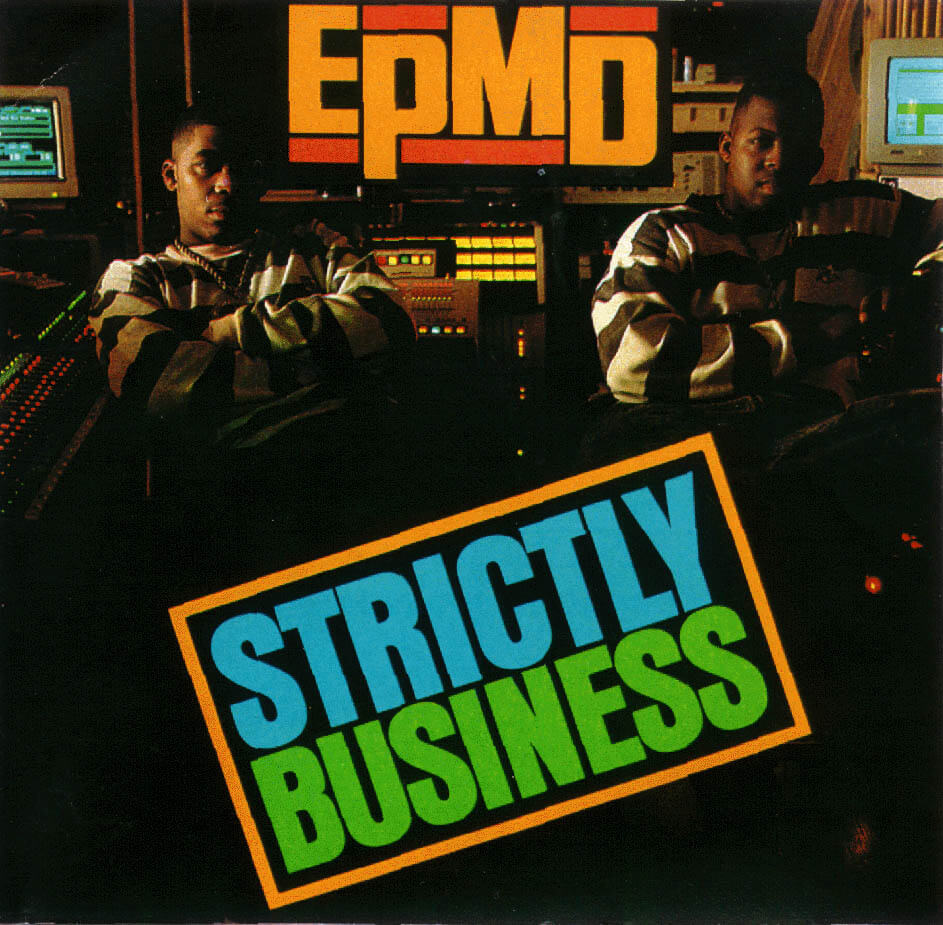
The drum pattern that closes “You’re a Customer” came out of a Roger Linn LM-2, and it has proven hard to retire. Mario Winans and P. Diddy built “I Don’t Wanna Know” on it in 2004, and The Weeknd and 21 Savage brought it back for “Creepin’” in 2022. That’s quite an afterlife for the outro of a deep cut, and it hints at how much of this debut found its way into other people’s records.
Working on a modest budget, with DJ K La Boss as the only other voice on the album, Sermon and Smith slowed down while much of New York sped up. The Clapton loop on the title track is the famous example of their taste, but the habit runs through the whole record: rock songs treated as fair game next to Zapp and Kool & the Gang, each loop found and then left alone to ride. The arrangements are sparse enough that a bassline or a guitar figure carries an entire verse.
The rapping matches the beats. On “I’m Housin’” and “Let the Funk Flow,” the handoffs come so casually that the songs sound like conversations that happen to rhyme, and the boasts land harder for being delivered without strain. “I’m Housin’” proved sturdy enough for Rage Against the Machine to cover it more than a decade later. “It’s My Thing,” the 1987 single that built their local buzz, still sounds like a calling card, and “You Gots to Chill” is the party record everything else orbits. “Jane,” under three minutes long, opens the saga they would keep returning to for twenty years, and “D.J. K La Boss” gives the turntables a track of their own.
None of the singles reached the Hot 100. The album topped the R&B/Hip-Hop chart anyway and went gold within four months, carried by word of mouth and club play.
Choosing between this and Unfinished Business came down to the wire. The debut wins on the hours we’ve spent with it and on reach: every EPMD album that followed, the great ones and the uneven ones, answered to these ten tracks, and so did a generation of producers who learned from them that the best loop is often the one you leave alone. | 9/10