


If the first “Definitive 100” article was a look at the Hip Hop records I return to over and over—the records that shaped my taste and stayed in constant rotation—this new list comes from a different corner of the shelves. These are the albums I value just as much, the ones that never drift far from my mind, but for one reason or another didn’t make that first set of one hundred. After publishing my favorites list, a steady question kept coming back to me: what about the sleepers? What about the records that I missed the first time around? That push is what sparked this second project.
The original list focused on the albums that I actually listen to, not on popular opinion. That focus meant plenty of “important” records didn’t appear there, not because they lacked power or craft, but because that article was about the titles that guided my listening life most directly. And while the omissions drew attention—everything from mainstream giants like 2Pac or Jay-Z to smaller but vital names—the truth is that many other of my personal favorites never surfaced in that piece either. Some were overshadowed by records I played more often. Others drifted out of regular rotation even though I still think highly of them.
This new list gives those albums their space. These are the projects that deserve more light: records with sharp production, strong writing, and distinct identities that somehow did not make my favorites list and that also slipped out of the larger conversation in many cases. Some sold modestly, some were praised and then forgotten, and some lived entirely in the underground. All one hundred are personal favorites. Many could have fit easily into my main favorites list.
Instead of ranking anything by preference, I’m laying the albums out chronologically. That approach gives a clear path through a different history of Hip Hop, one built on overlooked work that rewards close listening. Even long-time heads may find titles here they lost track of, or never reached at all.
Time to dig into the records that stayed close to me, even when the spotlight moved elsewhere.
Mantronix - The Album (1985)

When I first got my hands on The Album as a kid in 1985, I didn’t really understand what I was hearing. It sounded sharper, faster, and stranger than the other Hip Hop tapes I had. I rarely play it from front to back, but every song from it lives somewhere on my playlists. Even after decades of listening, it still sounds like the future.
In 1985, most Hip Hop production was built on heavy drum breaks and funk samples. Mantronix arrived from a different planet. The duo—producer Kurtis Mantronik and MC Tee—introduced a sound that replaced the warmth of the breakbeat with the cold pulse of circuitry. Mantronik’s Roland TR-808 wasn’t just keeping rhythm; it was rewriting what rhythm could be. On “Needle to the Groove,” the beat hits with laser precision, each snare snapping like it’s been engineered in a lab. “Hardcore Hip-Hop” pushes that approach even further, turning the drums into the main event while tiny synth stabs flicker around them.
The album’s most famous track, “Bassline,” remains a masterclass in electronic funk. The bass doesn’t move like an instrument—it slithers, squelches, and mutates. It’s robotic but somehow human in its energy, a sound that predicted the rise of breakbeat, jungle, and the electronic side of Hip Hop long before those genres had names.
MC Tee’s role is often underplayed. His voice cuts cleanly through Mantronik’s dense programming, delivering confident, clipped verses that match the precision of the drums. His straightforward flow doesn’t compete with the beats; it holds them steady, grounding the chaos in structure. Together, they created a sound where machine and man moved in perfect lockstep.
Listening to The Album now, it’s easy to hear how far ahead of its time it was. Its DNA runs through everything from late-’80s electro to modern EDM. Back then, I didn’t have the language for that—I just knew it made my speakers shake in a different way. That sense of shock never really faded. The Album isn’t nostalgia for me; it’s proof that innovation doesn’t always announce itself loudly. Sometimes it hides in the grooves, waiting for your ears to catch up.
Boogie Down Productions - Man & His Music (1987)
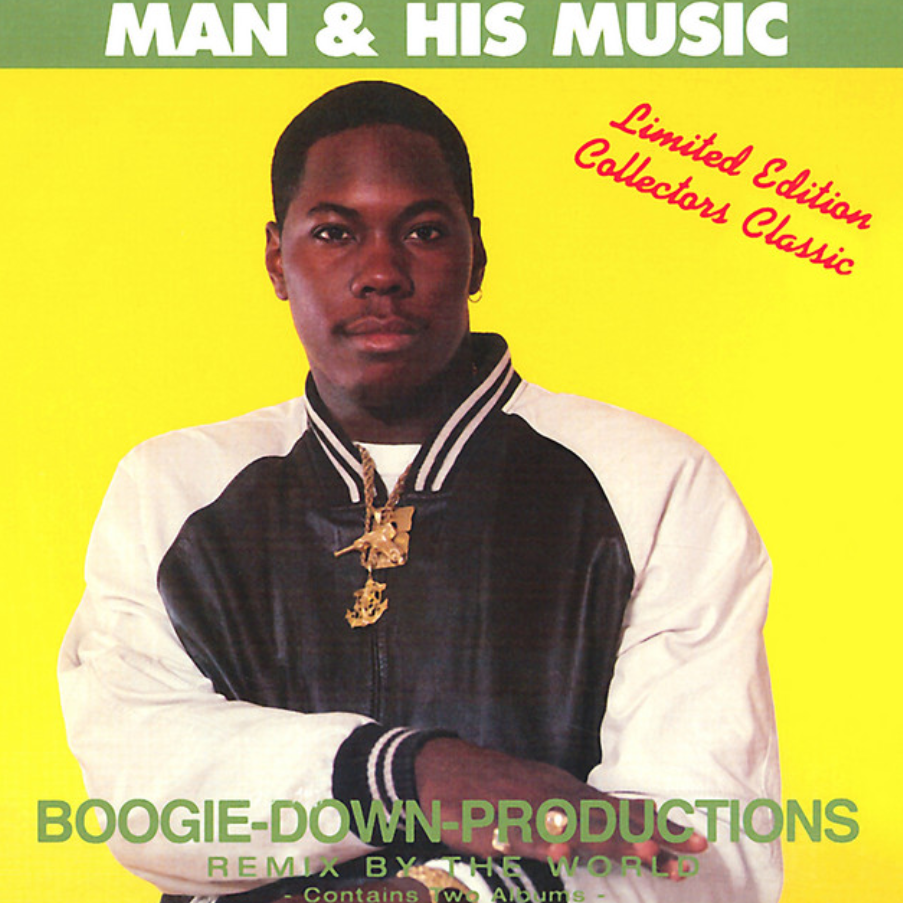
Man & His Music is a strange introduction to Boogie Down Productions, but in 1987 this tape landed in my hands before I copped Criminal Minded, and that twist shaped how I heard the group forever. This compilation brings together remixes, medleys, and early versions of tracks from the B-Boy Records period. It came out in the shadow of DJ Scott La Rock’s death, and the project carries that weight through its rough construction, uneven sequencing, and raw edges. Nothing here aims for polish. The focus is on the crew’s early power: skeletal drums, sharp cuts, and KRS-One’s voice pushing through the mix with a direct, almost blaring presence.
The album opens with “Advance,” a rare early piece built on sparse drum programming and a narrow loop that circles without drifting. The mix is tight, almost suffocating, which gives the track a tense energy. The different “Poetry” versions (“Poetry #1,” “#2,” and “#3”) approach the same core idea from slightly different angles. Each take uses a stripped-down rhythm and small shifts in phrasing that place KRS-One’s voice in slightly different roles within the pattern. These versions are rudimentary but magnetic, pulled forward by KRS-One’s cadence and Scott La Rock’s stark production approach.
The medleys—“BDP Medley #5,” “#7,” and “#11”—run long and busy. They pull fragments of breaks, snippets of vocals, and quick blends into extended sequences that echo the energy of a DJ working a room rather than a studio engineer building a clean arrangement. They drift in and out of clarity, and that instability gives them a kind of tape-trader charm. Tracks like “Red Alert,” “Super Hoe #4,” and the alternate mixes of “Criminal Minded” shift between punchy drum hits and chaotic sample layers. The edges are frayed, and the sound can feel overloaded, but the core identity of early BDP is unmistakable.
“D-Nice Rocks the House” brings the focus to D-Nice with a minimal beat and narrow bassline. The mix is dry and loud, giving every word a sharp outline. These early recordings show the group in a raw form, driven by urgency rather than careful design.
Man & His Music is not essential in the way Criminal Minded is. The repetition is real, and the structure is uneven. Still, since this tape was my first encounter with BDP, it carries a personal weight. The grit, the chaos, and the rough production were my entry point into KRS-One’s world, and that connection keeps this release anchored in my collection.
Black Rock & Ron - Stop The World (1989)

Stop The World is a sharp snapshot of late-’80s New York Hip Hop. Released in 1989, it carries the sound of an era when drum machines hit hard, samples were looped with grit, and MCs aimed for presence over polish. Black Rock & Ron came from Hollis, Queens, the same neighborhood that produced Run-D.M.C., and the influence of that stripped-down, street-corner energy runs through every track here.
The beats hit with weight. The title track is a low-key classic. “You Can’t Do Me None” rides a thick bassline and snapping snare that pulls the listener into a tight groove. “True Feelings” has a colder edge, built on dry drums and a looping horn that gives it a rough street rhythm. The production keeps the focus on rhythm and repetition, with little space left empty. Every track feels driven by motion—made for a crowd, not a studio.
The rhyming style is direct and rhythmic. The delivery is confident, punchy, and shaped by call-and-response patterns that nod to the live party tradition. Black Rock & Ron trade verses with a timing that lands heavy on the beat, their voices clear and unpretentious. Lyrically, the songs deal with everyday talk—respect, competition, and pride in skill—delivered in a way that fits the production’s tight structure.
What gives Stop The World its strength is its focus. The group doesn’t stretch beyond what works; they stick to a formula that values flow and beat over polish or innovation. By 1989, Hip Hop was shifting toward denser lyricism and layered production, and that change may have kept this album from wider attention. But listening now, the directness has its own appeal. The record has no excess—it’s built for volume and movement.
Stop The World isn’t a lost masterpiece, but it is a strong, grounded record from a group that knew their lane and worked it with skill. It carries the rough energy of Queens Hip Hop before the major-label era reshaped the sound. For anyone who values the rhythm and attitude of late ’80s street-level music, this album remains worth revisiting.
Awesome Dre – You Can’t Hold Me Back (1989)
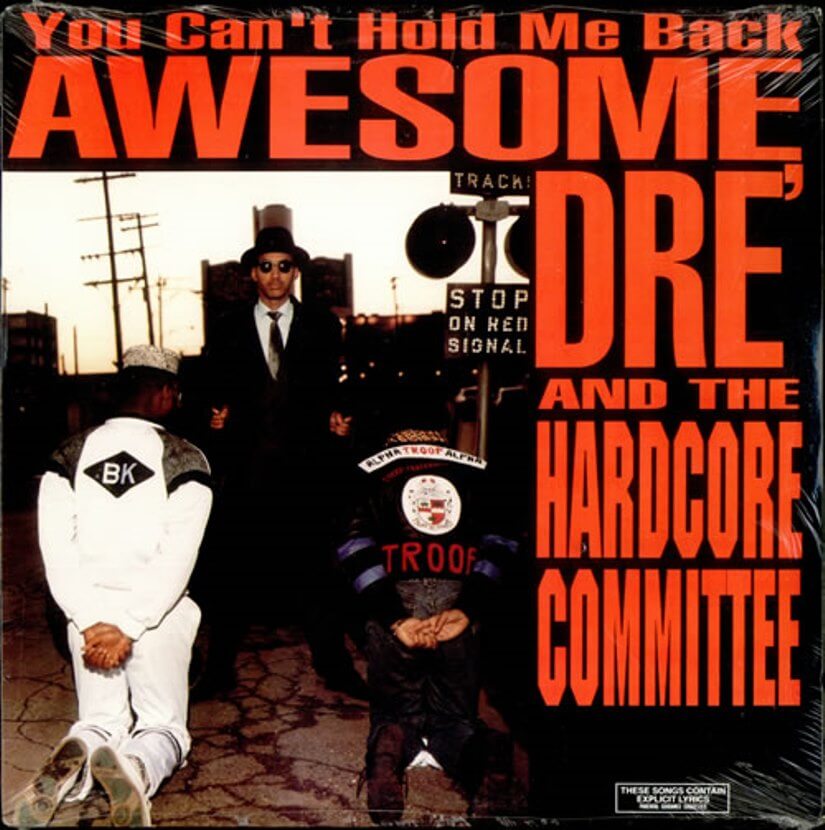
Awesome Dre’s You Can’t Hold Me Back hit in 1989 with a sense of urgency that made Detroit hard to ignore. Dre’s voice is blunt and forceful, cutting through each track with a tone that sounds carved out of concrete. There is no polish here; the record hits with the grain of late-80s boom-bap, delivered with heavy drums, stripped-down loops, and sharp turntable cuts that slice through the mix. That grit gives the album its identity. It carries the hunger of an artist trying to carve space for his city in a world that often overlooked anything outside New York and Los Angeles.
Tracks like “Frankly Speaking” and “Murder One” pull from political frustration and street-level tension. Dre’s delivery is direct, often stiff, and sometimes uneven, but even the clunky lines have weight because he drives them with complete conviction. His early battle records bring the most volatility. “I Don’t Like You! (Kool Moe She)” is rough and confrontational, rooted in Dre’s need to announce Detroit’s presence. Hearing an unknown Midwest rapper aim at established figures was unusual at the time, and that energy is all over the track—loud, defiant, and unafraid of fallout.
Production by Awesome Dre and The Detector leans on hard drum programming and tough sample stabs. The beats hit with a cold edge that fits the album’s tone. The scratches are constant and cut with purpose, giving the music an extra layer of movement. Nothing here sounds recycled, even when the techniques are familiar for the era. Detroit’s early Hip Hop spirit gives the album a distinct character: tense, insistent, and determined to plant a flag.
I picked this up on tape in 1989, and while it never lived at the center of my listening, it never fully drifted out of view either. Having it on streaming now puts it back within reach, and the album’s blunt charm holds up better than I expected. Sure, it runs long, repeats ideas, and Dre isn’t the cleanest technician, but the attitude and punch keep pulling me in. That mix of rough edges and raw drive is exactly why it still has a place in my collection—and why it earns a place in this list of overlooked favorites.
Tuff Crew - Back To Wreck Shop (1989)

Tuff Crew’s Back To Wreck Shop is a heavyweight blast of late-80s Philadelphia Hip Hop, driven by drum programming that hits with chest-deep impact and turntable work that stays sharp from front to back. The group’s earlier Danger Zone album was already a favorite of mine—“My Part of Town,” “North Side,” “Bound To Ike,” “Smooth Momentum,” and “Detonator” were in constant rotation for years—but Back To Wreck Shop is the record that shaped their identity in the strongest, clearest way. This entry honors that album as well as Danger Zone, two releases I ran into the ground back then and still revisit regularly.
The production carries a thick, physical presence. DJ Too Tuff builds tracks from hard E-mu and 808 hits, stacked kicks, and quick, chopped rhythms that swing with a rough pulse unique to Philly. The crew’s DJ-centered cuts are a major part of the album’s identity. “Danger Zone Assault” and “Behold the Detonator” are built around rapid scratching and aggressive fader control. Too Tuff treats the turntable less like a support instrument and more like a lead voice, carving patterns that shift the temperature of the album and give it a live-wire energy.
“She Rides That Pony” takes the record into raunchy, party-driven territory with a simple hook and a beat built for loud systems. “Come On & Go Off” returns to rough-edged street microphone work, with verses that move fast and leave little space for reflection. The album’s pacing holds tight because the instrumental breaks carry the same intensity as the vocal tracks. Nothing feels tacked on or leftover. The title track, “Wreck Shop,” ends the album with pounding drums and sharp cuts, creating a rhythm that feels engineered for block parties at full volume.
Back To Wreck Shop is heavy, fast, and focused on impact. It delivers the feel of late-80s Philly at full volume: loud drums, fast cuts, confident voices, and a sense of movement that never loosens. For me, it remains the definitive Tuff Crew record and a cornerstone of my connection to that era.
Movement Ex – Movement Ex (1990)
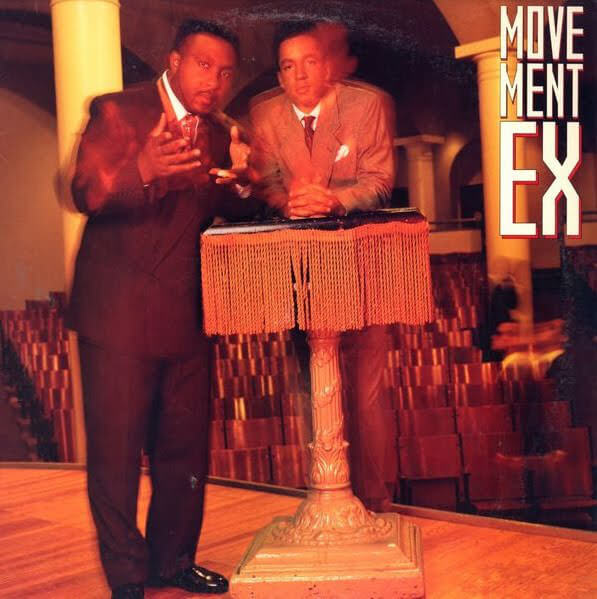
Movement Ex hits with a sharp, deliberate presence that still carries force decades later. The record opens with thick, boom-heavy drums that feel hand-tooled rather than mass-produced, and that approach runs through the entire album. DJ King Born’s turntable work cuts through the mix with real physical weight. His scratches are tight, bright, and placed with intention, almost percussive on their own. Nothing drifts. Every element snaps into place.
The production blends tense samples, live bass lines, and sharp drum programming into a frame that stays uncluttered even when the group pulls in multiple textures. The low end moves like a slow pulse, and the treble hits with a clean edge that brings the group’s confrontational energy forward. There is no haze, no gauzy polish. The record sounds close-up and pointed, like a conversation delivered inches from your face.
Lord Mustafa drives that intensity. His delivery is quick and steady, almost clipped at times, and his tone stays locked into the political focus that defines the record. He draws directly from Supreme Mathematics, history lessons, and street-level analysis, threading that material through long, tightly wound verses. He moves from metaphor to direct instruction without easing up, giving each track the rhythm of a lecture delivered at full volume. On pieces like “United Snakes of America” and “I Deal With Mathematics,” the tension builds measure by measure, as if he is testing how far he can push an idea before the beat strains under it.
There is no aimless wandering here. The group zeroes in on specific topics—state violence, environmental damage, safe sex, the cycle of misinformation—and stays locked on them. King Born’s production strengthens that approach by giving space around each part of the arrangement. His solo spots underline how central the DJ is to this album. You hear intention in each scratch pattern, and the bright clarity of the recordings gives his technique real bite. Listening today, Movement Ex feels like a time capsule of youthful conviction sharpened by discipline. It is also an early example of West Coast Hip Hop pulling from East Coast militancy without softening its edges.
Sure, Movement Ex is overlong and rough around the edges. Lord Mustafa is not the most polished emcee you’ll hear, and the album doesn’t match the refinement or impact of contemporaries like Public Enemy, Boogie Down Productions, Paris, Brand Nubian, or even X-Clan. But the attitude, charm, and sheer force that pulse through these tracks have always kept it in my collection. The record has a conviction and energy that demand attention, and those qualities give it a life that lasts well beyond its technical limits. My personal opinion: Movement Ex hits me as one of the most focused political albums of its era, and its blunt, carved-in-stone intensity still holds power every time I return to it.
Master Ace - Take A Look Around (1990)
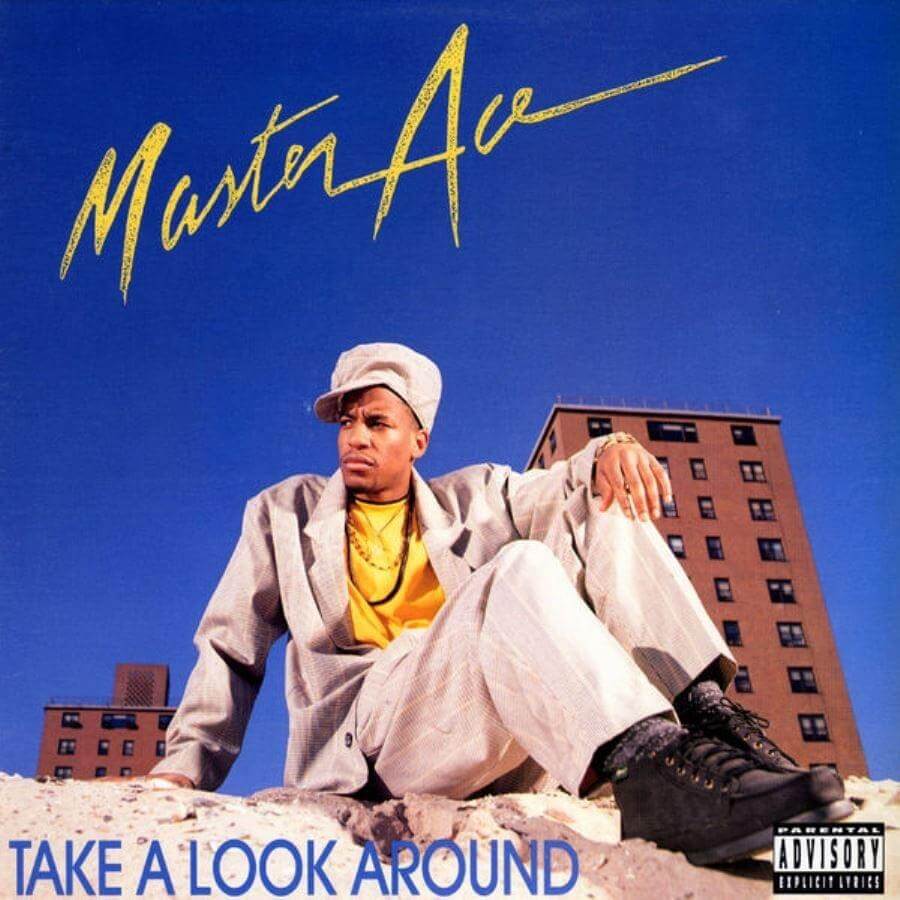
Masta Ace’s debut album, Take A Look Around, is a deeply engaging early ’90s Hip Hop record that balances playful storytelling with serious social commentary. Released on Cold Chillin’ Records, Ace stepped out of the Juice Crew shadow with a confident, controlled delivery, proving he could carry a full album on his own. While Ace is recognized as one of the most respected lyricists in the game by those in the know, I’ve always felt this debut doesn’t get the attention it deserves. I spent decades revisiting it, and since it didn’t make my original 100 favorites list, it needs to be here.
The production, handled primarily by Marley Marl with contributions from Mister Cee, leans on rich, sample-heavy boom-bap beats. Funk and soul breaks thread through the album, giving tracks a warm yet propulsive feel. “Brooklyn Battles” rides a bassline accented by whistling and harmonies, while “I Got Ta” uses a James Brown vocal sample to anchor Ace’s playful, rapid-fire flow. These beats allow Ace to move effortlessly between humor, braggadocio, and observation.
Ace’s voice commands attention throughout. His delivery is measured, precise, and flexible. On “Me and The Biz,” he performs both halves of a duet with Biz Markie, nailing Biz’s energetic cadence while keeping his own performance sharp and confident. “The Other Side of Town” shifts the mood, with Ace adopting the perspective of a struggling resident navigating urban hardship. The contrast between these tracks demonstrates his skill at balancing narrative depth with technical dexterity.
Songs like “As I Reminisce” and “Music Man” highlight Ace’s playful lyricism and collaborative instincts, while the title track delivers a spoken-word reflection over Gil Scott-Heron’s “The Revolution Will Not Be Televised,” showing he isn’t afraid to tackle broader social issues. Even the less memorable tracks maintain a consistent energy and cohesion, giving the album a sense of focus.
Take A Look Around has a clarity and craftsmanship that holds up decades later. The beats are lively, the flows precise, and the lyrics insightful. For anyone exploring Ace’s catalog, it offers a foundation for understanding the skill and intelligence that would define his career. Its balance of humor, technical skill, and social awareness makes it a record I return to regularly, a deserving addition to any discussion of overlooked Hip Hop classics.
The Jaz - To Your Soul (1990)
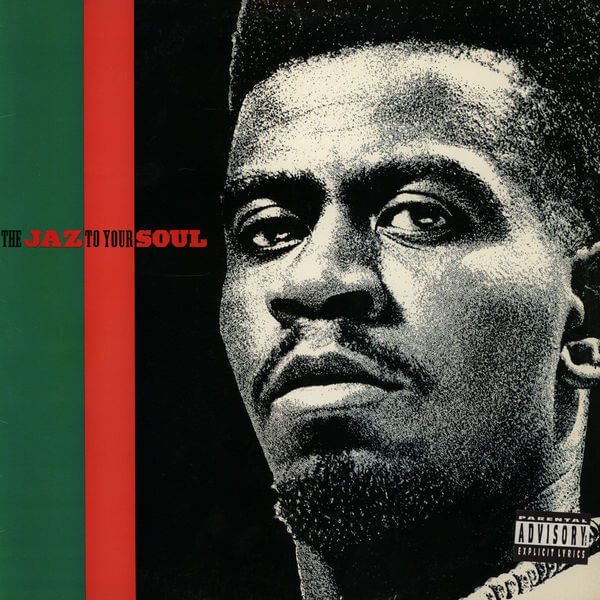
To Your Soul is often remembered for one historical footnote—the presence of a young Jay-Z, long before fame, trading rapid lines with the man who mentored him. But the album has more going on than a curiosity credit. The Jaz shapes the record with a tough, sample-heavy East Coast sound built around crisp drums, full basslines, and tight arrangements that hit with momentum. Most of the production is his own, with Prince Paul and Chad Elliott adding a few touches, and the result is a consistent, grounded feel: nothing glossy, nothing excessive, everything driven by rhythm and clarity.
The Jaz’s voice carries the entire record. He shifts from quick bursts of syllables to a slower, deliberate cadence without losing grip on the beat. His writing is packed with internal rhymes and short, vivid lines that land without clutter. “A Groove (This Is What U Rap 2)” rolls forward on a steady swing, giving him space to stack patterns without slipping into repetition. “It’s That Simple” brings sharper drums and a more restless arrangement, and he cuts through it with tightly wound phrasing. “Put the Squeeze on ’Em” hits hard, its snare punching through the mix while The Jaz locks into a focused, aggressive delivery.
The album’s pacing builds in clear steps. The early tracks carry more weight—thicker loops, heavier drum programming—while the midsection opens into funkier rhythms. “Ease Up Jaz” sits right in that pocket with a bounce that never softens the impact. And then there’s “The Originators,” the moment many listeners gravitate toward: Jay-Z in his earliest recorded form, firing off a rapid style he would later refine, matching his mentor line for line. Their back-and-forth brings a charge to the album that still hits today.
Not every cut lands—“Why” breaks the flow and feels thin next to the stronger material—but the majority of the record has a strong, straight-ahead quality that reflects The Jaz’s approach to both beats and bars. His technical skill is unmistakable, and his voice remains the anchor no matter how the production shifts from rugged to smoother textures.
To Your Soul never rose to classic status, but it holds a character that has lasted. It sounded good to me when it dropped, and it still holds up—an energetic, craft-driven snapshot from an artist who shaped a future legend while carving out a distinct space of his own.
Chill Rob G - Ride The Rhythm (1990)

Chill Rob G’s Ride the Rhythm came out during a moment when Wild Pitch Records was on a strong run. The label had fresh, sharp music from Main Source, Lord Finesse, Gang Starr, and other acts who defined early-90s Hip Hop. This album fit naturally into that world. It is anchored by The 45 King’s production, which gives the record a rugged Jersey identity built on deep-dig samples, thick drums, and a steady sense of propulsion. Nothing on here feels loose or tossed off. Each beat lands with weight, and each rhythm has a grip that pulls you into the next bar.
Rob’s voice is heavy, direct, and confident. His delivery has a steady force that never slips into theatrics. He raps with a grounded presence that turns even simple lines into something firm and deliberate. That tone works well with 45 King’s style. The drums hit with a dry punch, the horns and loops carry a dusty warmth, and the cuts slice through in a way that gives the songs a sharp profile. Tracks like “Court Is Now in Session” and the title cut run on tight structure: hook, verse, hook, no wasted motion. The simplicity brings clarity. It gives Rob plenty of room to bark out his thoughts without clutter.
The album shifts between commentary, battle energy, and straightforward bragging. Rob talks with conviction, and his timing is clean. His flow is rooted in that late-80s approach where clarity and rhythm are the priority. It suits the production well. The record keeps a steady pace without drifting into repetition. Even the lighter cuts have an edge because of the way Rob pushes his voice forward in the mix.
Of course, the story around Ride the Rhythm is tangled up with “The Power.” The controversial Snap version turned into a global hit, and the confusion around it took attention away from Rob’s original. People were sick of me telling them whenever that Snap song came on that the dance version wasn’t the real one. The situation overshadowed what should have been a strong step into a long career. That’s the frustrating part of revisiting this record. The album has punch, personality, and a tight focus, but the noise around the single took the spotlight away.
I’ve always kept this one close because the music holds steady from front to back. It has tough drums, a firm voice, and that distinct early-Flavor Unit grit. The mess around the single never changed that.
Silver Bullet - Bring Down The Walls No Limit Squad Returns (1991)
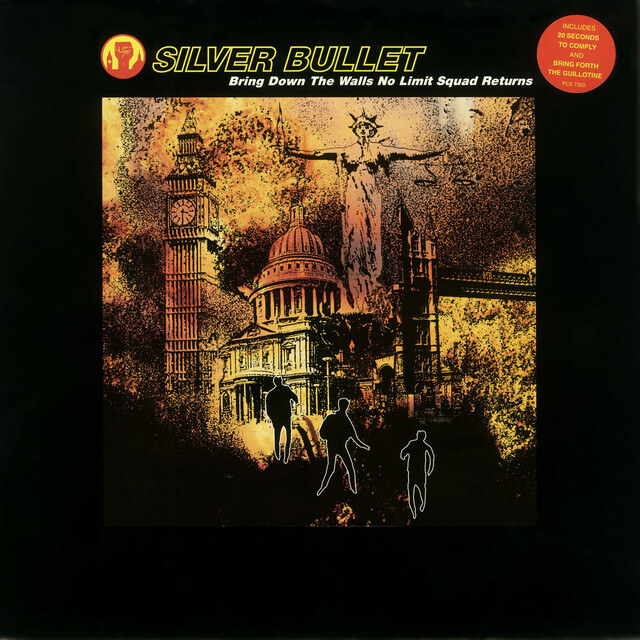
Silver Bullet’s Bring Down The Walls No Limit Squad Returns is an electrifying example of early ’90s UK Hip Hop. Released on Parlophone, the album hits hard with a relentless energy that carries through every one of its ten tracks. Its aggressive beats, fast tempos, and cinematic samples give the music a weight that demands attention.
The production, mainly handled by DJ Moe, has a gritty, metallic edge. Deep bass and distorted drums hit like a pulse, while eerie strings, sci-fi sound effects, and well-chosen samples add tension and menace. The opening lift from RoboCop in “20 Seconds to Comply” sets a confrontational mood, and the combination of rapid-fire beats and ominous textures runs through the record. Even tracks like “Bring Forth the Guillotine” and “Undercover Anarchist” maintain this dark, propulsive feel, pushing Silver Bullet’s delivery to its limits.
Silver Bullet’s voice dominates the record. His rapid-fire flow tears through the verses with precision and force. The London accent and sharp articulation give his words bite, whether he’s delivering street narratives or social commentary. There is a confrontational energy here that makes every line hit harder. Tracks such as “Legions of the Damned” and “Guns of Mind Alone” show how his technical skill works with Moe’s production to create tension and momentum across the album. Even the instrumental “He Spins Around” offers insight into the complexity of the beats and sample layering, giving the listener space to catch the patterns driving the chaos.
For me, this record has always been a go-to for Britcore alongside Hijack’s The Horns of Jericho–which is on my 100 favorites list–and Gunshot’s Patriot Games. It’s dense, fast, and demanding, yet the aggression never tips into clutter. While it may not be overlooked in the UK, it is under-discussed elsewhere. Its energy, urgency, and audacity make it a record I return to regularly, a clear reminder of the raw intensity Britcore offered in its early days.
Freestyle Fellowship - To Whom It May Concern (1991)
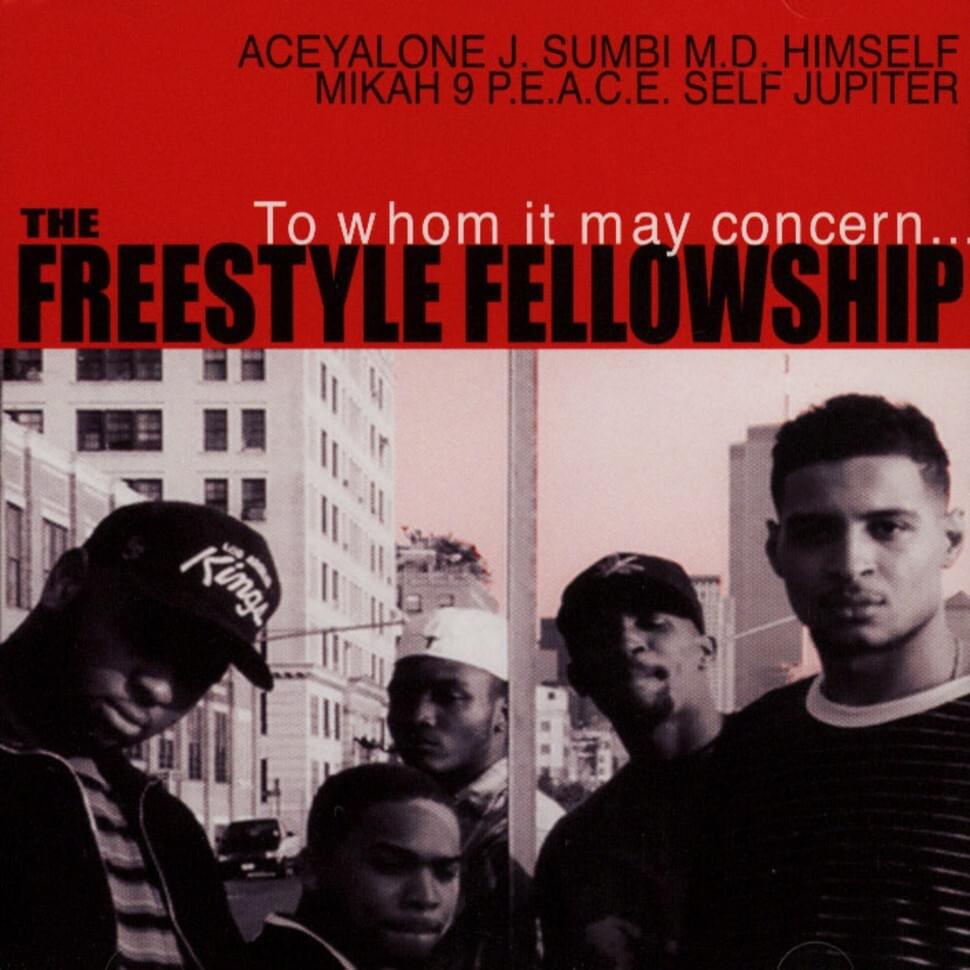
To Whom It May Concern is the spark that set Freestyle Fellowship in motion, long before their better-known second album—which is on my 100 favorites list—brought them a wider cult following. This 1991 debut carries the energy of a crew figuring out its power in real time. Recorded on a four-track and distributed hand-to-hand, the album arrived from the Good Life Cafe scene in South Central Los Angeles, where Aceyalone, Myka 9, P.E.A.C.E., Self Jupiter, J. Sumbi, and others sharpened their craft through open-mic sessions that demanded originality and nerve. The record keeps the atmosphere of that room: unpredictable, loose, and charged.
The sound leans toward jazz without settling into a neat format. Tracks move on warm bass riffs, brushed drums, and sharp keyboard stabs that sometimes drift slightly off center, which fits the handmade quality of the recording. Instead of clean breaks and polished loops, the beats have the grit of musicians working within tight limits and pushing every inch of the space they have. That grit becomes part of the identity. “5 O’Clock Follies” uses a steady groove to frame a tense critique of political doublespeak. “We Will Not Tolerate” rides a thick rhythm section as the group tears into police violence and racist systems with direct, clipped delivery. “My Fantasy” lets Aceyalone trace a long, winding line through a beat that bends around his voice rather than the other way around.
The vocals are the center of the album’s pull. Each MC works with different weight and tone: Aceyalone’s precise internal patterns, Myka 9’s spiraling cadences, P.E.A.C.E.’s clipped attack, Self Jupiter’s booming phrasing. They overlap in a way that echoes jazz improvisation—phrases dart in unexpected directions, rhymes snap into place at angles you don’t see coming, and ideas spill out in layered bursts. The approach is intense, sometimes messy, and often thrilling. The improvisational roots of the group come through in sudden shifts in pitch, speed, and rhythm; the voices move almost like horns cutting across a tight rhythm section.
The album is rough around the edges, and the looseness is part of why it still hits for me. The MCs aren’t trying to sound polished or radio-ready. They sound like a unit hungry to stretch every corner of Hip Hop. Their second album might be the one most people point to, but To Whom It May Concern is the ground floor of the entire Los Angeles alternative rap movement. I love it for its audacity, its inventiveness, and the feeling that anything might happen from one bar to the next.
Godfather Don - Hazardous (1991)
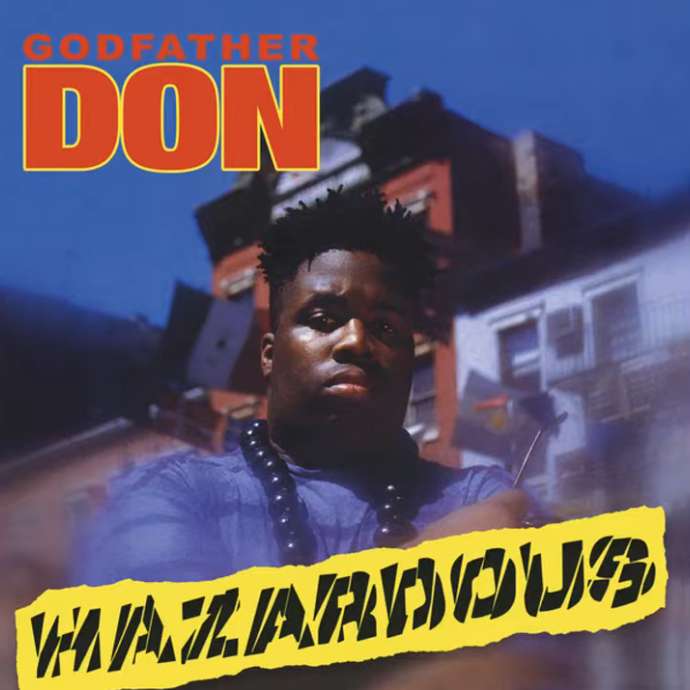
Godfather Don’s Hazardous arrived in 1991 with little push from Select Records, slipped out of circulation fast, and became one of those albums people heard about long before they ever found a copy. Listening now, the record has a sharp, grounded quality that places it squarely inside early-90s New York Hip Hop while giving room for Don’s distinct instincts as a producer and MC.
The production is tight and rhythmic, built from clipped drum patterns, warm samples, and a clean low end that drives the record forward. Don handles every beat himself, and the album moves with the confidence of someone who understands how small decisions—an extra rimshot, a short organ stab, a slice of piano—shape a track’s pulse. “Homicide” hits with heavy drums and layered fragments that fill the space without drifting into noise. “Black Time” circles around the familiar Roy Ayers loop, but Don uses it in a way that pulls the track into deeper territory, giving the song a steady, Afrocentric charge.
As an MC, Don raps with a fast, clipped delivery that never slips into chaos. His voice has weight, and he keeps a certain push in every line. He shifts approaches across the record, sometimes tightening his cadence into rapid bursts, sometimes letting a phrase hang. The title track, “Hazardous,” highlights this range with three verses delivered in three distinct styles. “On & On” runs on breathless momentum, almost like a test of endurance. “Losers” moves in another direction, turning toward social issues without drifting into lecture mode. The through-line is Don’s directness; he raps without ornamentation, without excess buildup, and without falling back on broad statements.
The album goes through political edges, street observations, quick flashes of bragging, and short moments of reflection. None of it feels stitched in as a reach for variety. Instead, the record has the tone of someone working through ideas at the pace they come, letting each track take the shape it needs. Don’s engineering background comes through in the way vocals sit inside the mix: close, crisp, and locked into the drums.
Hazardous never found the audience it deserved, and that absence became part of its identity. The album is rough at times and not as polished as larger-label releases from the period, but it has strength, presence, and grit. There is attitude, charm, and power here, which is why it has stayed in my collection.
Hard Knocks - School Of Hard Knocks (1992)
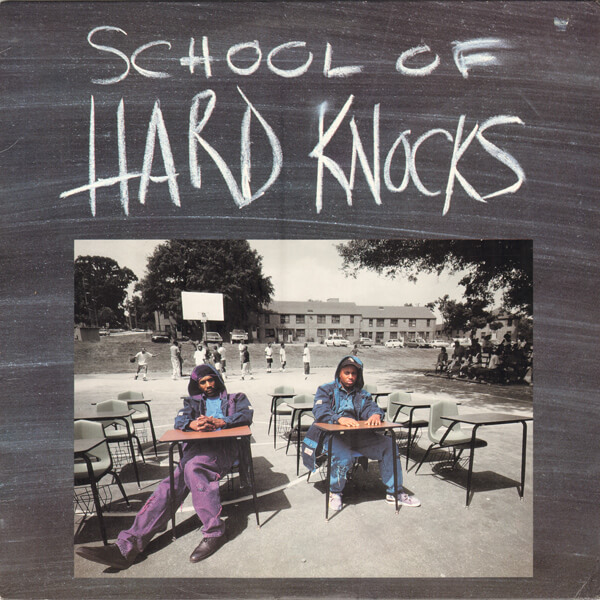
Hard Knocks arrived on Wild Pitch Records with a clear point of view and a stripped-down approach that fit the early-’90s New York climate. MC Hardhead and DJ Stoneface worked closely with The Spear Chuckers, whose production shaped the album into a lean, jazz-driven piece of East Coast Hip Hop. The record is built on tight drums, bright horn chops, warm basslines, and simple rhythmic loops that carry a steady pulse. Nothing feels inflated. The music stays grounded in repetition and mood, which gives Hardhead the room he needs to paint his scenes.
Hardhead’s delivery is low and measured, almost flat, closer to spoken commentary than forceful projection. That tone gives the lyrics a steady weight. He lays out stories of police harassment, institutional pressure, and daily stress without raising his voice, letting the content carry its own force. Tracks like “Dirty Cop Named Harry,” “Road to the Precinct,” and “Na for Hire” hit hard because of their blunt focus on corruption and violence. “Thoughts of a Negro” moves with a slower swing and goes deep into identity, frustration, and survival. “Young Black Male” and “Young Guns” trace the tension of growing up in unstable conditions, drawn from a point of view that avoids dramatics and leans on clear detail.
Stoneface’s cuts and fills on top of the looping jazz samples give the record its texture. The beats stay light and uncluttered, which keeps everything easy to follow even when Hardhead moves into long stretches of commentary. The music has a crisp quality typical of the era: snare hits that snap, upright bass lines that circle through the measure, and short horn fragments that brighten the edges of the tracks. The intro dips briefly into Hip House energy, then the album settles into the style that carries it through.
I came across this album in 1992 by luck, and it never left my rotation. Too many heads slept on it, partly because Wild Pitch had more visible names in the catalog and partly because this duo didn’t have a long run. School of Hard Knocks may have rough edges and no clear crossover moment, and Hardhead isn’t the most commanding MC, but the combination of sharp writing, clear storytelling, and warm production gives the album lasting pull. It earned its place on my list because it stayed with me long after its release.
Gunshot - Patriot Games (1993)
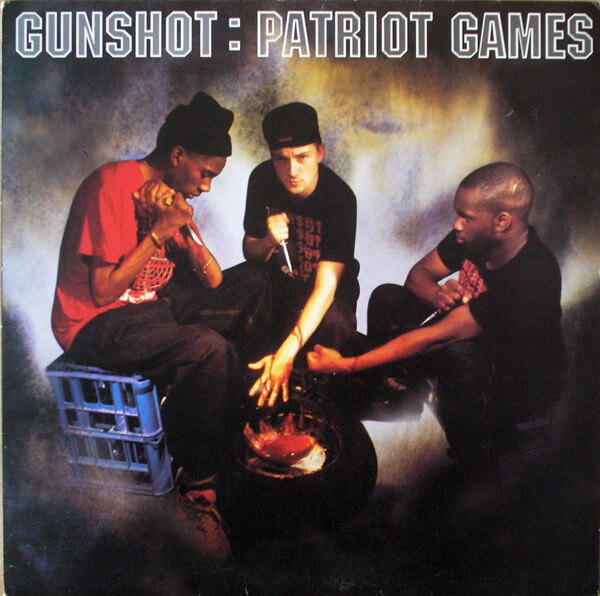
Gunshot’s Patriot Games is one of the darkest, most combustible albums to come out of early-90s British Hip Hop. The record hits with a kind of pressure rarely heard in the American scene of the time: industrial edges, clipped drums, heavy low end, and a pace that rarely loosens. The group’s Leyton roots come through in every bar, with MC Mercury and MC Alkaline driving the album through loud, claustrophobic territory while DJ White Child Rix builds tracks from harsh samples and breakbeats that sound wired for conflict.
“25 Gun Salute” drops in with a thick drum pattern and snarling cuts that set up the album’s overall direction: militant, tense, and packed with sharp details. Tracks move quickly, carrying a sense of chase and surveillance. “Reign of Terror” leans on swirling noise and a drum loop that snaps at high speed, giving the MCs a narrow path to attack with rapid, clipped phrasing. “World War 3” follows with a rhythm built around a jagged break and low-end hum that hangs under the verses like a threat.
The harshness is not an accident. White Child Rix pulls from industrial textures, distorted stabs, and metallic accents, shaping an atmosphere where everything feels unstable. “Bombing in 5 Minutes” uses a pounding beat and short, looping fragments that echo like alarms. “Underworld Crime Soldiers” and “Day of the Jackals” keep the same relentless pace, driven by quick cuts and tightly wound drum programming.
“Mind of a Razor” remains the album’s most recognizable track. Its central loop saws through the beat with a cold intensity, and the MCs ride it with clipped precision. The title track, “Patriot Games,” pulls all the album’s traits into one: harsh drums, political anger, fast deliveries, and a sense of London street pressure that feels grounded and lived-in.
The record keeps its energy high to the end. “Bullets Entering Chest,” “Year 2000,” and “Game Over!” close the album with the same tight focus on speed, noise, and confrontation that shapes the rest of the project.
If this one slipped past you back then, or if you only know Gunshot by name, you ought to check it out. It is one of the most intense documents of early Britcore and a major part of the era’s underground sound.
K-Rino - Stories From The Black Book (1993)
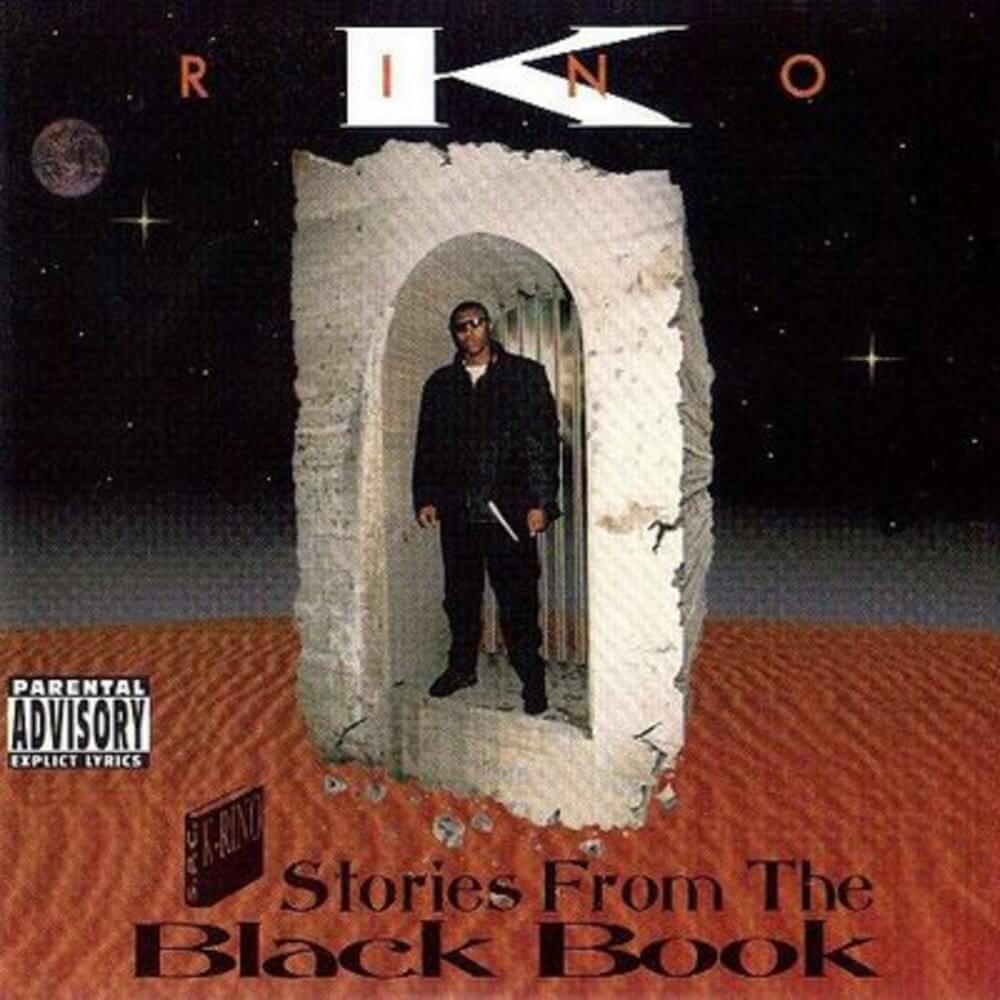
K-Rino’s Stories From The Black Book is an early document of an artist who built an entire regional identity from the ground up. By 1993, he was already a guiding presence in Houston’s South Park scene through the South Park Coalition, and this debut album lays out the sharp writing and restless imagination that anchored his long run. His delivery is firm and measured, cutting through the mix with a steady tone that keeps every line clear. Whether he dives into street narratives, personal reflection, or surreal concepts, he approaches each idea with intent and control.
The production carries the shadowy character associated with early ’90s Houston underground records—slow tempos, thick drums, and synth lines that drift across the low end. The beats often sit in a stripped-down space, built from tight loops and minimal ornamentation. That simplicity brings the focus squarely to K-Rino’s writing, which covers a wide range: dark storytelling on “Stories From the Black Book,” political analysis on “Death of a Politician,” technical flexing on “Ultimate Flow,” and vivid street-level scenes on “Children of the Concrete” and “You Created a Monsta.” Tracks produced by SPC affiliates, including Dope-E, share a similar tone, creating a unified mood across the album’s long runtime.
Concept songs give the record its odd, unpredictable edge. “Cartoon Orgie” sticks out as a wild piece of horrorcore mischief, while “Step Into the Mind” reads like an entry point into K-Rino’s larger worldview. His rhyme structure often piles layers inside the bar, with internal patterns that shift and expand without disturbing the pace. Guest verses from other SPC members add grit and momentum, but the album stays anchored in K-Rino’s voice and his instinct for detail.
The production is rough at times, the beats vary in strength, and the record’s length can make it heavy. But there is a charge in the writing and a clarity in the way K-Rino shapes his stories. That is why this album never left my collection, even as plenty of heads slept on it.
Public Enemy - Muse Sick-n-Hour Mess Age (1994)

By 1994, Public Enemy was swimming against the current. The era of Gangsta Rap and G-Funk had taken over, and their brand of politically charged, dense Hip Hop no longer held the same commercial pull it once had. Muse Sick-n-Hour Mess Age arrived in that climate—loud, ambitious, and defiantly out of step with the trends. It’s a heavy record, sprawling across twenty-one tracks and over 70 minutes, powered by conviction and fatigue in equal measure. I always felt this one was underrated, both back then and now. Even with the reappraisal it’s received in recent years, I still think people underestimate how strong it is. It’s not an easy album, but it’s one I’ve always loved, and there’s no way I’d leave it off a list like this.
The record opens with “Whole Lotta Love Goin On in the Middle of Hell,” a grinding, funk-driven track that sets the pace for the album’s urgency. Chuck D’s delivery cuts through the groove—measured, sharp, and fully locked in. Production comes mostly from Gary G-Wiz and Chuck himself, under his Carl Ryder alias. The Bomb Squad’s wall-of-noise approach is toned down, replaced with thicker bass lines, live guitar, and a looser, more jam-oriented sound. “Give It Up,” the album’s biggest single, rides a warm Stax-inspired loop and a bouncing rhythm section; it’s one of Public Enemy’s most infectious tracks.
“Bedlam 13:13” hits hard with ominous choral samples and booming percussion, while “So Whatcha Gone Do Now?” brings a jazzier swing that frames Chuck’s social commentary with a steady pulse. “What Kind of Power We Got?” bursts with energy, anchored by Flavor Flav’s offbeat charisma and Chuck’s call-and-response precision. Deep cuts like “Death of a Carjacka” and “I Stand Accused” balance groove and intensity, their arrangements thick with horns, scratches, and layered vocals that give the album its dense character.
Lyrically, Chuck D holds firm to the themes that made Public Enemy matter—accountability, self-determination, and resistance. The album calls out exploitation and moral decay while refusing to give in to despair. It’s demanding, maybe too much so for the mid-90s mainstream, but that’s part of why it’s so powerful.
Public Enemy is my favorite group in Hip Hop history, and their first four albums are all in my top 100. Muse Sick-n-Hour Mess Age deserves a mention too. It’s a long, relentless, and deeply committed record—flawed in spots but full of heart and purpose. In 1994, it might have been too much for people to take in. For me, it still hits hard.
Hard 2 Obtain – Ism & Blues (1994)
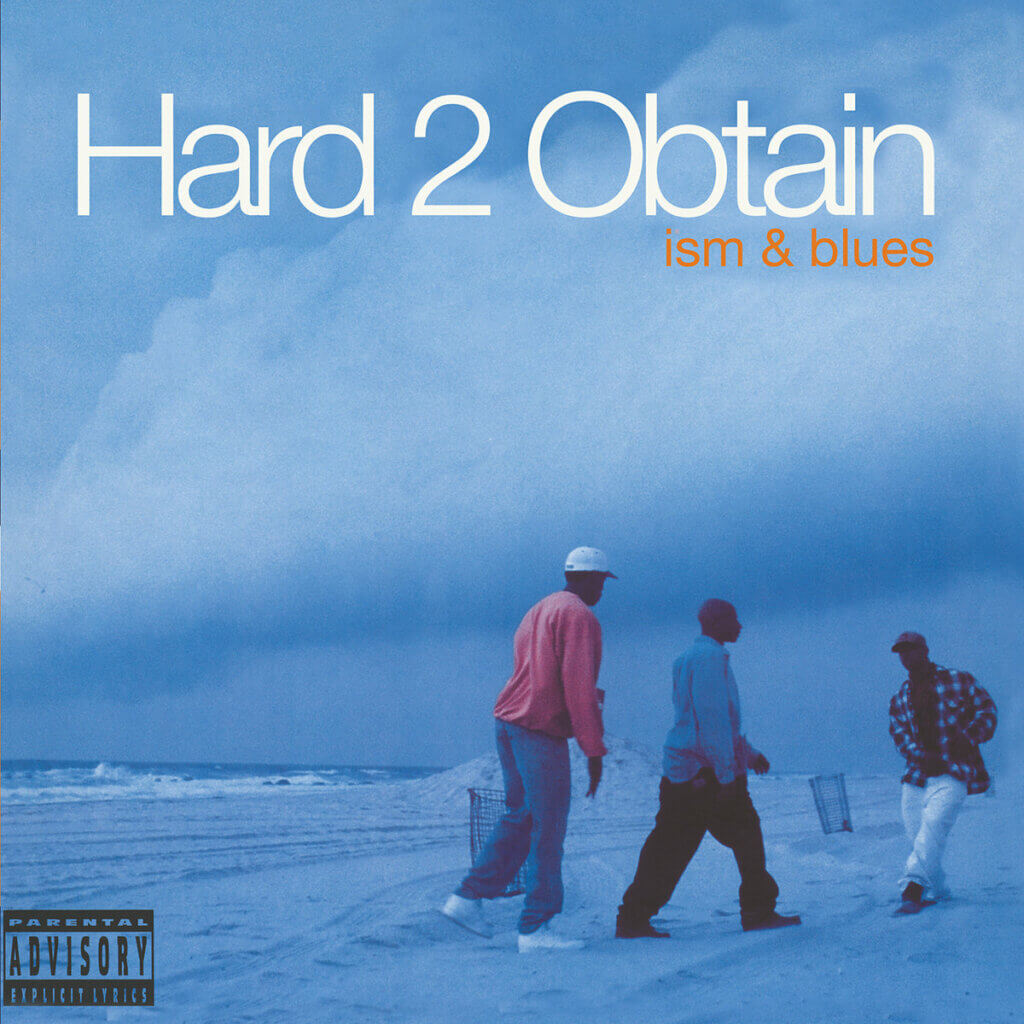
Long Island has a long list of Hip Hop crews who shaped the culture, and Hard 2 Obtain sit in that circle even if their run ended quickly. Ism & Blues is their lone album, a short moment on a major label that slipped past the wider audience in a year packed with heavyweight releases. What remains is a warm, groove-heavy record built on the unmistakable touch of the Stimulated Dummies, who give the project a steady foundation of jazz riffs, smoky funk loops, and drums with a soft swing that carries the whole thing.
Taste and DL approach these beats with relaxed, B-boy confidence. Their call-and-response style brings its own rhythm, especially on tracks like “Joker’s World” and “Babble On,” where their voices cut through the dense layers of samples without overpowering them. The strength of the record sits in the way their delivery rides the pockets the SD50s carve out—loose, conversational, and grounded in everyday detail.
“Heels Without Souls” highlights that balance well. Vinia Mojica’s smooth hook lightens the track, while the verses move through neighborhood scenes with an easy stride. “Street Dwellers” keeps that mood but shifts to a darker tone, mapping out tension and pressure without leaning on heavy-handed language. The crew’s biggest moment, “L.I. Groove,” still hits with its steady pulse and pride in place, shaped by a simple idea executed with clarity. “Ghetto Diamond” brings bright horns into the mix, giving the album one of its most vivid moments, and “A Lil’ Sumthing” opens up the cipher energy with the Artifacts in early form.
Across the record, the production gives everything a smooth continuity. Short interludes, little instrumental touches, and warm sample beds pull the tracks together in a way that makes the album feel lived-in. Taste and DL keep things straightforward—sometimes repetitive, sometimes sharp, always grounded in the moment.
Ism & Blues never caught a major wave, and Hard 2 Obtain disappeared soon after, but this record held a spot in my rotation for years. It has attitude, charm, and a mellow glow that brings me back even when the rough edges show. For me, that is enough for it to belong in this list of overlooked favorites.
Saafir - Boxcar Sessions (1994)
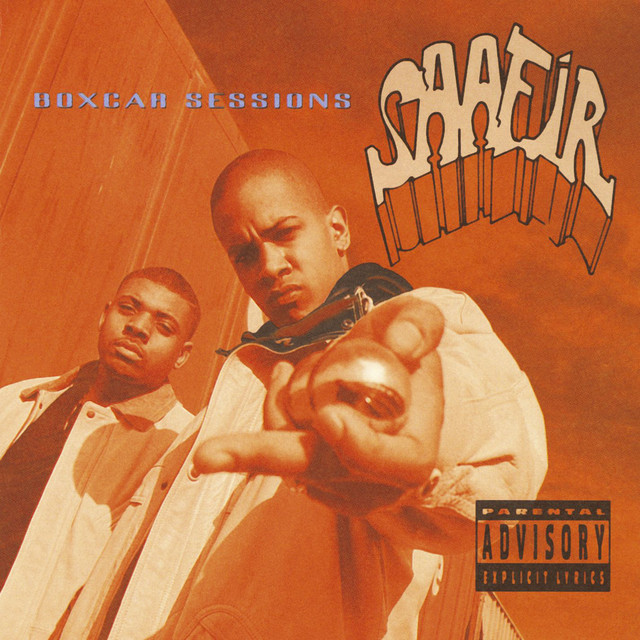
Saafir’s Boxcar Sessions is one of the strangest and most magnetic albums to come out of early-90s Bay Area Hip Hop. It sounds like someone twisting reality through a handheld kaleidoscope: the edges stay sharp, but the shapes bend in ways that feel unstable in the best possible way. The record is built on a foundation of grimy drum patterns, chopped loops, and short, jagged accents that create a restless rhythm. Nothing here settles into a predictable groove. The beats twitch, stagger, and shift, pushing Saafir into odd pockets where he builds his own internal logic.
Saafir raps with the cadence of someone thinking faster than the room can follow. His delivery hits in bursts, almost like overlapping thoughts fighting for space. He stacks images, flips perspective mid-bar, and squeezes surreal detail into quick, clipped phrases. A lot of the writing reads as stream-of-consciousness—compressed, coded, and tangled on purpose. The album often plays like a puzzle where the connections are emotional rather than linear, and that tension gives the record its charge. Saafir brings humor, paranoia, swagger, and doubt into the same breath, and the energy comes from watching him navigate those rapid shifts. When he hints at betrayal, self-interrogation, or neighborhood pressure, the tone dips and spikes in ways that hit harder than a straightforward confession ever would.
The Hobo Junction presence shapes the record’s texture without turning it into a crew project. Their voices and production touches widen the album’s atmosphere, adding grit and looseness. The sessions feel like they were taped in a cramped room with the windows shut, the air thick, and ideas firing at a rate that barely makes sense outside that moment. The rawness of the mix adds to the effect; this is the kind of album where imperfections underline the personality rather than distract from it.
Boxcar Sessions has always lived a little to the side of the broader ’94 conversation. The writing is dense, the beats have a warped tilt, and the whole record carries an off-center rhythm that rewards repeat listens. It may be rough around the edges and long-winded in places, but that crooked momentum is exactly why it stayed important to me. There is attitude, nerve, and a strange spark running through it. That’s why I keep returning to it every once in a while.
DJ Q-Bert - Demolition Pumpkin Squeeze Musik (1994)

Demolition Pumpkin Squeeze Musik is one of those records that still hits with the same shock it carried when it moved through the tape-trading circuit in the mid-90s. DJ Q-Bert takes an hour of breaks, fragments, cartoon snippets, movie dialogue, and scratch phrases and shapes them into a nonstop slab of turntable intensity. The mix is loose and playful on the surface, but underneath it is a technical onslaught that never slows down. Q-Bert’s hand speed is the most obvious draw, though the structure of the mix is what gives it its pull. It flows like a continuous B-boy reel: drops, stabs, and abrupt switches slamming right into each other without dead time.
The core of the tape is built from classic breaks, many of them already familiar from park-jam lore—James Brown, the Jackson 5, Bo Diddley, Bob James, the Honey Drippers, Rush, and dozens more. Q-Bert cuts them into tight loops, then slices over the top with quick scratches, orbit patterns, and early versions of techniques he would refine later. Movie snippets, cartoon voices, and video game hits—Street Fighter II in particular—jump in and out like graffiti tags sprayed across the mix. They don’t act as decoration; they function as percussive hits or momentary distractions that let the next scratch run crash in harder.
What keeps the tape lively is the constant motion between restraint and explosion. Q-Bert will lay a break bare for a few seconds, then tear into it with a flurry of cuts that twist the rhythm into something jagged and strange. Guests like DJ Shortkut and DJ Disk add their own angles, bringing small shifts in phrasing and tone. The energy never dips, and the chaotic humor of the sample choices gives the mix a loose, DIY pulse that fits the era.
Some people may not consider Demolition Pumpkin Squeeze Musik an overlooked record—it circulates as a cult classic, especially among DJs. But when instrumental Hip Hop discussions come up, the conversation usually drifts toward albums like Endtroducing….. or Donuts. I go back to this one more. It is rougher, louder, and less polished, and that looseness is exactly what gives it staying power. It was made for tape decks, car speakers, and bedroom setups, and it still carries that energy today.
Dredd Scott - Breakin' Combs (1994)
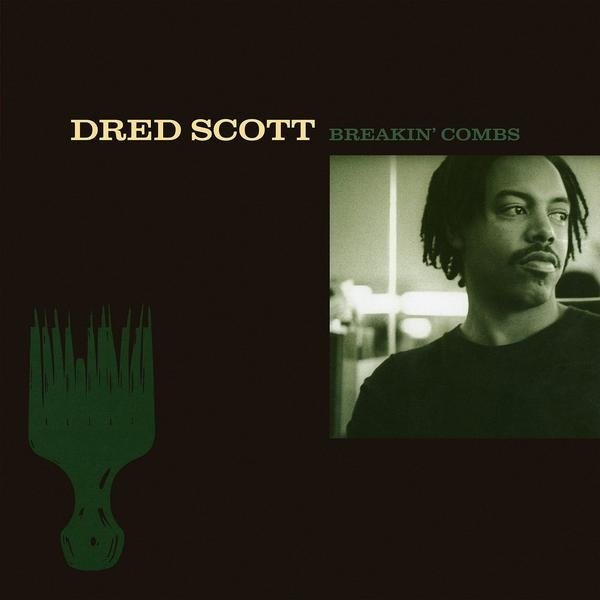
Breakin’ Combs is a warm, street-level record built on Dred Scott’s ear for rhythm and detail. The album moves with the confidence of a rapper-producer who knows how each drum snap, bass pulse, and horn line should sit in the pocket. His production has a strong East Coast spine—tight drums, deep low end, and loops that swing—but the mood carries the looseness of a California upbringing. Nothing on the record feels rushed. Each track has space to unfold.
Scott shifts his delivery depending on the idea he wants to land. On narrative pieces, his voice tightens and his pacing becomes deliberate, almost conversational. When he leans into mood or wordplay, he loosens up, moving into a more animated cadence. That variation gives the album texture. At times he jumps into character work and playful phrasing; at others he pulls back and speaks with clarity and weight. The range brings a sense of movement across the record, even when the production stays grounded in the same palette of jazz, funk, and boom-bap.
The arrangement of the album is built around strong pivots: a reflective track, then something dirtier and drum-heavy, then a calmer piece where Adriana Evans’s voice widens the atmosphere. Scott’s ear for singers is sharp, and Evans’s appearances add dimension without drifting into gloss. When the beats lean into organ riffs, upright-style bass, or clipped guitar, the album lands in a sweet mid-tempo zone that holds up well today.
Not every experiment lands, and a few character deliveries tilt toward cartoonish, but the core of the album is sturdy. Scott shows control when he tells stories, especially on pieces built around long arcs or everyday scenes. His writing is sharpest when he digs into small observations and builds tension through rhythm rather than volume.
Breakin’ Combs didn’t reach a wide audience in 1994, which is part of why it belongs in my The Overlooked 100. The record has depth, craft, and a strong sense of identity. For me, the album stays important because it shows how much can be done when one artist handles the mic and the boards with equal focus and care.
Kool Keith & Godfather Don - The Cenobites (1995/1997/2025)
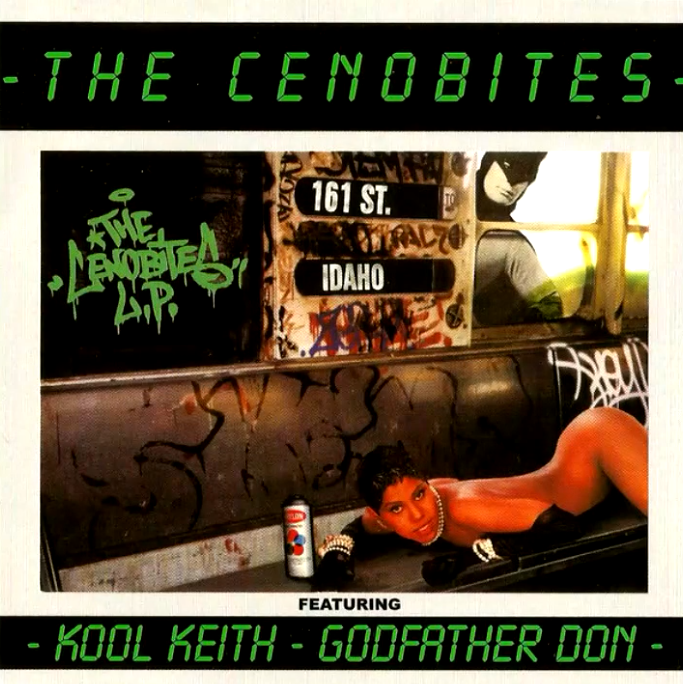
The Cenobites grew out of a strange, loose challenge on the Stretch and Bobbito show: Bobbito told Kool Keith and Godfather Don to make some tracks in the basement, and they did—fast, rough, and without concern for industry polish. Those recordings shaped the core of this project, first issued as a short EP in 1995 before getting expanded several times across the next decade. The 2025 edition gathers everything in one place, and hearing it all together gives the project a sharper identity than it ever had on its scattered releases.
Godfather Don’s production is sharp-edged and smoky, rooted in tight drums and horn loops that seem pulled from late-night jazz sessions. The beats feel taped straight from the basement floor—no gloss, no smoothing. Tracks hit in short bursts, with Don using repetition and narrow fragments to create pressure. “Lex Lugor” plays with a loose menace, its chopped horns clashing against dry snares. “I Was Forgotten” builds around a looping phrase that never settles, giving Keith a narrow lane he fills with quick pivots and stray images. On “How the Fuck You Get a Deal,” the drums punch through the mix with a blunt weight that sets the track’s angry tone immediately.
Keith, recording under his Rhythm X name, is in one of his most unpredictable modes. His voice jumps between tones, and his lines drift into sci-fi references, hospital scenes, sudden threats, and stray jokes without warning. The verses feel like spontaneous brain dumps, but there’s a sharp internal rhythm in the way he stacks short jabs, warped images, and clipped asides. Don’s own verses bring a rougher, street-level presence; he raps in tighter patterns, grounding Keith’s wildness without boxing it in. Percee P cuts through “You’re Late” with crisp, rapid delivery, and Bobbito’s unpolished cameos give the record a loose, insider feel.
The expanded material—promos, rough mixes, early drafts—adds more weight to the project. These tracks keep the same basement energy. None of the songs sound like they were built for long-term shelf life; they sound like immediate creations, made in small rooms on tight equipment, carried by instinct instead of long planning.
The project is scruffy, uneven in places, and full of strange detours, but it has a charge I return to. There’s attitude, humor, grime, and character here, and that mix has kept the original The Cenobites in my rotation for years.
Chuck D - Autobiography Of Mistachuc (1996)
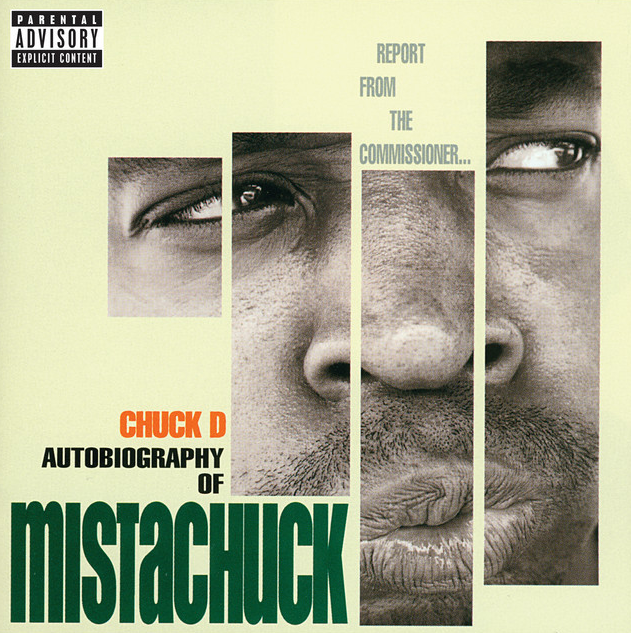
Autobiography of Mistachuc hit in 1996 with almost no noise around it, which always felt strange to me. Public Enemy is my favorite act in Hip Hop, and Chuck D’s voice is one of the most commanding instruments the genre has ever produced. This record never tried to be a Public Enemy sequel, though. It moves on its own footing: leaner production, warmer grooves, and a mood shaped by an artist dealing with aging scenes, changing industry norms, and a new wave of artists stretching the format.
The album opens with a clipped movie sample before dropping into a thick, soulful rhythm on “Mistachuck.” The beat pulses with stacked bass notes, spaced-out synth flashes, and a steady, mid-tempo thump. Chuck uses the open space to lay out his frustrations with a blunt tone. His voice is deep and forward in the mix, carrying weight even when the phrasing drifts into looser patterns. That loose edge is part of the album’s appeal. The record is built on jazz-funk and R&B textures, with drums that sit lower in the pocket and samples that hum rather than crack.
“No” is the clearest example of this shift. The track runs on a rolling groove that sounds like a warped slice of 70s funk. Chuck moves through a rapid list of everything he sees pulling Hip Hop away from substance. His cadence hits in sharp bursts, sometimes slightly off the rhythm, which gives the track a jagged quality. “Talk Show Created the Fool” is darker. The bassline is slow and shadowy, and the hook lands with a deadpan sting. Chuck’s voice cuts through the murk while he dissects daytime television’s habit of turning people’s pain into entertainment.
Other tracks widen the scope. “Niggativity…Do I Dare Disturb the Universe?” uses a sparse beat that leaves room for Chuck’s heaviest writing on self-destruction and survival. “Generation Wrekkked” punches forward with a James Brown-styled drum loop and a hook that snaps into place with a curt rhythm. “The Pride” softens the tone with a warm instrumental built around steady keys and quiet guitar lines, giving Chuck a space to trace pieces of his childhood and the history that shaped him.
The record runs long, and a few tracks lose steam, but the core of Autobiography of Mistachuc remains strong. Without Bomb Squad chaos or Flavor Flav’s energy, Chuck D leans into stripped-down grooves and direct messaging. The result is an album I have always returned to—underrated, uneven in a way that gives it character, and carried by a voice that still cuts through with force.
Mood - Doom (1997)
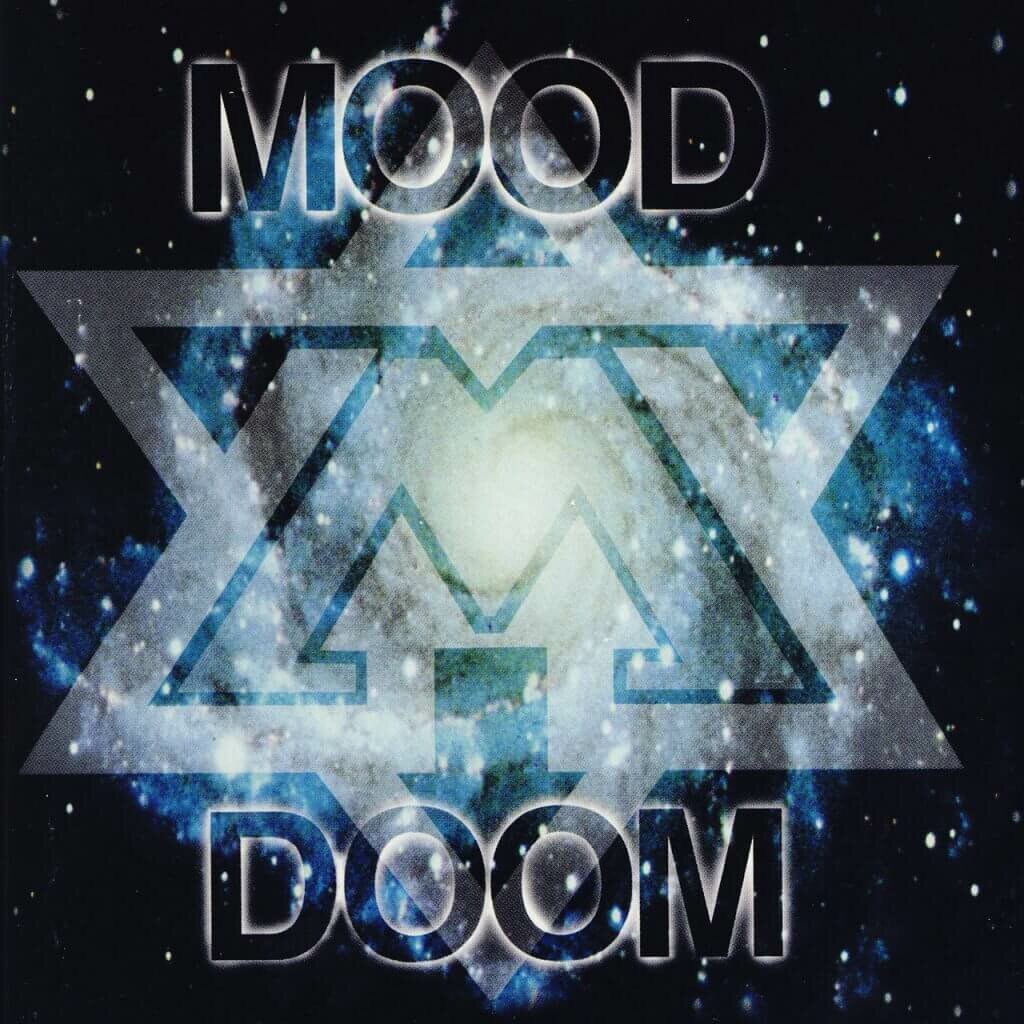
Mood’s 1997 album Doom is a dense, shadowed record that captures the tension of late-90s underground Hip Hop. Emerging from Cincinnati, Mood crafted an album full of weighty, cerebral rhymes delivered over production that often feels apocalyptic. The group—Main Flow and Donte, with production handled by Jahson and an early Hi-Tek—built tracks that combine dark, ambient textures with hard-hitting boom-bap drums. This album is where Hi-Tek first showed his ability to create beats that linger in the mind: moody piano loops, muted horns, and rumbling basslines move through the record with a patient, haunting intensity.
Hi-Tek produced half of the album, giving it a cinematic, almost dystopian tone, while Jahson keeps the grooves grounded in classic Hip Hop swing. Songs like “Karma” deliver slow-burning tension over layered percussion, while “Sacred Pt. I” sets a ritualistic mood, letting Talib Kweli’s nascent voice weave through the production with sharp precision. Kweli appears on several tracks, his measured, alert delivery contrasting the brooding instrumentation and giving the record a palpable edge.
Lyrically, Mood tackles conspiracy, social commentary, and spiritual questioning with a relentless seriousness. The title track and “Peddlers of Doom” are threaded with a foreboding sense of collapse and paranoia, but Ace and Donte’s flows hold clarity amid the density. The Cincinnati MCs are confident, deliberate, and intensely aware of the spaces their rhymes occupy. Even when the lyrics are obscure or allusive, the delivery draws the listener in and anchors the album.
The album’s structure alternates between intense lyrical statements and moments of instrumental focus. “Illuminated Sunlight” leans into eerie textures with Sunz of Man providing vocal embellishments, while “Industry Lies” and “Nuclear Hip-Hop” pulse with urgent energy. The sequencing maintains a suspenseful momentum, allowing the dark production and sharp lyricism to resonate without fatigue.
Doom never achieved major commercial attention, but it introduced Hi-Tek and Talib Kweli to larger audiences and remains a compelling underground record. Mood’s Cincinnati roots give the album a neutral yet observant perspective, with East Coast sensibilities layered over experimental production. The result is an album that demands attention, with repeated listens revealing new intricacies in the beats and rhymes. For anyone exploring late-90s underground Hip Hop, Doom offers a rare mix of intelligence, tension, and atmosphere that continues to reward listeners decades later.
People Under The Stairs - The Next Step (1998)
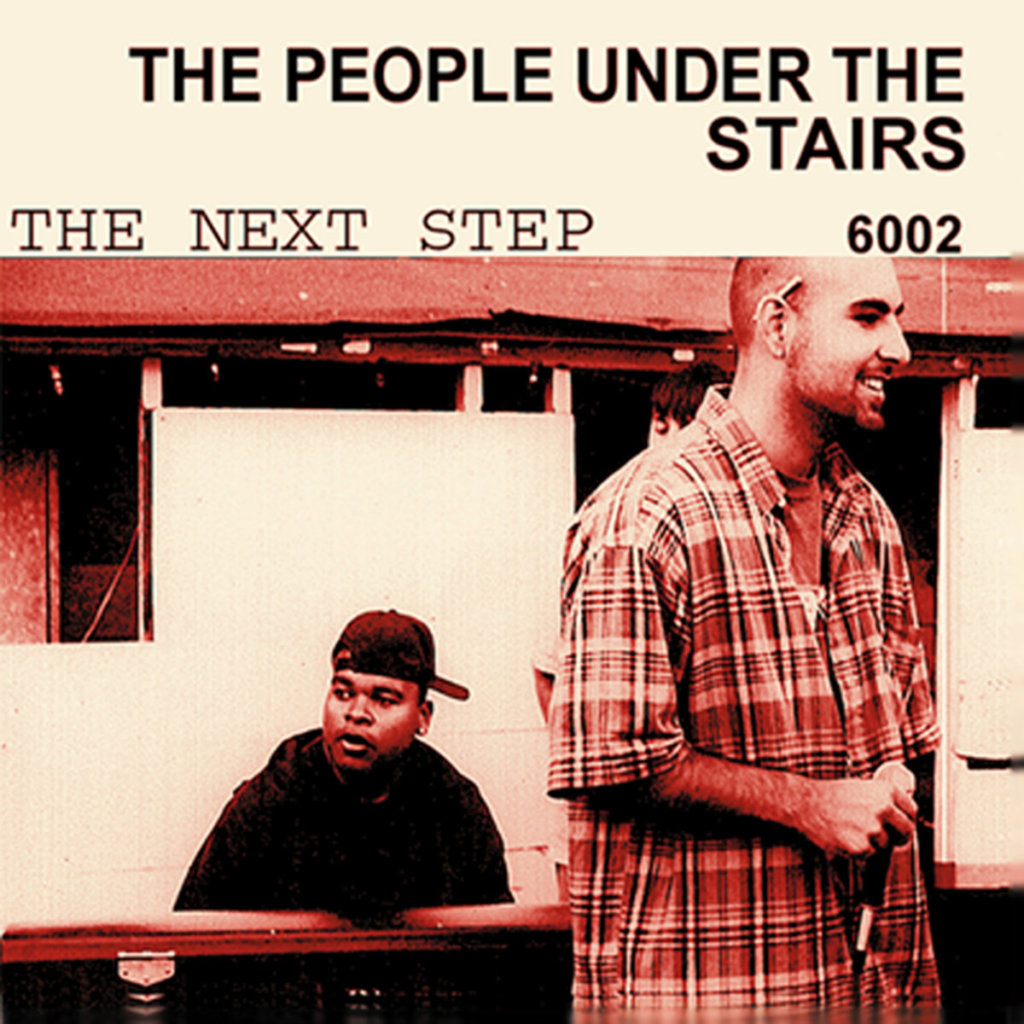
The Next Step arrived in 1998 with a loose, hand-built energy that still hits me every time I run it back. People Under The Stairs is one of my favorite Hip Hop duos, and their catalog stayed consistent for two decades. O.S.T. made my favorites list, and several other records from the crew sat close behind it. This is one of them. The album comes from a small room in Mid-City Los Angeles, recorded with student-loan money, stacks of vinyl, and gear that left every bump, crack, and hiss in the mix. That texture shapes the entire record.
Thes One and Double K (R.I.P.) give the production a warm, lived-in tone. The drums hit with a dry thud, loops rise out of dusty grooves, and everything sits in an easy pocket. The beats rely on chopped funk riffs, clipped soul samples, and short jazz fragments that drift through the background. Nothing feels polished. The sound has the ease of two heads building tracks late at night, pulling whatever they find in their collection and letting the rhythm breathe. The pace stays unhurried across the album’s long runtime, but the variety of grooves keeps it from sagging.
The rhymes stay grounded in daily life: record digging, neighborhood routines, long nights, cheap drinks, and a steady love for Hip Hop culture. Thes One takes a measured, conversational approach, while Double K uses a deeper tone and a looser swing. Their back-and-forth creates a relaxed flow that shapes the album’s personality. The writing leans into humor and small details. Nothing feels inflated. They talk about their city the same way they talk about music: with a casual confidence that comes from living it.
“San Francisco Knights” remains the record’s most immediate track, built on a smooth loop that drifts without losing structure. “The Next Step II” hits harder, driven by tight drums and a hook cut straight from the core of their sound. “Death of a Salesman” brings a heavier mood, with slower pacing and room for longer lines. Across the album, the cuts from Double K give the tracks an extra layer of movement without crowding the space.
The Next Step grew into a cult favorite, but I connected with it because it captures the spirit of two artists building their world by hand. It sounds like friends working with what they have and trusting their instincts. That approach kept PUTS in my rotation for years, and it is the reason this album, and a couple more, belongs on this list.
Rasco - Time Waits For No Man (1998)
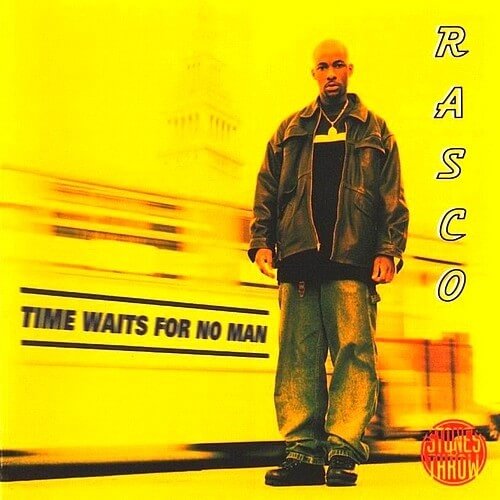
Time Waits For No Man dropped with a direct, grounded presence that made it a cornerstone of the late-90s Bay Area underground. Rasco approaches every track with a heavy baritone that cuts through the mix, and his verses move with a firm, deliberate cadence. The writing is built on personal discipline, craft, and the need to keep Hip Hop rooted in skill. There is no theatrics here—he uses plain, forceful language and a steady flow that gives the album its weight.
The production lineup is wide, but the record never drifts. Peanut Butter Wolf, KutMasta Kurt, Fanatik, Evidence, Paul Nice, DJ Design, and others deliver tight drums, sharp loops, and rugged textures without slipping into clutter. Samples come in short, dusty fragments: chopped horns, filtered keys, clipped soul riffs, and drums that hit with a dry snap. The beats stay direct and unpolished, creating a frame that suits Rasco’s tone. Even with a large crew of producers, the sound holds together through its focus on stripped-back boom-bap and clear space for the voice.
“Unassisted” remains the anchor. Its bare drum-and-guitar pattern opens the album with full confidence. Rasco steps in with complete control, and the track’s pacing gives him room to shape long, steady lines. Other songs widen the scope without breaking the album’s structure. “Major League” pulls in Defari and Dilated Peoples for a strong posse cut, built on a thumping rhythm foundation. “Hip Hop Essentials” hits with a sharper swing, using a simple loop to underline Rasco’s message about discipline and craft. “Take It Back Home,” with Planet Asia, brings a tighter back-and-forth that hints at the Cali Agents partnership forming in real-time.
Scratches from DJ Babu, D-Styles, and DJ Revolution add exact cuts that sit high in the mix. The turntable work gives the record another layer of texture and connects it to the West Coast circles that were building out the independent scene at the time.
Time Waits For No Man stayed important to me because of its honesty and focus. The beats can fall into repetition, and Rasco keeps his delivery in a narrow range, but the clarity of intention gives the album its strength. It is overlong and rough in places, the MC is not the most dynamic voice of the era, and it sits outside the major conversations of the late 90s. But there is attitude, drive, and a sense of purpose in the way the record carries itself. That’s why it never left my rotation.
The Dynospectrum - The Dynospectrum (1998)
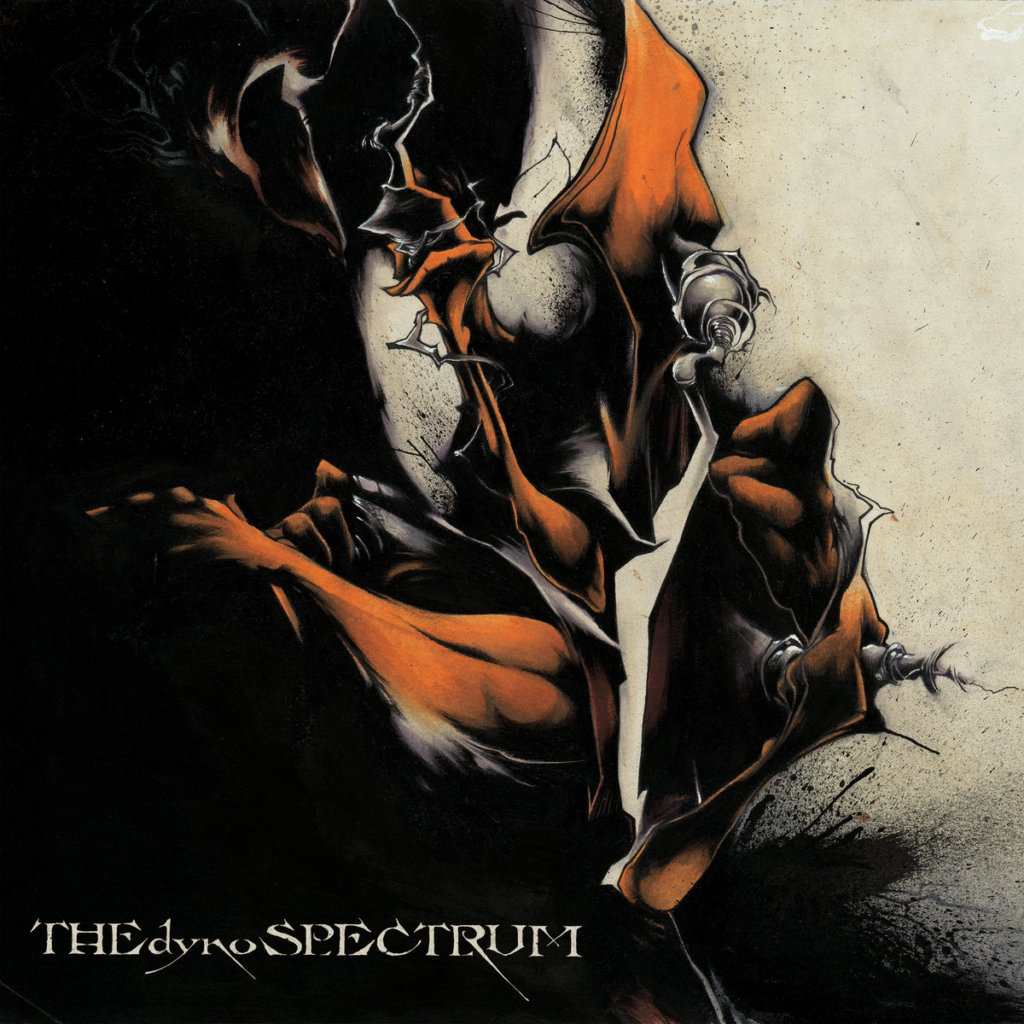
The Dynospectrum is one of those records that feels like it was built in low light, away from outside pressure, with the door shut and ideas flying across the room. Four voices—Slug, I Self Devine, Musab, and Swift—step into new identities for the project, almost as if the aliases let them work without the weight of their usual personas. Ant, producing under the name Solomon Grundy, shapes the entire album with beats that move slowly and carry a thick chill. The drums hit with a blunt thud, and the melodies drift in short, repeating loops that give the record a cold, echoing mood.
The production leans on stripped-down structures: a lone piano figure hanging in the background, a warped string line pulsing under steady kicks, or a sample stretched long enough to feel slightly unstable. Ant leaves wide gaps in the mix, and those open spaces turn the verses into the main engine of every track. The album has a basement-recording energy—clipped corners, gritty textures, and an atmosphere that suggests the crew recorded late at night when the city outside was silent.
Each MC carries a different tone. Slug’s voice comes through with quick turns of thought and a conversational rhythm. I Self Devine pushes harder, firing off dense chains of ideas that feel pressurized. Musab brings looseness and sharp humor, while Swift delivers lines with a gravelly, grounded presence. They rotate across tracks without overcrowding one another, and the pacing gives the album the feel of a long cipher where each verse shifts the room’s temperature. Some lines drift into dreamlike territory, dipping into paranoia or fragmented memory, while others grip more personal reflections. Nothing comes across as casual; every verse sounds like it was tightened carefully, even when the delivery feels off-the-cuff.
Songs like “Traction” and “Decompression Chamber” show how the group’s energy builds inside Ant’s stark production. The beats keep the focus on tension and restraint, while the verses pull in everything from street-level detail to internal conflict to cryptic imagery. The closing tracks move deeper into that mood, pushing the record toward a heavy, wintry finish.
The Dynospectrum stayed important to me because it created a world I wanted to revisit. It may be long, and its edges are rough, but there is drive, imagination, and presence in every track.
Styles Of Beyond - 2000 Fold (1998)
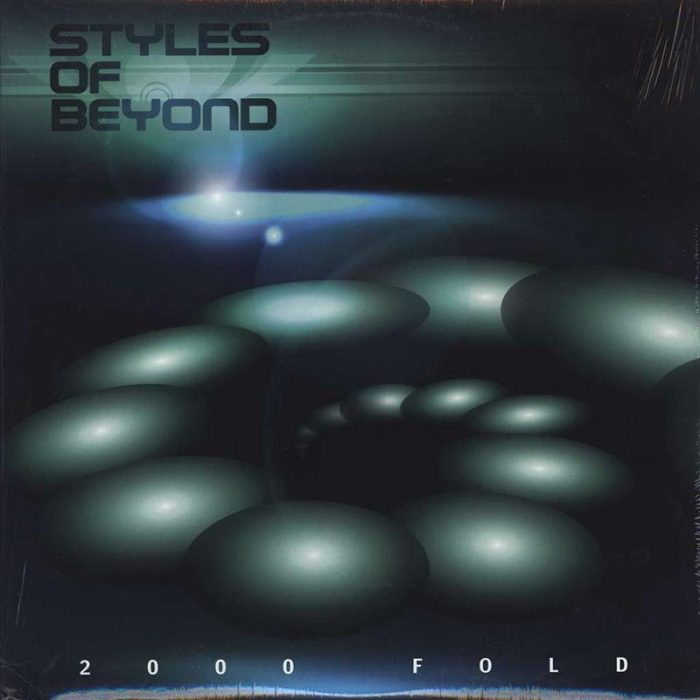
2000 Fold arrived in 1998 with limited reach, but the record built its own reputation through word of mouth. Styles Of Beyond—Ryu, Takbir, Cheapshot, and Vin Skully—worked with a tight, self-contained approach that gave the album a distinct pulse. The production has a sharp, quick-hit quality: drums that snap hard, sample layers cut with precision, and short melodic loops that flicker in and out. Cheapshot and Vin Skully keep the beats busy without crowding the room, and the scratch work adds extra edges without drifting into excess.
The album moves quickly. Songs open with sudden drops, clipped horns, or chopped vocal fragments before the verses hit. The rhythm tracks never settle into comfort; they shift in small ways, either through a new drum fill, a chopped sample tail, or a scratch pattern that cuts across the bar. That sense of motion pushes the MCs forward. There is a constant tug between the density of the writing and the tight shape of the beats, and the tension gives the record its energy.
Ryu and Takbir attack the tracks with rapid, tightly bound patterns. They stack syllables, twist internal sequences, and lock into the meter with total concentration. The delivery stays intense from the first track to the last, and the pacing rarely drops. Their verses focus on skill-building, personal drive, and sharpening the craft. Some tracks introduce small narrative angles, like the spy-movie framing in “Spies Like Us,” but the core of the album is pure technique. Lines stretch into long chains of clustered sounds, and the MCs treat the beat as a target they keep hitting from new angles.
The momentum of the first half carries the record, especially on “Dangerous Minds,” “Winnetka Exit,” and “Muuvon.” Even when the production turns repetitive in spots, the commitment behind the performances holds the album together. Guest appearances from DJ Rhettmatic, DJ Revolution, and Divine Styler add texture without breaking the group’s internal logic.
2000 Fold stayed important to me because it delivered a level of technical drive that felt rare at the time. It is long, and some songs blend together, the MCs can be stiff, and the beats return to similar patterns. But the attitude, craft, and sheer determination running through the record gave it a permanent place in my collection.
All Natural - No Additives, No Preservatives (1998)
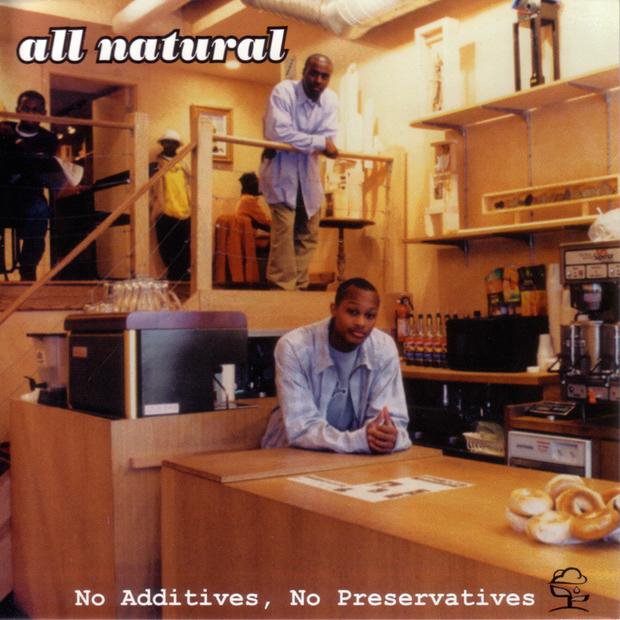
All Natural’s No Additives, No Preservatives is a masterclass in Chicago underground Hip Hop. Capital D and Tone B Nimble crafted an album that values skill, substance, and clarity over flash, delivering a project that flows with patience and purpose. From the first bars of “Fresh Air,” Capital D’s precise, deliberate delivery pulls listeners into a world where Hip Hop is treated as craft, intellectual engagement, and commentary.
Tone B Nimble’s production frames the album with a crisp, textural foundation. The Tchaikovsky-sampled beat on “Phantoms of the Opera,” featuring Allstar the Fabulous, pairs dark, sweeping strings with hard-hitting drums, creating a tense, dramatic groove. Tone’s scratches punctuate each track with intent, from the sly cuts on “Portals of Sound” to the emphatic flourishes on “Sound of the Fury,” reinforcing the album’s focus on DJing as an integral part of the music.
Capital D moves between critique and reflection with precision. “MC Avenger” targets complacent, unoriginal rappers with incisive wordplay, while “It’s O.K.” layers a gentle flute loop under a meditation on individuality and artistic independence. “Underground and the Independent” lays out the duo’s ethos in plain terms, a refusal of the commercial trends dominating late ’90s rap. Even tracks with lighter energy, like “Take It 2 Em,” maintain lyrical focus and rhythmic tightness. Guest contributions—Allstar the Fabulous, Spotlite, Discover—add texture without drawing attention away from the duo’s vision.
The album closes with “50 Years,” a seven-minute meditation on Hip Hop’s future that pairs delicate piano chords with Capital D’s forward-looking verses. Across sixteen tracks, the duo balances dense, challenging lyricism with beats that demand head-nodding engagement. The sequencing allows moments to land fully, from the hard-hitting aggression of “MC Avenger” to the contemplative lift of “No Nonsense” and “Thinkin’ Cap.”
No Additives, No Preservatives is an immersive statement. It embodies Chicago’s independent Hip Hop in the late ’90s, presenting an intellectual, thoughtful, and uncompromising approach to the craft. Capital D’s precise lyricism and Tone B Nimble’s layered, sample-driven production reward repeated listening, revealing subtle textures and clever interplay that often go unnoticed. This is underground Hip Hop measured and deliberate, a record that prioritizes artistry over spectacle and continues to hold weight with me decades later.
Peanut Butter Wolf - My Vinyl Weighs A Ton (1999)
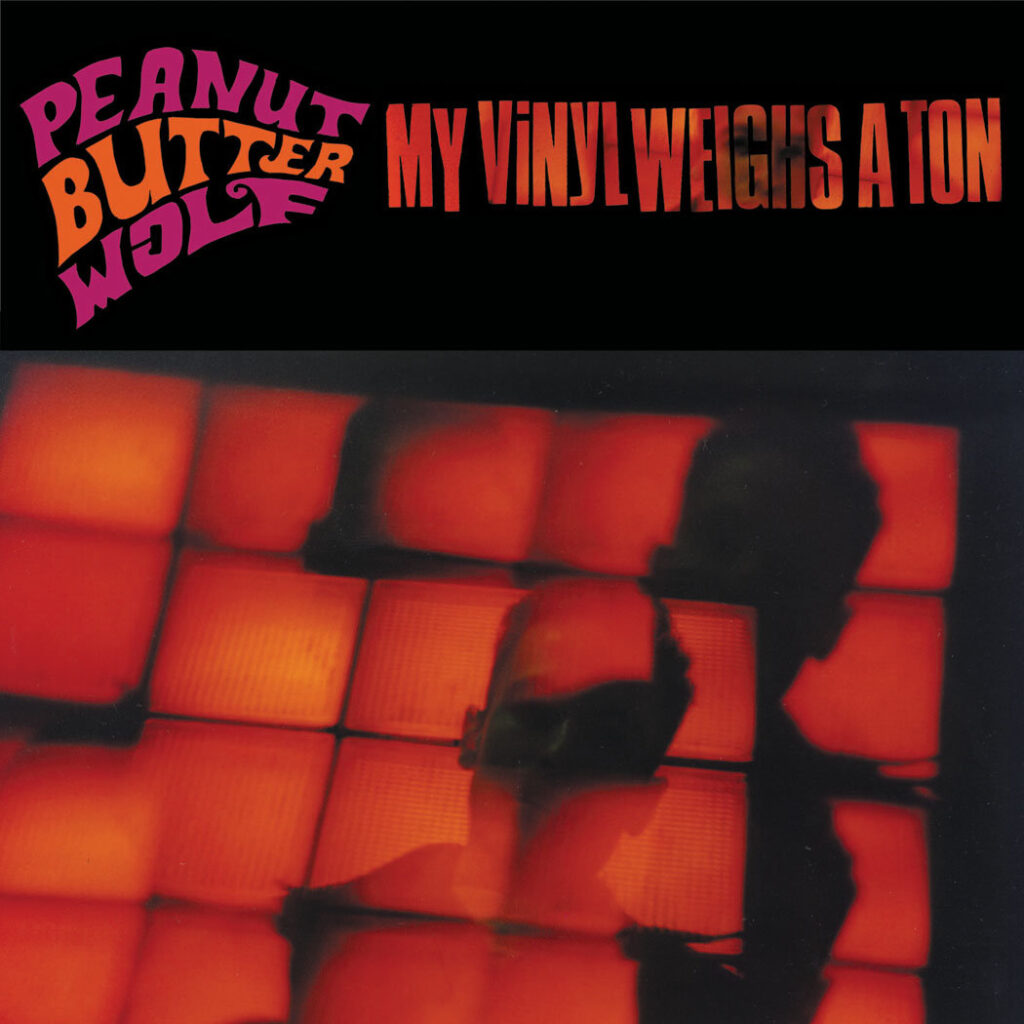
My Vinyl Weighs A Ton is Peanut Butter Wolf’s full-length statement as a producer who builds with care, patience, and an ear shaped by years of digging through funk, jazz, and early Hip Hop records. Released in 1999, it pulls together MCs, DJs, and pieces of Wolf’s personal history into a record that moves with the looseness of a mixtape and the focus of a studio project. The overall mood is warm and dusty, built from chunky drums, loose basslines, and loops that carry grit from the vinyl they came from.
The opener, “In Your Area,” sets the album in California with a steady knock and Planet Asia’s clipped delivery. Wolf keeps the beat tough and simple: crisp snares, a wobbling bassline, and a short vocal stab that repeats without crowding the verse. That approach runs through the project. He uses repetition as structure, letting the MCs define the edges. Tracks like “Run the Line” and “Competition Gets None” rely on bass-heavy grooves, small chord stabs, and needle-cut scratches that roll in and out like punctuation. Shortkut’s cuts on “Competition Gets None” hit with tight precision, adding lift without breaking the rhythm.
Wolf’s ties to the Bay Area underground are all over the album. Lootpack’s appearance on “Styles, Crews, Flows, Beats” brings Madlib and Wildchild into the fold, riding a beat built from loose funk guitar and a slightly detuned organ line. Quasimoto slips into the mix with that unmistakable high pitch, creating one of the album’s strangest and most magnetic moments. Wolf keeps the production grounded: no bright polish, no digital sheen, only drums and loops that feel pulled straight from late-night digging sessions.
“Tale of Five Cities,” a long turntablist workout featuring A-Trak, Cut Chemist, Z-Trip, Rob Swift, Kid Koala, and Shortkut, runs nearly nine minutes without losing steam. Each DJ cuts in short bursts, carving quick patterns across a shifting beat. The track feels like a cipher—no grand framing, only skill and timing. The emotional anchor hits at the end with “Keep On Rockin It,” the track with Wolf’s late partner Charizma. The beat carries an early-’80s flavor, with big echo and wide-open drums, making the performance feel close and personal.
I bought this album when it dropped, and it has never left my rotation. It’s a record built from spirit, craft, and deep musical knowledge, and it still hits with the same pull decades later.
Rubberoom - Architechnology (1999)

Rubberoom’s Architechnology is one of my absolute favorites on this list. Chicago’s Meta Mo and Lumba, backed by The Opus production duo, constructed an album that takes underground Hip Hop to its most intense, industrial extremes. From the opening of “Born” through the machine-like chaos of “Lock Jaw,” the record moves with a deliberate, relentless aggression. The beats throb like molten metal, drums burst unpredictably, and ominous samples crawl through the mix, giving each track a sense of claustrophobic tension.
The production leans into industrial and illbient aesthetics. “Vertigo (Extended Mix)” feels like a toxic warehouse in full overload, with buzzing drones and clanging percussion driving the track forward. “Bleach” simulates a malfunctioning assembly line, its rhythm jagged but magnetic. Even in longer, experimental tracks like “Space and Time (Intro by Shame Luv Tempo),” The Opus programs drums and layers synths in a way that keeps the listener engaged, turning complex, stifling arrangements into kinetic energy.
Meta Mo and Lumba approach the mic with distinct aggression and precision. Lumba’s delivery is raw and confrontational, often spitting braggadocio with gothic, almost apocalyptic imagery. Mo punctuates like a mad scientist narrating real-time experiments, chanting lines about data, plug-ins, and mainframes on tracks like “Architechnology Nine.” Their interplay creates a high-tension dynamic, pulling the listener into a chaotic, cerebral world where technical skill and thematic intensity dominate.
Guest spots, including Path, J.U.I.C.E., Kenny B, and Verb, add texture without diluting the album’s dark core. “Offering 1366” slows the pace with a poetic, haunting cadence, offering a brief glimpse of despair and reflection before the relentless drive returns. Tracks like “Style Wars” highlight the collective’s command over technical, collaborative rap, while the majority of the album demands active listening to follow the layered, intricate verses.
Architechnology is not easy listening. It is dense, aggressive, and intentionally inaccessible to mainstream audiences. That difficulty is part of its appeal: the album is uncompromising, cerebral, and visceral. For listeners willing to dive into its industrial rhythms, complex lyricism, and dystopian atmosphere, it rewards with intensity, creativity, and a unique sense of place in the late ’90s Chicago underground. Rubberoom crafted a project that remains unmatched in its ambition and execution.
New Flesh For Old - Equilibrium (1999)
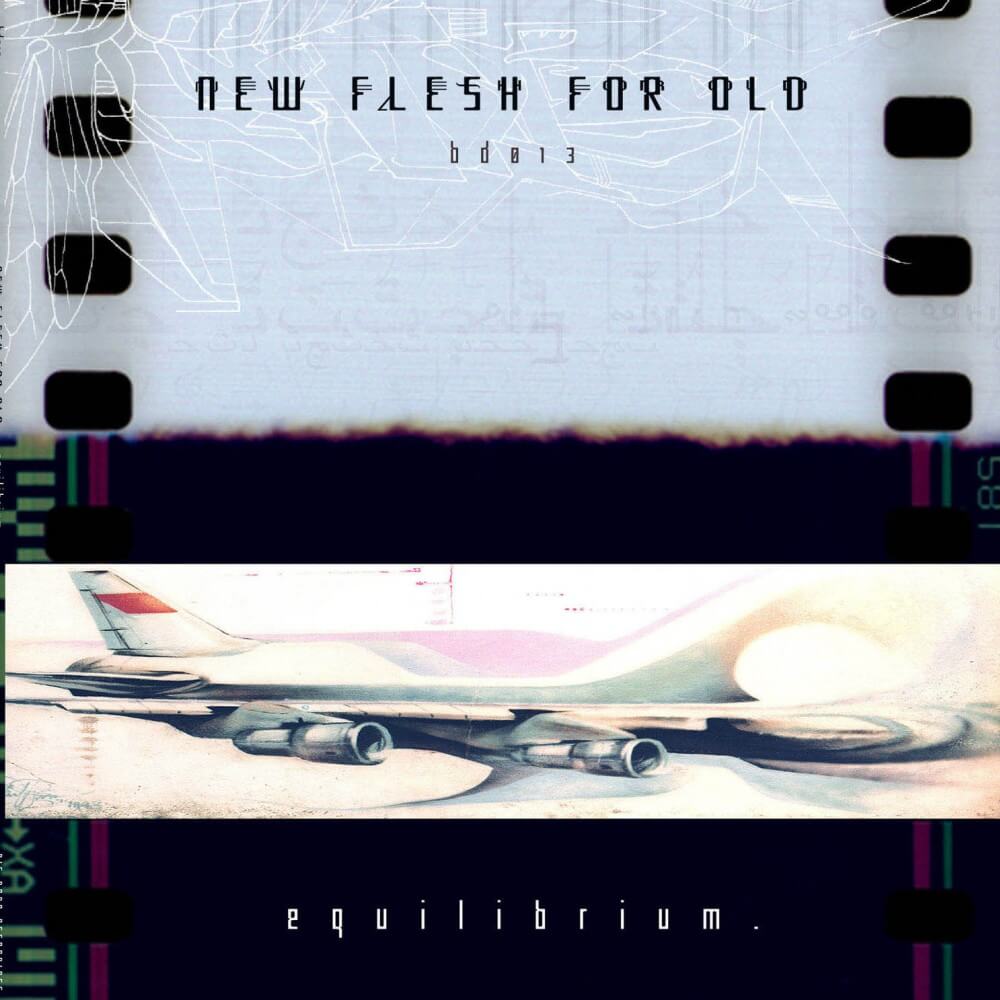
New Flesh For Old’s Equilibrium is an abstract Hip Hop album from the UK that blends ragga-infused delivery, Britcore energy, and experimental electronic production. The album opens with the numerically titled track “00.00.00,” immediately signaling the futuristic and philosophical focus that will guide the listening experience. From the first beat, the music is dense and kinetic, built from spluttering rhythms, industrial-sounding basslines, and percolating synths that give each song a mechanical pulse.
Toastie Tailor and Part 2 trade verses over the unconventional beats, creating a tense dynamic. Tailor’s voice carries a rhythmic roughness that works with the staccato electronic instrumentation, while Part 2 delivers sharper, clipped lines that cut through layered drum programming. Tracks like “Invisible Ink” and “Adoration of Kings” emphasize complex rhyme schemes and intricate phrasing, forcing listeners to follow every twist of the lyrics. The album’s mood often leans toward dark and unsettling territory, with subtle dissonance in the production and occasional off-kilter samples adding an anxious, restless energy.
Guest appearances add texture without derailing the focus. Beans and Gift of Gab lend distinct voices that mix cleanly with the group’s abstract aesthetic. Songs such as “Quantum Mechanix” and “Isoteleportation” use fragmented rhythms and glitchy effects to reinforce the album’s fascination with technology, conspiracy, and media control, echoing the David Cronenberg-inspired “new flesh for old” theme that gives the collective its name.
The pacing of Equilibrium is unconventional. Some tracks are short and direct, while others stretch with extended instrumental sections and layered vocal patterns, creating a sense of controlled chaos. This irregularity makes the album demanding, but also rewarding: repeated listens reveal hidden textures in both the beats and the rhymes.
Equilibrium is a focused, intense, and highly original work that pushes the British Hip Hop sound into experimental territory. The record blends intellectual ambition with physical rhythm, making it an energizing yet challenging listen. Its mechanical beats, dense lyricism, and eccentric, sometimes ghoulish energy reward careful attention. This album is a confident statement from New Flesh For Old and remains one of the most overlooked, innovative Hip Hop albums of 1999.
Foreign Legion - Kidnapper Van: Beats To Rock While Bike-Stealin' (2000)
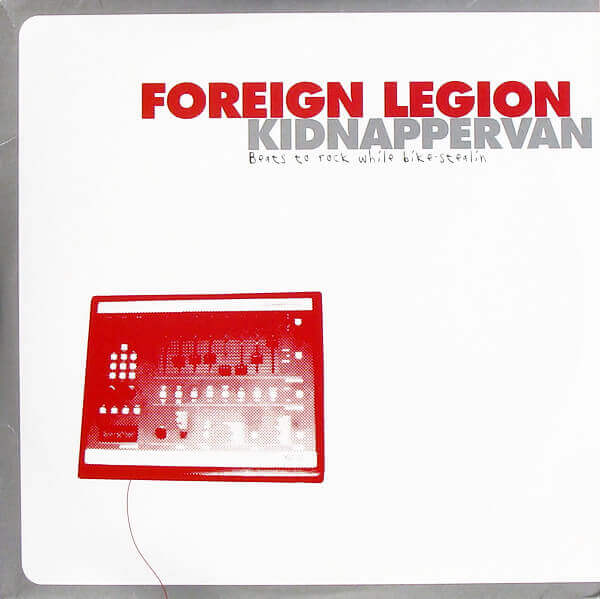
Foreign Legion’s Kidnapper Van: Beats To Rock While Bike-Stealin’ is an underground Hip Hop album that balances clever lyricism with soulful, head-nodding boom-bap production. Hailing from the Bay Area, the trio of Prozack Turner, Marc Stretch, and DJ Design delivers a debut full of humor, technical skill, and rhythmic energy. The album opens with “Everyone’s Sleeping,” setting a playful yet alert tone as Turner and Stretch weave sharp, sometimes absurd narratives over DJ Design’s crisp drums and sampled grooves.
DJ Design’s production carries the album, blending warm, soulful samples with hard-hitting boom-bap drums that provide both bounce and space for the MCs to trade intricate verses. Tracks like “Full Time B-Boy” and “Overnight Success” emphasize the trio’s dedication to Hip Hop culture. On “Full Time B-Boy,” the beats push forward with relentless momentum, while Turner and Stretch deliver lines packed with wordplay and cultural references. “Overnight Success” slows the tempo slightly, layering melodic piano licks over tight percussion as the duo reflects on the grind of staying independent in the music scene.
Foreign Legion’s humor is a recurring highlight. “Nowhere to Hide” riffs on conspiracy theories with deadpan absurdity, dragging everything from historical figures to pop culture into the verse while keeping the rhythm crisp and focused. “Underground” critiques the state of independent Hip Hop with wit, calling out underdeveloped acts while affirming the trio’s commitment to craft and creativity. Their lyricism thrives on timing, punchlines, and interplay, often leaving subtle details that reward careful listening.
The album flows with an easy unpredictability. Short, energetic tracks alternate with longer, groove-driven cuts, giving the listener moments to relax into the music before the MCs’ quick verbal turns pull them back in. DJ Design’s scratch work and occasional instrumental flourishes keep the beats dynamic, ensuring the album never lags.
Kidnapper Van is an hour of focused, clever Hip Hop that reflects the Bay Area’s underground scene at the turn of the millennium. The album blends humor, technical skill, and soulful production into a tight package that demands attention. It thrives on its character—the MCs’ personalities, the beats’ warmth and punch, and the sly commentary on culture and the industry. For listeners seeking smart, fun, sample-heavy Hip Hop that rewards repeated spins, this debut from Foreign Legion remains an essential, underappreciated record.
The Last Emperor - The Legend Of Bigfoot (2000)
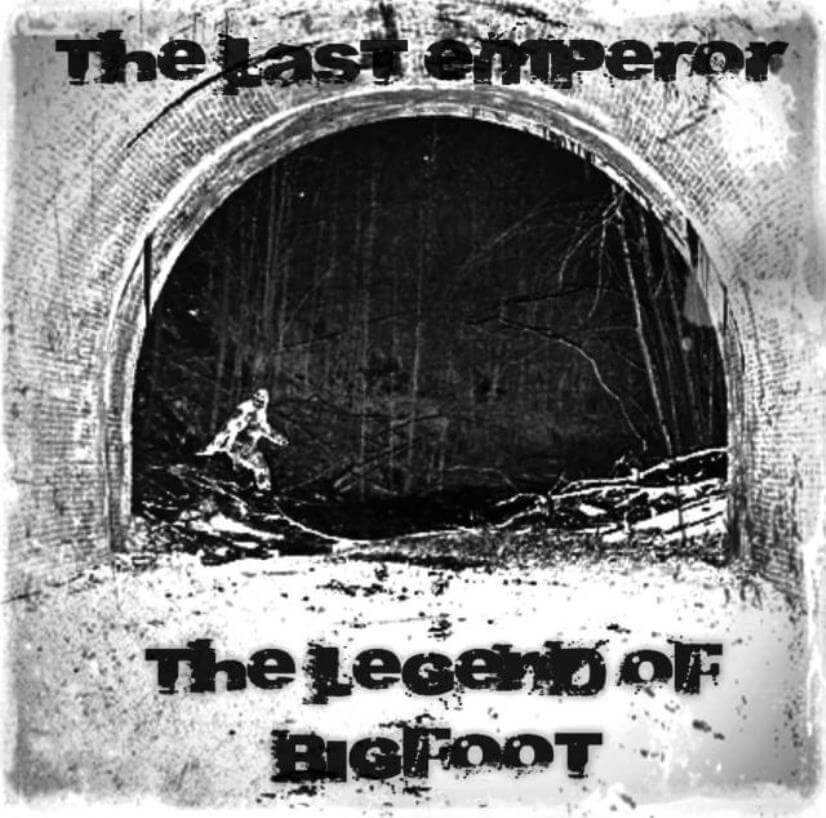
The Last Emperor’s The Legend Of Bigfoot is an underground Hip Hop gem that blends technical skill, storytelling, and inventive production. Hailing from Philadelphia, Jamal Gray—The Last Emperor—delivers lyrics with precision, intelligence, and a voice that commands attention. His flow is intricate but controlled, full of dense wordplay, cultural references, and imaginative narratives that range from comic book fantasy to street-level observation.
The album’s production combines East Coast boom-bap with jazz-inflected loops, subtle scratches, and warm, layered samples. “Secret Wars Pt. 1” uses dusty drums and cinematic flourishes to frame his signature pop-culture-versus-emcee narrative, while “Caravan” layers percussion and melodic touches to create a traveling, adventurous feel. Tracks like “Heavyweight Invincible” and “Black Magic” employ booming bass and sharp beats to match the intensity of The Last Emperor’s delivery, while “Meditation” and “Heaven” offer reflective moments over soulful instrumentation. The production is precise and versatile, giving him space to articulate complex rhyme schemes without being overshadowed.
Humor and wit appear in tracks like “Party Crashers” and “Animalistics,” where clever wordplay and playful scenarios keep listeners engaged while emphasizing his lyrical dexterity. The Last Emperor’s voice carries authority without aggression, giving the album a unique balance between cerebral content and approachable style.
The album’s history adds to its mystique. Originally intended for release under Dr. Dre’s Aftermath label and later Rawkus Records, delays and label complications prevented it from reaching a wide audience at the time. This lack of exposure kept The Last Emperor from achieving mainstream recognition and the superstar status that his skills warranted. Despite this, The Legend Of Bigfoot circulated widely in the underground, earning him a dedicated following and cementing his reputation as a legendary, highly respected emcee in independent Hip Hop circles.
From the opener “Secret Wars Pt. 1” to the closing track “Bums,” the album is tightly structured, balancing high-energy tracks with quieter, thoughtful compositions. It rewards close listening, offering inventive beats, imaginative lyricism, and a confident, versatile delivery. While the album arrived late to official release, it remains a defining artifact of late ’90s underground Hip Hop and a showcase of what The Last Emperor could accomplish when given the tools and space to shine.
People Under the Stairs - Question In The Form Of An Answer (2000)

People Under The Stairs built their reputation on consistency, creativity, and a pure love for Hip Hop, and Question In The Form Of An Answer proves that the duo knew how to turn those values into an album that flows like an unhurried conversation. Coming two years after The Next Step, the album is longer, denser, and sharper, running 73 minutes across 22 tracks, packed with grooves, skits, and lyrical exchanges. Thes One and Double K handle production and engineering in the same home setup that produced their debut, relying exclusively on vinyl, the Akai MPC3000, and the E-mu SP-1200, letting the texture of old records shape every drum hit, bassline, and loop.
The production feels alive. Drums snap with a crisp authority, basslines thrum and wobble, and short samples—jazz horns, muted keys, or obscure funk riffs—enter and leave like fleeting glimpses of sound, giving the album momentum without clutter. Even the skits carry a playful rhythm, acting as tiny breathers that let the beats settle before the next track rolls in. The sound is intimate and tactile, full of rough edges and subtle quirks that reward repeated listening.
The lyrics trace the duo’s worldview: a love for the craft, pride in digging records, and quiet contempt for commercial rap’s glitz. Tracks like “Stay Home” and “Blowin’ Wax” make that stance clear, with Thes One and Double K trading verses that champion vinyl, digging, and dedication over chasing trends. The duo can shift smoothly into storytelling mode too. “July 3rd” recounts a near-kidnapping with tense pacing and attention to detail, while “Sterns to Western” rides a jazzy, breezy groove with lines about cruising through Los Angeles.
The album pulses with energy when it needs to. “Youth Explosion” hits hard, with brassy horns and booming drums asserting that PUTS will not be underestimated. Other tracks, like “43 Labels I Like,” dig into their love for obscure records, layering humor and trivia with punchy delivery. Thes One and Double K trade bars in ways that feel natural, giving space for each voice while keeping the track moving.
Question In The Form Of An Answer balances celebration and critique. It’s playful, thoughtful, and deeply rooted in the duo’s DIY ethic. The album embodies the joy of creation and the thrill of Hip Hop without compromise. For those who missed it, it’s an essential listen, capturing a pair of artists confident in their craft and in the rules they set for themselves. It’s an album that rewards patience, attention, and a love for the textured, sample-based heart of independent Hip Hop.
Eyedea & Abilities - First Born (2001)
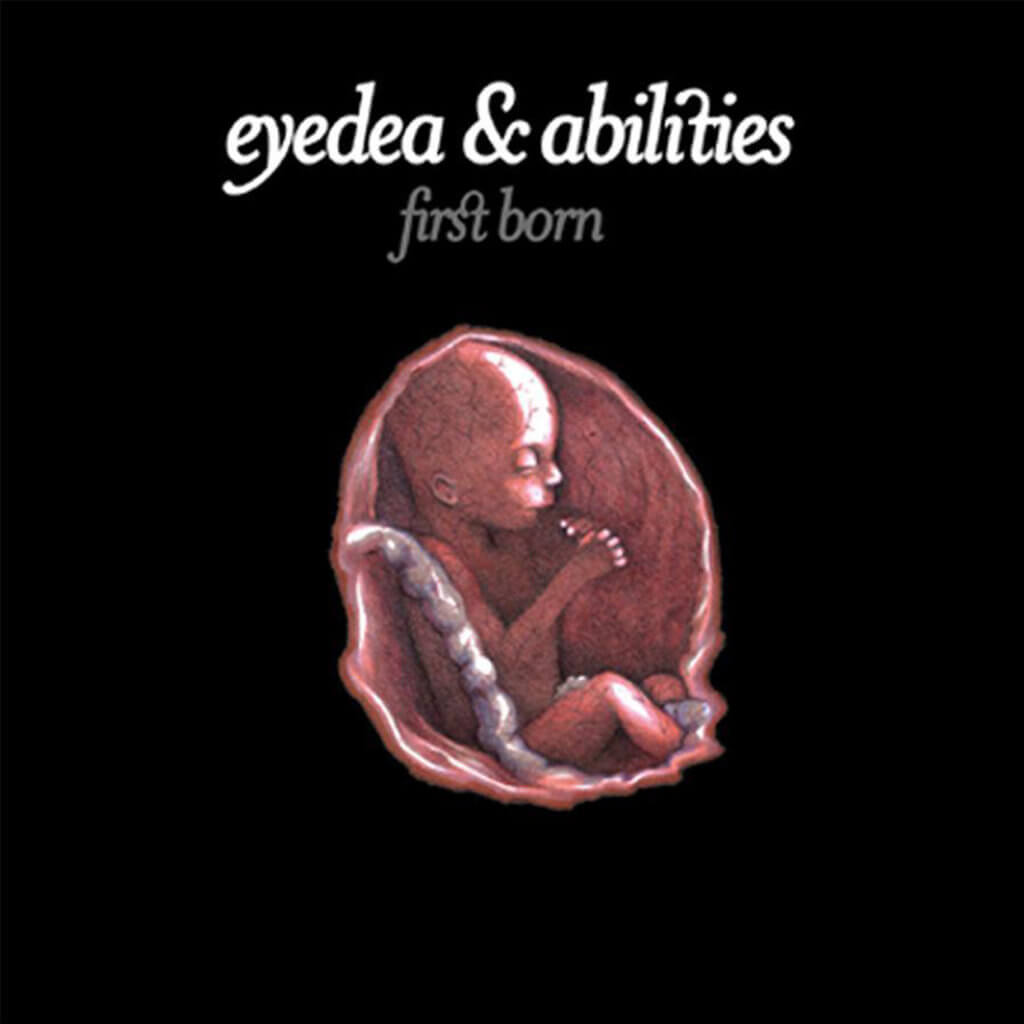
Eyedea & Abilities’ First Born is the debut album from the Minneapolis duo, capturing the early energy of the Twin Cities underground while laying the groundwork for Eyedea’s legendary freestyle reputation. At 22, Eyedea had already claimed multiple national freestyle battle titles, and his lyrical agility is evident throughout the album. His voice is precise, slightly nasally, and heavy on enunciation, cutting through Abilities’ beats with clarity and intent. The verses move from abstract and philosophical reflections to playful, clever braggadocio, often turning introspection into a kind of performance art.
DJ Abilities handles production with restraint, letting his turntables and instruments shape the mood without overwhelming the vocals. The beats are built on crisp drum machines, simple but firm basslines, and sparse melodic elements like piano, vibraphone, and organ. He adds subtle scratches and interludes that accent Eyedea’s flow without drawing attention away. Some tracks are minimalist, leaving space that emphasizes the lyrical density, while others introduce cinematic strings or jazzy flourishes. This simplicity can make the album feel rough or uneven at times, but it also gives Eyedea room to command the mic.
First Born swings between experimental abstraction and storytelling. “Birth of a Fish…” imagines an internal conversation that reveals insights about life and identity, while “Powdered Water Too Pt. 1” examines philosophical ideas with sharp precision. Tracks like “Blindly Firing” show the rapid-fire, technically intricate battle rap style that earned Eyedea his reputation, and “Big Shots” injects humor and ironic commentary into the mix. The album dips into darker moods with tracks like “Void (Internal Theory)” and “The Dive,” pairing haunting piano lines with introspective verses that explore doubt, mortality, and perception.
The album is overlong at times, and the beats occasionally lack the punch Eyedea’s voice could carry, but it remains a compelling debut. There’s a raw, exploratory energy here that hints at the duo’s later mastery. Their 2004 follow-up, E&A, is on my 100 favorites list, and while First Born is rougher and more sprawling, it is dope in its own right.
First Born captures the ambition and intelligence of early-2000s underground Hip Hop. It’s a record that rewards patient listening, revealing Eyedea’s lyrical wit, Abilities’ subtle production, and the chemistry that would grow into one of the Midwest’s most inventive Hip Hop collaborations.
Typical Cats – Typical Cats (2001)
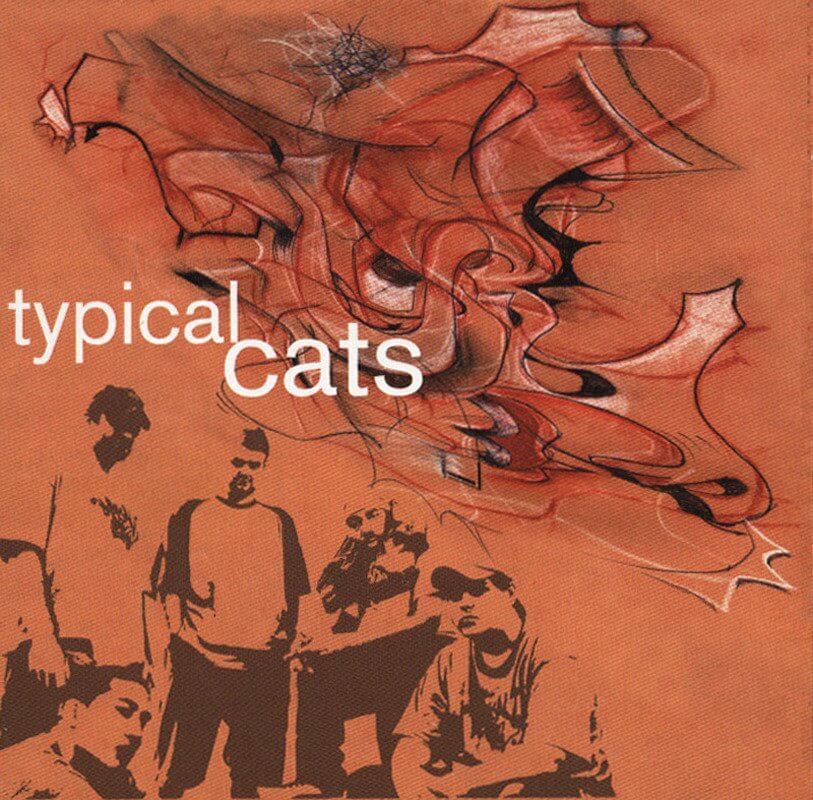
Chicago in the early 2000s had an underground Hip Hop scene built on open mics, late-night radio cyphers, and crate-digging producers. Typical Cats, the debut from Qwel, Denizen Kane, Qwazaar, and DJ Natural, captures that energy with precision and warmth. It’s an album that sounds like a cipher caught on wax—loose in spirit, tightly executed, and deeply connected to the city that shaped it.
The record opens with the confidence of three MCs who know how to share space without stepping on each other’s toes. Their styles are distinct: Qwel’s sharp syllables dart across the beat, Denizen Kane bends toward spoken word and introspection, and Qwazaar grounds everything with a rhythm that’s instinctive and unforced. On tracks like “Reinventing the Wheel,” their verses trade off in fluid motion, each voice cutting through DJ Natural’s thick, vinyl-worn production.
The beats on Typical Cats are steeped in jazz and soul. DJ Natural’s sampling has a dusty warmth that keeps every track alive—basslines slink, pianos loop like thoughts circling back, and the scratches weave through it all like punctuation. “Any Day,” the group’s most recognizable song, spins a playful piano riff into something triumphant and unpredictable. “Live Forever,” Denizen Kane’s solo piece, pulls the tempo back into reflection, its delicate piano line matching his tone of quiet self-examination. Then there’s “The Manhattan Project,” Qwel’s ode to graffiti, built around a ghostly loop that hums with movement and purpose.
Lyrically, the album is dense but not cluttered. Wordplay and imagery run wild, but the focus remains tight—on skill, on art, on city life. The verses sound lived-in, drawn from corners of Chicago where creativity and survival intersect. There’s humor, frustration, pride, and philosophy—all handled with balance and clarity.
What makes Typical Cats endure is its chemistry. It’s the rare debut where every piece fits, where ambition and craft meet without ego. The album still feels immediate, like it could have dropped last week and landed the same. I’ve always liked what came from the Galapagos4 camp, and this one remains special—a reminder of when Hip Hop felt hungry, thoughtful, and full of life.
MF Grimm - The Downfall Of Ibliys: A Ghetto Opera (2002)

MF Grimm’s The Downfall of Ibliys: A Ghetto Opera was recorded in a single 24-hour stretch while he was out on bail, facing a life sentence. The urgency in that context never leaves the music—it shapes the pacing, the tone, and the mood of every track. The album sounds like it’s trying to preserve a voice before silence, recorded with the pressure of someone aware that time is closing in.
The opening “Alpha,” produced by Count Bass D, is a short spark before the darkness settles. “Time and Space” follows with slow drums and a drifting piano line, Grimm’s delivery steady and grounded. His voice has no excess—it’s measured, even when the words point to despair or reflection. On “Life and Death,” produced by Metal Fingers (MF DOOM), he uses the figures of two women—Life and Death—as symbols for his relationship to survival and temptation. The production sits low, heavy with dust and static, each loop circling like a clock running out.
Across the album, Grimm’s tone remains composed but alert. “To All My Comrades” reads like a message to lost friends, while “Foolish” and “Voices, Pt. 1,” featuring MF DOOM, deepen the record’s sense of confinement and exhaustion. The beats, mostly handled by DOOM and a small circle of underground producers, are stripped and eerie—muted pianos, decaying basslines, and rhythms that sound recorded straight to tape. Nothing about Ibliys feels designed for comfort. It carries the sense of an artist confronting consequence without self-pity.
The title references Iblis, the fallen angel from Islamic tradition, and Grimm builds that fall into a modern tragedy. The album moves from “Alpha” to “Omega,” tracing a slow descent toward clarity, mixing personal confession with street parable and spiritual crisis. It’s uneven in places, but the flaws underline its honesty; it was made under real constraint and carries that truth in its texture.
MF Grimm (Percy Carey) grew up in Manhattan’s Hip Hop scene, working with Kool G Rap, MF DOOM, and the Monsta Island Czars collective. After being shot and paralyzed in 1994, he rebuilt his career from a wheelchair and founded Day By Day Entertainment. Though originally sentenced to life in prison, he studied law while incarcerated, appealed his case, and won a reduction to three years. Released in 2003, he returned home as one of Hip Hop’s most determined and self-made voices. The Downfall of Ibliys remains his most urgent and haunting statement.
7L & Esoteric - Dangerous Connection (2002)

Dangerous Connection is the moment where 7L & Esoteric sharpen their formula into something cold, quick, and wired with tension. The album runs on tight drums, clipped loops, and a mood that hints at danger around every corner. 7L builds his beats from hard snares and chopped melodies that swing between eerie and rugged. The opener, “One Six,” pulls you right into that structure: a firm drum pattern, a looping theme that keeps circling back, and cuts that slice through the mix. “Watch Me” moves with a sharper edge, built around piano stabs and small flickers of strings that give the track a sense of motion and threat.
Esoteric’s voice is sharp and direct throughout, and he uses pacing and precision to push every beat forward. He mixes punchlines, coded references, and gravel-toned warnings without drifting into clutter. “Word Association” is a sprint, loaded with internal twists and sudden pivots, while “Stalker” leans into an unsettling jazz loop that frames him in a way that feels close-up and deliberate. On “Warning – Knife in the Face,” he hits harder, firing short, cutting bars over one of the album’s toughest drum patterns.
The guest spots fold naturally into the album’s rhythm. “Speak Now,” with Vinnie Paz and Apathy, hits like a rapid-fire cipher played over a beat that swings between minor-key menace and blunt-force drums. “Rules of Engagement,” with J-Live and Count Bass D, opens up the palette with a bouncier loop and layered bassline that gives the MCs room to trade quick, confident verses. “Terrorist’s Cell,” produced by Stoupe, moves in a different direction: a dark piano loop, a slow-building sense of dread, and storytelling that walks into risky terrain with focus and control.
Even the shorter interludes reinforce the album’s pacing. Tracks slide cleanly into each other without dragging, and the sequencing keeps the tension high through the final stretch. “Rest in Peace” closes the record with a somber tone and a swirl of keys that shadow Esoteric’s reflections on ambition and legacy.
Dangerous Connection is an underground record built with clarity, intent, and a hard punch, and it still hits with the same charge it carried in 2002.
Edan - Primitive Plus (2002)
Primitive Plus hits with the energy of someone who studied every corner of late-80s Hip Hop and decided to rebuild it from the ground up, piece by piece, in his own apartment. Edan raps, produces, cuts, and engineers the entire record, and that single-minded control gives the album a tight, immediate presence. The drums are clipped and dry, the samples arrive with rough edges intact, and the mix leans into distortion instead of hiding it. The sound is sharp, busy, and full of movement, like a stack of vintage 12-inches sliced into quick, jagged shapes.
“‘83 Wildin” opens the record with tangled drums and a nasal, sprinting flow that sets the album’s pace. “One Man Arsenal” follows with thick breaks and layers of scratches that never sit still. Edan piles internal rhymes on top of alliteration, darting from threat to joke to stray surreal image without breaking his stride. “Humble Magnificent” pushes his voice into a brighter, almost taunting register, riding a loop that twitches under heavy echo.
The production keeps shifting in small, unpredictable ways. “Migraine (Almighty Dust Mix)” runs on a grimy drum pattern that distorts at the edges. “Key-Bored,” built around a sped-up piece of Mozart, moves with a hectic bounce that suits Edan’s rapid delivery. “Emcees Smoke Crack” uses repetition and deadpan humor to pull apart rap clichés. “Rapperfection,” with Mr. Lif, tightens the room with a darker chord loop and a steady, weighted pulse that matches the precision of both verses.
The title track flips beatbox sounds and sharp edits into a busy rhythm, giving Edan room to switch voices mid-song. “Ultra ’88 (Tribute)” leans into Ultramagnetic-style imagery and clipped phrasing, carried by a minimal drum pattern and a strange, shifting sample tail. Even the quick interludes—two versions of “Syllable Practice,” the chaos of “A.E.O.C.,” the skits—fit the album’s structure, acting like extra pieces of a long collage.
Primitive Plus is one of the most distinctive Hip Hop records of its era because every element—rhymes, beats, humor, pacing—is shaped by a deep, hands-on understanding of the craft. The album is noisy, meticulous, and wildly inventive, and its personality never thins out. It earns its place on this list for its precision, its quirkiness, and the way it turns old tools into something sharp and alive.
Cage - Movies For The Blind (2002)

Movies For The Blind is one of the darkest records to come out of the early-2000s New York underground, and its force comes from how vividly Cage pulls listeners into his troubled internal world. The album moves on cold, heavy boom-bap from DJ Mighty Mi, RJD2, El-P, Necro, J-Zone, and others, but the production never overshadows Cage’s presence. The beats form a tight frame around his voice, leaving room for his writing to hit with full weight.
“Morning Dips” opens with a grim, slow crawl, setting the album’s mood without relying on theatrics. “Escape to ’88” follows with faster drums and a jagged guitar loop that gives Cage space to jump from bitter punchlines to erratic visions. “In Stoney Lodge,” produced by J-Zone, cuts deep. The drums swing with a loose, dusty bounce while Cage lays out memories of confinement and medication. Nothing is softened, and the track’s tension sits in the contrast between the beat’s movement and the plain, unvarnished detail in his writing.
“The Soundtrack…” carries a calm, almost muted instrumental from Mighty Mi that highlights Cage’s focus as he revisits violence tied to his childhood. “Among the Sleep,” from RJD2, brings a warped, dreamlike pulse that mirrors the drifting quality of Cage’s words. Necro’s “Agent Orange” arrives with sharp snares and a claustrophobic loop that fits the album’s most infamous track, pushing Cage’s voice into a clipped, relentless rhythm.
“A Suicidal Failure” uses a simple, direct beat that keeps attention on Cage’s voice as he describes the spiral behind the title. “CK Won” and “A Crowd Killer” add faster rhythms and dense bass, pushing the pace without breaking the album’s atmosphere. “Holdin a Jar 2,” from El-P, lands near the end with harsh drums and a warped synth line, closing the record on a twitchy, unstable edge.
What gives Movies For The Blind its lasting pull is the clarity in Cage’s delivery and the refusal to soften any part of the imagery. The record is bleak, sharply observed, and constructed with intention. It earned a permanent place in my collection because its impact never lessens, even after years of replaying it.
Juggaknots - Clear Blue Skies (Re:Release) (1996/2003)

Clear Blue Skies (Re:Release) brings the Juggaknots’ 1996 debut into a wider audience, adding eleven tracks to the original nine-song vinyl and giving new life to a record long whispered about in underground circles. The album is mid-’90s New York independent Hip Hop at its purest: gritty, low-end heavy, and uncompromisingly boom-bap, with scratches and samples that feel lived-in and streetwise. Breeze Brewin, Buddy Slim, and Queen Herawin move through the beats with confident precision, turning intricate rhyme schemes into vivid storytelling.
The album opens with “The Hunt Is On,” a brief prelude that sets a tense mood, quickly diving into “Trouble Man,” where Buddy Slim rumbles over distant piano hits and sampled explosions. His delivery has the weight of experience, tense and unpredictable, a warning shot for the kind of narratives the Juggaknots excel at. The beats, often constructed by the group with Chris Liggio co-producing select tracks, are raw and head-nodding, with basslines that jump just ahead of the kick drum, giving the tracks a restless energy.
Tracks like “Loosifa” demonstrate the Juggaknots’ talent for storytelling. Breeze Brewin follows a stick-up kid through injury, reflection, and eventual work in a maternity ward, portraying the character with empathy and complexity. Every line is detailed, the rhythms of daily struggle mirrored in the pauses and cadences of Brewin’s flow. “Clear Blue Skies,” tucked as a bonus track, is the album’s centerpiece: Brewin plays a white son arguing with his father (Buddy Slim) over an interracial relationship. The track balances social commentary and narrative tension with careful control, each word grounded in a domestic reality rarely addressed in Hip Hop of that era.
Other tracks vary the tone without losing cohesion. “Epiphany” is braggadocious and sharp, “Romper Room” playful and clever, “Sex Type Thang” laid-back and humorous, while “Luvamaxin” offers a moment of chill relief. Short interludes like “A Rainy Saturday” or “Projections” act as connective tissue, giving the album a breathing space without breaking its momentum.
The Re:Release makes this record accessible, allowing new listeners to experience the Juggaknots’ unique approach to narrative and rhythm. The production is grainy but warm, the lyrics sharp, and the mood alternates between tense, reflective, and slyly humorous. Alongside classic mid-’90s underground releases, Clear Blue Skies holds up as one of the era’s most immersive independent Hip Hop records. For anyone exploring the depths of NYC’s ’90s scene, this is a record that rewards close attention, over and over, with stories and flows that stick long after the music stops.
King Geedorah - Take Me To Your Leader (2003)
Doomsday. Vaudeville Villain. Madvillainy. MM…FOOD. MF DOOM’s catalog has no shortage of classics, and most of them get the attention they deserve. One album that rarely enters those conversations—despite strong praise from fans—is Take Me To Your Leader. I slept on it myself when building my favorite 100, which is why it belongs in this Overlooked list. It also works as an informal companion to the much less discussed Monsta Island Czars project Escape From Monsta Island!, sharing its kaiju-inspired world, its crew lineup, and its strange, improvised energy.
Released under the King Geedorah alias, the album leans heavily into production. DOOM shapes the entire record through dense edits, clipped dialogue from old sci-fi reels, crumbling soul fragments, and B-movie tension. The drums hit in irregular patterns, sometimes stiff, sometimes loose, always carried by a layer of aging tape grit. He uses the King Geedorah identity as a distant observer—an alien presence filtering human behavior through scraps of film, offbeat rhythms, and sudden noise. The mood swings from eerie to playful without warning.
“Fazers” is one of the rare tracks where DOOM steps to the mic, and his verse cuts through the fog with sharp internal rhyme and quick movements from threat to humor. After that, the album widens into a rotating cast: Biolante on “Fastlane,” Gigan on “Krazy World,” Jet Jaguar and Rodan on “No Snakes Alive,” Hassan Chop on “I Wonder,” and others. Their approaches vary, from tight street narration to looser bursts of imagery. DOOM stays present through structure and tone. His edits guide the pacing, and his timing controls when the music shifts or stalls.
Instrumentals like “Monster Zero” push the concept forward through montage-style construction. Dialogue slides in and out, horns float under filters, and percussion bumps in abrupt pulses. Tracks with vocals often run hotter, with faster drum patterns and samples pulled from stranger corners of DOOM’s library. The whole album carries a rough, handmade quality that adds to its atmosphere rather than sanding it down.
Take Me To Your Leader rewards attention. It builds its world through texture, pacing, and a distinct sense of design. For listeners drawn to DOOM’s production instincts and his interest in character-building, this record holds a unique place in his catalog—and earns a place among my Overlooked 100.
Monsta Island Czars - Escape from Monsta Island! (2003)
Escape from Monsta Island! is the kind of album that sounds like it was recorded in a bunker full of dusty vinyl, cheap microphones, and endless imagination. The Monsta Island Czars—an underground collective founded by MF Grimm and featuring MF DOOM (here as King Geedorah)—took their name and personas from classic Japanese monster films. Each MC raps under a Kaiju alias, and the album unfolds like a warped comic book full of giant creatures stomping through the ruins of New York rap.
MF Grimm is absent here due to incarceration, and DOOM only appears sparingly, but their fingerprints are all over the concept. The record leans hard into its theme, mixing snippets of monster movie dialogue with raw boom-bap production that crackles with grime and static. The main architect behind the beats, X-Ray (King Caesar), builds a sound that’s thick and eerie—slow, looping drums, grim horns, and dusty samples that give the feeling of something unearthed from another era. It’s lo-fi, uneven, and alive.
The energy across the record is constant, almost chaotic. Tracks like “MIC Line” and “1, 2…1, 2” rumble with energy, every verse hitting like a stray blast from a sci-fi weapon. Rodan, Gigan, Kamackeris, Megalon, and the rest all attack the mic with different cadences and textures—some sharp, some rough, all intense. There’s no polish here, and that’s part of what gives the record its charm. The rhymes come off like an extended cipher among hungry MCs trying to one-up each other while holding the larger theme together.
At twenty tracks, it runs long and uneven, but that rawness is also what makes it memorable. The album’s imperfections give it a handmade, underground feel that connects directly to the early 2000s indie Hip Hop spirit—DIY, creative, and unbothered by mainstream expectations.
Sure, this isn’t the most refined project on this list, but I’ve always liked its rough-around-the-edges energy. Escape from Monsta Island! is a strange, gritty, and inspired record—an overlooked gem from a moment when MF DOOM’s world was expanding into myth, and the monsters on the mic were building something entirely their own.
Qwel & Maker - The Harvest (2004)

The Harvest is one of those records that builds its force from precision, control, and a clear sense of purpose. Qwel and Maker approach the album with an almost obsessive focus, and the result is a tight, heavy, autumn-toned project that feels lived-in and uncomfortably honest. The record circles around ideas of decay, reckoning, and spiritual confusion, and the sound hits with a kind of cold air pressure—dense drums, brittle melodies, and a constant sense of weight.
Maker’s production is the album’s foundation. His beats rely on dusty pianos, muted horns, grainy basslines, and firm drum patterns that hit without flash. Every loop sounds handled with care, trimmed down to its most necessary parts. Nothing drifts. Nothing wanders. Tracks such as “The ‘IT’ in ‘Keeping IT Real’” and “Chicago ’66” carry a thick, overcast mood that never slips into melodrama. Even his short instrumental passages feel intentional, almost like transitions in a tightly edited film.
Qwel uses that environment to push his writing into darker and more personal terrain. His delivery is sharp, clipped, and relentless, with lines that stack on each other until they form long, breathless runs. He digs into moral pressure, self-doubt, politics, and religious anxiety without slipping into slogans. “The Siren of Liberty Island” hits with a blunt, irritated tone, while “Ugly Hungry Puppy” channels something fragile and exhausted. “Where I Go, There I Go” brings a rare warmth, though the calm never lasts long. His voice stays steady, but the writing churns with conflict.
The album’s structure gives it strength. Tracks bleed into one another with a steady rhythm, almost like watching the same cold season unfold day after day. Nothing feels rushed or last-minute. The pacing lets the record absorb you; by the midpoint, the atmosphere is thick enough to sit heavy on your chest.
The Harvest is an essential underground release because of its discipline. Qwel and Maker commit fully to a bleak, autumnal world and never step out of it. The focus gives the album its power. It rewards close listening and returns even more when you give it time to sink in.
Porn Theatre Ushers - Taxachusetts (2004)

Porn Theatre Ushers operate in their own corner of Boston Hip Hop, and Taxachusetts is the clearest expression of that space. The duo of Nabo Rawk and Mister Jason approach rap with humor, grit, and a slightly off-center rhythm that defines the record from the opening moments. The beats carry a loose, homemade energy: drums that hit with weight, chopped samples that shift in unexpected directions, and small production quirks that keep the album unpredictable. The sound is warm and dusty, closer to a stack of beat-up 12-inches than a studio-engineered project.
Nabo Rawk’s delivery has a laid-back snap to it. He piles references, jokes, and asides into tight pockets, but his tone stays relaxed. There is no grand persona on display; instead, he treats the mic like a running conversation, punctuated by quick jabs and odd images. Mister Jason’s production shapes the mood track by track. “Live From Hungary” opens the album with a playful loop that signals the record’s casual tone. “The 90’s” rolls forward on a simple rhythm that leaves space for Nabo’s loose storytelling. “Don’t Care” uses a slightly warped sample that swings in and out of the drum pattern, giving the track a rugged bounce.
Collaborations bring more color to the album. Edan jumps into “Edan Drops Math” with his fast, tightly wound cadence, creating a sharp contrast with Nabo’s easygoing delivery. Esoteric appears on “Duck Hunt 2,” pushing the tempo and intensity. Higgenz and Rhyminal join on “Scummerville to Brocky,” grounding the record in local ties. The guest list extends throughout the lengthy tracklist, giving the album a street-level community feel without turning it into a compilation.
The album runs long, with skits and short pieces scattered between full tracks. The length adds to its scrappy charm rather than slowing it down. Across the entire runtime, the tone stays loose and inventive. The humor is constant, the beats stay gritty, and the chemistry between the two members never slips. Whenever I return to Taxachusetts, I’m reminded why it stuck with me: the album is rough, funny, rowdy, and alive, and that energy keeps it in my collection.
Clayborne Family - Clayborne Family (2004)

Kool Keith’s catalog is a maze of aliases, side projects, and strange collaborations, and Clayborne Family is one of the most overlooked corners in it. Released in 2004 with Marc Live and Jacky Jasper, this album is grimy, unpredictable, and a little chaotic—exactly the kind of thing that makes Keith’s world so fascinating. I’ve always liked Kool Keith—five of his projects are on my 100 favorites list—and while this isn’t essential Keith, I dig its rough energy and unpolished edge, even if others don’t.
A highlight is “New York City,” a dark, pulsing cut built around a bassline that sounds like it was recorded in a back alley. Keith raps with his trademark confidence and strange humor, jumping between luxury talk, rap industry shots, and surreal images. Jasper answers with street-wise intensity, while Marc Live adds that thick, grounded presence that keeps the track from spinning out of orbit. The chemistry between them isn’t smooth—it’s jagged, sometimes abrasive—but it works. There’s a raw electricity in the way their styles collide.
The production across the album leans toward eerie loops, synth stabs, and sharp percussion. “This Is How It’s Done” feels like a warped take on boom-bap, all crooked piano keys and hard snare hits. “Executive Decision 2004” rides a funky horn line that sounds both playful and menacing, while “Let Me Show Em” drops into a horror-film rhythm with strings that creep through the mix. Even when the beats feel uneven, there’s something magnetic in how off-kilter they are—like every sound is slightly out of place on purpose.
Guest appearances add more character to the chaos. Guerilla Black turns up on the title track, full of slick confidence, and Tim Dog reappears on “Stick ’Em” and “Checkin’ Tha Doe,” sounding fired-up and direct, his voice rough as ever. Their presence connects the record to an older, grittier East Coast lineage, grounding Keith’s eccentric streak in pure street rap energy.
Clayborne Family isn’t a clean listen—it’s messy, confrontational, and weird in ways that sometimes make it stumble. But that’s part of its pull. It’s three distinct personalities wrestling with sound and ego, finding flashes of brilliance inside the chaos. A strange, shadowy entry in Kool Keith’s endless universe—and one that still hits with force when the mood is right.
Cryptic One - The Anti-Mobius Strip Theory (2004)

Cryptic One’s The Anti-Mobius Strip Theory is an album built on shadowy textures, dense writing, and a mood that sinks in slowly. Across these 17 tracks, he shapes a world that feels enclosed and introspective, with beats that open small doorways into darker corners. The drums are heavy and dry, the samples trimmed down to fragments, and the overall rhythm pushes the listener into a focused state. The sound never slips into clutter; instead, it relies on stark arrangements that give every kick, snare, and synth pulse clear weight.
Cryptic One handles most of the production, and his approach stays consistent across the record. He works with rumbling low-end, eerie keys, and looping patterns that sometimes feel slightly warped at the edges. Blockhead, Blueprint, and Jestoneart contribute a handful of tracks, adding their own twists while staying inside the album’s controlled atmosphere. “Unicycle (Water Cycle)” moves with a steady, hypnotic pattern, while “Intricate Schemes” uses sharp drum programming and a thin melodic line that circles around Cryptic’s voice. “Apocalypse Zone,” with a verse from Aesop Rock, drifts through a darker space, with slow drums and ghostly chords that hang like smoke.
His writing is fast, dense, and layered with internal logic. He uses long strings of imagery, coded phrases, and patterns that connect from track to track. Themes of cycles, repetition, and escape recur across the album, especially in the three pieces titled after different “cycles.” His delivery never shouts for attention; instead, he raps with a firm, steady tone that matches the production’s tight focus.
The album runs close to 70 minutes, and Cryptic One keeps the mood heavy throughout. Titles like “Death of Silence,” “Rebirth of Regret,” and “Uncomfortable Silence” signal the territory immediately. The length and tone demand patience, but the payoff is strong: the record opens up slowly, and its structure reveals new details every time.
I’ve kept this album close for years. It has grit, intelligence, and a specific mood that I return to often. The Anti-Mobius Strip Theory may not shout for attention, but its depth, sound, and consistency give it lasting pull.
Illogic – Celestial Clockwork (2004)
Illogic’s Celestial Clockwork is a deep, intricate Hip Hop album that rewards close listening. Released through Weightless Recordings, the album pairs Illogic’s precise, metaphor-heavy rhymes with Blueprint’s textured production, creating a record that moves through moods, ideas, and sonic spaces with focus and imagination.
Illogic (Jawhar Glass) raps with clarity and intensity, often layering abstract images and complex metaphors over beats that are patient enough to let the words breathe. On “1000 Whispers,” he stretches a single thought across a long, looping verse, weaving visual and conceptual motifs in a way that challenges the listener to follow every line. In “First Trimester,” he tells a story from three perspectives—the father, mother, and narrator—adding narrative complexity to an emotional and weighty subject. Even in tracks like “Birthright,” Illogic explores themes of destiny and identity through mythic imagery, maintaining a rhythm that keeps each line audible and compelling.
Blueprint’s production shapes the album’s atmosphere. The beats range from low, moody piano loops to spacy, psychedelic arrangements, often adding layers of static, organ, or subtle samples that feel alive and unpredictable. “Time Capsule” brings in Aesop Rock and Vast Aire over warped, echoing instrumentation, while “Hollow Shell (Cash Clutch)” mixes somber keys with a sparse, hypnotic groove. The title track combines airy textures and measured percussion, letting Illogic’s voice move through the instrumental like a telescope across the stars. Even when the beats shift toward funk or jazz-inflected patterns, they maintain a careful balance that avoids overwhelming the verses.
The album’s sequencing supports its conceptual ambitions. Tracks flow into one another thoughtfully, with recurring ideas about time, change, and consequence threading through the music. The closing pair, “My World” and “I Wish He Would Make Me,” slow the pace, offering reflective, piano-driven arrangements that leave space for introspection without feeling unfinished.
Celestial Clockwork is dense and occasionally demanding, but it’s never indulgent. Illogic challenges conventional Hip Hop structures while staying rooted in rhythm and groove, and Blueprint provides a varied, intelligent backdrop that adapts to each song’s needs. Listeners willing to engage with its layers will find a Hip Hop record that is intellectually rigorous, emotionally textured, and musically inventive. For fans of underground lyricism and nuanced production, it remains essential, confirming Illogic’s role as one of the most thoughtful voices in 2000s independent Hip Hop.
The UN – UN Or U Out (2004)

The UN’s UN Or U Out arrives like a crisp gust of winter air—cold, direct, and unmistakably New York. Released in 2004, the album presents Roc Marciano alongside Dino Brave, Mic Raw, and Laku, a crew rooted in Long Island but firmly steeped in the city’s streetwise boom-bap tradition. The record moves with a tactile, physical energy: drums hit hard, basslines pulse like a heartbeat, and dusty samples crackle under every rhyme.
Roc Marciano dominates the album with his clipped, precise delivery. His verses in tracks like “Mind Blowin’” and “D.O.A. (Dead On Arrival)” rattle with rapid-fire cadence, each bar deliberate, each line carrying weight. Dino Brave brings a commanding tone that cuts through the beats, Mic Raw maintains a raspy, grounded flow, and Laku adds an eager energy that keeps the tracks moving forward. The interplay among the four creates tension and momentum, with every member working to make each verse land harder than the last.
The production is tight, minimal, and unforgiving. Roc Marciano contributes several beats, including “Golden Grail,” where sparse drums and icy strings outline a cinematic frame that foreshadows his solo work on Marcberg. Pete Rock supplies “Game of Death” and “Ain’t No Thang,” the former chaotic and menacing, the latter restrained and subdued. Large Professor’s “What They Want” layers jazzy chords over firm kick-snare patterns, giving the crew room to stretch their rhymes without losing grit. Mic Raw’s “Shakedown” cuts through with grinding guitars and choppy percussion, a short but visceral punch to the system.
There’s no filler here. Every track focuses on precise execution: the rhythm of the verse, the impact of a line, the movement of a beat. Hooks, when they appear, are sharp and measured, never diluting the intensity. The album’s mood alternates between menace and swagger, tension and controlled aggression, keeping the listener engaged on a micro level, with attention to every sound, every syllable.
UN Or U Out is a snapshot of New York street rap that never compromised, even as trends shifted. It went overlooked in 2004, but it rewards discovery with its technical skill, layered production, and the early mastery of Roc Marciano. For those tracing his evolution, it is essential listening—a cold, rigorous document of a crew who came to prove themselves.
P.O.S – Ipecac Neat (2004)
Ipecac Neat impacts with scraped-up distortion, basement air, and quick shifts in mood that fit P.O.S.’s early voice: tense, wired, and restless. The album grew out of cramped home setups in Minneapolis—guitars buzzing in one room, drums hammered into rough loops in another—and that DIY environment shapes its entire structure. The mixes are tight and imperfect, the low end surges unevenly, and the edges stay sharp. Nothing here is built for comfort.
P.O.S uses that grit as fuel. His delivery fires in short, jagged bursts, packed with dense phrasing that often brings Aesop Rock to mind, though the cadence leans closer to punk’s clipped urgency. He cuts through the beats with plain anger, private doubt, and a kind of restless humor that keeps the record from sinking into monotony. When he snaps into “Kicking Knowledge in the Face,” the guitar scrape under him adds a metallic aftertaste. “Math-Head vs. McNugget” pushes forward with snarling disgust at political rot. “That One” pulls back to sit with personal wreckage, and the restraint in his tone gives the track a heavy pulse.
The production carries a constant grind. Lazerbeak, MK Larada, and P.O.S. build rhythms from live drums, distorted guitar lines, rough bass loops, and small fragments that sound taped over and reused. “The Kidney Thief” bounces in a strange, lopsided way, with a bassline that shifts under his sped-up phrasing. “Music for Shoplifting” leans on a looping snarl of guitar, giving the track a restless twitch. Even the more melodic pieces stay tight and pressurized, and the repetition across the album forms a tense, boxed-in atmosphere.
Lyrically, he aims at everything around him: institutions, scenes that pushed him aside, broken friendships, and the weight of his own impulses. The blunt directness is part of the appeal. The album never smooths itself out, even in its weaker stretches. It lives in agitation, and that agitation is the point.
Many listeners point to 2009’s Never Better as his peak—and that argument holds weight—but Ipecac Neat is the one I return to more often. Its imperfections give it a charge that later records refine but never fully replicate. It stands as one of the most gripping early documents of the Doomtree era, rough edges and all.
Insight - The Blast Radius (2004)
Insight’s The Blast Radius is built with an engineer’s mindset and a writer’s focus. Boston’s Andre “Insight” Todman handled every element himself—beats, vocals, arrangements—and the album carries the imprint of someone who cares about structure at every level. Even the tracklist forms an acrostic of the album title, a small design choice that reflects how tightly the record is assembled.
The production is crisp and punchy. Drums land hard and clean, basslines roll in steady patterns, and the samples are trimmed into compact melodic figures. Nothing spills over; every piece sits squarely where Insight places it. His voice cuts through with firm articulation and exact timing, often locking into fast internal rhyme strings before pulling back into calmer narration. The record maintains a steady, grounded pace that gives space to the ideas he threads through each track.
“Time Frame” opens the album with a sweeping outline of musical and cultural development, delivered in a tone closer to a guided lesson than a boast. “Lots of Facts About Control” tightens the focus, laying out short bursts of commentary about misinformation and manipulation. Tracks like “Daily Routine” and “Another Cycle” sit in quieter territory, observing patterns of work, habit, and social repetition without melodrama.
One of the album’s most distinctive turns comes with “Seventeen MCs,” where Insight adopts a full roster of fictional rappers, each with its own cadence and personality. The performance never dips into parody; it plays like a creative exercise executed with strict control. “Inventors (Black)” adds one of the album’s clearest concepts, imagining a world stripped of inventions from Black innovators and presenting the idea in plain, direct language.
Guest appearances strengthen the final stretch. Edan brings a jagged brightness to “Unexplained Phenomena,” while A.G. and Edo G lock into “Strategy” with veteran steadiness. Their presence broadens the palette without pulling the album off its axis.
The Blast Radius is dense, rhythmic, and tightly organized. Insight packs detail into every beat and every verse, building an album that rewards careful listening through craft rather than spectacle.
Ed O.G. & Pete Rock - My Own Worst Enemy (2004)
My Own Worst Enemy brings Ed O.G. and Pete Rock into tight focus: a veteran MC with a steady, grounded voice paired with one of Hip Hop’s most recognizable producers. The record is short, direct, and built around the familiar elements that shaped both artists—soulful loops, unfussy drums, and lyrics that keep their attention on real life rather than theatrics. Nothing here aims for dramatic statements; the appeal lies in how naturally the pieces fit together.
Pete Rock supplies seven of the ten tracks, and his fingerprints are everywhere. “Boston” opens the album with dusty strings and a low, heavy thump, creating the feeling of a slow walk through the city Ed O.G. describes. His writing is straightforward, with lines that highlight pride, tension, and the daily push of trying to stay grounded. “Just Call My Name” leans on brassy hits and a steady groove that gives Ed space to swing into sharper, more competitive energy. The production across the album stays warm and relaxed, shaped by small details—scratches, filtered vocal fragments, and subtle shifts in the loops—rather than big swings.
“Wishing,” featuring Masta Ace, is one of the stronger moments. A gentle guitar line repeats under verses about missed chances and the weight of time passing. The mood turns colder on “Stop Dat,” where Ed teams with Krumb Snatcha and Jaysaun over a darker bassline and harder drums. “Pay the Price” walks into similar territory, built around somber piano notes that underline a story about young women pressured into adulthood too fast.
Diamond D steps in on “Streets Is Callin’,” offering a minimalist beat of xylophone taps and bass that lets Ed loosen up and trade punches with Jaysaun. Pete Rock even jumps on the mic for “Right Now,” keeping things light and conversational, more of a nod to longtime listeners than a major moment. By the time “Revolution” closes the record, the album’s shape is clear: a compact set of songs driven by steady craft rather than flash.
Nothing on My Own Worst Enemy aims for big statements or standout singles. It is a comfortable record—loyal to the strengths of its creators, paced cleanly, and easy to revisit when the mood calls for something familiar and grounded.
Gift Of Gab - 4th Dimensional Rocketships Going Up (2004)

Gift of Gab’s 4th Dimensional Rocketships Going Up arrived after two Blackalicious albums that I always liked, and I have always felt this record never received the attention it deserved. Gab stepped away from the familiar partnership with Chief Xcel and moved into a space shaped by Jake One, Vitamin D, and a few others. The shift opened a different tone for him: warm, soulful production with steady grooves and a lot of open room for his voice, which moves in long, tightly wound patterns.
From the start, the album builds a calm, upward-tilted mood. “The Ride of Your Life” pairs a bright melody with a wide drum pattern, giving Gab a platform to stretch his long phrases without rushing. His delivery is steady and confident, each bar filled with layered internal rhymes delivered in a measured cadence. The writing carries a reflective mood that runs through the whole album, with personal details dropped into the verses in short, matter-of-fact lines.
“Rat Race” brings that direct tone into focus. Gab walks through everyday frustrations—money problems, habits he tries to break, and creative pressure—without slipping into heavy sentiment. His voice stays level, but the precision in his timing keeps the track sharp. “Way of the Light,” built on a glowing vibraphone loop, creates one of the album’s most memorable atmospheres. The beat moves with a soft sway, and Gab uses that motion to talk about clarity, discipline, and the pull of inner purpose.
He shifts into character-driven writing on “In a Minute Doe,” where he speaks to a younger relative heading into a difficult stretch of life. The message is direct, grounded in everyday guidance rather than grand declarations. “Real MCs,” featuring Vursatyl, brings the album its most aggressive edge. The two rappers lock into a brisk rhythm, each verse delivered with tight, clipped energy over Vitamin D’s heavy drums.
Across the album, the production stays rich without becoming cluttered—guitar loops, warm basslines, and light touches of keys create a consistent atmosphere. Gab flows through it with control, filling each track with dense patterns that stay clear and approachable.
4th Dimensional Rocketships Going Up is a personal, tightly crafted record that highlights one of Hip Hop’s great technicians in a quieter, more introspective environment. It remains one of his most overlooked achievements.
Sean Price - Monkey Barz (2005)
Ok, ok—this album is probably not overlooked in the general sense, but I overlooked it by not including it on my 100 favorites list. Any Hip Hop top 100 without a Sean Price entry is lacking, so here it is. Monkey Barz is my favorite Sean Price album, with 2012’s Mic Tyson close behind, and it hits with the kind of force and personality that made his solo run so essential.
The record moves on blunt drums, grainy loops, and basslines that seem carved out of concrete. The production lineup—Khrysis, 9th Wonder, Agallah, Tone Mason, Ayatollah, P.F. Cuttin’, and others—keeps the sound tight and heavy without drifting into gloss. Every beat leaves space for Price’s voice to slam through the center. He raps with a low, gravel-coated tone that cuts through mixes like a blunt tool dragged across metal. His delivery is laid-back on the surface, but every bar snaps into place with sharp internal structure. The punchlines fire in quick bursts, packed with grim humor, working-class frustration, and a kind of cracked wisdom that only Price could pull off.
“Peep My Words” sets the album’s shape early with a cold melodic loop and a firm drum pattern. Price keeps his voice low and steady, letting the threat sit in the air instead of shouting it. “Onion Head” swings on an eerie Khrysis beat, and Tek slides in with tight support, giving the track a strong pulse. “Heartburn” moves with a smooth, warm 9th Wonder sample that lets Price lean back and stretch out phrases in a more conversational tone. “Boom Bye Yeah” hits the hardest: thick drums, a low-end rumble, and Price unloading lines in quick, jabbing bursts.
The record stays anchored in his humor and blunt honesty. “Brokest Rapper You Know” is short and direct, almost deadpan. “Jail Shit,” built on Agallah’s low, lurching bassline, pushes him into a darker pocket without slowing his energy.
Monkey Barz is tough, loud, funny, direct, and unmistakably Sean Price—an album shaped around voice, presence, and the kind of writing that hits clean without needing any grand framing.
Cage - Hell's Winter (2005)
Hell’s Winter is the moment Cage drops every layer of distance and writes from the core of his own history. The album runs on heavy, jagged production from El-P, Blockhead, DJ Shadow, RJD2, and Camu Tao, and the mix gives his voice a sharp edge. Cold drums, warped synths, and stray guitar lines drift in and out, creating a pressured atmosphere that mirrors the record’s themes without slipping into theatrics.
“Too Heavy for Cherubs” hits early with Blockhead’s slow, mournful loop. Cage walks through childhood memories with blunt detail, describing scenes tied to his father’s addiction in a steady, almost hushed cadence. The lines land with weight because he avoids exaggeration; the writing stays close to the actual moment, and the beat gives him enough room to let each image hang in the air. “Good Morning,” from DJ Shadow, rotates through scraped guitar and low-end rumble, pushing Cage into a clipped, controlled delivery that frames the record’s emotional direction.
El-P’s production brings a dense, metallic tone to tracks like “The Death of Chris Palko” and “Isolation.” His drums hit hard and irregular, and Cage folds into the rhythm with a mix of frustration and introspection. “Grand Ol’ Party Crash,” also produced by DJ Shadow, shifts into political anger with a siren-like pulse and a thudding beat that never loosens. RJD2’s “Shoot Frank” opens the album’s quietest space, built on a drifting piano line and a hook that lingers after the track ends. Cage raps with a slow, resigned tone, and the song becomes one of the record’s emotional anchors.
The Weathermen cut, “Left It to Us,” breaks the album’s isolation with rapid handoffs between Cage, Camu Tao, El-P, Vast Aire, and Tame One. Camu’s beat is tense and clipped, and the crew’s pacing keeps the energy tight. The title track closes the album with Blockhead’s warped strings and Cage’s clearest account of his upbringing, trauma, and self-reconstruction.
Hell’s Winter hits with a directness rare for Hip Hop in that era. The production stays harsh and textural, and Cage’s writing pushes into uncomfortable territory without drifting into spectacle. This album confirms why he became an underground legend.
Jazz Addixx – Oxygen (2005)
Oxygen dropped in 2005 with a calm confidence that fit the independent Hip Hop climate of the time. Jazz Addixx shaped an album built on warm grooves, tight cuts, and a steady sense of craft. The duo’s approach is simple on the surface—jazz samples, crisp drums, and steady rhyming—but the record grows through careful detail. Horns drift in and out, piano loops roll over soft basslines, and DJ Ragz uses his cuts as rhythmic accents rather than decoration. The production has a relaxed glow, the kind that settles in quickly and stays consistent from start to finish.
Mudd handles the mic with clear diction and an easy cadence. His writing focuses on Hip Hop culture, personal intent, and everyday self-discipline. He keeps his tone calm even when he tightens his rhyme density, and that restraint pairs cleanly with Ragz’s layered beats. “H.I.P.-H.O.P.” is a direct statement of values, built on a warm loop and sharp drums. “Something You Live” brings a reflective angle, carried by steady internal patterns and a patient flow. Across the album, Mudd returns to themes of purpose, culture, and personal responsibility without drifting into heavy-handed messages.
The production remains the album’s anchor. Ragz blends jazz chords, brushed snares, and soft electronic touches with a DJ’s sense of structure. His scratching adds texture without disrupting the groove. Tracks slide into each other with smooth transitions, and the album maintains a calm, rounded tone even when the drums hit hard. It is the kind of record that rewards full-play listens because no track reaches for dramatic spikes; the appeal is in the steady build of atmosphere.
Some listeners point to Mudd’s even delivery as a limitation, and the album does not chase vocal intensity. But the steadiness is part of its identity. This is an environment-first album, shaped by tone and feel rather than force. It holds its strength in its cohesion: a clear idea executed with care.
Oxygen has stayed in my collection because it offers a warm and grounded take on jazz-influenced Hip Hop. Its consistency, its craft, and its relaxed confidence have kept it meaningful long after its release.
One Be Lo – S.O.N.O.G.R.A.M. (2005)
One Be Lo approaches S.O.N.O.G.R.A.M. with a steady hand and an ear for detail. The album is made of warm soul loops, tight jazz fragments, and drums that strike clean without crowding anything out. The production team—Decompoze, Magestik Legend, Chic Masters, and Lo himself—builds a consistent framework that supports long stretches of focused writing. Nothing feels inflated. Every beat leaves room for verses to land with clarity.
“The UNDERground” sets the pace with sharp drum hits, rising cuts, and a hook that locks into the rhythm. Lo’s delivery is controlled and flexible, shifting patterns while keeping every bar grounded in the beat. “Back on the Scene” uses a muted horn loop and light scratches to form a calm, steady pulse. “Propaganda” runs on a heavier bassline and clipped guitar notes, giving Lo a harder surface for his breakdown of media habits and daily noise. “The Ghetto” moves slower and leans into a simple soul loop that supports his more reflective writing.
Throughout the album, Lo keeps his tone even. He uses internal rhymes and layered phrasing without turning the songs into exercises. The writing stays clear. Tracks like “Sleepwalking,” “The Future,” and “E.T.” cover social pressure, personal choices, tighter emotional moments, and flashes of humor. None of it bends toward grand statements. He keeps the focus on the craft: clean structure, steady breath control, and lines that build from one idea to the next.
The variety in production keeps the long tracklist from drifting. Piano loops, darker soul chops, looser drums, bright drums, scratches, and brief spoken breaks give the album a consistent identity without locking it to one texture. The sequencing flows like a long run of 12″s from the same crew—different moods, shared foundation.
Binary Star’s Masters of the Universe stays at the top of my One Be Lo list, but S.O.N.O.G.R.A.M. remains very close behind it. The album’s control, consistency, and clear purpose keep it in rotation. Every revisit reminds me how strong mid-2000s independent Hip Hop can be when the writing is sharp, the beats stay grounded, and the entire project moves with intention rather than volume.
Felt – Felt 2: A Tribute To Lisa Bonet (2005)
Felt 2: A Tribute To Lisa Bonet runs with a loose confidence that gives it its own identity inside mid-2000s indie Hip Hop. Slug and Murs trade verses like two friends talking on a long drive, drifting between jokes, frustration, bragging, and small flashes of honesty. They follow whatever mood hits them without trying to build a grand theme. The “tribute” in the title stays playful, a light frame for an album built on personality rather than strict concept work.
Ant’s production shapes the record from the first measure. His beats carry warm bass lines, bright keys, and grooves that lean toward funk and soul without losing the grit that kept Rhymesayers releases grounded in the era. Tracks like “Morris Day” move with an easy swing, built from smooth chords and light percussion. “Breaker Down Like a Shotgun” runs on a clicky bounce and rubbery synths, giving Slug and Murs space to talk their talk without forcing a heavy message. “Your Mans and Them” shows another side of Ant’s palette, built on shuffling drums and a bass line that nudges the verses along with steady pressure. He ties the album together through tone instead of repetition; each track has its own voice, but the mood stays bright and loose across the record.
Slug and Murs bring different energies, and that contrast gives the album much of its charm. Slug works in short observations and sideways humor, often sliding from confidence to self-critique in a few lines. Murs keeps a more direct voice, leaning into storytelling and quick punchlines. On “Employees of the Year,” the two move through the beat with a conversational rhythm that feels off-the-cuff without losing control. Even when the subject matter dips into sex, hangovers, or nights gone sideways, the writing stays sharp and grounded, closer to everyday banter than performance art.
The album opens a quieter door on tracks like “Marvin Gaye” and “Woman Tonight,” where the tone turns inward and the production thickens. These moments add weight without dragging the rest of the record down. The closer, “I Shot a Warhol,” pushes into controlled chaos, with the two rappers threading the same verse over a tense, jagged beat.
I’ve always liked a lot of Atmosphere’s run and a good portion of Murs’ catalog, and Felt 2 gives me the traits I enjoy from both of them in one place. It has replay value, personality, and an easy swing that never wears out.
Sage Francis – A Healthy Distrust (2005)
Sage Francis’s A Healthy Distrust hits like a restless mind turned outward, a record full of political anger, self-doubt, and sharp humor delivered through some of the tightest writing of his career. Released through Epitaph Records, it pulls from punk energy and indie Hip Hop intellect, meeting in a space where distrust becomes its own kind of rhythm. The production is wide-ranging, with contributions from Danger Mouse, Alias, Reanimator, Sixtoo, Joe Beats, and others, giving the album a restless pulse that shifts from abrasive to melodic without losing coherence.
The opener, “The Buzz Kill,” begins in agitation—dense drums, jagged strings, and Sage’s voice pushing hard against complacency and celebrity culture. It sets a mood of tension that runs through the record. “Slow Down Gandhi” follows that line of attack, turning political critique into a personal demand for responsibility. The beat hits like a marching pulse, and Sage’s verses stack up in frustrated cadence. He’s not rapping from a pulpit; he’s wrestling with his own role inside the machine he critiques.
Still, A Healthy Distrust is not all venom. “Sea Lion,” produced by Alias and featuring Will Oldham, draws its power from restraint. The sparse drums and fragile guitar open space for Sage’s voice to turn reflective, holding lines that read more like confession than confrontation. “Bridle” pushes deeper into personal terrain, his delivery raw and urgent against shifting percussion and ghostly melody. Tracks like “Escape Artist” and “Product Placement” swing between aggression and unease, showing his range as both writer and performer.
The sound of the album is heavy, sometimes abrasive, but there’s craft in its chaos. Each track moves with intention—beats crumble mid-bar, samples twist and reappear, and Sage’s cadence cuts through with exact phrasing. The diversity of production gives the record a fractured energy that mirrors its lyrical focus: distrust, anxiety, self-awareness, and defiance in equal measure.
By the end, with “Jah Didn’t Kill Johnny,” a tribute to Johnny Cash, the record folds inward again, closing on a quiet moment of mourning after an hour of intensity. A Healthy Distrust is a dense, restless piece of Hip Hop that feels alive in every corner—angry, articulate, and honest in its discontent. For me, it’s one of Sage Francis’s most complete works, a vital reminder of how fearless independent Hip Hop sounded in the mid-2000s.
Project Polaroid – Project Polaroid (2006)

By the mid-2000s, Kool Keith had already built one of Hip Hop’s strangest and most unpredictable catalogs. Project Polaroid, his full-length collaboration with Bay Area producer TomC3, is one of the sharpest albums from that period—a record that sounds like a lost spy flick scored with drum machines and analog synths. It’s eccentric, confident, and surprisingly focused, the kind of later-career project that reminds you why Keith remains such a singular voice.
TomC3’s production defines the mood. His beats move with a cinematic pulse: thick basslines, crisp snares, and eerie textures that sound half-futuristic, half-retro. “Space 8000” opens the record with pounding drums and warped brass, a head-nod rhythm that feels mechanical and alive at once. “Talk to the Romans” has a dark shuffle under buzzing synths, while “Diamond District” moves like a slow chase through neon-lit streets. There’s a deliberate simplicity to the beats—loops breathe, samples crackle, and the atmosphere builds without clutter. Each track sits in a tight pocket that leaves space for Keith’s voice to lead.
Kool Keith’s delivery throughout is restrained but razor-sharp. He sounds amused, detached, and occasionally menacing, jumping between cryptic boasts and strange imagery—fur coats, digital conspiracies, planetary travel, record label politics. His lines hit like short bursts of coded information. When he’s locked in, as on “Rhyme That Quit” or “Mechanical Mechanix” featuring Prince Po, he turns his abstract style into rhythm, his cadences twisting in unexpected directions. Motion Man and Roughneck Jihad also appear, adding texture without breaking the record’s steady mood.
“Clubber Lang” brings a rough edge, its drums heavy and deliberate, while “Uphill…..Strange” dips into something dreamlike and off-center. “Digital Engineering” could pass for a lo-fi science fiction soundtrack—robotic drums under drifting organ tones. The closing “Photo Shop (Outro)” ties it all together, looping a brittle melody that fades out like an old reel-to-reel tape.
Project Polaroid is not Kool Keith’s wildest or most famous album, but it’s one of his most cohesive. TomC3’s beats and Keith’s odd humor create something hypnotic, strange, and durable. Every time I play it, I remember how good Keith sounds when the production meets him halfway.
J-Zone & Celph Titled Are The Boss Hog Barbarians - Every Hog Has Its Day (2006)
I don’t know what it says about me that I like this kind of humor, but it is what it is. Every Hog Has Its Day is offensive, ridiculous, and completely self-aware in its stupidity—and that’s exactly why it works. J-Zone and Celph Titled take the ugliest corners of rap braggadocio and stretch them into a cartoon. It’s not satire in the academic sense—it’s two gifted rappers seeing how far they can push ignorance before it folds in on itself.
The concept is simple: two “Hogs” (Kenny Hoggins and Wade Hoggs) living in their own filthy fantasy world of sex, food, liquor, and bad decisions. It’s a fully fleshed-out universe of sleaze, powered by funk-heavy beats and punchlines that land somewhere between a locker room joke and an underground rap cipher. J-Zone handles most of the production, keeping it raw and rubbery—thick basslines, grimy drums, horn stabs, and chopped-up funk loops that sound pulled from a busted VHS copy of Dolemite. Mr. Walt of Da Beatminerz drops one track, but the rest stays locked in Zone’s chaotic style: dense, funny, and loose.
Celph Titled is in peak form here, tossing out punchlines with a grin you can practically hear. His delivery is heavy-handed in the best way—confident, vulgar, and cartoonish. J-Zone matches him bar for bar, leaning into his absurd alter ego with lines about pimping, broke living, and the glory of self-deprecation. Their chemistry is tight, their timing sharp, and their commitment to the bit total.
Tracks like “$teady $mobbin’” and “The Weight Debate” show how much fun they’re having in this exaggerated world. It’s Hip Hop with the guardrails off—raunchy, funky, and smarter than it pretends to be. You can hear the musicianship hiding under all the trash talk.
Every Hog Has Its Day is not for everyone, and that’s fine. It’s a loud, filthy inside joke turned into an album. The beats slap, the rhymes are reckless, and the whole thing plays like an R-rated comedy record trapped in the golden age of boom-bap. I can’t defend it, but I keep playing it anyway.
7L & Esoteric – A New Dope (2006)
A New Dope hit at a strange moment for 7L & Esoteric. The Boston duo had built a reputation on tight, sample-heavy boom-bap and razor-edged lyricism—pure East Coast Hip Hop craftsmanship. By 2006, they wanted something different. The result is an album that split their fanbase clean in half. Many longtime listeners didn’t know what to make of it. I happen to like it. It’s weird, bright, and full of life, a record that bends its own rules without losing the group’s identity.
Producer 7L traded the familiar crunch of the MPC for a sound built on synthetic drums, new wave synths, and electronic pulse. The beats move with a restless energy—sometimes playful, sometimes anxious. “Dunks Are Alive, Dunks Are Dead” opens with crisp percussion and slides into an unexpected swirl of Eastern melodies and guitar textures. “The Most” works off a jumpy new wave loop and flips into breakbeat chaos halfway through. The structure is unpredictable but never messy. Each track moves with intent, every transition sparking a new rhythm or idea.
Esoteric sounds completely at home in the chaos. His writing is sharper, funnier, and more observational than before. “Get Dumb” skewers everyday absurdity with quotable one-liners about pop culture, relationships, and the ways people trip over their own egos. “A.O.S.O.” pokes at the rise of internet fame and empty self-promotion, lines that read even sharper today. He’s confident and quick, his delivery snapping to each shift in the production. The humor cuts through, but there’s control underneath it—a veteran emcee playing with form instead of abandoning it.
There are moments that wobble. “Play Dumb,” a rework of “Get Dumb,” doesn’t add much to the formula, and the consistency of the electro production can flatten the pacing late in the record. But even when a track misses, the ambition keeps it interesting. The whole project feels like two artists challenging themselves mid-career, breaking their own habits without losing direction.
A New Dope isn’t the most celebrated 7L & Esoteric record, and that’s fine. It’s a left turn that made sense for them—a funny, tightly built, and unpredictable album that moves between Hip Hop, electro, and humor without hesitation. It’s divisive, sure, but for me, it’s one of their most adventurous and enjoyable records.
People Under The Stairs - Stepfather (2006)
People Under The Stairs is one of my favorite Hip Hop duos, and Stepfather (2006) is a clear example of how they kept evolving without losing their identity. This album was released after they fulfilled their Om Records contract, appearing on the independent label Rumm, and it shows a deliberate expansion of their sound. Thes One and Double K move away from their signature jazz-heavy samples, reaching into disco, reggae, P-Funk, and obscure international records, creating beats that feel playful, intricate, and occasionally abrasive in ways their earlier albums didn’t.
The production carries a tactile, vinyl-born quality. Drums snap with punchy precision, basslines rumble and sway, and the samples shift from soulful warmth to brighter, more eclectic textures. “Tuxedo Rap” uses a Michael Jackson sample from Don’t Stop ’Til You Get Enough, spinning it into a celebratory nod to early ’80s New York rap while keeping the flow tight and playful. “Pass The 40” leans into minimalism, with snappy snares and a darker, club-ready groove that balances the album’s lighter, more humorous tracks like “Eat Street,” a vivid ode to food culture with clever storytelling over a looping, off-kilter beat.
The emotional center of Stepfather arrives in tracks like “Days Like This,” where soulful keys and rolling basslines accompany reflections on family, sacrifice, and the quiet moments that shaped their lives. It’s a contrast to their party tracks, but it fits naturally in the album’s larger rhythm of humor, narrative, and groove. The two-part “Jamboree” stretches across celebration and reflection, carrying the listener from a lively barbecue scene into a more mellow evening, while George Clinton’s cameo on “The Doctor and the Kidd” injects a touch of P-Funk surrealism. Closing with “On & On,” featuring Kat Ouano, the album blends live instrumentation with Thes One and Double K’s tight, witty rhymes, underlining their attention to texture and detail.
Stepfather is a reminder that PUTS were never content to repeat themselves. It balances experimentation, humor, and introspection, holding the listener’s attention across 20-plus tracks. That makes three PUTS albums on this list, and I could have included one or two more. They remain one of the best duos in Hip Hop ever, though recognition rarely matches their skill. RIP Double K.
MF Grimm – American Hunger (2006)

American Hunger is the kind of project that demands time and attention. MF Grimm released it in 2006 as a triple album—sixty tracks divided into three discs called “Breakfast,” “Lunch,” and “Dinner.” Each one runs about an hour long. It’s an enormous record, and it works because Grimm never loses focus.
The production stays rooted in classic East Coast Hip Hop, built from tight drum loops, chopped samples, and a mix of warm and gritty textures. The beats come from a wide circle of underground producers, including The Architect, Krohme, and DJ Crucial. No two tracks sound the same. Some move with a steady boom-bap drive, others drift into jazz or soul territory, and a few use strings or guitars to give the songs a wider emotional pull. Even across three hours of music, the tone never drifts too far from Grimm’s voice.
That voice is what carries the album. Grimm’s delivery is measured and grounded, with each line delivered clearly, as if he wants every word understood. His lyrics trace the grind of survival in America—poverty, crime, racism, loss—but also moments of hope and reflection. There’s no sentimentality, and no wasted verses. He writes like someone who has lived through the chaos he describes, and who refuses to let it define him.
Each disc has its own pulse. “Breakfast” moves quickly, packed with sharp energy. “Lunch” is heavier, with darker moods and a sense of fatigue creeping in. “Dinner” closes with reflection, slower tempos, and a quieter kind of strength. Taken together, the structure turns into something bigger than a collection of songs—it becomes a complete rhythm of a life.
American Hunger is not an easy listen. It’s long, detailed, and dense with ideas. For the short-attention span generation raised in the TikTok era, it’s probably an impossible record. But I love it for that reason. Its ambition is enormous, and Grimm pulls it off. Every time I return to it, I hear new details, new turns of phrase, and the kind of precision that keeps this album alive long after its release.
Celph Titled – The Gatalog: A Collection Of Chaos (2006)
The Gatalog is an exhausting, hilarious, and wildly entertaining monument to one man’s obsession with punchlines. Across four discs and seventy-five tracks, Celph Titled unloads nearly a decade’s worth of material—guest spots, freestyles, mixtape cuts, and stray verses that might’ve otherwise been lost to time. It’s not a tidy debut or a concept project; it’s a vault of underground Hip Hop at its loudest and most reckless.
Celph’s approach to rap is pure impact. Every verse is an assault of bars designed to make you laugh, wince, or rewind. His voice carries a mix of confidence and mischief, the sound of someone having too much fun out-rhyming everyone in the room. He drops absurd lines with total conviction, flipping humor and menace in the same breath. On “Spoiled Rotten,” he threatens to crash a bike in your face “and leave you with a handlebar mustache.” It’s dumb and brilliant at once, which sums up the entire project.
The production stays rooted in boom-bap grit—thick drums, dusty samples, and chopped horns. Celph handles some beats himself, while others come from a rotating lineup of underground heavyweights. The variety keeps things alive even as the tracklist stretches deep into the 70s. “Primo’s Four Course Meal” runs through four DJ Premier-inspired instrumentals, each switch giving Celph a new field to attack. Then there’s “Blao!,” where he trades verses with Redman, Fabolous, and Hot Karl, stealing the spotlight through sheer confidence.
What’s remarkable is how consistent Celph stays across such a massive collection. His delivery never drifts, and his energy doesn’t waver. The humor is constant but never lazy—every line lands like it’s built for battle. There isn’t much reflection or message here; this is pure rap performance, a record made for those who crave wordplay for its own sake.
At times, The Gatalog can overwhelm. Four discs of hardcore lyricism is a lot to take in, but that’s part of its charm. It’s a time capsule of late-’90s and early-2000s underground Hip Hop, when skill and attitude were everything. I keep this one on my list because it never runs out of surprises—no matter where you drop the needle, Celph Titled is already mid-punchline, swinging with a grin.
Super Chron Flight Brothers - Emergency Powers: The World Tour (2007)

Emergency Powers: The World Tour is the first full-length release from Super Chron Flight Brothers, the duo of billy woods and Priviledge. It’s a dense, funny, and sharp album that moves between absurdity and political commentary without ever losing its edge. Released on Backwoodz Studioz in 2007, it laid the groundwork for the strange, intellectual, and darkly comic world that woods would later refine in his solo work.
The production, handled mostly by BOND and Dr. Monokrome, is built from fractured samples and muffled drums that sound lifted from old tapes or late-night radio. There’s grit in the mix—beats drift and stutter, loops hiss, and voices cut through like dispatches from another frequency. MF DOOM contributes the beat for “Dirtweed,” a slow, smoky track that plays out like a conversation in a fogged-up room. “To Catch a Thief” and “Panama Red” move with the same heavy pulse—offbeat horns, bass lines buried deep under static, and verses that shift between comedy, paranoia, and political frustration.
billy woods and Priviledge work as foils without tension. woods writes in quick bursts of history, irony, and coded anger, while Priviledge’s delivery is looser, dry, and slightly detached. On “Love & War in October,” Priviledge paints a picture of a soldier caught in a recruitment trap, while Woods takes on gentrification and bureaucracy in “Rent Control,” rapping with the bitter humor that would define his later catalog. The writing is thick with reference and rhythm—each verse packed with ideas that sound like they were written in the margins of a newspaper.
The mood of Emergency Powers is restless. It moves fast, loaded with wordplay, media satire, and flashes of personal memory. Even when the tone shifts to humor, there’s always tension underneath. The record’s structure—scattered skits, loose segues, and changing perspectives—feels deliberate, like a collage of conversations overheard on a bad day.
Super Chron Flight Brothers only released two more albums (Indonesia and Cape Verde), but Emergency Powers remains the strongest entry in their short run. It’s smart, scrappy, and strange in the best way. billy woods is one of my favorite artists of the past 10–15 years, and this earlier work is dope as f too—funny, cutting, and way ahead of its time.
Blue Sky Black Death & Hell Razah - Razah's Ladder (2007)
Razah’s Ladder is one of those quiet classics that stays with you long after it ends. Released in 2007 on Babygrande Records, the collaboration between Wu-Tang affiliate Hell Razah and production duo Blue Sky Black Death (Kingston and Young God) delivers a focused, spiritual, and atmospheric record that carries a sense of reflection and purpose. It sounds meditative without losing its edge, cinematic without drifting into excess.
From the first moments of “Elevation,” the album establishes a tone of ascent and renewal. The music feels airy and deliberate—strings, choral swells, and rolling drums that move like waves. BSBD’s production has depth and patience, full of small details that reveal themselves over repeated listens: a ghostly vocal loop here, a sharp snare buried under reverb there. Their sound is rich but uncluttered, giving Hell Razah space to work through ideas about struggle, knowledge, and spiritual awakening.
On “Razah’s Ladder,” triumphant horns and tight percussion underline his sense of determination. “The Cube” turns more inward, with layered strings and subtle drum programming creating a tense rhythm that mirrors the lyrical complexity. Songs like “Poor Righteous Dreams” and “Written in Blood” blend moral reflection with flashes of street life, while “Pray Together” and “Better Than Jewelry” lean toward a tone of meditation and humility.
Hell Razah’s writing draws on Biblical language, Five Percenter philosophy, and personal history. His voice carries a calm authority; he sounds like someone translating spiritual lessons into street vernacular. Some of the verses move fast and dense, but the pacing of the album keeps everything grounded. The guests—Crooked I, Ill Bill, Sabac Red, Prodigal Sunn, and Shabazz the Disciple—fit naturally, each adding texture without breaking the mood.
The production is what ties everything together. BSBD move between orchestral sweep and quiet space, giving the record an emotional weight that feels lived-in. Instrumental tracks like “Stairway to Heaven” and “Sun of Man” highlight how powerful their arrangements can be even without words. I’m especially drawn to those moments—their pacing, layering, and movement make them feel almost visual.
Razah’s Ladder is thoughtful, patient Hip Hop—an album that invites you to sit inside its atmosphere rather than rush through it. It’s one of the strongest collaborations from the mid-2000s underground, and one that I return to often for its balance of clarity, depth, and calm.
Sage Francis – Human The Death Dance (2007)
Human The Death Dance is an album that sounds like someone piecing themselves back together while the world keeps shifting underneath them. Released in 2007, it finds Sage Francis balancing autobiography, self-examination, and satire through sharp writing and dense, layered production. It’s a record that drifts between spoken word, confessional storytelling, and precise rhyme patterns, tied together by his unmistakable voice—part snarl, part sigh, always deliberate.
The album opens with “Growing Pains Intro,” using recordings from Francis’s teenage years to set a tone of reflection. From there, the sound stretches in multiple directions: Odd Nosdam’s “Underground for Dummies” hits with dusty low-end and haunted ambience; Ant’s “High Step” builds momentum through a heavy bounce; and Buck 65’s “Got Up This Morning,” featuring Jolie Holland, slips into a murky blues mood that feels lived-in and exhausted. Composer Mark Isham contributes two striking interludes, “Good Fashion” and “Waterline,” which bring strings, piano, and cinematic tension into the mix. The beats are varied—industrial one moment, skeletal the next—but they all orbit around Francis’s writing, which carries an intensity that doesn’t fade even when the production shifts styles.
What makes Human The Death Dance distinct is how unguarded it sounds. Francis turns inward more than before, unpacking ego, addiction, and the grind of maintaining independence in a business that often rewards the opposite. The humor is dry, the anger still present, but the writing feels more weathered—like he’s learning to live with his contradictions instead of trying to resolve them. Spoken-word artist Buddy Wakefield appears on “Keep Moving,” a track that blurs the line between performance and therapy, while the closer, “Going Back to Rehab,” expands into a full-band piece that ends the record with a sense of release rather than resolution.
The production lineup is one of his strongest—Alias, Reanimator, Sixtoo, Odd Nosdam, Ant—and each brings a different shade to the sound. There’s a looseness in how the record moves that keeps it human, even when the ideas run heavy.
I like most of what Sage Francis has released, including his work with B. Dolan as Epic Beard Men, but Human The Death Dance remains a personal favorite. It’s a heavy, unpolished, and deeply human record that sounds like someone thinking out loud in rhythm—and meaning every word.
Y Society – Travel At Your Own Pace (2007)
Travel At Your Own Pace unfolds with patience, clarity, and a deep respect for the core elements of Hip Hop. Insight and Damu The Fudgemunk shape the record around warm jazz loops, crisp drums, and a steady lyrical focus that avoids empty filler. The result is an album built on intention: every beat, every verse, every transition has weight and purpose.
Damu handles the full production load, and his approach is clear from the jump. “This Is An Introduction” rides bright horns, tight snares, and a looping rhythm that gives Insight a wide lane for his quick, measured delivery. The beat pulls from classic boom-bap structure—soul fragments, firm drum patterns, subtle scratches—but Damu’s ear for detail gives it a fresh edge. His sample work draws on jazz, funk, and soul, creating a warm atmosphere that stays consistent without becoming repetitive.
Insight’s presence is sharp and thoughtful. His cadence stays tight, his phrasing is clean, and he works through themes with precision. “Never Off (On & On)” locks into a rolling groove while he raps about endurance and self-discipline. He pushes the idea without preaching, relying on concrete language and a steady internal rhythm. “Hole In Your Pocket” zeroes in on financial pressure and material temptation, using specific, grounded images instead of broad messaging.
Tracks like “Puzzles” and “How Many” expand the album’s worldview with questions about personal choices, social tension, and the need for awareness. Each time Insight shifts focus, Damu’s production anchors the moment with warm chords, sharp drum hits, and small sample details that add texture without crowding the mix. “At My Own Pace,” brings the album’s message back into view: patience, direction, and trust in one’s own rhythm. Nothing feels rushed, and nothing drifts.
What holds Travel At Your Own Pace together is its unity. The sequencing is clean, the transitions feel intentional, and the duo maintain a steady creative pulse from start to finish. This record is careful, skilled Hip Hop craft—unflashy, grounded, and built with a clear commitment to quality.
Evidence – The Weatherman LP (2007)
Evidence’s The Weatherman LP is a deliberate, introspective solo debut that moves him out of Dilated Peoples’ group dynamic and into a personal space defined by reflection and precision. The album opens with “I Know,” where his slow, measured cadence sets the tone for an hour-plus of deeply grounded Hip Hop. There’s an immediacy to the storytelling—whether he’s confronting loss, discussing artistic ambition, or exploring life in Los Angeles—that draws the listener into his perspective without ever feeling forced.
The production is layered and diverse, rooted in classic boom-bap but open to atmospheric touches. The Alchemist provides the moody, stirring tracks “Chase the Clouds Away” and “Let Yourself Go,” the latter featuring Phonte, while Sid Roams, Jake One, and DJ Khalil fill in with beats that range from somber to head-noddingly tough. Evidence himself produces several tracks, blending dusty drums, textured samples, and subtle melodic elements, giving the record a hands-on, intimate feel. The production maintains tension between a reflective tone and rhythmic momentum, particularly on tracks like “Mr. Slow Flow,” where bass-heavy drums push the track forward while his flow remains deliberate and controlled.
Emotional content drives the album’s strongest moments. “I Still Love You” is a restrained, poignant tribute to his late mother, layered with subtle strings and light percussion that heighten the song’s weight without overwhelming it. “Born in LA” and “Line of Scrimmage,” featuring Slug, balance local pride with universal reflection, showing Evidence’s range as a narrator of both personal and shared experiences. Collaborations are sparing but purposeful, including Rakaa Iriscience and Madchild on “Perfect Storm,” adding texture while never overshadowing Evidence’s voice.
The album’s length and consistency create a steady, somber rhythm, at times bordering on dense, but the highs—moments of personal revelation and standout production—keep the listener engaged. Interludes and features provide small breaks while contributing to the album’s cohesive atmosphere.
The Weatherman LP demonstrates Evidence stepping into full creative control, combining his skills as producer and MC. It’s intimate, deliberate, and immersive, offering a view of his life and mindset with careful attention to sonic detail. For listeners willing to navigate its measured pace, it rewards repeated spins, revealing new layers of thought and craft on every listen. This album proves that Evidence can command attention outside the group format, delivering one of the most personal and textured independent Hip Hop albums of its era.
Pharoahe Monch – Desire (2007)

Desire arrived after a long silence—eight years between albums—and it hit like a jolt of electricity. Pharoahe Monch came back older, sharper, and bolder in sound. The album opens with “Free,” a guitar-driven anthem about liberation from the music industry and personal limitation, and that tension—between frustration and faith—runs through every track. The production is lush, live, and deeply textured. Gospel choirs, horns, and organs stretch across boom-bap drums and heavy basslines. The result is music that breathes with conviction.
Monch has always been a technician, but Desire proves that technical skill can move with soul. On the title track, produced by The Alchemist, he raps with a preacher’s timing—commanding, rhythmic, and emotionally charged. His wordplay remains dense but never tangled. He bends syllables and thoughts in quick succession, shifting from anger to celebration within a single bar. The hook—sung with gospel fervor by Showtyme and MeLa Machinko—gives the track a triumphant lift without softening its grit.
“Push” blends funk horns from Tower of Power with a sermon-like groove that builds tension before Monch even begins to rap. When his verse drops, it lands with authority. He sounds like he’s pushing against the weight of the world, name-dropping politicians and street hustlers in the same breath. “What It Is” runs darker—thick bass, distorted synths, and paranoid energy. His verses twist through conspiracies and coded threats, full of quick internal rhymes that blur between confession and commentary.
Monch’s range on Desire is striking. “Welcome to the Terrordome” reimagines Public Enemy’s classic with new verses and live rock instrumentation, while “Body Baby” turns toward a sweaty, bluesy rhythm that sounds ripped from a juke joint. The album’s closer, “Trilogy,” unfolds over ten minutes, structured in three acts of crime, consequence, and introspection. It’s cinematic in scope and storytelling, delivered with patience and control.
I already have the first two Organized Konfusion albums on my 100 favorite Hip Hop records list, along with Monch’s debut Internal Affairs. Desire represents the rest of his catalog here. For me, Pharoahe Monch is one of the best writers and technicians in rap—an artist who shapes language like a craftsman, measuring rhythm and emotion with precision. Desire embodies that craft fully: spiritual without being sentimental, angry without losing clarity, alive with purpose and sound.
Guilty Simpson - Ode To The Ghetto (2008)
Guilty Simpson’s debut, Ode To The Ghetto, carries the weight of Detroit in its bones. The production lineup alone signals the album’s ambition: Madlib, J Dilla, Oh No, Black Milk, Mr. Porter, DJ Babu, Konphlict, plus Peanut Butter Wolf overseeing the whole thing. The result is a record built on thick drums, cold basslines, and a wide range of moods that move from grim to playful without losing cohesion. Every beat hits with force, but each producer brings a different grain—Madlib throws in off-kilter loops, Oh No leans into dirt and percussion, Dilla drops something warm and heavy, and Black Milk sharpens everything with his tight rhythmic swing.
Guilty’s voice cuts through all of it. His baritone is blunt, steady, and unhurried, like someone who has lived through the things he’s describing and doesn’t need to dramatize them. His writing focuses on street pressures, daily survival, and the hard choices that come with limited space to move. On tracks such as “Robbery” or “Ode To The Ghetto,” the tension builds through short, direct images—rooms lit by paranoia, blocks defined by fragile codes, humor surfacing in the middle of it because that’s how people get through the day. He slips in dry jokes and sideways observations, but the tone stays grounded.
The structure of the album works through variations of grit and menace. “American Dream” opens things with Madlib’s rugged swing, pushing Guilty into a measured storytelling mode. “I Must Love You,” one of Dilla’s final contributions to the Stones Throw circle, shapes a warm loop around a bitter theme. “Run” gives Sean Price room to bulldoze through the beat, foreshadowing the chemistry he and Guilty later expanded with Black Milk in Random Axe. Guests like MED, Black Milk, and members of the Almighty Dreadnaughtz widen the record’s texture, creating pockets of energy that break up the album’s steady pressure.
There are rough edges. A hook here or there drags, certain verses from Guilty’s crew don’t carry the same strength he does, and a couple of production choices feel out of place. Maybe that’s why the album received mixed reviews when it dropped. I understand those critiques, but I always connected with this record. The atmosphere, the production roster, and Guilty’s voice lock together in a way that stuck with me from the first listen. Ode To The Ghetto is far from flawless, but it’s a gripping debut that deserved more attention—an underappreciated entry from a Detroit mainstay who carved out his space with presence and precision.
J-Live - Then What Happened? (2008)
J-Live’s Then What Happened? proves that he remains one of the most skilled, underappreciated MCs in Hip Hop. His flow is precise, his delivery commanding, and his lyrics sharp, reflective, and often witty. The album opens with “One to 31,” a mock interview over DJ Jazzy Jeff’s crisp horn stabs and cuts, where J-Live breaks down his career, label struggles, and low sales with blunt honesty. It immediately establishes the tone: personal, intelligent, and unflinching.
Production throughout is carefully chosen to support his words without overshadowing them. DJ Evil Dee’s “Be No Slave” pairs snappy drums with staccato piano loops, framing J-Live’s commentary on exploitative record labels. Oddisee and Posdnuos join him on “The Upgrade,” with chopped soul samples and lively back-and-forth raps, while DJ Nu-Mark’s “The Zone” brings a bright, handclap-driven energy for J-Live and Chali 2na to trade verses. DJ Spinna’s “We Are!” adds a bouncy, soulful groove that lets him ride the rhythm with ease. Even when the beats falter, his precision carries the tracks.
The album is at its most affecting on personal tracks. “The Last Third” details his separation from his wife with poetic clarity, using lines like “stick out my chest and flex my back to make a tough hard bread for a broken heart sandwich” to turn pain into precise imagery.
J-Live has dropped two absolute masterpieces—The Best Part (2001) and All of the Above (2002)—which rank high on my 100 favorite Hip Hop records list. Then What Happened? may not eclipse those, but it proves his skill remains unmatched. Mainstream audiences may have missed him, but anyone who digs sharp lyricism, clever storytelling, and tightly controlled flow will find this album rewarding. It’s a strong reminder that some of Hip Hop’s finest voices exist quietly, doing exceptional work outside the spotlight.
Grip Grand - Brokelore (2008)
Grip Grand’s Brokelore is a hidden gem of the 2000s, and to me, it’s an album that deserves far more attention. Following a somewhat unremarkable debut, Grip returned with a record that truly reflects his talents as both a lyricist and a producer. Brokelore is witty, sharp, and skillfully put together, blending West Coast charm with East Coast lyrical intensity. It’s an album I can throw on anytime and find myself completely drawn in, from the inventive storytelling to the polished production that still holds a raw edge.
The album’s vibe is clear right from the opening tracks, particularly with “Win the War” and “Hip Hop Classic,” where Grip’s knack for catchy hooks and biting verses comes through immediately. He’s got a playful but direct style, weaving in humor and some self-deprecation without losing his confidence. Tracks like “96 Tears” show off Grip’s lyrical stamina as he delivers complex, clever bars in a near-breathless flow that keeps you hooked. There’s a sense of joy in his lyrics, and he’s not afraid to stretch his range as both a rapper and a producer.
Grip’s choice of guest spots here is top-notch too. Percee P and A.G. bring their own flavor without ever overpowering the mix, and their features feel right at home. The production across Brokelore is balanced and diverse, with beats that move between smooth and gritty. It’s an album that both long-time Hip Hop heads and newer fans can appreciate for its creativity and honesty. For me, Brokelore is one of those special albums that has genuine replay value.
Invincible – Shapeshifters (2008)
Shapeshifters is one of the most precise, technically commanding Hip Hop albums of its era, and its reach is wide. Invincible builds the record from Detroit’s streets, activist circles, and her own lived experience, and the result is a body of work shaped with intention and clear focus. Every line is constructed with tight internal patterns, quick pivots in rhythm, and a level of detail that rewards slow, attentive listening. She approaches each subject with the discipline of someone who has spent years refining her craft before ever recording an album.
The production carries a rough brightness that fits her voice: hard drums, sharp snares, and soulful fragments wired into arrangements that stay tense without slipping into clutter. Black Milk brings a driving low end to “Recognize,” giving Invincible room to fire through long strings of syllables without losing control. Waajeed’s work on “People Not Places” leans into layered percussion and clipped keys, creating a frame for her clear-eyed account of displacement and identity. “No Easy Answers,” produced by 14KT, runs on a looping sample that snaps back against her lines about the messiness of relationships, giving the track an almost conversational pull.
Across the album, Invincible shifts between community stories, global politics, and personal history without softening anything. “Locusts” lays out the violence of gentrification through recorded voices from Detroit residents, folding their testimony into her own analysis. “Spacious Skies” reframes American nationalism as an oppressive force felt in private and public life. “Ropes” pulls close with a quiet tone and careful pacing, letting her speak openly about depression and the effort it takes to push through it. These themes are woven through the full structure of the album rather than treated as isolated statements, giving Shapeshifters a strong narrative thread.
Invincible’s delivery is fast and packed, but every clause lands clean. She avoids simple messaging and instead digs into the systems that shape daily life—housing, policing, war, family, survival—and ties them to the city that raised her.
This album is a cornerstone of modern Detroit Hip Hop for me: dense, grounded, and alive with intelligence. In a different world, it would be mentioned every time people talk about the best political rap records created this century.
Jazz Liberatorz - Clin D'oei (2008)
Jazz Liberatorz’ Clin D’oeil is a chilled, jazzy Hip Hop record that rewards listeners willing to sink into its grooves. The French trio—DJ Damage, Dusty, and Madhi—builds tracks around smooth piano riffs, vibraphone lines, muted horns, and upright bass, layered over crisp drum breaks. Everything has room to breathe, and the beats move with a relaxed precision that lets the guest MCs shine.
The album brings together some of Hip Hop’s respected voices. Fatlip and Tre Hardson reunite on “Ease My Mind,” gliding over fluttering flute and mellow keys. Buckshot’s gravelly flow on “Take a Time” rides a gentle, looping groove. Asheru asserts himself on “I Am Hip Hop” over minimalist horns, while Sadat X pushes the energy forward on “Speak the Language.” Each artist adapts naturally, letting the French production guide the vibe instead of overpowering it.
Interludes throughout give the record breathing room, with the MCs sharing short reflections on jazz and Hip Hop. These moments make the album feel like a conversation across eras, tying the tracks together while highlighting the culture and craft behind the music. Beat switches at the ends of songs add subtle shifts that keep the flow interesting without disturbing the relaxed atmosphere.
Clin D’oeil works best when you’re in the right mood. It doesn’t demand instant attention or flashy hooks; it rewards patience and focus. The grooves are mellow, the performances thoughtful, and the overall vibe is one of quiet sophistication. It’s a record for late-night listening, slow mornings, or any moment when chilled jazz-Hop feels right.
For anyone chasing that smooth, intelligent Hip Hop sound, Jazz Liberatorz crafted a record that is rarely talked about but consistently engaging. It’s a hidden gem that proves the magic of jazz and Hip Hop can cross borders, decades, and styles, leaving the listener with something to nod along to, think about, and revisit again.
Diamond District – In The Ruff (2009)
In The Ruff hits with the kind of grit that comes from long hours spent studying drums, basslines, and the small edges of sample work. Diamond District—Oddisee, yU, and Uptown X.O.—approach the record like a unit with a shared pulse. The music is built around hard snares, heavy kicks, and loops that lean dark without turning muddy. Oddisee keeps the production tight and muscular, shaping the album with organ stabs, low-key horn lines, and chopped melodies.
“Streets Won’t Let Me Chill” opens the album with sharp horns and a rhythm that pushes forward in a steady march. All three MCs tap into the tension of DC life, drawing from their own corners of the city. “Who I Be” brings a louder charge, driven by a rugged hook and a beat that swings with a raw snap. “Get In Line” rides on a bell-and-string pattern that gives the verses a sense of motion, almost like a warning cutting through the mix.
The production keeps shifting without losing the album’s spine. “Make It Clear” layers organs, backing vocals, and a thick drum pattern that hits with authority. “I Mean Business” folds a familiar organ line into a slower, heavier shape, letting the group talk discipline and work ethic without drifting into abstraction. “Back To Basics” goes straight for a stripped-down drum track with small accents of keys, giving the verses room to breathe.
The quieter cuts carry their own weight. “First Time” floats on a warm flute loop, opening space for the trio to lean into memory and early turning points. “Let Me Explain” moves with a dusty shuffle, letting each MC tighten the focus on craft and intention. The mix of intensity and reflection gives the album depth without leaning on dramatic framing.
The chemistry remains steady throughout. No one tries to dominate; the verses pass cleanly from voice to voice, giving the record a strong group identity. In The Ruff is one of the finest under-the-radar albums of 2009, grounded in sharp drums, thoughtful writing, and a unified sense of purpose. It hits hard, stays focused, and shows how powerful stripped-down Hip Hop can be when the craft is this locked-in.
Superstar Quamallah – Invisible Man (2009)

Invisible Man is the kind of record that slips into your life quietly and stays there. Superstar Quamallah—Brooklyn-born, long rooted in California—builds the album around warm jazz textures, crisp drums, and a steady, grounded voice that never rushes. The music flows with an easy confidence that comes from years of craft rather than any push for attention. It’s a relaxed record, but it’s not sleepy; the detail in the production and the intention in every verse give it real weight.
“You Need Knowledge” opens the album with bright piano loops, horns stitched into the background, and sharp scratches that signal how much care he puts into the smaller moments. It sets the mood for the stretch that follows: smooth, reflective, and rooted in deep musical awareness. “88 Soul” glides on a swelling piano line while he talks about early memories of New York. “Black Shakespeare” keeps the same elegance but adds a slower sway, built around a silky progression that brings out the richness in his delivery.
“California Dreamin’” brings a warm West Coast glow, with a trumpet line that sticks with you long after the track ends. “1993 Shit” digs into a darker piano loop and a boom-bap pulse that feels built for late-night listening. The back end of the record leans into that mood—“We Got Plots,” “Do Win-Dis,” and “Hope She Remembers Me” keep the production tight and soulful while letting him explore different angles of memory, community, and self-discipline.
Quamallah’s voice is deep and calm, but there’s a steady fire beneath it. He speaks with clarity, never forcing grand statements, never trying to outshine the production. His background—years in the underground, long ties to jazz through his father Big John Patton, and time spent teaching Hip Hop culture—shapes the album without turning it into a lecture. The music moves with purpose, guided by patience and craft.
The consistency is the real strength here. Every track fits the same world, and nothing breaks the spell. Invisible Man is one of my favorite underrated records of its era, smooth from front to back and packed with small details that reward repeat listens. And if you enjoy it, his 2011 project with DeQawn, Talkin’ All That Jazz, hits that same sweet spot with its own spark.
O.C. & AG - Oasis (2009)
By 2009, New York Hip Hop was no longer dominating the conversation, but Oasis reminded anyone paying attention that the Diggin’ In The Crates crew never lost their footing. O.C. and A.G.—two veterans with long histories in D.I.T.C.—came together for this late-era collaboration that’s grounded in sharp writing, tough beats, and an unshakable belief in craft. It’s not a flashy album, and that’s the point. Oasis runs on discipline and chemistry, a record built by two MCs who know exactly who they are and what kind of Hip Hop they make.
The production, mostly handled by E-Blaze with contributions from Showbiz, Lord Finesse, and Statik Selektah, stays rooted in classic boom-bap. The drums are warm and full, the bass lines low and patient, and the samples breathe with that unpolished soul that made D.I.T.C. a force through the ’90s. Tracks like “Two for the Money” and “Alpha Males” move with bounce and confidence—horns blaring, kicks punching right through the mix—while O.C. and A.G. trade verses with the comfort of seasoned pros. The title track, “Oasis,” opens with a calm but deliberate energy, setting the tone for a record that values precision over spectacle.
Lyrically, both rappers stay in familiar terrain: reflection, competition, and self-definition. “Reality Is” shows O.C.’s ability to pull meaning out of fatigue, while A.G. keeps his lines conversational and sharp, full of small observations about survival and integrity. The two move in sync, never stepping on each other’s space, their styles balanced between O.C.’s measured delivery and A.G.’s streetwise looseness.
The record isn’t flawless—a couple of tracks in the middle of the tracklist drag a bit—but even there, the album never loses direction. It’s consistent, steady, and carried by the weight of experience. You can hear the years behind their voices, the patience in their phrasing, and the confidence that doesn’t need to shout.
I always liked pretty much everything that came out of the D.I.T.C. camp, and this is one of the forgotten ones that deserves more attention. Oasis may not have the scale of Word…Life or Runaway Slave, but it’s a clear reminder of what happens when skill and conviction are left to speak for themselves.
CunninLynguists - Oneirology (2011)
Oneirology is an album that sounds like it was made in the middle of a lucid dream—where reality bends but never disappears. CunninLynguists built their name on thoughtful Southern Hip Hop with soul and substance, and this record is one of their most immersive. The title means “the study of dreams,” and the group—Kno, Deacon the Villain, and Natti—treats the idea seriously. Across its tight structure, from “Predormitum (Prologue)” to “Hypnopomp (Epilogue),” the album moves like a sleep cycle: deep dives, vivid sequences, and moments that feel suspended between waking and sleep.
Kno’s production anchors everything. His beats are lush but uneasy, full of swirling synths, dusty samples, and slow-moving drums that seem to float through fog. He adds small details—a flicker of strings, a reversed snare, a haunting vocal loop—that make the songs breathe. “Darkness (Dream On)” drifts with hushed calm, while “Murder (Act II)” hits heavier, pulling Big K.R.I.T. into a story about violence and control. “Hard as They Come (Act I)” brings in Freddie Gibbs, whose sharp verse fits right into the album’s darker stretch. The songs connect through tone rather than direct plot, each one exploring a corner of the mind where fear, guilt, and hope blur together.
Deacon and Natti trade verses that are clear-eyed and layered, mixing humor with confession. They turn dream logic into a way of writing about survival, memory, and the search for peace. Their delivery is steady, almost conversational, which gives weight to the writing and leaves space for the production to bloom around them. The features—Anna Wise, Tonedeff, K.R.I.T., Gibbs—never pull the focus away from the core trio but help shape the record’s shifting moods.
By the time “Embers” fades out, Oneirology has built a complete world, one that holds together through sound, patience, and purpose. It’s rich, emotional, and exact, the kind of album that rewards long listening. CunninLynguists are well respected in independent Hip Hop, and this record is often cited as one of their best. Still, it doesn’t get talked about enough. That’s why I included it here—because Oneirology deserves to be remembered as one of the most thoughtful, beautifully constructed Hip Hop albums of its era.
Has-Lo - In Case I Don't Make It (2011)
Has-Lo’s debut album is a dark, introspective ride through the mind of a thoughtful, restless MC. From the first beat, you feel the tension in his production: dusty boom-bap drums hit against slow, melancholy piano lines, layered with muted samples that drift in and out like memories. It’s music that demands attention, not background noise, where every note carries weight. Has-Lo produced the album himself, and the result is a consistent, controlled environment that gives his voice space to navigate complex thoughts and emotions.
The album moves like a series of short, sharp reflections. Some tracks focus on personal struggles, others examine society with quiet intensity, but all maintain a steady emotional core. Has-Lo’s delivery is measured and deliberate, never rushed, pulling the listener into his thought process. There’s humor in his observation, but it’s dry, almost ironic, and the overall tone leans toward the somber. The production underscores this with careful restraint: haunting backing vocals, subtle scratches, and textured samples that create tension without ever overwhelming the listener.
The structure is thoughtful. Tracks flow into one another without forcing cohesion, letting the listener wander through different facets of Has-Lo’s perspective. Some beats are sparse, almost skeletal, highlighting the lyrics; others are richer, filled with warm, jazzy layers that nod to early 90s boom-bap while keeping the mood unsettled. There’s a sense of controlled chaos—a push and pull between clarity and unease—that makes repeated listens rewarding.
In Case I Don’t Make It isn’t an easy record. It’s quiet, often heavy, and deliberately paced, refusing to rely on hooks or flashy gimmicks. It asks for patience, but it delivers a deep, immersive experience. Has-Lo proves himself as a producer and MC capable of building an album that’s smart, thoughtful, and emotionally charged. This debut has aged well in the independent Hip Hop canon, quietly holding its own while earning respect from those who understand its subtle power. For anyone willing to engage, it’s a record that lingers long after the last track fades.
Akua Naru - The Journey Aflame (2011)
The Journey Aflame is a debut with a wide musical reach and a direct, grounded energy. Akua Naru works with a live band—horns, keys, bass, strings—and the instrumentation gives the record a warm, human pulse. The rhythms stay close to classic Hip Hop structure, and the musicians bring in touches of jazz, soul, blues, and West African grooves without drifting into excess. Nothing feels ornamental. Everything has weight.
Naru’s voice is firm and measured. Her phrasing is clear, her breath control is steady, and her writing is shaped by lived experience, political awareness, and a strong sense of lineage. She approaches personal stories and historical memory with the same level of intention. On “The Block,” she traces the pressure placed on Black communities through tightly framed images. “Tales of Men” steps into gendered power dynamics with blunt clarity. “Run Away” uses a bright piano progression to underline the tension in her lines about escape and responsibility.
The spoken-word pieces show another dimension of her craft. “Poetry: How Does It Feel?” blends intimacy and spirituality, carried by a loose, smoky jazz arrangement. She shifts between low, stretched phrases and quick bursts of language, and the band adjusts to her timing with subtle changes in volume and touch. These moments give the album a breathing pattern, breaking up the heavier political tracks without softening them.
The musical details across the album stay sharp. “Nag Champa” moves on a fluttering guitar line that expands into a melodic run near the track’s end. “The Backflip” relies on a thick organ groove and layered percussion that give Naru room to stretch her cadence. Even when the production dips—“The Jones” drifts toward a thin R&B direction that doesn’t fully fit the album’s core sound—the record stays anchored by strong writing and a clear sense of purpose.
Across the fourteen tracks and three interludes, The Journey Aflame presents a full picture of Naru’s approach: rooted in Hip Hop, open to Black diasporic music, driven by careful language, and grounded in the experience of Black women whose stories shape the world. This album has lived in my “overlooked” stack for years, not because it lacks force, but because it slipped through the cracks of wider conversation. It belongs here because it remains one of the most complete, heartfelt debuts of its era.
Rashad & Confidence - The Element Of Surprise (2011)
The Element Of Surprise is a record built on clarity: one producer, one rapper, one vision, no filler. Confidence handles every beat, stitching together thick drums, tight chops, and warm soul loops that swing with a steady, unforced groove. The sound is grounded in classic East Coast structure, with crisp snares and basslines that lock into Rashad’s cadence with ease. The cover art nods directly to Lord Finesse’s Funky Technician, and that reference is accurate to the album’s spirit—this is Hip Hop made with craft, patience, and a clear sense of roots.
Rashad enters with a calm tone and sharp timing. He writes in full thoughts rather than scattered punchlines, and his delivery has a measured pace that fits the production’s weight. “Brand New” opens with quick, clipped drums and a scratched hook that gives the track a steady pulse. “The City” follows with a more stripped-down beat; Rashad outlines street routines through tight, observational lines. Confidence keeps the samples short, giving Rashad a lot of space without making the beats feel hollow.
Across the album, the mood shifts in small but effective ways. “Pass Me By” uses a gentle horn loop to underline Rashad’s reflections on missed chances. “Days Of My Youth” leans into nostalgia through warm keys and a slow, steady rhythm that matches the memories he unpacks. “Rumors Of War” moves in a darker direction, with a low-end hum and a spoken excerpt that frames Rashad’s thoughts on pressure, survival, and responsibility. Even the lighter moments have a steady hand—“They Keep Asking Me” is built on a hook that loops cleanly into the drums, giving the track a loose, head-nodding swing.
The album’s structure is tight. Twelve full tracks, no guest rappers, no scattered diversions. Confidence gives Rashad a consistent backdrop, and Rashad uses that consistency to build a clear voice. The Element Of Surprise is one of those records that slipped past the wider conversation while delivering exactly what committed Hip Hop listeners value: strong production, thoughtful writing, and a direct, unified approach. It belongs on this list because it is the kind of album that proves its worth through replay, not hype.
KRS-One – The BDP Album (2012)
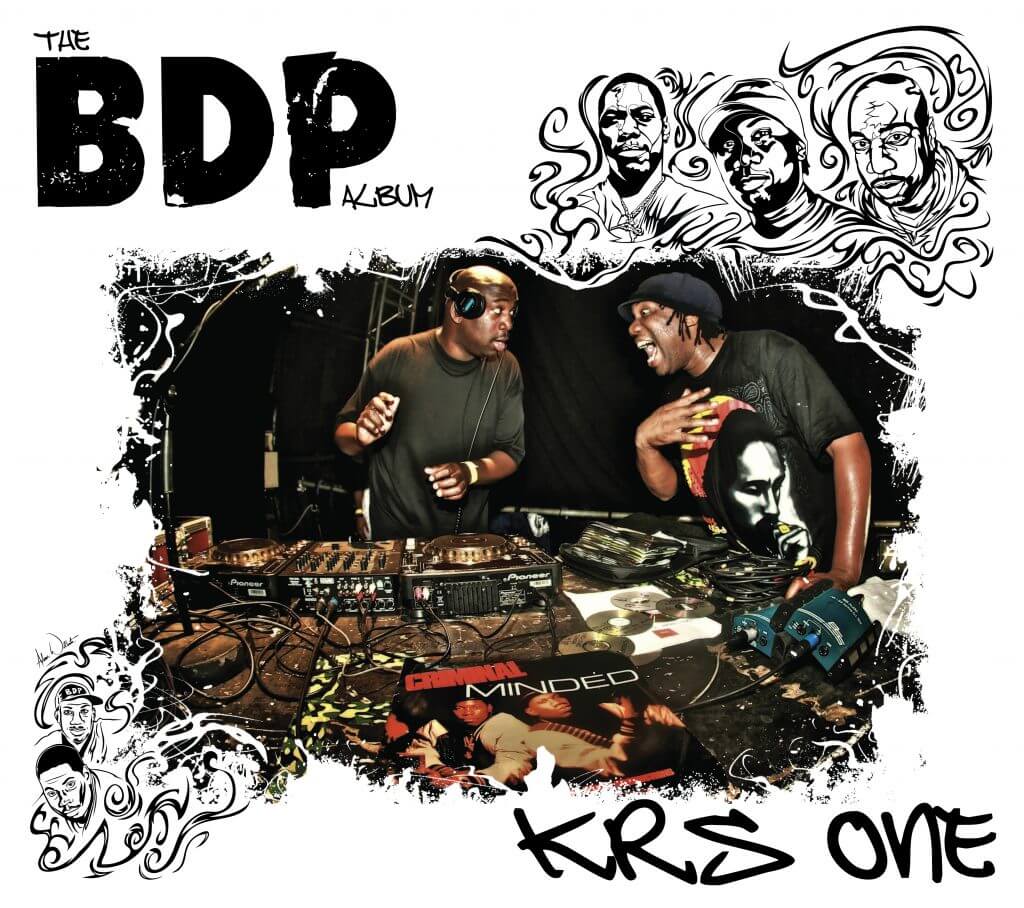
The BDP Album arrived quietly, almost like a secret passed between longtime heads. It’s not the record that gets mentioned when people talk about KRS-One’s catalog—albums like Criminal Minded, By All Means Necessary, and Return of the Boom-Bap carry most of that weight—but this 2012 release deserves attention for a different reason. It reconnects KRS with the sound and spirit of Boogie Down Productions, reuniting him with his brother DJ Kenny Parker, and channeling the essence of that early Bronx energy.
The production here is stripped-down and deliberate. Kenny Parker builds beats from the bones of classic boom-bap—tight drum loops, blunt basslines, and sharp cuts. The result is lean and physical. Tracks like “Tote Gunz,” “Forever,” and “All Day” move with the rhythm of mid-90s battle rap, every snare hit designed to make space for KRS’s voice to dominate the mix. The sound isn’t glossy or modern—it’s built for projection, the kind of beats that belong in open-air parks or concrete basements, not digital playlists.
KRS-One’s delivery remains thunderous. His cadence has a kind of command that few emcees can sustain across decades. On “Times Up,” his tone is urgent, lecturing without condescension. He throws warnings and lessons into every bar, still the Teacha but now more grounded, more conversational. “The Solution” pushes that further, balancing street parables with calls for self-discipline and awareness. Even when his lyrics edge into familiar territory—authenticity, knowledge, Hip Hop’s responsibility—his timing keeps the material alive.
What gives The BDP Album its weight is the relationship between the two brothers. Kenny’s beats frame KRS’s verses with an almost familial understanding, the rhythm always leaving room for breath and tone. There’s a looseness to the production that fits the age of the artist—a sense that these songs weren’t made to compete, but to continue a conversation that started decades ago.
I know this isn’t KRS-One’s best album. The classics are elsewhere—Criminal Minded, By All Means Necessary, Return of the Boom-Bap—already appear on my 100 favorites list. The BDP Album is here because it’s often forgotten, but I like it. It’s a later-period record from one of Hip Hop’s greatest teachers, made without industry noise or trend-chasing. It’s KRS-One doing what he’s always done: building from the basics, using rhythm and message as tools of expression. For anyone who listens closely, this album still carries the pulse of the Bronx—the foundation, alive and undiluted.
Yugen Blakrok – Return Of The Astro-Goth (2013)
Return Of The Astro-Goth pulls you into its shadows from the first seconds. South African emcee Yugen Blakrok steps into the record with a deep, steady voice that carries weight and calm in equal measure. Her delivery is measured and deliberate, rooted in dense imagery. She draws from mythology, occult symbolism, science fiction, and South African spiritual traditions, shaping verses that read like coded dispatches from another zone. The language is tight and layered, grounded in purpose rather than abstraction.
Kanif the Jhatmaster builds a stark, heavy foundation around her voice. The drums land with a low thud, the basslines grind in slow arcs, and small melodic fragments flicker at the edges—an eerie piano figure here, a warped horn stab there. The sound often leans toward post-apocalyptic boom-bap: grainy, minimal, and built on loops that create pressure over time. Instead of large peaks or sudden turns, the production settles into a tense, simmering state that suits Blakrok’s tone.
“The Mirror” shows this approach clearly. A cold, repeating motif hangs over the drums while she unpacks inner conflict in a level, almost meditative cadence. “Doombox” hits harder, shaped by a growling bassline and sharp percussion. The title track deepens her Astro-Goth persona, merging cosmic language with darker street-level imagery in a way that feels entirely her own.
Across the album, the pacing is unhurried. Each track holds its space, building a unified atmosphere that never breaks character. Guest appearances are limited, which keeps the focus squarely on Blakrok’s voice. Robo the Technician’s feature on “Constellations” is the strongest of the few, adding grit without interrupting the album’s mood.
Return Of The Astro-Goth shapes a distinct environment through sound, tone, and language, and it does so without compromise. It is one of the most absorbing underground Hip Hop releases of the 2010s—a record that deserves far more attention than it received.
Epidemic - Somethin’ For Tha Listeners (2013)
Epidemic’s Somethin’ For Tha Listeners is a precise, deliberate exercise in jazzy boom-bap, delivered by South Florida duo Hex One and Tek-Nition. The album moves away from abstract concepts, focusing on grounded, real-world topics: discipline, perseverance, relationships, and the craft of Hip Hop itself. The two emcees maintain rapid-fire, multi-syllabic flows, but the slightly slower tempos allow their words to be fully absorbed, emphasizing clarity and impact.
Production is handled entirely by Esco, a relatively unknown but highly skilled West Coast beatsmith. His beats are warm, textured, and stripped of unnecessary clutter, emphasizing crisp drums, smooth basslines, and subtle sample layers. Vinyl-like grain adds a tactile quality to the tracks, giving the album a deliberate, measured feel. DJ Tha Boss contributes scratches on most tracks, while Dixie adds a turntable flourish to “One Life,” punctuating the verses with sharp rhythmic accents.
The album opens with “Rhyme Writers,” a tight, confident track that immediately establishes the duo’s technical control. “Cool Out” slows the pace, offering a smooth, relaxed rhythm where lyrics land with casual authority. “Patience” examines commitment and self-discipline, while “They Don’t Know” uses clever wordplay to probe observation and critique. “Poisonous Love” takes a reflective turn, exploring failed relationships with measured emotion. Longer tracks, including “UNIversALL,” allow Hex One and Tek-Nition to stretch out ideas without the energy flagging. The closing track, “Nothin’ Matters,” produced by B.B.Z. Darney, offers a subdued, contemplative finale.
Interludes like “Esco’s Crates” provide space for the listener to reset, while mid-album cuts like “Monday To Sunday” maintain momentum. Each instrumental, scratch, and sample feels intentional, never overwhelming the vocals.
Somethin’ For Tha Listeners works best as a complete listen. Hex One and Tek-Nition’s lyricism is intricate, witty, and grounded, while Esco’s beats provide warmth and cohesion throughout. The album delivers a smooth, intelligent listening experience, clearly designed to be absorbed in sequence, track by track, with each song contributing to a satisfying whole.
Qwel & Maker - Beautiful Raw (2013)
Beautiful Raw is one of those records that feels lived-in from the first second: warm vinyl crackle, loose drum pockets, and a voice that cuts through with clarity and intent. Qwel and Maker had worked together for nearly a decade at this point, and the connection is obvious without drifting into sentimentality. They know how to build a space where dense writing and patient production can sit together without strain.
Maker’s style across the album is grounded in quick-turn loops and small textural shifts. He uses dusty piano figures, clipped guitars, muffled horns, and grainy vocal fragments, arranging them in tight patterns that keep the songs active without overwhelming them. “Lake Effect” rides on a cold piano phrase, giving Qwel room for close-range street detail and tense winter imagery. “Wreck Room” takes a different route with pipe-organ swells and a shuffle built from loose, dusty percussion. “Through the Sidewalk” opens up into clean guitar strokes that move with a relaxed tempo; the brightness is brief but sharp enough to change the album’s temperature without breaking its cohesion.
Qwel approaches each track with steady control. His tone is light but firm, and his lines land quickly, packed with internal rhythms and vivid fragments of thought. He traces working-class stress, addiction, self-doubt, and moments of strained hope without dramatic framing. “Broken Pendulum” leans into memory, walking through childhood with a mix of humor and fatigue. “Pilfer” points its focus at small-time hustling and the cycle of bad habits. On “Long Walkers,” his delivery widens into a more reflective pace, wrapping around Maker’s fuzzed-out guitar line.
Guests drift in and out—The Grouch, Qwazaar, D-Styles—and they keep the energy moving without redirecting the album. Maker threads their appearances into the structure cleanly, relying on tone more than large stylistic shifts. Even the livelier tracks stay rooted in the same earthy palette, which gives the full record a consistent pull.
What keeps Beautiful Raw important in my own collection is the balance it maintains. The writing is dense without becoming academic, the production is textured without drifting into clutter, and the mood stays grounded in everyday tension and small flashes of relief. It is a quiet high point in independent Hip Hop, and along with 2004’s The Harvest, one of the finest records Qwel and Maker have delivered.
Awon & Phoniks - Return To The Golden Era (2013)
Return To The Golden Era is one of those records that locks into a specific mood from the first seconds and holds that line all the way through. Awon and Phoniks approach the classic, jazz-rooted Hip Hop format with care and a clear sense of what they want the music to sound like: warm loops, steady drums, crisp scratches, and an MC whose voice stays grounded in everyday life. The album feels lived-in without drifting into imitation. It is built from the traditions of mid-90s East Coast Hip Hop, but the duo treats that framework like a place to work rather than a museum exhibit.
Phoniks shapes the production with a steady hand. His beats rely on soft pianos, upright bass, muted horns, and lightly dusted textures that suggest hours spent digging through old vinyl. The drums are tight and uncomplicated, which gives Awon room to settle into his natural cadence. Tracks like “Midas Touch” and “Champagne Laced” run on smooth loops that keep a steady pulse without drawing attention away from the vocal. “Forever Ill,” with Dephlow and Tiff The Gift, brings a brighter swing, carried by a shimmering piano line that feels like late-afternoon light coming through a window. Phoniks scratches into hooks the way older DJs did, giving the album a familiar MC/DJ rhythm that suits the material.
Awon raps with a conversational tone that keeps the stories close to the ground. He revisits his younger self throughout the album, speaking from the perspective of a kid caught between ambition, temptation, and the anxiety of not knowing where life will lead. Tracks such as “Street Saga,” “Blinded by the Riches,” and “Rule of the Gun” stay focused on that world: fast hustles, crooked choices, loyalty, and the pressure to survive without losing your sense of self. The writing is direct, and the clarity of his delivery brings the scenes to life. There is no glamor in the violence or the schemes; the tension sits in the decisions characters make and the consequences they carry.
The pacing of the album is smooth, with interludes placed where the energy needs a breath. “40oz Wisdom” and “Black and Blue” slip in quick sketches that hold the atmosphere together. “Correct Techniques” and “Above Water” tighten the grip again, reminding you how well the rapper and producer line up rhythmically and emotionally.
I like pretty much everything released on the Don’t Sleep Records label, but this one will always remain a favorite. It brings together honest writing, warm production, and a steady sense of craft, and it does so with confidence instead of nostalgia. It is one of the finest examples of contemporary artists keeping Golden Era Hip Hop alive by treating it as a living form, not a frozen relic.
Oddisee - Tangible Dream (2013)
Tangible Dream is one of Oddisee’s clearest statements on what it means to build a working life in Hip Hop without bending to disposable trends. The record is grounded in movement—produced on buses, written in cramped airplane seats, and recorded in temporary rooms while touring. That sense of constant travel runs through the music. The beats feel handcrafted in small pockets of time, shaped by warm keys, light guitar strokes, and drums that lock into a steady, unhurried swing.
The title track opens the album with a mellow pulse built from soft chords and a steady low end. Oddisee steps into the flow with calm confidence, describing the kind of goals he values: practical, earned, realistic. The same tone carries into “Yeezus Was a Mortal Man,” which pushes back against hype culture with a dry, grounded delivery over a beat shaped from dusted samples and clipped drums. “Killin’ Time” moves with sharper percussion and a bassline that curls around the drums, giving Oddisee room to pull apart the distractions of city life.
“Own Appeal,” one of his signature songs, sits at the center of the album’s philosophy. The track has a warm soul loop that circles under steady drums while Oddisee lays out his approach to independence with clarity. “The Goings On,” with Ralph Real, brings in brighter keys and a smooth hook that widens the album’s atmosphere, carrying you into the rhythms of travel and day-to-day observation. “Unfollow You,” with Olivier St. Louis, shifts into a leaner groove with quick hi-hats and a spare rhythm guitar line, while Oddisee unpacks the pressure and noise of social media.
The mid-album instrumentals and short flows—“Interlude Flow,” “Outro Flow,” and “Bonus Flow”—act like open windows between longer songs. They reinforce the record’s pacing and give space to the production’s warm textures. “Back of My Mind,” with Paolo Escobar, moves on a slow pulse shaped by layered keys, setting the tone for one of the album’s most introspective moments.
Tangible Dream is one of Oddisee’s strongest statements of independence and focus, and it earns its place on my Overlooked 100 because it never loses its clarity or its purpose. It is an album built from motion and discipline, and it sounds grounded in every measure.
Mach-Hommy - H.B.O. (2016)

Mach-Hommy’s H.B.O. (Haitian Body Odor) is a masterclass in underground Hip Hop, dense with history, culture, and lyrical precision. Born in Port-au-Prince and raised in Newark, Mach-Hommy channels Haitian heritage, street wisdom, and literary flair into every bar. His delivery is measured and deliberate, letting complex wordplay, multi-syllabic rhymes, and Haitian Creole references land with impact. Each track feels like a small lesson in history or culture, woven into narratives that range from braggadocio to reflections on oppression and survival.
The production is as essential as the lyrics. August Fanon handles most of the beats, delivering dusty, jazzy loops that mix melancholy with grit. Daringer contributes rugged, nightmarish instrumentals, while Roc Marciano provides a sparse, cinematic touch on “Mach Marcy.” The beats feel tactile—guitar stabs, melancholic piano, and muted horns create tension, while tight drum patterns keep Mach-Hommy’s flow grounded. Songs like “1080p” and “Trezeta Air Max” are cinematic and moody, while “Plenty” offers a smoother, soulful pulse that emphasizes his rhythmic control and tonal subtlety.
The album operates on contrasts. Tracks like “H.B.O.” and “Band Anna” highlight the greed and excess of Haitian elites, while “Snow Beach” and “Thank God” trace the endurance and resourcefulness of everyday Haitians. These juxtapositions create a narrative tension across the album, giving listeners a sense of both struggle and triumph, personal and collective. Mach-Hommy’s lyricism requires attention, rewarding listeners who parse his historical and cultural references with repeated listens.
H.B.O. initially existed as an extremely limited release—Mach-Hommy sold 187 copies directly through Instagram DMs at $300 apiece—deliberately controlling its scarcity. This exclusivity contributed to its mythic status and helped him establish underground legend status. The delayed, restricted release limited his mainstream exposure, keeping him from achieving superstar recognition, though his reputation as an emcee grew steadily. Subsequent albums like Pray For Haiti and RICHAXXHAITIAN expanded his acclaim, but H.B.O. remains his most intricate, tightly constructed work. For me, it is one of the best projects to emerge from the early Griselda orbit, combining luxurious, gritty production with intellectual depth, historical insight, and elite lyricism.
From the opening “Ti Geralde” to the closing “Bloody Penthouse,” H.B.O. is cohesive, challenging, and rewarding. Its sparse, soulful beats, dense lyrics, and controlled, precise delivery make it an essential listen for those seeking a darker, smarter corner of modern Hip Hop.
Ed Scissor & Lamplighter - Tell Them It's Winter (2016)

This isn’t the kind of record I usually connect with. It’s slow, abstract, and almost too cold for its own good. But Tell Them It’s Winter has a pull that’s hard to ignore. Every time I return to it, I end up staying longer than I planned. It’s a record built for late hours and empty streets—headphones on, breath clouding the air, everything moving in slow motion.
Ed Scissor’s voice sits deep in the mix, calm and deliberate, like he’s narrating from a frozen distance. His writing is poetic but grounded, full of images that feel personal without spelling everything out. On “TTIW,” he threads his words through Lamplighter’s sparse percussion and flickering synths, creating a space that feels suspended between thought and confession. “Dust Don’t Lay” carries a quiet warning—“save yourself”—as the production moves like wind through abandoned buildings.
Lamplighter’s production is patient and heavy with atmosphere. He leaves wide gaps between sounds, letting silence act as rhythm. Strings, pianos, and static drift in and out without warning, creating tension that never really resolves. Tracks like “AFK” pulse with low-frequency hums and faint electronic whispers, while “Detours” stretches across eleven minutes, shifting shape in small, uneasy movements. Every sound feels intentional, every pause weighted.
The album’s tone never lightens. It circles themes of distance, loss, and emotional fatigue with a kind of icy clarity. Still, it never feels lifeless. Beneath the frost, there’s warmth in how carefully it’s built, in how the words and production seem to breathe the same air.
Tell Them It’s Winter is hard to recommend in a traditional sense—it demands a kind of patience that not everyone has time for. But for me, it connects in ways I can’t fully explain. It’s a record about isolation that somehow makes solitude feel necessary. On a cold night, walking through dark, quiet streets, this album makes sense. It’s strange, haunting, and beautiful—music that finds its own quiet place in the dark.
Quelle Chris - Being You Is Great! I Wish I Could Be You More Often (2017)
Being You Is Great… I Wish I Could Be You More Often is one of Quelle Chris’s most complete statements, a record built from crooked humor, private doubts, and loops that sound worn from constant handling. It has the looseness of a notebook someone carries everywhere—pages full of sketches, half-finished thoughts, and the occasional moment of blunt clarity. Instead of smoothing those edges, Chris leans into them, shaping an album that feels handmade in the best way.
The production drifts between hazy jazz fragments, muffled drums, and warped samples that wobble like they’re stitched together from old tape. Chris handles most of the beats himself, with Chris Keys, MNDSGN, Iman Omari, and others slipping in touches that keep the album lively without breaking its mood. Nothing feels polished for its own sake. The drums often slouch behind the beat. Synths groan and hover in the background. Small details—like a voice creeping into the left channel or a loop that frays at the edges—give the music a lived-in quality.
Chris uses that environment to unravel thoughts about self-worth, loneliness, and the strange task of trying to like yourself while dealing with the world’s noise. His delivery is slow and conversational, shaped by pauses and muttered asides that make every bar land with a sideways angle. “Buddies” brings out his dry humor, turning self-love into an odd chant that walks the line between sincerity and mockery. “Popeye” digs into frustration with a steady, tired cadence over a woozy beat. “Fascinating Grass” moves with a heavier pull, its loop dragging behind Roc Marciano’s appearance.
Guests drift in and out—Jean Grae, Homeboy Sandman, Elzhi, Denmark Vessey—each bringing their own tone without pulling the album off balance. Every feature blends into the record’s loose structure, which moves like a long exhale: rising, dipping, wandering through thoughts without forcing them into neat themes.
The album works because it doesn’t hide its roughness. It treats insecurity, boredom, stubborn pride, and small flashes of joy as part of the same interior weather. That openness gives the record its shape, making Being You Is Great… one of Quelle Chris’s most human and fully realized albums.
Anti-Lilly & Phoniks - It's Nice Outside (2017)
There’s a calm undercurrent running through It’s Nice Outside, the kind of steady pulse that makes you lean in without realizing it. Houston rapper Anti-Lilly and Portland producer Phoniks have a chemistry that feels lived-in—like two artists who know exactly how to build space for thought, not performance. Across seventeen tracks, they shape an album that listens more like a quiet conversation than a performance.
Anti-Lilly’s voice carries a weight that’s never forced. He raps about depression, self-doubt, faith, and recovery with a tone that’s steady, reflective, and grounded in daily reality. “Nobody’s Perfect” opens the door to his inner world, where small moments carry big meaning. “Better Days” moves with optimism, but it’s not naïve—it’s the kind that comes after exhaustion. His storytelling has rhythm and control; he lays out his struggles like entries from a private journal, each verse unpacking what it means to keep going. The interspersed voicemails from friends and family heighten that sense of intimacy. They make the record feel like a snapshot of a real period in his life, where reaching out and being reached for mattered equally.
Phoniks matches that mood with production that feels warm and human. His beats are built from soft-focus jazz loops and dusty drum breaks, but he uses them with precision. The horns, keys, and upright bass lines hum with life, creating a sense of movement even in stillness. On tracks like “Sunshine” and “What Would You Do,” he balances nostalgia and clarity, turning sample-based loops into full emotional statements. Every instrumental feels hand-touched—the crackle of vinyl, the low-end thump, the air between the notes.
The album’s structure carries intention. It begins in solitude and gradually moves toward connection, small victories, and perspective. By the end, the title It’s Nice Outside lands with a quiet power—it’s not a slogan, but a realization.
This is one of those albums that grows with you. Each listen opens up new corners in its tone and detail. It’s thoughtful, deeply crafted Hip Hop—personal without self-indulgence, smooth without drifting into background noise. Among the trio of records Anti-Lilly and Phoniks have made together, It’s Nice Outside feels like the heart of it all.
Roc Marciano - Rosebudd's Revenge (2017)
Rosebudd’s Revenge drifts like cigar smoke through a dim backroom—smooth, detailed, and deliberate. Roc Marciano, Long Island’s master craftsman of street poetry, moves with quiet control. The production is sparse and unhurried, built from soft-edged soul loops, muted horns, and flickers of bass that float more than thump. Most tracks glide without drums, leaving wide open space for his voice to land heavy. It’s music that doesn’t chase momentum; it lingers, giving every bar the weight of a slow exhale.
Marciano’s delivery is steady and conversational, more like an aside than a performance. He raps with the cool precision of someone who’s seen everything twice. On “Already,” he stacks luxurious and violent images together like flashes from a half-remembered dream: mahogany dashboards, mink coats, humid city air, a gun within reach. The lines move quickly but never feel rushed. He writes in fragments that stick—the detail is so vivid you start to picture entire stories between the bars.
The album lives in that in-between space: sharp and relaxed, rich and grimy. Songs like “Gunsense” and “Better Know” balance menace and humor, sliding from quiet threats to effortless punchlines. His wit is dry, his tone calm even when the subject isn’t. There’s no moral frame, no attempt to justify anything. The world he builds is full of sharp suits, slick talk, and violence handled like business. It’s coded language, delivered with the confidence of someone who never explains the rules.
Marciano produced much of Rosebudd’s Revenge himself, with support from The Arch Druids, Mushroom Jesus, Modus Op, and Knxwledge. The sound is cohesive—lo-fi loops that feel lifted from rare films or forgotten vinyl. The samples flicker and fade, never fully revealing their source, giving the record a shadowy texture.
Marciano arguably has a couple of better albums—Marcberg and Reloaded built the foundation for this entire sound, and The Elephant Man’s Bones expanded it—but Rosebudd’s Revenge holds a special gravity. It’s the moment where his world fully absorbs you, where the cold elegance and street poetry meet without friction. For me, this is his most overlooked record. I return to Marcberg, Reloaded, and The Elephant Man’s Bones more often, but this one pulls me in, too.
billy woods - Known Unknowns (2017)

Known Unknowns sits in a strange and brilliant pocket of billy woods’ catalog—dense, precise, and easier to enter than some of his darker work, but still uncompromising. Released in 2017, the album finds woods sharpening his writing into short, vivid fragments, delivered with his trademark dry cadence. Each verse sounds lived-in and calculated at once, a voice that doesn’t raise itself but carries the weight of entire histories.
Blockhead handles most of the production, and his beats give the album a sense of movement even when the subject matter stays heavy. The sound is smoky and layered—dusty drums, eerie loops, and faint melodic lines that twist through the cracks. Where some of woods’ other records build a sense of claustrophobia, Known Unknowns breathes a little more. It still feels tense, but the space in the beats lets his writing hit with clarity. Aesop Rock contributes a few tracks too, adding sharper edges and off-kilter rhythms that keep the flow unpredictable.
Lyrically, the record moves between the political and the personal without drawing lines between them. woods writes from a place where history is never distant—it seeps through family stories, street corners, and passing jokes. His references are layered but grounded: sports, colonialism, local news, small humiliations. Each verse feels like a dispatch from someone who’s seen the same pattern repeat across decades. There’s humor, too, but it’s the kind that cuts.
The pacing of Known Unknowns is deliberate. The songs don’t build toward a single message—they accumulate, scene by scene, into a portrait of disillusionment and endurance. The features, including ELUCID and Homeboy Sandman, fit into the world woods creates without breaking its rhythm. The record holds its tension until the end, never softening its tone or explaining itself.
Known Unknowns might not have the emotional immediacy of masterpieces like Hiding Places, but it’s an essential part of understanding billy woods’ craft. It’s his most quietly complete album—a project that reveals more with each listen, grounded in sharp writing and steady control. Among his catalog, it’s the one that too many people missed, and one that deserves to be heard as the blueprint of his mid-2010s brilliance.
Open Mike Eagle - Brick Body Kids Still Daydream (2017)
Open Mike Eagle’s Brick Body Kids Still Daydream moves like a memory half-recalled—steady, detailed, and full of feeling that never settles. Across its 12 tracks, he rebuilds the demolished Robert Taylor Homes in Chicago not through nostalgia but through imagination, humor, and unease. The record sounds like it’s floating just above the ground, with low bass hums, clipped drums, and warped synths bending around Mike’s melodic, deliberate voice.
Each song turns the public housing project into a living body. The production—handled by Exile, Has-Lo, Kenny Segal, and others—shifts from airy to anxious without breaking its rhythm. “Legendary Iron Hood” moves with quiet determination, while “95 Radios” and “Daydreaming in the Projects” hum with a kind of subdued warmth, the sound of memory mixed with distance. The mood is often hushed but never flat; there’s a constant pulse beneath the calm, like something heavy sitting just out of sight.
Mike’s writing is specific and cinematic. He doesn’t rely on grand statements—he paints through fragments: small domestic scenes, half-remembered street corners, family moments that carry more weight than the city blocks themselves. The Robert Taylor Homes aren’t treated as tragedy but as proof of life, imagination, and community. The way he shifts between realism and dream logic turns the record into something close to folklore.
His delivery is measured but deeply expressive. He raps and sings with a kind of weary control, shaping each bar like he’s handling a fragile object. The humor that usually shades his writing remains, but here it’s quieter, more of a defense mechanism than a punchline. The album’s sequencing adds to that emotional pull—it unfolds like a slow walk through a vanished neighborhood, each track adding another piece to a space that no longer exists in the world but lives in his voice.
For me, this is Open Mike Eagle’s most affecting album. Dark Comedy made me admire his wit, but Brick Body Kids Still Daydream made me stop and listen harder. It’s honest, strange, and deeply human—a personal monument built out of memory, steel, and quiet defiance.
Marlowe - Marlowe (2018)
Marlowe hits like a secret door in the alley—once it slides open, the world inside is dense, colorful, and strangely hypnotic. The duo of L’Orange and Solemn Brigham builds an album that feels alive from the first needle drop. Every piece has weight and texture, formed through grit, tape hiss, and sharp rhythmic motion.
L’Orange stacks organs, chopped vocals, and old radio fragments into tight, looping patterns that twist in small but vivid ways. His beats don’t drift into haze; they snap forward with crisp drums and sudden flashes of melody that light up the edges of the mix. The atmosphere leans on noir influences and psychedelic blur, but it never gets bloated. The beats stay grounded, shaped with the discipline of someone who knows exactly how much dust, echo, and sample chatter a bar can hold before it buckles.
Solemn Brigham cuts straight through that fog with a voice that sounds wired to its own internal voltage. His delivery is fast, clipped, and almost percussive. He jumps from tight, knotted patterns to stretched-out phrases without breaking his grip on the rhythm. Across the album, he circles themes of self-definition, spiritual steadiness, and survival with a tone that never slips into preachiness. He is direct, restless, and constantly in motion. When he pushes into higher gears—especially on tracks like “Lost Arts” or “99 (All of Them)”—the tension between his urgency and L’Orange’s surreal groove creates a charge that doesn’t fade.
The structure of the record matters. Short interludes and bits of dialogue form a loose noir frame, not as a gimmick but as connective tissue that makes the album feel like one continuous piece instead of a stack of songs. Nothing overstays its welcome. Nothing drags. Across 38 minutes, the pacing stays tight and deliberate.
Marlowe didn’t arrive with big-industry muscle behind it, but it didn’t need that. The record built its reputation the long way, through listeners who recognized how much craft sits inside its compact runtime. And the duo didn’t stall after this debut—2020’s Marlowe 2 and 2022’s Marlowe 3 carry the same level of intention and spark, proving the project wasn’t a one-off stroke of luck but a durable partnership with its own world and rhythm.
Epic Beard Men - This Was Supposed To Be Fun (2019)
Epic Beard Men’s This Was Supposed To Be Fun hit me unexpectedly in 2019, becoming one of my favorite albums of the decade. When underground veterans Sage Francis and B. Dolan linked up, they created something special – an album that lives up to its name while delivering substance beneath the surface.
The duo’s chemistry shines throughout. They trade verses with the ease of old friends, dropping quotables that range from hilarious to thought-provoking. Their lyrics blend Golden Age Hip Hop references with sharp commentary on modern life, from social media culture to political absurdity.
Standout tracks like “Hours & Minutes,” “You Can’t Tell Me S,” and “Pistol Dave” balance humor with unexpected depth. “Shin Splints” turns air travel frustration into pure entertainment. The production matches their versatility – mixing boom-bap foundations with electronic elements and experimental touches that keep each track fresh.
What makes this album stick in my rotation is its natural feel. Both MCs rap with the confidence of veterans who know every trick in the book but still love pushing their craft forward. There’s no pretense here – the album works whether you want to laugh, think, or both.
While my playlist usually leans heavily on 80s, 90s, and underground classics, This Was Supposed To Be Fun reminds me that Hip Hop’s creative spirit is alive and well. It’s an album that rewards repeated listens, revealing new layers of wordplay and meaning behind the initial laughs. Years later, it still gets regular spins here.
Killah Priest - Rocket To Nebula (2020)

Rocket to Nebula is one of the most unusual Hip Hop albums of the past decade. Killah Priest, a veteran from the Wu-Tang orbit known for his spiritual and metaphysical lyricism, created something that almost refuses to be categorized. Released in 2020 and self-produced under the alias Unknown Source, the album drops the familiar pulse of drums and bass in favor of weightless, meditative sound. The music drifts like incense smoke—loops stretch, reverse, and dissolve while Priest speaks in a steady, trance-like tone.
Across twenty tracks, he blends stream-of-consciousness verse, spoken word, and storytelling. His voice sounds deep and grounded even as his imagery floats through cosmic and mystical territory. He raps about astral travel, divine energy, and memories of earthly life: street corners, nature scenes, quiet moments with friends. The sound moves between ambient textures and faint melodies that hum in the background, sometimes with traces of birds, thunder, or wind. It often feels like a transmission from another dimension, more meditative than rhythmic.
Priest’s writing is thick with symbolism and detail. Lines jump from scripture to science fiction to small human gestures. On tracks like “Magnificent Interview” and “P.R.O.J.E.C.T.S.,” he switches from outer-space philosophy to neighborhood realism without changing his pace. That balance—between cosmic imagination and real-world reflection—is what makes this album so fascinating. It’s not meant to be played loud in a car. It’s something to sit with, to let unfold slowly.
The absence of drums is what many listeners struggle with. Rocket to Nebula doesn’t chase traditional Hip Hop energy. Some hear that as alienating, but to me, that’s where its power lies. It pulls away from rhythm to find a different kind of movement—spiritual, emotional, poetic. The hour-long sequence flows like a long meditation, an artist alone with his thoughts and visions.
I understand why people might not connect with this album. It’s strange, insular, and patient. But despite—or maybe because of—that, I love it. Killah Priest has always written with a depth few can match, and Rocket to Nebula shows him completely free, following his own current. My two favorite Priest albums are already on my 100 favorites list, and this is my third. It’s a strange, beautiful record that stays with me long after it ends.
Boldy James & Sterling Toles - Manger On McNichols (2020)
Of all the Boldy James albums released in the past ten years, Manger On McNichols stays with me the most. It’s the one I keep returning to, and the one I probably should have included in My Favorite 100. The record sits somewhere between memory and hallucination, where Sterling Toles turns Detroit’s weight into something ghostly and alive.
Most of Boldy’s vocals were recorded years before its release, and that distance gives the album a strange kind of gravity. You hear a younger Boldy, steady and detached, moving through grief and survival with no dramatic cues. On “Mommy Dearest (A Eulogy),” his voice feels surrounded by loss, delivered with the kind of calm that comes after the breaking point. There’s no reach for pity, no performance—just someone talking through pain that’s already settled in.
Toles’ production transforms these verses into something cinematic but unstable. Jazz horns, strings, choirs, and percussion collide in shifting patterns, bending the frame around Boldy’s delivery. “Detroit River Rock” moves like a fever dream, percussion melting into static and bass. “Welcome to 76” sounds like an echo of a house party buried under concrete. The beats rarely stay in one shape for long; they drift, collapse, rebuild.
What makes Manger On McNichols so gripping is the way it refuses to move in a straight line. The album breathes like a piece of abstract jazz, but Boldy’s voice keeps it rooted in the dirt and truth of Detroit life. On “Birth of Bold (The Christening),” Toles flips the arrangement mid-track, as if the ground beneath Boldy’s bars splits open to reveal another layer of his city’s past.
There’s no easy entry point here, no clean single to grab. It’s a record that demands full attention. Every listen brings new textures—an organ hum you missed before, a horn line cutting through a memory. Manger On McNichols feels haunted by time, but it’s also alive with purpose. It remains my favorite Boldy James project: a fractured, beautiful conversation between pain and creation.