

Pimp C built UGK records out of 808s, church organ, thick bass and bluesy guitar, then left room for two voices that sounded nothing alike. His was high, volatile and half-sung, as likely to taunt as to croon. Bun B came in low and commanding, with a precise, measured delivery and writing that weighed every line. They came out of Port Arthur, a Texas Gulf Coast town with no rap scene to speak of, and they turned Southern soul and street reporting into a dialect of their own. Their style was so heavy with slang and twang that they called themselves Underground Kingz, assuming outsiders would never catch on.
The early catalogue shows the sound taking shape. Too Hard to Swallow (1992) was an uncompromising introduction, and Super Tight (1994) loosened into funk. Then came Ridin’ Dirty (1996), the album most fans rank as their best. Pimp C’s warm, often live-sounding arrangements gave Bun B space for vivid, grounded verses, and the songs had real emotional range: “One Day” considered mortality and how fragile life is with unusual tenderness, while “Diamonds & Wood” captured the pleasures and pressures of Southern car culture. Nothing on it borrowed from New York or Los Angeles. It sounded like Texas.
The wider world caught up slowly. Their verses on Jay-Z’s “Big Pimpin’” reached a far larger audience, and “Sippin’ on Some Syrup,” the 2000 collaboration with Three 6 Mafia, connected two distinct Southern rap traditions. Jive did little with the momentum, and Dirty Money (2001) passed almost unnoticed. Pimp C went to prison in 2002, and Bun B kept the name alive on guest verses that called for his partner’s release. When the duo returned in 2007 with the double album Underground Kingz, it debuted at number one on the Billboard 200 and carried “Int’l Players Anthem (I Choose You),” their celebrated meeting with OutKast.
Pimp C died that December, months after the peak. UGK 4 Life (2009), built from music the pair had already recorded, closed the catalogue, and Bun B continued alone. The influence is easy to trace in Big Boi, Boosie Badazz and Paul Wall, and in the many Southern artists who learned from UGK that a regional accent, tempo and point of view could hold up anywhere in Hip Hop. We rank the six studio albums below.
6. UGK 4 Life (2009)
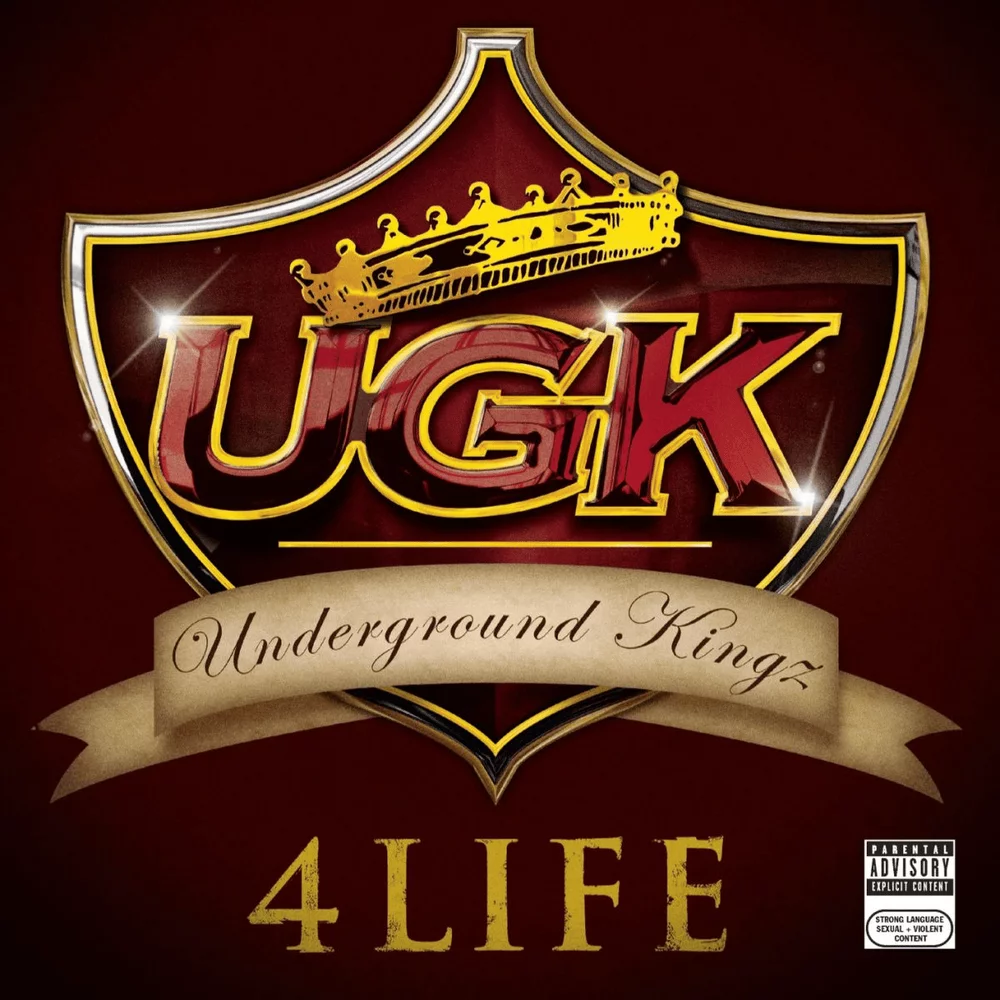
After Pimp C’s death, Bun B was clear about what the final UGK record needed to do. He said he would not try out new producers or collaborations, because fans wanted to hear Bun and Pimp and he meant to give them exactly that. UGK 4 Life follows that plan closely, and the decision explains its strengths and its limits.
The production stays in the family. Pimp C’s own beats sit beside tracks from Cory Mo, Steve Below and Averexx, and Mike Dean co-produced the two short interludes. The palette is organ, slow-rolling bass and soul samples, and the choice of samples points back to the duo’s roots. “Feelin’ You” draws on Maze’s “Feel That You’re Feelin’,” and “Swishas & Erb” reworks Society of Soul’s “Peaches & Erb” with Sleepy Brown on board. “Harry Asshole” lifts from UGK’s own “I Left It Wet for You” and hands it to Lil’ Boosie and Webbie, which makes sense given how much Boosie learned from Pimp C.
The best moments come when the album opens its doors to old allies. Mannie Fresh builds “The Pimp & the Bun” on the Isley Brothers’ “Here We Go Again,” with Ronald Isley there to sing over his own family’s composition. “Used to Be” brings in E-40, B-Legit and 8Ball & MJG for a five-and-a-half-minute meeting of Texas, the Bay Area and Memphis. “Still on the Grind,” with Raheem DeVaughn, sets an R&B-tinged mood early, and “Everybody Wanna Ball” is straightforward trunk music from Cory Mo. There is little mourning in any of it. Apart from Snoop Dogg’s farewell on “Steal Your Mind” and Bun’s closing words on the “Outro,” the record plays like an ordinary UGK release, which is what Bun was aiming for.
The trouble is that it rarely pushes past the familiar. The subjects are the usual hustling, cars and bravado, and “Hard as Hell,” with Akon producing and singing, drifts toward a radio polish that sits uneasily beside everything around it. At 16 tracks, the album is far leaner than the 26-track Underground Kingz, but it never takes the kind of risk that made their best records hit. It is the last word on UGK, and it is happy to be a familiar one. | 7/10
5. Dirty Money (2001)
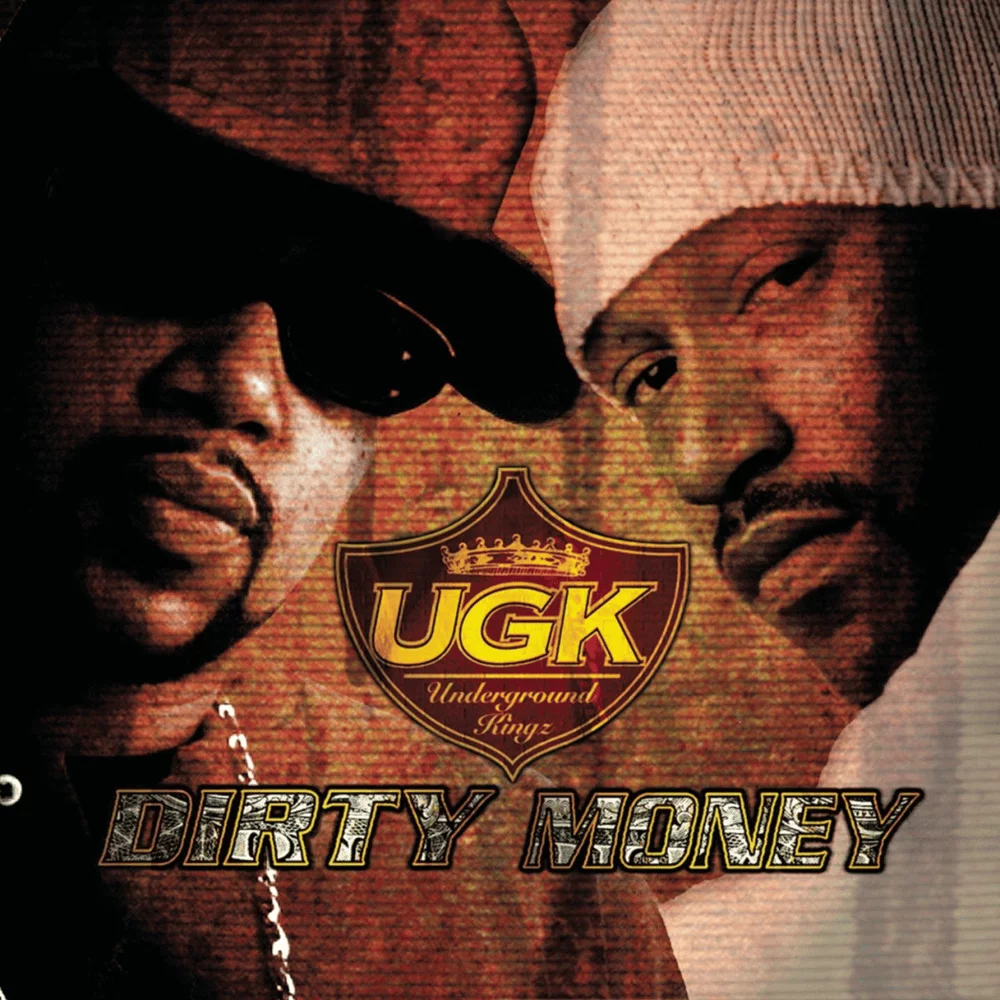
The first sound on Dirty Money comes from Queens. “Let Me See It” samples Run-DMC’s “Here We Go (Live at the Funhouse),” and “Choppin’ Blades” follows with pieces of Schoolly D’s “P.S.K. – What Does It Mean?” and E-40’s “Captain Save a Hoe.” For a Port Arthur group returning after five years, it’s an unusual opening: a nod to Hollis, Philadelphia and Vallejo before the album settles into Texas.
The album took a long time to arrive. Jive was advertising it in its other releases as early as late 1998, and by the time it came out in November 2001 the label had spent years pushing the duo toward radio. You can hear that pull in the subject matter. Much of the introspection of Ridin’ Dirty gives way to flash and pimp talk, and “Like a Pimp” and “Pimpin’ Ain’t No Illusion” sit close enough together that the theme starts to repeat. The sound holds up better. N.O. Joe produced most of the album and Pimp C did the rest, and between them the warm, played-in quality of the earlier records survives. “Ain’t That a Bitch (Ask Yourself)” is the clearest example: B.B. King’s “Chains and Things” gives Devin the Dude a slow blues bed to drawl over, with Chuck D, Flavor Flav and the Bomb Squad among the credited writers.
The guest list maps the network UGK had built around the South. 8Ball & MJG trade verses on “Gold Grill,” Goodie Mob’s Big Gipp appears on “Don’t Say Shit,” and Juicy J and DJ Paul join “Like a Pimp,” which Pimp C built around Dennis Edwards’ “Don’t Look Any Further.” Too Short and Kool Ace stretch “Pimpin’ Ain’t No Illusion” past six minutes. Through all of it, Bun B is sharp and unhurried, holding the album together even when the concepts thin out.
Jermaine Dupri’s “Money, Hoes & Power,” co-produced with Bryan-Michael Cox, is the clearest commercial reach, and it never suits them. The two songs that sound most like UGK at their best sit next to it. “Take It Off” turns Barry White’s “Love Serenade” into slow-motion seduction, and “Wood Wheel,” co-produced with John Bido, rides the Staple Singers’ “Love Comes in All Colors” with real gospel warmth. All three are bonus tracks. Some of the best music on Dirty Money comes after the album has officially ended. | 7/10
4. Too Hard To Swallow (1992)

Southern rap would spend years wearing out the subjects of this album: cocaine, hustling, and the economics of the corner. In 1992, UGK made them sound new. Many imitators later borrowed the same material, but few had UGK’s personality, their sense of place, or their ear for making a hard story go down smoothly. Too Hard to Swallow is rougher than the records that followed, but the partnership is already working.
Pimp C’s production pairs stark, minimal drum programming with familiar soul and funk, and the sample choices show where his ear was. “Something Good” sets Rufus’ “Tell Me Something Good” against the Isley Brothers’ “Summer Breeze,” and “Use Me Up” is built on Bill Withers’ “Use Me.” Those two songs bring a smoother, funkier side, and they open the album like a statement of intent. “Cocaine in the Back of the Ride” draws on Curtis Mayfield’s “Freddie’s Dead,” a song already steeped in the drug trade, and gives it a Gulf Coast setting. “Feel Like I’m the One Who’s Doin’ Dope” borrows from the Geto Boys’ “Mind Playing Tricks on Me,” a nod to the Houston group the duo grew up on.
The contrast between the two MCs gives the music its character. Bun B’s voice is commanding even at this stage, steady and centered on the beat, while Pimp C’s drawl is looser and more mischievous, with a persona that sounds fully formed on arrival. “Pocket Full of Stones” is the obvious highlight. Over pieces of LL Cool J’s “Going Back to Cali” and Mellow Man Ace’s “Gettin’ Funky in the Joint,” the six-minute track works through the dealer’s life with a patience few rappers had in 1992, and its place on the Menace II Society soundtrack the following year carried it well beyond Texas.
Super Tight and Ridin’ Dirty would refine almost everything here, with fuller arrangements and more control. The foundations of that later music, and of a good part of Southern Hip Hop, are already in place. Some of the earliest material was considered too much for Jive: five songs were cut before release, reportedly for their explicit content, and they came out two months earlier on the Banned EP. | 7.5/10
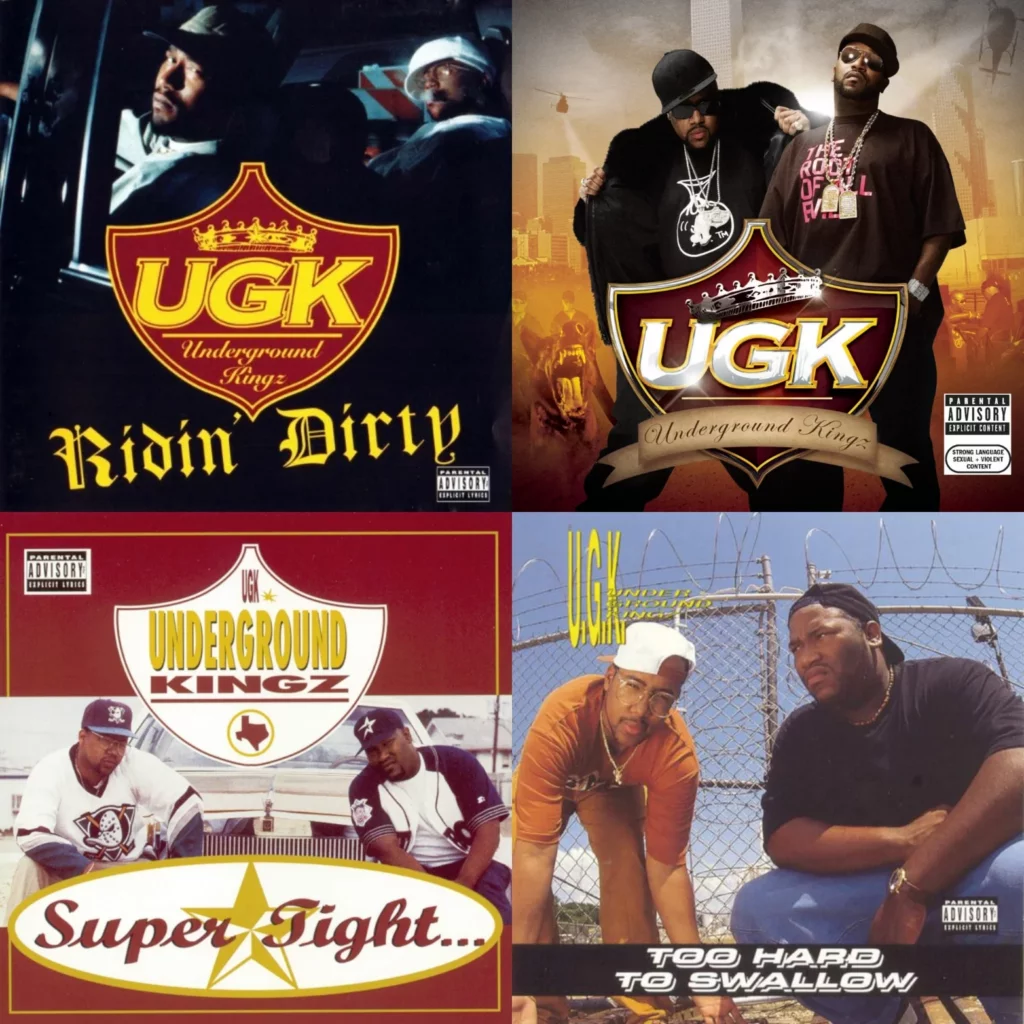
3. Super Tight (1994)

Super Tight was the first UGK album to bring in Leo Nocentelli, the guitarist whose choppy, syncopated playing had powered The Meters. His presence says a lot about where Pimp C’s head was. The Port Arthur producer wanted street rap that swung like Southern soul and blues, with church organ, warm guitar lines and basslines that sat deep and heavy at the bottom of the mix.
Pimp C produced every track, sharing three with DJ DMD, and he lets the grooves roll at a slow, steady cruise. “It’s Supposed to Bubble” glides along on Pleasure’s “Thoughts of Old Flames,” a natural fit for the duo’s champagne swagger. “Front, Back & Side to Side,” with Smoke D, is made for slow driving with the windows down. Early in the running order, “Underground” plants their flag as a Southern act with no interest in borrowing a coastal sound.
The darker songs give the album its weight. Bun B takes “Feds in Town” alone and lays out the strain of living under police surveillance, while “Protect & Serve” turns a sarcastic hook on corrupt cops. “Pocket Full of Stones Pt. 2” returns to the debut’s best-known song from a bleaker angle, and “Stoned Junkee,” featuring 3-2, tells the drug story from the user’s side. Even the raunchy “I Left It Wet for You” takes a sudden turn when Pimp touches on thoughts of suicide. That song had a long afterlife: fifteen years later, UGK sampled it on UGK 4 Life.
The partnership is what holds these moods together. Bun’s clipped, articulate delivery keeps the stories in order, and Pimp’s drawl, melodic hooks and unpredictable personality knock them loose again. On “Feds in Town,” Bun alone is enough to carry the tension. On the cruising songs, Pimp’s hooks do the work the guitar and organ began, turning a groove into something you remember. Neither approach would land as well without the other waiting on the next track.
Two years before Ridin’ Dirty, the plan for Texas rap’s slow-rolling confidence was on paper, and a Meters guitarist had helped draw it. | 8/10
2. Underground Kingz (2007)

Fifteen of the twenty-six songs on Underground Kingz list Pimp C as producer or co-producer, and the album’s shape follows that split. Disc one is almost entirely his. Disc two brings in Jazze Pha, Lil Jon, Scarface, Marley Marl, and others, and the sound spreads out with them. That spread is the main thing holding UGK’s last album released in Pimp’s lifetime a step behind Ridin’ Dirty. Nearly everything else on it holds up against their best work.
Pimp’s own tracks sound like a producer who had spent his years away thinking about soul records. “Swishas and Dosha,” built with Steve Below around Stephen J. Rideau’s “From Step to You,” opens the album with a slow burn. “Chrome Plated Woman” rides Allen Toussaint’s “Hercules,” a New Orleans thread that runs back to the Meters guitar on Super Tight. “Quit Hatin’ the South” puts Charlie Wilson and the Geto Boys’ Willie D over Benny Latimore’s “Let’s Straighten It Out,” and the six-minute defense of Southern rap comes across as patient rather than angry. Wilson returns on “How Long Can It Last,” which stretches One Way’s “Something in the Past” across nearly seven minutes.
“Int’l Players Anthem (I Choose You)” is the song everyone knows, and the way it’s built explains why. DJ Paul and Juicy J base it on Willie Hutch’s “I Choose You,” and André 3000 opens with a long verse over the sample with no drums, about giving up the player’s life for marriage. When the beat drops for Pimp C, the jump from wedding vow to boast is the whole joke and the whole thrill.
Disc Two has its own highs. Scarface produces “Still Ridin’ Dirty” from his own “The Fix” and raps on it. Marley Marl reworks the Juice Crew’s “The Symphony” for “Next Up,” bringing in Big Daddy Kane and Kool G Rap. “Living This Life” draws on Goodie Mob’s “Free” and Al Green’s “Free at Last.” Around those songs, though, Lil Jon’s brief “Like That” and the two Jazze Pha productions play like UGK guesting on someone else’s record. They’re competent, but they lack the warmth that runs through the first disc.
As a final statement from the two of them together, Underground Kingz came closer to Ridin’ Dirty than anyone had reason to expect eleven years later. | 8.5/10
1. Ridin' Dirty (1996)

There were no music videos and no official singles, but Ridin’ Dirty still became UGK’s best-selling album. It spread the way the music was meant to be heard, through car stereos and word of mouth across the South, and it captures Port Arthur through stories of hustling, violence, ambition and the people lost along the way.
Pimp C produced most of it, with N.O. Joe and Sergio filling out the rest. The sample sources reach well beyond the usual soul catalogue. Bootsy Collins’ “Munchies for Your Love” anchors “Diamonds & Wood,” Isaac Hayes and George Duke supply the night-time haze of Sergio’s “3 in the Mornin’,” and “Good Stuff” draws on The Fatback Band and Pink Floyd’s “Money.” The title track borrows from Maynard Ferguson and Wes Montgomery, and the jazz-guitar shading gives the song’s lean, rolling beat a late-night elegance. Stereogum’s Tom Breihan heard West Coast lessons in Pimp’s approach, the cinematic musicality of Dr. Dre and DJ Quik, put to work in a slower, heavier Texas setting. The unhurried tempos leave plenty of room for the stories.
“One Day,” built on the Isley Brothers’ “Ain’t I Been Good to You,” is the emotional center. The verses deal with mortality and loss without sentimentality, and the weight comes from how matter-of-factly the duo face the chance that tomorrow won’t come. “Diamonds & Wood” weighs the rewards of hustling with pride and hard-earned perspective. “Pinky Ring” turns Curtis Mayfield’s “Future Shock” into a funky display of status, the second time UGK built a song around Mayfield after “Cocaine in the Back of the Ride” on the debut.
“Murder” is where Bun B lets loose. His verse is dense and breathless, packed with internal rhymes, and he delivers it with a calm that makes the speed even more striking. Pimp answers in his own way, with hooks that bend toward melody and a voice that can make a threat sound like a sermon. That range lets the album move from grief to menace to celebration without losing its tone.
National critics largely ignored the record at first, though 2Pac praised it after Scarface introduced him to the group. Its hold on Houston and the wider South grew from there, and it belongs among the defining records of Southern Hip Hop. The album closes with Pimp C on his own for nine and a half minutes, back on the Bootsy Collins sample that drives “Diamonds & Wood,” as if the producer had no intention of turning the groove off. | 9/10