

8Ball & MJG helped put Memphis on the Southern Hip Hop map long before the region became a commercial powerhouse. Coming out of Orange Mound, the duo developed a sound rooted in the realities of their surroundings, combining heavy bass, soulful samples, slow-rolling grooves, and detailed street narratives. Their chemistry was central to the formula. Eightball’s deep, deliberate delivery brought a reflective quality to their records, while MJG’s sharper, more animated voice added urgency and personality. Together, they had a natural conversational rhythm, moving between tales of hustling, money, loyalty, ambition, and the personal costs of street life.
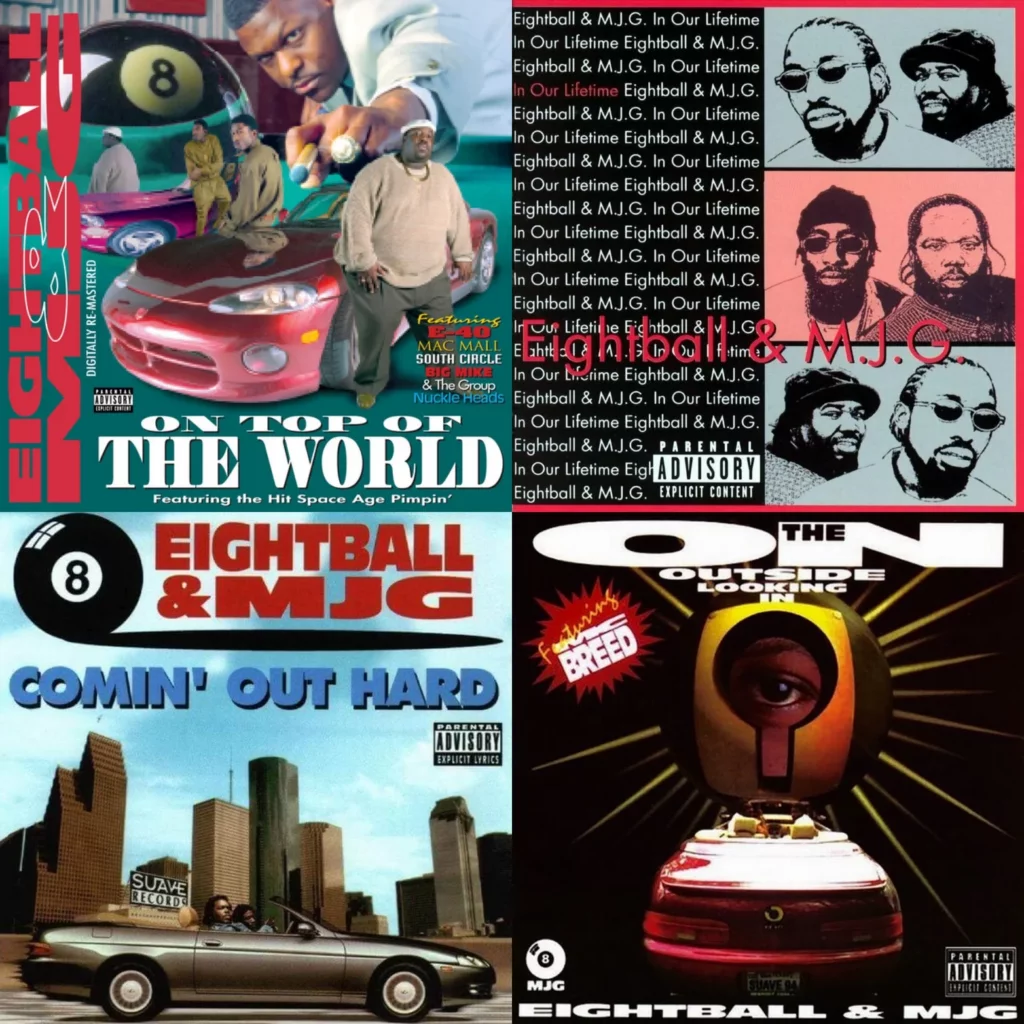
Their first three albums form one of the strongest opening runs in Southern rap. The independent Comin’ Out Hard (1993) introduced their Memphis perspective, with its unhurried production and vivid accounts of life on the other side of the American Dream. On the Outside Looking In (1994) refined that approach, while On Top of the World (1995) expanded their musical palette with a more polished sound. The latter delivered “Space Age Pimpin’,” a defining 8Ball & MJG record that paired futuristic funk with the duo’s unmistakable chemistry. Even as their production became more sophisticated, they retained the regional character and street-level perspective that made their music distinctive.
After pursuing solo projects in the late 1990s, the pair reunited for In Our Lifetime, Vol. 1 (1999) and followed it with Space Age 4 Eva (2000). These albums marked a new phase in their career, as they adapted their sound to a changing Hip Hop landscape without abandoning their Memphis foundations. Their subsequent move to Bad Boy Records brought them to a wider audience. Living Legends (2004) and Ridin High (2007) explored a more contemporary Southern rap sound, while their appearance alongside Three 6 Mafia on “Stay Fly” connected two generations of Memphis rap at a moment when the city was receiving unprecedented national attention.
Their final studio album as a duo, Ten Toes Down (2010), arrived after decades of recording together and a series of changes in the Southern rap landscape. Across nine studio albums, 8Ball & MJG built a catalogue with considerable range, from uncompromising street records and introspective storytelling to soulful slow jams and Southern funk. This ranking looks at all nine albums, weighing their strongest musical qualities, their shortcomings, and the different stages of a remarkable Memphis partnership.
8. Ten Toes Down (2010)
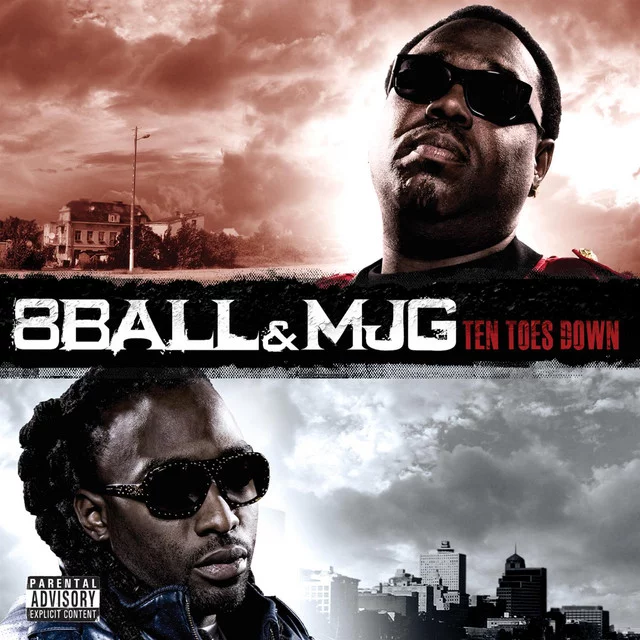
By 2010, 8Ball & MJG were done with Diddy’s Bad Boy South, and Ridin High had come and gone without much noise. Their next move took them to T.I.’s Grand Hustle, with E1 handling distribution. The result was Ten Toes Down, a record that sounds like two Orange Mound veterans settling back into what they do best. Drumma Boy anchors the set with four productions, including the booming opener “It’s Going Down” and the title track with Lil’ Boosie. David Banner gives the duo and Bun B a menacing beat on “I Don’t Give a F**k.” Even Soulja Boy, an odd booking on paper, holds his own on “Fuck U Mean.”
The first half hits hard. The trouble starts in the middle, where “She’s So Fine” and the Ricco Barrino-assisted “Spotlight” lean toward radio and drain some of the momentum. HipHopDX called the album a disappointment for sticking to familiar templates, and we get the complaint: 8Ball & MJG weren’t reinventing anything here. But the chemistry is intact, the verses are sharp, and closers like “Life Goes On” with Slim Thug carry real weight. It debuted at No. 36 on the Billboard 200 and is the weakest album in their catalog, but it’s still a solid one. | 5.5/10
7. Space Age 4 Eva (2000)
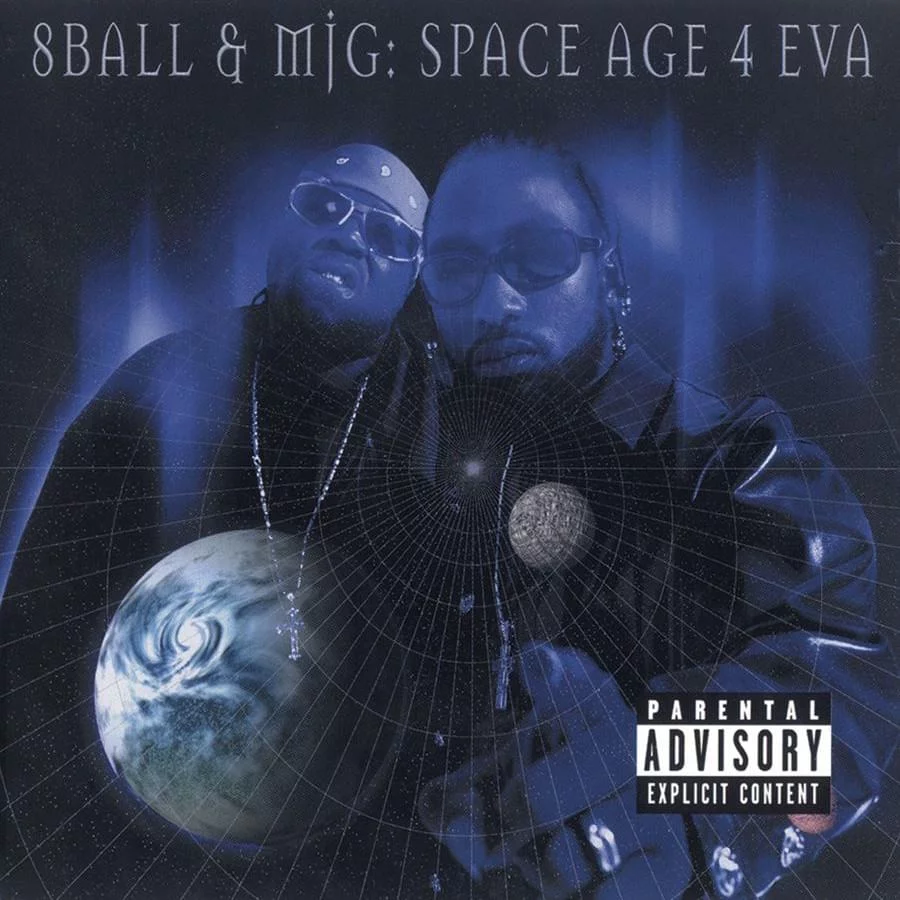
After a decade on Tony Draper’s Suave House, 8Ball & MJG struck out for a new home and landed at JCOR Entertainment, Jay Faires’ Interscope-backed imprint. The move came with a bigger budget and a wider net. Where their ’90s records relied mostly on in-house Southern production, Space Age 4 Eva brings in outside names: Jazze Pha out of Atlanta, Swizz Beatz from New York, and DJ Quik from the West Coast. MJG still handles four beats himself, including the down-home “Collard Greens.”
The guest producers deliver. Quik’s “Buck Bounce” has the elastic funk you’d expect from him. Jazze Pha brings a smooth touch to “Thingz” with Tiny of Xscape and to the lead single “Pimp Hard,” whose video was the directorial debut of photographer Anthony Mandler. Swizz Beatz closes things out on “Thank God.” The problem is how it hangs together. With so many producers in the mix, the album feels more like a collection of pairings than a complete statement, and the identity of the Suave House years gets a bit lost. It peaked at No. 39 on the Billboard 200 and No. 9 on the R&B/Hip-Hop chart. It’s a fine album that somehow never quite feels like their own. | 6/10
6. Ridin High (2007)
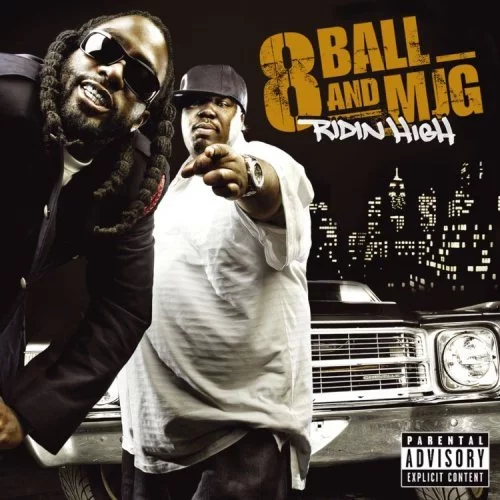
Living Legends had given 8Ball & MJG a gold plaque and a No. 1 debut on the R&B chart, so the stakes were high for their second Bad Boy South album. Originally planned for July 2006 as Pure American Pimpin’, it arrived the following March as Ridin High and debuted at No. 8 on the Billboard 200, moving 50,000 copies in its first week.
The highlights are easy to find. “Relax and Take Notes” builds around a Notorious B.I.G. verse from “Dead Wrong,” with Project Pat adding some Memphis menace. “Cruzin’” brings in Three 6 Mafia and Slim of 112 for a smooth ride, Pimp C shows up on “Whatchu Gonna Do,” and “Memphis” with Al Kapone keeps things rooted at home. Killer Mike, Juvenile and Yung Joc round out a deep Southern guest list.
The problem is everything around those songs. At 19 tracks and nearly 75 minutes, Ridin High is overstuffed, and Diddy’s presence wears thin across the intro, the title track, “30 Rocks” and a string of skits. The duo sound sharp throughout, but the album would hit far harder at half the length. There’s a great record buried in here somewhere. | 6.5/10
5. Living Legends (2004)

Nobody saw this one coming. Four years after Space Age 4 Eva, the Memphis duo signed with Diddy’s Bad Boy, a label built on New York shine, and the pairing paid off right away. Living Legends debuted at No. 3 on the Billboard 200, topped both the R&B/Hip-Hop and Rap Albums charts, and went gold within ten weeks of release. It was the biggest commercial moment of their career.
What makes it work is that 8Ball & MJG never sound like guests on their own album. Bangladesh’s thumping production on lead single “You Don’t Want Drama” gives them a hard opening statement, and “Straight Cadillac Pimpin’” with Shannon Jones is as smooth as anything they’ve done. The guest list reads like a roll call of the South at its 2004 peak. Bun B joins them on “The Streets,” Ludacris turns up on “Shot Off,” and T.I. and Twista trade verses over Lil’ Jon’s beat on “Look at the Grillz.” 112 add a slick R&B hook to “Trying to Get at You,” and “Memphis City Blues” brings it all back to Orange Mound.
The weak points come from the label side. Diddy’s voice-overs and the “Mad Rapper” interlude interrupt the flow more than they add to it, and the album runs long at 18 tracks and over 72 minutes. A few of the club records also date it more than the duo’s best work. Still, Living Legends proved two Memphis veterans could make it on a major without giving up who they were, and the songs mostly back that up. | 7/10
4. On the Outside Looking In (1994)

The title says plenty about where 8Ball & MJG stood in 1994. Rap was still a two-coast conversation, and a pair of Memphis transplants recording for Tony Draper’s Houston-based Suave House had to push their way in. A year after Comin’ Out Hard, their second album leans into that outsider status and turns it into a sound of its own.
The big change is in the production. The Southern bump of the debut is still there, but now it rides alongside rolling synths and P-Funk basslines that borrow from what was happening out West. “Players Night Out,” the lead single, glides along with that laid-back G-funk feel. “Sesshead Funk Junky” brings in Flint’s MC Breed for a fittingly funky team-up. “So What U Sayin’” goes darker and more cinematic, like it was scored for a ’70s street film.
The two MCs had their roles locked in by now. 8Ball brings the deep voice and the steady, conversational flow, and MJG answers with a quicker, more melodic drawl, and the back-and-forth is what keeps the album moving. The subject matter rarely strays from pimping, hustling, and survival, and a few cuts in the back half, including the six-minute “Break-a-Bitch College,” run longer than their ideas. Thorough and Crime Boss show up on closer “Lay It Down” to add some extra Southern muscle.
It’s not quite the classic they’d make next, but On the Outside Looking In is where 8Ball & MJG started to sound fully formed, and the rest of their ’90s run builds on it. | 7.5/10
3. Comin' Out Hard (1993)

Some debuts sound like a warm-up. Comin’ Out Hard sounds like 8Ball & MJG already knew exactly who they were. Released in August 1993 on Suave House, the Houston independent that would carry them through the decade, it was nine songs and a little over 40 minutes of Memphis street life. That was enough to put the duo on the map.
The sound is stripped down and heavy. Slow, thudding drums and deep bass sit under eerie melodies, and the whole thing has a homemade roughness that only adds to the mood. Nothing is polished, and none of it needs to be. On the title track, over a brooding groove, the two trade verses about clawing their way up from nothing. “9 Little Millimeta Boys” and “Armed Robbery” play out like crime stories, tense and full of detail, the kind of tracks you follow from the first bar to the last. “Pimps,” the longest song at nearly seven minutes, introduces the player persona that would define their career for years to come.
The album also gives each MC a moment alone. 8Ball takes “Mr. Big” for a swaggering, funk-laced solo turn, while MJG handles “Pimps in the House” by himself. Hearing them apart only makes it clearer how well they work together. Their voices and rhythms fit so naturally that the duo tracks feel like one long conversation. | 8/10
There’s no filler here. At nine tracks, Comin’ Out Hard gets in, says what it needs to say, and gets out, which is more than can be said for some of their later, overstuffed releases. The production can sound thin next to what came after, but that rawness is part of the point. This is Southern rap before the money and the national spotlight, built on hunger and resourcefulness.
Without major-label backing, the album went on to sell more than half a million copies, mostly through word of mouth across the South. It laid the foundation for the Memphis sound and for everything 8Ball & MJG did next.
2. In Our Lifetime (1999)

By the late ’90s, 8Ball & MJG had been apart for a while. 8Ball put out the sprawling Lost, MJG answered with No More Glory, and fans could be forgiven for wondering whether the duo still had another album in them. In Our Lifetime settled that question. Released in May 1999 through a new distribution deal between Suave House and Universal, it debuted at No. 10 on the Billboard 200, went to No. 1 on the R&B chart and sold 95,000 copies in its first week. It would also be their last album for Tony Draper’s label.
Most of the production comes from T-Mix, with Mr. DJ, OutKast’s longtime DJ, handling the rest. Part of the album was recorded at the Dungeon in Atlanta, and you can hear it. The beats are warmer and more musical than anything they’d rapped over before, built on syrupy bass, laid-back guitar licks and a late-’70s soul feel that moves the duo well beyond their G-funk phase. “Daylight” is the clearest example, a mellow, almost jazzy look back at where they came from. “Nobody But Me” gives MJG room to run, while 8Ball takes a more personal turn on “Love Hurts” with Nina Creque.
The guests fit the mood rather than fight it. Cee-Lo brings his weathered soul to “Paid Dues,” one of the album’s best moments, and OutKast join in on the Mr. DJ-produced “Throw Your Hands Up,” which unites Memphis and Atlanta at a time when both cities were starting to dominate. Big Duke and Thorough keep things close to home on “Belly” and “Get It Crunk,” and “We Started This” stakes a claim that’s hard to argue with. Eight years into their run, these two had every right to call themselves pioneers.
The real story is how much the duo had grown. The pimp talk is still there, but it sits beside songs about loyalty, loss and survival, and both MCs sound more reflective than ever. 8Ball’s deep, unhurried delivery and MJG’s slicker, quicker flow have never fit together better.
In Our Lifetime is the most mature and best-sounding record 8Ball & MJG ever made. Only one album beats it. | 8.5/10
1. On Top Of The World (1995)

You can hear it from the first verse: two rappers who know exactly how they sound together. 8Ball takes his time, easy and conversational, like he’s telling a story at the end of a long night. MJG comes in sharper and quicker, cutting across the beat. By their third album, released on Halloween 1995 through Suave House and Relativity, that back-and-forth had become second nature, and On Top of the World is where it hits hardest.
Producer T-Mix handles every track, and that consistency is a big part of why the album holds together so well. He takes the high synths and elastic basslines of G-funk and weighs them down with Memphis heaviness, so the grooves roll slow and deep. “Pimp in My Own Rhyme” and “Break’em Off” sit in the pocket for minutes at a time without ever getting dull. “Space Age Pimpin’” with Nina Creque drifts off into cosmic, late-night funk and gave the duo a nickname they would carry for years.
What lifts the album above the rest of their catalog is the writing. “Funk Mission” looks at what drug addiction does to people and the neighborhoods around them. “Hand of the Devil” turns greed into a grim morality tale, and “What Can I Do” weighs the cost of making it against the problems that never went away. On “Friend or Foe,” E-40, Mac Mall, former Geto Boy Big Mike and Rodney Ellis join in for a long meditation on trust, linking Memphis, Houston and the Bay at a time when few people were drawing those lines. South Circle and the debuting Nuckleheadz keep the Suave House family close.
At over 70 minutes, it should drag, but it doesn’t. There are no skits and no detours, only 15 tracks with something to say, all wrapped in one of Pen & Pixel’s gloriously over-the-top covers.
This album is aging like a fine wine. It sounds as fresh now as it did over 30 years ago, and every listen turns up a new detail in 8Ball’s storytelling or a new turn in the way the two voices play off each other. In a stacked 1995, On Top of the World was a top-10 album, and it remains the high point of a career full of them. | 9/10