

Few MCs did more to shape the technical and narrative foundations of East Coast street rap than Kool G Rap. He came out of Corona, Queens, as part of Marley Marl’s Juice Crew and built a style around dense multisyllabic rhymes, interlocking internal patterns and vivid accounts of criminal life. His delivery was hard and clipped, delivered with seemingly endless breath control, but what really set him apart was what he did with all that technique. G Rap could pack a verse with elaborate rhyme combinations and never lose the thread of the story. That balance later became central to the work of many of rap’s finest writers.
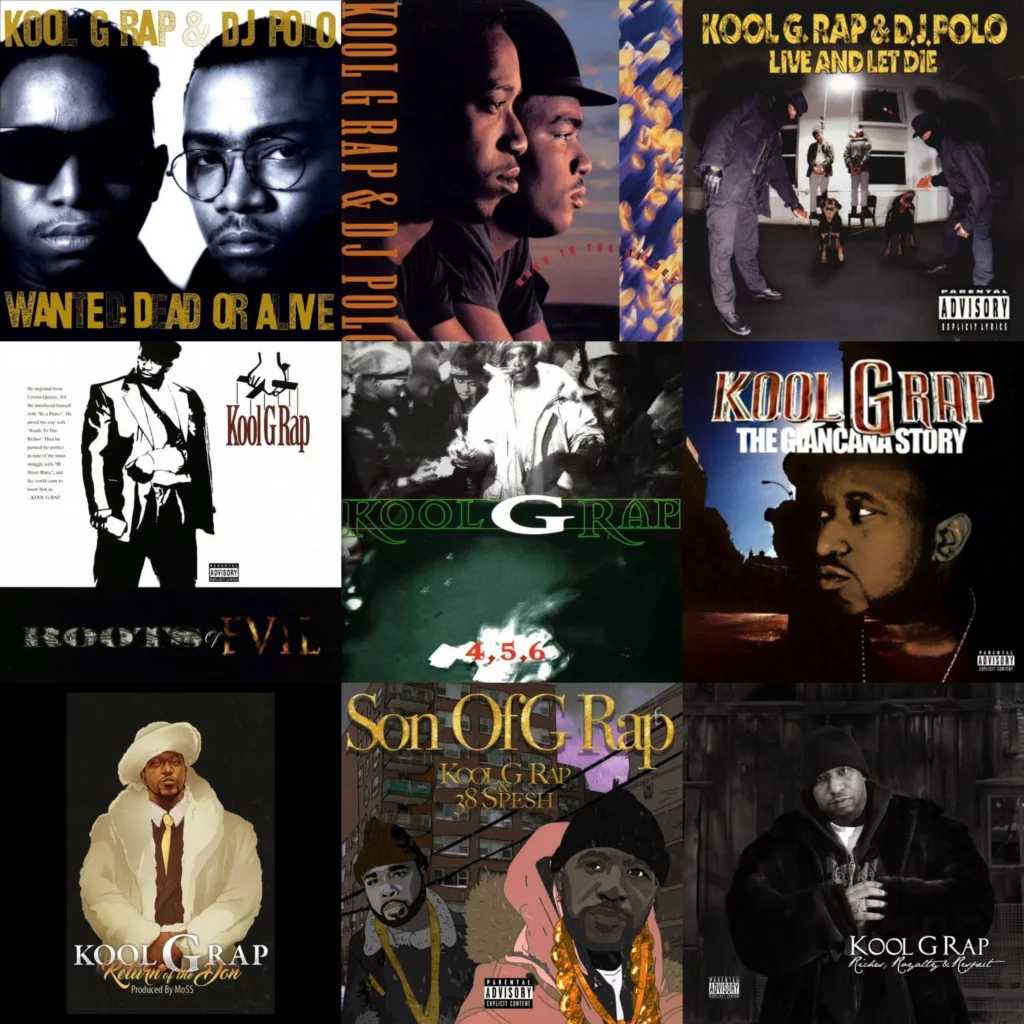
His partnership with DJ Polo produced some of the most important records of the late 1980s and early 1990s. Road to the Riches (1989) introduced a formidable writer. Wanted: Dead or Alive (1990) took his storytelling into darker territory, with “Streets of New York” capturing the pressure and desperation of city life in the detail of a crime film. On Live and Let Die (1992), he pushed the cinematic approach further, drawing on mob movies, criminal codes and elaborate underworld plots. He was working with mafioso imagery years before Raekwon’s Only Built 4 Cuban Linx… and Jay-Z’s Reasonable Doubt brought that style to a wider audience.
His influence is all over the New York MCs who followed. Nas, Biggie, Raekwon and Jay-Z each found their own way into detailed street narratives and complex rhyme construction, but G Rap laid out much of the ground they inherited. Jay-Z acknowledged as much on “Encore”, measuring his own rapping against G Rap in his prime. More broadly, G Rap’s technical vocabulary raised expectations for what an MC could fit into a single verse.
After he split from Polo in 1993, his solo output was less consistent. 4, 5, 6 (1995) remains a major release, with production from Buckwild, guest spots from Nas and B-1, and the highest chart placing of his career. Albums such as Roots of Evil, The Giancana Story and Last of a Dying Breed followed, along with joint projects with the 5 Family Click, Necro and 38 Spesh. The production around him has varied in quality, but his pen has held up.
Below, we rank all 13 of his studio albums, solos and collaborations. Taken together, they show why so few MCs did more to build the vocabulary of street rap.
13. Click Of Respect (with the 5 Family Click) (2003)
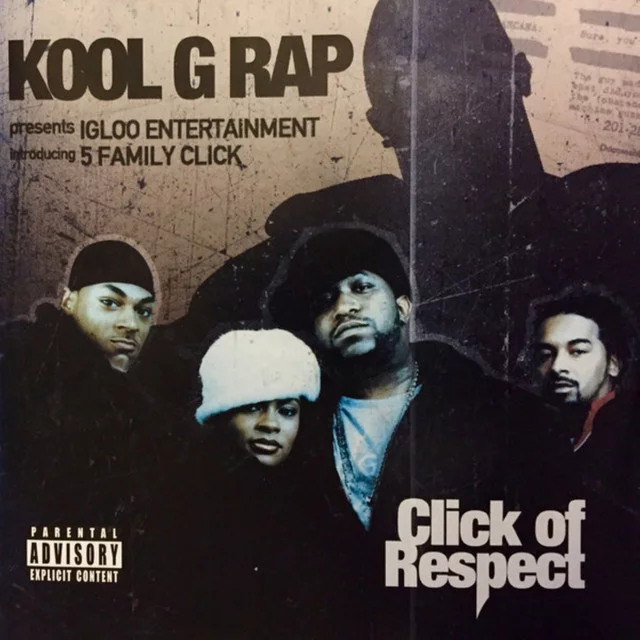
Click of Respect came out in October 2003 on Kool G Rap’s own Igloo Entertainment imprint. It was his way of introducing his new crew, the 5 Family Click, to the East Coast hardcore scene. His name heads the bill, which is why it earns a place here, but the album is really a showcase for his protégés. G Rap, billed under his G Rap Giancana alias, is still the main reason to listen. C.O.S. produced most of the beats, with Buckwild, Ty Fyffe and DR Period also contributing, and the sound stays gritty and street-level throughout. When G Rap has a track to himself, on “Blackin Out” and “Get da Drop on Em”, his writing is as sharp as ever: dense rhyme schemes and hard-edged detail. The rest of the crew rarely matches him, though Ma Barker shows real promise. It’s a mixed bag at best, and mainly one for G Rap completists. | 4.5/10
12. Half A Klip (2008)
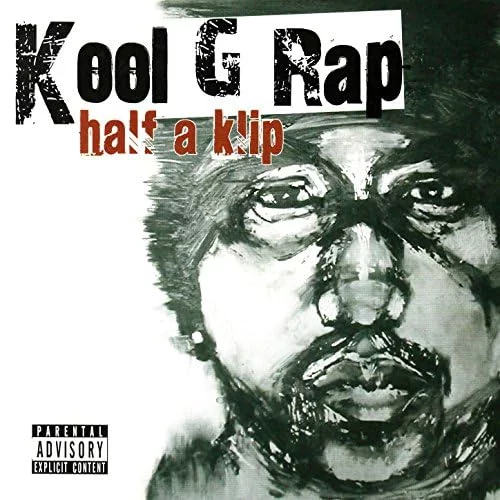
Half a Klip came out in February 2008 on Chinga Chang, Latchkey and Koch, after being pushed back twice, and was Kool G Rap’s first solo release in six years. As the title suggests, it’s a short record: nine new tracks plus two bonus mixes, several of them under two minutes. It feels more like a prelude to a full album than a statement of its own. The production lineup is strong, with Domingo producing three tracks and Marley Marl and DJ Premier one each. When the beats lean toward boom-bap, G Rap sounds like himself. “100 Rounds”, “The Life” and the Marley Marl-produced “With a Bullet”, featuring K.L. of Screwball, show his rhymes are as dense and grimy as ever. The detours are less convincing: “Turn It Out” chases the club, and “On the Rise Again” sets Premier’s beat under a pop hook from Haylie Duff. It’s a solid reminder of what he can do, but too slight to rank higher. | 5/10
11. Last Of A Dying Breed (2022)
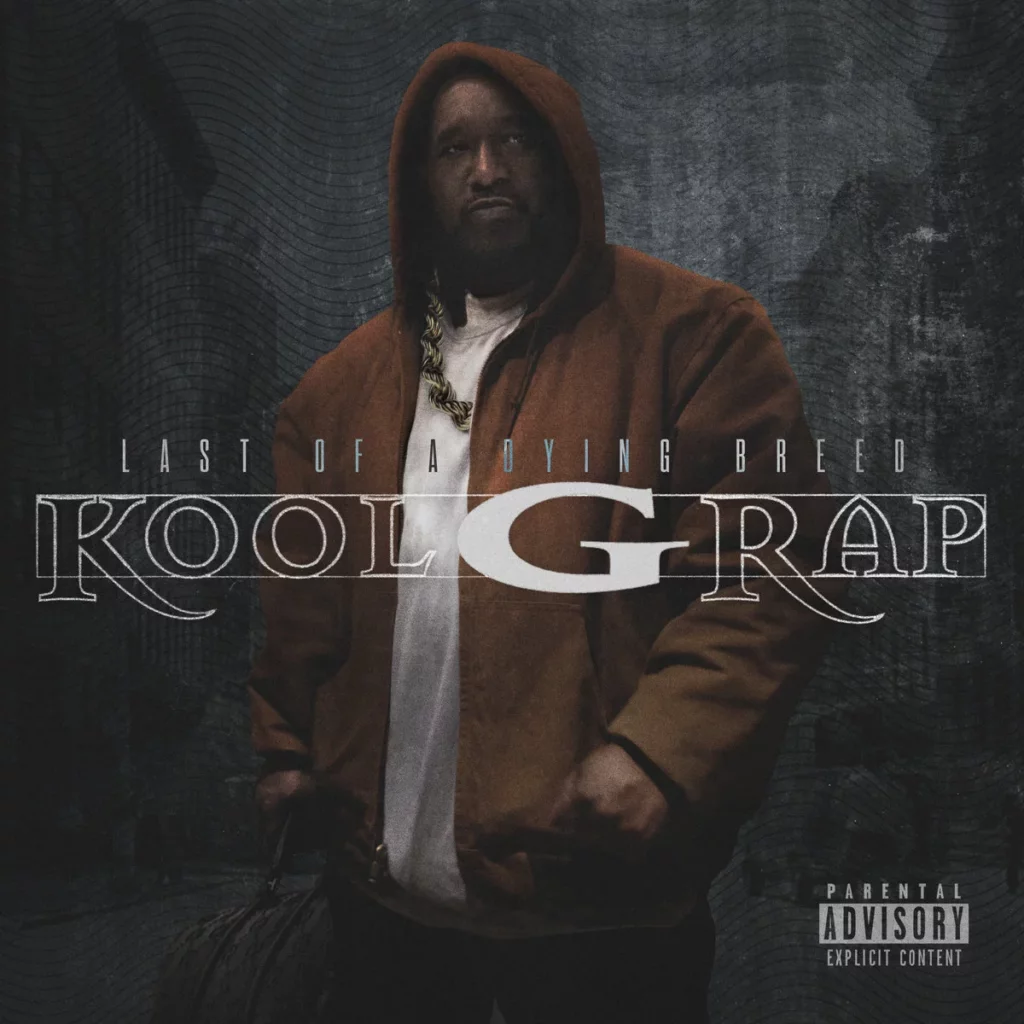
Released in December 2022, Last of a Dying Breed was Kool G Rap’s first solo album since Return of the Don five years earlier. Jeremy Beaver of the National Hip-Hop Museum executive produced it, and Domingo, a longtime collaborator, came back from a production break to handle the whole record. The guest list connects G Rap’s past with the present: Big Daddy Kane joins him on “Fly Till I Die”, Grandmaster Caz and Marley Marl appear on the closer “Born N Raised”, and AZ and 38 Spesh turn up on “Born Hustler”. At 54, G Rap’s multisyllabic writing is still sharp, and solo cuts like “Official” and “Donald Goines” show his storytelling hasn’t faded. The music is the weak point. When the album came out, we found Domingo’s beats bland and repetitive, and some of the guest spots don’t match G Rap’s standard. It’s a respectable victory lap, but not one that stays with you. | 6/10
10. Once Upon A Crime (with Necro as the Godfathers) (2013)
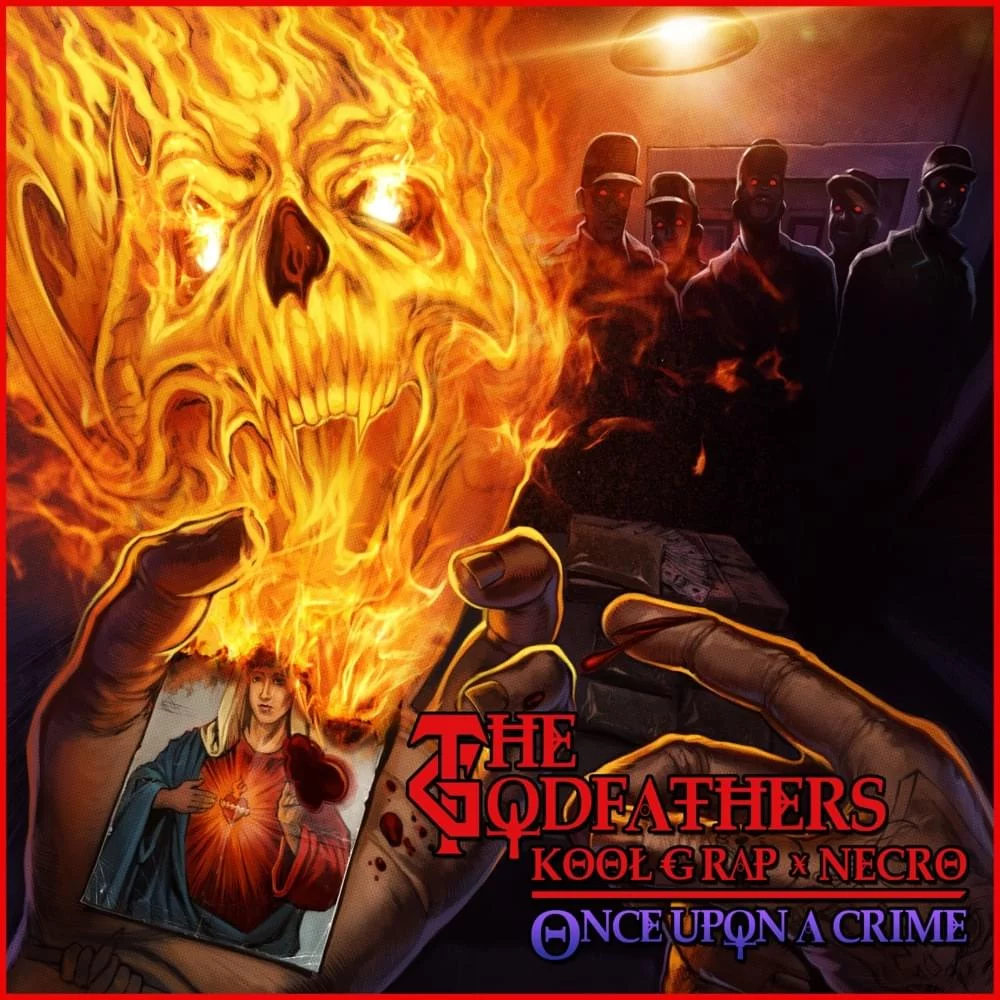
Necro has always named Kool G Rap as his main influence, so the Godfathers were a natural pairing. The duo announced the project in 2011 and put out two mix CDs of older material while they worked on it. After several delays, Once Upon a Crime arrived in November 2013 on Necro’s Psycho+Logical-Records. Necro produced almost all of it, apart from “Unsub”, which he co-produced with G Rap, and his dark, sample-heavy beats give the album a bleak, cinematic feel. The two MCs share a fixation on violence but come at it differently. G Rap brings mob-film storytelling and technical precision, while Necro goes for slasher-movie shock. The problem is the format. Nearly every track runs Necro verse, hook, G Rap verse, hook, with almost no trading of bars. Across 18 tracks, that pattern starts to drag well before the end. | 6/10
9. Riches, Royalty, Respect (2011)

Released in May 2011 on Fat Beats, Riches, Royalty, Respect came after a short prelude EP, Offer You Can’t Refuse, that January. It has a warmer, more vintage sound than most of Kool G Rap’s catalog, with 1970s soul samples from Al Green and Lee Moses, though the mafioso storytelling remains at its center. Most of the beats come from lesser-known producers, with The Alchemist, Infamous and Marley Marl also contributing. The best moments pair G Rap with the darkest, most dramatic music. DJ Supa Dave’s symphonic soul on “In Too Deep” suits him perfectly, “Sad” flips Lee Moses into one of his most heartfelt songs, and The Alchemist’s “American Nightmare” brings in Havoc. “Pages of My Life” is reflective in a way he rarely gets. The lack of big-name production keeps the album from going higher, but his flow is heavier now and still sharp. | 6.5/10
8. Son Of G Rap (with 38 Spesh) (2018)
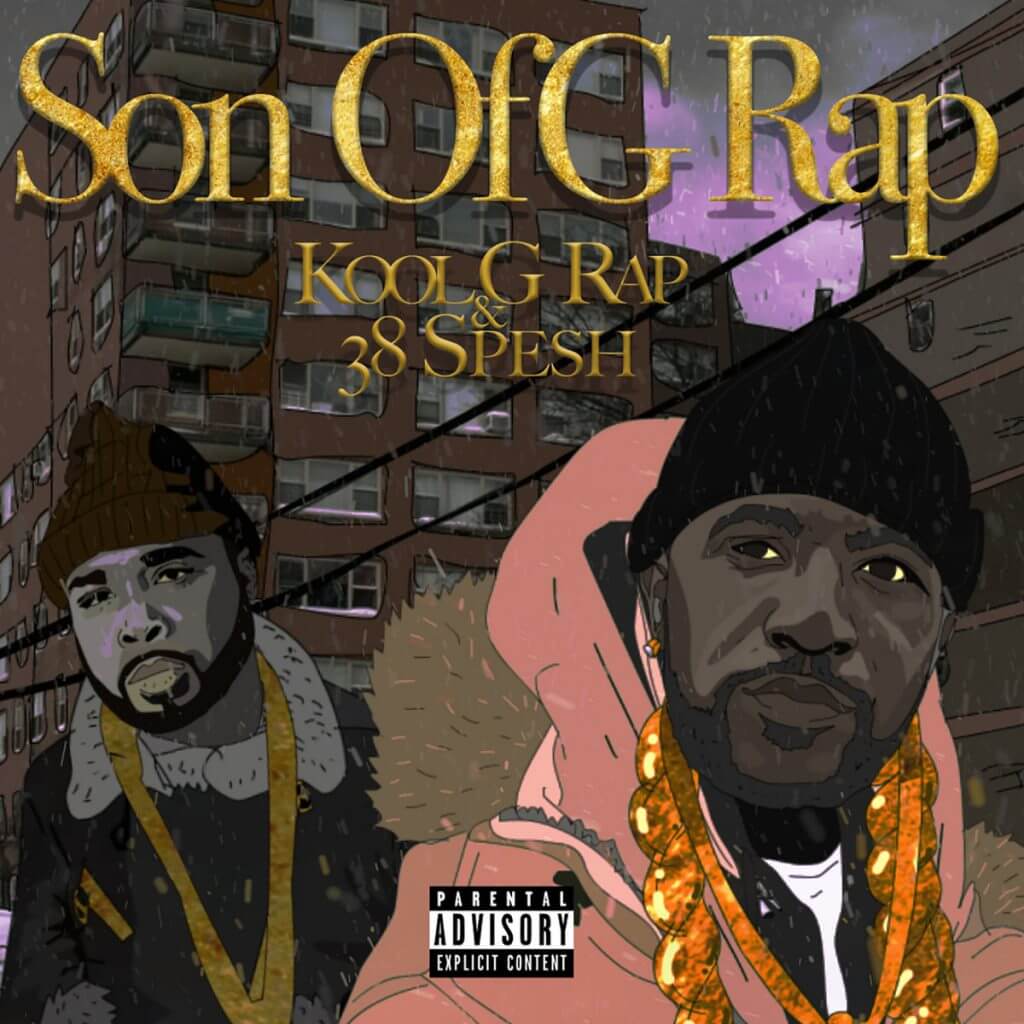
Kool G Rap and Rochester’s 38 Spesh first worked together in 2014 on “The Meeting”, produced by DJ Premier, and the track was strong enough to grow into a full album four years later. Son of G Rap came out in July 2018 as a deliberate handing over of the torch. Spesh raps on all 15 tracks and produced two himself, while G Rap appears on nine. That imbalance is the record’s one real drawback. At times it plays like a Spesh album with a very prominent guest, not a true duet.
Still, the setting suits both MCs. The production lineup is the strongest of G Rap’s later career: DJ Premier, Pete Rock and Showbiz alongside The Alchemist and Daringer, with Midnite holding it together. Spesh’s calm, measured delivery is a good contrast with G Rap’s gravelly, rapid-fire storytelling, and the album stays tight at under 50 minutes. “The Meeting” is still a highlight. So is Pete Rock’s “Flow Gods”, where Freddie Gibbs and Meyhem Lauren hold their own. Cormega, AZ, N.O.R.E. and Benny the Butcher also appear. Of all G Rap’s later projects, this is the one that most clearly shows how his influence passed to the generation that followed him. | 7/10
7. Return Of The Don (2017)
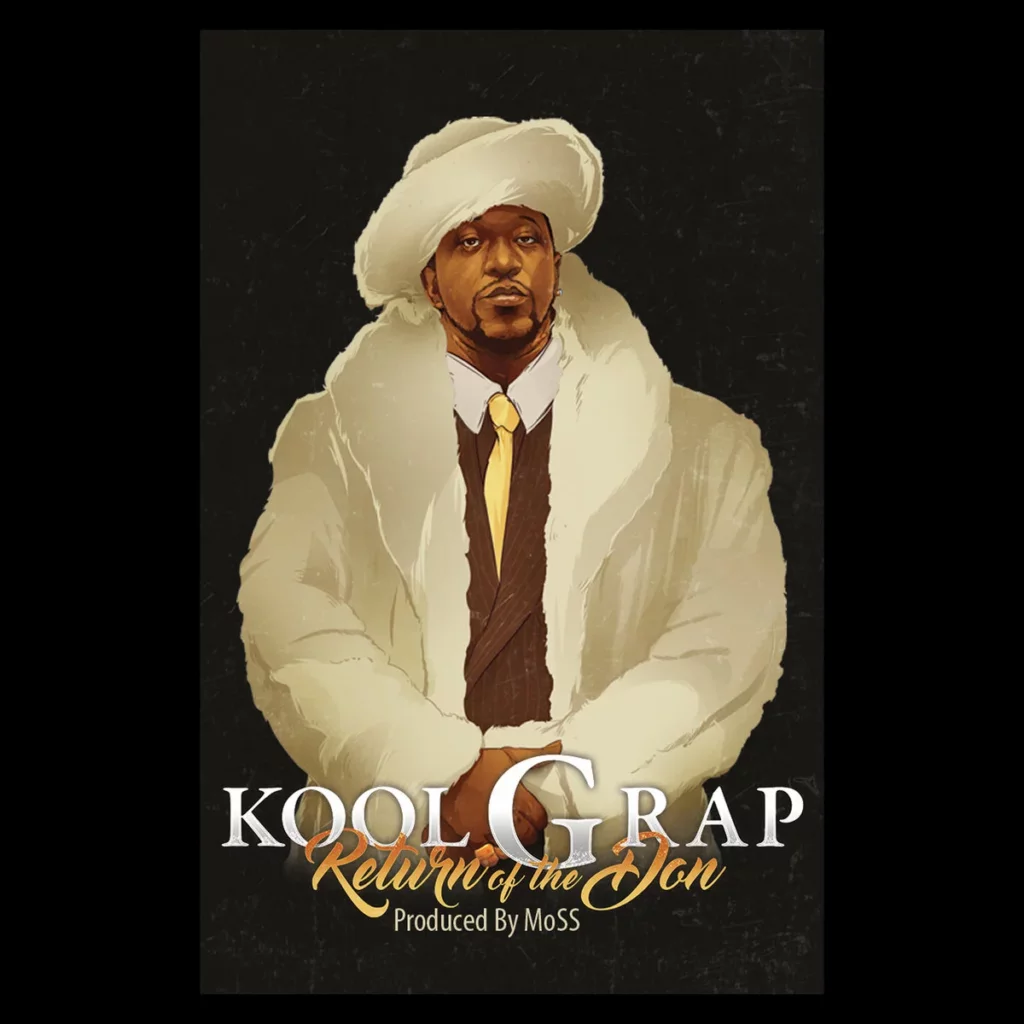
Return of the Don came out in June 2017, six years after Riches, Royalty, Respect. It’s the most cohesive of Kool G Rap’s later albums, and the main reason is that one producer made all of it. Toronto’s MoSS, who had already produced “The Life” on Half a Klip, built the whole record from dusty samples, hard drums, and scratches. That gives G Rap a consistent backdrop for the kind of street parables he has been perfecting since the late 1980s. He doesn’t try anything new, and he doesn’t need to. The writing is sharp, the delivery confident, and the mafioso storytelling as vivid as ever.
The guest list spans several generations of East Coast rap. Raekwon, N.O.R.E. and Cormega represent his 1990s peers, a posthumous Sean Price verse appears on “Popped Off”, and Conway the Machine and Westside Gunn bring Griselda to the closer, “Rest in Peace”. “World Is Mine”, with Crooked I, Willie the Kid, and Pearl Gates, and “Capitol Hill” are among the highlights. The drawbacks come from the same choices: the uniform production means some tracks blur together, and with guests on almost every song, G Rap has very little space to himself. | 7/10
6. The Giancana Story (2002)

Kool G Rap’s opening verse on “One Four Love Pt. 1”, from the Hip Hop for Respect project, earned him a deal with Rawkus. The Giancana Story was planned as his debut there, with an October 2000 release date. Instead, the album sat for more than two years while Rawkus untangled its label affiliations. By the time Koch released it in November 2002, more songs had been cut than kept. The losses included “Keep Goin’” with Snoop Dogg and Devin the Dude, and a version of “Holla Back” featuring Nas. The finished record missed the Billboard 200 entirely.
What did make it is strong. G Rap named the album after mob boss Sam Giancana and finally explained the “G” on “Drama”, and his mafioso persona has never been more explicit. Bink’s “Where You At”, with Prodigy, and Buckwild’s “Holla Back”, with AZ, rank among his best late-career tracks, while “My Life” gave him a top-ten rap single. His style hasn’t changed, but by 2002 the rest of hardcore rap had largely caught up with him. That timing works for and against the album: it sounds right at home, but it no longer sounds revolutionary. | 7/10
5. 4,5,6 (1995)

4,5,6 arrived in September 1995, two years after Kool G Rap split from DJ Polo. The break followed the fallout over the Live and Let Die cover, which led Warner Bros. to drop Cold Chillin’. Cold Chillin’ had since signed a distribution deal with Epic, and G Rap’s solo debut was the first release under it. The title comes from the winning roll in the street dice game cee-lo. Recorded at Bearsville Studios in upstate New York, the album sets his crime narratives against a darker, more contemporary sound, and it became the biggest commercial success of his career: No. 24 on the Billboard 200 and the top of the R&B/Hip-Hop albums chart.
G Rap writes these songs with a crime novelist’s eye, filling them with vivid characters, calculated betrayals and constant danger. On “It’s a Shame” he plays a heroin kingpin boasting of his wealth, while Sean Brown’s hook hints at remorse. Dr. Butcher, Buckwild, Naughty Shorts and T-Ray keep the beats spare and hard-edged. “Executioner Style” and “Take ’Em to War”, with B-1 and MF Grimm, create real menace, and Buckwild’s jazzy “Blowin’ Up in the World” offers a welcome change of mood. The best-known track is “Fast Life”, where Buckwild’s polished soul backdrop pairs two Queens MCs on money and status. Nas contributes a strong verse, but G Rap’s phrasing defines the song. The production lacks some of the musical character of the Polo records, but as a showcase for the MC, 4,5,6 is uncompromising. | 7.5/10
4. Roots Of Evil (1998)

Roots of Evil is our favorite Kool G Rap album outside the DJ Polo years, and also his most overlooked. He recorded it in Arizona at a time when he was deliberately putting distance between himself and New York, but the stories, characters and language all come straight from the Queens underworld he had been documenting for a decade. If anything, the distance let him go darker than ever. Even the cover looks like a crime film, borrowing from the posters for The Godfather and Scarface.
Where 4,5,6 had Buckwild’s polish on its singles, Roots of Evil returns to the harsher, more claustrophobic side of G Rap’s music. Dr. Butcher, CJ Moore, Fade and the other producers work with ominous keyboards, sparse drums and minor-key samples, and they care more about atmosphere than radio play. The writing is the main reason the album ranks this high. “Foul Cats” is a revenge story about a kidnapping, a drug stash and an execution, told with a crime novelist’s precision. “A Thug’s Love Story (Chapter I, II, III)” slowly unfolds a story of romance, ambition and violence, while “Hitman’s Diary” and “Home Sweet Funeral Home” follow the lethal consequences of the life. G Rap builds scenes, develops characters and traces what their choices cost them, packing every line with internal rhymes. “Can’t Stop the Shine”, with Miss Jones, adds a smoother R&B touch, but even there his view is that of someone who knows the price of the lifestyle. It’s one of his darkest and most uncompromising records. | 8/10
3. Live And Let Die (with DJ Polo) (1992)

Live and Let Die plays like a gangster film on wax, and it nearly didn’t come out. Kool G Rap began writing and recording it in Los Angeles in 1991, but release plans stalled. Cold Chillin’ was fighting the Biz Markie sampling lawsuit, and its distributor, Warner Bros., was caught up in the Ice-T “Cop Killer” controversy. Then came George DuBose’s cover, showing G Rap and Polo teasing a pair of rottweilers whose leashes are tied to the chairs beneath two narcotics agents in nooses. Warner refused to distribute the album. G Rap spent nearly a year rewriting and re-recording before Cold Chillin’ put it out independently in November 1992, and it went out of print until a 2008 reissue.
Moving west shaped the sound. Sir Jinx, Ice Cube’s longtime collaborator, co-produced most of the album with G Rap. His heavy drums, funky basslines and eerie keyboards give it a West Coast edge, and the Trackmasters add three tracks of their own. The setup has led many to call it the East Coast’s AmeriKKKa’s Most Wanted. G Rap wanted every song to work as a separate scene, and he goes all-in on the mafioso approach he had been developing since the title track of Road to the Riches. “On the Run” follows a criminal sinking into ever deeper trouble, while the Trackmasters-produced “Ill Street Blues”, which got steady play on Yo! MTV Raps and Rap City, stands among the finest songs in his catalog.
The range under the hardcore surface is wide. “Train Robbery” is a full heist movie, “Crime Pays” turns to social commentary in the tradition of Public Enemy and BDP, and “Straight Jacket” and “Edge of Sanity” go into horrorcore. “Home Sweet Home” and “Still Wanted Dead or Alive” are sequels to tracks from the previous album. Big Daddy Kane trades bars with him on “#1 with a Bullet”, and the closer, “Two to the Head”, brings in Ice Cube, Scarface and Bushwick Bill for a heavyweight cross-regional posse cut.
Through all of it, G Rap’s technique is astonishing. His internal rhymes and breathless delivery make even the most graphic stories gripping. The volume of violence and explicit content can become overwhelming, which is the only thing keeping it from the top spot. It remains one of the clearest blueprints for 1990s New York street rap. | 8.5/10
2. Road To The Riches (with DJ Polo) (1989)

Kool G Rap and DJ Polo first appeared on Mr. Magic’s Rap Attack in 1986 with “It’s a Demo”, a song so impressive that Marley Marl took them into the Juice Crew. The duo spent the next few years releasing singles before recording Road to the Riches in 1988, and it finally came out on Cold Chillin’ early the following year. The singles had hinted at G Rap’s talent, but the album revealed how much he could do. His intricate rhyme patterns, internal rhymes and multisyllabic constructions, delivered with complete control, set a new standard for technical skill in New York.
Marley Marl produced the entire album, and his punchy drums, funk samples, and tough arrangements suited G Rap’s aggressive style. “It’s a Demo” still sounds remarkable, with G Rap racing through dense rhyme sequences without losing any clarity. “Men at Work” is just as formidable. According to the liner notes of Phrenology, it was the song that brought The Roots together in a high school lunch period. The title track, which got heavy rotation on Yo! MTV Raps, moves into darker territory. Its cinematic account of chasing wealth through crime, complete with a nod to Al Pacino, set out the mafioso approach years before it became a movement.
The title track is the exception, though. Most of Road to the Riches is battle rap in the vein of Rakim and Big Daddy Kane, and it shows an MC with an unusually broad range. “Poison” pairs an infectious groove with one of his most memorable vocal performances, “She Loves Me, She Loves Me Not” turns to romance, and “Trilogy of Terror” hints at the horror-tinged storytelling to come. DJ Polo’s cuts, especially on his own showcase “Cold Cuts”, keep the partnership at the center of the record.
Road To The Riches‘ influence runs through Nas, Biggie, Jay-Z, and Raekwon. G Rap would go deeper on the next two albums, but the blueprint is already here. | 8.5/10
1. Wanted: Dead Or Alive (with DJ Polo) (1990)
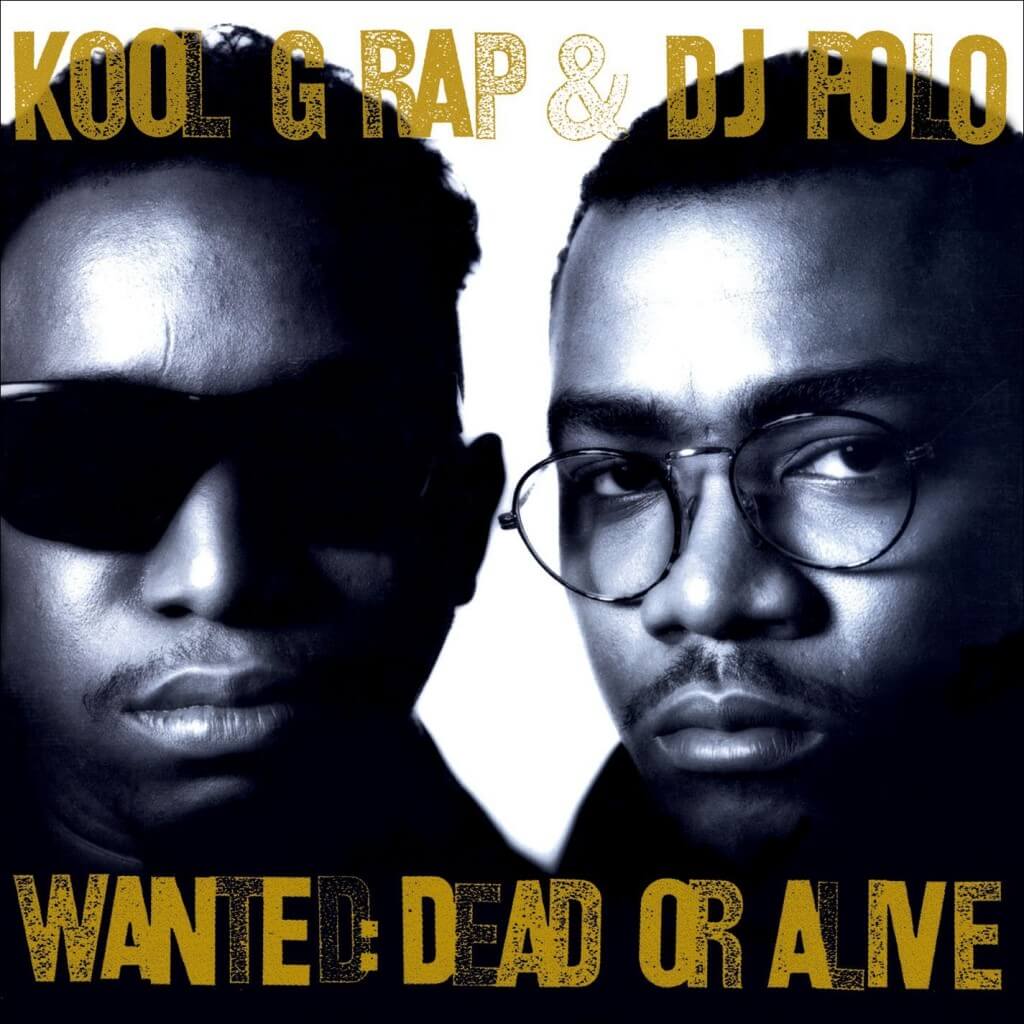
Wanted: Dead or Alive is where Kool G Rap became the writer the rest of New York would learn from. Road to the Riches had introduced a formidable MC whose rhyme schemes and rapid-fire delivery set him apart. Released in August 1990, barely a year later, the duo’s second album points that technique at darker subjects: crime, poverty, street violence and organized crime. It’s the album where his cinematic storytelling fully took shape.
The production credits reach back to G Rap’s beginnings. Eric B, who grew up with him in Corona and introduced him to DJ Polo, co-produced much of the album with G Rap and a young Large Professor. Marley Marl closes it with “Rikers Island”. The beats are stark and sample-driven, rougher than the Juice Crew polish of the debut, and the album has several distinct textures as a result.
“Streets of New York” is the defining moment, and one of the most important songs in New York rap. Over a bleak loop, G Rap turns everyday observations into a detailed portrait of a desperate city: addicts, hustlers, broken families and the constant threat of violence. Nas later named it as an influence on “N.Y. State of Mind”, and you can hear the line from one to the other. The title track, “Death Wish” and “Money in the Bank”, a posse cut with Large Professor, Freddie Foxxx and Ant Live, bring mob-movie menace. “Bad to the Bone” and “Kool Is Back” give him room to unload his internal rhymes.
The album’s range is a big part of why it ranks first. “Talk Like Sex” is an explicit exercise in sexual boasting, while “Erase Racism” brings in Big Daddy Kane for a direct attack on prejudice, with Biz Markie on the hook. DJ Polo gets real space on “Play It Again, Polo” and “The Polo Club”, and his cuts keep the partnership at the center of the record.
Live and Let Die would push these ideas to more elaborate extremes, even writing sequels to “Streets of New York” and the title track. Wanted: Dead or Alive has the better balance of menace, range and control. This is Kool G Rap at his most essential.