
Some albums need a second listen, and a few need a second decade. The ten records on this list met puzzled fans, nervous labels, and soft sales, because each one broke from the sound that had made its artist popular. Time has treated them better than their release weeks did.
The pattern starts with the Beastie Boys. After the frat-rap of Licensed To Ill, they moved to Los Angeles and built Paul’s Boutique with the Dust Brothers, stacking hundreds of samples into dense, shifting collages. Capitol wanted party anthems and got a record that rewarded headphones. De La Soul answered the D.A.I.S.Y. Age image of their debut with a title that declared the group dead. The Jungle Brothers took their sound into murky, experimental territory on J. Beez Wit The Remedy. Digable Planets and The Pharcyde each followed a breakthrough with something quieter and stranger, and watched part of their audience drift away.
The 2000s brought a different kind of backlash. Common traded the warm soul loops of Like Water For Chocolate for guitars and electronic textures on Electric Circus. Mos Def brought a live rock band into The New Danger. Kanye West sang through Auto-Tune over cold drum machines on 808s & Heartbreak, and Eminem buried Relapse under horror-movie accents before dismissing it himself on his next album. Q-Tip never got a public reaction at all: Arista shelved Kamaal The Abstract, and it stayed officially unreleased until 2009.
We won’t pretend every one of these is a masterpiece. Several have real flaws, and we’ll get to them. What they share is a refusal to repeat a formula at the exact moment repeating it would have paid best. Listeners caught up eventually, and in a few cases the rest of Hip Hop followed. Count how many rappers now sing over sparse drum machines, and 808s & Heartbreak stops sounding like a detour.
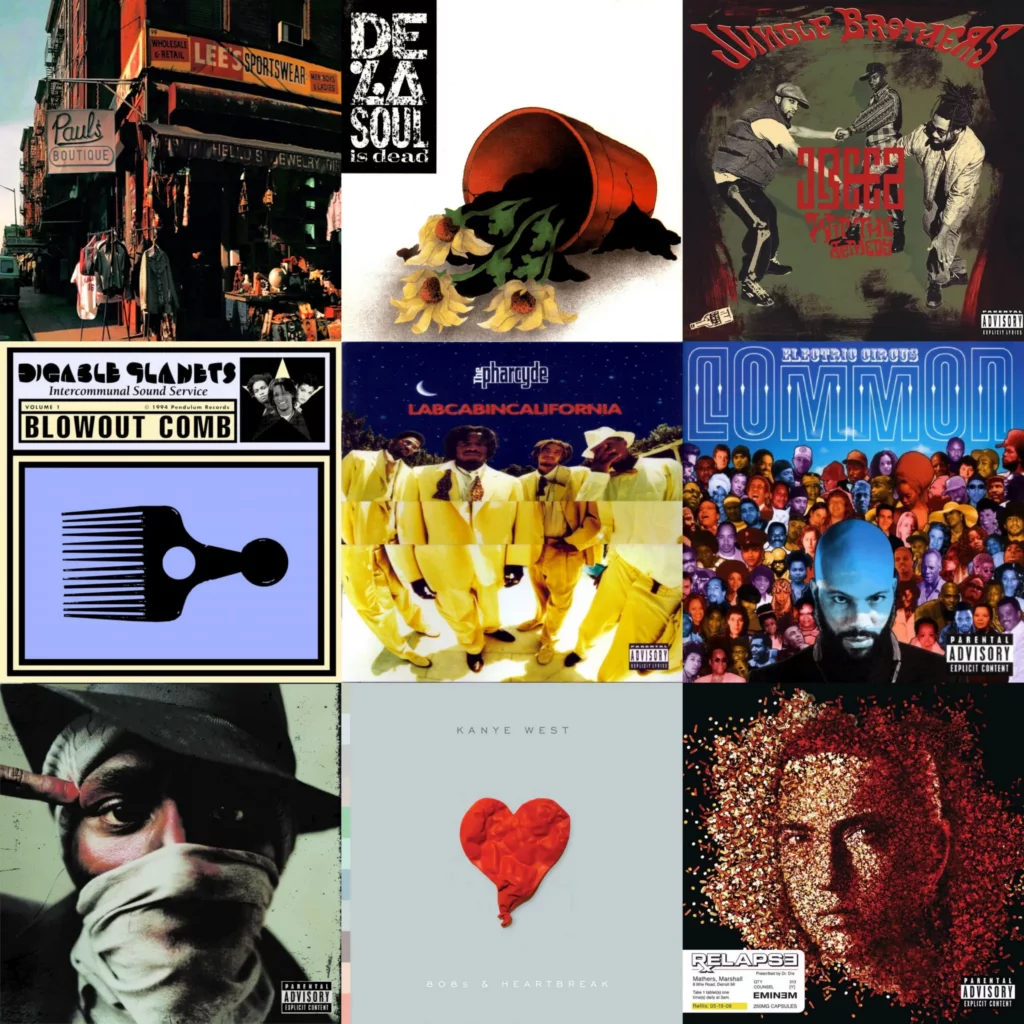
Beastie Boys - Paul's Boutique (1989)

On Paul’s Boutique, Ad-Rock, MCA and Mike D rarely hold the microphone alone for long. Lines bounce between them in quick handoffs, one voice finishing a couplet another started, and the shouting of Licensed To Ill tightens into something closer to a relay. Underneath, the music changes shape every few bars.
Very few people were ready for it. Licensed To Ill had been the first rap album to top the Billboard 200. Its follow-up peaked at No. 14 and dropped off the chart quickly. “Hey Ladies” did respectable business as a single, but nothing on the record worked like “(You Gotta) Fight For Your Right (To Party!)”, and the audience that had shouted along in 1987 heard clutter where it expected chants. Capitol had signed the trio after their messy exit from Def Jam and now had an expensive act with no obvious hit. Promotion faded within months.
The Dust Brothers, Mike Simpson and John King, used the sampler to arrange other people’s records into new songs. “Shadrach” rides a Sly & The Family Stone groove and builds its chant from the same source. “The Sounds Of Science” cuts between fragments of Beatles songs like someone flipping through a crate of LPs. Drum breaks drop out and come back under different basslines, while bits of dialogue and stray guitar slip in as punctuation. The closing “B-Boy Bouillabaisse” stitches nine short pieces into one long medley.
The verses are packed with pop-culture references, street-level New York detail and absurd jokes, sometimes all in one breath. “Johnny Ryall” turns the story of a homeless man with a rockabilly past into a sympathetic character sketch. “Egg Man” plays like a cartoon prank spree. Some of the humor depends on catching the reference, and a few tracks in the middle run on charm instead of structure.
In 1991, a court ruling against Biz Markie made uncleared sampling a legal liability, and an album built from this many sources became prohibitively expensive to attempt. The Beastie Boys picked up their own instruments for Check Your Head. Paul’s Boutique stayed fixed in its moment: a short window when a sampler and a deep record collection were all a producer needed.
Paul’s Boutique stayed fixed in its moment: a short window when a sampler and a deep record collection were all a producer needed.
De La Soul - De La Soul Is Dead (1991)

The first voices on De La Soul Is Dead belong to a gang of kids who find a De La Soul cassette in the trash and start mocking it. They keep coming back between songs, sneering at what they hear. Prince Paul and the group built their second album around listeners who didn’t want it, and that turned out to be an accurate forecast.
After 3 Feet High And Rising, Posdnuos, Trugoy and Maseo had been cast as Hip Hop’s flower children, a label they never chose and couldn’t shake. The cover’s toppled flowerpot, daisies spilling across the floor, was their reply. Inside, the mood darkens. “My Brother’s A Basehead” turns a sibling’s addiction into a bitter, funny family portrait. “Millie Pulled A Pistol On Santa” tells the story of a girl who confronts her abusive father, a department-store Santa, in front of a crowd of shoppers. Pos handles these stories in a conversational, unhurried voice, and Trugoy’s nasal, slightly off-center delivery keeps even the heaviest material from turning into a lecture.
The humor survives, sharpened. “Bitties In The BK Lounge” stages a standoff at a Burger King counter. “Ring Ring Ring (Ha Ha Hey)” complains about aspiring rappers pushing demo tapes at the group everywhere they go, a joke about fame aimed at the people who made them famous. “A Roller Skating Jam Named ‘Saturdays'” is the warmest thing here, a weekend at the rink with Q-Tip dropping in. Prince Paul’s production is looser than on the debut, with grooves allowed to sit and skits that bleed into songs.
The audience shrank. The debut had gone platinum. This one went gold, peaked in the mid-20s on the Billboard 200 and left a lot of first-album fans convinced the group had soured on them. In a sense, they had, and the record makes no secret of it. Over time, listeners came around to its ambition: a long, crowded, deliberately uncomfortable album from a group refusing to play the role written for them.
In the skits, the bullies decide what the tape is worth. That verdict was overturned a long time ago.
Jungle Brothers - J. Beez Wit The Remedy (1993)
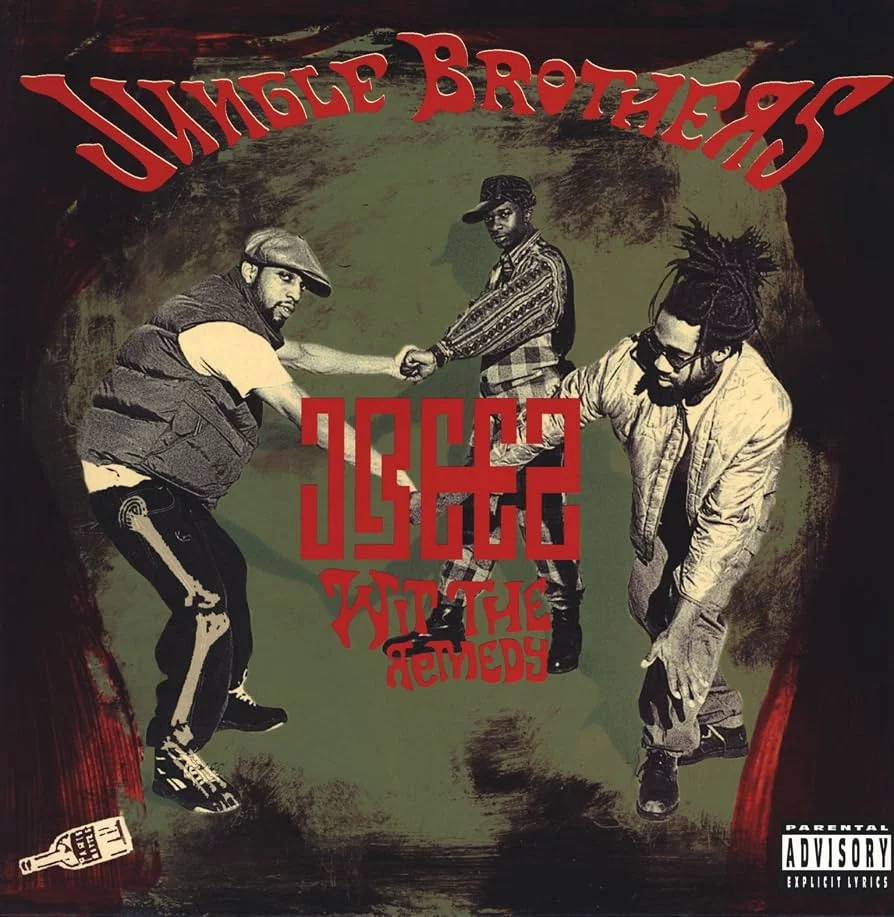
By 1993, the Jungle Brothers had stopped sounding like the group that helped start the Native Tongues. Straight Out The Jungle and Done By The Forces Of Nature had leaned on bright jazz and soul loops and an easy, conversational swing. J. Beez Wit The Remedy goes murky. Samples smear into each other, vocals come in doubled, filtered or half-buried, and songs drift for minutes without settling on a hook.
Afrika Baby Bam drives the change. His verses run long and loose, jumping between images and ideas, and he lets the rhythm wander off the beat and back again. Mike Gee’s lower, steadier voice keeps the tracks anchored, and the contrast between the two is the album’s best tool. “Spittin’ Wicked Randomness” lives up to its title, a run of free association that only holds together because the delivery sounds so sure of itself. “I’m In Love With Indica” turns a weed ode into a slow, smoky haze that matches its subject a little too well. Elsewhere, the experiments land as sketches more than songs, and the warmth that made the early records so likable sometimes disappears in the fog.
Warner Bros. had no clear way to sell any of this. There was no single built for radio and no obvious angle for the group’s old audience, and the album barely registered on the charts. The Jungle Brothers went quiet for four years and came back with Raw Deluxe, a far more straightforward record. For a long time, J. Beez was treated as the moment they lost the plot.
That reading has softened. Heard next to the abstract, left-field rap that came out of the underground later in the decade, the album sounds less like a group losing its way and more like one wandering off on purpose before anyone else had the map. Its flaws are real, and so is its nerve.
The same year, A Tribe Called Quest released Midnight Marauders and De La Soul put out Buhloone Mindstate. The elders of the Native Tongues made the strangest record of the lot.
Digable Planets - Blowout Comb (1994)

Blowout Comb has an address. Butterfly, Ladybug Mecca, and Doodlebug spend much of the album in Brooklyn, naming blocks, borough pride, and the people who hold down the corners, and the record sounds like a long, humid afternoon there. The cool detachment of Reachin’ gives way to something warmer and more rooted, with politics drifting through the verses like smoke from a block party grill.
The music moves slower and breathes more. Live bass, keys, and horns sit alongside the jazz samples, and the grooves are left to idle and stretch instead of snapping into place. “9th Wonder (Blackitolism)” rides a loose, rolling bounce, and “Dial 7 (Axioms Of Creamy Spies)” leans into the album’s revolutionary imagery without turning it into a slogan. Butterfly’s voice stays low and unhurried, Doodlebug brings a grittier edge, and Ladybug’s half-sung, slippery phrasing floats across the beats in a way nobody else in Hip Hop was attempting. Guru’s turn on “Borough Check” fits the album’s local focus neatly. Not every track earns its length, and a handful blur into one long, pleasant mood.
None of that was what anyone ordered. “Rebirth Of Slick (Cool Like Dat)” had turned the trio into an unlikely crossover act with a Grammy on the shelf, and the label needed a sequel. Blowout Comb offered no obvious single and no hook to hum, and the politics made the group harder to package. Sales fell sharply from the debut, and within a year or so Digable Planets had split.
The reputation grew in the gap they left. Listeners who had filed the group under coffee-shop jazz rap went back and heard a record about community, Black self-determination and the sound of a specific place, made by musicians willing to give up a hit to get there. A good number of fans now name it as the better of the two albums.
Butterfly resurfaced more than a decade later as Ishmael Butler of Shabazz Palaces, making music even less interested in radio. The seeds of that turn are all over Blowout Comb.
The Pharcyde - Labcabincalifornia (1995)

“Runnin'” opens with a guitar line borrowed from a Stan Getz and Luiz Bonfá record, slowed into a nervous, circling figure, while the four Pharcyde MCs talk about the urge to flee: from fights, from responsibility, from their own reputations. The Pharcyde of Bizarre Ride II would have turned that subject into a punchline. Here they sound worried.
That shift explains the cool reception. Bizarre Ride had been a hyperactive comedy record built on J-Swift’s bouncing, jazzy loops, and fans came back expecting prank calls and yo-mama jokes. Labcabincalifornia moves at a walking pace. Much of it was produced by a young Jay Dee, still years from wide recognition, and his drums sit slightly behind the beat with soft, muffled kicks and snares that land a hair late. “Drop” is the clearest example: a sparse, rubbery groove that leaves the rappers room to stretch their syllables across the bar. Spike Jonze’s backwards-filmed video got more attention than the song did.
The MCs adjust to the space. Fatlip’s cracked, conversational voice carries the album’s best moments of doubt, and Slimkid3’s half-sung lines give the hooks a melancholy edge. Imani and Bootie Brown keep the group dynamic alive with quick handoffs, so the record still sounds like friends in a room. “She Said” and “Somethin’ That Means Somethin'” deal with relationships and fame without the clowning, and the honesty lands. A few tracks drift without much purpose, and the sequencing sags in the second half.
What sounded like a slump in 1995 now sounds like a group growing up in public and a producer finding his voice. As Dilla’s reputation spread over the following decade, listeners traced it back here and heard the album differently. Fatlip left the group not long after, and The Pharcyde never recorded with this lineup again.
That gives Labcabincalifornia an odd double life. It’s the end of one of the West Coast’s great crews and an early chapter in the story of the producer who reshaped how Hip Hop drums swing.
Common - Electric Circus (2002)

In 2002, the crochet hats and flowered pants arrived before the music did. Common had spent the 1990s as Chicago’s thoughtful everyman, and by the time Electric Circus came out, the jokes about his wardrobe were already doing the rounds. The album confirmed every fear about where those outfits were pointing.
The Soulquarians crew built it, and they built it big. Questlove, James Poyser and Jay Dee stack live drums, swirling keyboards and distorted guitars into dense arrangements that owe as much to Jimi Hendrix and Sly Stone as to anything on rap radio. “Electric Wire Hustler Flower” pairs Common with Sonny Sandoval of P.O.D. over grinding rock guitar, and “New Wave” brings in Stereolab’s Laetitia Sadier for a drifting, synth-washed track that barely resembles Hip Hop at all. Prince plays on “Star *69 (PS With Love)”, and Erykah Badu’s presence hangs over much of the record. The Neptunes’ “I Got A Right Ta” sounds like it wandered in from a different album.
Common raps with conviction throughout, and his voice carries the same warm, slightly hoarse calm it had on Like Water For Chocolate. The trouble is that the arrangements often crowd him out. Long songs pile layer on layer, and a few, “Heaven Somewhere” among them, stretch past the point where the ideas hold. “Come Close”, with Mary J. Blige on the hook, is the one moment built for a wide audience, and it sits a little awkwardly among the experiments around it.
The audience balked. Like Water For Chocolate had gone gold. Electric Circus entered the chart well below that and fell away fast. MCA had little interest in a psychedelic rock album from a conscious rapper, and Common soon left the label.
The record found its people slowly, among listeners who came to it through the Soulquarians’ later fame or through rock and electronic music, and who heard a rapper putting his whole career on the line for a sound in his head. Its ambition outruns its execution in places, and that imbalance is part of its charm.
When Common came back three years later, it was with Kanye West behind the boards and Be, a lean soul record. The wild colors of 2002 were gone, and so were most of the doubters.
Mos Def- The New Danger (2004)
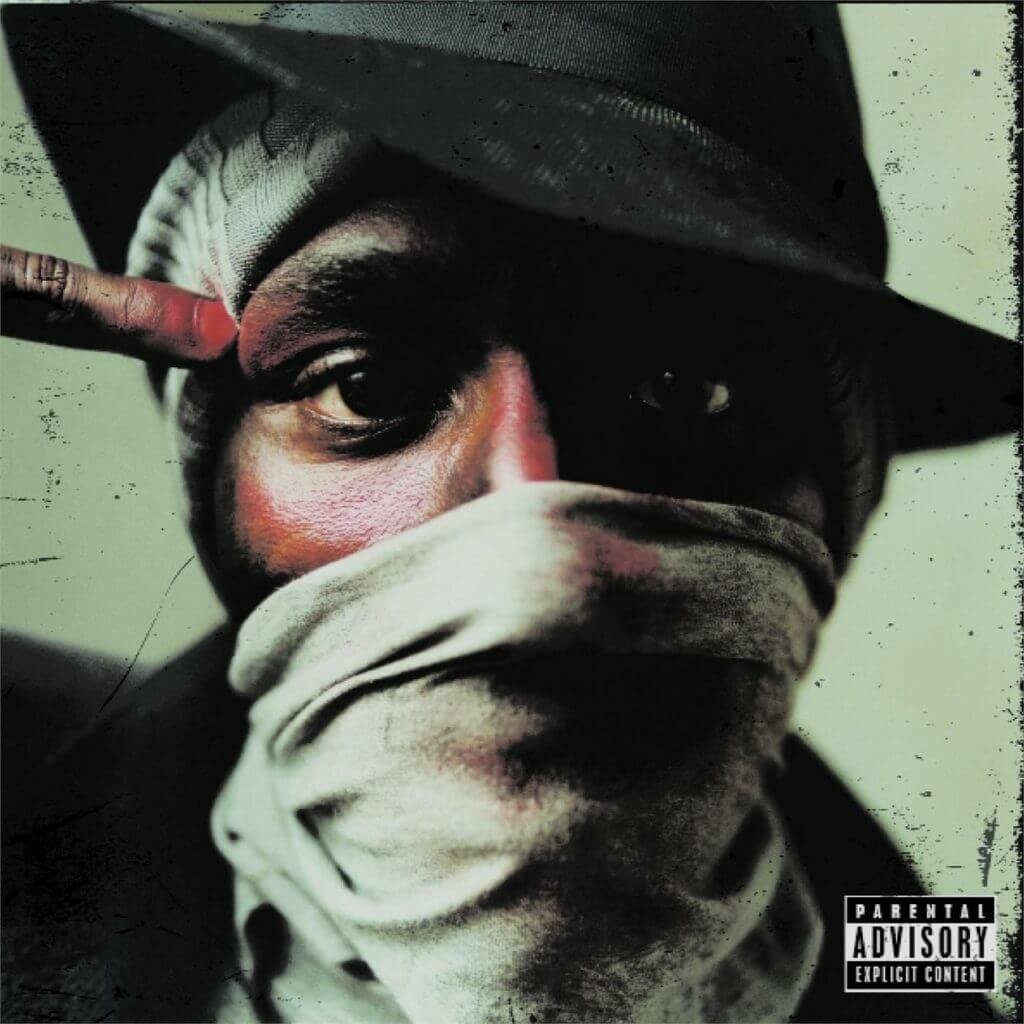
Mos Def named his rock band after Jack Johnson, the first Black heavyweight champion, and filled it with heavy hitters: Bernie Worrell of Parliament-Funkadelic, Doug Wimbish and Will Calhoun of Living Colour, and Dr. Know of Bad Brains. Black Jack Johnson played on a large part of The New Danger, and the fans waiting five years for a sequel to Black On Both Sides heard distorted guitars where they expected boom bap.
The point was historical. Mos treats rock as Black music being taken back, and songs like “Ghetto Rock” and “Blue Black Jack” draw a line from Delta blues through funk to punk without waving a flag about it. “Blue Black Jack” stretches out as a slow, mournful blues, with Mos singing more than rapping, and his voice holds up better than his doubters expected. The band plays loose and loud, and on the heavier tracks the mix can turn into a wall where the vocals struggle to cut through.
The Hip Hop half holds plenty of strong material. “Sunshine”, produced by Kanye West, rides a soulful loop and lets Mos rap with the agile, conversational ease of his best Rawkus work. “Close Edge” is tense and lean. “The Rape Over” turns the beat from Jay-Z’s “Takeover” into a pointed attack on who owns the industry, a song later dropped from pressings of the album. “Modern Marvel” pays tribute to Marvin Gaye across close to ten minutes, and the length tests patience.
The reaction was harsh. Fans wanted the Mos Def of Black Star, and a long, genre-hopping album from a rapper now spending much of his time on film sets read to many as a distracted side project. It started strong on the chart and faded fast, and his reputation as a rapper took a hit that followed him for years.
Two decades on, the rock tracks sound less like a detour and more like an argument he was right to make. Rap-rock usually meant white bands borrowing from Hip Hop. Mos went the other way, and he brought the players who had lived that history.
Kanye West - 808s & Heartbreak (2008)
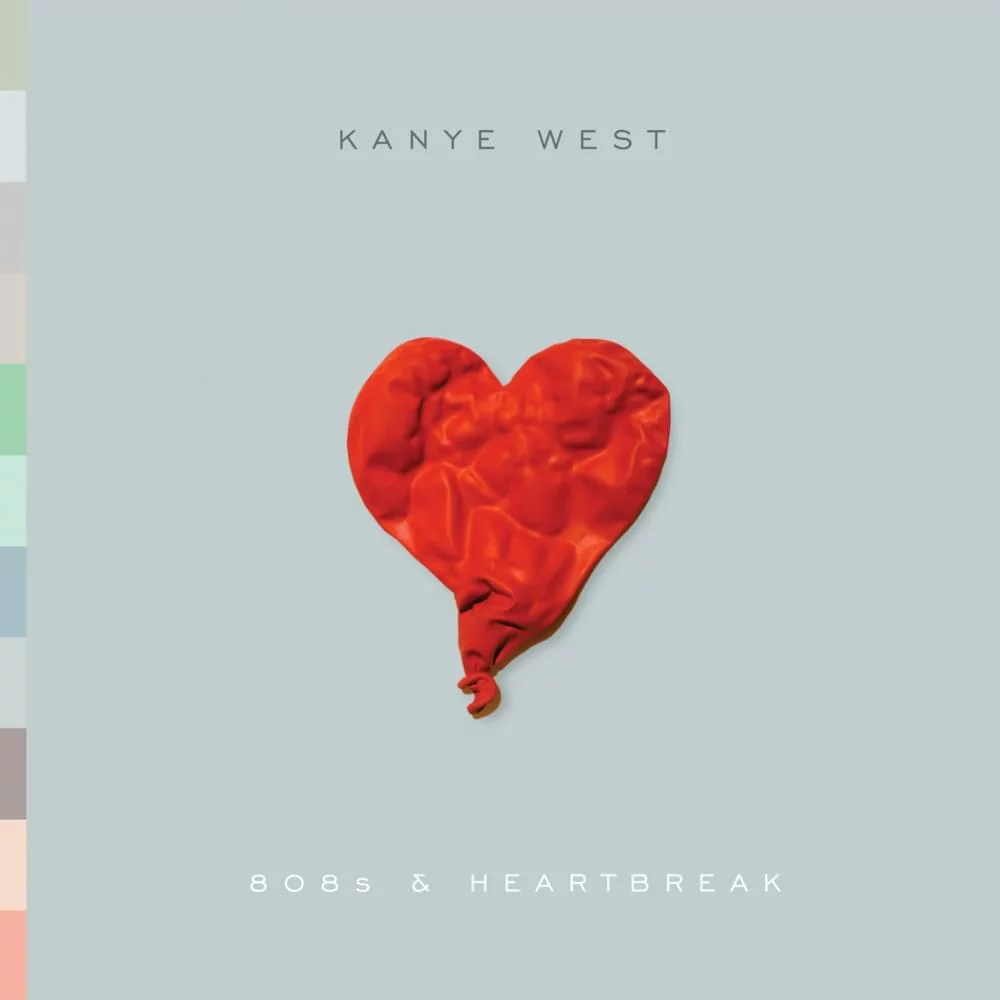
Kanye West put the drum machine in the title. The Roland TR-808 had powered Miami bass, Southern rap, and a hundred club records, but on 808s & Heartbreak its booming kicks and clipped toms sound cold and lonely, set against sparse synths and Kanye’s voice run through Auto-Tune. On “Love Lockdown”, thundering taiko drums crash in after a near-silent verse, and that jolt from quiet to loud is the album in miniature.
The context was grim. Kanye’s mother, Donda West, had died the year before, and his engagement had ended. He recorded much of the album quickly and sang nearly all of it. The pitch correction does what his natural voice couldn’t, turning a limited singer into a melodic instrument, and it puts a robotic distance between him and the grief. “Coldest Winter” borrows from Tears For Fears to mourn his mother without naming her. “Heartless” bounces on a nimble 808 pattern and became the album’s biggest hit. “Street Lights” and “Bad News” drift in a fog of synth pads, closer to new wave than to Graduation.
Guests are few, and the best of them show where things were heading. Kid Cudi co-wrote parts of the record and sings on “Welcome To Heartbreak”, and his hum-along melodic style fits the album perfectly. Lil Wayne’s verse on “See You In My Nightmares” sounds like a man wandering into the wrong party. The weaker moments, like the clumsy “RoboCop”, lean too hard on the novelty of the sound.
Sales were never the issue. The album went to No. 1, and the singles were everywhere. Many fans and fellow rappers heard a talented producer abandoning rap for self-pity in a robot voice, and it was common to treat the record as a breakdown set to music.
Then the next generation arrived. Drake, The Weeknd, Future and Travis Scott built careers on what 808s proposed: melody over bars, pitch correction as an emotional tool, minimal electronic drums under confessions about loneliness and fame. The album closes with “Pinocchio Story”, a freestyle sung live in Singapore about wanting to be a real person. A few years later, that kind of confession was standard practice in the studio.
Eminem - Relapse (2009)
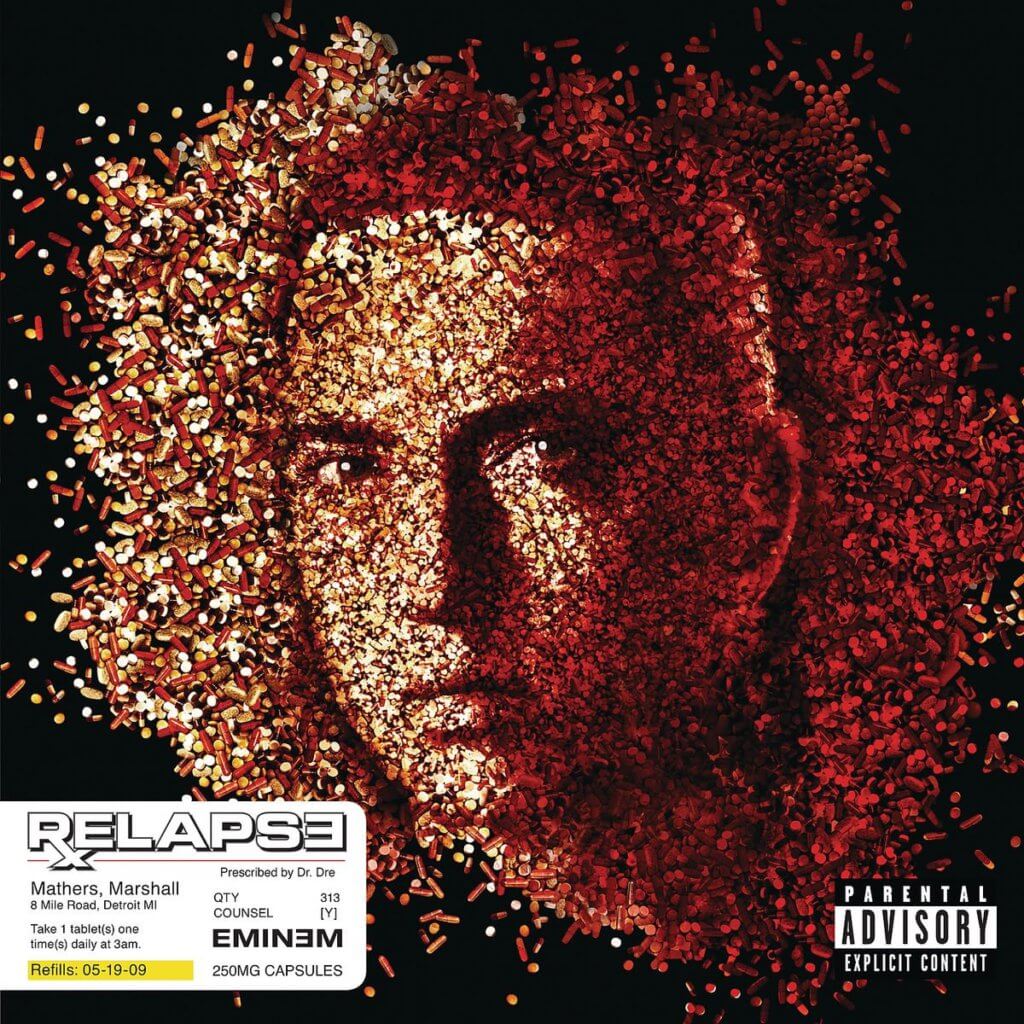
The voice is the first obstacle. For long stretches of Relapse, Eminem raps in a lurching, vaguely foreign accent, rolling his r’s and bending vowels into shapes that seem to come from nowhere in particular. Listeners in 2009 heard a gimmick. Over the years, more of them have started hearing what the accent let him do.
He uses it as a rhythmic tool. The exaggerated syllables give him extra edges to rhyme on, and verses on “3 a.m.” and “Same Song & Dance” stack internal rhymes so densely that the words blur into percussion. It also works as a mask. Relapse came after years of silence, an addiction to prescription pills, and the death of his friend Proof, and Eminem chose to come back as a serial killer in a horror film instead of a man telling his story straight. When he drops the act on “Déjà Vu”, walking through the slide back into drug use and an overdose, the plain voice hits harder because of everything around it.
Dr. Dre produced nearly the whole album, and his beats here are cinematic and creepy, with organ stabs, music-box melodies, and stiff, heavy drums that give the slasher fantasy a B-movie sheen. “Crack A Bottle”, with Dre and 50 Cent, topped the Hot 100. “We Made You” went for the celebrity-parody formula that had worked before and now sounded tired. The skits and toilet humor wear thin, and the album runs long on material that repeats its shock tactics.
The record sold well, so the backlash came from somewhere else. Fans and fellow rappers mocked the accents and the horror-movie violence, and Eminem himself turned on it, dismissing the album on Recovery the following year. For a while it was treated as the low point of his catalogue.
A younger audience saw it differently. Listeners raised on his technical feats came back to Relapse for the rapping, and they found some of the most intricate rhyming of his career hidden under the costume. The man who made it apologized for it in public. The fans who kept playing it never asked him to.
Q-Tip - Kamaal the Abstract (2009)
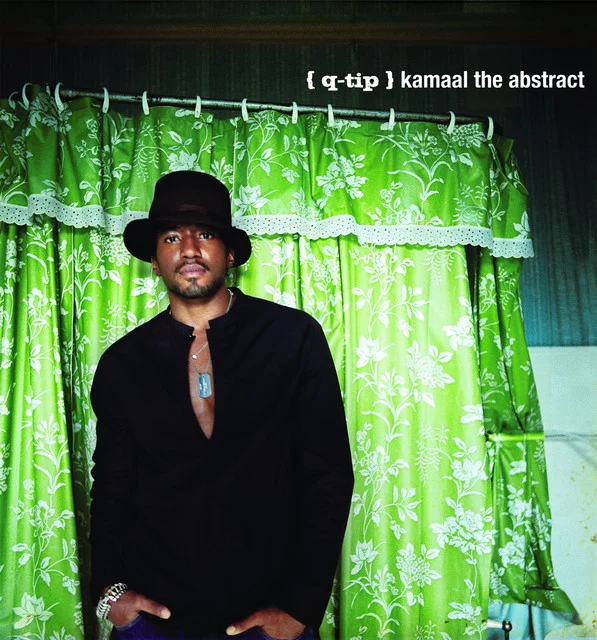
Q-Tip spends most of Kamaal The Abstract singing. His thin, slightly nasal tenor floats over electric guitar, Rhodes, and upright bass, and the rhymes, when they come, sound like a jazz soloist dipping back into the melody. The man who gave A Tribe Called Quest its smooth, conversational center had made a fusion record, and around 2002 Arista decided nobody would buy it.
The label had reason to expect something else. Amplified had put Tip on pop radio with “Vivrant Thing” and “Breathe And Stop”, glossy club records built with Jay Dee. Kamaal abandoned that formula completely. The songs run long, often built on loose band jams instead of loops, and the arrangements move through funk, soft rock and spiritual jazz without stopping to explain themselves. “Abstractionisms” lets its groove sprawl. “Barely In Love” turns a tentative romance into a slow, hazy confession. On “Do U Dig U?”, Tip asks the listener to sit with self-reflection instead of nodding along.
Arista shelved it. The album circulated in unofficial copies for years while Tip’s career stalled, and the official release only came in 2009, a year after The Renaissance had restored his standing as a rapper. By then the record arrived without fanfare, a curiosity from a different era.
The music asks a lot. Tip’s singing is expressive, with real limits in range, and some tracks wander without a clear destination, depending on mood to carry them. Those who stayed with it found a rapper writing for himself, years before Hip Hop artists routinely made records like this. Plenty of the jazz-leaning, genre-fluid rap and R&B of the 2010s has the same open-ended feel and the same willingness to let a groove run.
Of all the albums on this list, Kamaal The Abstract is the one that had to wait longest for a first hearing, and the people who championed it first had to find it through burned copies.
Time does most of the work on a list like this, but it isn’t the whole story. Several of these records needed something specific to happen before people could hear them properly. Labcabincalifornia needed J Dilla to become a household name among producers. 808s & Heartbreak needed Drake. Kamaal The Abstract needed an official release. Some reputations change because the music around a record changes, and suddenly an album that sounded wrong sounds early.
Others were rescued by listeners who came to them without baggage. A teenager hearing Paul’s Boutique in 2005 had no memory of “(You Gotta) Fight For Your Right (To Party!)” to compare it to. Someone finding The New Danger years later didn’t spend 2004 waiting for a second Black Star album. Expectations shaped the first reception of every album here, and once those expectations faded, the records were left to be judged as what they are.
Plenty of albums were rejected at the time and deserved it. What separates these ten is the clarity of the idea behind them. De La Soul knew why they were killing off the daisies. Common knew what he wanted Electric Circus to sound like, even when the mix got away from him. Eminem buried Relapse under a costume and still rapped like someone who had been practicing every day of his absence. The flaws are part of each story, and so is the conviction.
The next misunderstood classic is probably out there already, sitting in somebody’s discography with a weak first-week number and a comment section full of people asking what happened. We’ll check back in ten years.