

DJ Quik’s records sound played rather than pieced together. Basslines walk and bend under the verses, keyboards answer the vocals, percussion shuffles in the corners of the mix, and a talk box shows up whenever a hook needs a voice that is half human and half machine. Roger Troutman taught him that instrument, and George Clinton’s P-Funk gave him a vocabulary. Quik brought a Compton DJ’s sense of timing to it, along with a habit of finishing tracks so fast that it gave him his name.
David Marvin Blake came up selling homemade tapes such as The Red Tape and DJing shows around Southern California, for a long stretch while he had no home of his own. Profile Records signed him in 1990, reportedly the label’s first six-figure deal, and Quik Is the Name arrived the following year. “Tonite” was a hit built on slow, sunlit funk, and “Born and Raised in Compton” turned his neighborhood into a calling card. Way 2 Fonky followed in 1992 with “Jus Lyke Compton,” a road record about finding Compton’s habits in towns far from home.
His sound travelled. He produced “Heartz of Men” for 2Pac under his legal name to get around his Profile contract, and mixed around half of All Eyez on Me in a couple of days. He gave Tony! Toni! Toné! “Let’s Get Down,” built Suga Free’s Street Gospel in 28 days by mixing jazz, R&B and rock into the funk, and turned a Lata Mangeshkar song into Truth Hurts’ “Addictive.” Snoop Dogg, Jay-Z, Ludacris, Kurupt and Whitney Houston all called on him. Each time, he fitted the groove to the artist without losing his own West Coast accent.
His own catalogue had a rougher road. Label trouble, a contract that ran for over a decade, and the killings of friends, including the rapper Mausberg, nearly pushed him into retirement. He came back as an independent, launching Mad Science Recordings with Trauma in 2005 and carrying on through The Book of David and The Midnight Life. Over all of it he rapped in a sly, conversational flow, as comfortable trading jokes as trading threats.
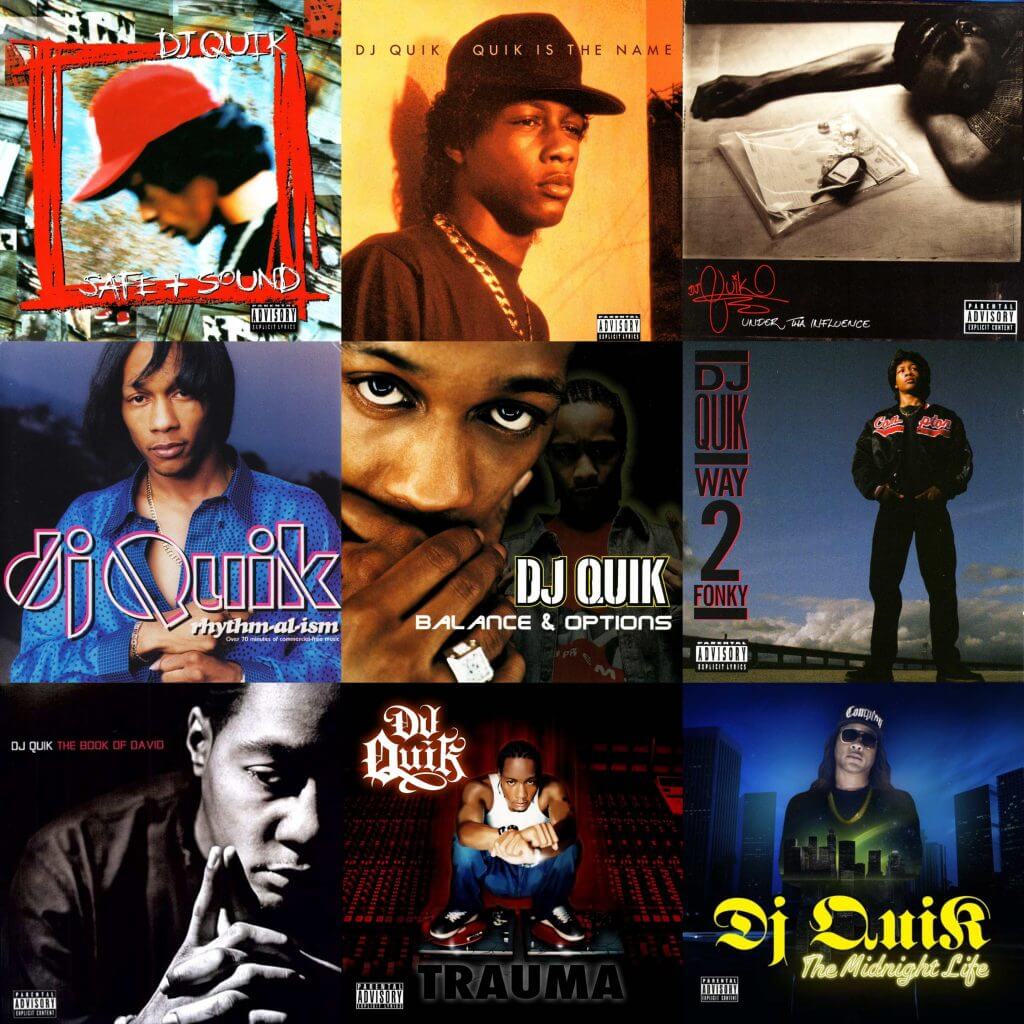
We ranked his nine studio albums on how well the beats, the rhymes and the sequencing hold together. Quik’s production is the constant. What changes from record to record is how much of it his songs can carry.
9. The Midnight Life (2014)
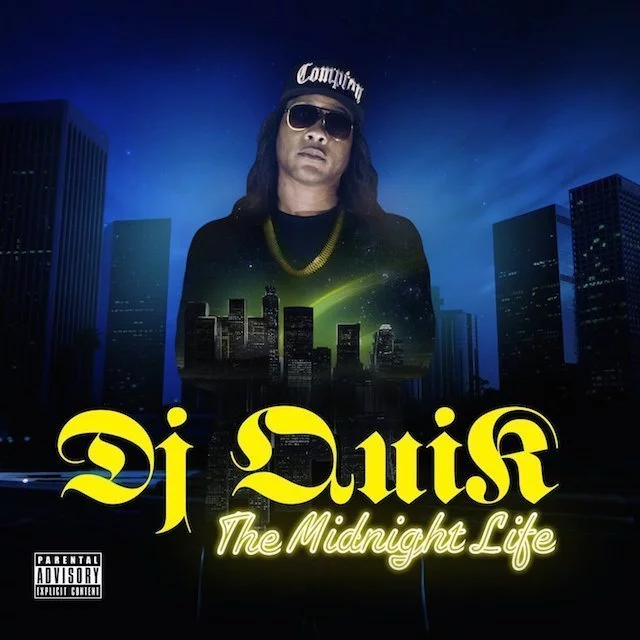
Quik went into The Midnight Life (2014) saying he wanted to channel the DJ Quik of 1989. That tape-era hunger comes through in the production, much less in the rhymes. He built almost the entire album himself, and the craft is everywhere: the jazzy R&B glide of “Pet Semetery,” and the swaying “Life Jacket,” where Suga Free’s yelping, off-kilter cadence and Dom Kennedy’s low-key drawl tug against each other over one easy groove. “Trapped on the Tracks” and the brief El DeBarge sketch “El’s Interlude 2” have the same warmth.
The trouble is the space between those highlights. Sixteen tracks stretch the material thin. His son David Blake II appears on four of them without leaving much of a mark, and the trap-leaning beats sound like Quik on a visit. On the mic, he sticks to familiar topics in a familiar cadence. This is the album where the mixing desk does most of the talking. | 6/10
8. Trauma (2005)
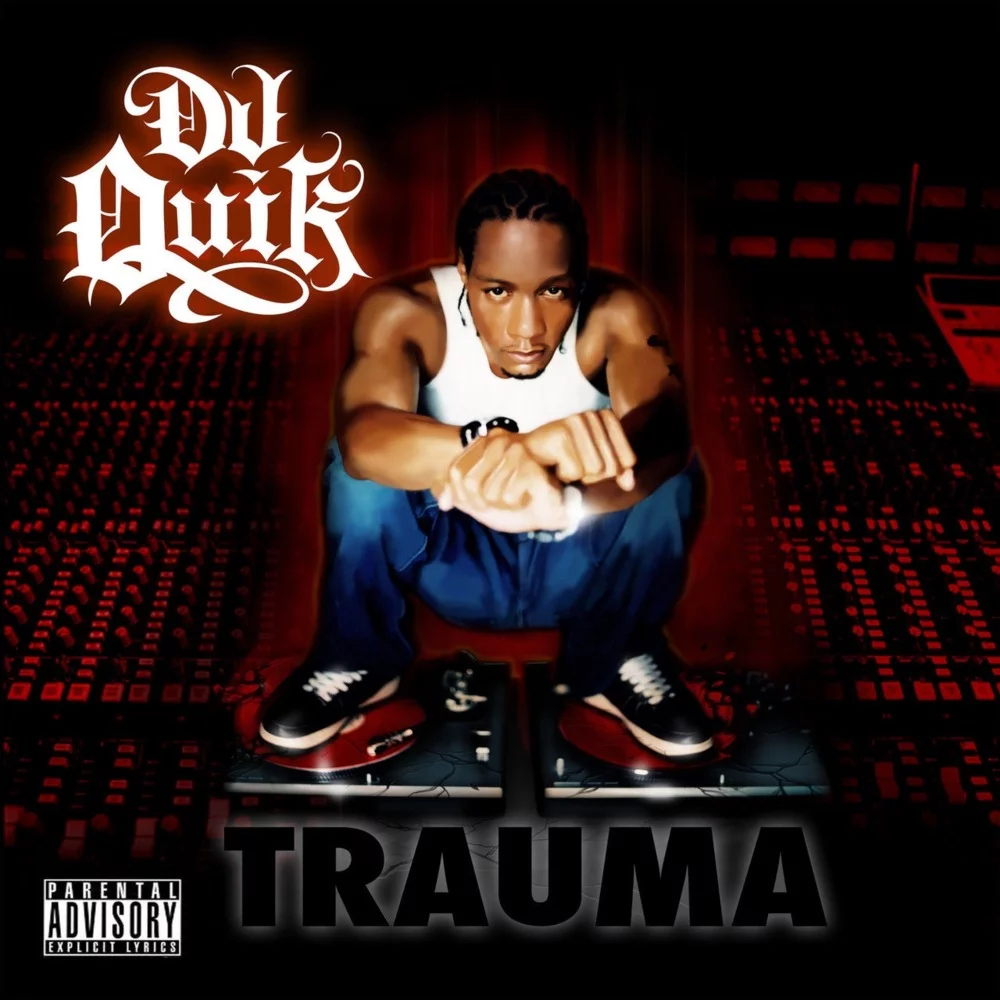
Quik promoted Trauma (2005) as the best thing he had ever made, a better record than Quik Is the Name. Years later, he called it a “bitter album,” made while family and business conflicts piled up and his Warner Bros. deal collapsed. The music sits somewhere between those two descriptions.
His first release on Mad Science sounds bright and airy. The funk backbone is pulled back so guitar, horns, drums, and turntable work carry the grooves, and “Black Mercedes” lets Nate Dogg drift over an unhurried bounce. The bitterness comes out in “Catch 22,” a rapid-fire run through relationships, distractions and paranoia, and in the darker tone of “Till Jesus Comes.” On those tracks Quik raps like someone with no time left for jokes.
The guest list pulls the other way. T.I. slides comfortably into “Indiscretions in the Back of the Limo,” but Chingy on “Get Down” and Wyclef Jean on “Ladies & Thugs” sound tied to mid-2000s radio. Quik boasted that he made every guest sound the same. That uniform polish is what keeps the album’s pain at arm’s length. | 6.5/10
7. The Book Of David (2011)
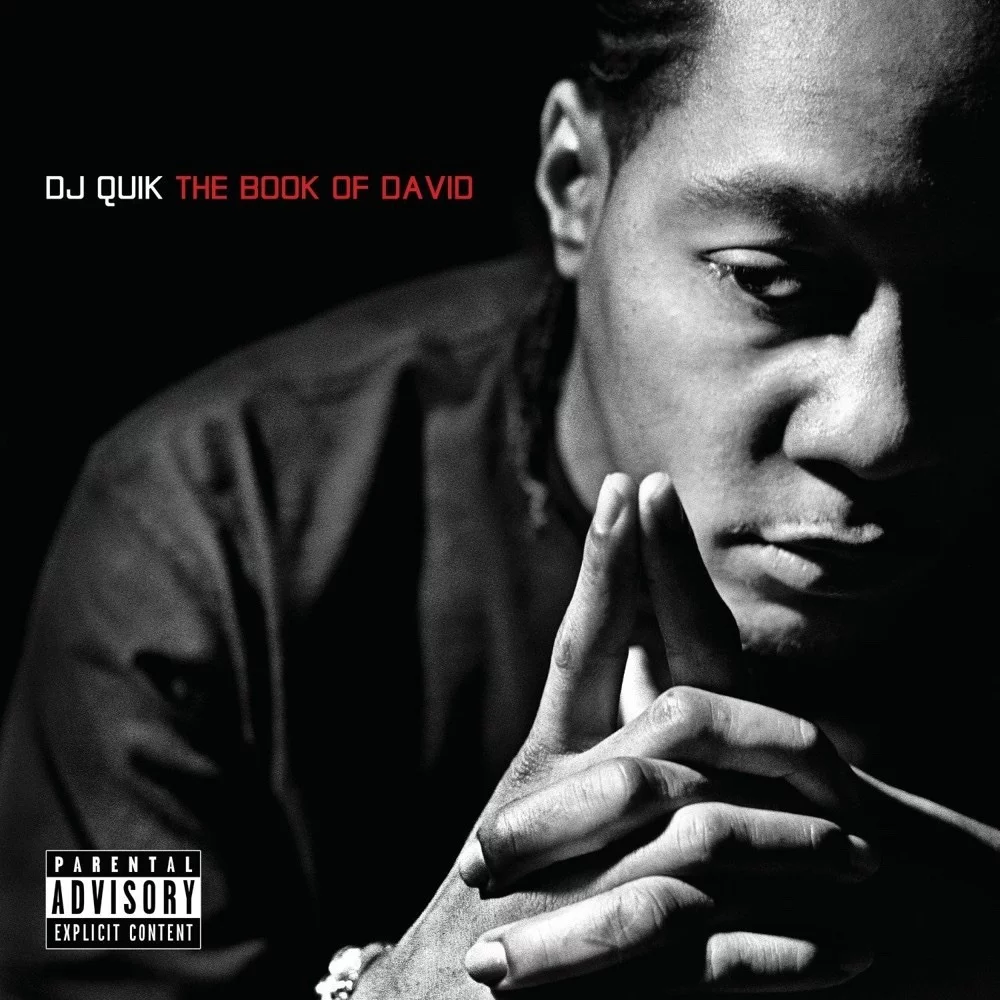
For The Book of David (2011), DJ Quik went back to the Roland TR-808. After years of working through every breakbeat and drum pattern he could find, he wanted the machine he heard on records by Prince, The Time and The Force M.D.’s, and the drums here have that stiff, slightly toy-like snap. Around them he layers basslines he taught himself to play during the six years since Trauma, plus keys and harmonies drawn from El DeBarge, Curtis Mayfield and Luther Vandross. “Poppin’” bends the formula with reversed drums under a woozy drone, and the sessions even secured a rare sample clearance from Grease.
Quik described his lyrical stance as defensive, and too many verses circle back to the people who wronged him, often alongside BlaKKazz K.K., who turns up on four tracks without adding much. The warmer songs give the album its pulse. Jon B. smooths out “Real Women,” Dwele turns “Time Stands Still” into a long-distance love letter, and “Nobody” reunites Quik with Suga Free after their falling-out.
The closer, “The End?”, brings in the late P-Funk guitarist Garry Shider. On an album named after his birth name, Quik ends by playing alongside one of the musicians who taught him what funk was supposed to sound like. | 7/10
6. Way 2 Fonkay (1992)
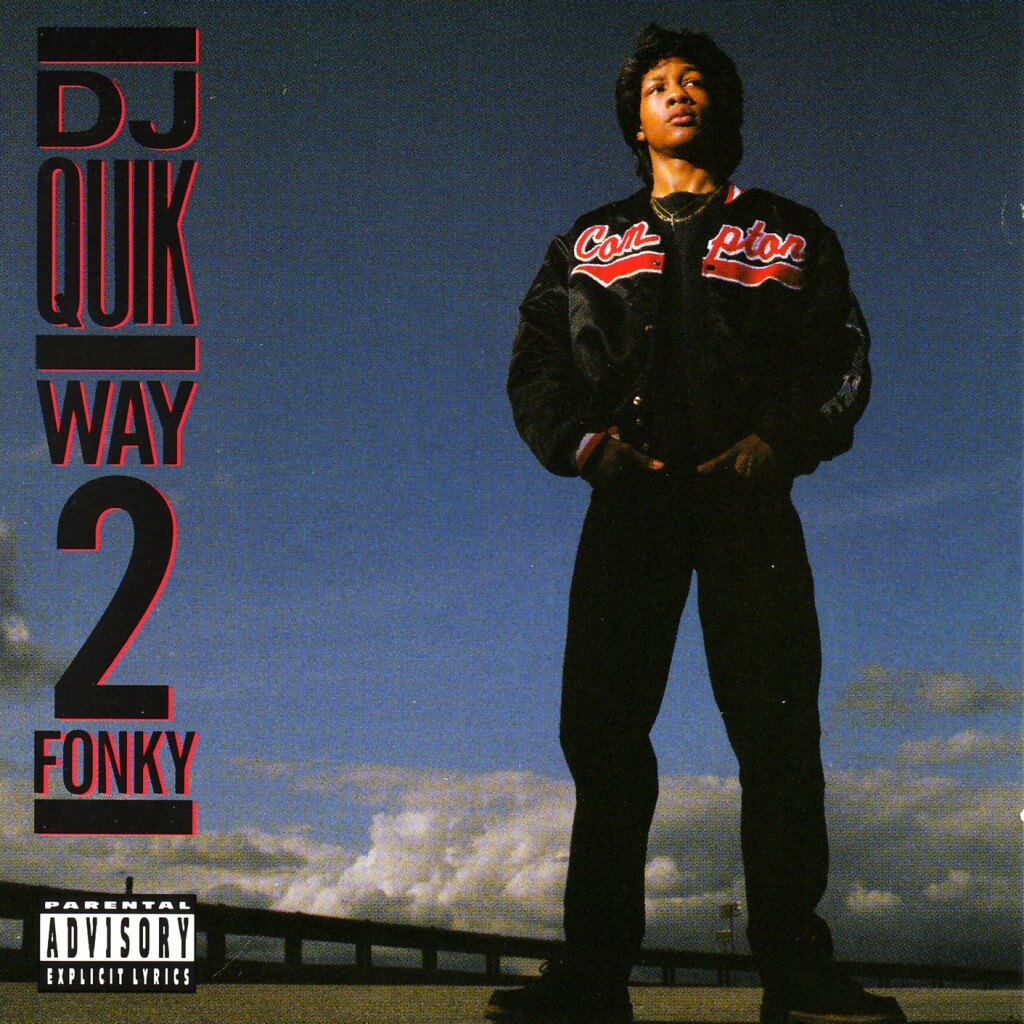
The title track of Way 2 Fonky (1992) rides Zapp’s “More Bounce to the Ounce” while DJ Quik answers Tim Dog, the Bronx rapper whose “F**k Compton” had made the whole city a target. That sets the tone for an album where the comebacks land hardest when they bounce. Quik’s high, nimble voice skips across the beat with an almost reggae lilt, and on “Me Wanna Rip Ya Girl” he commits to a full fake-Jamaican accent.
His sample choices carry the album. “America’z Most Complete Artist” stitches Parliament, Kool & the Gang and Earth, Wind & Fire into a self-portrait, “Mo’ Pussy” chops up the Gap Band, and Roger Troutman’s version of “I Heard It Through the Grapevine” slinks under Playa Hamm on “When You’re a Gee.” With co-producer Rob “Fonksta” Bacon, Quik builds “Jus Lyke Compton” on Eddie Bo’s “Hook and Sling” and a Richard Pryor bit, then raps about touring cities that had picked up Compton’s colors and attitudes. Funny and uneasy at once, it’s the sharpest writing on the record.
The second half leans on the crew. 2nd II None give “Only fo’ tha Money” a loose, back-and-forth energy, but “N****z Still Trippin’” squeezes four guests onto one track and loses Quik in the crowd. The sex raps are cruder than on the debut, though he still stops to warn about HIV. Quik spent a year on the road and came back with the same groove and a longer list of people to answer. | 7/10
5. Balance & Options (2000)
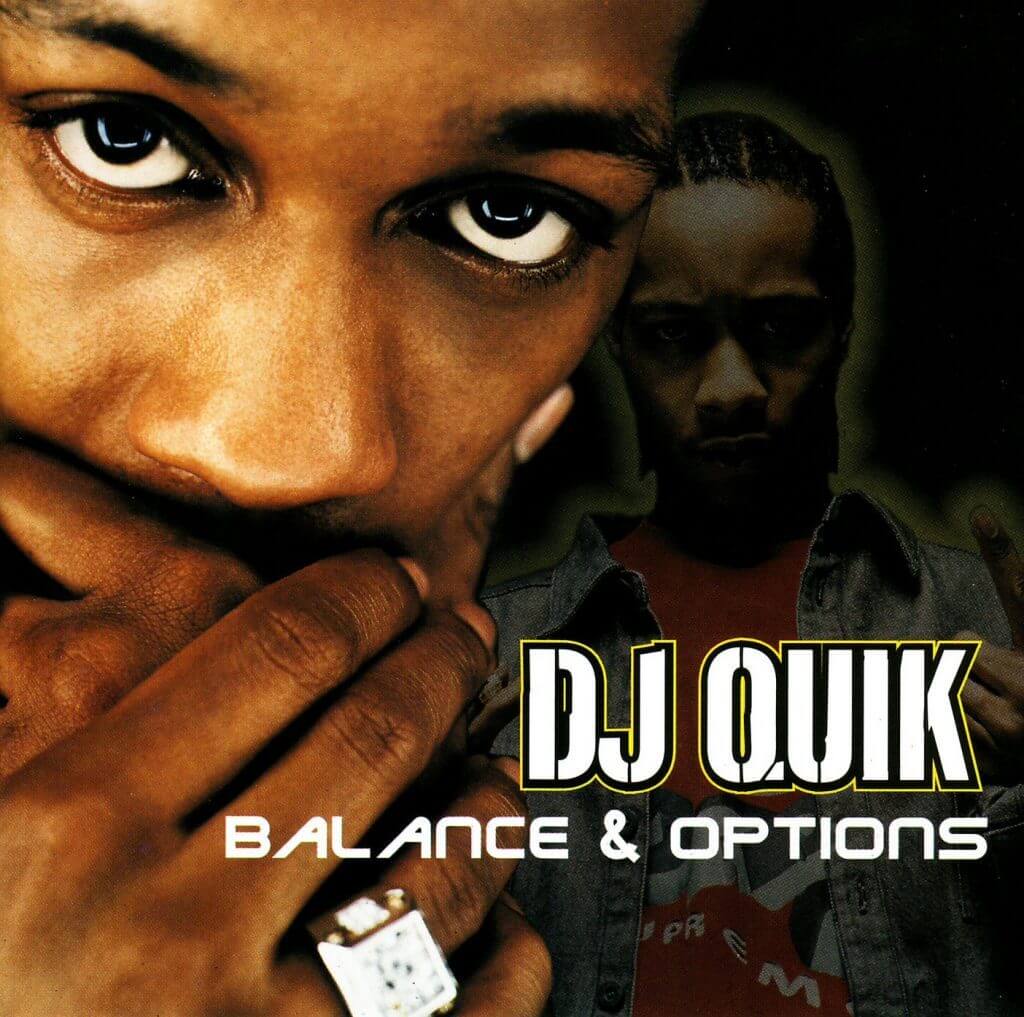
By 2000, DJ Quik had lost interest in sounding menacing. Balance & Options picks up where Rhythm-al-ism left off, moving between funk, soul and R&B so freely that the Hip Hop tag barely covers it. Quik’s willingness to keep changing is a big part of why his career lasted, and this is the album where he sounds most at ease with it.
The rhymes are mostly about parties, women and good times, delivered with a comedian’s timing, and that suits music this relaxed. “Pitch in on a Party” rolls along like an open invitation, and “I Don’t Wanna Party wit U” was the track a young Kendrick Lamar remembered hearing all summer in Compton. The beats are smooth and mellow without going soft. The low end is warm and round, the drums sit back in the pocket, and the arrangements leave space for the singers Quik brings in. James DeBarge adds his voice to “We Came 2 Play” and “Tha Divorce Song,” Raphael Saadiq glides through “Well,” and Digital Underground bring Bay Area looseness to “Do Whatcha Want.” “Roger’s Groove” is an instrumental nod to Roger Troutman, the man who taught Quik the talk box and who had died the year before.
Mausberg, Quik’s protégé, opens the album on “Change da Game” and appears three more times before the end. He was killed the same year. That loss gives one of Quik’s sunniest records a weight nobody could have planned for. | 7/10
4. Rhythm-Al-Ism (1998)
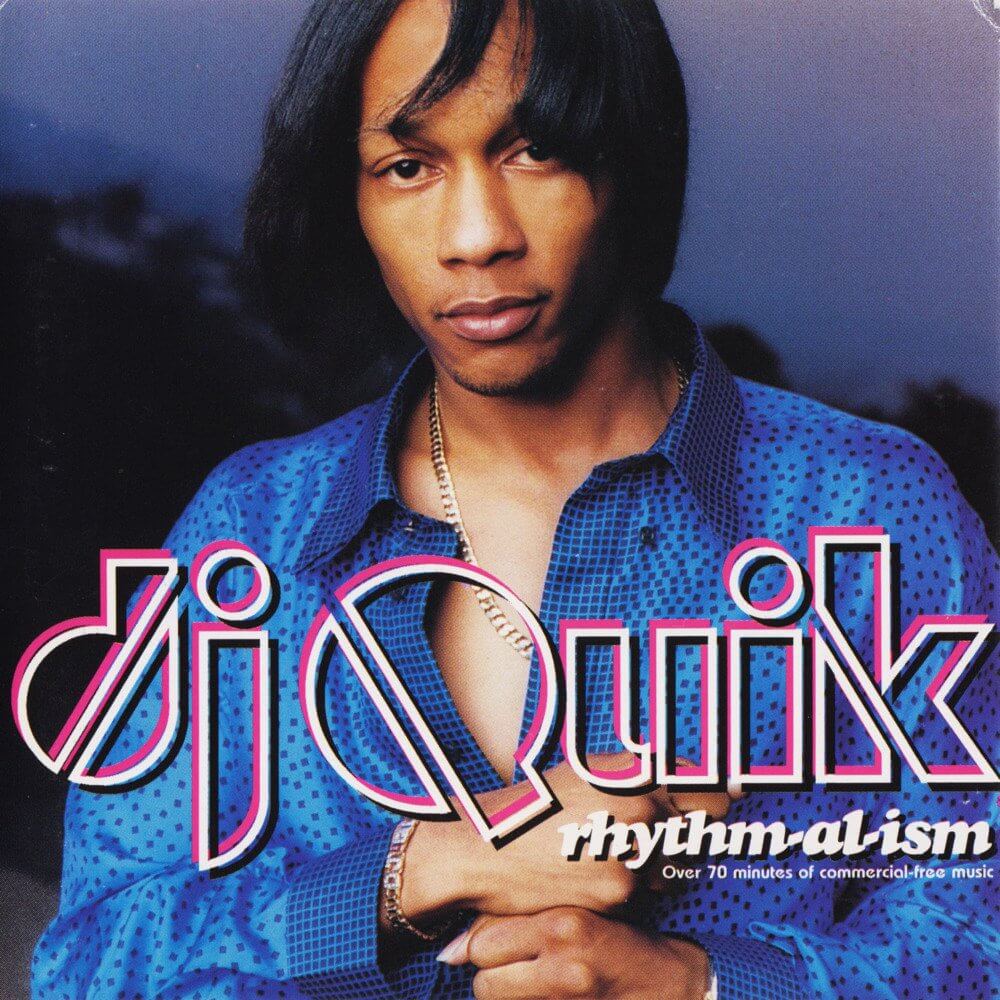
DJ Quik later said Rhythm-al-ism (1998) was where he lost the gangster and became “like an R&B pretty boy.” He made it while Profile Records had him on suspension during a fight over back royalties, and the title spells out the plan: rhythms mixed up, R&B pressed against Hip Hop and jazz, with comedy filling the gaps. Even the cover took its cue from the Doors.
With co-producer G-One, Quik builds tracks that unfold like band arrangements, the bass and keys trading phrases while the drums hold steady underneath. “Hand in Hand” sets 2nd II None beside El DeBarge’s falsetto and turns a rap single into a slow-dance record. “Down, Down, Down” passes the mic between Suga Free, AMG and Mausberg, and Suga Free’s twitchy, preacher-on-a-bender cadence makes it the album’s most unpredictable moment. “You’z a Ganxta” keeps a little of the old swagger, and “Speed,” which credits Earth, Wind & Fire’s Maurice and Verdine White as writers, rides a quick, nimble groove. Quik raps through all of it like a mischievous friend with a punchline for every situation.
The trouble starts in the second half. “Whateva U Do” stretches toward eight minutes, “El’s Interlude” runs four, and “Medley for a ‘V’” crowds six guests into a raunchy posse cut that then gets its own reprise. Each has its pleasures, but stacked together they let the grooves idle where the opening stretch kept them moving, and 70 minutes is a lot of idling. That’s what keeps the album at number four.
Rhythm-al-ism will move up or down depending on how much you want Quik outside the Hip Hop box. Nothing else in his catalogue, or on the West Coast in 1998, sounds quite like it. | 7.5/10
3. Under Tha Influence (2002)
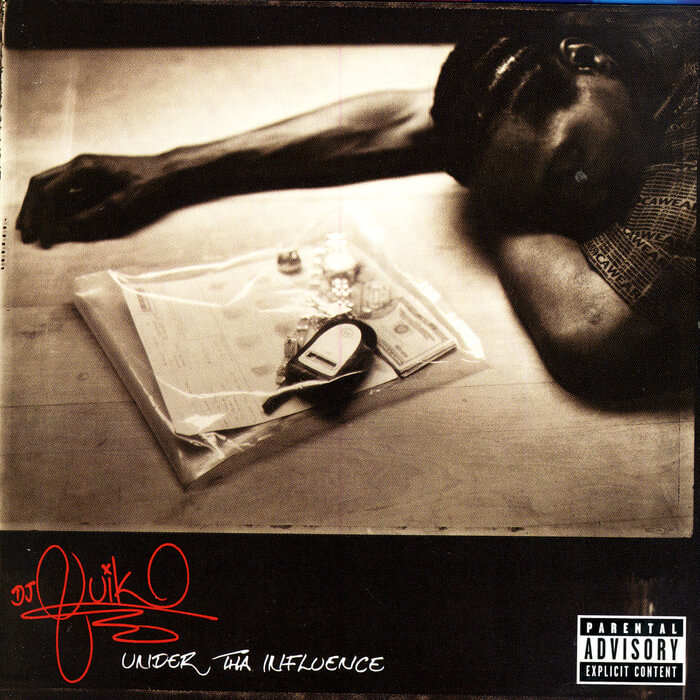
Under tha Influence (2002) opens with Talib Kweli and Shyheim, two East Coast voices, trading verses with Hi-C on “Tha Proem.” Coming from Compton’s smoothest funk stylist, that’s a statement of intent, and the rest of the album follows through. After two records spent reaching toward R&B, jazz, and comedy, DJ Quik brings the focus back to beats and rhymes. It’s the most underrated album in his catalogue, and we think it’s one of his best.
The circumstances were hardly ideal. Arista dropped him after Balance & Options undersold, and this became his first release on an independent label, Ark 21. The same year, he produced Truth Hurts’ “Addictive,” and the album has the sound of a producer at full stretch. The arrangements are leaner, the drums tighter and the basslines heavier, with fewer interludes getting in the way.
The guests are chosen to fit the beats. “Trouble” lets Quik and AMG, partners for a decade by then, trade bars with the ease of old friends. “Murda 1 Case” drops Pharoahe Monch’s dense, twisting rhyme patterns over a Quik track, and the match works because Quik leaves him room to maneuver. Truth Hurts brings her silky tone to “Come 2Nyte,” and Suga Free runs wild on “Get tha Money.” Dr. Dre produces and raps on “Put It on Me,” the one beat Quik didn’t make, and it slots in seamlessly. “50 Ways” builds on Paul Simon’s “50 Ways to Leave Your Lover,” with Boyz II Men’s Wanya Morris singing over it, which says plenty about how far Quik’s ears ranged.
Quik raps sharper here too. The playful edge is still there, but his verses hit harder and land cleaner than on any of his records since the early ’90s. Dropped by a major and working with an indie budget, he made one of the hardest-rapping albums of his career, then let it run out across the eleven and a half minutes of “Oh Well/Out.” That’s how little the label change worried him. | 8/10
2. Quik Is The Name (1991)

The bassline on “Tonite” strolls rather than struts, like someone heading to a party he already knows will be good. Quik lays samples from Kleeer and Betty Wright over it, keeps the drums crisp and light, and raps as though he’s telling you about the night while it’s still going on. Nearly everything that defines Quik Is the Name is in that one track: warm ’70s funk and soul, cleaned up and layered with care, rolling at a pace built for a car with the windows down.
Quik was 21. He’d spent years without a home of his own, sold tapes out of his hands, and turned down a reported million-dollar offer from Eazy-E after Profile had already signed him. The album went platinum, sent two singles into the R&B top 20, and arrived a full year before The Chronic. Long before G-funk had a name, a Compton DJ was already making records that sounded like it, and this debut put him among the West Coast’s top producers on day one. Quik is underrated as hell, and this album is where that should start to change.
The production is smooth without going soft. “Born and Raised in Compton” turns Isaac Hayes loops into a slow, swaying hometown anthem that carries more pride than menace. “Tha Bombudd” slips into a reggae lilt, an idea Quik would come back to on Way 2 Fonky and again with “Bombudd II” on Rhythm-al-ism. “Sweet Black P****” is brash and bawdy, its quick tempo matched by Quik’s smirking delivery.
As an MC, he’s no great technician. His voice is high and light, and he never tries to sound bigger than he is. What he does have is timing, humor and a clear sense of who he is, and that’s enough to hold the mic over his own beats. While N.W.A had the West Coast braced for confrontation, Quik made Compton sound like a place you’d want to spend a weekend.
“Quik’s Groove” closes the circle, an instrumental that lets the funk play out with no vocals at all. Nearly every Quik album since has had a “Quik’s Groove” on it. The habit started here, along with almost everything else. | 8.5/10
1. Safe + Sound (1995)
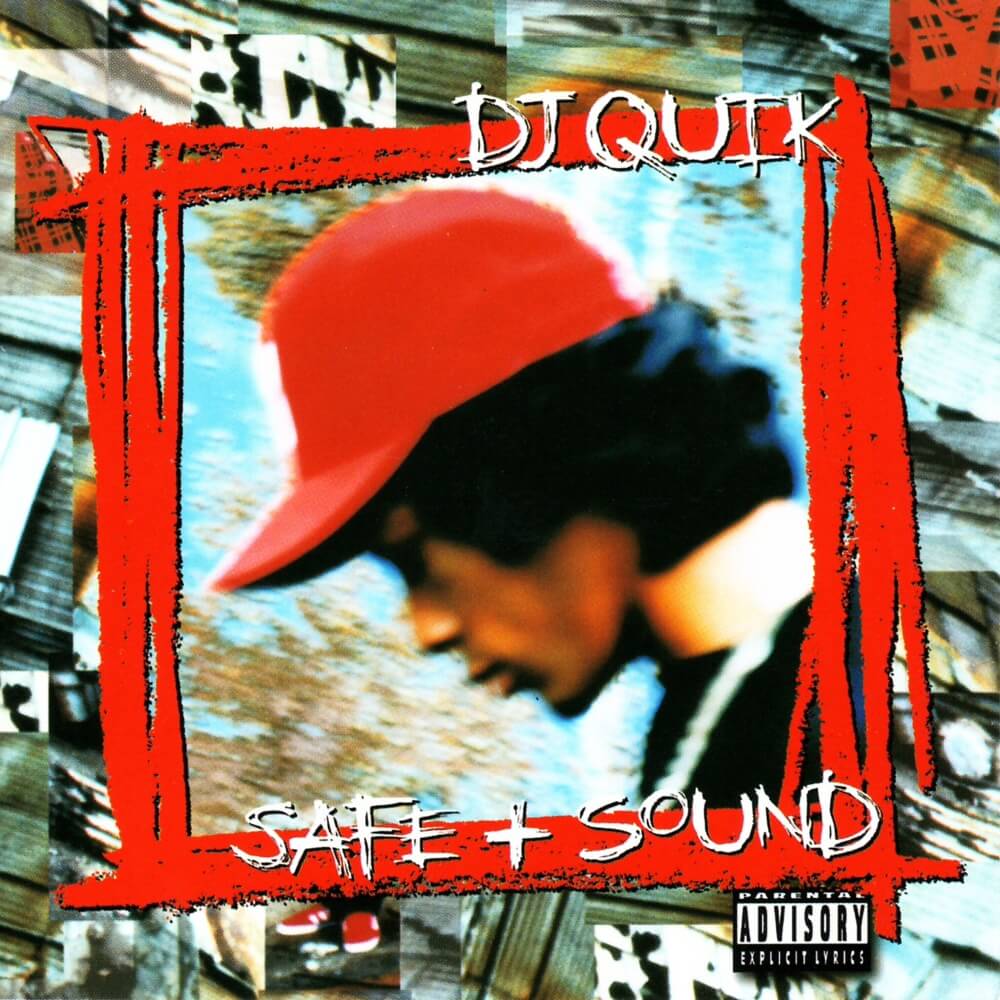
Before Safe + Sound (1995), DJ Quik finished an album he considered so bad that he smashed the masters. Whatever he heard in that scrapped record, he made sure none of it carried over. His third album is his best: the sound of a producer who stopped arranging samples and started composing, without letting go of the funk that made him.
Live instruments do much of the work now. “Summer Breeze” floats on twangy guitar and airy strings, with a soulful hook and verses that look back at growing up with a fondness Quik rarely allowed himself before. The title track rides a melodic, unhurried groove while he raps about the pressures of getting older, and “Quik’s Groove III” drops the vocals for a loose, jazzy exchange between guitar and flute that sounds close to improvised. The crew tracks hold the same standard. “Keep tha ‘P’ in It” gives 2nd II None and the rest of the camp a busy, jazz-tinged arrangement to bounce off, each voice taking a distinct turn, and “Tha Ho In You” keeps the low end thick and the mood playful.
Then there’s the other side. Quik was at war with MC Eiht, and fighting with his longtime friend AMG, while he made this album, and the bitterness comes out without warning. “Let You Havit” goes after Eiht over a funky groove and even mocks the “Def Wish II” video, in which Compton’s Most Wanted had a Quik lookalike chased down and killed. “Dollaz + Sense” is the knockout. Over a mid-tempo beat, Quik paints Eiht as an actor playing a killer, a nod to his role in Menace II Society, then calls him a coward for good measure. He performed it at the 1995 Source Awards in New York, deep in enemy territory. Suge Knight is credited as executive producer, and the Death Row edge shows on these tracks.
That mix of sweetness and spite is what puts Safe + Sound at number one. The sex raps of “Diggin’ U Out” and “Can I Eat It?” sit beside nostalgia, and the threats sit beside some of the prettiest music anyone made in Compton in the mid-’90s, and the album never sounds pulled apart by any of it. The whole thing is solid from start to finish, and it earned Quik another gold plaque.
He and Eiht made peace in 1998 and have recorded together since. The feud is long over, but the record it produced still sounds like Quik at the peak of his powers, with a band in one hand and a grudge in the other. | 8.5/10