

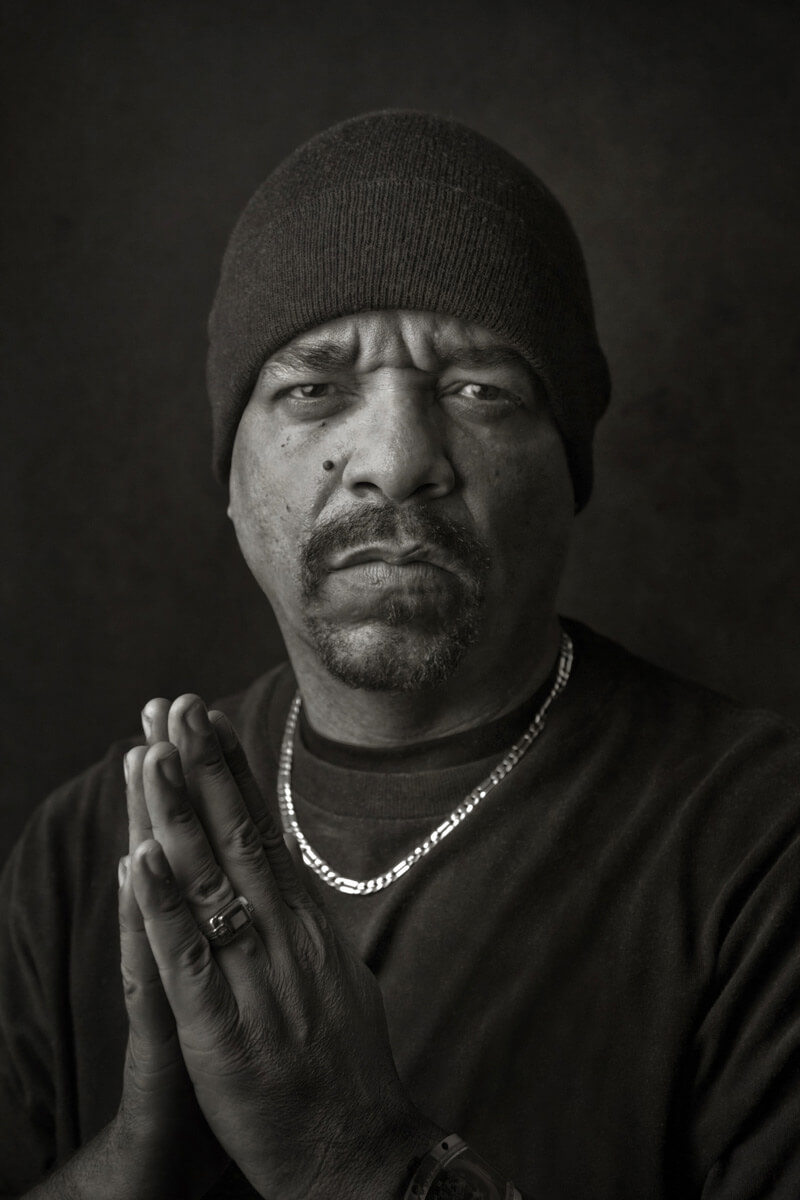
Photographer: Krijn Van Noordwijk
Ice-T is one of the original voices that gave West Coast Hip Hop its edge. Long before the scene exploded with household names, he was out there putting real-life stories to tape—stories built on survival, crime, and the hard choices that come with street life. What made Ice-T different from the wave of gangsta rappers who followed was that he never had to fake it. His background, his delivery, and his writing came from a place of lived experience, but he always filtered it through sharp insight and a dark sense of humor. He wasn’t out to glorify the streets—he was warning people what they could cost.
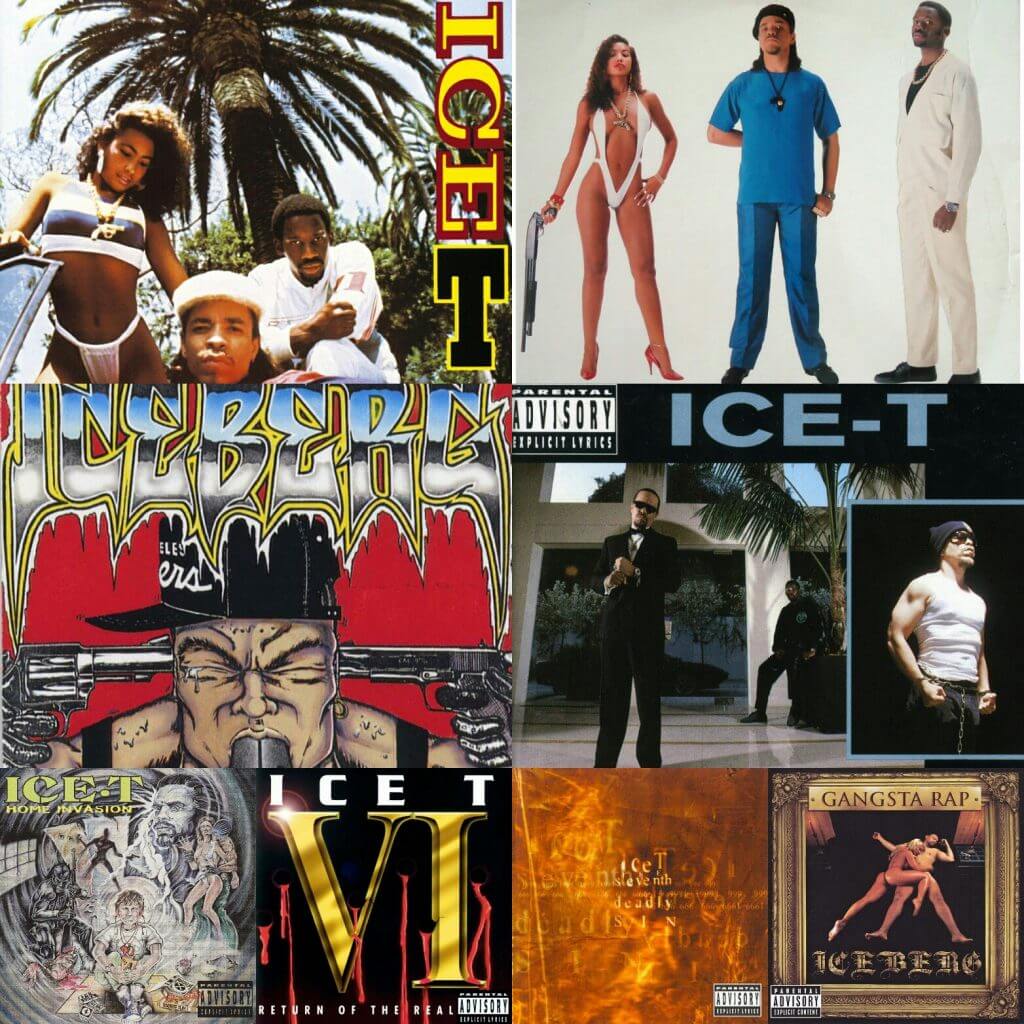
His career kicked off in the early 1980s, but it was Rhyme Pays (1987) that really put him on the map. Ice-T dropped four classic albums—Rhyme Pays, Power (1988), The Iceberg/Freedom of Speech… Just Watch What You Say (1989), and O.G. Original Gangster (1991)— that shaped the direction of gangsta rap. His music always sounded heavy, with slow-rolling funk loops and gritty drum patterns, the kind of production that gave space for his gravel-throated delivery to punch through. And behind every verse, there was a balance: street realism layered with irony, blunt messages about consequences, and a constant awareness of the bigger picture.
By the time controversy hit with his band Body Count or he started turning up in movies and on TV, he’d already laid the groundwork that made him impossible to discredit. Whether it was “Colors,” which dropped like a grenade into the gang conversation in 1988, or later tracks like “Money, Power, Women,” Ice-T always knew how to ride a beat with clarity and menace. He never pretended to be a lyrical acrobat, but he mastered directness—making every line land with weight. Ice-T’s acting career, from New Jack City to Law & Order: SVU, expanded his reach, yet he never lost Hip Hop credibility. His 2012 documentary Something from Nothing: The Art of Rap and annual Art of Rap festivals affirm his role as a respected elder statesman.
This list focuses mainly on his earlier years, when his records hit hardest and defined the sound of West Coast gangsta rap. But his catalog goes deeper than most think—albums like Seventh Deadly Sin (1999) still carry that signature tone and deserve attention. Narrowing his work down to 15 tracks doesn’t give the full picture, but it highlights the songs that shaped his legacy. If a favorite didn’t make it, sound off in the comments. Let’s get into the music.
Also read: Essential Rap Songs: Top 15 Lists For Every Influential Hip Hop Act
15. B*tches 2 (1991)
“I once knew this brother / Who I thought was cool with me / Chilled out together / Even went to school with me / Fly n****, my ace boon c**n / Used to low ride together / Shot dice in the bathroom…”
On “B*tches 2,” Ice-T flips the script on one of rap’s most overused slurs, targeting not women, but men who betray, snitch, fake toughness, or abuse their power. Backed by a buttery smooth beat and laid-back flow, Ice delivers four sharply drawn vignettes of men who violate street codes or basic decency—and end up, in his words, going out “like a bitch.”
Each story is rich in detail, whether it’s a friend who turns snake, a drug dealer who rats, a cop who hides his insecurity behind a badge, or a coward who flees under fire. The track walks a fine line between street storytelling and social commentary, showing Ice’s skill at framing moral failures without preachiness.
It’s a raw, witty standout from O.G. Original Gangster, and a reminder that integrity, not bravado, earns respect in Ice’s world.
14. The Hunted Child (1989)
“No jokin’, I’m sleepin’ with my eyes open / Wanted for a homicide ride, the gun’s still smokin’ / Didn’t know what I was doin’ but did it anyway / Now the posse’s on my trail, they say I’m gonna pay (Run!)…”
“The Hunted Child” is one of the most urgent, sonically aggressive cuts in Ice-T’s catalog. Fueled by a chaotic, high-energy beat reminiscent of Public Enemy’s Bomb Squad style—and even featuring Chuck D vocal samples—it’s a track that grabs you by the collar and doesn’t let go.
Beneath the noise is a chilling narrative: Ice tells the story of a young man driven to murder out of fear and desperation, only to become society’s scapegoat. It’s a powerful indictment of the system and a portrait of how easily the youth can become both victim and perpetrator.
Far from glorifying violence, Ice delivers the message with raw honesty and emotional depth. It’s a politically charged, high-tempo standout from The Iceberg, and an often underrated piece of his discography.
13. I'm Your Pusher (1988)
“For this drug deal, I’m the big wheel / The dope I’m sellin’, you don’t smoke, you feel / Out on the dance floor, on my world tour I’m sellin’ dope in each and every record store / I’m the kingpin when the wax spins / Crack or smack will take you to a sure end / You don’t need it, just throw that stuff away / You wanna get high? Let the record play…”
Released at the height of the crack epidemic, “I’m Your Pusher” flipped the script in a way only Ice-T could—turning the image of a drug dealer into a metaphor for a musical savior. Built around a slick sample from Curtis Mayfield’s “Pusherman,” this standout from Power positions Ice not as a dealer of dope, but of dope rhymes and dope beats. His message is clear: if you need a fix, make it music—not crack.
In a genre that often flirted with glorifying drug culture, Ice-T took a harder, smarter path. He calls out addiction, dismisses junkie culture, and instead pushes records as the true escape. It’s a clever twist, made even sharper by the smooth production and Ice’s laid-back but confident delivery.
Bonus points for the subtle jab at LL Cool J during their brief war of words—it’s more playful than venomous, but adds a little edge to an already razor-sharp track. A brilliant anti-drug anthem dressed as a street banger.
12. New Jack Hustler (1991)
“Here I come, so you better break North / As I stride, my gold chains glide back and forth / I care nothing bout you, and that’s evident / All I love’s my dope and dead presidents”
A standout from O.G. Original Gangster and the lead single for the New Jack City soundtrack, “New Jack Hustler” is Ice-T at his most cinematic. Taking on the persona of Nino Brown—the drug kingpin played by Wesley Snipes in the film—Ice delivers a ruthless, high-energy character study, packed with razor-sharp wordplay and a beat that hits as hard as the story.
But this isn’t just glorified crime fiction. Beneath the swagger lies a sharp critique of the American dream, warped through the eyes of someone who’s climbed the ladder using cocaine profits and street muscle. Lines like “Every dollar I get, another brother drops” cut through the glamor with bitter clarity.
Whether you come for the bravado or stay for the layered commentary, “New Jack Hustler” remains one of Ice’s most iconic joints—equal parts cautionary tale and street manifesto, and a perfect number 12 for this top-tier list.
11. Gotta Lotta Love (1993)
“Woke up the other mornin, I heard a rumor / They said the gang wars was over / I told em they was bullsh**tin, they said it’s real as hell / Can’t explain the way I felt / Too many years I seen my brothers die / And I can’t say that sh** was really that fly / But I used to gangbang when I was younger / So it’s really hard to tell a kid that he’s goin under…”
By 1993, Ice-T was navigating both controversy and evolution. Home Invasion, though less celebrated than O.G. Original Gangster, still had powerful moments—and “Gotta Lotta Love” stands tall among them. This track offers a rare moment of genuine warmth in Ice’s discography, as he reflects on the early ’90s gang truce in Los Angeles with cautious optimism and heartfelt pride.
Over a laid-back, soulful groove, Ice departs from the usual street survival narratives and instead embraces hope, unity, and change. He acknowledges the weight of the past without being naïve about the future, walking the line between realism and aspiration with remarkable sincerity.
It’s a message that hits differently coming from someone who’d so vividly chronicled life in L.A.’s gang culture. “Gotta Lotta Love” proves that Ice-T’s voice carried just as much weight when advocating for peace as it did when reporting from the battlefield.
10. Pulse Of The Rhyme (1991)
“Just checkin’ my microphone once / As I check your audio / Increase the bass response / Hopin’ the speakers blow / I got no time to sit and flip / And pop bullsh** / Turn up your stereo hops / Insert the rhyme clip…”
With “Pulse of the Rhyme,” Ice-T pulls off one of the sharpest sleights of hand in his catalog. Over a deceptively smooth, hypnotic groove and a deep, rolling bassline, he launches into a series of graphic, high-octane scenarios—only to remind listeners that not everything in rap should be taken at face value. “Is this real or fiction?” he asks slyly, knowing full well that the answer doesn’t matter as long as the flow hits hard.
The brilliance of this track lies in its meta-commentary. It’s not just another street tale; it’s a statement about storytelling itself. Ice delivers his verses with swagger and menace, all while nudging the listener to question what’s real and what’s performance. It’s a track that flexes lyrical muscle and conceptual depth at once.
Coming from an artist often pigeonholed for his gangsta image, “Pulse of the Rhyme” is a reminder that Ice-T was always several moves ahead—using fiction to reflect truth, and sound to expose perception. A low-key gem from a landmark album.
9. Drama (1988)
“Cruisin’ for a bruisin’, I’m takin’ no crap / Pipe bomb in my trunk, got a nine in my lap / I’m layin’ for a sprayin’, tonight there’s no playin’ / My posse’s most strapped, tonight the crew’s weighin’…”
Tucked deep into Ice-T’s breakout Power album, “Drama” is a grim, no-frills cautionary tale delivered with surgical precision. While many of his contemporaries leaned into glorifying the street hustle, Ice walks the other direction—holding up a mirror to the consequences of bad choices and inflated egos in the game.
“Drama” tells the story of a street hustler blinded by pride and reckless ambition. Ice narrates with calm detachment, his delivery underscoring how predictable and avoidable the downward spiral really is. The production by Afrika Islam is cold and stripped-down, letting Ice’s storytelling take center stage. No frills, no fantasy—just the unrelenting facts.
There’s no Hollywood twist ending here. No redemption arc. Just the inevitable crash that comes from believing you’re untouchable. Ice-T understood early on that the streets don’t forgive, and “Drama” makes that point with brutal clarity.
This track may not get the same spotlight as his biggest singles, but it remains a cornerstone of Power and a perfect example of why Ice-T’s voice stood apart in the golden age of gangsta rap.
8. The Tower (1991)
“I’m rollin’ up in a big gray bus / And I’m shackled down / Myself that’s who I trust / The minute I arrived / Some sucker got hit / Shanked ten times / Behind some bullsh**…”
Closing out O.G. Original Gangster with chilling clarity, “The Tower” is one of Ice-T’s most sobering and introspective tracks. Set inside the brutal confines of the U.S. prison system, the song offers a first-person descent into incarceration, where survival means becoming something colder, harder—and more dangerous than you were going in.
What makes “The Tower” hit harder than typical prison raps is its realism. There’s no posturing here. Ice depicts the stark violence, dehumanization, and psychological toll of the system without theatrics or exaggeration. His tone is subdued but firm, and the beat—haunting and minimal—echoes the emotional distance of a man numbed by routine brutality.
Perhaps most striking is the track’s social awareness. In an era when homophobia was rampant in rap, Ice takes a rare stand, calling out the hypocrisy and cruelty he saw in the prison hierarchy. Without preaching, he delivers a message that’s human, mature, and painfully relevant.
As a closer to a landmark album, “The Tower” doesn’t just end the story—it deepens the legacy. A powerful, underrated gem in Ice-T’s catalog.
7. High Rollers (1988)
“Speed of life, fast / It’s like walking barefoot over broken glass / It’s like, jumping rope on a razor blade / All lightning-quick decisions are made…”
“High Rollers” stands tall as the standout track from Power, Ice-T’s second album and a turning point in his evolution as both rapper and storyteller. On the surface, it’s a slick portrait of fast money, status symbols, and the allure of the hustler lifestyle—but listen closely, and it’s clear that Ice isn’t just selling a fantasy. He’s issuing a warning.
Afrika Islam’s production is polished but hard-edged, matching Ice’s delivery stride for stride. The verses hit with quotable sharpness—“Speed of life, fast / It’s like walking barefoot over broken glass”—but beneath the bravado is a deeper message: success in the streets comes with a short shelf life, and the line between balling out and bleeding out is razor-thin.
As much a cautionary tale as it is a street anthem, “High Rollers” doesn’t glamorize recklessness—it spotlights its consequences. Ice makes it clear: if you live by the game, you’d better understand all its rules. One of his most balanced and potent tracks, it’s no wonder this became one of his early hits.
6. Squeeze The Trigger (1987)
“Cops hate kids, kids hate cops, cops kill kids with warnin’ shots / What is crime and what is not? What is justice? I think I forgot / We buy weapons to keep us strong / Reagan sends guns where they don’t belong / The controversy is thick and the drag is strong / But no matter the lies we all know who’s wrong…”
Closing out Rhyme Pays with a bang—literally and lyrically—“Squeeze the Trigger” is one of Ice-T’s sharpest early statements. It’s a blistering indictment of American hypocrisy, with Ice flipping the script on media and political outrage. Rather than swallowing the mainstream narrative that deems rap “too violent,” he holds up a mirror: what about the nightly news? What about the cops who shoot first and don’t bother asking questions?
Over a relentless beat crafted by Afrika Islam, Ice-T balances menace with intellect. The production is raw, pulsing, and perfectly suited for the heavy message. But it’s not just provocation for its own sake. This is Ice at his most pointed—exposing how quickly society blames the messenger while ignoring the message.
It’s no surprise that this track was initially floated for the Colors film soundtrack, before Ice and Islam decided to top themselves and wrote the now-classic title track instead. Still, “Squeeze the Trigger” remains a highlight in its own right—urgent, furious, and as relevant now as it was in ’87.
5. Midnight (1991)
“Midnight chillin’ at A.M P.M / Coolin’ drinkin’ apple juice in Evil’s BM / The sound’s up loud to attract attention / Armor All-ed tires on a lowered suspension…”
Dark, deliberate, and cinematic, “Midnight” stands out as one of the most gripping storytelling tracks in Ice-T’s catalog. It plays like a short film—moody, suspenseful, and tightly scripted. Serving as a prequel to his iconic “6 N The Morning,” the song traces the hours leading up to that fateful police knock at the door. When “Midnight” ends, “6 N The Morning” begins.
Musically, the atmosphere is heavy and ominous. Ice-T and his producers pull from rock royalty here—sampling Black Sabbath to build tension, and layering it over the crushing drums from Led Zeppelin’s “When the Levee Breaks.” The result is a track that moves like a slow-creeping thriller, letting every beat land with weight. The pacing is intentional—it drags just enough to make your pulse quicken.
Lyrically, Ice is in full storyteller mode. There’s no glorification here—just an unflinching descent into crime, paranoia, and inevitability. It’s gripping because of how casually the chaos unfolds. He doesn’t rush the narrative; he lets it unravel in real time, daring the listener to sit with the dread.
“Midnight” is essential listening. A masterclass in tone, mood, and Hip Hop storytelling.
4. You Played Yourself (1989)
“This is it, dope from the fly kid / The Ice mic is back with the high bid / Suckers you’ve lost cos players you’re not, gangstas you ain’t / You’re faintin’, punk if you ever heard a gunshot…”
With “You Played Yourself,” Ice-T drops one of the sharpest cautionary tracks of his career. Over a smooth, mid-tempo beat built around James Brown’s “The Boss,” he delivers a cold-blooded warning to anyone trying to fake their way through life. The groove is slick and laid-back, but the message cuts deep.
The track unfolds as a series of short stories—people getting ahead of themselves, ignoring the basics, and crashing hard. There’s the wannabe rapper who lets a little attention go to his head, the dude trying to impress a woman with money he doesn’t have, and the fool who thinks he’s invincible until drugs end him. Ice doesn’t sugarcoat any of it. He’s not scolding, either—he’s laying out the facts with clarity and confidence.
This isn’t a song about redemption. It’s about accountability. The hook drives the point home: “You played yourself.” Simple, direct, impossible to misread. Ice-T’s delivery stays cool and steady, letting the weight of his words do the work. He’s not angry—he’s disappointed.
What makes the track hit harder is the contrast between the buttery beat and the brutal honesty in the lyrics. The production is clean, with crisp drums and a looping bassline that keeps everything moving forward. It sounds like a party track, until you start listening closely. That’s the genius of it.
“You Played Yourself” is essential Ice-T—smart, grounded, and unafraid to call out the nonsense. No glamor, no excuses, just real talk over a killer groove.
3. Original Gangster (1991)
“Ten years ago / I used to listen to rappers flow / Talkin’ bout the way they rocked the mic at the disco / I liked how that sh** was goin’ down / Dreamt about ripping the mic with my own sound…”
The title track from Ice-T’s fourth album hits like a mission statement. “O.G. Original Gangster” lays out exactly who he is, how he got here, and why his voice matters. Over a stripped-down, hard-edged beat built around Melvin Bliss’s “Synthetic Substitution,” Ice breaks down his evolution from street hustler to rapper with cold precision. DJ Aladdin keeps the production sharp and uncluttered, letting the rhythm breathe while the sample crackles underneath Ice’s verses.
This track isn’t about cartoon violence or shallow bravado. It’s a personal history, told with the clarity of someone who lived it and made it out. Ice talks about ditching the early party-rap approach once he realized his real stories had weight. His delivery is calm, measured, and razor-focused—never trying to sell anything, just telling it straight.
What makes “O.G.” hit harder than most autobiographical tracks is the balance. Ice talks about gang life, but he doesn’t linger on glamor. There’s a clear sense of cause and consequence running through every verse. He raps like someone who knows the game inside out and doesn’t need to exaggerate it. There’s no moralizing, no posing—just a timeline of decisions and outcomes.
The production mirrors that attitude. There’s nothing fancy here—just drums, sample, bassline. The space in the beat gives Ice room to work, and he uses it to full effect. Every line lands with weight, every detail grounded in experience.
“Original Gangster” isn’t about claiming a title—it’s about explaining why it fits. It’s one of the clearest expressions of Ice-T’s philosophy as an artist: honest, stripped-down, and rooted in the life he lived. As far as introductions go, this one doesn’t need hype. The music and the man speak for themselves.
2. Colors (1988)
“I am a nightmare walking, psychopath talking / King of my jungle just a gangster stalking…”
Released as the title track for Dennis Hopper’s 1988 film Colors, this single pushed Ice-T into the mainstream without compromising anything. The beat is built on a haunting synth line, carried by a slow, deliberate rhythm that echoes the tension of the streets it describes. It’s not flashy. It moves with weight, with Ice’s voice dropping hard over each bar—clear, controlled, and heavy with intent.
Written from the perspective of a gang member, “Colors” draws you inside the mindset without asking for sympathy or offering excuses. Ice isn’t romanticizing anything here. He’s drawing lines—showing how identity gets wrapped in violence, how kids become soldiers for a neighborhood, a crew, a color. But through all of it, there’s an undercurrent of warning. Ice isn’t preaching, but he’s not blind either— he’s capturing that mix of fatalism and pride that defines so many caught in the cycle.
What makes this track stand out, even decades later, is how direct it is. There’s no metaphor, no overproduction, just a raw-eyed look at gang culture from someone who lived close to it. He delivers the story in first-person, fully inhabiting the role while making it clear he’s not asking anyone to follow. It’s part autobiography, part caution sign.
The production, handled by Ice-T and longtime collaborator Afrika Islam, is tight and minimal. Every element is there to carry the message. There’s a siren-like synth that loops under the hook, giving it a sense of unease that never lets up. It’s a sound that mirrors the streets—tense, slow-burning, and always one spark from going off.
“Colors” became one of Ice-T’s biggest songs for good reason. It cut through the noise. No posturing, no fantasy—just the voice of someone who saw what gang life really cost. He wasn’t telling kids to pick up a flag. He was showing them why they might want to think twice. This is one of Ice-T’s most enduring records, and still one of the few gangsta rap tracks that doesn’t glorify the life it describes.
1. 6 N The Morning (1986)
“6 in the morning, police at my door / Fresh Adidas squeak across the bathroom floor / Out my back window I make my escape / Didn’t even get a chance to grab my old school tape…”
This is where the fuse got lit. “6 N The Mornin’” is Ice-T’s breakout track and one of the earliest full-blown gangsta rap records, setting the tone for a style that would dominate the next decade. First dropped in 1986 as a single and later featured on Rhyme Pays, the track draws direct inspiration from Schoolly D’s “PSK What Does It Mean?”, but Ice-T gave it a West Coast identity. His voice is steady, almost casual, as he walks through a day in the life of a street hustler—dodging cops, rolling dice, and slipping through back windows before sunrise.
The beat, produced by Ice-T and Afrika Islam, is skeletal and menacing. A few thick bass stabs, tinny snares, and synth stabs are all it takes. That minimalism leaves space for the narrative to breathe. And it’s a narrative that doesn’t glorify much—just reports. Ice’s voice has no urgency, no panic, just the cool calculation of someone who’s done this before. That tone is part of what makes the track hit harder than all the fake bravado that would flood the genre years later.
The first line—“6 in the morning, police at my door”—has become one of Hip Hop’s most quoted openers. It’s been referenced by artists across generations, from Ice Cube and 2Pac to Kendrick Lamar, who flipped it in “The Blacker the Berry.” But what makes “6 N The Mornin’” stick isn’t nostalgia. It’s the detail. Ice gives you a full panorama of his world without ever overselling it. There’s dice games, guns, women, a shootout, a getaway—and it’s all delivered with clarity and rhythm that stays locked in, bar after bar.
Years later, Ice would write a prequel called “Midnight” that ends right where this track begins. That kind of storytelling structure isn’t common in Hip Hop even now. It shows how far ahead of his time he was—not just rapping about the streets, but building a mythology around them.
“6 N The Mornin’” may have opened the floodgates for gangsta rap, but Ice-T wasn’t aiming to start a trend. He was telling his truth. And in the process, he laid down one of the foundation stones of West Coast Hip Hop.
My Top 10 Ice T songs:
10. Gotta Lotta Love
9. Pulse Of The Rhyme
8. Squeeze The Trigger
7. New Jack Hustler
6. You Played Yourself
5. Cop Killer
4. 6 N The Morning
3. I’m Your Pusher
2. O.G. Original Gangster
1. Colors