

Los Angeles Hip Hop is often viewed through the lens of gangsta rap. The contributions of Ice-T, N.W.A, DJ Quik, Compton’s Most Wanted, and Snoop Dogg are central to the history of West Coast rap, and rightly so. But focusing primarily on that tradition leaves a substantial part of the city’s Hip Hop history unexplored. Over the decades, Los Angeles has developed a remarkably diverse scene, shaped by different neighbourhoods, cultural backgrounds, musical influences, and artistic approaches.
From the socially conscious MCs associated with the Good Life Café to the experimental lyricism of Project Blowed, from jazz-inflected sample-based production to Latin-influenced rap, electro-inspired sounds, independent underground movements, and inventive party music, LA artists have consistently taken Hip Hop in different directions. Some of these records have received widespread recognition, while others remain better known among dedicated underground listeners. A few occupy territory that overlaps with gangsta rap, but their musical identity and artistic focus extend beyond that label.
For this list, we’ve selected 25 albums that illustrate the breadth of Los Angeles Hip Hop outside its most familiar gangsta rap tradition. These records represent different eras, scenes, and generations, each offering its own perspective on what LA rap has to offer. The common thread is the quality and individuality of the music, and the contribution each album makes to a fuller picture of the city’s Hip Hop history.
A note on selection: artists such as The Pharcyde, People Under The Stairs, Jurassic 5, Dilated Peoples, and Murs have enough strong albums in their catalogs to warrant multiple entries. We’ve limited the selection to one album per artist, with each choice representing that artist’s contribution as a whole.
Also read: 25 Landmark Gangsta Rap Albums From 1990s Los Angeles
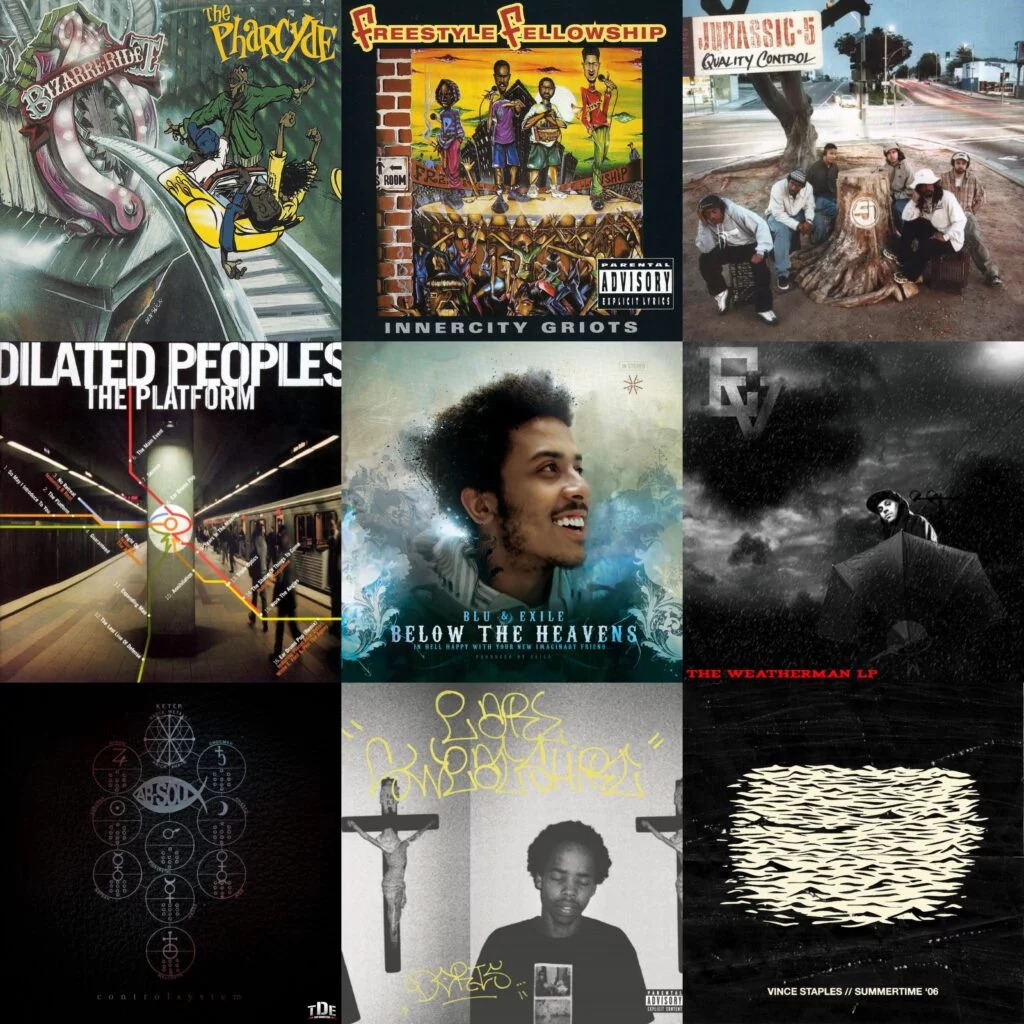
The Pharcyde – Bizarre Ride II The Pharcyde (1992)

When Bizarre Ride II The Pharcyde dropped in 1992, West Coast Hip Hop was increasingly associated with the hard-edged street narratives of gangsta rap. The Pharcyde offered a very different perspective. Their debut was colourful, mischievous, musically adventurous, and often hilarious, introducing four MCs whose chemistry and unconventional personalities immediately set them apart. Alongside Freestyle Fellowship’s To Whom It May Concern… and Del the Funky Homosapien’s I Wish My Brother George Was Here, it helped establish an alternative West Coast movement that would soon include artists and groups such as Souls of Mischief, Hieroglyphics, The Coup, and Jurassic 5.
Fatlip, Imani, Bootie Brown, and Slimkid3 approached the microphone with a wonderfully unpredictable combination of humour, eccentric storytelling, clever wordplay, and individual personality. They weren’t afraid to make themselves look ridiculous, and that willingness to embrace awkwardness and absurdity became one of the album’s greatest strengths. The opening “Oh Sh*t” sets the tone with outrageous accounts of drunken escapades and sexual misadventures, while “Ya Mama” turns a familiar playground tradition into an entertaining group exercise in comic insults. “On the DL” takes the listener through a series of decidedly unconventional personal revelations, with the four MCs displaying their knack for making even uncomfortable subjects entertaining.
There is considerably more to Bizarre Ride than comedy, however. “Officer” addresses racial profiling and the experience of being unfairly targeted by police, while “Otha Fish” takes a more reflective approach to relationships and romantic disappointment. The album’s defining moment, “Passin’ Me By,” brings the latter theme to the forefront. Built around a memorable Quincy Jones sample from “Summer in the City,” the song finds each member recounting experiences of unrequited attraction. Its wistful production, memorable chorus, and alternating perspectives turned it into one of the most beloved Hip Hop singles of the decade.
Much of the album’s distinctive character comes from J-Swift, whose production combines jazz influences, funk breaks, live instrumentation, and inventive sampling. Drawing on artists such as James Brown, Sly & the Family Stone, and Marvin Gaye, he creates richly textured beats that give the MCs plenty of room to experiment. The interplay between the four rappers adds another dimension, with their contrasting voices, conversational exchanges, and occasional harmonies giving the record an unmistakable group identity.
Bizarre Ride II The Pharcyde eventually earned Gold certification in 1996, largely on the strength of “Passin’ Me By.” Its greater achievement was the alternative West Coast tradition it helped bring into focus. More than three decades later, its combination of musical sophistication, inventive lyricism, and infectious personality remains a defining moment in Los Angeles Hip Hop history.
Also: Labcabincalifornia (1995)
Freestyle Fellowship – Innercity Griots (1993)

Freestyle Fellowship’s Innercity Griots is one of the most adventurous albums to emerge from Los Angeles Hip Hop. Myka 9, Aceyalone, P.E.A.C.E., and Self Jupiter had developed their skills in the underground scene surrounding the Good Life Cafe and Project Blowed, a community of MCs and producers interested in taking Hip Hop in less conventional directions. Their debut, To Whom It May Concern (1991), had already earned them recognition among underground listeners, but their second album pushed their collective approach considerably further.
From the opening “Bullies of the Block,” the chemistry between the four MCs is immediately apparent. Their styles are distinct, but they constantly play off one another, weaving intricate rhyme patterns and shifting flows into a remarkably cohesive whole. They trade lines, pick up each other’s rhythms, and move between different cadences with an agility that makes the performances particularly exciting. Complex wordplay is everywhere, but the technical ability never becomes an end in itself. There is an infectious energy to the way these four rappers interact.
The production is equally adventurous. Jazz influences run throughout the album, with unconventional arrangements and unexpected changes giving the music an unpredictable character. “Inner City Boundaries,” featuring Stetsasonic’s Daddy-O, is a highlight, pairing a jazzy backdrop with verses addressing inner-city life and identity. “Way Cool” takes a funkier, more upbeat direction, giving each member room to demonstrate his individual style in a lively exchange of verses. The result is a particularly vivid example of the group’s collective chemistry.
There is also room for a different kind of storytelling. “Hot Potato” brings an infectious bounce, built around a sample of The Grass Roots’ “You and Love Are the Same,” while “Park Bench People” slows the pace considerably. Myka 9 reflects on the people he sees in his neighborhood, offering a poignant account of poverty, addiction, and the daily struggle to survive. Its laid-back, jazzy production provides an ideal setting for his observations.
Innercity Griots belongs in the same conversation as The Low End Theory, Bizarre Ride II the Pharcyde, and Buhloone Mindstate. Like those albums, it reflects an alternative strand of early ’90s Hip Hop where musical curiosity, individuality, and lyrical invention took priority. Freestyle Fellowship brought a distinctly Los Angeles perspective to this adventurous strain of early ’90s Hip Hop, making Innercity Griots one of the defining albums of the city’s underground scene.
Also: To Whom It May Concern… (1991)
Cypress Hill - Black Sunday (1993)
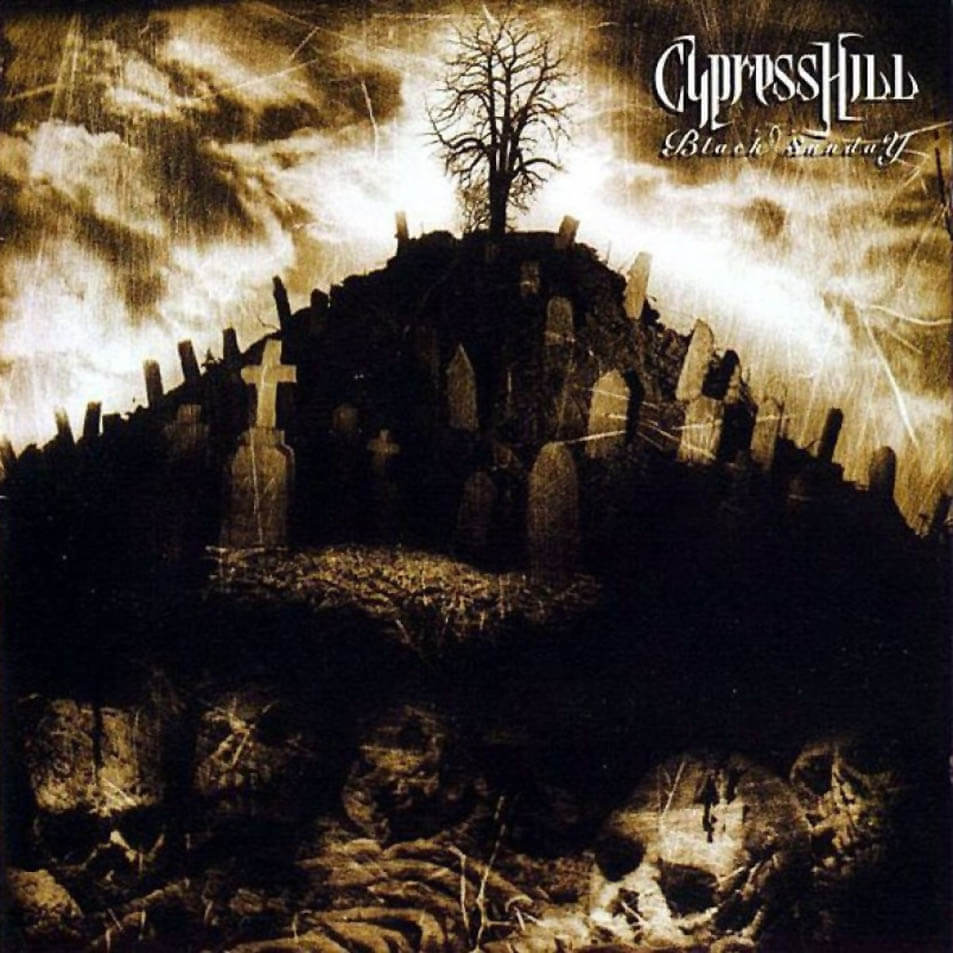
Cypress Hill’s Black Sunday is often grouped with the gangsta rap that dominated the West Coast in the early 1990s. The association is understandable: the group emerged from Los Angeles, their music has a dark, threatening atmosphere, and songs such as “When the Sh*t Goes Down” and “Cock the Hammer” draw on street narratives. But calling Black Sunday a gangsta rap album misses what makes it distinctive. Its central concerns are cannabis culture, dark humour, Latin identity and an eccentric strain of underground Hip Hop that had little in common with the polished G-funk sound then dominating California radio.
The group’s 1991 self-titled debut had already introduced an unusual combination of Latin-inflected influences, grimy production and B-Real’s unmistakable nasal delivery. Black Sunday took that identity to a much wider audience without compromising its stranger qualities. DJ Muggs builds the album around murky basslines, eerie samples and stripped-back drums, creating a horror-film atmosphere that contrasts sharply with the funk-heavy production associated with much of the West Coast scene. B-Real’s high-pitched voice and Sen Dog’s gravelly interjections give the music an instantly recognizable character.
“Insane in the Brain” became the group’s signature crossover hit, its warped vocal hook and lurching beat reaching far beyond traditional rap audiences. “I Ain’t Goin’ Out Like That” brings a heavier, almost rock-like attack, while “I Wanna Get High” and “Hits from the Bong” turn cannabis consumption into hazy, sample-driven rituals. Muggs’ production on the latter is particularly hypnotic. The brief “Legalize It” makes the group’s position explicit, while the darker street narratives on “When the Shit Goes Down” and “Cock the Hammer” provide some of the album’s more aggressive moments.
Black Sunday also connected with audiences outside conventional Hip Hop circles. Its cemetery imagery, horror-film atmosphere and abrasive grooves appealed to skaters, alternative-rock listeners and fans of music that operated outside the dominant gangsta rap and G-funk styles. That crossover helped Cypress Hill reach an enormous audience, with the album debuting at number one on the Billboard 200 while their debut was still in the Top 10.
Its commercial success was remarkable, but Black Sunday belongs on this list because its identity cannot be reduced to gangsta rap. Cypress Hill created a dark, psychedelic and cannabis-centred strain of West Coast Hip Hop, with DJ Muggs’ production and the group’s unmistakable vocal chemistry giving the album a character entirely its own.
Also: Cypress Hill (1990), III: Temples Of Boom (1995)
Tha Alkaholiks - Coast II Coast (1995)
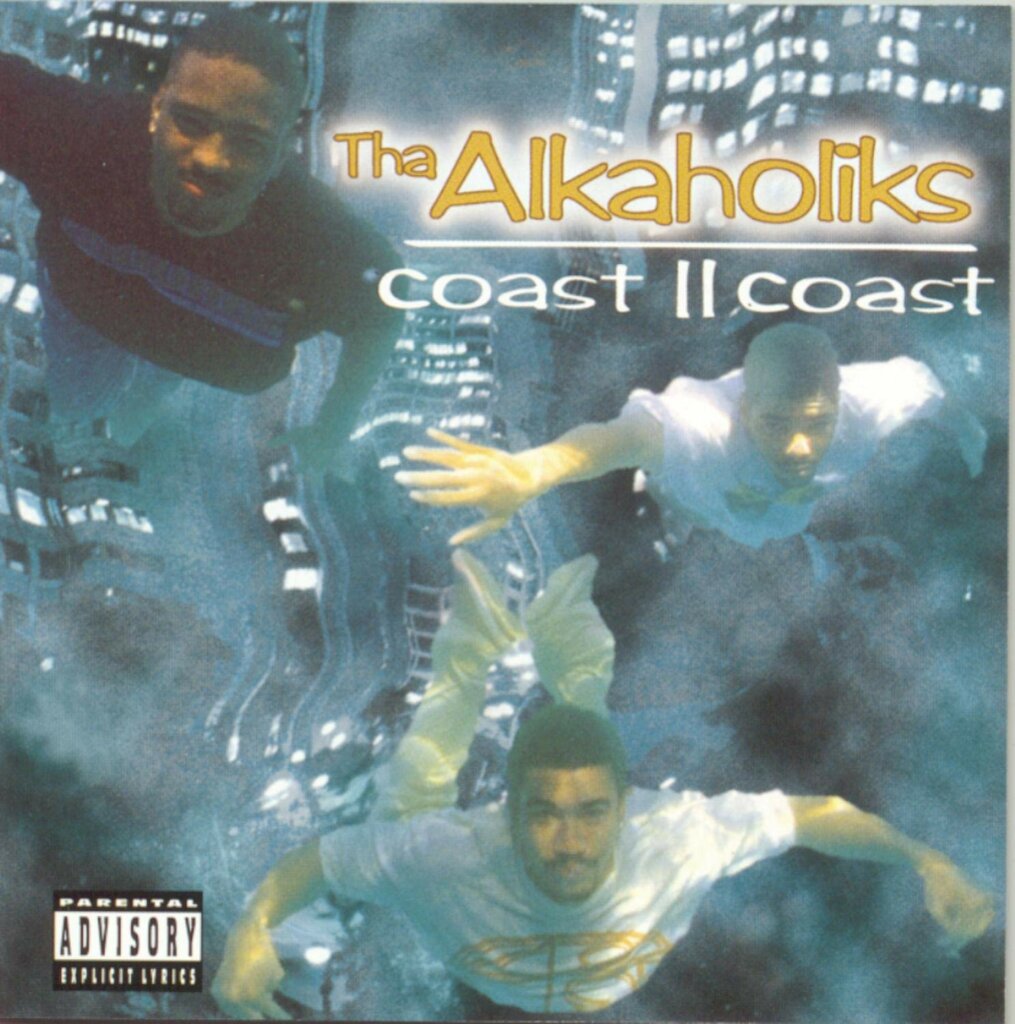
In the early 1990s, Tha Alkaholiks offered a different kind of West Coast attitude. Tash, J-Ro and producer E-Swift built their identity around humour, drinking, competitive rhyming and an infectious love of Hip Hop. Their 1993 debut, 21 & Over, introduced the trio’s loose chemistry and party-minded approach. Two years later, Coast II Coast found them sounding even sharper, with stronger production and a particularly impressive collection of guest appearances.
E-Swift handles most of the production, supplying thick basslines, crisp drums and funk-driven samples that give the album its unmistakable bounce. The beats are muscular without becoming overly aggressive, leaving plenty of room for Tash and J-Ro to trade boasts, punchlines and offbeat observations. “DAAAM!” is the obvious highlight, a showcase for the group’s combination of sharp wordplay, outrageous humour and infectious energy. Tash’s rapid-fire delivery and J-Ro’s unpredictable contributions make the track a particularly entertaining display of their contrasting personalities.
The production roster also includes two contributions from Diamond D, whose East Coast sensibilities fit comfortably into the Liks’ West Coast sound. His work on “Let It Out” and “The Next Level” adds another dimension to the album, with the latter featuring Diamond D himself. “All The Way Live” brings together King Tee and Q-Tip, while “Hit and Run” features an early appearance from Xzibit. King Tee, a longtime mentor and influence on the group, also turns up on “Bottoms Up.”
The opening “WLIX” is another notable moment. Featuring Lootpack and Declaime, the track connects Tha Alkaholiks with a younger generation of Los Angeles underground artists, with Madlib involved in its production. In retrospect, that collaboration offers an early glimpse of the musical world he would go on to develop.
Coast II Coast doesn’t pursue grand concepts or heavy social commentary. Its priorities are chemistry, beats, punchlines and the uncomplicated pleasure of hearing skilled MCs enjoying themselves. That spirit, combined with E-Swift’s production and the group’s easy command of the microphone, makes this one of the strongest party-oriented albums to come out of the West Coast underground in the mid-1990s.
Also: 21 & Over (1993), Likwidation (1997)
Aceyalone - All Balls Don’t Bounce (1995)

By the time Aceyalone released his solo debut in 1995, he had already earned considerable respect as one of the leading voices of Freestyle Fellowship. The group had emerged from Los Angeles’ Good Life Café scene, where unconventional flows, intricate rhyme patterns, and lyrical experimentation were becoming defining characteristics of a new underground movement. All Balls Don’t Bounce carried that spirit into a solo setting, giving Aceyalone the space to explore his ideas and personality across a full-length record.
Released on Capitol Records, the album occupies an interesting position in the development of LA underground Hip Hop. Aceyalone had little interest in the gangster imagery and materialistic preoccupations dominating much of West Coast rap at the time. His attention was directed toward language, identity, social observations, and the peculiarities of everyday life. His writing combines abstract associations, intricate wordplay, humour, and more reflective passages, while his distinctive delivery allows him to move between different rhythmic patterns with remarkable ease. Even within the increasingly crowded field of technically gifted underground MCs, Aceyalone had a voice and approach of his own.
The title track gets things moving with an upbeat, funky groove and a catchy refrain, while “Mic Check” puts the spotlight on his command of the microphone. “Mr. Outsider” takes a more introspective direction, exploring questions of identity and belonging, and “Arhythmaticulas” finds Aceyalone having fun with language, manipulating words and rhythms in ways that reward repeated listening. These tracks give a good indication of his range, from straightforward Hip Hop exuberance to more unconventional lyrical exercises.
The album also connects naturally with the wider Project Blowed family. Fellow underground MCs Abstract Rude and Mikah 9 make appearances, linking Aceyalone’s solo work to the collective creative energy surrounding the legendary South Central Los Angeles scene. Their presence reinforces the sense of a thriving underground community developing its own musical vocabulary outside the mainstream.
In 2004, All Balls Don’t Bounce received an expanded reissue titled All Balls Don’t Bounce: Revisited, released through Project Blowed and Decon with an additional disc. The renewed edition brought attention back to a record that deserves recognition among the defining releases of mid-1990s Los Angeles underground Hip Hop. Aceyalone’s solo debut captures an artist fully committed to the possibilities of language, rhythm, and individual expression.
Also: A Book Of Human Language (1998), Accepted Eclectic (2001)
Ras Kass - Soul On Ice (1996)
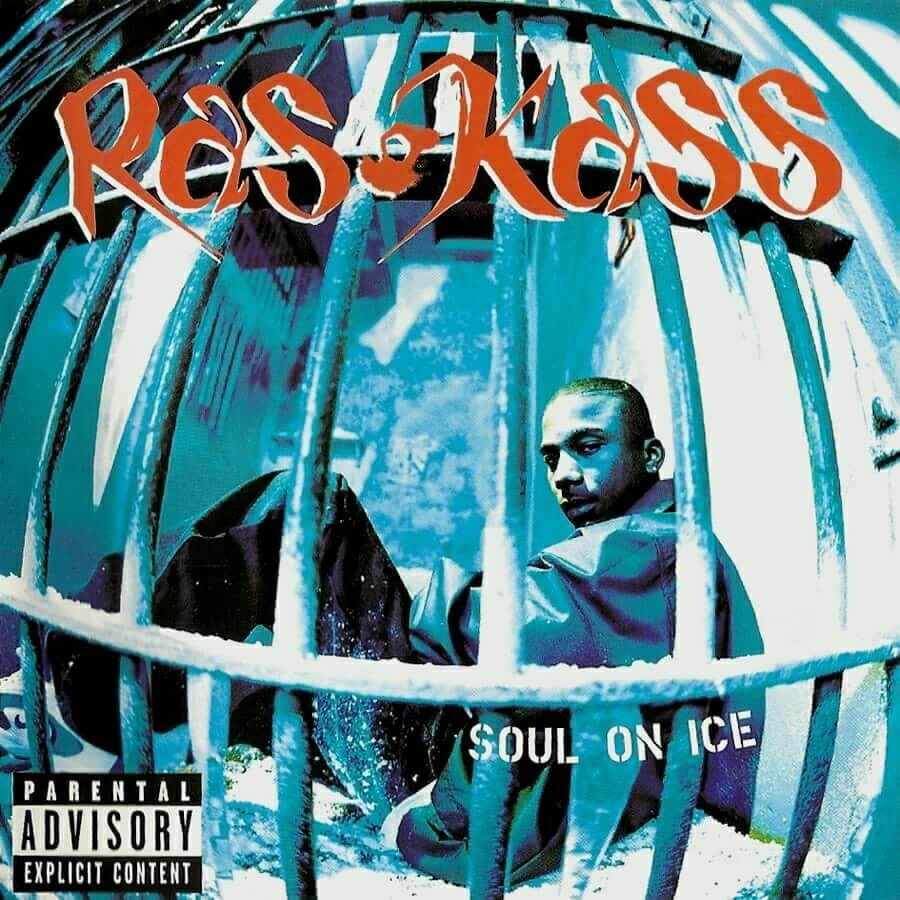
Few Los Angeles MCs have approached lyricism with the intellectual ambition of Ras Kass. Born John Austin IV, the Carson-raised rapper arrived with a remarkable command of language, an appetite for historical and philosophical subject matter, and little interest in simplifying his ideas for a wider audience. His 1996 debut, Soul on Ice, is an extraordinarily dense record that tackles race, religion, identity, economics, institutional power, and the historical roots of inequality. Three decades after its release, it remains one of the most intellectually demanding albums to emerge from the Los Angeles underground.
The album’s centrepiece is undoubtedly “Nature of the Threat,” a seven-and-a-half-minute historical examination of civilization, race, and the development of human societies. Ras Kass traces his narrative from humanity’s African origins through slavery, colonialism, and the structures of modern society, packing an enormous amount of information and argument into a single performance. His delivery is rapid and controlled, while the intricate rhyme schemes and constant references demand close attention. The track also contains contentious historical claims and passages, including its treatment of Jewish history and the use of homophobic language. Those elements deserve scrutiny, particularly given the song’s sweeping ambitions. Regardless, “Nature of the Threat” remains one of the most provocative and ambitious lyrical performances of its era.
Ras Kass takes a different approach on “Anything Goes,” examining the relationship between capitalism, greed, and criminality. Its central argument concerns the economic pressures and incentives that encourage destructive behaviour, while the verses also address the consequences of pursuing money through illegal means. The album’s closing track, “Ordo Ab Chao,” returns to broader questions of power and social order, using the relationship between order and chaos to examine how established systems maintain their authority and how those structures can be challenged.
Throughout Soul on Ice, Ras Kass demonstrates an extraordinary ability to connect personal observations with wider historical and social questions. His writing is packed with metaphors, references, internal rhymes, and layered arguments, giving individual tracks considerable depth. Police brutality, incarceration, economic inequality, and institutional injustice all enter the picture, although the album’s greatest distinction remains the sheer intellectual range of its writing.
There are few concessions to casual listening here. Ras Kass expects his audience to pay attention, question what they’re hearing, and return to verses that might reveal something new on another listen. Soul on Ice captures an MC operating at the outer limits of lyrical ambition, and remains a defining document of the politically engaged, intellectually adventurous side of 1990s Los Angeles Hip Hop.
Xzibit - At The Speed Of Life (1996)
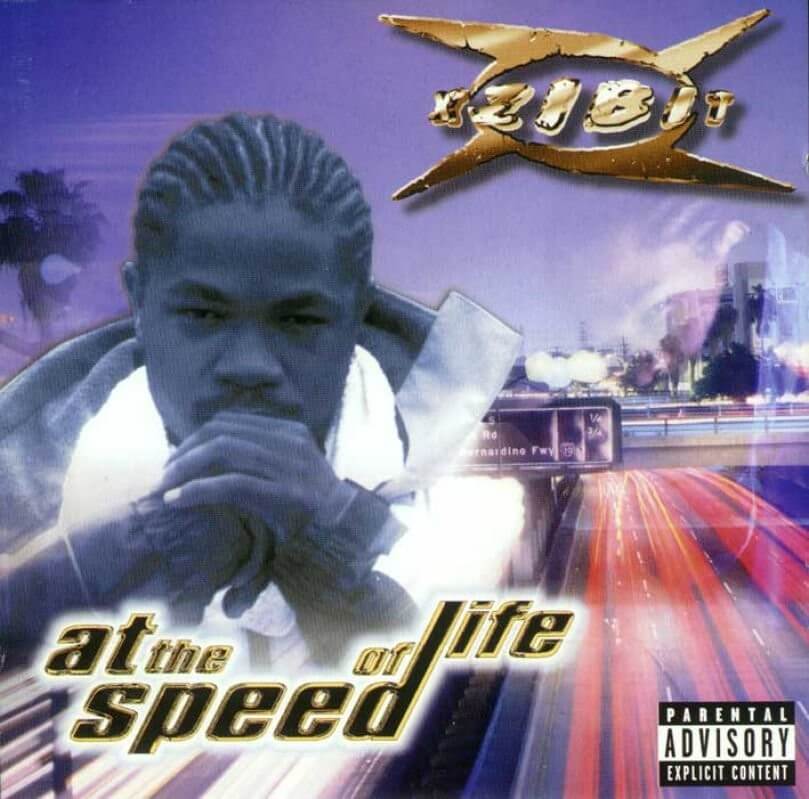
Before becoming a mainstream name through albums like Restless and his later television career, Xzibit established himself as one of the most forceful MCs in Los Angeles underground rap. His association with King Tee’s Likwit Crew connected him to Tha Alkaholiks and a West Coast network that valued lyrical ability, personality, and rugged production. Released through Loud Records in October 1996, At the Speed of Life brought together producers including E-Swift, DJ Muggs, Diamond D, Saafir, and Thayod Ausar. The result was a hard-edged debut that occupied a different corner of the Los Angeles scene from the dominant G-Funk sound.
Xzibit’s gravelly voice and commanding delivery give the album much of its character, but the writing reaches beyond battle-ready bravado. The clearest example is “Paparazzi,” a sharp critique of rappers chasing money and fame by manufacturing images and lifestyles. Its haunting string arrangement, built around a sample of Gabriel Fauré’s “Pavane,” gives the track an appropriately sombre atmosphere. Xzibit questions the industry’s fixation on appearances while establishing his own distance from the commercial posturing he sees around him.
Personal history comes into sharper focus on “Carry the Weight.” Xzibit addresses the loss of his mother, the upheaval of moving to New Mexico, his involvement with the juvenile justice system, and the emotional burden of those experiences. “The Foundation” takes a different approach, addressing his newborn son with advice about anger, self-preservation, and making better choices. These tracks reveal an MC concerned with the consequences of his surroundings and the responsibilities that come with fatherhood. They give the album an emotional depth that its imposing vocal style might initially conceal.
The production is varied without losing its gritty character. E-Swift contributes several hard-hitting tracks, DJ Muggs supplies the melancholic backdrop for “The Foundation,” and Diamond D handles the lively “Bird’s Eye View,” featuring Tash and J-Ro. “Plastic Surgery,” with Ras Kass and Saafir, brings together three technically accomplished West Coast lyricists, while “Just Maintain” adds Hurricane G to the mix.
Although its street-level perspective and aggressive delivery invite comparisons with gangsta rap, At the Speed of Life is principally the work of an underground lyricist examining the pressures of his environment. Its strongest moments are concerned with rejecting false images, confronting personal loss, and passing on lessons that might help the next generation avoid the same mistakes. Xzibit arrived with plenty of force, but the substance behind that force is what gives this debut its distinction.
Also: 40 Dayz & 40 Nightz (1998)
Styles Of Beyond – 2000 Fold (1998)
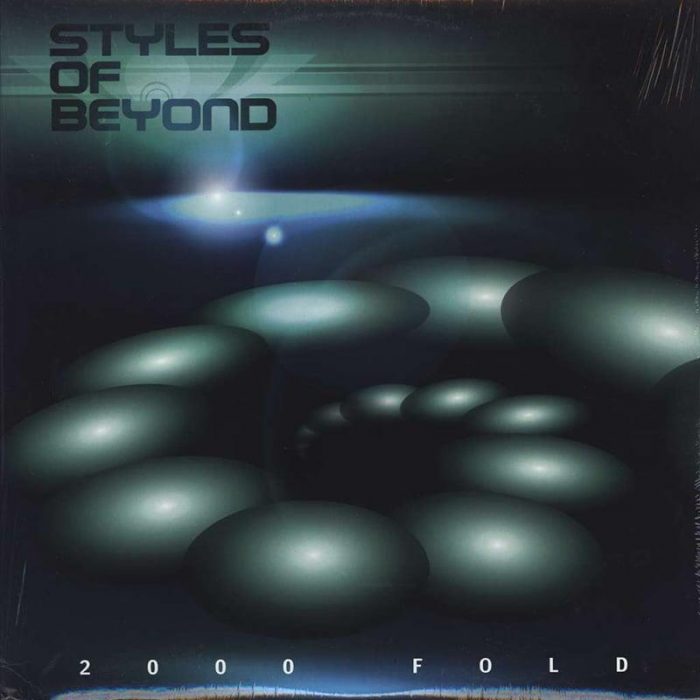
Coming out of the San Fernando Valley, Styles Of Beyond represented a different strand of Los Angeles Hip Hop in the late 1990s. While much of the West Coast’s mainstream rap was still dominated by gangsta rap and G-funk, the quartet pursued a more underground-oriented approach built around intricate rhymes, boom-bap rhythms, turntable work, and an eclectic range of production influences. Their 1998 debut, 2000 Fold, remains an overlooked album from a group that developed a distinctive identity outside the city’s better-known rap traditions.
Styles Of Beyond consisted of MCs Ryu and Tak, DJ Cheapshot, and producer Vin Skully. The opening “Intro” immediately establishes their musical priorities, combining a rugged boom-bap beat with crisp cuts and scratches. “Style Warz” continues in that direction, providing a fitting platform for Ryu and Tak’s tightly constructed verses. The album doesn’t remain confined to traditional East Coast-inspired Hip Hop, however. “Spies Like Us” introduces a more atmospheric dimension, while “Easy Back It Up” brings a funkier, more upbeat energy into the mix. This willingness to move between different musical approaches gives the record much of its character.
Ryu and Tak make an effective team behind the microphones. Their writing combines intricate wordplay, storytelling, battle-rap braggadocio, and occasional humour, with a delivery that remains controlled even when the rhymes become particularly elaborate. “Winnetka Exit” is one of the album’s more personal moments, addressing the difficulties and experiences associated with growing up in a challenging neighbourhood. Elsewhere, the two MCs demonstrate their technical abilities without getting trapped in endless lyrical exercises. Their subject matter and tone shift naturally between tracks, giving the album a personality that extends beyond conventional hardcore posturing.
The production is equally varied. Vin Skully and Cheapshot provide much of the musical foundation, incorporating elements of rock, metal, electronic music, and jazz into their Hip Hop framework. Additional contributions from Divine Styler and Mike Shinoda add to the album’s eclectic character. Despite the different influences and changing moods, the production maintains a recognisable identity throughout. The sequencing also deserves credit, with the transitions between tracks giving 2000 Fold a particularly cohesive listening experience.
The album didn’t receive the attention it deserved upon its initial release, and Styles Of Beyond remained a relatively underground proposition for years. Nevertheless, 2000 Fold captures an interesting moment in Los Angeles Hip Hop, when artists from outside the dominant West Coast sound were developing their own musical languages. For fans of technically accomplished underground rap with adventurous production, this San Fernando Valley debut is well worth revisiting.
People Under The Stairs – The Next Step (1998)
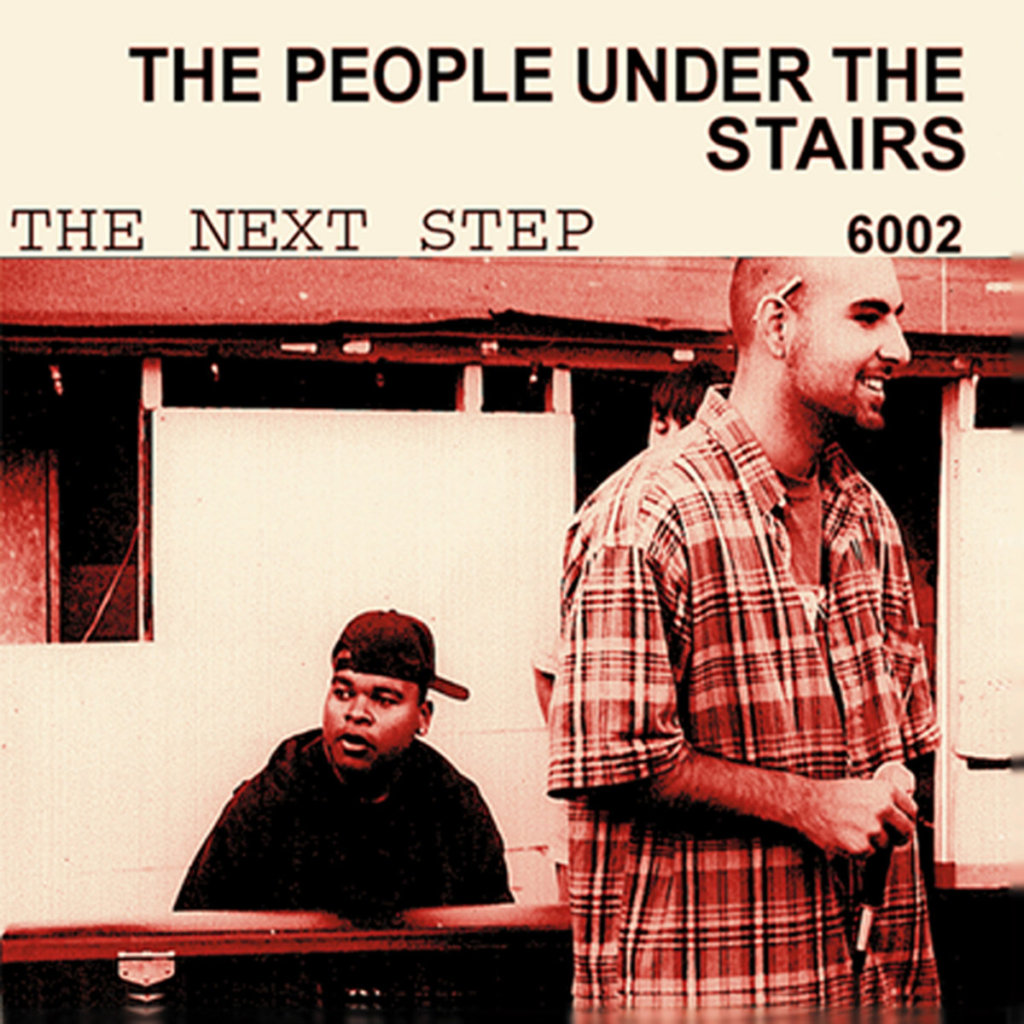
By the late 1990s, Los Angeles had developed a thriving underground Hip Hop community, with artists exploring everything from abstract lyricism to experimental production. People Under The Stairs took a different route. The duo of Thes One and Double K built their music around an uncomplicated love of sampling, DJ culture, clever rhymes, and the classic boom-bap sound. Their debut, The Next Step, introduced an approach that would remain remarkably consistent throughout their career: independent Hip Hop made by two people who clearly understood and loved the culture.
Thes One and Double K handled the production themselves. Drawing from jazz, soul, and funk records, they assembled warm, sample-driven beats with the kind of dusty textures and swinging rhythms associated with Hip Hop’s late-1980s and early-1990s heyday. There is an inviting musicality to the production, with carefully selected samples and understated arrangements giving the tracks plenty of character. The duo understood that a great beat didn’t need unnecessary embellishment. Strong source material, inventive chopping, and a good sense of rhythm were often enough.
“San Francisco Knights” is one of the album’s defining moments. Its smooth, jazz-inflected production provides an ideal setting for Thes One and Double K’s relaxed exchanges, while the memorable hook gives the track an immediate appeal. Alongside “Los Angeles Daze,” it became one of the group’s best-loved recordings. These songs also illustrate an important aspect of People Under The Stairs: their music has a strong sense of place and personality, with an everyday perspective that distinguishes them from the more confrontational and theatrical approaches found elsewhere in rap.
Neither MC relies on elaborate vocal gymnastics or overly complicated delivery. Their conversational styles complement each other naturally, with clever observations and introspective writing taking precedence over aggressive posturing. The result is an album that sounds effortless without being careless. The production and rhymes work together, creating the kind of relaxed atmosphere that invites repeated listening.
People Under The Stairs never achieved mainstream commercial success, but they built a devoted audience through independent releases and a clear commitment to their own musical principles. The Next Step laid the foundation for one of Los Angeles’ most beloved underground careers. Thes One and Double K understood the appeal of classic sample-based Hip Hop and made it their own, with a debut that still is a rewarding listen for anyone who appreciates soulful beats, inventive sampling, and MCs who know how to ride a groove.
Also: Question in the Form of an Answer (2000), O.S.T. (2002), ..Or Stay Tuned (2003), Stepfather (2006), Fun DMC (2008), Carried Away (2009), Highlighter (2011), 12-Step Program (2014), Sincerely, The P (2019)
Peanut Butter Wolf - My Vinyl Weighs a Ton (1999)

Peanut Butter Wolf’s My Vinyl Weighs a Ton is a record built around the culture of independent Hip Hop: dusty samples, inventive turntablism, rugged beats and a loose network of MCs who share an affinity for the less predictable corners of the music. Released in 1999 on Stones Throw Records, the label Wolf founded three years earlier, it also introduced the sound and philosophy that would shape one of the most influential independent Hip Hop imprints of the following decades.
The album has a personal history behind it. Wolf had formed a duo with his close friend Charizma in the early 1990s, but their recordings were shelved after they signed to Hollywood Records. Charizma was shot and killed in 1993, at just 20 years old. Wolf eventually returned to music with the intention of releasing their work, a motivation that led to the creation of Stones Throw. My Vinyl Weighs a Ton allowed him to pursue his own production ideas while bringing together artists from the growing underground scene around him.
Wolf’s approach is rooted in boom-bap, but the production has an eccentric character of its own. Deep drums, dusty jazz textures, eerie strings and abrupt changes give the beats a slightly disorienting quality. The short interludes and spoken fragments contribute to the impression of a carefully assembled mixtape rather than a conventional solo producer album. Planet Asia makes an impression on “In Your Area” and “Definition of Ill,” while Rasco brings his forceful delivery to “Hold Up” and “Run the Line.” Lootpack appear on “Styles, Crew, Flows, Beats” and “Breaks ‘Em Down,” connecting the album to the Oxnard scene that would become central to Stones Throw’s identity.
The emotional center is “Keep On Rockin’ It,” featuring Charizma. Its presence gives the album a direct connection to the history that inspired Wolf to establish his label. Elsewhere, “Tale of Five Cities” shifts the focus to turntablism, assembling an extraordinary group of DJs, including A-Trak, Cut Chemist, DJ Babu, Rob Swift, Kid Koala and Z-Trip. The extended track gives scratching the space and attention usually reserved for vocal performances.
My Vinyl Weighs a Ton captures an independent Hip Hop community finding its own direction. Its importance reaches beyond Wolf’s production: the album introduced listeners to a circle of artists and ideas that would define Stones Throw’s early years, while placing the DJ and the record collection firmly at the center of the music.
Lootpack - Soundpieces: Da Antidote! (1999)

Before Madlib became one of Hip Hop’s most celebrated producers, he was part of Lootpack, the Oxnard trio he formed with MC Wildchild and DJ Romes. Their roots lay in the Likwit Crew, the loose West Coast collective associated with King Tee, Tha Alkaholiks, and Xzibit. After appearing on Tha Alkaholiks’ “Mary Jane” in 1993 and releasing an elusive early EP, Lootpack found a home with Peanut Butter Wolf’s fledgling Stones Throw Records. Their full-length debut, released in June 1999, became one of the independent label’s defining early releases and introduced a distinctive production approach that would influence underground Hip Hop for years.
Madlib handles the entire album’s production, drawing on an extensive collection of jazz, soul, and psychedelic records. The beats are dusty, loose, and deliberately rough around the edges, built from unconventional loops, chopped samples, and abrupt changes in rhythm. Rather than pursuing the polished sound dominating much of mainstream rap at the time, he gives the music the texture of a basement session, with DJ Romes adding scratches and turntable work that keep the group’s B-boy foundations in view. The result is an album with a strong sense of musical curiosity, even when individual tracks take unexpected turns.
Wildchild and Madlib supply the rhymes, with DJ Romes completing the trio’s dynamic. Their approach is rooted in battle rap, boasting, and the familiar underground insistence on lyrical skill. “Questions,” “Crate Diggin,” and “Law of Physics” capture that spirit, while “Long Awaited” brings in Dilated Peoples. “Likwit Fusion,” featuring Defari and Tha Alkaholiks, connects the album to Lootpack’s earlier associations, and the extended posse cut “Episodes” gathers several members of their wider circle.
There is another important introduction here. On “Answers,” Madlib appears as Quasimoto, his high-pitched alter ego created by speeding up recordings of his own voice. The character would eventually lead to a separate body of work, but its first appearance already hints at the eccentric direction Madlib’s musical imagination would take.
At 24 tracks and over 70 minutes, Soundpieces: Da Antidote! is an expansive, sometimes unruly debut. Its importance lies in the production: Madlib’s adventurous crate-digging and unconventional sample construction offered an alternative to the increasingly polished mainstream sound of the late ’90s. For Los Angeles underground Hip Hop, it also marked the arrival of a producer whose influence would reach far beyond the scene that first embraced him.
Jurassic 5 – Quality Control (2000)

At the turn of the millennium, Jurassic 5 brought an unmistakably old-school sensibility to a Hip Hop landscape increasingly dominated by commercial rap and gangsta imagery. The Los Angeles collective consisted of four MCs, Chali 2na, Mark 7even, Zaakir, and Akil, alongside DJs and producers Cut Chemist and Nu-Mark. Their full-length debut, Quality Control, built on the group’s reputation for intricate group rhyming, infectious harmonies, and an infectious enthusiasm for the foundations of Hip Hop. With its emphasis on collective chemistry and the interplay between MCs and DJs, the album recalled the spirit of pioneering groups such as the Cold Crush Brothers.
The opening sequence sets the tone perfectly. The “How We Get Along” intro, with its catchy horn loop and sturdy bassline, leads into “The Influence,” where the four MCs trade verses with remarkable precision. Their contrasting voices and rhythmic approaches give the track a lively dynamic, while the group harmonies turn the chorus into an instant earworm. Jurassic 5 understood that the art of group emceeing was about more than assembling four capable rappers. The timing, exchanges, and way their voices fitted together were central to the music.
The title track is another highlight, built around a funky, smooth groove that gives the MCs plenty of room to demonstrate their skills. “Monkey Bars” pays tribute to the fundamentals of Hip Hop, celebrating MCing and the DJ’s role in creating the atmosphere. On “Improvise,” our personal favourite, the four rappers take turns delivering old-school-inspired verses filled with boasts, intricate wordplay, and references to the origins of the culture, including the Wild Style documentary. Cut Chemist and Nu-Mark provide the musical punctuation, with scratches and inventive production details reinforcing the group’s connection to classic Hip Hop aesthetics.
There is a more critical side to the album as well. “LAUSD” examines the superficiality and dangers associated with Los Angeles, warning against the pursuit of wealth and material possessions while addressing crime, deception, and the pressures of navigating the city. Its message fits naturally alongside the group’s broader emphasis on creativity, self-expression, and staying true to one’s principles.
Nu-Mark and Cut Chemist deserve considerable credit for giving the album its musical identity. Their production draws on funk, soul, jazz, and classic Hip Hop sampling traditions, creating a varied collection of beats that never loses its sense of cohesion. Quality Control brought a distinctly positive, culture-conscious energy into mainstream Hip Hop at the turn of the century. Jurassic 5 made traditional group emceeing exciting for a new generation, and this album will always be one of the defining releases of the Los Angeles underground scene.
Also: Jurassic 5 (1998), Power in Numbers (2002)
Dilated Peoples – The Platform (2000)

By the time Dilated Peoples released The Platform in 2000, the Los Angeles underground had developed a distinct identity, with a growing network of independent MCs, producers, DJs, and labels operating outside the dominant West Coast sound. Dilated Peoples, consisting of Rakaa-Iriscience and Evidence on the microphones and DJ Babu behind the turntables, were among the leading representatives of this movement. Their debut album brought together sharp lyricism, rugged production, and a deep appreciation for the technical foundations of Hip Hop.
The chemistry between Rakaa and Evidence is central to the album’s appeal. Rakaa generally brings a more forceful delivery, while Evidence’s laid-back approach provides an effective contrast. They trade verses, complement each other’s flows, and tackle subjects ranging from competitive MCing and the realities of pursuing a career in music to social observations and personal convictions. Their writing is packed with intricate wordplay and carefully constructed rhymes, although they never lose sight of the importance of making the songs work as Hip Hop records.
“Work The Angles” is one of the album’s defining tracks. Produced by Kutmasta Kurt, its stripped-down, heavy beat leaves plenty of space for the two MCs to demonstrate their back-and-forth chemistry. “Triple Optics” is another highlight, with Rakaa and Evidence displaying the technical precision that became a trademark of their approach. The title “The Shape of Things to Come” also features an appearance from Freestyle Fellowship’s Aceyalone, whose unconventional delivery provides an interesting contrast to the group’s more measured style.
The guest appearances are particularly well chosen. Cypress Hill’s B-Real brings his unmistakable voice to “No Retreat,” while Aceyalone contributes to the aforementioned “The Shape of Things to Come.” Other appearances from Defari, Planet Asia, and Everlast connect the album to a wider network of artists operating across different corners of underground Hip Hop. These collaborations give the record a strong communal identity without taking attention away from its two central MCs.
Production duties are spread across an impressive roster, including DJ Babu, Alchemist, E-Swift, Joey Chavez, Evidence, T-Ray, and Kutmasta Kurt. The result is a collection of hard-hitting, sample-driven beats with a rugged underground character, complemented by Babu’s cuts and turntable work.
The Platform captures Dilated Peoples at the beginning of a career that would make them one of the most recognizable names in independent West Coast Hip Hop. It also documents a particularly fertile period for Los Angeles underground rap, when technically accomplished MCs and adventurous producers were building an alternative network on their own terms.
Also: Expansion Team (2001), Directors of Photography (2014)
Busdriver – Temporary Forever (2002)
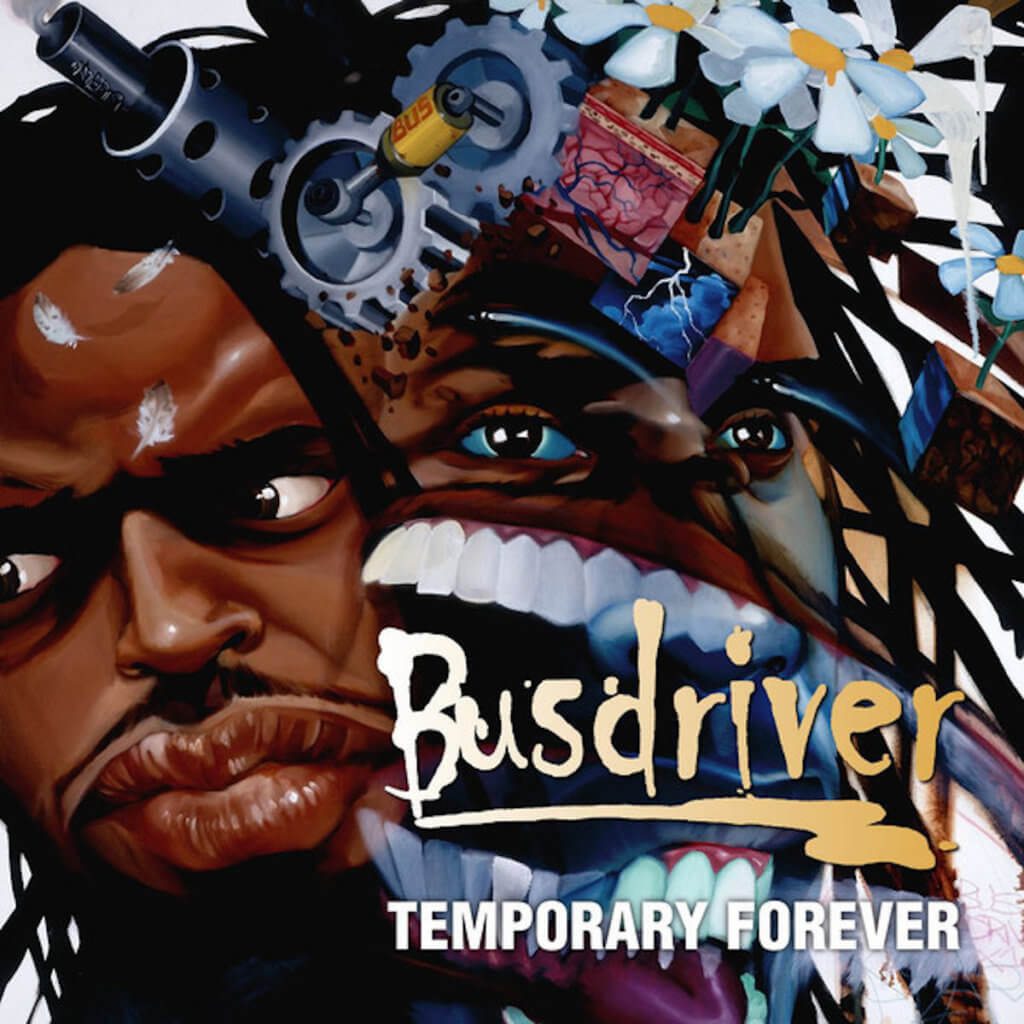
Busdriver’s Temporary Forever takes Los Angeles Hip Hop into decidedly unconventional territory. Born Regan Farquhar, the rapper had been developing an individual approach to MCing since the late 1990s, built around intricate rhyme patterns, unusual word associations and a delivery that often seems to race ahead of the beat. On this 2002 album, those qualities come together in a distinctive blend of abstract lyricism and experimental production.
At a time when mainstream rap and West Coast gangsta rap commanded much of the attention, Temporary Forever offered a very different kind of listening experience. Its musical palette draws on jazz, funk and electronic music, while the lyrics move freely between social observation, personal reflection and surreal wordplay. Busdriver has little interest in conventional song structures or straightforward storytelling. He packs his verses with internal rhymes, unexpected turns of phrase and rapid shifts in subject, giving the album an unpredictable energy. Keeping up with every line can be difficult, but the sheer inventiveness of his writing makes repeated listens worthwhile.
“Imaginary Places” is the obvious centerpiece. Busdriver delivers a breathless performance over samples of classical compositions by Bach and Paganini, creating an unusual collision between centuries-old music and his highly modern approach to rap. The track captures the album’s restless character, with the intricate production giving his verbal acrobatics plenty to work against. “Along Came a Biter,” “Gun Control,” “Mindcrossings” and “Unplanned Parenthood” provide further examples of his distinctive style, each contributing to an album that rarely settles into predictable patterns.
Temporary Forever also belongs to a wider Los Angeles tradition of independent Hip Hop that valued experimentation and individuality over commercial formulas. Busdriver took that spirit in an especially idiosyncratic direction, developing a style that was difficult to categorize and even harder to imitate. The album never asks the listener to follow a conventional route through its ideas. Its appeal lies in the density of the writing, the restless musical choices, and the sense that another listen might reveal a connection or punchline that slipped past the first time.
Also: Fear of a Black Tangent (2005), Perfect Hair (2014)
Living Legends - Creative Differences (2004)
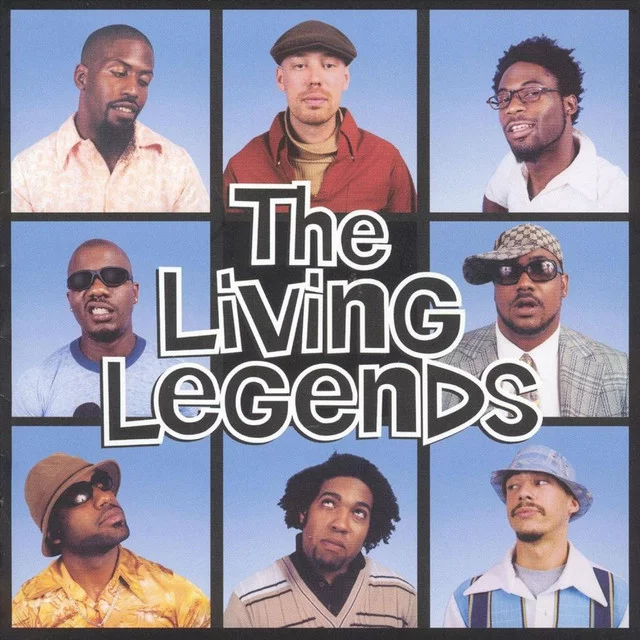
With nine MCs sharing the microphone, Living Legends faced a challenge that has undone plenty of Hip Hop collectives: giving every member room to express an individual identity without losing the sense of a unified group. Creative Differences tackles that challenge head-on. The 2004 album draws on the collective’s roots in California’s independent underground, including the Project Blowed scene, while giving its members space to pursue their own approaches to writing and performance.
Rather than building the record around one or two dominant voices, Living Legends distribute the spotlight across the roster. Each MC gets an opportunity to establish a presence, bringing different rhythms, perspectives and lyrical habits to the material. That variety is central to the album’s character. With so many personalities involved, the tracks naturally move between different moods and approaches, while the shared commitment to independent Hip Hop gives the project a recognizable identity. The title Creative Differences suits a group whose strength comes partly from accommodating those individual distinctions.
The production provides a common thread. Its West Coast foundations give the album a consistent musical character, while the collective’s willingness to draw on different influences keeps the material from becoming overly uniform. There is an appreciation for the playful references and cross-cultural outlook associated with groups such as De La Soul and A Tribe Called Quest, alongside the more confrontational spirit of Public Enemy and Wu-Tang Clan. Those comparisons offer some context for Living Legends’ musical outlook, although the collective approaches its material from its own independent underground position.
The album’s appeal lies in the balance between individual expression and group identity. A nine-member lineup inevitably brings a lot of competing voices and ideas into the same project, but Creative Differences treats that diversity as an asset. It also reflects an independent Hip Hop culture in which artists could build an audience and develop their own creative networks outside the mainstream industry. The result is a substantial collective statement, with the different personalities contributing to the character of the album rather than disappearing into the background.
Also: Almost Famous (2001), Classic (2005)
Haiku D'Etat - Coup de Theatre (2004)
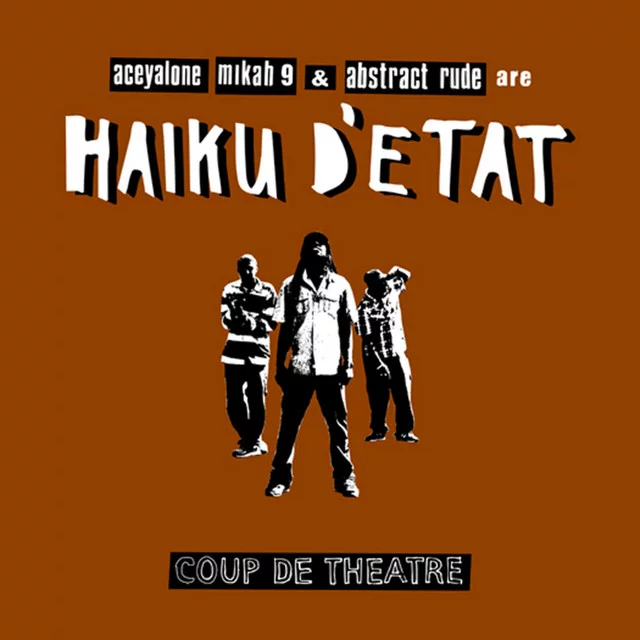
Haiku D’Etat brings together three distinctive voices from the Los Angeles underground: Aceyalone and Myka 9 of Freestyle Fellowship, and Abstract Rude of Abstract Tribe Unique. All three have deep connections to Project Blowed, the influential community that grew out of the Good Life Café open-mic scene. With Coup de Theatre, their second album as a trio, they draw on that shared background while developing a more concentrated group sound than on their self-titled debut.
The name Haiku D’Etat combines the Japanese poetic form with the French expression for a coup d’état, suggesting a takeover through words. That idea suits three MCs whose approaches to rhyme and rhythm have always leaned toward the adventurous. Aceyalone, Myka 9 and Abstract Rude each bring their own vocal character and lyrical sensibility, moving through intricate patterns, layered meanings and cerebral wordplay. Their chemistry is a major part of the album’s appeal. The differences between the three voices give the performances variety, while their common musical outlook keeps the record coherent.
The production provides an inviting foundation for their verbal excursions. Jazz influences run throughout Coup de Theatre, alongside deep-cut boom-bap rhythms, live instrumentation, and carefully layered samples. The beats have enough musical detail to reward close listening without competing with the MCs for attention. This combination gives the album a sound rooted in classic Hip Hop while allowing room for the trio’s more unconventional lyrical approaches.
Compared with the first Haiku D’Etat album, released in 1999, this second outing has a stronger sense of direction. The three MCs sound comfortable working together, and the material benefits from that shared focus. There is a natural connection between the jazz-informed production and the group’s intricate writing, with the music giving their dense verses space to unfold.
Coup de Theatre is an important part of the Project Blowed story, bringing together three artists whose individual contributions to Los Angeles underground Hip Hop were already substantial. The album’s particular pleasure lies in hearing them operate as a unit, trading ideas over richly textured beats without sacrificing the individual qualities that made each voice distinctive.
Blu & Exile – Below The Heavens (2007)

When Below The Heavens arrived in 2007, Blu had released only a handful of mixtapes, while producer Exile had already built a reputation through work with various underground artists. Their collaboration introduced a compelling new voice in Los Angeles Hip Hop. Blu brought an introspective writing style, full of personal observations and searching questions, while Exile supplied warm, soulful production that gave the rapper’s thoughts room to unfold.
The album opens with “My World Is…”, setting the tone for a record concerned with growing up, relationships, poverty, spirituality and the search for direction. Blu writes with an openness that gives even his more abstract reflections a personal foundation. He moves between everyday experiences and larger questions about life without losing the conversational quality of his delivery. His wordplay is sharp, but the appeal of his writing lies as much in the sincerity of his perspective as in its technical details.
Exile’s production is central to the album’s identity. Soulful samples, jazzy instrumentation and relaxed boom-bap rhythms create a warm musical backdrop, with enough variation to give each track its own character. “No Greater Love” and “Dancing In The Rain” capture the more laid-back side of the record, while “First Things First” pairs a particularly inviting instrumental with Blu’s playful account of romantic attraction. The production never overwhelms the lyrics; the two artists seem to understand exactly how much space the other needs.
“The World Is (Below The Heavens)” is another highlight. Built around a sample of The Impressions’ “I’m So Proud” and an interpolation of Nas’ “The World Is Yours,” the track connects Blu’s reflections on heaven with a recognizable piece of Hip Hop history. It is an apt example of how the album draws on musical traditions while giving them a personal interpretation.
Below The Heavens found its audience through word of mouth rather than major commercial exposure. Its influence and affection among underground Hip Hop listeners have grown over the years, and the duo’s 2020 reunion on Miles offered another chapter in their creative partnership. The original album, however, has a particular chemistry: Blu’s searching, heartfelt writing meeting Exile’s soulful ear, with neither artist needing to dominate the other.
Also: Miles: From an Interlude Called Life (2020)
Evidence – The Weatherman LP (2007)
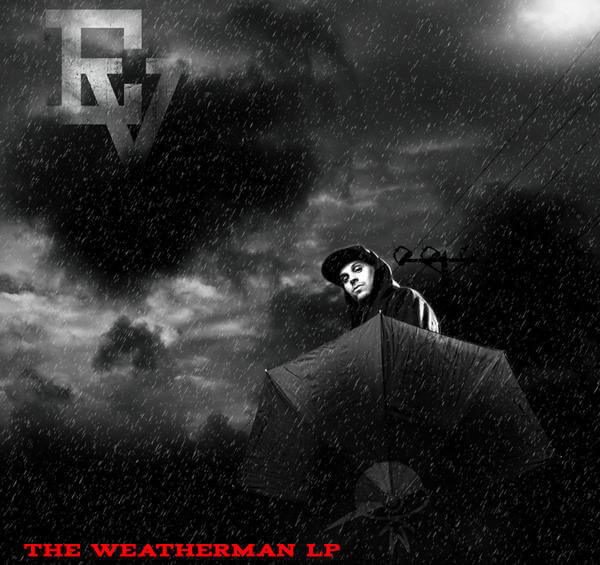
After years of making records with Dilated Peoples, Evidence stepped out on his own with The Weatherman LP, a solo debut that puts his personality and writing at the center. His measured delivery had always provided a contrast to Rakaa’s more forceful approach in the group, and here he builds an entire album around that unhurried style. The result is a personal collection of soulful boom-bap, reflective verses and carefully chosen collaborations.
“I Know,” produced by Evidence himself, establishes the mood. Its smooth, understated beat gives him room to reflect on personal struggles and the importance of perseverance. He has a conversational way of approaching these subjects, with intricate rhymes woven into observations that never sound overly rehearsed. “Mr. Slow Flow,” produced by Sid Roams, makes the most of his deliberate cadence. The title is a knowing reference to his style, and the slow-moving boom-bap production gives his delivery a natural home.
The album’s weather imagery finds a more optimistic expression on “Chase the Clouds Away,” produced by The Alchemist. Evidence looks back on the ups and downs of his life and takes stock of a rare good day, capturing the feeling in the line, “I must be happy today / I must have chased the dark clouds away.” It’s a revealing moment on an album largely concerned with the personal experiences behind the MC’s guarded public persona.
The guest appearances add different dimensions without pulling attention away from Evidence. Phonte, Planet Asia, Rapper Big Pooh and Slug each bring their own voice to the record, while DJ Revolution and Dilated Peoples partner DJ Babu contribute scratches. The production comes from a range of sources, including Evidence, Sid Roams and The Alchemist, giving the album some variation while keeping its soulful, sample-driven foundation intact.
At around 70 minutes, The Weatherman LP is a substantial first solo statement. Evidence doesn’t try to reinvent his approach or adopt a more aggressive persona for the occasion. He trusts his own pace, writes from personal experience and builds a record around the qualities that made him such a distinctive presence in Dilated Peoples. It’s an understated but rewarding entry in the Los Angeles underground catalogue of the 2000s.
Also: Cats & Dogs (2011), Lord Steppington (with The Alchemist) (2014), Weather or Not (2018), Unlearning, Vol. 1 (2021)
Thirsty Fish – Testing The Waters (2007)

The title Testing The Waters is a fairly literal description of Thirsty Fish’s approach to this 2007 concept album. The alternative Hip Hop trio, made up of Dumbfoundead, Open Mike Eagle and Psychosiz, built the project around fish and water imagery, carrying the theme through its lyrics and overall presentation. Whether the concept holds together as a fully developed idea is open to debate, but the unusual premise gives the album a distinct identity.
All three MCs have roots in the Project Blowed orbit, and that background is apparent in their approach to rap. The writing is playful, abstract and packed with offbeat wordplay, while the members’ contrasting styles give the performances plenty of movement. Dumbfoundead, Open Mike Eagle and Psychosiz have a natural chemistry, trading verses and ideas without making the record sound like a collection of unrelated solo appearances. Their sense of humour also helps the aquatic theme avoid becoming too laboured, even when the references to fish and water come thick and fast.
Musically, Testing The Waters draws on the experimental side of the Los Angeles underground. The production combines elements of jazz and funk with familiar Hip Hop rhythms, often using intricate, layered beats to give the MCs room for their unconventional flows. Kenny Segal contributes one of the album’s highlights with “Fall Apart,” a track that fits the project’s off-centre musical character. The beats are adventurous without becoming inaccessible, giving the trio a foundation for their more eccentric lyrical excursions.
The appearance of Project Blowed veterans Aceyalone and Abstract Rude provides another connection to the scene that helped shape the group’s sound. Their involvement places Thirsty Fish within a wider lineage of Los Angeles artists who have favoured lyrical experimentation and individual expression over conventional rap formulas.
Testing The Waters is an oddball entry in the city’s alternative Hip Hop catalogue, and its fish-themed premise may not convince everyone. The real attraction is the combination of three inventive MCs, their easy interplay and production that shares their appetite for the unexpected.
Murs – Love & Rockets Vol. 1: The Transformation (2011)

By 2011, Murs had built an unusually varied career within independent Hip Hop. From his early work with 3 Melancholy Gypsies and Living Legends to his acclaimed collaboration with 9th Wonder on Murs 3:16: The 9th Edition, he had developed a reputation as an engaging MC with a gift for storytelling and an ear for memorable beats. On Love & Rockets Vol. 1: The Transformation, he teams up with Ski Beatz, whose smooth, sample-driven production gives the album a relaxed musical foundation.
Murs is at his best when he turns personal experiences into vivid narratives. “Remember 2 Forget,” the album’s first single, deals with the difficulty of moving on from a failed relationship. He allows the hurt and frustration to come through without making the song overly sentimental. “67 Cutlass” takes a different approach, recounting a road trip gone wrong in Tucson, Arizona. Its tragic-comic details and conversational delivery draw the listener into the story, illustrating the kind of character-driven writing that has always been one of Murs’ greatest strengths.
The album also touches on several sides of Hip Hop culture and Murs’ own career. “Eazy E” pays tribute to the legacy of West Coast rap, while “Hip Hop & Love,” featuring Tabi Bonney, celebrates the connection between music and romance. On “316 Ways,” Murs turns his attention to the difficulties of working independently and his frustrations with the music business. “Life & Time,” featuring Ab-Soul and D.I.T.C.’s O.C., brings together three MCs from different generations to reflect on their experiences and careers.
The closing track, “Animal Style,” is among the album’s most serious moments. Murs tells the tragic story of a closeted gay high school student, confronting the consequences of intolerance and hatred. Its subject matter gives the record an emotional weight that contrasts with the humour and relaxed atmosphere elsewhere.
Ski Beatz provides a consistent backdrop throughout, allowing Murs to move between relationship songs, character sketches, tributes and social commentary without losing the album’s musical flow. Love & Rockets Vol. 1: The Transformation is a strong entry in Murs’ extensive catalogue, built around the qualities that have always distinguished him: accessible writing, sharp observation and an ability to make individual stories matter.
Also: Murs 3:16: The 9th Edition (2004), Murray’s Revenge (2006), Murs for President (2008)
Kendrick Lamar - good kid, M.A.A.D. City (2012)

Including Kendrick Lamar’s good kid, m.A.A.d city on a list of Los Angeles Hip Hop albums outside gangsta rap might initially seem contradictory. The album is rooted in Compton, its narrative involves gang culture, street violence, drugs and peer pressure, and several songs draw on the musical traditions of West Coast street rap. But its central perspective makes it a very different proposition. Rather than celebrating the gangsta lifestyle, Kendrick examines how a young person gets caught up in an environment where violence and destructive choices are part of everyday life. The album is less concerned with projecting a hardened image than with understanding the forces shaping the teenager at its center.
Structured like a coming-of-age film, good kid, m.A.A.d city follows Kendrick through a series of experiences in his hometown, with voicemails from his parents helping to connect the narrative. The album cover and inside sleeve reinforce this autobiographical framework, presenting the family and neighbourhood context behind the stories. Kendrick portrays himself as a young man struggling to reconcile his ambitions and values with the pressures of his surroundings. The result is a nuanced account of Compton that avoids reducing the city or its residents to familiar gangsta rap stereotypes.
The music is equally varied. Production from Sounwave, DJ Dahi, Hit-Boy, T-Minus, Just Blaze and others moves between hard-hitting West Coast rhythms, atmospheric passages, soulful samples and more expansive arrangements. “Backseat Freestyle” and “m.A.A.d city” supply the album’s most aggressive moments, while “Money Trees” combines a laid-back groove with reflections on ambition and the temptations of street life. “Swimming Pools (Drank)” turns a seemingly celebratory drinking anthem into a critique of peer pressure and alcohol abuse.
The album reaches its emotional peak with “Sing About Me, I’m Dying of Thirst,” a two-part, twelve-minute composition dealing with mortality, memory, violence, and the responsibility of telling other people’s stories. Kendrick’s ability to inhabit different perspectives gives the song extraordinary depth.
good kid, m.A.A.d city belongs here because its subject matter and musical influences extend into gangsta rap, while its storytelling challenges many of the genre’s conventions. Kendrick documents the environment from the perspective of someone trying to find a way out of its destructive cycles. That distinction makes the album one of the most compelling examinations of Los Angeles life in modern Hip Hop.
Also: To Pimp A Butterfly (2015)
Ab-Soul – Control System (2012)
As a member of Black Hippy alongside Kendrick Lamar, Schoolboy Q and Jay Rock, Ab-Soul emerged from a generation of Los Angeles-area artists who brought renewed attention to the West Coast underground. His approach was distinct from the outset. Where some of his peers favoured direct storytelling or forceful street narratives, Ab-Soul gravitated toward dense wordplay, philosophical questions and unconventional subject matter. His second studio album, Control System, released in 2012, brings those interests together in a wide-ranging and frequently personal collection.
The album moves between hard-hitting rap, hazy atmospheres and more introspective passages. “Soulo Ho3” and “Track Two” establish an assertive tone, while “Bohemian Grove” takes a more relaxed approach, built around a memorable hook. On “Pineal Gland,” Ab-Soul explores spirituality and consciousness, drawing on the esoteric ideas that frequently surface in his writing. “Double Standards” turns its attention to social expectations surrounding gender and relationships, while “Mixed Emotions” offers a more direct look at his struggles with depression and anxiety. His lyrics can be deliberately cryptic, but the range of subjects gives the album considerable depth.
The most affecting moment is “The Book Of Soul,” an extended account of personal hardship and grief. Ab-Soul discusses his battle with Stevens-Johnson syndrome, a rare condition that affected his vision and skin, before confronting the death of his longtime girlfriend. Over a sparse piano melody and restrained drums, he delivers one of the most intimate performances of his career. The song’s emotional force comes from the directness with which he addresses experiences that are difficult to put into words. It offers a striking contrast to the cryptic references and abstract ideas elsewhere on the album.
“Terrorist Threats,” featuring Danny Brown, provides another memorable change of direction, with a cinematic, menacing atmosphere that suits the two MCs’ unconventional styles. Across the record, the production accommodates Ab-Soul’s shifting interests without forcing everything into one musical mould.
Control System represents an important strand of the Los Angeles underground in the early 2010s: intellectually restless, musically adventurous and willing to approach personal subjects without easy answers. Ab-Soul’s writing demands attention, and the contrast between his more abstract material and the emotional honesty of “The Book Of Soul” gives the album its particular character.
Also: Do What Thou Wilt. (2016)
Earl Sweatshirt - Doris (2013)

Earl Sweatshirt’s emergence from the Odd Future collective was one of the more unusual stories in early-2010s Hip Hop. After attracting attention as a teenager with his technically accomplished, often unsettling rhymes, Earl spent time away from the group before returning with Doris, his 2013 solo debut. The album revealed an MC who had developed considerably, retaining his intricate writing and distinctive delivery while turning inward toward subjects such as depression, isolation, addiction and fractured family relationships.
“Pre” establishes the album’s dark, unconventional atmosphere, with abrasive production setting the stage for Earl’s tightly packed verses. The beats draw on jazz, soul and more abrasive musical influences, often favouring unusual textures and uneasy moods over conventional rap arrangements. Earl’s delivery is deliberately measured, giving his densely constructed lines room to land. His writing can be cryptic, but the personal details beneath the wordplay give the album an emotional centre.
“Chum,” the lead single, is one of its most revealing moments. Over a sparse piano loop and restrained drums, Earl addresses his troubled relationship with his father and the effects of growing up without him. The controlled delivery makes the subject matter particularly affecting. “Sunday,” featuring Frank Ocean, takes a similarly personal approach, with Earl reflecting on addiction and the difficulties of maintaining relationships. Ocean’s contribution provides a different perspective, fitting naturally into the song’s introspective mood.
The guest appearances add further colour without distracting from Earl’s presence. Vince Staples, Tyler, The Creator, RZA and Mac Miller all contribute, bringing contrasting styles to an album whose musical identity is deliberately unsettled. Still, Earl’s writing and delivery provide the connective tissue. His verses are packed with internal rhymes, oblique references and sharply observed details, often requiring several listens before their full meaning becomes apparent.
Although Doris can be dense and occasionally difficult to absorb, that quality is closely tied to its character. The album captures an artist working through personal turmoil while developing a musical language of his own. Its combination of unconventional production, technical precision and emotional candour marked a significant step in Earl’s development and opened the door to the even more inward-looking work that followed.
Also: I Don’t Like Shit, I Don’t Go Outside (2015), Some Rap Songs (2018)
Vince Staples - Summertime '06 (2015)
Vince Staples’ Summertime ’06 is a coming-of-age album shaped by the realities of growing up in Long Beach. Across twenty tracks divided into two halves, Staples looks back on his teenage years, documenting the people, pressures and experiences that shaped him. Like Kendrick Lamar’s good kid, m.A.A.d city, it deals with the environment surrounding a young man in a gang-affiliated neighbourhood. The crucial distinction is in Staples’ detached, often matter-of-fact perspective. He neither romanticizes the lifestyle nor turns his past into a conventional redemption story. Instead, he examines the contradictions and consequences of the world he knew.
The album’s two-part structure reflects different sides of that experience. The first half has a comparatively lighter touch, with Staples recalling his younger years through sharp observations, humour and an understated delivery. “Norf Norf” and “Señorita” are among the most immediate tracks, pairing his distinctive vocal style with production that draws on contemporary West Coast rap. Beneath their accessible surfaces, however, the songs offer glimpses of the circumstances surrounding his upbringing.
The mood grows considerably darker as the album progresses. On “3230,” Staples confronts the violence and paranoia associated with his surroundings, while other tracks deepen the sense of uncertainty running through the record. His writing is economical and often emotionally restrained, making the details he chooses to share particularly effective. Rather than relying on elaborate storytelling, he builds a larger picture through fragments of memory, observation and personal reflection.
Production is a major part of the album’s identity. No I.D. leads the production team, creating a varied collection of beats that combine modern electronic textures with elements of West Coast Hip Hop. The arrangements are often sparse, unsettling or deliberately unconventional, giving Staples’ voice and writing plenty of space. The resulting sound is considerably removed from the familiar G-funk associations often attached to Long Beach and Los Angeles rap.
That difference is precisely why Summertime ’06 belongs on this list. Its subject matter overlaps with gangsta rap, but Staples approaches it as a critical observer rather than a participant selling a lifestyle. The album offers a bleak, personal portrait of Long Beach, told through an individual musical language that refuses easy categorization. It is one of the most compelling West Coast rap debuts of the 2010s.
Tyler, The Creator - Flower Boy (2017)

By the time Tyler, The Creator released Flower Boy in 2017, his reputation was still closely tied to Odd Future’s shock tactics and the abrasive, deliberately provocative records that had introduced him to a wider audience. Bastard and Goblin thrived on horrorcore imagery and confrontational lyrics, while Cherry Bomb revealed an artist increasingly interested in melody and richer arrangements, even if its contrasting impulses did not always come together. On Flower Boy, Tyler found a more coherent direction by turning inward. Produced entirely by Tyler himself, the album trades much of the earlier aggression for warm synthesizers, acoustic guitar, jazz-inflected chords, and neo-soul textures.
The change in production accompanies a much more personal approach to songwriting. Tyler described the album as an opportunity to write down his feelings, and loneliness, isolation, unrequited affection, and uncertainty run through much of it. “Where This Flower Blooms,” featuring Frank Ocean, looks back at his life before fame, while “Boredom” captures the frustration of having success without finding the companionship he wants. “911 / Mr. Lonely” places that isolation against an inviting, soulful arrangement, with Frank Ocean and Steve Lacy contributing to its contrasting moods. On “November,” Tyler reflects on the possibility of returning to a happier period in his life.
Sexuality is another important thread. “Garden Shed” uses the image of a garden shed as a metaphor for hiding something from the people around him, with Estelle’s vocals and psychedelic guitar helping shape the song’s gradual shift into a confession. “I Ain’t Got Time!” is more direct, containing the line “I’ve been kissing white boys since 2004.” The openness was particularly striking given Tyler’s history of homophobic language, and added a new dimension to the public image he had cultivated during Odd Future’s rise.
Musically, Flower Boy brings together Hip Hop, jazz rap, and neo-soul without losing Tyler’s eccentricity. The contrast between the abrasive “Who Dat Boy,” with A$AP Rocky, and the dreamy “See You Again,” featuring Kali Uchis, illustrates his expanded range. Guest appearances from Rex Orange County, Lil Wayne, Jaden Smith, and others fit naturally into arrangements that give melody and instrumentation plenty of room.
The album debuted at number two on the Billboard 200 and earned Tyler his first Grammy nomination, for Best Rap Album. Its significance goes beyond that recognition. Flower Boy marked the point where the restless provocateur of Odd Future began to sound like the thoughtful, ambitious composer heard on IGOR, Call Me If You Get Lost, and CHROMAKOPIA.
Also: CHROMAKOPIA (2025)